

 Brazil
 Argentina
 Chile
Chile Colombia
 Peru
Peru Uruguay
 Belgium
 Spain
Spain France
 Greece
 the Netherlands
 Ireland
 Italy
Italy Portugal
 the United Kingdom
 Switzerland
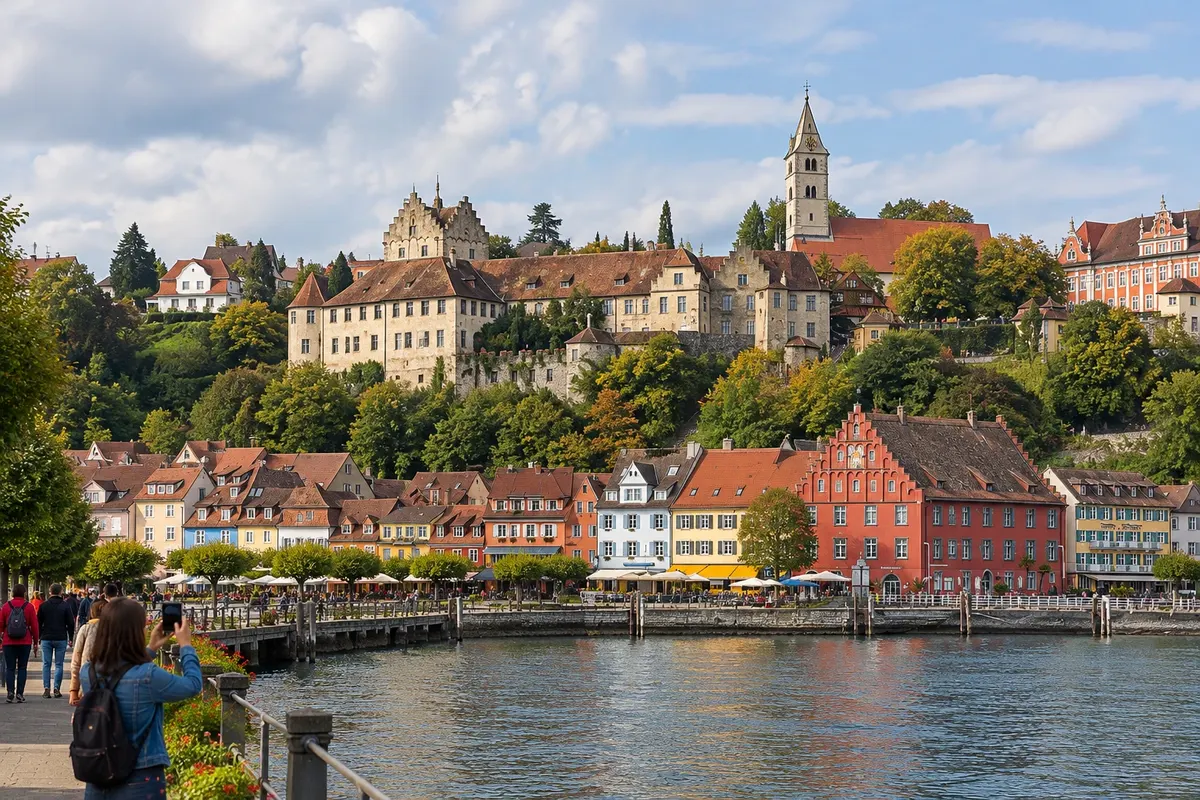
Castle
Burg Meersburg
Medieval castle atop Meersburg, presented as the oldest inhabited castle in Germany. It houses a museum with furnished halls, a dungeon, and the rooms of the poet Annette von Droste-Hülshoff.
Baden-Württemberg · Germany
In the destination Lago de Constança.
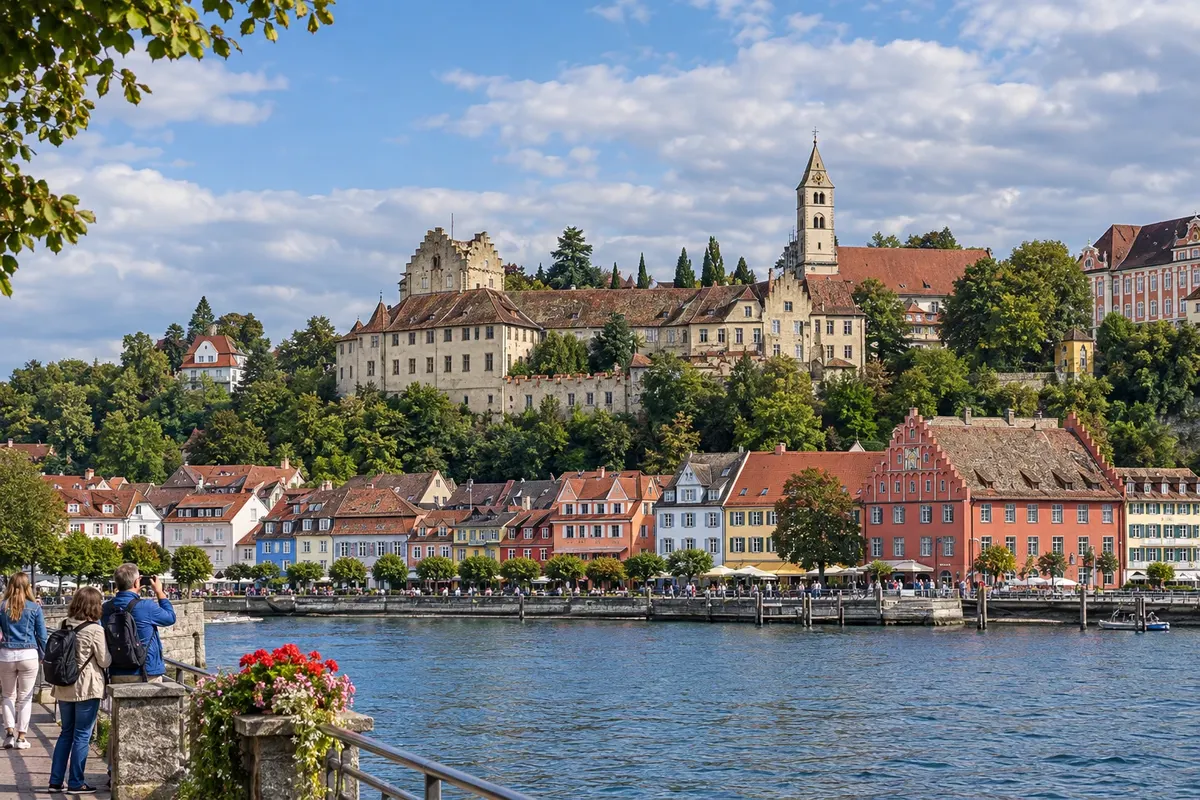
In the photo: Burg Meersburg, Lago de Constança
Illustrative images. The pictures in this guide are illustrations based on the real place, not photographs, and may differ from it.
The city
Meersburg lies on the northern shore of Lago de Constança, opposite Constança, and is divided into two parts: the Unterstadt, next to the water, and the Oberstadt, atop the cliff. Up there are Burg Meersburg, a medieval castle presented as the oldest still inhabited castle in Germany, and the Neues Schloss, a Baroque palace of the prince-bishops. Vineyards slope down to the lake, and near the town are the pile dwellings of Unteruhldingen and the Baroque church of Birnau.
There's no accommodation in the guide yet in Meersburg.
There are no restaurants in the guide yet in Meersburg.
Know a good one? Recommend it to ushow to get there · how many days · itinerary · questions
The local experience
Medieval castle atop Meersburg, presented as the oldest inhabited castle in Germany. It houses a museum with furnished halls, a dungeon, and the rooms of the poet Annette von Droste-Hülshoff.
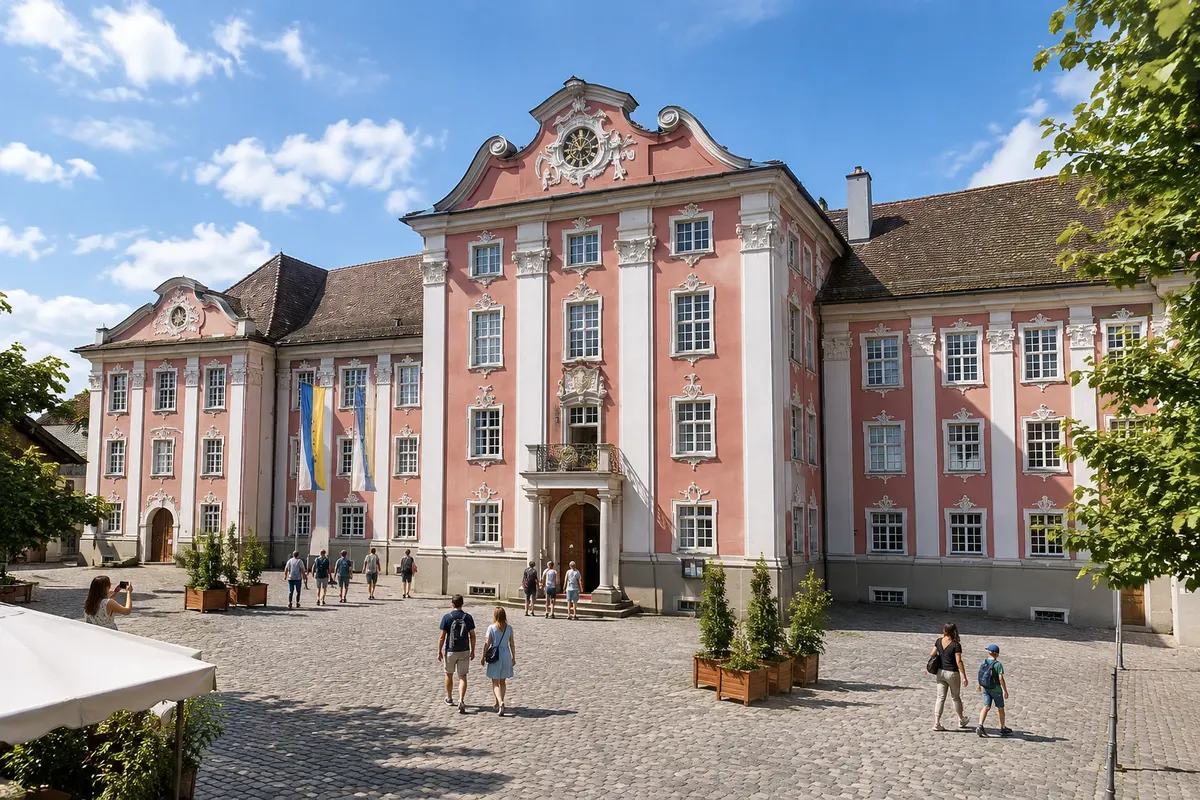
Baroque palace that was the residence of the prince-bishops of Constança from 1750 to 1803, with a staircase designed by Balthasar Neumann, a chapel with frescoes and a terrace overlooking the lake.
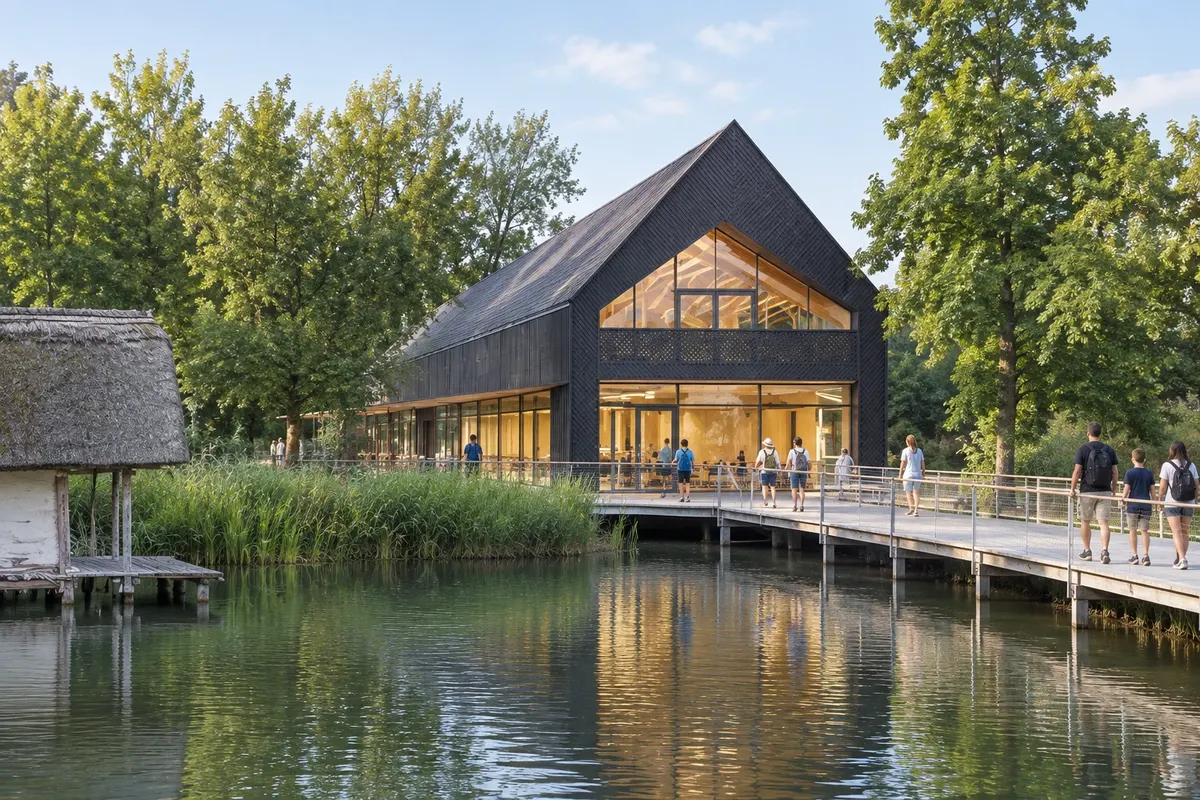
Open-air museum with 23 stilt houses reconstructed over the water, showing how people lived on the shores of the lake in the Stone Age and the Bronze Age. It is about 6 km from Meersburg.
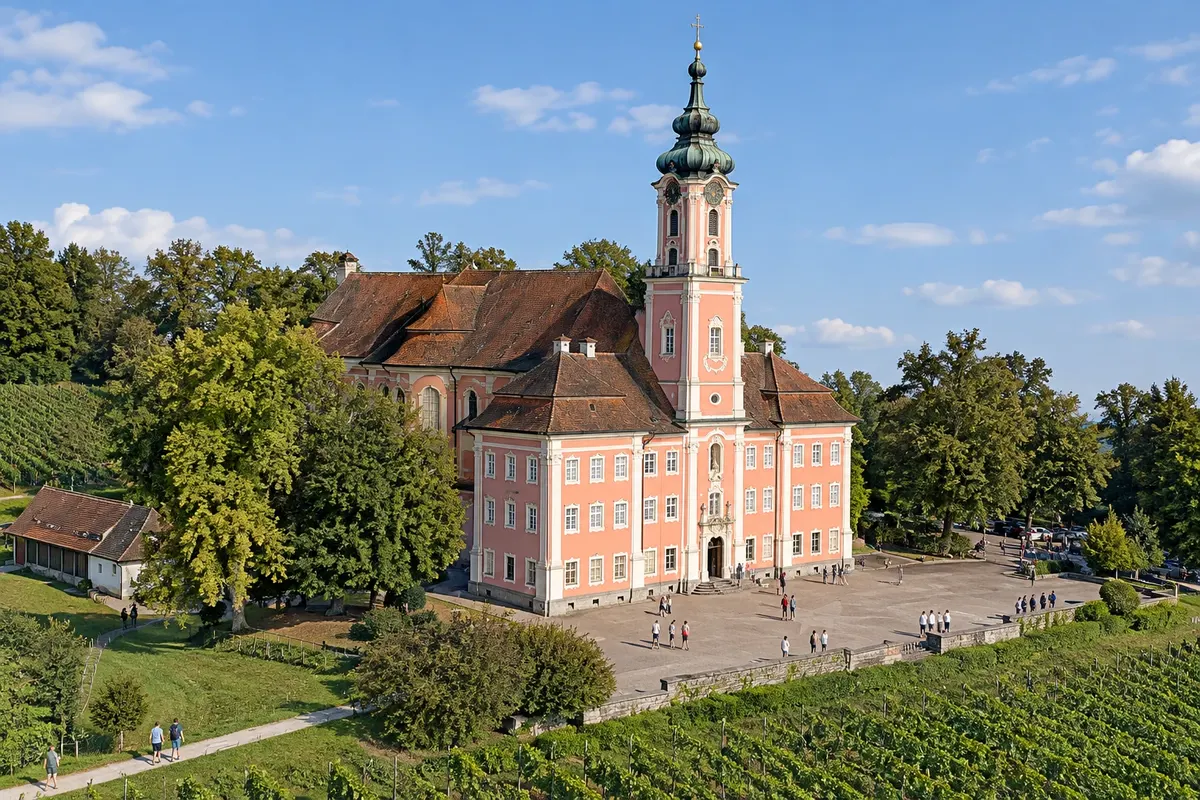
Baroque pilgrimage church built between 1746 and 1749 on the vineyards of the north shore, with frescoes by Gottfried Bernhard Göz and sculptures by Joseph Anton Feuchtmayer, such as the little putto Honigschlecker.
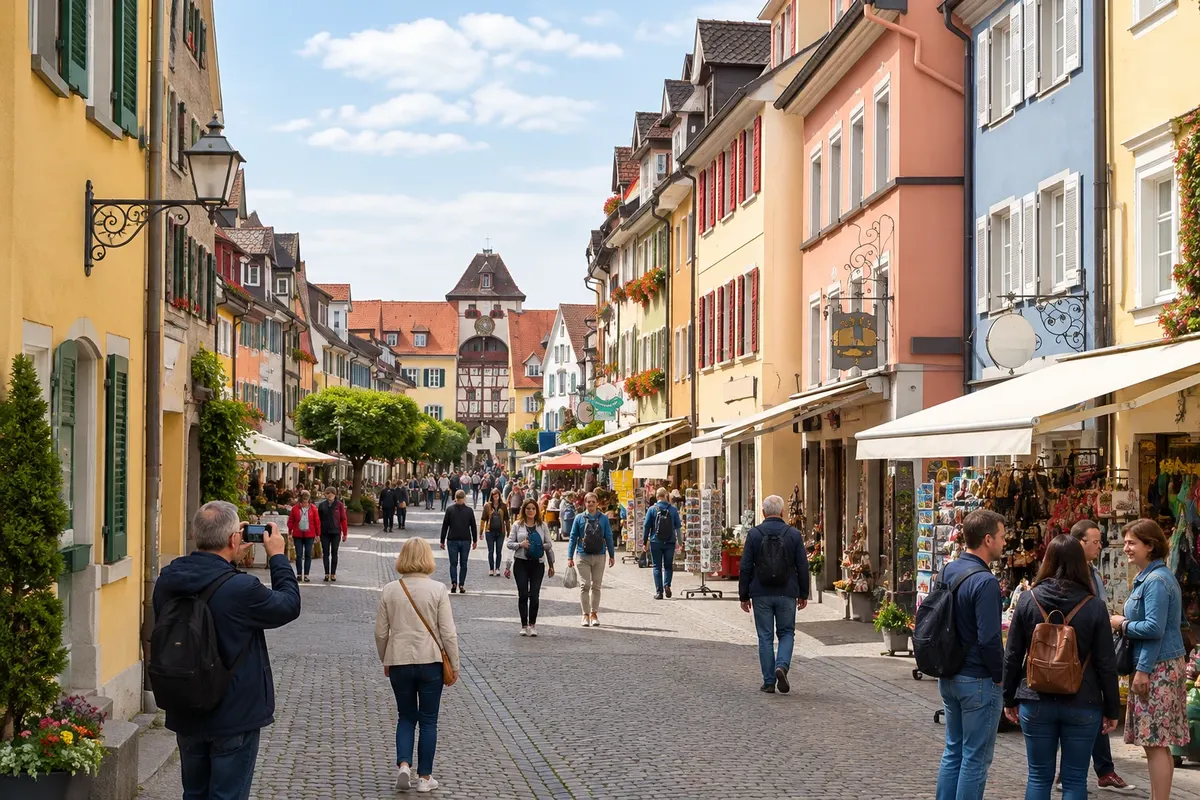
The lower part of Meersburg, by the lake, with the Seepromenade, the boat harbour and old houses, linked to the upper town by the Steigstraße, a steep street of half-timbered houses.