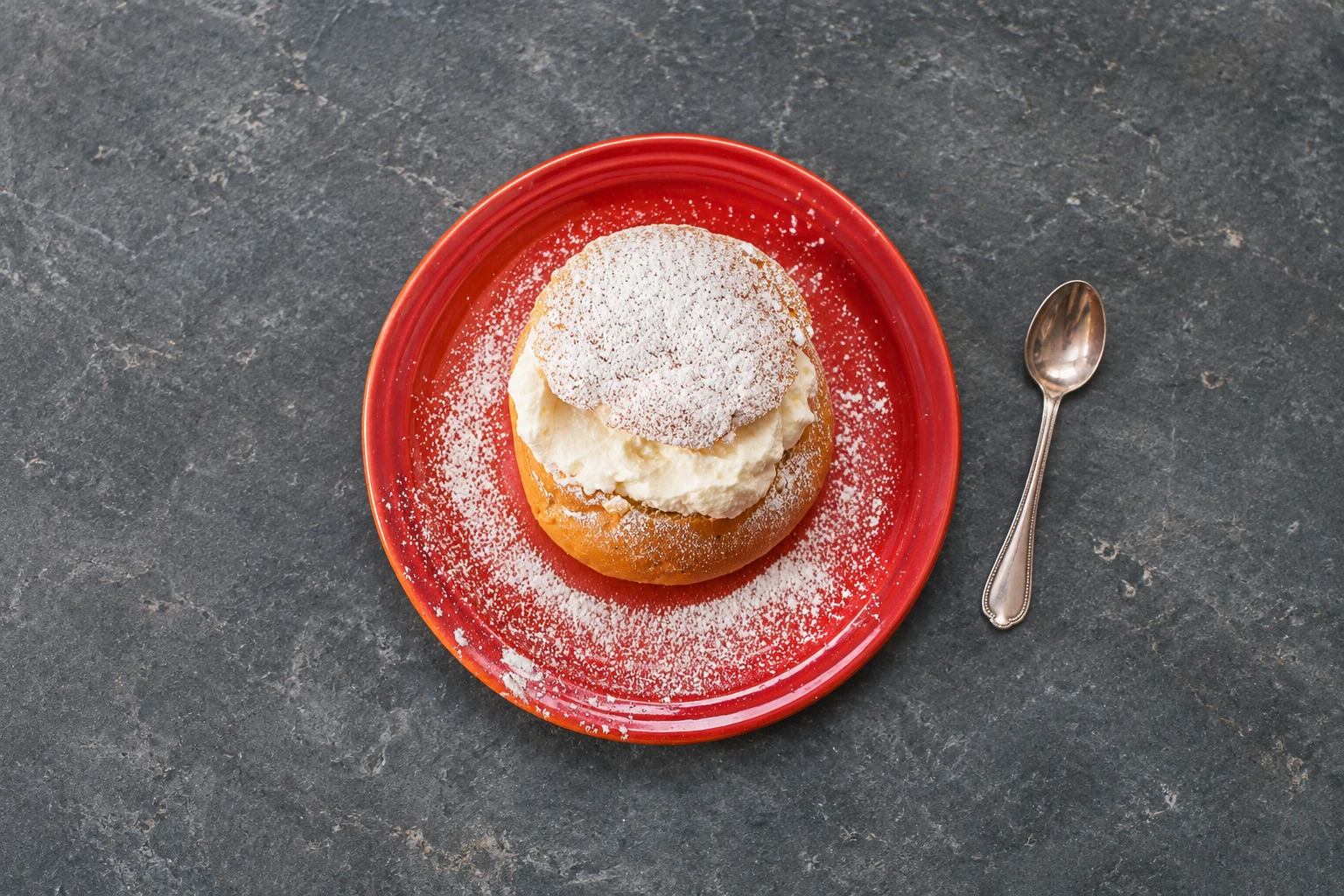
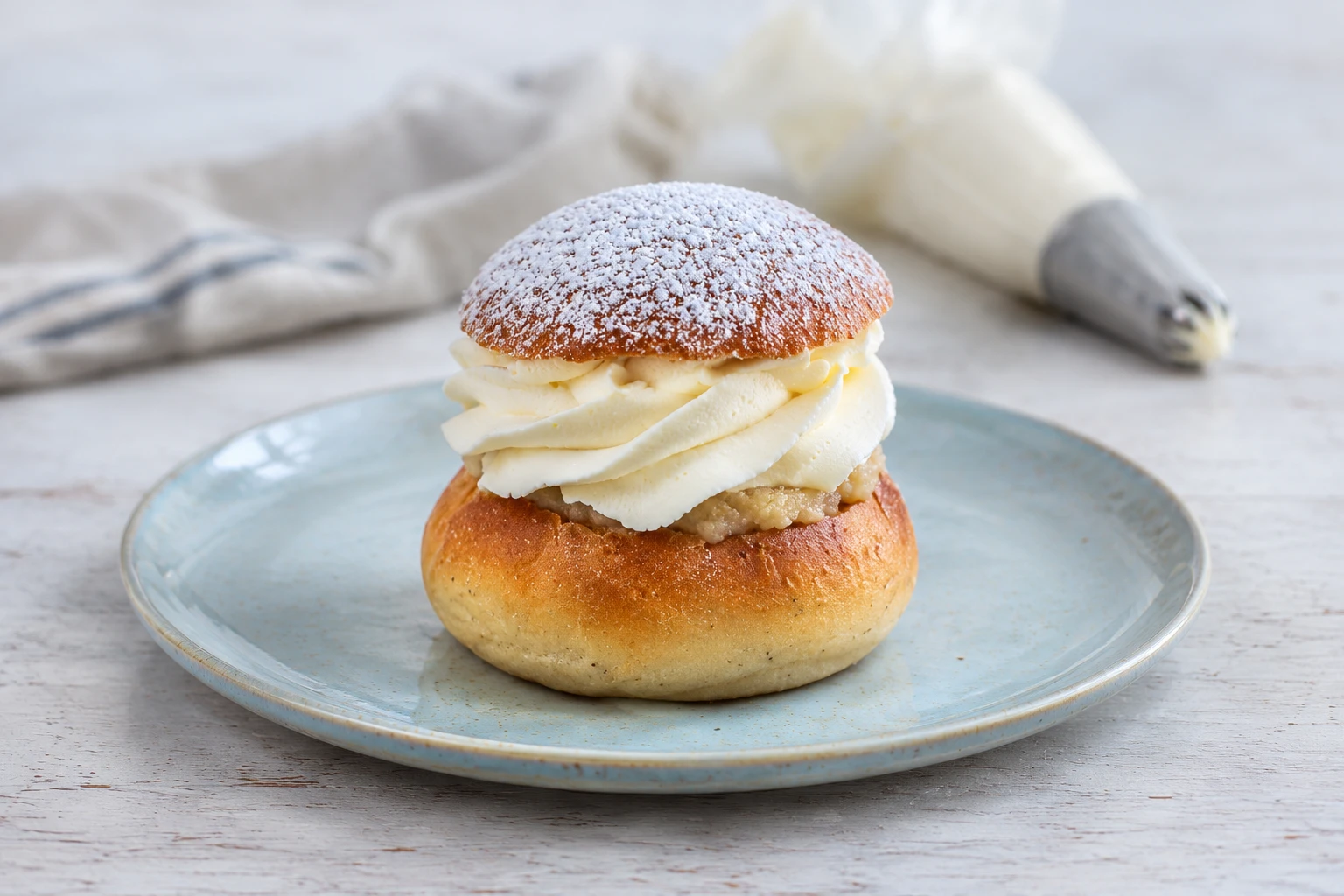
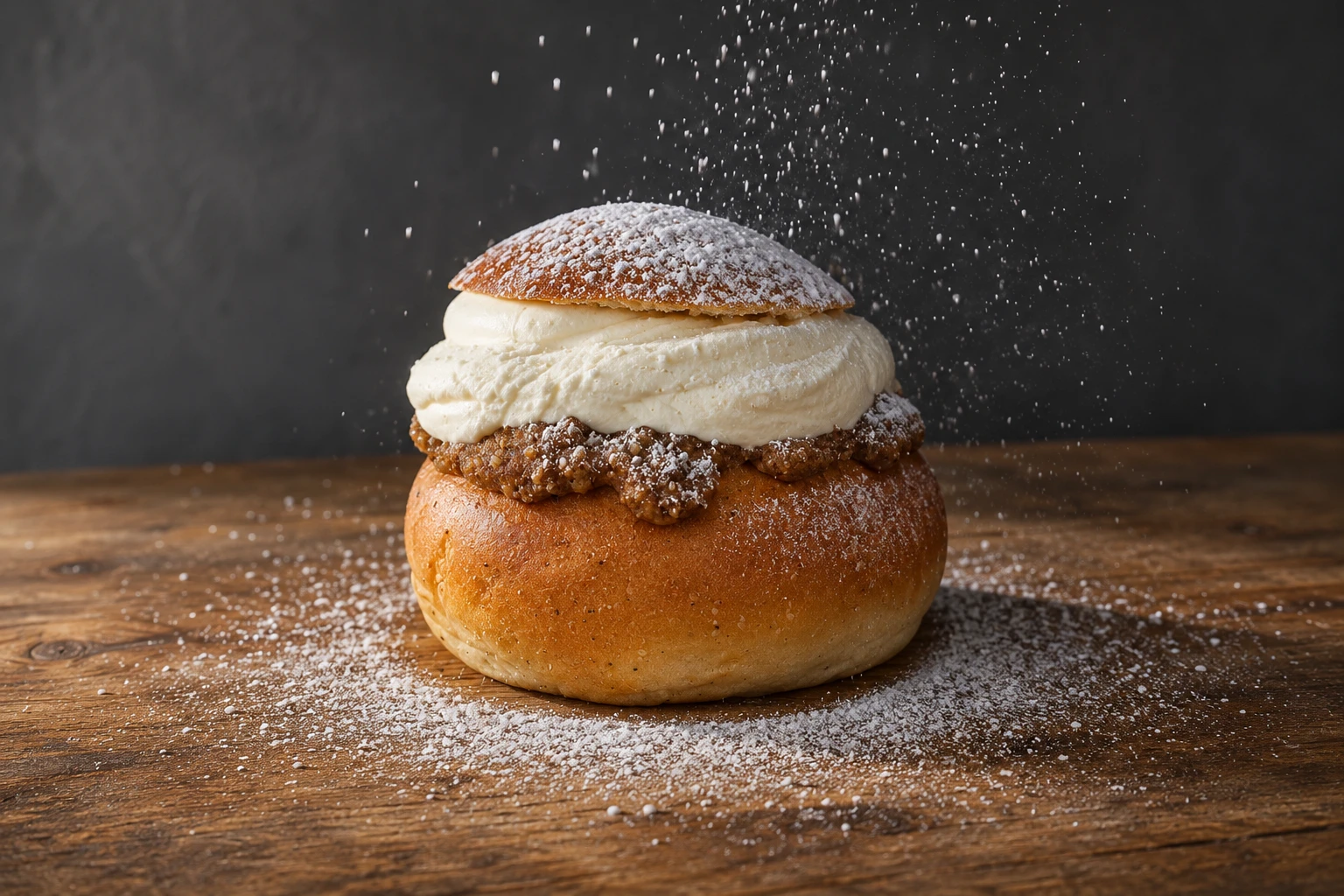
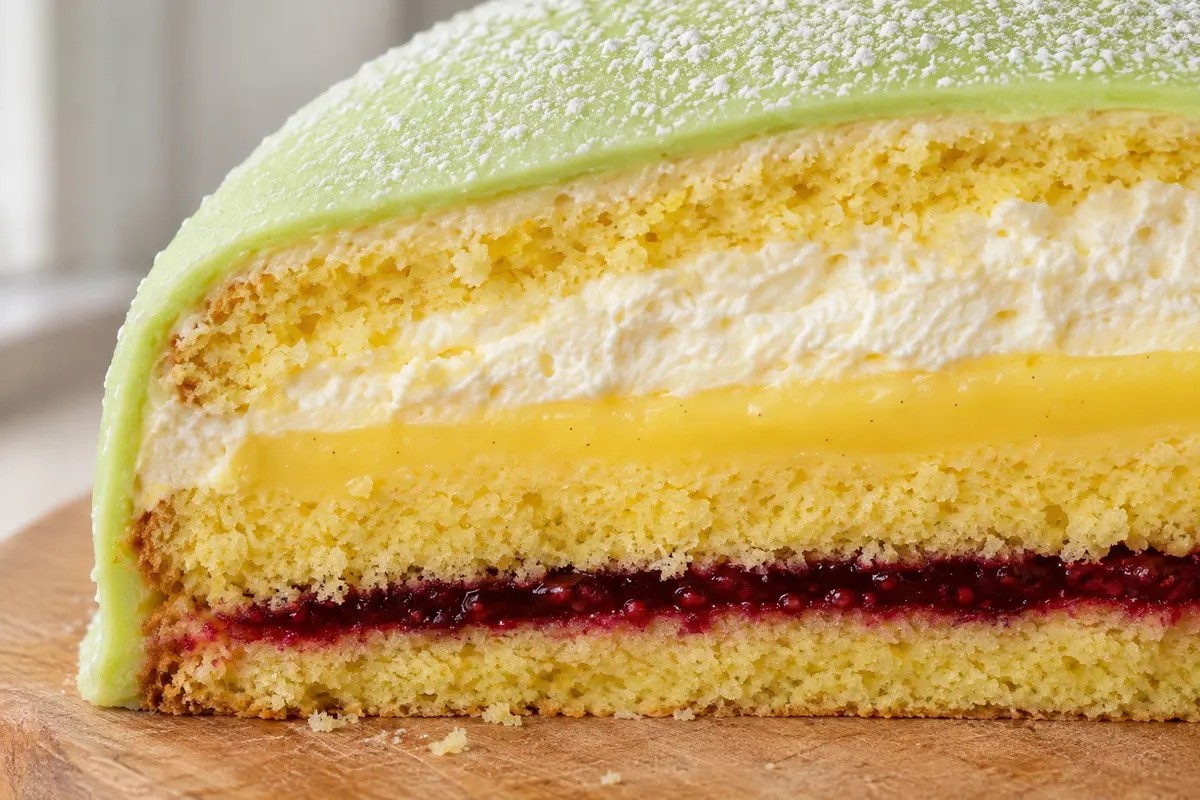
The semla is the sweet of fettisdagen, the Fat Tuesday, the last of the festive days before Lent. It is a soft wheat bun scented with cardamom, from which a lid is cut off at the top; the removed crumb is mixed with almond paste and milk and returned to the bun, which is then given a generous layer of whipped cream and the lid on top, dusted with sugar.
The tradition of eating special breads before fasting goes back to the Middle Ages, and the semla has changed a lot in name, shape and ingredients over the centuries. Its predecessor is the hetvägg, a name recorded at the end of the 17th century and derived from the German heisse Wecken, hot buns; the Swedish name is often misinterpreted as “warm wall.” In the 18th century the hetvägg was a luxury bread, served in a bowl with warm milk. The word semla comes from the German Semmel, which goes back to the Latin simila, fine wheat flour.
A well-known story says that King Adolf Frederick died on February 12, 1771, a Fat Tuesday, after a banquet that ended with hetvägg. Historians treat the link between the sweet and the king’s death as an anecdote.
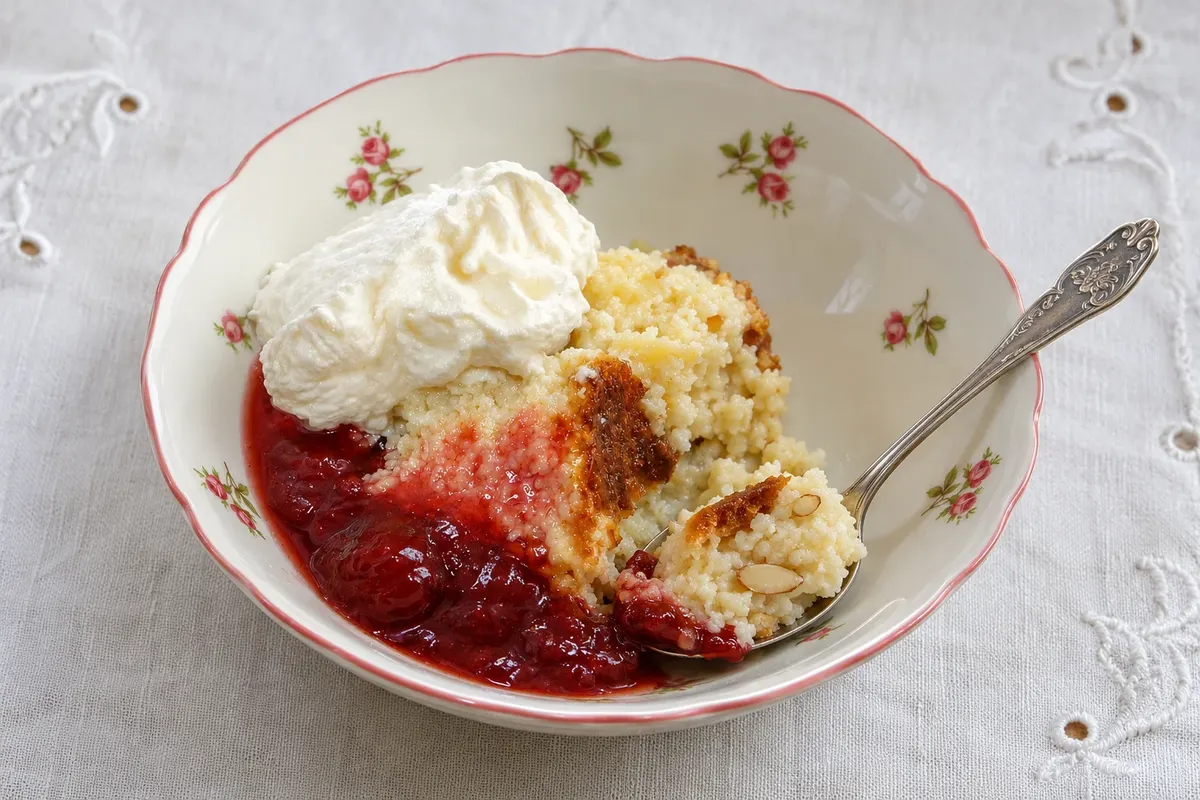
Over time, wheat flour, sugar and almond paste became more accessible, and the custom of coffee with sweets brought the semla to its current form. Once eaten only on Fat Tuesday, the semla began to appear in bakeries weeks earlier, and new variations appear every year. Some still serve it the old way, as hetvägg, in a bowl of warm milk.


 Brazilija
 Antarktika
 Argentina
 Bolivija
 Čile
 Kolumbija
 Ekvator
 Gvajana
 Francoska Gvajana
 Falklandski otoki (Malvini)
 Paragvaj
 Peru
 Surinam
 Urugvaj
 Venezuela
 Nemčija
 Avstrija
 Belgija
 Hrvaška
 Danska
 Slovaška
 Slovenija
 Španija
 Finska
 Francija
 Grčija
 Nizozemska
 Madžarska
 Irska
 Islandija
 Italija
 Luksemburg
 Norveška
 Poljska
 Portugalska
 Združeno kraljestvo
 Češka
 Švica
 Turčija
 Bermudi
 Kanada
 Združene države Amerike
 Grenlandija
 Mehika
 Sveta Peter in Mihael
 Dominikanska republika
 Japonska
 Južnoafriška republika
 Egipt
 Avstralija
 Fidži
 Nova Zelandija
 Papua Nova Gvineja