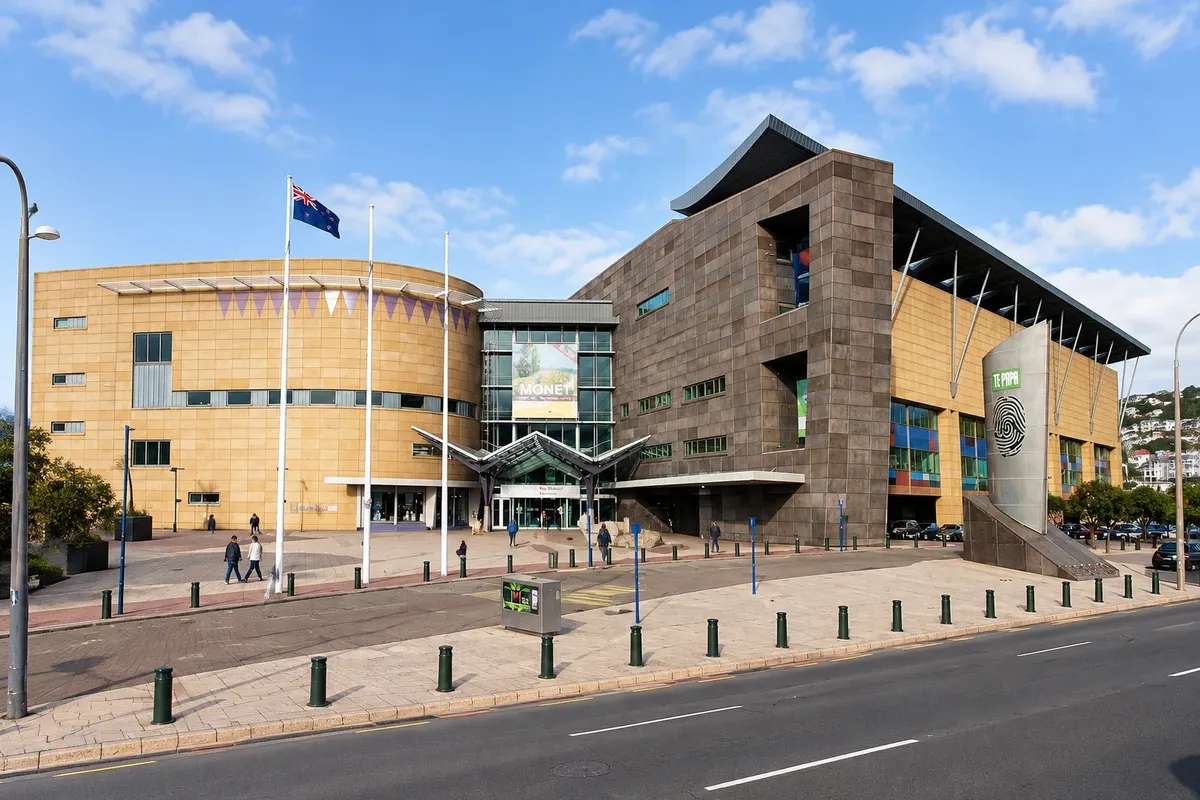
Museum of New Zealand Te Papa Tongarewa
The national museum of New Zealand, on Wellington’s waterfront, with galleries about nature, Māori culture, the country’s history and art, the colossal squid, and the Gallipoli exhibition.
Antarktika
Wellington · Nova Zelandija
The capital of New Zealand, set between a natural harbour and hills, with the national museum Te Papa, the Kelburn cable car, the Zealandia bird sanctuary and the ferries to the South Island.
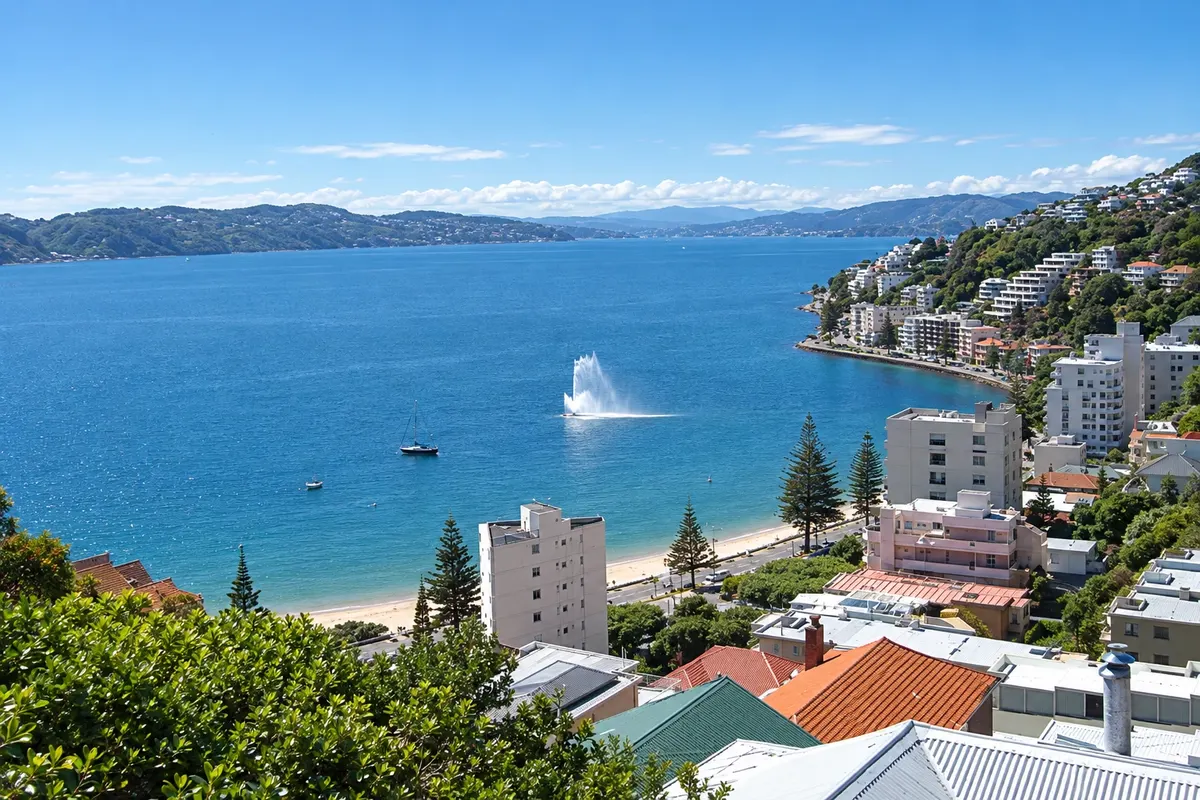
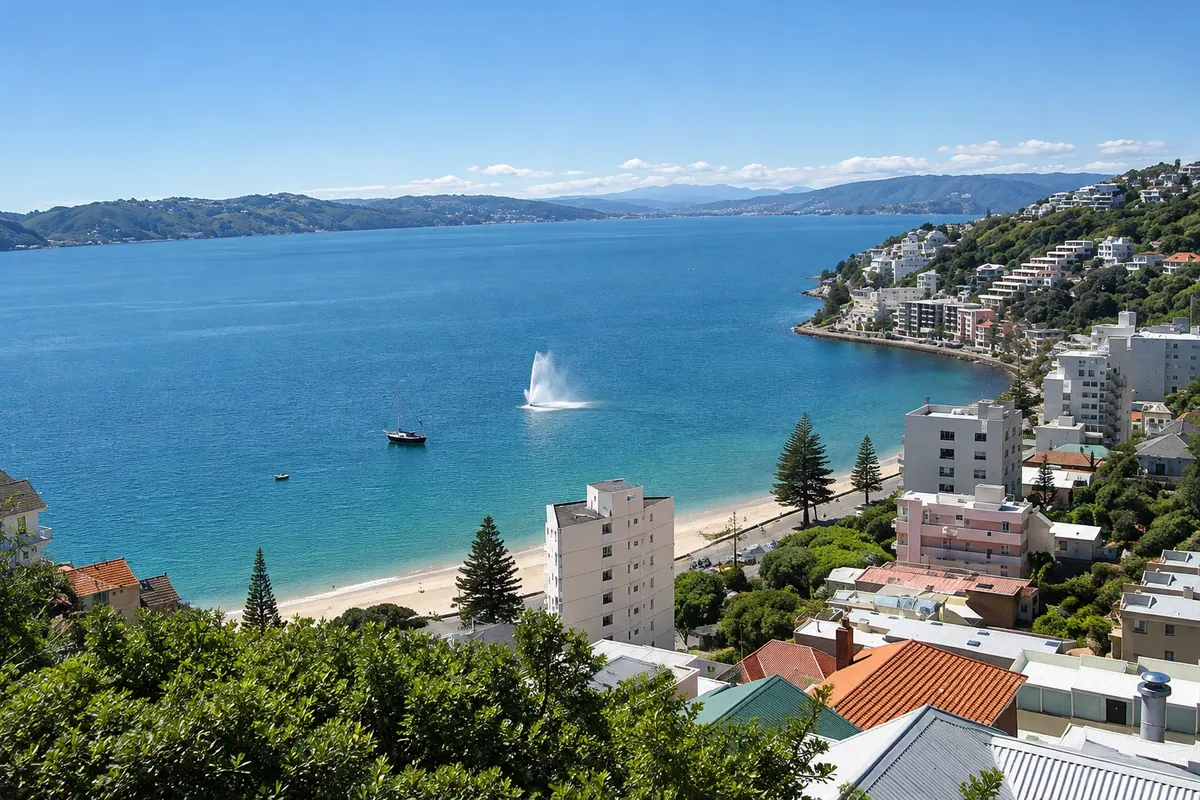
Na fotografiji: Oriental Bay
Illustrative images. The pictures in this guide are illustrations based on the real place, not photographs, and may differ from it.
Spoznajte kraj
Wellington (Te Whanganui-a-Tara, in Māori) sits at the southern tip of the North Island, on the shores of a natural harbour ringed by hills, facing the Cook Strait that separates the two main islands. It has been the capital since 1865, is home to Parliament and government ministries, and has about 440,000 residents in the urban area.
The centre is compact and walkable, between the waterfront and the hills where wooden houses climb steep streets. Along the waterfront are the national museum Te Papa, wharves, plazas and the city beach Oriental Bay. The red cable car runs from Lambton Quay, the main shopping street, up to Kelburn and the Botanic Garden, and Mount Victoria offers the most popular viewpoint over the city.
The city is known for its wind, cafés, craft beer and cultural scene, with theatres, festivals and the film industry that created the effects for The Lord of the Rings. In the valley beside the centre, the Zealandia sanctuary protects rare native birds behind a predator-proof fence.
Ferries depart the harbour across the Cook Strait to Picton on the South Island in about 3.5 hours, and trains and roads north link Wellington to Auckland and the island’s central region.

V vodniku še ni nastanitev – Wellington.
kako do tja · koliko dni · načrt poti · vprašanja
✈ Aeroporto de Wellington (WLG), kraj: Rongotai· 8 km do cilja (Wellington)
Wellington Airport (WLG), about 8 km from the city centre, handles domestic flights and services from Australia and Pacific islands. From Auckland it’s roughly 640 km by car, or you can take the scenic train in a day trip. From Picton on the South Island you arrive by ferry across the Cook Strait.
Doživite kraj
The national museum of New Zealand, on Wellington’s waterfront, with galleries about nature, Māori culture, the country’s history and art, the colossal squid, and the Gallipoli exhibition.
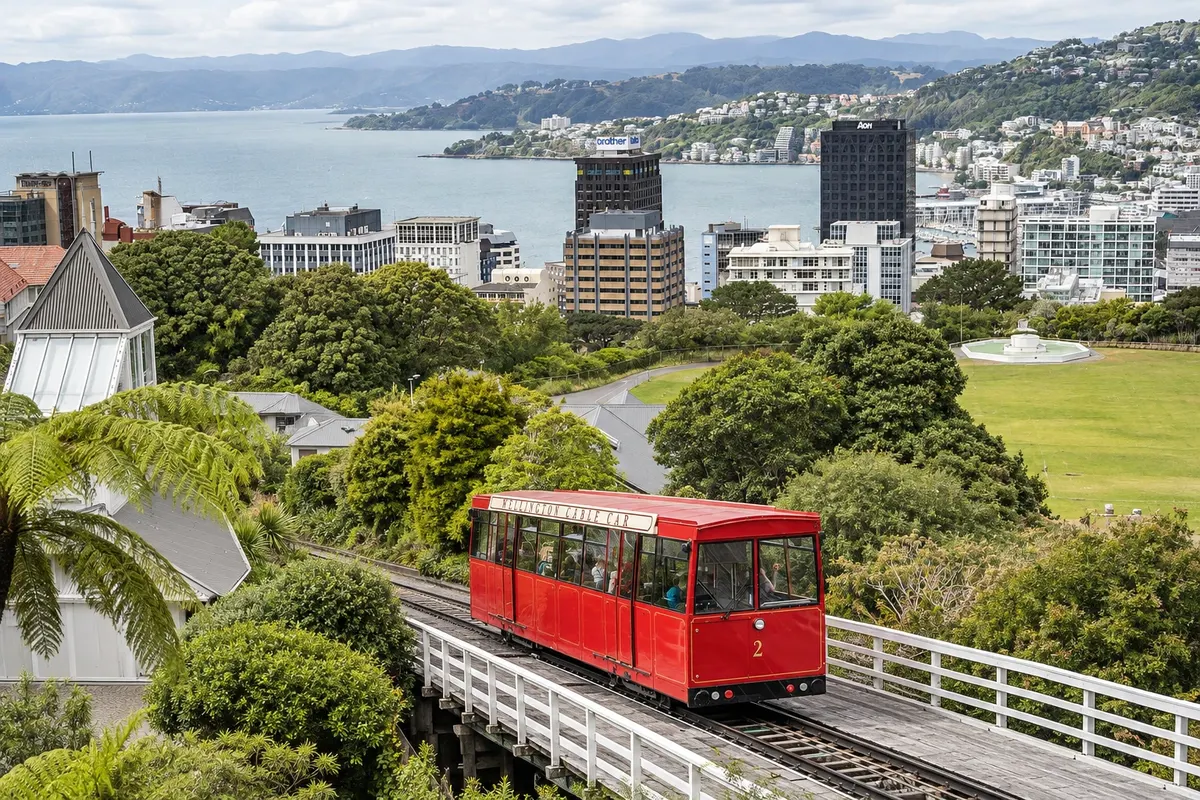
The red cable car that has run since 1902 from Lambton Quay up to Kelburn, with a viewpoint over the city, a cable car museum, an observatory and the Botanic Garden, which you can walk down to return to the center.
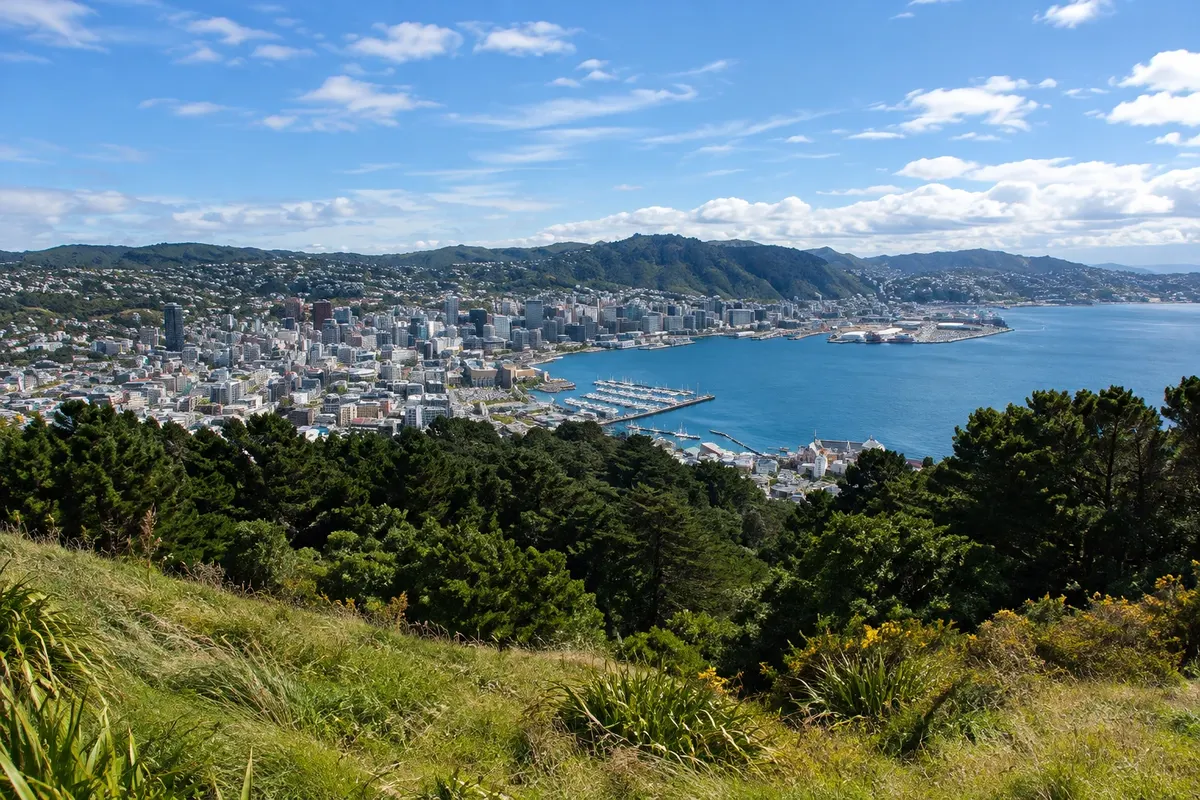
A 196‑meter hill east of central Wellington, with a 360‑degree lookout over the harbor, the city and the airport, and forest trails used as a filming location for The Lord of the Rings.
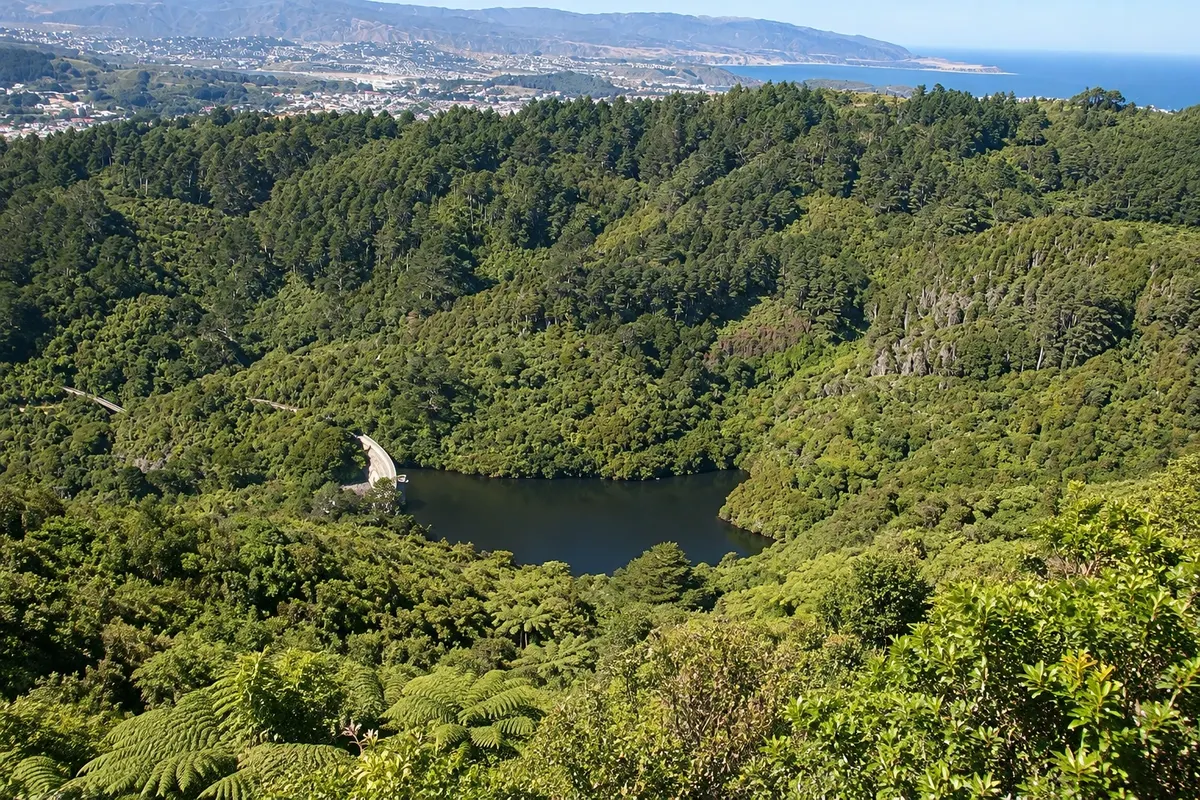
A bird and wildlife sanctuary in a Wellington valley protected by a predator‑proof fence, home to rare birds like the takahē and kākā, tuatara, and night walks to see kiwi and glow‑worms.
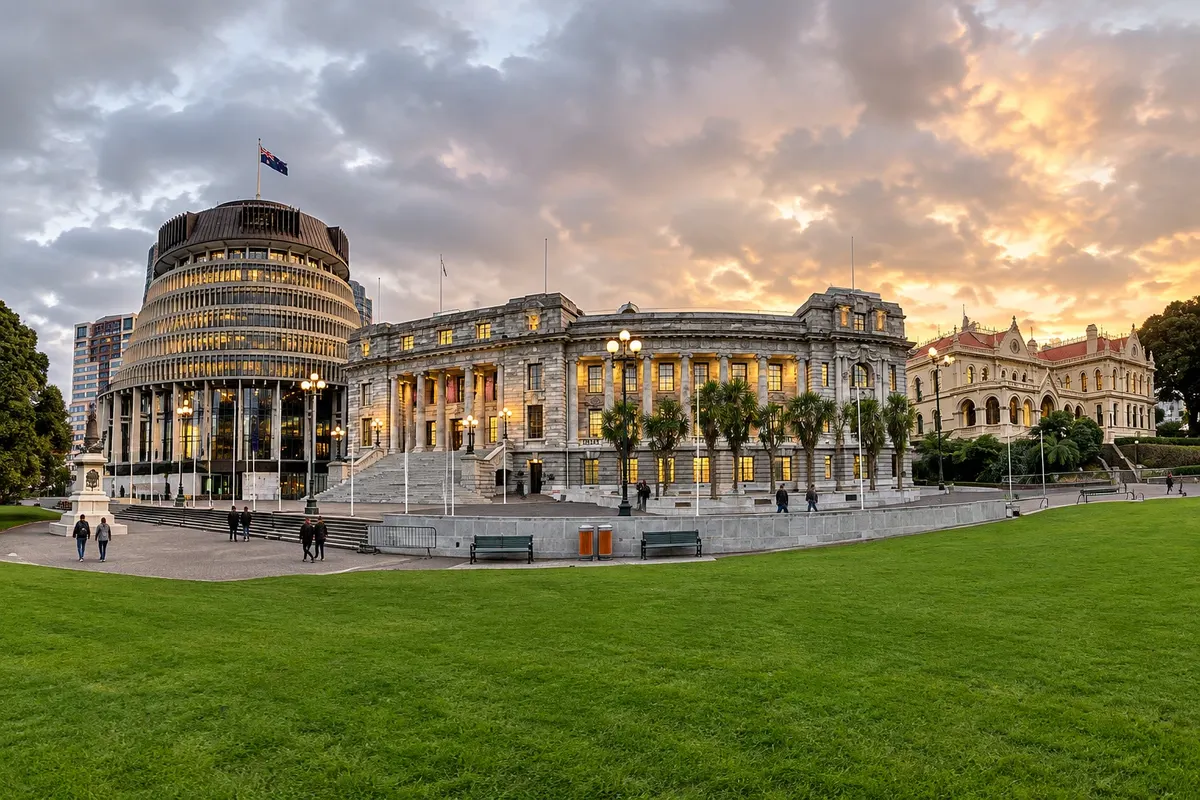
The parliamentary buildings in Wellington: the Beehive, the government wing shaped like a beehive, the Parliament House and the Gothic-style Library, with daily guided tours.
Seafront promenade along Wellington Harbour, from the Queens Wharf pier to the urban beach at Oriental Bay, with plazas, sculptures, the Wellington Museum and places to swim in summer.
Pred odhodom
Wellington – Wellington Capital
Razdalje so približne. Pred potovanjem preverite lete in vozne rede avtobusov, vlakov ali ladij.
Wellington Airport (WLG) is about 8 km from the centre, with an express bus, taxis and transfers. The train from Auckland and intercity buses arrive at the railway station in the centre. Ferries from Picton dock at the harbour terminals, a few minutes from downtown.
Two days: one for Te Papa and the waterfront to Oriental Bay; another for the cable car, the Botanic Garden, Parliament and Mount Victoria. A third day allows for Zealandia with a night visit.
From December to March, with warmer, longer days and outdoor festivals. Wind blows year-round. In winter there is more rain and cold, but museums, theatres and restaurants operate as usual.
The seasons shown are the most usual ones; nature doesn't always follow the calendar.
No. The centre is compact and walkable, and buses and the cable car reach Kelburn, Mount Victoria and Zealandia. Parking in the centre is expensive.
Predlog poti
Pot povezuje znamenitosti na tej strani. Za oglede boste imeli dovolj časa.
Start at Te Papa at opening, with the Gallipoli exhibition and the Te Taiao natural history gallery.
Walk to Lambton Quay, take the cable car up to Kelburn and walk down through the Botanic Garden to the rose garden and Parliament.
Climb Mount Victoria to see the harbour and city in the light of late afternoon.
Dine in the Cuba Street or Courtenay Place areas, with restaurants, bars and breweries.
Dan 1
Spend the morning at Te Papa, with Gallipoli, the natural history displays and the marae Rongomaraeroa.
Walk the waterfront from Queens Wharf to Oriental Bay, stopping at the Museum of Wellington.
Hike the trail from Oriental Bay up to the Mount Victoria lookout.
Dan 2
Take the guided tour of Parliament and the Beehive, by reservation.
Ride the cable car to Kelburn, visit the Cable Car Museum and descend through the Botanic Garden.
End the trip with a guided night visit to Zealandia, searching for kiwis, glowworms and tuatara.
Check before you go. Opening hours and days change, and places may close for renovations, holidays or events. This itinerary is a suggestion from Cidade Turismo, not a commitment: plan yours by checking directly with each place you intend to visit.
Pred odhodom
In the centre, between Lambton Quay, the waterfront and Courtenay Place, to keep everything within walking distance. Te Aro, around Cuba Street, has cheaper options.
By express bus, taxi or transfer, in about 20 minutes for the 8 km trip.
Te Papa, the Museum of Wellington and the guided Parliament tour.
From the harbour terminals, a few minutes from the centre. The Cook Strait crossing takes about 3.5 hours.
Yes, since 1865, when the seat of government moved from Auckland.
Pred odhodom
Z nekaj načrtovanja boste imeli več časa za uživanje na poti.
From December to March, with warmer, longer days, typically between 18 °C and 22 °C as a maximum. Wind is strong year-round, and the weather changes quickly. Winter, from June to August, is cold and rainy, but museums and the cultural life generally carry on as usual.
The seasons shown are the most usual ones; nature doesn't always follow the calendar.
Two days cover Te Papa, the waterfront, the cable car with the Botanic Garden, Mount Victoria and Parliament. With three days you can add Zealandia, including a night visit, and more time for cafés and neighbourhoods.
The centre, between Lambton Quay, the waterfront and Courtenay Place, is the most practical base with everything within walking distance. Te Aro, around Cuba Street, has restaurants, bars and more affordable accommodation. Thorndon, close to Parliament, is a quiet historic neighbourhood with wooden houses.
Odnesite svoje odpadke, upoštevajte oznake in podprite lokalne ponudnike. V naravi upoštevajte navodila za obiskovalce.
Odgovori na vaša vprašanja
Two days let you see Te Papa, the waterfront, the cable car and Mount Victoria. With three, include Zealandia and an extra night in the centre.
No. The centre is walkable, and buses and the cable car reach neighbourhoods and viewpoints. A car is only necessary for areas outside the city.
Yes. The city sits on the Cook Strait and is one of the windiest capitals in the world. Bring a windbreaker in any season.
By ferry to Picton across the Cook Strait in about 3.5 hours, or by plane to South Island cities.
By plane, about one hour; by car, around 8 hours; or on the scenic train as a full-day journey.
Več kot vodnik