Apulia and Matera

Apulia · Basilicata · Italija

Apulia and Matera

The heel of the Italian boot: Bari and its old town, the cliffs of Polignano, the trulli of Alberobello, the baroque of Lecce and the Sassi of Matera.

South

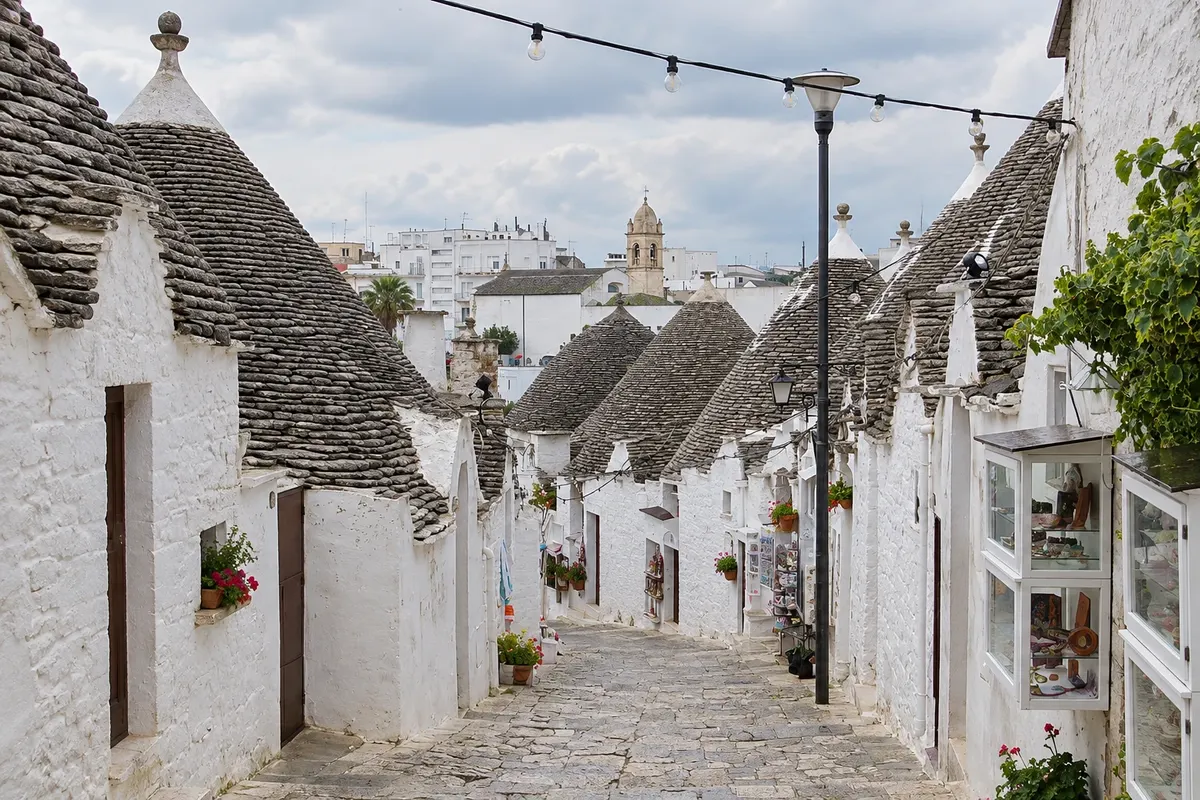
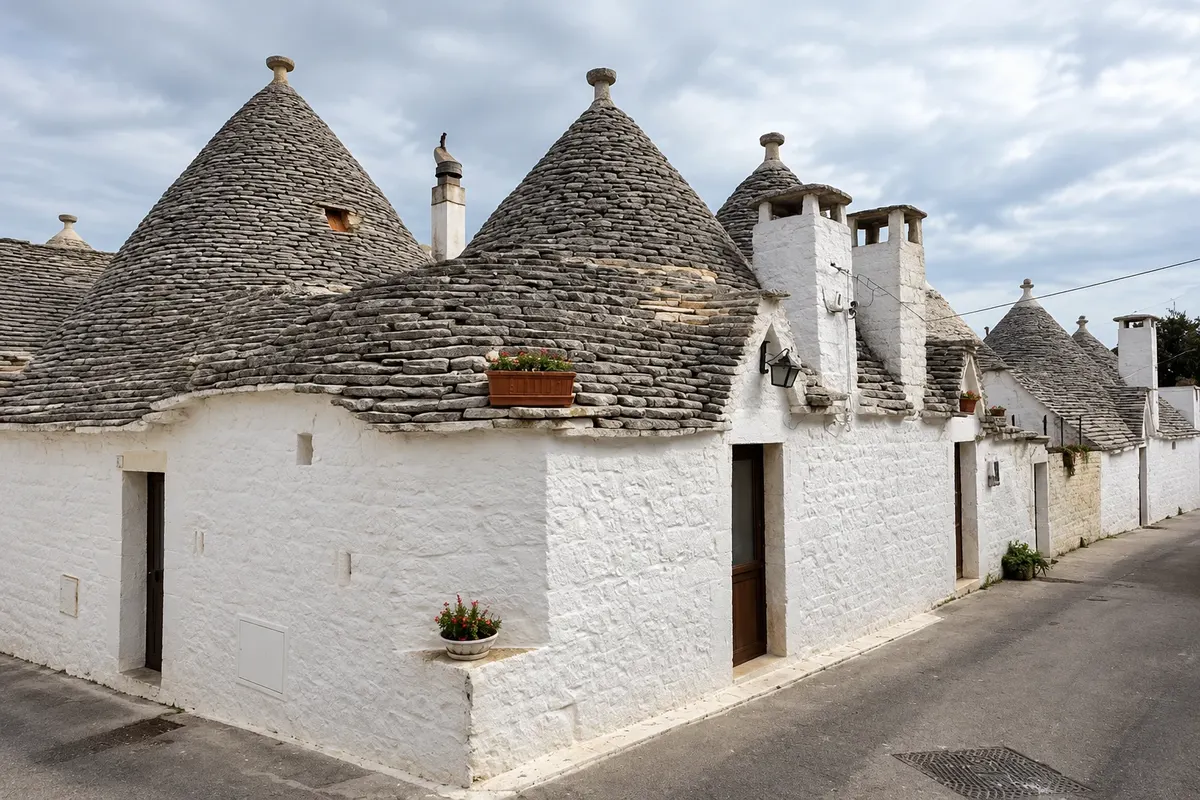
Na fotografiji: Trulli di Alberobello

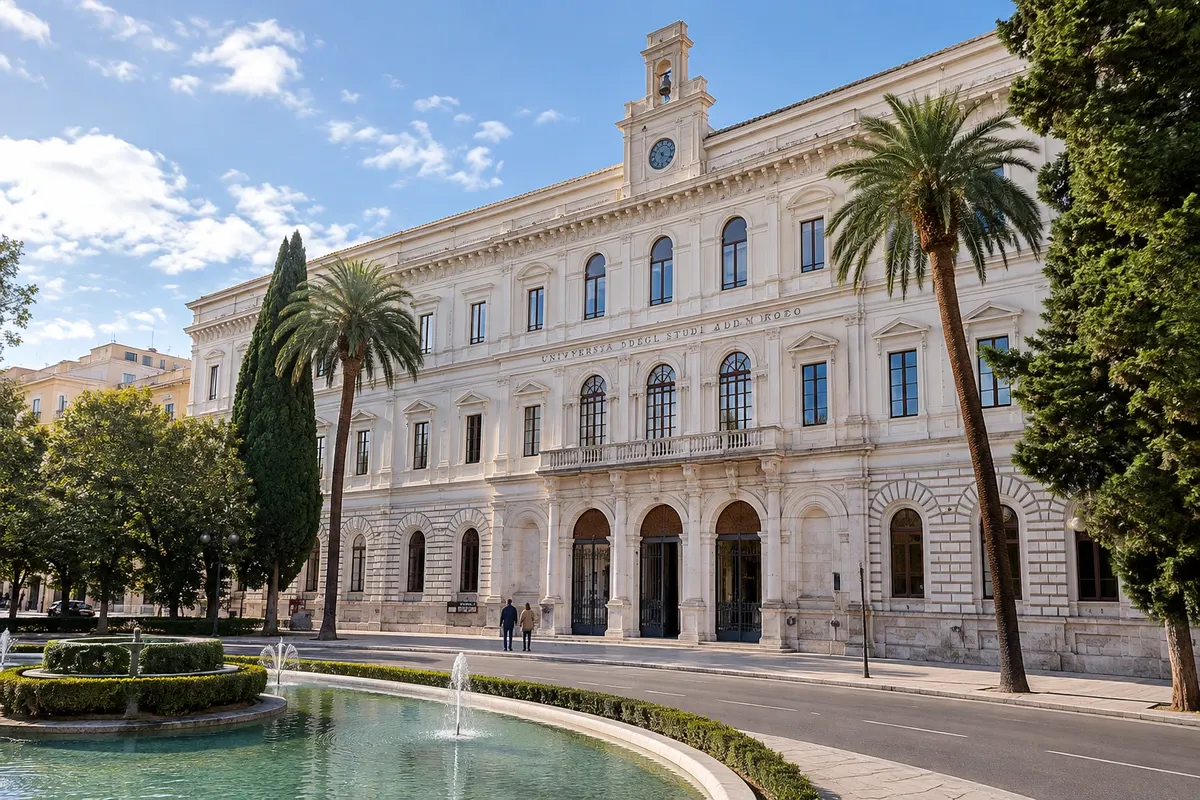
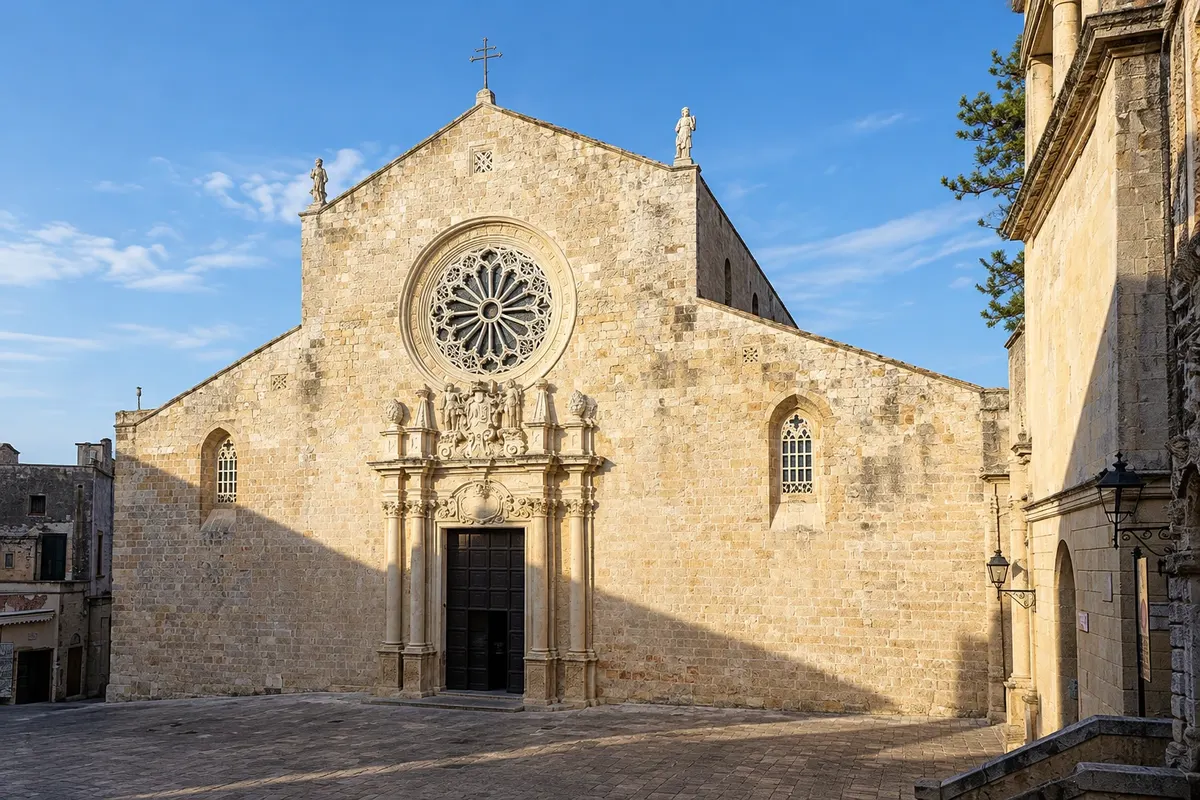
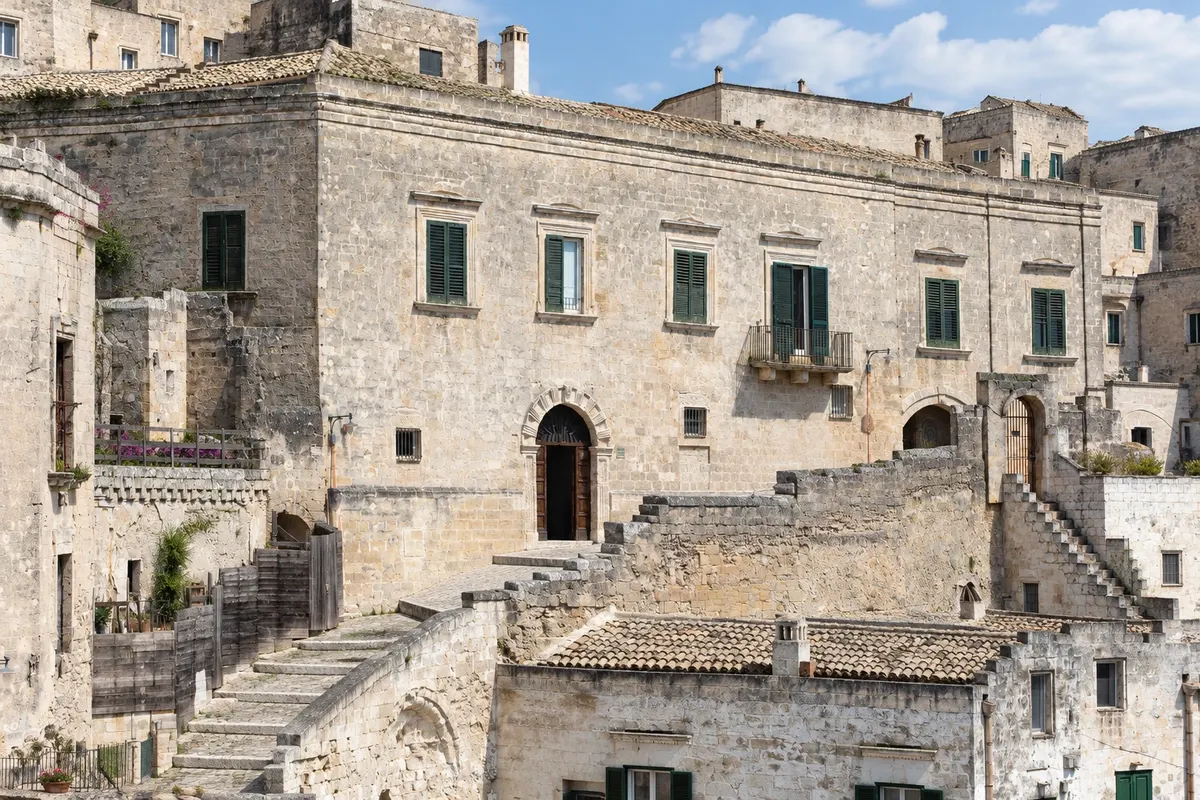
Illustrative images. The pictures in this guide are illustrations based on the real place, not photographs, and may differ from it.

Na voljo v trgovini Google Play Pošljite svoje fotografije

Spoznajte kraj

Pokrajina, ki jo doživite
v svojem ritmu.

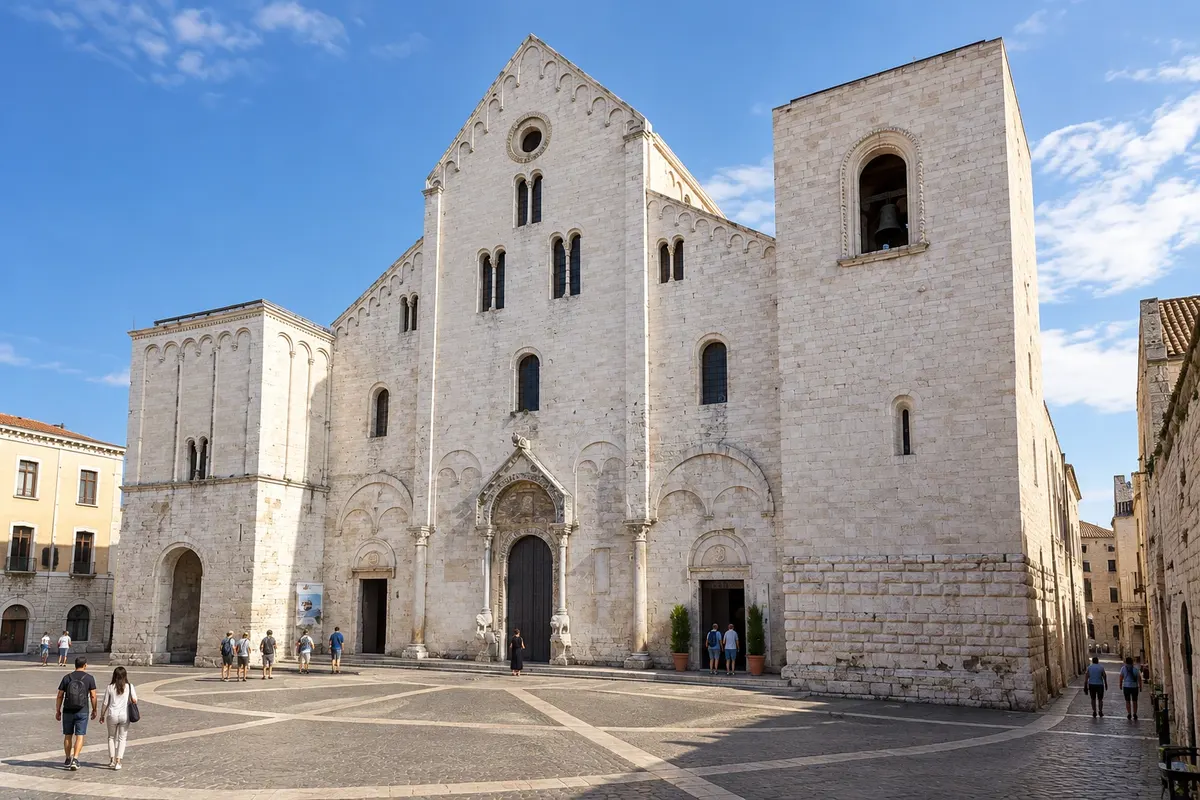
Apúlia (Puglia, in Italian) is the region of the heel of the boot, in southeastern Italy, washed by the Adriatic and the Ionian Sea. The capital is Bari, a port city with a medieval center enclosed by walls, where the Basilica di San Nicola is located, which houses the relics of Saint Nicholas. Bari is also the main gateway to the region, with an airport and trains to the rest of the country.

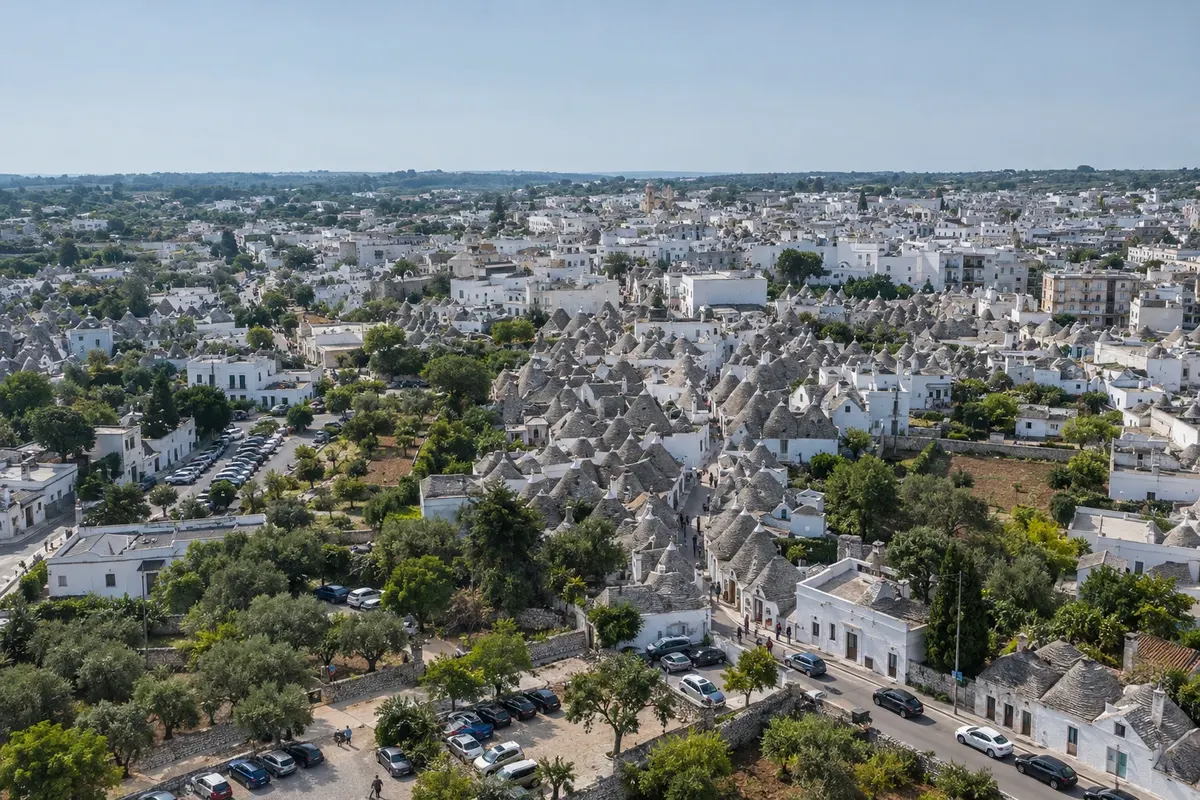
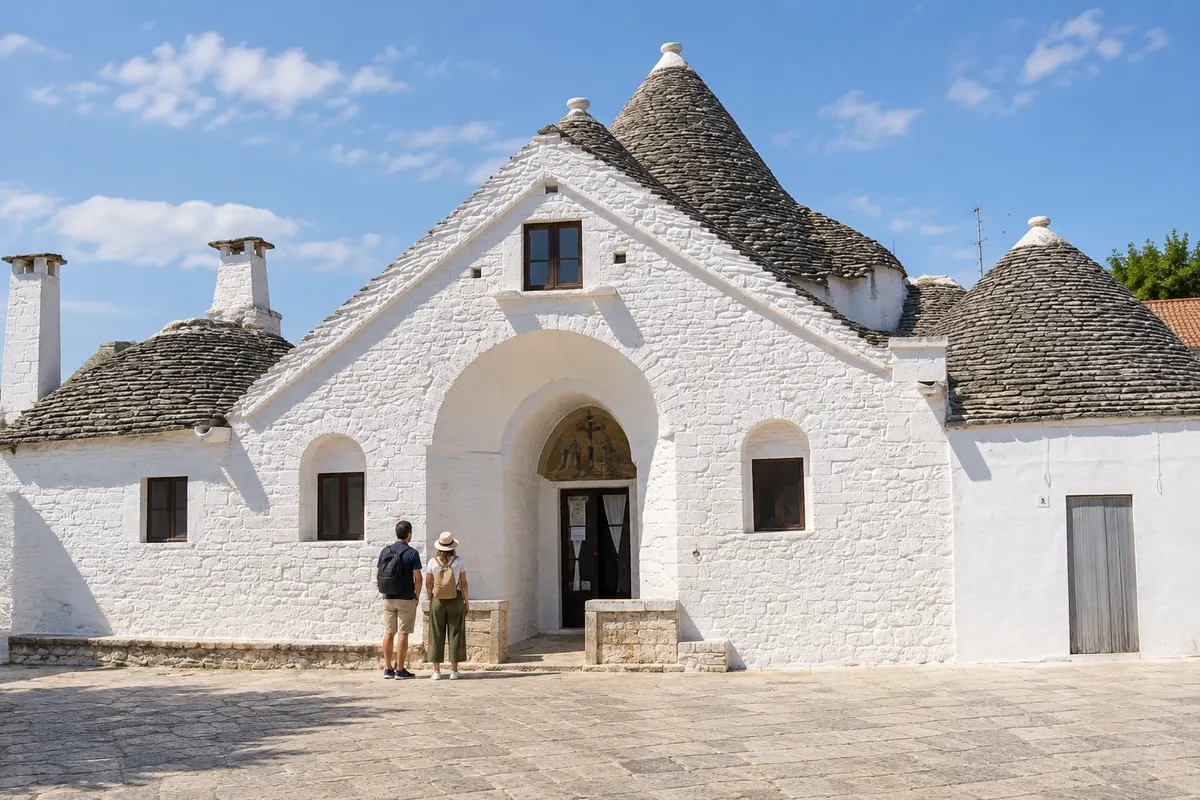
South of Bari, the high coastline forms coves and sea caves. Polignano a Mare, about 35 km away, has its historic center on a cliff and the small beach of Lama Monachile between rock walls. Inland, Alberobello concentrates more than 1,500 trulli, the dry-stone houses with conical roofs, recognized by UNESCO as a World Heritage Site in 1996, at the entrance to the Valle d'Itria.

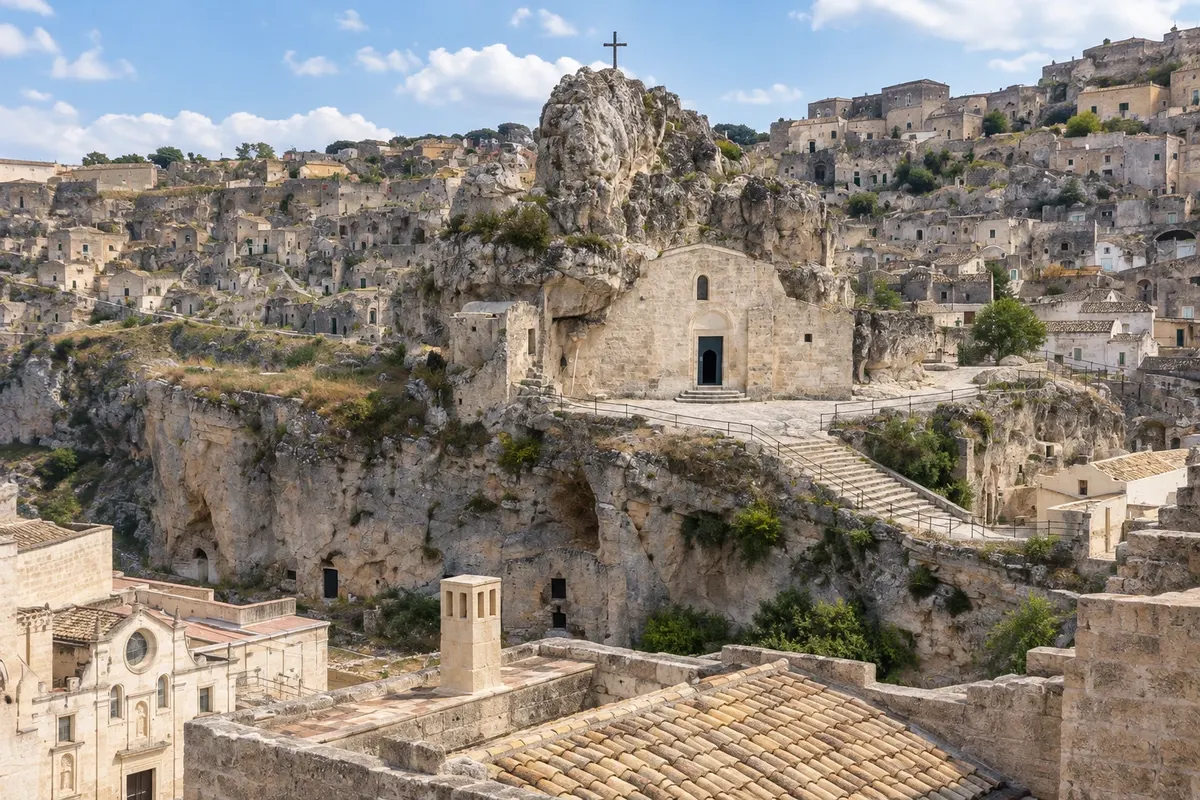
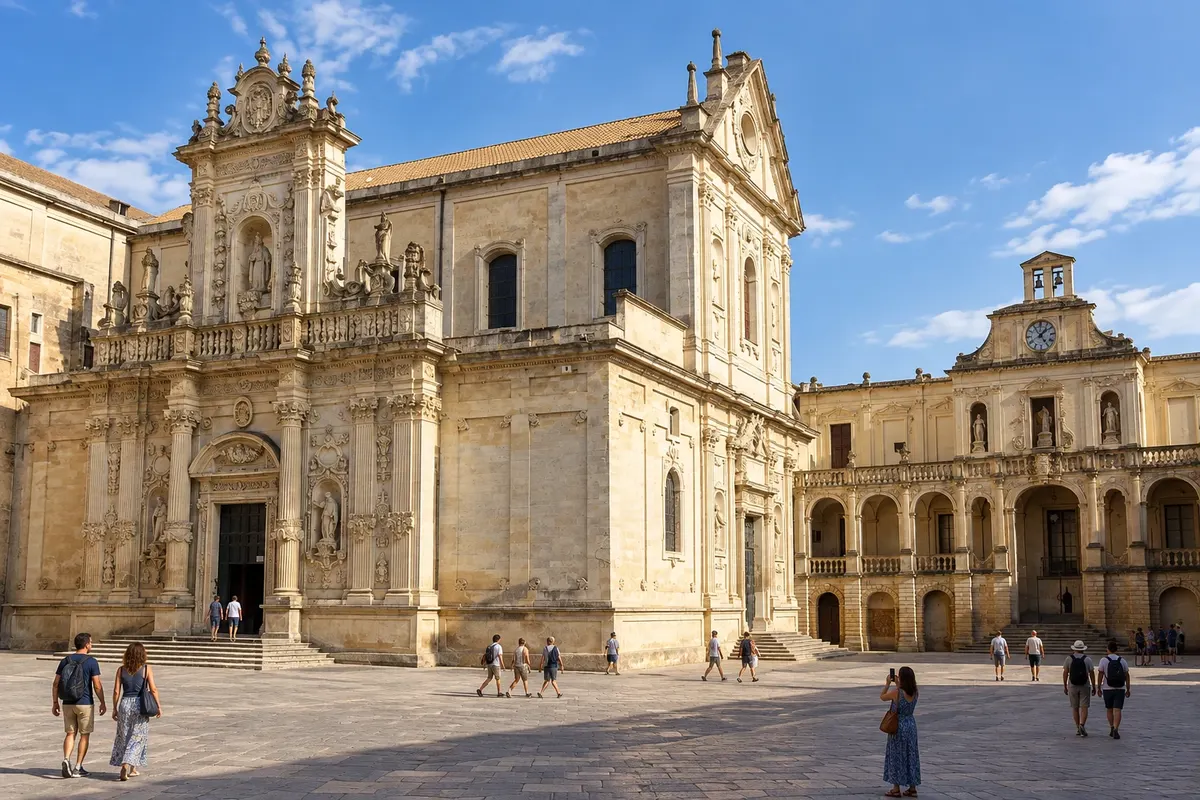
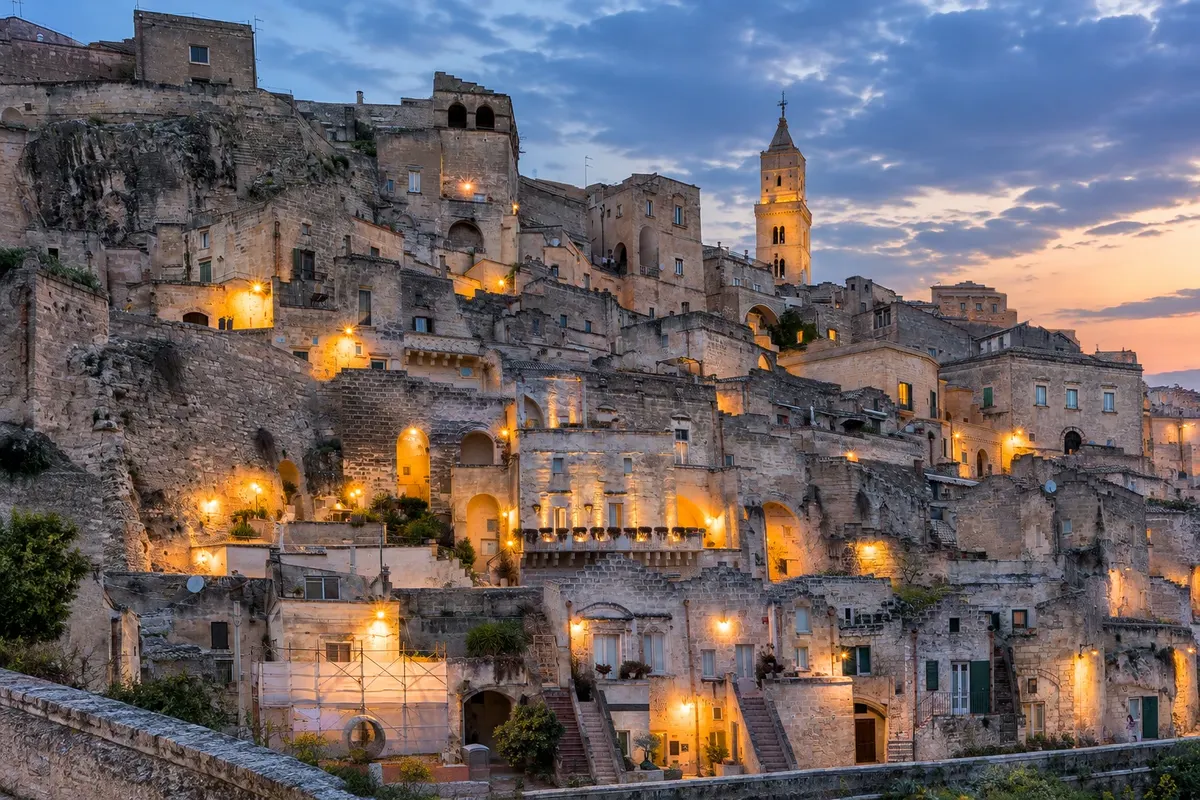
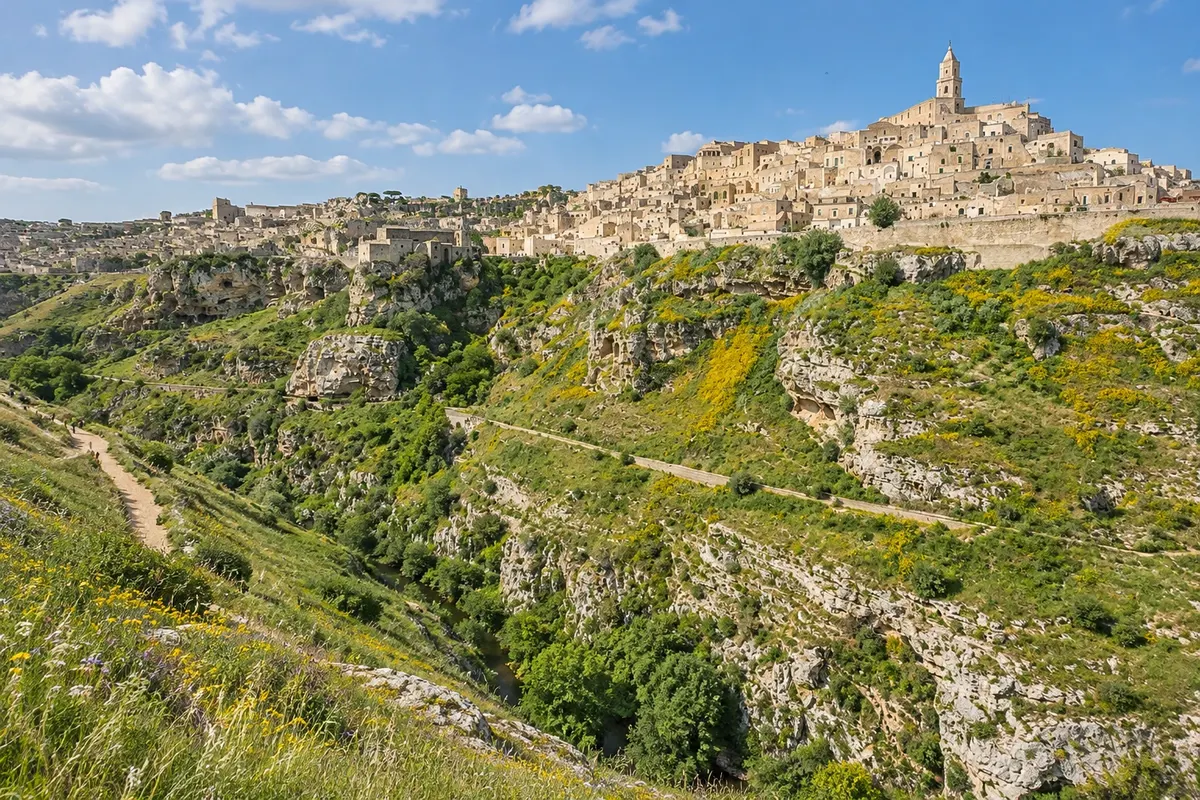
Further south, Lecce is known for churches and palaces with baroque façades carved in the region's pale stone. Matera, about 65 km from Bari, is already in the neighboring Basilicata: the Sassi, neighborhoods of houses and churches dug into the rock, have been a UNESCO World Heritage Site since 1993.

The region's cuisine is based on fresh pasta, such as orecchiette, olive oil, vegetables, bread and fish. The rhythm is that of southern Italy: lunch around 1 pm, shops that close in the early afternoon and activity that returns at the end of the day, with a walk through the central streets.

This destination brings together 6 cities: Bari, Alberobello, Polignano a Mare, Lecce, Matera, Brindisi.

Delite: WhatsApp
Delite svoja popotniška doživetja s fotografijami Pošljite fotografije vsakega kraja, ki ste ga obiskali. Največje število fotografij na kraj: 5.

Ena destinacija, več poti

Mesta na tej poti

Začnite v enem mestu ali v načrt poti vključite več mest.

Apulia and Matera – lega
Polignano a MareMateraBrindisiBariAlberobelloLecce

Obrisi: ISTAT, limites administrativos 2026, CC BY 4.0. Priredba: Cidade Turismo.

Kako do tja:Apulia and Matera

✈ Aeroporto di Bari Karol Wojtyła (BRI)· 11 km do cilja (Bari)

Confirm before booking. Bari Airport (BRI) and Brindisi Airport (BDS) receive flights from Rome, Milan and other European cities. From Rome, high-speed trains reach Bari Centrale in about 4 hours. From Bari depart trains to Polignano, Lecce, Alberobello and Matera.

Predlagana točka prihoda:Bari

Bari
Apúlia · Apulia and Matera Capital Predlagana točka prihoda

Bari

Bari, capital of Apulia, is the largest Italian city on the Adriatic and the gateway to the region. The old town, Bari Vecchia, sits on a peninsula between two harbors and houses the Basilica di San Nicola, with the relics of Saint Nicholas, the Cattedrale di San Sabino and the Castello Normanno-Svevo. Next to it, the Quartiere Murat, laid out in the 19th century, has shopping streets, and the Lungomare Nazario Sauro leads to the Pinacoteca Metropolitana Corrado Giaquinto.

Alberobello
Apúlia · Apulia and Matera

Alberobello

Alberobello, about 55 km from Bari, at the entrance to the Valle d'Itria, has the largest concentration of trulli, the dry-stone houses with conical roofs, recognized by UNESCO in 1996. The Rione Monti gathers about 1,030 trulli on the hillside, with the church of Sant'Antonio at the top. In the upper part are the Basilica dei Santi Medici and the Trullo Sovrano, the only two-storey trullo open as a house-museum, and in the center the Casa Pezzolla museum.

Lecce
Apúlia · Apulia and Matera

Lecce

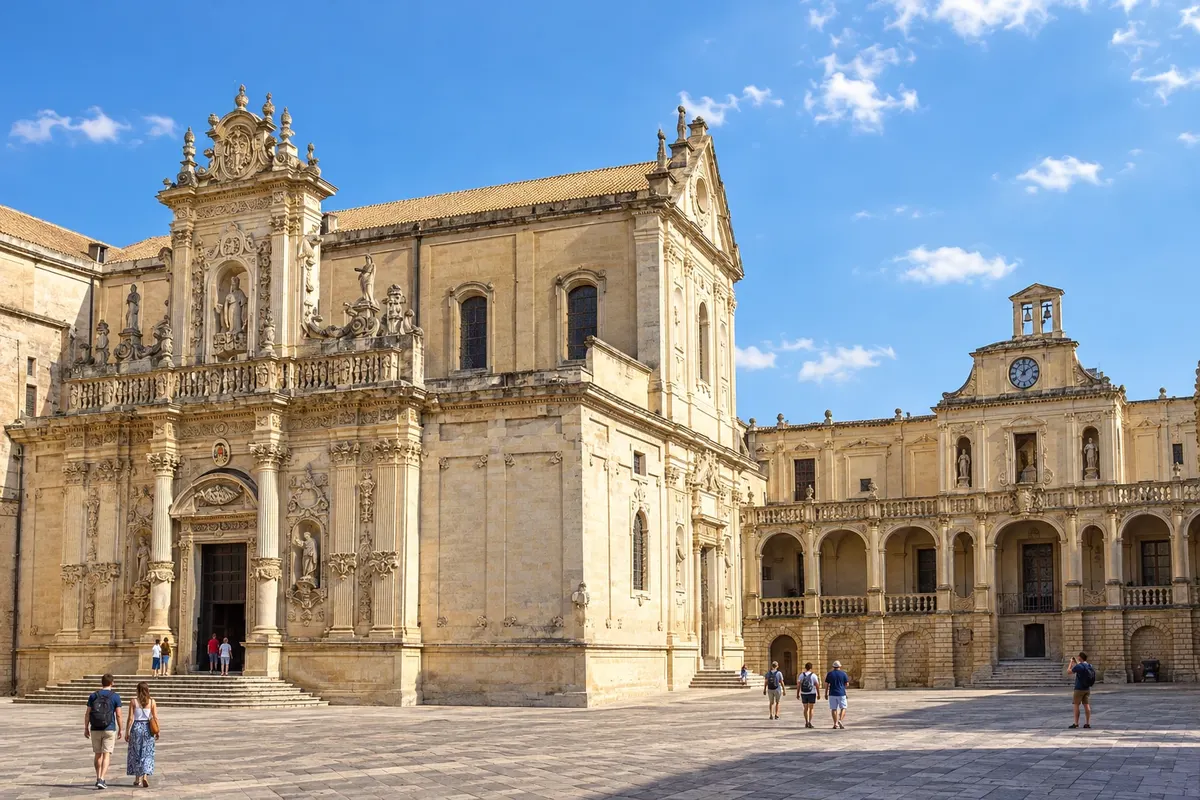
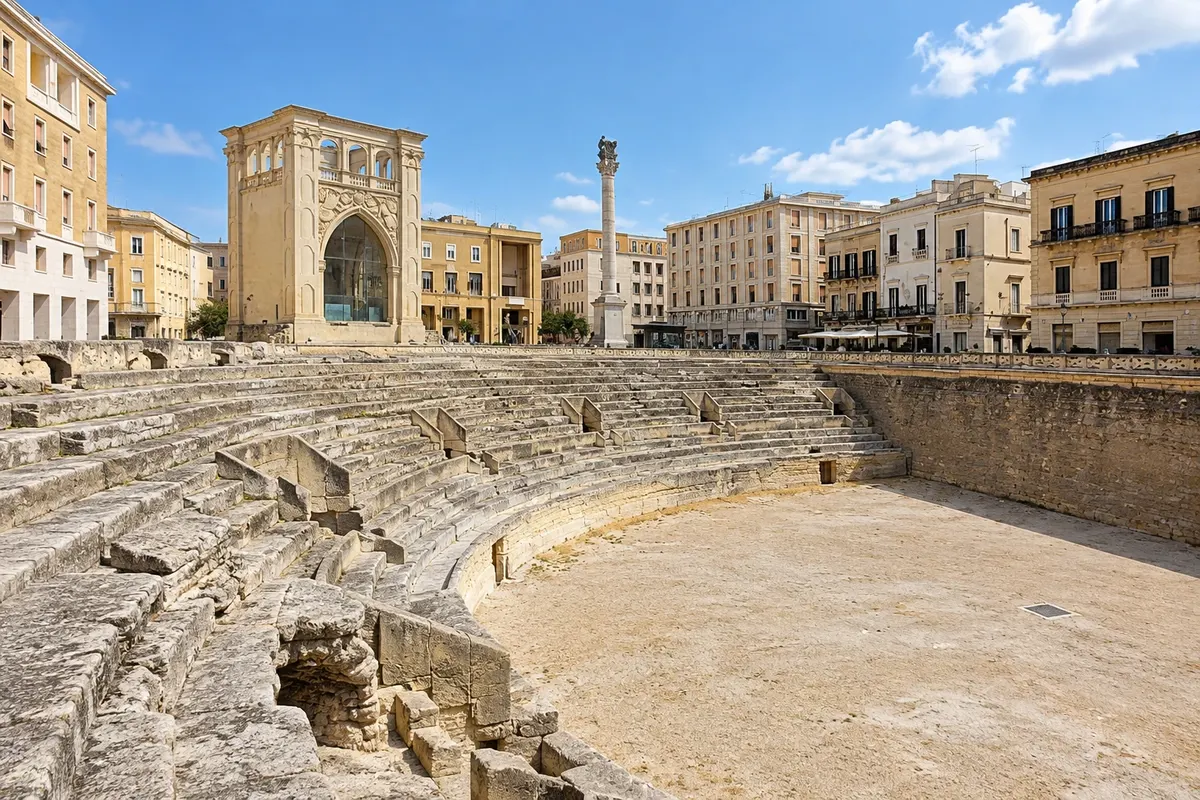
Lecce is the main city of the Salento, the heel of the Italian boot, and became famous for the barroco leccese, carved in the light, soft stone of the region between the 16th and 18th centuries. In the centro storico (historic center) are the Basilica di Santa Croce, the Piazza del Duomo with the cathedral and the 70-metre bell tower, the Piazza Sant'Oronzo with the Anfiteatro Romano, the Porta Napoli and the Castello Carlo V. Otranto, on the Adriatic, is about 45 km away.

Matera
Basilicata · Apulia and Matera

Matera

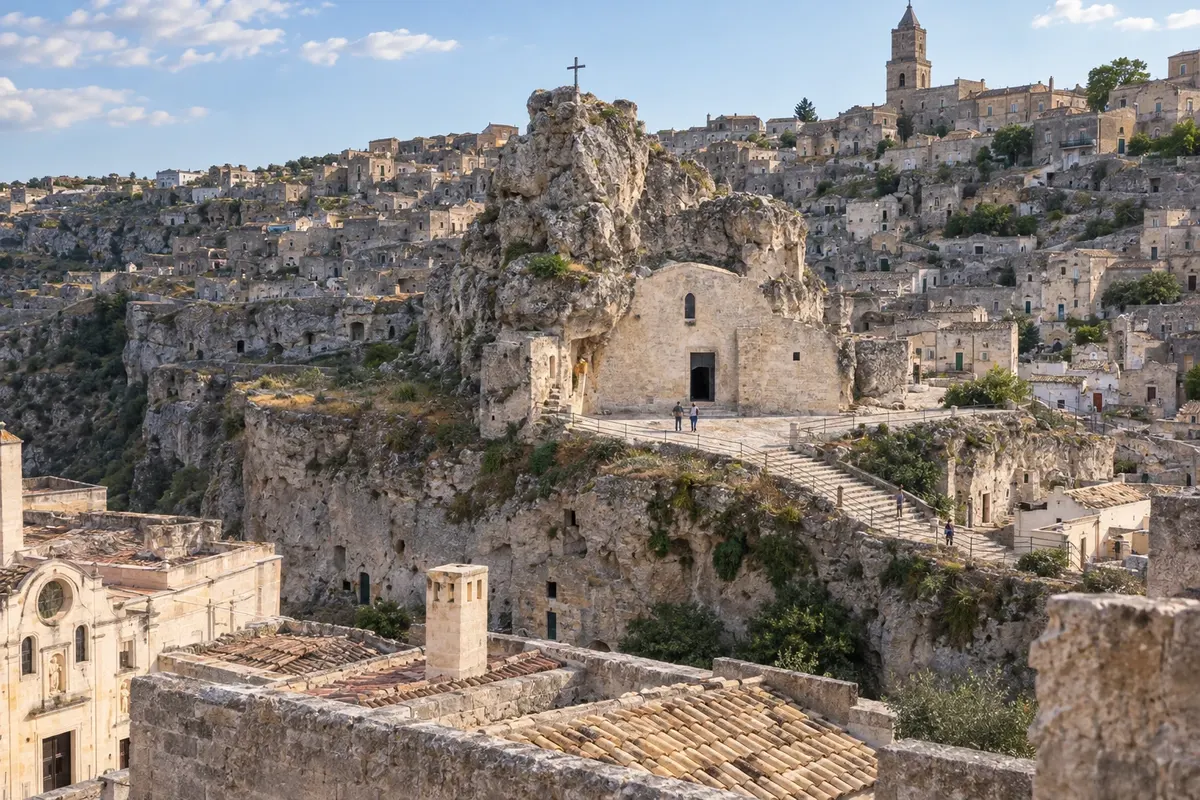
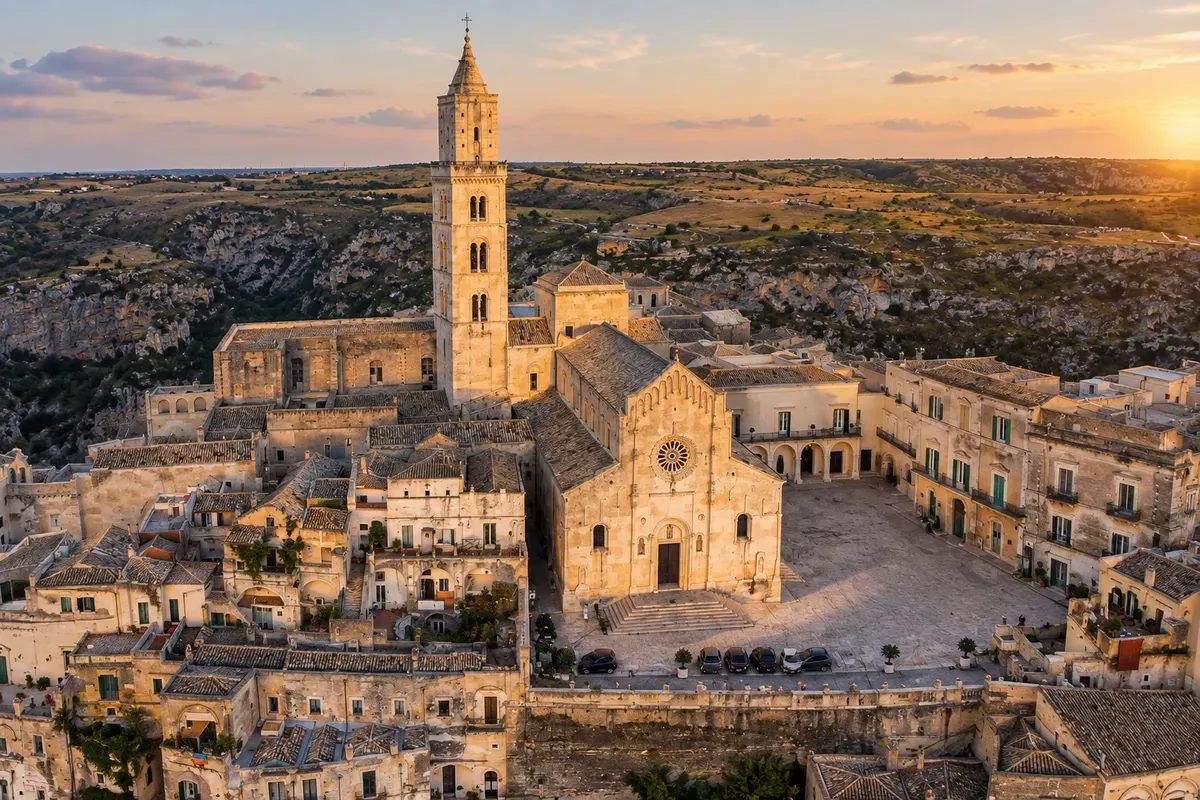
Matera, in the Basilicata region, near the border with Apulia, is known for the Sassi: the Sasso Caveoso and the Sasso Barisano, neighborhoods of houses and churches carved into the rock above the Gravina ravine, a UNESCO World Heritage Site since 1993. Between the two lies the Civita, with its Romanesque cathedral. There are rock-hewn churches with frescoes, the furnished Casa Grotta, the Palombaro Lungo cistern and viewpoints such as the one at Parco della Murgia Materana on the other side of the ravine.

Brindisi
Apúlia · Apulia and Matera

Brindisi

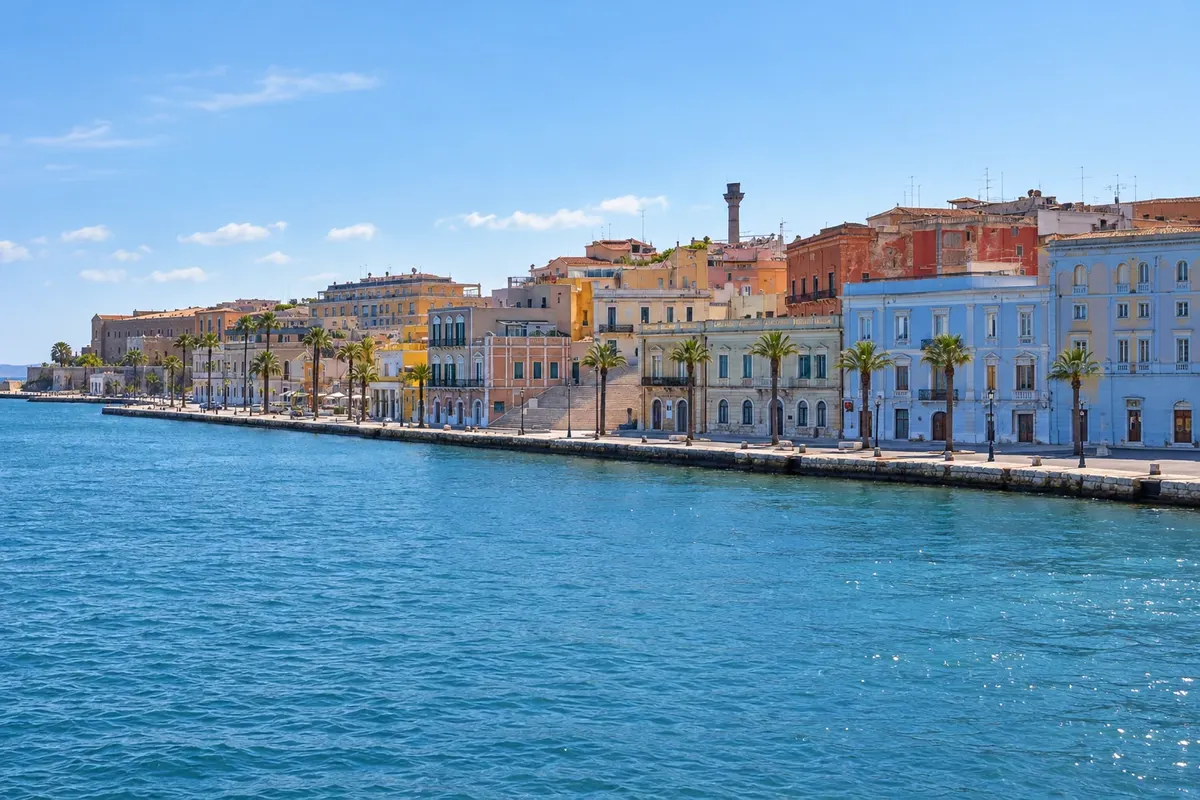
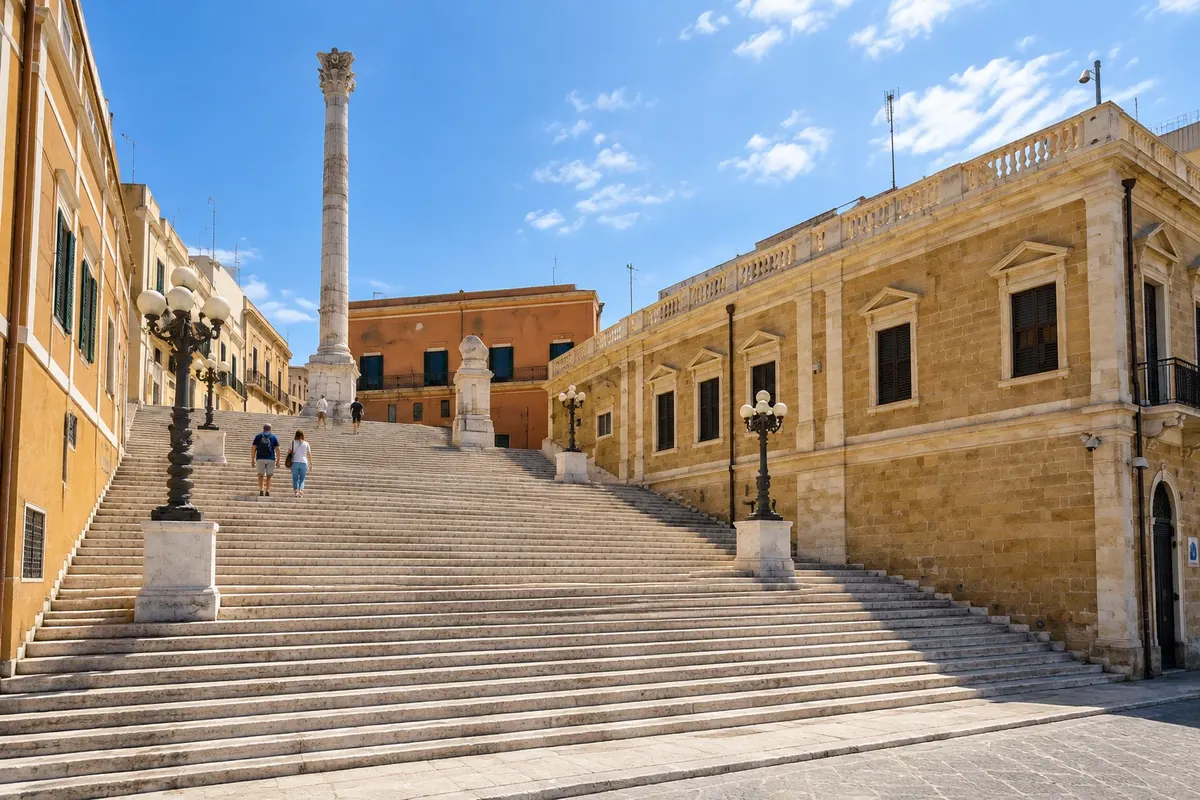
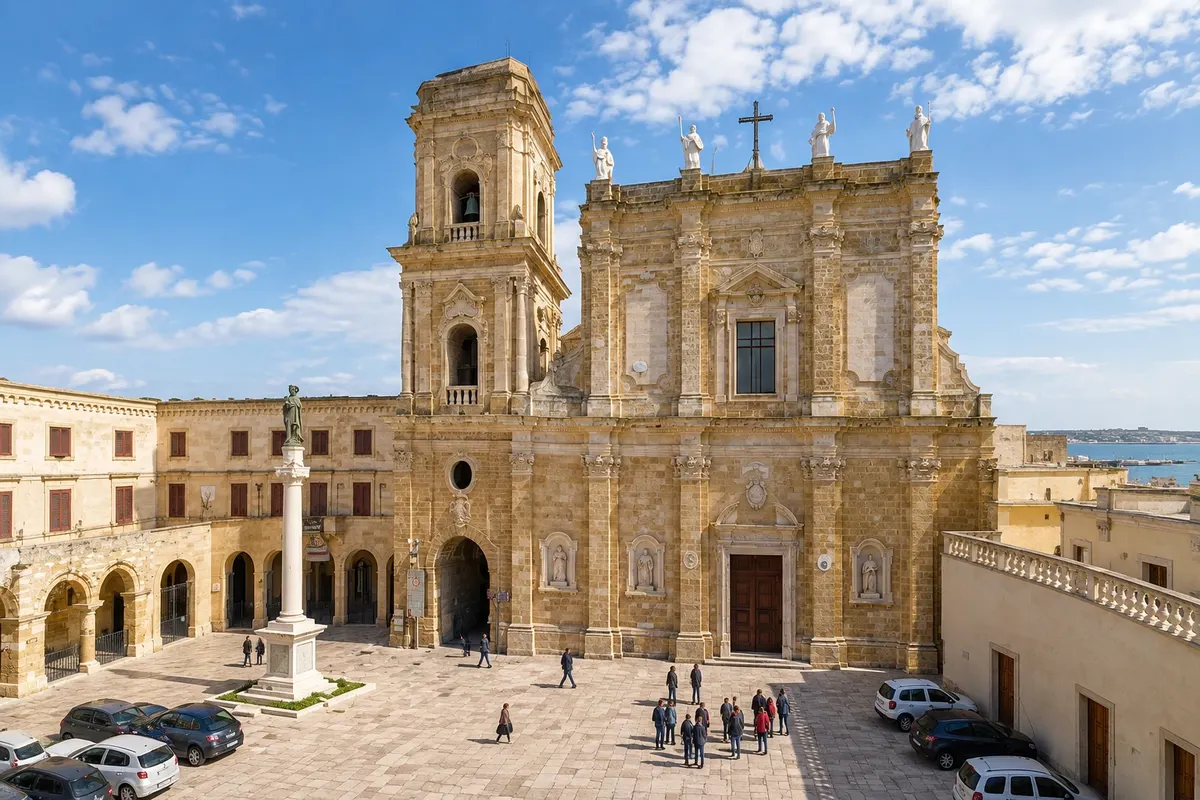
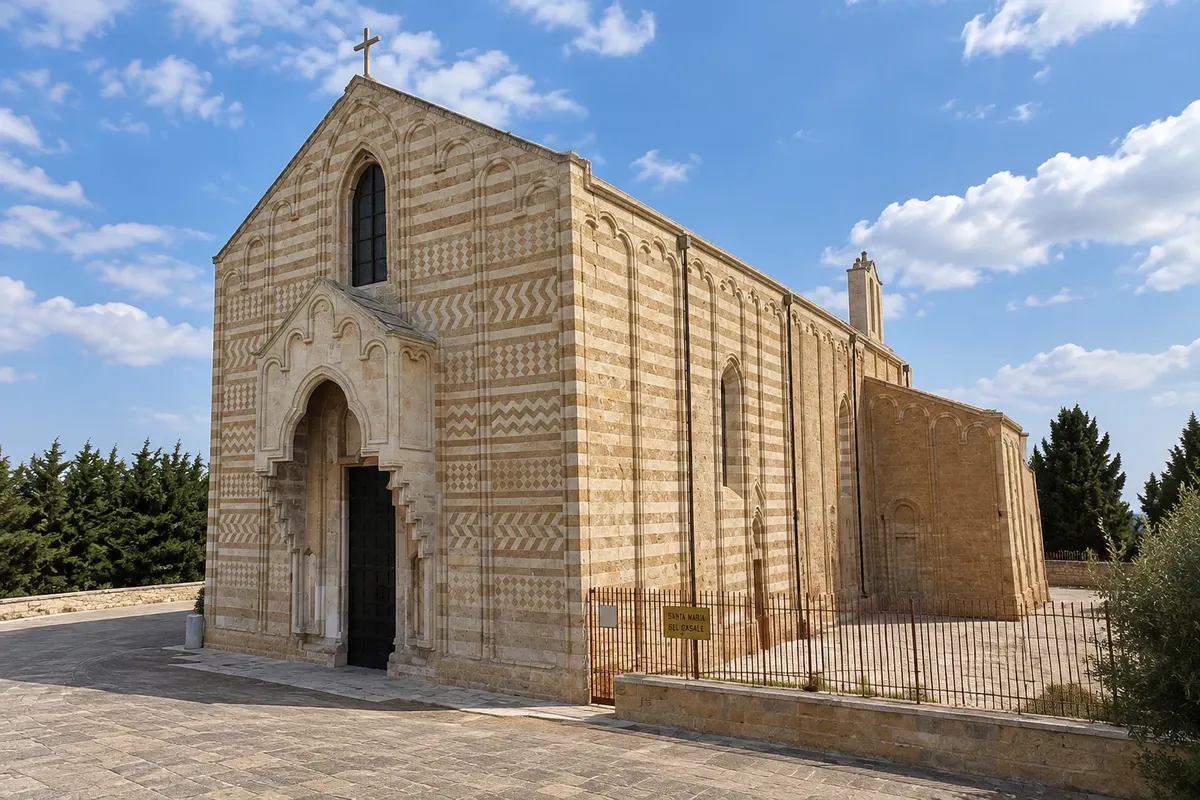
Brindisi is the port city in the south of Puglia, in a bay of the Adriatic used as a port since Roman times. At the top of the harbour staircase stands the Roman column that marks the end of the Via Ápia, and tradition says Virgilio died nearby. The historic centre includes the cathedral square, with the archaeological museum, and the round church of San Giovanni al Sepolcro. The waterfront faces the Monumento ao Marinheiro, and near the airport is Santa Maria del Casale, with 14th-century frescoes. Ferries to Grécia depart from the port. Italian is spoken.

Doživite kraj

Kaj početi – Apulia and Matera

Basilica di San Nicola
Bari · Apulia · Cerkev

Basilica di San Nicola

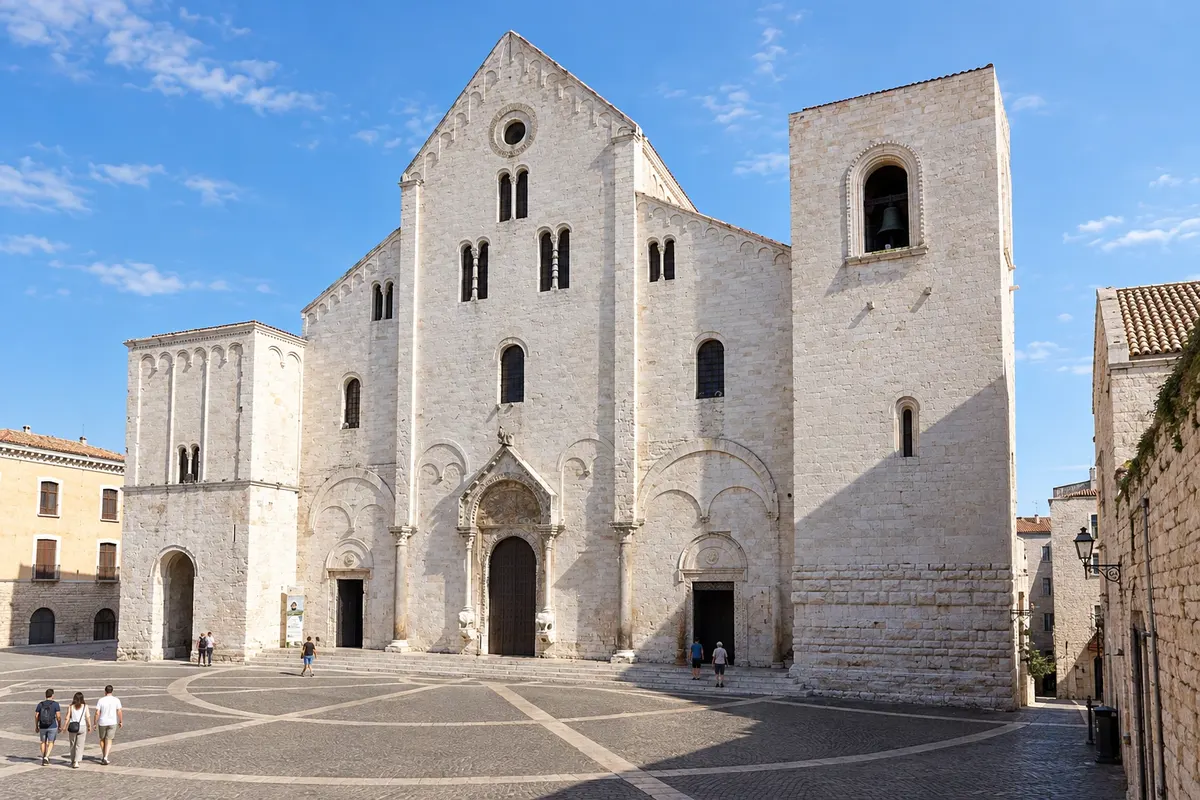
Romanesque basilica from the 11th century, in the heart of Bari Vecchia, built to house the relics of Saint Nicholas, brought from the city of Myra (now in Turkey) in 1087. It is a destination for Catholic and Orthodox pilgrims.

Basilica of Santa Croce
Lecce · Apulia · Cerkev

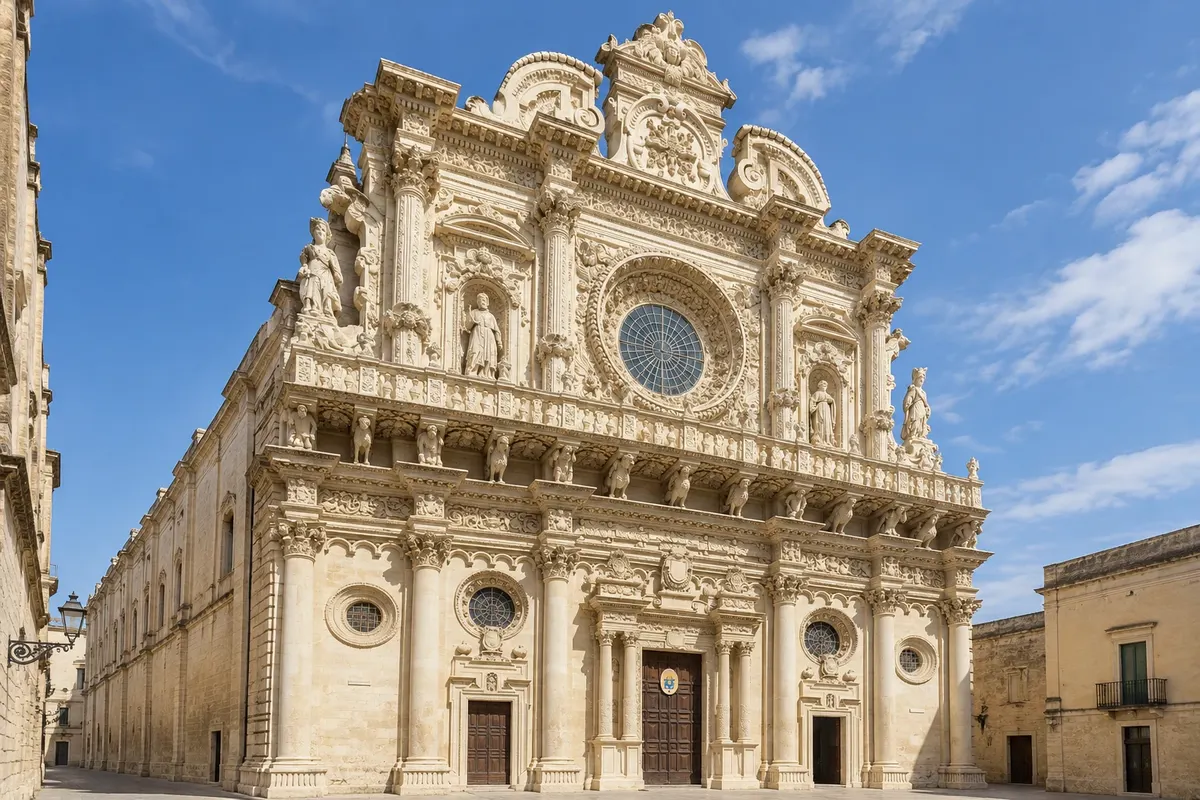
Basilica of Santa Croce

16th–17th century basilica considered the masterpiece of the barroco leccese, with a façade full of grotesque figures, animals and a large rose window. Beside it is the former convent of the Celestines.

Colonne Romane and Scalinata Virgiliana
Brindisi · Apulia · Historic monument

Colonne Romane and Scalinata Virgiliana

The Roman column at the top of the harbour stairway, which by tradition marks the end of the Via Ápia, the road that connected Rome to Brindisi.

Lama Monachile
Polignano a Mare · Apulia · Plaža

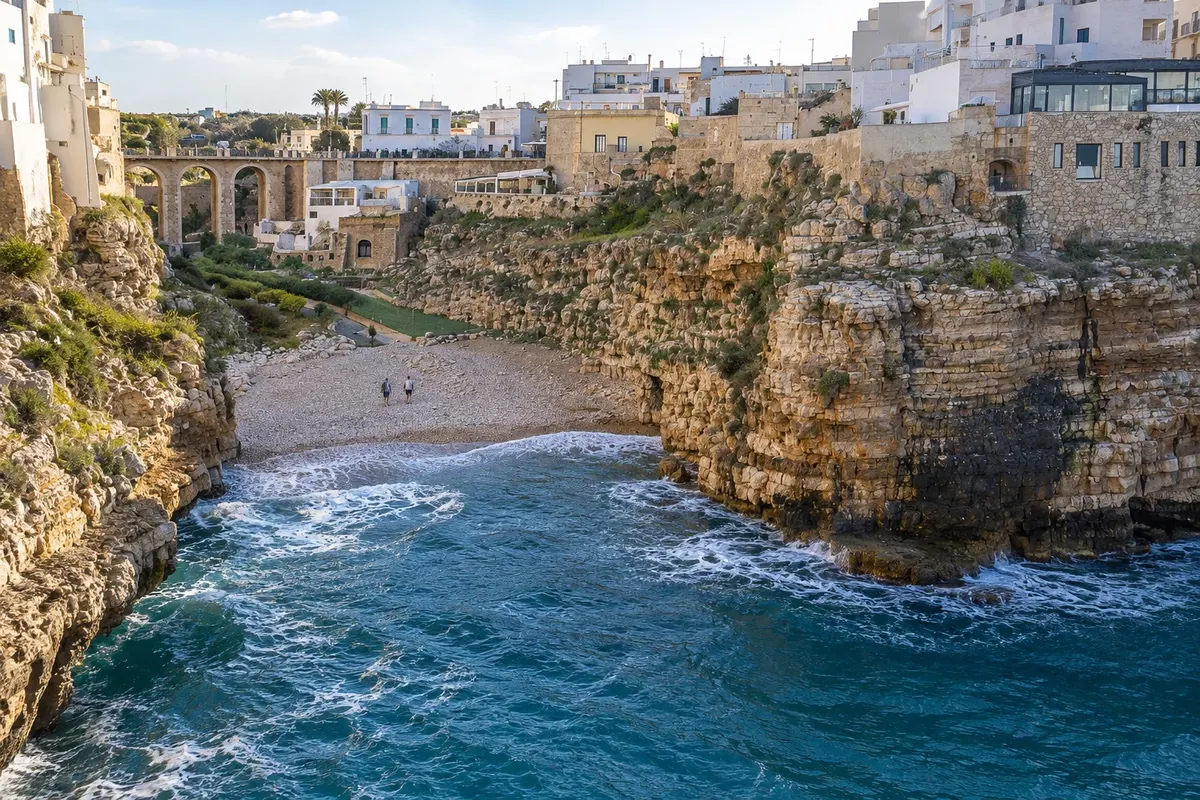
Lama Monachile

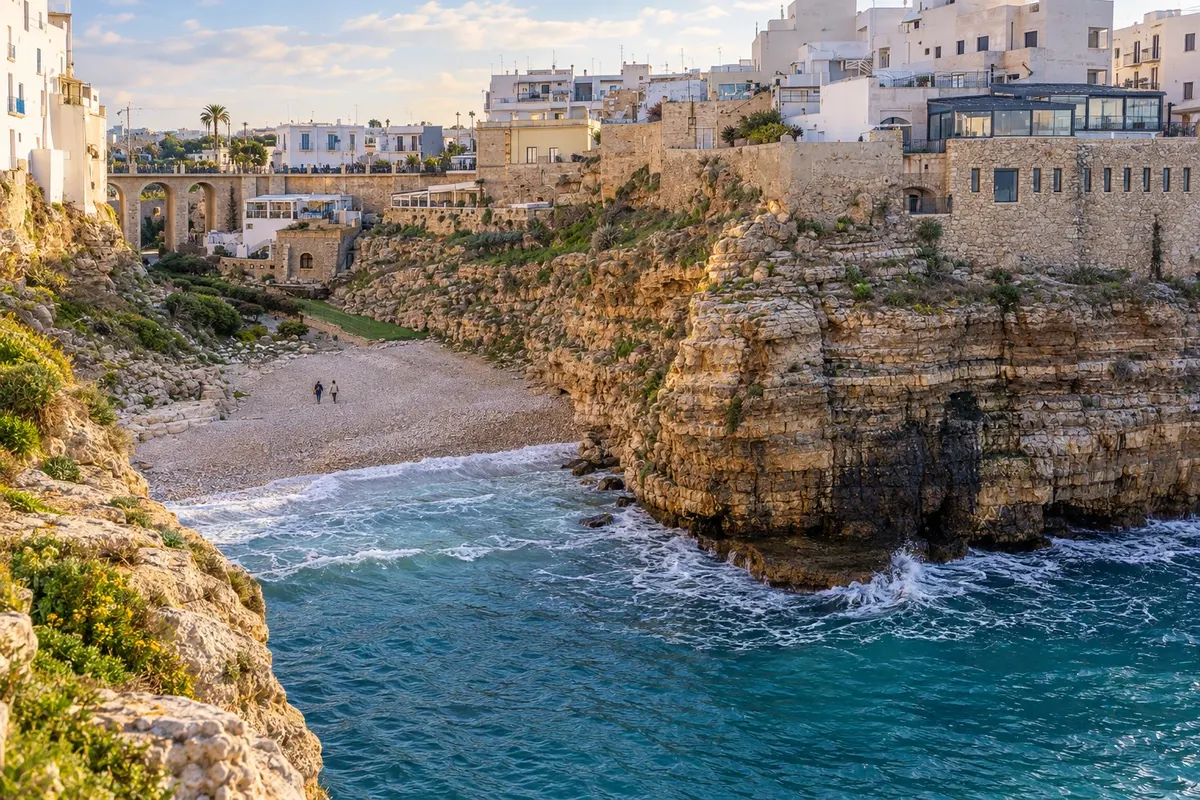
A small inlet between cliffs next to the historic center of Polignano, with a pebble beach and a stone bridge over the old Via Traiana. It's the town's most famous view.

Apulia and Matera – prikaži dodatne kraje (37)
Rione Monti
Alberobello · Apulia · Zgodovinska mestna četrt

Rione Monti

The trulli quarter of Alberobello, on the slope south of the center, with about 1,030 dry-stone houses and cone-shaped roofs. Together with Aia Piccola, it forms the ensemble recognized by UNESCO in 1996.

Sasso Caveoso
Matera · Basilicata · Zgodovinska mestna četrt

Sasso Caveoso

The oldest and most rustic of the two Sassi, with houses carved in steps like an amphitheater, the church of San Pietro Caveoso and, above, the rock churches of the Monterrone overlooking the Gravina ravine.

Cathedral of Brindisi
Brindisi · Apulia · Cerkev

Cathedral of Brindisi

Cathedral of Brindisi, rebuilt in the 18th century, on the square with the Loggia Balsamo and the Templars' portico, where Frederick II married in 1225.

Cathedral of San Sabino
Bari · Apulia · Stolnica

Cathedral of San Sabino

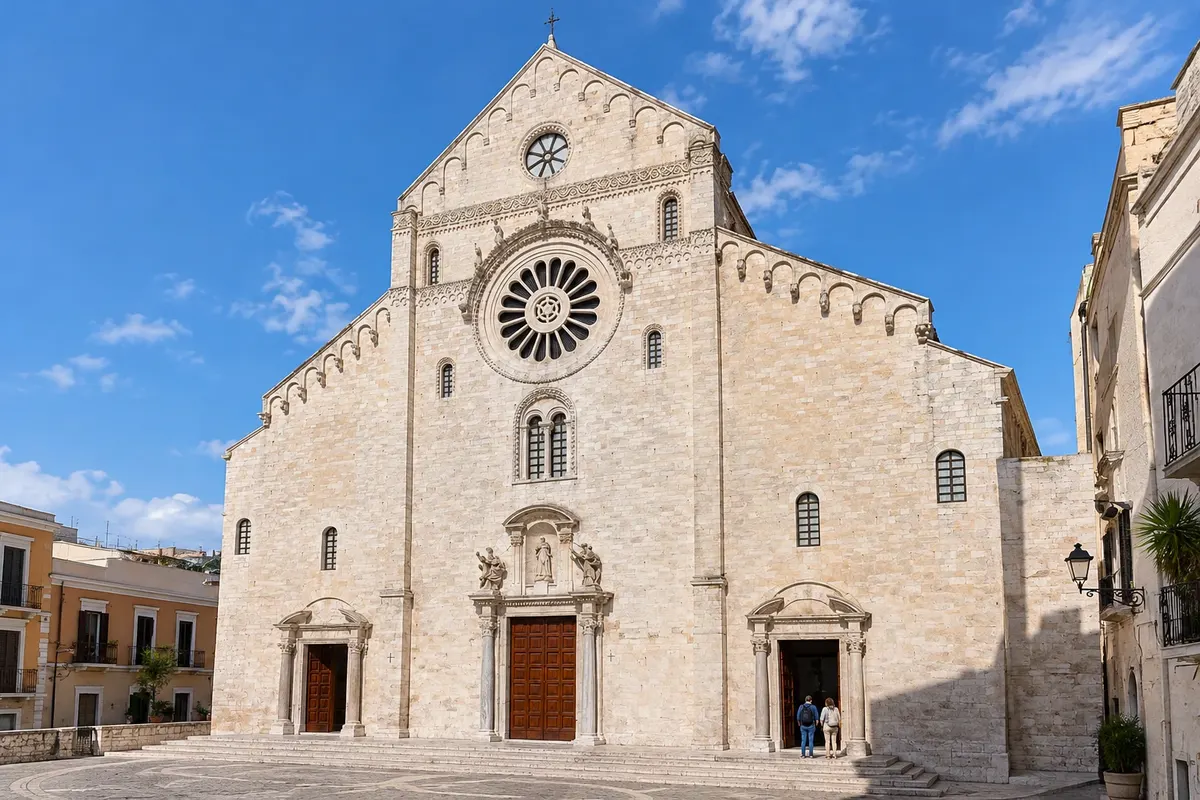
Bari's cathedral, in Apulian Romanesque style, was built between the 12th and 13th centuries over the ruins of older churches. It features a rose window on the façade, a Baroque crypt and remains of medieval mosaics.

Historic Centre of Polignano a Mare
Polignano a Mare · Apulia · Zgodovinska mestna četrt

Historic Centre of Polignano a Mare

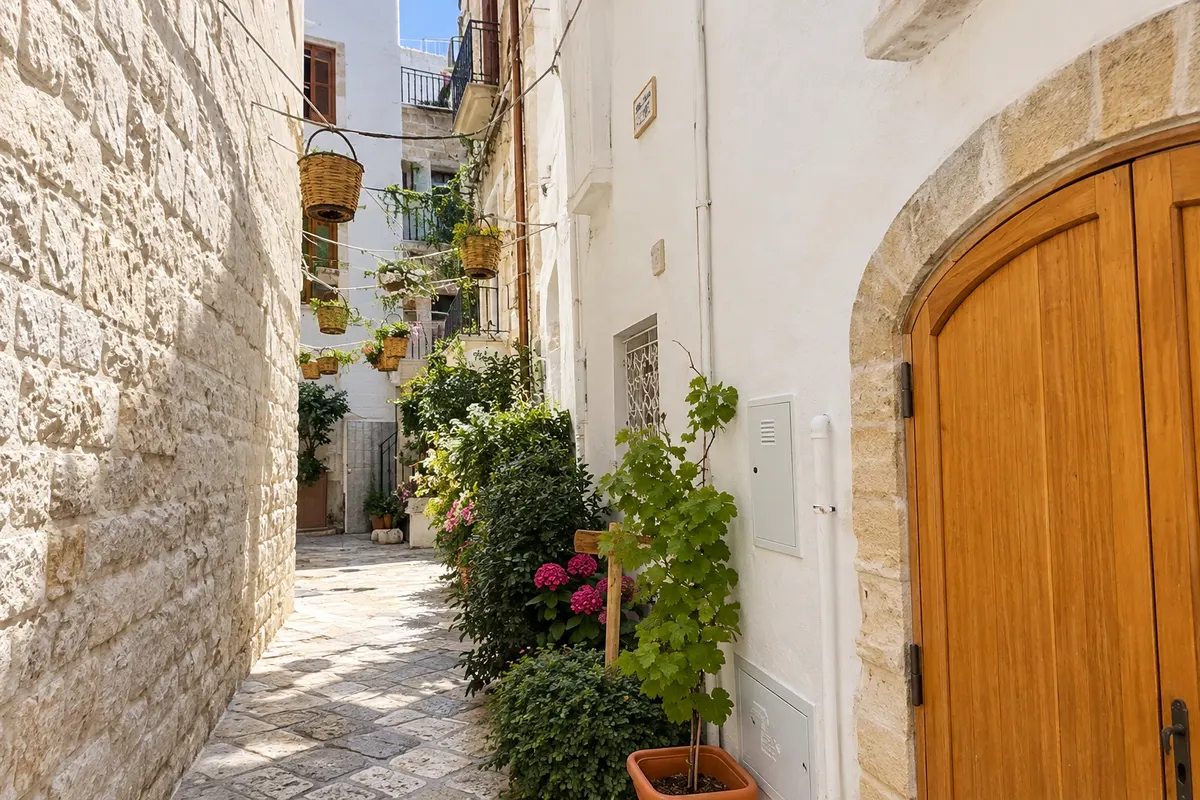
Polignano's old town sits on a rocky spur plunging into the Adriatic. White alleys, terraces over the sea and the main church on the central square.

Piazza del Duomo
Lecce · Apulia · Trg

Piazza del Duomo

An enclosed square, almost a courtyard, surrounded by the Cattedrale di Santa Maria Assunta, the 70-meter campanile, the episcopal palace and the former seminary, all in leccese Baroque.

Sasso Barisano
Matera · Basilicata · Zgodovinska mestna četrt

Sasso Barisano

The Sasso facing north, toward Bari, with houses that have elaborately worked facades, carved portals and the rock church of San Pietro Barisano, the largest in the city.

Trullo Sovrano
Alberobello · Apulia · House-museum

Trullo Sovrano

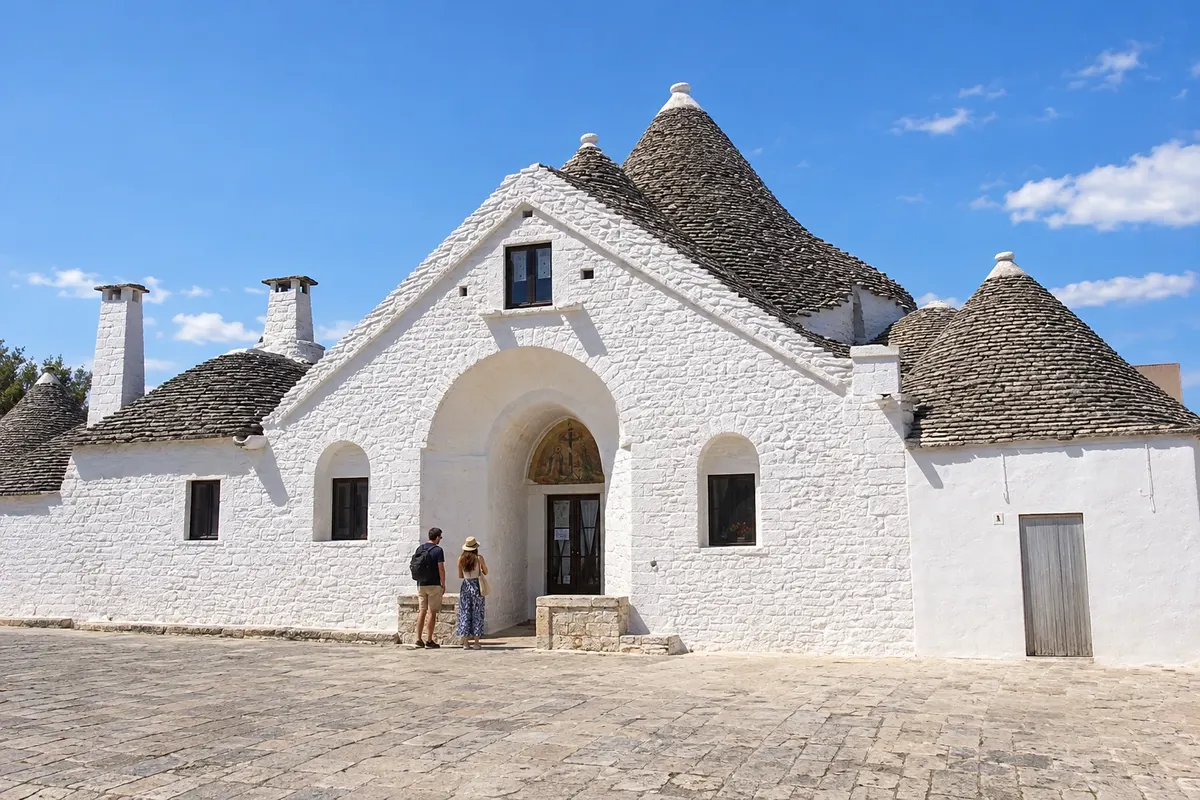
The largest trullo in Alberobello and one of the rare two-storey ones, about 14 meters high. Built in the 18th century, it is a national monument and serves as a furnished house-museum.

Roman Amphitheatre of Lecce
Lecce · Apulia · Ruins

Roman Amphitheatre of Lecce

Remains of the Roman amphitheatre from the time of Augustus, discovered in the early 20th century and exposed outdoors in Piazza Sant'Oronzo, the main square of Lecce, next to the patron's column.

Castello Normanno‑Svevo
Bari · Apulia · Grad

Castello Normanno‑Svevo

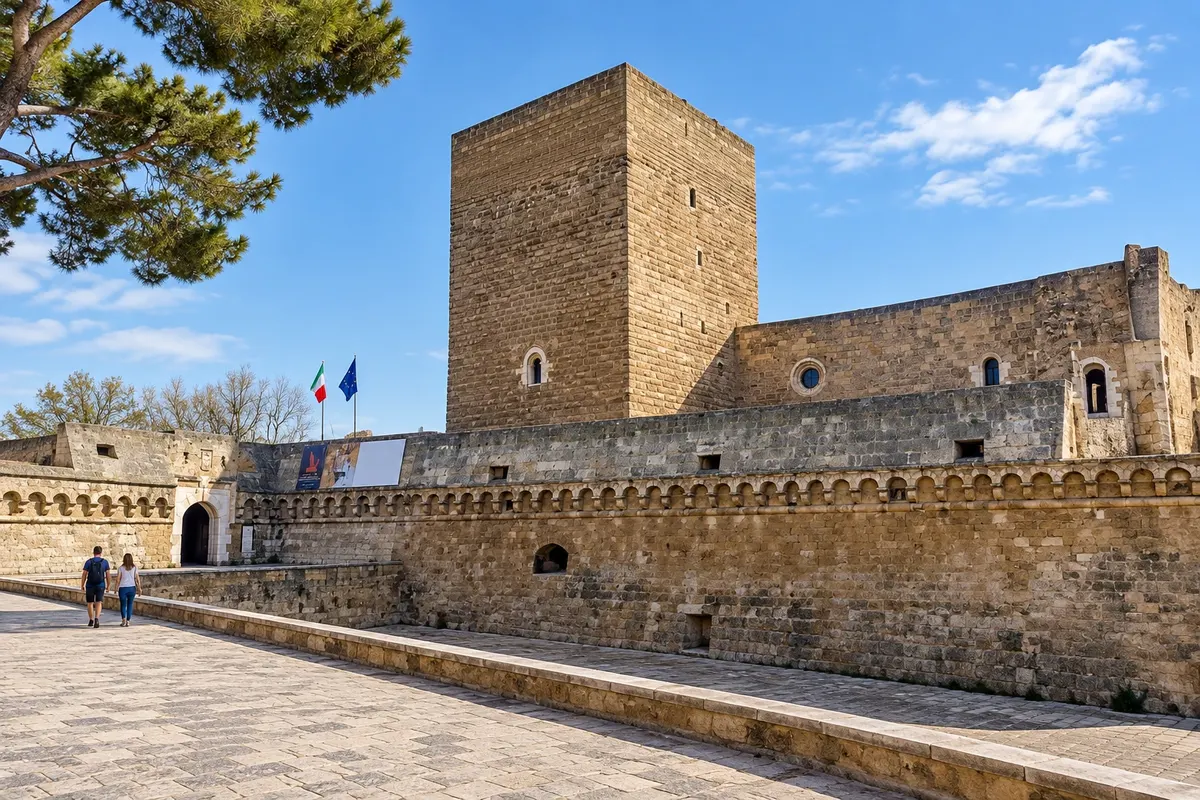
Fortress on the edge of the old town, erected by the Normans in the 12th century and rebuilt by Frederick II in 1233. It has a moat, stone towers and rooms with exhibitions and a gipsoteca, a collection of plaster casts.

Cathedral of Matera
Matera · Basilicata · Stolnica

Cathedral of Matera

Romanesque cathedral of Apulia, built between 1230 and 1270 at the highest point of the Civita, between the two Sassi, dedicated to the Madonna della Bruna and Sant'Eustachio.

Chiesa di Sant'Antonio di Padova
Alberobello · Apulia · Cerkev

Chiesa di Sant'Antonio di Padova

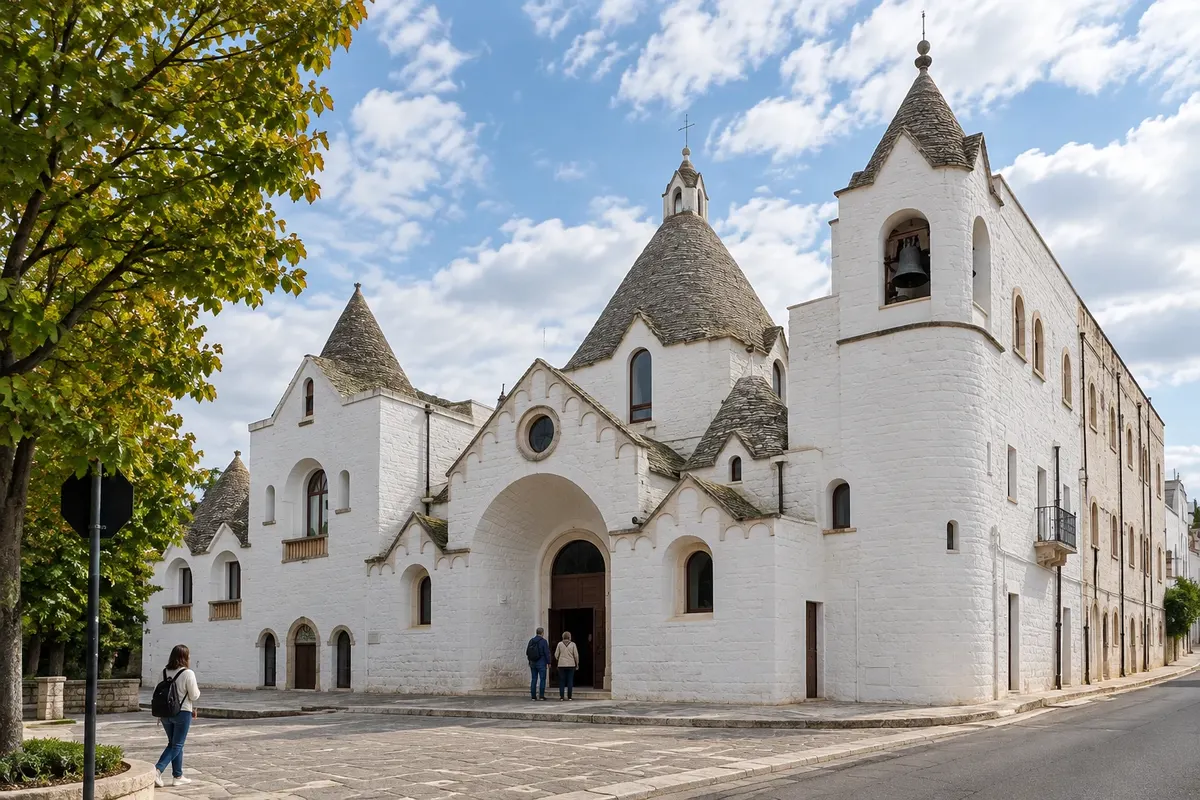
Church built in 1926 and 1927 at the top of Rione Monti, in the shape of a trullo, with a 21-meter conical dome and a bell tower alongside.

Francesco Ribezzo Provincial Archaeological Museum
Brindisi · Apulia · Muzej

Francesco Ribezzo Provincial Archaeological Museum

Archaeological museum on the cathedral square, with finds from Brindisi and the Salento and the Roman and Greek bronzes recovered from the sea off Punta del Serrone.

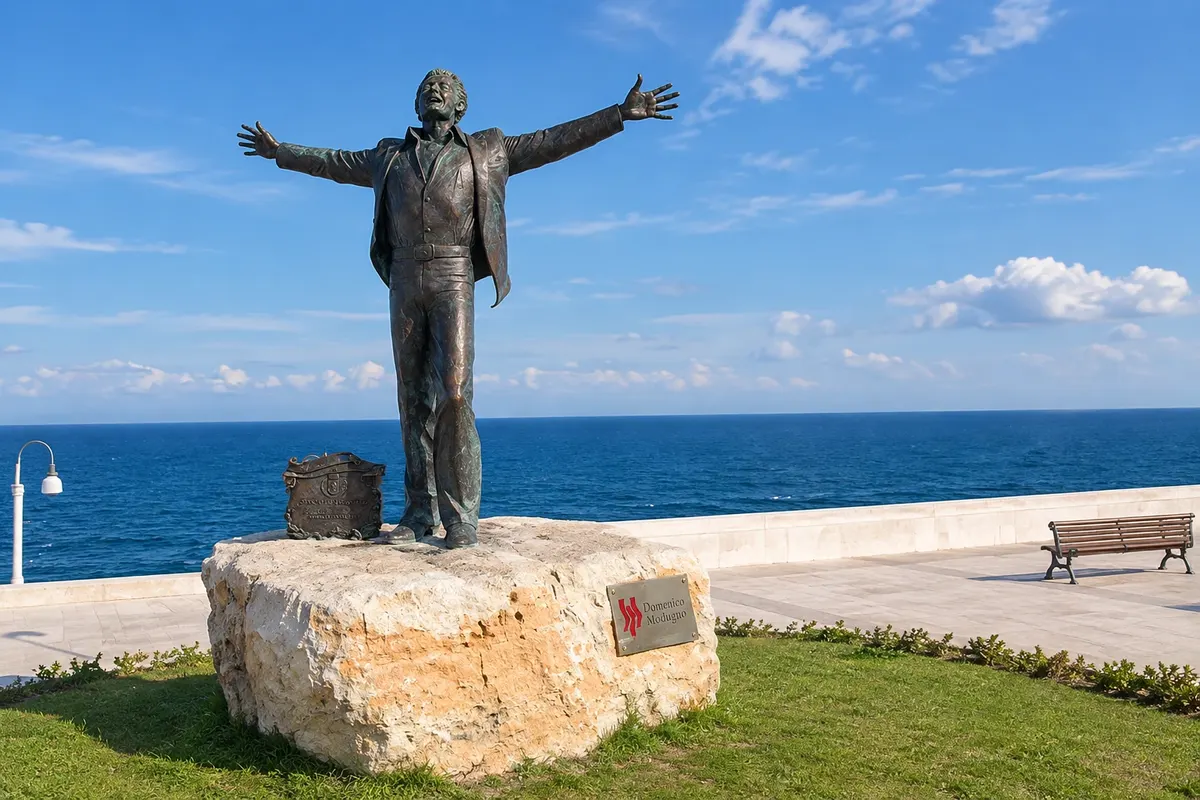
Statue of Domenico Modugno
Polignano a Mare · Apulia · Monument

Statue of Domenico Modugno

Bronze statue of singer Domenico Modugno, born in Polignano, with arms outstretched facing the sea. It honors the author of Nel blu dipinto di blu, the song known as Volare.

Bari Vecchia
Bari · Apulia · Zgodovinska mestna četrt

Bari Vecchia

Bari's old town occupies a small peninsula between the old port and the new port, surrounded by the ancient wall. Medieval lanes, squares, dozens of churches and the neighborhood life of its residents.

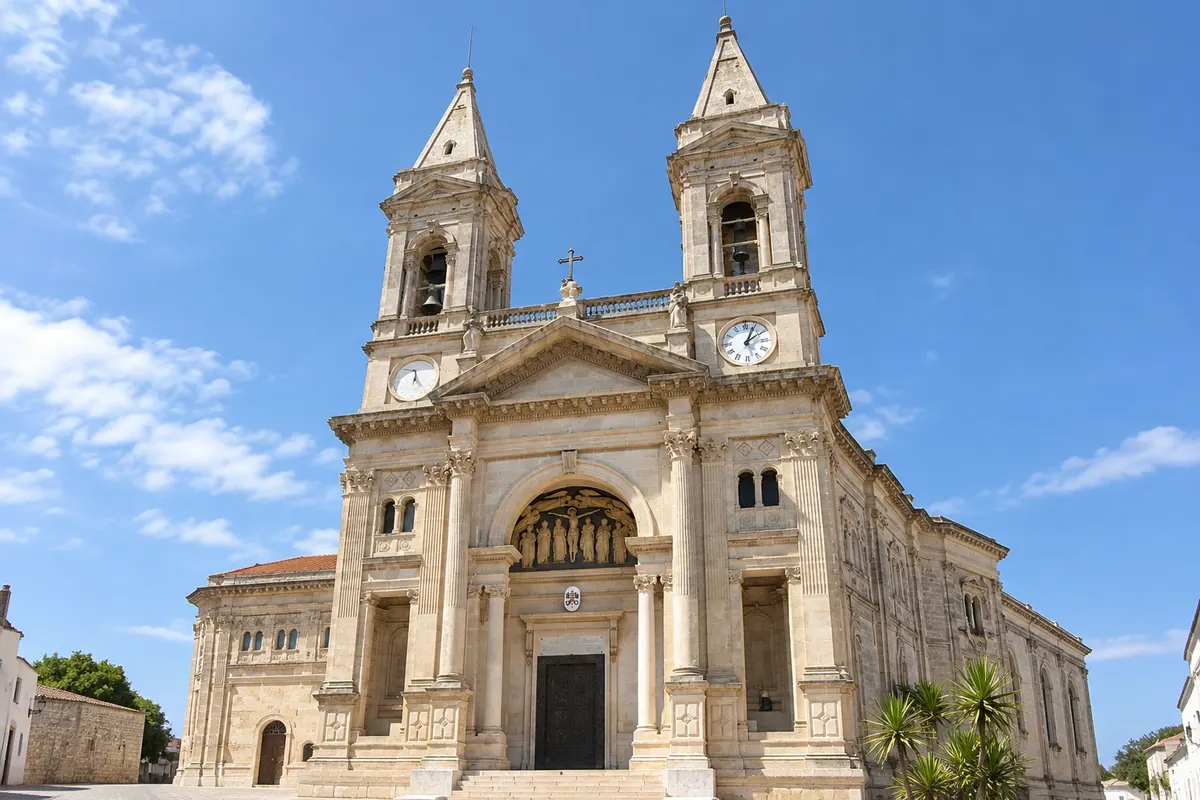
Basilica dei Santi Medici Cosma e Damiano
Alberobello · Apulia · Cerkev

Basilica dei Santi Medici Cosma e Damiano

The mother church of Alberobello, in Neoclassical style, with a porticoed façade and two twin towers, was designed at the end of the 19th century by local architect Antonio Curri. It houses the relics of the patron saints.

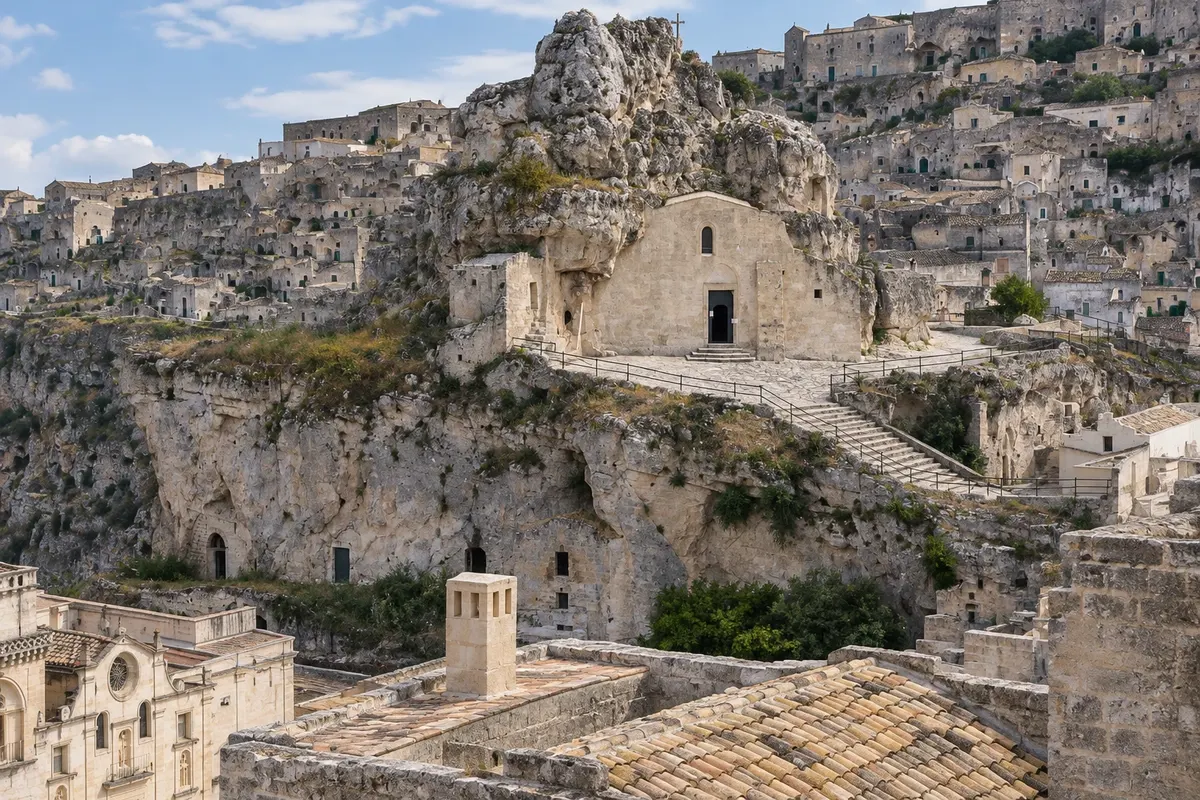
Rock church of Santa Maria di Idris
Matera · Basilicata · Cerkev

Rock church of Santa Maria di Idris

Rock-cut church atop the Monterrone, the rock in the middle of Sasso Caveoso, linked by a corridor to the crypt of San Giovanni in Monterrone, with frescoes dating from the 12th to the 17th centuries.

Fondazione Museo Pino Pascali
Polignano a Mare · Apulia · Muzej

Fondazione Museo Pino Pascali

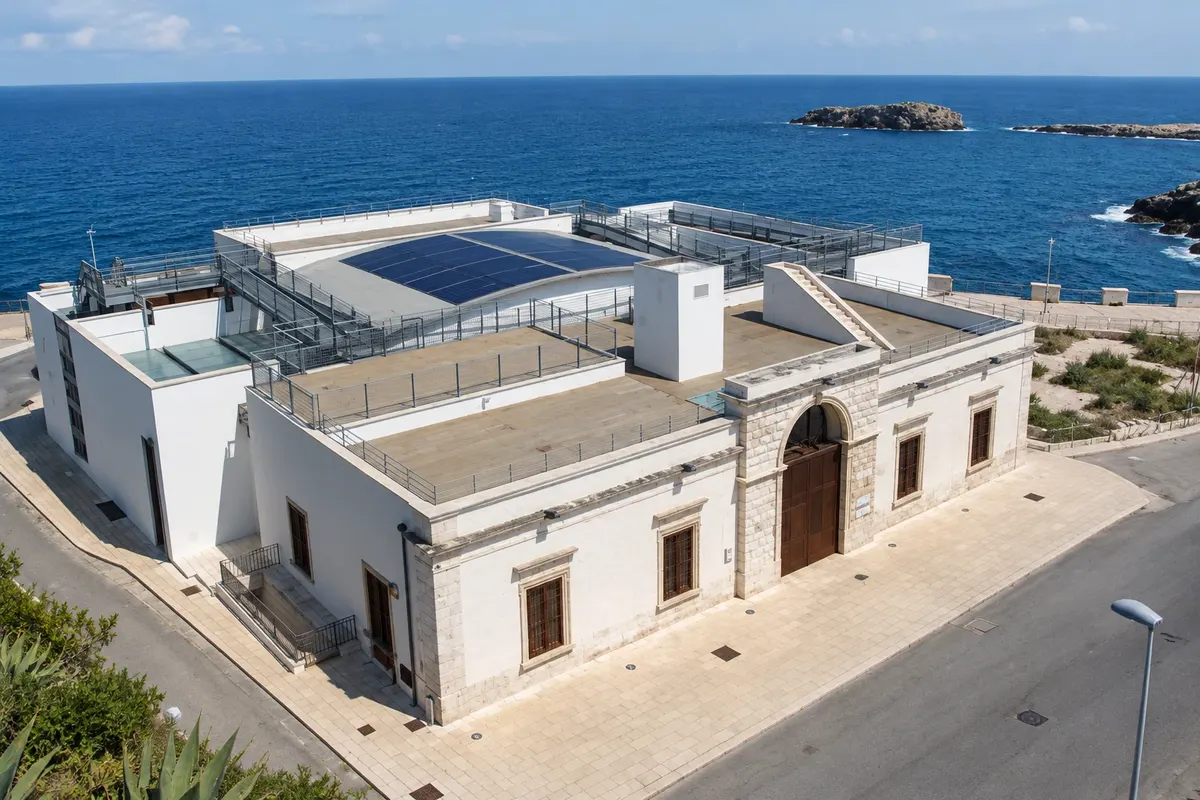
Contemporary art museum housed in the city's former slaughterhouse on the sea, dedicated to the artist Pino Pascali, a figure of arte povera. It has a permanent collection and temporary exhibitions.

Porta Napoli
Lecce · Apulia · Monument

Porta Napoli

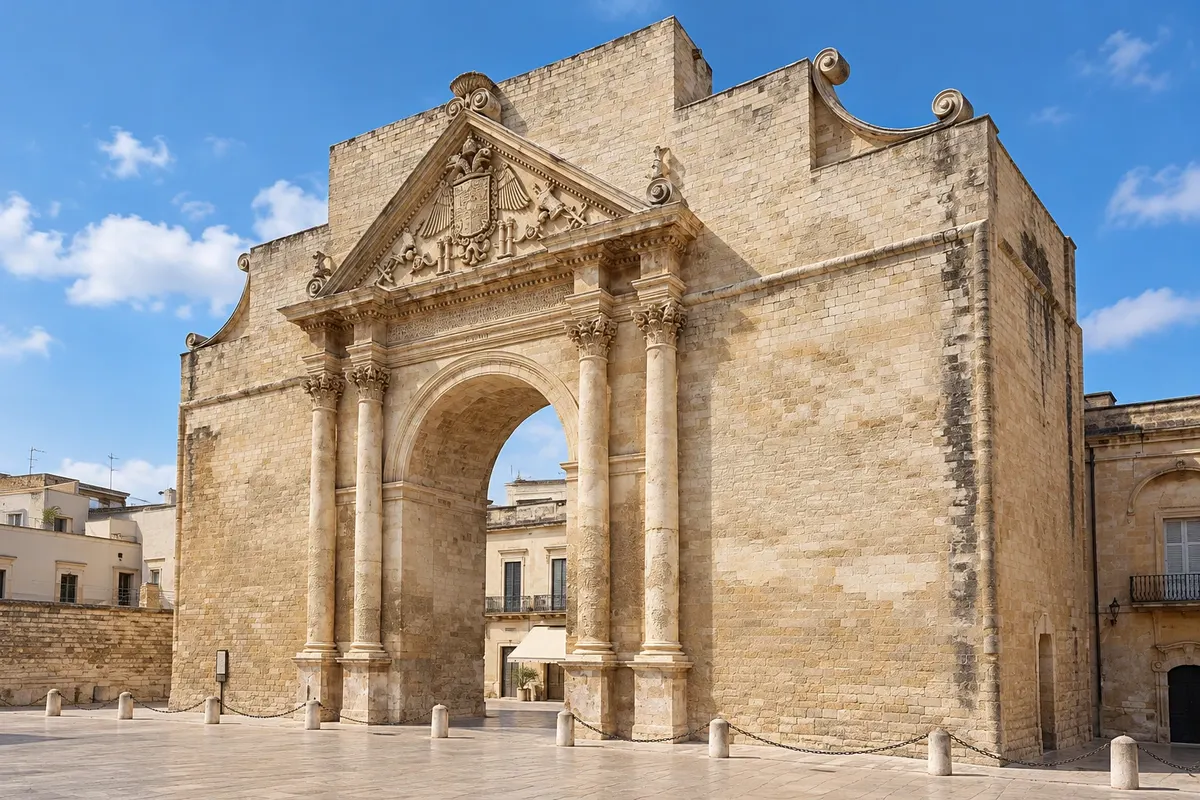
Triumphal arch from 1548 erected in honor of Emperor Charles V, at the northern entrance to the historic center of Lecce, facing a 19th-century obelisk.

San Giovanni al Sepolcro
Brindisi · Apulia · Cerkev

San Giovanni al Sepolcro

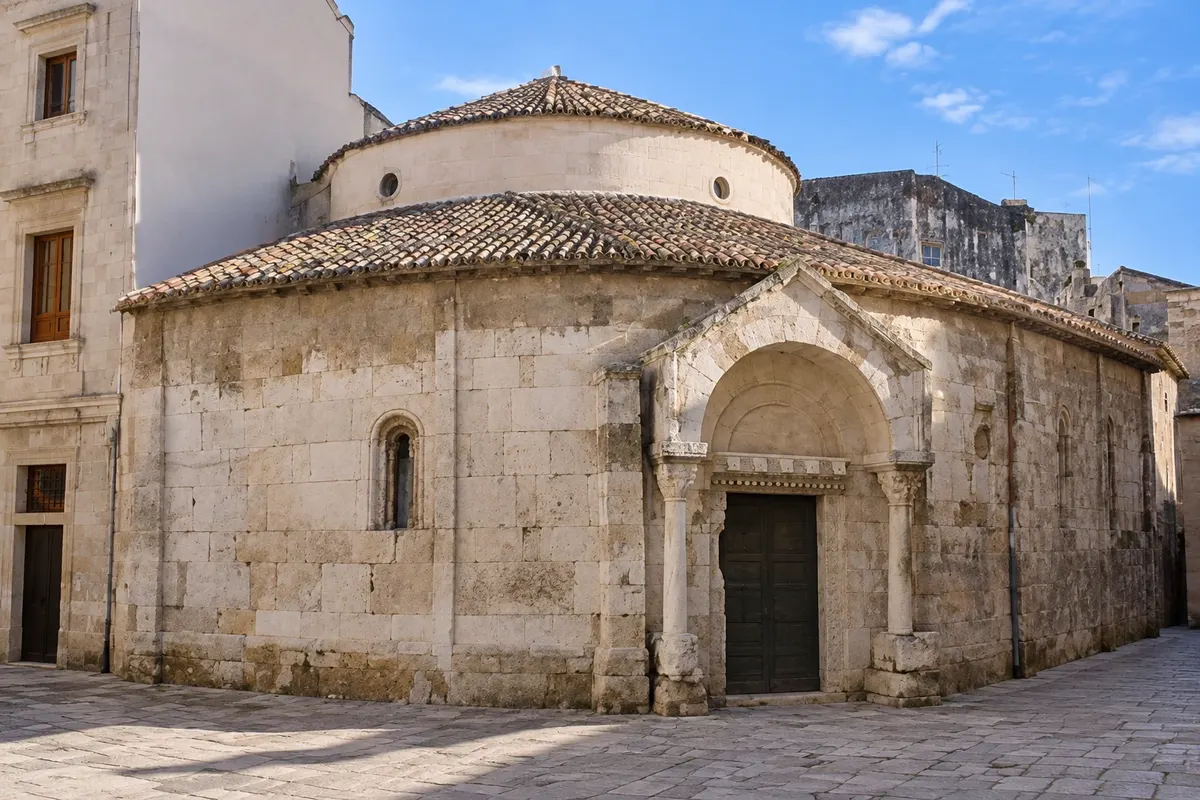
11th-century round church in the centre of Brindisi, inspired by the Holy Sepulchre of Jerusalem, with a carved portal and medieval frescoes.

Castello Carlo V
Lecce · Apulia · Grad

Castello Carlo V

Fortress built from 1539 by order of Carlos V, next to the historic center. Today it serves as a cultural space run by the city council, hosting exhibitions and routes through the castle's former rooms.

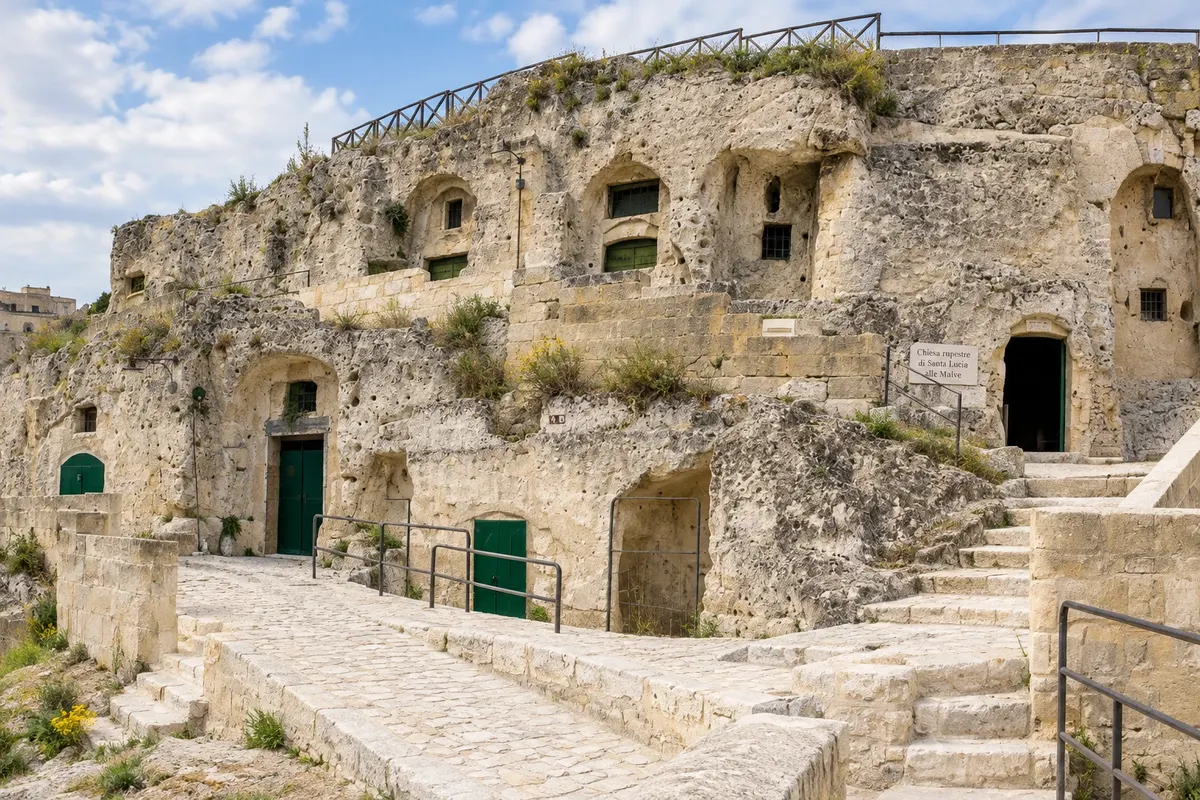
Chiesa rupestre di Santa Lucia alle Malve
Matera · Basilicata · Cerkev

Chiesa rupestre di Santa Lucia alle Malve

Rock‑cut church of Sasso Caveoso linked to an 11th‑century Benedictine nunnery, with 13th‑century frescoes, including a Nursing Madonna and the archangel Gabriel.

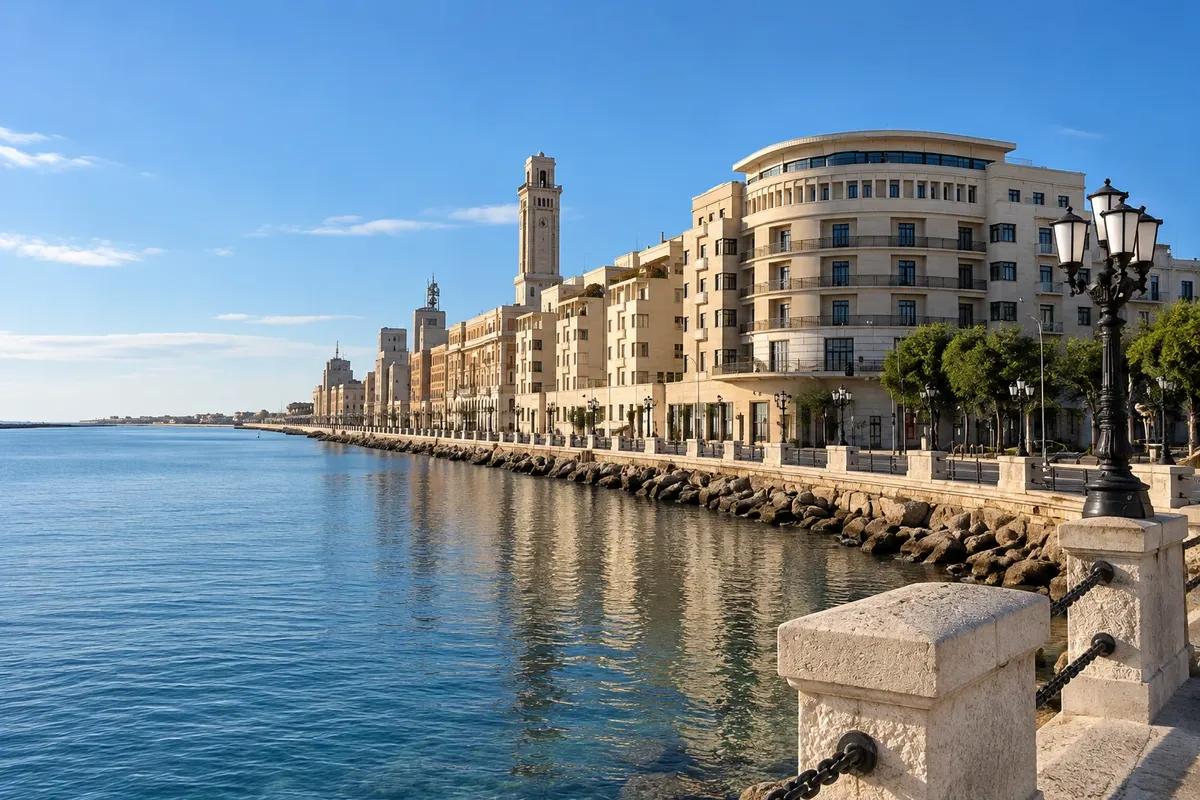
Lungomare Nazario Sauro
Bari · Apulia · Street

Lungomare Nazario Sauro

Seafront avenue that runs from the old town toward the south, with a promenade, public buildings from the 1920s and 1930s, and views of the Adriatic. It's the locals' late-afternoon stroll.

Museo del Territorio Casa Pezzolla
Alberobello · Apulia · Muzej

Museo del Territorio Casa Pezzolla

Museum set up in 15 trulli linked together, next to the Aia Piccola. It displays Alberobello's history, the trulli construction technique and rural life.

Santa Maria del Casale
Brindisi · Apulia · Cerkev

Santa Maria del Casale

A Romanesque-Gothic church from the late 13th century, near the airport, with a two-colour stone façade and an interior covered in 14th-century frescoes, including a large Last Judgment.

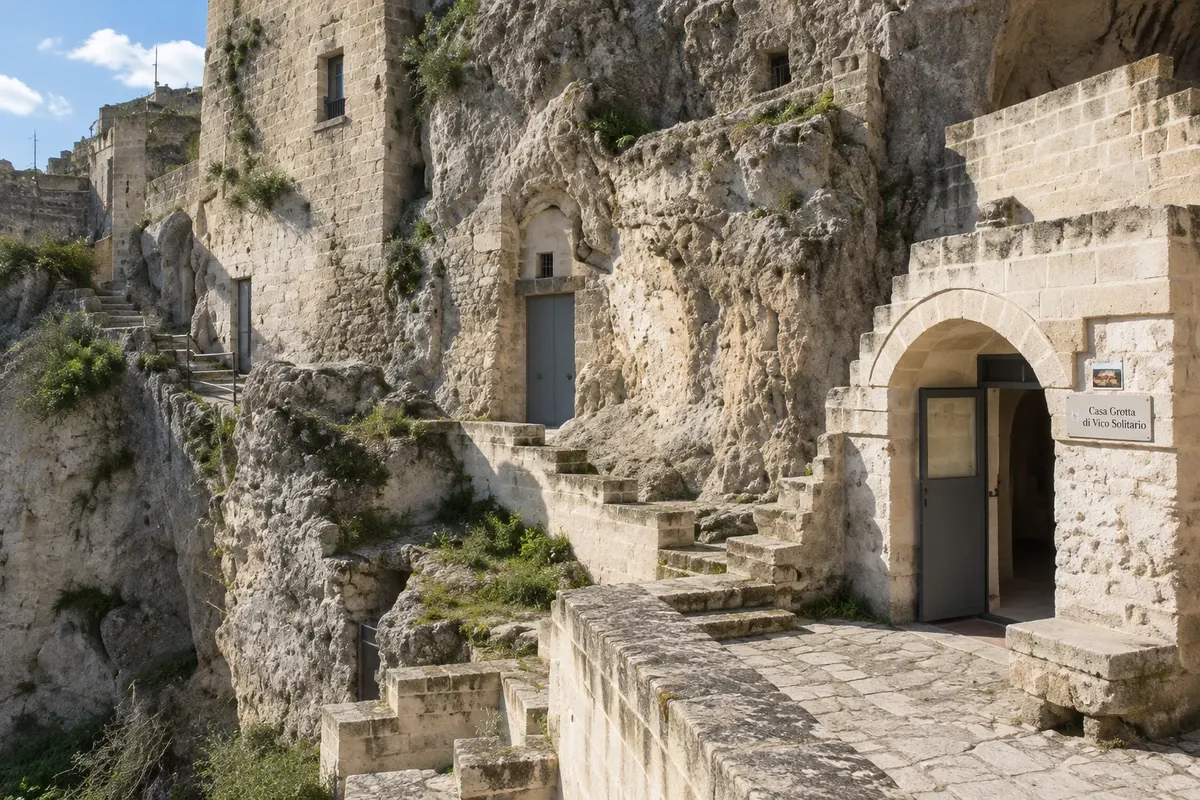
Casa Grotta di Vico Solitario
Matera · Basilicata · House-museum

Casa Grotta di Vico Solitario

House dug into the rock in the Sasso Caveoso, furnished with original furniture and objects, showing how a family lived in the Sassi, together with the animals, before the evacuations of the 1950s.

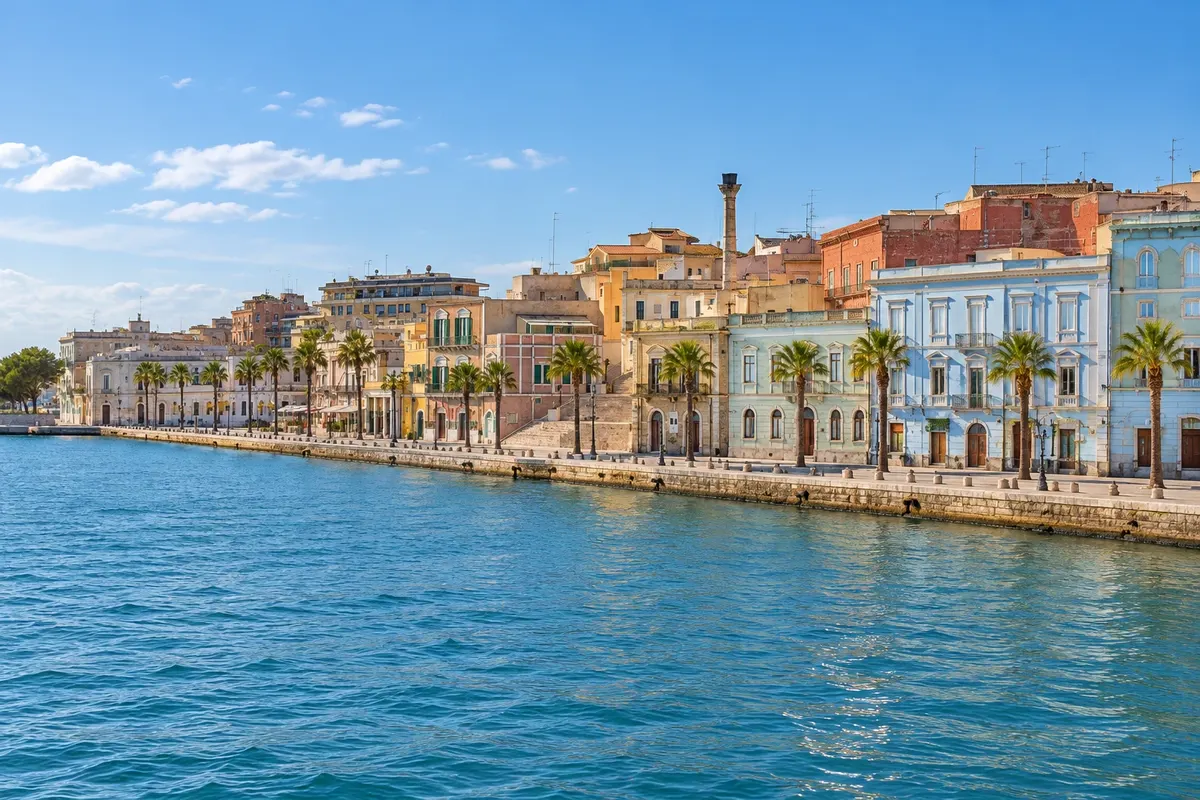
Lungomare Regina Margherita
Brindisi · Apulia · Waterfront

Lungomare Regina Margherita

Walk along the shore of Brindisi's inner harbor, at the foot of the Roman column, with a view of the Monumento ao Marinheiro on the other side of the water.

Museo Faggiano
Lecce · Apulia · Muzej

Museo Faggiano

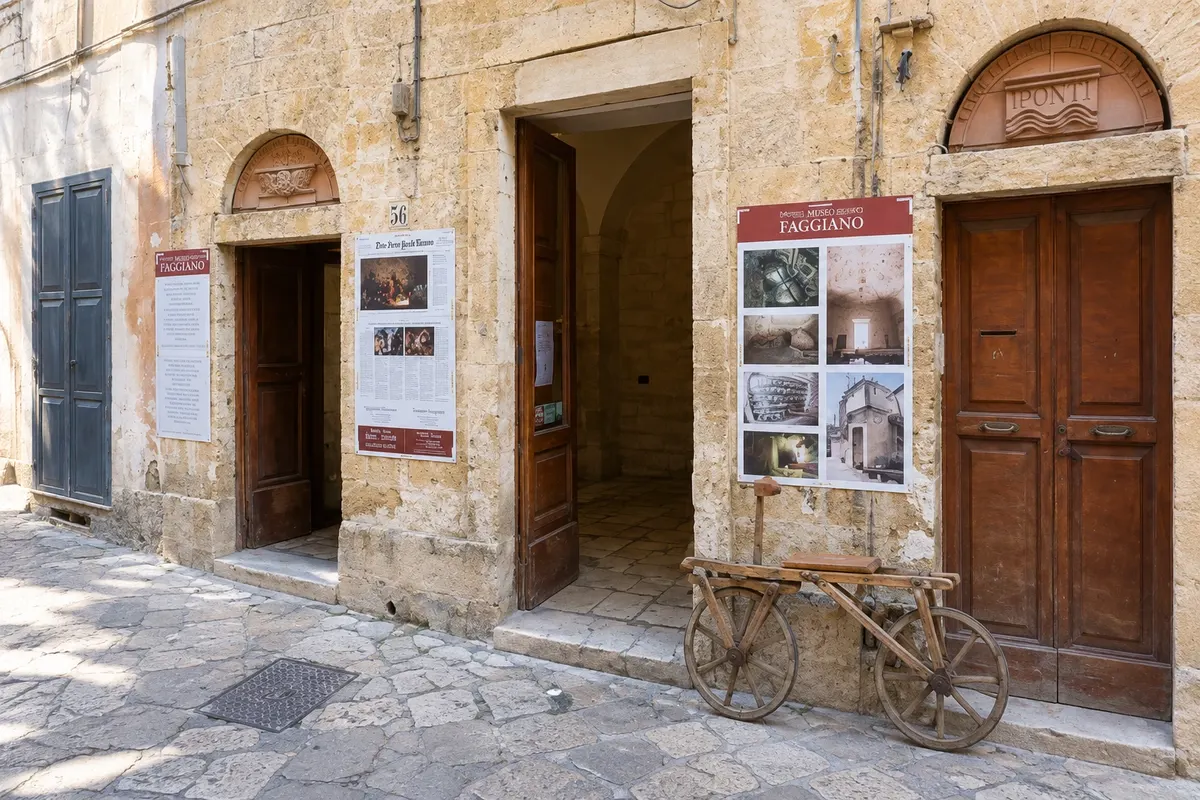
A private house in the historic center where, following plumbing work in 2001, layers of Lecce’s history were revealed: Messapian tombs, Roman silos, medieval remains and an old Templar house.

Pinacoteca Metropolitana Corrado Giaquinto
Bari · Apulia · Muzej

Pinacoteca Metropolitana Corrado Giaquinto

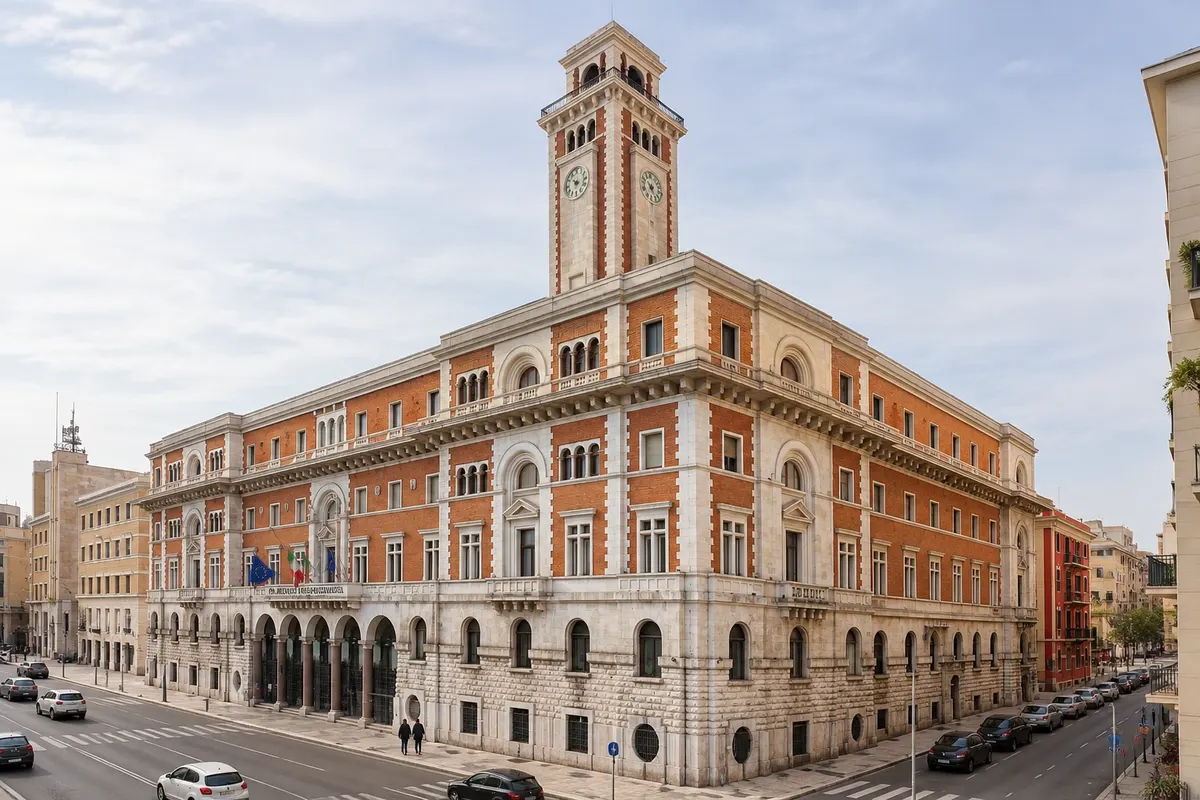
Museum of Apulia art in the Palazzo della Provincia by the sea, featuring medieval sculptures, Byzantine icons, Venetian paintings by Giovanni Bellini, Tintoretto and Veronese, and works of the Neapolitan Baroque.

Museo Sigismondo Castromediano
Lecce · Apulia · Muzej

Museo Sigismondo Castromediano

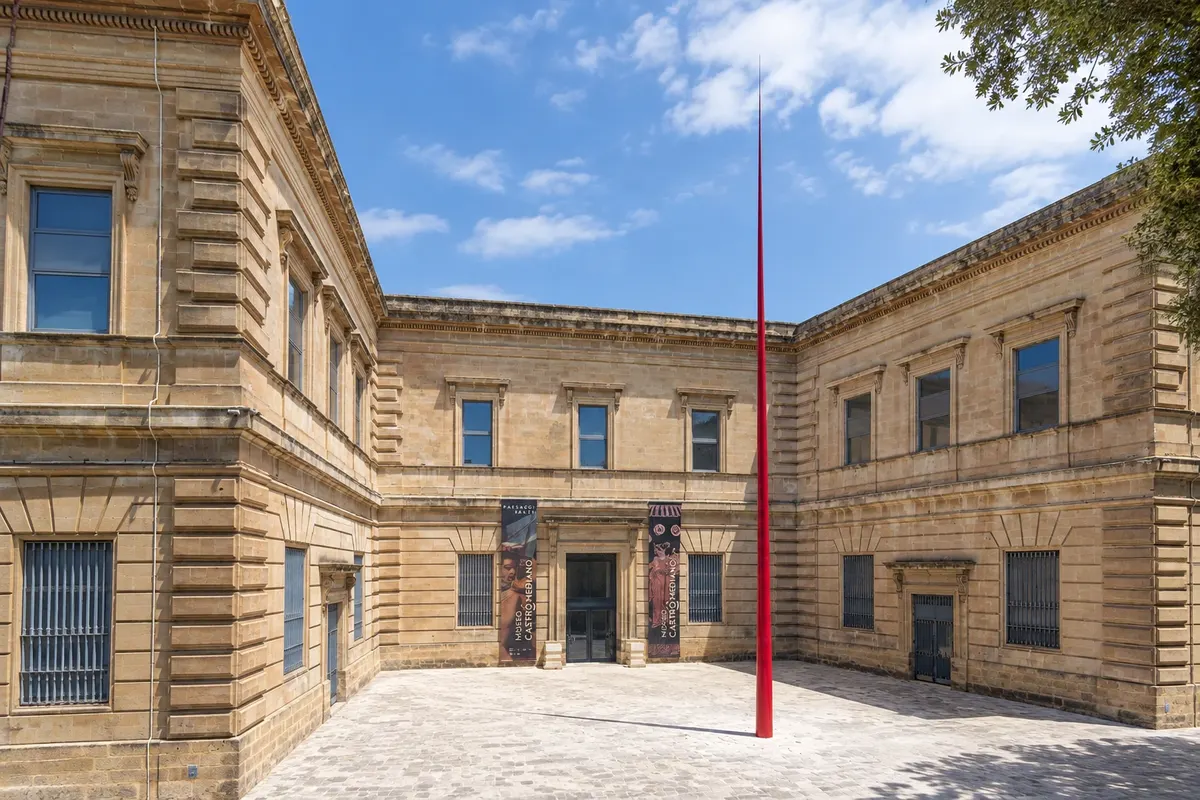
The oldest museum in Apúlia, founded in 1868, with Messapian and Roman pieces from the Salento, an art gallery and a reconstruction of the Grotta dei Cervi of Porto Badisco, featuring prehistoric paintings.

Palombaro Lungo
Matera · Basilicata · Historic site

Palombaro Lungo

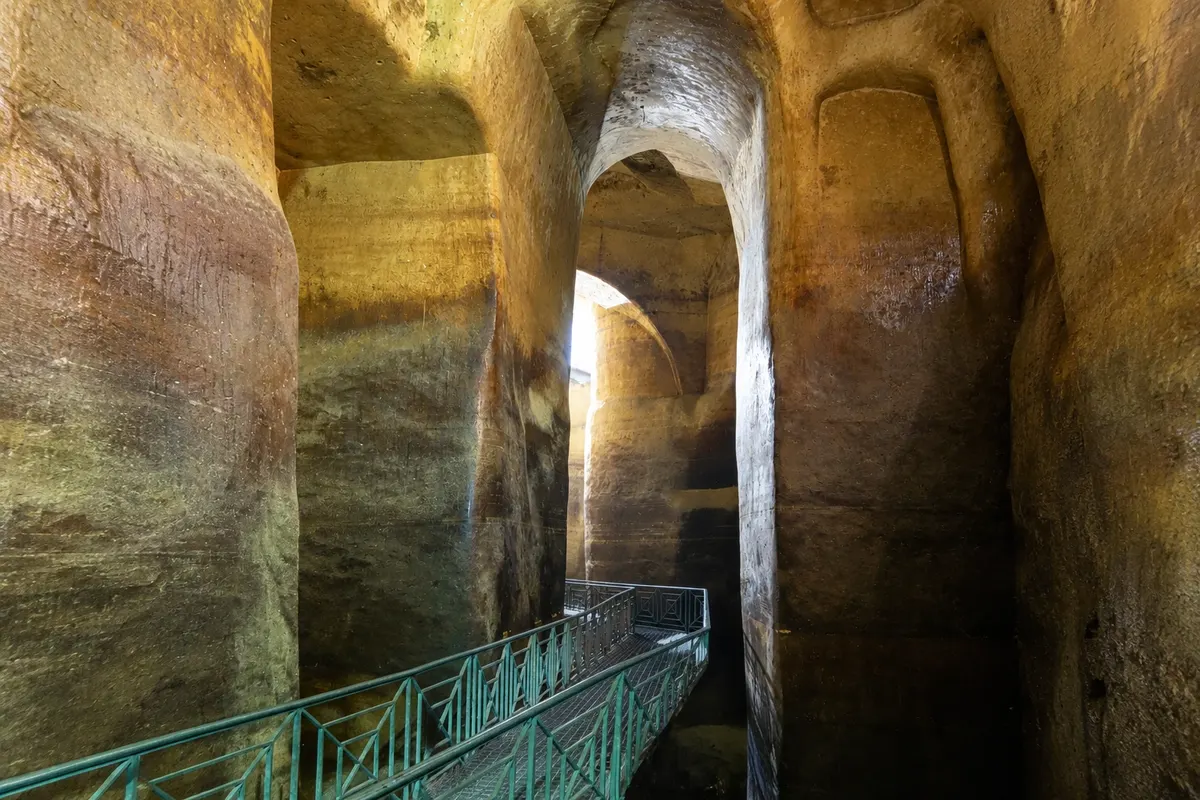
Huge cistern excavated beneath the Piazza Vittorio Veneto, about 16 meters deep and with a capacity of 5 million liters, visited in guided groups via walkways.

Quartiere Murat
Bari · Apulia · Zgodovinska mestna četrt

Quartiere Murat

The part of the city laid out in the 19th century, with straight streets, between the station and the old town. It includes Via Sparano, a pedestrian shopping street, Corso Vittorio Emanuele, the Teatro Petruzzelli and liberty-style buildings.

Cattedrale di Otranto
Lecce · Apulia · Stolnica

Cattedrale di Otranto

Romanesque cathedral from the 11th century in Otranto, about 45 km from Lecce, with a floor mosaic from 1163–1165 that covers the entire nave and the chapel housing the remains of the Martyrs of Otranto.

MUSMA (Museum of Contemporary Sculpture, Matera)
Matera · Basilicata · Muzej

MUSMA (Museum of Contemporary Sculpture, Matera)

Museum of contemporary sculpture housed in the Palazzo Pomarici and in caves carved into the rock, at the top of the Sasso Caveoso, with works by Italian and foreign artists.

Palazzo Lanfranchi
Matera · Basilicata · Muzej

Palazzo Lanfranchi

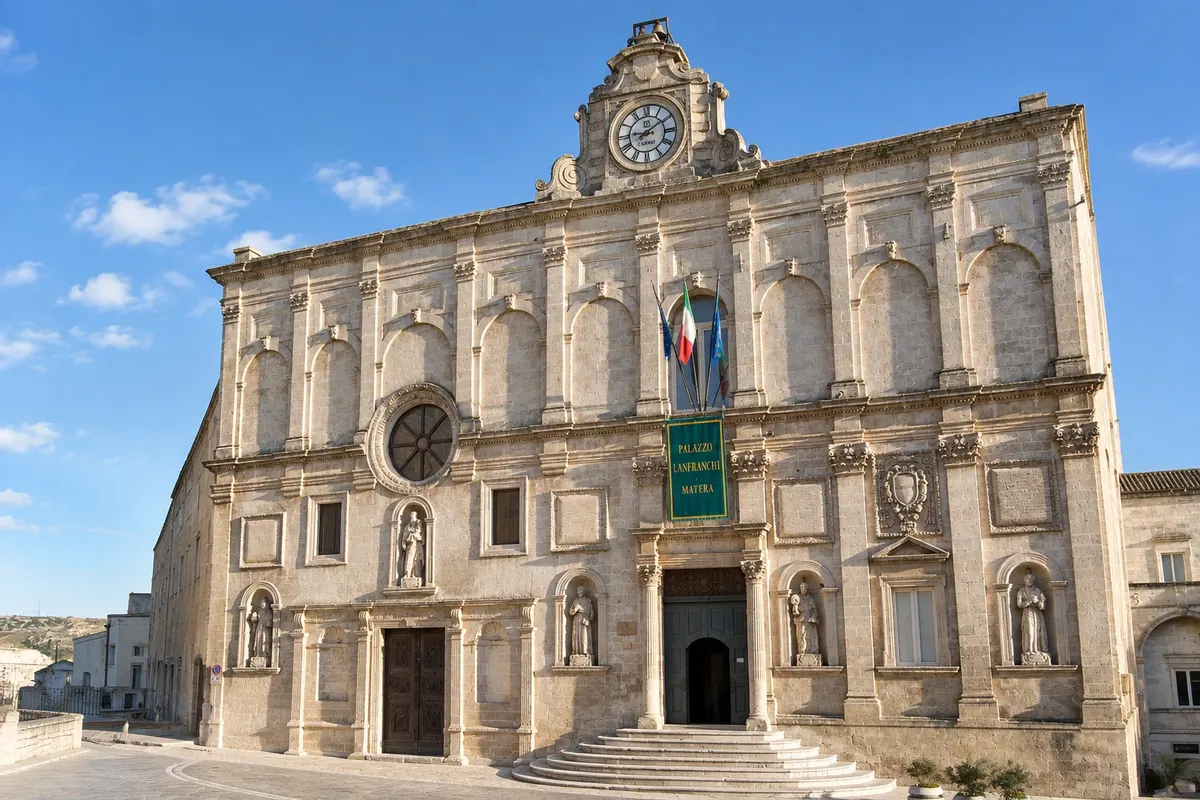
17th-century palace, former seminary, which houses the national museum of medieval and modern art of Basilicata, featuring the large panel Lucania '61 by Carlo Levi.

Murgia Materana Park
Matera · Basilicata · Park

Murgia Materana Park

Park of the rock-cut churches on the other side of the Gravina ravine, with dozens of excavated churches, Neolithic villages and the Belvedere di Murgia Timone, which faces Matera.

Crypt of the Original Sin
Matera · Basilicata · Cerkev

Crypt of the Original Sin

Benedictine cave-church about 14 km from Matera with frescoes from the 8th and 9th centuries depicting the Creation and Original Sin. Visits by reservation only.

Kaj izbrati pred odhodom

Izleti – Apulia and Matera

Izhodišče, trajanje, potek, vključene storitve in okvirna cena vsakega izleta.

Bari Vecchia: Basilica di San Nicola, the Cattedrale and the orecchiette at Arco Basso

Odhod: Piazza del Ferrarese, Bari Peš po starem mestnem jedru Približno 3 ure Dopoldne Lahko

Bari Vecchia is the old center of Bari, a maze of white alleys on the peninsula between the two harbors, where women make orecchiette by hand in the doorways of houses on Strada Arco Basso, sold in bags to visitors. The Basilica di San Nicola, from 1087 to 1197, was built to hold the relics of Saint Nicholas (the Santa Claus of northern traditions), taken from Myra in Turkey by sailors from Bari; it is a destination for Russian and Greek Orthodox pilgrims, and the crypt with the saint’s tomb contains the “manna,” the liquid collected each year on May 9. The Cattedrale di San Sabino, from 1292, Romanesque, has the rose window and a crypt over Roman ruins. The Castello Normanno-Svevo, of Frederick II, from 1233, with its moat, houses exhibitions and the plaster cast gallery. The sea-facing walls are the locals’ promenade; the Piazza Mercantile has the column of justice where debtors were displayed.

Kraji na poti: Bari Vecchia, Basilica di San Nicola, Cattedrale di San Sabino, Castello Normanno-Svevo.

Vključuje: Self-guided walk; basilica and cathedral free of charge; castle with separate admission fee (closed on Tuesdays).

Nasvet: Go in the morning, when orecchiette are being made at Arco Basso; buy a bag and ask the price beforehand. From May 7 to 9, the feast of Saint Nicholas, with the procession of the statue by sea.

Najboljši čas za obisk: Vse leto.

Lungomare Nazario Sauro, Quartiere Murat and the Pinacoteca

Odhod: Piazza del Ferrarese or Corso Vittorio Emanuele, Bari Seafront walk and shopping Približno 2 uri in pol late afternoon Lahko

The Lungomare Nazario Sauro is Bari’s monumental seafront, from 1930, featuring the fascist-era palaces (the Palazzo della Provincia, the Teatro Margherita over the sea) and the iron lampposts where Bari residents stroll at dusk and on Sunday mornings, with the San Nicola breakwater and the open sea; the 'Nderr'a la lanze', the fishermen’s market in Piazza del Ferrarese, sells raw octopus and sea urchins on the spot. The Quartiere Murat, the grid-layout district opened by Joachim Murat in 1813, is the modern center, with Via Sparano of shops, the Teatro Petruzzelli (1903), rebuilt after the 1991 fire (guided visits), and the cafés of Piazza Umberto. In the Palazzo della Provincia, the Pinacoteca Metropolitana Corrado Giaquinto houses Puglia painting from the 11th to the 20th century, including Giovanni Bellini, Tintoretto, Giaquinto and the Macchiaioli, with sea views from its windows.

Kraji na poti: Lungomare Nazario Sauro, Quartiere Murat, Pinacoteca Metropolitana Corrado Giaquinto.

Vključuje: Free walk; Pinacoteca with separate paid admission (closes on Mondays); visit to the Petruzzelli with separate paid admission.

Nasvet: Do the seafront promenade at sunset, starting from Teatro Margherita; the raw octopus from the market is the typical starter. The Petruzzelli has an opera and concert season; tickets on the website.

Najboljši čas za obisk: Vse leto.

Alberobello: the trulli of Rione Monti and the Trullo Sovrano

Odhod: Alberobello (FSE train from Bari, 1 h 30, or car, 55 km) Walk among the trulli Približno 3 ure Dopoldne ali pozno popoldne easy (gentle slopes)

Alberobello, a UNESCO site, is the town of the trulli, the dry-stone houses with conical slab roofs, built without mortar, according to tradition, so they could be dismantled when the tax collector of the Kingdom of Naples arrived. Rione Monti, on the hillside, has about a thousand trulli on streets that climb up to the Chiesa di Sant'Antonio di Padova, from 1927, the trullo-shaped church; most have become shops, restaurants or accommodations, with symbols painted in lime on the cones. Rione Aia Piccola, on the other side, with 400 trulli, is where people still live. The Trullo Sovrano, from the 18th century, is the only two-storey trullo, with a furnished interior open to visitors; the Museo del Territorio Casa Pezzolla brings together 15 adjoining trulli, with the history of their construction. The Basilica dei Santi Medici Cosma e Damiano, from 1885, holds the relics of the patrons, celebrated on September 27 and 28. The Belvedere Santa Lucia viewpoint frames the cones of Rione Monti.

Kraji na poti: Rione Monti, Trullo Sovrano, Chiesa di Sant'Antonio di Padova, Basilica dei Santi Medici Cosma e Damiano, Museo del Territorio Casa Pezzolla.

Vključuje: Self-guided walk; Trullo Sovrano and Casa Pezzolla have small admission fees; churches free of charge. FSE train paid separately.

Nasvet: Go before 10:00 or after 17:00: between those times tour buses fill Rione Monti. Stay in a trullo in Alberobello or nearby to see the town empty at night. The surrounding Valle d'Itria (Locorotondo, Cisternino, Martina Franca) has trulli in the fields and white villages.

Najboljši čas za obisk: All year; more shops open from April to October; at the end of September the patrons’ festival with luminarias.

Polignano a Mare: Lama Monachile, the historic centre on the cliff and Modugno

Odhod: Polignano a Mare (regional train from Bari, 30 min) Walk in a village on the cliff Približno 3 ure Dopoldne ali pozno popoldne Lahko

Polignano a Mare sits on a 20 m cliff with white houses on the edge and grottos beneath, 30 minutes by train from Bari. The Lama Monachile (or Cala Porto) is the pebble beach wedged between two rock walls under the 1839 bridge (the old Via Traiana), the most photographed image of Puglia, crowded in summer. The centro storico di Polignano a Mare, through the Marchesale arch gate, has narrow streets with poems written on steps and doors by a local resident, sea-facing terrace viewpoints (Grottone and Santo Stefano) and the mother church. The Statua di Domenico Modugno, from 2009, with arms outstretched like in 'Volare', honours the singer born in the town; it stands at the end of the promenade with sea-cliff views. The Fondazione Museo Pino Pascali, in the old seafront slaughterhouse, is the region’s contemporary art museum. The Grotta Palazzese, the grotto with a restaurant, can be seen from the sea on the boat trips.

Kraji na poti: Lama Monachile, Centro storico di Polignano a Mare, Statua di Domenico Modugno, Fondazione Museo Pino Pascali.

Vključuje: Self-guided walk; Pino Pascali museum with admission. Pleasure-boat trips to the grottos are paid separately. Train fare extra.

Nasvet: Go early or late in the day; at midday in summer Lama Monachile has no room. The 1-hour boat to the grottos departs from the small harbour and shows the town from below. In July or September the Red Bull Cliff Diving event jumps from the cliff.

Najboljši čas za obisk: All year; for swimming from June to September.

Lecce: the 'Florence of the South', baroque in golden stone

Odhod: Lecce (station or Porta Napoli) Walk through the Baroque centre Približno 3 ure late afternoon Lahko

Lecce, the capital of the Salento, is the city of leccese baroque, carved in the local limestone, soft and golden, which allows richly decorated façades. The Basilica di Santa Croce, built from 1549 to 1695, has the city's most exuberant façade, with the rose window, caryatids and animals supporting the balcony, and a wooden ceiling; next to it, the Palazzo dei Celestini. The Piazza del Duomo, closed on three sides, with the cathedral, the 68 m bell tower (with elevator and view), the episcopal palace and the seminary, is a 17th-century courtyard square. The Piazza Sant'Oronzo has the patron's column and the Anfiteatro romano di Lecce, from the 2nd century, only half excavated, originally seating 25,000. The Porta Napoli, the 1548 triumphal arch, opens the center; the Castello Carlo V, from 1539, houses exhibitions and the papier-mâché museum, the local art. Caffè leccese (with almond milk and ice) and pasticciotto are must-stops.

Kraji na poti: Basilica di Santa Croce, Piazza del Duomo, Anfiteatro romano di Lecce, Porta Napoli, Castello Carlo V.

Vključuje: Self-guided walk; Santa Croce, the bell tower and cathedral with a combined ticket paid separately (LeccEcclesiae); castle with admission. Amphitheatre visible from the square, no charge.

Nasvet: Do the walk at late afternoon, when the stone turns golden and the locals of Lecce go out for the passeggiata; the center is a ZTL and entirely pedestrian. The papier-mâché workshops are on the streets around the Duomo.

Najboljši čas za obisk: All year; from August 24 to 26 the feast of Sant'Oronzo, with street illuminations.

Museo Faggiano and Museo Castromediano: Lecce beneath Lecce

Odhod: Via Ascanio Grandi and Viale Gallipoli, Lecce Two museums Približno 2 uri in pol Dopoldne easy (narrow stairs in the Faggiano)

The Museo Faggiano began in 2001, when the owner of a house on Via Ascanio Grandi broke the floor to fix a pipe and found, meter by meter, two thousand years of history: Messapian tombs from the 5th century BC, Roman cisterns, a Franciscan convent, a Templar crypt, ovens and passages, excavated by the family over seven years and opened as a private museum, with the climb to the tower via the convent staircase. The Museo Sigismondo Castromediano, dating from 1868 and the oldest public museum in Puglia, houses the archaeological collection of Salento (Messapian and Greek vessels, the finds from Rudiae and Cavallino), the art gallery and the sacred art section, in a 1970s building near the station. Both show the city that existed before the Baroque.

Kraji na poti: Museo Faggiano, Museo Sigismondo Castromediano.

Vključuje: Museo Faggiano with separate paid admission; Museo Castromediano free of charge (check).

Nasvet: Do the Faggiano visit with the family-led explanation, in Italian and English; it is not for those with claustrophobia. The Castromediano is the stop for rainy or very hot days.

Najboljši čas za obisk: Vse leto.

Prikaži dodatne izlete (6)

Otranto: the mosaic cathedral and the castle, from Lecce

Odhod: Lecce (FSE train or bus to Otranto, about 1 h 15; car, 45 km) Day trip to the walled town and the beach Približno 5 ur Ves dan Lahko

Otranto, at the easternmost point of Italy, 45 km from Lecce, is the walled town overlooking the Adriatic Sea, with the Aragonese castle of 1485 that lent its name to the first English Gothic novel. The Cattedrale di Otranto, from 1088, has its entire floor covered by the Tree of Life mosaic, made by the monk Pantaleone between 1163 and 1165, with 600 m² of biblical and pagan figures, King Arthur and the zodiac; in the side chapel, the bones of the 800 martyrs of 1480, beheaded by the Turks for refusing to convert, are displayed in glass cabinets. The crypt has 42 reused columns. In the white alleys there are shops and the 10th‑century Byzantine church of San Pietro, with frescoes. Beaches lie to the north (Baia dei Turchi, Alimini) and to the south, with the bauxite quarry with a green lake and the Punta Palascìa lighthouse, the point where the sun rises first in Italy.

Kraji na poti: Cattedrale di Otranto, Castello Carlo V.

Vključuje: Cathedral free of charge (crypt with suggested donation); castle with separate paid admission. Train and bus fares not included.

Nasvet: Go early to the cathedral, which closes at midday, and leave the afternoon for the Baia dei Turchi (on foot via a pine-lined trail) or for the bauxite quarry by car. The FSE train requires a change at Maglie; the summer bus is direct.

Najboljši čas za obisk: All year; June to September for swimming; August 13–15 for the martyrs’ feast.

Matera: the Sassi on foot, Caveoso and Barisano

Odhod: Piazza Vittorio Veneto, Matera (viewpoint) Walk through the cave districts Približno 3 ure Dopoldne ali pozno popoldne moderate (stairs and slopes)

Matera, in Basilicata, is the city of cave dwellings inhabited since the Neolithic, a UNESCO World Heritage site and European Capital of Culture in 2019; in the 1950s the Sassi were emptied by decree due to poor living conditions and were reoccupied in the 1980s. From Piazza Vittorio Veneto the viewpoint opens onto the Sasso Barisano, the more rebuilt district with hotels and restaurants in the grottoes; the Sasso Caveoso, on the other side of the Civita (the central hill with the Cattedrale di Matera, from 1270, Romanesque, with a façade that turns golden in the late-afternoon sun), retains more excavated houses and stair-streets above the Gravina ravine, with Piazza San Pietro Caveoso and the rock churches. You walk along Via Fiorentini and Via Buozzi, descending and climbing steps between terraces that are the roofs of the neighbors below; 'The Passion of the Christ' and other films were shot here because of the resemblance to ancient Jerusalem.

Kraji na poti: Sasso Caveoso, Sasso Barisano, Cattedrale di Matera.

Vključuje: Free walk, no charge; cathedral free of charge. Guided visits require separate payment.

Nasvet: Start at the Piazza Vittorio Veneto viewpoint in the morning (Barisano with good light) and finish at the Caveoso at sunset; at night, the lights of the Sassi seen from the Belvedere Luigi Guerricchio. Wear shoes with firm soles: the stones are smooth.

Najboljši čas za obisk: All year round; on July 2, the Festa della Bruna, with the papier-mâché carro destroyed by the crowd.

Rock-hewn churches and the Casa Grotta: how life was in the Sassi

Odhod: Piazza San Pietro Caveoso, Matera Visit to rock-cut churches and cave-house Približno 2 uri Dopoldne easy (stairs)

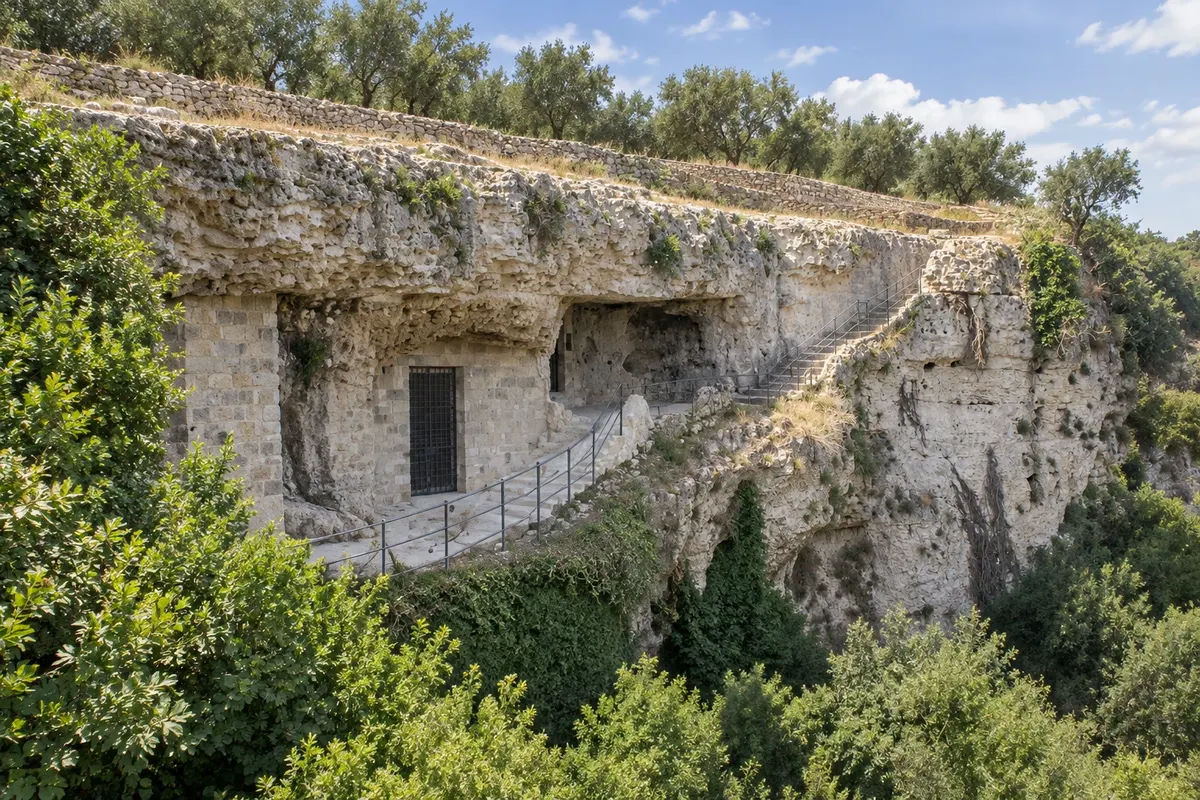
Matera has more than 150 rock-hewn churches, carved into the rock between the 8th and 13th centuries by Byzantine and Benedictine monks. The Chiesa rupestre di Santa Maria de Idris, inside the Monterrone rock that rises in the middle of the Sasso Caveoso, contains frescoes from the 12th to the 17th centuries and connects to the crypt of San Giovanni in Monterrone via a corridor cut in the stone; the Chiesa rupestre di Santa Lucia alle Malve, from the 9th century, was the first church of the Benedictine nuns, with frescoes of the Madonna del Latte and tombs carved into the terrace in front. The Casa Grotta di Vico Solitario is the cave-house reconstructed as it was until the 1950s: a single room with the high bed, the kitchen, the loom, the mule stall at the back and the cistern, where families of ten lived, with explanations about life in the Sassi before the evacuation. The Palombaro Lungo, the cistern beneath Piazza Vittorio Veneto, is a separate visit.

Kraji na poti: Chiesa rupestre di Santa Maria de Idris, Chiesa rupestre di Santa Lucia alle Malve, Casa Grotta di Vico Solitario.

Vključuje: Rock churches with a separate combined-ticket (urban circuit); Casa Grotta with a small admission fee.

Nasvet: Buy the combined ticket for the rock churches at the first site; frescoes may not be photographed. The Casa Grotta has audio in Portuguese.

Najboljši čas za obisk: Vse leto.

Palombaro Lungo, MUSMA and Palazzo Lanfranchi: Matera of the museums

Odhod: Piazza Vittorio Veneto, Matera Cistern and two museums Približno 3 ure Popoldne Lahko

The Palombaro Lungo is the giant cistern excavated beneath Piazza Vittorio Veneto in the 19th century, 16 m high and holding 5 million liters, which supplied the town with rain and spring water; it was rediscovered in 1991 and is visited via walkways with a guide in 20 minutes. MUSMA, the Museum of Contemporary Sculpture, occupies the 16th-century Palazzo Pomarici in the Sasso Caveoso, with works displayed in caves and halls: Italian and international sculptures from the 20th and 21st centuries, in one of Italy’s most original installations. Palazzo Lanfranchi, from 1668 and formerly a seminary, is the National Museum of Medieval and Modern Art of Basilicata, with the region’s sacred paintings and the Carlo Levi room (author of 'Christ Stopped at Eboli'), featuring the 18 m panel 'Lucania 61'. On the same square is the viewpoint over the Sasso Caveoso.

Kraji na poti: Palombaro Lungo, MUSMA, Palazzo Lanfranchi.

Vključuje: Palombaro Lungo with ticket and guided visit; MUSMA and Palazzo Lanfranchi with separate paid admissions (Lanfranchi free on the first Sunday of the month).

Nasvet: Palombaro has short visiting slots and a line in summer: buy your ticket at the plaza ticket office when you arrive. MUSMA is the museum to visit on a hot afternoon.

Najboljši čas za obisk: Vse leto.

Parco della Murgia Materana: the hike to the other side of the gorge

Odhod: Matera (Sasso Caveoso, descent to the Gravina, or drive to the belvedere) Trail and rock-hewn churches on the plateau Približno 3 ure Dopoldne ali pozno popoldne moderate (150 m elevation change, bridge)

The Parco della Murgia Materana is the limestone plateau across the Gravina, the 100 m ravine that separates the Sassi from the Murgia, with 150 rock-hewn churches, Neolithic settlements and shepherds. The trail starts from Sasso Caveoso, descends to the bottom of the Gravina, crosses the stream via a Tibetan (suspended) bridge and climbs to the Belvedere di Murgia Timone, the viewpoint from which you can see all of Matera on the opposite cliff face—the film image; it takes about 1 hour each way, with strong sun. On the plateau are the churches of San Falcione and the Madonna delle Tre Porte, with frescoes, and the Centro Visite Jazzo Gattini, the old corral with the visitor centre. By car you can reach the viewpoint via the Taranto road in 10 minutes.

Kraji na poti: Parco della Murgia Materana, Sasso Caveoso.

Vključuje: Trail and park free of charge; guided visits to the park’s rock-hewn churches paid separately (some only with a guide).

Nasvet: Do the trail early in the morning or late in the afternoon, with water and sneakers; the Tibetan bridge closes in rain or wind. From the belvedere, illuminated Matera at dusk is the photo: return by car or along the trail with a flashlight.

Najboljši čas za obisk: From March to June and from September to November; in summer only at the ends of the day.

Cripta del Peccato Originale: the rock-cut “Sistine Chapel”

Odhod: Matera (14 km, by car or transfer with reservation) Guided visit to the crypt with frescoes about 1 h 30 (including travel) Dopoldne ali popoldne Lahko

The Cripta del Peccato Originale (Crypt of Original Sin), in a cave on the slope of the Gravina di Picciano, 14 km from Matera, was discovered in 1963 by local youths and houses the cycle of frescoes from the 8th or 9th century painted by an anonymous Benedictine artist, the “Painter of the Flowers of Matera”: the Creation, Adam and Eve, the archangels and the apostles, in vivid colors on the rock, considered the most important group of rock painting in southern Italy. Visits are guide-only, in small groups on scheduled times, last about 1 hour, part outdoors; the foundation that manages it restored the site between 2002 and 2005. It is on a farm property with valley views and has no public transport.

Kraji na poti: Cripta del Peccato Originale.

Vključuje: Separate paid ticket, with guided visit included and mandatory reservation (foundation website or phone). Transfer from Matera paid separately if you don’t have a car.

Nasvet: Book a few days in advance; tours run morning and afternoon, except on Mondays. Combine it with the road to Puglia, heading toward Altamura.

Najboljši čas za obisk: All year, by reservation.

Po dnevih

Apulia and Matera – načrt poti. Število dni: 3, 5in7

Predlogi za načrtovanje poti. Vrstni red dni prilagodite vremenu in razpoložljivosti izletov.

3 dni · Puglia in 3 days: Bari, Alberobello and Polignano

ZaFor those arriving via Bari who want the essentials by train. · Izhodišče:Bari (centre or Murat)
  1. Dan 1 · Bari

    Arrival via Bari (European connection or Rome). Bari Vecchia, Basilica di San Nicola, Cattedrale, orecchiette at Arco Basso; Castello; Lungomare at sunset and dinner in the Murat district.

  2. Dan 2 · Alberobello

    FSE train to Alberobello (1 h 30; does not run on Sundays): Rione Monti, Trullo Sovrano, Casa Pezzolla; return to Bari or stay overnight in a trullo.

  3. Dan 3 · Polignano a Mare

    Regional train to Polignano (30 minutes): Lama Monachile early, historic center, Modugno statue, boat to the grottos; Monopoli, the next station, for the afternoon; return to Bari.

5 dni · Puglia and Matera in 5 days
ZaFor those who want to combine Puglia’s towns with the Sassi, by car or by buses. · Izhodišče:Bari (2 nights), Matera (2 nights), Alberobello or Polignano (1 night)
  1. Dan 1 · Bari

    Arrival via Bari and train to the center. Bari Vecchia in the morning, with the Basilica di San Nicola, the Cattedrale and the orecchiette at Arco Basso; Castello Normanno‑Svevo; Lungomare and the Quartiere Murat in the afternoon, with the Pinacoteca if it rains; dinner in the Murat district.

  2. Dan 2 · Polignano and Alberobello

    Train or car to Polignano a Mare in the morning, with Lama Monachile and the cliffside town center; Alberobello late afternoon, when the tour groups leave, with Rione Monti and the Trullo Sovrano; overnight in a trullo.

  3. Dan 3 · Matera

    Car (1 hour) or FAL train from Bari (1 h 30) to Matera; viewpoint at Piazza Vittorio Veneto, Sasso Barisano and the Cattedrale in the afternoon; Sasso Caveoso at sunset and the lights of the Sassi from the Belvedere; overnight in a cave house.

  4. Dan 4 · Matera: churches and museums

    Rock-hewn churches of Santa Maria di Idris and Santa Lucia alle Malve and the Casa Grotta in the morning; Palombaro Lungo and MUSMA in the afternoon; walk along the Gravina to the Belvedere della Murgia at dusk, or go by car.

  5. Dan 5 · Crypt and return

    Crypt of the Original Sin reserved for the morning; drive back to Bari for the flight (or, with more time, continue to Lecce, about 2 h by car, toward the Salento).

7 dni · Puglia and Matera in 7 days: from Bari to the Salento
ZaOne week by car: Bari, Valle d'Itria, Matera, Lecce and Otranto. · Izhodišče:Bari (1), Alberobello (1), Matera (2), Lecce (3)
  1. Dan 1 · Bari

    Arrival and car pick‑up at the airport. Bari Vecchia with San Nicola, the Cattedrale and Arco Basso; Castello Normanno‑Svevo; Lungomare Nazario Sauro at sunset and dinner in the Murat district.

  2. Dan 2 · Polignano and Alberobello

    Polignano a Mare early, with Lama Monachile and a boat trip to the grottos; Monopoli and its old port at lunchtime; Alberobello late afternoon, with Rione Monti and the Trullo Sovrano; overnight in a trullo.

  3. Dan 3 · Valle d'Itria and Matera

    Locorotondo and Cisternino in the morning, the white villages of the Valle d'Itria; drive to Matera (about 1 h 30); Sasso Barisano and the Cattedrale; Sasso Caveoso at sunset.

  4. Dan 4 · Matera

    Rock-hewn churches and Casa Grotta in the morning; Palombaro Lungo, MUSMA and Palazzo Lanfranchi in the afternoon; walk or drive to the Belvedere della Murgia at dusk to see the Sassi lit up.

  5. Dan 5 · Crypt and Lecce

    Crypt of the Original Sin reserved for the morning; drive to Lecce (about 2 h); baroque centre at sunset, with Santa Croce, the Piazza del Duomo and the amphitheatre; caffè leccese and pasticciotto.

  6. Dan 6 · Otranto and the coast

    Otranto in the morning, with the mosaic cathedral and the castle; Baia dei Turchi for a swim; Punta Palascìa lighthouse and the bauxite quarry in the afternoon; return to Lecce for dinner.

  7. Dan 7 · Lecce and return

    Faggiano Museum and Castromediano Museum in the morning; Gallipoli or Santa Maria di Leuca in the afternoon if time allows; return the car in Bari or Brindisi (the airport is 40 minutes from Lecce).

Najboljši čas za obisk

Kdaj se odpraviti:Apulia and Matera po mesecih

From May to June and from September to October the weather is usually good for walking and for the sea. July and August are hot and crowded, especially August, due to Italians' vacations. The beach season usually runs from June to September. In winter, from December to February, the climate is mild, but part of the coastal trade closes.

The seasons shown are the most usual ones; nature doesn't always follow the calendar.

januar Zmerne padavine

winter · empty villages

Winter. At the Bari Palese station (normals 1991–2020; Lecce uses normals 1981–2010 and Matera is a little cooler at 400 m): average 8.3 °C (highs of 12 °C) and about 51 mm of rain. Short, windy days, rare snow in Matera. Alberobello and Polignano empty, Matera with the Sassi quiet and the caves heated. Coat and rain cape.

februar Malo padavin

winter · Carnival of Putignano

Winter. At the Bari Palese station (normals 1991–2020; Lecce with normals 1981–2010 and Matera a little colder at 400 m): average 8.7 °C and about 37 mm of rainfall. The Carnival of Putignano, 40 km from Bari, is one of Italy’s oldest, with floats on Sundays. Low activity; almond trees flowering in the Valle d'Itria.

marec Malo padavin

spring beginning · green fields

Spring beginning. At the Bari Palese station (normals 1991–2020; Lecce with normals 1981–2010 and Matera a bit cooler at 400 m): average 10.9 °C and about 41 mm of rainfall. Green wheat fields and poppies, good days for walking in the Sassi and the Murgia.

april Malo padavin

spring · Easter and Holy Week

Spring. At the Bari Palese station (normals 1991–2020; Lecce with normals 1981–2010 and Matera a little cooler at 400 m): average 13.9 °C and about 42 mm of rainfall. Holy Week with hooded processions in Taranto and Molfetta; Easter and April 25 fill Alberobello and Matera. Ideal weather for most activities, the sea still cold.

maj Malo padavin

spring · Saint Nicholas and flowers

Full spring. At the Bari Palese station (normals 1991–2020; Lecce with normals 1981–2010 and Matera a little cooler at 400 m): average 18.5 °C and about 30 mm of rainfall. From May 7 to 9, the feast of Saint Nicholas in Bari, with a procession at sea; white villages with bougainvillea. High activity on weekends; the sea begins to be suitable for swimming by the end of the month.

junij Malo padavin

summer · warm sea and Salento

Summer. At the Bari Palese station (normals 1991–2020; Lecce with normals 1981–2010 and Matera a little cooler at 400 m): average 23 °C and about 29 mm of rainfall. Beaches of Polignano, Otranto and the Salento with warm water; Matera hot in the afternoons. Long days for the Valle d'Itria. The first pizzica festivals (the dance of Salento).

julij Malo padavin

summer · heat and the Festa della Bruna

Summer. At the Bari Palese station (normals 1991–2020; Lecce with normals 1981–2010 and Matera a little cooler at 400 m): average 25.4 °C (highs around 31 °C; Matera and the inland above 35 °C) and about 18 mm of rainfall. On July 2, the Festa della Bruna in Matera, with the float destroyed by the crowd. Sassi and villages visited only in the mornings and evenings; beaches crowded.

avgust Malo padavin

summer · Ferragosto and Notte della Taranta

Summer. At the Bari Palese station (normals 1991–2020; Lecce with normals 1981–2010 and Matera a little cooler at 400 m): average 25.4 °C and about 13 mm of rainfall, the driest month. Ferragosto (August 15), the Notte della Taranta in Melpignano at the end of the month with tens of thousands of people, and the feast of Sant'Oronzo in Lecce. This is the busiest month in the Salento; book everything in advance. Matera and Alberobello crowded at night.

september Zmerne padavine

end of summer · warm sea without crowds

End of summer. At the Bari Palese station (normals 1991–2020; Lecce with normals 1981–2010 and Matera a little cooler at 400 m): average 21.2 °C and about 42 mm of rainfall, often in storms. The sea remains warm through the end of the month and the beaches empty; Alberobello holds its patron saints’ festival on September 27 and 28. Harvest of Primitivo and Negroamaro. One of the best months.

oktober Zmerne padavine

autumn · golden light in Lecce and Matera

Autumn. At the Bari Palese station (normals 1991–2020; Lecce uses normals 1981–2010 and Matera is a little cooler at 400 m): average 17.2 °C and about 54 mm of rain. Days of 22 °C, the stone of Lecce and Matera golden in the late afternoon, new olive oil at the masserie.

november Zmerne padavine

Jesen · najbolj namočen mesec

Late autumn. At the Bari Palese station (normals 1991–2020; Lecce uses normals 1981–2010 and Matera is a little cooler at 400 m): average 13.2 °C and about 62 mm of rain, the rainiest month. Quiet towns, museums in Matera and Lecce with no queues; some seaside hotels close. Umbrella and sturdy shoes for the wet Sassi.

december Zmerne padavine

winter · nativity scenes and Christmas in the Sassi

Winter. At the Bari Palese station (normals 1991–2020; Lecce uses normals 1981–2010 and Matera is a little cooler at 400 m): average 9.6 °C and about 47 mm of rain. Matera stages living nativity scenes in the Sassi on weekends before Christmas, with hundreds of participants; Alberobello and Lecce have lights and markets. Between Christmas and New Year the towns fill up.

Načrtujte pot

Kako do tja:Apulia and Matera

By train: Trenitalia and the local railways

Trenitalia links Bari with Polignano (30 minutes), Monopoli, Brindisi (1 hour) and Lecce (about 1 h 30), and Rome with Bari in around 4 h. Local railways cover the rest: the Ferrovie del Sud Est (FSE) run from Bari to Alberobello (about 1 h 30, no service on Sundays) and from Lecce to Otranto and Gallipoli (with a change); the Ferrovie Appulo Lucane (FAL) connect Bari to Matera in about 1 h 30, departing from the station next to the central one (Bari Centrale FAL), also with no Sunday service, when buses run. Local tickets are bought at stations and via apps; validate before boarding.

By car: the way to see the Valle d'Itria and the Salento

A car is what lets you see the trulli in the fields, the white towns (Locorotondo, Cisternino, Ostuni), the masserie and the Salento beaches. Roads: A14 from Bologna to Bari and Taranto; SS16 along the coast Bari–Lecce (about 2 h); SS96 and SS99 Bari–Matera (about 1 h); SS172 through the Valle d'Itria. Mostly toll-free. Historic centers have ZTLs (limited traffic zones), including Matera (the Sassi are closed to outside cars; park in the upper-town lots), Lecce, Polignano and Alberobello. Rent in Bari or Brindisi.

How to get around Matera

The Sassi are explored on foot; the upper town (Piano) has hotels, the FAL station and the buses. From the center to the Murgia Belvedere, on foot via the trail (1 hour) or by car (10 minutes); there are minibuses that descend to the Sassi. The Cripta del Peccato Originale is 14 km away, with no public transport: car, taxi or a transfer combined with a booking. Guided walking tours depart from Piazza Vittorio Veneto.

Vstopnice in rezervacije

Cripta del Peccato Originale: mandatory reservation. Palombaro Lungo, rupestrian churches (combined ticket), MUSMA, Palazzo Lanfranchi, Casa Grotta, Trullo Sovrano, Museo Faggiano, Santa Croce and Lecce bell tower (combined ticket): box office on site, no reservation needed outside high season. Castello di Bari and the Pinacoteca: on site. State museums are free on the first Sunday of the month. Municipalities charge a tourist tax per night, payable at your accommodation. Check the current table.

Pred odhodom

Praktične informacije

Z nekaj načrtovanja boste imeli več časa za uživanje na poti.
Kdaj se odpraviti

From May to June and from September to October the weather is usually good for walking and for the sea. July and August are hot and crowded, especially August, due to Italians' vacations. The beach season usually runs from June to September. In winter, from December to February, the climate is mild, but part of the coastal trade closes.

The seasons shown are the most usual ones; nature doesn't always follow the calendar.

Koliko dni ostati

Five to seven days allow you to see the essentials: 1 or 2 days in Bari, one day between Polignano a Mare and the coast, one day in Alberobello and the Valle d'Itria, 1 or 2 days in Lecce and 1 or 2 days in Matera. With less time, Bari serves as a base for day trips to Polignano, Alberobello and Matera.

V katerem mestu prenočiti

In Bari, the quartiere Murat, the modern part with straight streets, is close to the station and the old town; Bari Vecchia has accommodations in the townhouses of its alleys. On the coast, Polignano a Mare and the neighboring Monopoli serve those who want the sea. In the Valle d'Itria there are accommodations in trulli in Alberobello and in masserie, former fortified farmhouses in the countryside. In Lecce, the historic center within the gates; in Matera, the Sassi or the upper part of the city, near Piazza Vittorio Veneto.

Spoštujte kraj

Odnesite svoje odpadke, upoštevajte oznake in podprite lokalne ponudnike. V naravi upoštevajte navodila za obiskovalce.

Odgovori na vaša vprašanja

Pogosta vprašanja – Apulia and Matera

How many days should I allocate for Apúlia and Matera?

Between 5 and 7 days. That way you can visit Bari, Polignano a Mare, Alberobello, Lecce and Matera without rushing. With 3 or 4 days, the most practical option is to stay in Bari and make day trips to Polignano, Alberobello and Matera.

Do I need to rent a car?

It's not mandatory. Regional trains connect Bari to Polignano a Mare and to Lecce; Alberobello is served by FS Sud Est by train or bus; and Matera by Ferrovie Appulo Lucane. A car helps to explore the Valle d'Itria and the masserie in the countryside. Historic centers have ZTL, a limited-traffic zone closed to outside cars: leave the car in parking outside it.

Can you do a day trip from Bari to Matera?

Yes. Matera is about 65 km from Bari, in Basilicata. Ferrovie Appulo Lucane trains depart from Bari and take about 1h30; there are also buses. By car the trip takes just over an hour. To see the Sassi at leisure, many people prefer to spend a night there.

Is it possible to visit Polignano and Alberobello on the same day?

Yes, especially by car: the two are about 30 km apart. By public transport it is possible, but you must combine the regional train to Polignano with FS Sud Est trains and buses to Alberobello, which have fewer departures on Sundays. Check schedules before you leave.

Rotas entre países

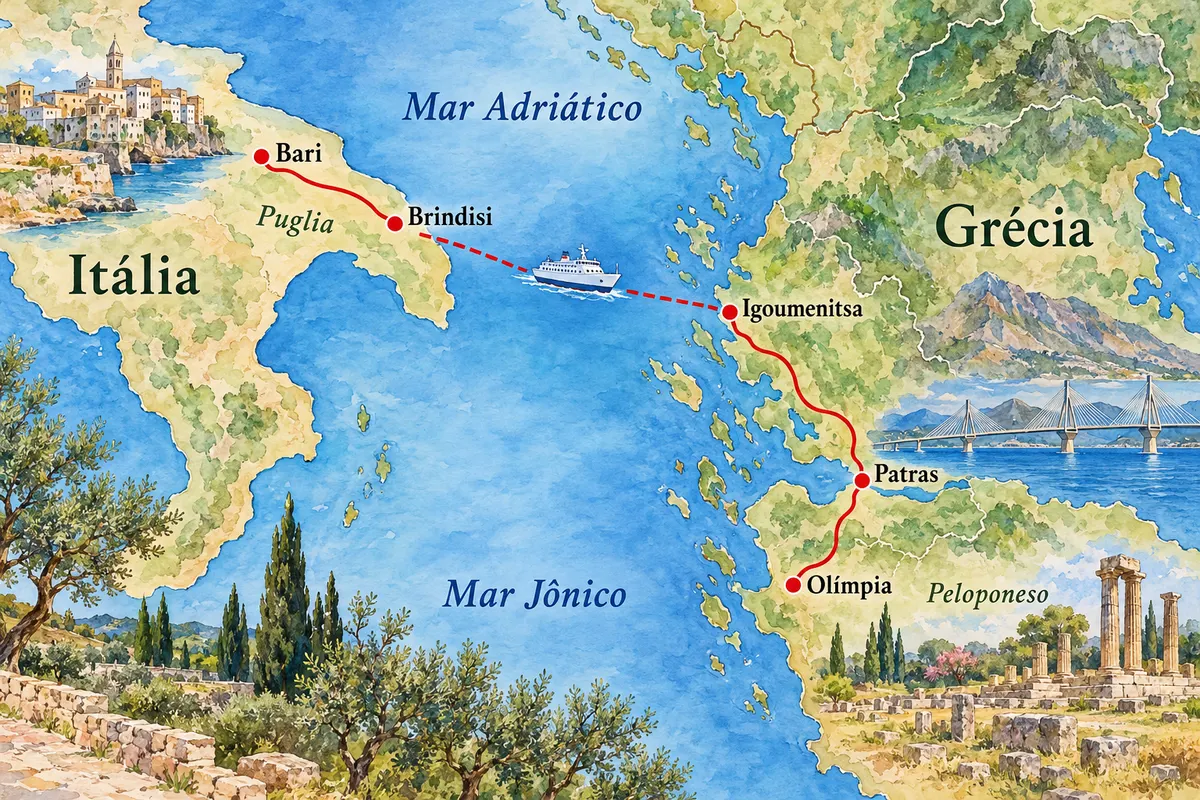
Apulia and Matera – na poti z imenom Italy–Greece ferry across the Adriatic

From Puglia to Greece by sea: overnight ferries depart Bari and Brindisi and arrive in the morning at Igoumenitsa, in Epirus, or continue to Patras, the gateway to the Peloponnese.

Zemljevid je ilustrativen in ni v merilu. Dotaknite se mesta, da odprete njegovo stran.
Italy–Greece ferry across the Adriatic – ilustrirani zemljevid
Več o poti – Italy–Greece ferry across the Adriatic
Odkrijte druge destinacije Iskanje po zvezni državi in mestu

Več kot vodnik