Focaccia barese
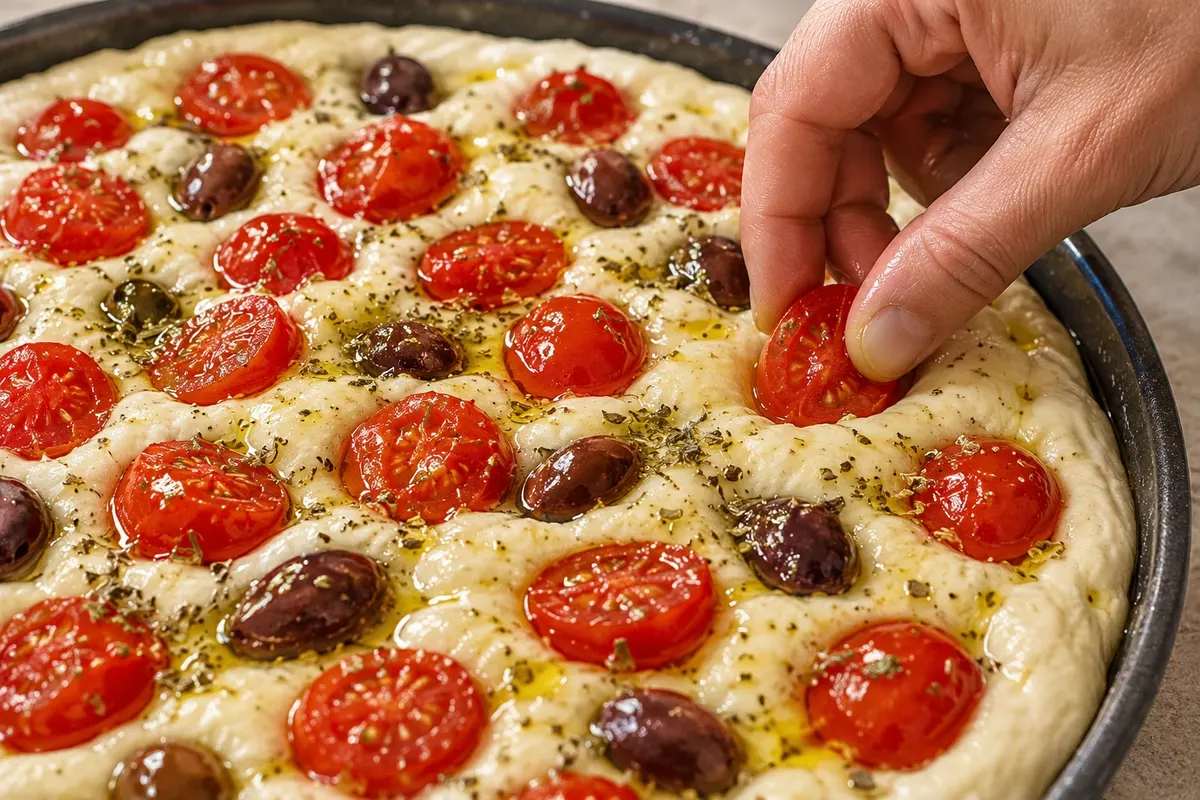
Tall, soft focaccia made with cooked potato in the dough, topped with crushed cherry tomatoes, olives, oregano and plenty of olive oil, with a crispy edge. It’s named after Bari and is the city’s most common snack.
Antarktika
Apúlia · Italija Capital
Destinacija: Apulia and Matera.
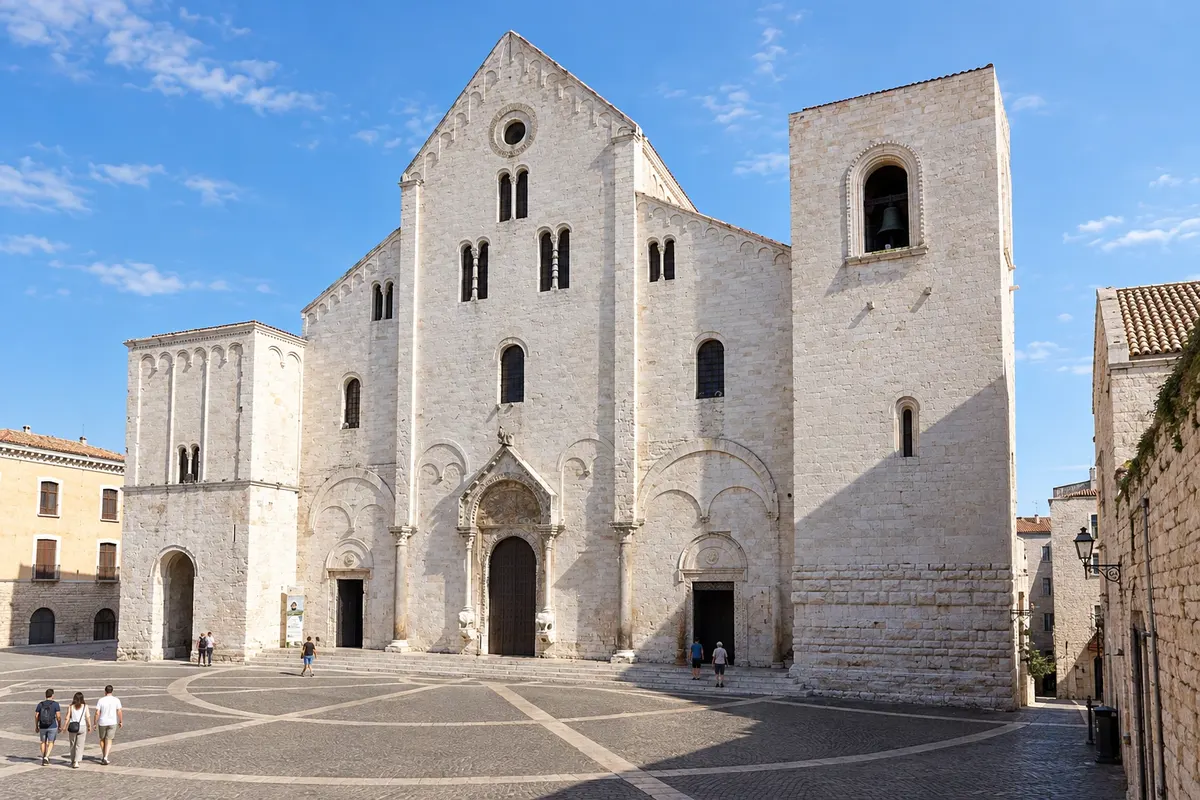
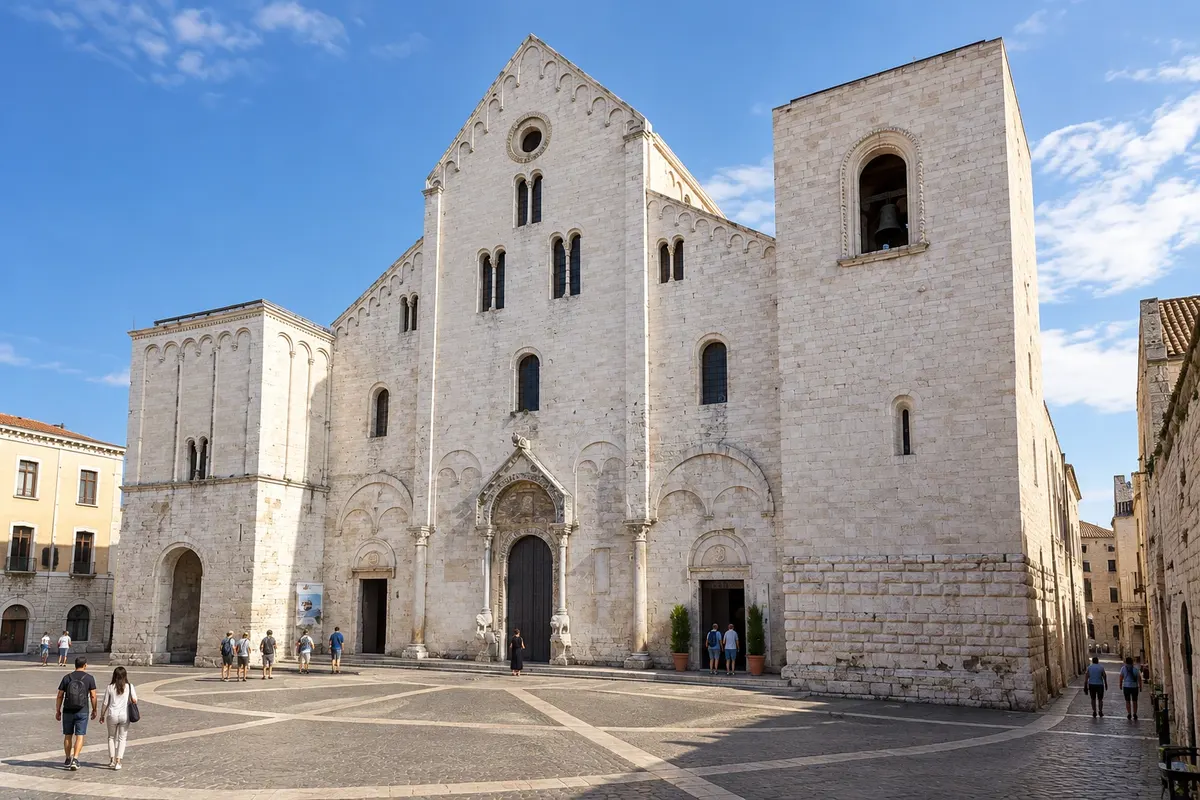
Na fotografiji: Basilica di San Nicola, Bari
Illustrative images. The pictures in this guide are illustrations based on the real place, not photographs, and may differ from it.
Mesto
Bari, capital of Apulia, is the largest Italian city on the Adriatic and the gateway to the region. The old town, Bari Vecchia, sits on a peninsula between two harbors and houses the Basilica di San Nicola, with the relics of Saint Nicholas, the Cattedrale di San Sabino and the Castello Normanno-Svevo. Next to it, the Quartiere Murat, laid out in the 19th century, has shopping streets, and the Lungomare Nazario Sauro leads to the Pinacoteca Metropolitana Corrado Giaquinto.
V vodniku še ni nastanitev – Bari.
kako do tja · koliko dni · načrt poti · vprašanja
Lokalni okusi – of Italija

Tall, soft focaccia made with cooked potato in the dough, topped with crushed cherry tomatoes, olives, oregano and plenty of olive oil, with a crispy edge. It’s named after Bari and is the city’s most common snack.

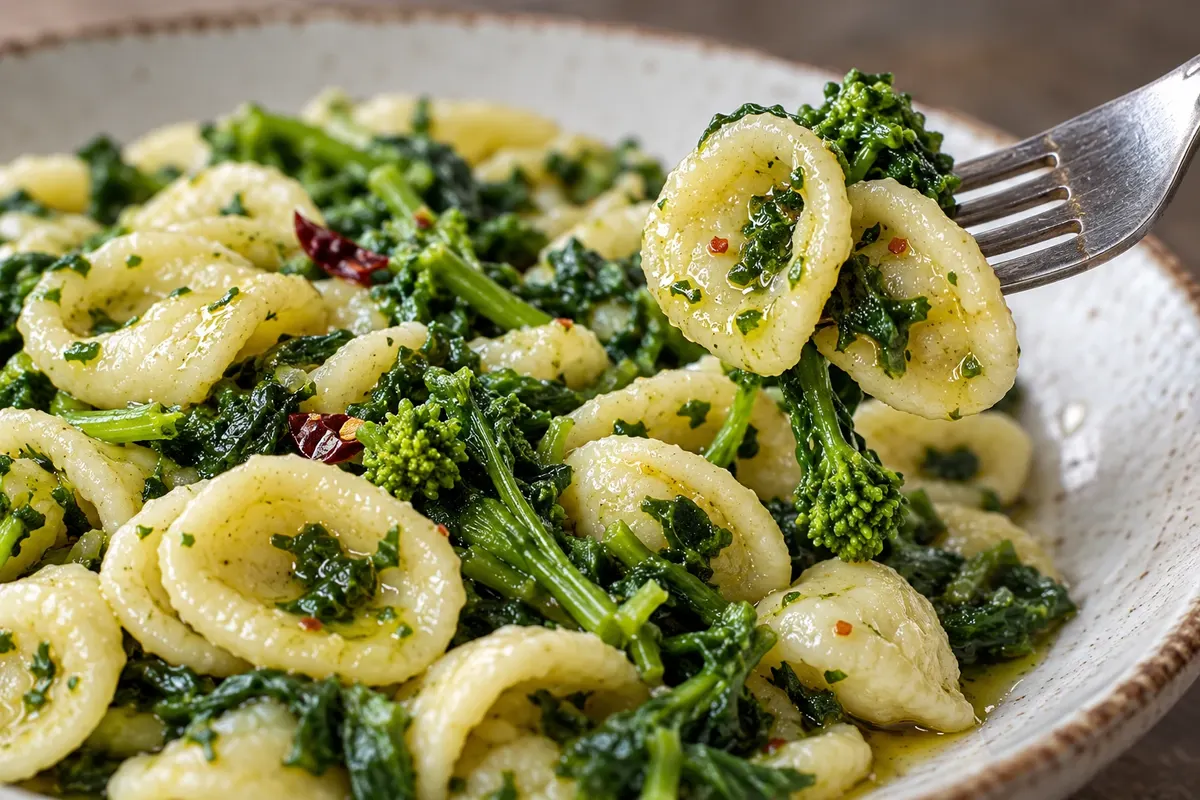
Small semolina dumplings shaped like little ears, handmade and cooked with turnip leaves and shoots, seasoned with garlic, anchovy, chili, and olive oil. In Bari, the orecchiette are made in public on the old town’s street.
Doživite kraj
Romanesque basilica from the 11th century, in the heart of Bari Vecchia, built to house the relics of Saint Nicholas, brought from the city of Myra (now in Turkey) in 1087. It is a destination for Catholic and Orthodox pilgrims.
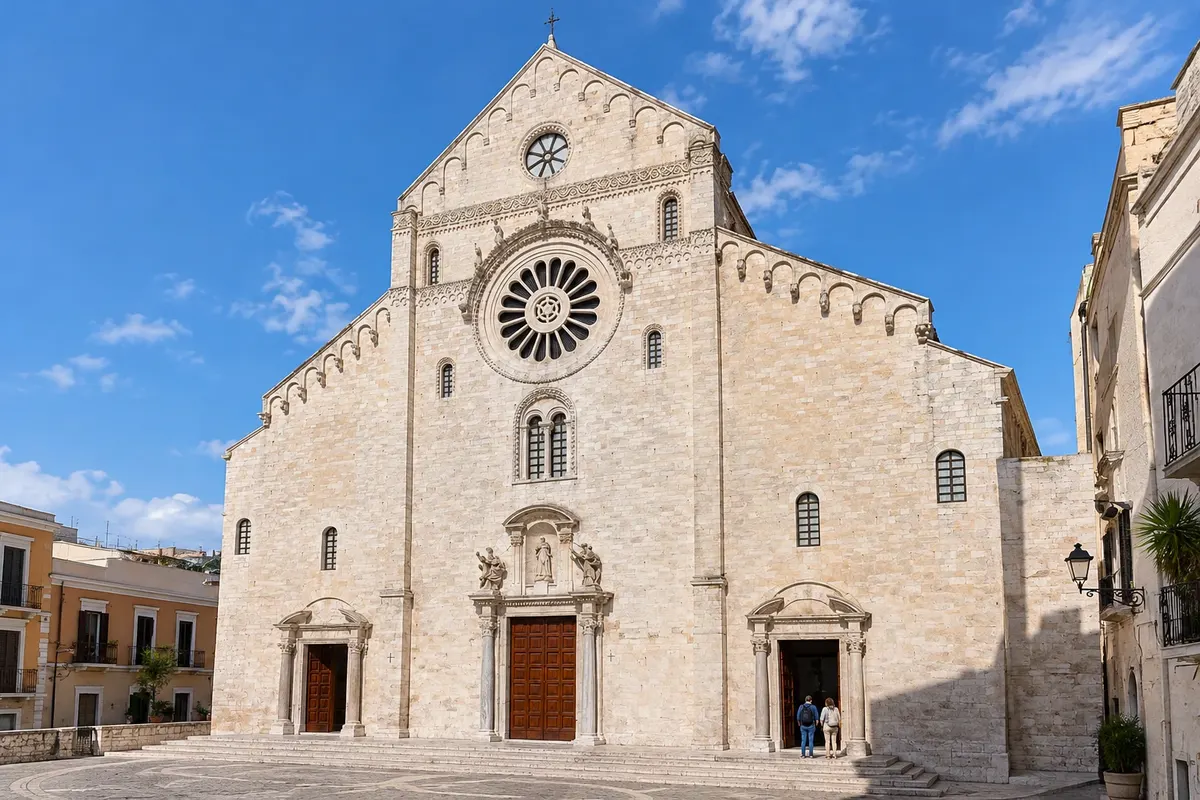
Bari's cathedral, in Apulian Romanesque style, was built between the 12th and 13th centuries over the ruins of older churches. It features a rose window on the façade, a Baroque crypt and remains of medieval mosaics.
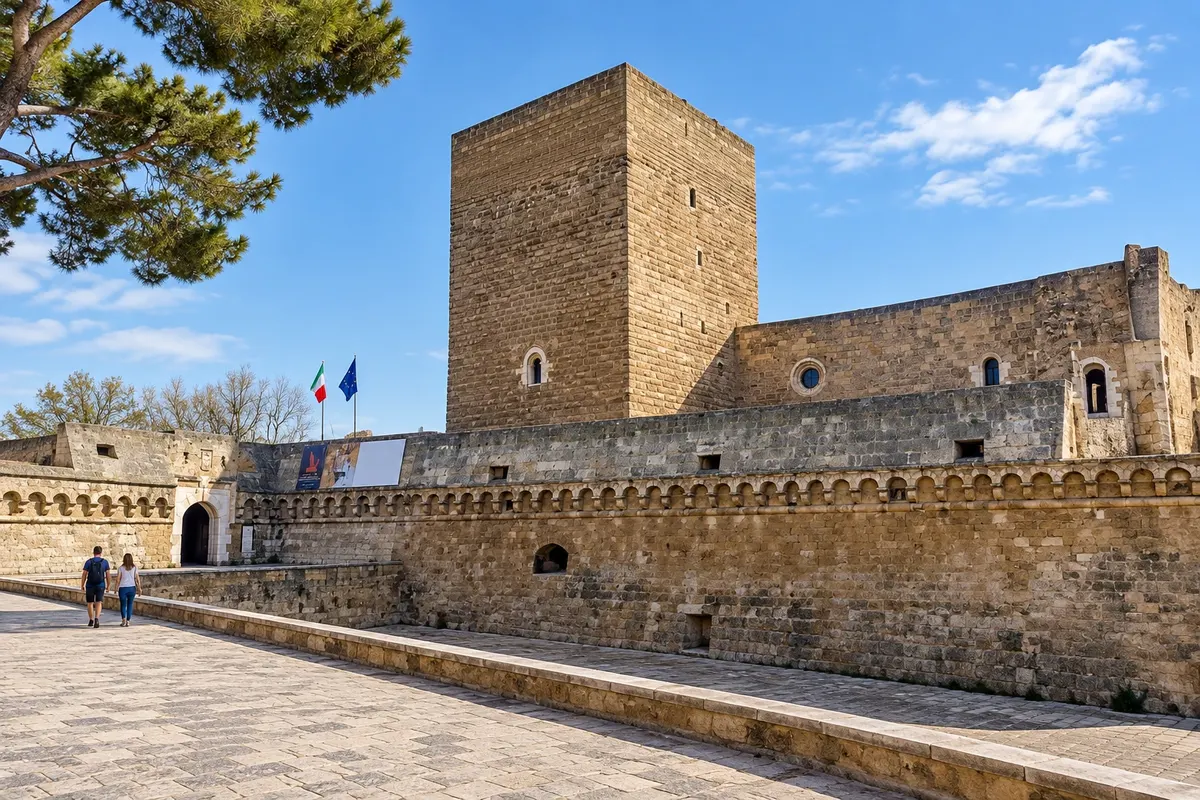
Fortress on the edge of the old town, erected by the Normans in the 12th century and rebuilt by Frederick II in 1233. It has a moat, stone towers and rooms with exhibitions and a gipsoteca, a collection of plaster casts.
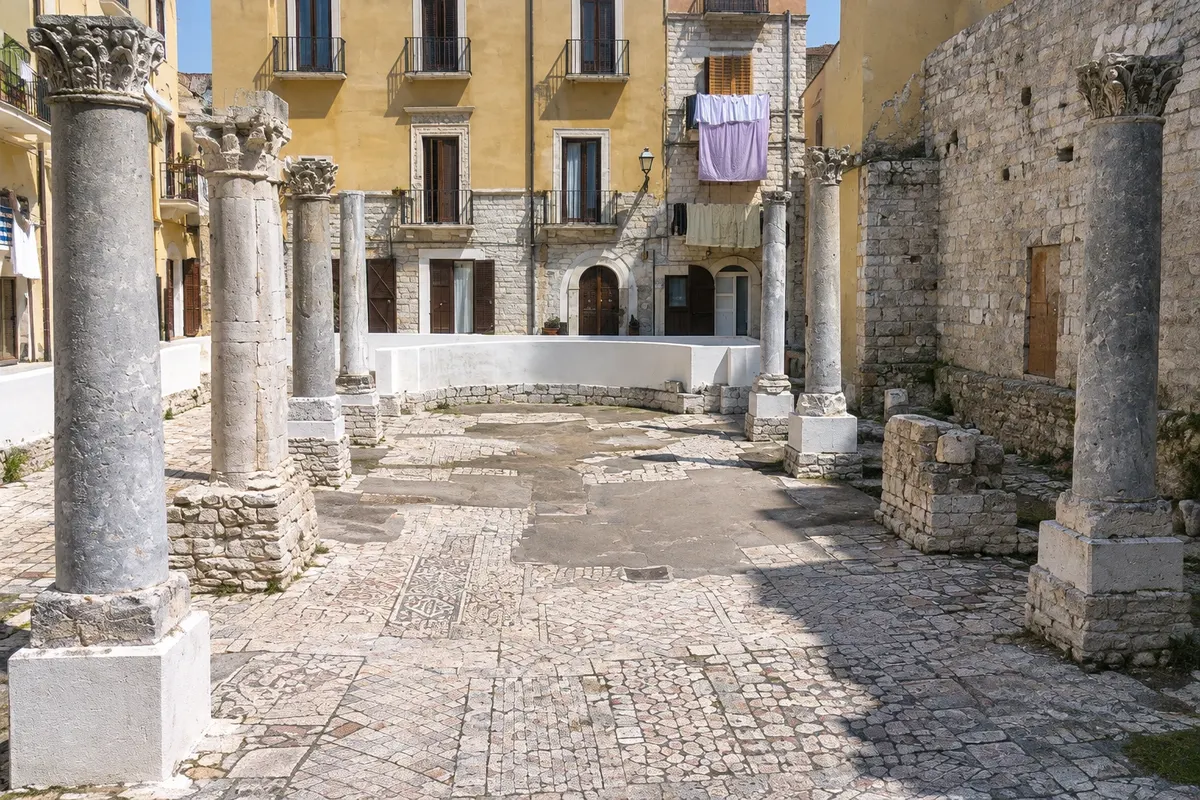
Bari's old town occupies a small peninsula between the old port and the new port, surrounded by the ancient wall. Medieval lanes, squares, dozens of churches and the neighborhood life of its residents.
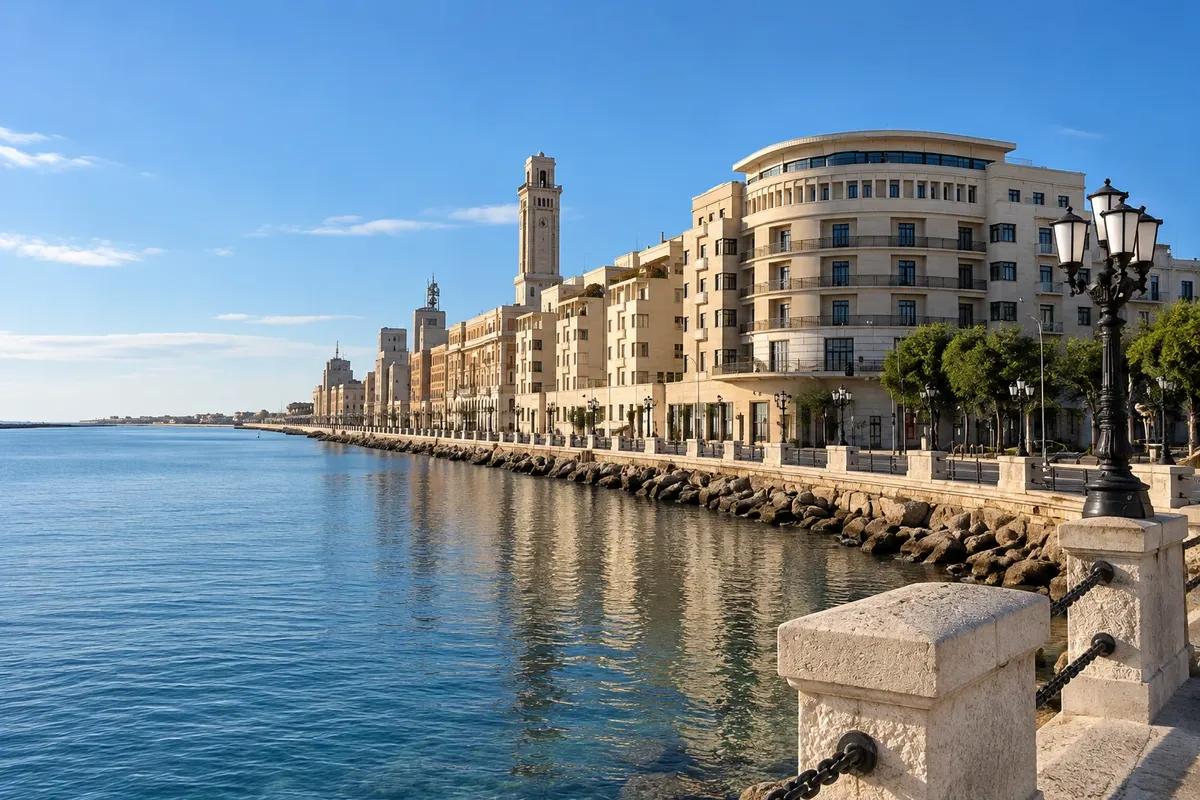
Seafront avenue that runs from the old town toward the south, with a promenade, public buildings from the 1920s and 1930s, and views of the Adriatic. It's the locals' late-afternoon stroll.
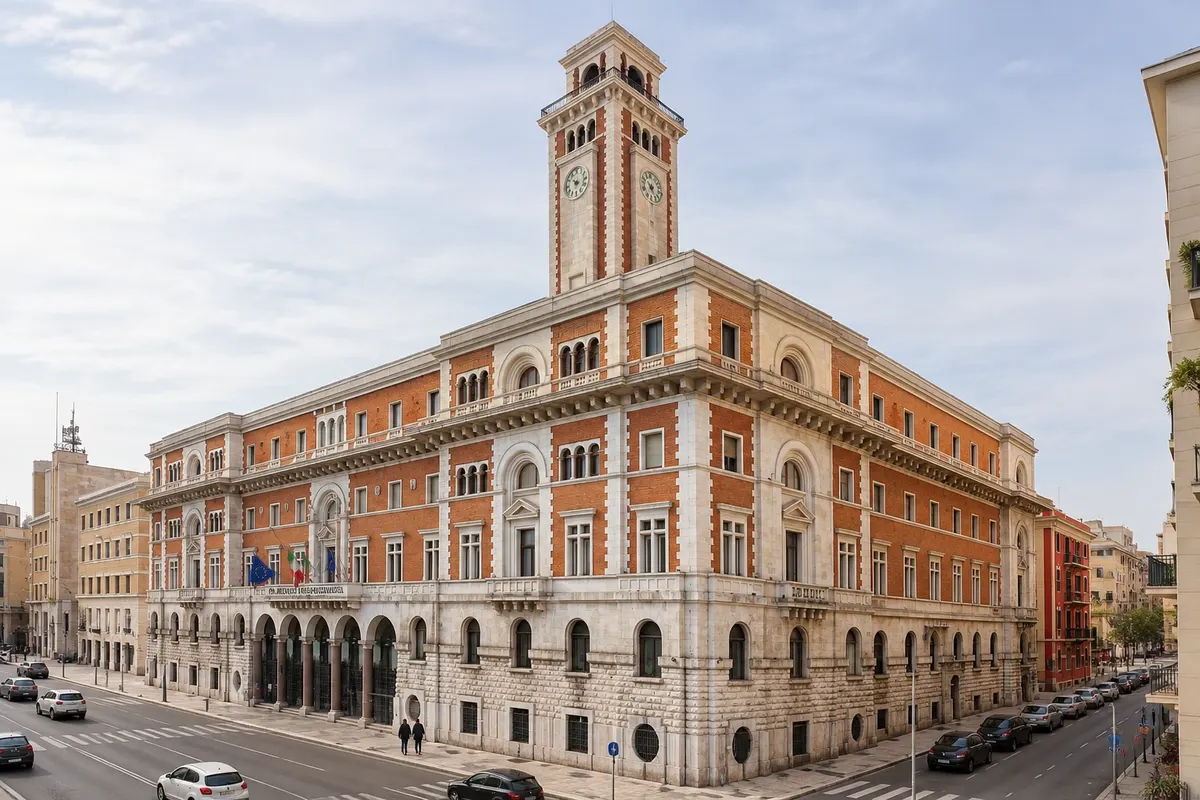
Museum of Apulia art in the Palazzo della Provincia by the sea, featuring medieval sculptures, Byzantine icons, Venetian paintings by Giovanni Bellini, Tintoretto and Veronese, and works of the Neapolitan Baroque.
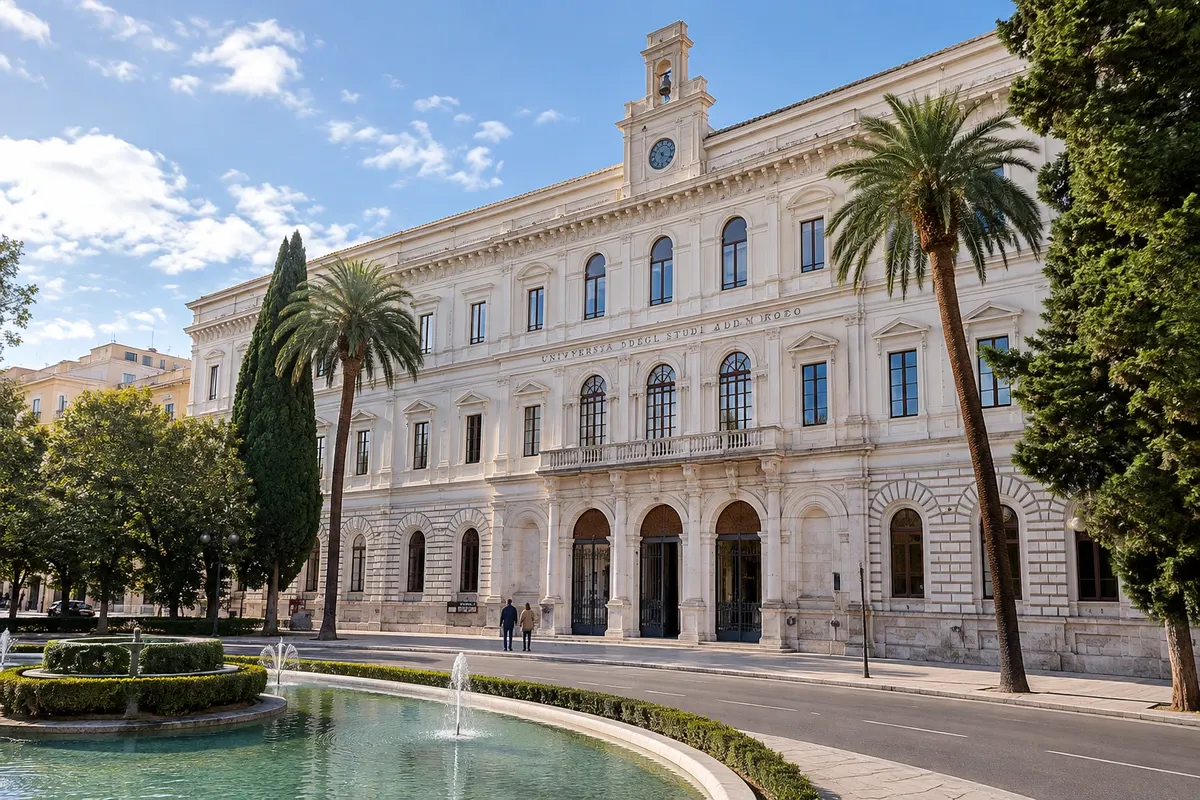
The part of the city laid out in the 19th century, with straight streets, between the station and the old town. It includes Via Sparano, a pedestrian shopping street, Corso Vittorio Emanuele, the Teatro Petruzzelli and liberty-style buildings.
Pred odhodom
Bari – Apulia Destinacija Apulia and Matera Capital
Razdalje so približne. Pred potovanjem preverite lete in vozne rede avtobusov, vlakov ali ladij.
Check before you buy. Bari Karol Wojtyła Airport (BRI) receives flights from Rome and Milan and is about 11 km from the center, connected to Bari Centrale station by train. From Rome, high-speed trains take about 4 hours to Bari Centrale. From the station, the old town is roughly a 15-minute walk.
One day is enough to see Bari Vecchia, the two basilicas, the castle and the lungomare. Two days allow you to include the Pinacoteca and the Quartiere Murat at a relaxed pace. Bari also works as a base for day trips to Polignano a Mare, Alberobello and Matera.
May, June, September and October usually have good weather for walking. From June to August it gets very hot. In May, the Festa di San Nicola, which commemorates the arrival of the relics, fills the old town. In winter, from December to February, the weather is mild and the city has fewer tourists.
The seasons shown are the most usual ones; nature doesn't always follow the calendar.
No. Bari Vecchia, the Murat and the lungomare are walked on foot, and the station has trains to Polignano, Lecce, Alberobello and Matera. The old town is closed to outside cars: those arriving by car should leave it in parking outside the ZTL, the limited traffic zone.
Predlog poti
Pot povezuje znamenitosti na tej strani. Za oglede boste imeli dovolj časa.
Start in Bari Vecchia at the Basilica di San Nicola, descending to the crypt where the saint's tomb is. Then follow the narrow streets to the Piazza Mercantile and the Piazza del Ferrarese.
Have lunch in a trattoria in the old town, with orecchiette, around 1:00 PM. Visit the Cattedrale di San Sabino and then the Castello Normanno-Svevo, passing along Strada Arco Basso.
Climb up to the Muraglia, the wall over the sea, and walk to the Teatro Margherita. Continue along the Lungomare Nazario Sauro at the time when locals go out for a stroll.
Return via Corso Vittorio Emanuele and Via Sparano, in the Quartiere Murat. Dinner starts around 8:00 PM; the squares of Bari Vecchia come alive in the evening.
Dan 1
Start the day at the Basilica di San Nicola and the crypt. Walk through the alleys to Piazza Mercantile, with the Colonna Infame, and Piazza del Ferrarese.
After lunch, visit the Cattedrale di San Sabino and the Exultet museum. Continue to the Castello Normanno-Svevo and the gipsoteca.
Climb the ramp to the Fortino di Sant'Antonio Abate and walk along the Muraglia over the sea, with views of the port and the waterfront.
Dine in Bari Vecchia, with focaccia barese, panzerotti or fish. The squares usually stay busy until late in summer.
Dan 2
Walk along the Lungomare Nazario Sauro to the Palazzo della Provincia and visit the Pinacoteca Corrado Giaquinto, which houses Byzantine icons and Venetian painting.
Have lunch in the Murat and stroll along Via Sparano, passing the Palazzo Mincuzzi, to Corso Cavour and the façade of the Teatro Petruzzelli.
Return to the sea for the late-afternoon on the lungomare. In summer, those who want sand can go to the city beaches to the south, such as Pane e Pomodoro.
Check the programme at the Teatro Petruzzelli or dine near the old port, where there are fish and seafood options.
Check before you go. Opening hours and days change, and places may close for renovations, holidays or events. This itinerary is a suggestion from Cidade Turismo, not a commitment: plan yours by checking directly with each place you intend to visit.
Pred odhodom
Bari Karol Wojtyła Airport is about 11 km from the center and has a train to Bari Centrale station, as well as buses and taxis. Check schedules on arrival.
One day is enough for the old town, the basilicas and the castle. Two days allow you to include the Pinacoteca and the Murat. Many travellers use Bari as a base and make day trips to Polignano a Mare, Alberobello and Matera.
For Polignano a Mare, regional trains depart from Bari Centrale and take about 30 to 40 minutes. For Alberobello, FS Sud Est trains and buses depart from Bari Centrale and take about 1.5 to 2 hours, with fewer services on Sundays.
Yes. High-speed trains connect Roma Termini to Bari Centrale in about 4 hours. For those coming from Milan, the domestic flight is usually faster.
Yes, Bari charges a tourist tax per person per night, paid at the accommodation.
Rotas entre países
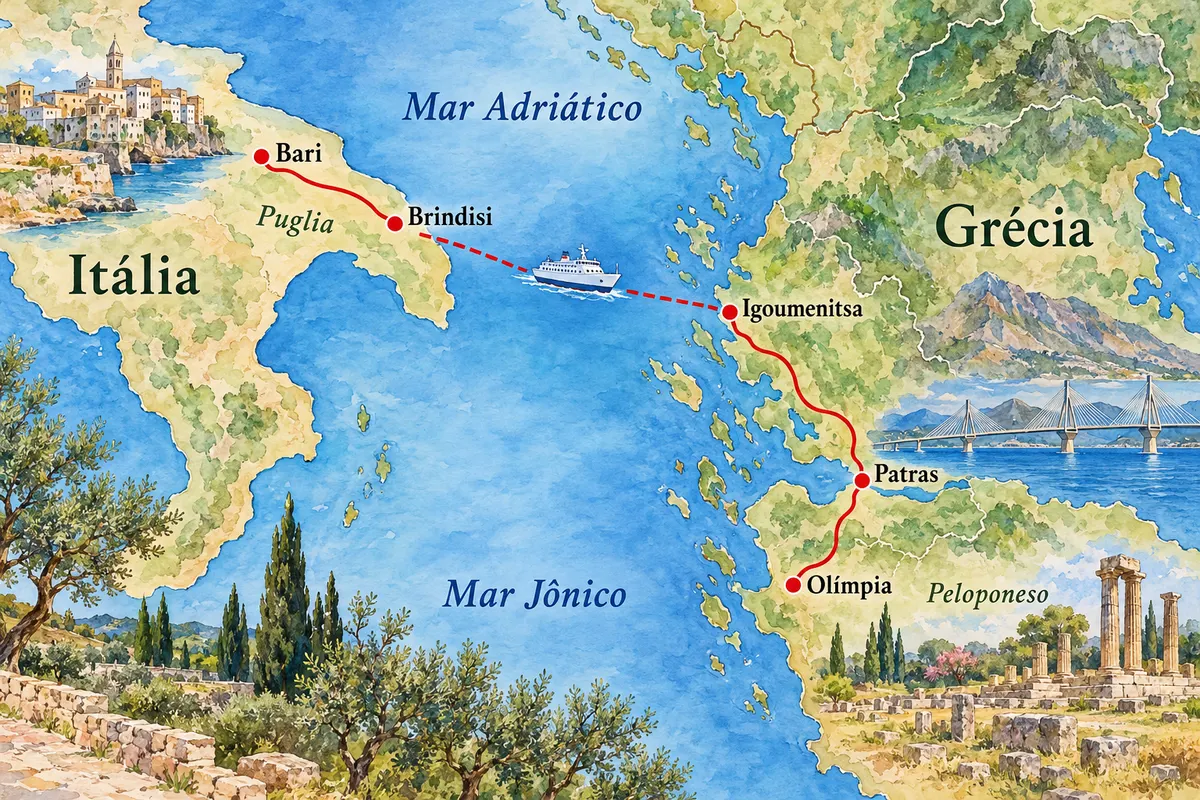
From Puglia to Greece by sea: overnight ferries depart Bari and Brindisi and arrive in the morning at Igoumenitsa, in Epirus, or continue to Patras, the gateway to the Peloponnese.
Več kot vodnik