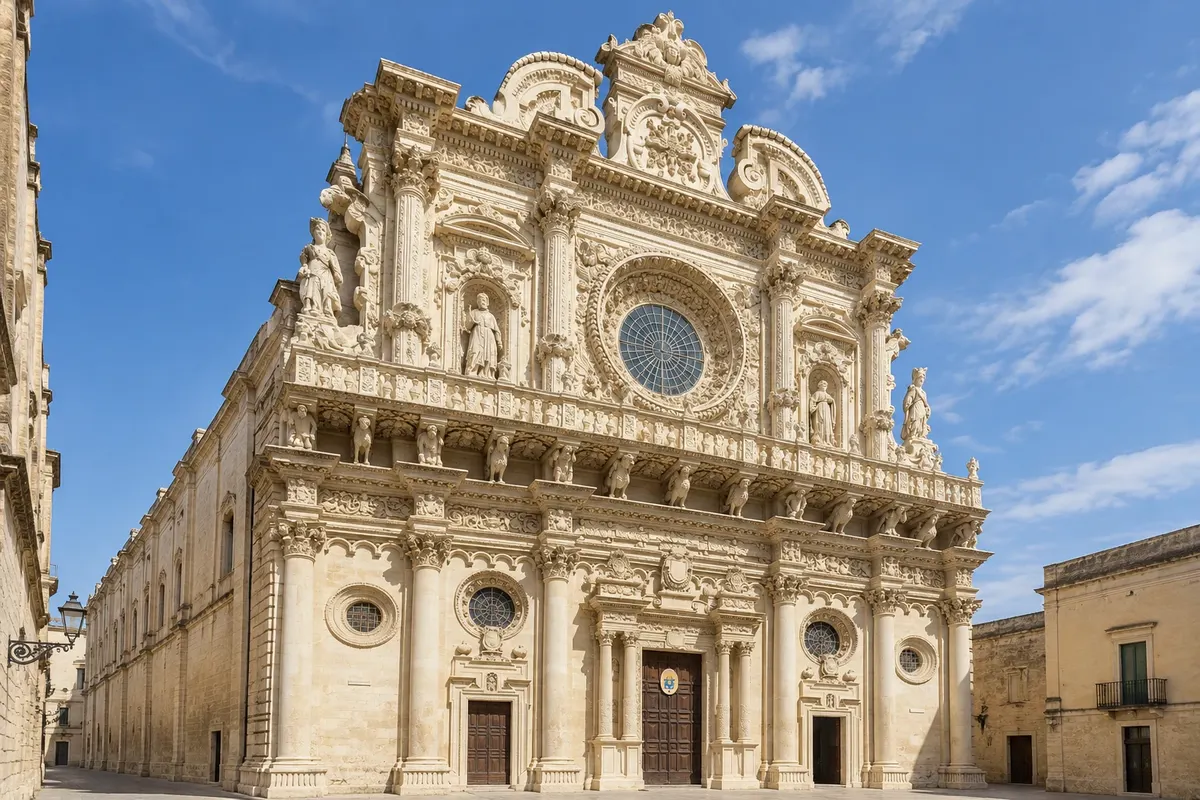
Basilica of Santa Croce
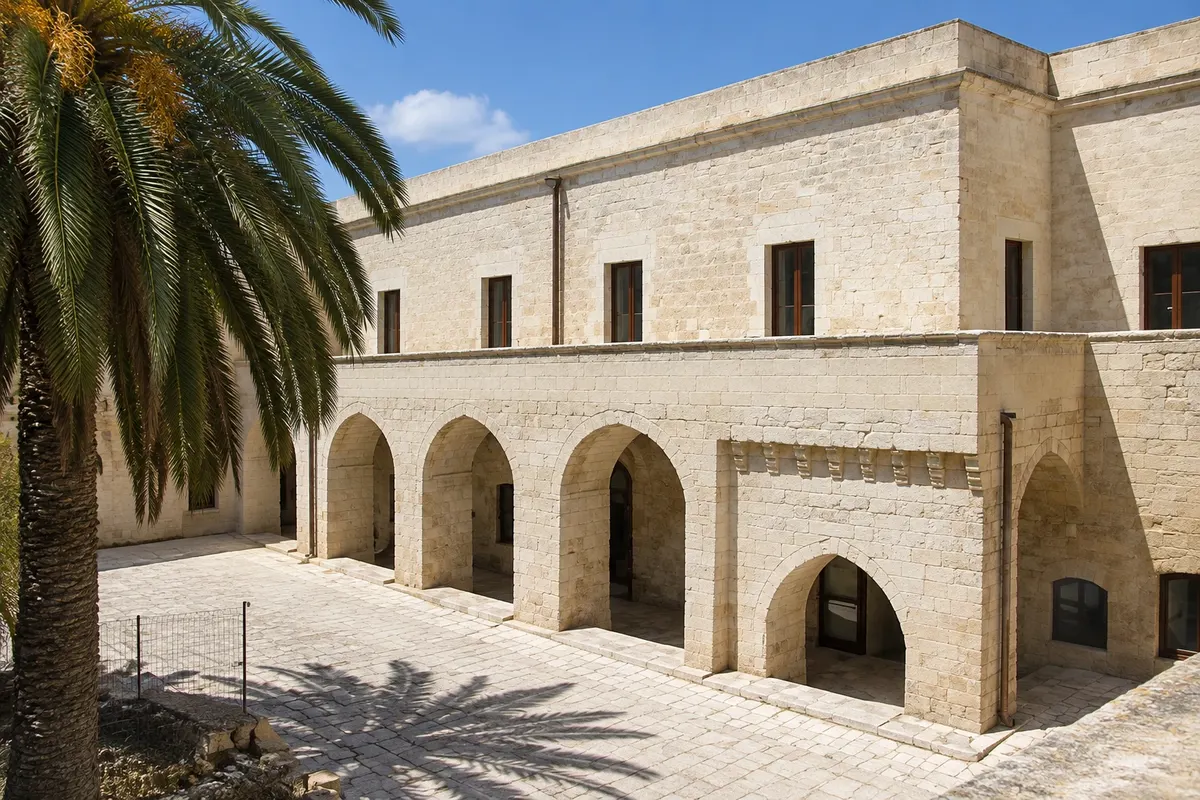
16th–17th century basilica considered the masterpiece of the barroco leccese, with a façade full of grotesque figures, animals and a large rose window. Beside it is the former convent of the Celestines.
Antarktika
Apúlia · Italija
Destinacija: Apulia and Matera.
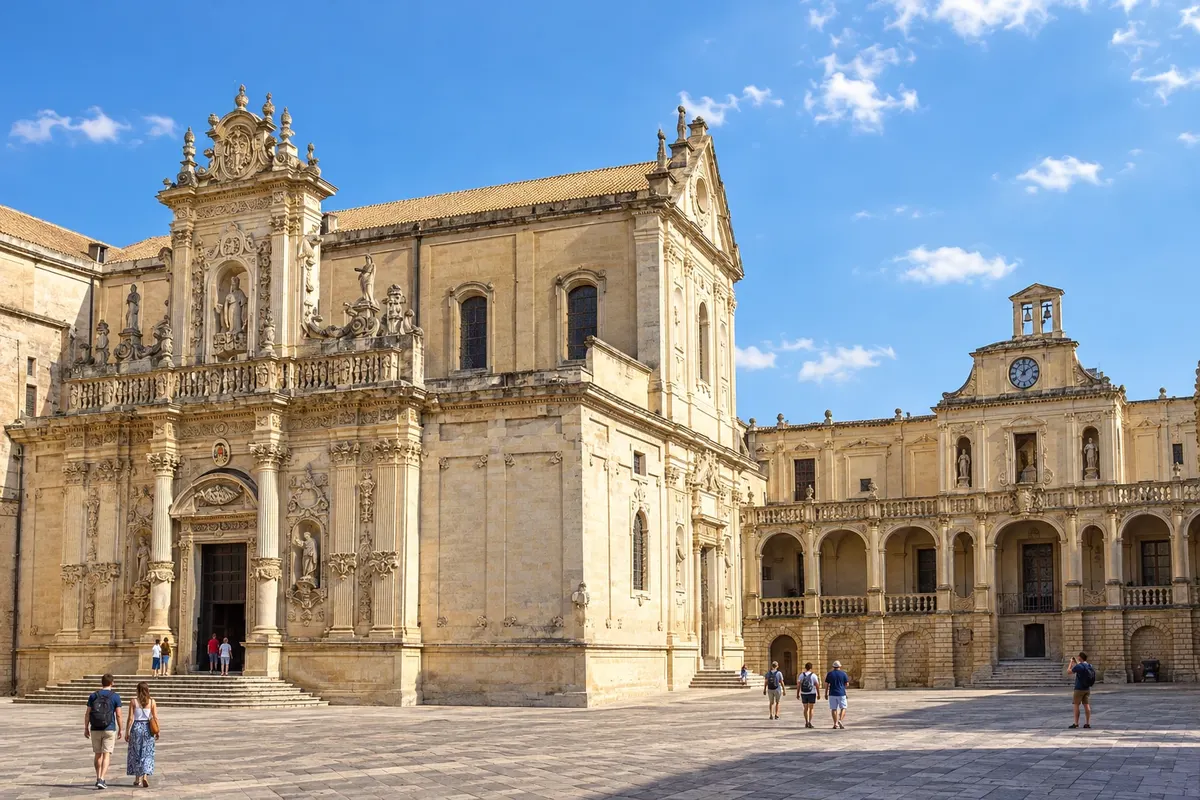
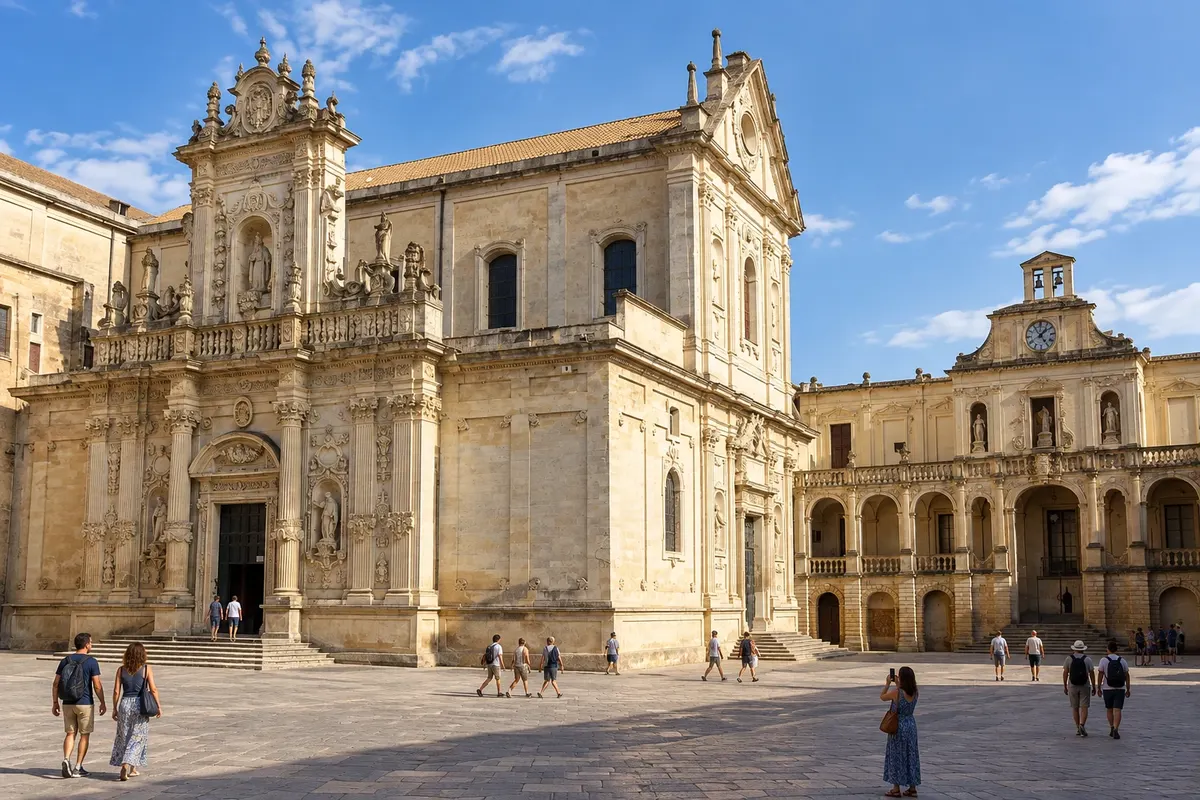
Na fotografiji: Duomo di Lecce, Piazza del Duomo
Illustrative images. The pictures in this guide are illustrations based on the real place, not photographs, and may differ from it.
Mesto
Lecce is the main city of the Salento, the heel of the Italian boot, and became famous for the barroco leccese, carved in the light, soft stone of the region between the 16th and 18th centuries. In the centro storico (historic center) are the Basilica di Santa Croce, the Piazza del Duomo with the cathedral and the 70-metre bell tower, the Piazza Sant'Oronzo with the Anfiteatro Romano, the Porta Napoli and the Castello Carlo V. Otranto, on the Adriatic, is about 45 km away.
V vodniku še ni nastanitev – Lecce.
kako do tja · koliko dni · načrt poti · vprašanja
Doživite kraj
16th–17th century basilica considered the masterpiece of the barroco leccese, with a façade full of grotesque figures, animals and a large rose window. Beside it is the former convent of the Celestines.
An enclosed square, almost a courtyard, surrounded by the Cattedrale di Santa Maria Assunta, the 70-meter campanile, the episcopal palace and the former seminary, all in leccese Baroque.
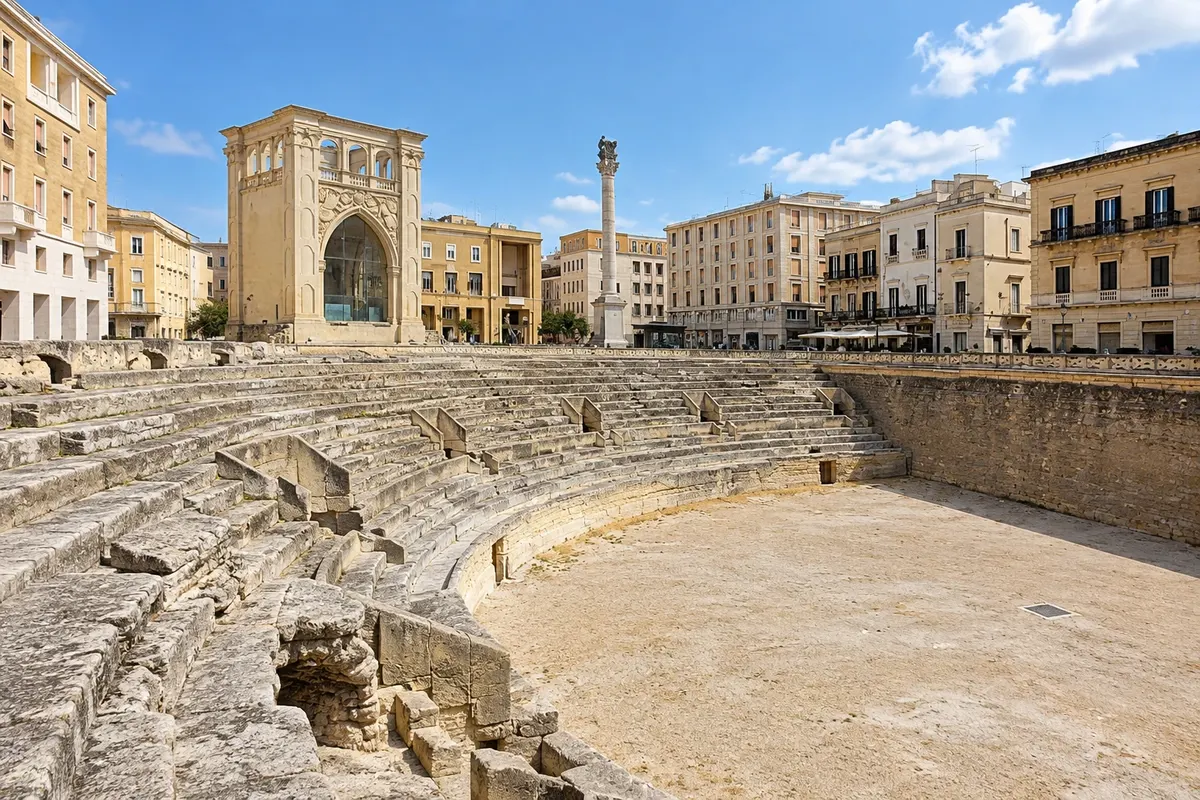
Remains of the Roman amphitheatre from the time of Augustus, discovered in the early 20th century and exposed outdoors in Piazza Sant'Oronzo, the main square of Lecce, next to the patron's column.
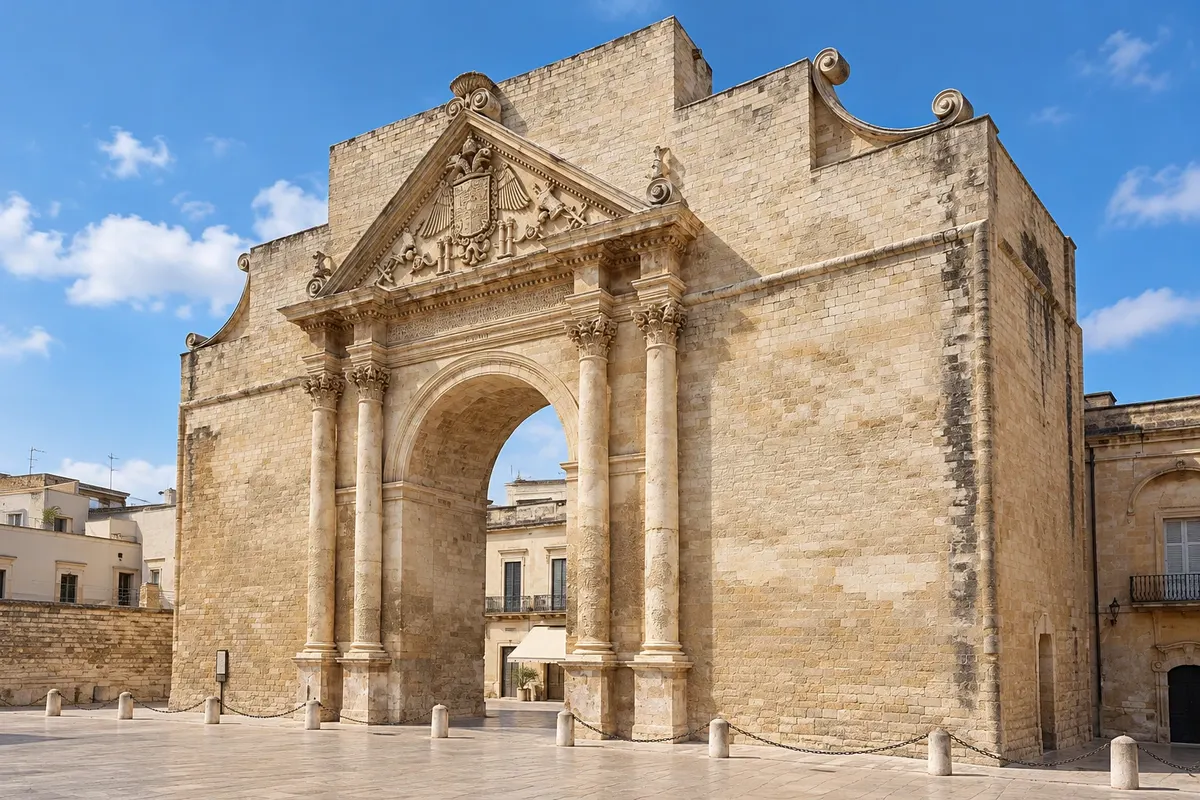
Triumphal arch from 1548 erected in honor of Emperor Charles V, at the northern entrance to the historic center of Lecce, facing a 19th-century obelisk.

Fortress built from 1539 by order of Carlos V, next to the historic center. Today it serves as a cultural space run by the city council, hosting exhibitions and routes through the castle's former rooms.
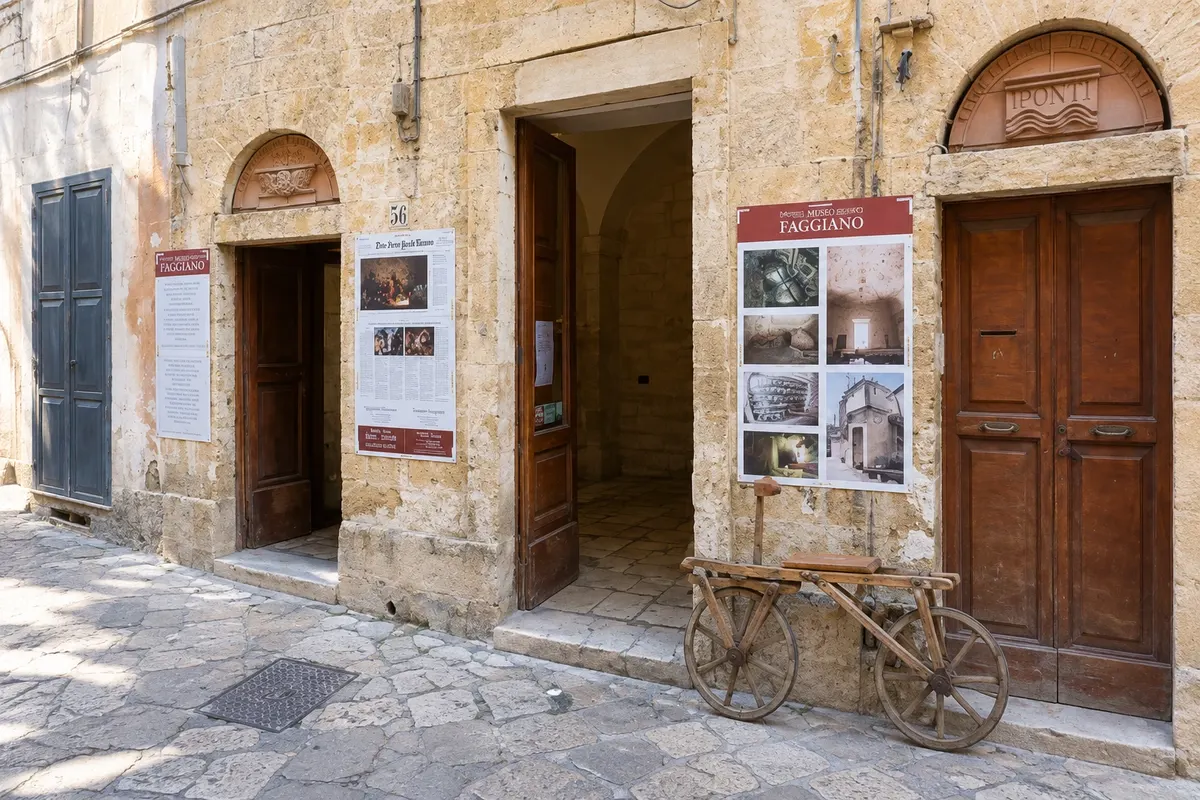
A private house in the historic center where, following plumbing work in 2001, layers of Lecce’s history were revealed: Messapian tombs, Roman silos, medieval remains and an old Templar house.
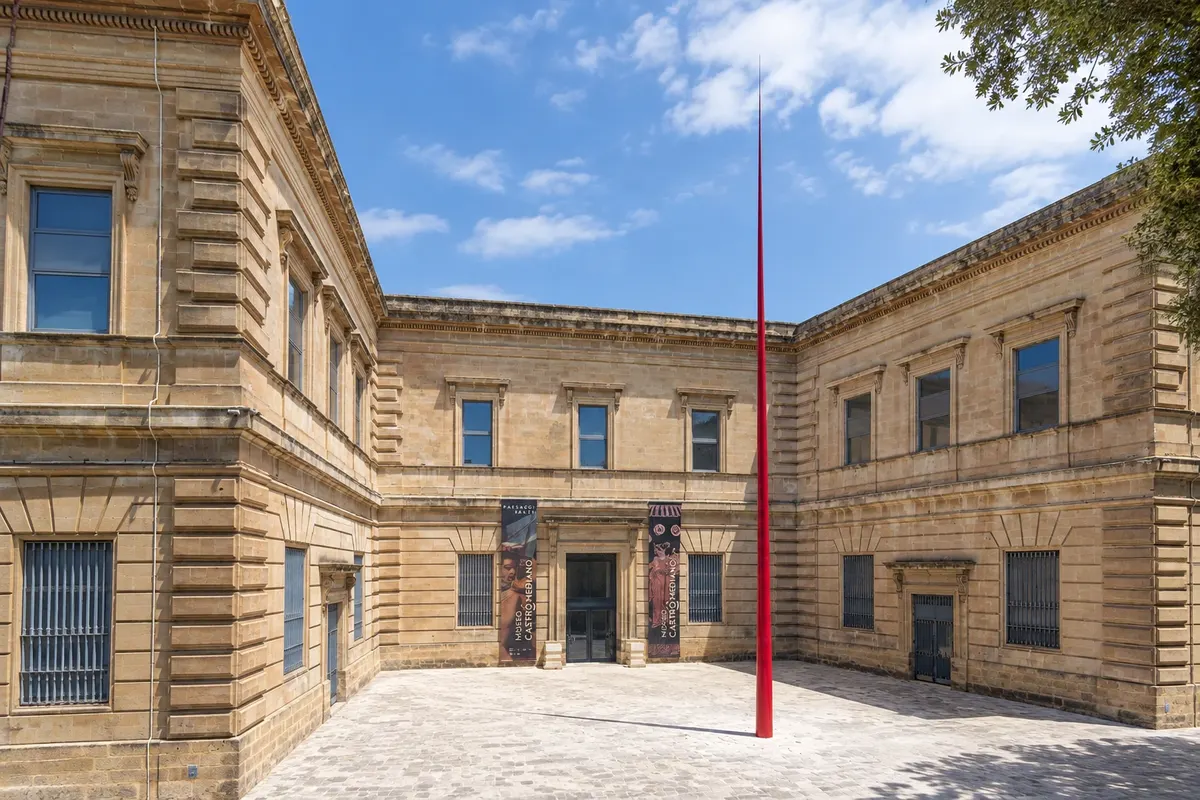
The oldest museum in Apúlia, founded in 1868, with Messapian and Roman pieces from the Salento, an art gallery and a reconstruction of the Grotta dei Cervi of Porto Badisco, featuring prehistoric paintings.
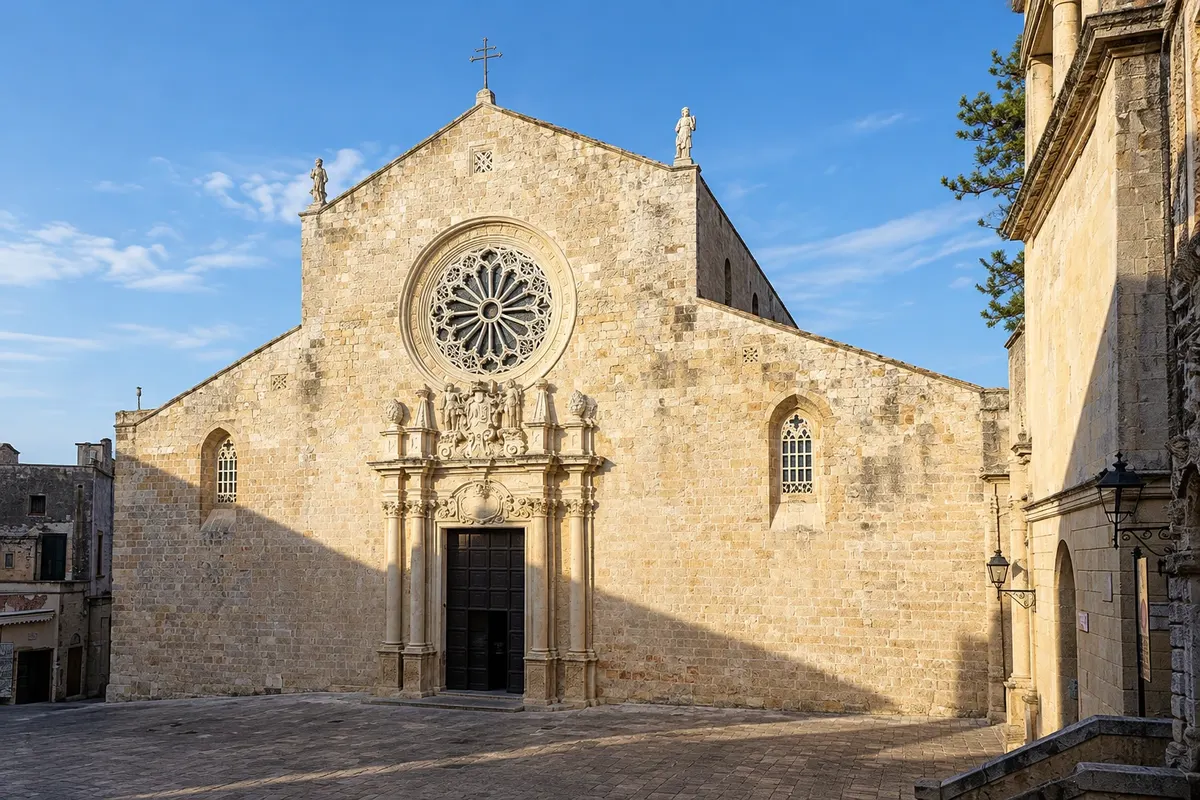
Romanesque cathedral from the 11th century in Otranto, about 45 km from Lecce, with a floor mosaic from 1163–1165 that covers the entire nave and the chapel housing the remains of the Martyrs of Otranto.
Pred odhodom
Lecce – Apulia Destinacija Apulia and Matera približno 155 km stran (izhodišče: Bari)
Razdalje so približne. Pred potovanjem preverite lete in vozne rede avtobusov, vlakov ali ladij.
Confirm before booking. You can continue by train from Rome or from Bari: from Bari, Trenitalia trains (Frecciarossa, Intercity and regional) take about 1h20 to 1h40 to Lecce station. The nearest airport is Brindisi (BDS), some 40 km away, with buses to the city. The station is 1 km from the historic center, which can be explored on foot.
A full day is enough for the baroque churches, the squares and the amphitheatre. With two days you'll have time for museums, the castle and a day trip to Otranto. Many use Lecce as a base to explore the rest of the Salento.
Spring (April to June) and early autumn (September and October) usually offer pleasant weather for walking around the center. Summer, from June to August, is hot and crowded — beach season in the Salento. In August the feast of the patron saints Oronzo, Giusto and Fortunato takes place.
The seasons shown are the most usual ones; nature doesn't always follow the calendar.
You don't need a car for the city: the historic center is small, flat and almost entirely inside the ZTL (limited traffic zone), closed to outside cars. Leave the car outside the walls. A car is useful to explore beaches and villages in the Salento; there is a regional train to Otranto.
Predlog poti
Pot povezuje znamenitosti na tej strani. Za oglede boste imeli dovolj časa.
Start at the façade of the Basilica di Santa Croce and the neighbouring Palazzo dei Celestini. Follow Via Umberto I to Piazza Sant'Oronzo, with the patron's column and the Anfiteatro Romano half-buried beneath the square.
Have lunch between 12:30 and 14:30 and try the rustico leccese. Then enter the Piazza del Duomo, see the cathedral and climb the bell tower; with the same ticket, visit the seminary and the church of San Matteo.
Walk along Via Palmieri to the Porta Napoli, the arch erected in 1548 for Charles V. Return through the centre to the Castello Carlo V, which often hosts exhibitions.
The Piazza del Duomo at night is illuminated and peaceful. Dinner starts around 19:30–20:00; order orecchiette and vegetable dishes from the Salento.
Dan 1
See the façade of the Basilica di Santa Croce and go inside the church. Beside it, the courtyard of the Palazzo dei Celestini, seat of the provincial government, is usually accessible during office hours.
Use the single ticket for the baroque churches for the cathedral, the bell tower, the seminary and the churches of San Matteo and Santa Chiara, all a short walk apart.
Pass through Piazza Sant'Oronzo and the Anfiteatro Romano. Then descend to the city's older layers at the Museo Faggiano, on Via Ascanio Grandi.
Finish at the Porta Napoli and have dinner in the historic center, which comes alive at night with bars and restaurants.
Dan 2
Take an early regional train of Ferrovie del Sud Est to Otranto, about 1h30. Validate the paper ticket before boarding.
See the large floor mosaic in the cathedral and the Chapel of the Martyrs. Have lunch in the old town, inside the walls, near the castle.
Walk along the walls overlooking the port and the Adriatic Sea. In summer, the beach next to the centre usually gets very busy.
Return by train to Lecce for dinner or, if you prefer, dine in Otranto — just check the time of the last train beforehand.
Check before you go. Opening hours and days change, and places may close for renovations, holidays or events. This itinerary is a suggestion from Cidade Turismo, not a commitment: plan yours by checking directly with each place you intend to visit.
Pred odhodom
By train with Trenitalia, about 1h20 on the Frecciarossa and a little longer on regional and Intercity services. By car it's about 155 km via the coastal SS16 road.
It is the Baroque style developed in Lecce between the 16th and 18th centuries, with façades full of sculptures. It uses the pietra leccese, a light, soft limestone that's easy to carve and that takes on a golden hue in the sun.
The main churches — the cathedral with its bell tower, the seminary, San Matteo, Santa Chiara and Santa Croce — are part of a circuit with a single ticket valid for several days. During Masses, tourist visits are suspended; check before you go. Shoulders and knees should be covered.
Yes. The regional train of Ferrovie del Sud Est takes about 1h30, at some times requiring a change in Maglie. By car it's about 45 km.
Yes. The city has a train station, many places to stay and is close to both coasts — the Adriatic and the Ionian. For beaches and smaller villages, a car is useful.
Več kot vodnik