Mata de São João

Bahia · Brazilija

Mata de São João

Destinacija: Costa dos Coqueiros.

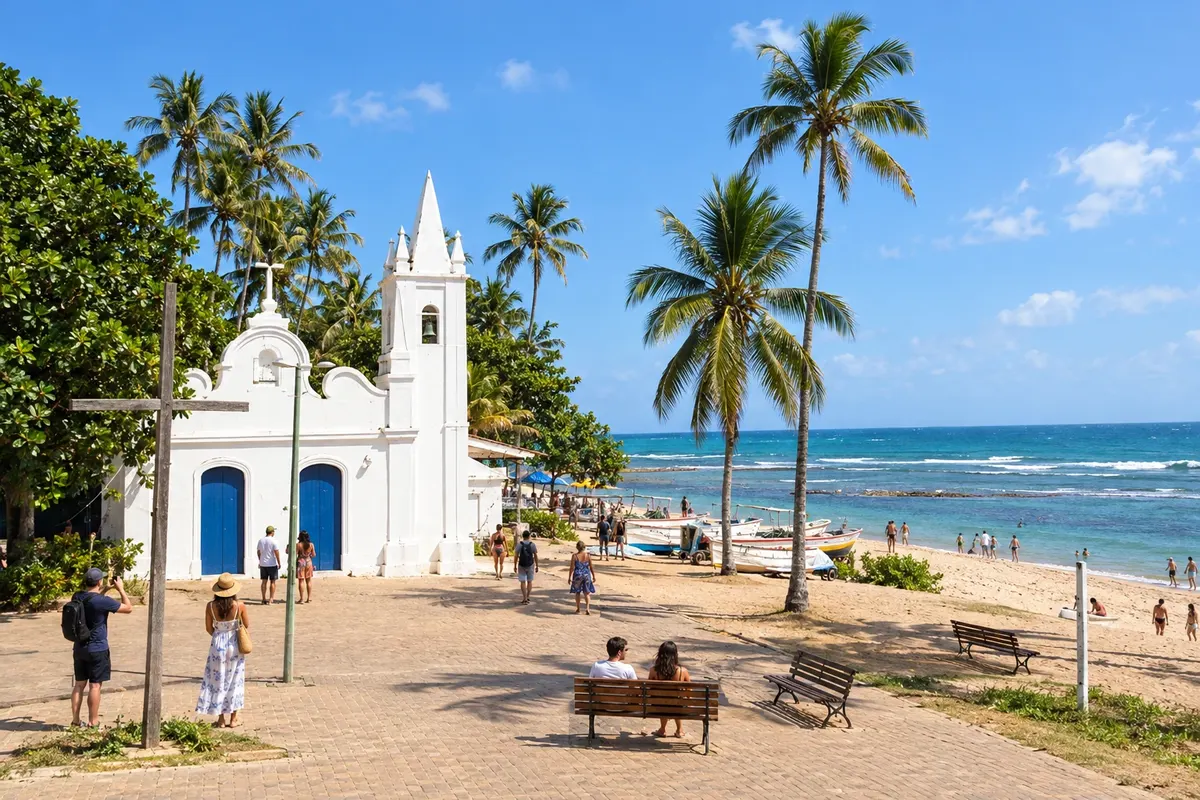
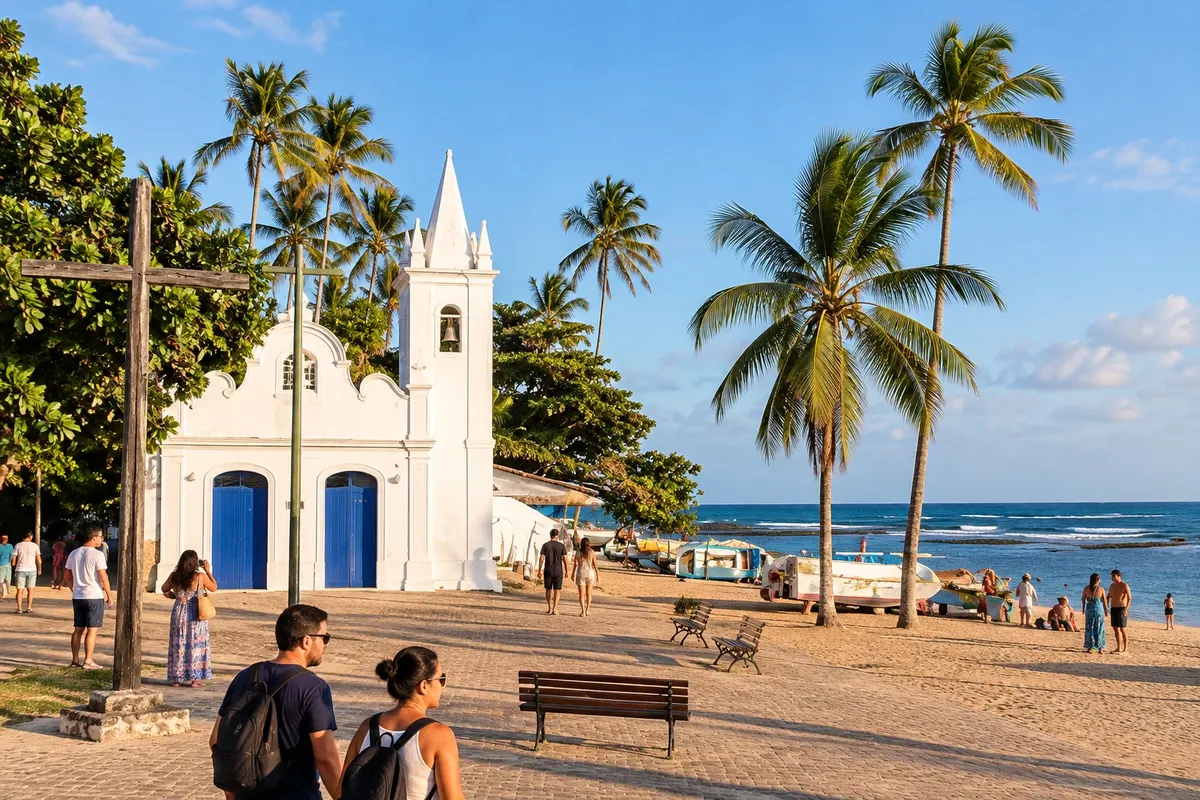
Na fotografiji: Igreja de São Francisco de Assis and the seafront of Praia do Forte, Mata de São João

Illustrative images. The pictures in this guide are illustrations based on the real place, not photographs, and may differ from it.

Na voljo v trgovini Google Play Pošljite svoje fotografije

Mesto

Kaj lahko pričakujete – Mata de São João.

Mata de São João brings together Praia do Forte, Imbassaí and historic heritage on the Costa dos Coqueiros. The village and the beach allow walks on foot, Castelo Garcia d’Ávila adds a cultural visit and the meeting of the river and the sea shapes the landscape of Imbassaí. Choose your base according to your tours.

Mata de São João is on the northern coast of Bahia, in the Salvador Metropolitan Region. The municipality has two quite different halves. The seat, inland, is a service town where most of the population lives. What brings travelers is the roughly 28 km stretch of coastline on the Linha Verde (BA-099), with Praia do Forte, Imbassaí, Diogo, Santo Antônio and the Costa do Sauípe. All of these localities belong to Mata de São João, and visitors almost always stay in one of them without passing through the municipal seat.

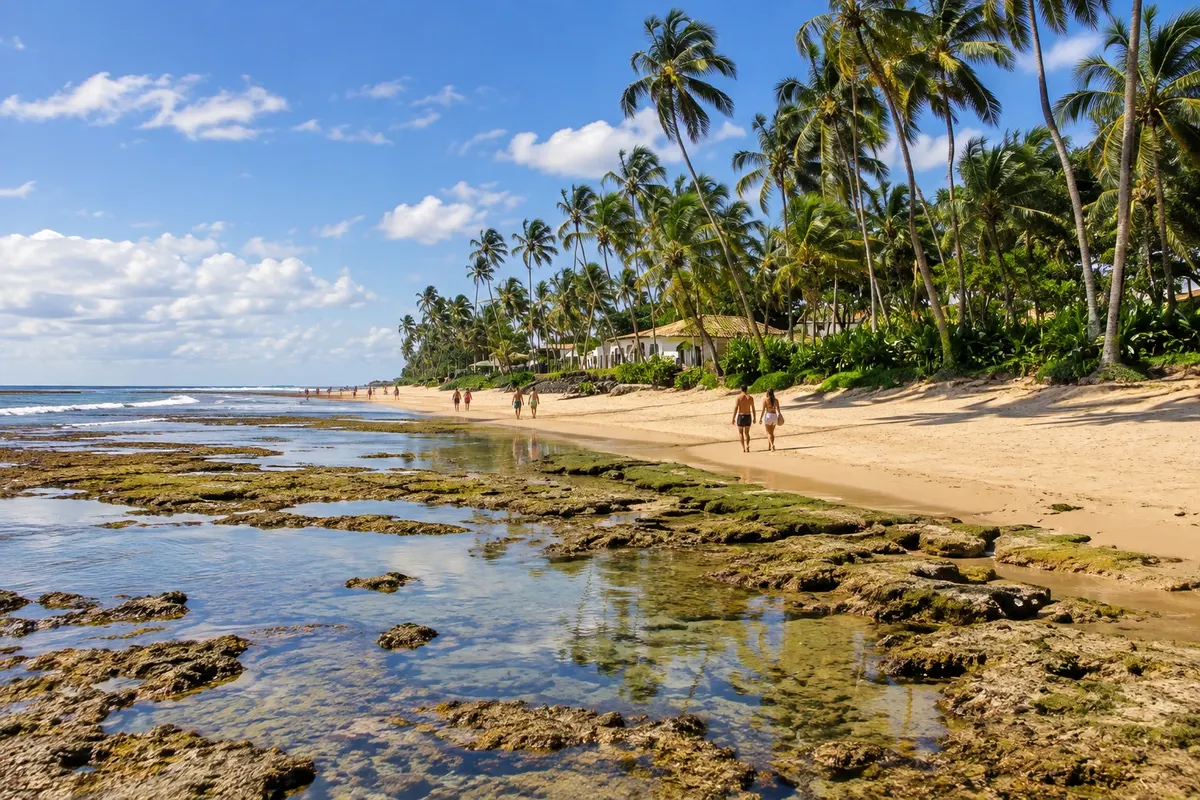
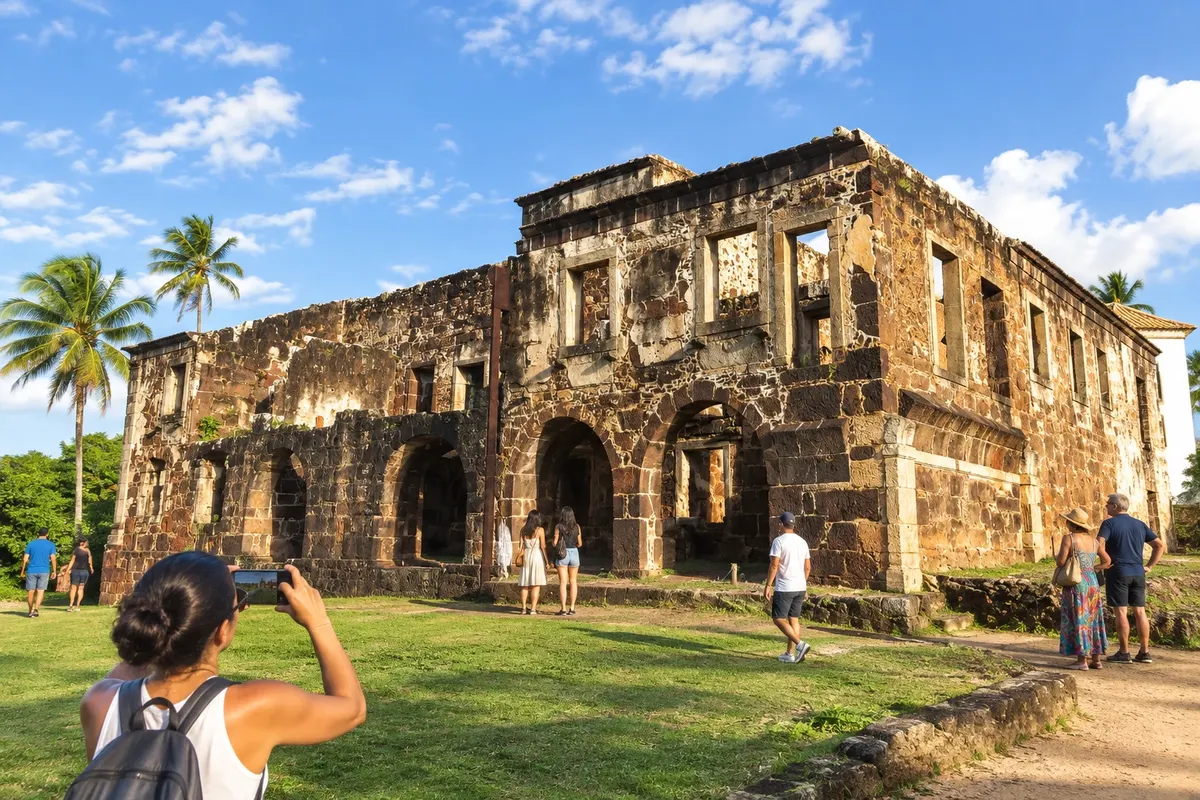
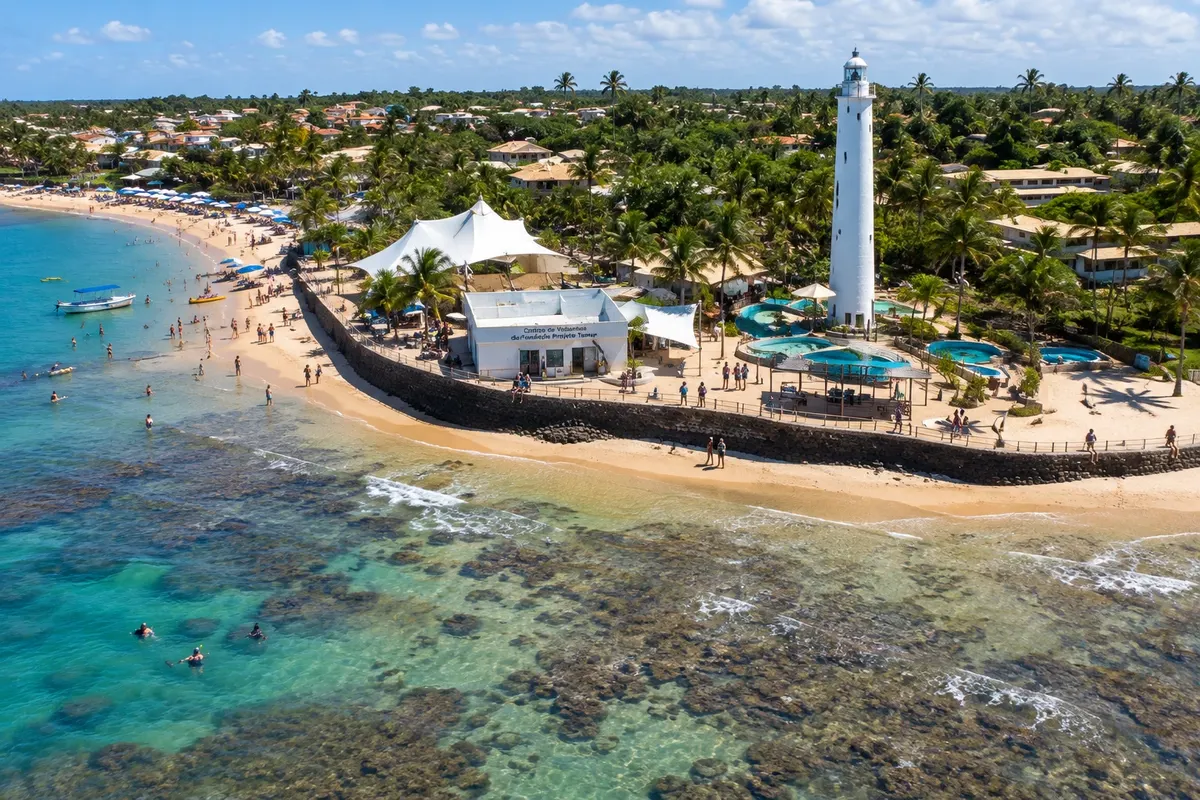
Praia do Forte is the main attraction. It’s about 55 km from Salvador airport, at the point where Estrada do Coco becomes the Linha Verde. Until 1982, when researchers from Projeto Tamar arrived, it was a village of about 500 residents, without electricity, reached by ferry across the Pojuca River. The village grew without losing its scale: cars are parked in lots at the entrance, the main street is pedestrian and ends at the Church of São Francisco de Assis, facing the sea, next to the lighthouse and the Tamar visitor center. Reefs protect much of the shore and at low tide form natural pools on the beaches north of the lighthouse. About 3 km from the village, atop Tatuapara Hill, are the ruins of Castelo Garcia d'Ávila, the Casa da Torre, built from 1551. Between the village and the highway, Klaus Peters Park and the Sapiranga Reserve preserve restinga, lagoons and regenerating Atlantic Forest.

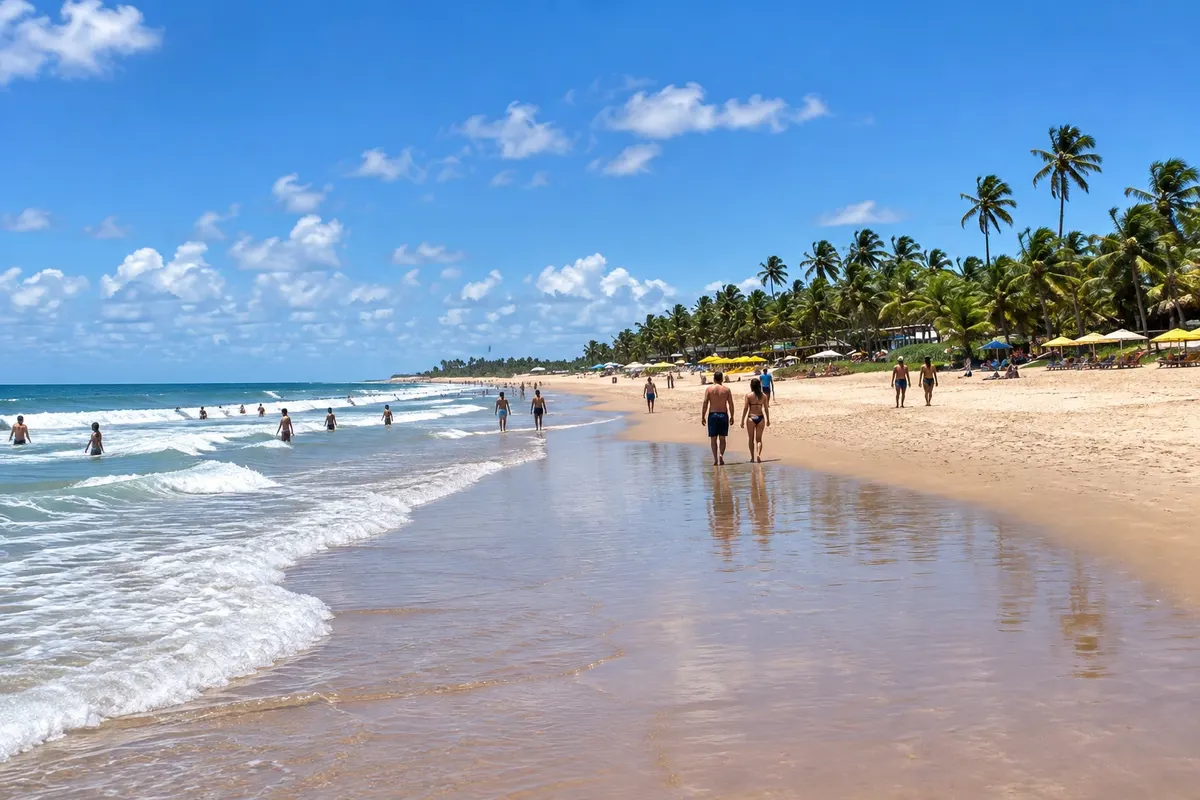
Imbassaí, about 10 km further on, is quieter. The river of the same name runs parallel to the sea and empties at the corner of the beach, so you can bathe in fresh water and in the sea just a few meters apart. The sea there has waves; if you’re looking for still water, stay in the river. Further north, the village of Diogo and Santo Antônio beach have white dunes, few people and stands serving Bahian food. At the far end of the municipality’s coast is Costa do Sauípe, a resort complex with its own village, about 20 km from Praia do Forte.

The heat lasts year-round. From December to February there is little rain, highs are around 31 °C and the village fills up. April to June is the rainiest period, with May particularly wet, and visitor numbers drop. From July to October temperatures are the mildest of the year, rain decreases and humpback whales usually pass the coast. Between November and March sea turtle hatchlings emerge.

For a first visit, the village, the Tamar center, the low-tide natural pools and Castelo Garcia d'Ávila fit into two days. With more time you can add Sapiranga, a day in Imbassaí and the dunes of Santo Antônio. Two practical notes: Tamar and the castle are closed on Mondays, and the schedule for the natural pools changes daily with the tide.

Delite: WhatsApp

Kje prenočiti

Mata de São João – število nastanitev: 88.

Kje jesti

Mata de São João – število lokalov: 15.

Mata de São João – nazivi in posebnosti

Natural pools

Brazilske poti

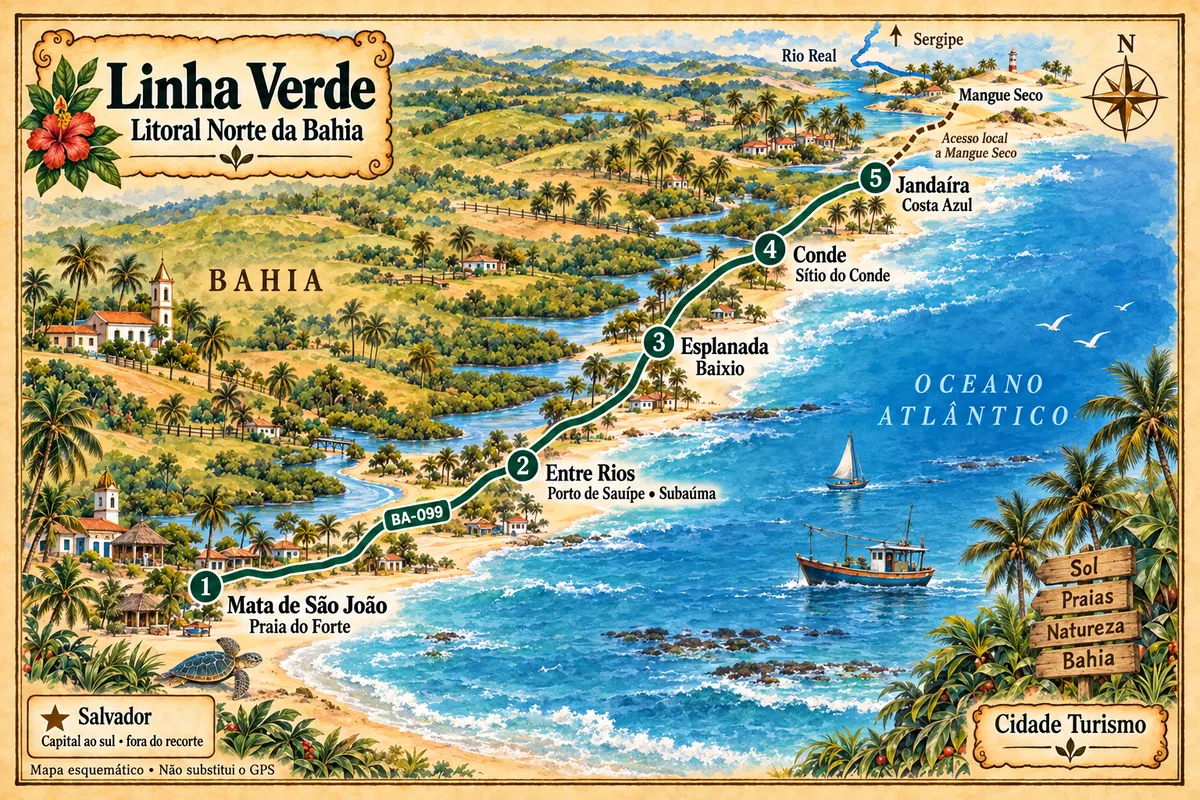
Mata de São João – del poti z imenom Green Line

From Praia do Forte to the municipality of Jandaíra, the Green Line connects villages, beaches and estuaries of the Northern Coast of Bahia, with local access points to reach Mangue Seco.

Zemljevid je ilustrativen in ni v merilu. Dotaknite se mesta, da odprete njegovo stran.
Green Line – ilustrirani zemljevid
Več o poti – Green Line

Doživite kraj

Mata de São João: kaj si ogledati

Plaža

Praia do Forte

Praia do Forte is a coastal locality of Mata de São João with a village, beach and reefs. The presence of shops and restaurants makes it easy to combine a walk through the village with a seaside stroll.

Raziščite Praia do Forte

Plaža

Praia de Imbassaí

Imbassaí combines beach and river in one of the landscapes of the Mata de São João coast. The outing allows you to observe the relationship between the sand strip, the fresh water and the sea, with attention to currents and the day's conditions.

Raziščite Praia de Imbassaí

See 2 more places in Mata de São João

Kaj izbrati pred odhodom

Izleti – Mata de São João

Izhodišče, trajanje, potek, vključene storitve in okvirna cena vsakega izleta.

Praia do Forte village on foot: from the entrance to the church and the lighthouse

Odhod: Entrance to Praia do Forte village on foot, on your own 1 to 2 hours late afternoon or evening easy, on flat ground

The village is best explored on foot, and this is the first walk for most arrivals. Cars stay in the parking lots at the entrance, beside Timeantube Lagoon. From there the main street is pedestrian, with low houses, shops and restaurants on both sides. Building heights are regulated and structures do not rise above the coconut trees. The walk from the entrance to the beach takes about ten minutes without stops. Halfway along, Dona Nita Alley turns to the right and gathers some restaurants off the main flow. The street ends at the square of the Church of Saint Francis of Assisi, small and white, facing the sea. Beside it are the Garcia d'Ávila Lighthouse and the entrance to the Tamar visitors center. In front of the church is Portinho Beach, also called Porto de Cima. The reefs form a natural harbor there where fishermen leave their boats, and the water is usually calm. At low tide shallow pools appear with small fish. There are no bars on the sand; kiosks are on the promenade. At night the street becomes the meeting point for people staying in the village, in Itacimirim and in Imbassaí. The church square and the bandstand host the shows of the festivals the village holds throughout the year.

Kraji na poti: Praia do Forte village, Timeantube Lagoon, Dona Nita Alley, Church of Saint Francis of Assisi, Portinho Beach, Garcia d'Ávila Lighthouse.

Vključuje: Self-guided visit. There is no charge to enter the church or to walk around the village. Parking in the lots is paid by the hour: check the current rate table.

Nasvet: Those who don’t want or can’t walk use the tuk-tuks and pedicabs that queue at the village entrance and take you to the Tamar. Agree the fare before getting in.

Najboljši čas za obisk: All year. In the late afternoon the heat eases; in December and January the street fills up at night.

Projeto Tamar: tanks, turtles and the lighthouse

Odhod: Avenida Farol Garcia d'Ávila, village of Praia do Forte on foot 1h30 to 2 hours afternoon easy

The Projeto Tamar visitor center is the most visited spot in Praia do Forte and, according to the foundation, the busiest among those it runs in Brazil, with about 500,000 visitors a year. It occupies ten thousand square meters around the lighthouse, on land granted by the Navy, and has existed since 1982, when the research base was established in the village. The visit follows tanks and aquariums that together hold 750,000 liters of salt water. They house four of the five species of sea turtles found in Brazil, at various life stages, as well as regional fish, rays and sharks. The themed spaces explain the threats to turtles, the work with fishers and the importance of the reefs. There is a cinema room, photo panels and life-size replicas. The texts are in Portuguese and English, and the project’s app complements the information. The center is open Tuesday to Sunday and closed on Mondays. In the afternoon there is usually a guided visit and animal feeding; ask the ticket office for times. During the hatching season, from November to March, Tamar may organize the walk of hatchlings to the sea, which depends on the nests and has no fixed date. For children and families there is the Biologist for a Day program, with participation in animal care and feeding, available only by appointment and for an extra fee. The center’s restaurant and shop return their proceeds to conservation.

Kraji na poti: Fundação Projeto Tamar Visitor Center, Farol Garcia d'Ávila.

Vključuje: Access to tanks, aquariums, themed spaces and cinema. There is half-price admission for several categories and a family pass; children up to 5 years old enter free. The Biologist for a Day program has a separate fee.

Nasvet: Go in the afternoon, when guided visits and the animals’ feeding usually take place. Bring ID that proves your entitlement to half-price admission.

Najboljši čas za obisk: All year. From November to March is the season for hatchlings; on holidays, arrive right at opening time.

R$ 54 · per person, full-price ticket· uradna cena

Natural tide pools on foot: Pedra do Chapéu, Lord and Papa-Gente

Odhod: Entrance to Projeto Tamar, village of Praia do Forte on foot, along the sand or via the paved path 2 to 4 hours morning or afternoon, at low tide easy

The natural tide pools at Praia do Forte lie north of the lighthouse and can be visited without a tour, walking along the beach. They only appear at low tide, when the reefs trap water in clear, shallow pools. So the outing starts with the tide table: choose the day and time when the tide is lowest. At full and new moons the tide usually recedes more. At the entrance to Projeto Tamar, a paved path on the left leads to Praia da Pedra do Chapéu, the first beach after the lighthouse. There the low tide leaves several small pools, good for children, and there is chair and umbrella rental. Continuing along the sand you reach Praia do Lord, the busiest, with larger pools. From the village center it’s about a ten-minute walk with no obstacles. Street vendors and kiosks serve bathers. A little farther is Praia do Papa-Gente, about twenty minutes from the lighthouse. The pools are right along the shore and there are fewer people. Food and drinks are not sold there, and rental equipment is not always available: bring water, a beach umbrella, a mask and a snorkel. With a mask you can see colorful fish and corals just below the surface. Do not step on or touch the corals and wear rubber sandals on the rocks. When the tide rises, the pools disappear and the sea returns to breaking on the reefs. If you prefer to go with a companion, you can book a guided snorkel with an instructor at the village agencies.

Kraji na poti: Praia da Pedra do Chapéu, Praia do Lord, Praia do Papa-Gente, Praia do Forte natural tide pools.

Vključuje: Self-guided visit; there is no entry fee for the beaches. Chair, umbrella and instructor-led dives organized by agencies are paid separately.

Nasvet: By car it is not worth it: the accesses are behind condominiums and there are almost no parking spaces. Go on foot or by bicycle taxi. Use sunscreen suitable for the sea and wear rubber footwear.

Najboljši čas za obisk: All year round, always at low tide. From September to February it rains less and the water usually becomes clearer.

Castelo Garcia d'Ávila: ruins, museum and night projection

Odhod: Praia do Forte village taxi, tuk-tuk, pedicab or car; visit on foot 1h30 to 2 hours late afternoon easy

Castelo Garcia d'Ávila, or Casa da Torre, stands atop the Colina de Tatuapara, about 3 km from the village. The fortified house began to be built in 1551 and was completed in the 17th century. The Fundação Garcia d'Ávila, which manages the complex, presents the building as the first major Portuguese civil construction in Brazil and the only one in the Americas with medieval characteristics. From there the Garcia d'Ávila family managed, for ten generations, the largest latifundium of the colonial period. The complex was declared a national heritage site by Iphan in 1937. What you visit are the stone ruins, traversed by walkways, the chapel and the archaeological site. The museum is in the visitor center, with 1,700 square meters, and tells the story using digital resources and a restored model of the castle. From the top of the hill you can see the sea above the coconut groves. The park is open Tuesday to Sunday and closed on Mondays. From Friday to Sunday and on holidays it stays open later, and after sunset the façades receive a light-and-sound projection that tells the house’s story. From Tuesday to Thursday there is no projection. Tickets are sold at the box office and online. The castle is also a venue for Praia do Forte festival shows; on those days the regular visit may be altered.

Kraji na poti: Garcia d'Ávila Castle, Tower House, Tatuapara Hill, Garcia d'Ávila Castle Museum, Garcia d'Ávila Historical and Cultural Park.

Vključuje: Access to the ruins, the chapel, the museum and, from Friday to Sunday and on holidays, the projection. Half-price tickets available; children up to 5 years old are free. Transport from the village is paid separately.

Nasvet: To see the projection, arrive late afternoon on Friday, Saturday or Sunday and arrange with your driver to wait or return. Bring insect repellent.

Najboljši čas za obisk: All year. This is the recommended program for cloudy days and for the rainy weeks from April to June.

R$ 50 · per person, full-price ticket· uradna cena

Klaus Peters Park: restinga trail and Timeantube Lagoon

Odhod: Entrance to the village of Praia do Forte, next to Timeantube Lagoon on foot or by bicycle 1h30 to 2 hours morning easy, with little shade

The Municipal Natural Park of the Restinga of Praia do Forte, known as Klaus Peters Park, begins beside the village. It was the first fully protected conservation unit on the north coast of Bahia and is named after the businessman who bought the old Praia do Forte farm and advocated for the area's preservation. There are 254 hectares of restinga, dunes and lagoons. The main trail is 3.6 km of interlocking pavement, suitable for walking and cycling, and is fully signposted with panels about the plants and animals. The route crosses Timeantube Lagoon and the low restinga vegetation, with native orchids. The park is popular with birdwatchers: more than 180 species have been recorded there, some threatened with extinction. The early morning hours are when birds are most active and the heat is lowest, because the low vegetation provides little shade. The park is open every day from early morning to late afternoon, and there is no entrance fee. Agencies in the village rent bicycles and organize guided outings and canoe trips on the lagoon, which are paid for separately.

Kraji na poti: Municipal Natural Park of the Restinga of Praia do Forte, Klaus Peters Park, Timeantube Lagoon.

Vključuje: Access to the trail; no entrance fee. Bicycle, guide and canoe are contracted separately with agencies.

Nasvet: Bring water, a hat, sunscreen and insect repellent. A binocular helps if you want to watch birds. Do not leave trash on the trail.

Najboljši čas za obisk: All year, early in the morning. From April to June check the forecast: it is the rainiest period.

Sapiranga Reserve and swim in the Pojuca River

Odhod: Praia do Forte village car or agency tour; trails on foot, by bicycle, buggy or ATV half day morning easy to moderate, depending on the trail

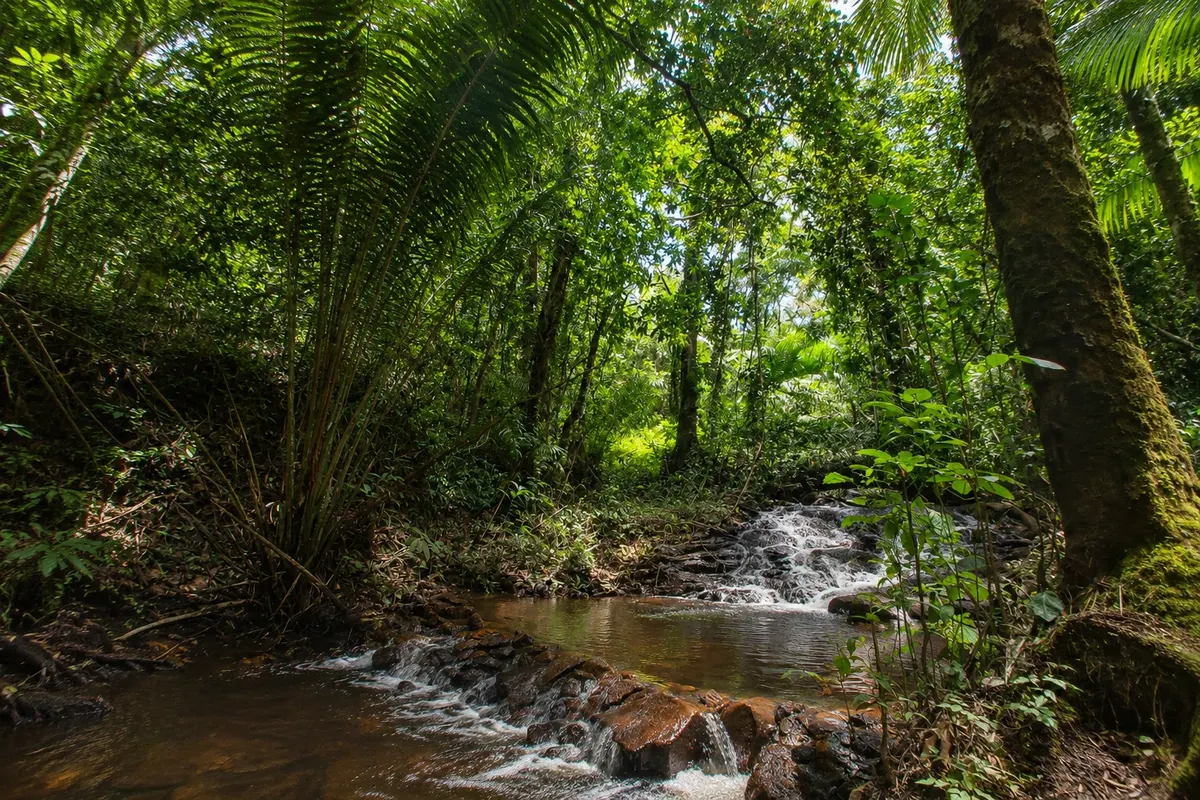
Sapiranga Reserve protects about 600 hectares of regenerating Atlantic Forest on the other side of the Linha Verde, a few kilometers from the village. It’s Praia do Forte’s forest-and-river outing, a good change from beach days. If you go on your own, leave the village, follow Linha Verde toward Salvador for about 2 km and turn right to the gate, where there is parking. The trails are marked and can be done on foot, by bicycle, on horseback or by ATV, depending on the section. Local guides accompany groups and the reserve limits the number of visitors per day. The most popular walk is the Gamboa Trail, about 1 km, which ends at the rapids of the Pojuca River, with a calm stretch for swimming. Other trails lead to smaller rivers, such as the Terebeu and Sapiranga. Sloths, armadillos and many birds live in the forest; early morning is the best time to see them. Near the gate the Sustainable Forest Project operates, where native trees are grown and replanted and visitors are welcome. Local agencies sell the tour in two motorized formats. The buggy, with driver, carries up to three people and usually includes a stop at the Pojuca River. The ATV is driven by the visitor, age 18 or over, on trails with mud and holes, always with an instructor. Some routes pass by the Garcia d'Ávila Castle.

Kraji na poti: Sapiranga Reserve, Gamboa Trail, Pojuca River, Sustainable Forest Project.

Vključuje: The reserve charges an entrance fee per person. Guide, bicycle, canoe, buggy, and ATV are paid separately, per person or per vehicle: check the current rate table of the operator.

Nasvet: Wear lightweight clothes that can get dirty, closed shoes and swimwear underneath. Bring insect repellent and water. Inform the guide about any insect allergies.

Najboljši čas za obisk: From September to March, with less rain. From April to June the trails get muddy and the route can change.

Prikaži dodatne izlete (3)

Humpback whales: boat trip in season

Odhod: Beach in front of Projeto Tamar, village of Praia do Forte schooner or speedboat, with an accredited agency 2 to 5 hours, depending on the boat morning easy; the open sea rocks

Between July and October the humpback whales leave the cold waters of Antarctica and travel to the coast of Bahia to mate and raise their calves. Praia do Forte is one of the observation bases, with departures organized only by agencies accredited by the Humpback Whale Project. The tour begins on land at the Espaço Baleia Jubarte in the village, with a lecture on the animals’ habits and approach rules. Then the group boards on the beach. There is no pier: access to the boat is by dinghy, and depending on the tide you may need to enter the water. Schooners take more people and spend more time at sea; speedboats depart with small groups and return earlier. At sea, the crew looks for blows and keeps a distance from the animals. Humpbacks are known for breaching and tail slaps, but the encounter depends on the day: some departures have them close, while others find them far away or not at all. Some operators offer a new departure in those cases. The Espaço Baleia Jubarte can be visited separately at any time, with a complete humpback skeleton, life-size replicas and panels. In October the institute usually hosts the Humpback Whale Festival in the village, with seminars, exhibitions and shows.

Kraji na poti: Espaço Baleia Jubarte, Praia do Portinho, Sea of Praia do Forte.

Vključuje: Lecture, navigation, crew and life jacket. Admission to the Espaço Baleia Jubarte is not included in the tour; transfer and food are paid separately. Check the operator’s current price table.

Nasvet: If you get seasick, prepare before boarding: the boat pitches in open sea. Book for the first days of your stay to leave room for rescheduling if the sea prevents the trip.

Najboljši čas za obisk: Whale season: July to October. In October, confirm whether departures are still running.

Imbassaí: the river that runs parallel to the sea and the beach with the stalls

Odhod: Imbassaí Village on foot, crossing the river by bridge, wading or by raft half a day to a full day morning and afternoon easy

Imbassaí is about 10 km north of Praia do Forte, accessed via the Linha Verde. The charm of the place is its geography: the Imbassaí River runs parallel to the sea, separated by a narrow strip of sand, and only empties into the ocean at the right-hand end of the beach. In a few steps you can switch from fresh water to salt water. The village is small and has two access points. At one you reach the beach by crossing the river on foot, in a stretch where the water reaches your shins, or your thighs at high tide. At the other there is a pedestrian path with a wooden bridge and a raft that carries people along the river to the spot with the beach stalls; the raft service is paid per trip. Along the river there is a bike path and a walking trail, and the mangrove has been preserved. The beach stalls are grouped facing the sea, near the mouth of the river, and serve fish and seafood. The sea at Imbassaí has waves and does not form natural pools like Praia do Forte; people with small children usually stay in the river, which is shallow and calm. Kayaks and stand-up paddleboards are also rented on the river, charged by time of use. The beach continues for about 6 km to the north, increasingly empty, between coconut palms and dunes. Local craftswomen sell bags, hats and piaçava straw baskets on the sand. Inland from Imbassaí, the Cachoeira Dona Zilda, on private land, is a good addition to the day for those who go by car.

Kraji na poti: Imbassaí Village, Imbassaí River, Imbassaí Beach, Mouth of the Imbassaí River.

Vključuje: Self-guided visit; there is no beach entrance fee. Raft crossings, kayaks, stand up paddle and the waterfall entrance are paid separately: check the current price list on site.

Nasvet: Buses and vans do not enter the village: they stop on the highway, and the final stretch is by motorcycle taxi or arranged with your lodging. Bring footwear that can get wet.

Najboljši čas za obisk: All year. From September to February there is less rain; after heavy rain the river becomes murkier.

Diogo and Santo Antônio: dunes, river and an almost empty beach

Odhod: Diogo village, with a marked entrance on the Linha Verde drive to the village; then walk across the dunes half a day to a full day morning and afternoon easy to moderate, on sand and without shade

North of Imbassaí, the coast of Mata de São João is less crowded. Diogo village has a marked entrance on the Linha Verde, about 5 km after Imbassaí. It is a small settlement known for moquecas served in the shade of trees, which attract people from Salvador on weekends. From the village to the sea it’s about a 15-minute walk. The path crosses the river on a boardwalk, goes through the mangrove and climbs a ridge of white dunes. There is no shade on this stretch, and the sand heats up at midday. The beach, called Diogo or Santo Antônio depending on the spot, is long, open to the sea with waves, and has few people even in high season. There are some simple stalls on the shoreline. At low tide rock pools form where the water is calmer for bathing. Walking along the sand or the dunes you reach the fishing village of Santo Antônio, which also has its own dirt-road access from the highway. The village is known for piassava straw handicrafts. Those who like paddling can go down the river by kayak between the Santo Antônio and Imbassaí dunes by arranging the service with boat renters. Agencies in Praia do Forte sell the buggy tour that combines Imbassaí and Santo Antônio in a single trip.

Kraji na poti: Diogo village, Diogo Dunes, Santo Antônio Beach, Santo Antônio village, Imbassaí River.

Vključuje: Self-guided visit; there is no beach entrance fee. Meals, raft crossings, kayak rentals and buggy tours are paid separately.

Nasvet: Go early or late afternoon because of the sun on the dunes. Bring water, a hat, and cash. Reserve lunch on weekends and holidays.

Najboljši čas za obisk: From September to March, with less rain. Low tide favors swimming in the rock pools.

Po dnevih

Mata de São João – načrt poti. Število dni: 1, 2in3

Predlogi za načrtovanje poti. Vrstni red dni prilagodite vremenu in razpoložljivosti izletov.

1 dni · Praia do Forte in 1 day: natural pools, Tamar and the castle

Zawho is staying in Salvador or elsewhere on the northern coast and is coming to spend the day · Izhodišče:Praia do Forte village
  1. Dan 1 · From low tide to sunset on the hill

    Before you leave, check the tide table: it decides the order of the day. Avoid Monday, when the Tamar and the castle are closed. If low tide is in the morning, leave the car in the lot at the entrance, walk through the village and follow the path beside the Tamar straight to the beaches of Pedra do Chapéu and Lord. Stay in the natural pools while the water is low and return to have lunch in the village. After lunch, visit Projeto Tamar; in the afternoon there is usually a guided visit and the animals are fed. On your way out, see the Church of São Francisco de Assis and the nearby Praia do Portinho. Late in the afternoon, take a taxi or tuk‑tuk to Castelo Garcia d'Ávila, about 3 km away. From Friday to Sunday you can stay for the projection after sunset. If low tide is in the afternoon, reverse the order: Tamar as soon as it opens, an early lunch and the pools afterward. Imbassaí and the Sapiranga don’t fit into this day.

2 dni · Mata de São João in 2 days: Praia do Forte and Imbassaí
Zaweekend and first visit · Izhodišče:Praia do Forte village
  1. Dan 1 · Village, natural pools and Projeto Tamar

    Start with the natural pools during the day’s low tide: Pedra do Chapéu and Lord are a few minutes from the lighthouse, and Papa‑Gente, a little further on, has fewer people. Bring a mask and snorkel. In the other period, do Projeto Tamar at a relaxed pace, without skipping the cinema and the themed spaces. From July to October, visitors who want to see whales swap the morning for a boat trip and leave the pools for the afternoon’s low tide or the next day. At night, walk along the main entrance street to the church square and have dinner in the village or at Beco de Dona Nita.

  2. Dan 2 · Imbassaí in the morning, castle in the late afternoon

    Leave early for Imbassaí, about 10 km to the north by car, taxi or van. Cross the river, stay between the fresh water and the sea and rent a kayak if you want to paddle. Have lunch at the beach stalls or in the village. If you are driving you can continue to Diogo, about 5 km further, to have moqueca for lunch and climb the dunes to Santo Antônio beach. Return to Praia do Forte in mid‑afternoon and finish at Castelo Garcia d'Ávila. From Friday to Sunday, stay for the façade projection. On a Monday, when the castle is closed, swap the visit for the Parque Klaus Peters trail, early in the morning before going to Imbassaí.

3 dni · Mata de São João in 3 days: reefs, forest, river and dunes
Zawho wants to alternate beach, nature and history without changing accommodation · Izhodišče:Praia do Forte village or Imbassaí
  1. Dan 1 · Praia do Forte: village, Tamar and natural pools

    Orientation day, all on foot. At low tide, the natural pools of Pedra do Chapéu, Lord and Papa‑Gente. In the other period, Projeto Tamar and, next to it, the church and Praia do Portinho. If there is time left, visit the Espaço Baleia Jubarte in the village to see the skeleton and replicas. At night, the main street and dinner.

  2. Dan 2 · Forest and river: Klaus Peters or Sapiranga, and the castle

    Nature morning. The simplest option is the 3.6 km trail in Parque Klaus Peters, which starts near the village entrance and does not require a guide; go early, for the birds and to avoid the heat. The longer option is Reserva Sapiranga, with a walking trail to the rapids of the Rio Pojuca or a buggy or ATV ride sold by agencies. After lunch, rest on the beach in front of the village. Late in the afternoon, go up to Castelo Garcia d'Ávila; from Friday to Sunday there is a projection after sunset. From July to October, this is the day to fit the boat trip to see whales in the morning, instead of the trail.

  3. Dan 3 · Imbassaí, Diogo and Santo Antônio

    Day trip to the north of the municipality, preferably by car. Start at Imbassaí: cross the river, swim in the fresh water and the sea, kayak or stand up paddle. Before lunch, head to Diogo. Eat in the village and, with the sun lower, walk about 15 minutes across the dunes to Santo Antônio beach. At low tide there are pools among the rocks. If you don’t have a car, stay in Imbassaí all day and arrange your return in advance. Those who prefer to leave Praia do Forte with everything organized can find buggy tours that combine Imbassaí and Santo Antônio at the agencies. Costa do Sauípe is about 10 km beyond Imbassaí and only figures on the itinerary of people staying at the resort complex.

Najboljši čas za obisk

Kdaj se odpraviti:Mata de São João po mesecih

The seasons shown are the most usual ones; nature doesn't always follow the calendar.

januar Malo padavin

Summer and high season · Praia do Forte Dendê Festival (summer) · Turtle hatchings

Very hot and little rain: highs around 31 °C and lows around 24 °C. This is the busiest month, with Brazilian school holidays; parking lots fill early and the village may restrict car entry. Book accommodation and tours in advance. This is the start of the turtle hatchling season. In summer the village usually hosts a festival of Bahian food and music.

februar Malo padavin

Carnival, in February or March · Heat · Turtle hatchings

It stays hot and mostly dry, with highs around 31 °C. Outside the Carnival week, which falls in February or March depending on the year, activity drops compared with January. A good month for the natural tide pools and the Imbassaí River. Turtle hatchlings still emerge on the beaches.

marec Zmerne padavine

End of summer · Last turtle hatchings

The heat continues, with highs around 31 °C, and rainfall begins to increase. The village calms down after Carnival. The beach and natural pools are best on clear mornings; for rainy afternoons, visit the Castelo Garcia d'Ávila museum. The turtle hatching season ends this month.

april Veliko padavin

Start of the rains · Municipality anniversary on April 15 · Holy Week, in March or April

The wettest period begins, with highs around 30 °C. Showers can last and make the sea and rivers murky. Outside Holy Week, it’s a quiet time. Confirm boat, buggy and trail tours on the day. April 15 is the anniversary of Mata de São João.

maj Veliko padavin

Rainiest month · Low season

On average the rainiest month of the year, with highs around 28 °C. The Sapiranga trails get muddy and the natural pools depend on a sunny morning with low tide. On the plus side, the village is empty. Plan visits to Tamar, the castle and the Espaço Baleia Jubarte for rainy days.

junij Veliko padavin

São João in the municipal seat · Rain and wind

Rain remains frequent and nights get a little cooler, with lows around 22 °C. In June, the municipal seat of Mata de São João, inland, holds a large São João festival with several days of shows in the town square. On the coast attendance rises on the São João holiday, June 24.

julij Zmerne padavine

Start of whale season · July school holidays

The mildest temperatures of the year, between 21 °C and 26 °C, with less rain than the previous quarter. The humpback whale season starts, running until October, with boat trips by licensed operators. School holidays increase activity. Bring a light jacket for the night and for windy boat rides.

avgust Zmerne padavine

Whale season · Cool nights

Highs near 26 °C and decreasing rain. Whale-watching trips operate on the following dates: book in advance. The village is moderately busy except on weekends. Good month for Klaus Peters Park and for the castle, without the summer heat.

september Malo padavin

Whale season · Start of turtle nesting · Conexión con el Paraíso festival (September 7 holiday)

One of the drier months, with highs near 28 °C. Whale trips operate on the following dates, and turtles begin coming up the beaches to nest. On the September 7 holiday, a music festival usually fills Garcia d'Ávila Castle and the village square. Good time for hiking, kayaking in Imbassaí and the Diogo dunes.

oktober Malo padavin

End of whale season · Humpback Whale Festival · Turtle nesting

Stable weather, with highs around 29 °C. The whale season ends this month: check whether boat trips are still running. The Instituto Baleia Jubarte usually holds the Humpback Whale Festival, with seminars and concerts in the village. The October 12 holiday fills the beaches.

november Zmerne padavine

Start of turtle hatchings · November holidays

The heat returns, with highs around 30 °C, and there may be slightly more rain than in October. Turtle hatchlings begin to emerge; at the Tamar center, the walk of hatchlings to the sea depends on the nests and has no fixed date. The month’s holidays bring more activity to the village; otherwise it’s a quiet time.

december Malo padavin

Praia do Forte New Year’s Eve · High season · Turtle hatchings

Very hot, highs around 31 °C, and little rain. From Christmas onward the village enters high season, and New Year’s Eve has several days of parties and concerts in Praia do Forte. Book accommodation, transfers and tables well in advance. Tamar and the castle adjust their schedules for the holidays: check before you go.

Načrtujte pot

Kako do tja:Mata de São João

By plane: via Salvador airport

Mata de São João has no airport with commercial flights. Arrival is via Salvador International Airport, which handles national and international flights and sits at the capital’s exit toward the northern coast, shortening the route.

From the airport it’s about 55 km to the village of Praia do Forte, 65 km to Imbassaí and 75 km to Costa do Sauípe, always via the BA-099. Under normal conditions, the trip to Praia do Forte takes around one hour.

From the terminal continue by rental car, taxi, rideshare app, prebooked transfer or public bus. Taxis and apps are easily available; for the return, arrange beforehand, because on the coast a car may not be available immediately.

The municipal seat is inland, off this route, and is not on the way to the beaches. Before buying airfare, confirm the route and connections with the airline.

By bus or van: from Salvador to Praia do Forte and Imbassaí

Line buses connect Salvador’s Bus Station and the airport terminal to Praia do Forte. Schedules and frequencies are provided by the operator’s app and customer service; not every bus stops at the airport.

The Linha Branca vans depart from the sidewalk of Shopping da Bahia next to the Bus Station, which is reachable by metro from the airport. The trip to Praia do Forte takes about an hour and a half, with stops.

In Praia do Forte the final stop is at the village entrance. For Imbassaí, Diogo and Santo Antônio, the buses and vans that follow Linha Verde drop passengers on the highway at each locality’s entrance; the final stretch is covered by motorcycle taxi, taxi or with the accommodation.

Check the day’s schedules before leaving, especially for the return in the late afternoon.

By car: Estrada do Coco and Linha Verde (BA-099)

From Salvador, follow BA-099, which begins near the airport as Estrada do Coco and passes through Lauro de Freitas, Arembepe, Guarajuba and Itacimirim. After the Pojuca River bridge, already in Mata de São João, the highway is renamed Linha Verde. The road is dual carriageway up to Praia do Forte.

The entrance to Praia do Forte is about 55 km from the airport and about 80 km from Salvador’s city center. Imbassaí is about 10 km farther on; Diogo, about 5 km after Imbassaí; and Costa do Sauípe, about 20 km after Praia do Forte. All entrances are signposted. From Aracaju, in Sergipe, it’s about 250 km on the same Linha Verde in the opposite direction.

There is a toll plaza in Camaçari at km 14.5, with higher fares on weekends and holidays. It accepts cash, cards, Pix and tags.

In Praia do Forte you don’t drive inside the village: vehicles stay in the parking bays at the entrance, paid by the hour. In high season the municipality has already restricted car entry for non-reserved guests; confirm the rules before you go.

R$ 9,80 do R$ 14,70 · by car, passing the Camaçari toll plaza (lowest on weekdays; highest on weekends and holidays)· uradna cena

Airport transfers and day trips from Salvador

Tour companies provide transfers from the airport and hotels in Salvador to Praia do Forte, Imbassaí and Costa do Sauípe. The service can be shared, in a vehicle split with other passengers and fixed times, or private. Resorts usually sell the transfer together with the booking.

It’s the most practical solution for arrivals at night, with children or with a lot of luggage. On the return, confirm the departure time in relation to your flight.

Agencies in Salvador also sell a one-day visit to Praia do Forte, with transport and a guide, usually with a stop at Projeto Tamar and free time in the village and on the beach. Tickets and lunch are often paid separately. The tour gives an idea of the place, but the fixed schedule does not always match low tide at the natural pools.

Agree on price, duration and what’s included before booking.

How to get around between the village, the beaches and nearby places

In Praia do Forte, everything is walkable: from the village entrance to Projeto Tamar is about a ten-minute walk, and the beaches Pedra do Chapéu, do Lord and do Papa-Gente follow in sequence past the lighthouse. Tuk-tuks and pedicabs wait at the village entrance and take you to the Tamar project, the natural pools and nearby resorts; agree the fare beforehand.

For Garcia d'Ávila Castle, about 3 km away, use a taxi, tuk-tuk or car and arrange the return. Sapiranga Reserve is on the other side of the Linha Verde and requires a car or an agency tour.

Between Praia do Forte and Imbassaí, about 10 km, there are taxis, vans and minibuses that travel along the highway and stop at each locality’s entrance. In Imbassaí, Diogo and Santo Antônio, the stretch between the road and the village is served by motorcycle taxis or on foot.

Renting a car pays off if you want to combine Imbassaí, Diogo and Santo Antônio in the same day or if you’re staying outside the villages. If you stay only in the village of Praia do Forte or inside a resort, the arrival and departure transfers are sufficient.


Odgovori na vaša vprašanja

Frequently asked questions about Mata de São João

How to start the itinerary?

Start with Praia do Forte and organize the other visits by area, leaving time for transport and rest.

How many days to reserve?

As a suggestion, three days allow a visit with more breaks. In one or two days, choose fewer places and concentrate excursions by area.

How to get to the city?

Salvador is the arrival hub via the airport and the bus station. Continuing to the coast of Mata de São João is by road, via the BA-099. Confirm whether transport serves Praia do Forte, Imbassaí, or the municipal seat, as they are distinct areas.

Is it necessary to arrange transportation for each excursion?

Check the actual distance between your accommodation and the chosen places. Walk where feasible and arrange the return before traveling to another area.

What to check before leaving?

Check the forecast, access conditions and the operation of inland visits. On the beaches, pay attention to the tide, the waves and local guidance.

Is Praia do Forte a town?

No. Praia do Forte is a village in the municipality of Mata de São João, on the northern coast of Bahia. Imbassaí, Diogo, Santo Antônio and Costa do Sauípe also belong to the municipality. The seat of Mata de São João is inland and has no beach.

Is Costa do Sauípe in Mata de São João?

Yes. The resort complex is in the district of Sauípe, at the northern edge of the municipality’s coastline, about 20 km from Praia do Forte and 75 km from Salvador airport. Don’t confuse it with Porto de Sauípe, the neighboring village, which belongs to the municipality of Entre Rios.

Where is best to stay: Praia do Forte, Imbassaí or Costa do Sauípe?

In the village of Praia do Forte, if you want to do everything on foot, have restaurants at night and a sea protected by reefs. In Imbassaí, if you prefer quiet, a river and a long beach, and don’t mind relying on a car or taxi to get around. In Costa do Sauípe and the resorts around Praia do Forte and Imbassaí, if you want all-inclusive accommodation and plan to spend most of your time inside the hotel.

Do I need a car in Praia do Forte?

No, for those staying in the village: Projeto Tamar, the tidal pools and the restaurants are within walking distance, and Castelo Garcia d'Ávila is a short taxi or tuk‑tuk ride away. A car helps if you want to visit Imbassaí, Diogo or the Sapiranga Reserve on your own.

Can you drive into the village of Praia do Forte?

On the main street, no: it is pedestrian-only. Cars park in the lots at the entrance, paid by the hour. In high season the city hall has already restricted entry for vehicles without accommodation reservations, so it’s wise to confirm the rules before traveling in December and January.

What is the best time to see Praia do Forte’s tidal pools?

At low tide, which changes every day. Check the tide table and plan the visit for the period around the lowest point. At full and new moons the tide usually goes out more and the pools are larger. At high tide they disappear.

What is the best time of year to go to Praia do Forte?

From September to February there is less rain. December and January are the hottest and busiest months. From July to October is humpback whale season, with milder temperatures. From April to June it rains more, especially May, and the village becomes quiet. turtle hatchlings are born from November to March.

Can you see Praia do Forte in a day trip from Salvador?

Yes. It’s about 80 km from downtown Salvador, roughly an hour and a half by road. In one day you can fit the village, Projeto Tamar and the tidal pools, if the tide allows, and still visit Castelo Garcia d'Ávila late in the afternoon. Avoid Monday, when the Tamar and the castle are closed.

Is the sea at Imbassaí good for swimming?

The sea at Imbassaí is open and has waves, unlike the calm pools of Praia do Forte. If you want calm water, stay in the river that runs alongside the beach and is shallow. At low tide, where the river meets the sea it forms a calm stretch, popular with families with children.

What to do in Praia do Forte when it rains?

Projeto Tamar has covered areas and a cinema; the Castelo Garcia d'Ávila museum and the Espaço Baleia Jubarte also operate in the rain. The shops and cafés on the main street fill the rest of the afternoon. Trails, buggy rides, ATVs and boat tours may be changed or cancelled: confirm on the day.

Is Praia do Forte a good destination for children?

Yes. The village is flat and car-free, the natural pools are shallow at low tide, and the Tamar Project was designed with children in mind, with low tanks, animal feedings and the Biologist for a Day program. In Imbassaí, the shallow river serves as a swimming pool.

How to get from Praia do Forte to Imbassaí without a car?

It’s about 10 km along the Linha Verde. Taxis make the trip, and the vans and minibuses heading north drop passengers at the entrance to Imbassaí, on the road. From there to the village the final stretch is by motorcycle taxi or on foot. Arrange your return in advance, because options decrease late in the afternoon.

Is it worth visiting the seat (sede) of Mata de São João?

For those traveling for the beaches, the seat is off the main route: it is inland and is a town of shops and services. The reason to go is São João in June, when the town hosts a large festa junina with several days of public square concerts.

Delite svoja popotniška doživetja s fotografijami Pošljite fotografije vsakega kraja, ki ste ga obiskali. Največje število fotografij na kraj: 5.
Ogled destinacije Costa dos Coqueiros Poiščite drugo mesto

Več kot vodnik