Plaža
Segunda Praia
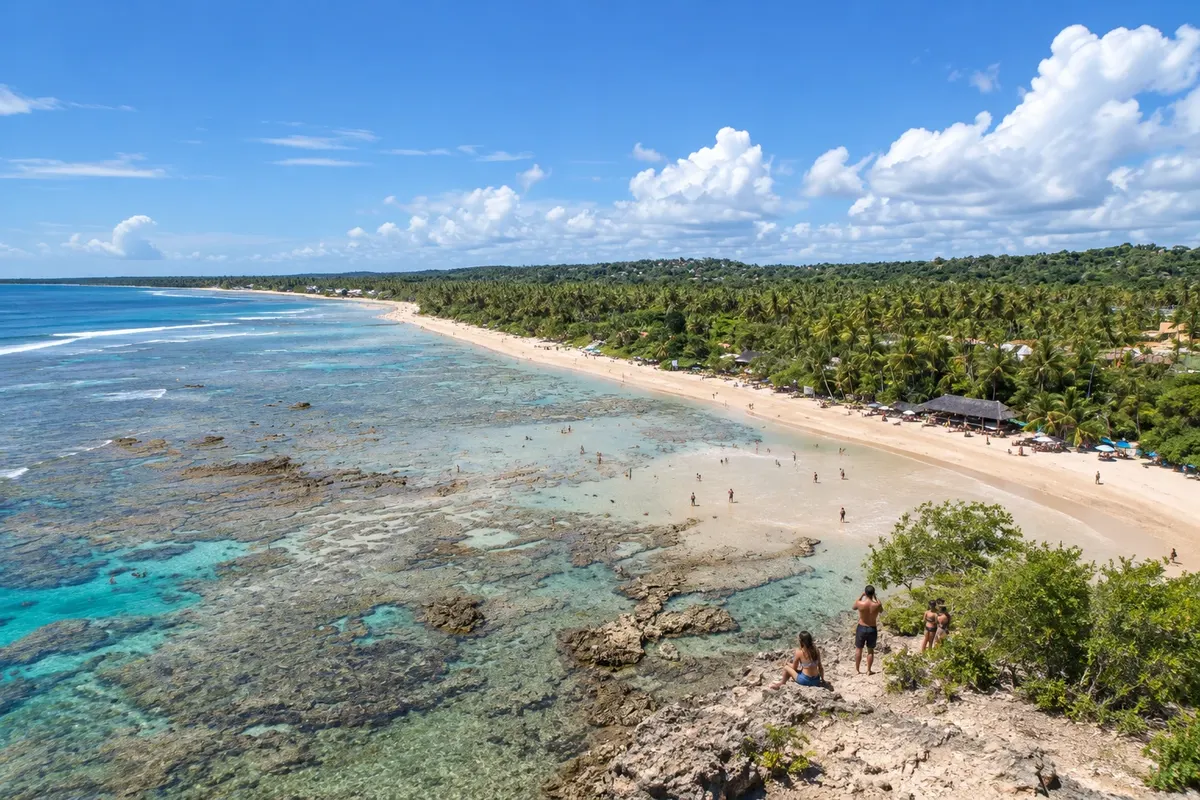
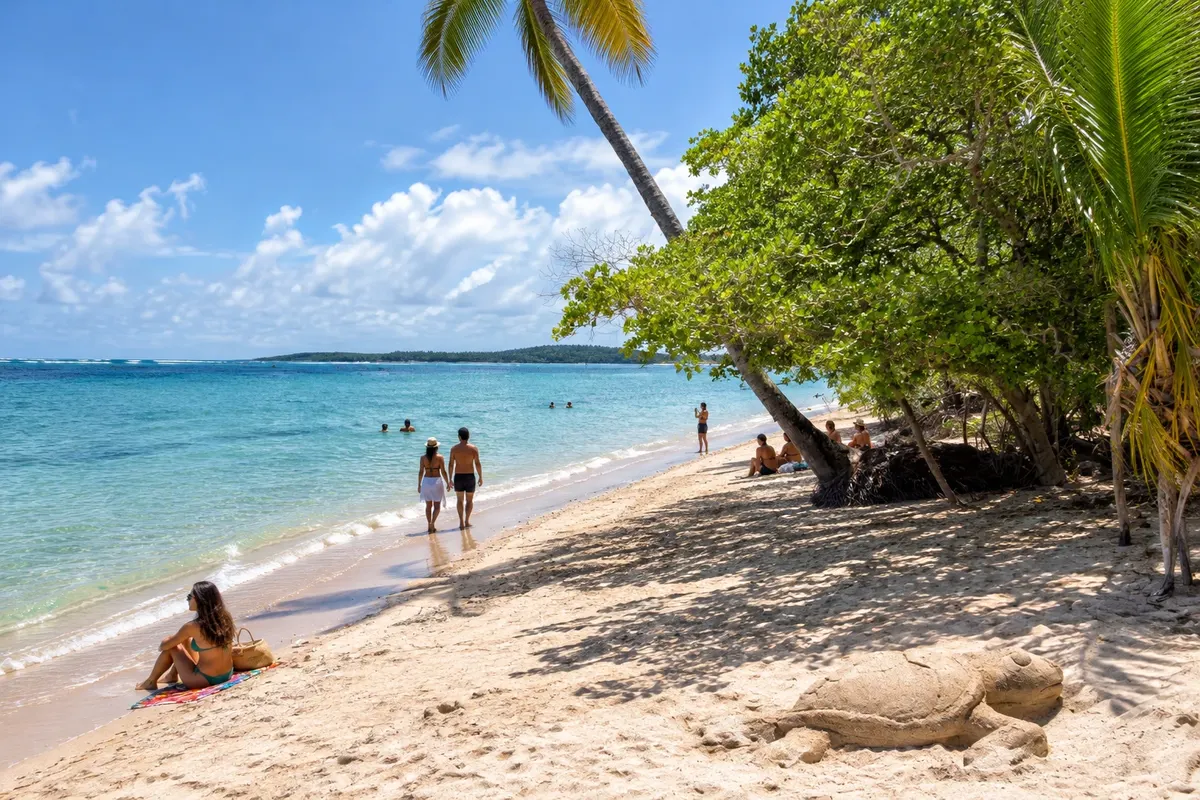
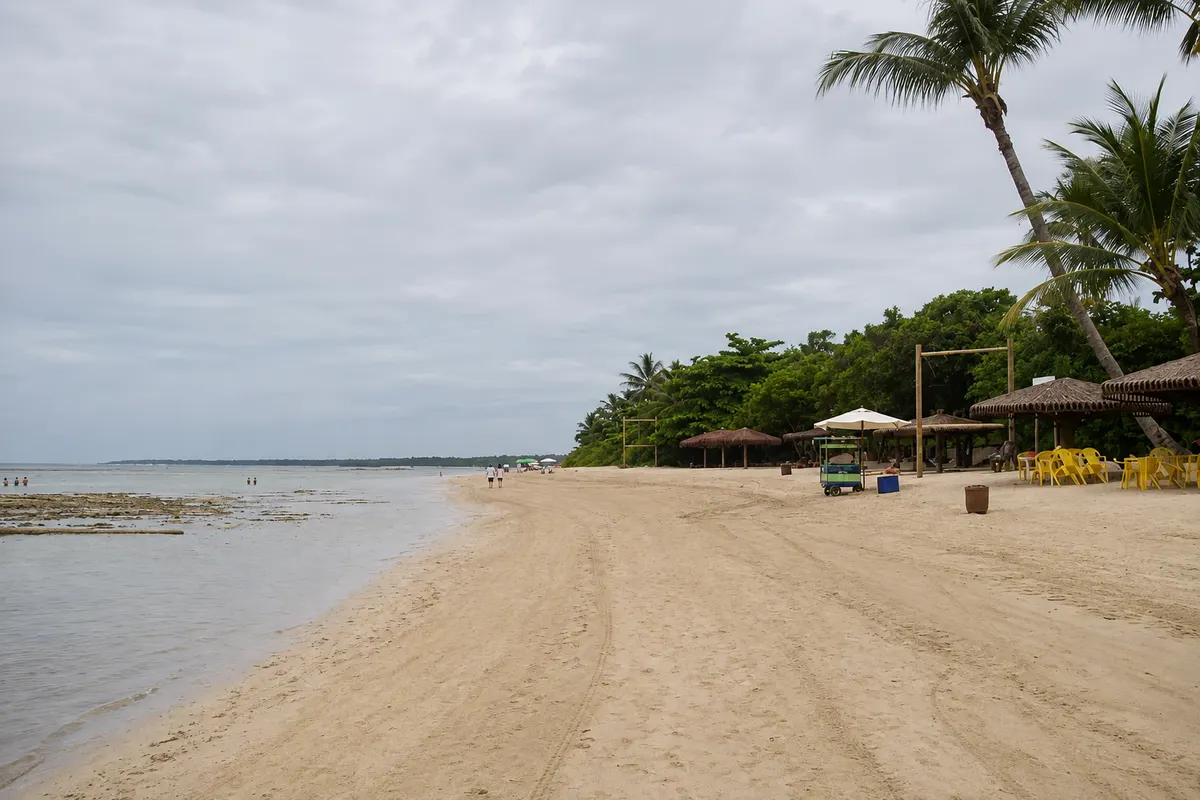
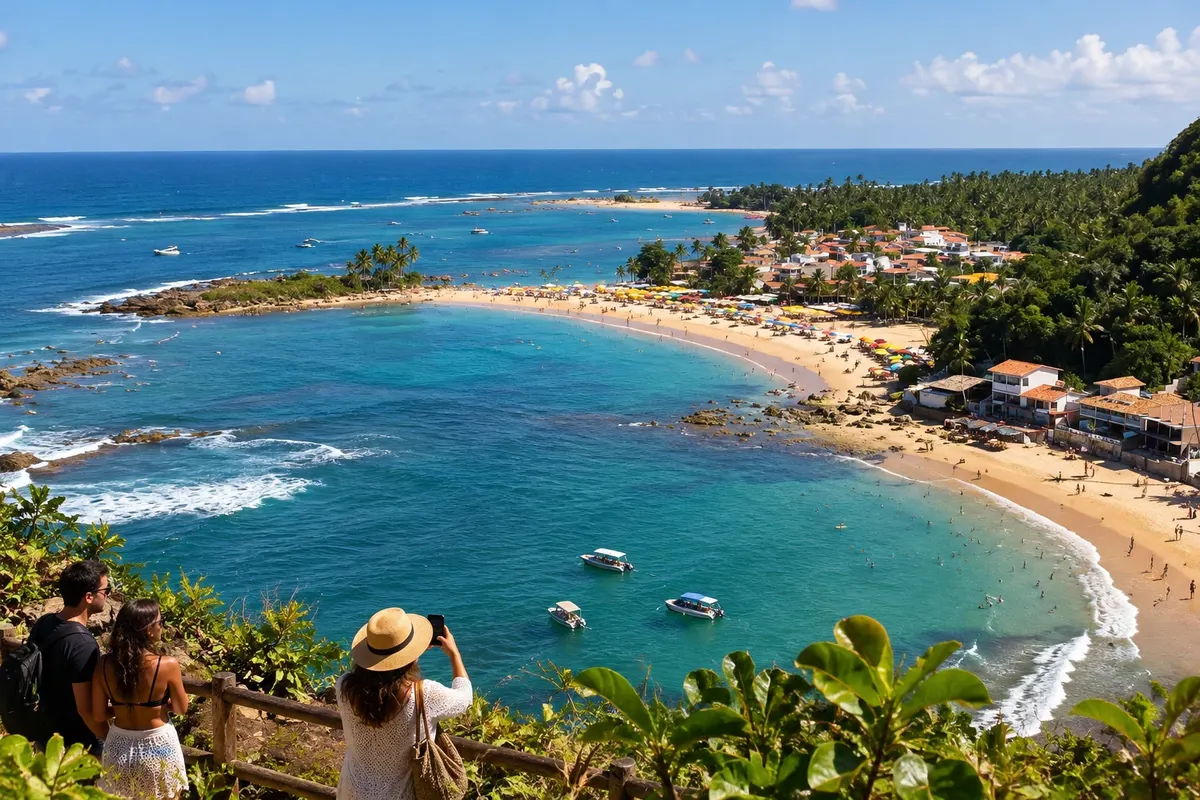
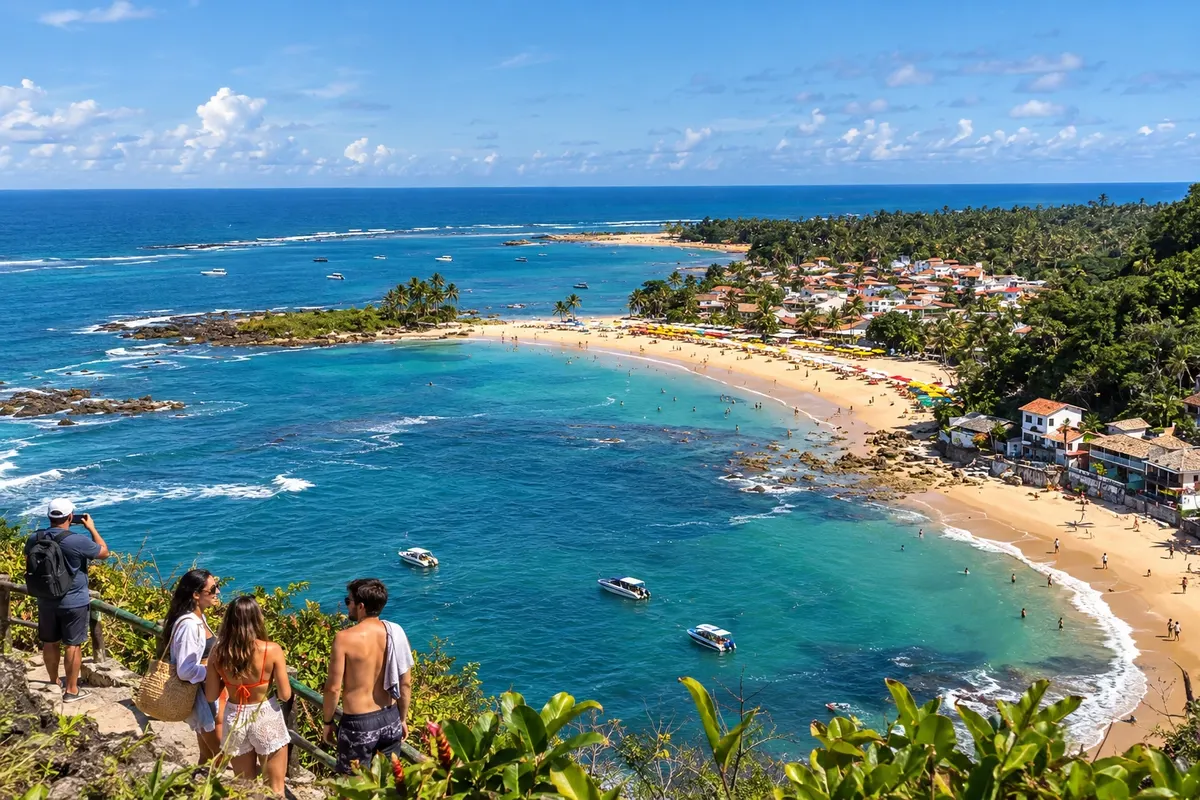
Segunda Praia is located in Morro de São Paulo, on the island of Tinharé, and is known for its visitor activity and the services nearby. The sand and seascape form the setting for the visit.

 Išči
Brazilija
 Antarktika
 Argentina
 Bolivija
 Čile
 Kolumbija
 Ekvator
 Gvajana
 Francoska Gvajana
 Falklandski otoki (Malvini)
 Paragvaj
 Peru
 Surinam
 Urugvaj
 Venezuela
 Nemčija
 Avstrija
 Belgija
 Hrvaška
 Danska
 Slovaška
 Slovenija
 Španija
 Finska
 Francija
 Grčija
 Nizozemska
 Madžarska
 Irska
 Islandija
 Italija
 Luksemburg
 Norveška
 Poljska
 Portugalska
 Združeno kraljestvo
 Češka
 Švedska
 Švica
 Turčija
 Bermudi
 Kanada
 Združene države Amerike
 Grenlandija
 Mehika
 Sveta Peter in Mihael
 Dominikanska republika
 JaponskaTurčija
 Južnoafriška republika
 Egipt
 Avstralija
 Fidži
 Nova Zelandija
 Papua Nova Gvineja
Bahia · Brazilija
Destinacija: Costa do Dendê.
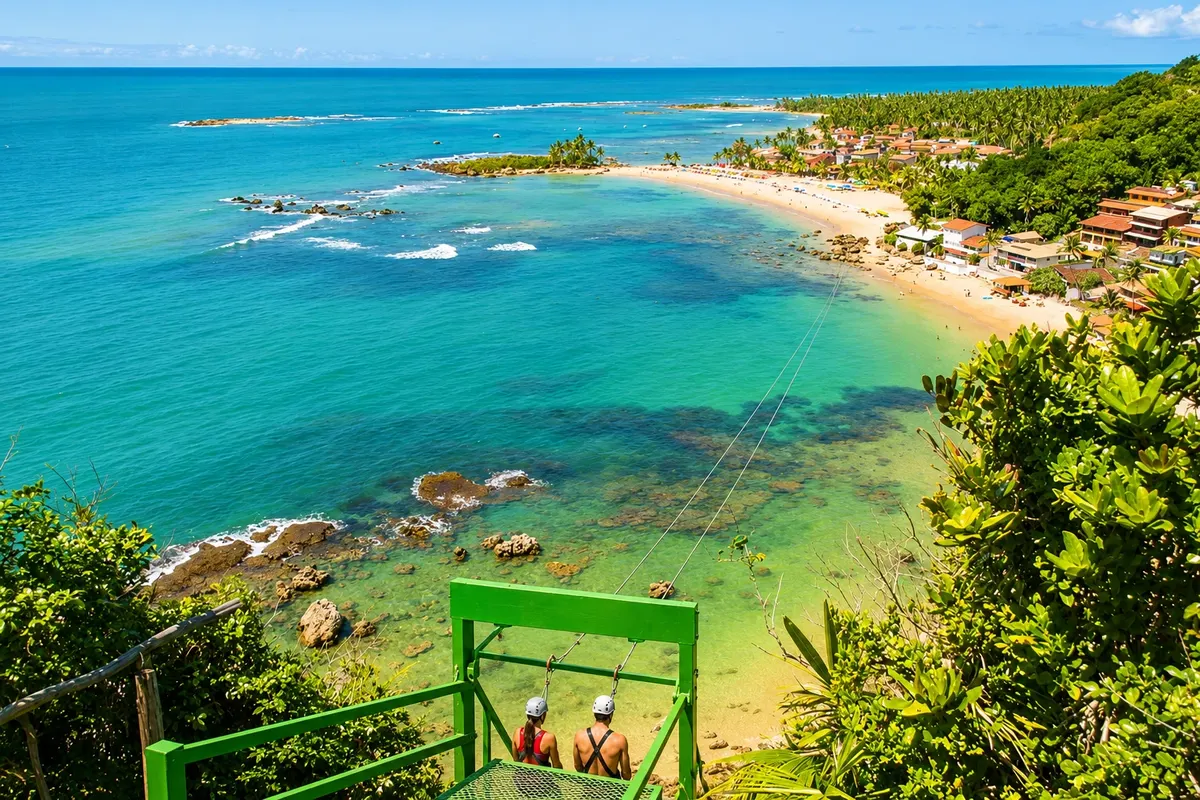
Na fotografiji: Segunda Praia, in Morro de São Paulo, municipality of Cairu
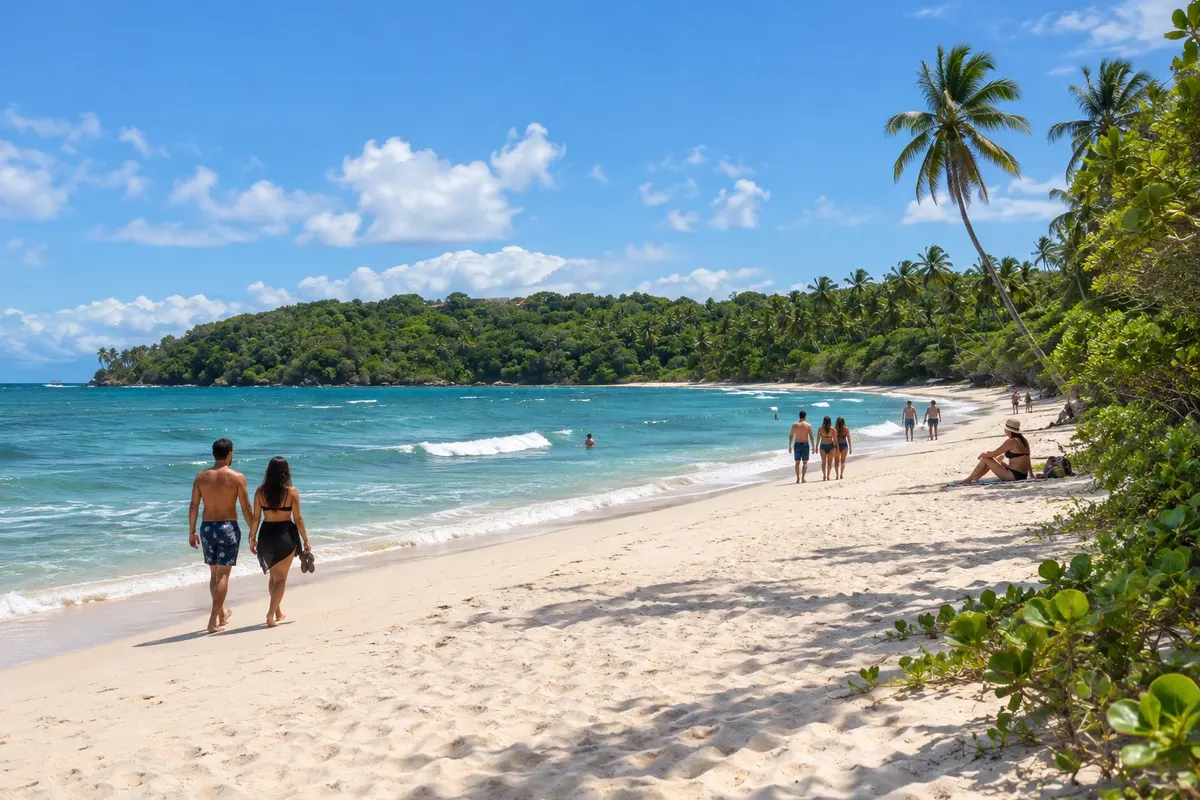
Illustrative images. The pictures in this guide are illustrations based on the real place, not photographs, and may differ from it.
Mesto
Cairu is an island municipality that includes Morro de São Paulo and Boipeba. In Tinharé, Segunda Praia and Quarta Praia offer different seaside routes; in Boipeba, Boca da Barra and Moreré invite you to discover the islands' landscape. Choose your base carefully, as the crossings are part of the trip.
Cairu is a municipality made of islands off the coast of Bahia, south of Salvador. There are 26 islands, and three are inhabited: Tinharé, where Morro de São Paulo is located; Boipeba, just to the south; and the Island of Cairu, closer to the mainland, where the small town that gives the municipality its name sits. None have bridges or road access: you always arrive by boat, and private cars do not run on Tinharé or Boipeba. Travelers here swap the wheel for walking, speedboats and the tide chart.
Morro de São Paulo is the most commonly used gateway. The village occupies the northern tip of Tinharé, atop a slope that begins at the pier. From there you can walk to the walls of the old fortress, the Church of Our Lady of Light, the lighthouse and the sequence of numbered beaches. First Beach is narrow and sits next to the village; Second Beach concentrates kiosks, loungers and the nighttime activity; Third Beach has the boardwalk and the boarding point for speedboat tours; Fourth Beach is long, shallow and much quieter. On the other side of the village, facing the mainland, is the settlement of Gamboa, with its clay cliff. Garapuá, a horseshoe-shaped cove in front of a fishing village, is about 14 km away by dirt road.
Boipeba has a different pace. Landfall is at Velha Boipeba, a village with sandy streets by the mouth of the Rio do Inferno, from where you walk to Boca da Barra, Tassimirim and Cueira beaches. Moreré, a smaller village on the island’s east side, is reached by tractor, ATV or on foot at low tide, and has natural pools among the reefs about 1 km from the coast. Further south are Bainema, Ponta dos Castelhanos and the settlement of São Sebastião, also called Cova da Onça.
The municipal seat receives few visitors and preserves the oldest landmarks: the Convent and Church of Saint Anthony, a Franciscan work begun in 1654 and listed as national heritage in 1941, and the Mother Church of Our Lady of the Rosary. It is a stop on the speedboat tour that circles Tinharé or a short visit for those staying in Boipeba.
The climate is warm year-round. From August to March the weather is usually more stable, with highs between 27 °C and 31 °C; December, January and February bring little rain and heavy visitor traffic. From April to July there is a lot of rain, highs are between 26 °C and 28 °C and boat tours depend on the day’s sea conditions. From July to November humpback whales often pass off the islands. The natural pools appear only at low tide, and the lowest tides occur at full and new moons.
Your choice of base defines the trip. Morro de São Paulo has more infrastructure, restaurants, nightlife and tour options. Boipeba is for those who prefer quiet, beach walks and short nights. The two combine well in five days or more; the connection between them is by pickup truck and boat or by speedboat, with a transfer in Valença. With two or three days, stay on a single island.
Pack light and bring sturdy footwear: in Morro the arrival is up a slope, and Boipeba’s streets are sandy. Both places have porters with handcarts at the pier. Those landing at Morro de São Paulo pay a municipal visitor fee, charged per person.
Cairu – število nastanitev: 100.
Cairu – število lokalov: 19.
Cairu – nazivi in posebnosti
Brazilske poti
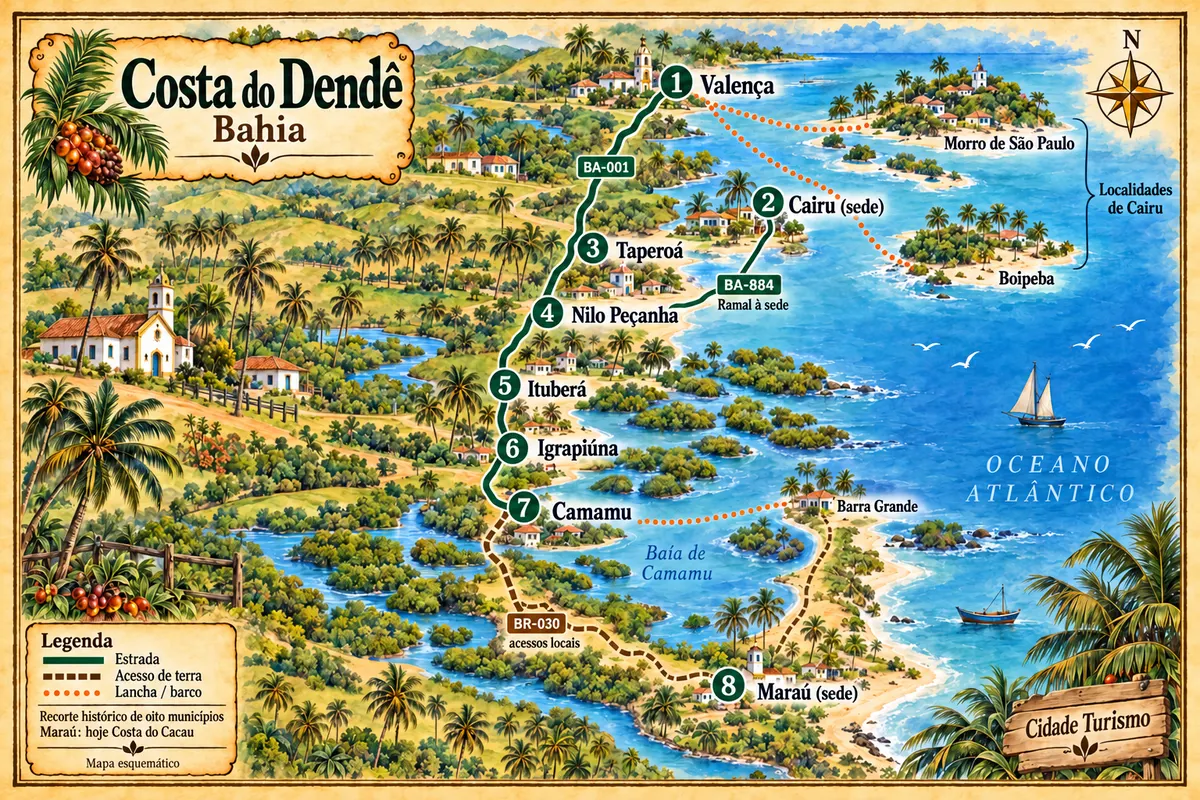
From the Una River to the Maraú Peninsula, the route combines towns of the Lower South, beaches, heritage and crossings along the historic Dendê Coast.
Doživite kraj
Segunda Praia is located in Morro de São Paulo, on the island of Tinharé, and is known for its visitor activity and the services nearby. The sand and seascape form the setting for the visit.
Quarta Praia is part of the sequence of beaches in Morro de São Paulo, on the island of Tinharé. The stretch of sand allows spending more time along the shore and on walks, while observing tide conditions.
Moreré is located on the island of Boipeba, in Cairu, and combines a beach, village, and reef landscape. Tide conditions influence water excursions and the appearance of the shoreline.
Boca da Barra is next to Velha Boipeba, at the meeting point between the coast and the river mouth. It is a landmark for seeing the island's scenery and watching boat traffic.
Raziščite Praia da Boca da Barra
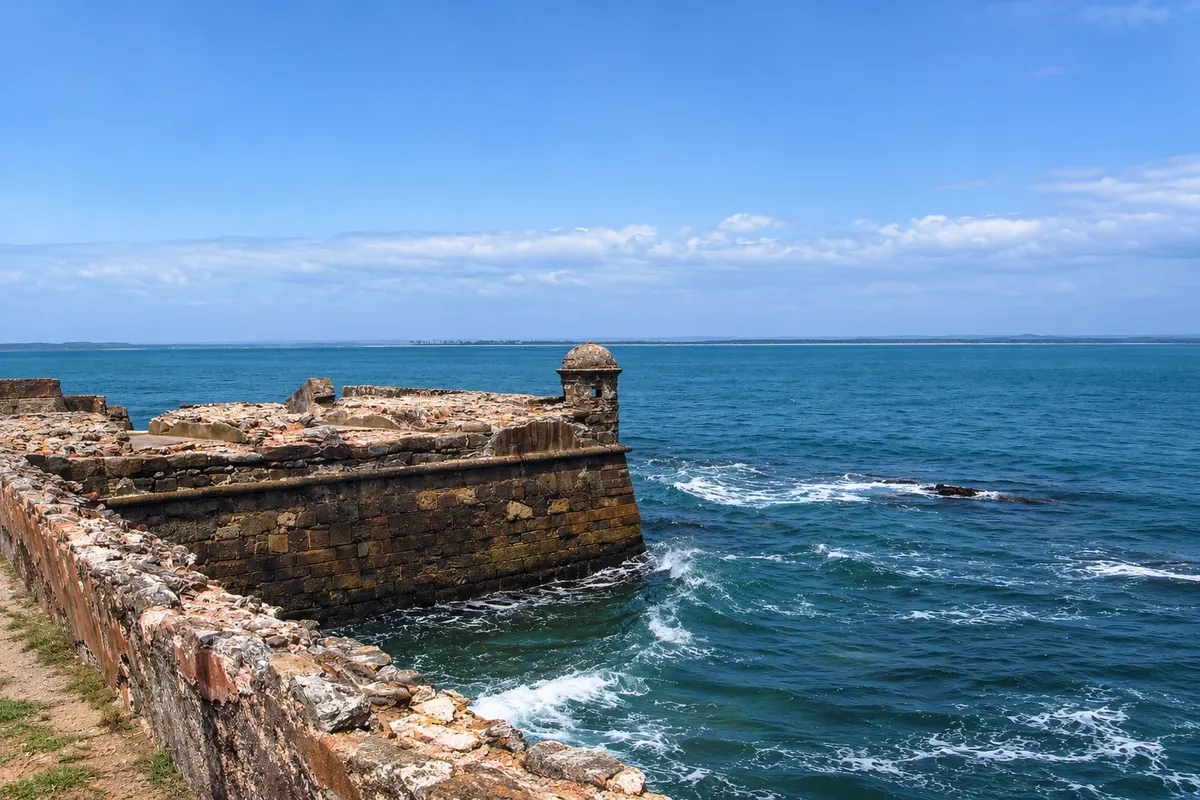
A set of 17th-century walls and batteries at the northwestern tip of Tinharé Island, next to the village of Morro de São Paulo. Listed as a national heritage site, it’s explored on foot and offers views of the channel and the mainland.
Raziščite Fortress of Morro de São Paulo
A zip line of about 340 meters that starts from the top of the lighthouse hill in Morro de São Paulo and ends in the sea at First Beach. The departure point is also a lookout over the village beaches.
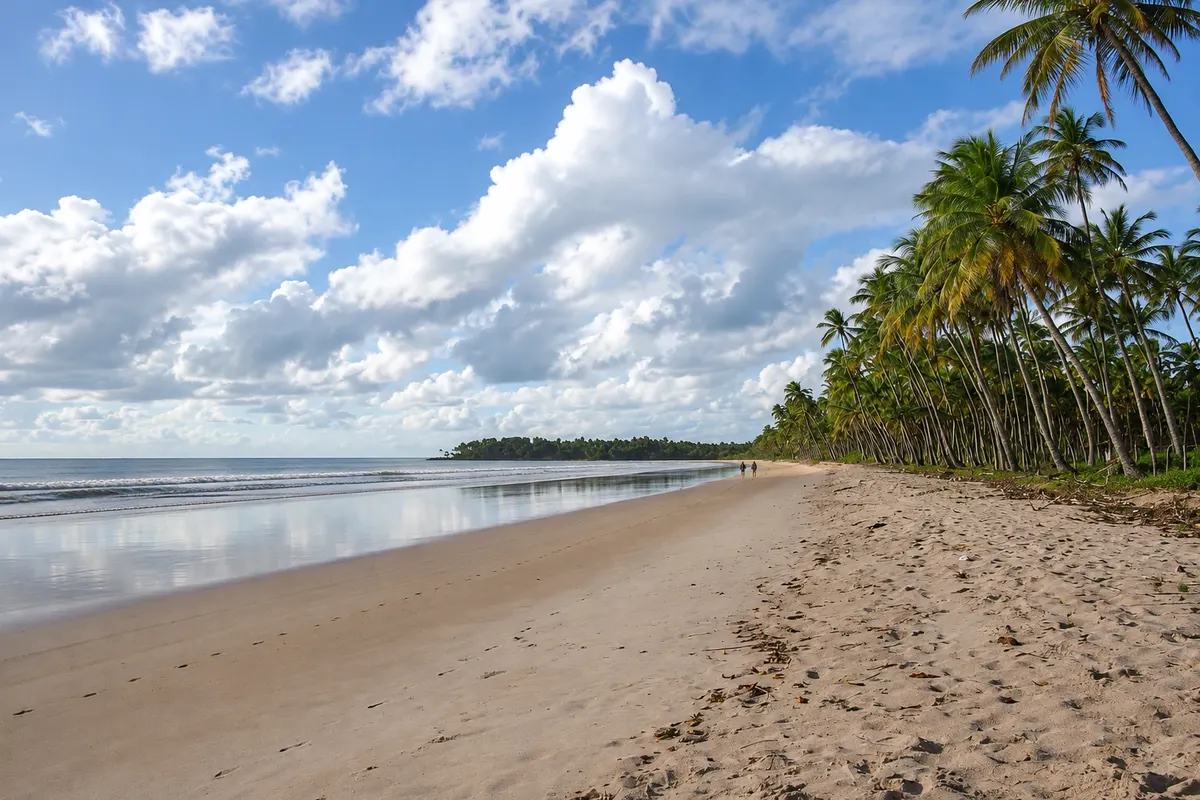
Long beach lined with coconut trees on Ilha de Boipeba, about a half-hour walk from Velha Boipeba along the shoreline. At the end of the sand, the Oritibe River separates Cueira from Moreré.
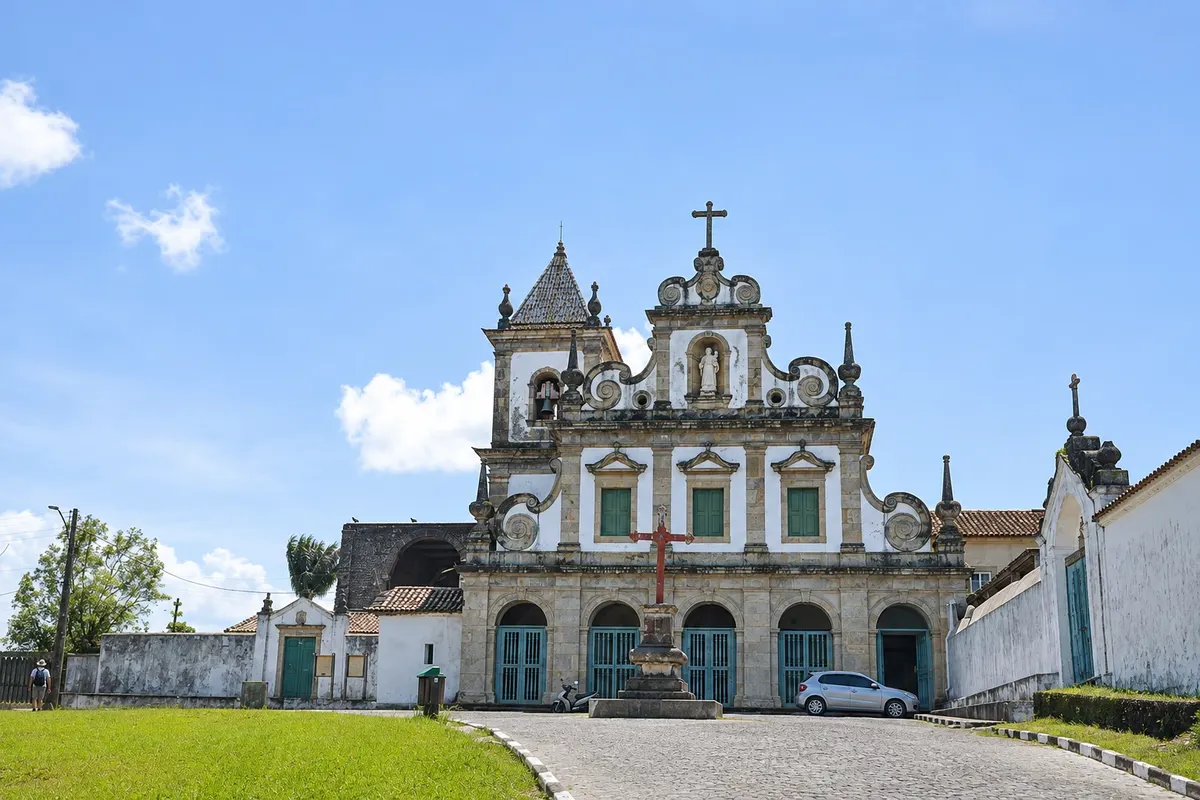
A 17th-century Franciscan church and convent in the town seat of Cairu, listed as national heritage. The façade is cited among the earliest Baroque examples in Brazil, and the sacristy is lined with Portuguese tiles.
Raziščite Convent of Saint Anthony
Narrow beach between Second and Fourth Beach in Morro de São Paulo, with pousadas on the shore and shallow tide pools at the corner at low tide. Most boats for the return-island tour depart from here.
Kaj izbrati pred odhodom
Izhodišče, trajanje, potek, vključene storitve in okvirna cena vsakega izleta.
This is the walk for the day you arrive or for an afternoon after the boat has returned. Everything is at the northern tip of the island, a few minutes’ walk between each spot. Start at the pier. Just above it, a stone gateway marks the entrance to the village. Turning left after the gate brings you to the walls of the Fortaleza de Morro de São Paulo, also called Fortaleza do Tapirandu: a set of batteries, guardhouses and stretches of wall that run along the sea and watched over the channel entrance between the island and the mainland. The ruins face west, and at late afternoon many people sit on the rocks to watch the sun set over the channel. Back at the gateway, the slope leads to the square and to the Igreja de Nossa Senhora da Luz. The building you see is from the 19th century, erected on a site that had chapels since the start of colonization. If the door is open, go in. From the small square at the top of the village, an arch leads onto Rua da Fonte Grande; at its end is the fountain that gives the street its name. Then take the Caminho do Farol, a climb with steps. At the top are the lighthouse and the viewpoint where the zipline departs, with views of First and Second Beach. If you don’t want to descend by the cable, return the same way and finish the walk on the sand of First Beach.
Kraji na poti: Morro de São Paulo pier, Fortaleza de Morro de São Paulo, Igreja de Nossa Senhora da Luz, Fonte Grande, Morro de São Paulo lighthouse, Zipline viewpoint.
Vključuje: There is no charge to walk through the village, along the fortress walls, or along the path to the lighthouse. The zipline descent is paid separately; check the operator’s current price list.
Nasvet: Leave the fortress for late afternoon and the lighthouse for the morning, when the climb has more shade. Wear sturdy sandals or sneakers: there are slopes, steps and uneven rock. Those returning from a speedboat tour disembark at the pier and can visit the fortress before heading up to the village.
Najboljši čas za obisk: All year round. With clear skies, late afternoon on the walls is the most popular time.
The beaches of Morro de São Paulo are numbered starting from the village, and the first four can be visited on foot, one after the other. The sea is calm at all of them, protected by reefs. Primeira Praia is tucked behind a line of inns and restaurants. The sand strip is narrow and the sea can have slightly more waves than the neighboring beaches. This is where the zipline from the lighthouse ends. Segunda Praia is the center of activity: wide sand, kiosks with umbrellas and loungers, and at night bars with live music. At low tide the sea becomes a deep pool suitable for swimming. On the right corner, a sand spit with rocks and vegetation projects into the sea: this is Ilha da Saudade, which separates Segunda Praia from Terceira Praia. Terceira Praia has three stretches. The first, next to Ilha da Saudade, is good for swimming. The middle section runs along the promenade, and sand appears only at low tide. The last stretch begins where the promenade ends, near the airstrip, and is the quietest. Boat tours depart from Terceira Praia. After the bend begins Quarta Praia, extensive and shallow. The beginning has beach bars; further on there are scattered hotels and coconut trees. At low tide, the rocks hold small tide pools and the sand becomes firm for walking. Quinta Praia, or Praia do Encanto, lies beyond a mangrove and is reached only by the island’s service road, with transport.
Kraji na poti: Primeira Praia, Segunda Praia, Ilha da Saudade, Terceira Praia, Quarta Praia.
Vključuje: Access to the beaches is free. Beach umbrella, sun lounger, and purchases at the kiosks are charged separately.
Nasvet: Check the tide table before you leave: Fourth Beach is best at low tide, and at very high tide stretches of Third Beach lose their sand. At high tide, enter the sea at Fourth Beach slowly because of the rocks. To return without walking, there is transport at the Receptivo, the vehicle point behind Second Beach.
Najboljši čas za obisk: All year; from September to March the weather is usually more stable. Low tide for Quarta Praia.
Gamboa is a Cairu settlement on the same island as Morro de São Paulo, facing the mainland. It has a calm-water beach, beach stalls and its own pier, where boats from Valença stop. At low tide you can walk there from the village, a route of less than 2 km. The path leaves from the small square at the top of the village. Cross the arch of Rua da Fonte Grande, follow to the fountain and take the street to its right, Rua do Porto de Cima. A short stretch of forest comes next, then steps, and the rest is along the sand, along the water. That is why the tide must be low: at high tide the passage is interrupted. Without stops, the walk takes about 45 minutes. Few people do it straight through: there are small beaches along the way and, near the end, the colored clay cliff where visitors apply the mud to their bodies and wash in the sea. From the clay to the area of the stalls is a short hop; the settlement’s pier is a little more than 5 minutes from there. Going and returning on the same low tide is tight. The usual plan is to walk there and return by boat: there are scheduled boats between Gamboa pier and Morro de São Paulo pier and water taxis that leave from the stall area. Because the beach sits at the mouth of the channel, the water is not always clear.
Kraji na poti: Fonte Grande, Colored clay cliff, Gamboa Beach, Gamboa settlement.
Vključuje: The walk is free and does not require a guide. The return boat and purchases at the beach stalls are paid separately; check the current price list at the pier.
Nasvet: Leave while the tide is still ebbing so you have margin. Use the clay that is already loose on the sand and do not lean against the base of the cliff. The mud stains light clothing. Bring the visitation fee receipt: it is requested at the control post on the return at the pier.
Najboljši čas za obisk: All year, on days when low tide occurs during daylight; consult the tide table.
It’s the first day for those who arrive in Boipeba: the three beaches closest to the village, done on foot, without boat and without fixed times. Praia da Boca da Barra is next to Velha Boipeba, where the Rio do Inferno meets the sea. The water is calm, there are beach stalls and restaurants facing the estuary, and the tour boats board and disembark there. It’s also where many people spend the late afternoon. Following the coast, an easy trail passes by inns and the small Praia das Pedrinhas and reaches Tassimirim in 20 to 30 minutes from the village. The beach is a curve of light sand with coconut trees. Tassimirim and Cueira are separated only by rocks; another 10 minutes along the sand brings you to Praia da Cueira, much longer and more open. At the entrance are the beach stalls, known for lobster and seafood pastries. Walking on, the beach quickly empties. Those who have the energy continue along the sand to Moreré, but the route is long and crosses a river that can only be crossed at low tide. For most people, it’s better to return the same way and leave Moreré for another day, by tractor.
Kraji na poti: Velha Boipeba, Praia da Boca da Barra, Praia de Tassimirim, Praia da Cueira.
Vključuje: There is no fee to walk the trail and the beaches, and a guide is not required. Purchases at the beach stalls are each person’s responsibility.
Nasvet: Leave early, with water and a hat: there are stretches without shade. At high tide, the passage between the beaches becomes narrower; the walk is easier at low tide. Return with a light: not all of the path is lit.
Najboljši čas za obisk: All year; from September to March the weather is usually more settled.
Moreré is a small village on the east side of Boipeba, about 6 km from Velha Boipeba. It has a coconut-lined beach with very calm sea, few kiosks, and in front of it the natural pools that are included in the boat tours. If you go by land, you can spend the day there, at the island’s pace. The local collective transport is the tractor-trailer: a trailer with benches pulled by a tractor, which crosses the island in about 20 minutes. It leaves from a dedicated stop in the village; confirm the day’s departures. The other option is an ATV taxi driven by locals. You can also walk along the coast from Cueira; the hike takes 1 to 2 hours depending on pace and includes crossing a river that is possible only at low tide. In Moreré, the tide rules. At low tide during full and new moons, the water retracts a lot and the beach can dry out for a few hours; that is when boatmen take visitors to the natural pools, about 1 km from the shore, where you snorkel among fish and corals. At high tide, you swim at the beach itself. Beyond Moreré, a short trail leads to Praia de Bainema, wide and almost undeveloped. From Bainema to the south is Ponta dos Castelhanos, accessible by ATV or boat.
Kraji na poti: Moreré village, Praia de Moreré, Moreré natural pools, Praia de Bainema.
Vključuje: The tractor, the ATV and the boat to the natural pools are paid separately to the providers. Check the current rate table at the boarding points.
Nasvet: Before you go, ask at the departure point what time the last tractor returns. For the natural pools, choose a day of low tide in the morning or early afternoon. Bring a snorkel mask, sunscreen and cash. In the pools, do not step on the corals.
Najboljši čas za obisk: Days of low tide, preferably near full moon or new moon.
The town of Cairu sits on an island between the mainland and Tinharé, surrounded by channels and mangroves. It is the municipal seat, but receives almost no guests: visitors stay in Morro de São Paulo or Boipeba. Those who visit find a small, quiet town with old streets and a 17th-century Franciscan complex. The Convent and Church of Saint Anthony began to be built in masonry in 1654, and the work extended over decades. The church façade, facing the square, is considered by scholars one of the earliest expressions of Baroque architecture in Brazil and served as a model for other Franciscan convents. Inside, the sacristy is the most preserved part, with walls covered in Portuguese tiles and a painted ceiling; the cloister also has tile panels. The complex has been listed as national heritage since 1941. A few steps away is the Mother Church of Our Lady of the Rosary. From Boipeba, scheduled speedboats to Valença and to the Graciosa dock stop in Cairu, about 20 minutes from Velha Boipeba’s pier. From Morro de São Paulo there is no regular line to the town: it is the last stop on the speedboat tour that goes around Tinharé, with time to see the convent. Otherwise, travel requires a chartered boat.
Kraji na poti: Cairu pier, Convent and Church of Saint Anthony, Mother Church of Our Lady of the Rosary.
Vključuje: The speedboat fare is paid separately. The convent may have areas with restricted access; check locally for opening days and whether there is a fee to visit.
Nasvet: Before disembarking, check what time the return speedboat passes: departures are infrequent. The church is an active place of worship; during services, visits inside should be discreet. Go in the morning, when the façade is lit by the sun.
Najboljši čas za obisk: Year-round. In January the town holds the Reisado de São Benedito.
Po dnevih
Predlogi za načrtovanje poti. Vrstni red dni prilagodite vremenu in razpoložljivosti izletov.
Disembark in the morning, pay the visitor fee at the control post at the top of the slope, and leave your luggage at the pousada; a porter will handle the climb. Start at the top: the square, the Church of Nossa Senhora da Luz and the lighthouse path, which leads to the zipline viewpoint. Descend to First Beach, either along the cable or by the path, and walk along the sand to Second Beach for your first swim. Have lunch at Second or Third Beach. In the afternoon, if the tide is low, continue to the start of Fourth Beach, where the rocks form shallow pools; at high tide, stay on the section of Third Beach near Ilha da Saudade. Return to the village before sunset and visit the fortress walls next to the pier. At night, activity concentrates on Second Beach and the village’s main street. One day does not allow for a boat tour around the island: the circumnavigation takes the whole day. If you are leaving the same day, check the last departure of the catamaran or the launch before moving away from the pier.
Use the morning for the village and the beaches: Church of Nossa Senhora da Luz, the lighthouse, First and Second Beach. Pass by Third Beach and book the launch for the next day; ask whether the tide will allow a stop at the natural pools. The rest of the day depends on the tide table. If low tide is in the afternoon, hike to Gamboa via Rua da Fonte Grande, stop at the clay cliff and return by boat. If low tide is in the morning, reverse the order: Gamboa first, beaches later. Finish at the fortress in the late afternoon and have dinner in the village.
A full day at sea. The launch leaves Third Beach in the morning and rounds Tinharé: the natural pools of Garapuá and Moreré, when the tide allows, lunch in Boipeba, oysters in Canavieiras and finally the town of Cairu with the Convento de Santo Antônio. The return is via the channel, with disembarkation at the pier. Bring sunscreen, a snorkeling mask, a light jacket and cash for lunch. Keep the visitor-fee receipt: it is requested when re-entering at the pier. If the sea is rough, the launch may not operate. In that case, substitute with the 4x4 trip to Garapuá, which goes by land, or spend the day on Fourth Beach.
Arrive by launch at Velha Boipeba from Valença or Graciosa and walk to the pousada; porters wait at the pier with handcarts. After settling in, walk along the coast: Boca da Barra, the short trail to Tassimirim and, just after the rocks, Praia da Cueira. Have lunch at one of the beach stalls and return at a relaxed pace. Reserve the end of the afternoon for Boca da Barra, overlooking the mouth of the Rio do Inferno. At night, restaurants cluster around the village square.
Choose this day according to the tide table. Take the tractor or an ATV to Moreré and, at low tide, hire a boatman on the beach to go to the natural pools, with a snorkeling mask. Have lunch in the village of Moreré. In the afternoon, follow the short trail to Bainema Beach, which is quieter, or stay in the shade of the coconut trees. Confirm the departure time of the last tractor at the meeting point and return to Velha Boipeba before dark. If you prefer to see more of the island, swap this day for the island circumnavigation by launch, which leaves from Boca da Barra and includes Ponta dos Castelhanos and Cova da Onça.
With the departure scheduled for the afternoon, the morning is good for one last outing. One option is the town of Cairu: the regular launches to Valença and Graciosa make a stop there, and you can get off, visit the Convento de Santo Antônio and the square, and continue on a later launch. Arrange this in advance with the launch company and confirm the day’s schedules. The other option is to stay on the island and paddle a kayak or canoe through the mangrove of the Rio do Inferno with a guide, at the tide time indicated. Buy your outbound ticket in advance and allow time for the bus or flight: the trip to Salvador still takes a few hours after the launch.
Najboljši čas za obisk
The seasons shown are the most usual ones; nature doesn't always follow the calendar.
High season · Reisado de São Benedito in the town of Cairu
Stable weather, with rainfall below 100 mm, highs near 31 °C and the sea around 27 °C. Morro de São Paulo and Boipeba are crowded throughout the month: book accommodation, the catamaran and launches in advance. In the town of Cairu, the Reisado de São Benedito brings congada groups, marujada and chegança to the streets after mass at the Mother Church. For the natural pools, prefer days near full or new moon.
Iemanjá Festival (day 2) · Carnival
Expect steady weather, with temperatures between 24 °C and 31 °C. On the 2nd, the Iemanjá Festival features a boat procession with flowers and offerings in Morro de São Paulo and Boipeba. At Carnival, when it falls in February, Morro fills up, especially in the days after Salvador’s celebrations; Boipeba remains quieter. Buy boat crossings before you arrive.
End of summer · Less busy
Transition month to the rainy season, with around 150 mm of rain and temperatures from 24 °C to 31 °C. Most days are still clear, with showers in the middle of the day. The islands quiet down after Carnival and the beaches become less crowded. Leave a spare day to reschedule the launch if the weather turns.
Start of the rains · Holy Week
April opens the rainiest period of the year, with temperatures from 22 °C to 28 °C. Rain falls in showers, sometimes for consecutive days, between sunny spells. The catamaran in open sea pitches more; the route via Itaparica and Valença avoids that stretch. Visitor numbers are low, except at Holy Week, when it may fall in this month. Stay close to the beach to make the most of every good weather window.
Rainiest month · Divino Festival in Boipeba (May or June)
Usually the wettest month, with temperatures of 22 °C to 28 °C and choppier seas. Speedboat tours and crossings depend on clearance for the day. This is the quietest time on the islands. In Boipeba, the Feast of the Divine Holy Spirit takes place seven weeks after Easter, in May or June, with nine days of masses, a procession through Velha Boipeba’s streets and a boat parade.
São João (June 24) · Frequent rain
It still rains a lot, with temperatures from 22 °C to 28 °C. São João, on the 24th, features forró music and traditional foods in the village of Morro de São Paulo. Outside the festival, visitor numbers are low. Good month for the village, the fortress, the lighthouse and short walks between beaches; for launches, only with a firm forecast.
Start of humpback whale season · School holidays
Rain decreases, but weather remains unstable, with temperatures between 21 °C and 26 °C, the lowest of the year. In July humpback whale season begins and runs until November; whale-watching trips depart from Morro de São Paulo and Boipeba when the sea allows. Brazilian school holidays increase visitor numbers. Bring a light jacket for the boat.
Humpback whales · More settled weather
Weather stabilizes, with around 130 mm of rain and temperatures from 21 °C to 27 °C. Humpback whales are often offshore, and morning whale-watch launches operate. There are fewer people than in summer, and more European visitors on holiday. Wind can still change plans: confirm each tour the day before.
Humpback whales · Spring
Around 100 mm of rain, temperatures of 23 °C to 30 °C and sea temperature near 27 °C. It’s one of the most balanced months: good weather, uncrowded islands and humpback whale season underway. It’s worth combining Morro de São Paulo and Boipeba on the same trip. The sun gets stronger: wear a hat and sunscreen on long boat trips.
Humpback whales · Stable weather
Rain near 90 mm and temperatures from 23 °C to 30 °C. A month of stable weather, good for the natural pools of Garapuá and Moreré at the low tides of full and new moons, and for the hike to Gamboa. Humpback whales remain along the coast. Traffic is moderate, with peaks on holidays.
End of the whale season · Spring Festival (November or December)
Rain increases a bit, to about 110 mm in showers, with temperatures between 23 °C and 30 °C. The humpback whale season ends. The Spring Festival, with shows in Morro de São Paulo and, in some editions, in Boipeba, usually takes place between November and early December; on those days occupancy rises. Check the year’s dates before booking.
New Year’s Eve · Start of high season
The least rainy month, with about 60 mm, and temperatures from 23 °C to 30 °C. The sea is calm and warm. Activity grows through the month and peaks at New Year’s Eve, with fireworks on Second Beach in Morro and parties that also disrupt Boipeba. For that week, book accommodation and crossings months in advance.
Načrtujte pot
Cairu does not have a commercial airport for large aircraft. The reference point is Salvador International Airport, which receives domestic and international flights. From there you still need to cross the city and the sea.
From the airport to Salvador’s boarding terminals, allow about 1 hour by car. The Maritime Terminal, behind Mercado Modelo, is the departure point for the catamarans and the semi‑land transfer; the São Joaquim terminal is for the ferry‑boat.
Those who land in Salvador until early afternoon usually can reach Morro de São Paulo the same day with a booked transfer; if traveling on your own, you need a larger time margin. For Boipeba, only morning flights allow arrival the same day. Spending a night in Salvador and leaving early the next day removes the rush from the trip.
There is also a short flight in a small plane between Salvador airport and the runway at Third Beach in Morro de São Paulo, taking about 25 to 30 minutes. There are few seats per flight; reserve in advance and confirm who operates the route on your date.
Ilhéus airport, to the south, is an alternative for those combining Cairu with the Maraú Peninsula or Itacaré: it’s about 188 km by road to Valença.
This is the most direct route. Catamarans depart daily from Salvador’s Maritime Terminal, behind Mercado Modelo, and arrive at Morro de São Paulo dock in 2 to 2.5 hours. There are departures from the morning until early afternoon, and the return from Morro also has several daytime schedules.
About one and a half hours of the trip is in open sea, and the boat rolls. If you tend to get seasick, you should prefer the semi‑land route. The vessels are enclosed and air‑conditioned, they carry only passengers and luggage goes with them.
Buy the ticket in advance, especially on holidays and from December to February, and arrive at the terminal about an hour early. With strong wind or rough seas, the crossing may be canceled and replaced by the route via Itaparica and Valença, which is longer.
On the return, don’t book a tight flight: leave several hours of margin between Morro’s departure and your Salvador takeoff. The ticket is paid separately from the visitation fee; check the operators’ current price lists.
The land route avoids the open sea. It crosses the Bay of All Saints to Itaparica Island, continues by road to the Valença region and ends with a short speedboat crossing.
In the semi‑land transfer, an agency combines the three stages: boat from Salvador to Itaparica, about 1 hour; bus or van to Bom Jardim dock, up to 2 hours; and speedboat to Morro de São Paulo, about 20 minutes. Total time about 3.5 hours. There are departures from the Maritime Terminal, hotels and the airport. For Boipeba, the same arrangement goes to Valença and continues by speedboat, totaling 5 to 7 hours.
On your own, the route is the ferry‑boat from São Joaquim terminal to Bom Despacho, about 1 hour; the bus from Bom Despacho to Valença, about 2 hours; and the speedboat from Valença to Morro, 35 to 40 minutes. In Valença, ask to be dropped off at the point closest to the dock: the bus station is far from the hydroterminal. With waits, allow about 4.5 hours.
From Salvador bus station there are also direct buses to Valença via BR‑101, about 4 hours.
The last speedboats leave at late afternoon: plan to arrive in Valença or at the dock while it is still daylight and check the schedules for your date.
Cars do not enter Morro de São Paulo or Boipeba. Those driving leave the vehicle in a paid parking lot on the mainland and finish the trip by speedboat. It only pays off for those who are already traveling by car or will continue along the coast of Bahia.
From Salvador, the shortest route uses the ferry‑boat between São Joaquim and Bom Despacho, on Itaparica Island, and then about 108 km of paved road along BA‑001 to Valença, passing Nazaré. The ferry accepts vehicle time reservations, which avoids queues. Without the ferry, you go around the bay via BR‑101, about 265 km.
Coming from the south, from Ilhéus or Itacaré, BA‑001 passes through Camamu, Ituberá and Nilo Peçanha; from Ilhéus to Valença it is about 188 km.
The boarding points: - Bom Jardim dock, before Valença: the closest to Morro de São Paulo, with speedboats in about 20 minutes. - Valença hydroterminal: speedboats to Morro and to Boipeba. - Graciosa dock, on the edge of BA‑001: speedboats to Boipeba, with a stop in the town of Cairu. - Torrinhas: about 12 km of paved road and 7 km of dirt from the Nilo Peçanha junction; the speedboat to Boipeba is chartered and takes about 20 minutes.
All have parking, charged per day. Check the current rates on site.
Boipeba is only reached by boat, via sheltered channels, with no open-sea crossing.
From Valença, speedboats leave the hydro terminal in town on set schedules throughout the day and take 1 hour to 1 hour 20 minutes. From Graciosa, the pier by the BA-001 offers a shorter trip. Both lines stop at the town of Cairu before continuing to Boipeba. From Torrinhas, the crossing is chartered and takes about 20 minutes. Buy the launch in advance during busy months: seats sell out.
There is no direct speedboat between Morro de São Paulo and Boipeba. There are three ways to go. The fastest is the pickup transfer across Tinharé’s interior, taking about 1 hour 10 minutes, finished by a small boat that crosses the Rio do Inferno to Velha Boipeba. The second is via Valença, on two separately purchased launches; leave an hour and a half between them. The third is to take your luggage on the return island tour and disembark in Boipeba at the lunch stop, informing the agency beforehand.
The town of Cairu is reached by Boipeba’s line launches in about 20 minutes, or from Valença and Graciosa. From Morro de São Paulo, only by the return island tour or by chartered launch.
In Morro de São Paulo, catamarans and speedboats arrive at the same pier at the foot of the village. From there you climb a steep hill up to the gate. At the top is the control post where the Tariff for Use of the Archipelago Heritage, the TUPA, is paid, charged per person by the municipality of Cairu. The municipal rules include exemptions and discounts; bring ID. Payment can be made before travel through the digital channels indicated by the city hall, or on arrival. Keep the receipt: it is requested again when returning from a boat trip at the pier. The fee has changed several times and further adjustments are planned: check the current table and whether the charge already applies to Boipeba.
Porters meet the boats and carry luggage in wheelbarrows, charging by volume. The service is worth it: besides saving you the hill, they know the way to each pousada. Up to Third Beach everything is walkable. For Fourth and Fifth Beach, transport departs from the Reception area, a vehicle point behind Second Beach.
In Boipeba, the pier is in Velha Boipeba and also has porters. The village and nearby beaches are reachable on foot. To get to Moreré and the island interior, you use the tractor-bus and the ATV taxis, each with its own departure point.
Odgovori na vaša vprašanja
Start at Segunda Praia and organize the other visits by area, leaving time for transport and rest.
We suggest three days on one island. To include Boipeba and Morro de São Paulo, add more days and arrange the crossings.
Arrival to the islands requires water transport. Salvador acts as the air gateway, and Valença is the hub for land connections and boat departures to the archipelago. Check the operation of the crossings for your date and choose the landing point compatible with the island and your accommodation.
Check the actual distance between your accommodation and the chosen places. Walk where feasible and arrange the return before traveling to another area.
Check the forecast, access conditions and the operation of inland visits. On the beaches, pay attention to the tide, the waves and local guidance.
Yes. Cairu is a municipality made up of islands. Morro de São Paulo, Gamboa and Garapuá are on Tinharé Island; Velha Boipeba, Moreré and Cova da Onça are on Boipeba Island. The town of Cairu, the municipal seat, is on a third island, closer to the mainland, and is much smaller and quieter than the beach villages.
Morro de São Paulo has more pousadas, restaurants, nightlife and tours, and it’s easier to reach from Salvador. Boipeba is quieter and more empty, with beaches you can reach on foot and nights that end early. With two or three days, choose just one. With five or more, you can split your stay: the connection between the two is by truck and boat or by speedboat, with a transfer in Valença.
In the village and on First Beach you’re close to the pier, restaurants and shops. Second Beach is the liveliest, with daytime stalls and music at night; if you want to sleep early, avoid the front line. Third Beach is calmer and still allows a walk to the village. Fourth and Fifth Beach are for those seeking isolation and depend on hotel transport or the Receptivo to get to the village. With heavy luggage, remember that up to Third Beach everything is carried on foot.
It’s possible, but you’ll get little out of it. The catamaran takes 2 to 2½ hours each way and the last return departures are in the mid-afternoon, leaving only a few hours on the island, plus the visitation fee. To see the beaches and do a tour, stay at least one night; two nights is most common.
It can. About an hour and a half of the crossing is in open sea, and in the rainy and windy months, from April to July, the sea tends to be rougher. If you get seasick easily you can take the semi-terrestrial route via Itaparica and Valença, which sails only in sheltered waters and takes about an hour longer.
Yes, at low tide. The path is under 2 km and leaves the village via Rua da Fonte Grande; much of it is on the sand, close to the sea, and it’s cut off at high tide. The walk takes about 45 minutes without stops and passes the clay cliff. The most practical is to walk there and return by boat, which leaves from Gamboa’s pier and from the area of the beach stalls.
It’s worth it for those who like history and architecture. The town preserves the Convent and Church of Santo Antônio, a Franciscan complex started in 1654 and listed as national heritage, with Portuguese tiles in the sacristy and cloister. The visit takes about an hour. From Boipeba, regular speedboats stop there; from Morro de São Paulo, the town is the last stop on the speedboat trip back to the island.
From September to March the weather is usually more stable. December, January and February have little rain, calm seas and the islands are crowded. September, October and November combine good weather, fewer people and humpback whale season, which runs from July to November. From April to July it rains a lot and boat tours depend on daily conditions. To see the natural pools, plan the trip near the full moon or new moon, when the tide is lower.
It depends on the arrival time. From the airport to the boarding terminals takes about 1 hour, and the last catamaran and speedboat departures are in the afternoon. If you land by early afternoon and have a semi-terrestrial transfer booked, it usually works; on your own, it’s wise to land in the morning. For Boipeba, only with a flight that arrives early. If in doubt, spend a night in Salvador and go on the first departure the next day.
Več kot vodnik