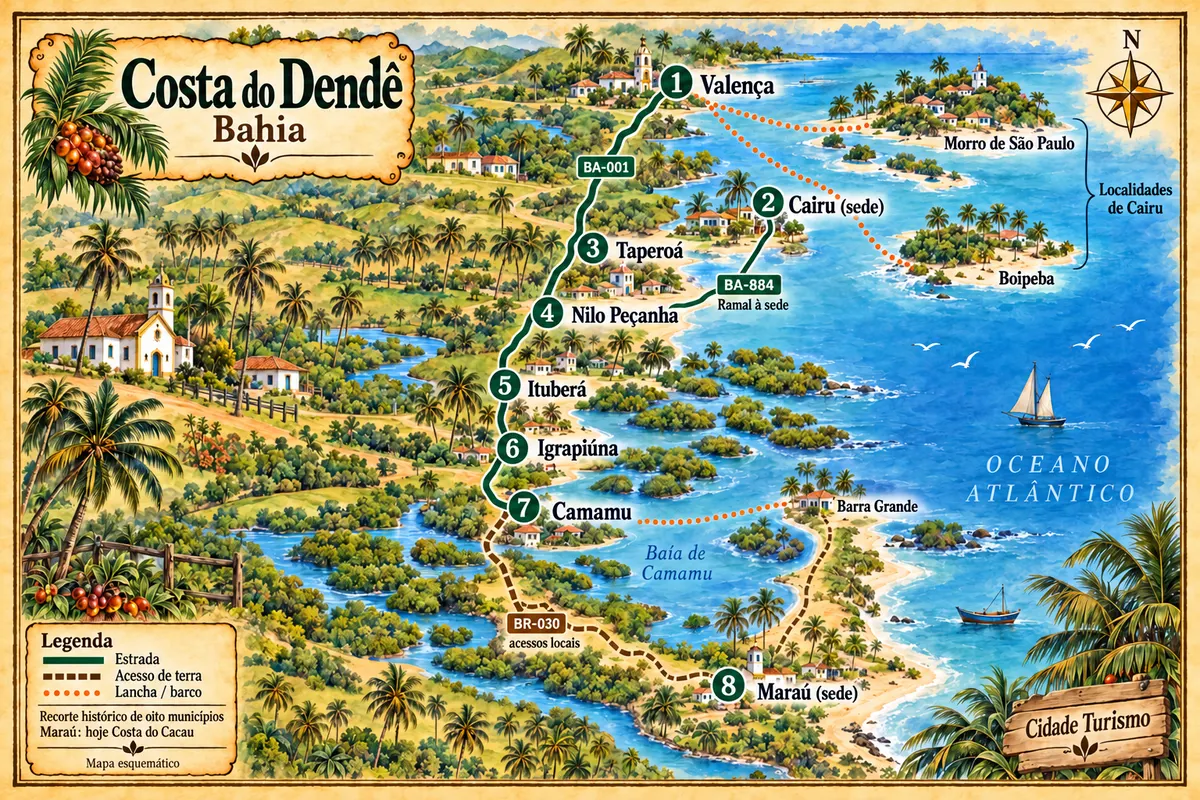
By plane: Salvador and air taxi to the islands
Cairu does not have an airport with regular commercial flights. The air reference is the Aeroporto Internacional de Salvador. From there you continue by waterway or, part of the year, by air taxi.
Air taxi: departs from Salvador airport and takes about 25 to 30 minutes to Morro de São Paulo. The landing is on the Terceira Praia runway, a few minutes' walk from the village and from Primeira and Segunda Praia. There is also service to Boipeba in about half an hour. Aircraft are small and seat availability is limited. Flights usually depend on a minimum number of passengers. Book in advance, especially on holidays and in high season. The company operating the route changes over time, so confirm who is flying on your date. Guests staying on Quarta Praia often arrange transport from Segunda Praia through their accommodation.
Another option: Ilhéus airport is about 200 km from Boipeba. From there, travel by land to Valença, Graciosa or Torrinhas and board a speedboat.
Distance: Salvador is about 265 km from Valença via BR-101. Via the ferry and BA-001 it is about 108 km from Bom Despacho. After that, a boat crossing remains.
For those arriving on a commercial flight to Salvador, the transfer from the airport to the boarding terminal and the crossing are paid separately. See other sections of this guide.
Catamaran and speedboat: crossings to Morro de São Paulo
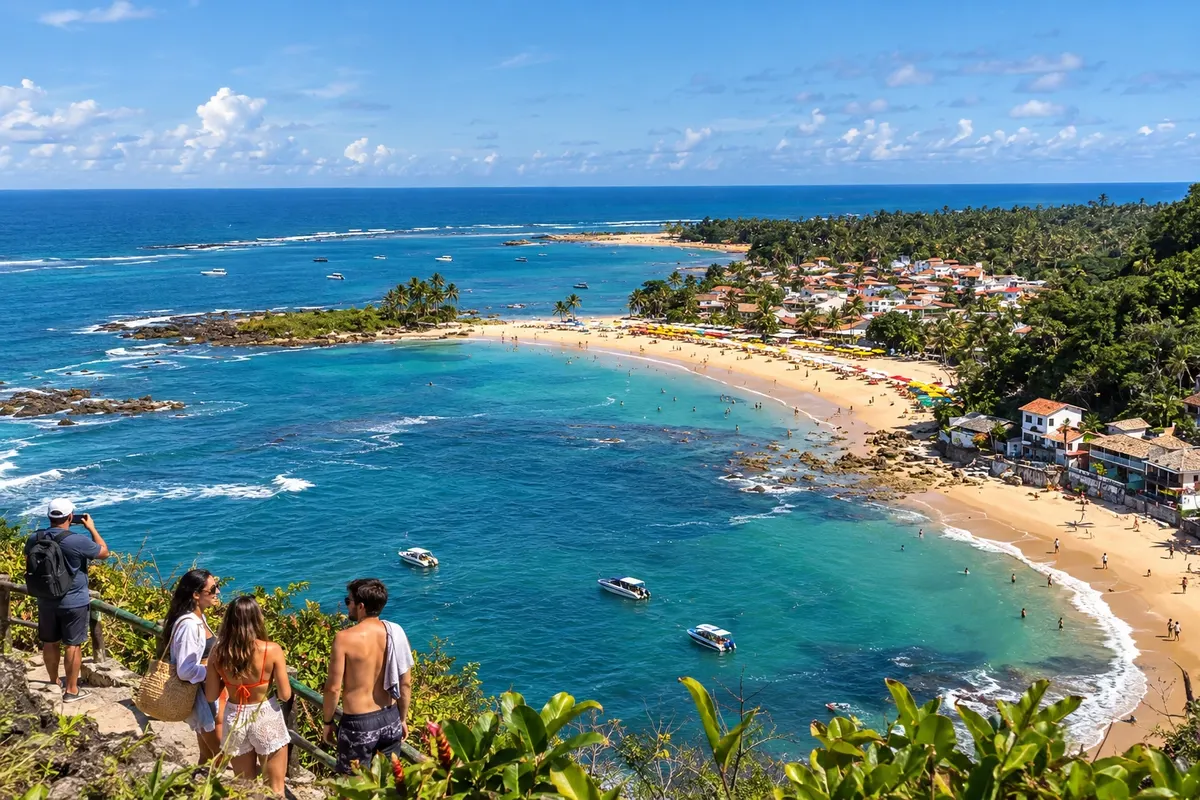
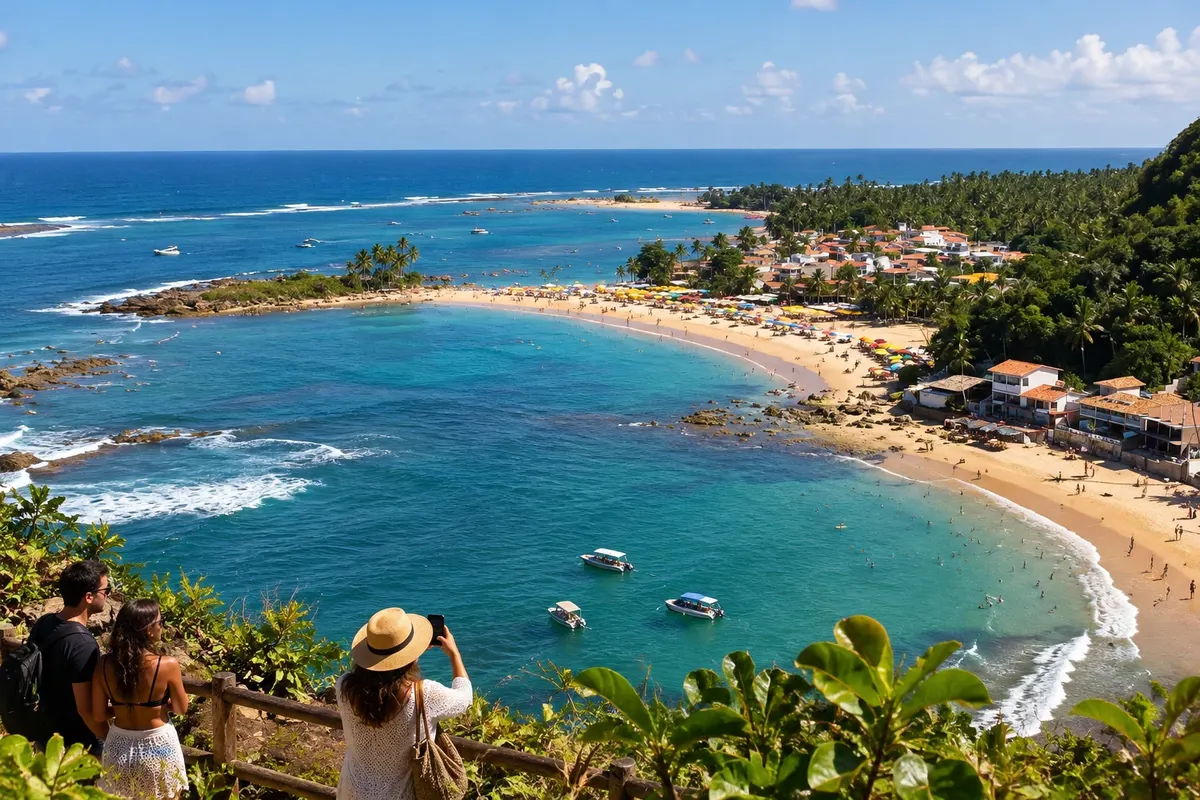
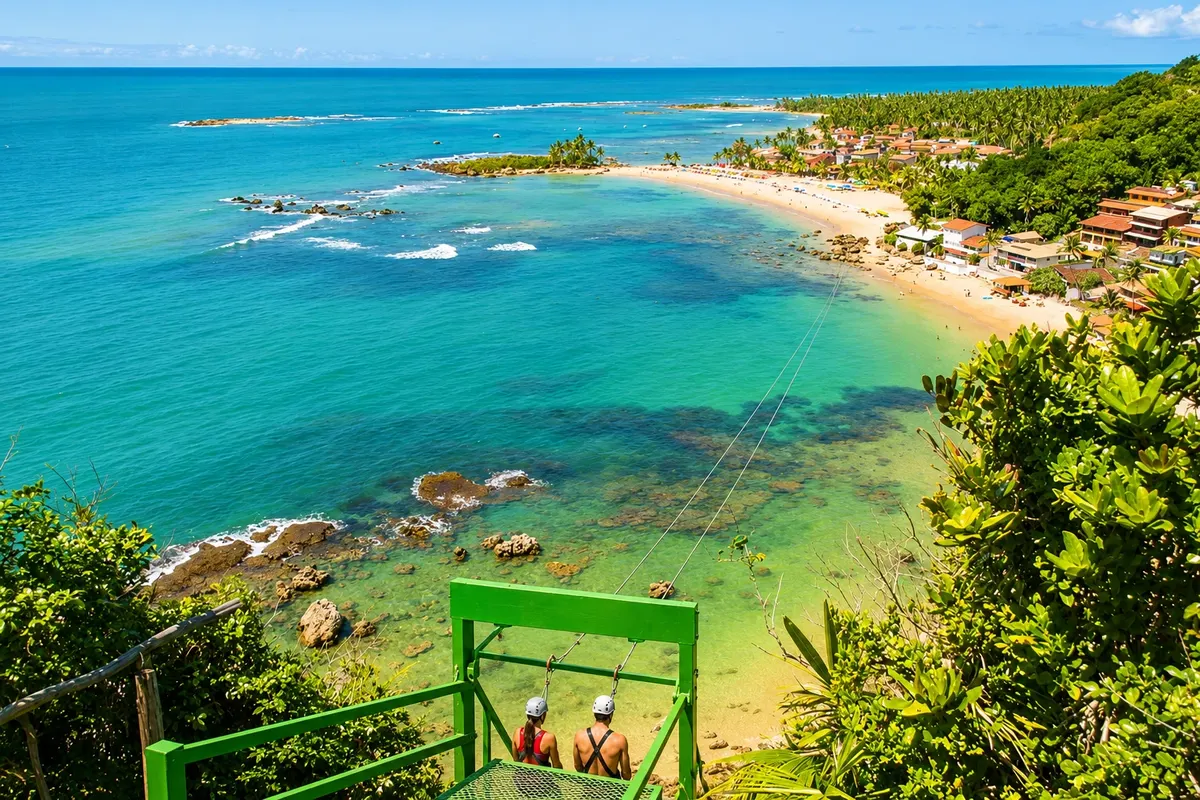
Morro de São Paulo, on Tinharé, has no land connection to the mainland. It is not possible to arrive by car or bus. The water routes are these.
Direct catamaran from Salvador: departs from the maritime terminal behind Mercado Modelo, about 20 km from the airport. The trip takes between 2 and 2h30, depending on sea conditions. There are departures in the morning and early afternoon, and the return from Morro to Salvador is also offered at multiple times. The catamaran carries passengers only and disembarks near the village. Arrive at the terminal about one hour in advance. On holidays and in high season, buy your ticket in advance.
Speedboat from Valença: departs from Valença's hydroport, at staggered times throughout the day, and takes 35 to 40 minutes. Tickets are usually bought on the spot, and there are slower boats that take longer.
Speedboat from the Atracadouro de Bom Jardim, also called Ponta do Curral: the crossing lasts about 20 minutes. It is the point used by those who come by car or van and want to reduce time at sea.
Private boat: on request, for groups, with no fixed schedule.
The municipality's preservation fee is charged to those arriving at Morro de São Paulo. See the section about the municipal fee in this guide.
By bus, van or transfer: Salvador, Valença and Boipeba
By land, access goes through Valença, Graciosa or Torrinhas, where you board to the islands.
Salvador to Valença by bus: there are two options. Via BR-101, buses depart Salvador's bus station daily and take about 4 hours. The other is the ferry from the São Joaquim terminal to Bom Despacho on Ilha de Itaparica, taking about 1 hour, and from there a bus to Valença in about 2 hours. In Valença, ask the driver to drop you near the pier, because the bus station is far from the hydroport.
Semi-land transfer: agencies sell transfers to Morro de São Paulo and Boipeba. It combines a van from the airport or hotel in Salvador, ferry, van or minibus to the dock and a fast boat. To Morro it takes about 3h30; to Boipeba, 5 to 7 hours depending on the connection.
Valença to Boipeba: fast boat in about 1 hour, with departures from morning until late afternoon. There is also a bus from Valença to Torrinhas, followed by a short boat.
Graciosa and Torrinhas: from Graciosa, on the BA-001 roadside, speedboats take about 40 minutes to Boipeba and stop at Cairu town. From Torrinhas, the boat is chartered and takes about 20 minutes.
From Morro de São Paulo to Boipeba: there is no direct regular boat. Options are two speedboat legs via Valença or a 4x4 transfer sold by Morro agencies, with a dirt-road stretch and a short boat crossing. Schedules and prices change with the date; check with the company before buying.
By car: ferry, BA-001 and mainland parking
Cars do not enter Morro de São Paulo or Boipeba. Those who go by car drive to a dock on the mainland, leave the vehicle in a paid parking lot and continue by speedboat.
From Salvador there are two routes. The most used crosses Baía de Todos os Santos on the ferry between the São Joaquim terminal and Bom Despacho, on Ilha de Itaparica. After that it's about 108 km via BA-001 to Valença. The ferry does not require reservations on many departures, but check operations for your date. The other route goes around the bay, about 265 km, largely on BR-101.
From Ilhéus, follow BA-001 toward Itacaré, passing Camamu and Ituberá to Nilo Peçanha. To Atracadouro Graciosa is about 175 km, to Valença about 188 km and to Torrinhas about 178 km.
Boarding points:
- Valença: hydroport terminal, with paid parking near the pier. Speedboats depart to Morro de São Paulo and Boipeba.
- Atracadouro de Bom Jardim, or Ponta do Curral: speedboat to Morro in about 20 minutes.
- Atracadouro Graciosa: on the BA-001 roadside, between Valença and Taperoá. Speedboats depart for Boipeba.
- Torrinhas: from the Nilo Peçanha junction, follow the sign to Cairu. It's about 12 km of paved road and then 7 km of dirt road to the settlement. There is parking on site, and the boat to Boipeba is chartered.
There is no car ferry beyond the Baía de Todos os Santos ferry. Parking and the crossing are paid separately. Check each provider's current rate table.
How to get around Tinharé and Boipeba: on foot, quad bike and tractor
You don't need to rent a car. On both islands there are no private cars, so a car is only useful up to the mainland dock.
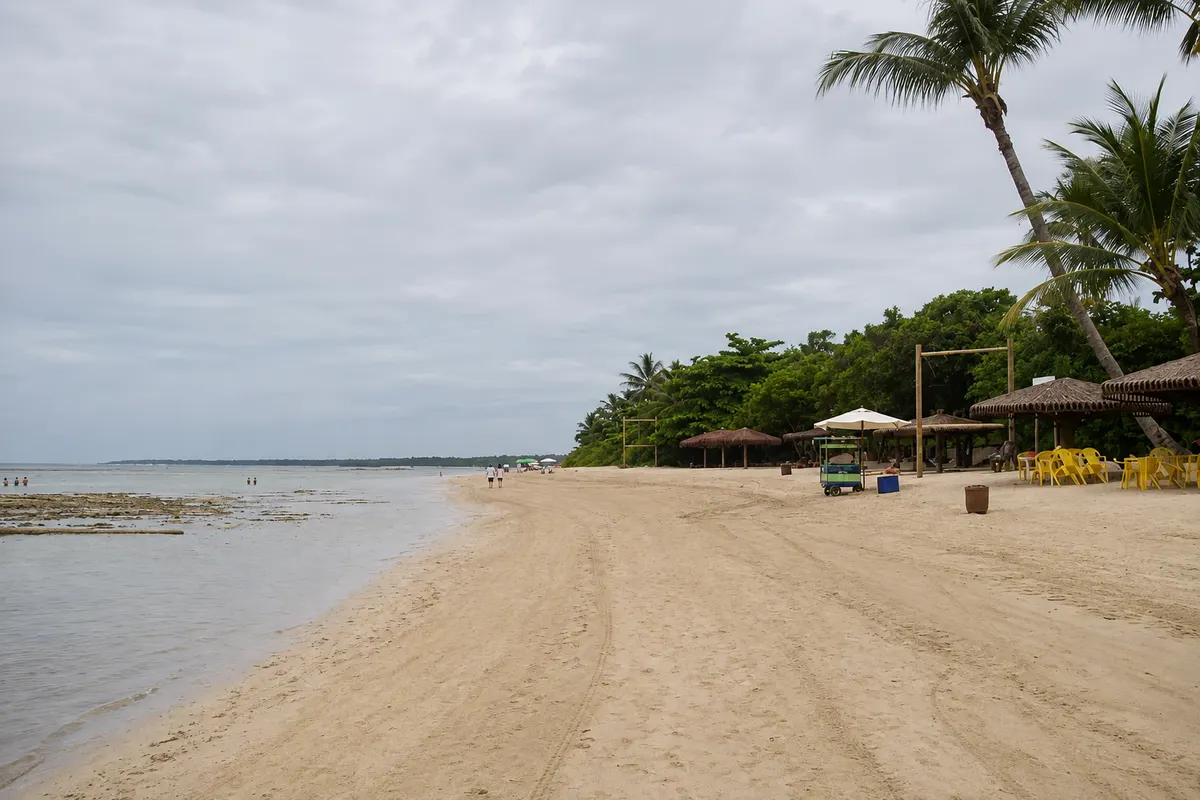
Morro de São Paulo: almost everything is done on foot, between the village and the beaches, via wooden walkways and sandy stretches. There are slopes, mainly on arrival and on the way to the lighthouse. For longer stretches there are rental bicycles, boats, speedboats, 4x4 vehicles, ATVs and motorcycle taxis. Motorized transport is limited and sold separately. Ask the price before hiring. Luggage can be carried by porters, also paid separately.
Boipeba: the pier is in Velha Boipeba and from there you continue on foot through the village, where only pedestrians circulate. The permitted vehicles are the tractor, used as a jardineira (open passenger vehicle), and ATVs, which operate as taxis. ATVs depart from points in Velha Boipeba, Cueira and Moreré, with rates set by the association, and are driven only by local residents. There is no rental. The tractor links Velha Boipeba to Moreré at irregular times and usually departs when full. Boca da Barra, Tassimirim and Cueira are a walk from the village, from 10 to 40 minutes depending on the beach and route.
Between the islands and the more remote beaches, movements depend on the tide and sea conditions. Check the tide tables and confirm the return transport before leaving. To go to Cairu, Graciosa or Valença from Boipeba, there are regular speedboats. The only way to connect the islands is by watercraft.
Package with transfer or on your own
Many visitors to Morro de São Paulo and Boipeba book transfers with receptive agencies, since access involves several stages and depends on schedules and tides. Both approaches work.
Package with transfer: the agency organizes the route from the airport or hotel in Salvador. For Boipeba, the service usually combines the ferry, a minibus to Valença and a fast boat. For Morro de São Paulo, there is the semi-land transfer with van, ferry and boat, or the catamaran with pick-up at the airport. Generally the passenger is met by name upon disembarkation. It's suitable for those arriving by plane, traveling with baggage or children, or who want fewer connections. Before booking, check what is included: schedules, stop in Valença, return and the municipal fee, which is often charged separately.
On your own: buy each leg separately. The most used combinations are a direct catamaran from Salvador to Morro, or ferry, bus to Valença and a boat. Speedboat tickets from Valença are usually bought on the spot, and availability drops late in the afternoon. This requires more attention to ferry times and the last boat, and can be cheaper. If traveling independently, plan your arrival with time margin and buy in advance tickets that may sell out.
In any option, reserve return transport and crossings in advance for holidays and high season.
Municipal fee: Tariff for Use of the Archipelago's Heritage (TUPA)
Cairu charges the Tariff for Use of the Archipelago's Heritage (TUPA). It funds waste collection, maintenance of tourist infrastructure and environmental preservation of the islands.
Amount: the official amount is the one listed in the price field, per person, for those disembarking at Morro de São Paulo. The municipality announced an increase and later suspended it indefinitely until access works are completed, so the amount remains as indicated. Check the current table before traveling.
Boipeba: the law foresees charging in the district as well, with its own lower amount than Morro. It is tied to completion of the new visitor reception facility. Check with the municipality whether it is already in effect on your date.
Who pays: visitors and tourists.
Who is exempt, according to the municipality: children under 5 years and people over 60 years. Regularized residents of the municipality are also exempt. Students, people with disabilities and people registered in social programs have half-price, with proof. Researchers and professionals on official work also have exemption, with proof. Rules may be updated, so carry documentation.
Validity: the paid tariff is valid for 30 days.
How to pay: via the official tariff app or the official website, before the trip. The voucher remains in the app and is presented on entry to Morro de São Paulo. There are also self-service kiosks and in-person points of sale on arrival. Paying in advance helps avoid queues at disembarkation.
R$ 70 · per person, for disembarkation at Morro de São Paulo, valid for 30 days· uradna cena


 Antarktika
 Argentina
 Bolivija
 Čile
 Kolumbija
 Ekvator
 Gvajana
 Francoska Gvajana
 Falklandski otoki (Malvini)
 Paragvaj
 Peru
 Surinam
 Urugvaj
 Venezuela
 Nemčija
 Avstrija
 Belgija
 Hrvaška
 Danska
 Slovaška
 Slovenija
 Španija
 Finska
 Francija
 Grčija
 Nizozemska
 Madžarska
 Irska
 Islandija
 Italija
 Luksemburg
 Norveška
 Poljska
 Portugalska
 Združeno kraljestvo
 Češka
 Švedska
 Švica
 Turčija
 Bermudi
 Kanada
 Združene države Amerike
 Grenlandija
 Mehika
 Sveta Peter in Mihael
 Dominikanska republika
 Japonska
 Južnoafriška republika
 Egipt
 Avstralija
 Fidži
 Nova Zelandija
 Papua Nova Gvineja