Park
Parque Estadual de Vila Velha
A conservation unit of Ponta Grossa with sandstone formations, furnas and the Lagoa Dourada.
Raziščite Parque Estadual de Vila Velha

 Išči
Brazilija
 Antarktika
 Argentina
 Bolivija
 Čile
 Kolumbija
 Ekvator
 Gvajana
 Francoska Gvajana
 Falklandski otoki (Malvini)
 Paragvaj
 Peru
 Surinam
 Urugvaj
 Venezuela
 Nemčija
 Avstrija
 Belgija
 Hrvaška
 Danska
 Slovaška
 Slovenija
 Španija
 Finska
 Francija
 Grčija
 Nizozemska
 Madžarska
 Irska
 Islandija
 Italija
 Luksemburg
 Norveška
 Poljska
 Portugalska
 Združeno kraljestvo
 Češka
 Švedska
 Švica
 Turčija
 Bermudi
 Kanada
 Združene države Amerike
 Grenlandija
 Mehika
 Sveta Peter in Mihael
 Dominikanska republika
 JaponskaTurčija
 Južnoafriška republika
 Egipt
 Avstralija
 Fidži
 Nova Zelandija
 Papua Nova Gvineja
Paraná · Brazilija
Destinacija: Campos Gerais.
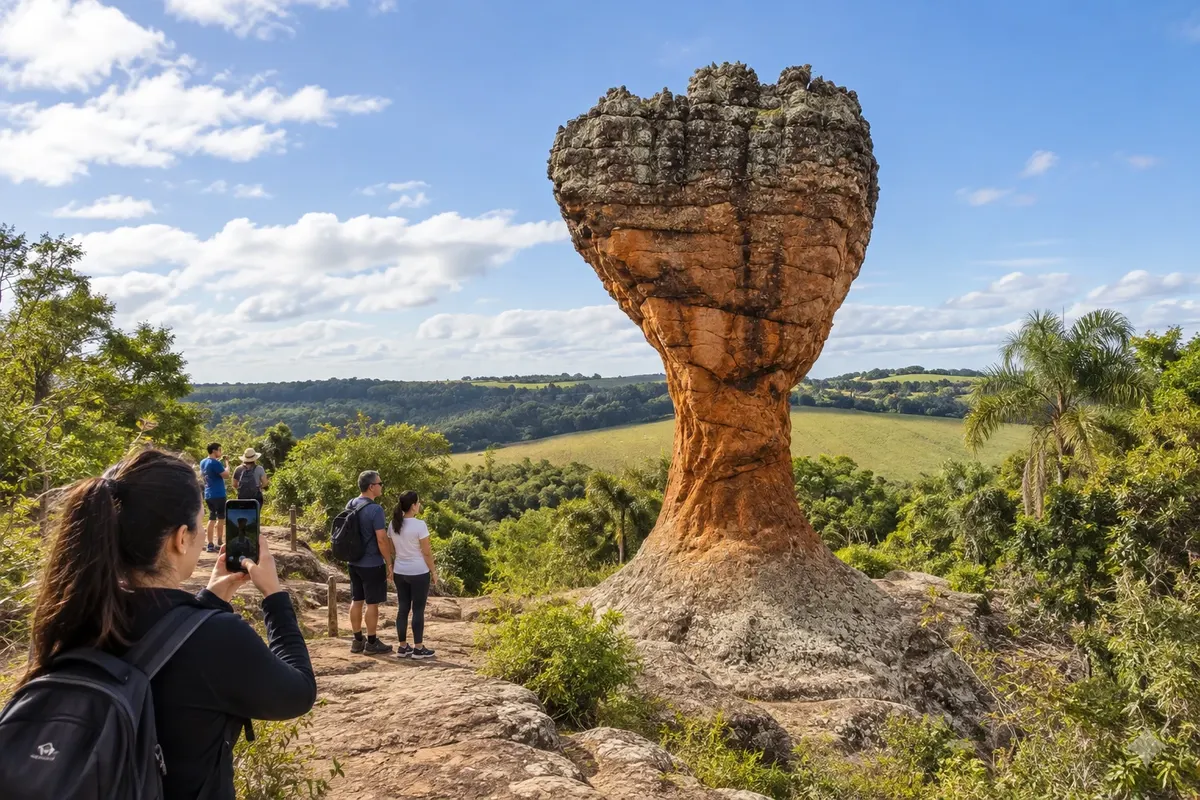
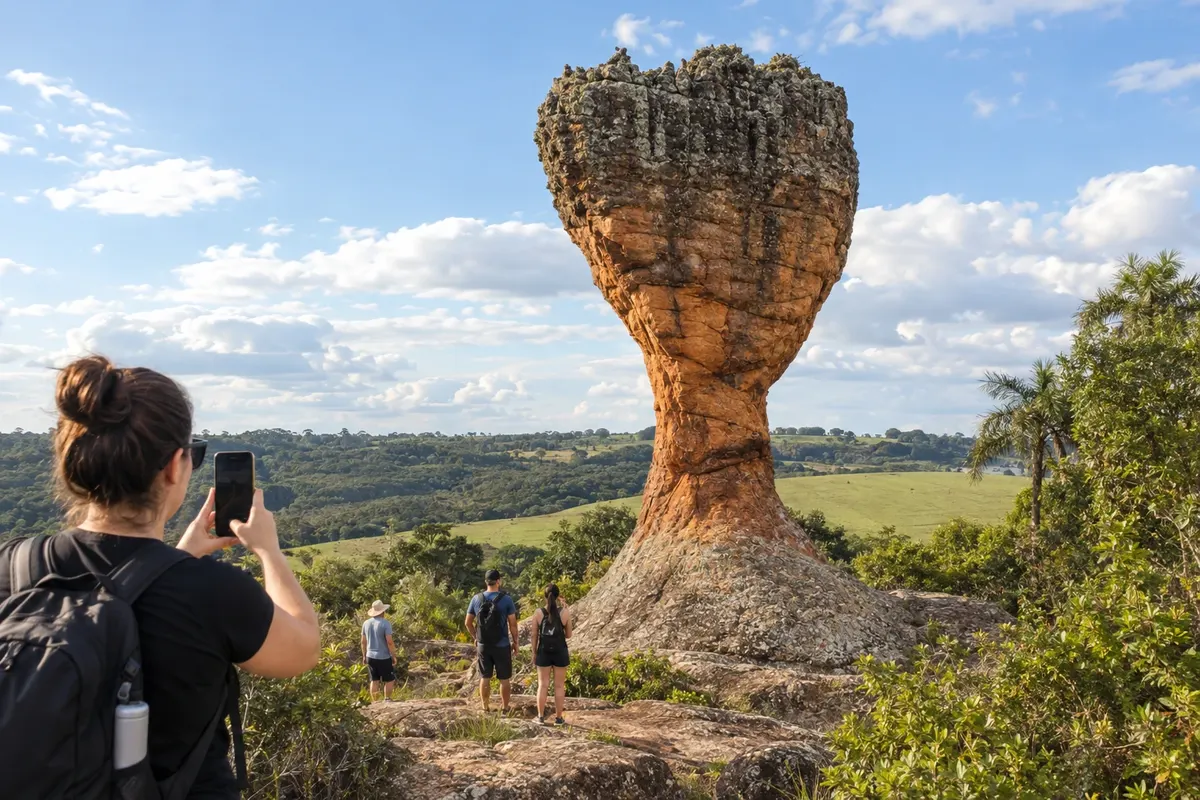
Na fotografiji: The Taça among the sandstones of Vila Velha.
Illustrative images. The pictures in this guide are illustrations based on the real place, not photographs, and may differ from it.
Mesto
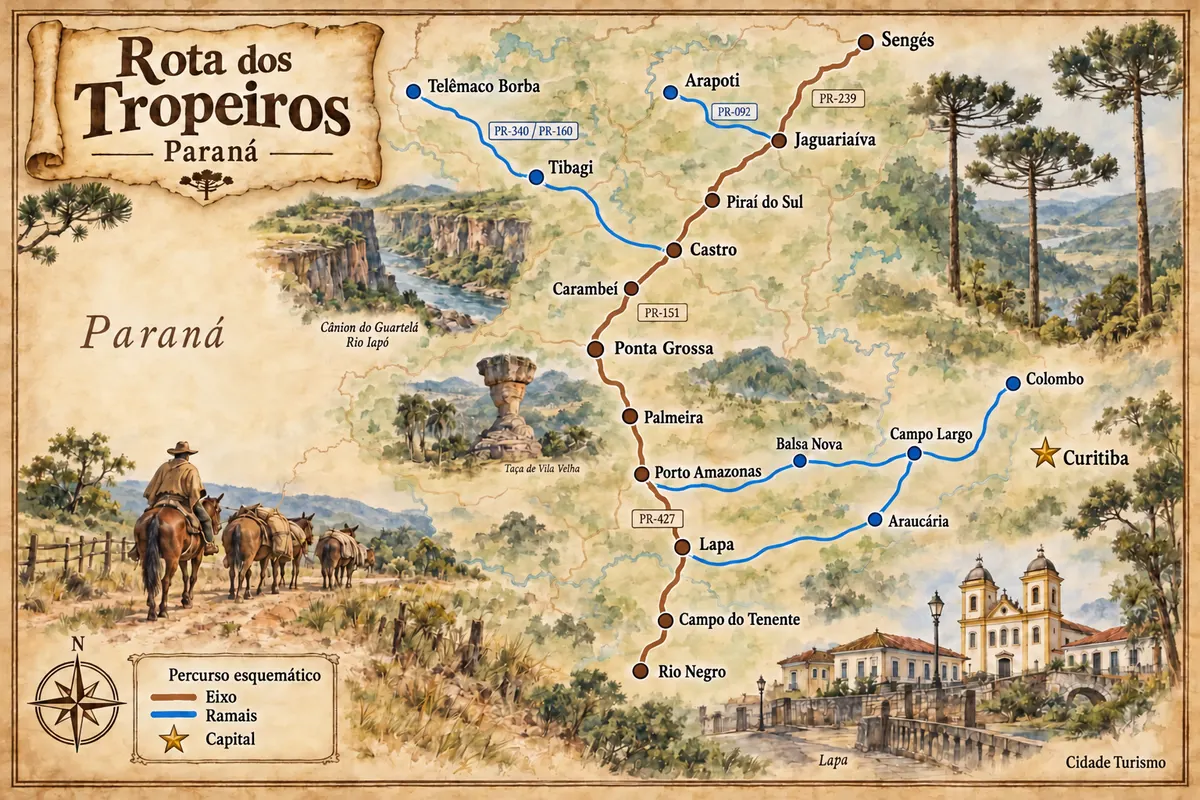
Ponta Grossa is a service center for the Campos Gerais in the Second Paraná Plateau. The sandstones of Parque Estadual de Vila Velha and the fields of the Escarpa Devoniana define the municipality's landscape. The city organizes arrival via the southern block highways and continuation along the PR-151 to Carambeí, Castro and the northern stretch of the Rota dos Tropeiros.
Ponta Grossa sits on the Second Plateau of Paraná, about 120 km from Curitiba, and is the main city of the Campos Gerais. The name comes from a broad hill covered by a clump of scrub that travelers used to see from afar. The city, founded in 1823, grew along the cattle drovers’ routes and later around the railway, which turned it into a trading hub and brought immigrants from Ukraine, Germany, Poland, Italy, Russia, Syria and Lebanon. Even today it is a highway junction: anyone crossing the state almost always passes through it.
For the traveler, Ponta Grossa is two things. The first is the city itself, built on hills, with a downtown that preserves its railway memory: Estação Saudade, from 1900, restored as a cultural space; Casa da Memória, in an old station with a steam locomotive out front; the rounded-forms Cathedral of Sant’Ana with stained glass; and the Campos Gerais Museum, in the former courthouse. Hotels and restaurants are found there. The second, and the one that attracts most visitors, is the rural area: fields, sandstone outcrops, vertical sinkholes and waterfalls scattered around the urban area.
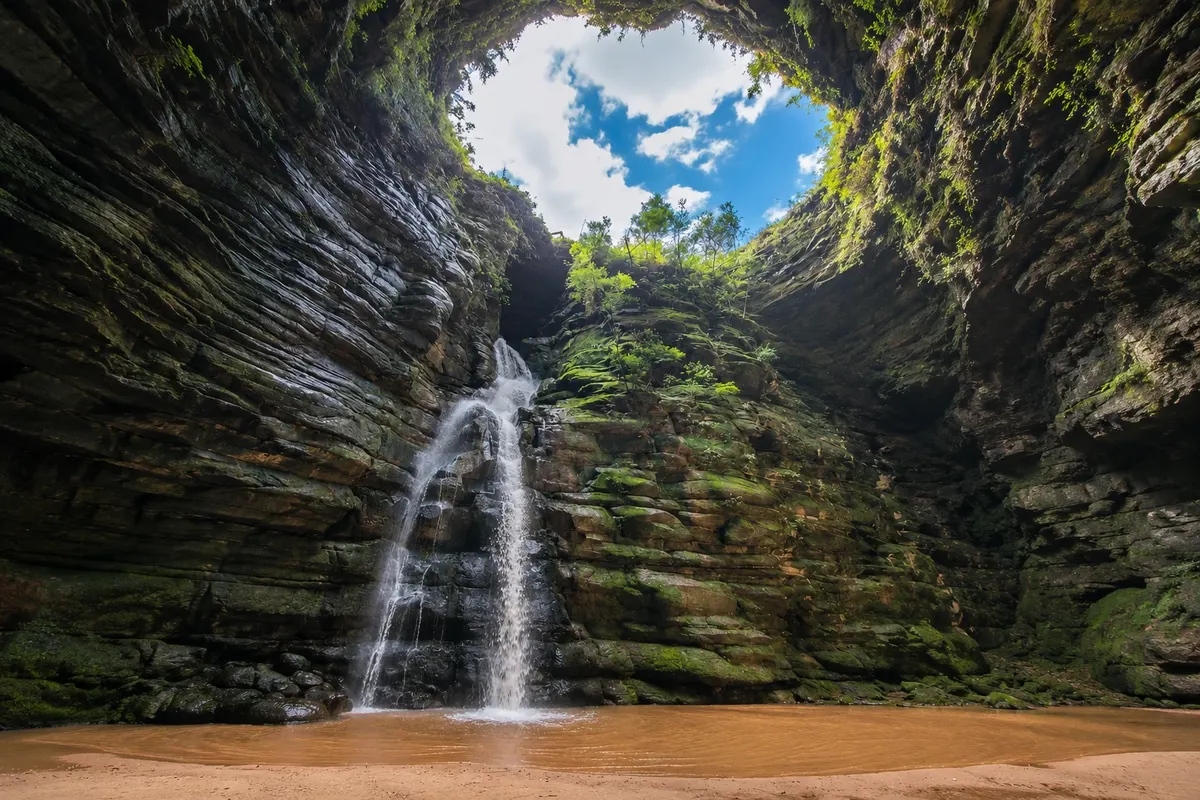
Vila Velha State Park, on BR-376, contains the Arenitos, towers of pinkish sandstone carved by water and wind, the Furnas, vertical caverns up to 100 meters deep, and Lagoa Dourada. In the district of Itaiacoca, 27 km from downtown, Buraco do Padre is a sinkhole with a waterfall inside, next to the Fenda da Freira. Further on are Cachoeira da Mariquinha and the São Jorge River canyon, both with drops of about 30 meters. The Represa dos Alagados, formed by the Pitangui River 20 km from the city, is a leisure area for sailing and rowing. Many of these places are on private property or in parks with their own entrance gates, opening days and tickets.
The climate is highland, with distinct seasons. From December to March it’s mildly hot, with highs near 26 °C and afternoon rain showers: this is waterfall-swimming season. From April to August it rains less and the skies are usually clear, which favors hikes and viewpoints; on the other hand, mornings are cold, with average lows near 10 °C in July and frost some nights. September and October bring rain back and the fields turn green again.
Plan according to opening days: Vila Velha is closed on Tuesdays and Buraco do Padre operates Wednesday through Sunday and on holidays. By car, two days are enough to visit the two parks and the city center; a third day lets you add a waterfall or follow PR-151 to Carambeí and Castro, neighboring towns with Dutch heritage. In November, München Fest, a German-culture festival, fills the city on weekends.
Ponta Grossa – število nastanitev: 62.
Ponta Grossa – število lokalov: 27.
Ponta Grossa – nazivi in posebnosti
Doživite kraj
A conservation unit of Ponta Grossa with sandstone formations, furnas and the Lagoa Dourada.
Raziščite Parque Estadual de Vila Velha
A sandstone cavern about 40 meters deep in the Itaiacoca district, inside Parque Nacional dos Campos Gerais, where a waterfall of roughly 30 meters falls through an opening at the top. Nearby is the Fenda da Freira.
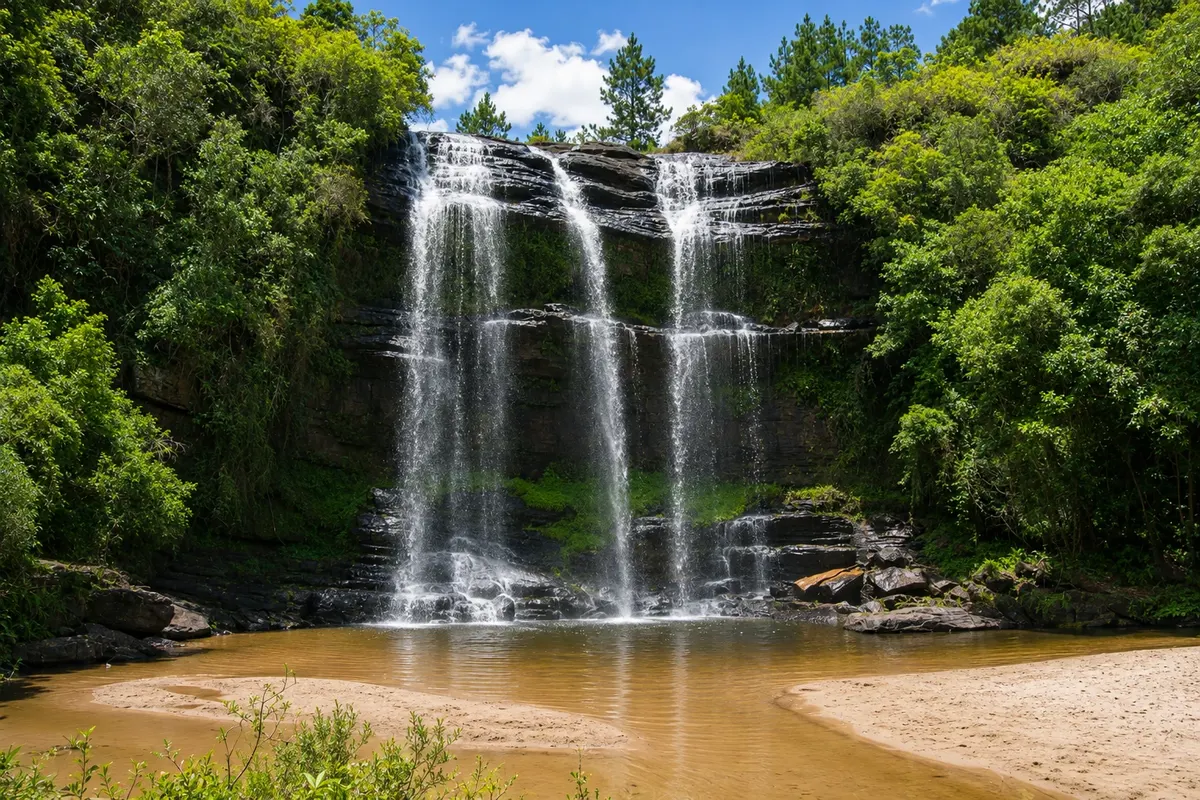
A drop of about 30 meters in the Itaiacoca district of Ponta Grossa, with a shallow sand-bottom pool that forms a small beach between the sandstone wall and the forest. It is on private property within the area of the Campos Gerais National Park.
Raziščite Mariquinha Waterfall
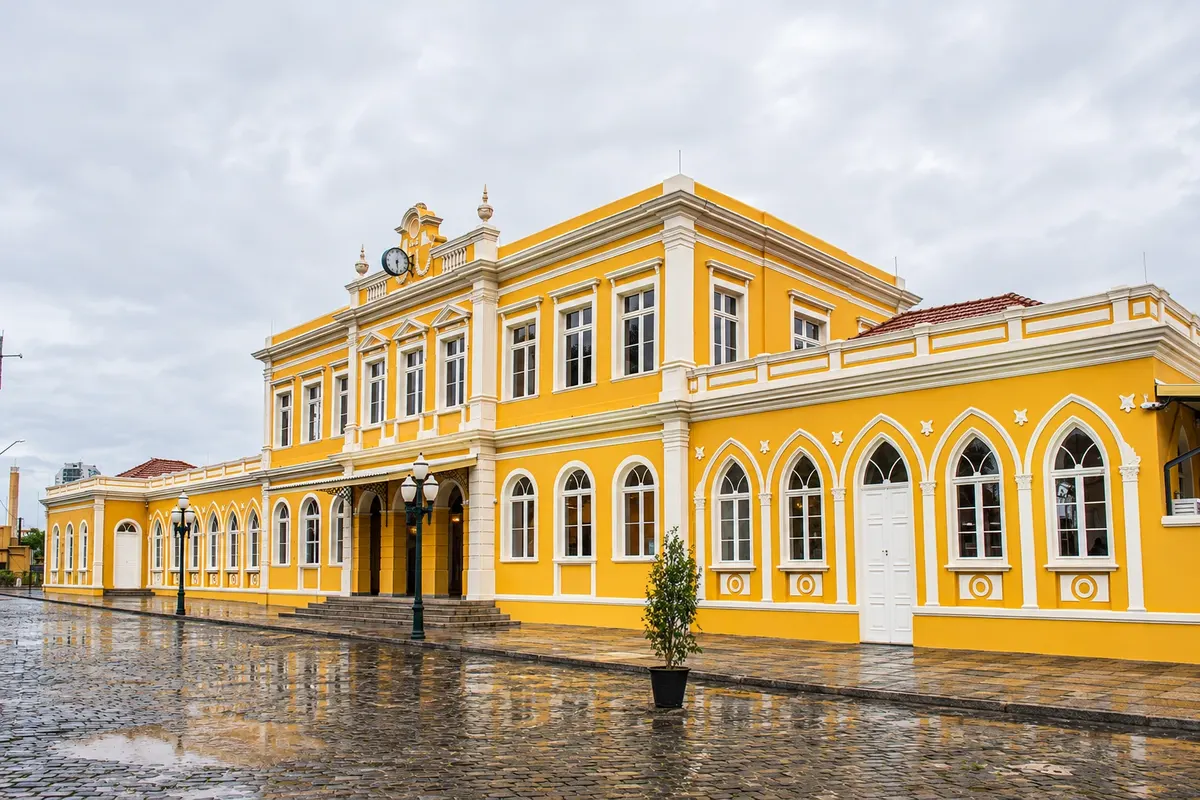
Former railway station in downtown Ponta Grossa, listed as a Paraná heritage site and restored as a cultural space, with historic railcars and exhibitions about the railroad that helped the town grow.
Raziščite Saudade Station (Ponta Grossa)
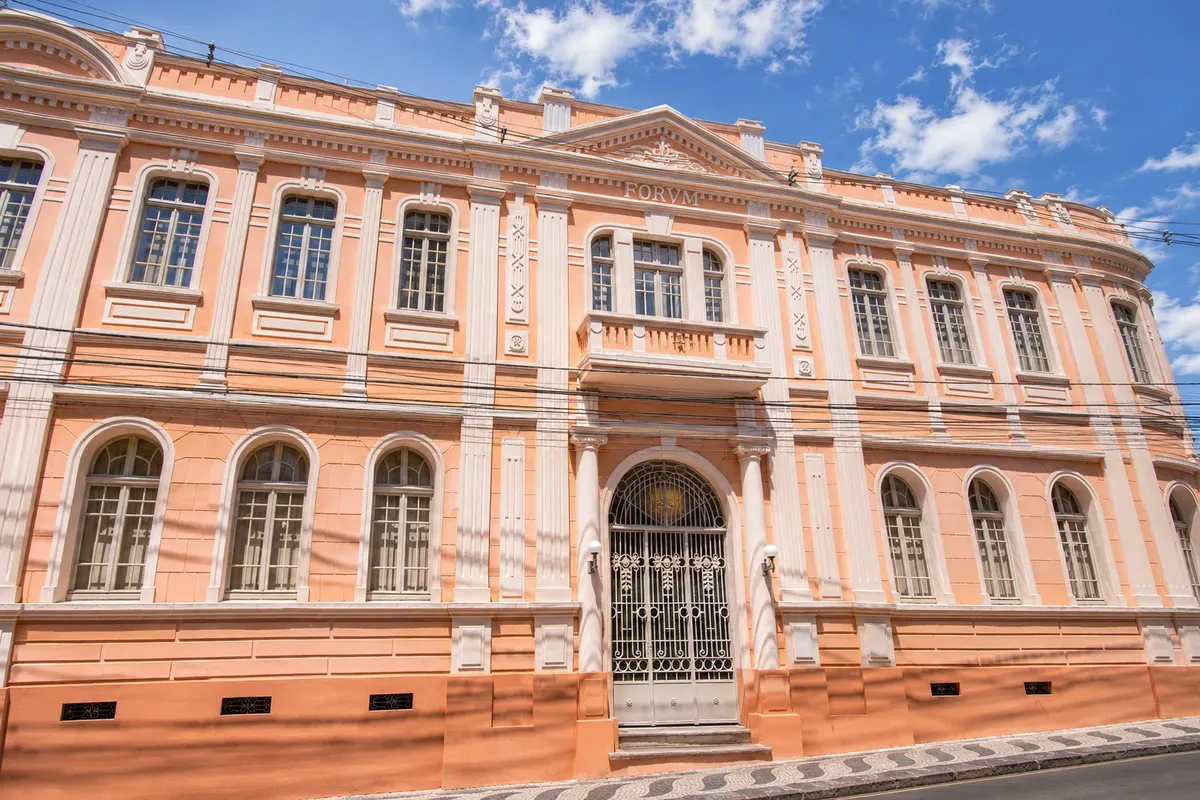
State University of Ponta Grossa Museum in the city’s former courthouse, a 1928 building downtown, with a collection about the history and culture of the Campos Gerais and temporary exhibitions.
Raziščite Campos Gerais Museum
Benedictine abbey on the west exit of Ponta Grossa, with about 30 monks who follow the Rule of Saint Benedict. It welcomes visitors for the prayers and Mass sung in Gregorian chant and guests for retreats in the guesthouse.
Raziščite Monastery of the Resurrection
Kaj izbrati pred odhodom
Izhodišče, trajanje, potek, vključene storitve in okvirna cena vsakega izleta.
Vila Velha was the first state park in Paraná, created in 1953, with more than 3,000 hectares of native fields and sandstone formations. It lies on BR-376, on the side of town facing Curitiba, and is managed by a concessionaire. The ticket covers the three visitor areas, which are distant from each other and are connected by the park’s shuttle bus. At the Arenitos, paved trails circle pink rock towers shaped by water and wind, on a circuit of about 2.5 km; the best-known formation is the Taça. At the Furnas, about 6 km away, viewpoints overlook the Furna dos Andorinhões and the Furna dos Lambaris, vertical caverns up to 100 meters deep with water at the bottom, linked by underground waters. Thousands of swifts nest on the cliffs of the first cavern; they usually leave and return in flocks at the start and end of the day. The Lagoa Dourada, about 2 km from the Furnas, gets its name from the sun’s reflection on its shallow, clear water. The visitor center concentrates parking, ticket office, restaurant, shop and restrooms. Separately, the concessionaire sells activities such as canopy courses, zipline, bike touring, an anchored balloon, birdwatching, a night walk and the Fortaleza Trail, over 10 km long, with limited spots sold only online. The park is open Wednesday through Monday and closes on Tuesdays for maintenance. The ticket office and the entrance close in the early afternoon, well before the park closing time.
Kraji na poti: Arenitos, Taça, Furna dos Andorinhões, Furna dos Lambaris, Lagoa Dourada.
Vključuje: The ticket gives access to the Arenitos, the Furnas and the Lagoa Dourada. Parking and activities such as canopy course, zipline, balloon and special trails are paid separately; check the concessionaire’s current price list.
Nasvet: Arrive in the morning to see the three areas without hurry. Bringing food, drinks or pets is not allowed. Take sunscreen, a hat and a water bottle: the Arenites have little shade.
Najboljši čas za obisk: All year. From April to August it rains less; in winter mornings are cold.
Buraco do Padre Nature Park is in the district of Itaiacoca, 27 km from downtown. The route leaves via the Uvaranas neighborhood, passes the state university campus and continues about 15 km on PR-151 to the park entrance on the right. The sinkhole that gives the place its name is a vertical cavern more than 40 meters deep, open at the top, with a waterfall that falls inside. The name comes from the tradition that Jesuit priests used to retreat there for meditation. The main trail to the interior is about 1 km and is accessible to wheelchairs and to people with reduced mobility. At the sinkhole entrance is the Fenda do Padre. The Trilha do Favo climbs, with sections of stairs, to Pedra do Favo, an orange rock that resembles a honeycomb, Poço Encantado, a sinkhole through which the river that feeds the waterfall runs, and the three Mirantes do Buraco on the rim, with views of the fields and the sinkhole floor. The Fenda da Freira, a narrow 300-meter corridor between cliffs, and the 630-meter zip line are sold separately, with set times. Visits are self-guided, with a map. The park has a visitor center, restaurant, shop, a children’s area and a garden with native stingless bee hives. It operates Wednesday through Sunday and on holidays. Entrance is allowed from morning until mid-afternoon, without a fixed entry time.
Kraji na poti: Furna Buraco do Padre, Mirantes do Buraco, Poço Encantado, Pedra do Favo, Fenda da Freira.
Vključuje: The entrance ticket grants access to the sinkhole, the trails, the viewpoints, Poço Encantado and the common areas. Fenda da Freira, the zip line and meals are paid separately; check the park’s current price list.
Nasvet: Buy tickets online in advance on weekends and holidays. If you reserved the Fenda da Freira or the zip line, arrive with time to spare so you don’t miss your slot. Wear sneakers: the climb to the viewpoints has steps.
Najboljši čas za obisk: All year. After rain the waterfall usually has more water.
The downtown area tells the story of a city that grew around the railroad. Estação Saudade, from 1900, is the natural starting point: the old railway station building, listed by Paraná state heritage, was restored and now serves as a cultural space with exhibitions, historic cars and cultural programming. Casa da Memória occupies another old station and preserves documents and objects from local history; a steam locomotive stands in front. It’s one of the city’s cultural units, along with Mansão Villa Hilda and Cine-Teatro Ópera, the main performance venue in town. Praça Barão do Rio Branco, shaded with trees, is the central square. The Cathedral of Sant’Ana, the mother church, stands out for its rounded forms and stained glass; its construction began in 1978, replacing the old temple. From the surrounding hill you can see a large part of the city. Museu Campos Gerais, run by the state university, is housed in the old courthouse building from 1928 and gathers collections about the region’s history and culture, plus temporary exhibitions. The Church of the Sacred Heart of Jesus, from 1898, is known as the Church of the Poles due to its ties to Polish immigration. The terrain is hilly: do longer stretches by car and confirm opening days for each site, as they differ.
Kraji na poti: Estação Saudade, Casa da Memória, Praça Barão do Rio Branco, Cathedral of Sant’Ana, Museu Campos Gerais, Church of the Sacred Heart of Jesus.
Vključuje: Self-guided. Cultural venues have their own entry and booking rules; check each place’s schedule and current fees before you go.
Nasvet: Museums and cultural venues often close part of the weekend or on Mondays: check in advance. It’s a good option for a Tuesday, when Vila Velha and Buraco do Padre are closed, or for a rainy day.
Najboljši čas za obisk: All year round.
Mariquinha Waterfall is about 34 km from the city center, in the Itaiacoca district: roughly 24 km on paved road via the Rodovia do Talco and 10 km on dirt road. The fall is about 30 meters high and drops between sandstone cliffs and native forest. At the base, the pool is shallow with a sandy bottom and forms a small river beach in a clearing, popular for swimming on hot days. From the parking area to the water it’s about a 1 km trail through the forest, with some wet passages. The waterfall is on private property next to a farm, and there is an entrance fee. The site has a camping area, restrooms and a simple snack bar. On summer weekends it becomes a crowded bathing spot; on weekdays it’s much quieter. The Itaiacoca region has other sandstone-and-water attractions, like Buraco do Padre, and the rural roads look similar: save the route on your phone before you leave.
Kraji na poti: Mariquinha Waterfall.
Vključuje: Entrance fee charged by the landowners, with different rates for day visits and camping; check the current price list. No guide available.
Nasvet: Confirm opening days with the site before hitting the road. Wear footwear that can get wet. After heavy rain, the dirt road becomes slower to travel.
Najboljši čas za obisk: October to March for bathing; in winter the water is cold.
The São Jorge River runs confined in a sandstone canyon about 18 km from the city center, of which roughly 10 km are paved and 8 km are irregular dirt road. The area is a municipal conservation unit, with several falls along the river. The main one is the São Jorge Waterfall, about 30 meters high. There are stretches of river suitable for swimming and cliffs used for rappelling, an activity that requires an operator and proper equipment. The view from the top of the canyon shows the fall and the valley covered in forest. Facilities are simple: parking, a camping area, restrooms and a snack bar. Entrance fee is charged on site. The route is not well signposted, but it appears on map apps. Another water option in the rural area is the Represa dos Alagados, the lake formed by damming the Pitangui River in the 1940s, 20 km from the city, used for rowing, sailing, fishing and swimming.
Kraji na poti: São Jorge River Canyon, São Jorge Waterfall.
Vključuje: Entrance fee charged on site; rappelling and other guided activities are paid separately to the operators. Check the current price list.
Nasvet: Avoid going right after heavy rain: the dirt road worsens and rocks become slippery. Bring water, snacks and closed shoes for the trails.
Najboljši čas za obisk: From October to March for swimming; from April to August for hiking in stable weather.
The Abbey of the Resurrection is a Benedictine monastery founded in 1981, in a rural area on the city’s west exit, about 12 km from the urban area. Around thirty monks live there, following the Rule of Saint Benedict in a life of prayer and work. Visitors are welcomed to the prayers and masses, sung in Gregorian chant. Sunday masses are open and gather locals and travelers who come to hear the chant; after the service it is customary to talk with the monks. Silence is part of the visit. The abbey maintains a guesthouse for retreats, by prior reservation. It is not a tourist attraction with tickets or guided tours: it is a functioning religious house that receives visitors while respecting the community’s schedule.
Kraji na poti: Monastery of the Resurrection.
Vključuje: No entrance fee is charged for services. Retreats and lodging at the abbey are arranged directly with the monks.
Nasvet: Confirm mass and prayer times before you go. Dress modestly, arrive a few minutes early and keep silence in the chapel. Photograph only where allowed.
Najboljši čas za obisk: All year; on Sundays the mass is open to the public.
Po dnevih
Predlogi za načrtovanje poti. Vrstni red dni prilagodite vremenu in razpoložljivosti izletov.
Avoid Tuesday, when Vila Velha State Park is closed. If you’re coming from Curitiba you’ll find the park on BR-376 before entering the city: arrive at opening time. Start at the Arenitos, doing the trail that passes the Taça while temperatures are mild. Take the internal bus to the Furnas and to the Lagoa Dourada. Have lunch at the park restaurant. Allow four to five hours for the three areas, without extra activities. In the mid-afternoon, head to downtown Ponta Grossa. Visit Estação Saudade and the Casa da Memória, climb up to the Catedral de Sant'Ana and finish at Praça Barão do Rio Branco. Buraco do Padre doesn’t fit comfortably into this day: it’s 27 km to the other side of town, and entry closes in the mid-afternoon. If it’s a priority, swap the order: Buraco do Padre in the morning and downtown in the afternoon.
Dedicate the day to Vila Velha. Do the Arenitos in the morning and the Furnas and the Lagoa Dourada after lunch. With a full day you can add a paid activity, such as the canopy course, zipline or anchored balloon, depending on availability. At the end of the afternoon, return to your hotel in the urban area. In the evening, dine downtown.
Leave early for Buraco do Padre, 27 km from the center, via PR-151. Visit the interior of the furna, climb the Favo Trail to the viewpoints and, if you have a reservation, do the Fenda da Freira at the scheduled time. Have lunch at the park restaurant or return to town. In the afternoon, walk around the downtown area: Estação Saudade, Casa da Memória, Sant’Ana Cathedral and Campos Gerais Museum, subject to their opening days. Schedule these two days between Wednesday and Sunday: Buraco do Padre is closed on Mondays and Tuesdays, except holidays, and Vila Velha is closed on Tuesdays.
Arrive in the morning at Vila Velha State Park and explore the three areas: Arenites, Furnas, and Lagoa Dourada. If you enjoy hiking, book in advance the Fortaleza Trail, over 10 km, which takes a full day and replaces the common circuit. Sleep in Ponta Grossa.
Both are in the Itaiacoca district. In the morning, Buraco do Padre: furna, viewpoints and, for those who booked, Fenda da Freira. After lunch, go to Mariquinha Waterfall, about 34 km from the center, with a final dirt-road section and about 1 km of trail to the pool. In warm months, bring swimwear. In winter, when the water is cold, replace the waterfall with the São Jorge River canyon to hike and see the fall from above. Check opening days of privately managed sites before you go.
If it’s Sunday, start with the Gregorian chant Mass at the Monastery of the Resurrection, about 12 km from the urban area; confirm the time the day before. Return to downtown and visit Estação Saudade, Sant’Ana Cathedral and Praça Barão do Rio Branco. If you continue north on PR-151 you can have lunch in Carambeí, a nearby town with Dutch heritage, on the way to Castro. If you return to Curitiba via BR-376 you pass the access to Colônia Witmarsum, in the municipality of Palmeira.
Najboljši čas za obisk
The seasons shown are the most usual ones; nature doesn't always follow the calendar.
Summer · rainiest month · holidays
Minimums near 18 °C and maximums of 26 °C. It is the month with the highest rainfall, usually in afternoon showers. Good time for swimming at Mariquinha Waterfall and the São Jorge River, with trails done in the morning. In Vila Velha, Lagoa Dourada may close temporarily after heavy rain. Holidays increase park attendance: buy tickets in advance.
Summer · frequent rain
It stays warm, with minimums of 18 °C and maximums of 26 °C, and frequent rain. Waterfalls usually have more water and Buraco do Padre’s cascade is fuller. The dirt roads of Itaiacoca and São Jorge slow down after storms. Leave downtown and the museums for overcast afternoons.
End of summer · less crowded
Lows around 17 °C and highs around 25 °C, with rain starting to ease. It’s still possible to bathe in the river, and the parks are less crowded than during school holidays. It’s a good month to combine Vila Velha and a waterfall on the same trip.
Autumn · start of the drier season
The drier period begins, with lows around 15 °C and highs around 23 °C. Stable days favor the Arenitos, the Buraco do Padre viewpoints and the rural roads. Evenings already call for a jacket. On the month’s holidays, the parks fill up.
Autumn · clear days between cold fronts
Lows around 12 °C and highs around 20 °C. Days are often clear between one cold front and the next, good for walking without summer heat. Water in the waterfalls is already cold. Bring a warm layer for mornings and late afternoons.
Winter · chilly mornings
Lows around 11 °C and highs around 19 °C, with cold mornings and the possibility of frost. Fields become drier and visibility from viewpoints is usually good. It’s a season for downtown activities, cafés and museums, with parks best visited during the warmest hours of the day.
Winter · coldest month · school holidays
The coldest month: lows around 10 °C and highs around 19 °C on average, with frost on some nights. Rainfall is low, which helps on the trails. July school holidays in Brazil increase the flow to Vila Velha and Buraco do Padre: buy tickets in advance and confirm opening days. Dress in layers.
Driest month
The month with the lowest rainfall, with lows around 11 °C and highs around 21 °C. A good time for the parks and the dirt roads to São Jorge and Mariquinha. Waterfalls usually have less water, and the Buraco do Padre cascade becomes thinner.
Spring · fields turning green
Rain begins to increase again, with lows around 13 °C and highs around 23 °C. Fields green up and days become longer. It’s a month with little traffic in the parks outside holidays. Have a plan for a rainy afternoon.
Spring · frequent rain
Minimums of 15 °C and maximums of 24 °C, with frequent rain. The mild temperature is good for the furnas of Vila Velha and Buraco do Padre. Check the forecast before heading to the waterfalls: dirt roads are affected by rain. River swimming resumes for those who don’t mind cool water.
München Fest
Minimums of 15 °C and maximums of 24 °C. The town holds München Fest, a German culture festival with food, music, dances and draft beer, at the Events Center on weekends during the month; confirm the year’s dates and book accommodation early for those days. Do trails in the morning to avoid afternoon showers.
Summer · year-end holidays
Summer, with minimums of 17 °C and maximums of 26 °C and afternoon showers. Year-end and holidays increase park attendance: buy tickets in advance and confirm openings on holidays. It’s a season for swimming at Mariquinha Waterfall and the São Jorge River.
Načrtujte pot
The nearest airport with regular scheduled flights is Afonso Pena International Airport, in São José dos Pinhais, in the Curitiba region, about 120 km from Ponta Grossa by road. It receives flights from several Brazilian cities.
Ponta Grossa has its own airport, Sant’Ana, 10 km from the city. Commercial flights there have been interrupted and resumed more than once, and frequency is low: check with airlines whether there is a flight on your date before relying on it.
Visitors from outside Brazil usually fly to São Paulo or another city with international flights, connect to Curitiba and continue by land. From Curitiba’s airport, options are rental car, intercity bus or hired transfer. For visiting the parks, a rental car from the airport is the most practical choice.
Intercity buses link Curitiba’s bus station to Ponta Grossa’s several times a day via BR-376. The trip takes 2 to 2h30. There are also departures from Curitiba airport directly to Ponta Grossa; check in advance, as they are less frequent.
Regional buses run from Ponta Grossa’s station to Carambeí and Castro.
Buses work for getting to the city, but not to the parks: there is no regular line to Vila Velha’s entrance nor to Buraco do Padre. For the final stretch use taxi, rideshare or a booked tour, and arrange the return before dismissing the driver. Schedules and fares change: check with the company or the bus station.
From Curitiba, take BR-277 and BR-376, the Rodovia do Café, a divided highway with tolls. It’s about 120 km, generally a 1h30–1h40 drive. Parque Estadual de Vila Velha is visible on BR-376 before the city entrance, and access to Colônia Witmarsum, in Palmeira, is along the same route.
Those coming from Paraná’s north and west reach via BR-376 toward Curitiba and enter the city via Avenida Souza Naves. For the Campos Gerais’ northern zone, PR-151 connects Ponta Grossa to Carambeí, Castro and Jaguariaíva.
For Buraco do Padre, the park indicates 27 km from downtown on paved roads via PR-151. There is also a shortcut of about 10 km of dirt road from BR-376 after Vila Velha, used by those coming directly from Curitiba; on rainy days prefer the paved route.
Final accesses to Cachoeira da Mariquinha and Rio São Jorge are on dirt roads. Fill up with fuel in town before leaving.
The natural attractions lie outside the urban area and in different directions: Vila Velha on BR-376 toward Curitiba; Buraco do Padre and Cachoeira da Mariquinha in Itaiacoca; the Rio São Jorge and the Represa dos Alagados also in the rural zone; the Mosteiro da Ressurreição to the west. Without a car, each requires a taxi, rideshare or a booked tour, with the return prearranged.
Downtown, the historic sites are relatively close, but the terrain is hilly. You can walk between Estação Saudade, the square and the cathedral and use an app for the longer stretches.
All hotels are in the urban area: there are no rural guesthouses next to the parks. The city also serves as a base for a day trip to Carambeí and Castro via PR-151, or to Colônia Witmarsum toward Curitiba.
On dirt roads, save the map on your phone and avoid rural stretches right after heavy rain.
Odgovori na vaša vprašanja
The park has a road access separate from the urban area. Arrange the transfer to the reception.
They are part of the Vila Velha complex, with routes and access defined by the operator. Check the chosen combination when organizing the visit.
The PR-151 links those towns. Compare the outbound and return route with your accommodation's location and the time needed for the visits.
Consult the Vila Velha operator to arrange reception, activities and the authorized routes before leaving the city.
One day lets you see Vila Velha State Park and pass through the city center. With two days you can visit the two main parks, Vila Velha and Buraco do Padre, each at a relaxed pace, plus Estação Saudade and the cathedral. Three days allow adding Mariquinha Waterfall or the São Jorge River canyon and the Gregorian chant mass at the Monastery of the Resurrection. If you plan to continue to Carambeí, Castro and Guartelá Canyon, add more days, preferably changing accommodation.
You can, but it’s tight. Vila Velha requires at least four hours for the three areas, and Buraco do Padre, three to five hours; there’s driving between them because they are on opposite sides of the city. The ticket offices at both close entry in the afternoon, before the parks close. If you only have one day, start early at Vila Velha, do the circuit without extra activities and arrive at Buraco do Padre just after lunch to see the cave and the lookouts. With two days, the visits are much more relaxed.
Vila Velha State Park is open Wednesday through Monday and closes on Tuesdays for maintenance. Buraco do Padre operates Wednesday through Sunday and on holidays, so it does not open on regular Mondays and Tuesdays. Tuesday is therefore the day to avoid; Monday works for Vila Velha but not for Buraco do Padre. Waterfalls on private properties have their own schedules. Always confirm before you go, because timetables change during school holidays and public holidays.
It depends on your plans. From April to August there is less rain and the sky is usually clear, good for the Arenites, the lookouts and dirt roads; mornings are cold, especially in June and July. From October to March it’s warmer and the waterfalls have more water, which favors swimming at Mariquinha and São Jorge, but heavy showers are frequent and January is the wettest month. July and long holiday weekends are the busiest times in the parks.
In winter, yes. In July average lows are near 10 °C and highs near 19 °C, with frost on some mornings. Mornings in the parks are cold, and the day warms around noon. Dress in layers and bring a warm jacket even in April, May and September, when nights are already cool. In summer highs are around 26 °C with mild nights.
Yes, with more planning. The regular buses reach Ponta Grossa bus station, but there is no regular line to the parks’ entrances. From the city, options are taxi, rideshare or a tour with a local agency. Arrange your return before you enter, especially at Buraco do Padre, which is in a rural area. For two or more days of trips, renting a car usually pays off.
In the urban area. All hotels are in town, generally downtown or near the road accesses, and there are no rural inns next to Vila Velha or Buraco do Padre. For those driving, location within the city matters little: Vila Velha is on the Curitiba exit and Buraco do Padre is 27 km from downtown on the opposite side. Travelers without a car should prefer downtown, near restaurants and services. During München Fest in November, book in advance.
The most visited spots are Mariquinha Waterfall, with a shallow sand-bottom pool, and the São Jorge River, which has stretches for bathing near the waterfall. Both are in areas with entrance fees and access by dirt road. The Alagados Reservoir is also used for bathing and water sports. At Vila Velha, the Furnas and Lagoa Dourada are for viewing only, and at Buraco do Padre the visit to the cave is via the trail. The water is cold; the season runs from October to March.
Stay downtown. Estação Saudade has exhibitions and cultural programming in the old 1900 station building; Casa da Memória and the Museu Campos Gerais tell the history of the city and region; the Catedral de Sant'Ana is worth visiting for its stained glass. Check each site's opening days, which vary. Another option is to follow PR-151 to Carambeí, a nearby town with Dutch heritage, its museum and bakeries. Leave the waterfalls and dirt roads for clear days.
It is the city's German cultural festival, held for about three decades with support from the German consulate. It brings together typical food, draft beer, music, dances and games in tribute to the German immigrants who helped form the municipality. It usually takes place in November at the Centro de Eventos across several consecutive weekends. Dates and tickets change each edition: confirm the year’s program and book your hotel in advance if your trip coincides with the festival.
The name comes from the landscape. There was a broad hill in the region, covered by a clump of scrub, visible from afar to travelers crossing the fields. Tropeiros, who drove cattle and mules between southern Brazil and São Paulo, used the place as a reference and called it capão da ponta grossa. The city was founded along that route in 1823 and grew later with the arrival of the railroad.
Brazilske poti
Historic routes, museums and landscapes between southern Paraná, the Curitiba Metropolitan Region and the Campos Gerais.
Več kot vodnik