Joinville

Saint Catherine · Brazilija

Joinville

Destinacija: Caminho dos Príncipes.

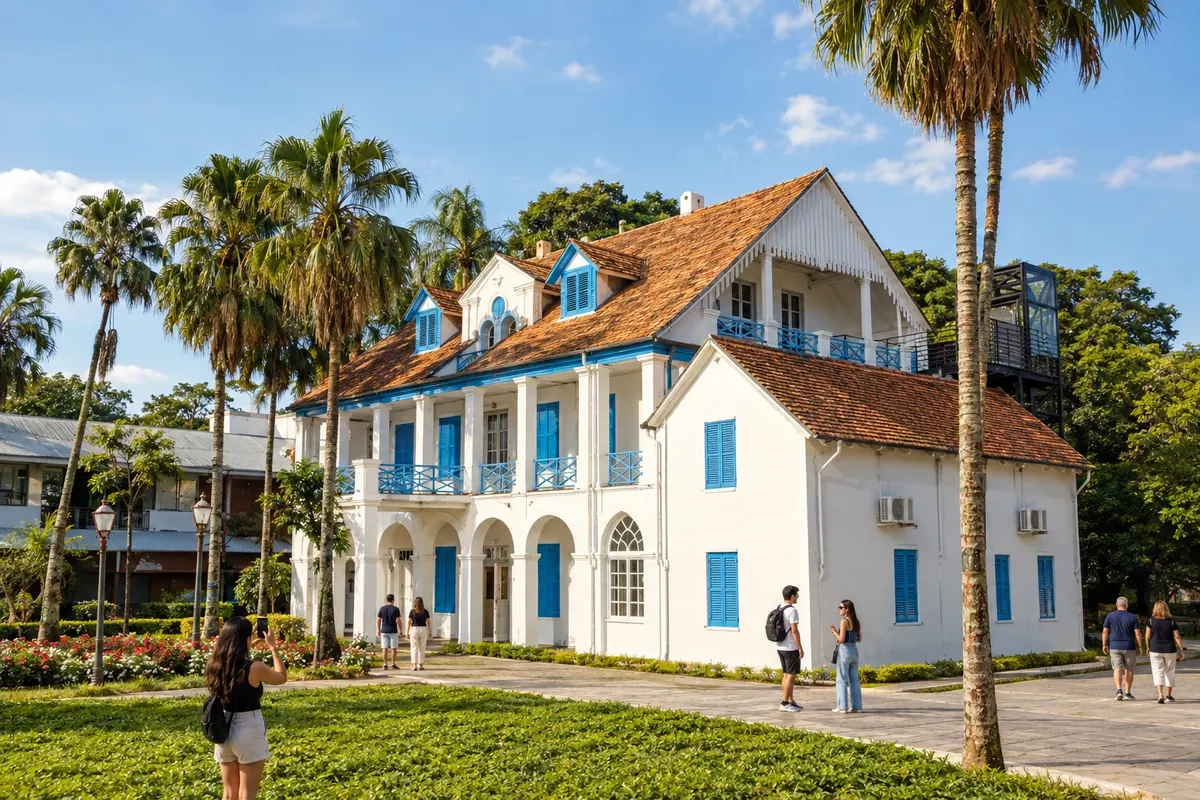
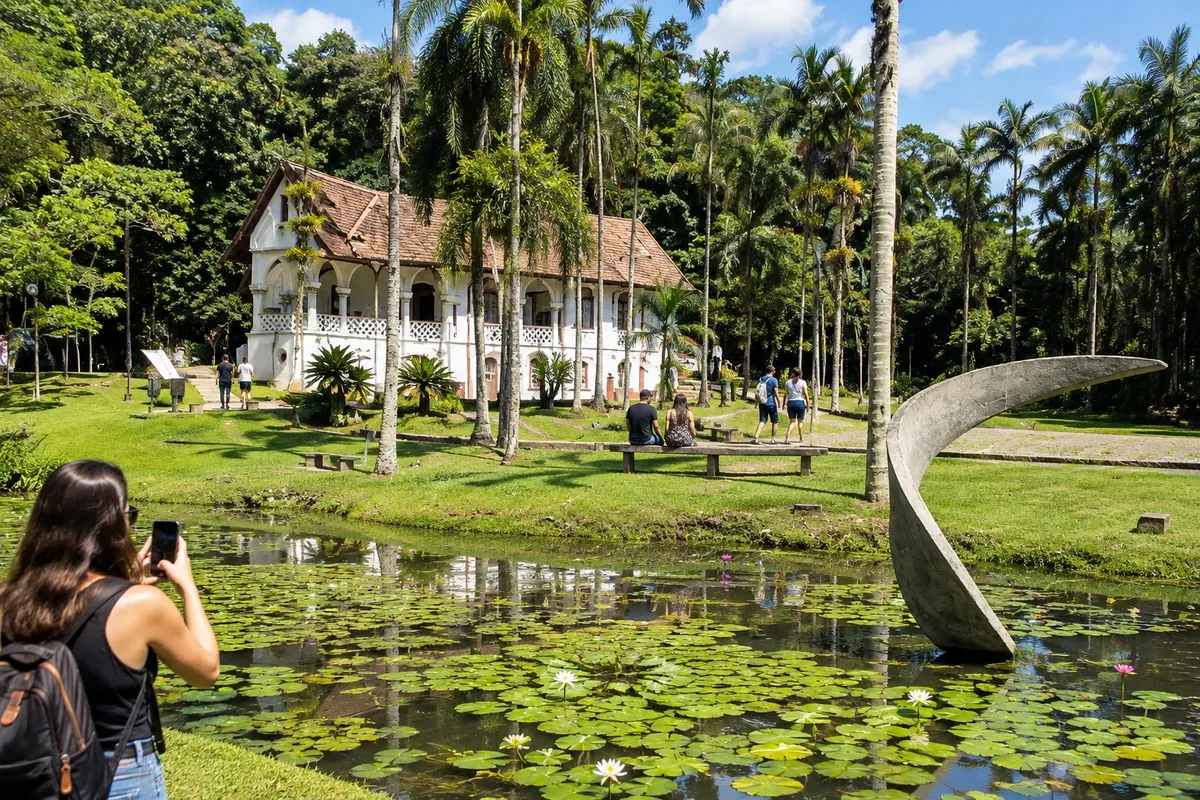
Na fotografiji: Landscape of Joinville, in Santa Catarina.

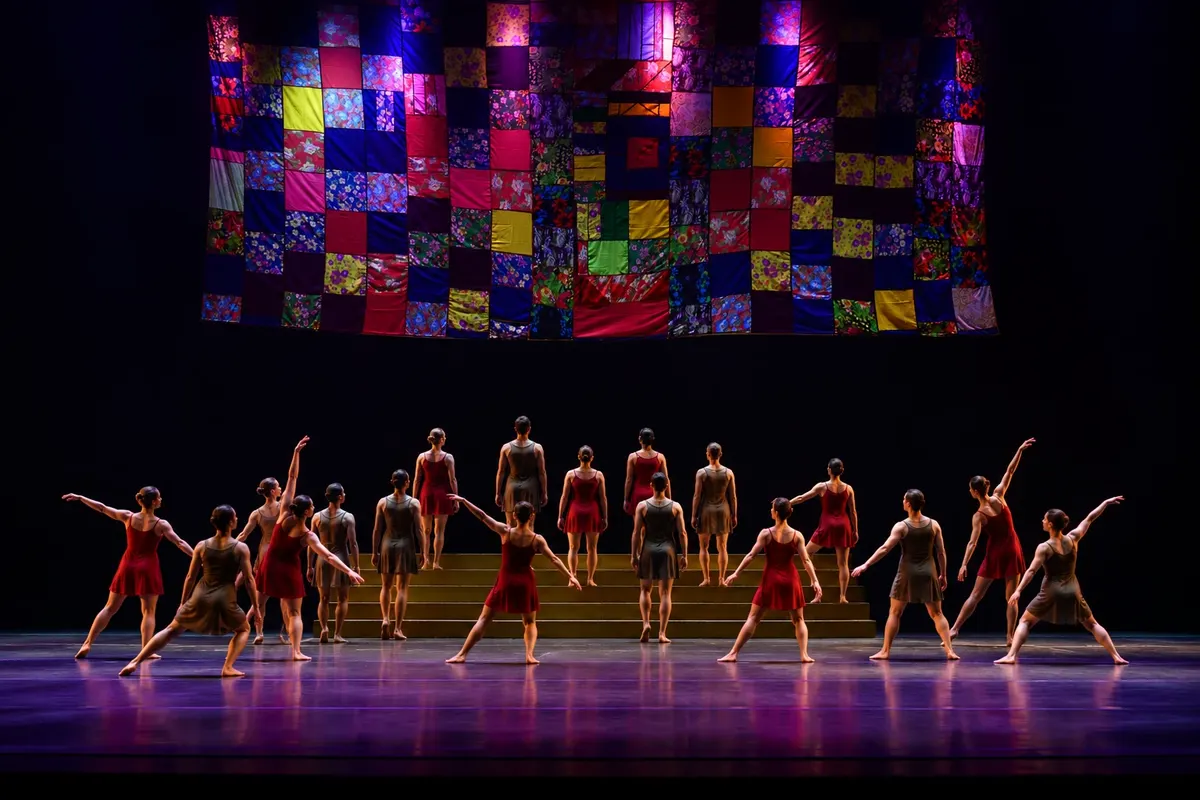
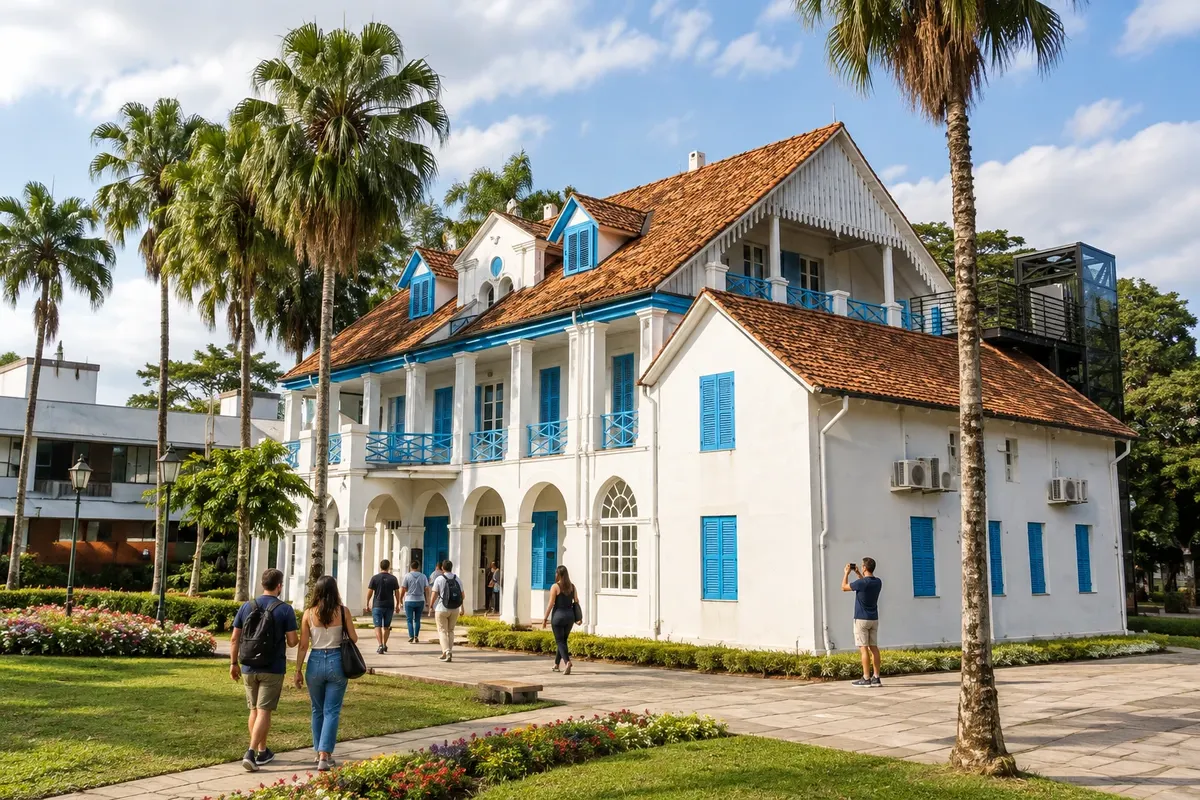
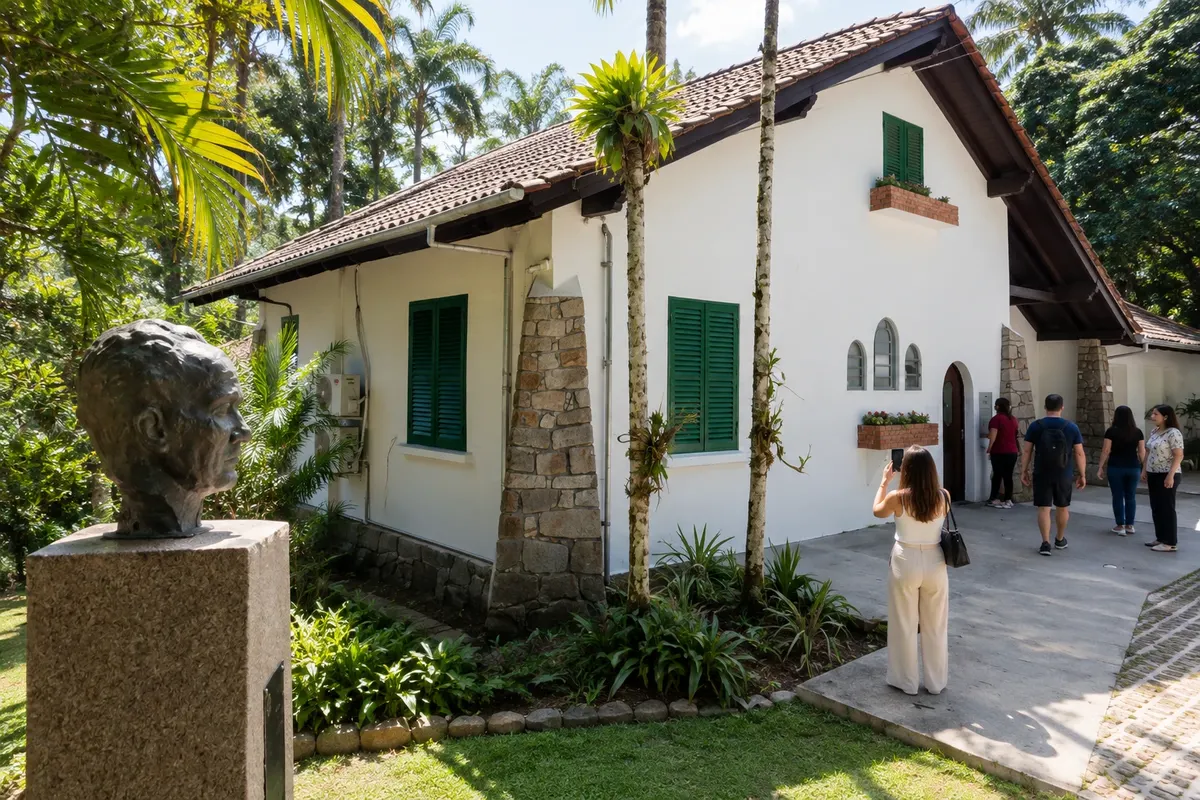
Illustrative images. The pictures in this guide are illustrations based on the real place, not photographs, and may differ from it.

Na voljo v trgovini Google Play Pošljite svoje fotografije

Mesto

Kaj lahko pričakujete – Joinville.

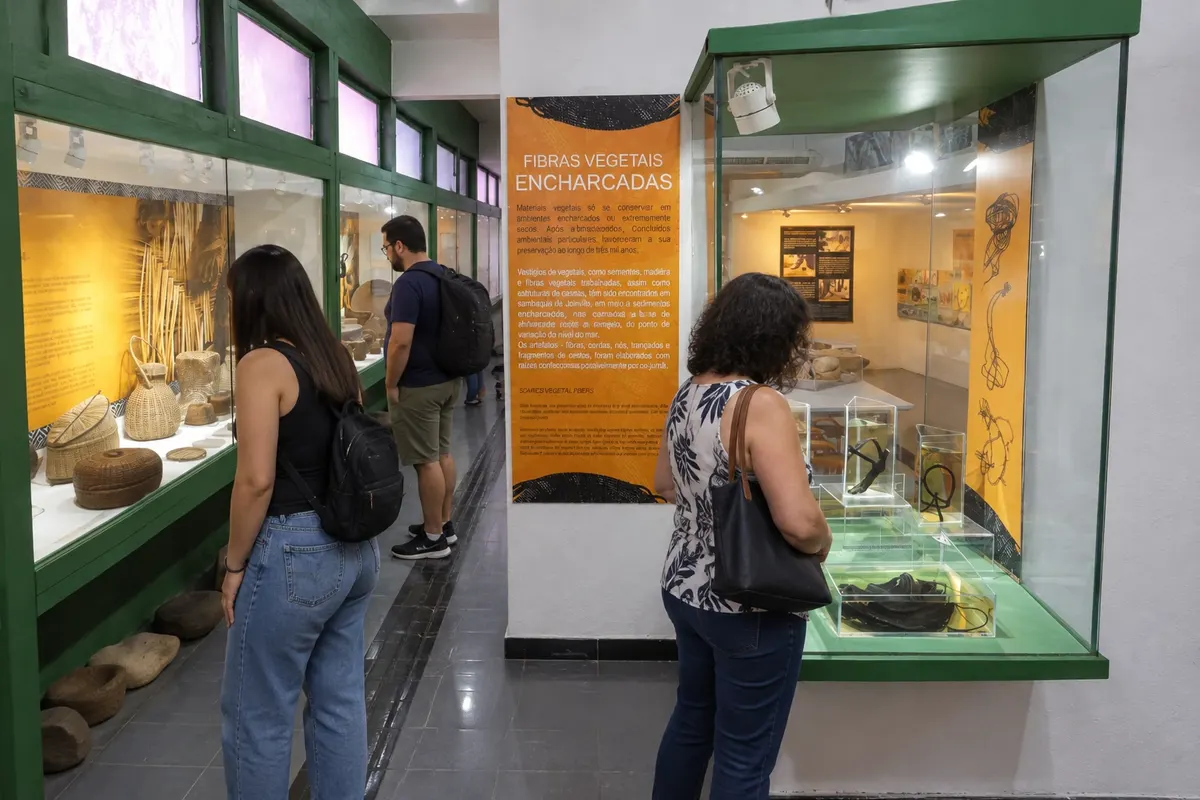
Joinville is an urban and industrial center with museums that showcase different periods of its history. The Museu Nacional de Imigração e Colonização preserves objects related to the colony’s formation, and the Museu Arqueológico de Sambaqui de Joinville studies the indigenous occupation of the coast. Art appears at the Museu de Arte de Joinville and in the former residence of the sculptor Fritz Alt.

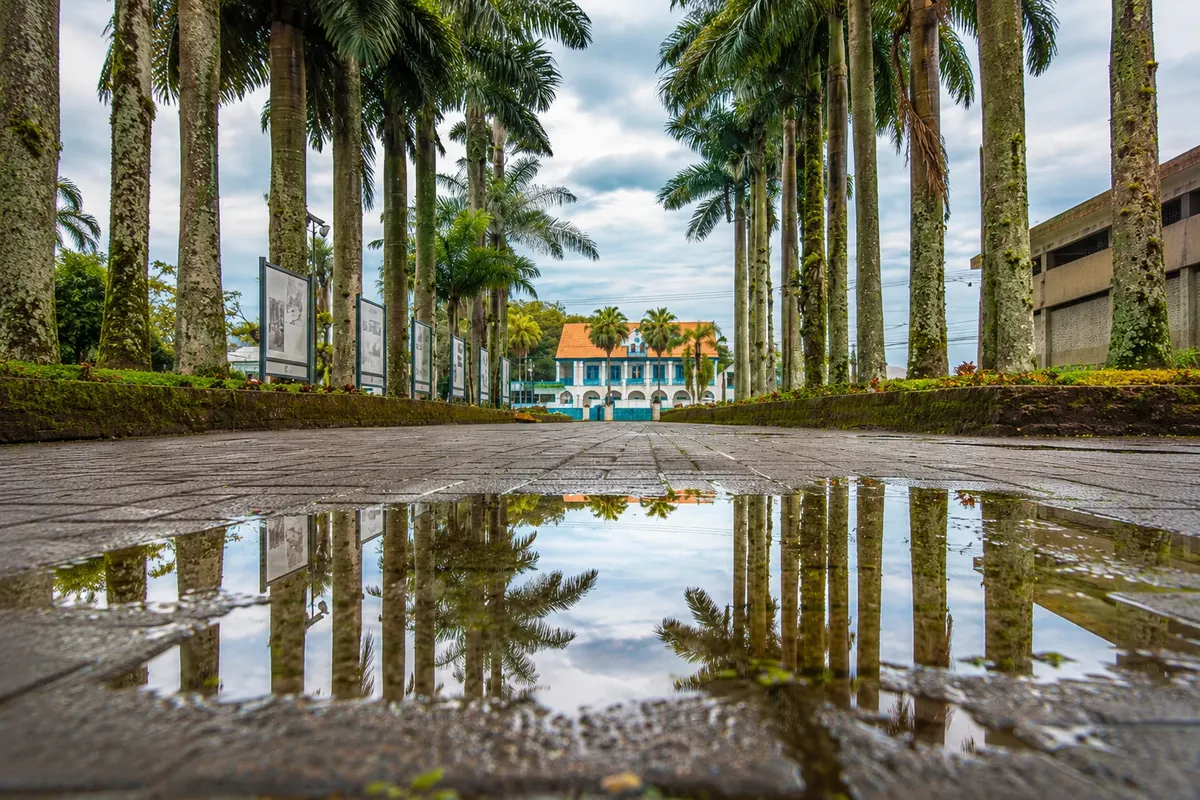
Joinville lies in northern Santa Catarina, between the Serra Dona Francisca and Babitonga Bay, and is the state’s largest city. Colonization began in 1851 with German, Swiss and Norwegian immigrants who arrived by boat via the Rio Cachoeira. The lands were the Colônia Dona Francisca, the dowry of Princess Francisca Carolina—daughter of Dom Pedro I—on her marriage to the French François d'Orléans, Prince of Joinville. The couple never came here, but left the city’s name and the avenue of imperial palms that leads to the colony’s former palace.

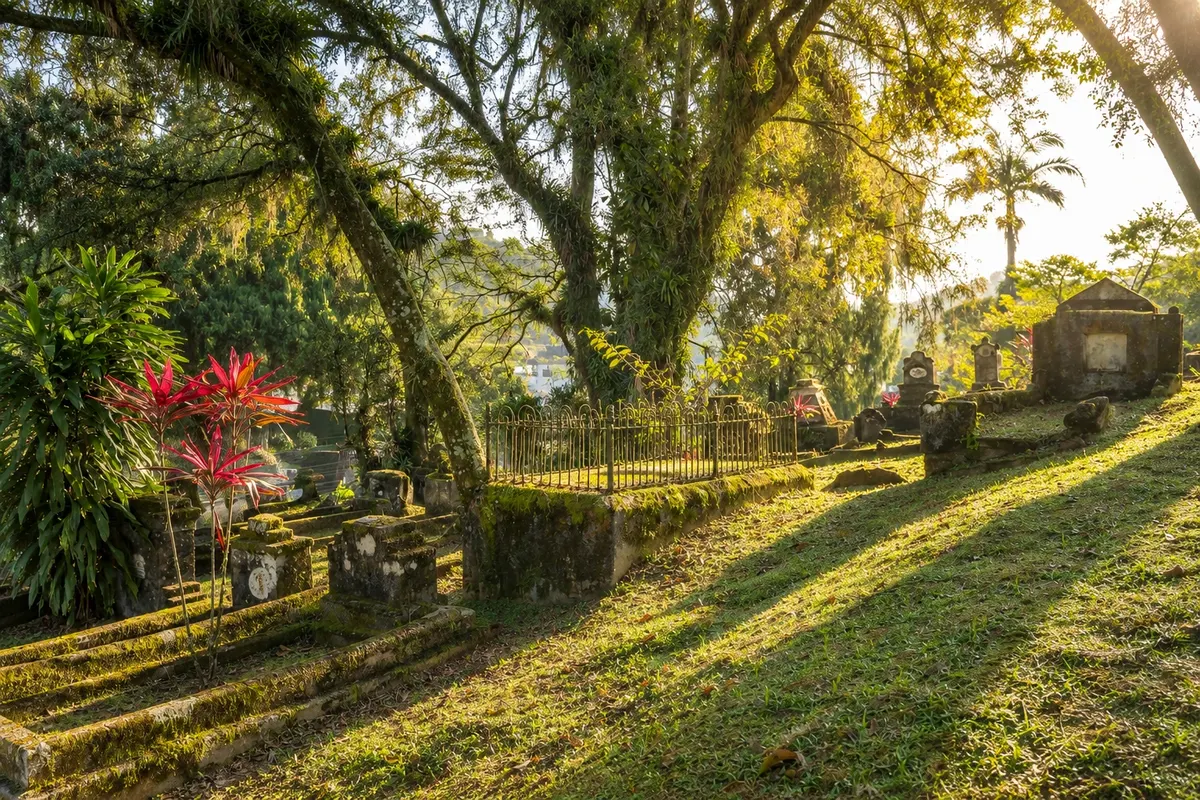
It is a large, industrial city, and what interests visitors is concentrated in a few areas. In the Center are Rua das Palmeiras, the National Museum of Immigration and Colonization, Rua do Príncipe with its historic buildings, the São Francisco Xavier Cathedral and the Public Market, on the banks of the Rio Cachoeira. In the América neighborhood, the Dance Quarter houses the Centreventos Cau Hansen, the Bolshoi Theater School in Brazil and the Dance Museum. Nearby, the Cultural Quarter brings together the Juarez Machado International Institute, the Joinville Art Museum, the Antarctica Cultural Citadel and the Immigrant Cemetery. In the middle of the urban area, Morro da Boa Vista holds the Zoobotanical Garden and a viewpoint from which you can understand the city’s position, with the mountain range on one side and the bay on the other.

Outside the urban area, Joinville changes character. On the edge of Babitonga Bay are Espinheiros, the departure point for the Barco Príncipe, the fishing community of Vigorelli and Parque Caieira, with a sambaqui and old lime kilns. In the Pirabeiraba district to the north, Estrada Bonita and the Caminhos de Dona Francisca along SC-418 bring together farms of immigrants’ descendants, half-timber houses, bakeries, cachaça distilleries and the climb up the mountain. In the western zone, the Caminhos do Piraí feature rice paddies, natural pools and the view of Cascata do Piraí.

Three traditions explain the city’s nicknames. Flowers come from immigrants’ gardens and appear in the Flower Festival in November and in the hemerocallis gardens. Dance comes from the Joinville Dance Festival, which fills the city in the second half of July, and from the Bolshoi school, the only one outside Russia. Bicycles, used for generations by factory workers, have a memorial at the old railway station.

The climate is warm and humid. From December to March it’s hot, with highs near 28 °C, and there is heavy rain in showers and storms. From June to August days are cooler and drier, with highs near 21 °C and lows near 13 °C; July is usually the least rainy month. April, May, September and October are transitional. Because it can rain at any time, it’s wise to keep a museum as a backup plan.

Joinville has no open-ocean beach: the municipality’s coast is bay and mangrove. The nearest ocean beaches are in neighboring São Francisco do Sul, about 55 km away.

For a first visit, Rua das Palmeiras with the museum, Rua do Príncipe, the Cathedral and the Public Market can be done in a day on foot. With two or three days you can add the viewpoint, the Dance Quarter, the art museums, the hemerocallis gardens, the bay and the rural area. Practical note: municipal museums are closed on Mondays.

Delite: WhatsApp

Kje prenočiti

Joinville – število nastanitev: 74.

Kje jesti

Joinville – število lokalov: 48.

Joinville – nazivi in posebnosti

Intangible heritage (IPHAN)

Brazilske poti

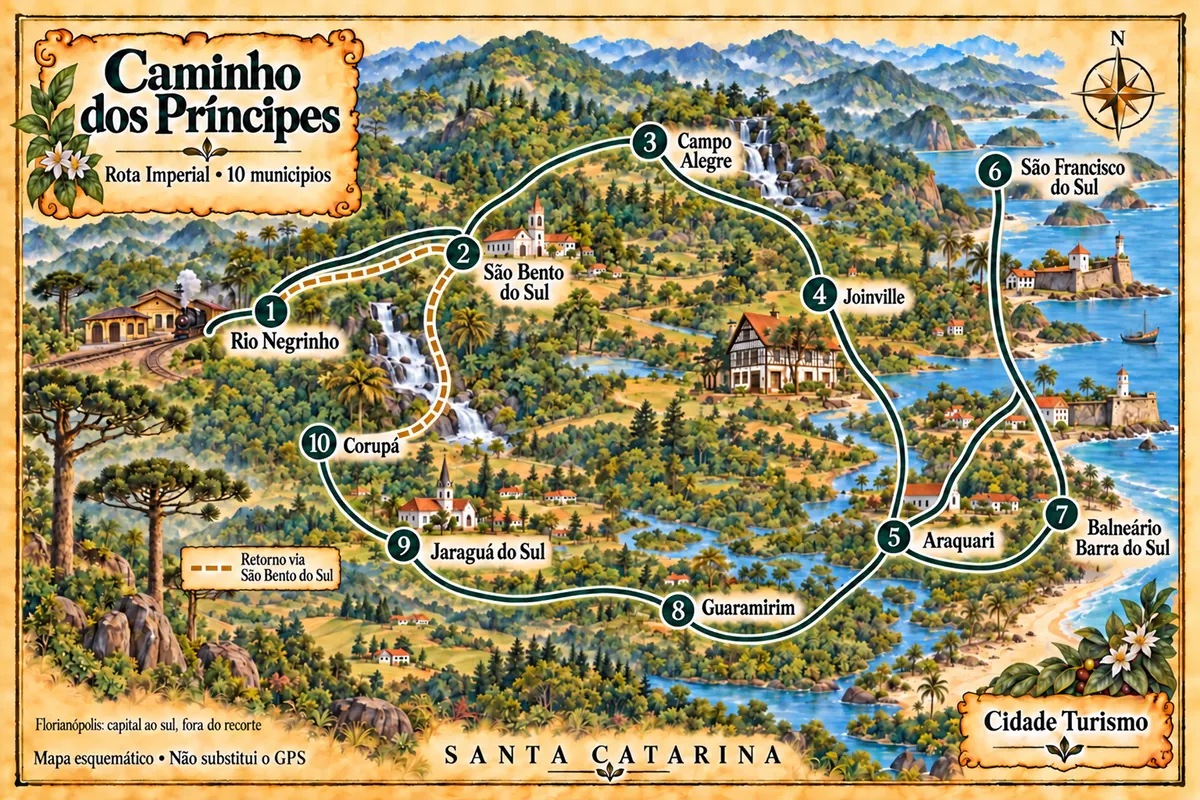
Joinville – del poti z imenom Path of the Princes — Imperial Route

Ten cities in northern Santa Catarina on a driving circuit through railway memory, museums, mountains and maritime heritage.

Zemljevid je ilustrativen in ni v merilu. Dotaknite se mesta, da odprete njegovo stran.
Path of the Princes — Imperial Route – ilustrirani zemljevid
Več o poti – Path of the Princes — Imperial Route

Praznovanja in dogodki

Praznovanja – vJoinville

Datumi se vsako leto spreminjajo. Pred potovanjem preverite letošnji datum.

Koledar praznovanj – in Brazilija

Doživite kraj

Joinville: kaj si ogledati

See 5 more places in Joinville
Historic railway station

Memory Station

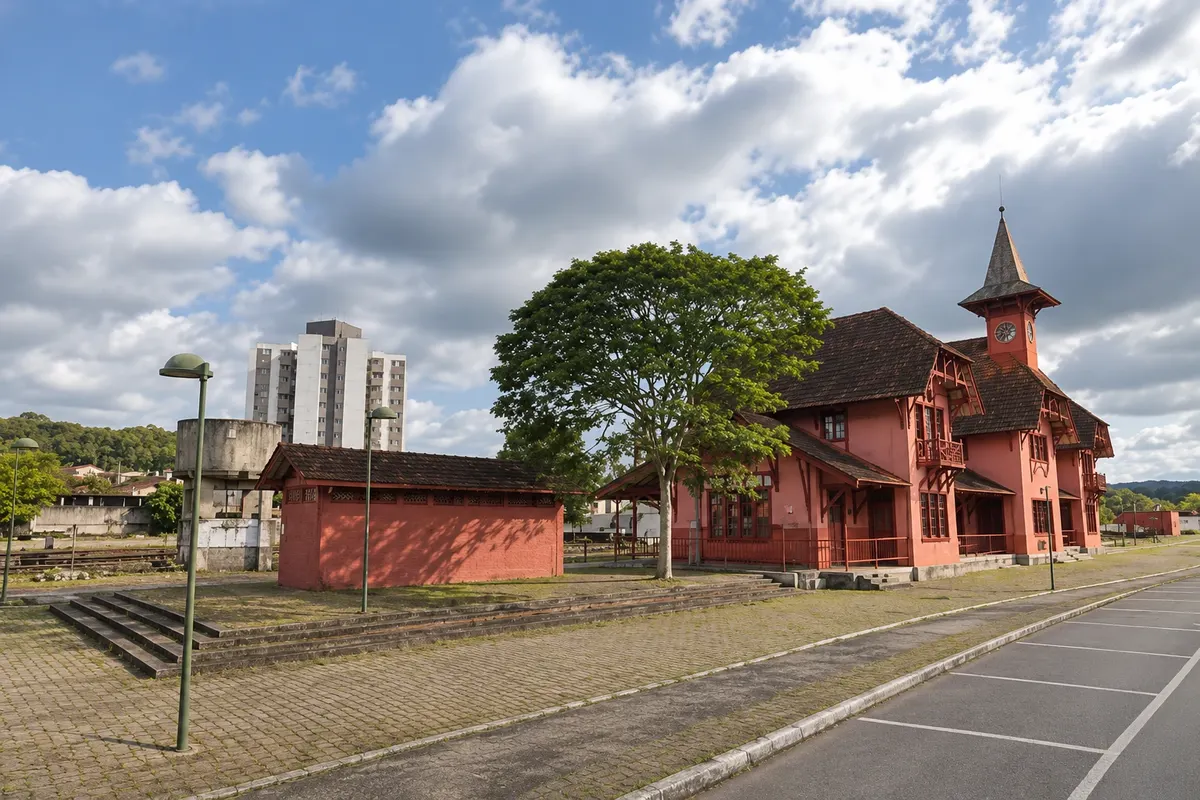
Former Joinville railway station, built in 1906 in Teuto-Brazilian architecture, listed by the state and by Iphan. Today it is a memory space with exhibitions about the railway, work and the city's history.

Raziščite Memory Station

Historic heritage

Palmenallee

Alameda Brüstlein, the avenue of imperial palms planted between 1871 and 1873 in front of the former Palace of the Colônia Dona Francisca, today the National Museum of Immigration and Colonization. Listed by IPHAN in 2005.

Raziščite Palmenallee

Convention center

Expoville

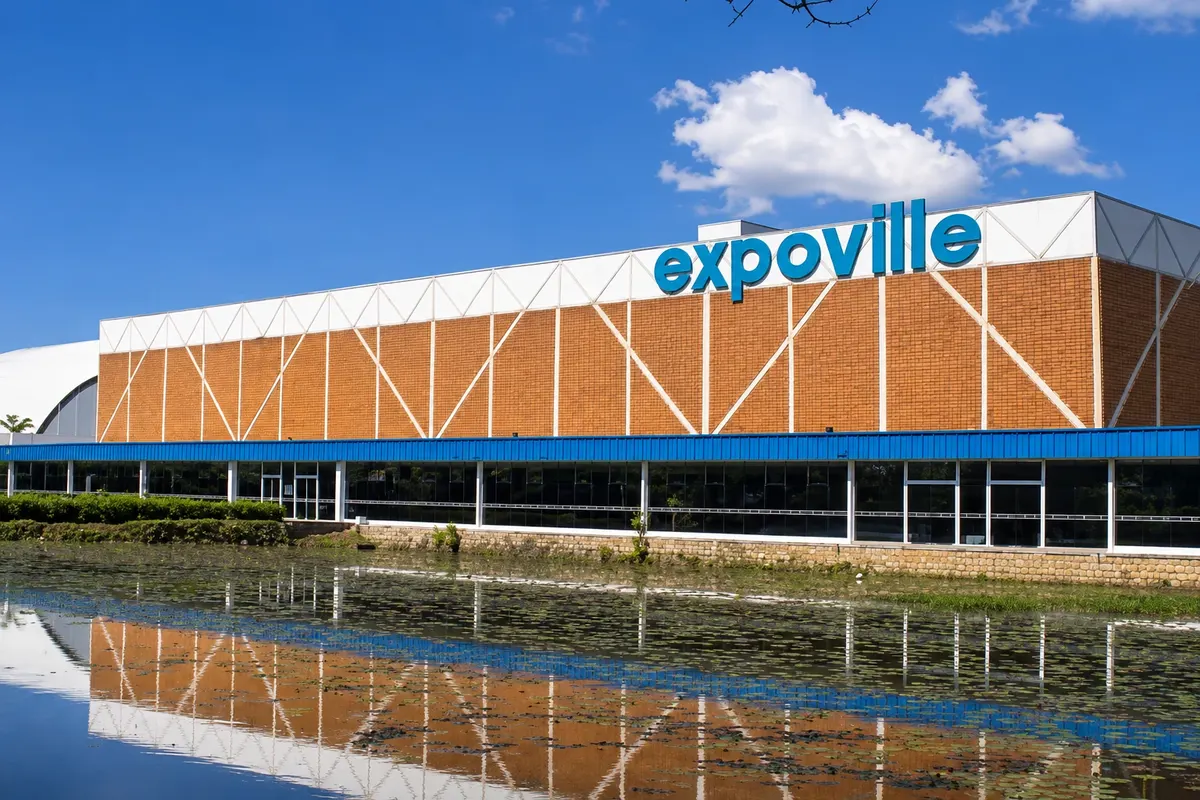
Event complex in Joinville on the BR-101 highway, near the city's entrance gateway. It has a convention center, exhibition pavilions and auditoriums, and hosts fairs, conferences, concerts and the traditional Flower Festival.

Raziščite Expoville

Rural route

Bonita Road

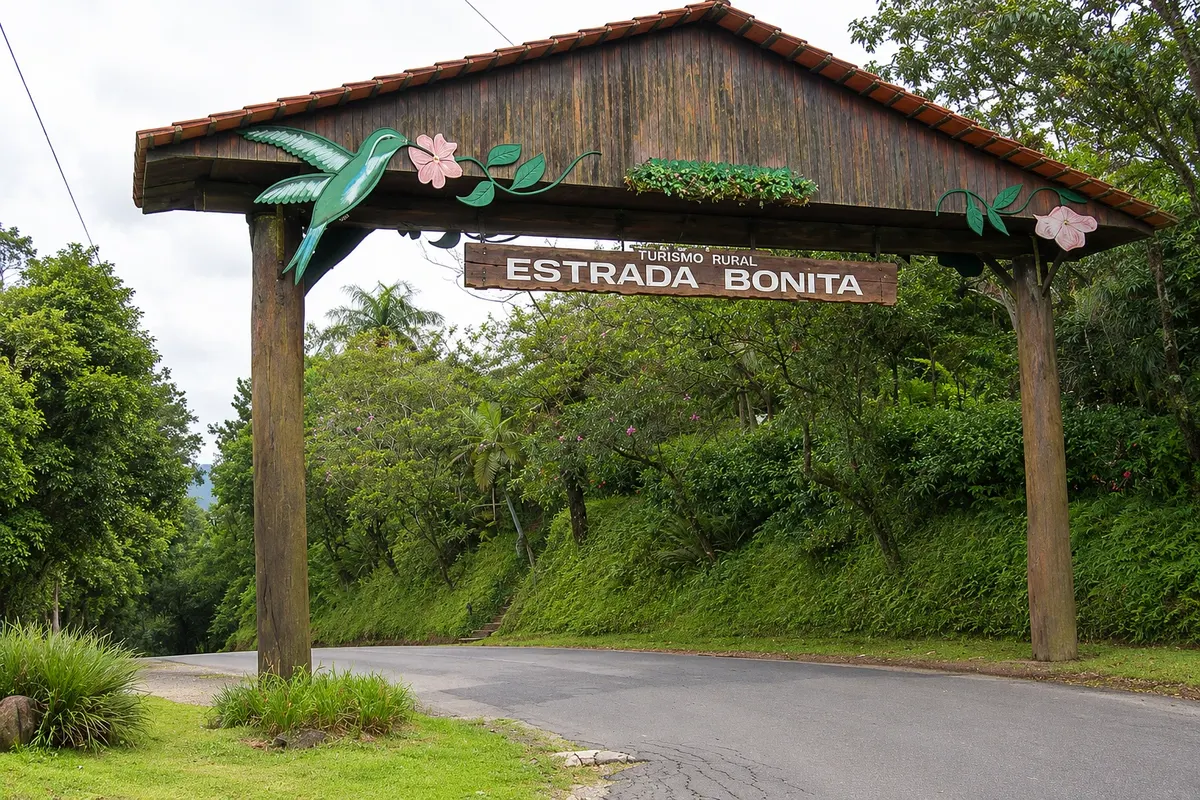
Country road in the Pirabeiraba district, at the foot of Serra Dona Francisca, with small farms run by descendants of German immigrants who welcome visitors with colonial products, cafés, fishing lakes and trails.

Raziščite Bonita Road

Kaj izbrati pred odhodom

Izleti – Joinville

Izhodišče, trajanje, potek, vključene storitve in okvirna cena vsakega izleta.

Rua das Palmeiras, Museum of Immigration and Rua do Príncipe on foot

Odhod: Rua das Palmeiras (Alameda Brüstlein), Downtown on foot, self-guided, with audio guide on your phone 3 to 4 hours morning or afternoon easy, on flat ground

This is the walk that introduces the city. Start at Rua das Palmeiras: the avenue of imperial palms brought from the Rio de Janeiro Botanical Garden and planted in the 19th century in front of the colony headquarters. At its end is the National Museum of Immigration and Colonization, in the manor known as Maison de Joinville. There are three floors about the immigrants and the history of the house, plus the Casa Enxaimel, which shows settlers’ way of life, a space about traditional trades and a grove with tables. The museum is open Tuesday through Sunday and does not charge admission. From there, enter Rua do Príncipe, formerly Rua da Olaria, where the first factories were established. The Heritage Trail runs 1,200 meters along this street with ten stops marked by QR Codes, north to south, with audios in Portuguese, Spanish and English that comment on the buildings on each corner. The route ends at São Francisco Xavier Cathedral, completed in 1977 after 17 years of construction. It is a modernist exposed-concrete building, with a 68-meter free-span arch and 20 stained-glass windows that sequentially depict the creation of the world and the sacraments. To finish, walk to the Municipal Public Market beside the Rio Cachoeira, in the area that was the colony’s port. The strong points there are fish and seafood, and restaurant tables spread under the square’s trees. The crab pastel and craft draft beer are customary orders.

Kraji na poti: Rua das Palmeiras (Alameda Brüstlein), National Museum of Immigration and Colonization, Rua do Príncipe, Heritage Trail, São Francisco Xavier Cathedral, Municipal Public Market.

Vključuje: Self-guided walk; there is no admission fee at the museum and the Cathedral. The Heritage Trail audios open on your phone. Meals are extra.

Nasvet: Bring headphones for the audio tracks. Do not come on a Monday, when the museum is closed, and avoid entering the Cathedral during Mass. On Saturday afternoons there is often live music in the Market square; on Sundays the market is closed.

Najboljši čas za obisk: All year. From June to August it rains less and the walk is more pleasant. From mid-November to early January the street and the museum are part of Joinville’s Christmas circuit.

Dance district: Bolshoi, Dance Museum and Sambaqui Museum

Odhod: Centreventos Cau Hansen, Avenida José Vieira, América neighborhood on foot between the sites; taxi, rideshare app or city bus to get there about 4 hours morning and early afternoon easy

Joinville received the title of National Capital of Dance in 2016, and this district explains why. Its center is the Centreventos Cau Hansen, a complex with an arena, the Juarez Machado Theatre and the headquarters of the institute that organizes the Dance Festival, created in 1983. Attached to the Centreventos is the Bolshoi Theatre School in Brazil, opened in 2000, the only school of the Moscow theatre outside Russia. Students go through a highly competitive selection, study with full scholarships and follow eight years of classical dance training. Visits are guided on weekdays, with a morning and an afternoon slot, and must be scheduled; admission is paid. Nearby, the Dance Museum has a long-term exhibition in four sections, with costumes, posters and festival trophies, videos and sound installations. Among the pieces are costumes by Ana Botafogo and Cecília Kerche. The museum is open Tuesday through Sunday in the afternoon and is attached to a dance center with a 220-seat theater. A few minutes away, the Joinville Archaeological Sambaqui Museum takes history much further back. Sambaquis are mounds of shells, bones and tools built by fishing and gathering peoples more than 5,000 years ago. The municipality has 41 registered sambaquis, and the Baía Babitonga region about 150. The collection exceeds 100,000 items, including quartz arrow points, utensils and burials, and there is content in English and in Brazilian Sign Language (Libras). It is open Tuesday through Sunday and does not charge admission.

Kraji na poti: Centreventos Cau Hansen, Bolshoi Theatre School in Brazil, Juarez Machado Theatre, Dance Museum of Joinville, Joinville Archaeological Sambaqui Museum.

Vključuje: There is no admission fee at the Sambaqui Museum. Visits to the Bolshoi Theatre School are paid, with half-price tickets available: check the current table. At the Dance Museum, confirm in advance whether there is an entrance fee.

Nasvet: Schedule the Bolshoi visit for the morning of a weekday and leave the Dance Museum for after lunch, when it opens. The school does not receive visits on weekends and holidays outside the festival period.

Najboljši čas za obisk: All year, on weekdays during the school term. In the second half of July, during the Dance Festival, the district hosts the Shoe Fair, open-air stages and backstage visits.

Cultural block: Juarez Machado, Museum of Art and Immigrant Cemetery

Odhod: Instituto Internacional Juarez Machado, Rua Lages, América neighborhood on foot about 3 hours morning or afternoon easy

Four art and memory addresses are a few blocks from each other. The first is the Instituto Internacional Juarez Machado, created by the painter born in Joinville who made a career in Rio de Janeiro and Paris. There are two pavilions, one dedicated solely to his works and another for temporary exhibitions, plus the restored house that belonged to the artist’s parents, the shop and the gardens. It is open Tuesday to Saturday. Following Rua Lages and Rua Jaguaruna you reach the Joinville Museum of Art, installed in the house Ottokar Doerffel, a German immigrant and founder of the city's first newspaper, built between 1854 and 1864. The porch tiles came from Europe, and the cellar, with brick vaults, hosts contemporary art shows. The collection has about a thousand works by Santa Catarina and Brazilian artists, and the gardens also host exhibitions. Next to it is Praça dos Suíços, with a monument to immigrants from that country. A little further on is the Antarctica Cultural Citadel, a listed building that once housed a brewery and now hosts theater associations and visual artists’ groups. Five more minutes along Rua XV de Novembro brings you to the Immigrant Cemetery. There, from 1851 to 1913, the first Lutheran settlers were buried. The site became a grove with old tombstones, and the gravedigger’s house is the Casa da Memória, with an exhibition room. From April to December, on the morning of the first Sunday of the month, the city's German cultural society holds Musical Sundays there, with some of the presentations in German.

Kraji na poti: Instituto Internacional Juarez Machado, Joinville Museum of Art, Praça dos Suíços, Antarctica Cultural Citadel, Immigrant Cemetery, Casa da Memória.

Vključuje: There is no admission charge for the Museum of Art and the Immigrant Cemetery. At the Juarez Machado Institute, check in advance whether the current exhibition requires a ticket.

Nasvet: Do the tour from Tuesday to Saturday, when the four places are usually open: the institute closes on Sundays and municipal spaces close on Mondays. It’s a good sequence for a rainy day.

Najboljši čas za obisk: Year-round. From April to December, try to coincide with a first Sunday of the month, for the Musical Sundays.

Joinville Lookout, Zoobotanical Garden and Fritz Alt House Museum

Odhod: Pórtico do Morro da Boa Vista, Rua Pastor Guilherme Rau on foot or by bicycle; on weekends, on the Zarco do Mirante bus about 3 hours; half a day with the museum morning moderate on foot; easy by bus

Morro da Boa Vista is a patch of forest in the middle of the city. At its base is the Zoobotanical Park, a small zoo with a lake, a playground, a trail and animals such as birds, caimans, tortoises, capybaras and monkeys. Many people picnic there. From the gatehouse to the park entrance is about 350 meters. From the Zoobotanical Park a road climbs to the Viewpoint. On foot, the round trip is about 4.6 km, with steep sections near the end. Regular cars do not go up: access is on foot, by bicycle, by taxi on weekdays or, on weekends, by the Zarco do Mirante, a bus that leaves the central terminal next to Praça da Bandeira, passes the Zoobotânico and goes to the top. Zarco is what locals call the bus. At the top there is an observation tower and a suspended trail through the forest that leads to the Window of the Viewpoint. From there you can see the urban area, the factories, the Serra Dona Francisca on one side and Babitonga Bay on the other. The park and the viewpoint are open from Tuesday to Sunday. To complete the morning, drive or take a ride-hailing app to the Fritz Alt House Museum in the Boa Vista neighborhood. The German sculptor arrived in Joinville in 1922 and created monuments, mosaics and reliefs spread throughout the city, including the Monument to the Immigrant in Praça da Bandeira. The house holds works, molds, tools and furniture, and has a garden with a view. It is open from Tuesday to Sunday and does not charge an entrance fee.

Kraji na poti: Zoobotanical Park, Morro da Boa Vista, Joinville Viewpoint, Window of the Viewpoint, Fritz Alt House Museum.

Vključuje: There is no charge to enter the Zoobotanical Garden, the Lookout or the Fritz Alt House Museum. The Zarco do Mirante bus fare is paid separately at the park gate: check the current table.

Nasvet: Wear sneakers and bring water. With children, go up by bus and walk down. Those who drive can park on the streets near the pórtico. On cloudy days the view disappears: save the lookout for a clearer morning of your trip.

Najboljši čas za obisk: All year round on clear skies, more common from June to August. In summer, go up early, before the heat and the afternoon rain showers.

Prince Boat: Babitonga Bay departing from Joinville

Odhod: Espinheiros neighborhood pier three-deck tour boat with lunch on board about 5 hours morning and early afternoon easy

It was via Babitonga Bay that the first immigrants arrived, and this tour retraces that route by water. The Príncipe de Joinville III is a sightseeing boat for 417 people, with three decks, reserved tables, air conditioning and live music. It operates like a floating restaurant: lunch is served on board and is included in the fare. Boarding is at the Espinheiros pier in the morning, and the return to the same point takes place in the mid-afternoon. Along the way the boat passes between 14 islands of the bay’s archipelago, such as Ilha do Mel, Ilha Grande, Ilha da Rita, Ilha das Flores and Ilha dos Herdeiros, and by the port area of São Francisco do Sul. It then docks at the historic center of the neighboring town, where passengers usually have about an hour and a half on land. The company warns that disembarkation is only allowed when conditions permit; if that is not possible, the group remains on board and the tour continues. There is no stop for swimming and nobody gets wet, so dress as you would for a regular outing. The boat runs in sun or rain. On Saturdays, Sundays and holidays departures are regular; on weekdays they depend on confirmation from the company.

Kraji na poti: Espinheiros Pier, Babitonga Bay, Ilha do Mel, Ilha Grande, Ilha da Rita, Ilha das Flores, Ilha dos Herdeiros, Port of São Francisco do Sul.

Vključuje: Navigation and lunch on board. Drinks, desserts and other purchases are extra. Children up to 5 years travel free and those 6 to 12 pay a reduced fare with ID. Check the current table.

Nasvet: Book in advance and, on a weekday, confirm there will be a departure. Arrive at the pier with time to spare, because boarding starts well before departure. At the São Francisco do Sul stop, choose one or two points in the historic center instead of trying to see everything.

Najboljši čas za obisk: All year. With fair weather—more common June to August—views of the islands are clearer; in summer demand increases.

bayfront by land: Espinheiros, Vigorelli and Parque Caieira

Odhod: Joinville downtown car, taxi or rideshare; walking inside the park half a day morning or afternoon easy

Joinville has three land-based access points to Babitonga Bay that you can visit without a boat. The most interesting is Parque Caieira, about 20 minutes from the Center. It’s a municipal park created to protect an area of sambaqui, mangrove and restinga. From the gate you can only enter on foot or by bicycle. At the entrance there is a playground, picnic tables, restrooms and an exhibition area about the park and local animals. From there to the water is about 1 km along a main path and parallel trails, on routes accessible to wheelchairs and strollers. Near the water you’ll see the sambaqui and the large kilns that give the place its name. The caieiras were industries that removed shells from sambaquis and burned them for days to make lime, an activity banned by law in 1961. The park is open Wednesday through Sunday. In Espinheiros are the Barco Príncipe pier, the Porta do Mar Monument, the yacht club and seafood snack bars. Vigorelli, near the airport, is a fishing community with traditional bayfront restaurants. On the shores and in the mangroves live the scarlet ibis (guará) and the franciscana (toninha), a small coastal dolphin. Seeing them depends on luck and a keen eye. If you want to go beyond the shore, Joinville offers boat rentals with a skipper and Hawaiian canoe outings.

Kraji na poti: Parque Caieira, Espinheiros, Monumento Porta do Mar, Vigorelli, Baía Babitonga.

Vključuje: Self-guided. There is no entrance fee for Parque Caieira. Meals, launches and canoe rentals are paid separately.

Nasvet: Bring insect repellent, water and a hat for the Caieira walk. Pair a morning at the park with lunch in Espinheiros or Vigorelli. The park is closed on Mondays and Tuesdays.

Najboljši čas za obisk: All year. June to August sees less rain; in summer go early because of the heat.

Prikaži dodatne izlete (4)

Estrada Bonita and Caminhos de Dona Francisca, in Pirabeiraba

Odhod: Casa Krüger, at the start of SC-418, next to BR-101 car, bicycle or agency tour half a day to a full day morning and afternoon easy

The Pirabeiraba district, north of the city, is the countryside’s Joinville. Two rural routes are there, both with access from BR-101. Estrada Bonita was one of the municipality’s first organized rural routes. It lies on the left side of BR-101 for those heading to Curitiba and is about 5 km long, flat. It passes by half-timber houses, flowered gardens, covered wooden bridges, river bathing spots and farms of immigrant descendants who sell molasses and other colonial products. There are German food restaurants and colonial cafés, and the route is widely used by cyclists. Caminhos de Dona Francisca follows SC-418 toward Campo Alegre. The starting point is Casa Krüger, a listed historic house that serves as the tourist information center; on Saturdays and Sundays, the shed next door hosts a farmers’ market with cucas, cheeses, sweets and organic produce. Along the highway you’ll find traditional pastry shops, German cuisine restaurants, distilleries that show cachaça and molasses production, ceramics and wood crafts, and farms on the banks of the Cubatão River with pools and tubing. Pastel and stuffed marreco are the region’s dishes. At km 16 of SC-418, the Mirante da Serra Dona Francisca overlooks the curves of the historic road and the Atlantic Forest. For hikers, Castelo dos Bugres, a rock formation at 998 meters altitude on the border with Campo Alegre, is one of the mountain destinations, with season from May to November.

Kraji na poti: Casa Krüger, Estrada Bonita, Rodovia SC-418, Rio Cubatão, Mirante da Serra Dona Francisca, Castelo dos Bugres.

Vključuje: Self-guided or with an agency. Farm entrances, tractor rides, meals and products are paid separately: check with each property.

Nasvet: Go from Wednesday to Sunday: many properties close at the start of the week, and the colonial cafés concentrate service on weekends. Stop first at Casa Krüger to pick up the map. Bring cash for purchases at the farms.

Najboljši čas za obisk: All year. River parks operate mainly from November to March; mountain trails from May to November. In heavy rain, avoid dirt roads and rivers.

Piraí trails: rice fields, natural pools and the Piraí Waterfall

Odhod: Vila Nova neighborhood, west zone of Joinville car or bicycle half a day to a full day morning and afternoon easy

Piraí is the weekend refuge for people who live in Joinville. The rural route lies in the Vila Nova neighborhood, in the west zone, at the foot of the mountains, on dirt and paved roads that cut through rice fields. The flooded fields attract many birds, and the area is also popular with cyclists and birdwatchers. The region’s symbol is the Piraí Waterfall, 160 meters high, inside a preservation area. You cannot reach the base of the fall: it is seen from a distance at Praça da Energia on Estrada do Salto, and the property cannot be visited beyond that point. Nearby is the Piraí hydroelectric plant, noted as the oldest in Santa Catarina. In hot weather, families go to parks with natural pools fed by the river, with kiosks and barbecues, kayaks, pedal boats and trails. Most open in summer on weekends and holidays. There are also water parks that operate every day from November to March. For children, the local farmsteads welcome visitors on Saturday and Sunday afternoons and holidays, with animals to feed, horse or pony rides and a small rural museum. A brewery with a leisure area shows its production and a hop plantation on a guided visit on weekends. Tilapia is the region’s dish, served at catch-and-release fisheries and at country restaurants, where you can also buy colonial products.

Kraji na poti: Vila Nova, Estrada do Piraí, Praça da Energia, Cascata do Piraí, Rio Piraí.

Vključuje: Self-guided outing. Parks, farmsteads and guided visits charge admission: check each place’s current price list. Meals are not included.

Nasvet: Almost everything opens only on Saturdays, Sundays and holidays: check before you go, because during the week the area is closed to visitors. Bring swimwear in summer and insect repellent year-round.

Najboljši čas za obisk: From November to March for the water parks; year-round for cycling, fishing and lunch. After heavy rain the rivers rise and the parks may close their pools.

Joinville’s flowers: Hemero and the Expoville Gateway

Odhod: Joinville downtown car, taxi, or ride-hailing app about 3 hours morning or afternoon easy

Joinville is called the City of Flowers because immigrants kept gardens at home, a habit that became a festival and a business. The place to see this any month is Hemero, a themed garden park about a 15-minute drive from the downtown and 9 minutes from the airport, with the Serra Dona Francisca in the background. It has flower gardens, a chapel, an ecological trail, cultivation fields, an insect hotel and carp ponds where the fish come to eat from your hand. For children there are play areas, a two-story playhouse and a sound maze. The visit takes about an hour and a half, and the park is open Tuesday through Sunday. The blooms change with the seasons. In the last two weeks of July, the Jardim do Sol hosts the Sunflower Festival, whose bloom lasts about fifteen days. In November, the Spring Festival marks the start of the bloom of hemerocallis, the flower that gives the park its name. On the way back, stop at the Pórtico da Rua XV de Novembro, the city’s main entrance. The pórtico and the windmill beside it were built in 1982 and became a postcard image. The windmill houses a brewery overlooking the lake of Parque da Expoville. Next to it is Expoville, the convention center where the Flower Festival takes place in November, around the November 15 holiday. The festival has existed since 1936, is noted as the oldest of its kind in Brazil, and brings together orchid exhibitions, a plant market and cultivation workshops.

Kraji na poti: Hemero Gardens as Art, Pórtico da Rua XV de Novembro, Pórtico Windmill, Parque da Expoville, Expoville.

Vključuje: Hemero has a paid entrance, with half-price tickets: check the current table. Café and purchases inside the park are extra. The Flower Festival has its own ticket.

Nasvet: At Hemero, go in the morning, when the flowers are more open, and bring a hat. In summer, a change of clothes for children helps, as they often get wet. The park closes on Mondays.

Najboljši čas za obisk: Second half of July (sunflowers) and November (hemerocallis and Flower Festival). In other months the park remains in bloom, with different species.

City of Bicycles: Bicycle Memorial and Museum Route

Odhod: Old freight railway station, Rua Leite Ribeiro, Anita Garibaldi neighborhood on foot in the memorial; by bicycle on the route about 1 hour at the memorial; half a day with the route morning or afternoon easy

Joinville has a long history with the bicycle. From the 1960s, thousands of factory workers rode to work, to the point that the end of shifts created bicycle traffic jams. Locals say the word bicicletário originated in the yards of one of those factories. In local slang, the bicycle is called the zica. The Bicycle Memorial tells that story in the building that used to be the old railway freight station. The collection includes about 50 models, from antique to recent, from countries such as England, Sweden, Germany and India. It’s worth asking to see the wooden-rim bicycle and those that have license plates. Next door is the old passenger station, from 1906, a listed building that houses the Memory Station, a space dedicated to the railway and to the city’s labor history. The branch line is still in use: freight trains still pass by there on their way to the port of São Francisco do Sul. Both sites are municipal, open Tuesday through Sunday and free of charge; the station building underwent a long restoration, so check in advance whether it is open. For cyclists, the municipality maintains eight waymarked cycle-tourism routes. The most urban is the Museum Route, with 11 points of interest over about 7 km, five of them museums. Others lead to hills with viewpoints, Estrada Bonita, Piraí, the Quiriri River and the edge of Babitonga Bay.

Kraji na poti: Bicycle Memorial, Memory Station, Museum Route.

Vključuje: There is no admission fee at the Bicycle Memorial or at the Memory Station. Bicycle rental, when available, is paid separately.

Nasvet: Download the route map before you leave and cycle early in summer. Monday is no good: the museums on the route are closed.

Najboljši čas za obisk: All year; from June to August it rains less, which is better for cycling.

Po dnevih

Joinville – načrt poti. Število dni: 1, 2in3

Predlogi za načrtovanje poti. Vrstni red dni prilagodite vremenu in razpoložljivosti izletov.

1 dni · Joinville in 1 day: the Center on foot and the Viewpoint

Zathose passing along BR-101 or with a free day between commitments in the city · Izhodišče:Joinville Center
  1. Dan 1 · From Rua das Palmeiras to the top of Morro da Boa Vista

    Don’t come on a Monday, when the museums are closed. Start at Rua das Palmeiras and enter the National Museum of Immigration and Colonization as soon as it opens: the Maison, the Casa Enxaimel and the grove take about an hour and a half. Follow Rua do Príncipe with the Heritage Trail audio on your phone, up to São Francisco Xavier Cathedral, and notice the stained glass. From there it’s a few minutes on foot to the Public Market by the Cachoeira River, where you can have fish for lunch or try the pastel de siri. In the afternoon, choose according to the weather. With clear skies, go to Morro da Boa Vista: visit the Zoobotanical Garden and walk up to the viewpoint, on foot or, on weekends, on the Zarco bus. In rain, swap the hill for the Sambaqui Archaeological Museum and the Dance Museum, which are near each other. The Barco Príncipe, the rural area and Hemero don’t fit in this day.

2 dni · Joinville in 2 days: culture on the first, nature on the second
Zawho’s coming for a weekend · Izhodišče:Downtown or América neighborhood
  1. Dan 1 · Downtown, Dance Quarter and Cultural Quarter

    In the morning, do the Rua das Palmeiras walk: National Museum of Immigration and Colonization, Rua do Príncipe with the Heritage Trail and the Cathedral. Have lunch at the Public Market. In the afternoon, go to the Dance Quarter. The Dance Museum opens after lunch, and the Sambaqui Archaeological Museum is a few minutes away. If the first day is a weekday, fit in the guided visit to the Bolshoi Theatre School, which must be booked. At dusk, walk through the Cultural Quarter: the Juarez Machado International Institute, the gardens of the Art Museum and the Immigrant Cemetery. At night, the city’s program is its German culinary heritage and craft breweries: stuffed marreco, cuca and draft beer appear on many menus.

  2. Dan 2 · Lookout, flowers and an afternoon in the countryside

    Go up early to the Joinville Lookout via the Zoobotanical Garden. On weekends, the Zarco bus takes you to the top; on other days, you must hike up. Still in the morning, head to Hemero and allow an hour and a half for the gardens and the carp ponds. On the way out, pass by the Rua XV de Novembro Gateway and the windmill. Have lunch and spend the afternoon in the rural area. In Pirabeiraba, Casa Krüger opens off SC-418, with bakeries, distilleries and the weekend farmers’ market; Estrada Bonita is nearby. If you prefer water and free-roaming children, swap Pirabeiraba for the Caminhos do Piraí, with natural pools in summer and small farms on Saturday and Sunday afternoons. If the day dawns overcast, reverse the plan: visit the museums in the América neighborhood in the morning and try the lookout in the afternoon.

3 dni · Joinville in 3 days: city, bay and mountains
Zawho wants to explore the town at a relaxed pace and take a boat out on Babitonga Bay · Izhodišče:Downtown or América neighborhood
  1. Dan 1 · The center and the two quarters

    Dedicate the morning to Rua das Palmeiras, the National Museum of Immigration and Colonization, Rua do Príncipe and the Cathedral. Have lunch at the Public Market. In the afternoon, visit the Sambaqui Archaeological Museum and the Dance Museum in the Dance Quarter, and finish in the Cultural Quarter with the Juarez Machado International Institute, the Art Museum and the Immigrant Cemetery. On a weekday, schedule the visit to the Bolshoi Theatre School for one of the two time slots. If you like cycling, you can replace part of the afternoon with the Bicycle Memorial at the old railway station.

  2. Dan 2 · A day in Babitonga Bay

    Book the Barco Príncipe in advance and confirm whether there’s a departure that day. Boarding is in the morning at the Espinheiros pier, and return is midafternoon. The boat passes among the bay islands and the port area, with lunch onboard and, when conditions allow, a stop of about an hour and a half in the historic center of São Francisco do Sul. Back in Joinville, there’s still time to watch the late afternoon by the bay at Espinheiros or Vigorelli, where snack bars serve seafood. If there’s no boat departure that day, the alternative is Parque Caieira in the morning, with the sambaqui and lime kilns, and lunch in one of the bay communities.

  3. Dan 3 · Lookout, Hemero and Serra Dona Francisca

    Start at the Joinville Lookout and the Zoobotanical Garden, early. Then go to Hemero. Have lunch in Pirabeiraba and travel the Caminhos de Dona Francisca along SC-418: Casa Krüger, bakeries, a distillery and, at km 16, the Mirante da Serra Dona Francisca. If there’s time left, return via Estrada Bonita, with its half-timbered houses and covered bridges. Those with children in summer can swap the mountain route for the Caminhos do Piraí and its water parks. From Joinville, the natural next stop for a fourth day is São Francisco do Sul, about 55 km away, with its historic center and beaches.

Najboljši čas za obisk

Kdaj se odpraviti:Joinville po mesecih

The seasons shown are the most usual ones; nature doesn't always follow the calendar.

januar Veliko padavin

Summer · Piraí and Rio Cubatão water parks open

Humid heat, with highs around 28 °C and lows near 22 °C. It’s the month with the highest rainfall, in showers and storms, almost always in the afternoon. Do the streets and the Lookout in the morning and save museums for after lunch. The rural area’s natural-pool parks are fully open. The Bolshoi Theatre School does not receive visitors at the start of the month.

februar Veliko padavin

Heat and Downpours · Carnival in February or March

Still hot, with highs near 28 °C and heavy rain on many days. In summer, many people stay in Joinville and go to nearby beaches for day trips. A good month for the Boat Príncipe, which sails in any weather, and for river swims. Always keep a museum as a backup option for the afternoon.

marec Veliko padavin

End of Summer · Last Weeks of the Water Parks

Still warm, with highs around 27 °C, and monthly rainfall above 200 mm on average, but decreasing. The rural area water parks usually close their season this month. Bolshoi visits follow the school calendar. Mid-March typically sees the start of ticket sales for the Dance Festival.

april Zmerne padavine

Autumn · Musical Sundays Return to the Cemitério do Imigrante

Temperatures become milder: highs near 25 °C and lows around 19 °C. Rain decreases but remains present. Walks through downtown are more comfortable. On the first Sunday of the month Musical Sundays resume and run through December.

maj Zmerne padavine

Mountain-trail season begins

Highs around 23 °C and lows around 16 °C, with moderate rain. Mountain-trail season opens on Serra Dona Francisca and runs until November. Good time for the Mirante, cycling and the rural area of Pirabeiraba. Bring a light jacket for the evening.

junij Zmerne padavine

Early winter · Drier days

Highs near 21 °C and lows near 14 °C. Clearer days become more frequent, which favors the Mirante and the bike routes. At night, the cold pairs well with German cuisine and the breweries. If you plan to come in July, book accommodation now.

julij Malo padavin

Joinville Dance Festival · Sunflower Festival at Hemero

Month with the least rain, with highs around 21 °C and lows around 13 °C. The Dance Festival typically occupies the last two weeks, from Centreventos to open-air stages in squares and malls; in 2026 it ran from July 20 to August 1. At the same time the Hemero displays sunflowers in bloom. The town fills up: reserve hotels, tickets and tours in advance.

avgust Malo padavin

Stable weather · End of the Dance Festival in the first days

Continues during the months with the least rain, with highs around 22 °C. After the festival, the town returns to its normal pace. This is the most stable phase for mountain trails, cycling and for a clear view of the bay from the Mirante.

september Zmerne padavine

Choral Festival · Piano Festival · Fenachopp, in September or October

Start of spring, with highs near 22 °C and lows near 16 °C. Rain increases again. The month hosts music festivals: in 2026 the choral festival was in early September and the Piano Festival in the last week. Fenachopp, a German-heritage celebration, takes place between September and October.

oktober Zmerne padavine

Spring · Gardens in bloom · Fenachopp, in September or October

Highs around 24 °C and lows near 17 °C, with frequent rain in showers. Hemero’s gardens gain color and Pirabeiraba’s sites bloom. Bring a rain jacket and keep museums as the plan for wet afternoons.

november Zmerne padavine

Flower Festival · Joinville Christmas Opening · Hemero Spring Festival

Highs around 25 °C and lows around 19 °C. The Flower Festival takes place at Expoville near the holiday on the 15th; in 2026, from November 17 to 22. Midmonth marks the start of Joinville’s Christmas, with a walking route through the downtown squares, Rua das Palmeiras and the museum. The mountain-trail season ends.

december Veliko padavin

Joinville Christmas Downtown · Start of Summer

Rising heat and humidity, with highs near 27 °C and lows around 21 °C; rainfall increases again. The Christmas circuit runs until early January, with free attractions in the downtown squares. The water parks operate every day. The Bolshoi suspends visits at the end of the month.

Načrtujte pot

Kako do tja:Joinville

By plane: via Joinville airport

Joinville has its own airport, Lauro Carneiro de Loyola (code JOI), about 13 km from downtown. Regular direct flights connect the city to airports in the São Paulo region: Congonhas, Guarulhos and Viracopos (Campinas). From other origins travel is by connection. Routes and frequencies change by season: confirm with the airline before buying.

From the airport to downtown it’s a 20–30 minute taxi or ride‑hail trip. There is a city bus line to the central terminal, which takes longer. If you arrive on a red‑eye flight, book a transfer before you arrive.

There are three land alternatives. Navegantes airport is about 85 km away. Curitiba’s Afonso Pena airport is about 120 km. Florianópolis airport is about 180 km. From any of these you continue by rental car, booked transfer or bus via the BR‑101.

By bus: via Harold Nielson bus station

Long‑distance buses arrive at Estação Rodoviária Harold Nielson, on Rua Paraíba in the Anita Garibaldi neighborhood, a few kilometers from downtown. The terminal receives lines from several cities in Santa Catarina and from state capitals in the South, Southeast and Center‑West of Brazil.

From Curitiba the trip takes about 2 hours. From Florianópolis, between 3½ and 4 hours depending on the company and schedule. There are also buses between Joinville and Curitiba airport.

From the bus station to downtown use taxi, ride‑hail app or city bus. Ticket prices vary with the company, seat type and advance purchase: check current fares and buy in advance for the second half of July, when the Dance Festival fills buses.

By car: via BR-101

Joinville sits on the BR‑101, dual carriageway in Santa Catarina. From Curitiba it’s about 130 km, descending the mountain on BR‑376 which continues as BR‑101. From Florianópolis it’s about 180 km north on the same highway. There are tolls along the way: check the current fare.

The main entrance is the Rua XV de Novembro gateway, next to Expoville, where a tourist information center operates.

Other road distances: Penha, home of Beto Carrero World park, about 75 km; Pomerode, 85 km; Balneário Camboriú, 95 km; Blumenau, 120 km; Porto Alegre, 580 km; São Paulo, 590 km.

To the interior, SC‑418 leaves from Pirabeiraba, climbs Serra Dona Francisca and leads to Campo Alegre and São Bento do Sul. To São Francisco do Sul, the route is BR‑280 via Araquari.

Fridays, holidays and summer extend travel times on BR‑101, and heavy rain requires low speed in the mountain section.

How to get around in Joinville

In the downtown area, walk: Rua das Palmeiras, the National Museum of Immigration and Colonization, Rua do Príncipe, the Cathedral and the Public Market are a few minutes from each other, on flat ground. The Dance Block and the Cultural Block, in the América neighborhood, can also be reached on foot after you arrive.

Between those areas, and for the Zoobotanical Garden, Hemero and the old railway station, use taxi, ride‑hailing app or city bus. Urban lines cross at the central terminal next to Praça da Bandeira, from where, on weekends, the Zarco do Mirante bus also departs.

Bicycling is part of the city: there are eight cycle-tourism routes, one of them urban, connecting the museums.

For the rural areas of Pirabeiraba and Piraí, for Parque Caieira and for Vigorelli, a car is more useful, because the stops are spread out.

The city maintains tourist service centers at the Rua XV gateway, at the Immigration Museum, at the Mirante gateway and at Casa Krüger.

Tours with agencies and tour guides

Tour operators in Joinville sell ready-made excursions that include transportation and a guide. The most common are the cultural city tour, with a museum, art, and dance; the route along the Caminhos de Dona Francisca, focused on history and nature; a traditions tour, highlighting heritage and flowers; and the Barco Príncipe boat trip.

This is a good option if you don’t have a car and want to see the rural area, or if you have limited time. Before booking, check which attractions are included that day, whether entrance fees are covered, and where the transport departs from. A visit to the ballet school is only part of weekday itineraries.

You can also hire a licensed tour guide for a walking tour of the downtown. If you prefer to go on your own, the city offers self-guided walking routes with audio for your phone in Portuguese, Spanish, and English: one of them links 18 points in the central area over 8 km and can be split into two or three days.

By boat: marinas in Babitonga Bay

People who arrive by sea reach Joinville via Babitonga Bay. The municipality has 11 marinas along the bay, with berths, fuel and maintenance for vessels of various sizes. The three main ones are Joinville Yacht Club, Marina das Garças and Porto do Sol.

There is no regular passenger line by sea to the city. Barco Príncipe is a round‑trip excursion that departs and returns to Espinheiros and does not serve as transport between Joinville and São Francisco do Sul.

A vehicle ferry crosses the bay between Vigorelli, in Joinville, and Vila da Glória, in São Francisco do Sul. The service has been interrupted in the past: check with the operator whether it is operating, the schedules and the fare before relying on it.


Odgovori na vaša vprašanja

Frequently asked questions about Joinville

Why visit the sambaqui museum in Joinville?

The Museu Arqueológico de Sambaqui de Joinville presents remains of indigenous occupation and helps to understand the formation of these sites before European colonization.

Does the Casa Fritz Alt preserve works by the sculptor?

The former residence brings together sculptures, furniture and personal objects, allowing visitors to learn about the artist’s work and the environment in which he lived.

Does the Museu de Arte de Joinville occupy a historic house?

The institution operates in the former residence of the Doerffel family, combining the building’s heritage with its art programming.

Is it feasible to visit all four museums in Joinville in a single outing?

The buildings are spread across different neighborhoods. Splitting visits over more than one day gives time for the collections and reduces rushed travel.

How many days to stay in Joinville?

Two days cover the essentials: one for the downtown area, including Rua das Palmeiras, the National Museum of Immigration and Colonization, the Cathedral and the dance and culture courts, and another for the Mirante, Hemero and the rural area. With three days you can add the boat trip around Babitonga Bay. One day is only enough to walk around downtown and visit the Mirante.

Does Joinville have a beach?

It does not have open-sea beaches. The municipality’s coast lies on Babitonga Bay, with sheltered waters, mangroves and fishing communities such as Espinheiros and Vigorelli. The nearest beaches are in São Francisco do Sul, about 55 km by road; Barra Velha is about 50 km away and Balneário Piçarras about 70 km. Many people stay in Joinville in summer and go to the beach for the day.

What to do in Joinville when it rains?

It rains often in the city, and there are indoor programs for several days: the National Museum of Immigration and Colonization, the Sambaqui Archaeological Museum, the Dance Museum, the Juarez Machado International Institute, the Art Museum, the Bicycle Memorial and the Cathedral with its stained-glass windows. The Barco Príncipe runs even in rain, because its salons are enclosed. Leave the Mirante and the rural area for clear days.

Why does Joinville have a French name if it was settled by Germans?

The name comes from the title of François d’Orléans, Prince of Joinville, a French town. He married Princess Francisca Carolina, daughter of Dom Pedro I, in 1843 and received the lands as part of her dowry. The area was parceled out as Colônia Dona Francisca and settled from 1851 by German, Swiss and Norwegian immigrants. The prince and princess never visited the city.

Can you drive up to the Mirante in Joinville?

Regular cars cannot drive up, except for vehicles of people with mobility restriction who have a credential. Access is on foot or by bicycle from the Zoobotanical, by taxi on weekdays, or by the Zarco do Mirante bus, which runs on weekends between the central terminal, the Zoobotanical and the top of the hill. Tourist vans go up on weekdays with prior registration. The mirante is open Tuesday through Sunday.

How to buy tickets for the Joinville Dance Festival?

Competitive and gala nights at the Centreventos Cau Hansen require paid tickets. Sales usually open in mid-March and the most sought-after nights, like the opening, the gala and the champions’ nights, sell out quickly: buy as soon as sales start through the festival’s official channels. The event typically occupies the last two weeks of July, from a Monday to the following Saturday.

Can you see the Joinville Dance Festival without a ticket?

Yes. Palcos Abertos brings selected choreographies to squares, shopping malls and neighborhoods without charge. The Sapatilha Fair, in the pavilion annexed to the Centreventos, runs during the whole festival with a daily performance stage, food court and crafts. There are also guided group backstage visits of about an hour.

Does the Barco Príncipe stop for swimming?

No. The trip is a cruise with lunch served on board, and the only stop is at São Francisco do Sul’s historic center when weather and docking conditions allow. The salons are enclosed and air-conditioned, so dress as you would for a regular outing. The boat departs from Espinheiros pier in the morning and returns in the mid-afternoon; on a weekday, check in advance whether there is a departure.

How to go from Joinville to São Francisco do Sul?

By car, take BR-280 via Araquari, about 55 km. By bus, there are intermunicipal lines between the two cities that pass through Araquari: check with the company for the boarding point and the day’s schedules. The Barco Príncipe makes a stop at the historic center, but it’s a round-trip tour, not regular transport. There you’ll find the listed historic center and open-sea beaches.

What to eat in Joinville?

The table mixes German heritage with the bay’s influence. From the German side come stuffed duck with red cabbage, large sausages, cuca (a cake with a sweet crumb topping) and empadas. The pastel is a local institution, especially in the pastry shops along SC-418 in Pirabeiraba. From the bay side, fish and seafood, such as the crab pastel at the Public Market. In the Piraí rural area the specialty is tilapia. The city has craft breweries and has produced beer since the 19th century.

What to do in Joinville with children?

The Zoobotanical Park has animals, a lake and a playground, and you can take a bus to the Mirante on weekends. At Hemero children feed carp and play in the playgrounds. Parque Caieira has a flat trail down to the bay. On the Caminhos do Piraí there are small open farms on Saturday and Sunday afternoons and, from November to March, parks with pools and water slides. On a rainy day, the Sambaqui Archaeological Museum and the Bicycle Memorial usually hold kids’ attention.

When is mountain-trail season in Joinville?

The season runs from May to November, the cooler months with more stable weather. Most trails are in Serra Dona Francisca, near the border with neighboring municipalities, such as the Castelo dos Bugres trail, at 998 meters altitude. These are mountain hikes with demanding sections: go with a local guide if you don’t know the route and don’t climb when rain is forecast.

Do Joinville museums open on Monday?

No. Municipal museums — like the Immigration and Colonization Museum, the Sambaqui Museum, the Art Museum, Casa Fritz Alt and the Bicycle Memorial — operate Tuesday through Sunday during daytime hours and charge no entrance fee. The Dance Museum and the Zoobotanical Park also close on Mondays. For a Monday visit, options are the Cathedral, Rua do Príncipe, the Public Market and, by appointment, a visit to the Bolshoi Theatre School.

Is it worth staying in Joinville to visit Beto Carrero World?

It’s an option many families use. The park is in Penha, about 75 km from Joinville via BR-101, which makes a day trip possible. The advantage is combining the park with Joinville’s museums, the Mirante and the rural areas of the city, which has its own airport. In January and on holidays, leave early because the highway gets busy.

Delite svoja popotniška doživetja s fotografijami Pošljite fotografije vsakega kraja, ki ste ga obiskali. Največje število fotografij na kraj: 5.
Ogled destinacije Caminho dos Príncipes Poiščite drugo mesto

Več kot vodnik