Burgundy

Bourgogne-Franche-Comté · Francija

Burgundy

Dijon, Beaune and the vineyards of the Côte d'Or: ducal palace, mustard, Hospices de Beaune and the Route des Grands Crus, less than two hours by TGV from Paris.

East

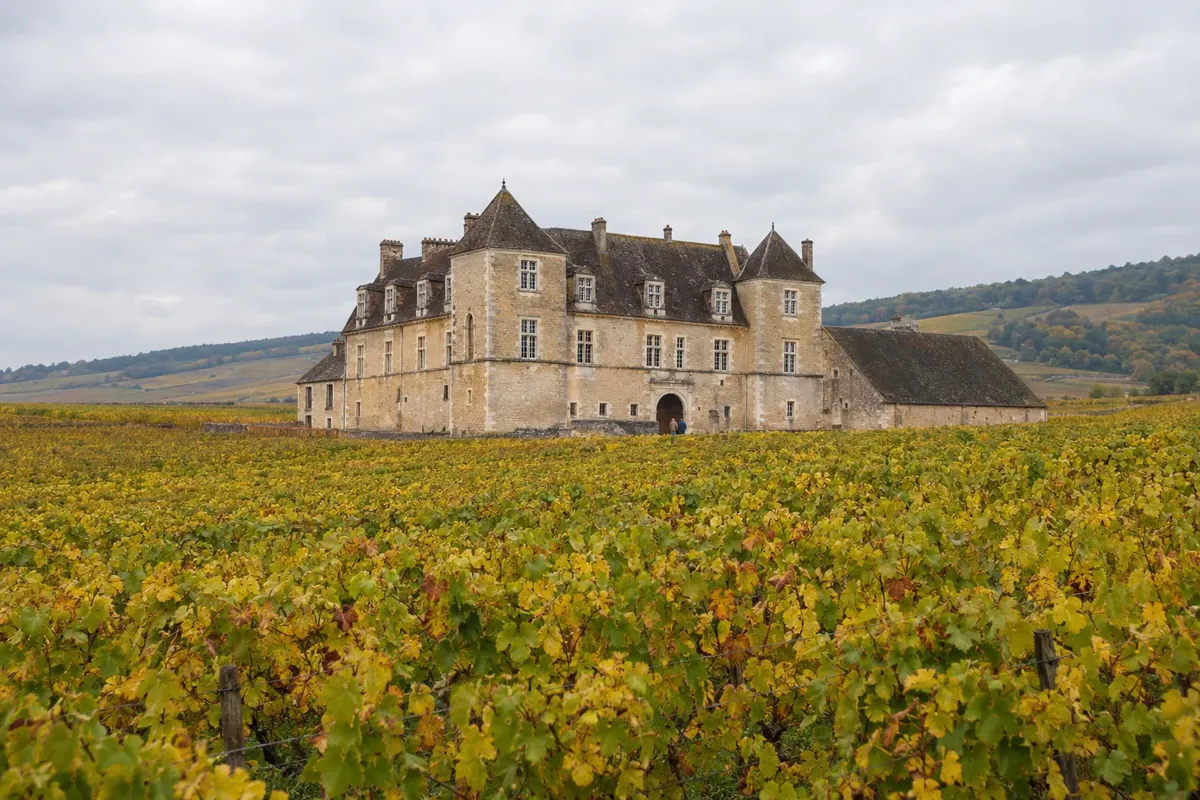
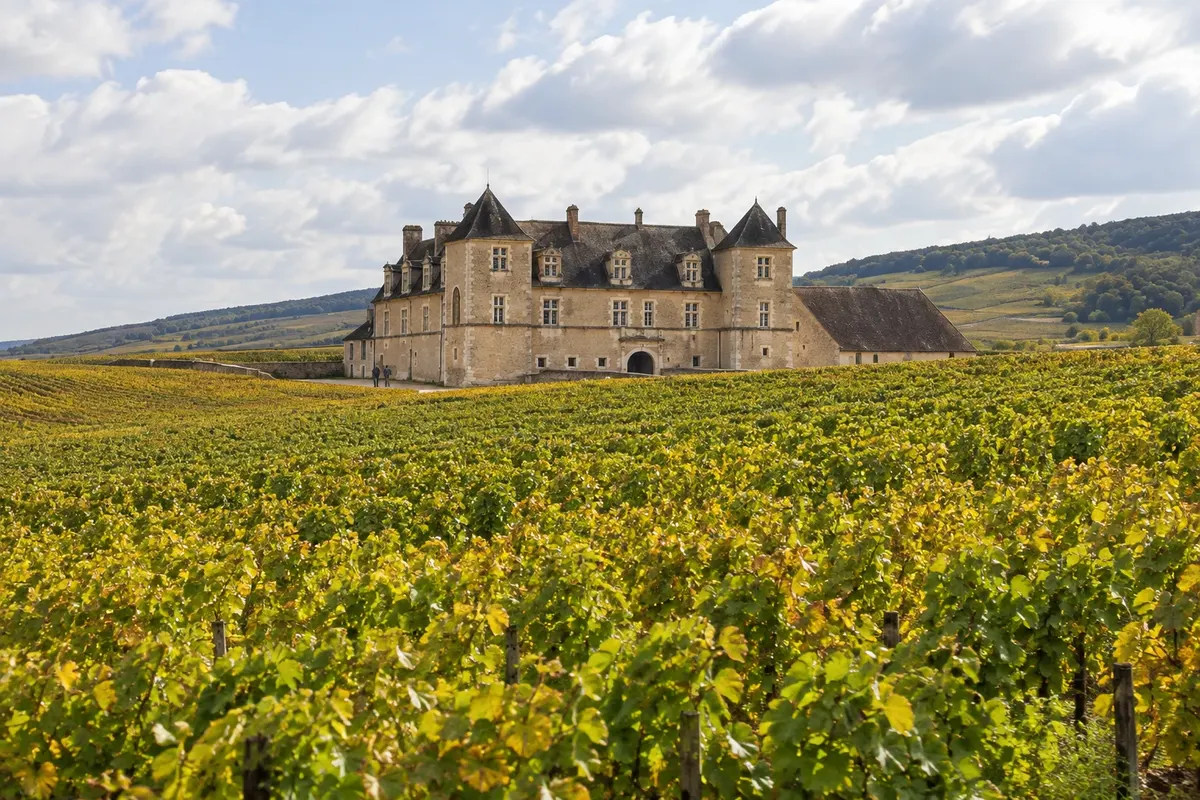
Na fotografiji: Château du Clos de Vougeot and vineyards · Borgonha

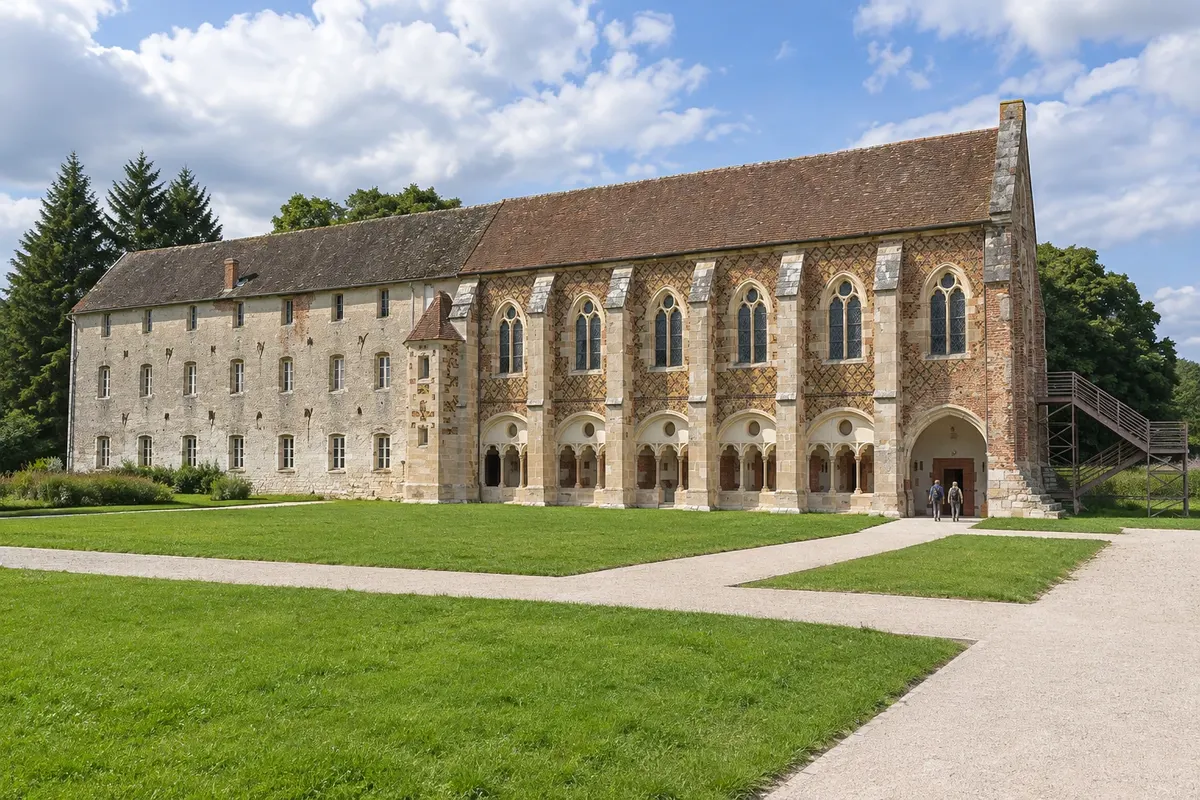
Illustrative images. The pictures in this guide are illustrations based on the real place, not photographs, and may differ from it.

Na voljo v trgovini Google Play Pošljite svoje fotografije

Spoznajte kraj

Pokrajina, ki jo doživite
v svojem ritmu.

Burgundy, in eastern France, was the center of a powerful duchy at the end of the Middle Ages. The Valois dukes ruled from Dijon over territory that reached Flanders, and that past shows in the ducal palace, the Gothic churches and the carved tombs now in the Musée des Beaux-Arts.

The region is synonymous with wine. Between Dijon and Santenay, the Côte de Nuits and the Côte de Beaune form a narrow band of hills covered in vines, cut by the Route des Grands Crus. The so-called climats, small vineyard plots with their own names and clearly defined soil and exposure characteristics, were inscribed as a UNESCO World Heritage Site along with Dijon's historic center and the town of Beaune.

Dijon, capital of the Bourgogne-Franche-Comté region, is the gateway: it is about 1h40 by TGV from Gare de Lyon in Paris, has a historic center to explore on foot, and gave its name to the world’s most famous mustard. Beaune, about 45 km to the south, is Burgundy’s wine capital and hosts the Hospices de Beaune, the old hospital with colorful roofs founded in 1443.

Both centers can be visited without a car, with a regional train between them; to travel the wineries and villages on the Route des Grands Crus, a car or a tour from Dijon or Beaune makes things much easier.

This destination brings together 3 cities: Dijon, Beaune, Besançon.

Delite: WhatsApp
Delite svoja popotniška doživetja s fotografijami Pošljite fotografije vsakega kraja, ki ste ga obiskali. Največje število fotografij na kraj: 5.

Ena destinacija, več poti

Mesta na tej poti

Začnite v enem mestu ali v načrt poti vključite več mest.

Burgundy – lega
BeauneDijonBesançon

Obrisi: © IGN, ADMIN EXPRESS, Licence Ouverte 2.0. Priredba: Cidade Turismo.

Kako do tja:Burgundy

✈ Aéroport Paris-Charles-de-Gaulle (CDG), kraj: Roissy-en-France· 332 km do cilja (Dijon)

✈ Aéroport de Lyon-Saint-Exupéry (LYS), kraj: Colombier-Saugnieu· 212 km do cilja (Dijon)

The most common route is to fly to Paris and take the TGV from Gare de Lyon to Dijon, about 1h40. From Dijon, the regional train (TER) takes you to Beaune in about 20 to 25 minutes. Another option is Lyon–Saint-Exupéry airport, roughly 210 km from Dijon. Confirm before booking.

Predlagana točka prihoda:Dijon

Doživite kraj

Kaj početi – Burgundy

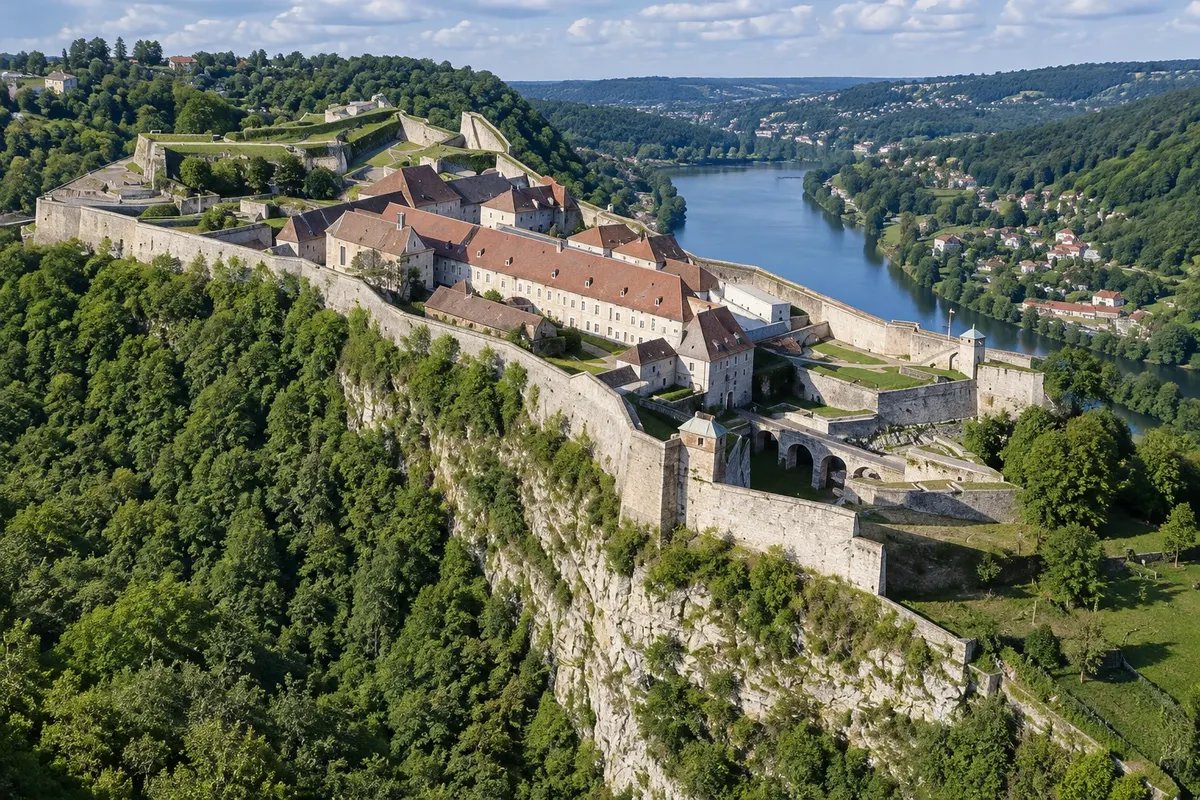
Citadel of Besançon
Besançon · Bourgogne-Franche-Comté · Trdnjava

Citadel of Besançon

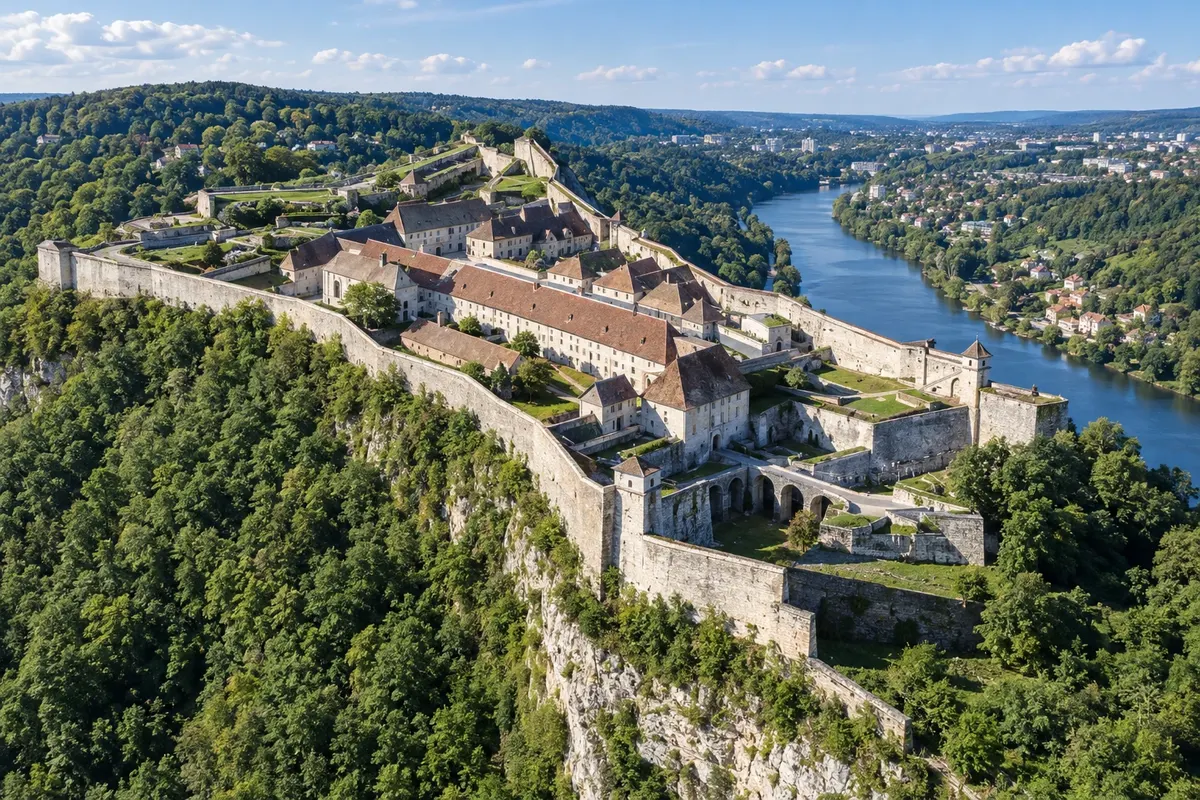
Vauban fortress from the 17th century on top of monte Saint-Étienne, a World Heritage site, with walls above the Doubs bend, three museums and a small zoo.

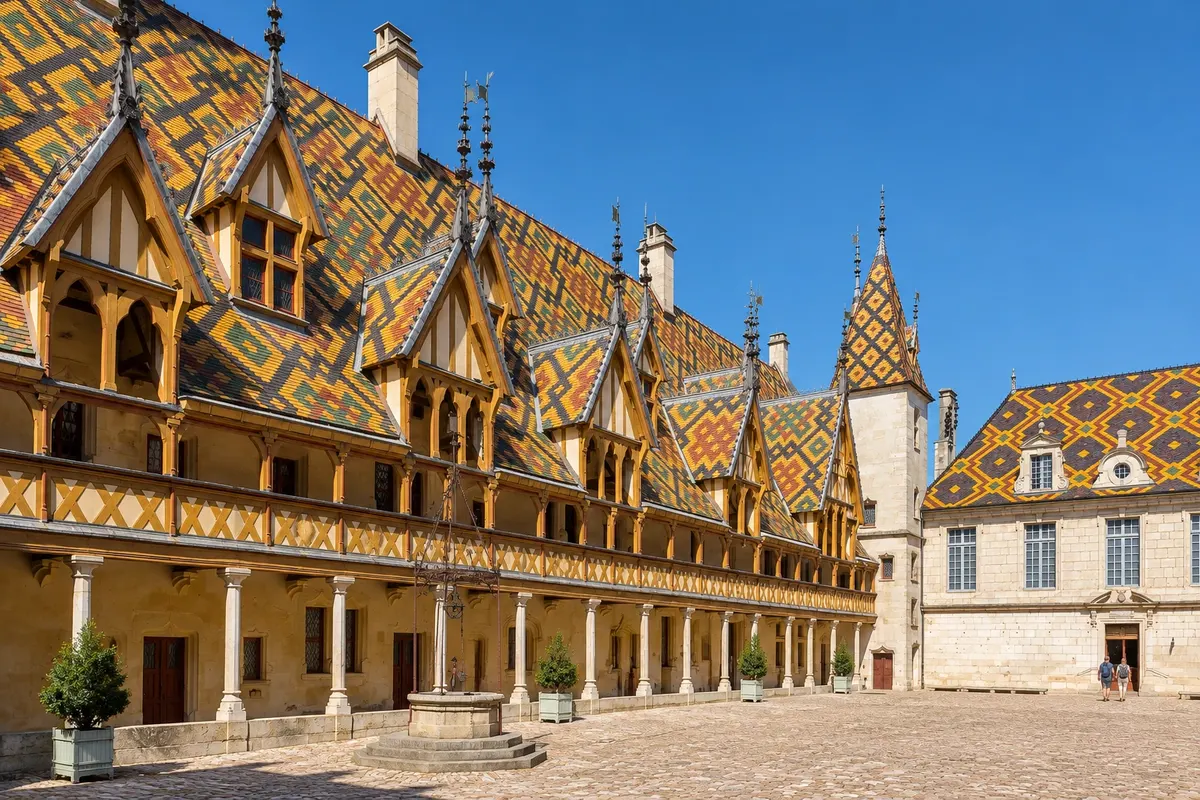
Hospices de Beaune (Hôtel-Dieu)
Beaune · Bourgogne-Franche-Comté · Muzej

Hospices de Beaune (Hôtel-Dieu)

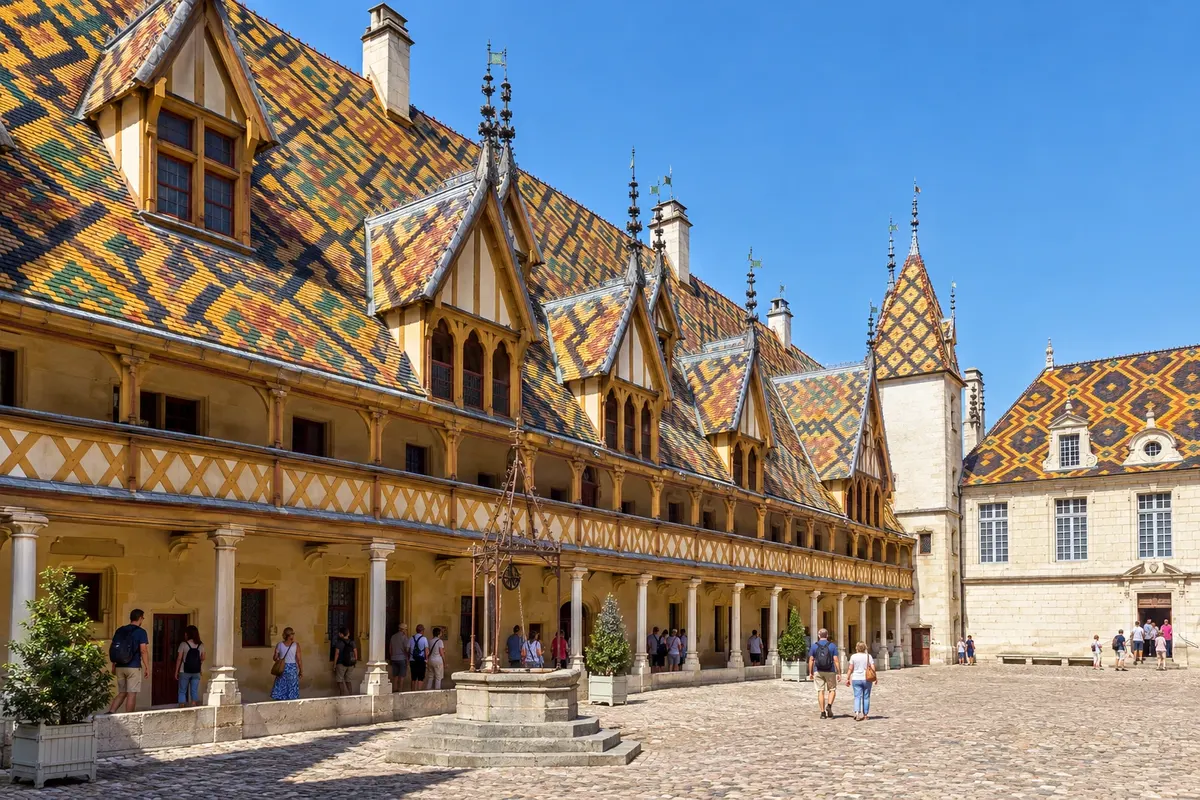
Former hospital founded in 1443 by Nicolas Rolin, chancellor to the Duke of Burgundy, with a courtyard of colorful glazed-tile roofs, the Grande Salle des Pôvres and the polyptych of the Last Judgment by Rogier van der Weyden.

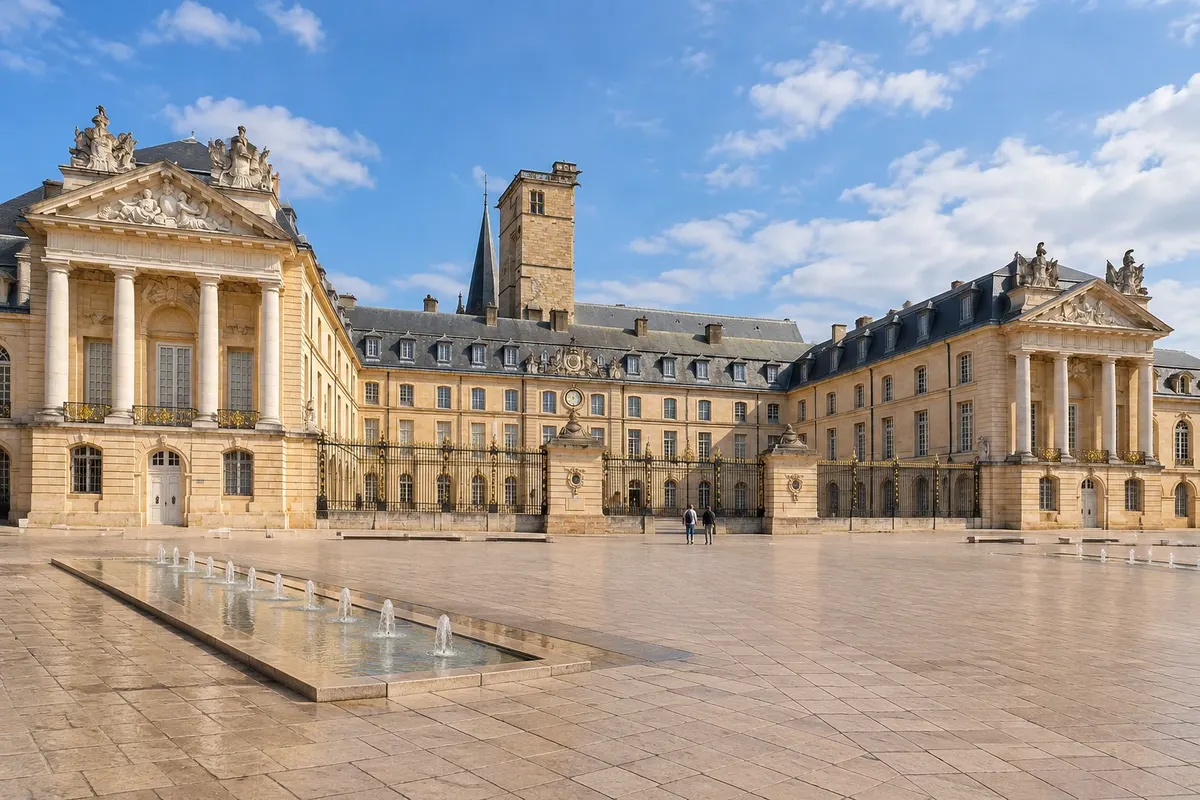
Palace of the Dukes and Estates of Burgundy (Palais des ducs et des États de Bourgogne)
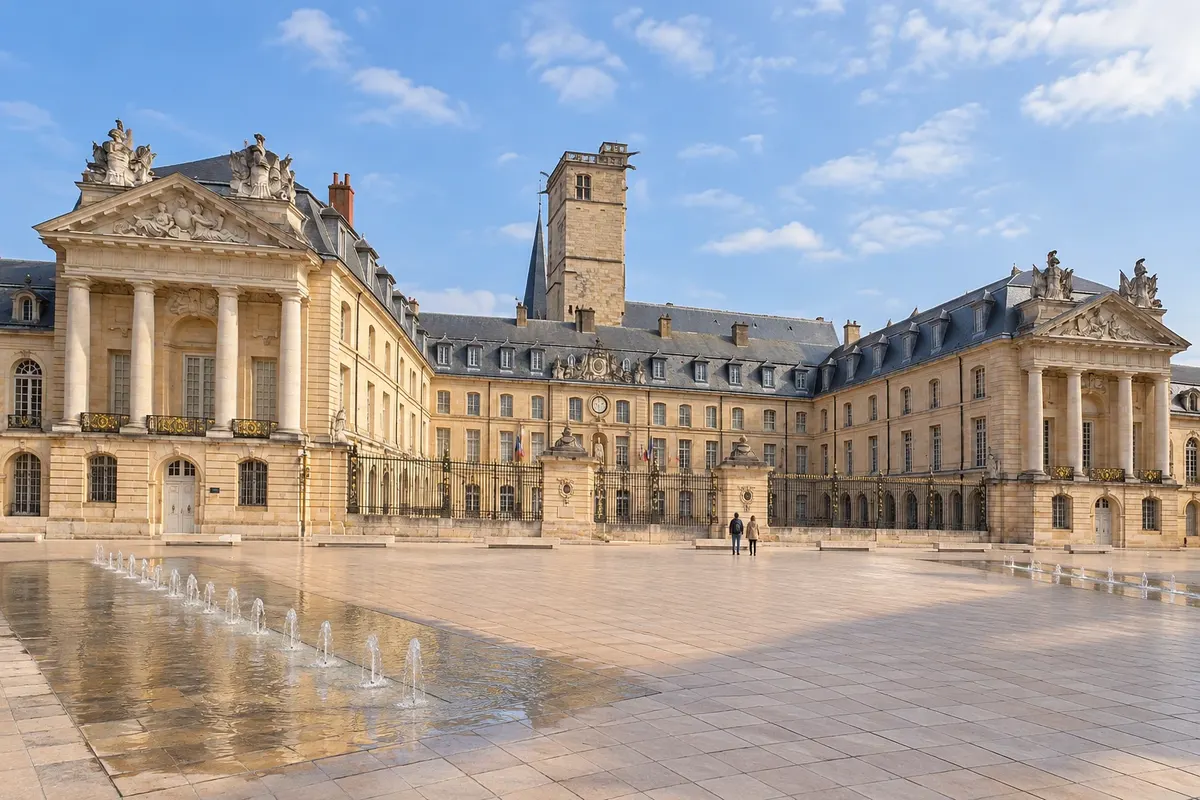
Dijon · Bourgogne-Franche-Comté · Palace

Palace of the Dukes and Estates of Burgundy (Palais des ducs et des États de Bourgogne)

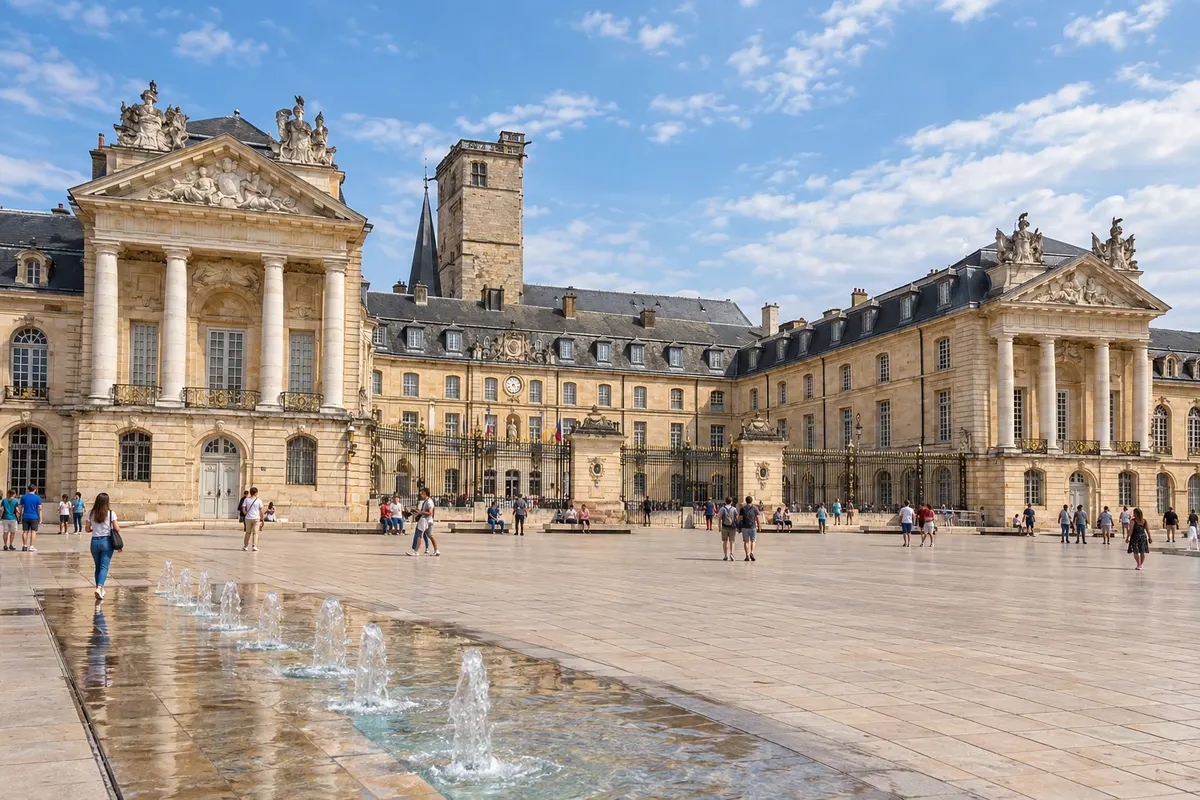
A complex of buildings in the heart of Dijon that brings together the palace of the Dukes of Burgundy, from the 14th and 15th centuries, and the Palace of the States, from the 17th and 18th centuries. Today it houses the town hall and the Musée des Beaux-Arts.

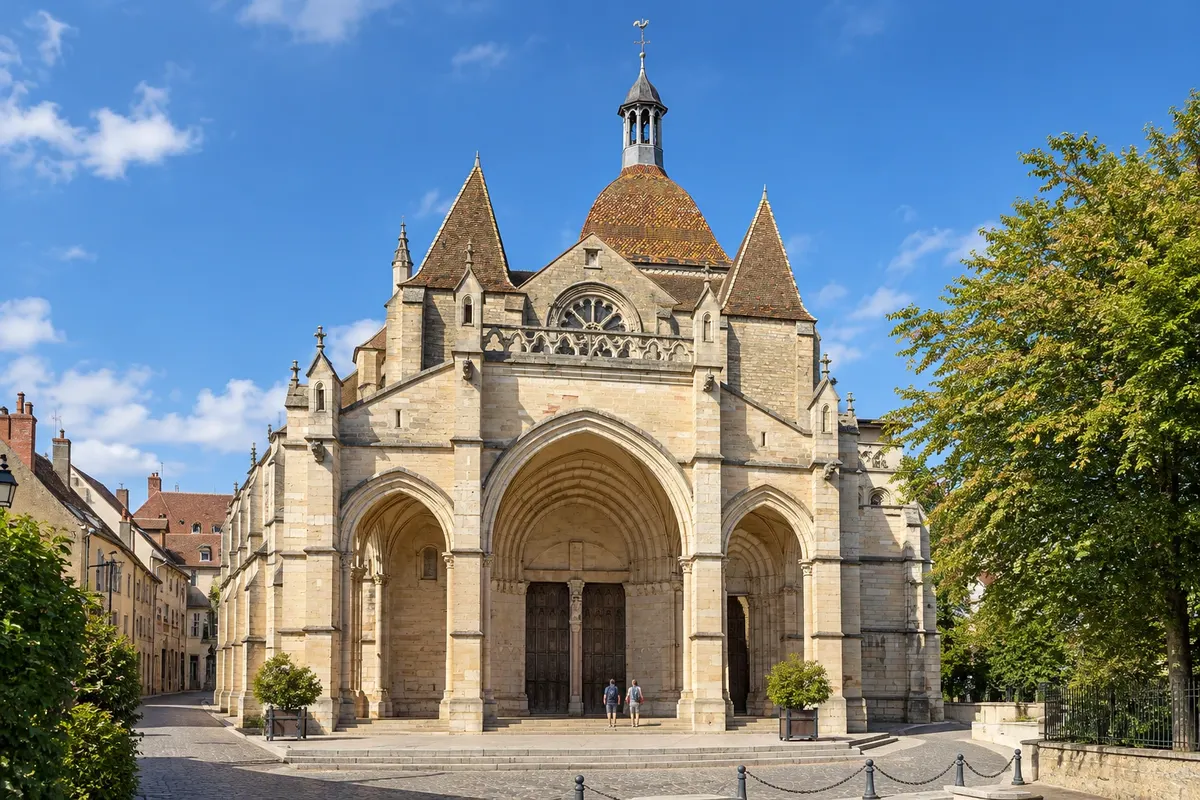
Collegiate Basilica of Notre-Dame of Beaune
Beaune · Bourgogne-Franche-Comté · Cerkev

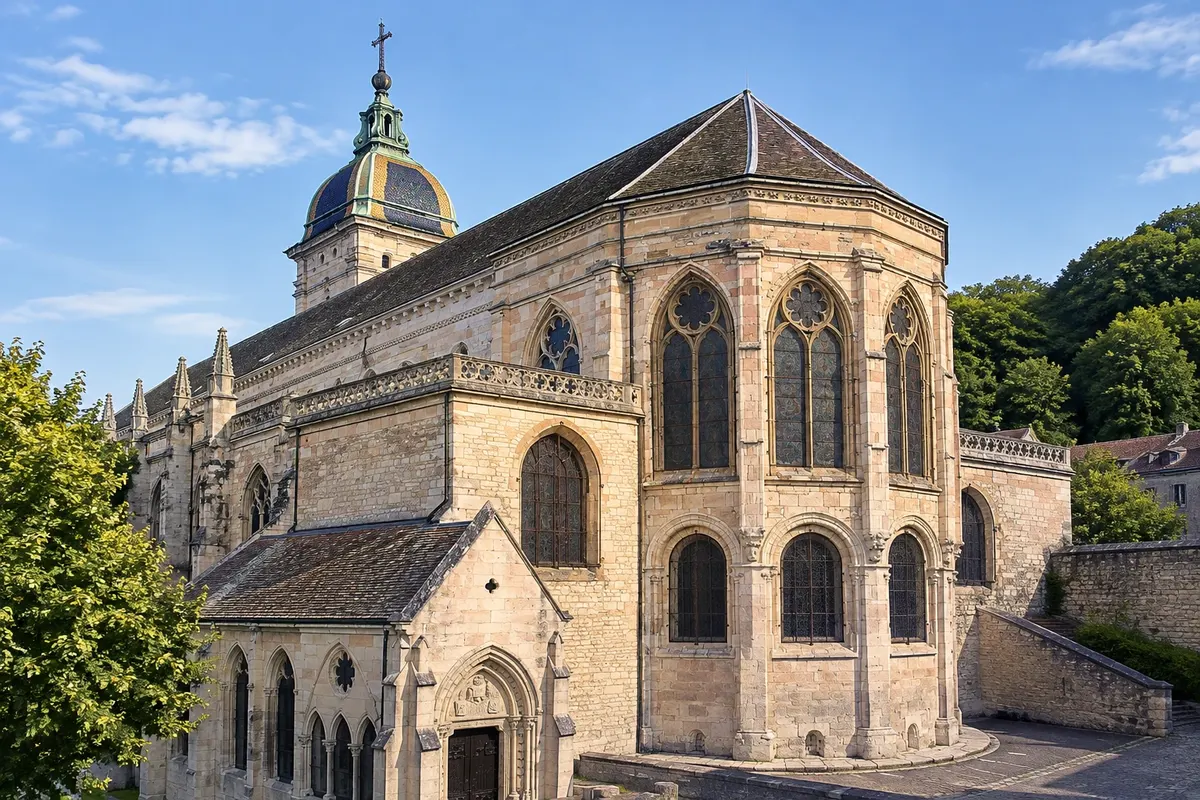
Collegiate Basilica of Notre-Dame of Beaune

One of the last great Romanesque churches of Burgundy, from the 12th century, with Gothic and Renaissance chapels and a set of tapestries depicting the life of the Virgin.

Burgundy – prikaži dodatne kraje (18)
Saint-Jean Cathedral and Astronomical Clock
Besançon · Bourgogne-Franche-Comté · Cerkev

Saint-Jean Cathedral and Astronomical Clock

Catedral de São João, with two opposing choirs, Romanesque, Gothic and Baroque parts, and the 1860 astronomical clock, with thousands of pieces and dozens of dials.

Musée des Beaux-Arts de Dijon (Museum of Fine Arts)
Dijon · Bourgogne-Franche-Comté · Muzej

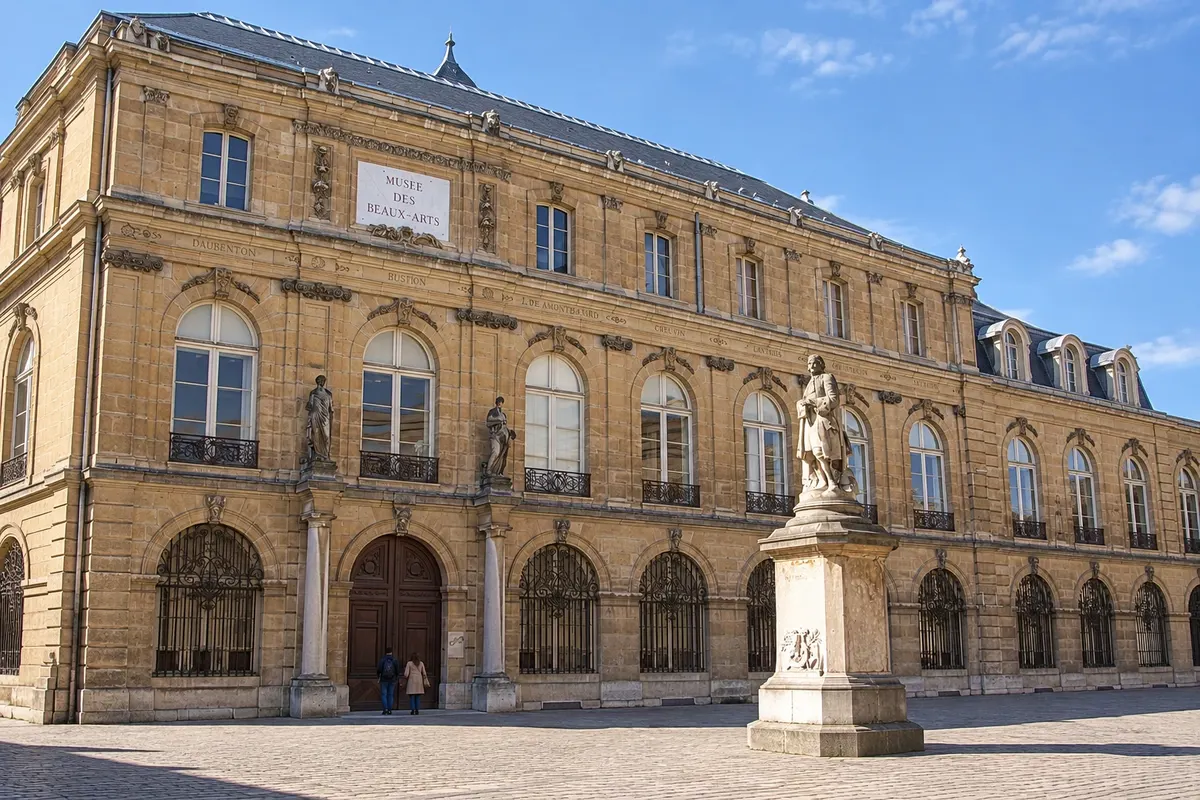
Musée des Beaux-Arts de Dijon (Museum of Fine Arts)

One of the oldest museums in France, housed in the ducal palace. It preserves the tombs of the dukes of Burgundy, Fayum funerary portraits and paintings from the Renaissance to the 19th century. Admission to the permanent collections is free.

Château de Savigny-lès-Beaune
Beaune · Bourgogne-Franche-Comté · Grad

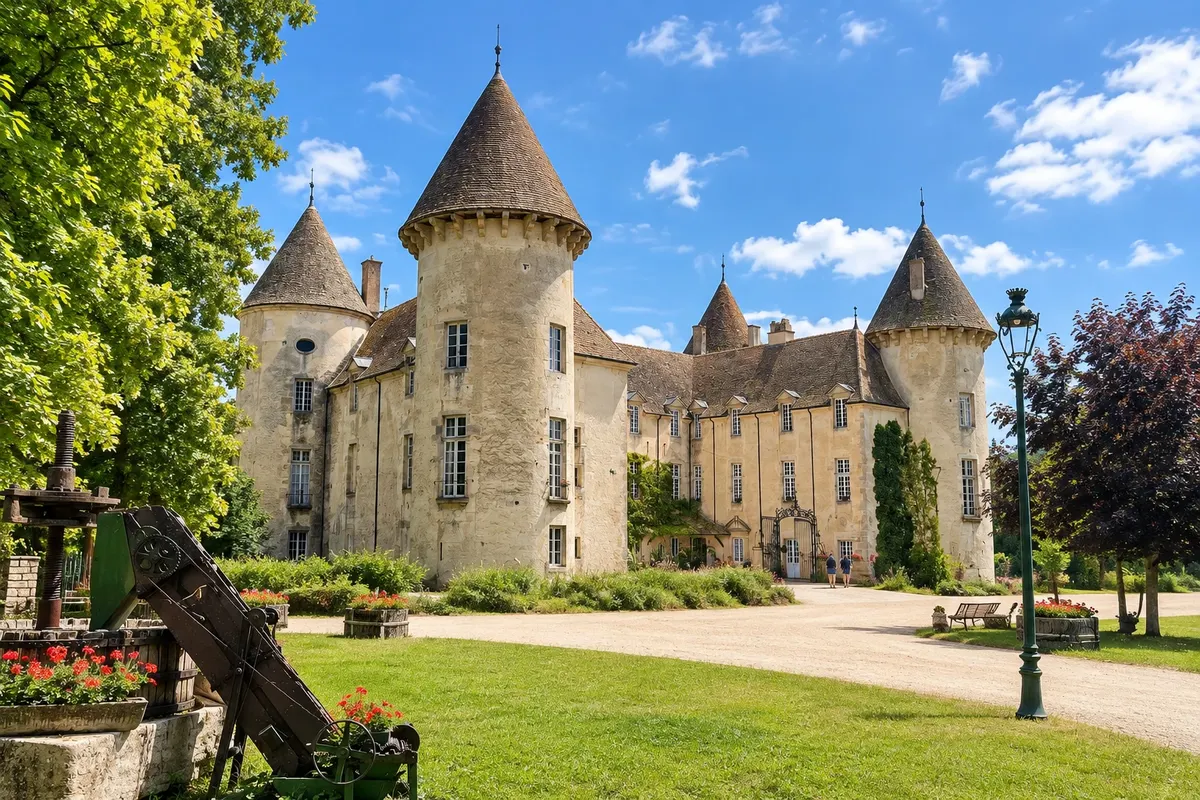
Château de Savigny-lès-Beaune

14th-century castle on a vineyard estate 5 km from Beaune, with a tasting cellar and museums of mechanical collections: fighter planes, racing cars, motorcycles and farm machinery.

Porte Noire
Besançon · Bourgogne-Franche-Comté · Historic monument

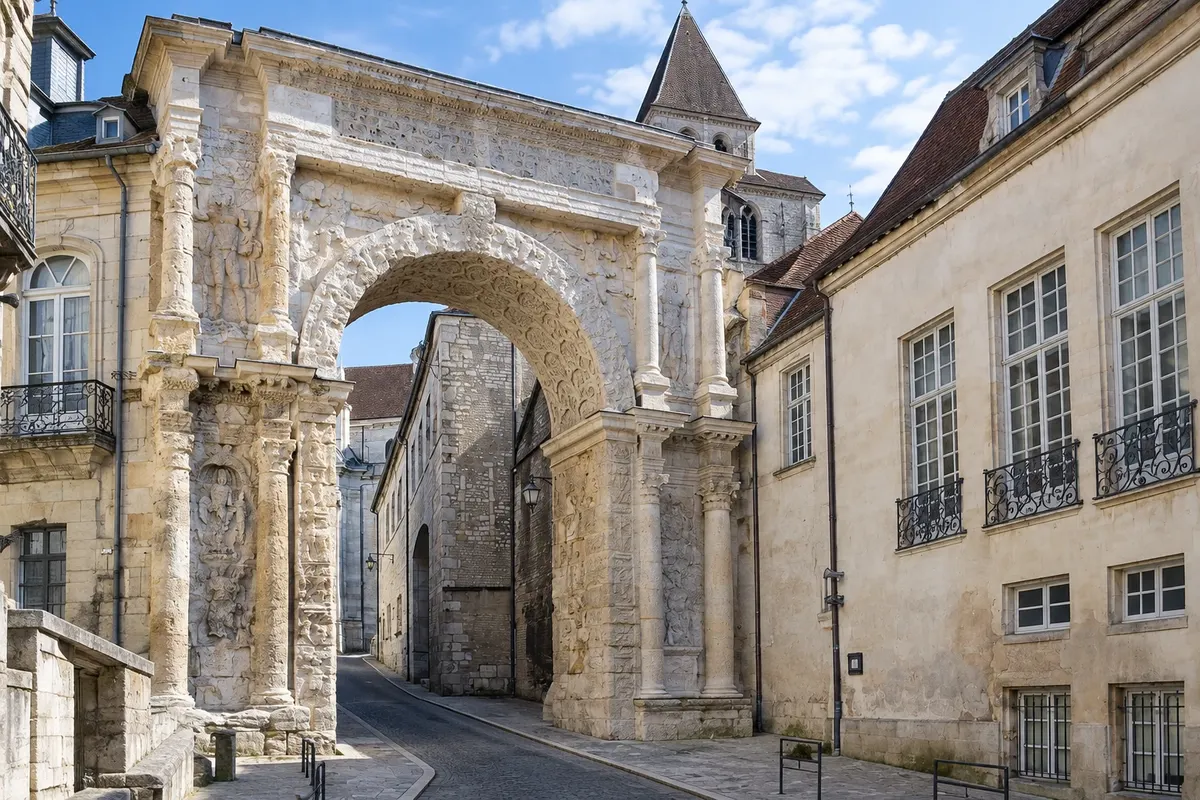
Porte Noire

Roman triumphal arch from the 2nd century, from the time of Marcus Aurelius, about 16 metres tall, decorated with mythological figures and battle scenes, at the foot of the cathedral.

Tour Philippe le Bon
Dijon · Bourgogne-Franche-Comté · Razgledišče

Tour Philippe le Bon

46-metre tower of the ducal palace, built between 1450 and 1460. There are 316 steps to the terrace, with a 360-degree view over Dijon’s roofs and, on clear days, as far as the Côte de Nuits. Ascent only on guided tours.

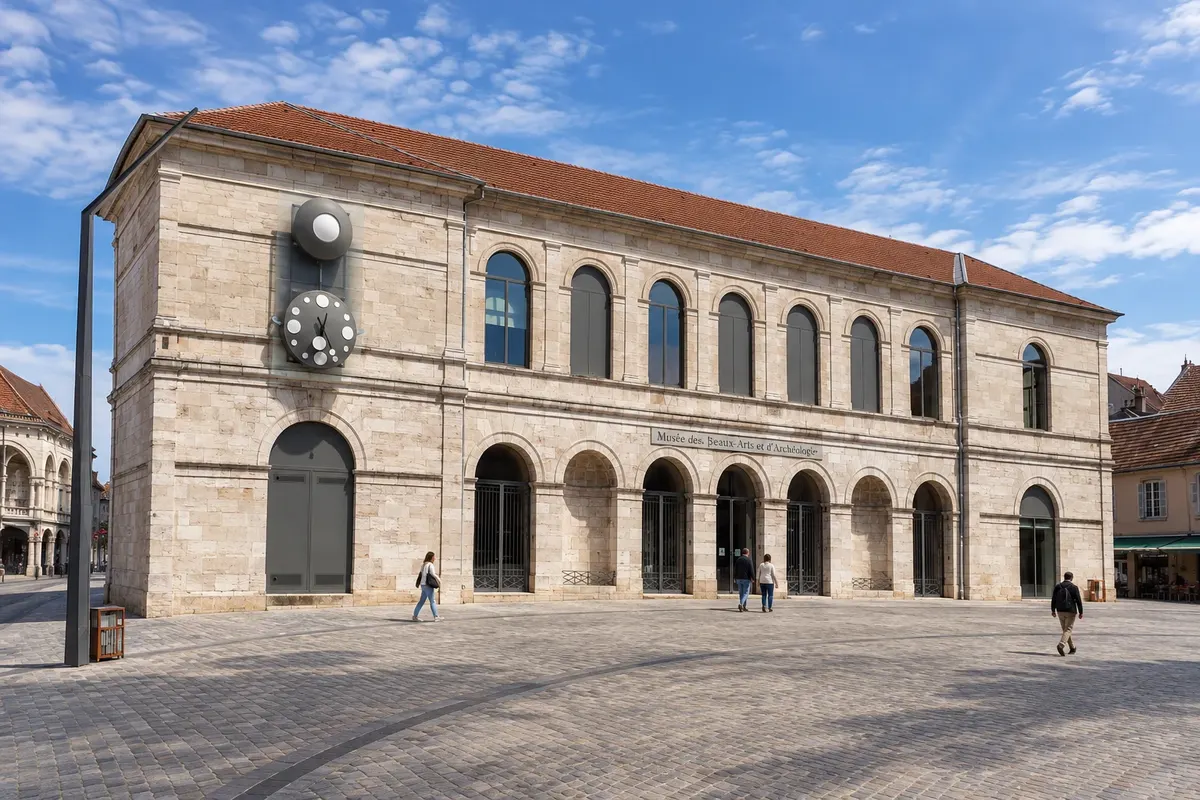
Musée des Beaux-Arts et d'Archéologie
Besançon · Bourgogne-Franche-Comté · Muzej

Musée des Beaux-Arts et d'Archéologie

The oldest public museum in France, founded in 1694, in the former halle aux grains on the praça da Revolução, with European painting, an Egyptian collection and archaeology.

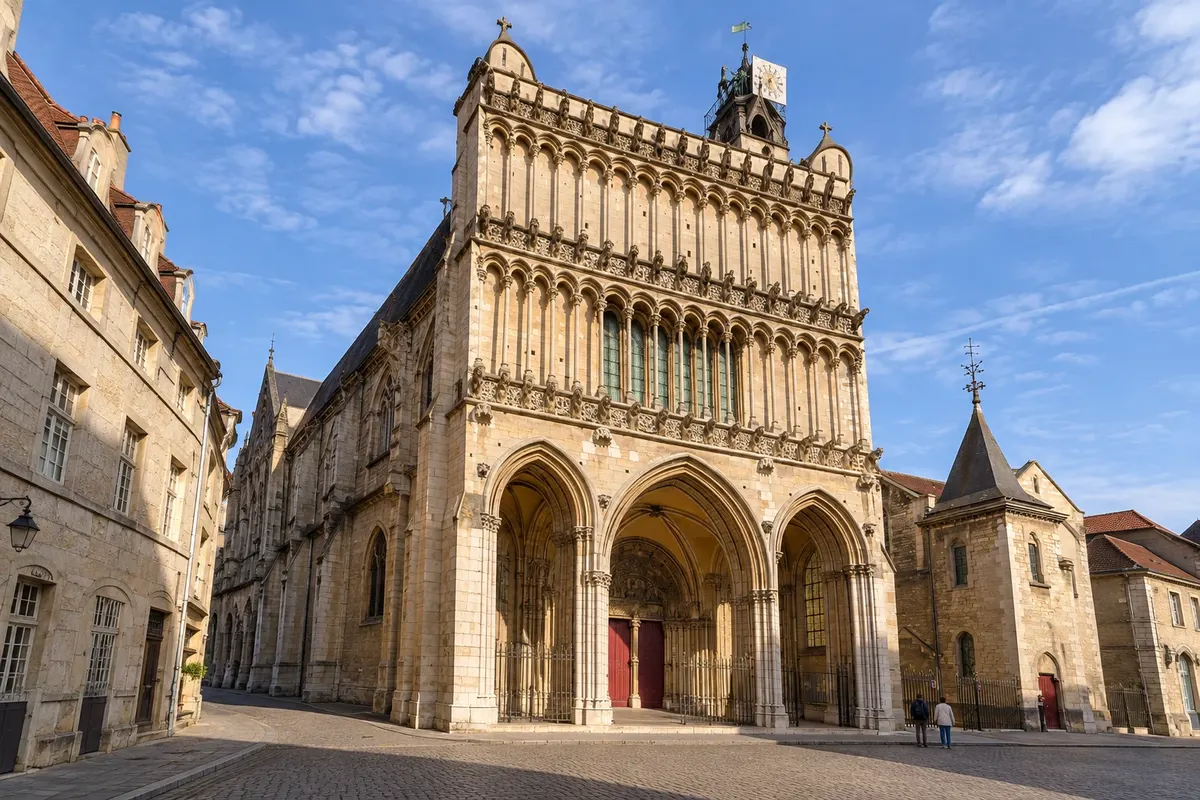
Notre-Dame Church of Dijon
Dijon · Bourgogne-Franche-Comté · Cerkev

Notre-Dame Church of Dijon

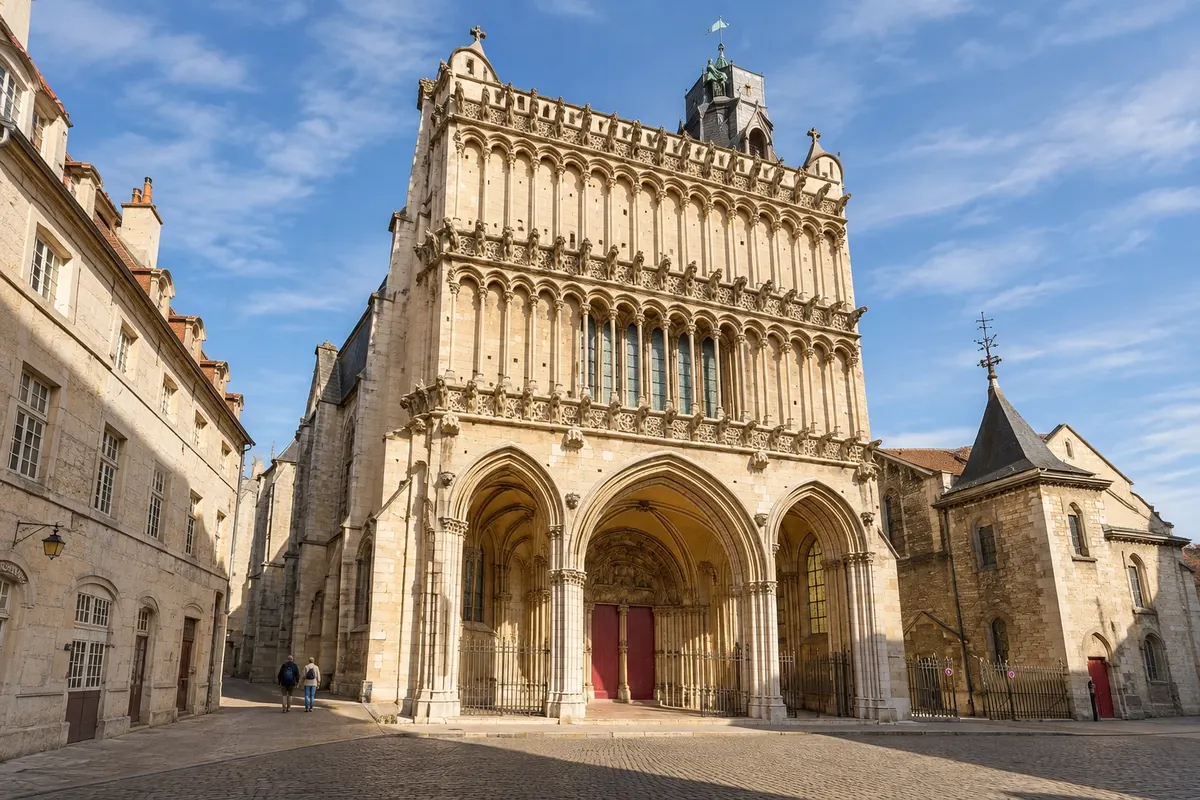
13th-century Gothic church with a façade of fake gargoyles, the Jacquemart clock, and on the side wall the small stone owl that Dijon locals touch with their left hand to make a wish.

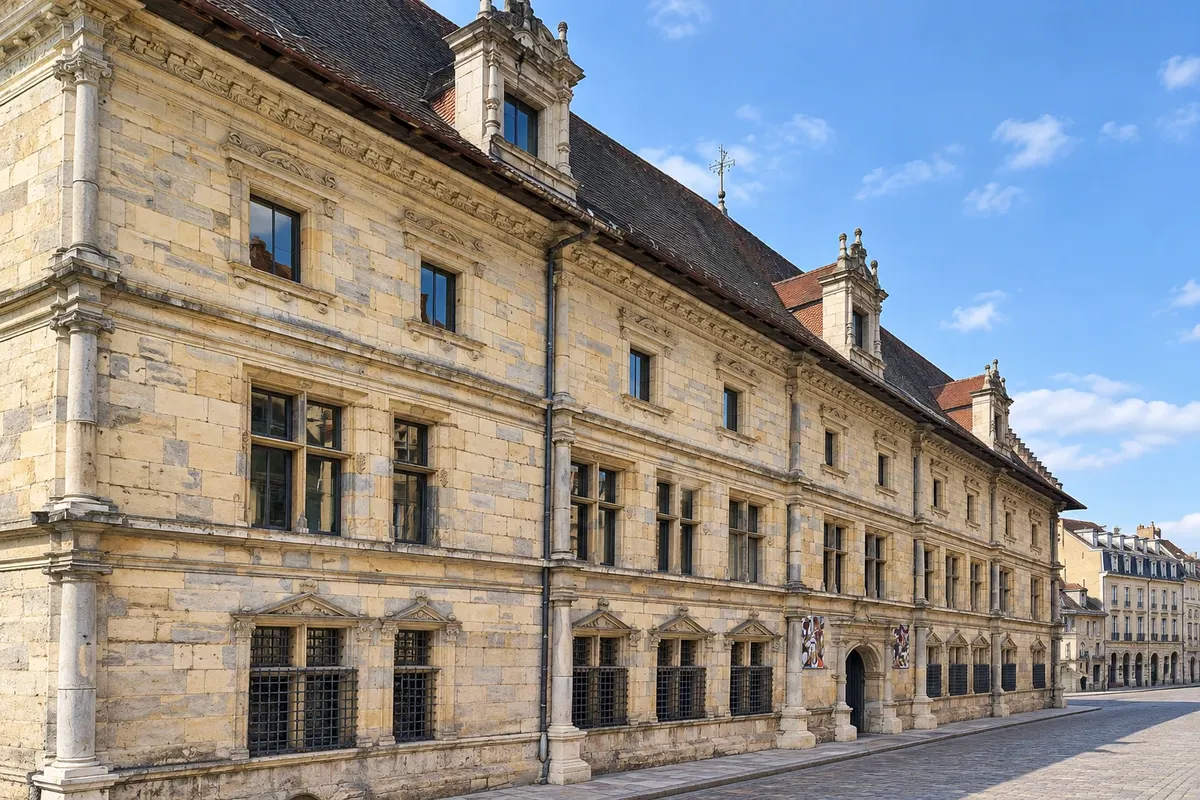
Palais Granvelle and Museum of Time
Besançon · Bourgogne-Franche-Comté · Muzej

Palais Granvelle and Museum of Time

Renaissance palace from the 16th century on the Grande Rue, built by the chancellor of Carlos V, with an arcaded courtyard and the Museu do Tempo, about clockmaking and the measurement of time.

Chouette Trail (Parcours de la Chouette)
Dijon · Bourgogne-Franche-Comté · Zgodovinska mestna četrt

Chouette Trail (Parcours de la Chouette)

Walking circuit through Dijon’s historic centre, marked by triangular bronze arrows with an owl on the pavement. It passes the Palais des ducs, Notre-Dame, the Rue des Forges, the Halles and townhouses from the 15th to 18th centuries.

Saint-Bénigne Cathedral of Dijon
Dijon · Bourgogne-Franche-Comté · Stolnica

Saint-Bénigne Cathedral of Dijon

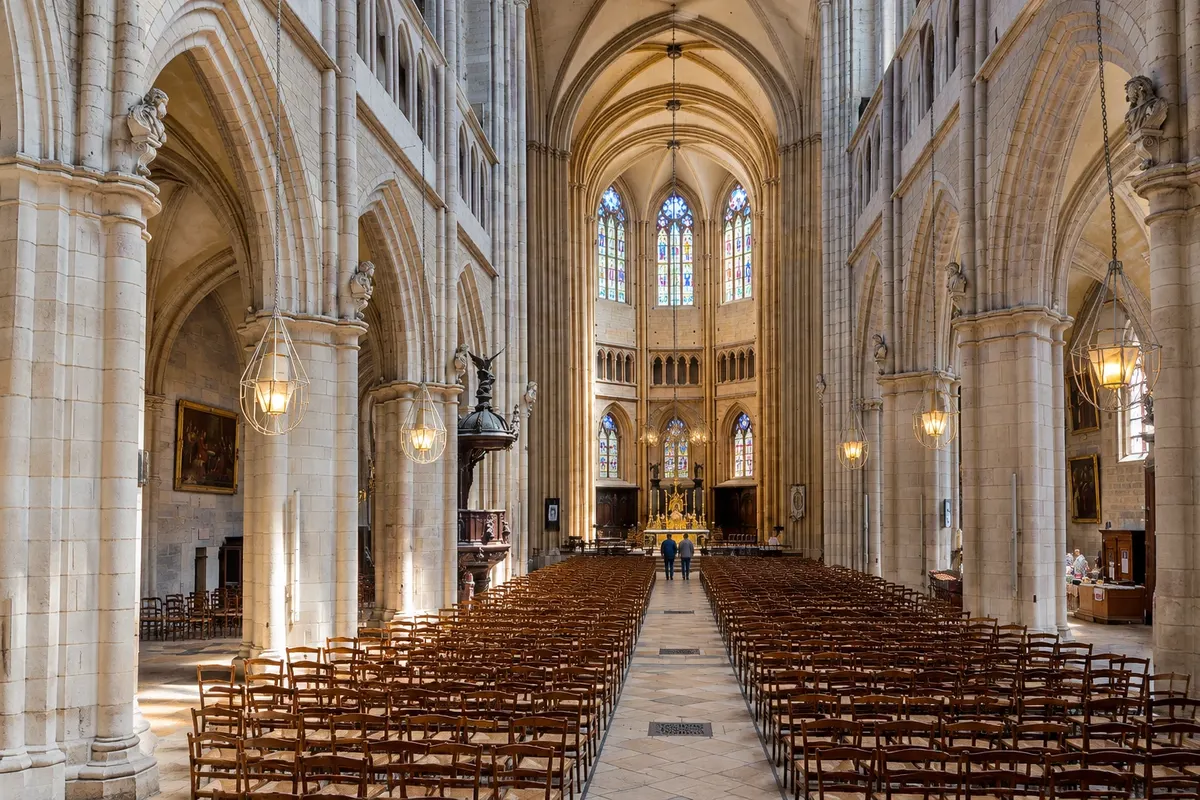
13th-century Gothic cathedral, with a roof of colourful glazed tiles and a Romanesque crypt from the year 1000, the only remaining part of a large three-storey rotunda.

Maison natale de Victor Hugo
Besançon · Bourgogne-Franche-Comté · Muzej

Maison natale de Victor Hugo

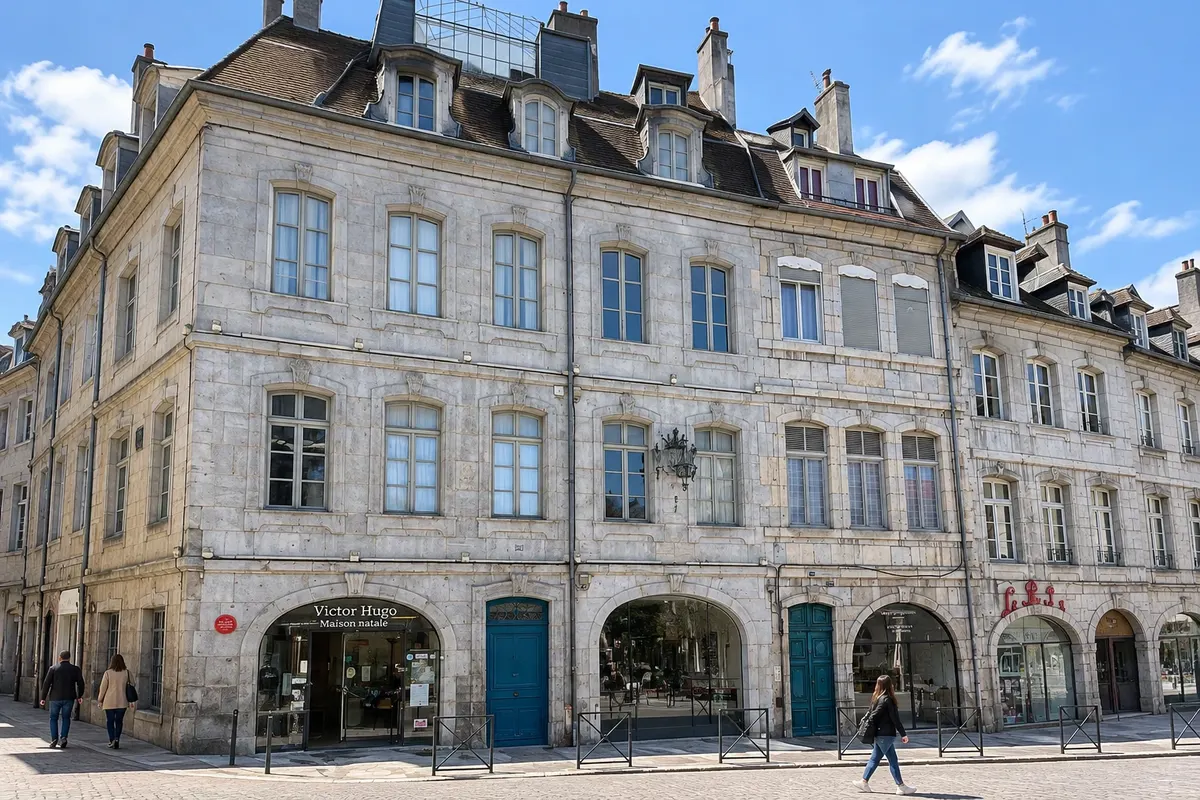
The Grande Rue apartment where Victor Hugo was born in 1802, now a museum about the writer and his fights for freedom, on the square where the Lumière brothers were also born.

Les Halles de Dijon
Dijon · Bourgogne-Franche-Comté · Tržnica

Les Halles de Dijon

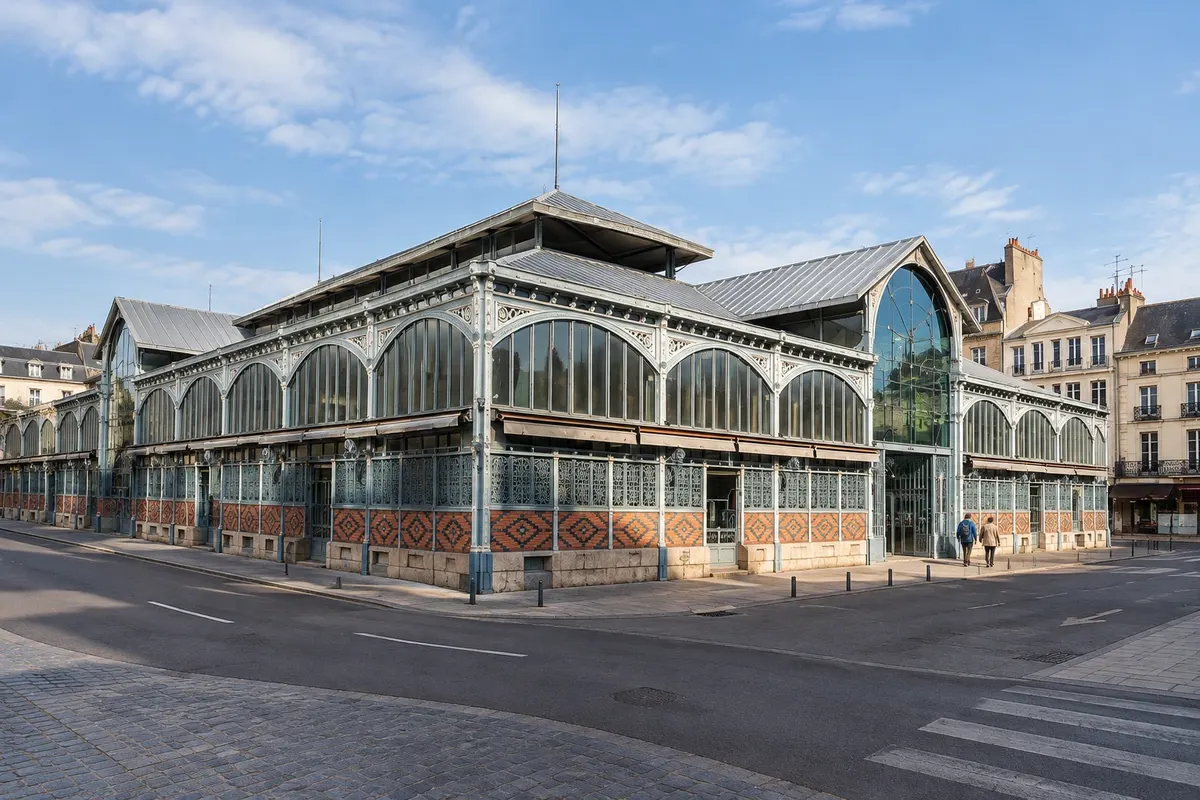
19th-century covered market of iron and glass, connected to the workshops of Dijon native Gustave Eiffel. It opens on market mornings with cheeses, charcuterie, escargots, mustard and products from Borgonha.

Saline royale d'Arc-et-Senans
Besançon · Bourgogne-Franche-Comté · Historic monument

Saline royale d'Arc-et-Senans

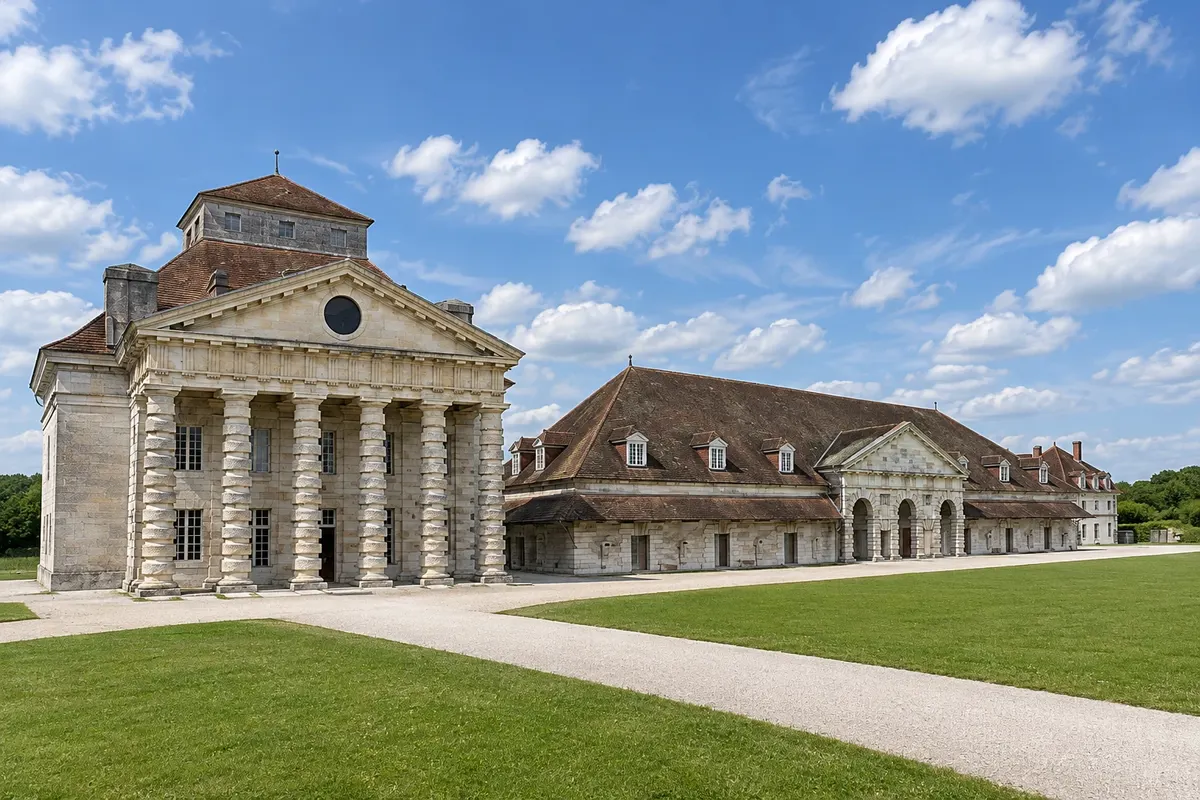
18th-century royal saltworks designed by Claude-Nicolas Ledoux, laid out in a semicircle, about 35 km from Besançon, a World Heritage site with gardens and exhibitions.

International City of Gastronomy and Wine (Cité internationale de la gastronomie et du vin)
Dijon · Bourgogne-Franche-Comté · Cultural center

International City of Gastronomy and Wine (Cité internationale de la gastronomie et du vin)

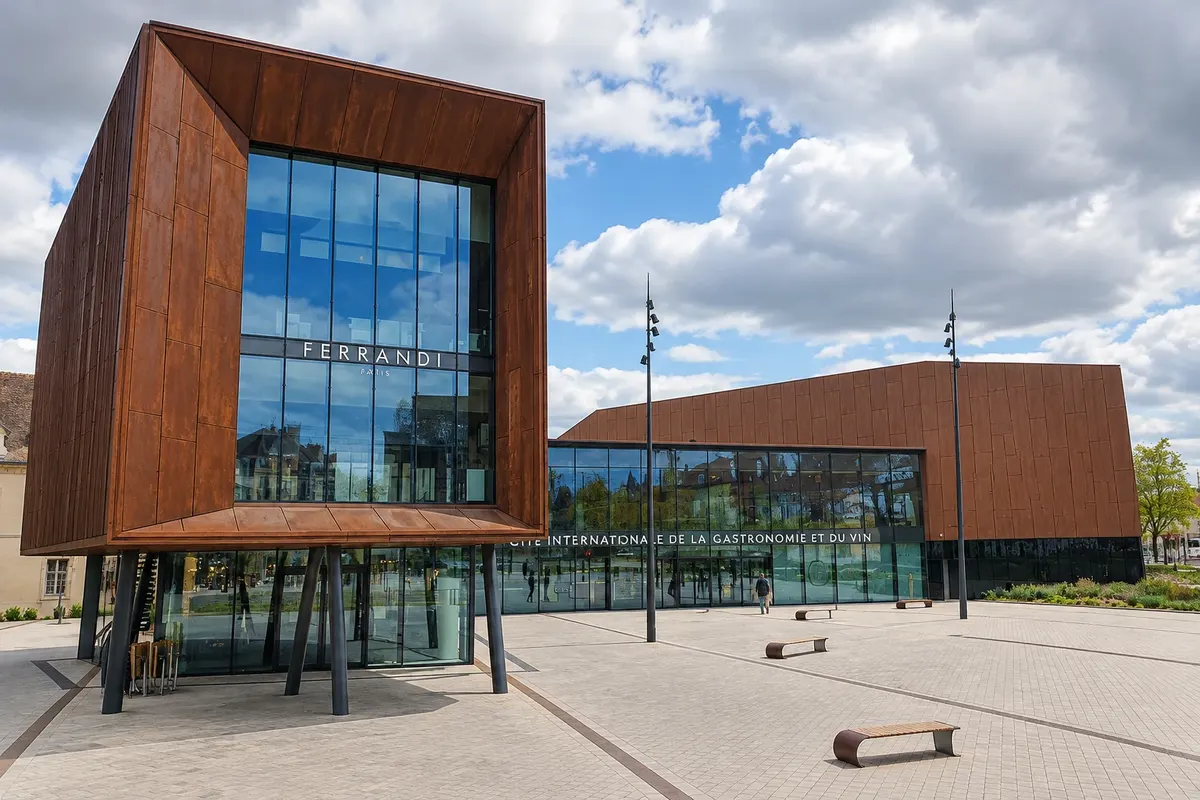
Complex installed in the former general hospital of Dijon, at kilometer zero of the Route des Grands Crus, with exhibitions about wine and French cuisine, the Chapelle des Climats and tasting workshops of the École des Vins de Bourgogne.

Puits de Moïse
Dijon · Bourgogne-Franche-Comté · Monument

Puits de Moïse

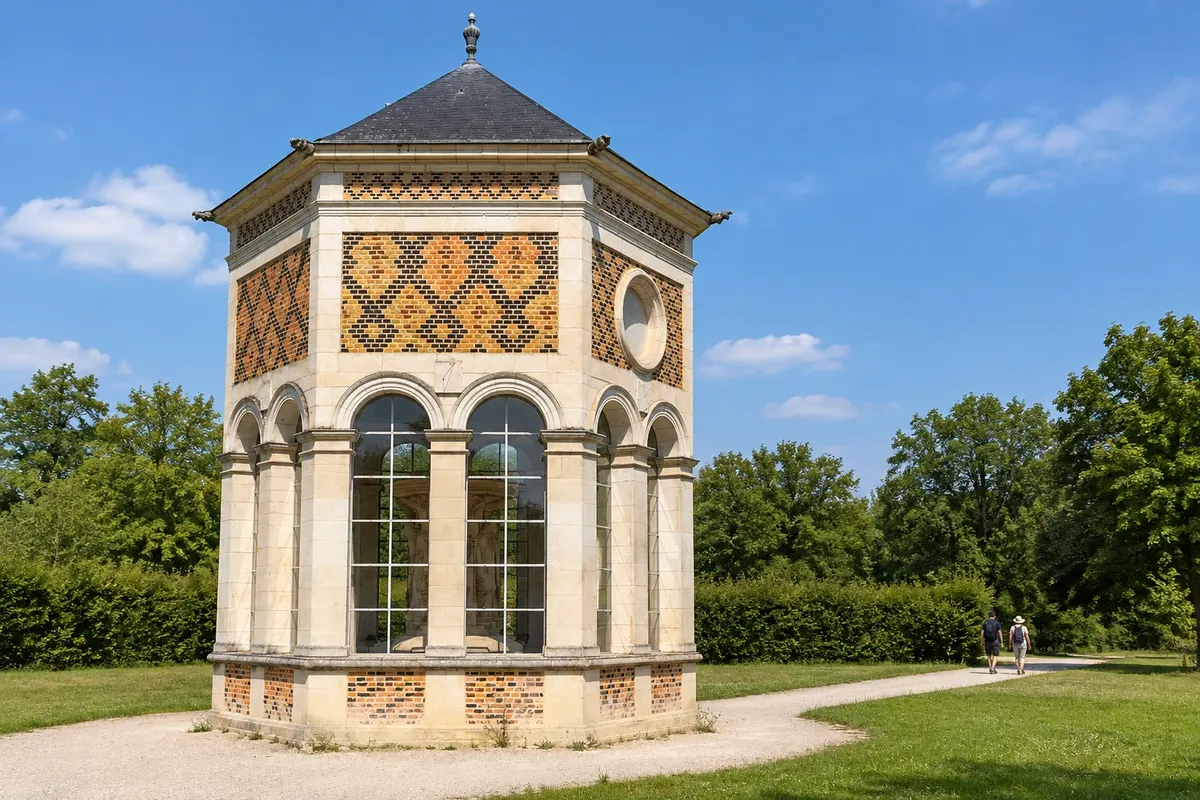
Base of a calvary carved between 1396 and 1405 by Claus Sluter for the Chartreuse de Champmol, the ducal monastery-necropolis. Six life-size prophets, with a realism rare for the time.

Jardin de l'Arquebuse
Dijon · Bourgogne-Franche-Comté · Garden

Jardin de l'Arquebuse

Park with a botanical garden of about 3,500 species, an arboretum, a rose garden, a natural history museum and a planetarium, next to Dijon-Ville station. It used to be called Jardin des Sciences.

Clos de Vougeot Castle (Château du Clos de Vougeot)
Dijon · Bourgogne-Franche-Comté · Grad

Clos de Vougeot Castle (Château du Clos de Vougeot)

Castle built by monks of Cîteaux in the middle of a walled vineyard of the Côte de Nuits, on the Route des Grands Crus. It houses four giant medieval wine presses and is the seat of the Confrérie des Chevaliers du Tastevin.

Cîteaux Abbey (Abbaye de Cîteaux)
Dijon · Bourgogne-Franche-Comté · Abbey

Cîteaux Abbey (Abbaye de Cîteaux)

Abbey founded in 1098, birthplace of the Cistercian order, still inhabited by monks. Visits are always guided, in French, with mandatory reservation, within the monastic enclosure.

Kaj izbrati pred odhodom

Izleti – Burgundy

Izhodišče, trajanje, potek, vključene storitve in okvirna cena vsakega izleta.

Dijon historic center on foot via the Parcours de la Chouette

Odhod: Place Darcy, in central Dijon On foot, following the bronze plaques in the pavement around 1 hour and a half Dopoldne ali popoldne Lahko

The Parcours de la Chouette is the route that links the main monuments of Dijon’s center (Dijon, in Burgundy) in 22 stages, along a route of about 2 km. The path is marked on the ground by bronze plaques shaped like arrows with the image of an owl, the chouette that became the city’s symbol. It starts at Place Darcy, near the train station. Along the way you’ll see the pedestrian streets of the center, half-timbered houses—some from the 15th century—the Rue des Forges and the Place de la Libération, a semicircular square in front of the Palais des ducs et des États de Bourgogne, with café terraces and water jets in summer. The best-known stop is the Église Notre-Dame de Dijon: the façade has 51 false gargoyles carved, and at the top is the Jacquemart, a clock with automatons that strike the hours. On the north side of the church, on a pedestrian street, is the small owl carved in the stone. Local tradition is to pass your left hand over it and make a wish. The honor courtyard of the Palais des ducs is open from early morning until dusk and is included in the route.

Kraji na poti: Parcours de la Chouette, Place Darcy, Église Notre-Dame de Dijon, Rue des Forges, Place de la Libération, Palais des ducs et des États de Bourgogne.

Vključuje: The walking route does not require an entrance fee. The Tourist Office sells a booklet with the 22 stages and offers an app with audio commentary; there is also a booklet for children. Paid guided tours are sold separately.

Nasvet: Start early at Place Darcy and follow the arrows in the pavement; no guide or reservation is needed. Touch the owl gently: the sculpture is already worn by touch. Combine this with the Musée des Beaux-Arts, which is halfway along the route.

Najboljši čas za obisk: All year. From April to October the days are long and the squares have open terraces.

Palais des ducs et des États de Bourgogne and Musée des Beaux-Arts de Dijon

Odhod: Place de la Libération, central Dijon On foot through the town centre about 2 to 3 hours Dopoldne ali popoldne Lahko

The Palais des ducs et des États de Bourgogne was the residence of the Dukes of Burgundy and today houses the town hall, the Tourist Office and the Musée des Beaux-Arts de Dijon. The museum occupies much of the palace and covers works from Ancient Egypt to the 21st century. The central piece is the Salle des Gardes, from the 15th century, with the tombs of Philippe le Hardi and Jean sans Peur, Dukes of Burgundy: two marble and alabaster monuments with recumbent statues of the dukes and, beneath them, a procession of small mourning monk figures. The route also includes the Cuisines ducales, the palace kitchen completed around 1435 with six huge hearths and a vaulted ceiling; paintings by the Early Flemish masters; and rooms from the 19th and 20th centuries with works by Burgundian sculptor François Pompon. Allow about 2 hours to see the highlights. The museum is closed on Tuesdays and on certain public holidays.

Kraji na poti: Palais des ducs et des États de Bourgogne, Musée des Beaux-Arts de Dijon, Salle des Gardes, Cuisines ducales.

Vključuje: Admission to the permanent collections is free. Temporary exhibitions, guided visits and workshops are charged separately. Check the current price list.

Nasvet: Go directly to the Salle des Gardes and then take the rest of the museum at a relaxed pace. Bear in mind the museum is closed on Tuesdays: on a short itinerary, reserve Beaune for that day. The climb to the Tour Philippe le Bon departs from the same palace and can be done during the same visit.

Najboljši čas za obisk: All year; a good option for rainy and cold days, from November to March.

Climb to the Tour Philippe le Bon, the tower of the Palais des ducs

Odhod: Palais des ducs, Dijon center Guided visit by reservation at the Tourist Office Približno 45 minut Dopoldne ali popoldne moderate (316 steps)

The Tour Philippe le Bon is the tower of the Palais des ducs et des États de Bourgogne, built between 1450 and 1460, and 46 m tall. It was the palace’s observation tower. The climb involves 316 steps in a spiral staircase and is only possible with a guided tour, lasting about 45 minutes in total. At the top, the terrace shows the roofs of central Dijon and the city’s church towers. The guide tells the history of the palace and the dukes during the ascent and the stops.

Kraji na poti: Tour Philippe le Bon, Palais des ducs et des États de Bourgogne.

Vključuje: There is an entrance fee for the guided visit, and reservation at the Dijon Tourist Office is mandatory. Check the current rate and the departure times.

Nasvet: Book as soon as you know the day: groups are small. The staircase is narrow and not suitable for those with mobility difficulties or a fear of heights. Make the climb in the same time frame as your visit to the Musée des Beaux-Arts.

Najboljši čas za obisk: All year round, preferably on a clear day; from April to October the days are longer.

Halles de Dijon and the morning market

Odhod: Dijon centre (Rue Odebert) On foot through the town centre Približno 1 uro Dopoldne Lahko

The Halles de Dijon are the city centre’s covered market, built between 1873 and 1875 with an iron structure made in the Fourchambault foundries, based on plans inspired by a project submitted by Eiffel’s company in 1868. The building has four pavilions around two internal streets that cross, arches decorated with animal motifs and medallions of Ceres and Hermes, and is listed as a historic monument. The market is open in the mornings on Tuesdays, Thursdays, Fridays and Saturdays. Inside are stalls selling cheeses, meats, breads, fruit, vegetables and other regional products. On Tuesdays, Fridays and Saturdays, outdoor stalls spread into the surrounding squares and streets, such as Place François Rude. Saturday is the busiest day. You can browse and look around without buying anything.

Kraji na poti: Halles centrales de Dijon, Rue Odebert, Place François Rude.

Vključuje: Admission is free. Purchases and anything eaten at the stalls are paid separately.

Nasvet: Go on Saturday morning to see the indoor and outdoor markets together. On Thursdays only the covered section operates. Combine it with the Parcours de la Chouette, which passes nearby.

Najboljši čas za obisk: All year, on market days. Products change with the season.

Cité internationale de la gastronomie et du vin: exhibitions about the French table and the climats

Odhod: Dijon centre, about a 10-minute walk from the station Peš Približno 2 uri Dopoldne ali popoldne Lahko

The Cité internationale de la gastronomie et du vin occupies the former general hospital of Dijon, with historic buildings and restored chapels alongside new constructions. The cultural section covers two topics recognized by UNESCO: the repas gastronomique des Français, the French-style meal, and the climats of the Burgundy vineyard. The permanent exhibition À la table des Français occupies about 1,750 m² across three spaces. À table, le petit théâtre du bien manger et du bien boire uses sets, films and photos of family meals and a small automaton theatre to tell the origins of French gastronomy. En cuisine is interactive and deals with the five senses while cooking and eating, ending with a full-size kitchen game. In the Chapelle des Climats et des terroirs, projections and testimonies explain the climats and the region’s products. There are also temporary exhibitions, cooking workshops and introductory tastings at the École des vins de Bourgogne.

Kraji na poti: Cité internationale de la gastronomie et du vin, Chapelle des Climats et des terroirs.

Vključuje: Admission to the permanent exhibitions is free; tickets are collected at reception or reserved in advance. Temporary exhibitions, workshops and tastings are charged separately. Check the current price list and what’s open before you go.

Nasvet: See the Chapelle des Climats before heading out on the Route des Grands Crus: it explains what you’ll see later in the vineyards. Check the day’s schedule before you go, because some spaces and workshops operate only on certain dates.

Najboljši čas za obisk: Vse leto. Ogled je primeren tudi za deževen dan.

Cathédrale Saint-Bénigne, Puits de Moïse and Jardin de l'Arquebuse

Odhod: Dijon city center On foot, by tram or bus to the Puits de Moïse Približno 3 ure Dopoldne ali popoldne Lahko

This walk links three sites west of Dijon’s center, near the train station. The Cathédrale Saint-Bénigne de Dijon was the church of an abbey and became a cathedral in 1792. The nave is Gothic; below it lies the crypt, an 11th-century rotunda, one of Burgundy’s oldest Romanesque crypts. Beside the station is the Jardin de l'Arquebuse, a botanical garden set in the former training ground of the arquebusiers, with thousands of species in themed beds, and the muséum d'histoire naturelle in the adjacent former convent. A little farther away, on hospital grounds, is the Puits de Moïse, what remains of the Chartreuse de Champmol, the monastery where the dukes of Burgundy were buried. It is a large pedestal carved by Claus Sluter at the end of the 14th century, with six life-size prophets, now protected by a glass pavilion. The chapel’s portal can also be seen.

Kraji na poti: Cathédrale Saint-Bénigne de Dijon, Puits de Moïse, Chartreuse de Champmol, Jardin de l'Arquebuse.

Vključuje: The cathedral nave, the garden and the muséum have free admission. The crypt has an entrance fee at certain times, and the Puits de Moïse pavilion also charges admission. Check the current price list.

Nasvet: Begin with the cathedral and the crypt, continue to the Jardin de l'Arquebuse and save the Puits de Moïse for last. To reach the Puits de Moïse, check the pavilion's opening days before you go.

Najboljši čas za obisk: All year. The garden is more in bloom from April to June.

Prikaži dodatne izlete (9)

Hospices de Beaune (Hôtel-Dieu): the 1443 hospital and the Last Judgment polyptych

Odhod: Beaune centre TER from Dijon to Beaune and walk to the center about 1 hour to 1½ hours Dopoldne ali popoldne Lahko

The Hôtel-Dieu of Beaune, the building of the Hospices de Beaune, was founded in 1443 by Nicolas Rolin, chancellor to Duke Philip the Good, and his wife Guigone de Salins as a hospital for the poor. It operated as a hospital until 1971 and is now a museum. The feature seen most in photos is the roof of glazed tiles in four colors—red, brown, yellow and green—forming lozenges around the central courtyard, which has wooden galleries and an iron‑forged well. The visit includes the Grande Salle des Pôvres, 50 m long, 14 m wide and 16 m high, with a wooden ceiling shaped like an inverted ship’s hull and about 30 beds with red curtains. It also passes through the Salle Saint-Hugues, the kitchen and the pharmacy, which holds about 130 faience jars from the 18th century. The highlight is the Last Judgment polyptych, painted by Rogier van der Weyden between 1443 and 1452, displayed in a climate-controlled room.

Kraji na poti: Hospices de Beaune, Hôtel-Dieu, Grande Salle des Pôvres, Beaune.

Vključuje: There is an admission fee, with an audio guide available for a self-guided visit. Check the current price list.

Nasvet: Arrive at opening time: tour groups usually arrive mid-morning. Beaune station is a short walk from the center. On the third weekend of November, during the Trois Glorieuses, the town fills up because of the Hospices wine auction.

Najboljši čas za obisk: All year round. From April to October there is more activity; in November, the Hospices wine auction fills the town.

Beaune center: Collégiale Notre-Dame and walk along the ramparts

Odhod: Beaune centre Peš Približno 2 uri Dopoldne ali popoldne Lahko

Beaune’s center lies within a ring of medieval walls and can be crossed on foot in about 15 minutes. The Basilique Collégiale Notre-Dame de Beaune, which locals call the basilica, has a Romanesque façade and houses a 15th-century tapestry about the life of the Virgin, displayed in the choir at certain times. Around it, streets with wine shops, mustard shops and regional products lead to the central squares. The ramparts, about 2 km long, can be walked along a tree-lined path with bastions; on one side you see the old town and on the other the former moats converted into gardens and streets. Beneath the town are several kilometers of vaulted galleries dug into the limestone since the Middle Ages, used as cellars. Beaune is also the commercial center of the climats: the town is part of the World Heritage site.

Kraji na poti: Beaune, Basilique Collégiale Notre-Dame de Beaune, Remparts de Beaune.

Vključuje: Walking the town and entering the church are free. Guided tours and cellars are paid separately.

Nasvet: Visit the Collégiale in mid-morning, when it is usually quieter, and ask at the entrance when the tapestry is on display. Walk the ramparts late in the afternoon, after visiting the Hospices.

Najboljši čas za obisk: All year; from April to October the days are long and the streets become busier.

Beaune cellars: visit the underground galleries and tasting

Odhod: Beaune centre On foot, at a scheduled time at the chosen cellar Približno 1 uro Dopoldne ali popoldne easy (stairs and uneven floor)

Beneath Beaune’s center are kilometers of vaulted galleries cut into limestone since the Middle Ages, where wine houses store their bottles. Several open to visitors. One example is Patriarche Père & Fils, housed in the former Couvent des Visitandines, with about 5 km of cellars. The visit is a self-guided walk through the galleries, with video screens in nine languages that tell the history of the house and Burgundy wine. At the end there is a tasting guided by sommeliers, usually featuring white and red wines from Côte villages such as Savigny-lès-Beaune, Meursault, Santenay and Nuits-Saint-Georges. Other cellars in town offer similar visits, with galleries, explanations about the climats and a tasting at the end. The visit itself is the draw: the gallery architecture, the bottle storage and the explanation of how each wine takes its name from its climat.

Kraji na poti: Beaune, Caves Patriarche Père & Fils, Couvent des Visitandines.

Vključuje: There is an admission fee, usually including the cellar tour and the tasting. Groups are small and visits are at set times. Check the current pricing.

Nasvet: Book in advance, especially from June to October. Cellars stay cool year-round: bring a light jacket. If you will drive afterward, do not drink: you can just take the tour and ask not to join the tasting. Minors: check the house rules.

Najboljši čas za obisk: Vse leto. Ogled je primeren tudi za deževen dan.

Route des Grands Crus by car: the climats of the Côte de Nuits and the Côte de Beaune

Odhod: Dijon or Beaune Private or rental car, or minivan tour about 6 to 8 hours with stops Ves dan Lahko

The Route des Grands Crus runs almost 60 km between Dijon and Santenay and passes through 38 wine villages, marked by brown signs with a bunch of grapes. It crosses the climats of the Burgundy vineyard, a UNESCO World Heritage site since 2015. In Burgundy, climat does not refer to weather: it is the name for a vineyard parcel with clearly defined boundaries, its own soil, sun exposure and history, and which gives its name to the wine it produces. There are 1,247 climats in a strip of about 50 km on the slopes south of Dijon, often separated by stone walls. The northern section is the Côte de Nuits: Marsannay-la-Côte, Gevrey-Chambertin, Morey-Saint-Denis, Chambolle-Musigny, Vougeot, with the Château du Clos de Vougeot, Vosne-Romanée, where you can see the stone wall of the Romanée-Conti vineyard, and Nuits-Saint-Georges, a good lunch stop. After Beaune comes the Côte de Beaune: Pommard, Meursault, Puligny-Montrachet, Chassagne-Montrachet and Santenay, with the Moulin Sorine, a 19th-century windmill.

Kraji na poti: Route des Grands Crus, Marsannay-la-Côte, Gevrey-Chambertin, Morey-Saint-Denis, Chambolle-Musigny, Vougeot, Vosne-Romanée, Nuits-Saint-Georges, Aloxe-Corton, Beaune, Pommard, Meursault, Puligny-Montrachet, Chassagne-Montrachet, Santenay.

Vključuje: Driving the route has no cost beyond the car. Visits to domaines, châteaux and cellars have separate tickets or require reservations; many domaines only accept visitors by appointment or are not open to the public. On minivan tours, check what is included.

Nasvet: Start early: many domaines open in the mid-morning. Book in advance the visits you want to make. If you are driving, do not drink at tastings; a tour with a driver solves this. If you wish to continue, after Santenay the road continues into the Mâconnais.

Najboljši čas za obisk: From April to October, with the vineyards green; the harvest usually takes place in September, with dates that change each year. In October the leaves turn yellow and red.

Cycling the Voie des Vignes: from Beaune to Santenay through the vineyards

Odhod: Beaune Standard or electric bicycle rented in central Beaune about 4 to 6 hours, round trip Ves dan easy to moderate (gentle climbs)

The Voie des Vignes is the cycling route that follows the Route des Grands Crus along country lanes and tracks through the vineyards. The most popular section is from Beaune to Santenay, 22 km long, passing through Pommard, Volnay, Meursault, Puligny-Montrachet and Chassagne-Montrachet, always amid the climats. The terrain is almost flat, with some gentle climbs. From Santenay the route continues another 13 km to Nolay along a former railway line converted to a cycle path, with two viaducts. North of Beaune there is another section of 24 km to Nuits-Saint-Georges via Savigny-lès-Beaune, Pernand-Vergelesses, Aloxe-Corton and Ladoix-Serrigny, and from there the route continues to Dijon passing through Vosne-Romanée, Vougeot, Chambolle-Musigny, Gevrey-Chambertin and Fixin. There are train stations along the way, such as Meursault and Santenay, and many TER accept bicycles: you can cycle one way and return by train.

Kraji na poti: Voie des Vignes, Beaune, Pommard, Volnay, Meursault, Puligny-Montrachet, Chassagne-Montrachet, Santenay, Nolay.

Vključuje: The route is free of charge. Bicycle rental, standard or electric, for half a day or a full day is paid separately at rental shops in central Beaune. Check the current price list.

Nasvet: Bring water and sunscreen in summer: there is little shade among the vineyards. If you are cycling, do not drink at stops in cellars. The electric bike helps on the climbs. Check the TER schedules from Santenay or Meursault for the return.

Najboljši čas za obisk: From April to October. In July and August, start early because of the heat; in September, the harvest usually brings activity to the vineyards.

Château du Clos de Vougeot, the home of the Cîteaux monks in the middle of the vineyards

Odhod: Dijon or Beaune Car via the Route des Grands Crus or bicycle via the Voie des Vignes around 1 hour and a half Dopoldne ali popoldne Lahko

The Château du Clos de Vougeot was built in the 12th century by the monks of the Abbaye de Cîteaux, in the middle of the Clos de Vougeot vineyard, in the village of Vougeot in the Côte de Nuits. The clos covers about 50 hectares walled in, now divided into more than 130 plots owned by roughly 80 different proprietors. The visit shows the 12th-century cuverie with the old winemaking equipment, the Petit Cellier and the Grand Cellier, and a well in the Renaissance wing. The castle is the headquarters of the Confrérie des Chevaliers du Tastevin, Burgundy’s wine brotherhood; a film about it is shown in the cellars. There are self-guided and guided visits at set times. The castle is open every day, with hours that change by season, and is closed on December 24, 25 and 31 and January 1, plus some event days.

Kraji na poti: Château du Clos de Vougeot, Vougeot, Clos de Vougeot, Abbaye de Cîteaux.

Vključuje: There is an admission fee, for self-guided or guided visits. Check the current price list.

Nasvet: Schedule the visit as part of the drive along the Route des Grands Crus. Check beforehand whether an event is closing the castle that day. The Abbaye de Cîteaux, where the monks came from, is about 30 minutes from Dijon and can only be visited with a guide and reservation.

Najboljši čas za obisk: Open year-round; from April to October the surrounding vineyards are green.

Château de Savigny-lès-Beaune: castle, fighter planes and motorcycles

Odhod: Beaune By car or bicycle along the Voie des Vignes about 1 to 2 hours Dopoldne ali popoldne Lahko

The Château de Savigny-lès-Beaune is a 14th-century castle, with a 17th-century Petit Château, on about 10 hectares of parkland in the village of Savigny-lès-Beaune, north of Beaune. The visit combines the castle with seven mechanical museums spread across the estate: fighter planes parked in the grounds, Abarth racing cars, motorcycles, fire trucks, models, aerospace industry parts and vineyard tractors. It’s a different kind of outing for the region and works well for children. The estate also has its own vineyards, about 10.5 hectares, and a cellar where the visit can end with a tasting.

Kraji na poti: Château de Savigny-lès-Beaune, Savigny-lès-Beaune.

Vključuje: There is an admission fee for the castle and the museums. The tasting in the cellar is paid separately. Check the current price list.

Nasvet: Combine it with the northern section of the Voie des Vignes or with the end of the Route des Grands Crus. For families, it’s a good break between a château and a winery.

Najboljši čas za obisk: Open year-round; the aircraft are outdoors, so dry days from April to October are more comfortable.

Round-trip visit to the Abbaye de Fontenay, a Cistercian abbey and World Heritage Site

Odhod: Dijon Car, or train to Montbard and taxi about 5 hours including round trip Dopoldne ali popoldne Lahko

The Abbaye de Fontenay was founded by Saint Bernard (saint Bernard) in 1118 and consecrated by the pope in 1147. It is a Cistercian abbey and has been on the UNESCO World Heritage list since 1981. It is about 80 km from Dijon, near Montbard, roughly 1 hour by car. The visit includes the abbey church, with simple lines and no decoration as required by Cistercian rule; the cloister; the chapter house; the room where monks copied manuscripts; and the dormitory, with a vaulted wooden ceiling. The forge has a watermill that still powers a hydraulic hammer. Surrounding the abbey, the park is classified as a Jardin Remarquable and has trails from 45 minutes to 3.5 hours through valleys and woods. Allow at least 2 hours on site.

Kraji na poti: Abbaye de Fontenay, Montbard.

Vključuje: There is an admission fee for visiting the abbey. Transport and meals are paid separately. Check the current pricing.

Nasvet: Without a car, take the train to Montbard station, about 6 km from the abbey, and continue by taxi; book the return in advance. By car, you can combine Fontenay and Vézelay in the same day, or visit Fontenay on the route between Paris and Dijon.

Najboljši čas za obisk: From April to October, when the park is green and the days are long.

Round-trip visit to Vézelay: the hilltop village and the Basilique Sainte-Marie-Madeleine

Odhod: Dijon Car (about 1.5 hours from Dijon) about 7 hours including round trip Ves dan easy (walk uphill along the main street)

Vézelay is a village perched on a hill in the Yonne department, at the entrance to the Parc naturel régional du Morvan, about a 1.5-hour drive from Dijon. It is one of the historic starting points of the Camino de Santiago in France, and the basilica is listed as a UNESCO World Heritage site. The visit begins by walking up the main street, lined with shops and art galleries, to the Basilique Sainte-Marie-Madeleine. The Romanesque nave was built between 1120 and 1140, and the Gothic choir between 1185 and 1215; the church was restored by Viollet-le-Duc in the 19th century. The central tympanum shows Christ with outstretched arms, and inside the carved capitals depict Bible scenes, with the dark nave contrasting with the lighter choir. It was on the hill of Vézelay that Bernard of Clairvaux preached the Second Crusade. On the descent are the Maison du Visiteur, which explains the basilica, the Musée Zervos, with works by Picasso, Calder and Miró, and the ramparts overlooking the Cure valley and the Morvan.

Kraji na poti: Vézelay, Basilique Sainte-Marie-Madeleine de Vézelay, Musée Zervos, Vallée de la Cure.

Vključuje: Entry to the basilica is free. The Musée Zervos and guided tours are charged separately. Check the current pricing.

Nasvet: A car is the practical way: Sermizelles-Vézelay station is 10 km away and has few trains. The street is uphill and cobbled: wear comfortable shoes. Half a day is enough for the village and the basilica.

Najboljši čas za obisk: All year. Summer is the busiest period; spring and autumn are quieter.

Po dnevih

Burgundy – načrt poti. Število dni: 2, 3in5

Predlogi za načrtovanje poti. Vrstni red dni prilagodite vremenu in razpoložljivosti izletov.

2 dni · Burgundy in 2 days: Dijon and Beaune by train

ZaFor those short on time who want to visit both towns without a car, by train from Paris · Izhodišče:Dijon (1 night)
  1. Dan 1 · Arrival and Dijon historic center

    For travellers arriving from Brazil: the overnight flight arrives in the morning at Charles de Gaulle airport. There is no direct train from the airport to Dijon: go to Paris-Gare de Lyon and take the TGV to Dijon, a journey of about 1 h 35 min; from the airport to Dijon, allow 4 to 5 hours. In the afternoon, walk the historic center of Dijon via the Parcours de la Chouette, from Place Darcy to Église Notre-Dame, finishing at Place de la Libération in front of the Palais des ducs. Overnight in Dijon. If you prefer to arrive well rested, spend the first night in Paris and take the TGV early the next day.

  2. Dan 2 · Beaune: Hospices, town centre and cellars

    Early in the morning, TER from Dijon to Beaune, about a 20–25 minute journey. Arrive when the Hospices de Beaune (Hôtel-Dieu) open to see the Grande Salle des Pôvres and the Last Judgment polyptych with fewer people. Then do Beaune town centre: Collégiale Notre-Dame and a walk along the city walls. In the afternoon, visit Beaune’s cellars, booked in advance. Return to Paris by train late afternoon: there are some TGVs direct from Beaune to Paris-Gare de Lyon; at other times change in Dijon. If it’s Tuesday, exclude the Musée des Beaux-Arts de Dijon, because it is closed that day.

3 dni · Burgundy in 3 days: Dijon, Beaune and the Côte vineyards
ZaFor those who want to see Dijon’s museums, the Hôtel-Dieu in Beaune, and spend a day in the vineyards, by bike or by car · Izhodišče:Dijon (1 night) and Beaune (2 nights)
  1. Dan 1 · Arrival and Parcours de la Chouette

    For travellers arriving from Brazil: overnight flight to Charles de Gaulle, in the morning. Continue to Paris-Gare de Lyon and take the TGV to Dijon, about 1 h 35 min. In the afternoon, walk Dijon’s historic center via the Parcours de la Chouette and, if time allows, visit the Cité internationale de la gastronomie et du vin, a 10-minute walk from the station, to see the Chapelle des Climats before the vineyards. Overnight in Dijon.

  2. Dan 2 · Palais des ducs, Tour Philippe le Bon and train to Beaune

    In the morning, if it’s market day (Tuesday, Thursday, Friday or Saturday), stop by Dijon’s Halles. Then the Palais des ducs et des États de Bourgogne and the Musée des Beaux-Arts de Dijon, including the Salle des Gardes and the ducal kitchens, and the climb up the Tour Philippe le Bon, reserved in advance at the Tourist Office. Late afternoon, TER to Beaune, about a 20–25 minute journey. Overnight in Beaune.

  3. Dan 3 · Hospices de Beaune and Voie des Vignes

    Early: Hospices de Beaune (Hôtel-Dieu). Then rent a bicycle in town and follow the Voie des Vignes from Beaune to Meursault or on to Santenay, via the climats of Pommard and Volnay; you can return by TER from Meursault or Santenay. Without a bike, substitute a minivan tour on the Route des Grands Crus. Late afternoon, visit Beaune’s cellars. Overnight in Beaune and return to Paris by train the next morning, changing in Dijon or taking one of the direct TGVs.

5 dni · Burgundy in 5 days: Dijon, Route des Grands Crus, Beaune, Fontenay and Vézelay
ZaFor those who want to explore the region at a relaxed pace and drive through the vineyards and abbeys; rent a car from day 3 onward · Izhodišče:Dijon (2 nights) and Beaune (3 nights)
  1. Dan 1 · Arrival and Dijon center

    For travellers arriving from Brazil: overnight flight to Charles de Gaulle, in the morning; continue to Paris-Gare de Lyon and take the TGV to Dijon, about 1 h 35 min. In the afternoon, take a relaxed walk through Dijon’s historic center following the Parcours de la Chouette, with no rush, to adjust to the time difference. Overnight in Dijon. If you prefer, you can spend the first night in Paris and arrive in Dijon the next day.

  2. Dan 2 · Museums, tower, market and gastronomy in Dijon

    Morning at Dijon’s Halles if it’s market day, and at the Palais des ducs et des États de Bourgogne and the Musée des Beaux-Arts de Dijon. Climb the Tour Philippe le Bon with a reservation. In the afternoon, the Cité internationale de la gastronomie et du vin with the exhibitions À la table des Français and the Chapelle des Climats, or a walk: Cathédrale Saint-Bénigne, Puits de Moïse and Jardin de l'Arquebuse. Overnight in Dijon.

  3. Dan 3 · Route des Grands Crus from Dijon to Beaune

    Pick up the car in Dijon and follow the brown Route des Grands Crus signs south along the Côte de Nuits: Marsannay-la-Côte, Gevrey-Chambertin, Morey-Saint-Denis, Chambolle-Musigny and Vougeot, with a visit to Château du Clos de Vougeot. Lunch in Nuits-Saint-Georges. In the afternoon, drive on to Beaune via the Côte de Beaune and stop at Château de Savigny-lès-Beaune. Drivers should not drink at tastings. Overnight in Beaune.

  4. Dan 4 · Hospices de Beaune, Voie des Vignes and cellars

    Early, Hospices de Beaune (Hôtel-Dieu), followed by Beaune town centre: Collégiale Notre-Dame and the city walls. Leave the car parked and do the Voie des Vignes by bike to Meursault or Santenay, or drive the Côte de Beaune to Puligny-Montrachet and Santenay. Late afternoon, visit Beaune’s cellars, booked in advance. Overnight in Beaune.

  5. Dan 5 · Abbaye de Fontenay and Vézelay

    Long day by car. Leave early for the Abbaye de Fontenay, near Montbard, and allow at least 2 hours for the abbey and grounds. Continue to Vézelay, walk up the main street to the Basilique Sainte-Marie-Madeleine and finish at the ramparts. Both lie northwest of the Côte, towards Paris: you can return the car in Paris or go back to Beaune for the last night, taking the train to Paris the next morning. If you prefer a shorter day, choose just one of the two.

Najboljši čas za obisk

Kdaj se odpraviti:Burgundy po mesecih

From May to October the weather is generally more settled. Harvest usually takes place in September, and in October the vine leaves often turn golden and reddish. Winter, from December to February, is cold with short days, but museums and the caves remain open. In November, Beaune hosts the traditional Hospices wine sale.

The seasons shown are the most usual ones; nature doesn't always follow the calendar.

januar Zmerne padavine

cold · museums with short lines

Winter. In Dijon, averages range from -0.2 °C to 5.6 °C, with rain on about 11 days of the month; it can freeze and sometimes snow. Days are short. Museums, the Hospices de Beaune and cellars remain open, with few visitors. Vineyards are leafless and some domaines close for holidays. New Year’s Day is a public holiday on January 1.

februar Malo padavin

late winter · pruned vineyards

Still winter, with averages between 0 °C and 7.6 °C in Dijon and rain on about 8 days — the driest month of the year. It’s pruning time in the vineyards. French winter school holidays bring some families. A good month for Dijon, its museums and cellars; the cold makes cycling less pleasant.

marec Malo padavin

spring approaching · longer days

Early spring, with averages between 2.6 °C and 12.5 °C in Dijon and rain on about 9 days. Days get longer, and European summer time starts on the last Sunday of the month. Some places switch to seasonal hours. Vineyards are still leafless.

april Zmerne padavine

budburst · Easter

Spring, with averages between 5.2 °C and 16.2 °C and rain on about 9 days. Vines begin to bud, and the Route des Grands Crus and the Voie des Vignes become active again. Easter and Easter Monday (a holiday) draw visitors; spring school holidays do too. Mornings can still see frost.

maj Veliko padavin

green vineyards · long holiday weekends

Late spring, with averages between 9.2 °C and 20 °C, but it’s one of the rainier months, with about 76 mm. Vineyards are green. The holidays on May 1 and 8, Ascension Day and sometimes Whit Monday create long weekends, with more French travelers on the roads: book visits in advance.

junij Zmerne padavine

long days · cycling

Early summer, with averages between 12.8 °C and 24.2 °C in Dijon and rain on about 9 days, sometimes in late-afternoon storms. Days are the longest of the year, with light late into the evening. A good time for the Voie des Vignes and the Route des Grands Crus, before European holidays begin.

julij Zmerne padavine

heat · European holidays

Summer, with averages between 14.9 °C and 26.7 °C — the warmest month — and days exceeding 30 °C during heat waves. European school holidays start: Beaune, the Hospices and the cellars become busier. Ride early. National holiday on July 14.

avgust Zmerne padavine

high season · grapes ripening

Summer, with averages between 14.6 °C and 26.2 °C and rain on about 8 days. European holidays are at their peak, with the August 15 holiday. Some domaines and village restaurants close for vacations. Grapes change color and begin to ripen. Book visits and tickets in advance.

september Zmerne padavine

harvest · end of the heat

Late summer into early autumn, with averages between 11 °C and 21.7 °C and rain on about 8 days. Harvest in the Côte typically takes place in September, with dates changing each year depending on ripeness: vineyards are busy and some domaines host fewer visits during those weeks. Tourist numbers decline after the holidays.

oktober Veliko padavin

colourful leaves · autumn

Autumn, with averages between 7.6 °C and 16.1 °C and rain on about 10 days, in one of the wetter months. Vineyard leaves turn yellow and red on the Côte slopes. European summer time ends on the last Sunday of the month. Good month for driving the Route des Grands Crus, with fewer crowds.

november Veliko padavin

Trois Glorieuses · Hospices auction

Late autumn, with averages between 3.3 °C and 9.7 °C and rain on about 11 days, the wettest month. On the third weekend of the month Beaune holds the Trois Glorieuses, with the Hospices de Beaune wine auction on Sunday: the town gets very busy and everything must be booked well in advance. Public holidays on November 1 and 11.

december Zmerne padavine

cold · year-end holidays

Winter, with averages between 0.7 °C and 6.1 °C in Dijon and rain on about 11 days; days are the shortest of the year. The centres of Dijon and Beaune are decorated for Christmas. Château du Clos de Vougeot is closed on December 24, 25 and 31, and other sites change opening hours over the holidays. Christmas Day is a public holiday on December 25.

Načrtujte pot

Kako do tja:Burgundy

By train from Paris

To Dijon: TGV trains depart from Paris-Gare de Lyon and arrive at Dijon-Ville in about 1 hour 35 minutes, with departures throughout the day, nearly hourly. In high season trains can get full: buy in advance via SNCF Connect. To Beaune: the most common route is the TGV to Dijon and the TER from Dijon to Beaune, about 20–25 minutes; total travel time is around 2 hours. There are also a few direct TGVs from Paris-Gare de Lyon to Beaune, about 2 hours 10 minutes, at limited times during the day. Dijon station is a short walk from the centre, and Beaune’s station is too.

Z avtom

From Paris, the A6 highway goes southeast. To Dijon, exit the A6 at Pouilly-en-Auxois and take the A38 to the city: it’s about 310 km and around a 3-hour drive. To Beaune, the A6 has an exit for the town, about 305 km from Paris. Between Dijon and Beaune, the A31 takes about 40 minutes; the Route des Grands Crus follows the same route through the villages, more slowly. The highways have tolls. A car is very helpful in the region: the villages of the Côte, Château du Clos de Vougeot, Abbaye de Fontenay and Vézelay have little or no public transport. If you don’t want to drive from Paris you can take the train and rent a car in Dijon or Beaune.

How to get around Burgundy

In Dijon: the center is walkable; the Divia network has a tram and buses, and DiviaVélodi provides shared-bike stations, including at the train station. In Beaune: the walled town center can be crossed on foot in about 15 minutes. Between the two cities, the TER takes 20–25 minutes. The train line also stops in Côte villages such as Gevrey‑Chambertin, Vougeot‑Gilly‑lès‑Cîteaux, Nuits‑Saint‑Georges, Corgoloin, Meursault and Santenay, and many TER trains accept bicycles. But public transport to villages like Pommard, Volnay and Meursault is limited: for the vineyards, use a car, cycle the Voie des Vignes, or take a driver-led tour. Regular and electric bikes are rented in central Beaune.

Tickets, reservations and combined visits

Hospices de Beaune, Château du Clos de Vougeot, Château de Savigny-lès-Beaune and Abbaye de Fontenay charge admission. The ascent of the Tour Philippe le Bon is only possible with a guided tour, with mandatory reservation at the Office de Tourisme de Dijon. At the Musée des Beaux-Arts de Dijon, entry to the permanent collections is free, and it is closed on Tuesdays. At the Cité internationale de la gastronomie et du vin, the permanent exhibitions are free, with tickets to collect or reserve in advance. The cellars in Beaune and many domaines on the Route des Grands Crus operate by appointment. The Chemins Épicuriens, sold at the reception of Hôtel-Dieu de Beaune, Château du Clos de Vougeot, the Cité de la gastronomie and the Cité des Climats et vins de Bourgogne, give discounts at other sites after the first ticket. Check the current schedule.

Pred odhodom

Praktične informacije

Z nekaj načrtovanja boste imeli več časa za uživanje na poti.

Kdaj se odpraviti

From May to October the weather is generally more settled. Harvest usually takes place in September, and in October the vine leaves often turn golden and reddish. Winter, from December to February, is cold with short days, but museums and the caves remain open. In November, Beaune hosts the traditional Hospices wine sale.

The seasons shown are the most usual ones; nature doesn't always follow the calendar.

Koliko dni ostati

Two days in Dijon are enough to see the historic center, the museums and do a half-day along the Route des Grands Crus. Beaune requires an additional day. With three or four days in the region you can combine both towns, the caves and one or two castles among the vineyards without rushing.

V katerem mestu prenočiti

In Dijon, the historic center between Place de la Libération, Rue des Forges and Les Halles is all walkable; the area around Dijon-Ville station is convenient for train arrivals and departures. In Beaune, the area inside the old walls, near the Hospices and the Collégiale Notre-Dame, is the most convenient. If you have a car you can stay in the villages of the Côte de Nuits and Côte de Beaune, such as Nuits-Saint-Georges, Gevrey-Chambertin or Savigny-lès-Beaune, amid the vineyards.

Spoštujte kraj

Odnesite svoje odpadke, upoštevajte oznake in podprite lokalne ponudnike. V naravi upoštevajte navodila za obiskovalce.

Odgovori na vaša vprašanja

Pogosta vprašanja – Burgundy

Can you do a day trip from Paris to Dijon or Beaune?

Yes: the TGV takes about 1h40 to Dijon and there are regional trains from Dijon to Beaune. On a day trip, however, you’ll have little time for museums and the caves. With one night in the region the visit is more relaxed and you can see both towns.

Do I need a car in Burgundy?

For Dijon and Beaune, no: the centers are compact and the train links the two towns. A car is helpful to travel the Route des Grands Crus, visit the Château du Clos de Vougeot, the Abbaye de Cîteaux and the wine villages. If you don’t want to drive, you can find half-day or full-day tours departing from Dijon and Beaune. Remember that in France you must not drive after drinking.

What is the best time to visit Burgundy?

From May to October the weather is usually favorable. Harvest is typically in September, when the vineyards are busy, and in October the vines change color. In winter it is cold, days are short and some visits operate on reduced hours.

What are the climats of Burgundy?

Climat is the name Burgundians give to a precisely delimited vineyard plot, with its own name, that differs from neighboring plots by soil, sun exposure and the way it has been worked over centuries. There are more than a thousand climats in the Côte de Nuits and the Côte de Beaune, and each produces a wine with its own identity. The ensemble is a UNESCO World Heritage Site.

Rotas entre países

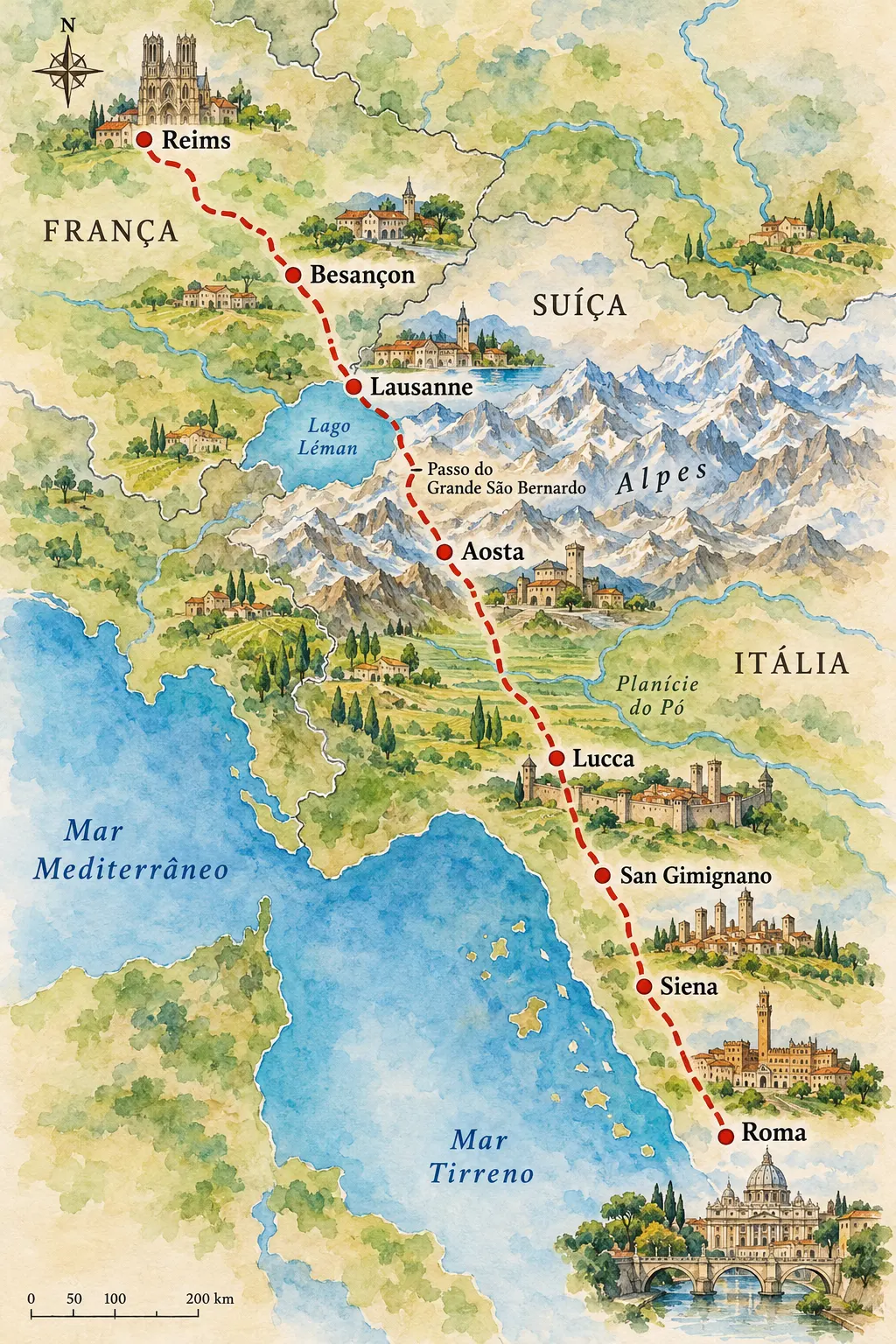
Burgundy – na poti z imenom Via Francigena on foot: from Canterbury to Rome

The ancient pilgrims’ route to Rome: from Canterbury Cathedral, through France and Switzerland, over the Alps via the Great St Bernard Pass and through Tuscany to St. Peter’s Square.

Zemljevid je ilustrativen in ni v merilu. Dotaknite se mesta, da odprete njegovo stran.
Via Francigena on foot: from Canterbury to Rome – ilustrirani zemljevid
Več o poti – Via Francigena on foot: from Canterbury to Rome
Odkrijte druge destinacije Iskanje po zvezni državi in mestu

Več kot vodnik