

Historic monument
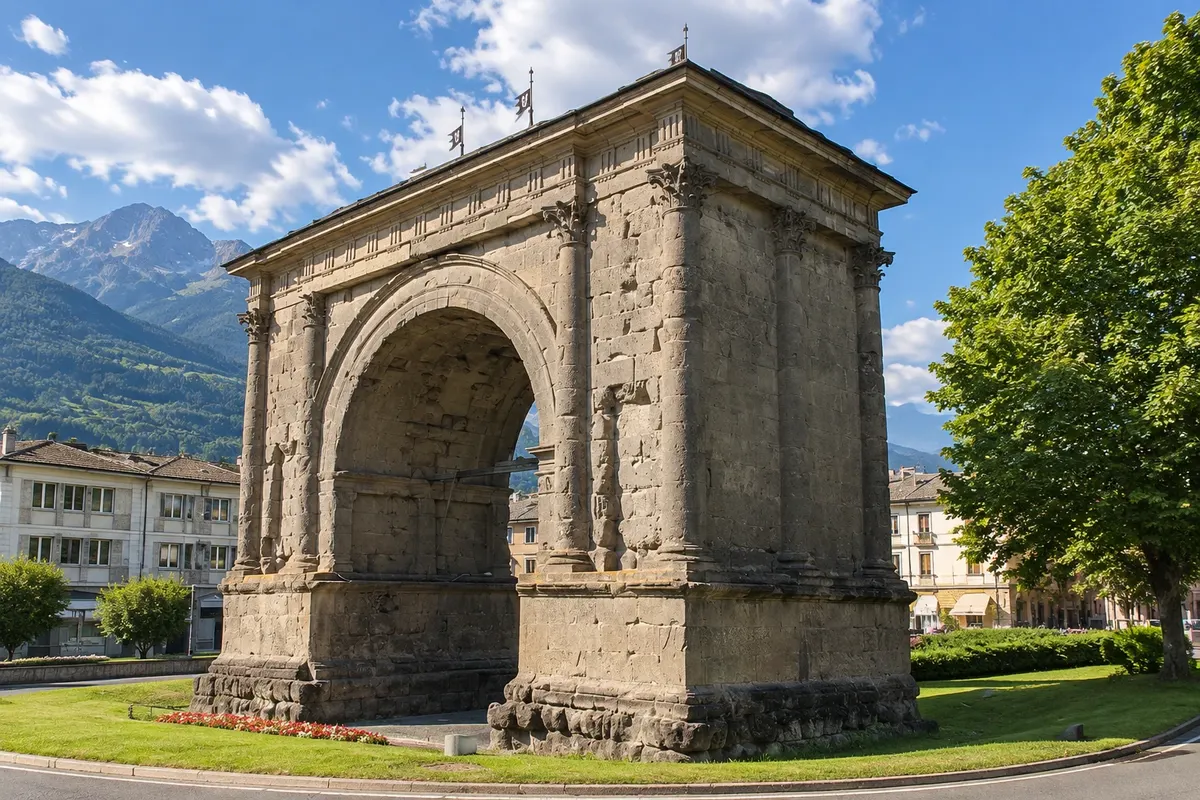
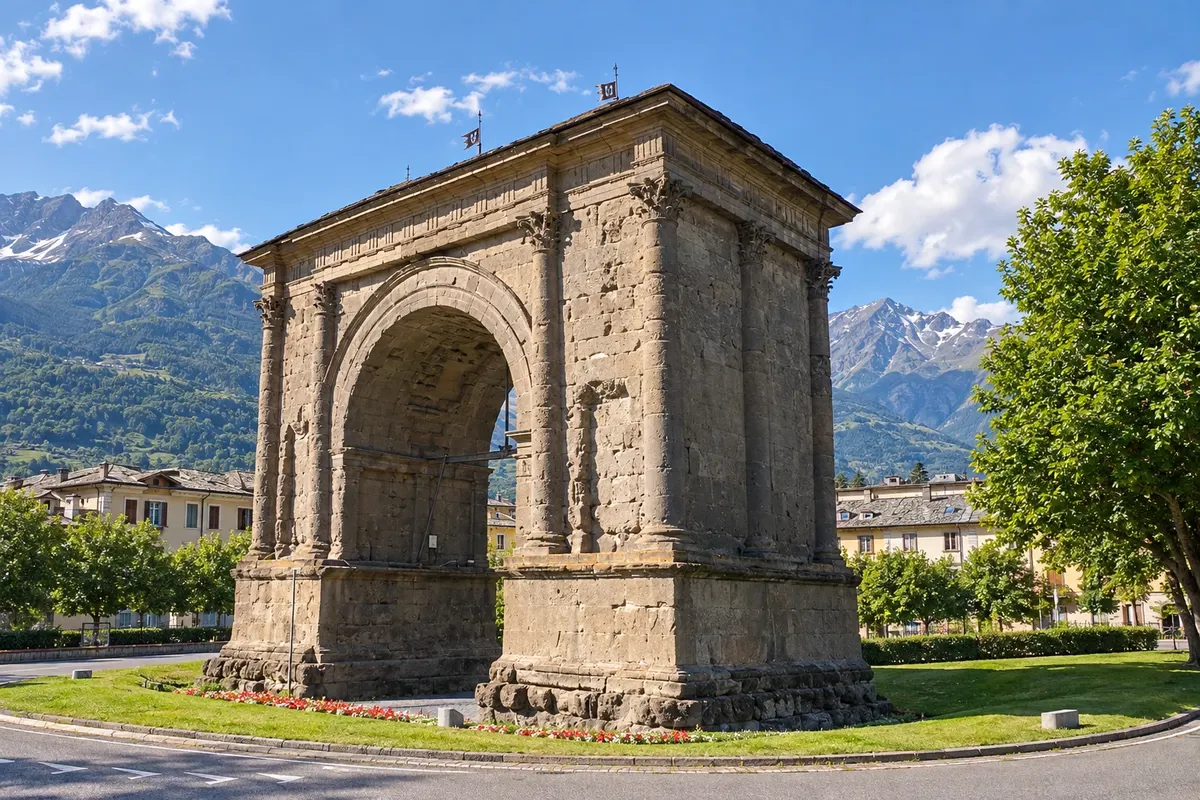
Arch of Augustus
Roman arch from 25 BC, built to celebrate the victory over the Salassi and the founding of Augusta Praetoria, with a crucifix hanging beneath the vault.

 Išči
 Brazilija
 Antarktika
 Argentina
 Bolivija
 Čile
 Kolumbija
 Ekvator
 Gvajana
 Francoska Gvajana
 Falklandski otoki (Malvini)
 Paragvaj
 Peru
 Surinam
 Urugvaj
 Venezuela
 Nemčija
 Avstrija
 Belgija
 Hrvaška
 Danska
 Slovaška
 Slovenija
 Španija
 Finska
 Francija
 Grčija
 Nizozemska
 Madžarska
 Irska
 IslandijaItalija
 Luksemburg
 Norveška
 Poljska
 Portugalska
 Združeno kraljestvo
 Češka
 Švedska
 Švica
 Turčija
 Bermudi
 Kanada
 Združene države Amerike
 Grenlandija
 Mehika
 Sveta Peter in Mihael
 Dominikanska republika
 JaponskaTurčija
 Južnoafriška republika
 Egipt
 Avstralija
 Fidži
 Nova Zelandija
 Papua Nova Gvineja
Vale de Aosta · Italija Capital
Destinacija: Turin.
Na fotografiji: Arco de Augusto, Aosta
Illustrative images. The pictures in this guide are illustrations based on the real place, not photographs, and may differ from it.
Mesto
Aosta is the capital of the Vale de Aosta, the smallest region of Italy, surrounded by the Alps. Founded by the Romans in 25 BC as Augusta Praetoria, it preserves the Arco de Augusto, the Porta Praetoria, the Roman theatre and the forum cryptoporticus. The collegiate church of Santo Urso has a Romanesque cloister, and the cathedral houses a treasure museum. On the outskirts, the megalithic area of Saint-Martin-de-Corléans has stelae over 4,000 years old. A cable car climbs from the center to Pila, and Fénis Castle is 12 km away. Italian and French are spoken, the two official languages.
V vodniku še ni nastanitev – Aosta.
kako do tja · koliko dni · načrt poti · vprašanja
Rotas entre países
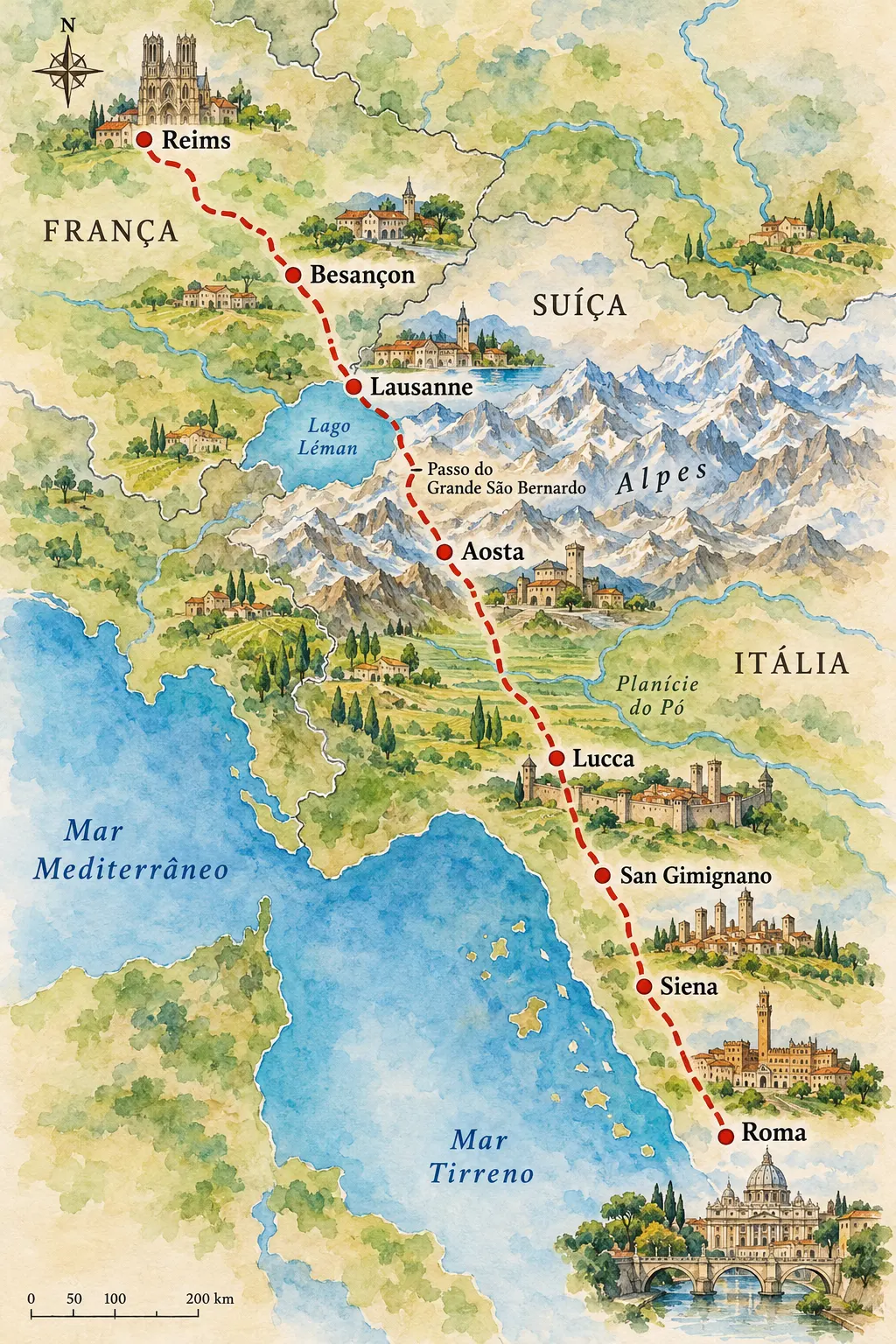
The ancient pilgrims’ route to Rome: from Canterbury Cathedral, through France and Switzerland, over the Alps via the Great St Bernard Pass and through Tuscany to St. Peter’s Square.
Doživite kraj
Roman arch from 25 BC, built to celebrate the victory over the Salassi and the founding of Augusta Praetoria, with a crucifix hanging beneath the vault.
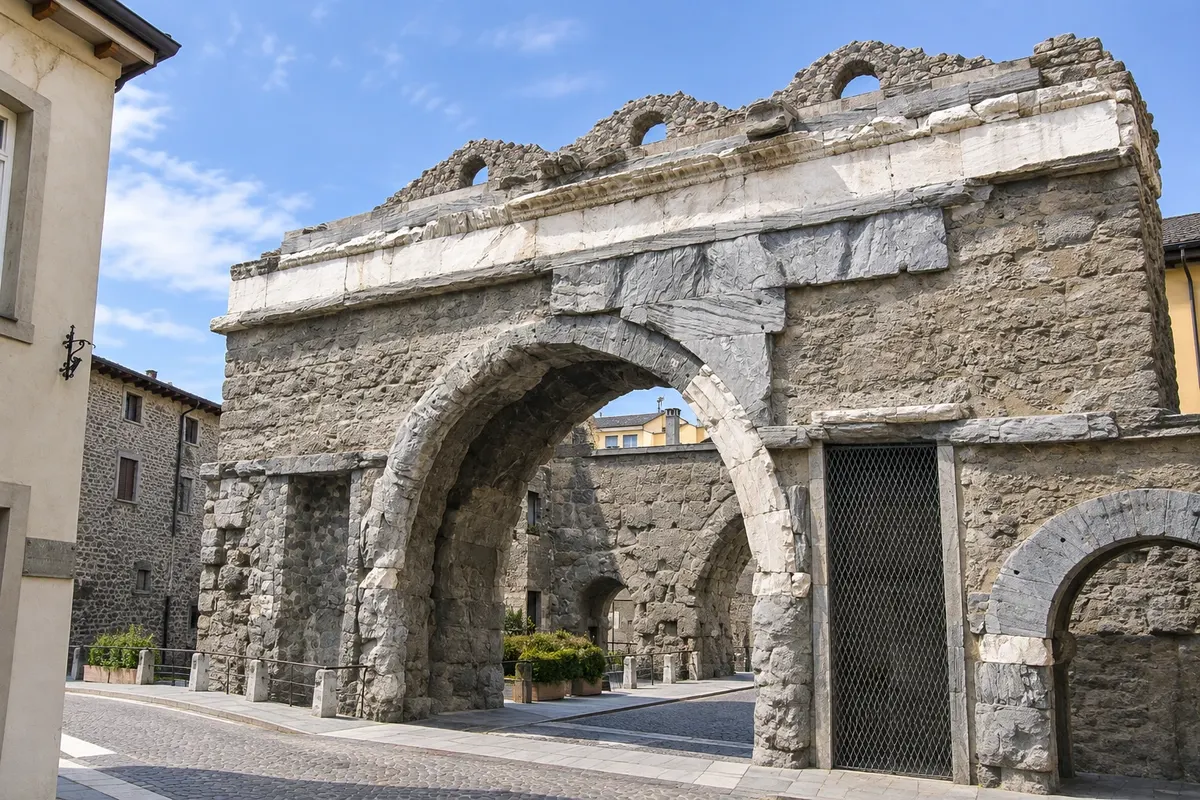
The eastern gate of the Roman town, dating from 25 BC, with two sets of arches that closed a parade square, and one of the best-preserved Roman gates.
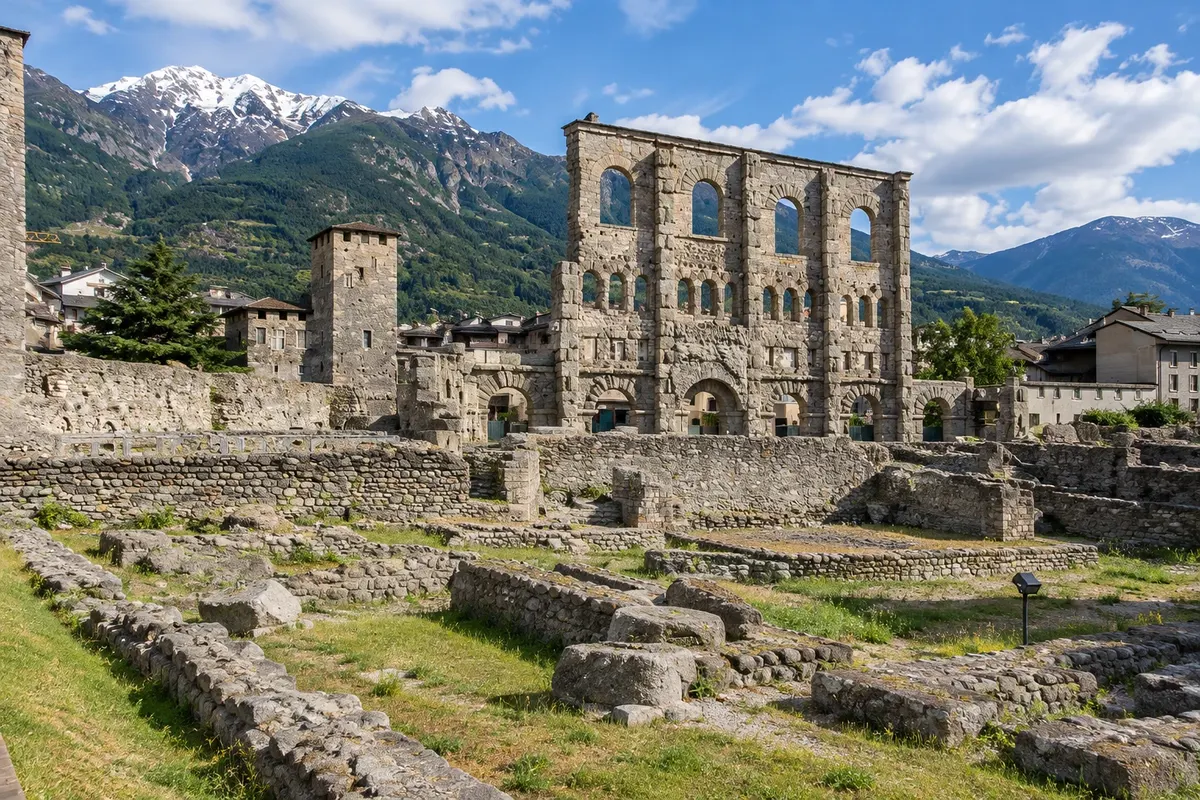
Teatro romano from the 1st century, next to the Porta Praetoria, with a 22-meter-high stone façade, arcades and windows, and space for about 4,000 spectators.
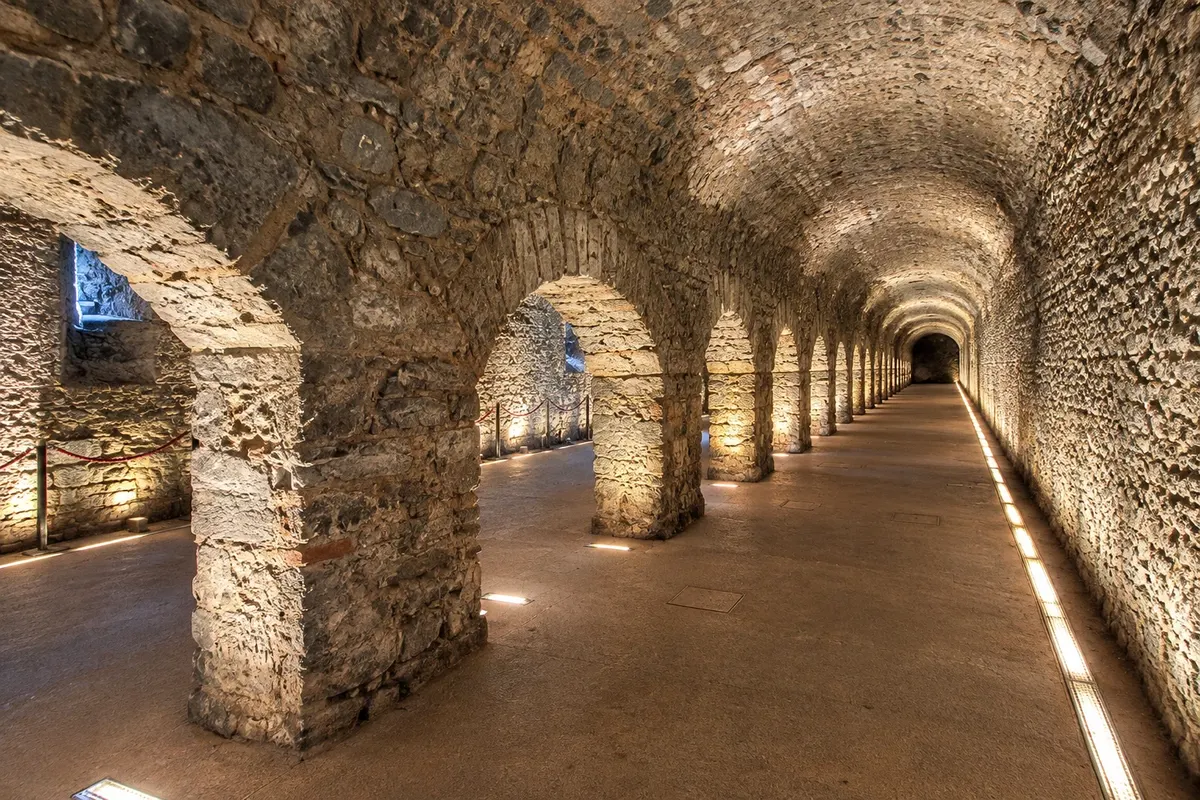
Roman underground gallery of the forum of Augusta Praetoria, with two naves and arches on three sides of a rectangle, next to the cathedral.
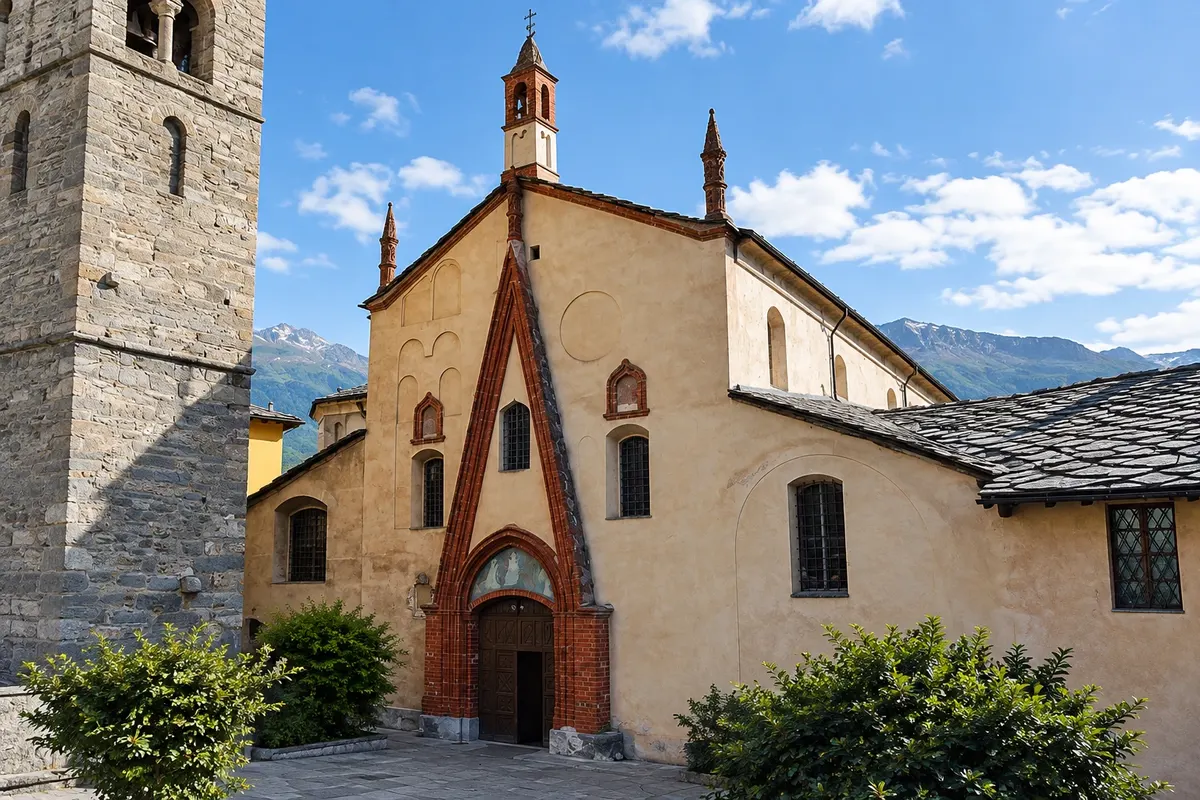
Conjunto de Santo Urso, with a church of early Christian origin, 11th‑century frescoes above the nave, a crypt, a 44‑metre Romanesque bell tower and the cloister with carved capitals from the 12th century.
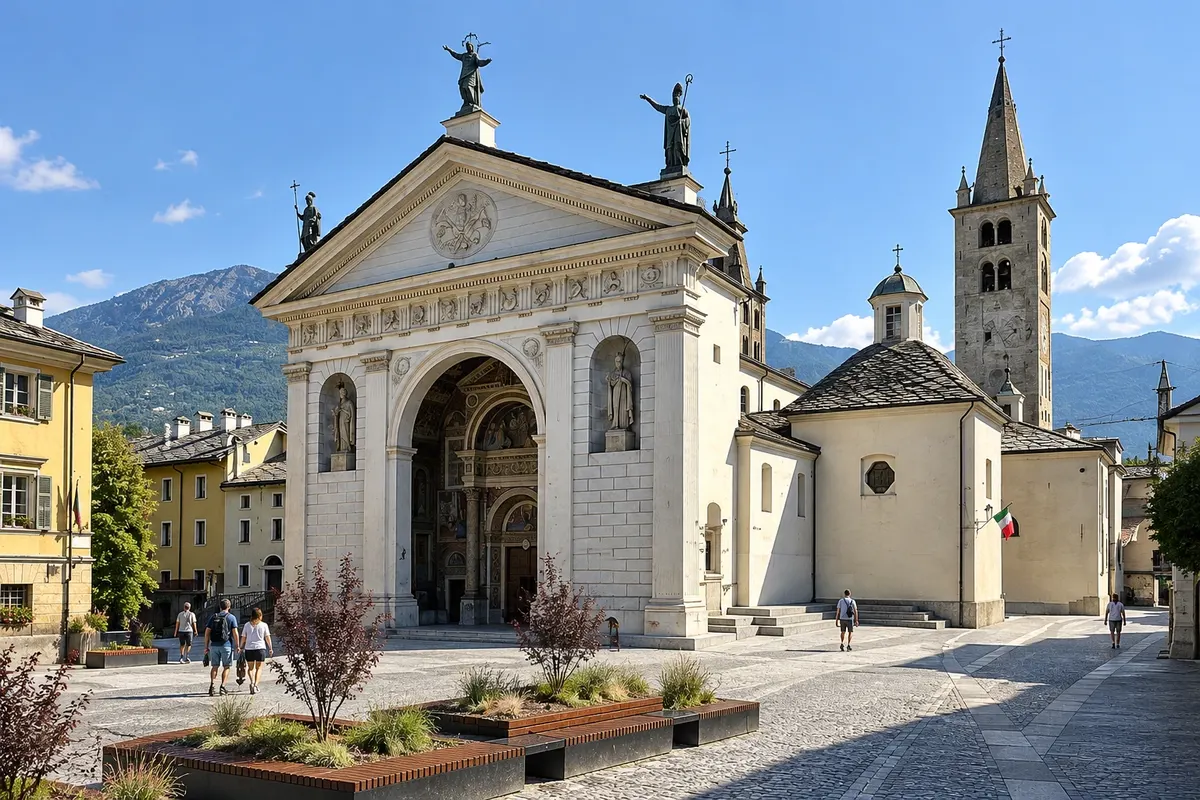
A catedral de Aosta, originating in the 4th century and rebuilt in the 11th, with a neoclassical façade, medieval floor mosaics and the treasure museum, which houses the original crucifix from the Arco de Augusto.
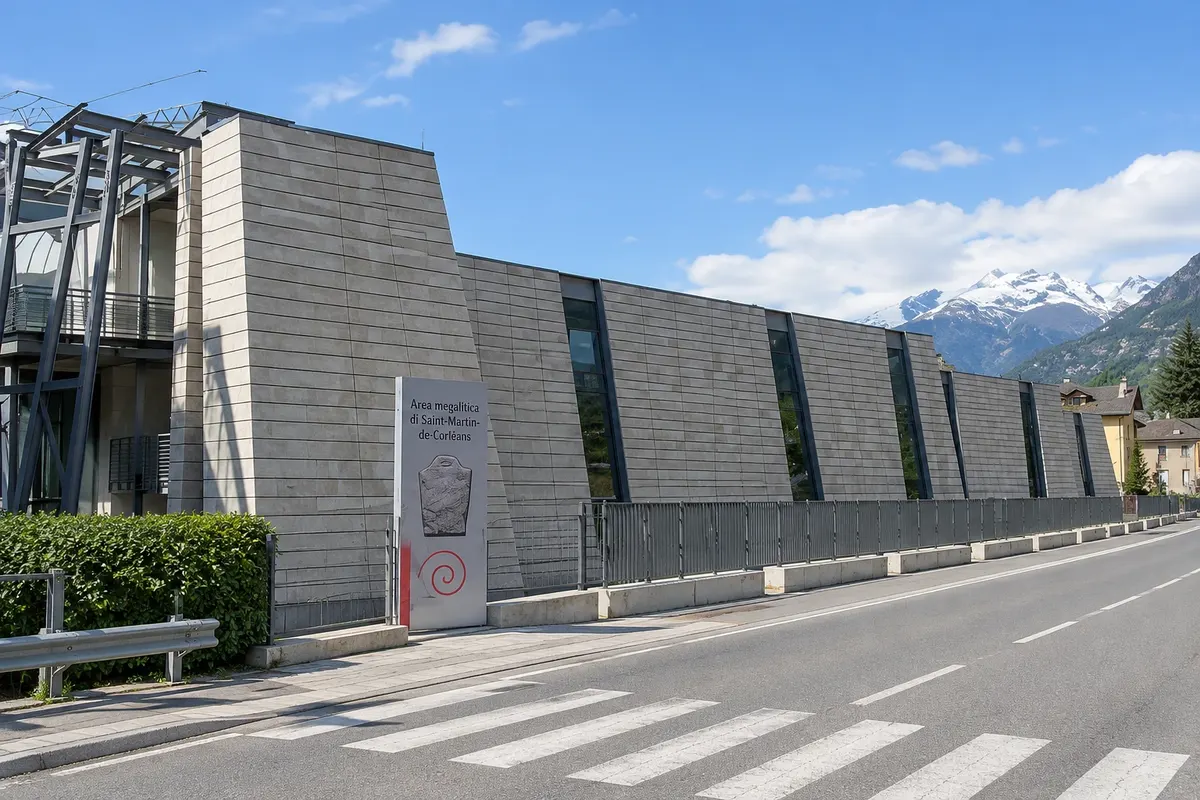
Prehistoric site on the west outskirts of Aosta, covered by a large pavilion-museum, with anthropomorphic stelae, tombs and plough marks more than 4,000 years old.
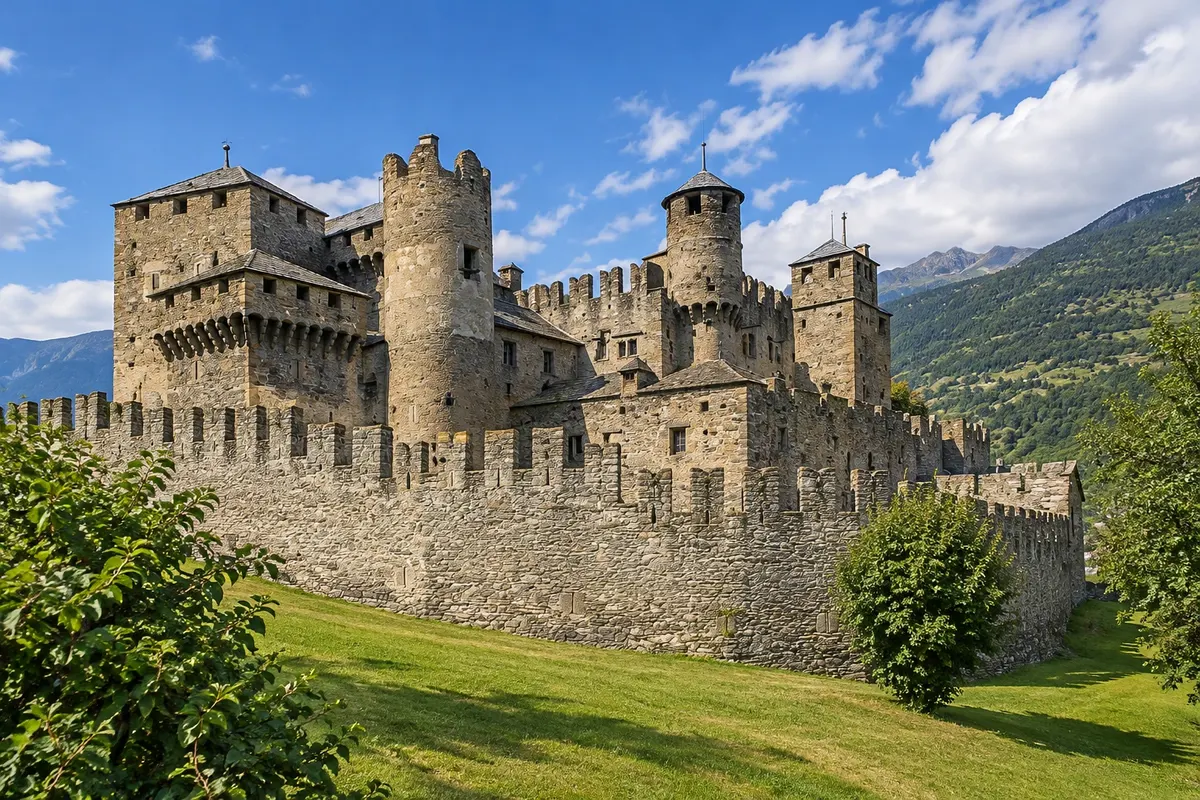
Castelo dos Challant, 12 km from Aosta, with double walls, towers and a courtyard with Gothic frescoes of Saint George and of sages holding bands inscribed with proverbs.
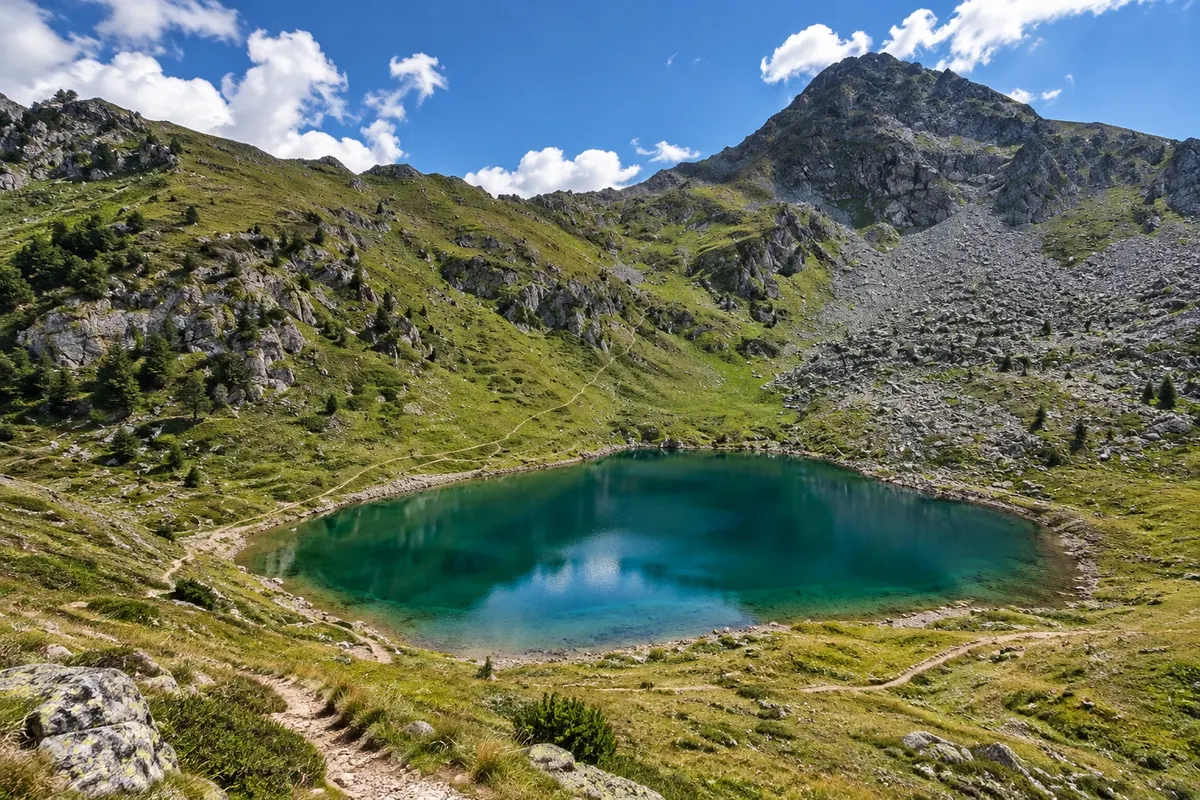
Skiing and hiking station at about 1,800 metres, linked to the centre of Aosta by cable car, with views of the Alps from Mont Blanc to the Cervino.
Pred odhodom
Aosta – Aosta Valley Destinacija Turin Capital
Razdalje so približne. Pred potovanjem preverite lete in vozne rede avtobusov, vlakov ali ladij.
Confirm before booking. The nearest airports are Turim (about 115 km), Genebra (about 140 km via the Mont Blanc tunnel), and Milan Malpensa (about 160 km). By train you can reach Aosta from Turim in about 2 hours, with a change in Ivrea on some services. Buses link Aosta to Turim, Milan and Courmayeur. By car, take the A5 motorway, or the Great St Bernard tunnel road coming from Switzerland.
One day is enough for the Roman monuments, Santo Urso and the cathedral. With two days, visit the megalithic area and Fénis Castle, or take a trip up to Pila. Aosta also works as a base for the valleys of Mont Blanc, Gran Paradiso and Cervino.
From June to September is best for hiking in the mountains and visiting castles with long daylight. From December to April for skiing in Pila and the valley resorts, depending on snow. At the end of January, the Feira de Santo Urso fills the streets with wooden handicrafts.
The seasons shown are the most usual ones; nature doesn't always follow the calendar.
For the city, no: the monuments are in the center, a few minutes' walk from each other, and the Pila cable car departs near the station. For the castles and side valleys, a car is helpful; there are regional buses but with fewer schedules.
Predlog poti
Pot povezuje znamenitosti na tej strani. Za oglede boste imeli dovolj časa.
Start at the Arco de Augusto and enter the Santo Urso complex, with its Romanesque cloister and 11th-century frescoes above the nave. Then proceed to the Porta Praetoria.
Visit the Roman theatre with its large stone façade, then the forum cryptoporticus, the Roman underground gallery beside the cathedral.
See the cathedral and the treasure museum, and finish at Piazza Émile Chanoux, the city centre, with cafés under the arcades.
Central restaurants serve the valley cuisine: fonduta with fontina cheese, carbonade, Valpelline-style soup and the café à valdostana, served in a wooden cup with several spouts.
Dan 1
Arco de Augusto, Santo Urso and Porta Praetoria.
Roman theatre and forum cryptoporticus.
Cathedral, treasure museum and Piazza Chanoux.
Dinner with the cuisine of the Vale de Aosta.
Dan 2
Take a bus or taxi to the megalithic area of Saint-Martin-de-Corléans, with stelae and prehistoric tombs under a large shelter.
Continue to Fénis, about 12 km away, for the guided tour of the castle, with its double walls and the courtyard frescoes.
Return to Aosta via the Dora Baltea valley, with mountains and terraced vineyards.
Restaurants and enotecas offering wines from the Vale de Aosta.
Check before you go. Opening hours and days change, and places may close for renovations, holidays or events. This itinerary is a suggestion from Cidade Turismo, not a commitment: plan yours by checking directly with each place you intend to visit.
Pred odhodom
Italian and French, the two official languages of the Vale de Aosta, plus the Franco-Provençal dialect. Signs are usually in both languages.
By train in about 2 hours, with a change in Ivrea on some services, or by bus. By car via the A5 it's about 115 km.
The Arco de Augusto, the Porta Praetoria, the Roman theatre, the cryptoporticus, the collegiate church of Santo Urso, the cathedral and the megalithic area of Saint-Martin-de-Corléans.
Yes. Courmayeur, at the foot of Mont Blanc, is about 35 km away, with buses and road access via the A5.
On January 30 and 31, with artisans from the valley selling wooden goods, basketry and textiles along the streets of the centre.
Več kot vodnik


