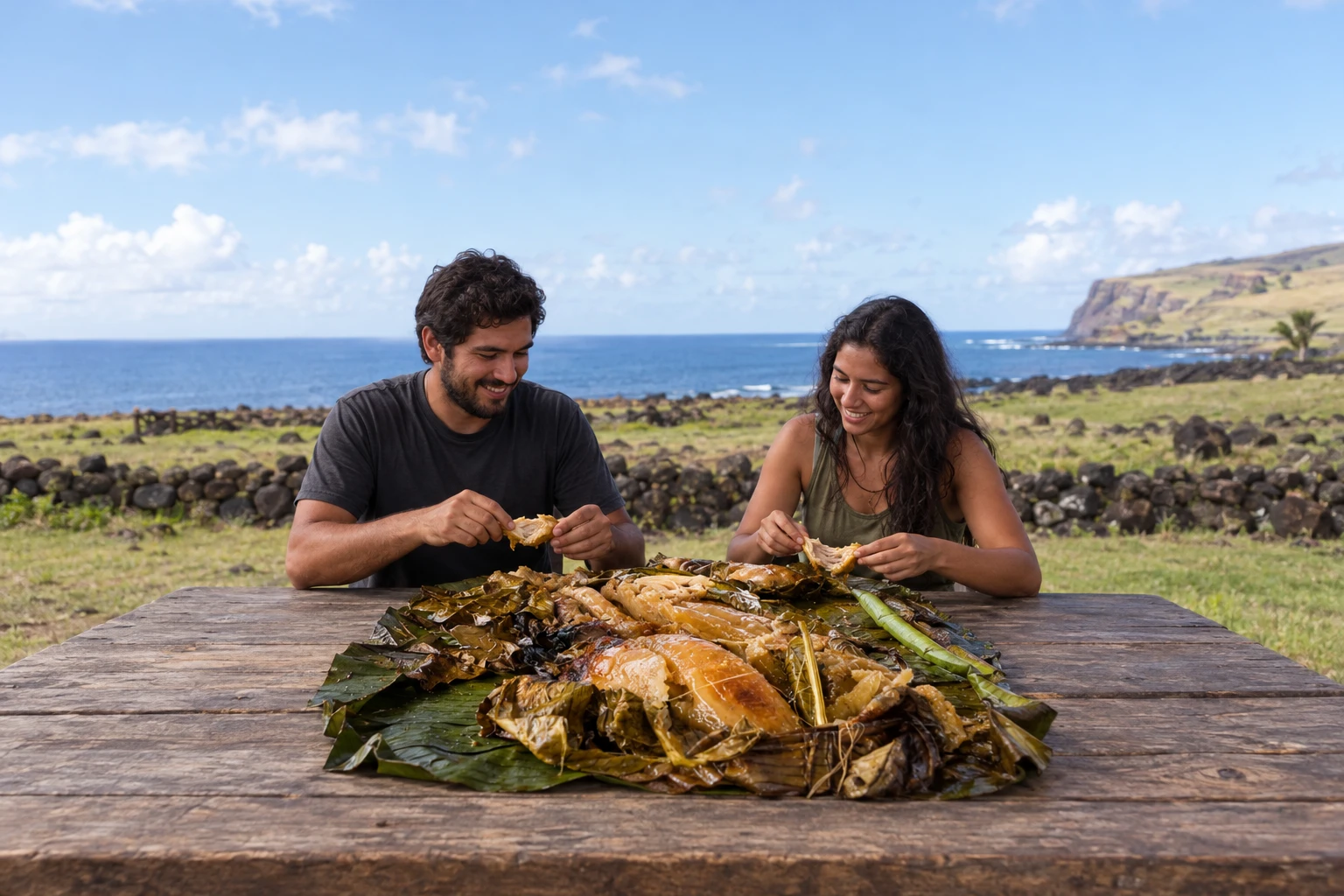
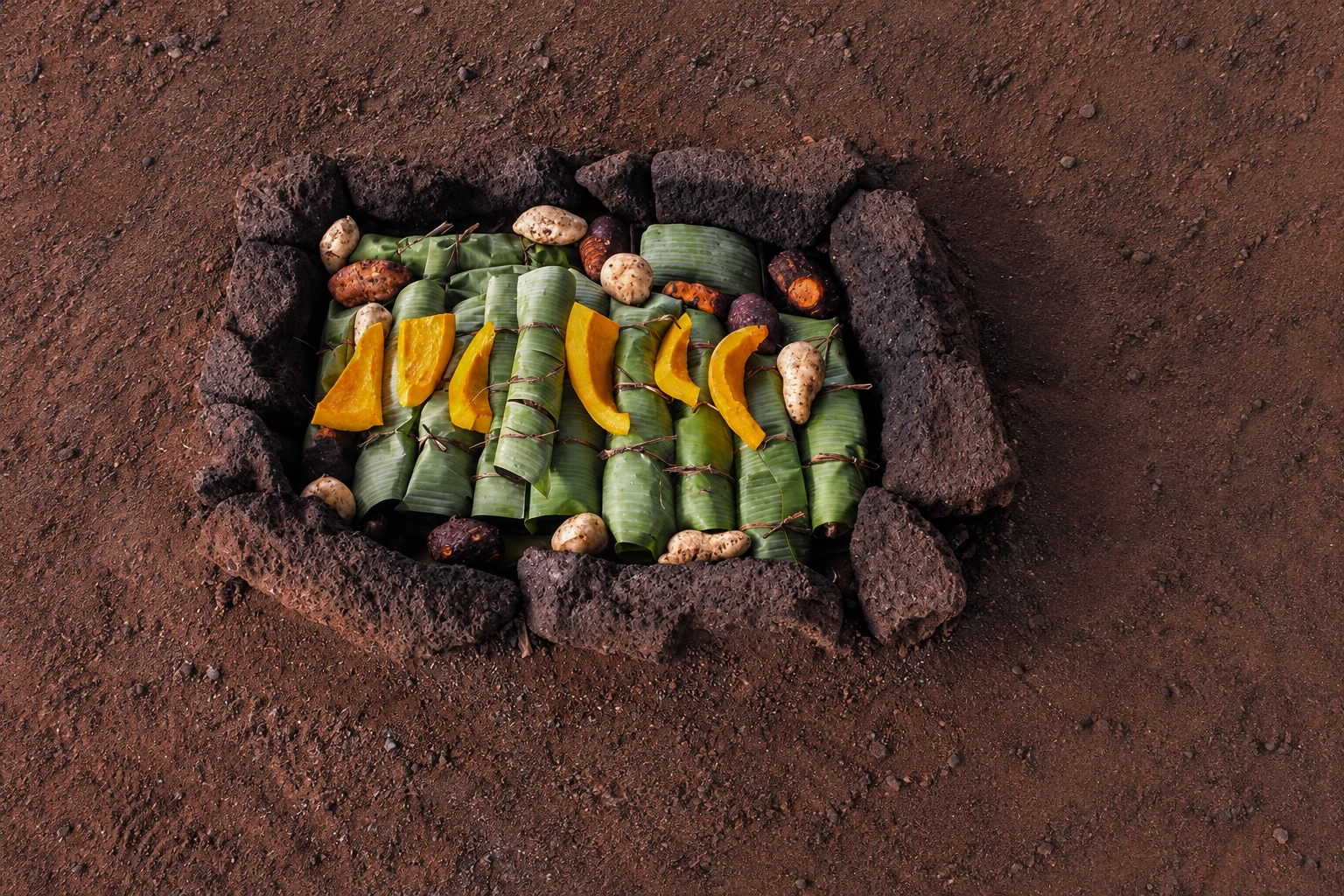
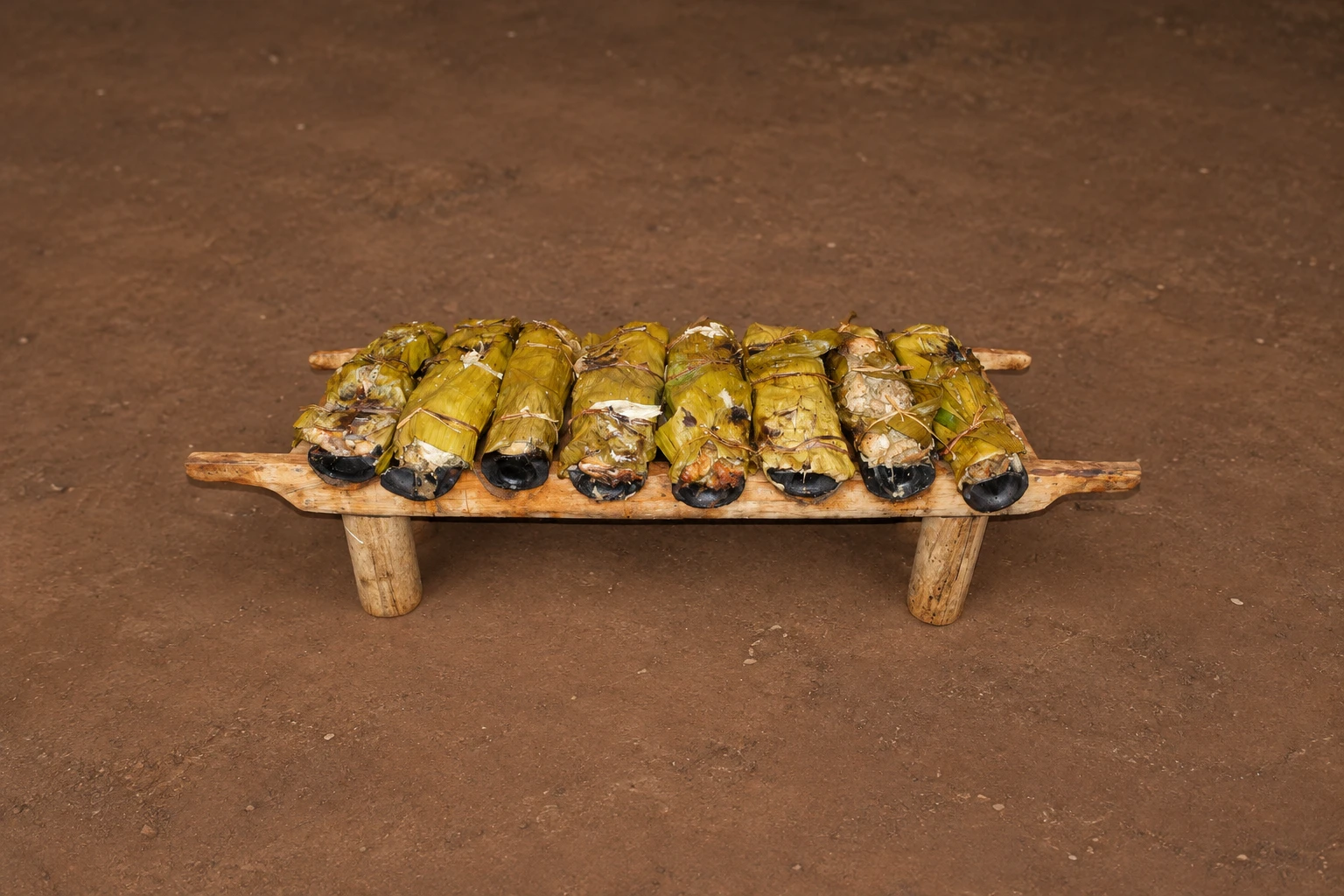
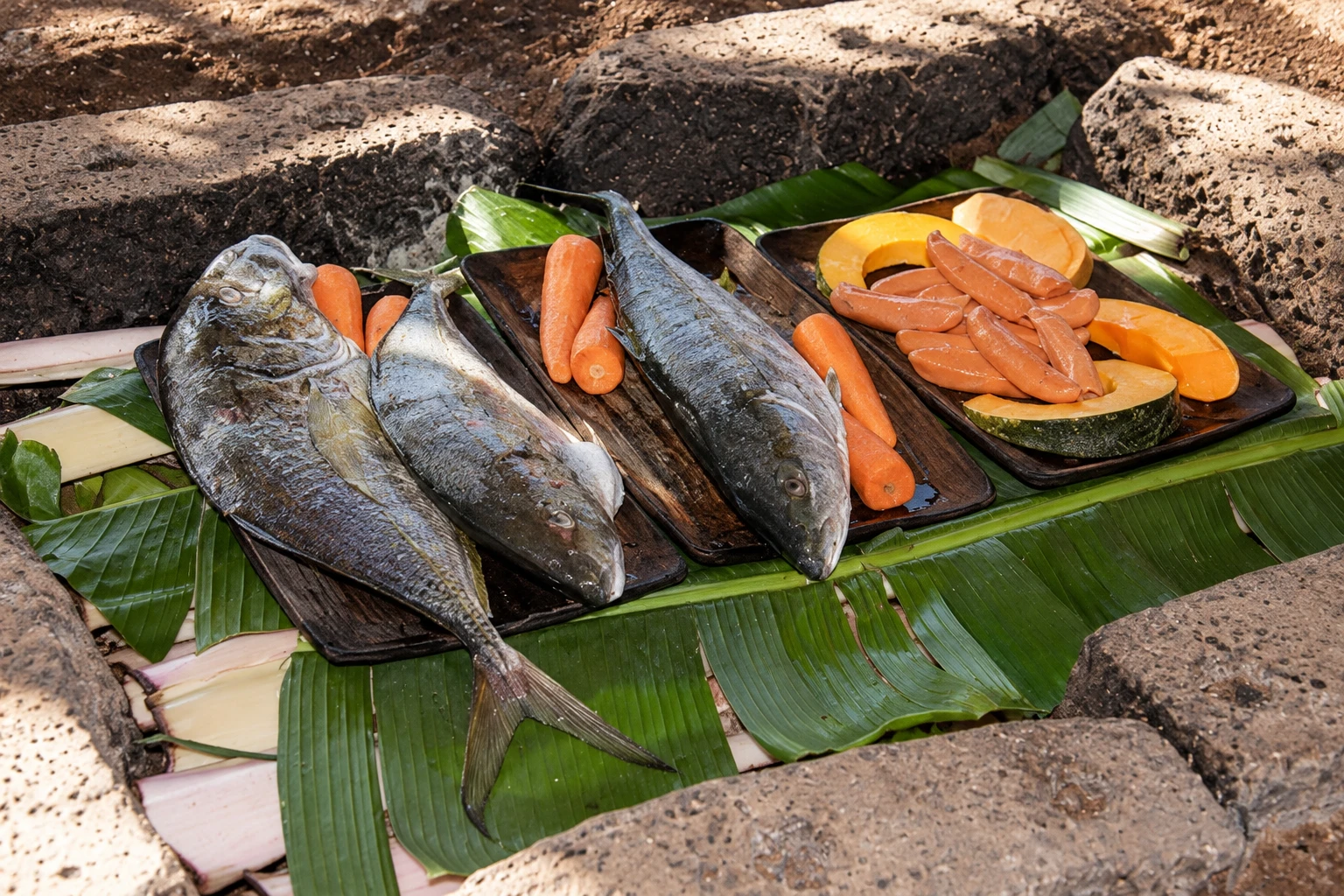
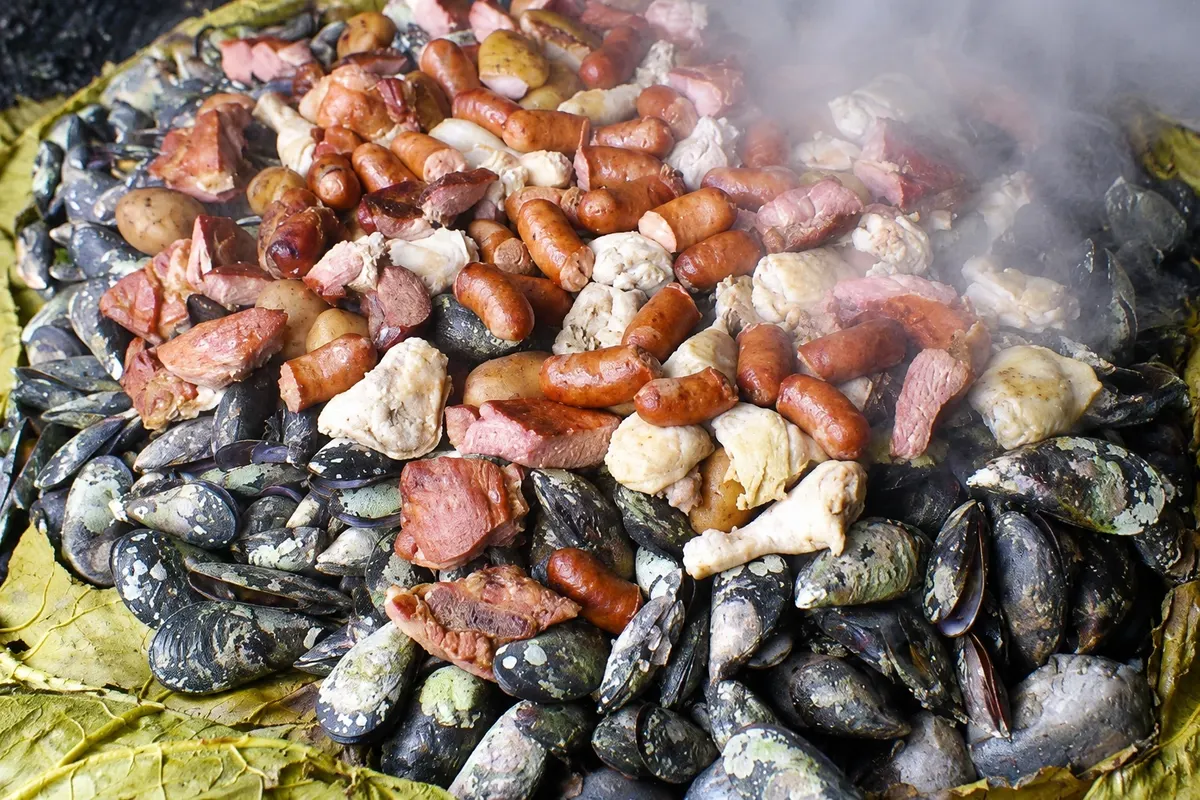
The umu is the traditional way of cooking on Rapa Nui, the Polynesian island of Chile in the middle of the Pacific. A hole is dug in the ground, lined with volcanic stones, and a fire is lit until the stones become very hot. Banana leaves are placed over them and, on top, the food: meats, fish, sweet potato, taro and banana. Everything is covered again with leaves and earth and cooks slowly from the steam and the heat of the stones.
Chile’s official tourism presents the umu as the most traditional preparation of Rapanui cuisine, whose staples are tuna, sweet potato, taro and banana. Educational materials from Chile’s Ministry of Education for the Rapanui language treat the "umu" as the equivalent of curanto and describe several types, each with its purpose.
The umu has a communal and ritual character. The umu tahu is made to ask for protection and good fortune at the start of an activity, such as the launching of a boat or the first use of a net; the umu hatu is to give thanks when it ends. There are umu for weddings, births and to honor the dead.
During the Tapati, the Rapanui cultural festival held in February in Hanga Roa, the umu is the central preparation for competitions and celebrations.


 Brazilija
 Antarktika
 Argentina
 Bolivija
 Kolumbija
 Ekvator
 Gvajana
 Francoska Gvajana
 Falklandski otoki (Malvini)
 Paragvaj
 Peru
 Surinam
 Urugvaj
 Venezuela
 Nemčija
 Avstrija
 Belgija
 Hrvaška
 Danska
 Slovaška
 Slovenija
 Španija
 Finska
 Francija
 Grčija
 Nizozemska
 Madžarska
 Irska
 Islandija
 Italija
 Luksemburg
 Norveška
 Poljska
 Portugalska
 Združeno kraljestvo
 Češka
 Švedska
 Švica
 Turčija
 Bermudi
 Kanada
 Združene države Amerike
 Grenlandija
 Mehika
 Sveta Peter in Mihael
 Dominikanska republika
 Japonska
 Južnoafriška republika
 Egipt
 Avstralija
 Fidži
 Nova Zelandija
 Papua Nova Gvineja