Porta Nigra
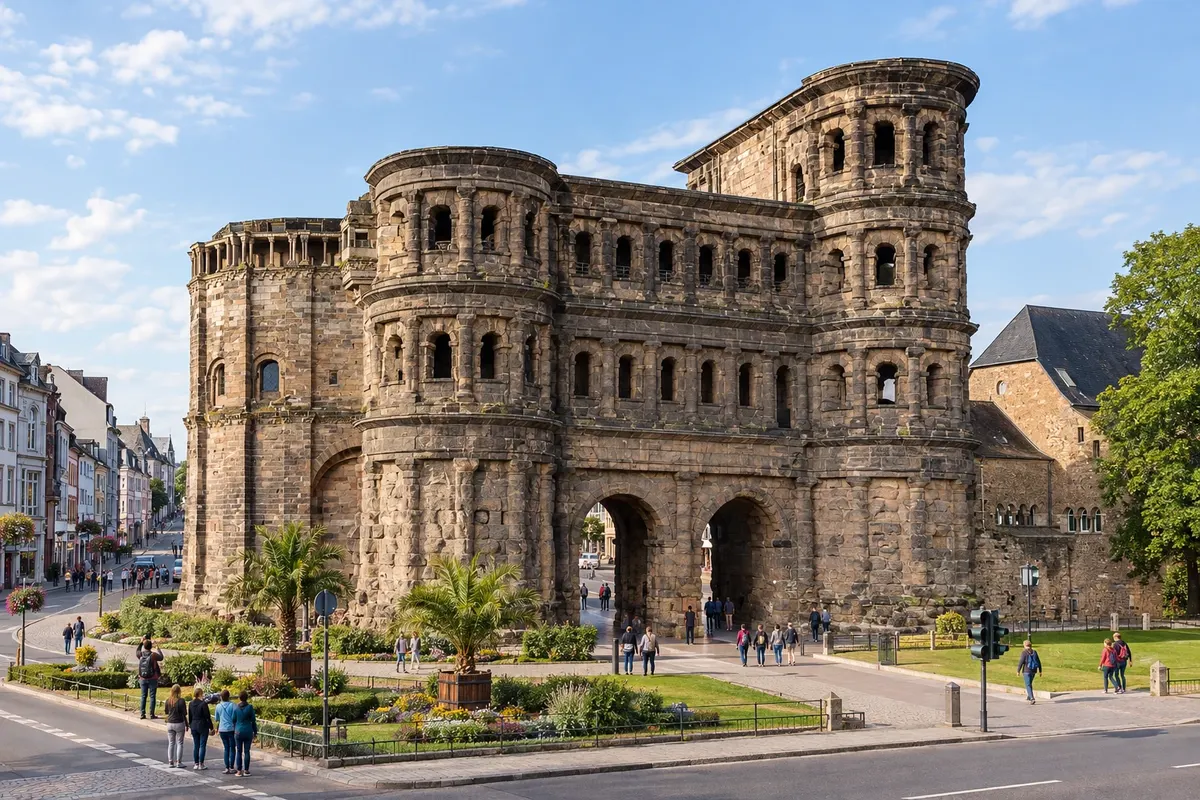
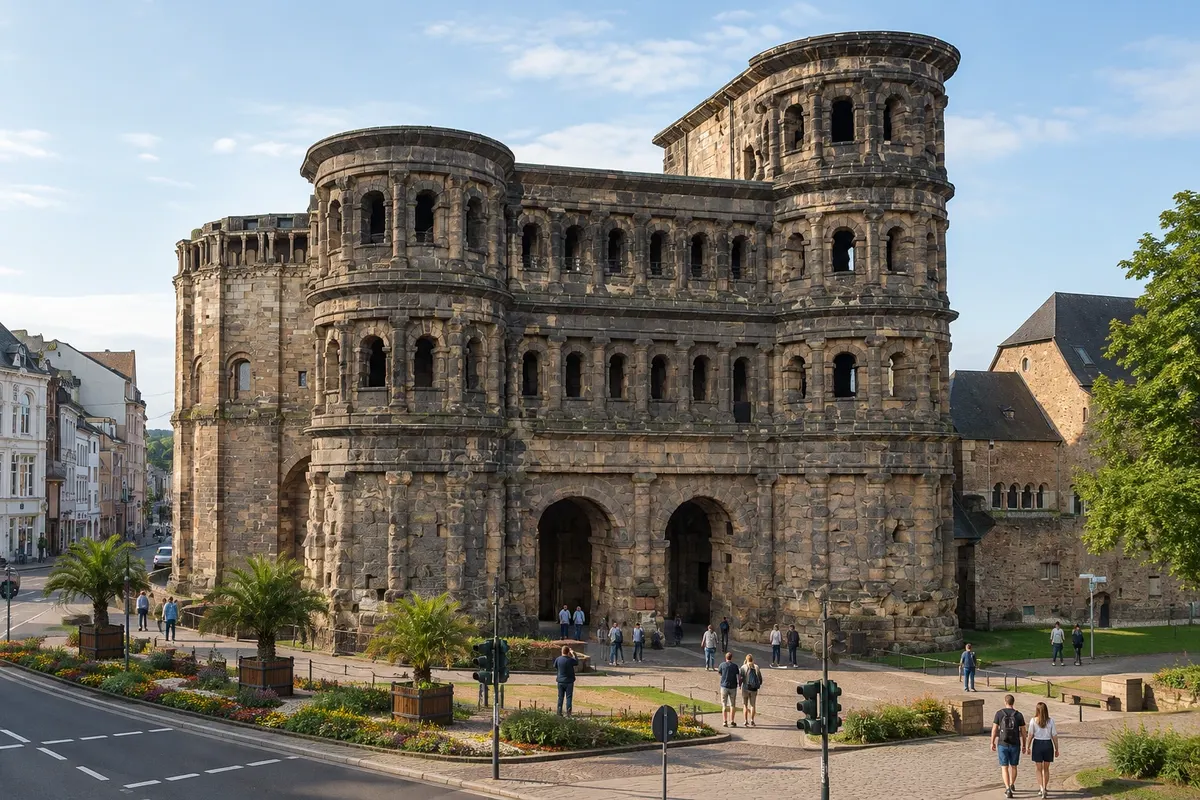
Roman sandstone gate built around AD 170, the only one of the four gates of the old Augusta Treverorum still standing. It became a church in the Middle Ages and was returned to its Roman form by order of Napoleon.
Antarktika
Renânia-Palatinado · Nemčija
Destinacija: Moselle Valley.
Na fotografiji: Porta Nigra, Trier
Illustrative images. The pictures in this guide are illustrations based on the real place, not photographs, and may differ from it.
Mesto
Trier, on the banks of the Mosela and near Luxembourg, was founded by the Romans as Augusta Treverorum and is considered the oldest city in Germany. Porta Nigra, Konstantinbasilika, Kaiserthermen, the amphitheatre, the Römerbrücke, the cathedral and Liebfrauenkirche are a UNESCO World Heritage Site. The Rheinisches Landesmuseum houses the Roman finds, and the house where Karl Marx was born has become a museum. The Hauptmarkt is the city centre.
V vodniku še ni nastanitev – Trier.
kako do tja · koliko dni · načrt poti · vprašanja
Doživite kraj
Roman sandstone gate built around AD 170, the only one of the four gates of the old Augusta Treverorum still standing. It became a church in the Middle Ages and was returned to its Roman form by order of Napoleon.
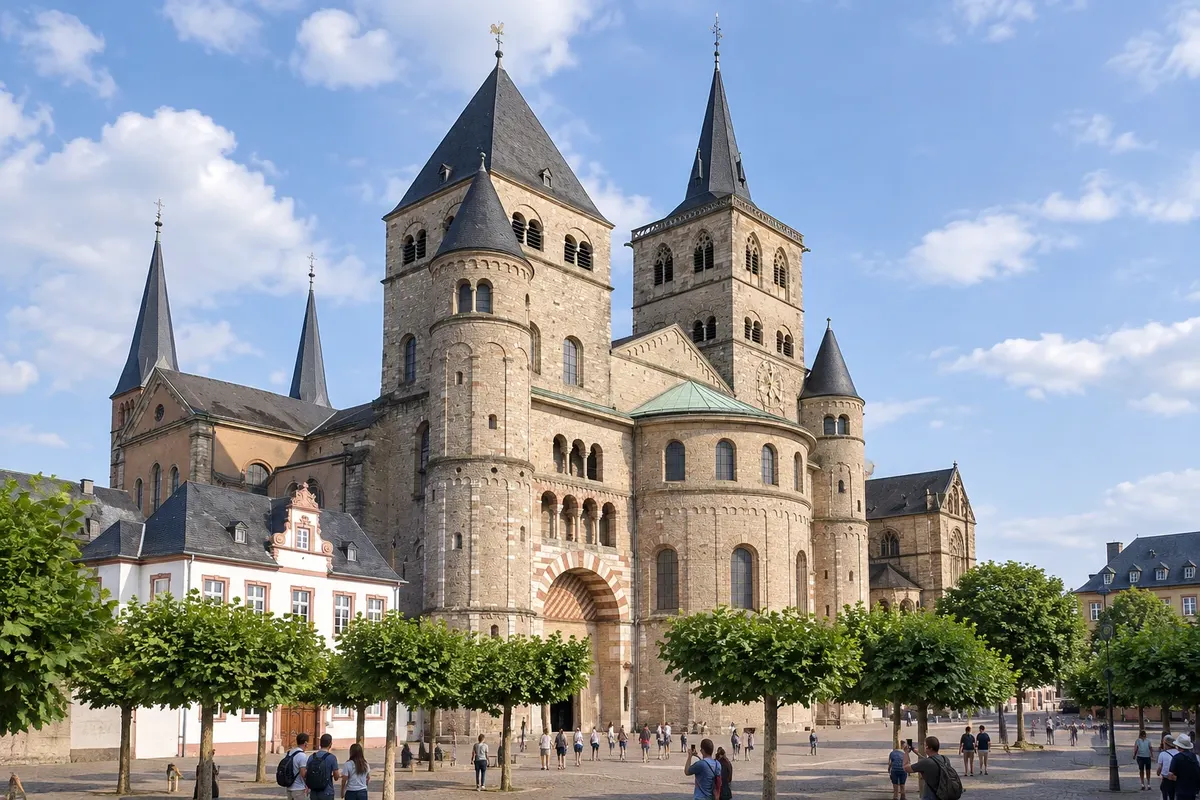
Catedral de São Pedro, with a Roman core from the 4th century, considered the oldest church in Germany still in use. It houses the Túnica Sagrada, a relic rarely displayed, and a treasury of sacred art.
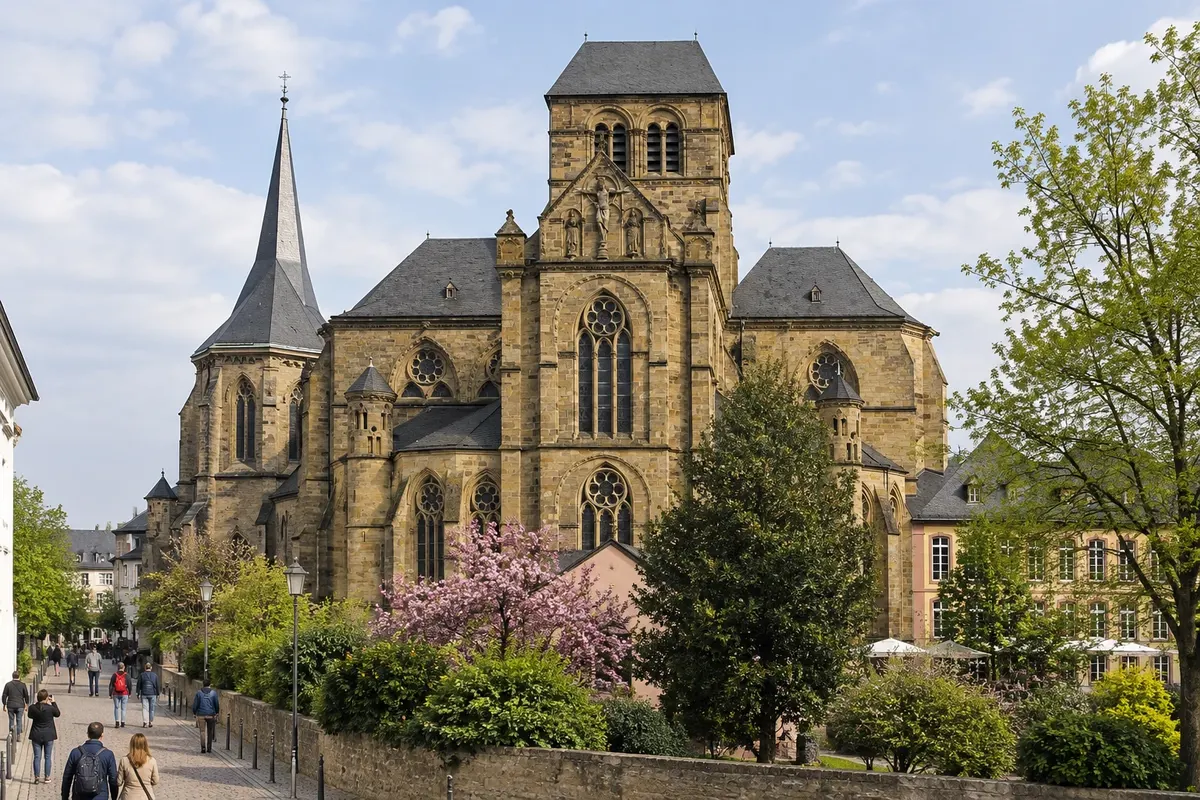
Igreja de Nossa Senhora, next to the cathedral, built from around 1230. Together with the Elisabethkirche of Marburg, it is considered the oldest Gothic church in Germany.
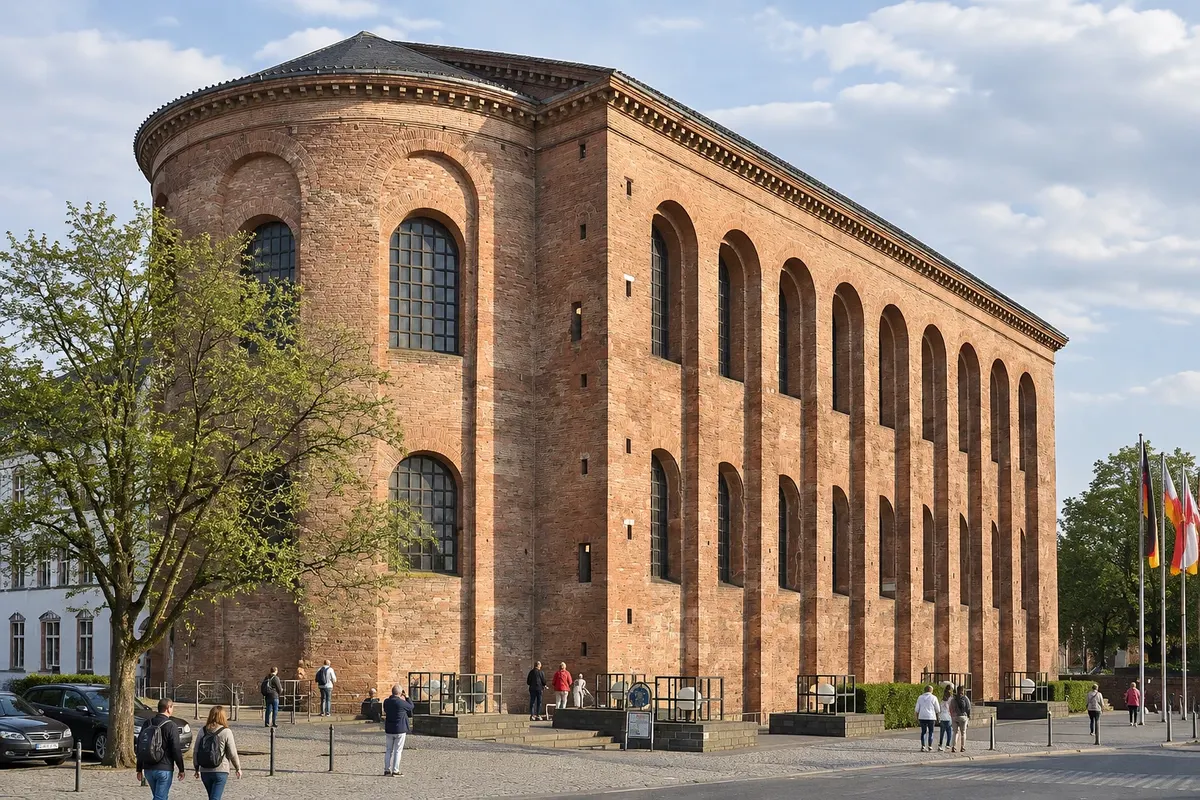
Former audience hall of Emperor Constantine's palace, from the early 4th century, measuring 67 meters long and 33 meters high. Since 1856 it has been used as a Protestant church.
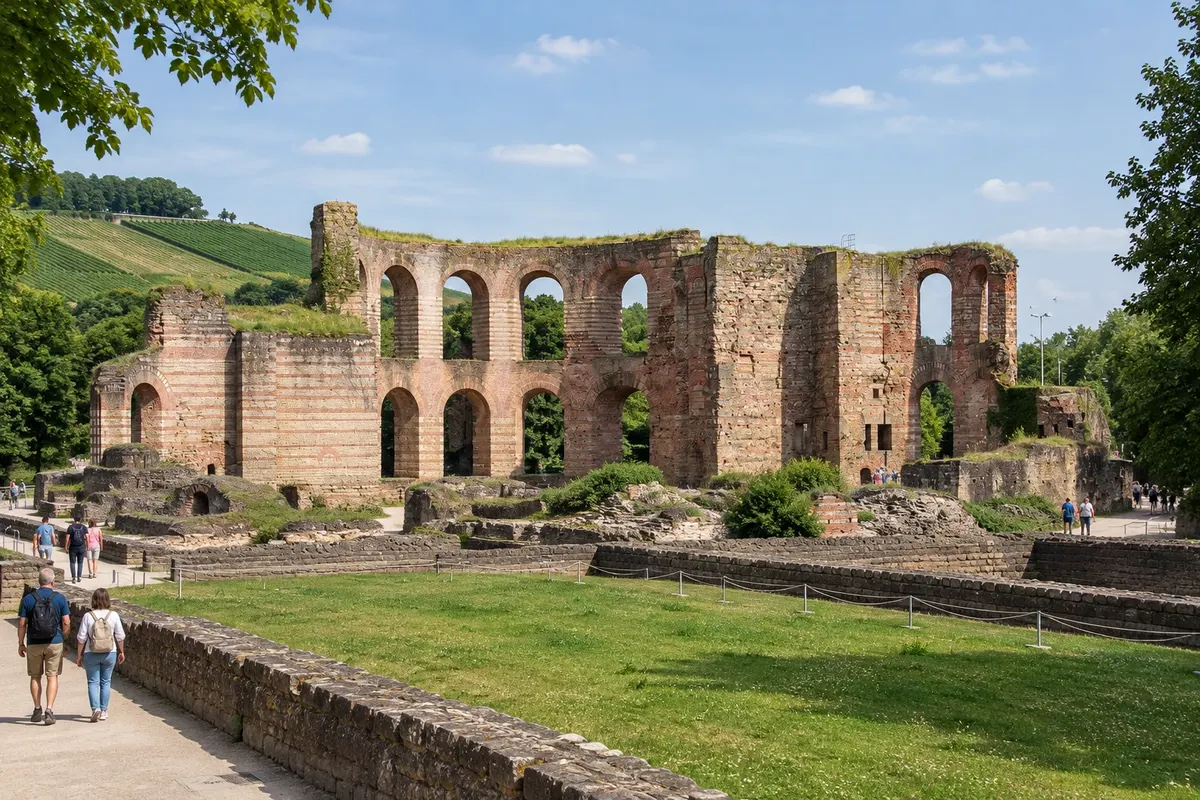
Imperial baths begun around the year 300 and never completed as bathing facilities. They became a Roman barracks and, in the Middle Ages, part of the city wall. The underground service galleries can be explored on foot.
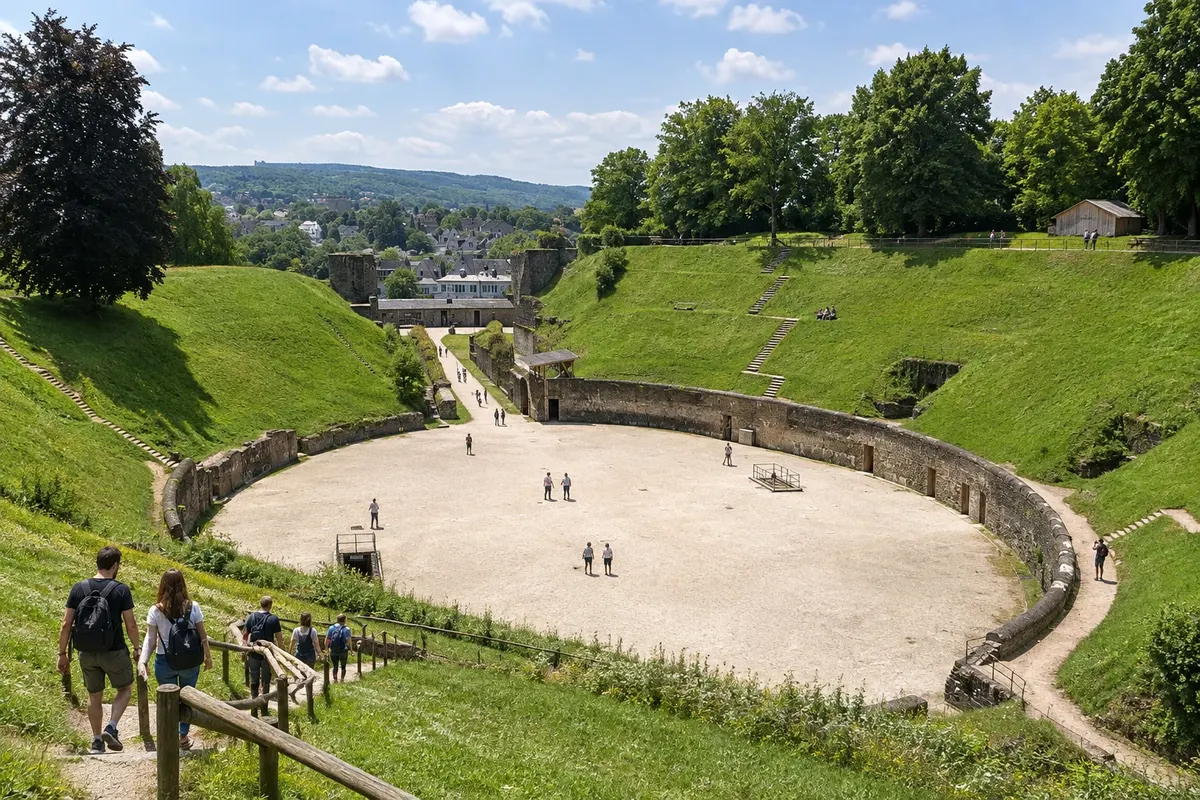
2nd-century Roman amphitheatre, with capacity for about 20,000 people, used for gladiator fights and animal spectacles. The cellar beneath the arena can be visited.
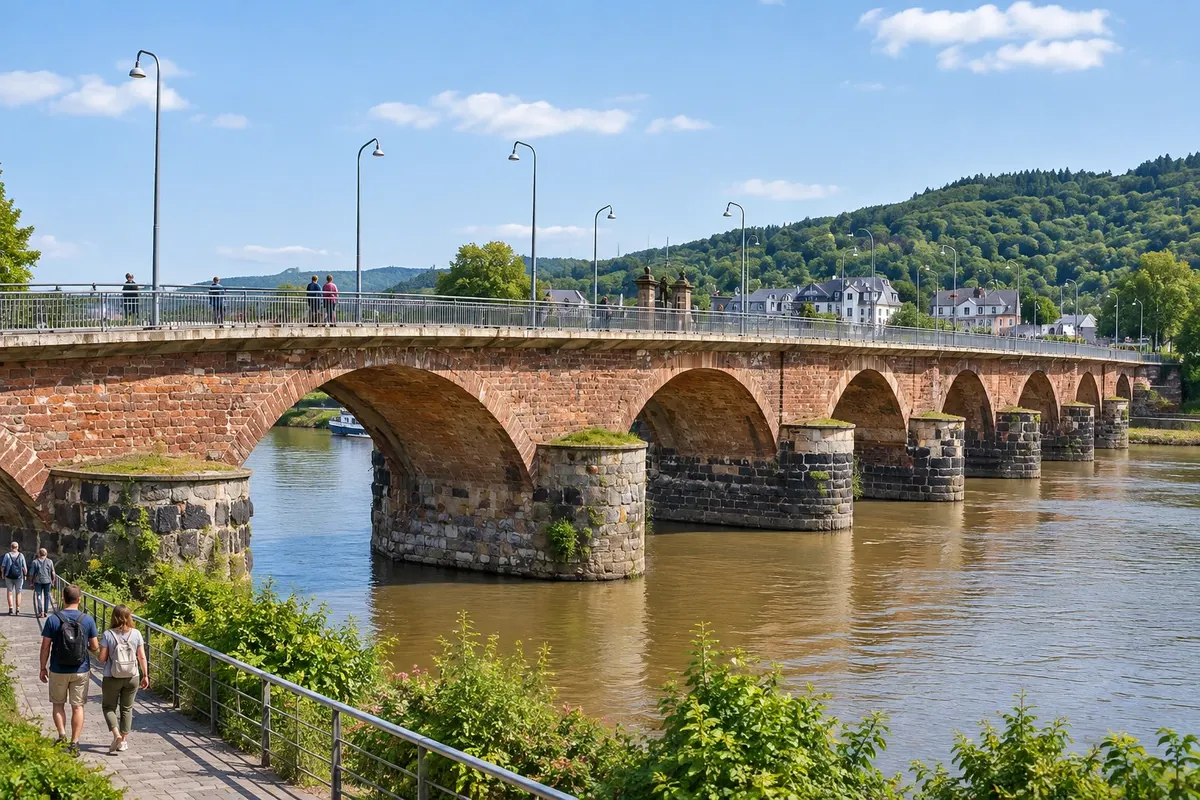
Bridge over the Mosela with stone piers built between 142 and 150 AD, considered the oldest bridge in Germany. It remains open to traffic.
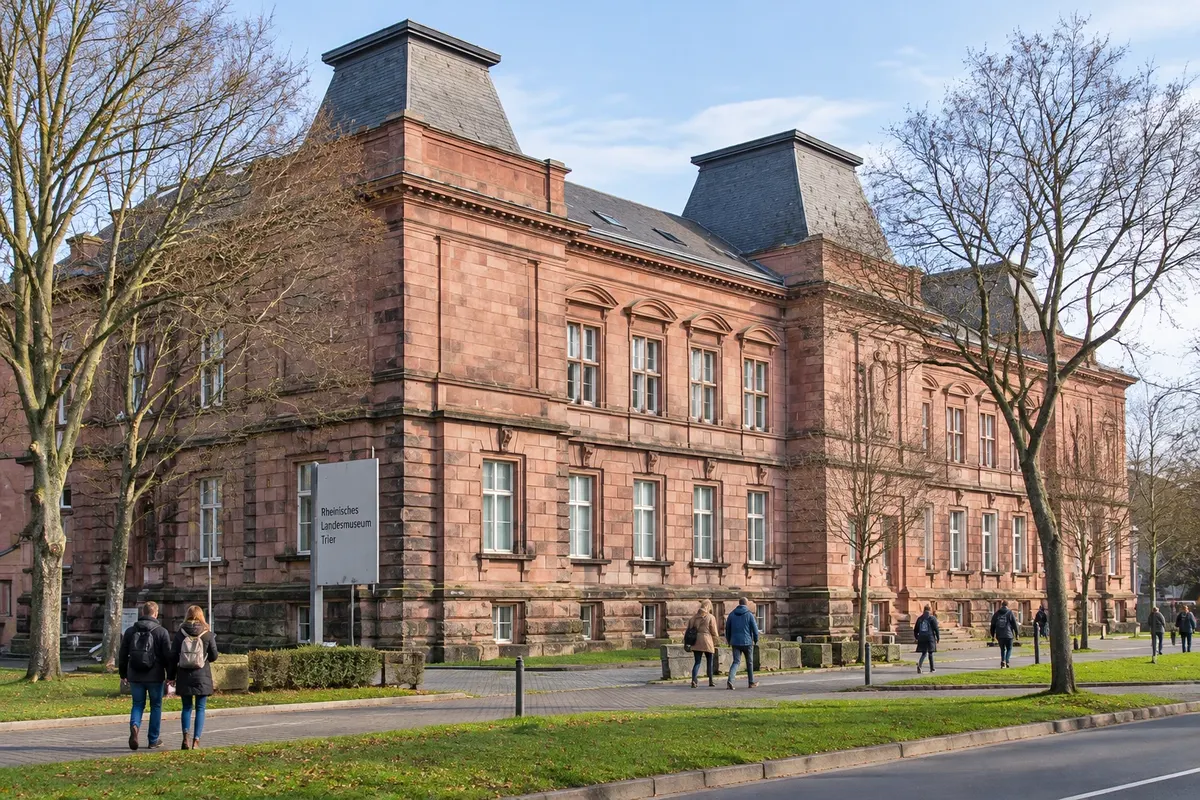
Archaeological museum with the largest collection of Roman mosaics north of the Alps, the wine boat of Neumagen and the Trier treasure of gold coins, with over 2,600 pieces.
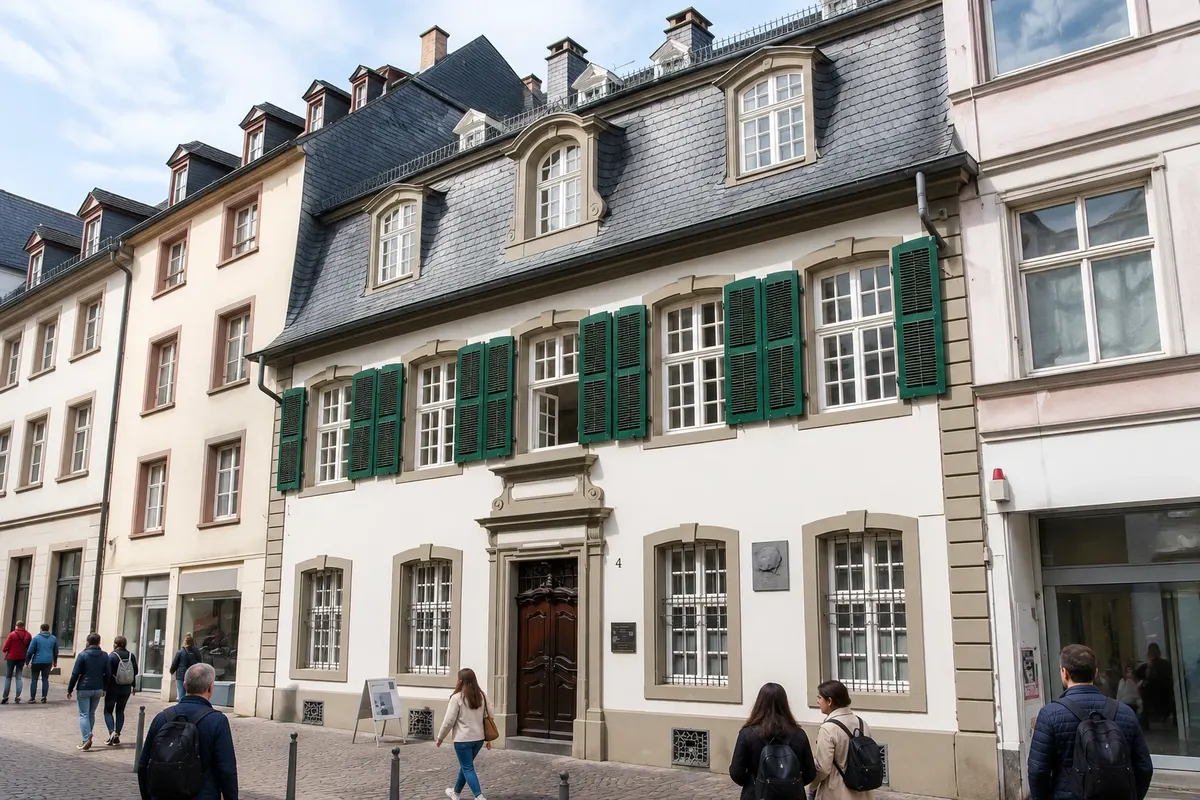
Baroque house from 1727 where Karl Marx was born on 5 May 1818; today it is a museum about his life, his ideas and their influence, maintained by the Friedrich Ebert Foundation.
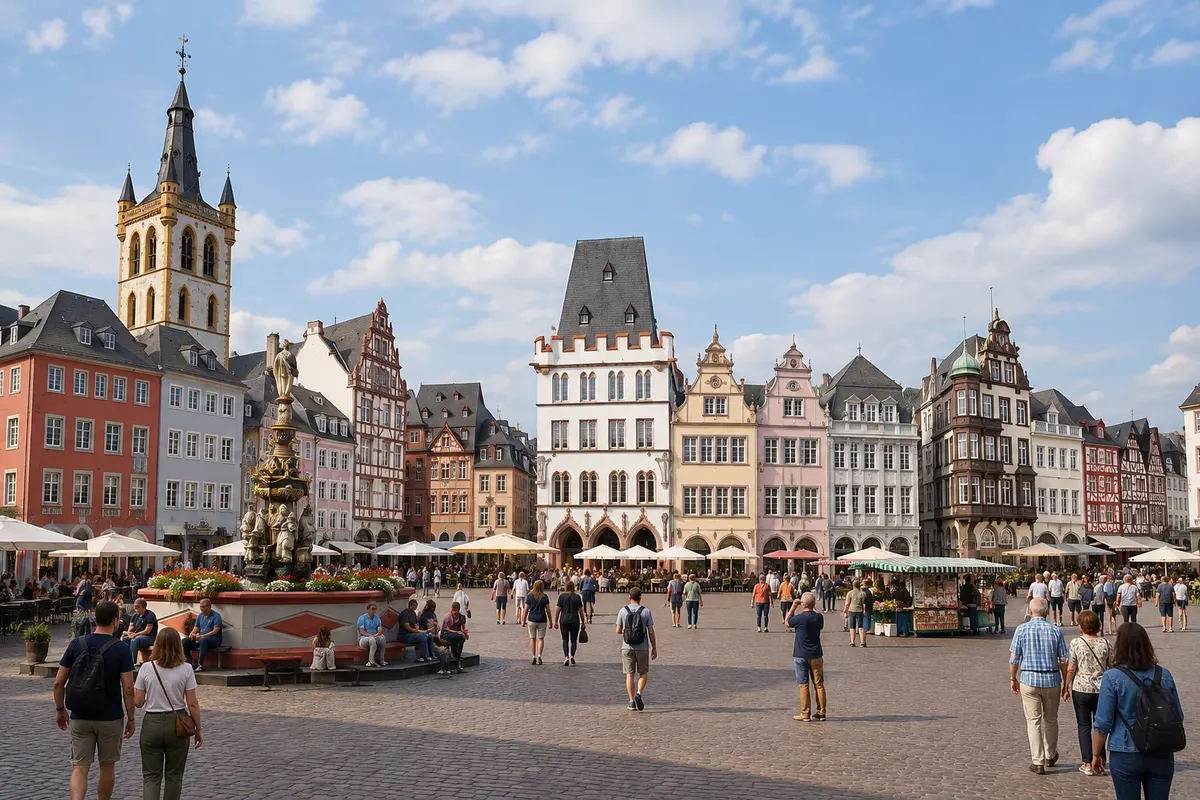
Main square of Trier, with the market cross of 958, the St. Peter fountain of 1595, the Steipe and façades from various periods. From here you can walk to the Porta Nigra, the cathedral and the Church of St. Gangolf.

Pred odhodom
Trier – Rhineland-Palatinate Destinacija Moselle Valley
Razdalje so približne. Pred potovanjem preverite lete in vozne rede avtobusov, vlakov ali ladij.
From Frankfurt or Cologne, take the train to Koblenz Hbf and change to the regional Mosela line to Trier Hbf; from Frankfurt it's about three hours. From Cologne there is also a regional train via the Eifel region. Luxembourg is about 50 minutes by train. Check before booking.
One day is enough for the main monuments, which are all within walking distance in the centre. With two days you'll have time for the Rheinisches Landesmuseum, the baths' underground galleries and the amphitheatre at a relaxed pace, plus a walk along the riverbank.
April to October, when the monuments have longer opening hours and there are staged visits at the Porta Nigra. The Christmas market at the Hauptmarkt usually runs from late November until near Christmas. In winter days are short and monuments close earlier.
The seasons shown are the most usual ones; nature doesn't always follow the calendar.
No. Trier's centre is compact and the Roman monuments are within walking distance of each other; the amphitheatre is a 15-minute walk from the centre. The main station is close to the old town, and city buses cover the rest of the city.
Predlog poti
Pot povezuje znamenitosti na tej strani. Za oglede boste imeli dovolj časa.
Start at the Porta Nigra and climb to the upper levels. Continue along Simeonstraße to the Hauptmarkt, with the market cross of 958 and the Saint Peter fountain.
Visit the Trierer Dom and the Liebfrauenkirche, linked by the cloister. Avoid service times, when visiting is suspended.
Enter the Konstantinbasilika, cross the garden of the Elector princes' palace and descend to the underground galleries of the Kaiserthermen.
Return to the centre for dinner near the Hauptmarkt, with a Mosela wine, and see the Porta Nigra illuminated.
Dan 1
Porta Nigra, with a climb to the upper levels, and a walk to the Hauptmarkt.
Trierer Dom, with the treasury, and the Liebfrauenkirche next door.
Follow Brückenstraße to the Museum Karl-Marx-Haus, the baroque house where he was born in 1818.
Dine in a tavern in the old town with a Riesling from the Mosela.
Dan 2
Start the day at the archaeological museum, with mosaics, the Neumagen wine ship and the hoard of gold coins. Closed on Mondays.
Konstantinbasilika and, via the palace garden, the Kaiserthermen with their underground galleries.
Walk to the Roman amphitheatre and go down to the arena's basement. Then head to the Römerbrücke, the bridge of Roman piers over the Mosela.
Finish with a walk along the riverbank and dinner in the centre.
Check before you go. Opening hours and days change, and places may close for renovations, holidays or events. This itinerary is a suggestion from Cidade Turismo, not a commitment: plan yours by checking directly with each place you intend to visit.
Pred odhodom
Take the train to Koblenz Hbf and change to the regional Mosela line to Trier Hbf. It's about three hours in total.
It is considered the oldest, founded by the Romans as Augusta Treverorum shortly before the Christian era. Other cities, such as Cologne and Worms, also claim the title.
Yes. Porta Nigra, the cathedral, Konstantinbasilika and Kaiserthermen are a few minutes' walk apart. The amphitheatre and the Römerbrücke are about a 15-minute walk from the centre.
Yes. There is a direct regional train between Trier and the city of Luxembourg, hourly, taking about 50 minutes.
State-run monuments, such as Porta Nigra, Kaiserthermen and the amphitheatre, often offer a combined ticket. Check options before you go.
Rotas entre países
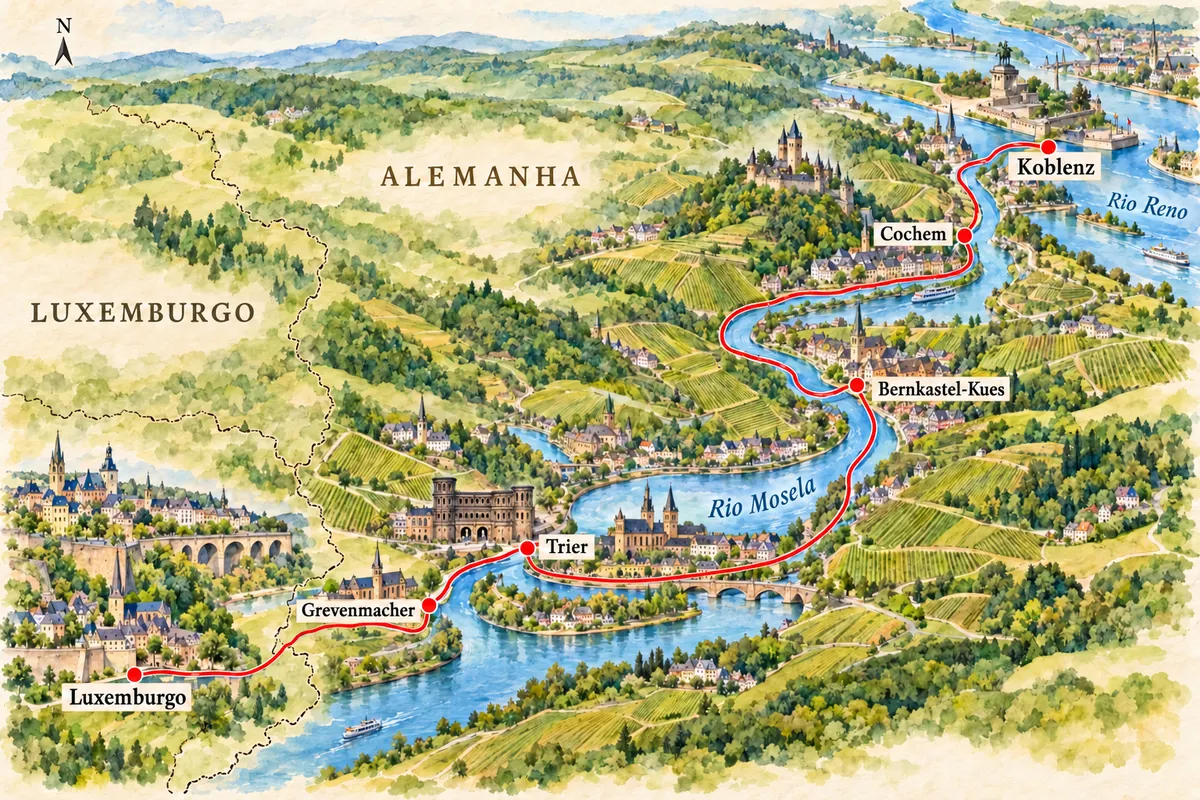
Along the Moselle River, from Luxembourg to Germany: vineyards on slopes, half-timbered villages, Roman Trier, Cochem Castle, and the confluence with the Rhine in Koblenz.
Več kot vodnik