Dresdner Christstollen
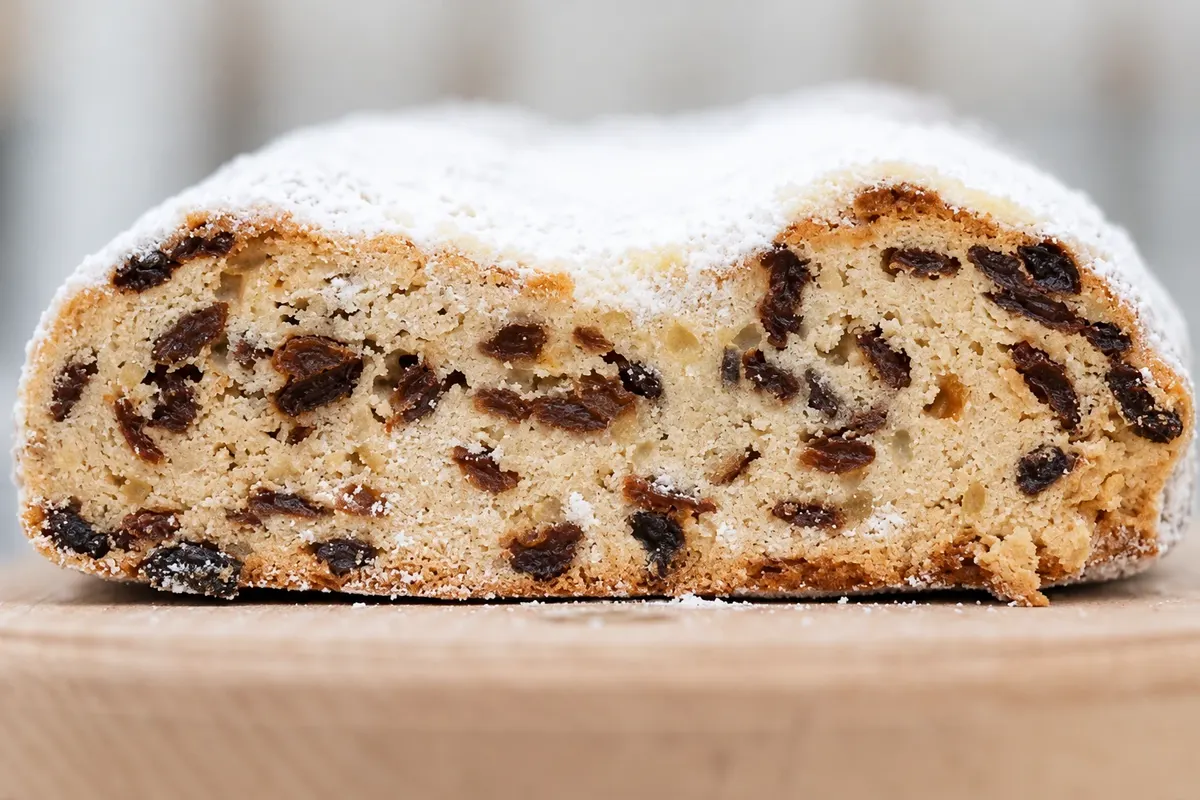
Sweet Christmas bread with raisins, candied orange and lemon peel, almonds and plenty of butter, coated with powdered sugar. Mentioned in Dresden since 1474, it has had protected geographical indication status since 2010.
Antarktika
Saxônia · Nemčija Capital
Destinacija: Dresden and Saxon Switzerland.
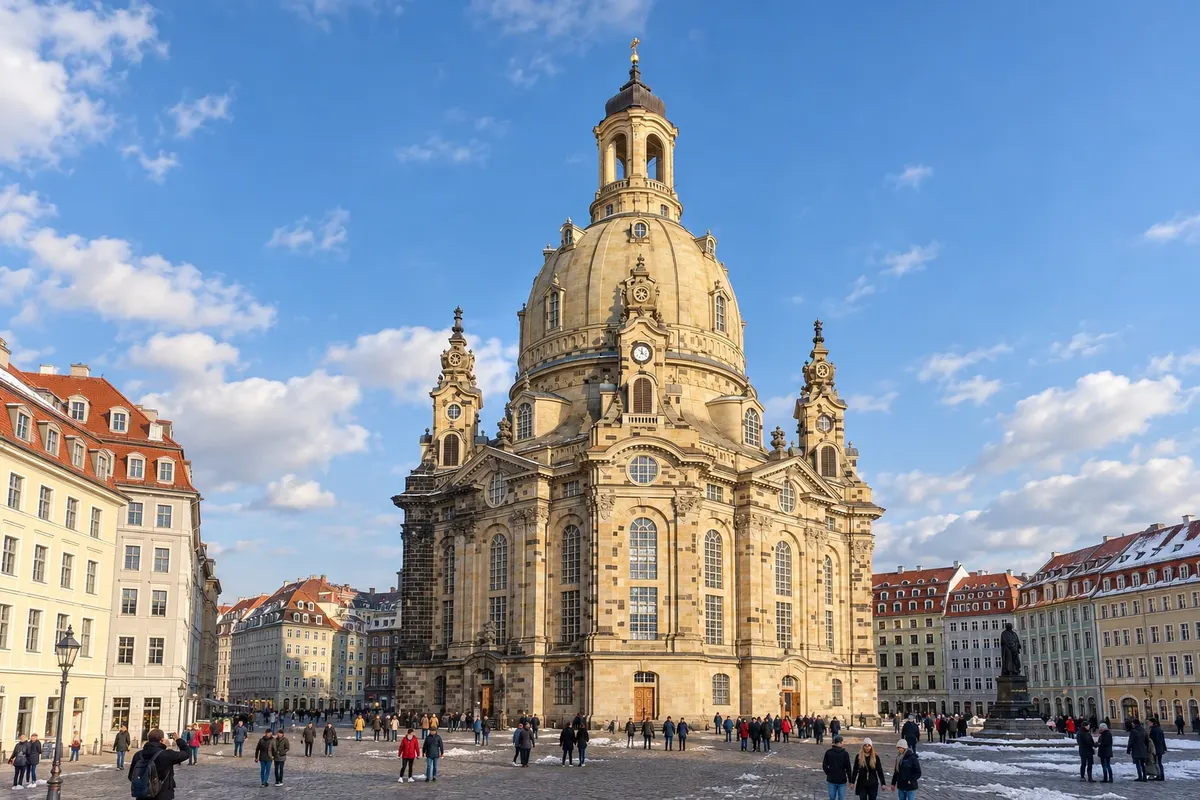
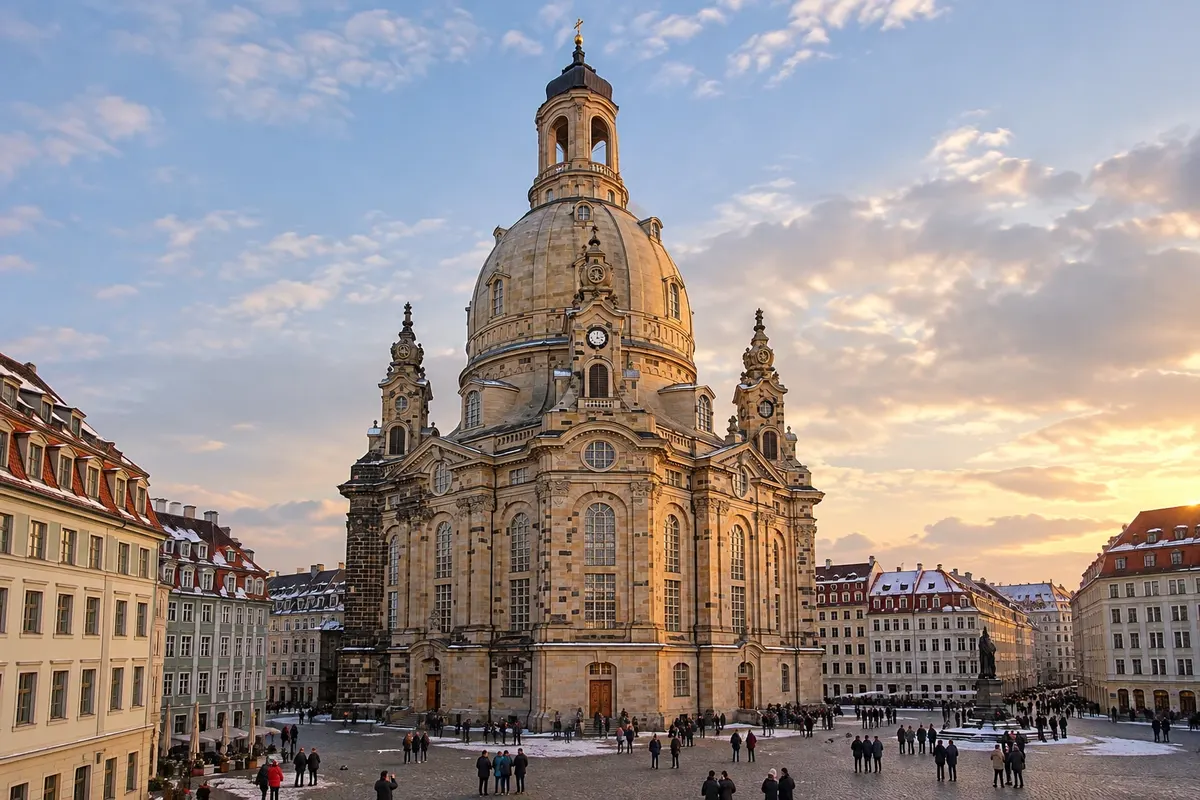
Na fotografiji: Frauenkirche, Dresden
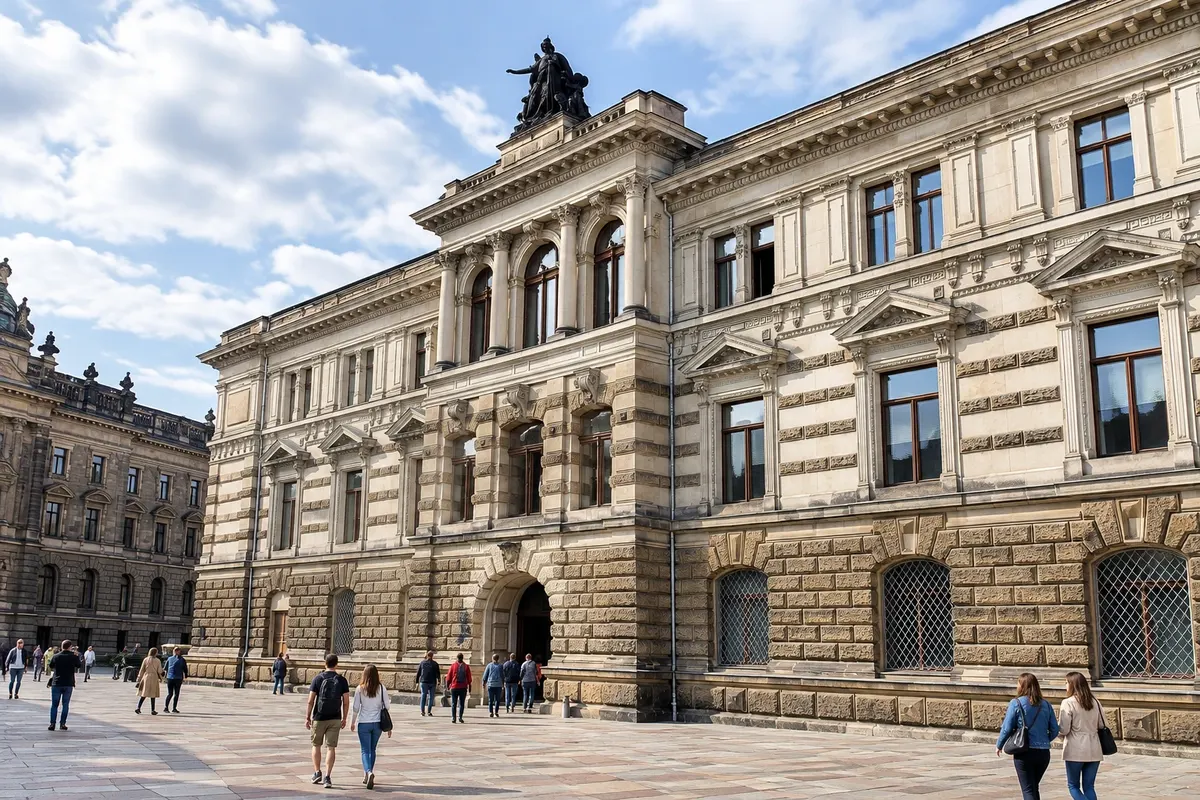
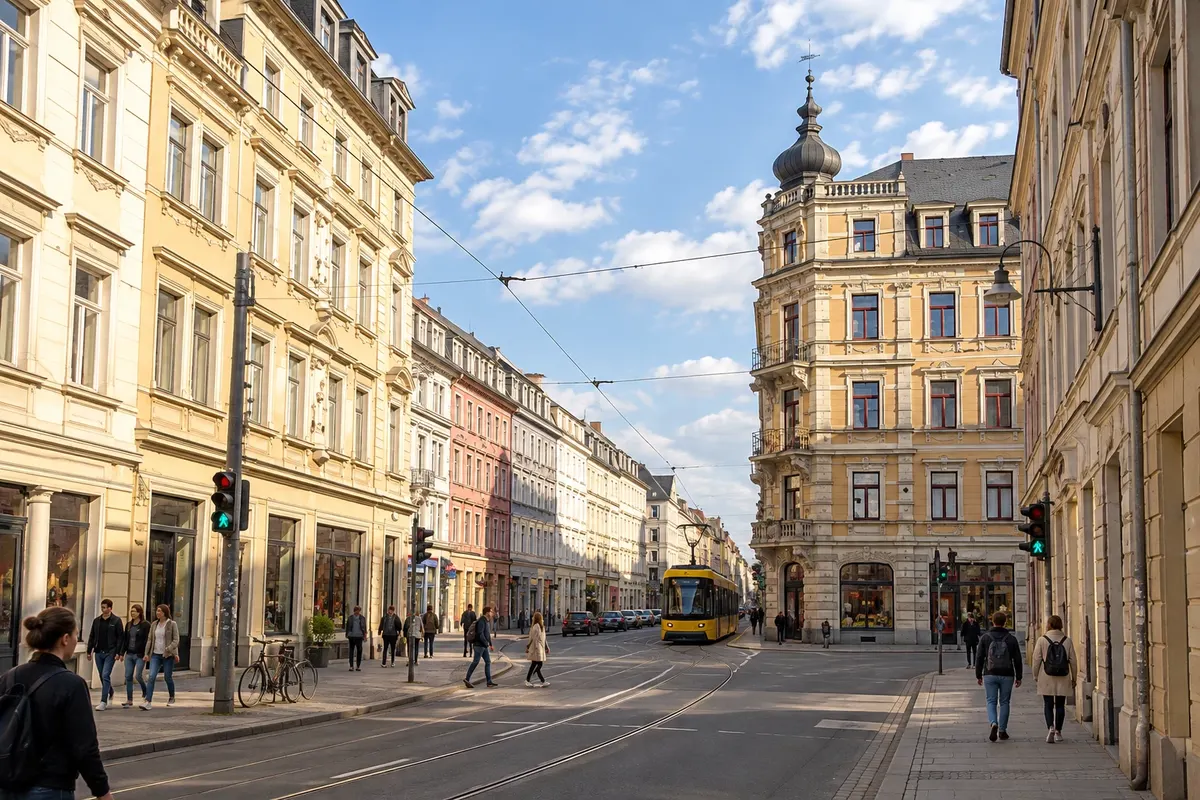
Illustrative images. The pictures in this guide are illustrations based on the real place, not photographs, and may differ from it.
Mesto
Capital of Saxony, on the banks of the Elbe, Dresden was one of the wealthiest courts in Europe during the Baroque period. Destroyed in the 1945 bombings, it was rebuilt over decades: the Frauenkirche, the Zwinger, the Semperoper and the Residenzschloss were restored, and the state museums display Raphael's Sistine Madonna and the treasure of the Grünes Gewölbe. On the other side of the river, the Neustadt is home to bars and street art.
V vodniku še ni nastanitev – Dresden.
kako do tja · koliko dni · načrt poti · vprašanja
Lokalni okusi – of Nemčija
Doživite kraj
Baroque Lutheran church of the Neumarkt, destroyed in the 1945 bombings and rebuilt between 1994 and 2005 using some of the original stones. The dome has a viewing platform.
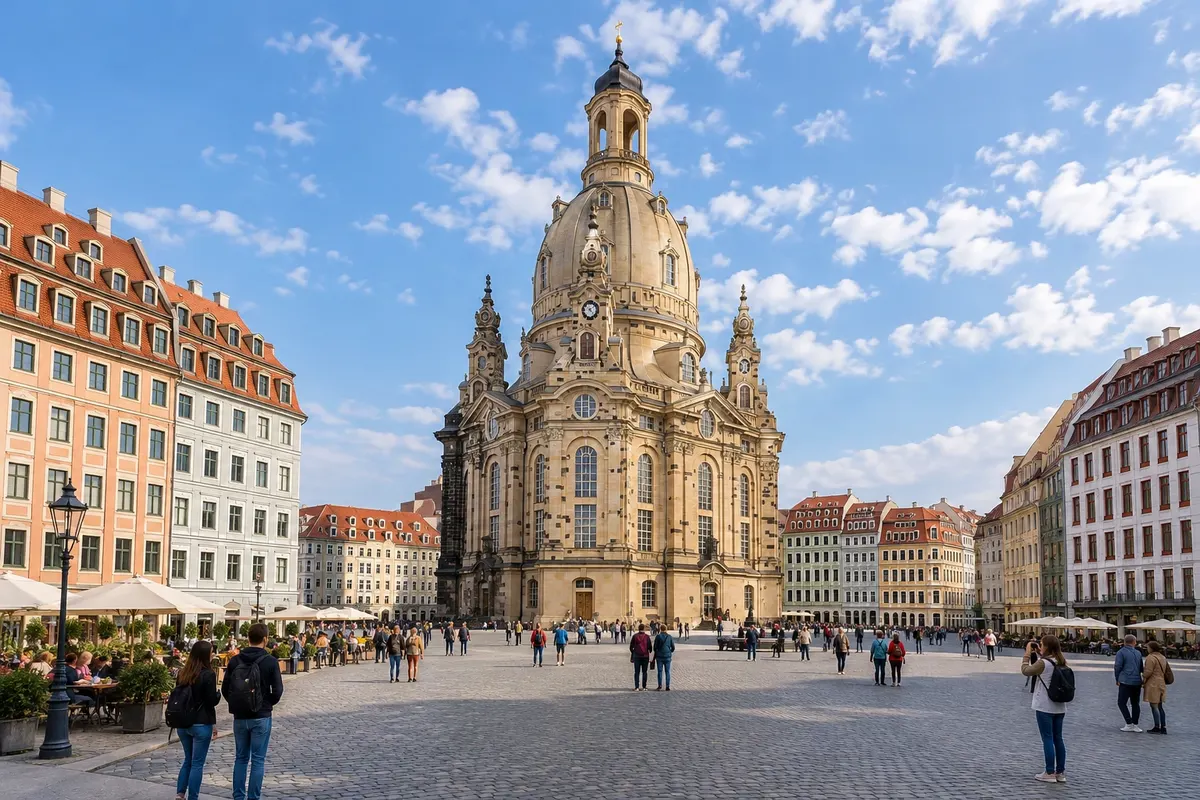
Historic square around the Frauenkirche, with reconstructed Baroque façades, cafés and the statue of Lutero. It’s the natural starting point for walking around the center.
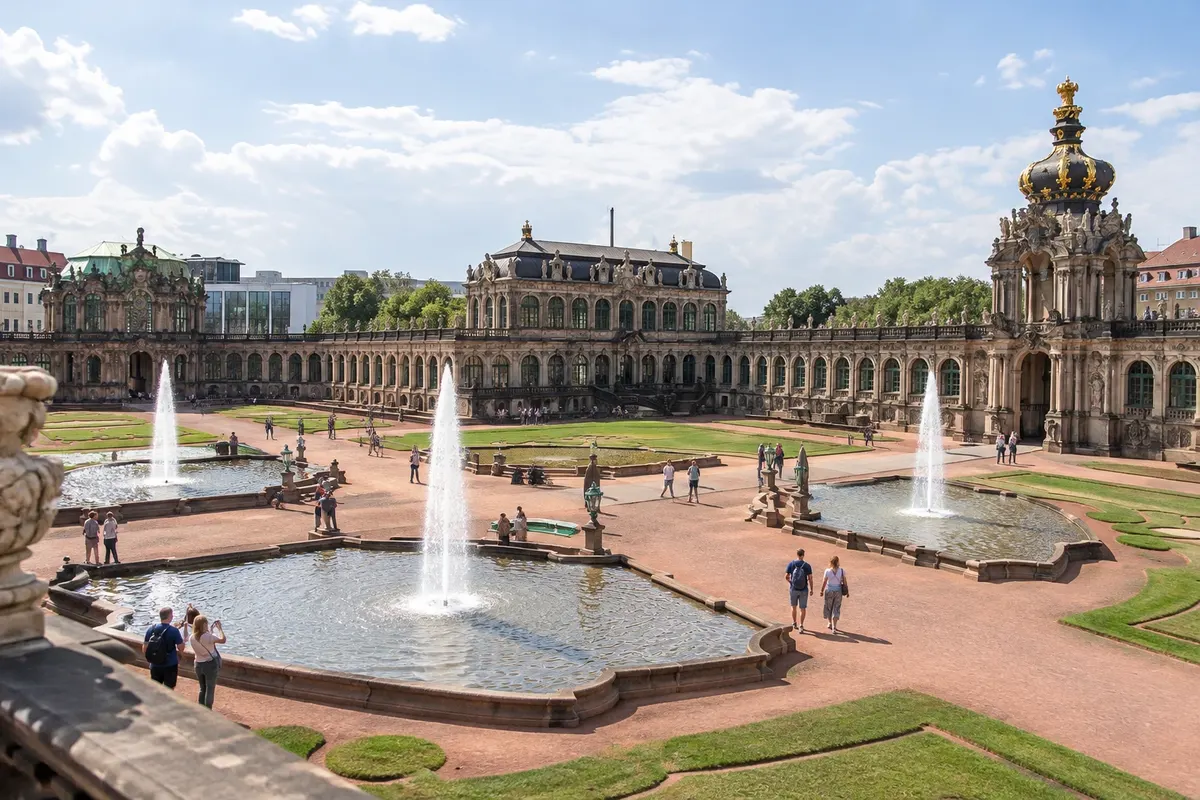
Baroque ensemble of pavilions and gardens from the 18th century, housing the Gemäldegalerie Alte Meister, where the Madona Sistina by Rafael is located, and the porcelain collection.
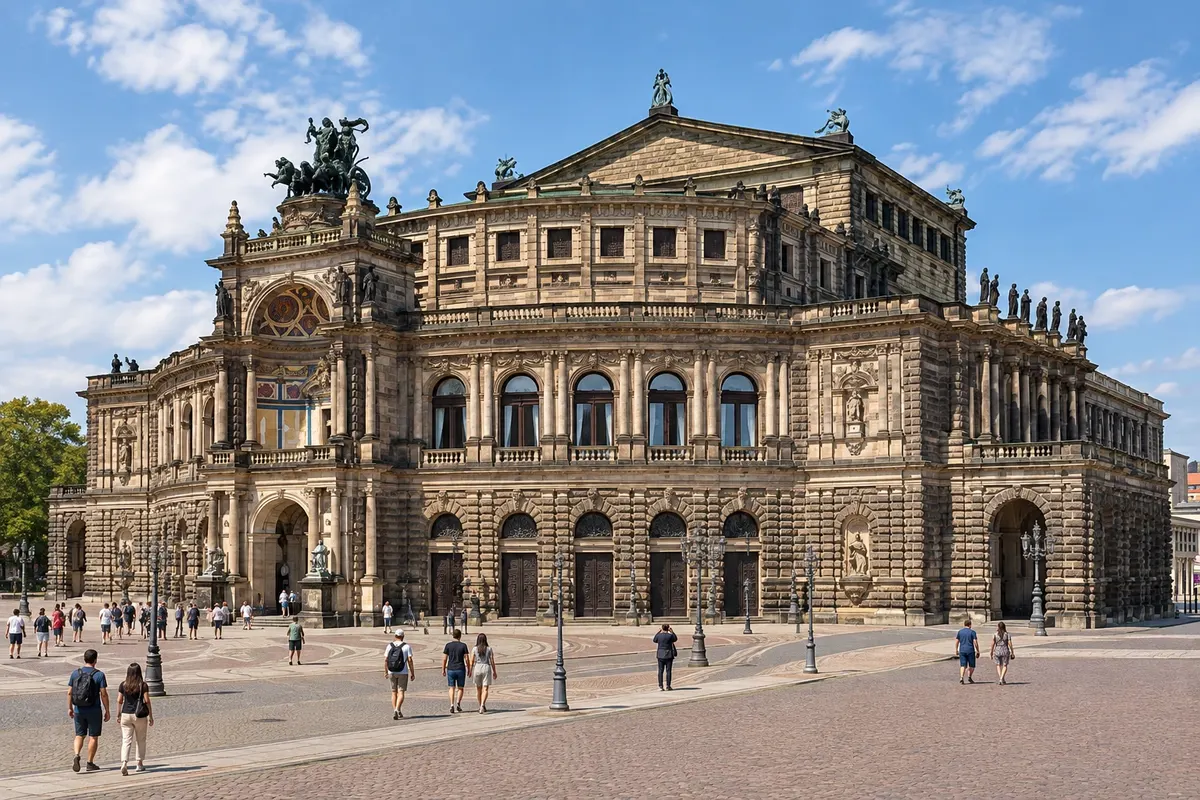
Opera house on the Theaterplatz, home of the Saxon State Opera and the Staatskapelle Dresden. It hosted premieres by Wagner and Richard Strauss and offers guided tours.
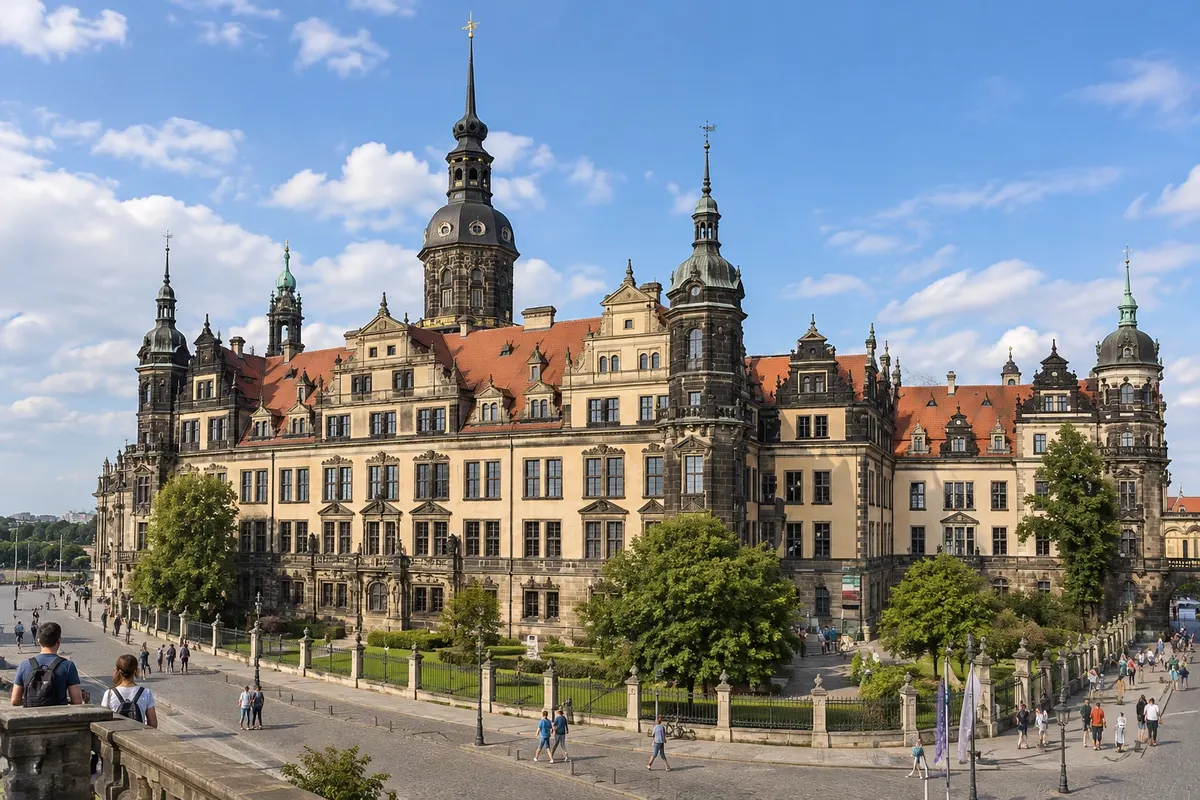
Former palace of the rulers of Saxony, now housing several museums: the Grünes Gewölbe (royal treasury), the Rüstkammer, the Münzkabinett and the Hausmannsturm tower.
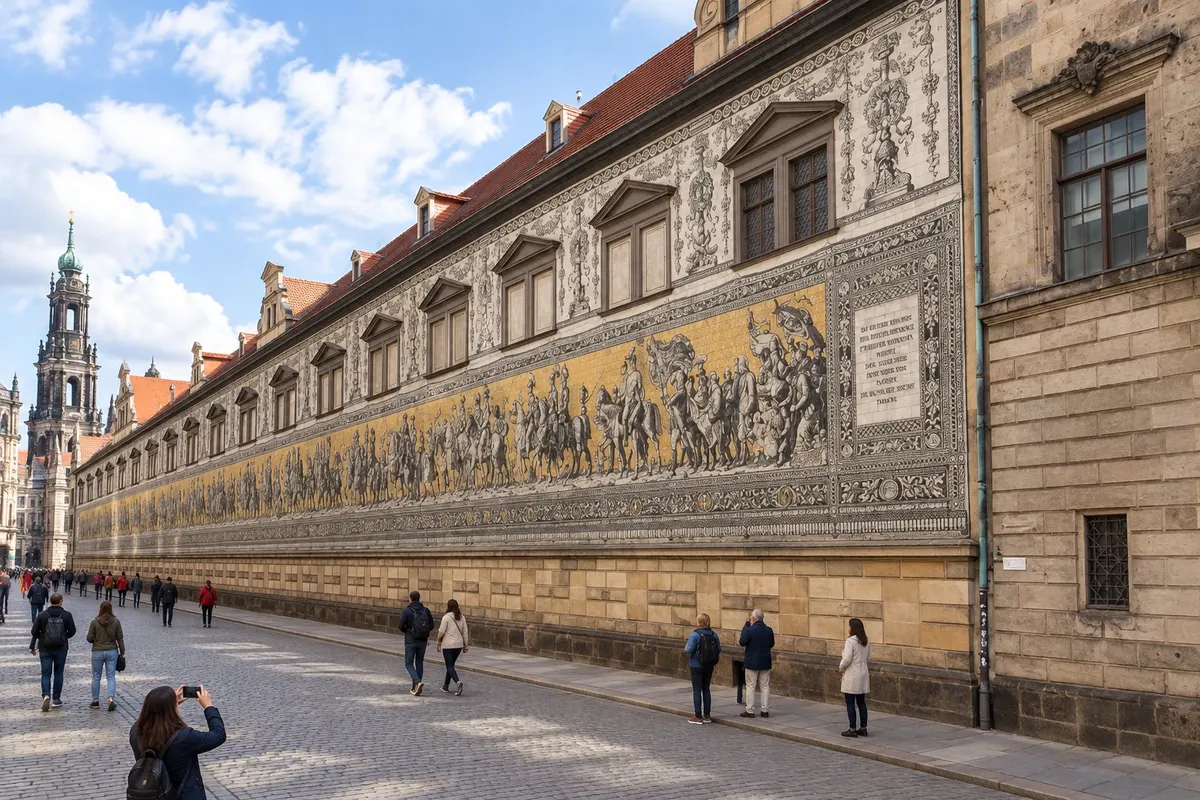
A panel of roughly 102 metres made from about 23,000 Meissen porcelain tiles, depicting the procession of 35 rulers of the Wettin dynasty. It is on an open-air street.
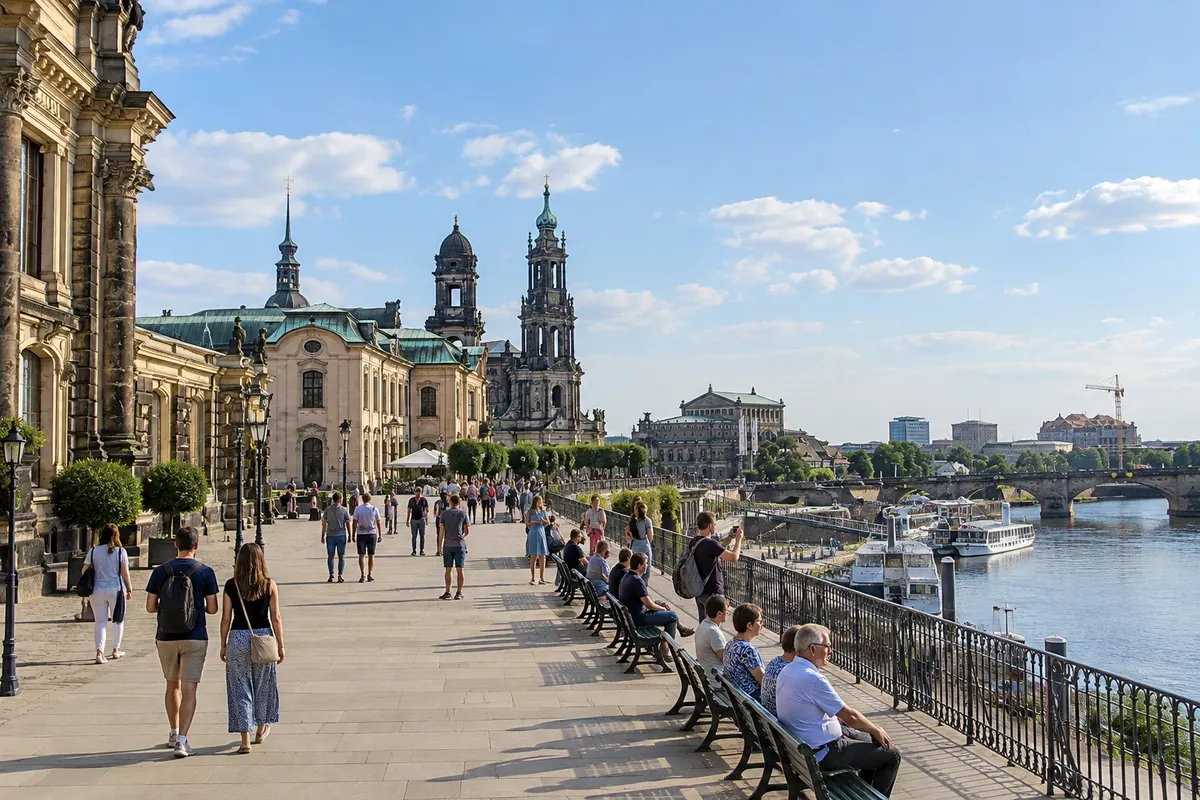
An elevated promenade over the Elbe, nicknamed the Balcony of Europe, with views of the river and the Neustadt. It connects the Schlossplatz to the Albertinum.
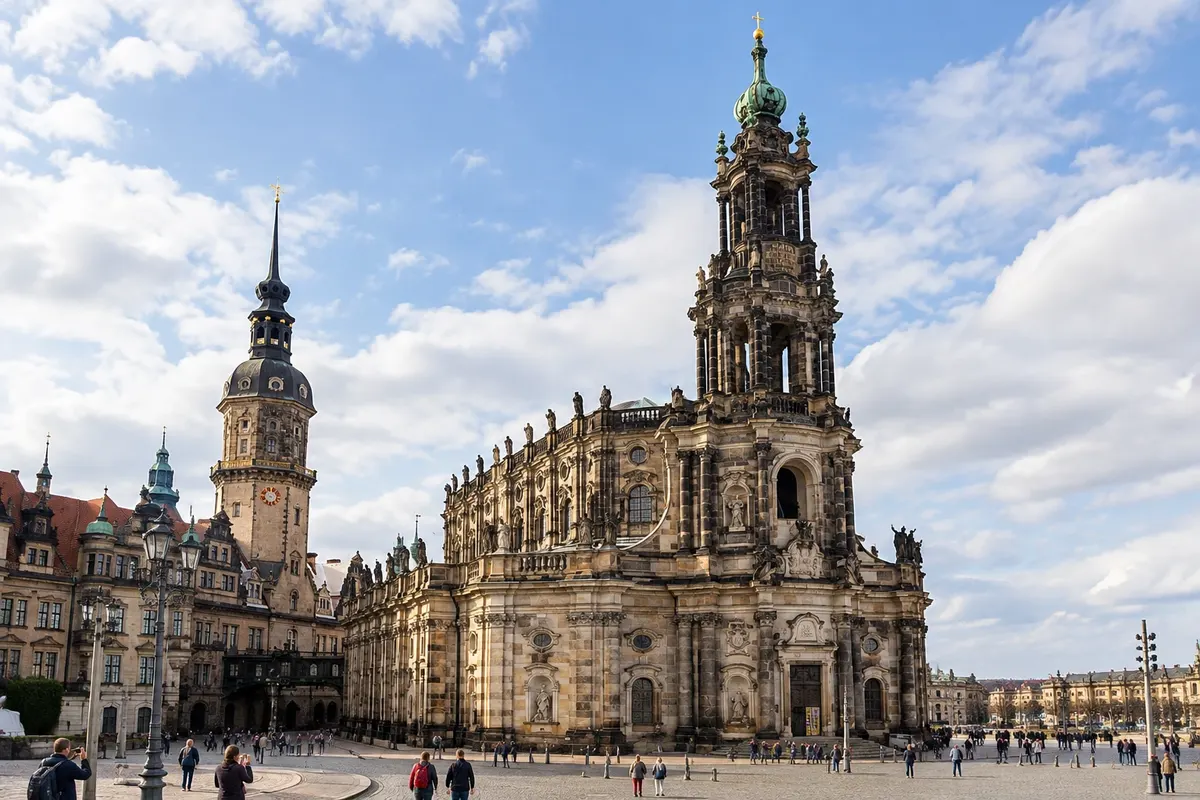
Former court church, now Dresden's Catholic cathedral, with the tower that shapes the city's skyline, 78 statues of saints and the last organ by Gottfried Silbermann.
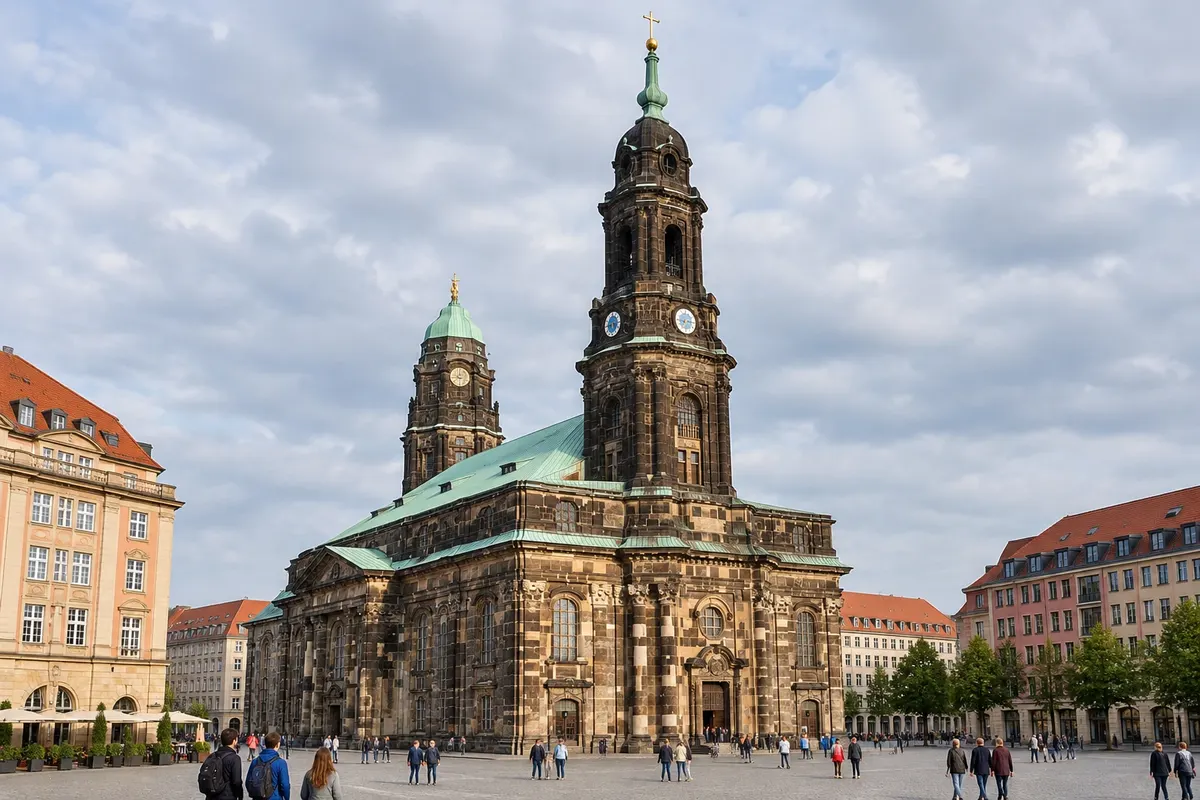
Main Lutheran church on the Altmarkt, home of the Dresdner Kreuzchor, a boys' choir with over seven centuries of history. The tower can be climbed and offers views over the center.
Museum of modern art at the eastern end of the Brühlsche Terrasse, with painting from Romanticism to contemporary art, from Caspar David Friedrich to Gerhard Richter, and sculpture.
19th-century neighborhood on the other side of the Elbe, with bars, cafés, street art and the colorful courtyards of the Kunsthofpassage. It is the center of Dresden's nightlife.
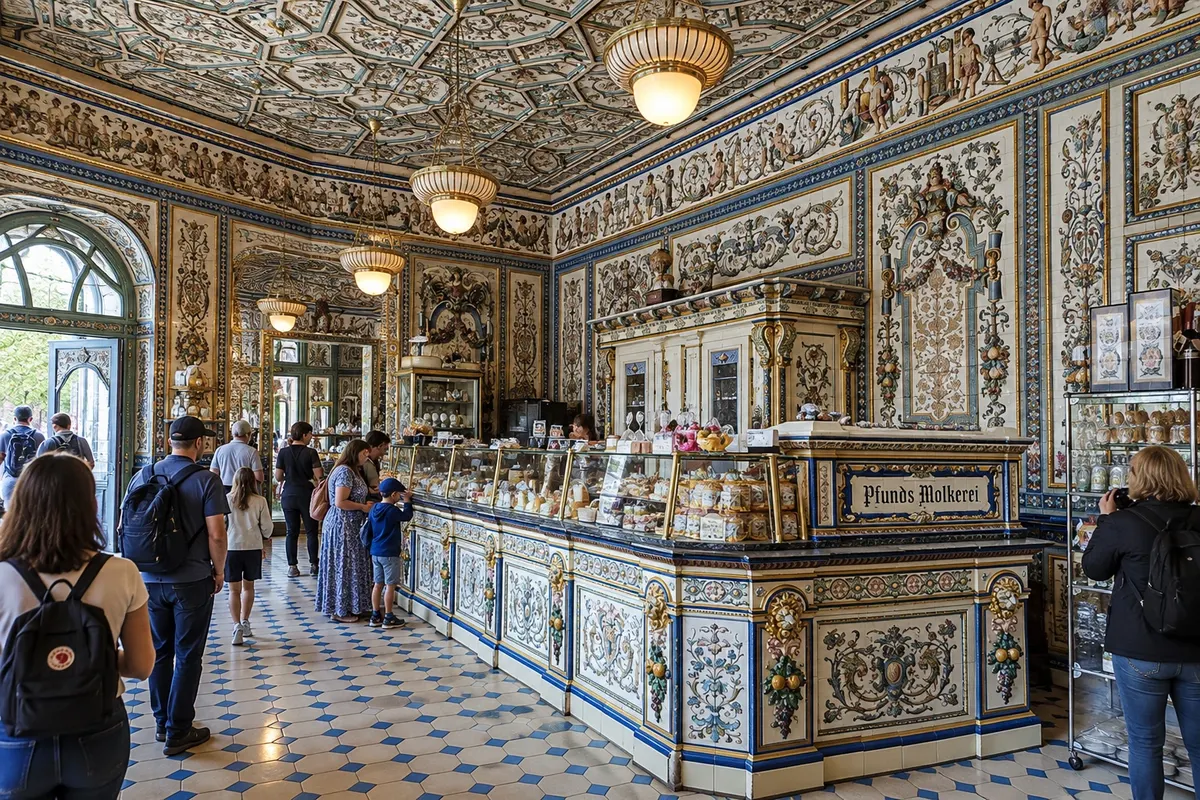
Dairy shop opened in the late 19th century in the Neustadt, with walls and floor covered in hand-painted tiles. It still operates as a shop selling dairy and regional products.
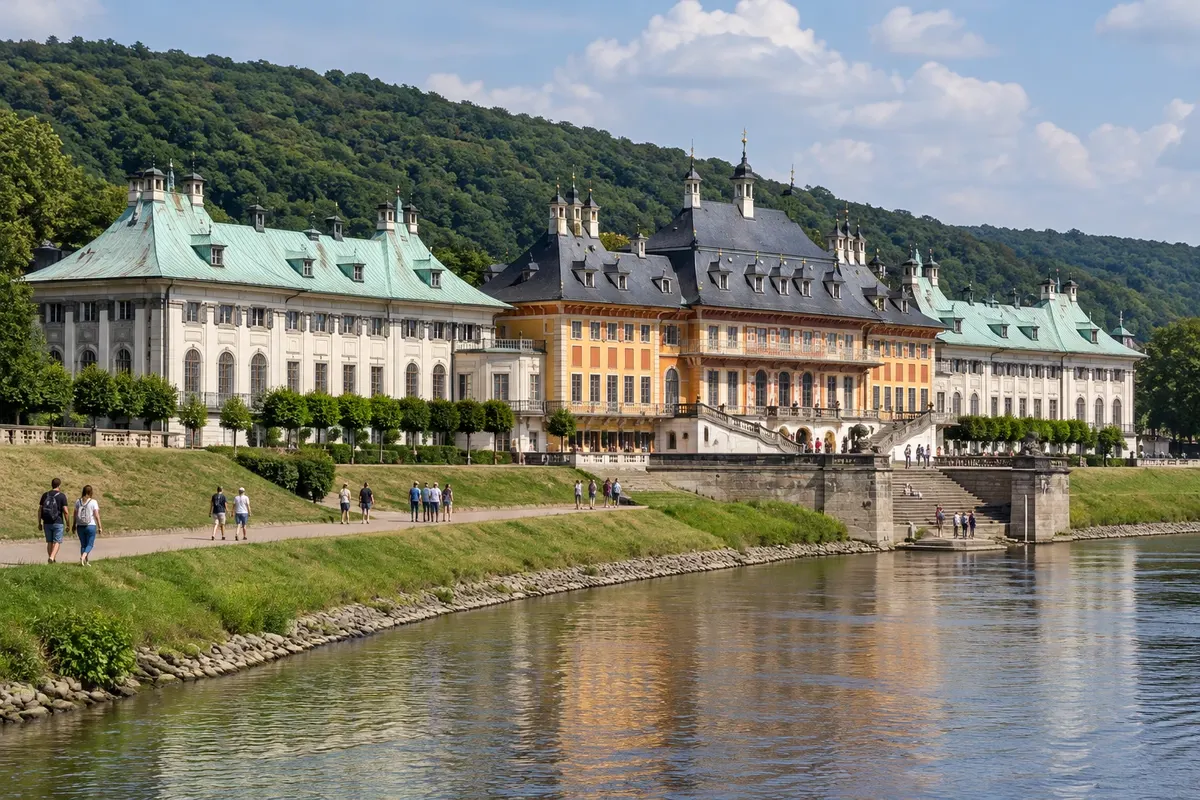
Summer residence of the Saxon monarchs on the banks of the Elbe, featuring palaces with Chinese-style decoration, gardens, a camellia over 200 years old and a museum of decorative arts.
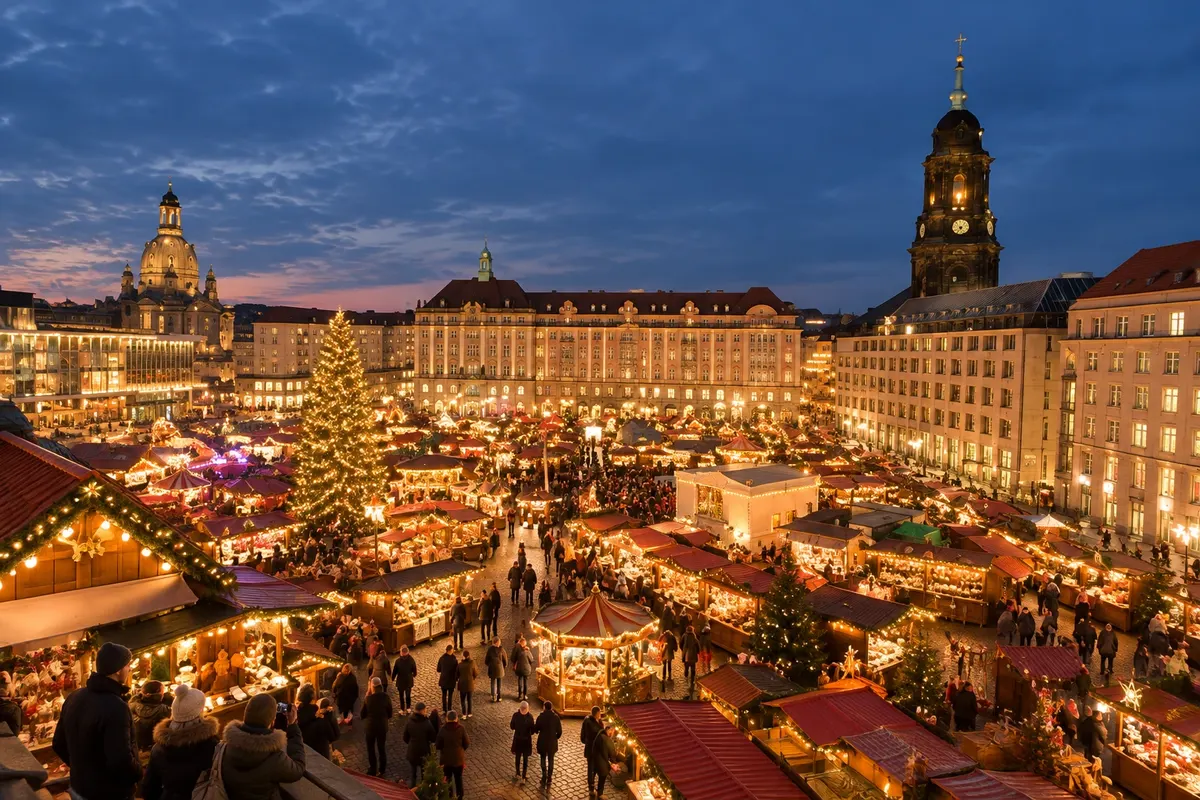
Altmarkt Christmas Market, recorded since 1434 and one of the oldest in Germany. It usually runs from late November until Christmas Eve, featuring Stollen.
Pred odhodom
Dresden – Saxony Destinacija Dresden and Saxon Switzerland Capital
Razdalje so približne. Pred potovanjem preverite lete in vozne rede avtobusov, vlakov ali ladij.
Check before buying. From Dresden Airport (DRS), the S-Bahn takes you to Hauptbahnhof (central station) in about 20 minutes. Many arrive via Berlin (BER) and continue by train in about 2 hours, or via Prague, a little over 2 hours along the Elbe valley. There are also trains from Frankfurt and Munich, with longer journeys.
Two days allow you to see the old town, the main museums and the Neustadt at a relaxed pace. With three days, include Schloss Pillnitz and one more museum. Adding Saxon Switzerland requires one or two extra days.
From May to September the days are long and the city fills with people along the Elbe. September and October are usually quieter and mild. Winter, from December to February, is cold and it gets dark early, but it's the season of the Striezelmarkt, which typically runs from the end of November to Christmas Eve. The Semperoper season usually runs from September to July.
The seasons shown are the most usual ones; nature doesn't always follow the calendar.
No. The old town is walkable, and trams and integrated buses take you to the Neustadt, Pillnitz and the central station. For Saxon Switzerland, the S-Bahn does the job. Dresden has an environmental zone (Umweltzone) for cars, and parking in the center is expensive and difficult. Validate your ticket in the machine when it prompts you.
Predlog poti
Pot povezuje znamenitosti na tej strani. Za oglede boste imeli dovolj časa.
Start at the Frauenkirche, preferably at opening, and climb to the dome if the sky is clear. Walk around the Neumarkt and follow Augustusstraße to see the Fürstenzug, the porcelain frieze depicting the rulers of Saxony.
Enter the Residenzschloss at the time slot reserved for the Historisches Grünes Gewölbe. Then cross over to the Zwinger, explore the courtyard and galleries, and allow at least an hour for the Sistine Madonna and the masters of the Gemäldegalerie Alte Meister.
Pass by the Semperoper and the Hofkirche, on Theaterplatz and Schlossplatz, and climb the steps up to the Brühlsche Terrasse to view the Elbe in the glow of late afternoon.
If you have a ticket, attend a performance at the Semperoper. If not, cross the Augustusbrücke, view the lit-up old town from the opposite bank and dine in the Äußere Neustadt.
Dan 1
Visit the Frauenkirche at opening, climb the dome and stroll through the rebuilt Neumarkt. Continue along Augustusstraße to see the Fürstenzug.
Devote the afternoon to the Residenzschloss: the Historisches Grünes Gewölbe in its reserved time slot, the Neues Grünes Gewölbe and the Rüstkammer. In season, climb the Hausmannsturm.
Enter the Hofkirche, the cathedral, and ascend to the Brühlsche Terrasse. Walk to the Albertinum with views over the Elbe and the Neustadt on the opposite bank.
Attend an opera or concert at the Semperoper, or dine in the old town and see the Frauenkirche and Theaterplatz illuminated.
Dan 2
Start at the Zwinger courtyard before the tour groups and enter the Gemäldegalerie Alte Meister to see the Sistine Madonna, Rembrandt and Vermeer. If you have time left, visit the porcelain collection.
Cross the Elbe, pass the Goldener Reiter and the Hauptstraße, explore the courtyards of the Kunsthofpassage in the Äußere Neustadt and continue to the Pfunds Molkerei on Bautzner Straße.
Return to the center and climb the Kreuzkirche tower to see the Altmarkt from above. On a Saturday, stay for vespers with the Kreuzchor; in Advent, stroll through the Striezelmarkt.
End in the Äußere Neustadt, on Alaunstraße and Louisenstraße, with bars and restaurants of various cuisines open late.
Check before you go. Opening hours and days change, and places may close for renovations, holidays or events. This itinerary is a suggestion from Cidade Turismo, not a commitment: plan yours by checking directly with each place you intend to visit.
Pred odhodom
No. The train between Berlin and Dresden takes about 2 hours, with departures throughout the day. You can even do a day trip, but ideally spend at least one night in Dresden.
Much of the old center was destroyed in the February 1945 bombings and rebuilt in the following decades. The Zwinger and the Semperoper were rebuilt in East Germany; the Frauenkirche and the Neumarkt after reunification. The Fürstenzug and parts of the Neustadt survived better.
The Historisches Grünes Gewölbe, in the Residenzschloss, operates with timed-entry tickets and limited capacity: book in advance. Other state museums sell tickets on site, but in high season it's worth buying ahead. There are combination tickets that include several museums.
Yes. The train along the Elbe valley takes just over 2 hours to Prague and stops at Bad Schandau, the gateway to Saxon Switzerland. Many travelers combine the two cities on the same itinerary.
From May to September to enjoy the river and the gardens with long days. September and October are usually quieter. In winter it's cold, but the Striezelmarkt, which typically runs from the end of November to Christmas Eve, draws many visitors.
Več kot vodnik