York lies in North Yorkshire, in the north of England, at the meeting of the rivers Ouse and Foss, about 340 km from London. It was founded by the Romans in AD 71 as Eboracum, the fortress where Constantine was acclaimed emperor in 306. The Vikings took it in 866 and called it Jorvik, and in the Middle Ages it was England's second most important city, seat of the Archbishop of the North. Each of those phases left traces in the centre.
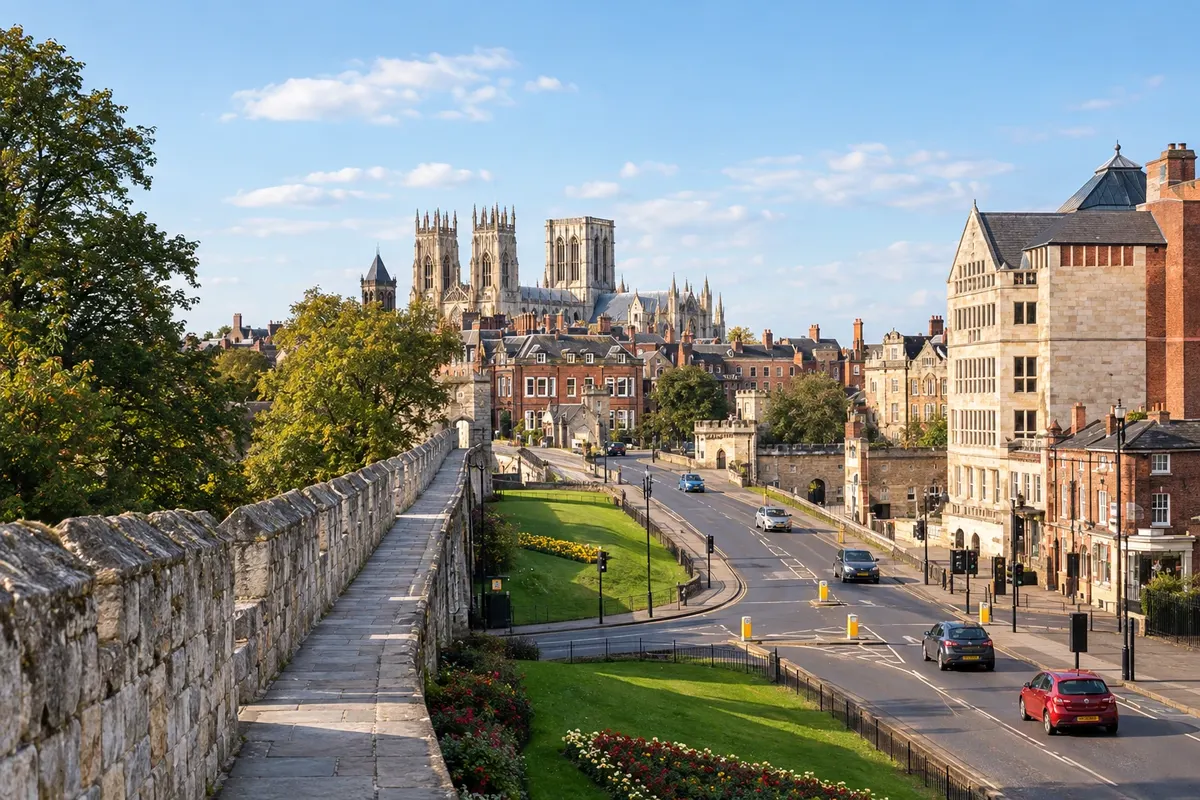
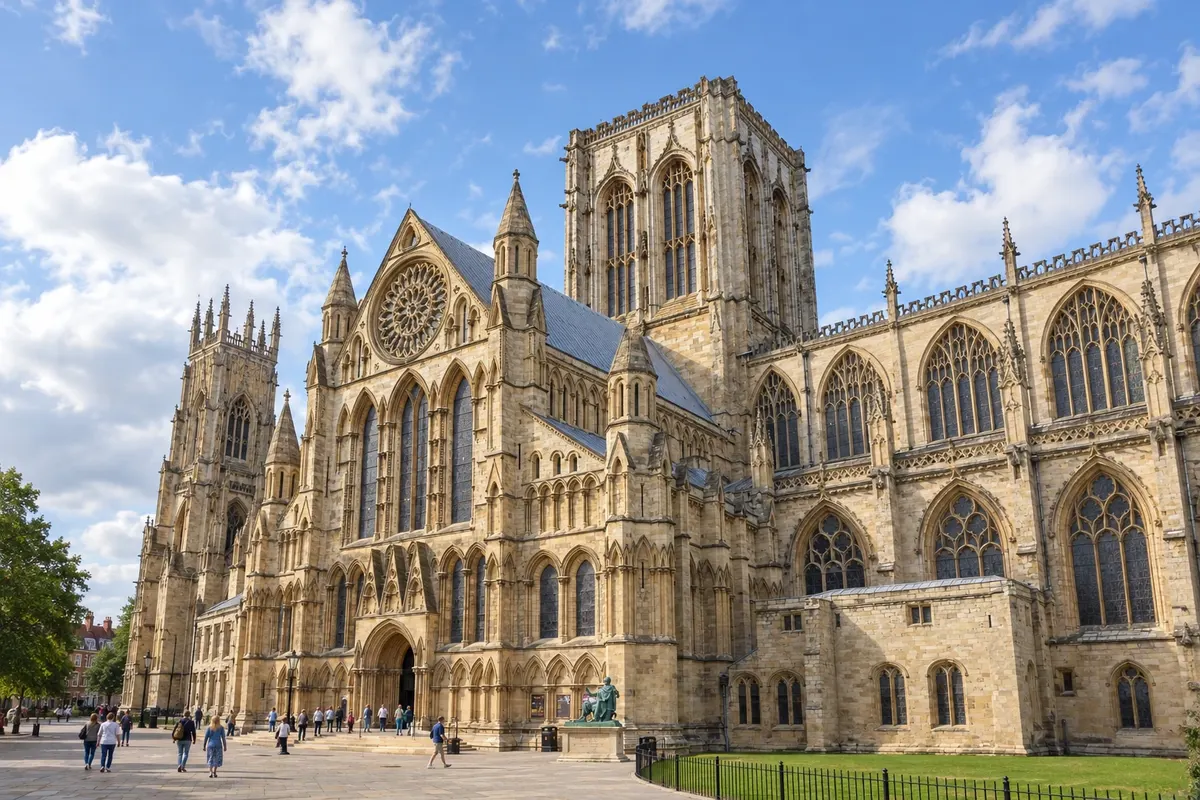
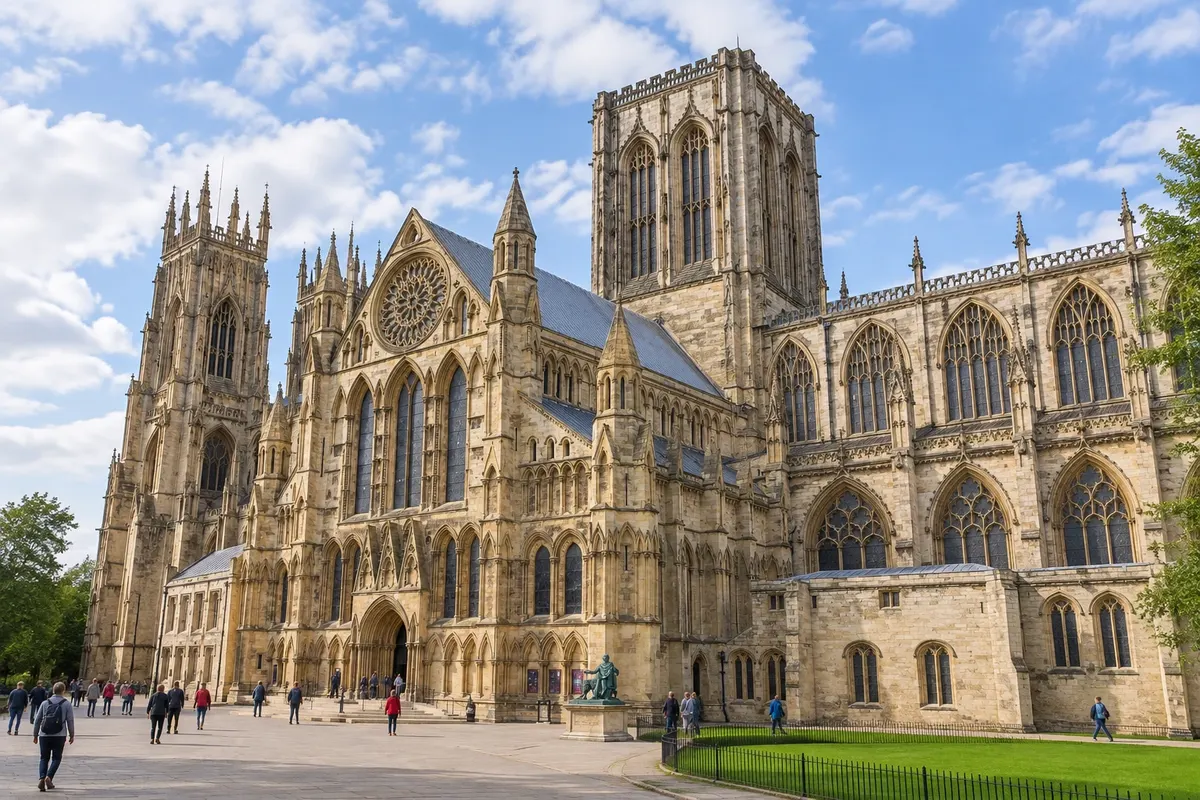
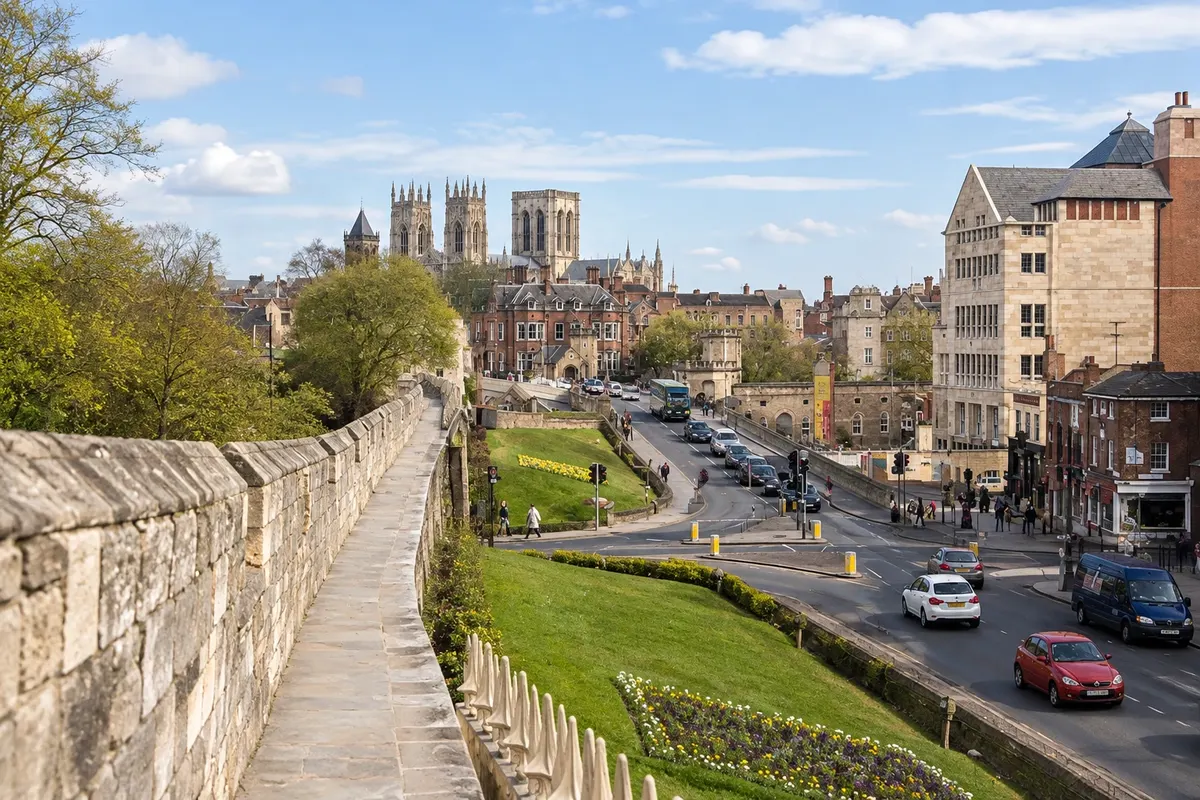
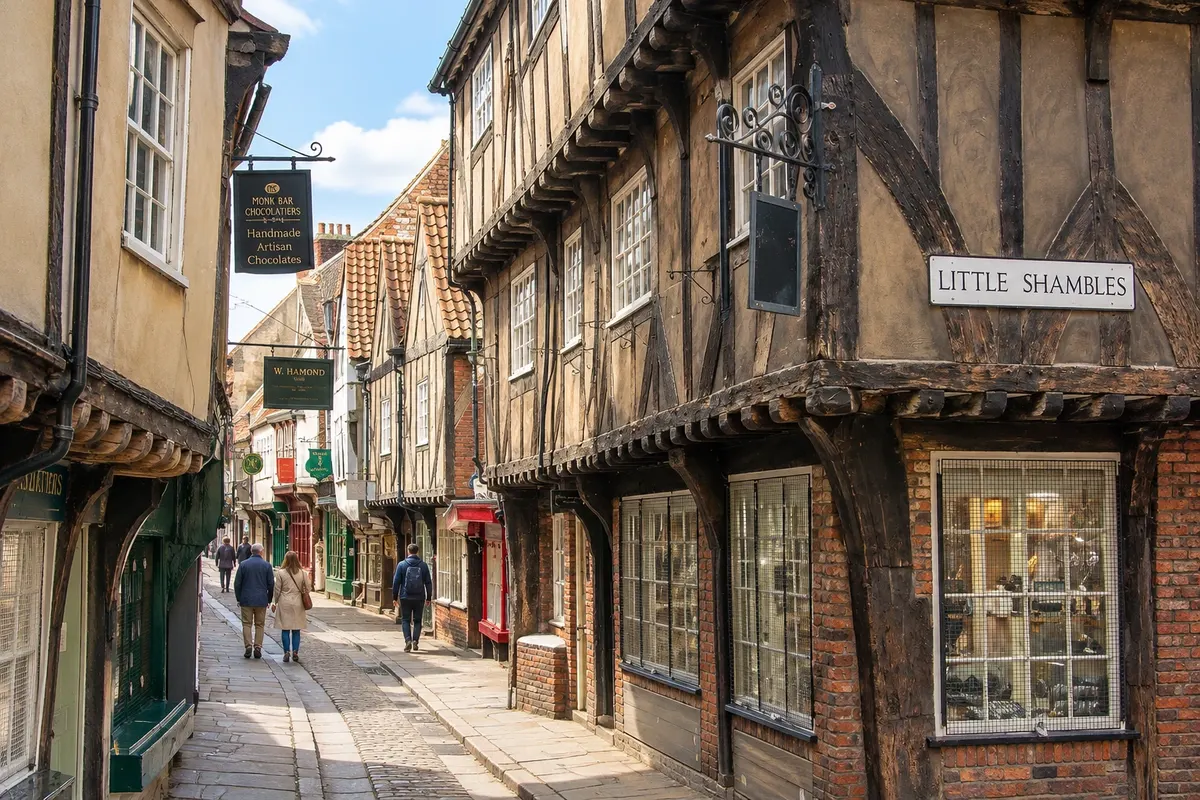
The centre is enclosed by the most complete medieval city walls in England, with gateways called "bars", and you can walk much of them on top. Inside them is York Minster, one of the largest Gothic cathedrals in northern Europe, with medieval stained glass and a central tower you can climb. Narrow streets, the snickelways, lead to The Shambles, the street of medieval butchers, with timber-framed houses whose upper floors almost touch.
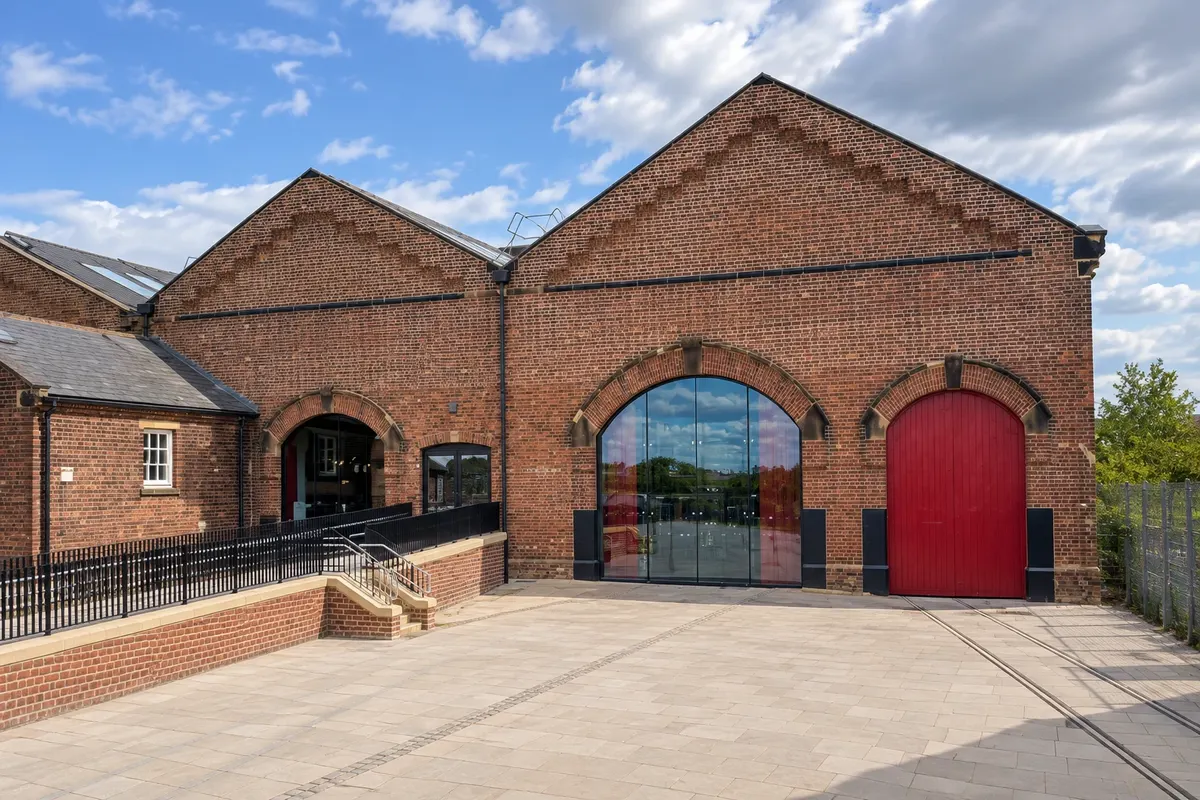
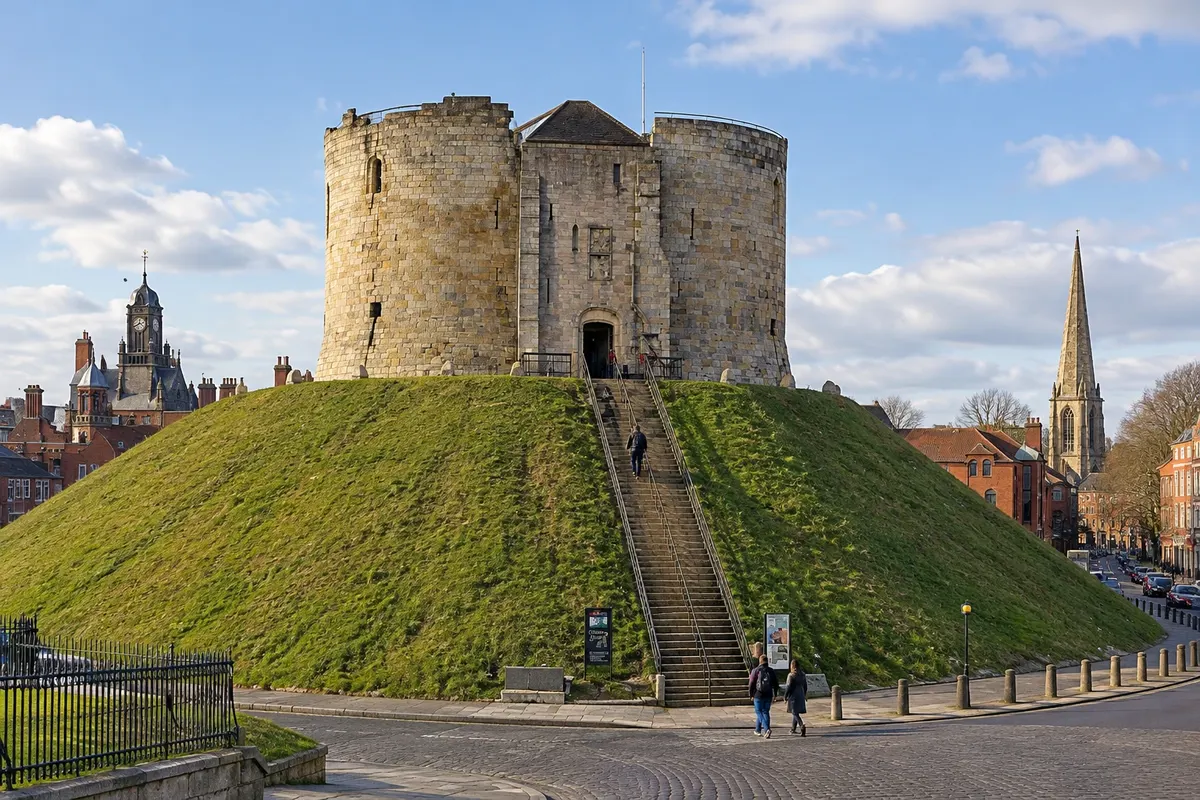
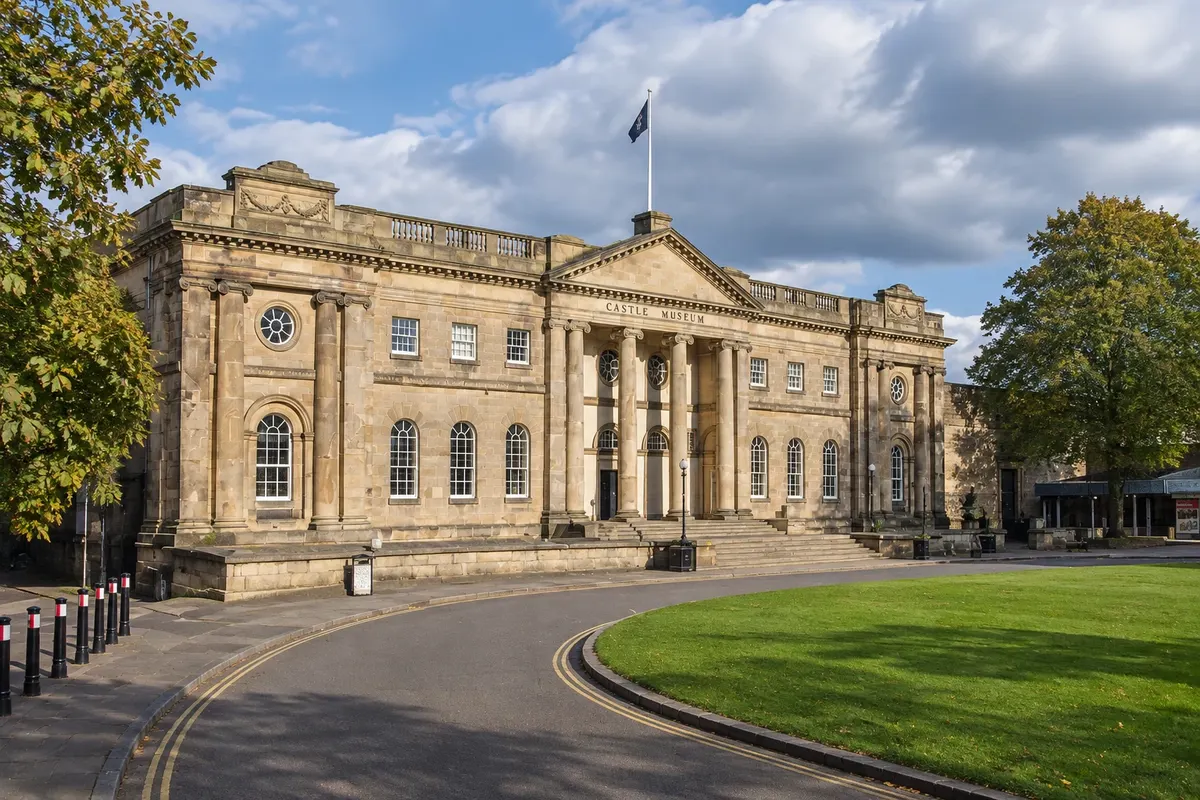
To the south of the centre are Clifford's Tower, the medieval castle tower on a mound, and the York Castle Museum, with a reconstructed Victorian street. The Jorvik Viking Centre shows the Viking city on the site where it was excavated. Next to the station, the National Railway Museum brings together locomotives and royal carriages, with free entry to the main displays.
The centre is small and flat, made for walking. The city has a tradition of afternoon tea, old pubs and chocolate, and serves as a base for the Yorkshire dales and moors.
This destination brings together 1 city: York.


 Brazil
 Argentina
 Chile
Chile Colombia
 Peru
Peru Uruguay
 Germany
 Belgium
 Spain
Spain France
 Greece
 the Netherlands
 Ireland
 Italy
Italy Luxembourg
 Portugal
 Switzerland