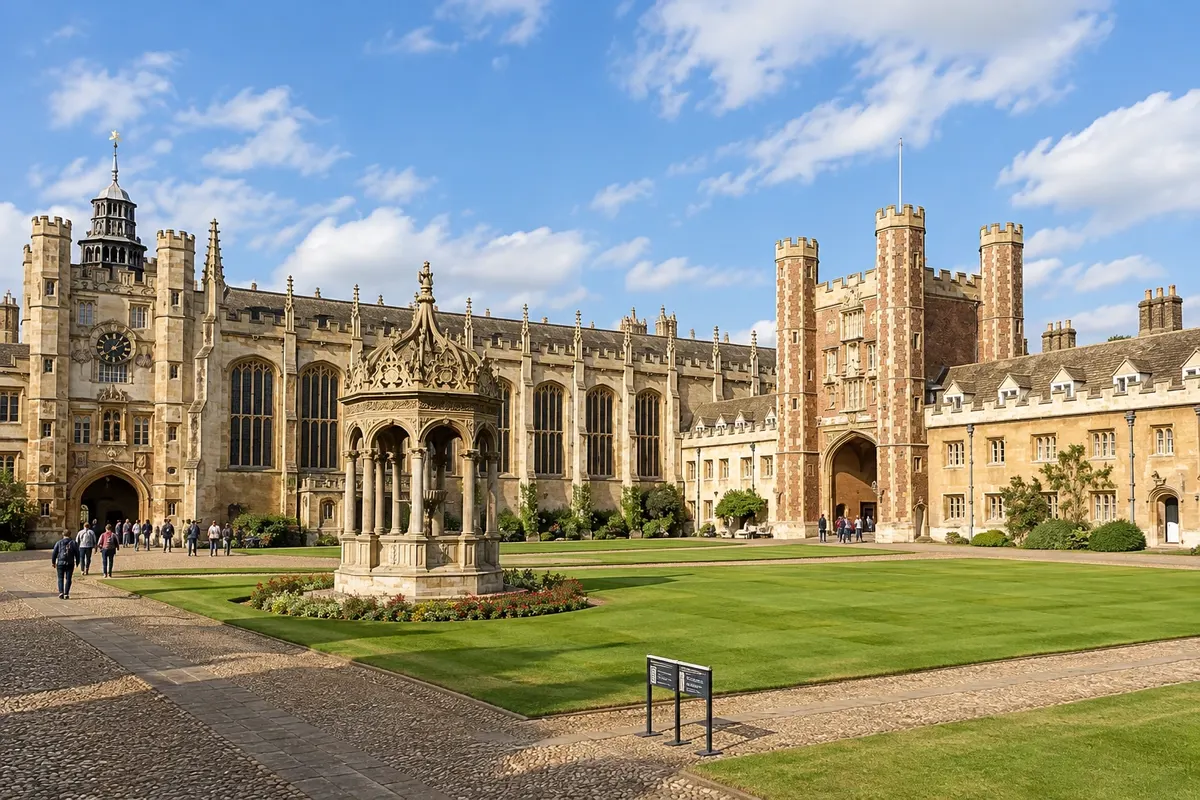
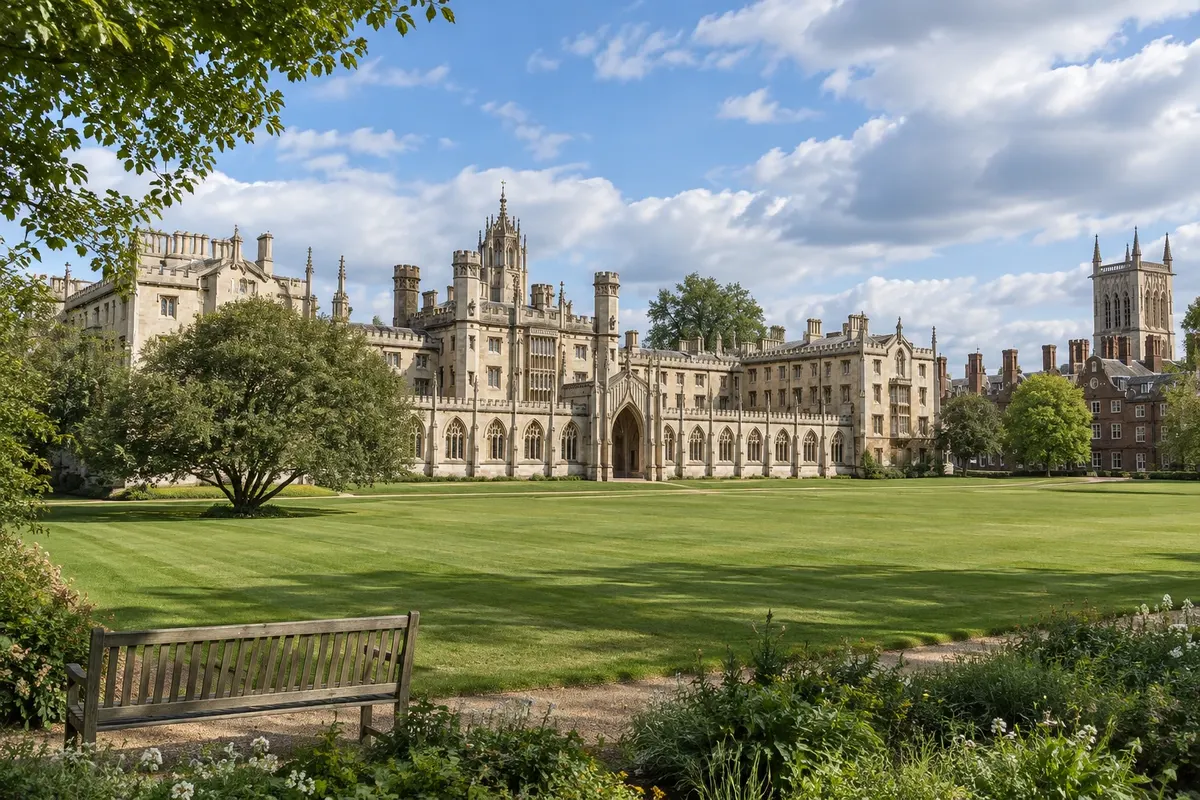
Cambridge is in the county of Cambridgeshire, in the east of England, about 100 km north of London. The university was founded in 1209 by scholars who left Oxford, and it is the second oldest English‑language university in the world. As in Oxford, there is no single campus: there are 31 colleges spread across the city, each with a chapel, dining hall and inner courtyards, here called courts. Isaac Newton, Charles Darwin and Stephen Hawking passed through them.
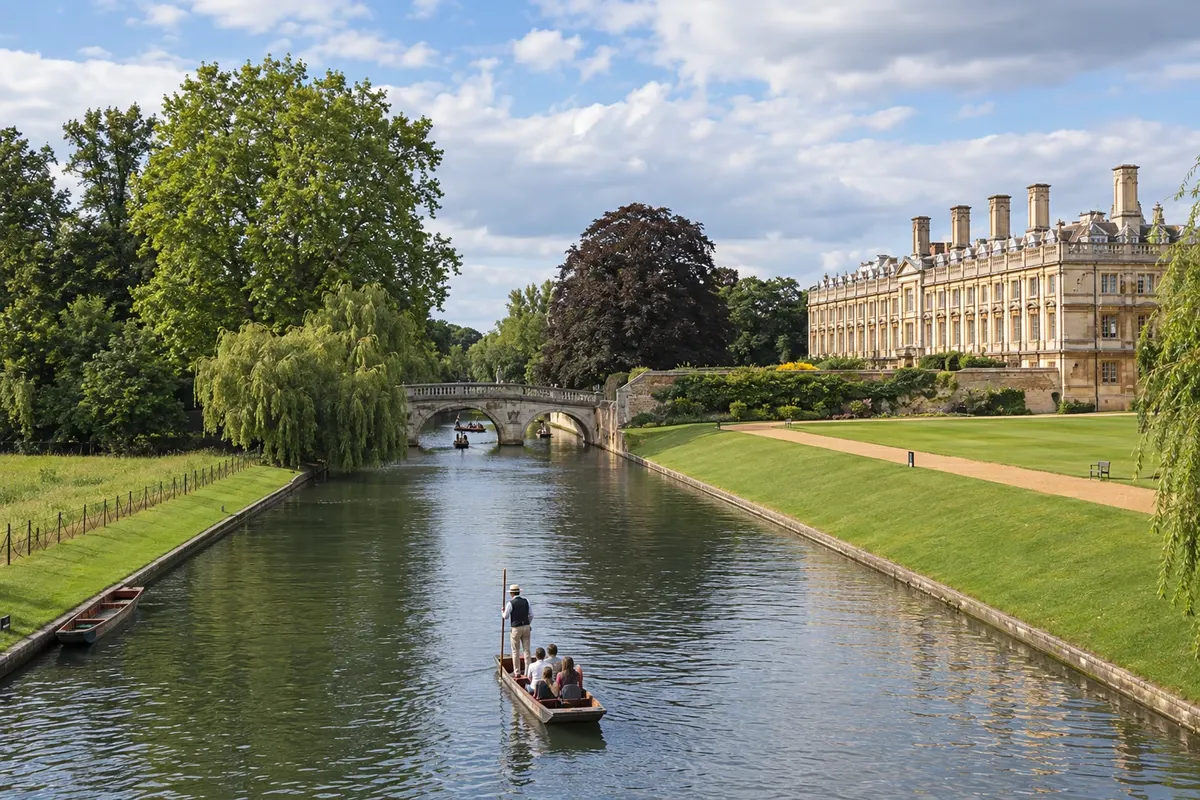
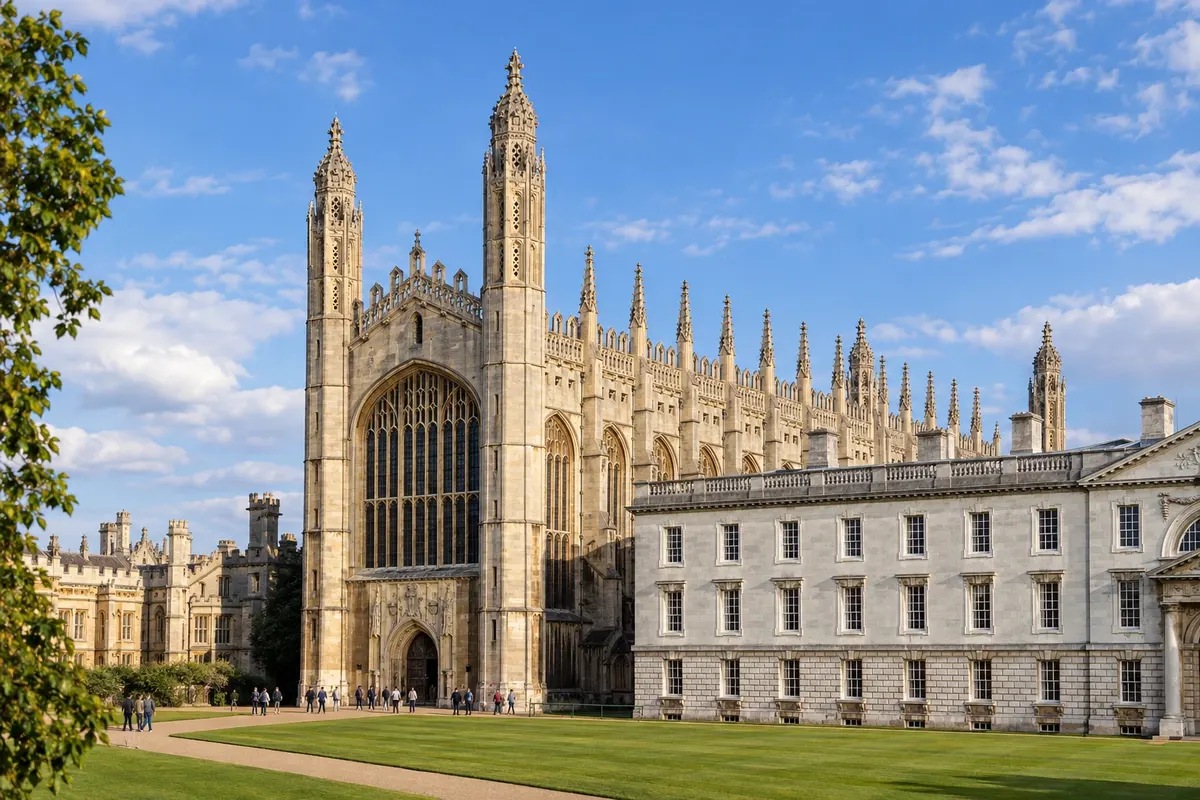
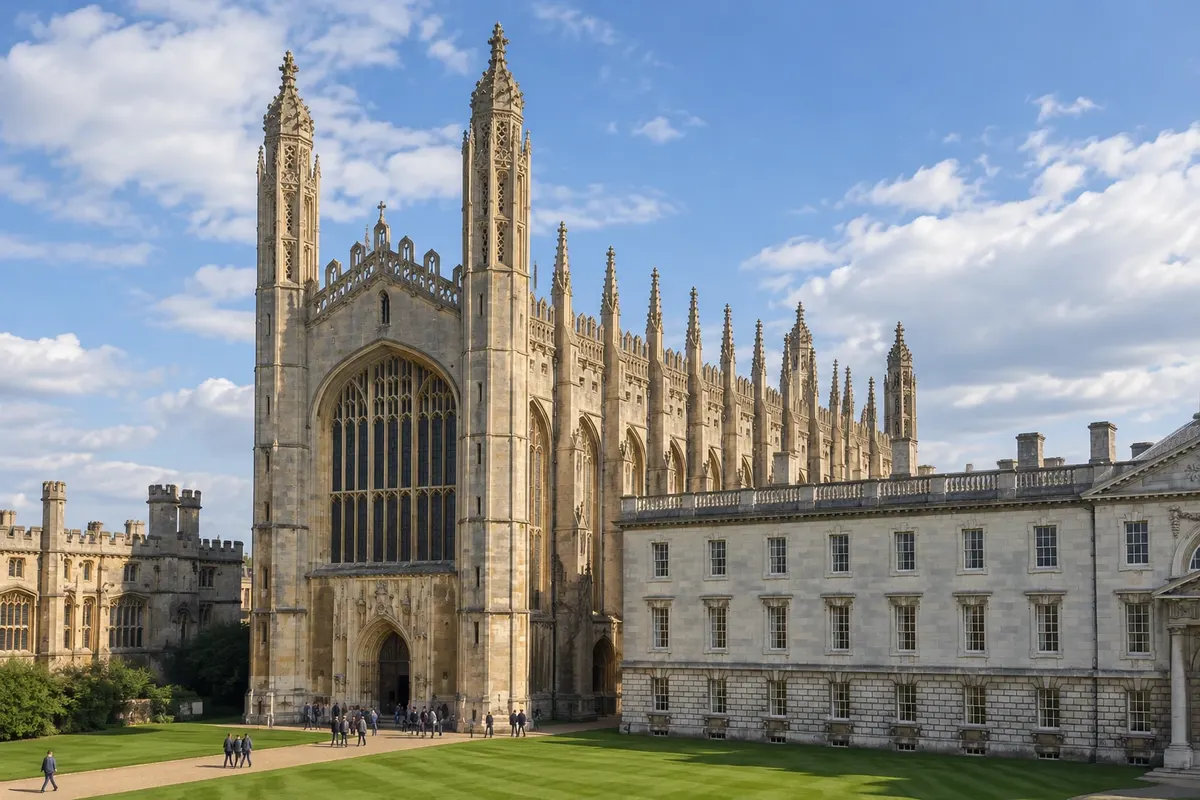
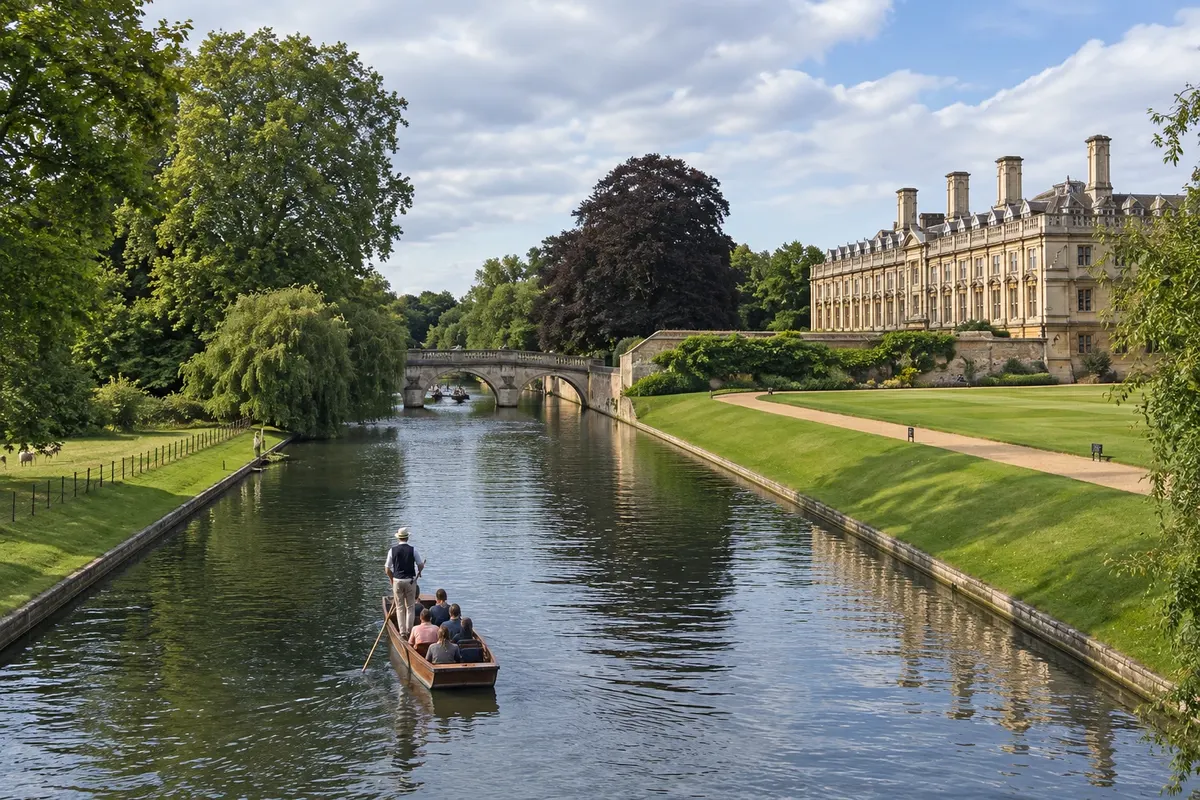
The historic centre is small and flat, crossed by the River Cam. The chapel of King's College, Gothic, with the largest fan‑vault ceiling in the world, is the city's most recognisable image. Beside it are Trinity College, founded by Henry VIII, and St John's College, with the Bridge of Sighs over the river. Behind those colleges, the Backs are the lawns and gardens that slope down to the riverbank, seen from the boats.
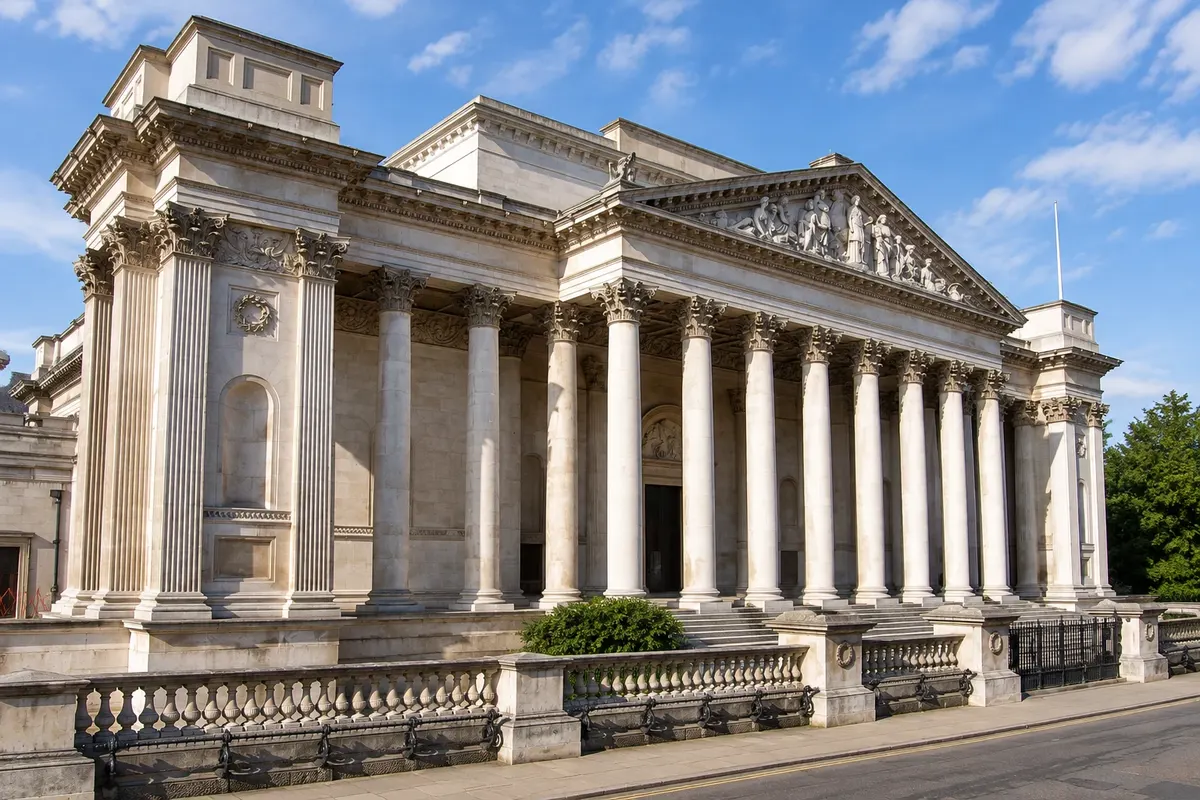
The punt ride, the flat boat pushed with a pole, is the typical activity: the punters tell the history of the colleges while the boat passes under the bridges. The Fitzwilliam Museum, with free admission to its collection, has antiquities and European painting, and the university Botanic Garden is a 15‑minute walk from the centre. The town has a daily market in the central square.
You can see the essentials in one day, but with an overnight stay the town becomes calmer once day‑trippers leave. It's explored on foot or by bicycle, which students use a lot.
This destination brings together 1 city: Cambridge.


 Brazil
 Argentina
 Chile
Chile Colombia
 Peru
Peru Uruguay
 Germany
 Belgium
 Spain
Spain France
 Greece
 the Netherlands
 Ireland
 Italy
Italy Luxembourg
 Portugal
 Switzerland