

 Brazil
 Argentina
 Chile
Chile Colombia
 Peru
Peru Uruguay
 Germany
 Belgium
 Spain
Spain France
 Greece
 the Netherlands
 Ireland
 Italy
Italy Luxembourg
 the United Kingdom
 Switzerland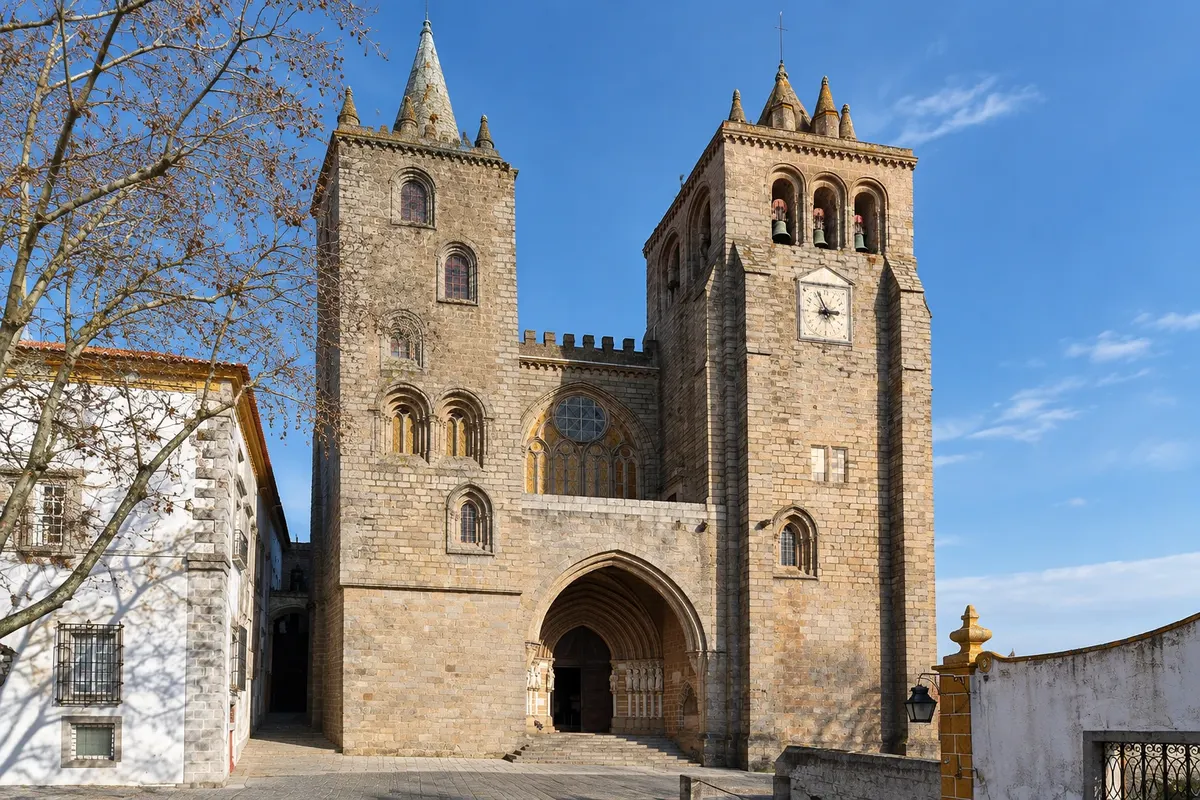
Cathedral · Évora, Évora
Sé de Évora
Gothic cathedral of the 12th and 13th centuries, the largest medieval cathedral in Portugal, with a cloister, a museum of sacred art and a rooftop terrace overlooking the city and the plain.
Illustrative images. The pictures in this guide are illustrations based on the real place, not photographs, and may differ from it.

Discover
About Sé de Évora
The Sé de Évora, dedicated to Nossa Senhora da Assunção, was built between the late 12th and the 13th centuries, during a transition from Romanesque to Gothic. It is considered the largest medieval cathedral in Portugal.
The granite façade has two different towers and a portal with sculptures of the apostles. Inside, the nave is long, and the main chapel was rebuilt in the 18th century in marble.
The Gothic cloister, from the 14th century, has sculptures of the evangelists in the corners. The Museu de Arte Sacra houses pieces of goldsmithing and a statue of the Virgin that opens.
A staircase leads to the terrace on the roof, between the towers and the dome/lantern, with views over Évora's roofs and the Alentejo plain.
Before you go
Practical information
Cidade Turismo reviews its information regularly, but something may have changed. Check with the place before planning your trip.
How much time to set aside
From one to one and a half hours, including the terrace and the museum.
Best time
In the morning or late afternoon, for the terrace, avoiding the intense summer heat. Check opening hours before you go.
How to get there
It is located on Largo do Marquês de Marialva, next to the Templo Romano, in the historic center.
Tip
Don't miss going up to the terrace. The combined ticket includes the cloister, the terrace and the museum.
Get your questions answered
Frequently asked questions about Sé de Évora
Is the Sé de Évora the largest cathedral in Portugal?
It is considered the largest medieval cathedral in the country.
Can you go up to the roof of the Sé?
Yes, the terrace on the roof is included in the visit.
When does the Sé date from?
From the late 12th century and the 13th century.