

 Brazil
 Argentina
 Chile
Chile Colombia
 Peru
Peru Uruguay
 Germany
 Belgium
 Spain
Spain France
 Greece
 the Netherlands
 Ireland
 Italy
Italy Luxembourg
 the United Kingdom
 Switzerland
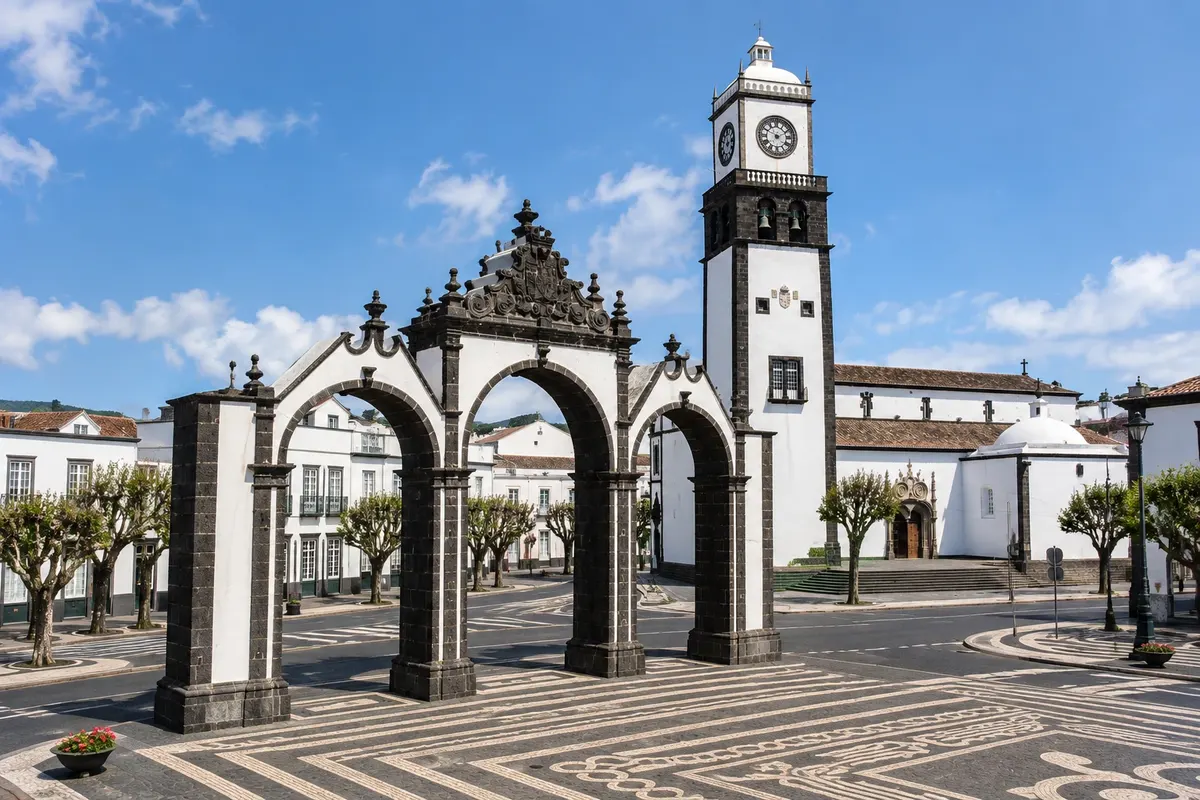
Monument
Portas da Cidade
Three arches of dark basalt and white limestone dating from 1783, a symbol of Ponta Delgada, which marked the city’s entrance from the sea. They stand in a square next to the Igreja Matriz.
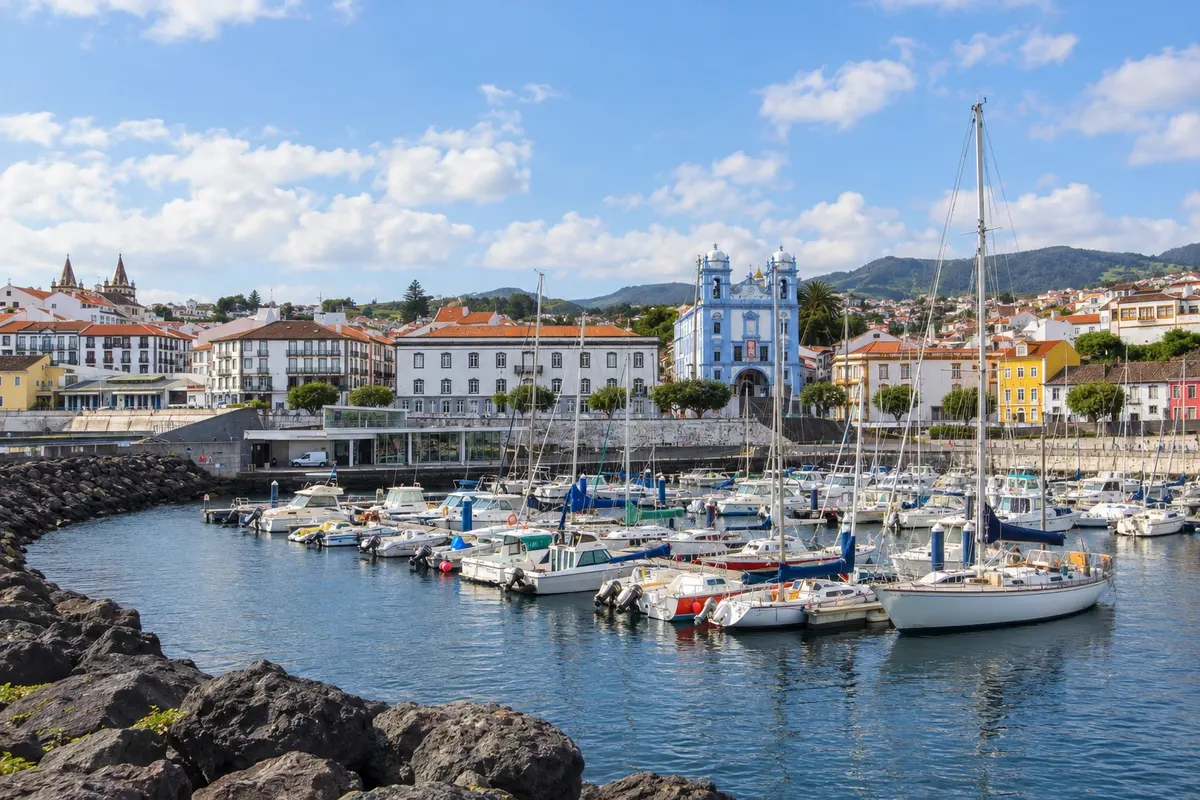
Açores · Portugal Capital
In the destination Açores.
In the photo: Marina de Ponta Delgada
Illustrative images. The pictures in this guide are illustrations based on the real place, not photographs, and may differ from it.
The city
Largest city of the Açores, on the south coast of the island of São Miguel, with white houses and churches of dark volcanic stone. In the center are the Portas da Cidade and the Igreja Matriz de São Sebastião. The island has the Sete Cidades and Fogo lakes, the Furnas valley with Parque Terra Nostra, and the Gorreana tea plantation. Boats for whale watching depart from the port.
There's no accommodation in the guide yet in Ponta Delgada.
There are no restaurants in the guide yet in Ponta Delgada.
Know a good one? Recommend it to ushow to get there · how many days · itinerary · questions
The local experience
Three arches of dark basalt and white limestone dating from 1783, a symbol of Ponta Delgada, which marked the city’s entrance from the sea. They stand in a square next to the Igreja Matriz.
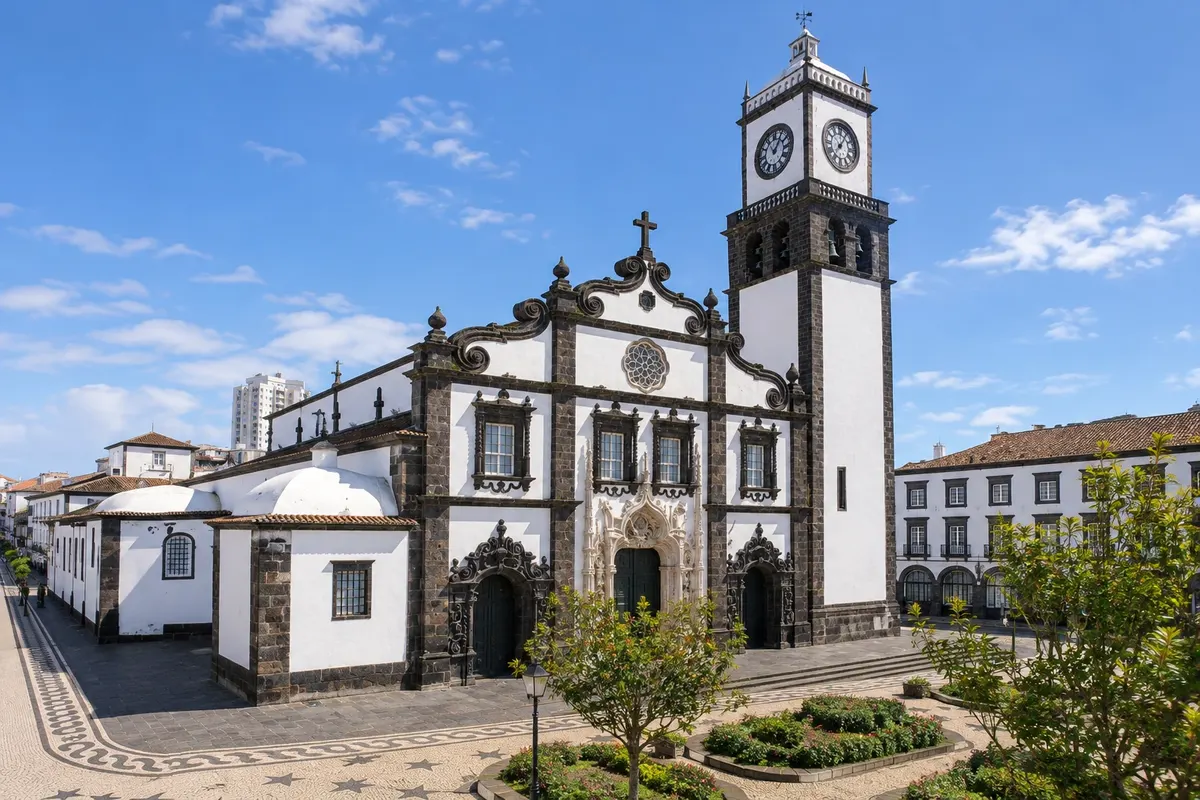
Igreja matriz de Ponta Delgada, from the 16th century, with a Manueline portal of white limestone contrasting with the dark volcanic rock, and an interior with gilded woodcarving.
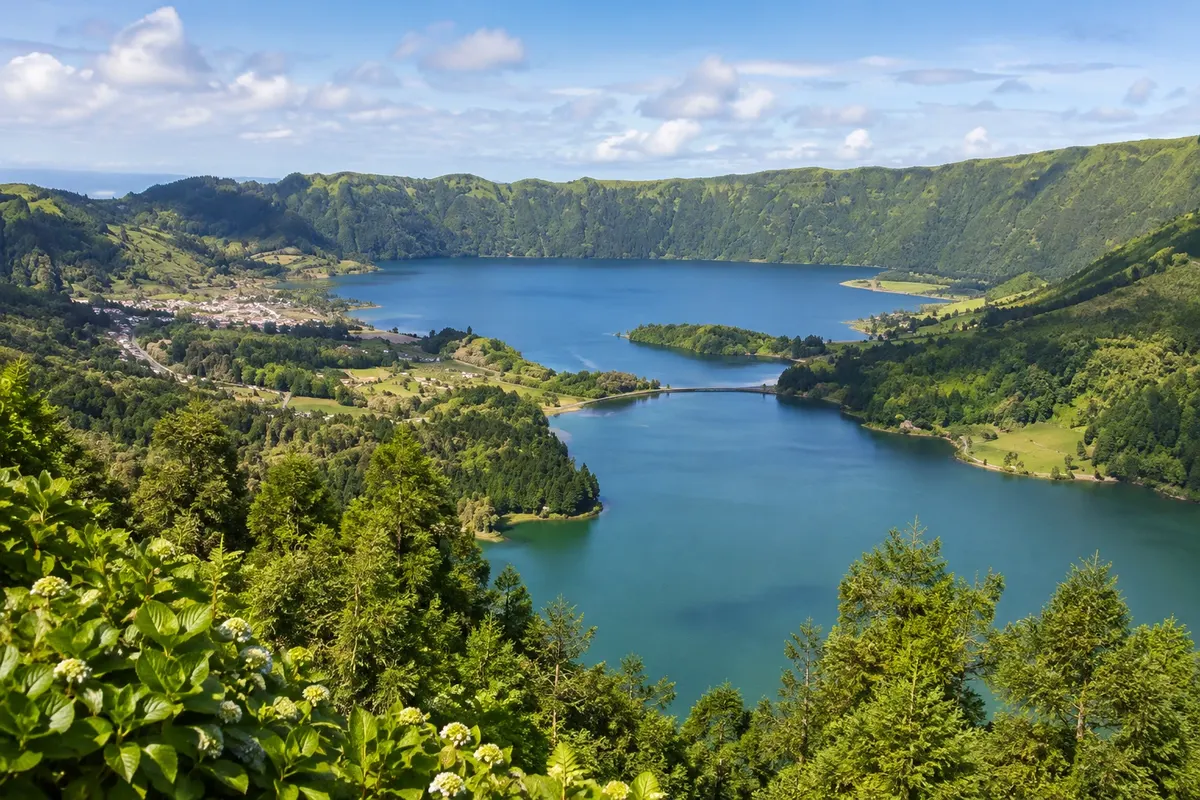
Large volcanic crater about 25 km from Ponta Delgada with two connected lakes, one blue and one green, and a small settlement at the bottom. The Miradouro da Vista do Rei provides the best-known view.
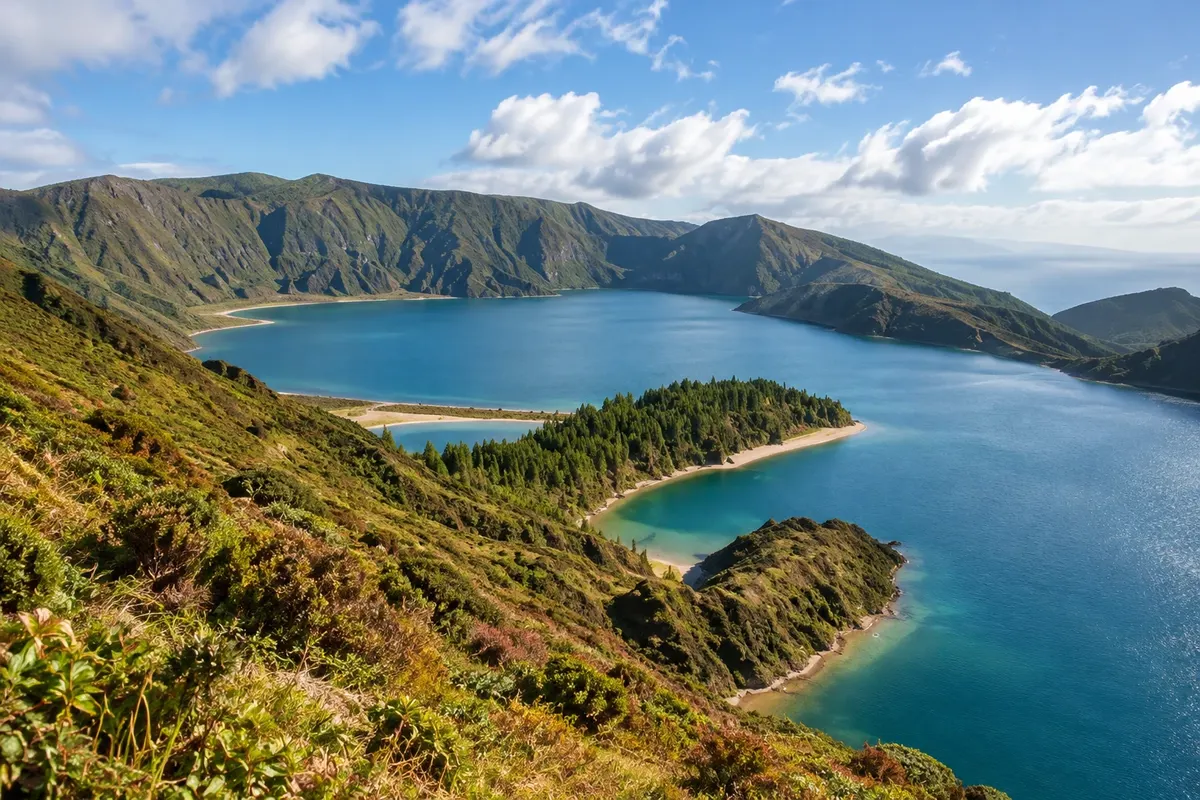
Lake in a volcanic crater in central São Miguel, at about 575 metres altitude, with blue water and a white-sand beach, in a nature reserve with no buildings.
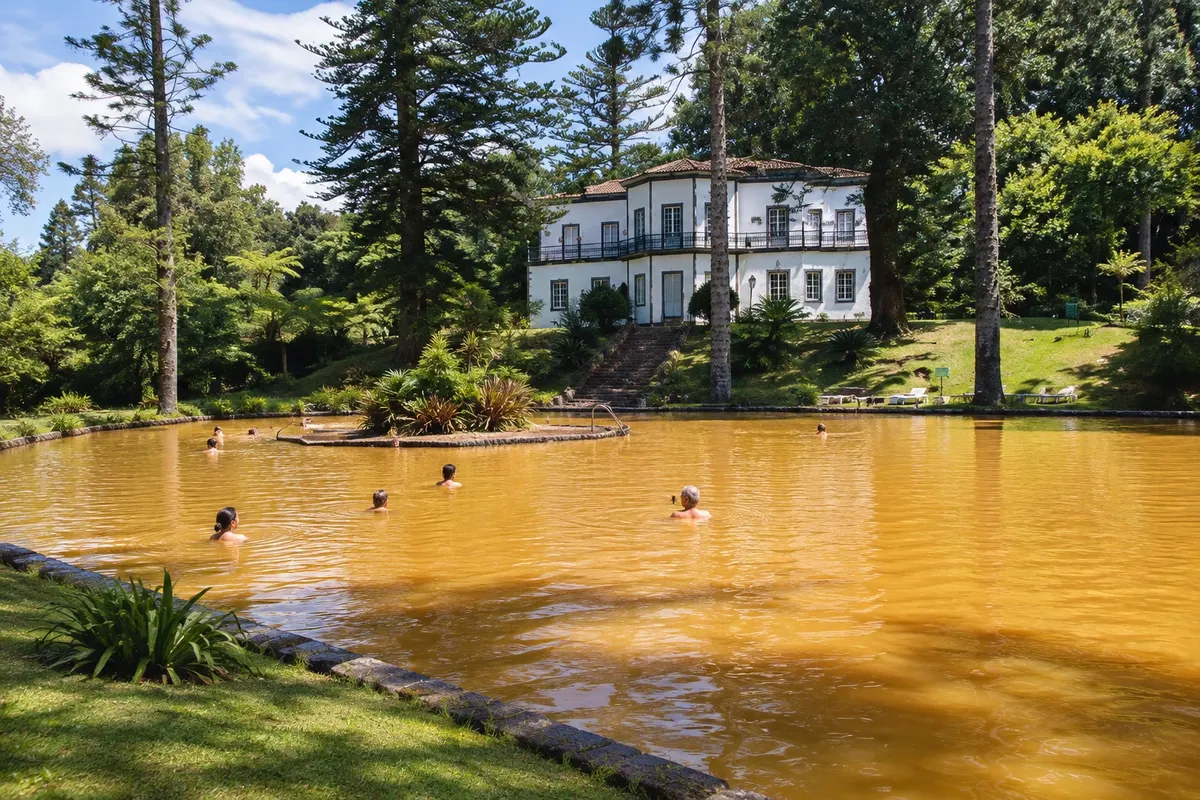
Volcanic valley about 45 km from Ponta Delgada, with fumaroles, hot springs, the lake where the cozido is cooked in the ground, and the Parque Terra Nostra, which has a thermal pool of iron-rich water.
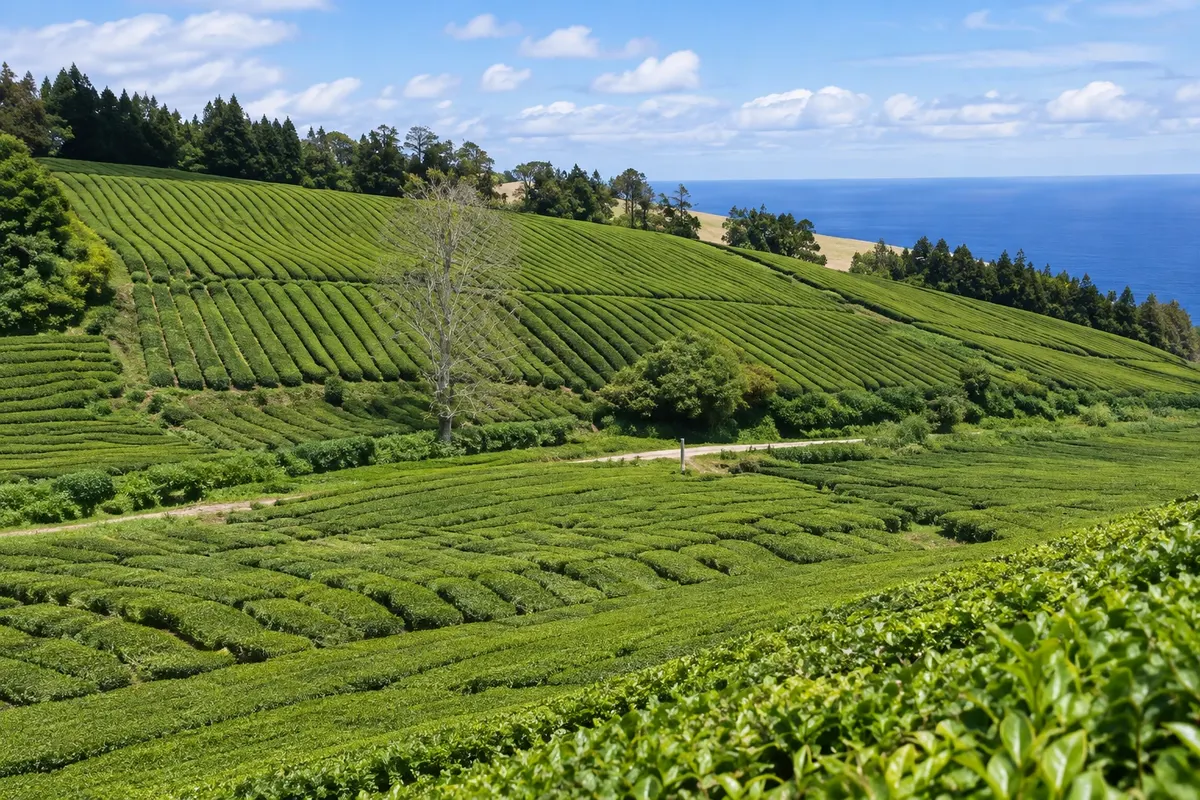
Tea plantation and factory on the north coast of São Miguel, operating since 1883, considered the oldest continuously producing tea plantation in Europe. The visit shows the old machines and ends with a tea tasting.