Vianden and the Ardenas

Vianden · Diekirch · Clervaux · Luxembourg

Vianden and the Ardenas

The hilly north of Luxemburgo: Vianden castle overlooking the Our, Clervaux with the exhibition The Family of Man, Bourscheid castle and the memory of the Batalha das Ardenas.

Éislek (Ardenas)

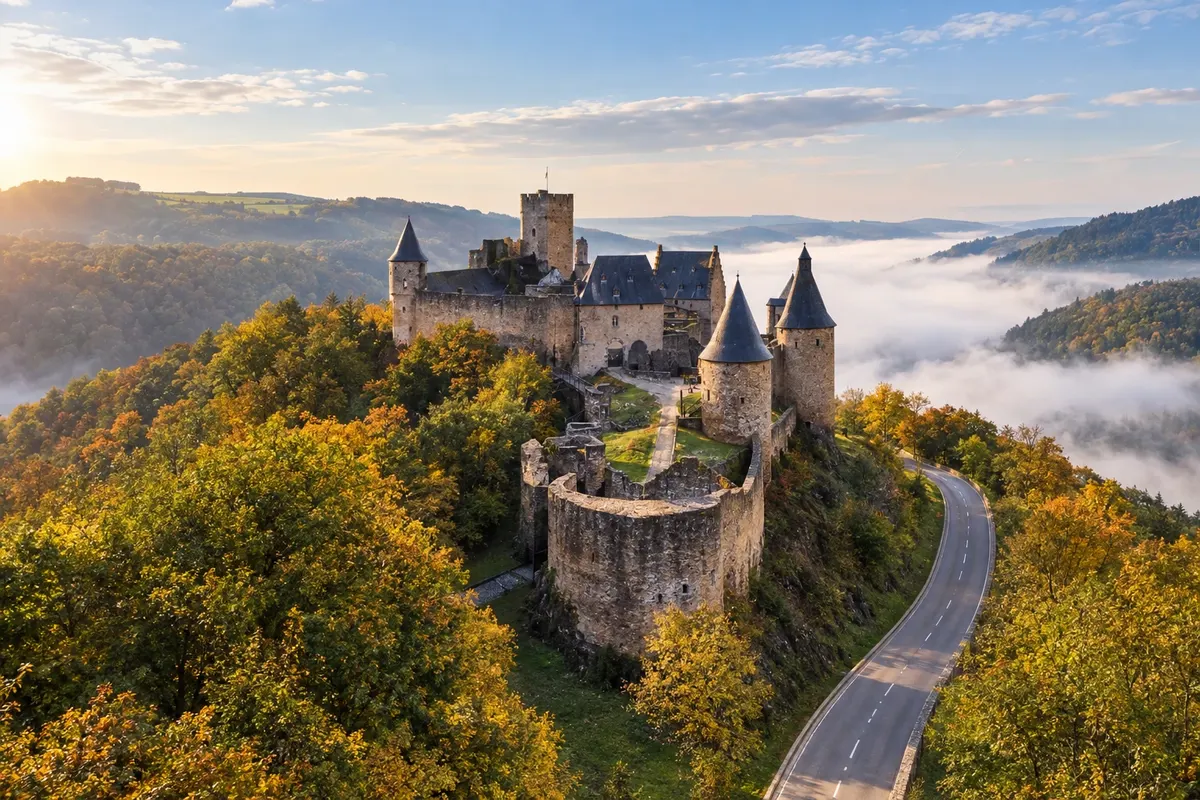
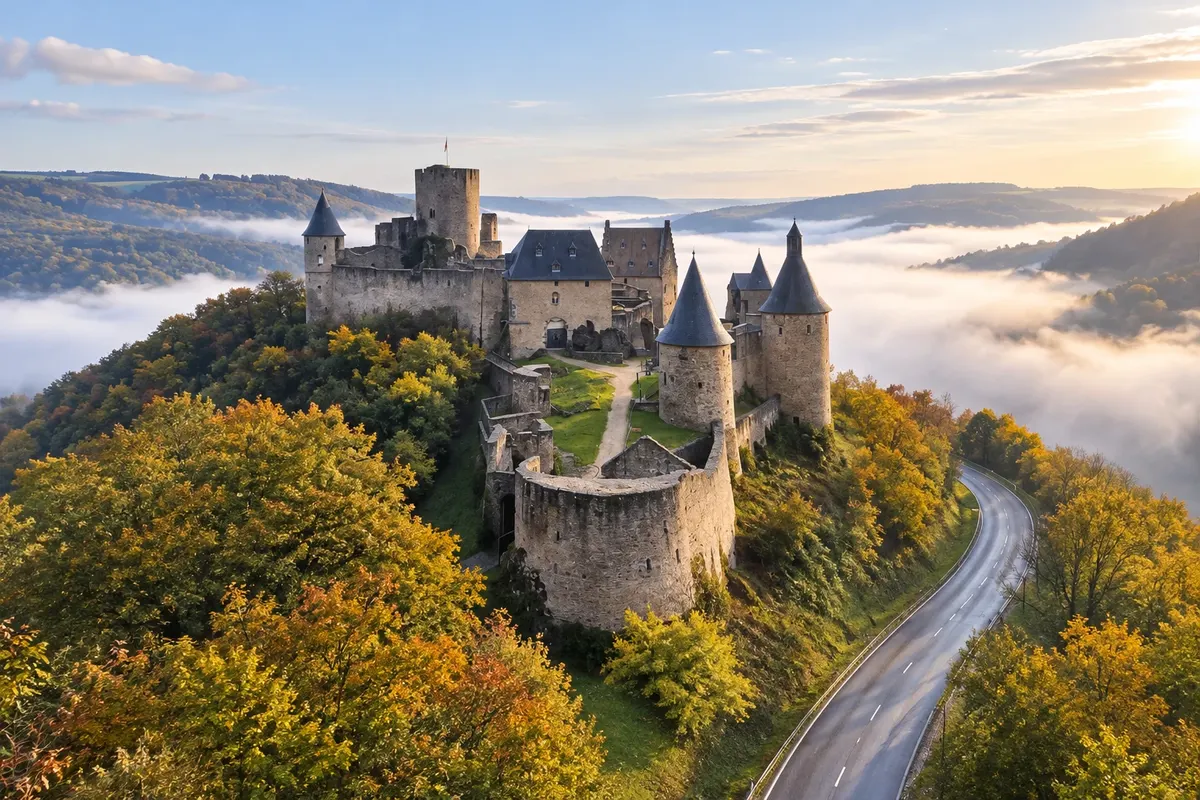
In the photo: Castelo de Bourscheid

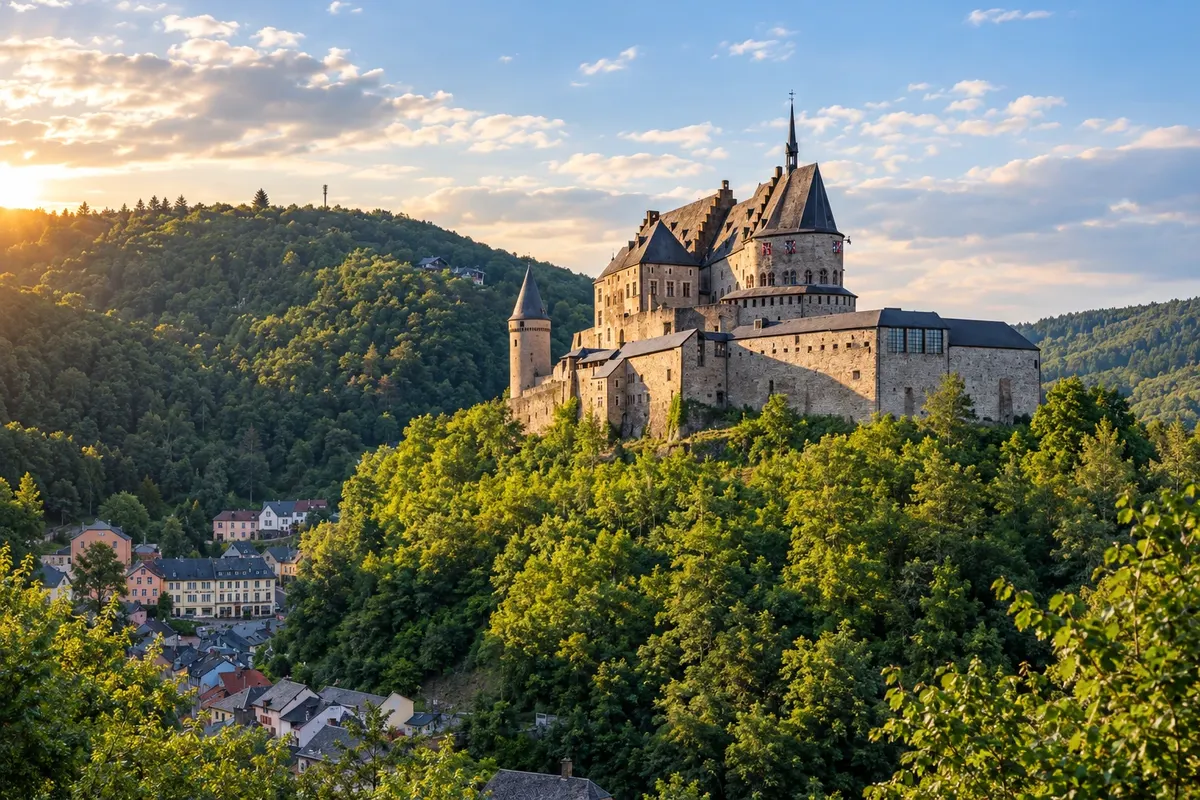
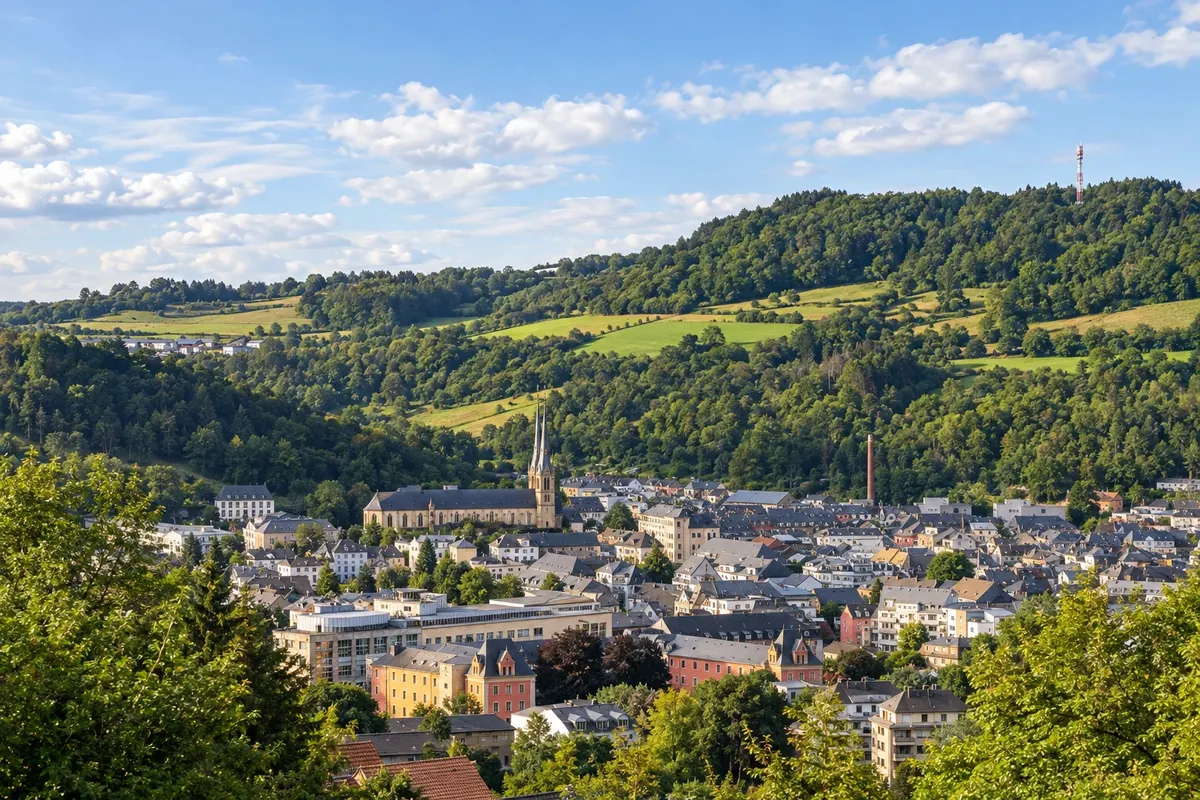
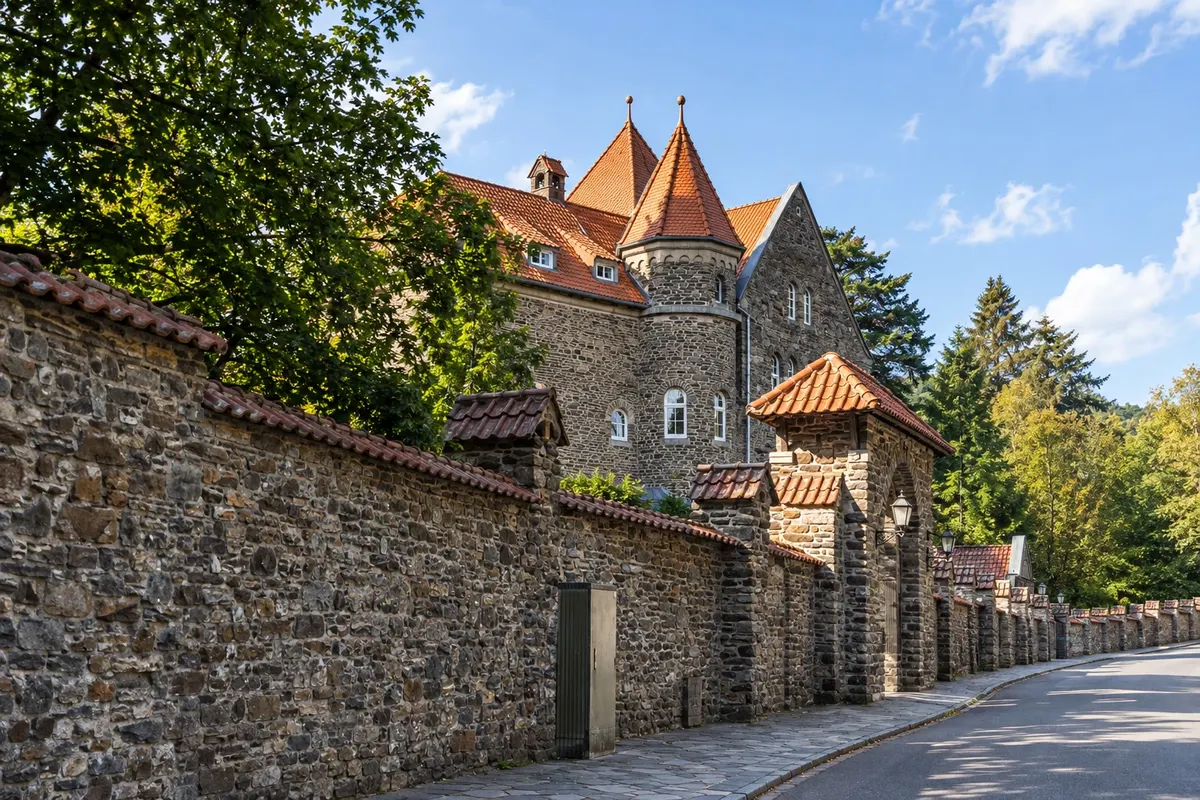
Illustrative images. The pictures in this guide are illustrations based on the real place, not photographs, and may differ from it.

Get it on Google Play Send your photos

Get to know the place

A region to enjoy
at your own pace.

The Éislek, as Luxembourgers call the part of the country that lies in the Ardenas, occupies the northern third of the Grão-Ducado. It is a region of wooded plateaus cut by deep, winding valleys, through which the Our, the Clerve, the Wiltz and the Sûre run, with small towns in the valley bottoms and castles atop the hills. Roads climb and descend in curves, and the landscape is quite different from the flatter, more urban south.

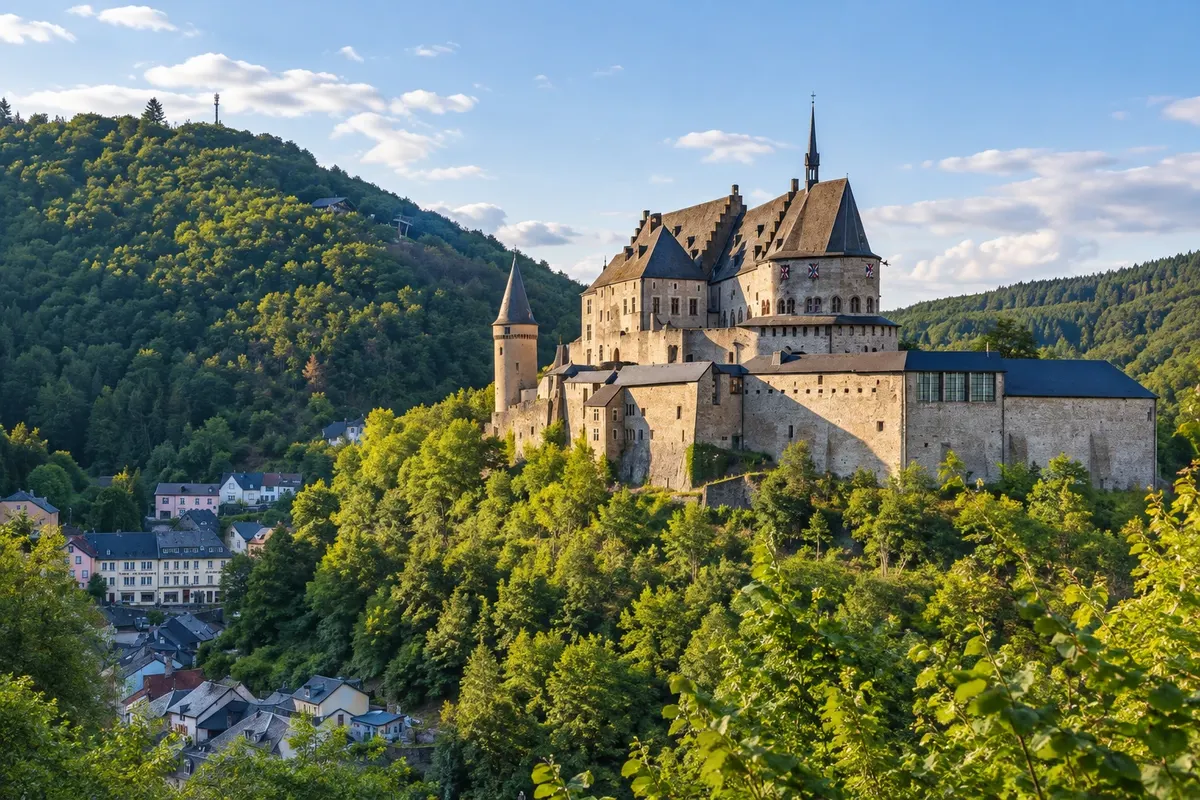
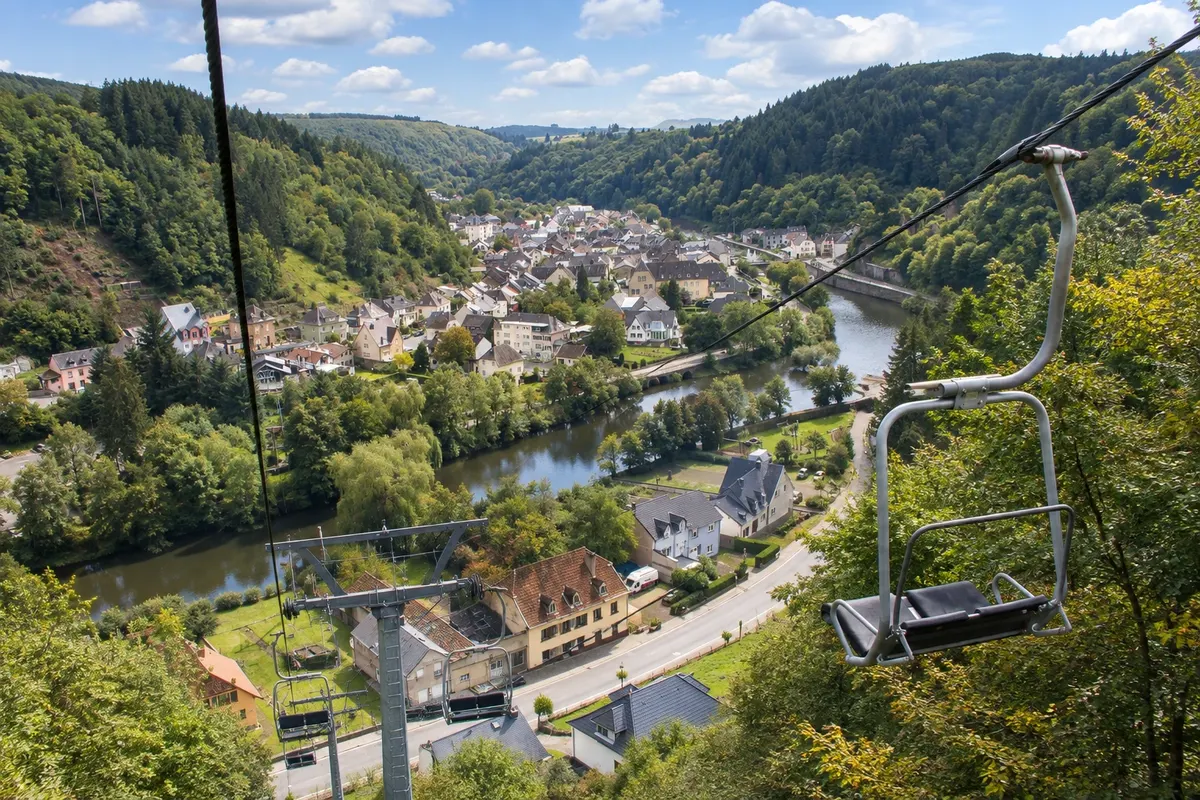
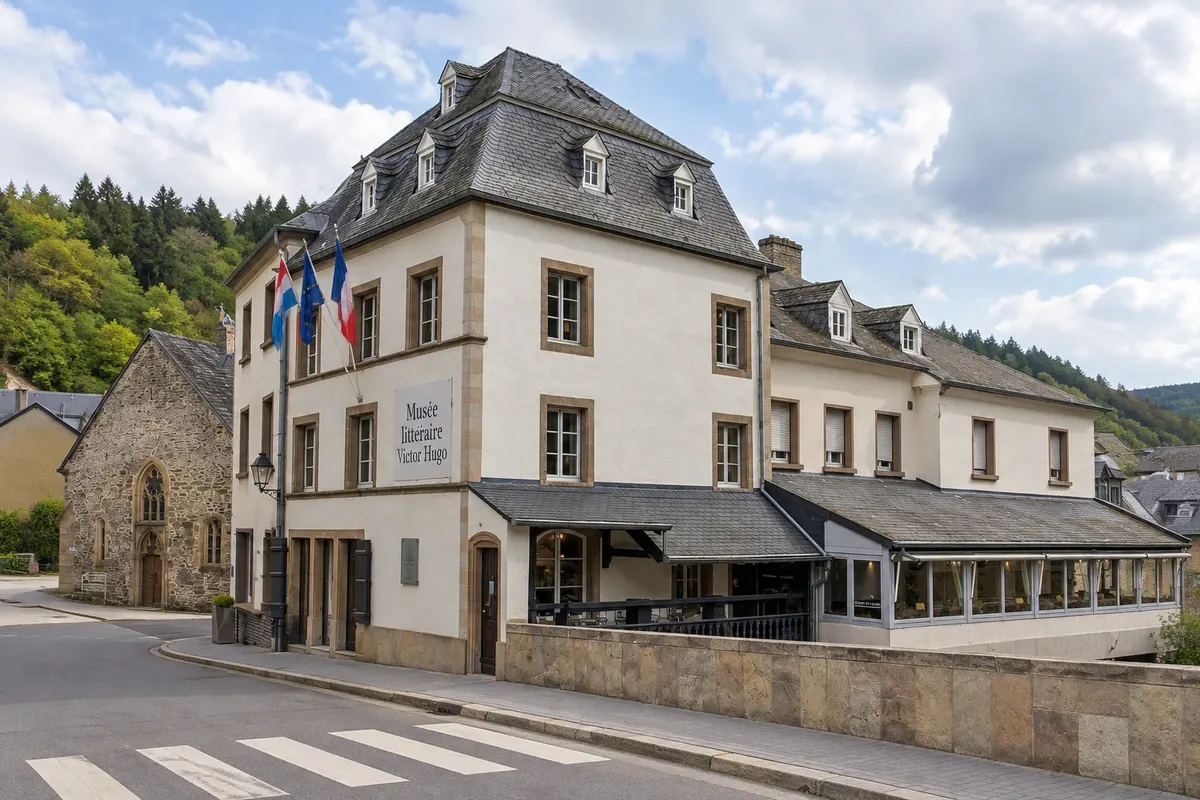
Vianden, on the border with Germany, is the most visited town: the castle of the counts of Vianden, restored after more than a century in ruins, dominates the town and the Our valley, and a chairlift rises to the top of the hill opposite. Victor Hugo spent a season there in 1871, and the house where he stayed, beside the bridge, became a museum.

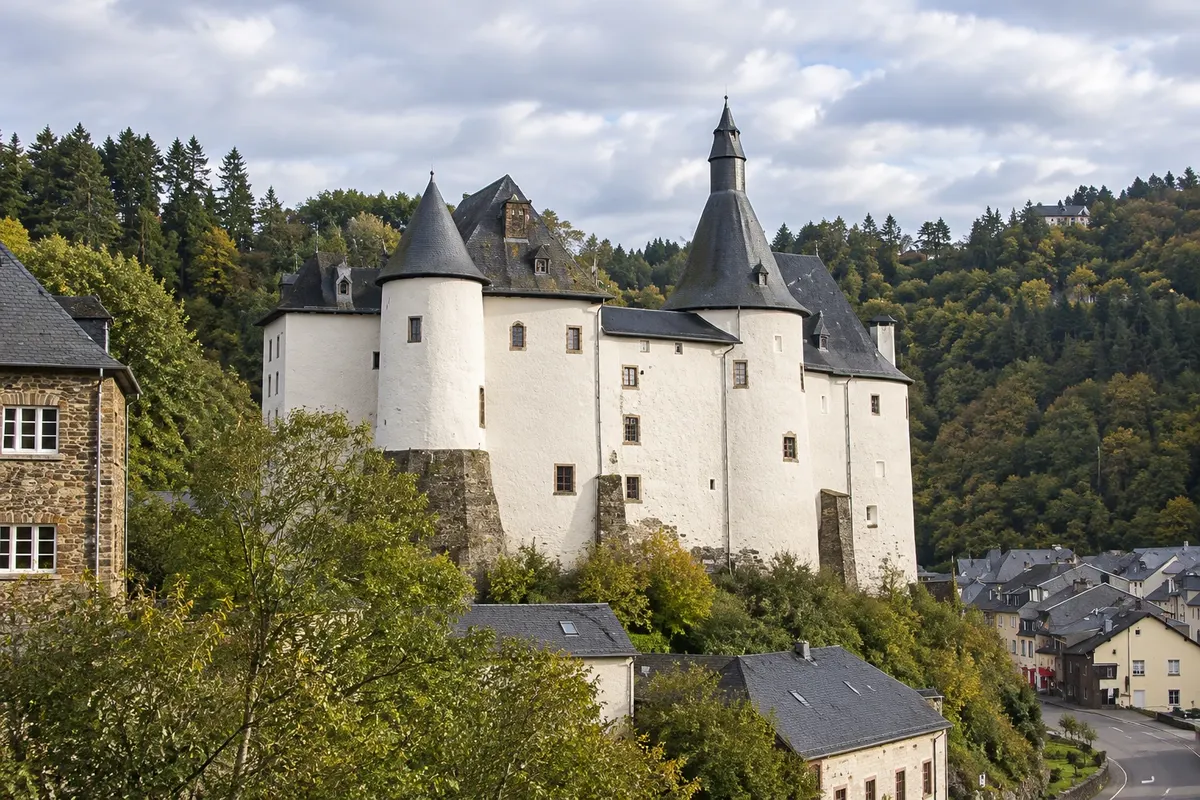
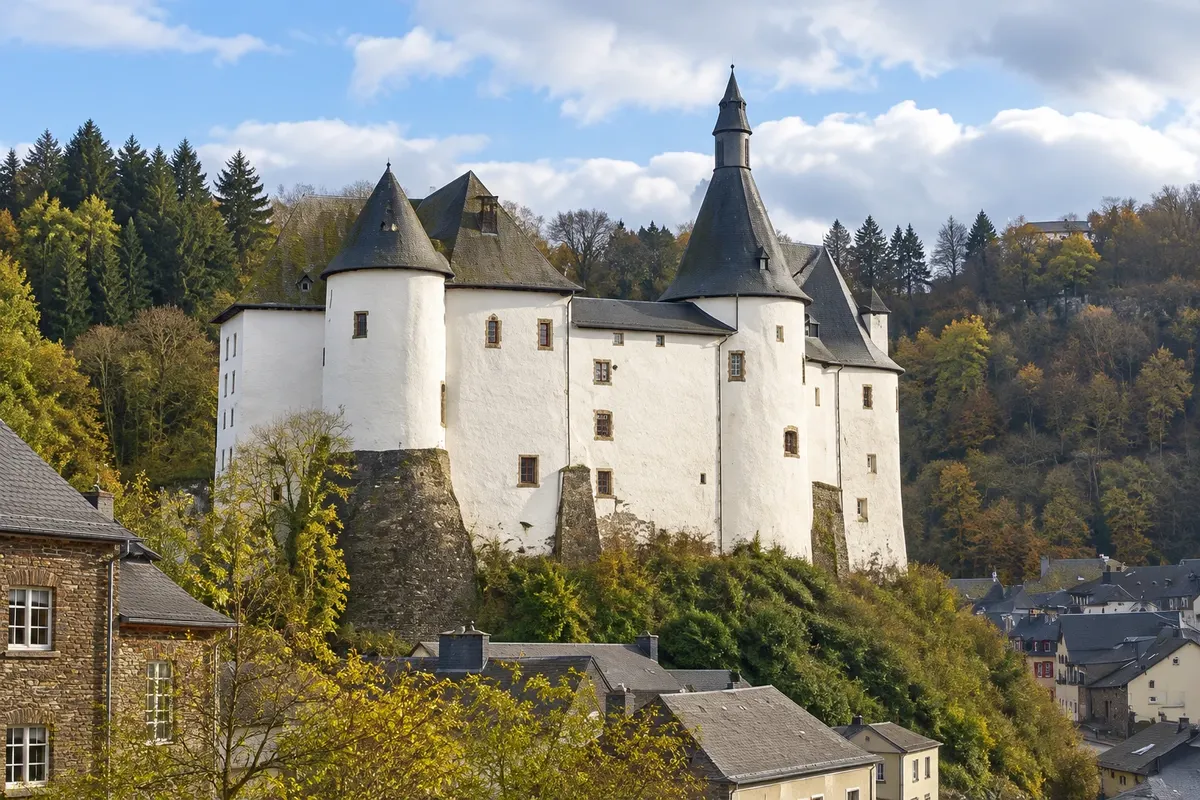
Further north, Clervaux sits in a Clerve valley, with the castle in the middle of town and the Benedictine abbey on the slope. The castle houses the exhibition The Family of Man, created by Edward Steichen for the Museum of Modern Art in New York in 1955 and listed by UNESCO in the Memory of the World programme. Diekirch, in the Sûre valley, is the gateway to the region, with the Museu Nacional de História Militar, and is near Bourscheid castle and Ettelbruck.

In the winter of 1944–45, the Ardenas were the scene of the Batalha das Ardenas, the last major German offensive in the west, and almost every town in the region has museums, tanks and monuments from that time.

This destination brings together 3 cities: Vianden, Diekirch, Clervaux.

Share: WhatsApp
Traveler, share your experiences through photos Up to 5 photos of each place you visited.

One destination, many paths

The cities on this trip

Start with one city or combine several in your itinerary.

Where Vianden and the Ardenas is
ViandenClervauxDiekirch

Contornos: Administration du cadastre et de la topographie (Luxemburgo), CC0 1.0. Adaptação do Cidade Turismo.

How to get there: Vianden and the Ardenas

✈ Aeroporto de Luxemburgo-Findel (LUX), in Findel · 50 km to Vianden

Check before booking. From the capital, the train reaches Clervaux in about 1 hour and Ettelbruck and Diekirch in about 40 minutes; Vianden is reachable by bus from Ettelbruck or Diekirch. By car, Vianden is about 45 km from the capital.

Suggested arrival point: Vianden

The local experience

Things to do in Vianden and the Ardenas

Château de Vianden (Castelo de Vianden)
Vianden · Vianden · Castle

Château de Vianden (Castelo de Vianden)

Castle from the 11th to the 14th centuries on a hill above the river Our, residence of the counts of Vianden and later of the house of Orange-Nassau. It fell into ruin in the 19th century and was restored by the State from 1977 onwards.

Diekirch · Diekirch · Museum

Musée national d'histoire militaire (Museu Nacional de História Militar)

Museum in Diekirch about the Battle of the Ardennes in the winter of 1944–45, with life‑size dioramas, vehicles, weapons and more than 100,000 military objects. It also tells the story of the Luxembourg army.

The Family of Man
Clervaux · Clervaux · Museum

The Family of Man

Exhibition of 503 photographs by 273 photographers from 68 countries, created by Edward Steichen for the MoMA de Nova York in 1955, about human life from birth to death. On permanent display at the castle of Clervaux since 1994.

Château de Bourscheid (Castelo de Bourscheid)
Diekirch · Diekirch · Castle

Château de Bourscheid (Castelo de Bourscheid)

Ruins of a medieval castle on top of a spur, 150 metres above the Sûre valley, with walls, towers and a restored 14th‑century house. Visit with an audio guide and views over the valley.

See 5 more places in Vianden and the Ardenas
Château de Clervaux (Castelo de Clervaux)
Clervaux · Clervaux · Castle

Château de Clervaux (Castelo de Clervaux)

12th-century castle in the centre of Clervaux, destroyed in the fighting of December 1944 and rebuilt after the war. It houses The Family of Man, the Museu da Batalha das Ardenas and scale models of the country's castles.

Télésiège de Vianden (Teleférico de Vianden)
Vianden · Vianden · Viewpoint

Télésiège de Vianden (Teleférico de Vianden)

Chairlift cable car that rises from the Our valley to the top of the hill opposite the castle, at 440 metres, with a café and viewpoint. It runs in season, generally from April to October.

Abbaye Saint-Maurice de Clervaux (Abadia de Saint-Maurice)
Clervaux · Clervaux · Church

Abbaye Saint-Maurice de Clervaux (Abadia de Saint-Maurice)

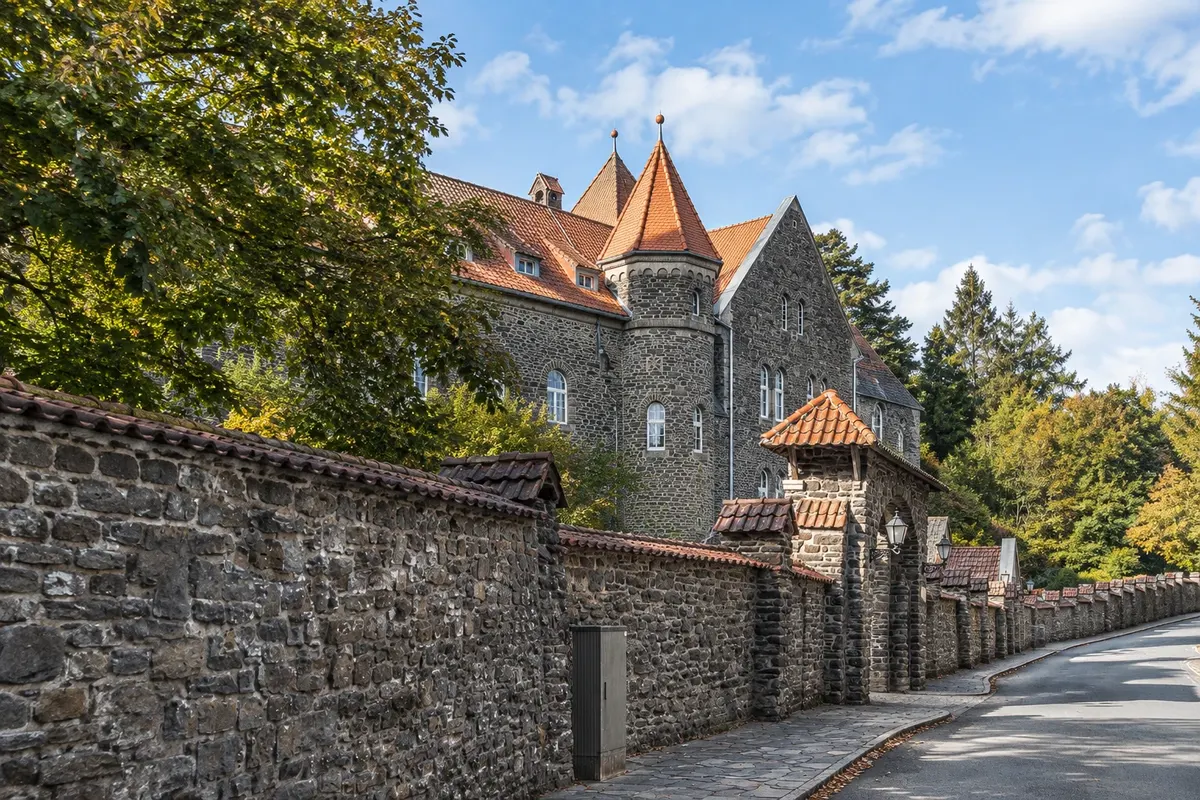
Benedictine abbey built in the early 20th century on the slope above Clervaux, in Burgundian Romanesque style. The monks usually sing the offices in Gregorian chant; the crypt has an exhibition about monastic life.

Diekirch · Diekirch · Museum

General Patton Memorial Museum (Museu Patton)

Museum in Ettelbruck, 5 km from Diekirch, about the liberation of the town and the actions of General George S. Patton's Third Army in the Battle of the Bulge, with photographs, uniforms, weapons and period objects.

Musée littéraire Victor Hugo (Casa de Victor Hugo)
Vianden · Vianden · Museum

Musée littéraire Victor Hugo (Casa de Victor Hugo)

The house beside the bridge over the Our where Victor Hugo stayed in 1871 during his exile; it is now a literary museum with letters, drawings, manuscripts and the room with a view of the castle. On the bridge there is a bust of the writer made by Rodin.

Before you go

Practical information

A little planning leaves more time to enjoy the journey.

When to go

From May to September the forest is green, days are long and the Vianden chairlift usually runs (generally from April to October). October usually brings autumn colours and, in Vianden, the feira das nozes on the second Sunday of the month. From November to March it’s cold, it gets dark early and it can snow on the plateaus; some castles and museums reduce opening hours.

The seasons shown are the most usual ones; nature doesn't always follow the calendar.

How many days to stay

One day is enough for Vianden, with the castle and the chairlift, or for Clervaux, with The Family of Man and the abbey. Two days cover Vianden and Clervaux, with a stop in Diekirch or Bourscheid. With three days there’s time left for the Escapardenne trails and for the Haute-Sûre lake to the west.

Which city to stay in

Vianden has hotels and guesthouses on the main street that descends from the castle to the bridge over the Our, and it is the most popular base for those who want to see the castle lit up at night. Clervaux has hotels in the centre, near the castle and the station, and serves those arriving by train. Diekirch and Ettelbruck, in the Sûre valley, have more urban hotels and good train links with the capital. Those who prefer not to change hotels can stay in the capital and do day trips.

Respect the place

Take your trash with you, follow the signs and support local businesses. In natural areas, follow the visiting guidelines.

Get your questions answered

Frequently asked questions about Vianden and the Ardenas

Can you do Vianden as a day trip from the capital?

Yes. By car it’s about 45 km, under an hour. By public transport, take the train to Ettelbruck or Diekirch and the bus to Vianden; the whole journey takes about 1:00 to 1:15. Check timetables, especially at weekends.

How to get from Vianden to Clervaux?

By car it’s about 30 km along valley roads, roughly 40 minutes. By public transport you need to return to Ettelbruck or Diekirch and take the train to Clervaux, which takes longer; check the timetables.

Do I need a car in the Ardenas of Luxemburgo?

It isn’t essential: Clervaux, Diekirch and Ettelbruck have trains, and Vianden has a bus. A car helps to combine several castles in one day, such as Vianden, Bourscheid and Clervaux, and to reach the Haute-Sûre lake and the trails.

What is the Batalha das Ardenas?

The German offensive launched in December 1944 in the Ardenas of Belgium and Luxemburgo, the last major German offensive in the west. The fighting lasted until the end of January 1945, in a severe winter. Museums in Diekirch, Clervaux and Ettelbruck tell that story.

What's the best time to go to the Ardenas?

From May to September, for the trails and the Vianden chairlift, which usually operates from April to October. October generally has autumn colours. In winter it can snow and some places reduce opening hours.

Explore other destinations Search by state and city
Back