

 Brazil
 Argentina
 Chile
Chile Colombia
 Peru
Peru Uruguay
 Germany
 Belgium
 Spain
Spain France
 Greece
 the Netherlands
 Ireland
 Italy
Italy Portugal
 the United Kingdom
 Switzerland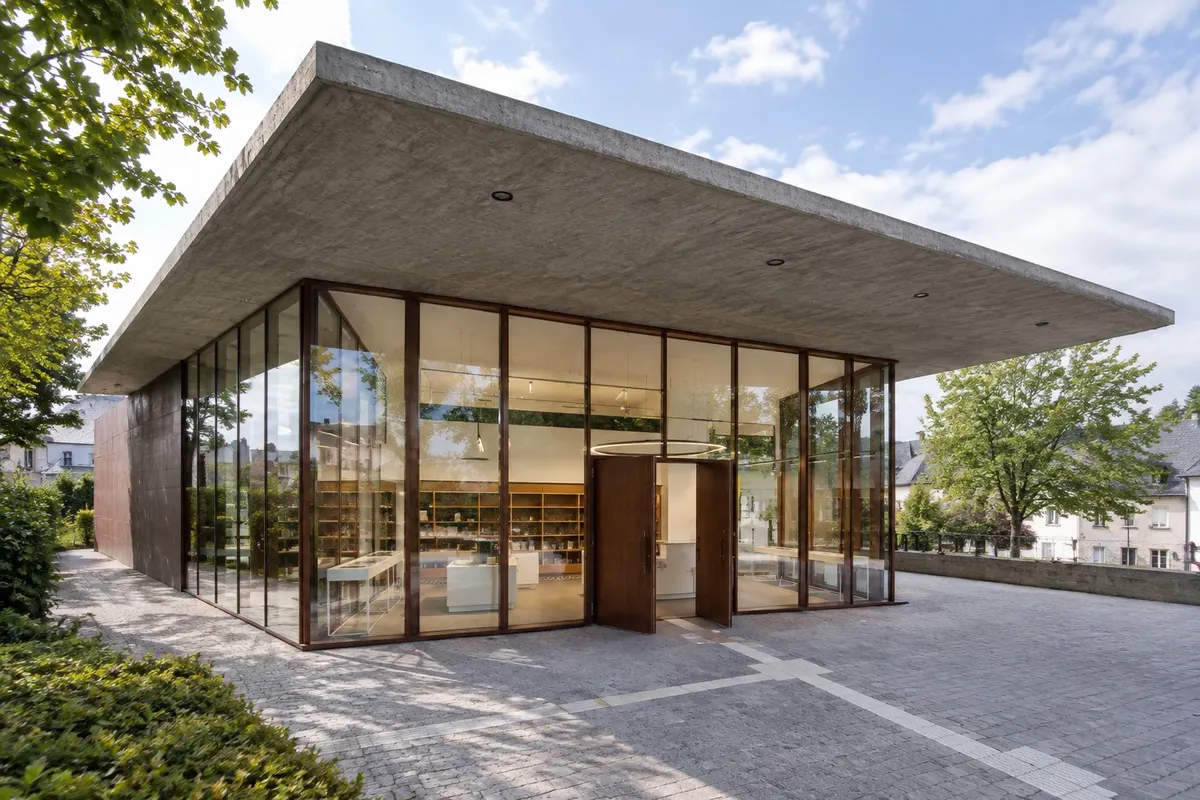
Museum · Schengen, Remich
Musée européen Schengen (Museu Europeu Schengen)
Museum on the banks of the Moselle in Schengen about the Schengen Agreement, signed in 1985 on the river opposite the village, and about the opening of borders in Europe. Next to it are monuments to the agreement and the quay where the signing boat was moored.
Illustrative images. The pictures in this guide are illustrations based on the real place, not photographs, and may differ from it.

Discover
About Musée européen Schengen (Museu Europeu Schengen)
The Museu Europeu Schengen sits on the banks of the Moselle, in the centre of the village, a few metres from the point on the river where, on 14 June 1985, representatives of Belgium, France, West Germany, Luxembourg and the Netherlands signed the Schengen Agreement on board the boat Princesse Marie-Astrid. The site was chosen because it is where the borders of Luxembourg, France and Germany meet.
The agreement provided for the gradual elimination of border controls between those countries, and the Schengen Convention, also signed in the village in 1990, set out the rules. The Schengen area expanded and today includes most European countries, where one can cross from one country to another without stopping at the border.
The museum tells this story with immersive spaces, documents, photographs, videos and objects linked to the former borders, and it also deals with the present and future of free movement in Europe. The texts are usually available in several languages, including English.
Outside, on the riverbank, there are monuments to the agreement and the quay. The nearby bridge leads to Perl in Germany, and from there you can see the point on the river where the three countries meet.
Before you go
Practical information
Cidade Turismo reviews its information regularly, but something may have changed. Check with the place before planning your trip.
How much time to set aside
About 45 minutes to 1 hour; an additional 30 minutes for the riverside monuments.
Best time
Open during the day all year. In summer, combine it with a boat trip on the Moselle. Check opening times before you go.
How to get there
It is on rue Robert Goebbels, on the banks of the Moselle in central Schengen, a 2-minute walk from the bus stop. By car there is parking near the river.
Tip
After the museum, walk to the middle of the bridge to see the river at the tripoint. Combine the visit with Remich and a crémant tasting on the same day.
Official website
Get your questions answered
Frequently asked questions about Musée européen Schengen (Museu Europeu Schengen)
What does the Museu Europeu show?
The history of the Schengen Agreement, signed on the river opposite the village in 1985, and the opening of Europe’s internal borders, through documents, videos, objects and immersive exhibits.
Why was the agreement signed in Schengen?
Because the village lies at the point where Luxembourg, France and Germany meet — a symbol of the borders the agreement sought to open.
Does the museum charge admission?
Check before you go: entry conditions can change. Guided visits for groups are usually arranged in advance.