Lookout
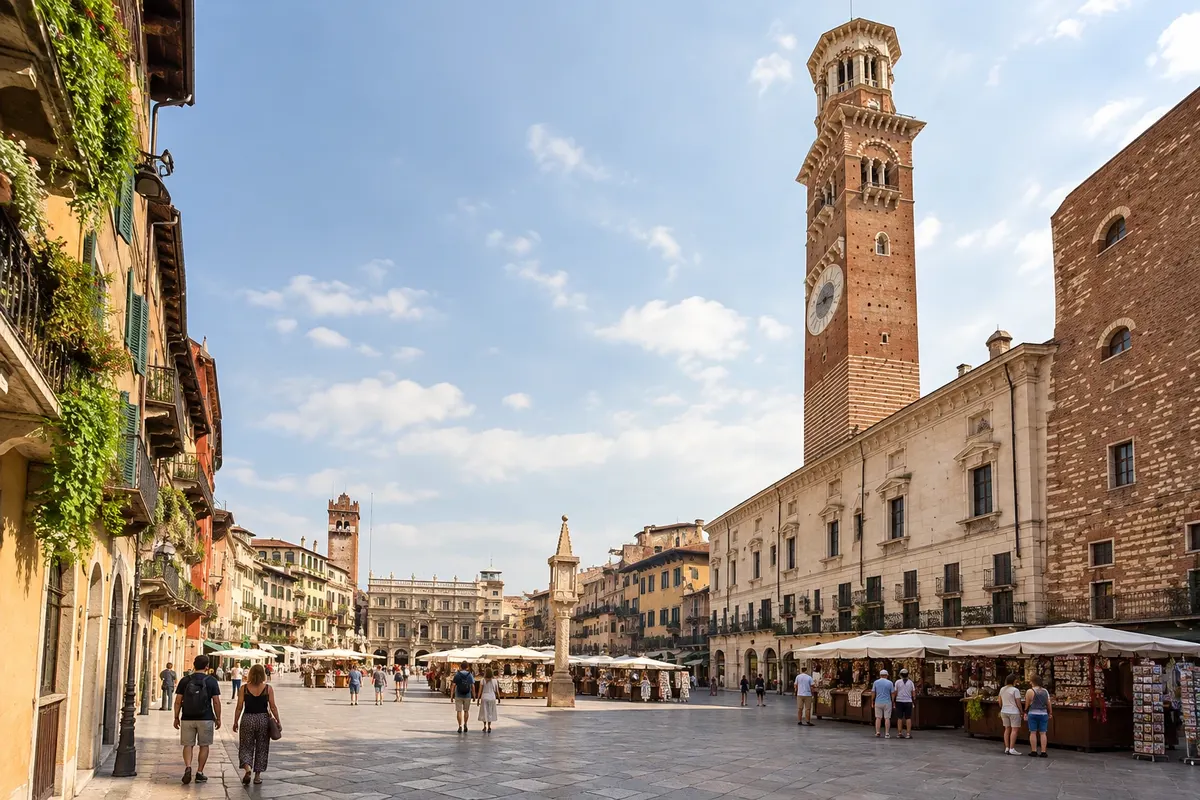
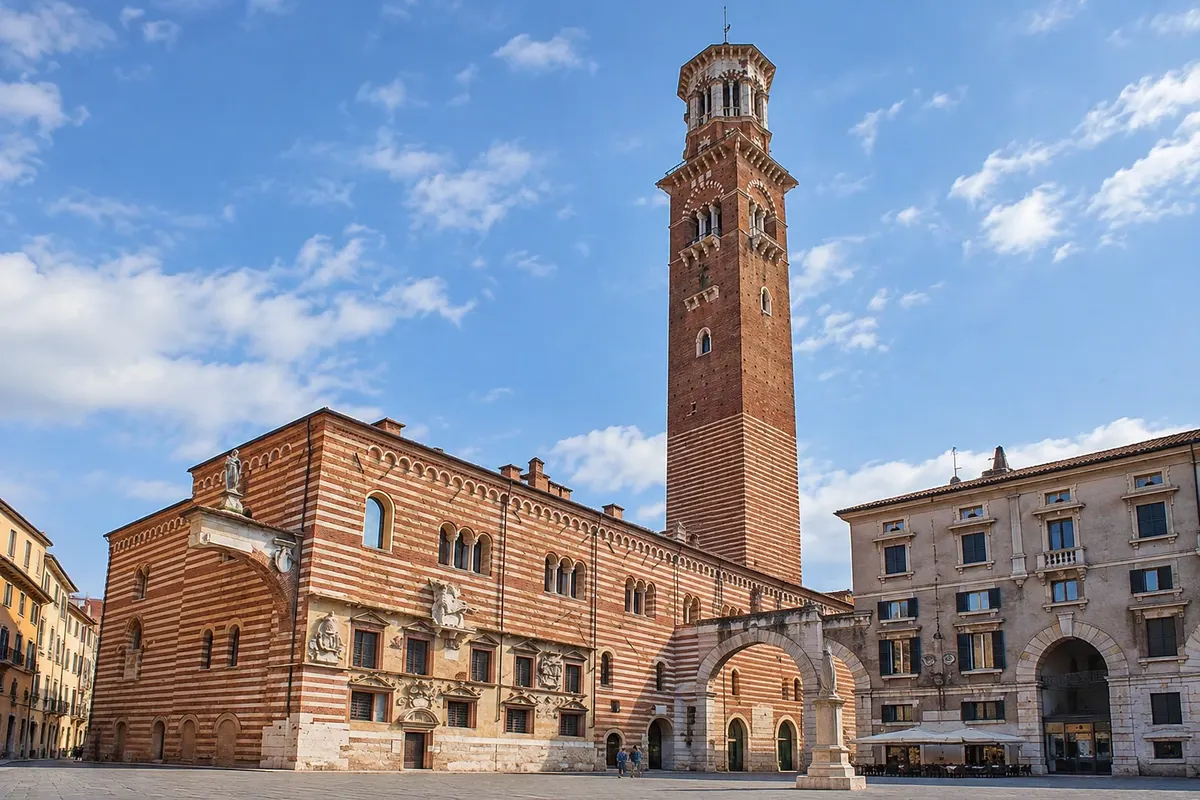
Torre dei Lamberti
Medieval tower 84 meters high next to Piazza delle Erbe, with an elevator and stairs to the top, offering views of the historic center, the river Ádige and the surrounding hills.
Square
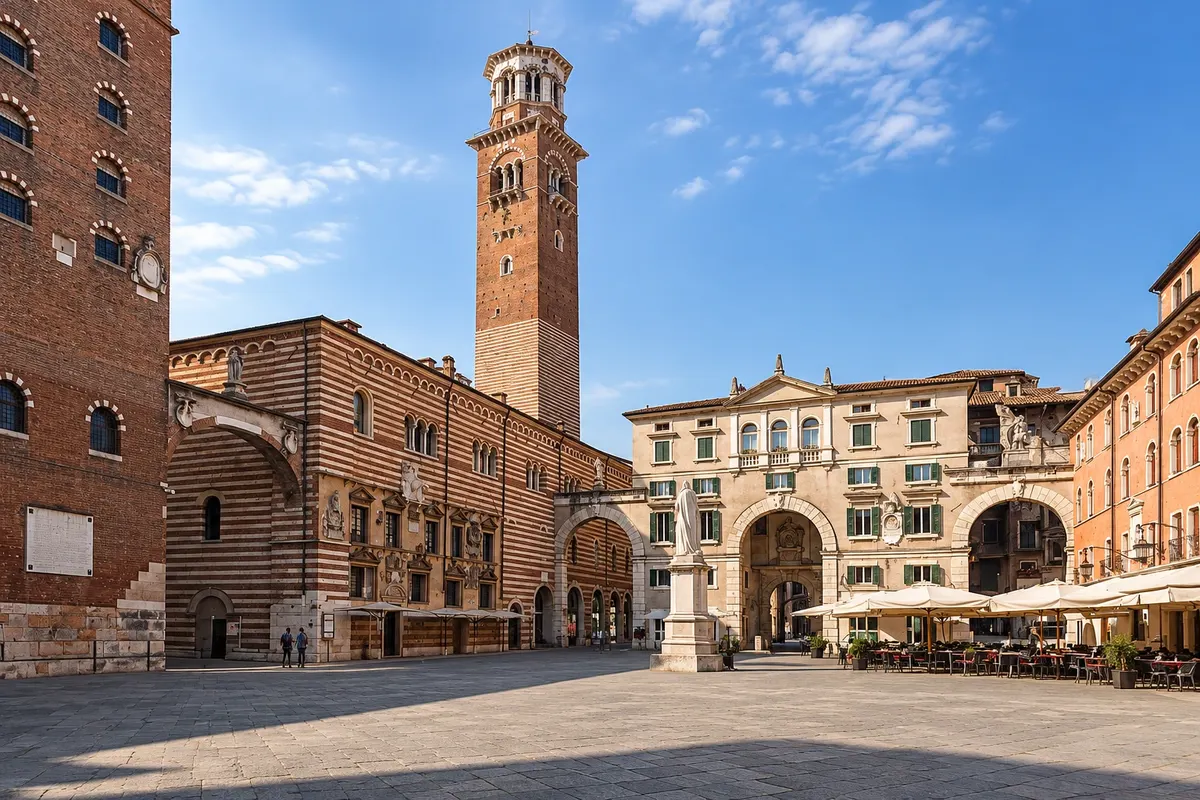
Piazza dei Signori
The square of Scaligeri power, with palaces linked by arches, the Loggia del Consiglio, the statue of Dante, and next to it the Arche Scaligere, the family's Gothic tombs.
Castle
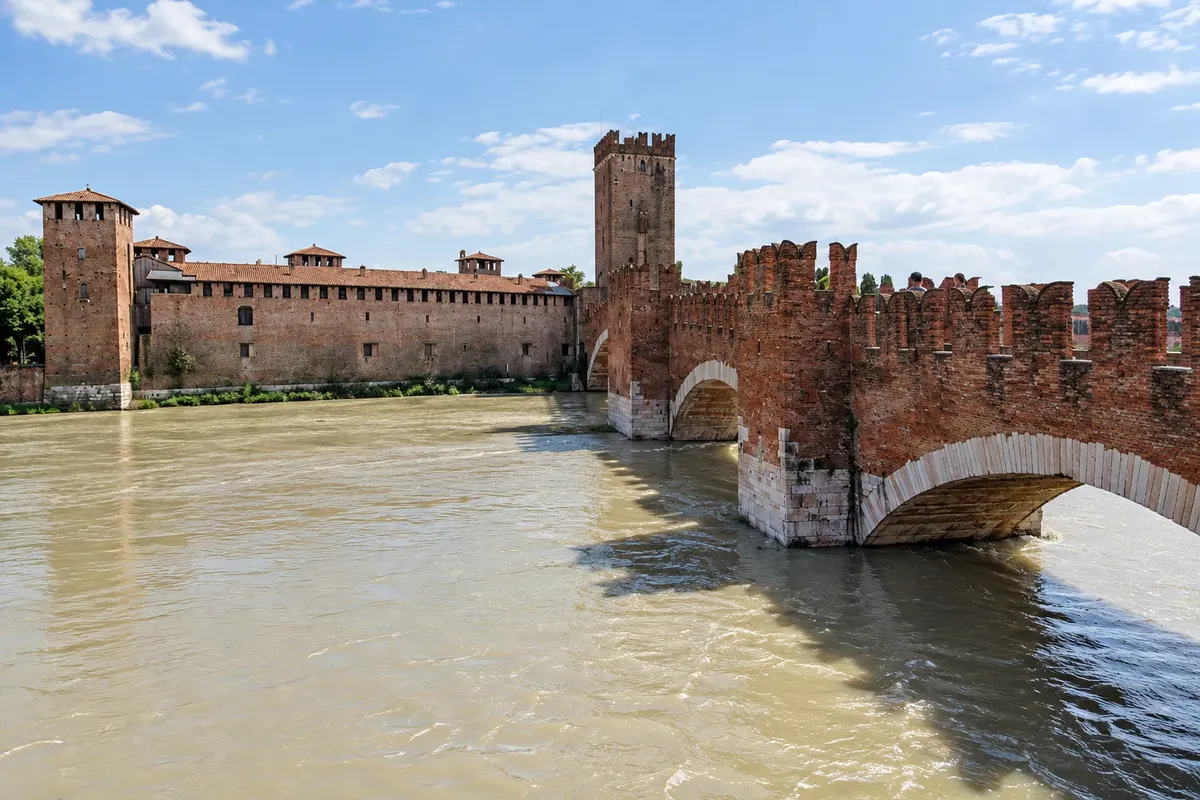
Museo di Castelvecchio
14th-century Scaligeri castle on the banks of the Ádige, now the city's art museum, connected to the opposite bank by the Ponte di Castelvecchio, made of brick and topped with battlements.
Church
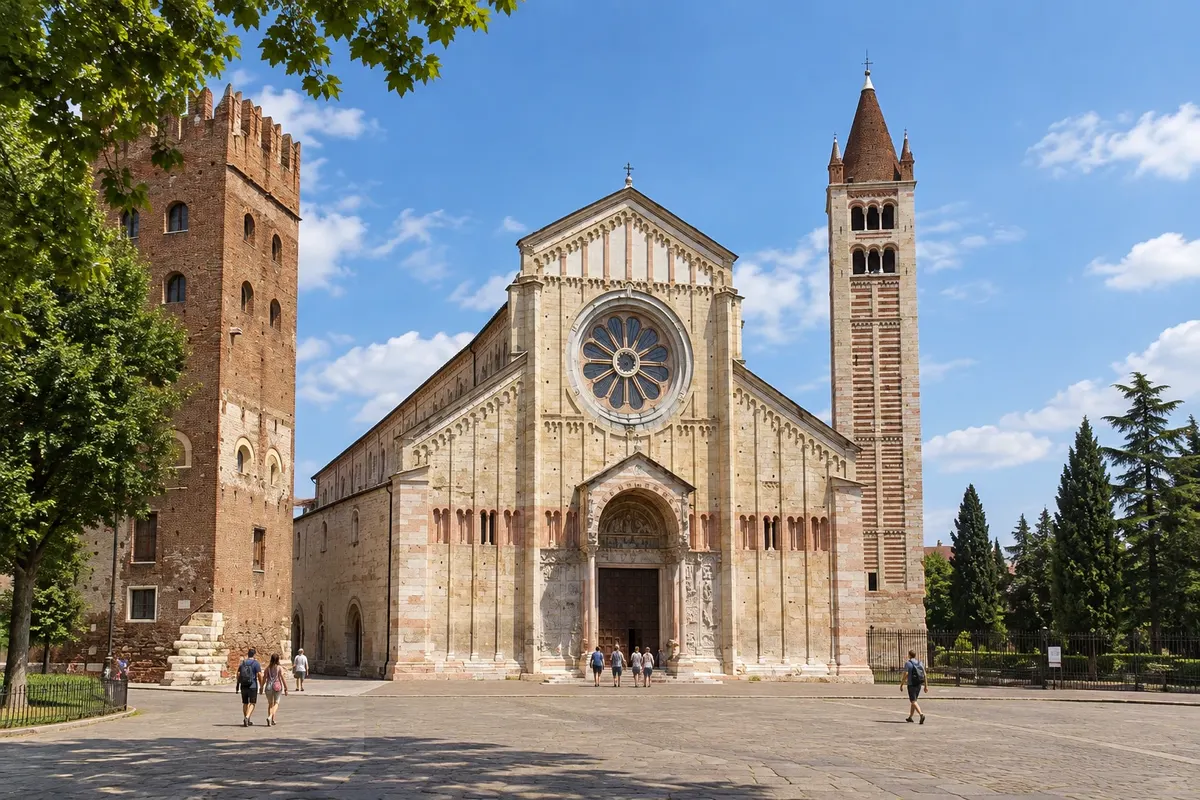
Basilica di San Zeno
Romanesque church from the 12th century dedicated to Verona's patron, with bronze doors, the Wheel of Fortune rose window, Mantegna's triptych and a crypt above the saint's tomb.
Cathedral
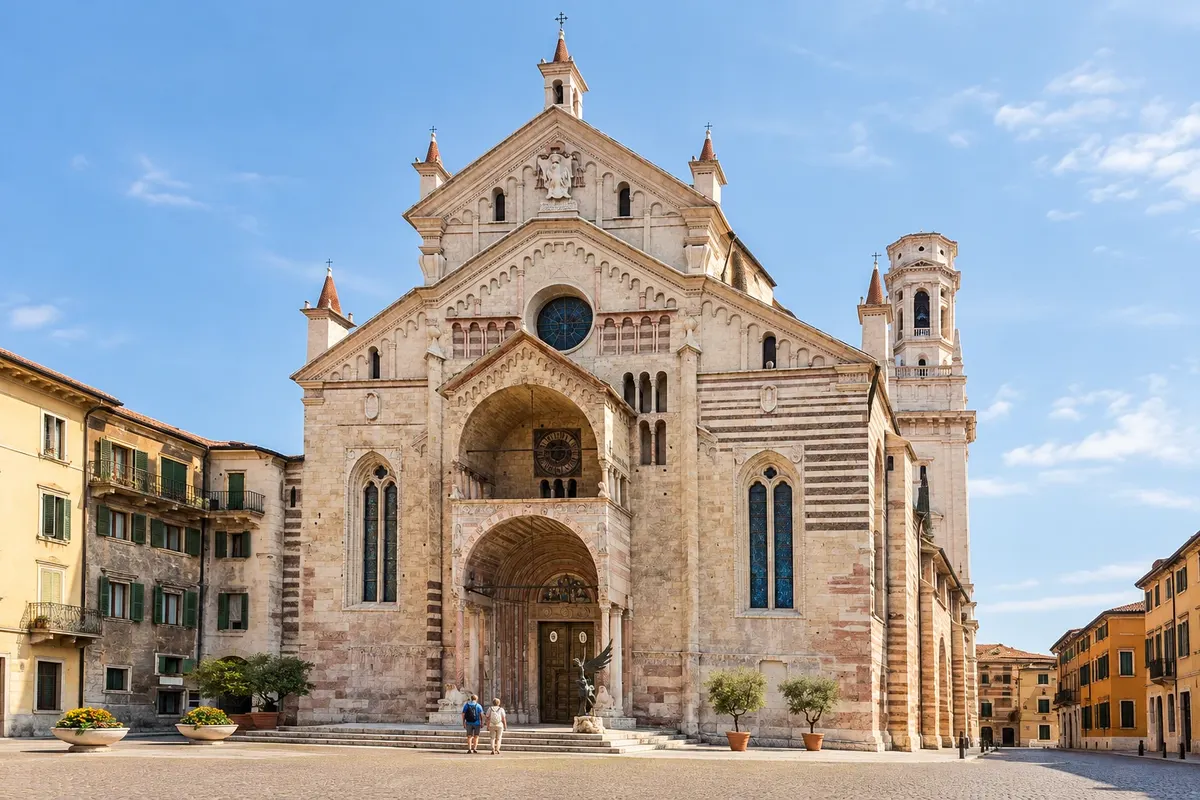
Duomo di Verona
The cathedral of Verona, with a Romanesque façade and Gothic interior, with Titian's Assumption, the baptistery of San Giovanni in Fonte and the church of Sant'Elena in the same complex.
Church
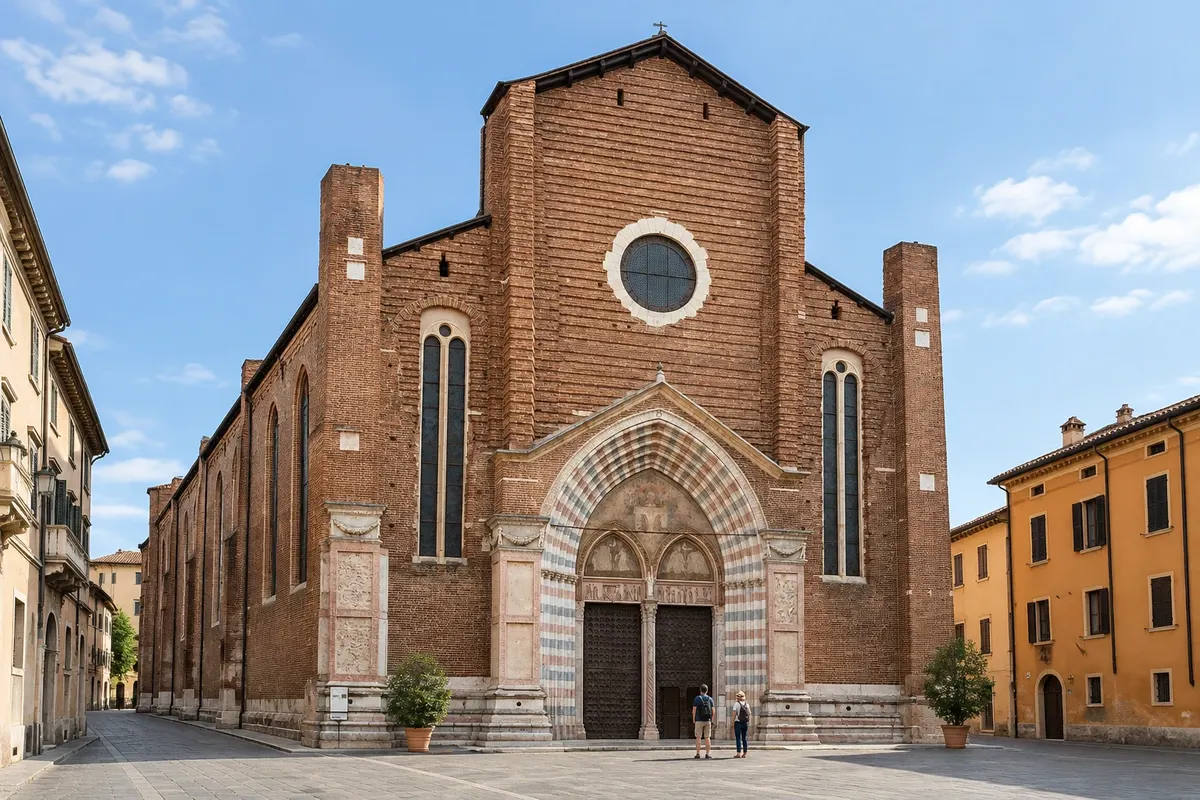
Basilica di Santa Anastasia
Verona's largest church, in Italian Gothic style, with Pisanello's fresco of Saint George and the Princess and the holy-water basins supported by hunched figures.
Bridge
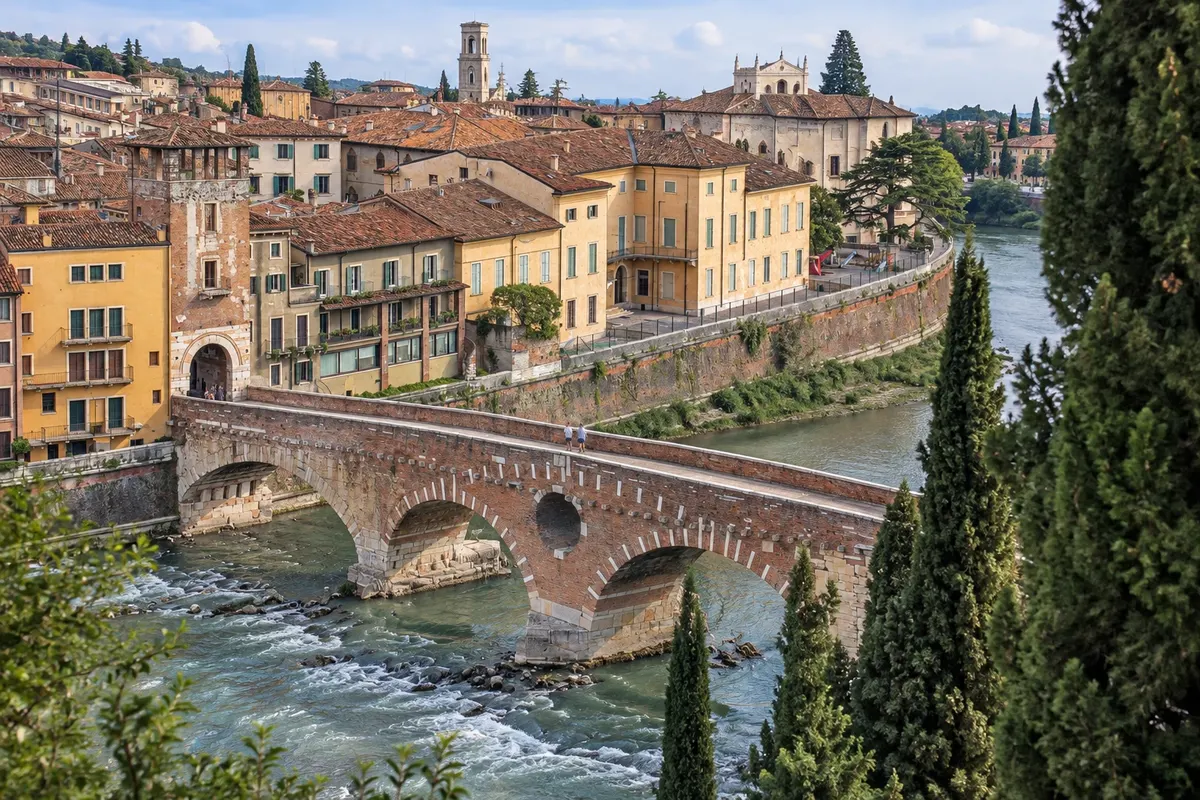
Ponte Pietra
The only Roman bridge in Verona, over the Ádige, rebuilt with the original stones after being blown up in 1945. It connects the center to the Teatro Romano and to Castel San Pietro.
Archaeological site
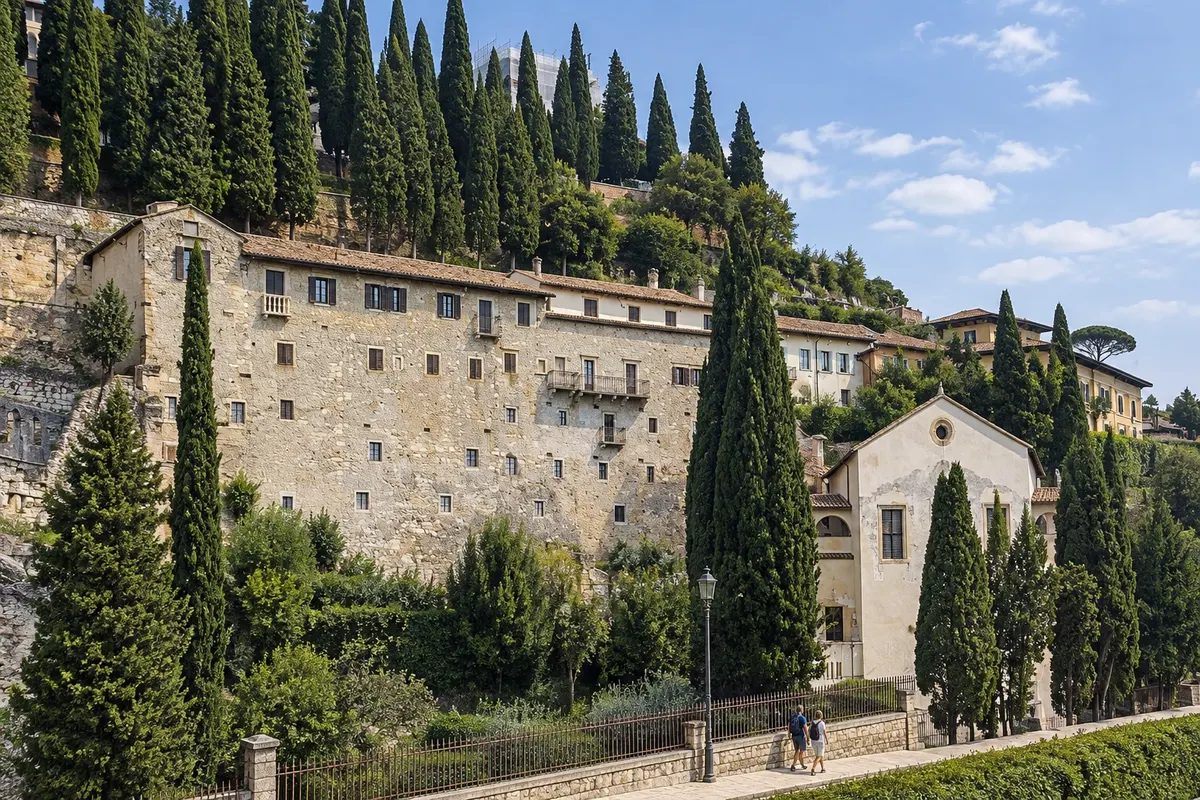
Teatro Romano e Museo Archeologico
1st-century BC Roman theatre at the foot of the morro de San Pietro, with the city's archaeological museum installed in an old convent at the top of the seating.
Lookout
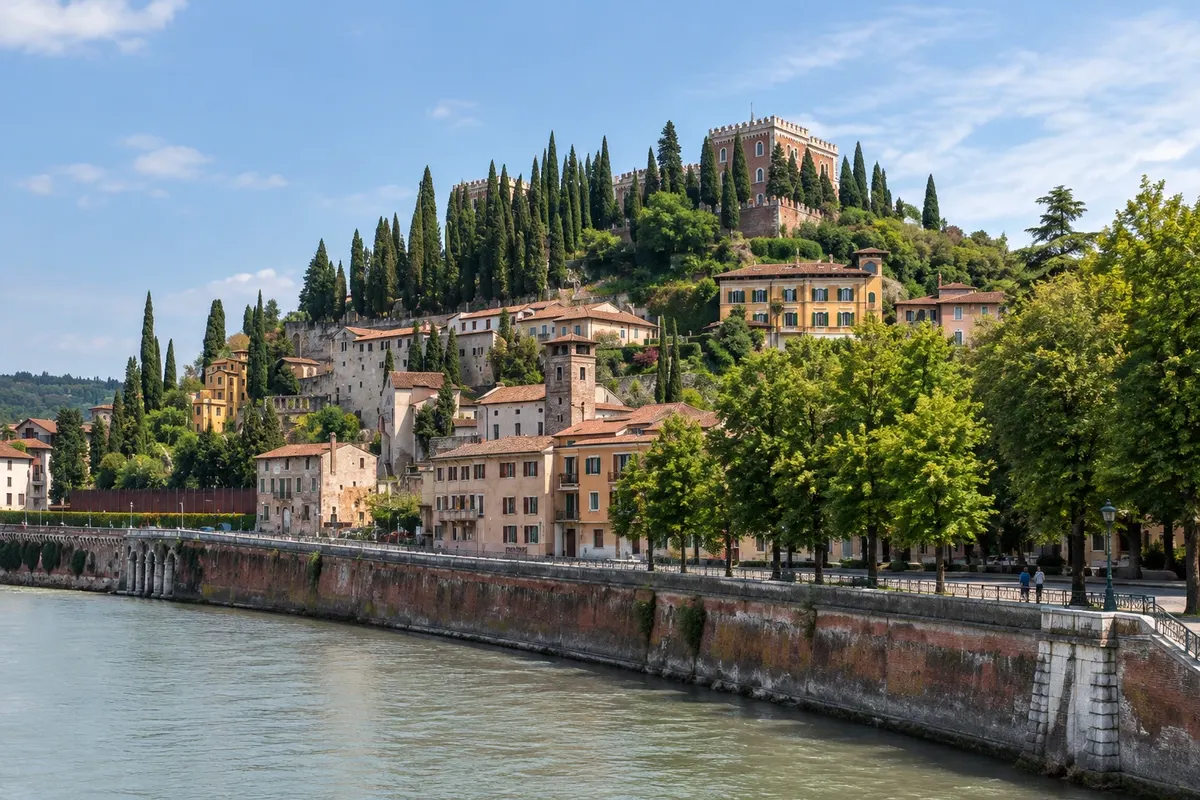
Castel San Pietro
Terrace at the top of the morro de San Pietro with the best-known view of Verona, over the Ádige and the historic center. You can walk up or take the funicular, which runs year-round.
Garden
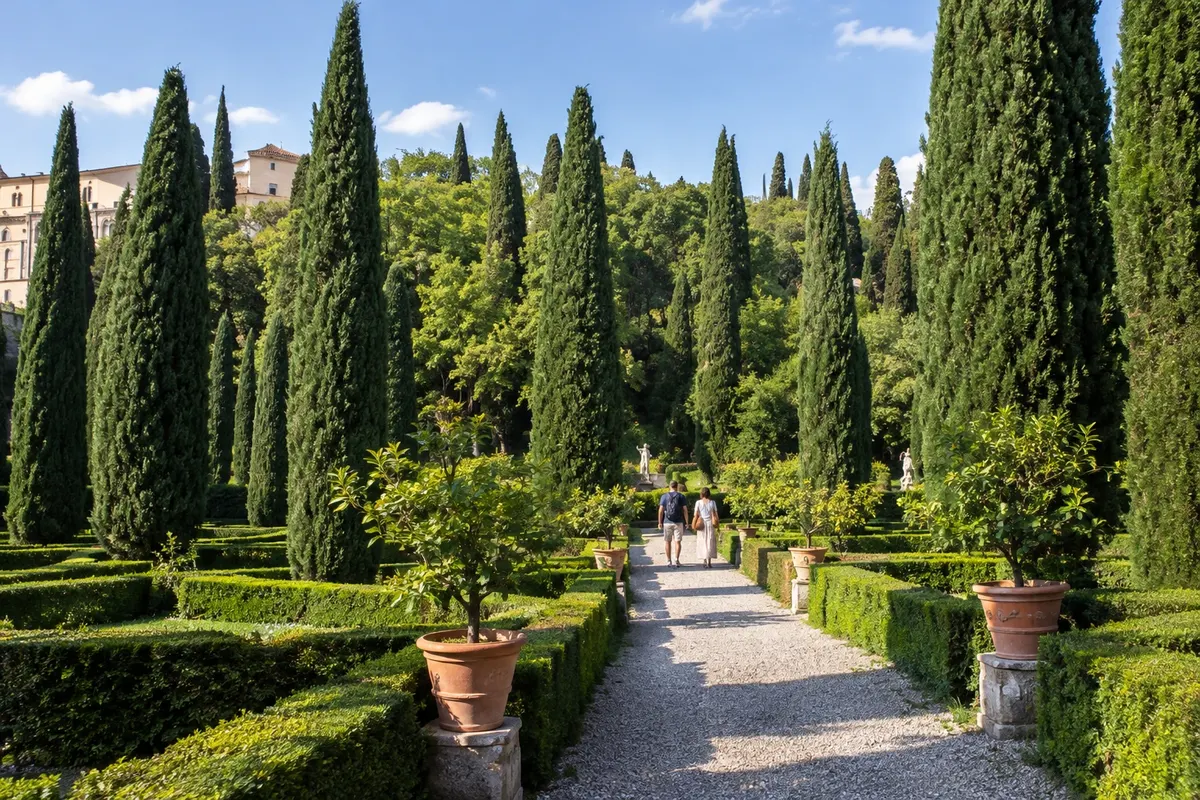
Giardino Giusti
16th-century Italian Renaissance garden behind a palazzo in the Veronetta district, with an avenue of cypresses, a maze, grottoes and a viewpoint featuring a stone mask.


 Brazil
 Argentina
 Chile
Chile Colombia
 Peru
Peru Uruguay
 Germany
 Belgium
 Spain
Spain France
 Greece
 the Netherlands
 Ireland
 Portugal
 the United Kingdom
 Switzerland