

 Brazil
 Argentina
 Chile
Chile Colombia
 Peru
Peru Uruguay
 Germany
 Belgium
 Spain
Spain France
 Greece
 the Netherlands
 Ireland
 Portugal
 the United Kingdom
 Switzerland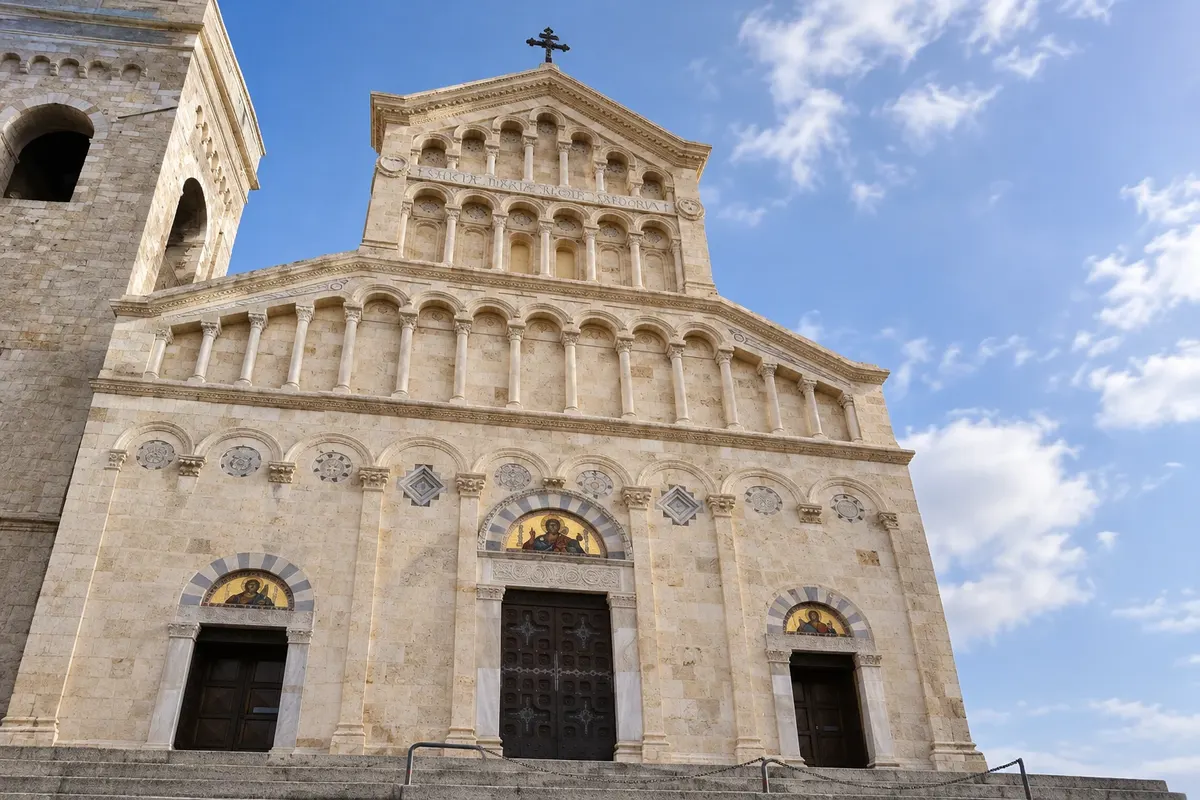
Cathedral · Cagliari, Sardenha
Cattedrale di Santa Maria
Cathedral of the Castello, of Pisan origin from the 13th century, with a Baroque interior, the Aragonese chapel and a crypt of sculpted chapels; the current façade imitates that of the duomo of Pisa.
Illustrative images. The pictures in this guide are illustrations based on the real place, not photographs, and may differ from it.

Discover
About Cattedrale di Santa Maria
The Cattedrale di Santa Maria, officially Santa Maria Assunta e Santa Cecilia, is the duomo (cathedral) of Cagliari. The Pisans built it in the 13th century within the walls of the Castello, and it became a cathedral in 1258 after the destruction of the former capital Santa Igia.
Over the centuries the church acquired Gothic chapels, an Aragonese chapel and, in the 17th and 18th centuries, a major Baroque overhaul with coloured marbles. When Cagliari was the capital of the Kingdom of Sardinia, representatives of the Sardinian parliament took their oaths there.
Beneath the altar, the crypt called the Santuario dei Martiri contains dozens of niches carved in stone, dedicated to martyrs. The façade seen today, in Neo-Romanesque style, was erected in the 1930s inspired by the duomo of Pisa.
The cathedral stands on the Piazza Palazzo, next to the Palazzo Regio, and is an active church, with masses and celebrations by the archbishop.
Before you go
Practical information
Cidade Turismo reviews its information regularly, but something may have changed. Check with the place before planning your trip.
How much time to set aside
About 30 to 45 minutes, including the crypt.
Best time
In the morning, outside mass times. Check before you go, as access may be restricted during services.
How to get there
It's on the Piazza Palazzo, in the Castello, about a 5-minute walk from the Bastione di Saint Remy.
Tip
Shoulders and knees must be covered to enter. Respect silence during masses.
Get your questions answered
Frequently asked questions about Cattedrale di Santa Maria
Do you need appropriate clothing to enter?
Yes. Shoulders and knees covered, as in most Italian churches.
What to see inside?
The Baroque marbles, the Aragonese chapel and the crypt with carved niches dedicated to the martyrs.
Is the façade old?
No. The church dates from the 13th century, but the current façade was made in the 1930s, inspired by the duomo of Pisa.