Delfos lies on the southern slope of monte Parnaso, in Central Greece, about 180 km from Athens. For the ancient Greeks it was the center of the world: there stood the oracle of Apollo, consulted by cities and kings for more than a thousand years, and the sanctuary that received offerings from across the Mediterranean. The ruins occupy a natural amphitheater among the Fedríades rocks, with the valley of the river Pleistos and the sea of olive trees of Anfissa below, reaching to the golfo de Corinto.
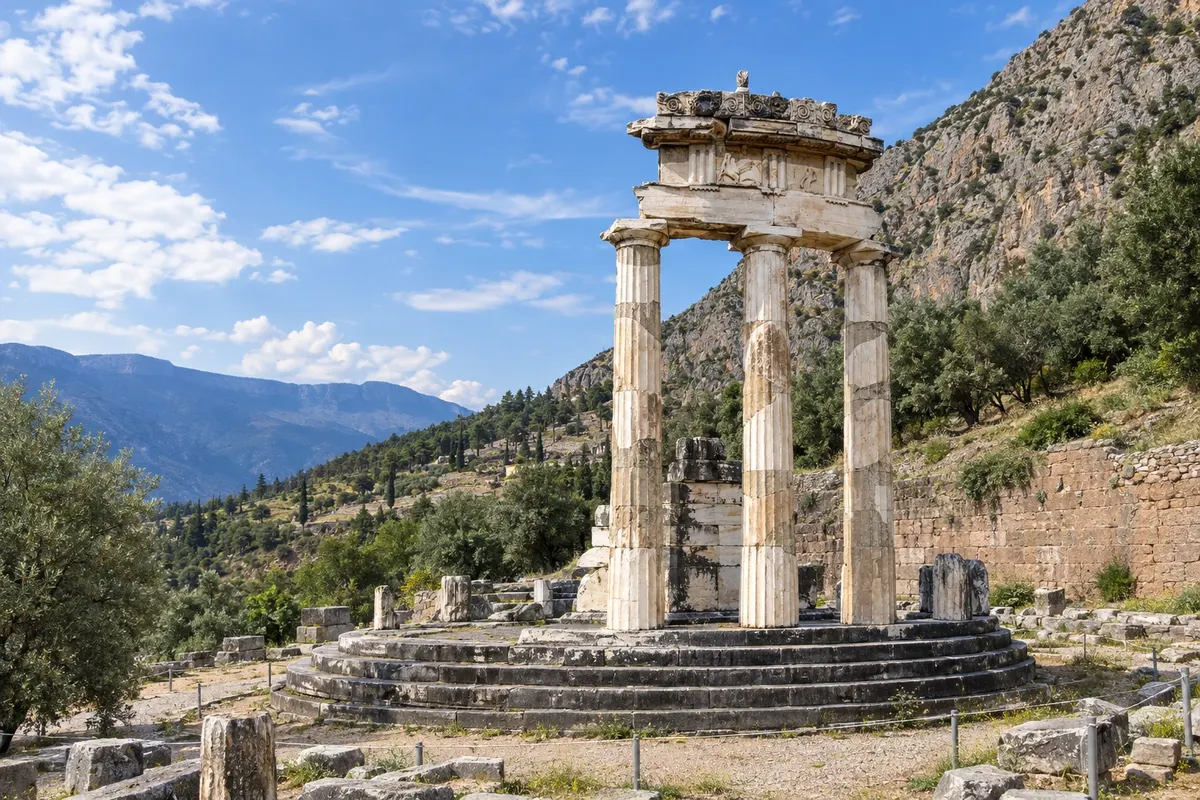
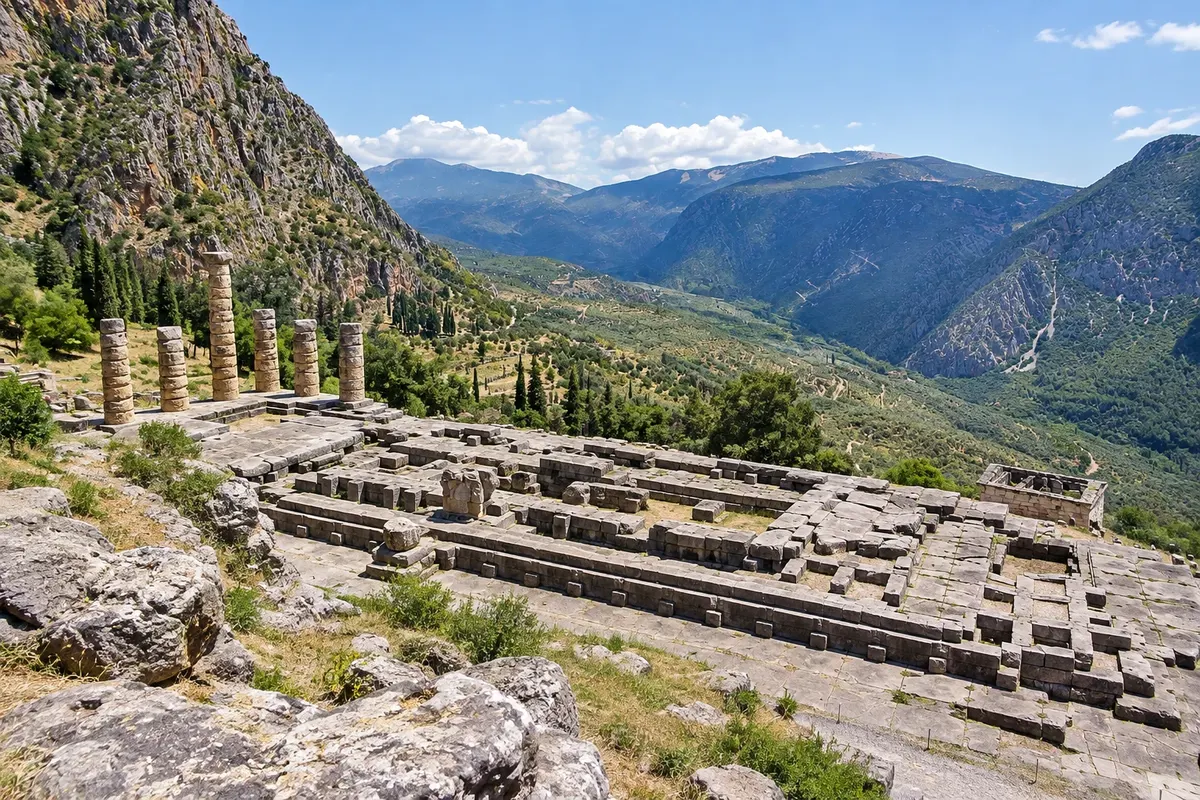
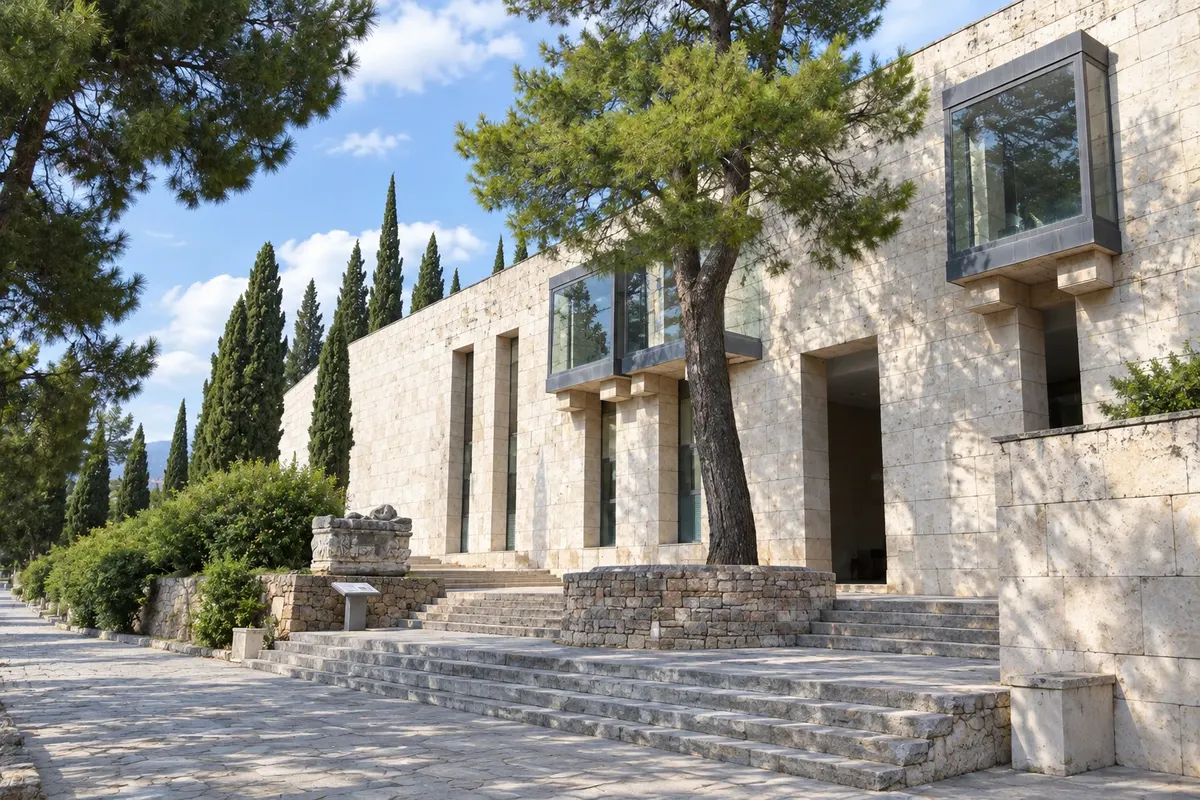
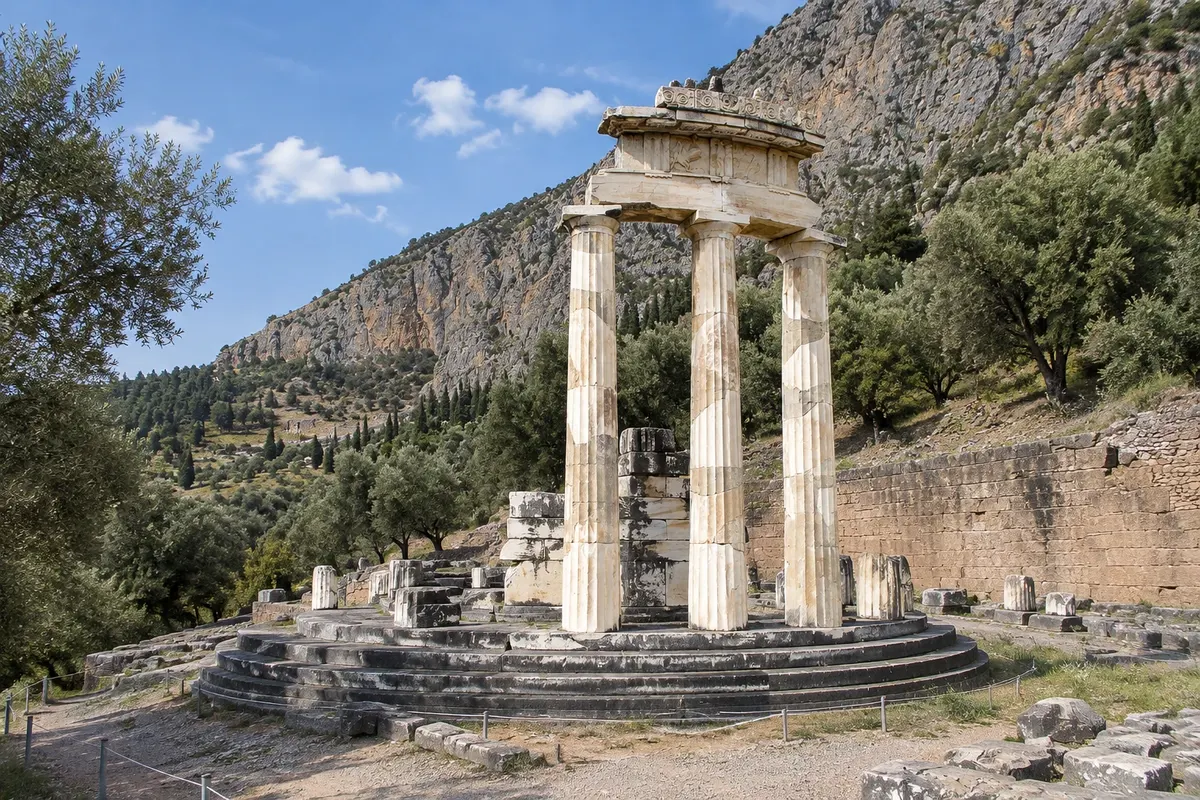
The archaeological site climbs in terraces along the Via Sacra, passing the city treasuries, the Temple of Apollo, the theater and the stadium at the top. Beside it, the Museu Arqueológico houses the Auriga in bronze, the Esfinge de Naxos, the friezes of the Tesouro de Sifnos and the onfalo, the stone that marked the navel of the world. Slightly below the road are the sanctuary of Atena Pronaia, with the rotunda of Marmaria, and the gymnasium where athletes trained. The complex has been a UNESCO World Heritage Site since 1987.
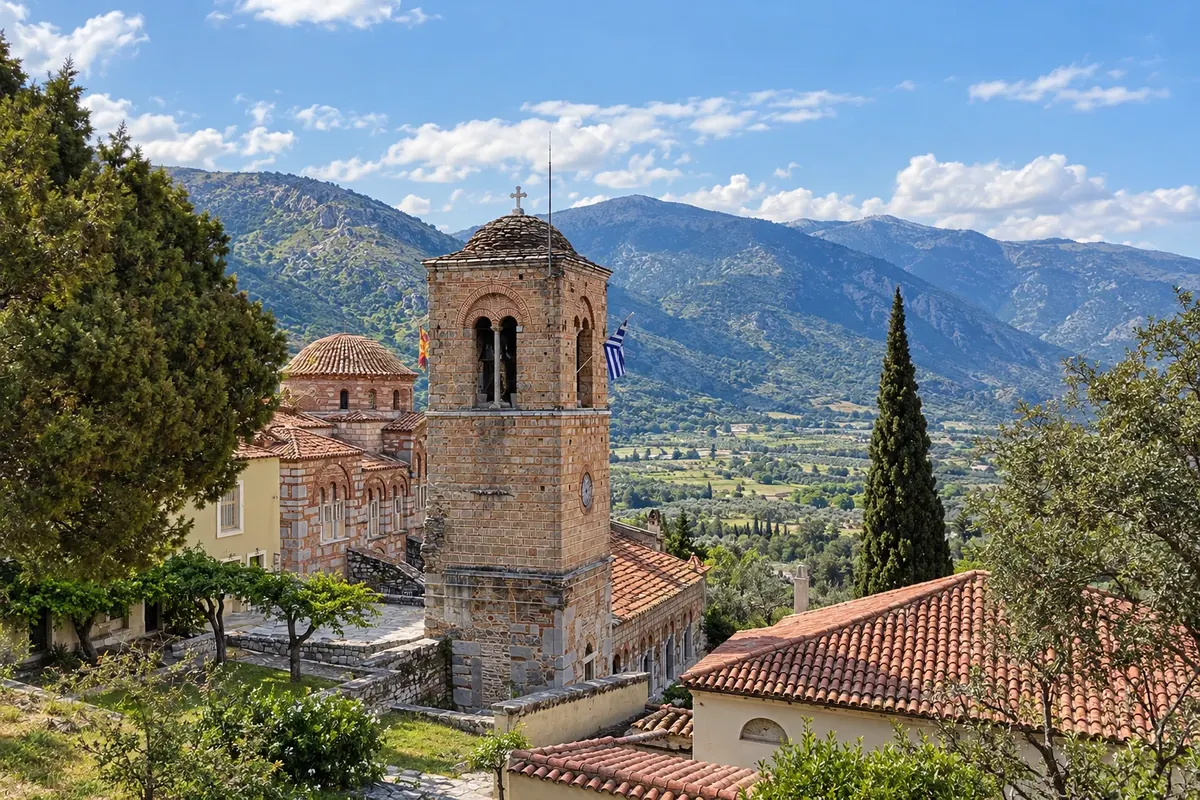
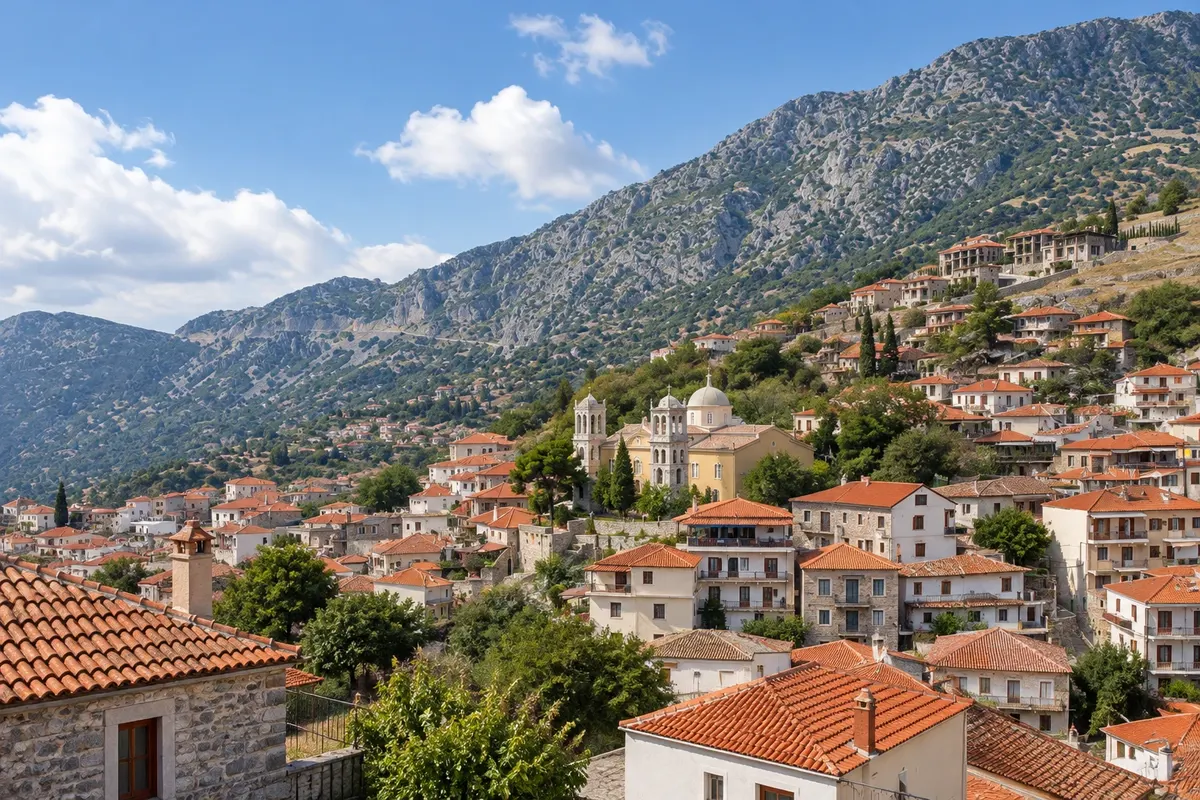
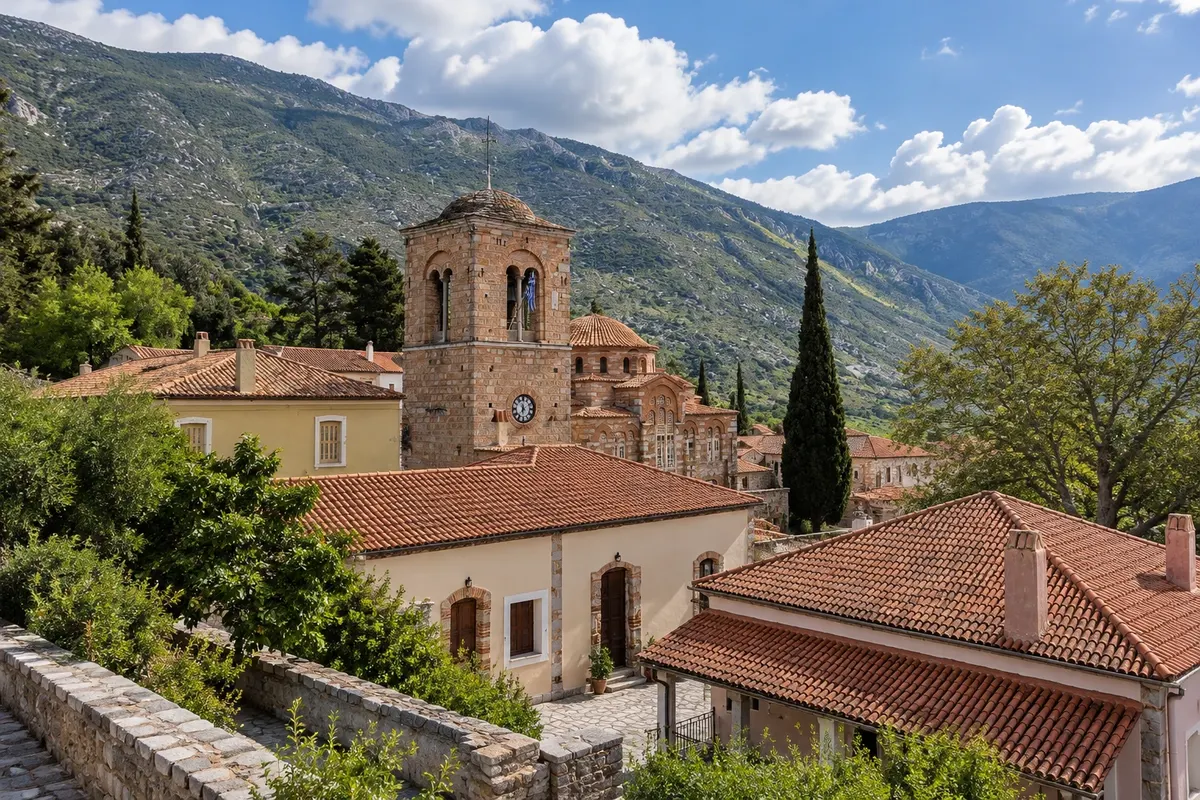
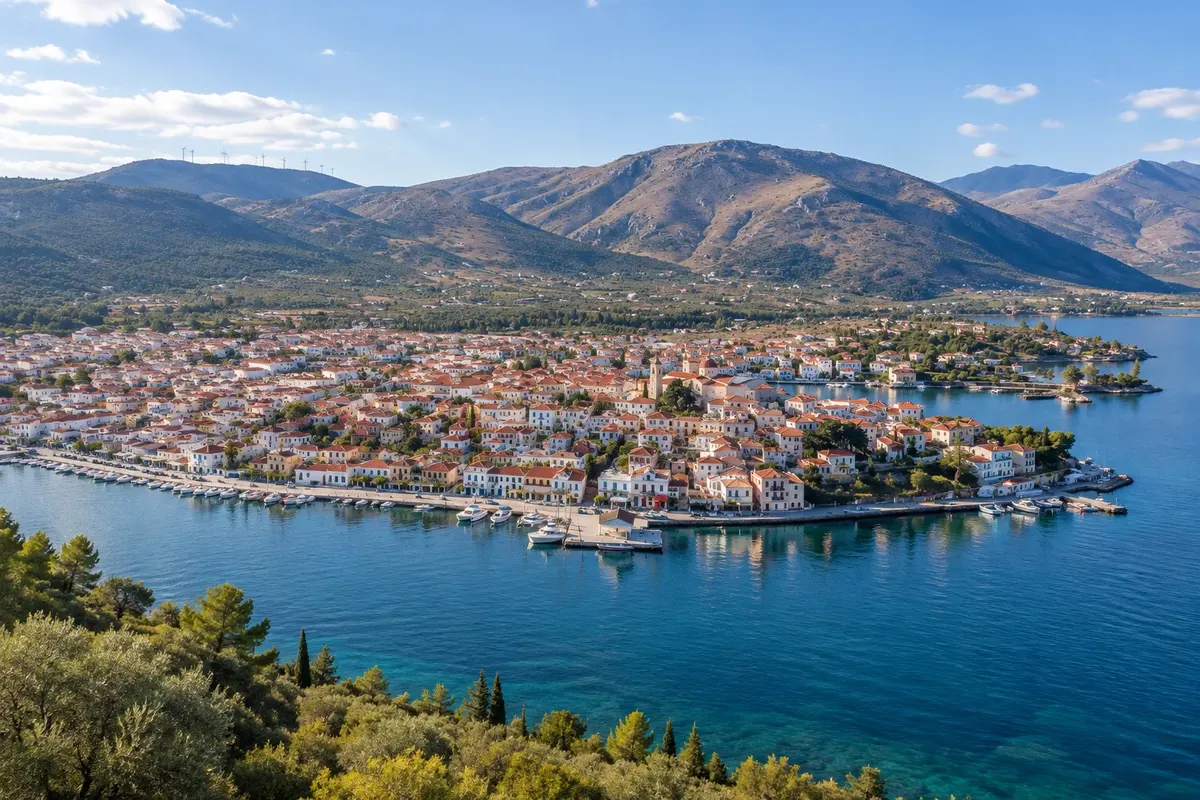
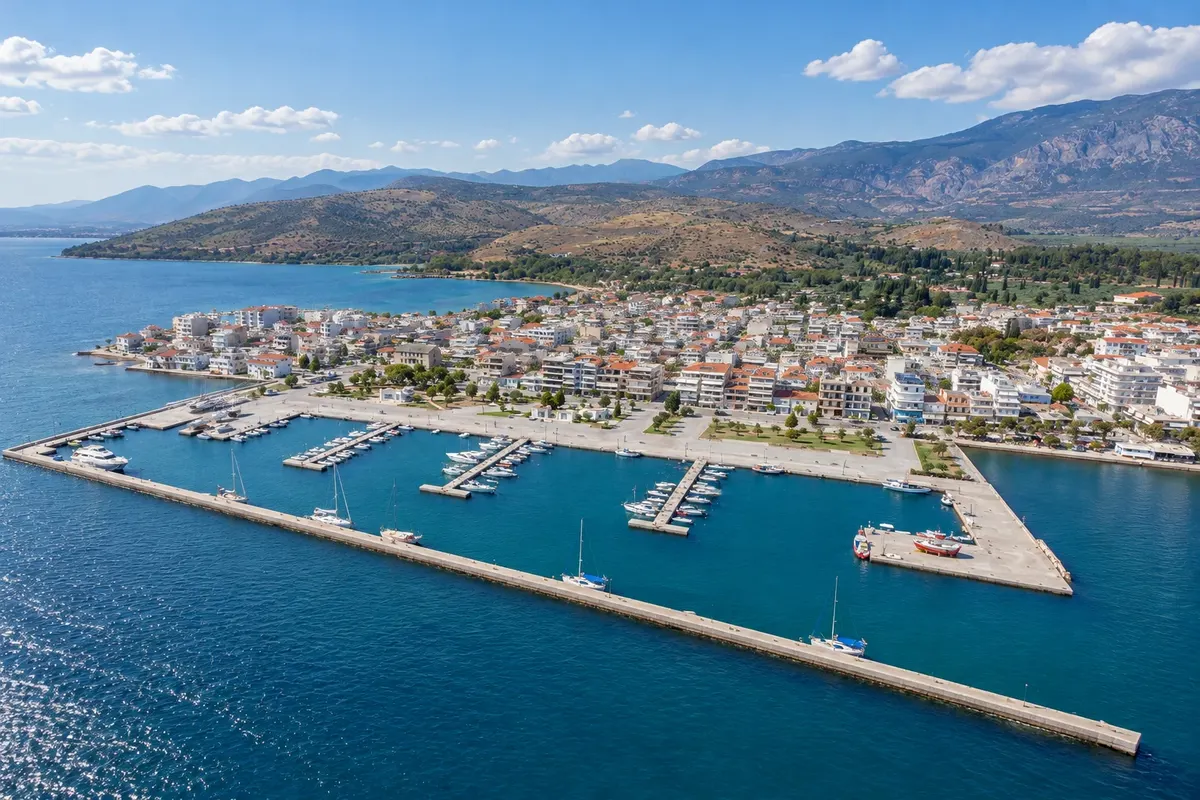
The modern village of Delfos, built in 1893 when French archaeologists removed the village that covered the ruins, is 500 meters from the site, with hotels, tavernas and views over the valley. Ten km away is Arachova, a mountain village with stone houses, cheese and weaving, which depends on skiing on monte Parnaso in winter. Heading down to the sea, Itea and Galaxidi offer a beach and a port with 19th-century mansions. Thirty km away, the Byzantine monastery of Hosios Loukas preserves 11th‑century mosaics.
Those driving on to Meteora pass here on the way. The KTEL bus links Athens with the village in about three hours.
This destination brings together 1 city: Delfos.


 Brazil
 Argentina
 Chile
Chile Colombia
 Peru
Peru Uruguay
 Germany
 Belgium
 Spain
Spain France
 the Netherlands
 Ireland
 Italy
Italy Luxembourg
 Portugal
 the United Kingdom
 Switzerland