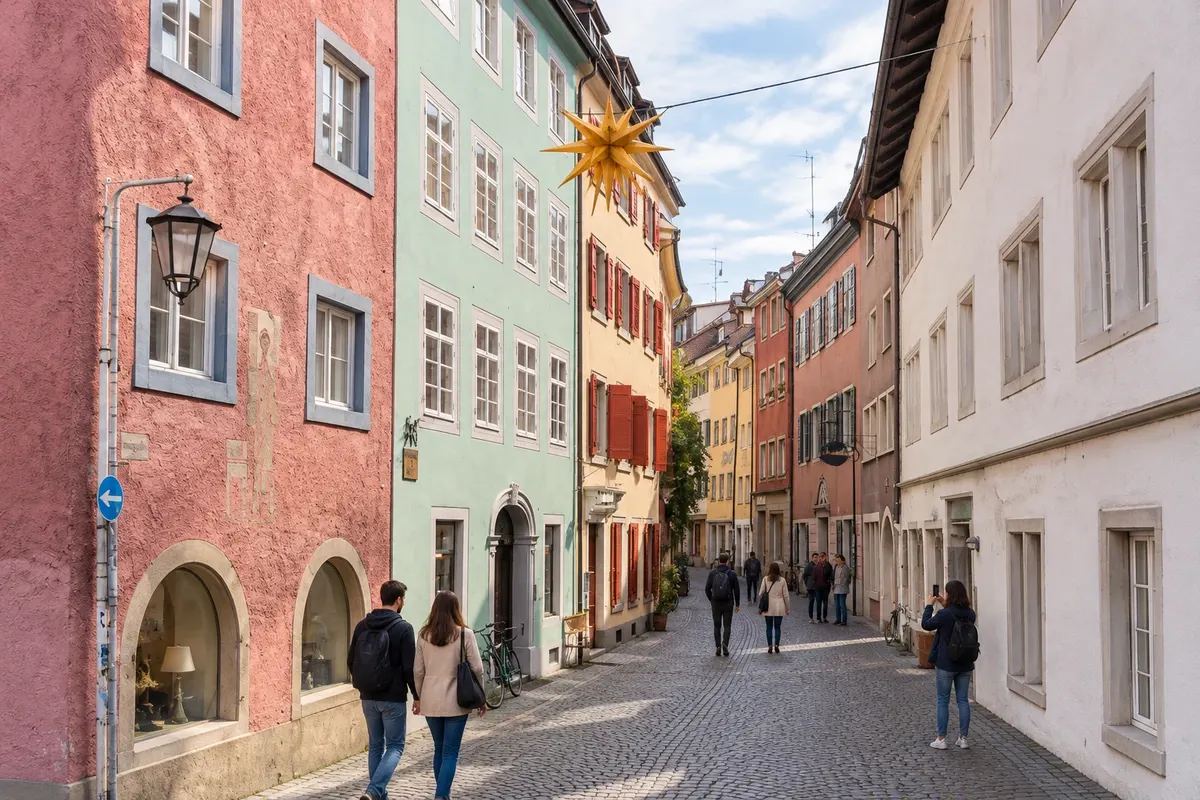
Konstanzer Münster
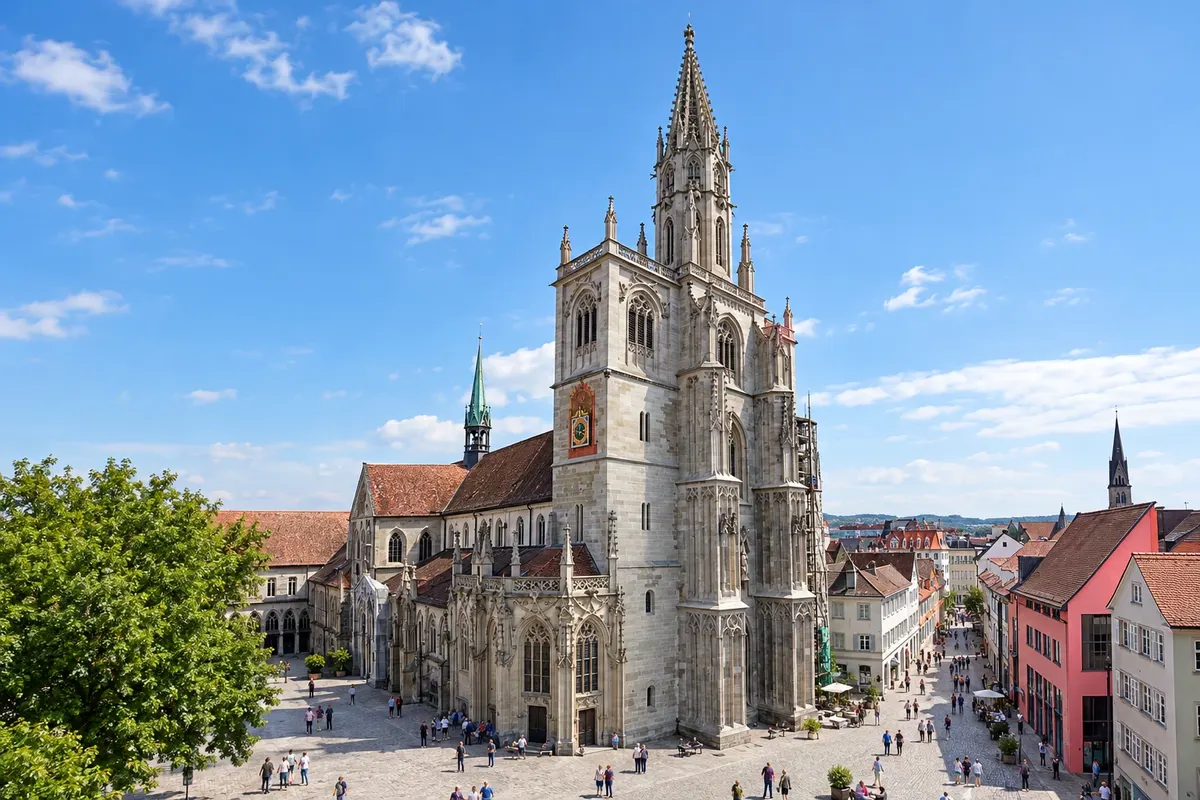
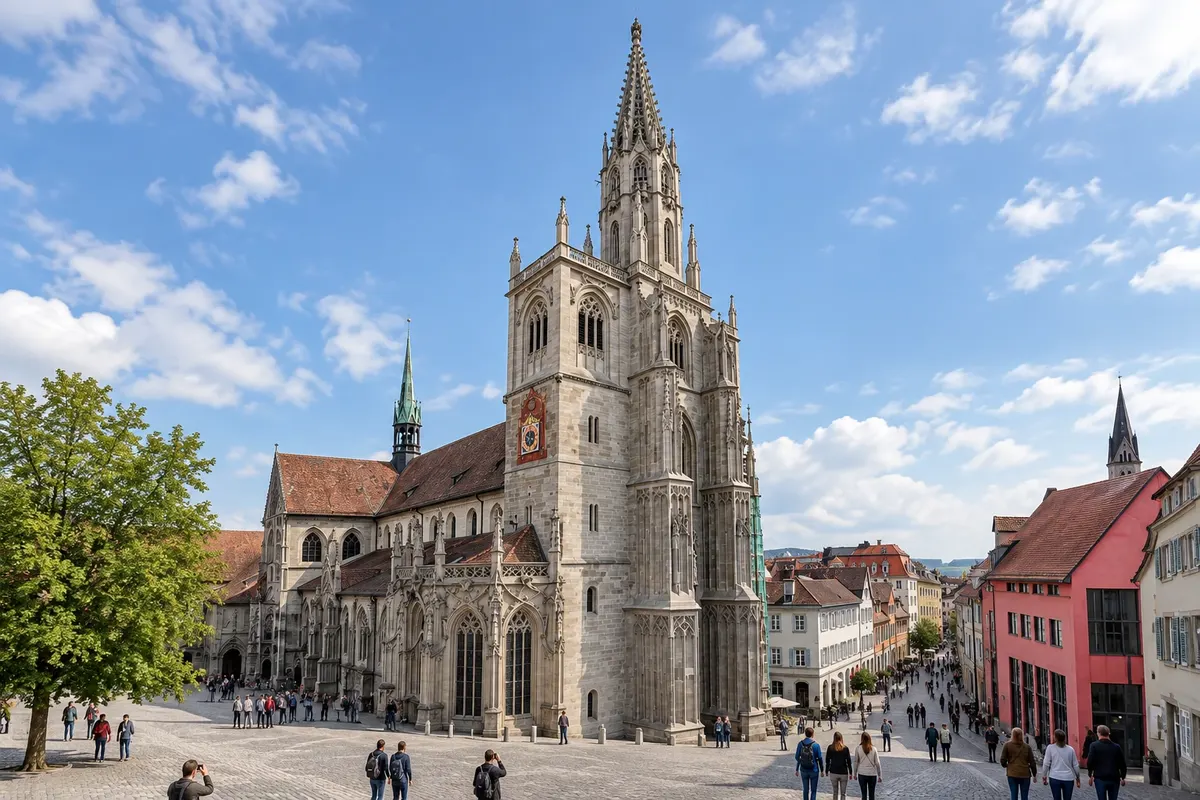
The former cathedral of the bishops of Constança, one of the largest Romanesque churches in southwest Germany, consecrated in 1089. It hosted sessions of the Council from 1414 to 1418 and has a tower with a viewpoint.
Baden-Württemberg · Germany
In the destination Lago de Constança.
In the photo: Konstanzer Münster, Constança
Illustrative images. The pictures in this guide are illustrations based on the real place, not photographs, and may differ from it.
The city
Constança is the largest town on Lago de Constança, at the point where the Rhine leaves the lake, adjoining Suíça. It was the seat of bishops for more than a thousand years and hosted the Council from 1414 to 1418. Little damaged in the Second World War, the old town preserves the Konstanzer Münster, the Konzilgebäude on the harbour, the statue Imperia and the lanes of the Niederburg. Boats leave from here to the island of flowers Mainau, the island of monasteries Reichenau and the ferry to Meersburg.
There's no accommodation in the guide yet in Constança.
There are no restaurants in the guide yet in Constança.
Know a good one? Recommend it to ushow to get there · how many days · itinerary · questions
The local experience
The former cathedral of the bishops of Constança, one of the largest Romanesque churches in southwest Germany, consecrated in 1089. It hosted sessions of the Council from 1414 to 1418 and has a tower with a viewpoint.
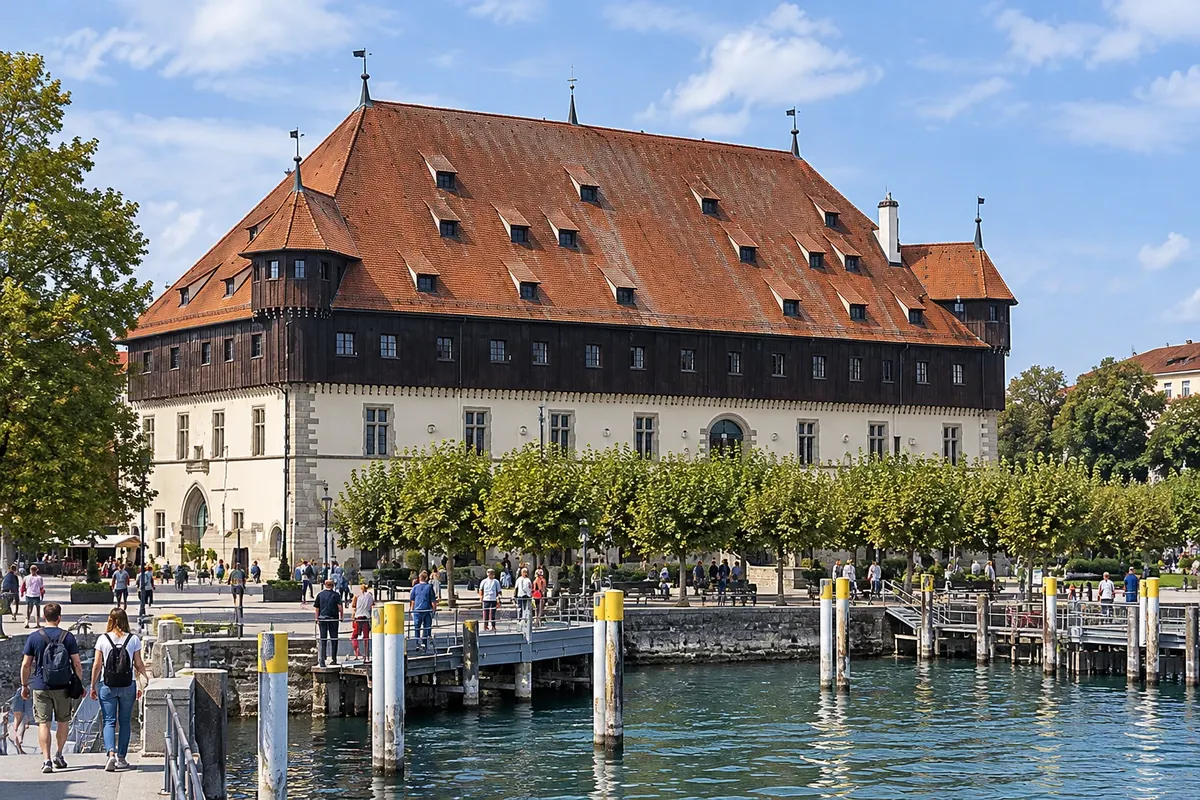
Large stone warehouse from 1388 in the harbor of Constança, where in 1417 Pope Martin V was elected during the Council. It is regarded as the largest preserved medieval civic building in southern Germany.
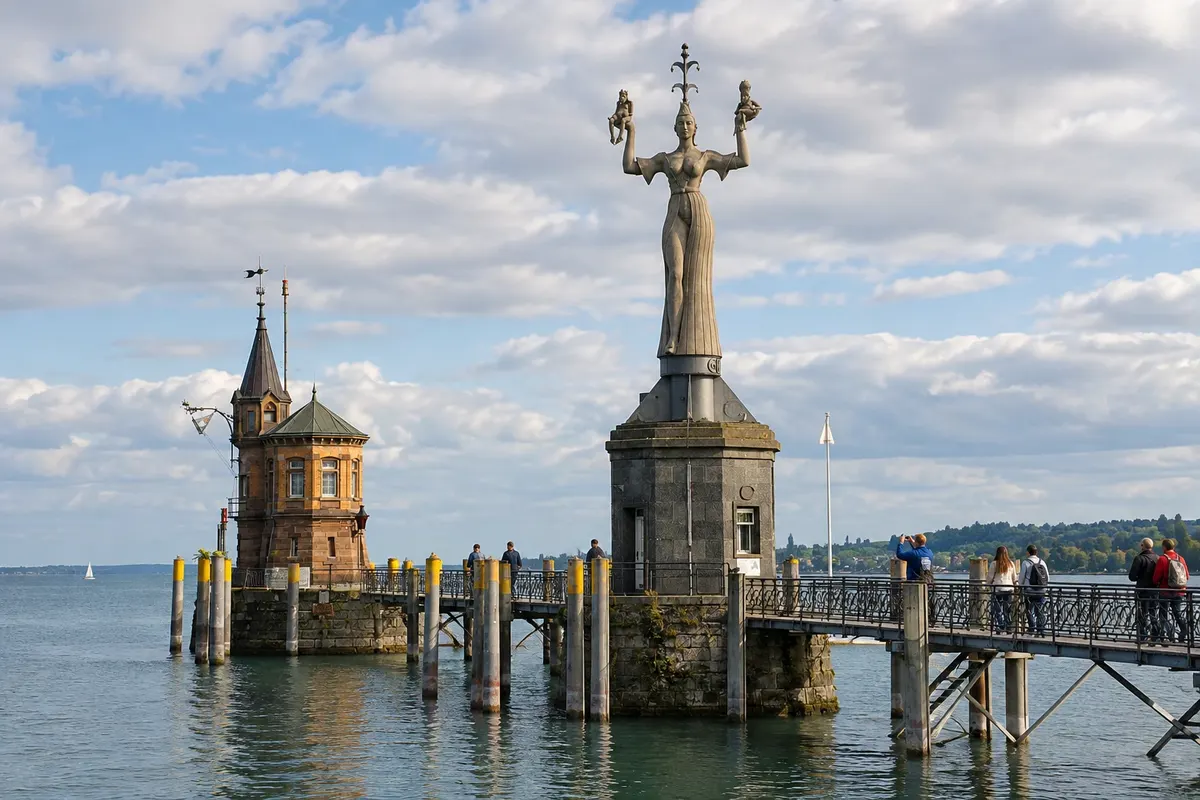
A nine-metre concrete statue at the end of the port jetty in Constança, by Peter Lenk (1993). It turns slowly and satirises the power of the emperor and the pope at the time of the Council.
The oldest neighbourhood of Constança, between the Münster and the Reno, with winding lanes, medieval houses bearing names and dates on their façades, wine taverns and artisan workshops.
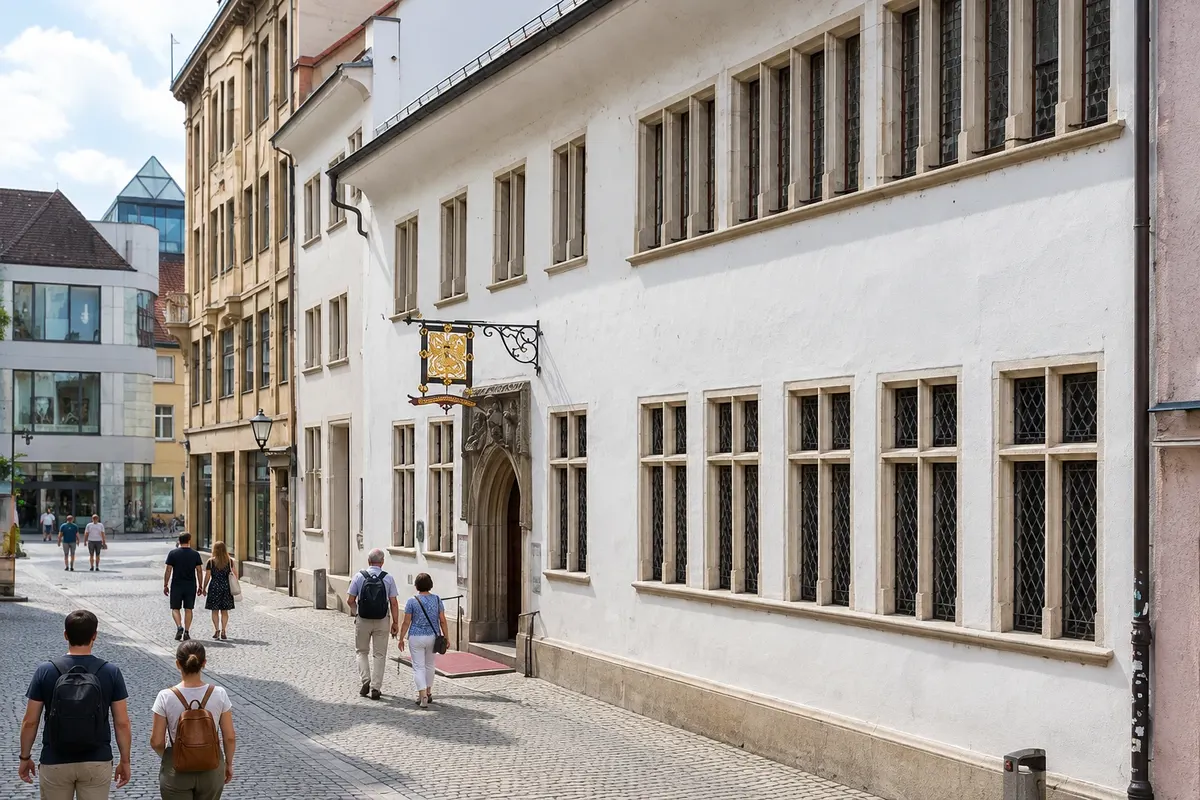
Museum of art and history of Constança and the lake region, founded in 1870 in a former guild house. It ranges from Stone Age finds to paintings and objects from the time of the Council.
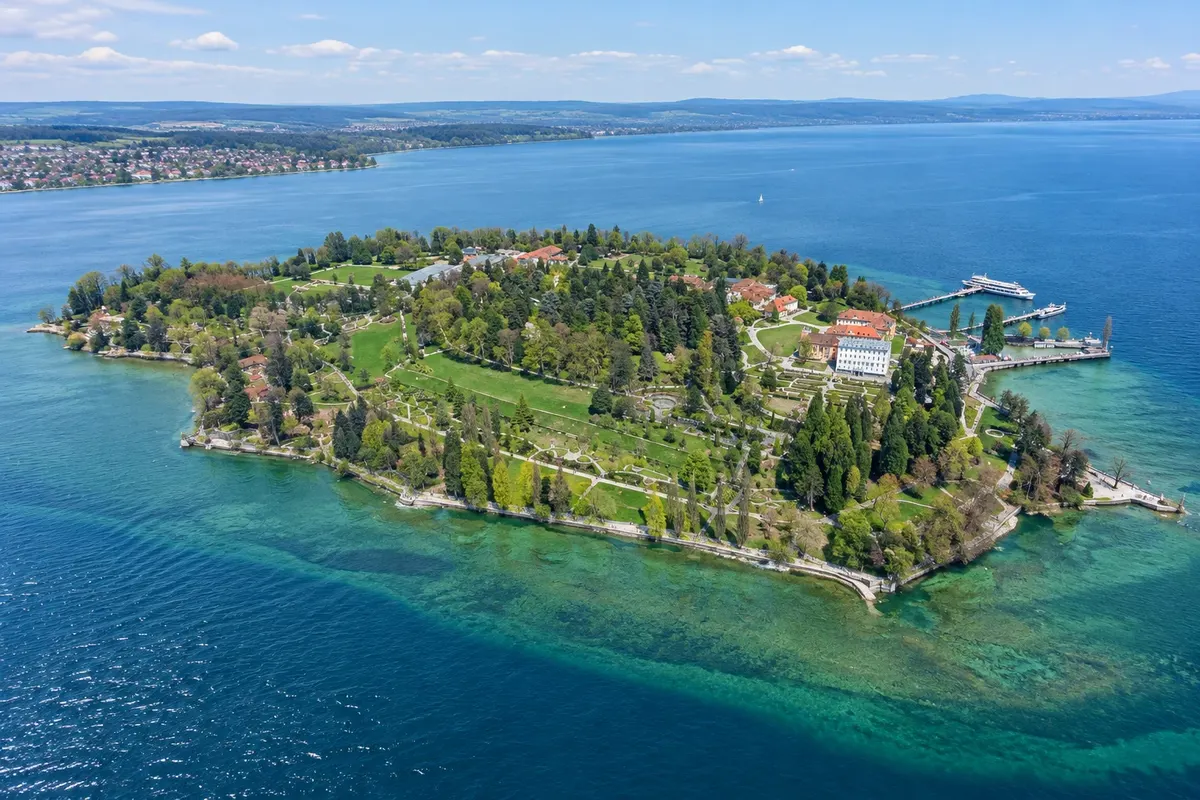
Constança's flower island: 45 hectares of gardens, an arboretum, a butterfly house and a baroque palace, about 7 km from the centre. Open year-round, with the flower season from March to October.
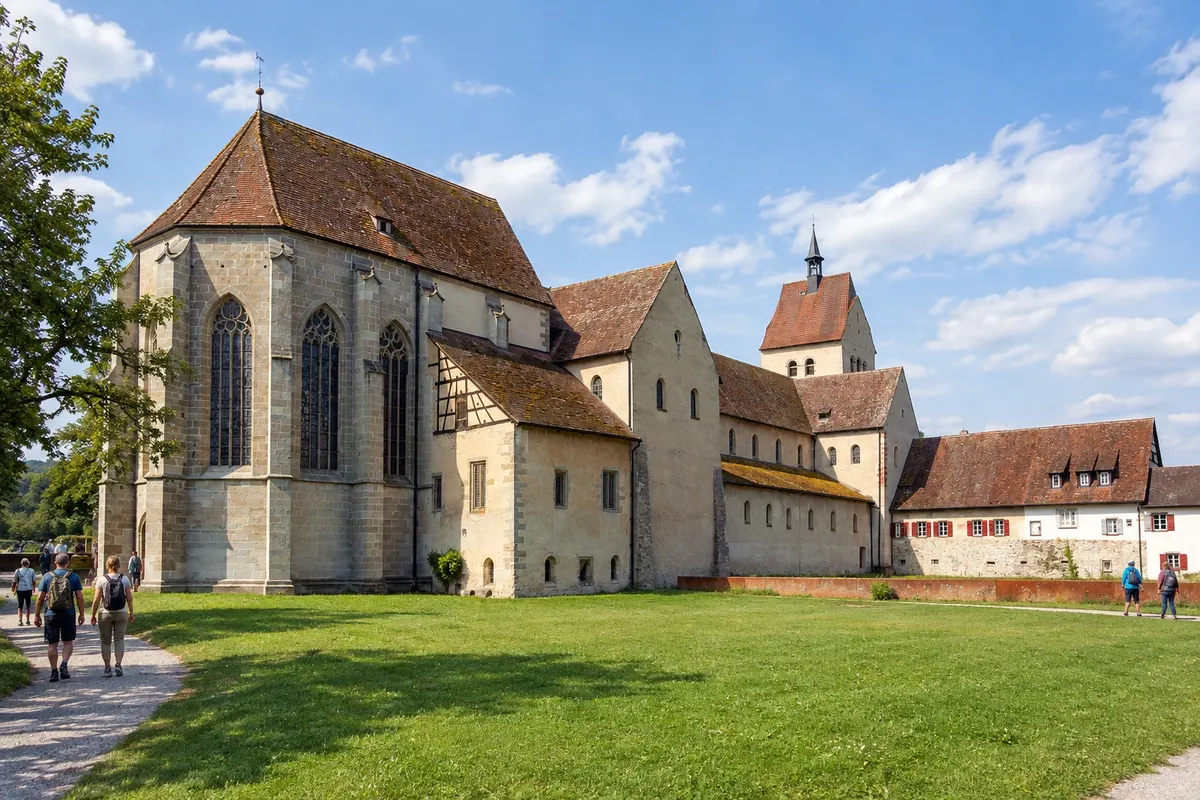
The largest island on the lake, a UNESCO World Heritage site because of the former Benedictine monastery, with three Romanesque churches such as St. Georg, which has wall paintings over a thousand years old. It is about 10 km from Constança.