Geneva

Geneva · Švica

Geneva

City at the tip of Lake Léman, with the Jet d'Eau, Calvin's old town, the UN's European headquarters, watchmaking and Red Cross museums, and CERN right next door.

French-speaking Switzerland

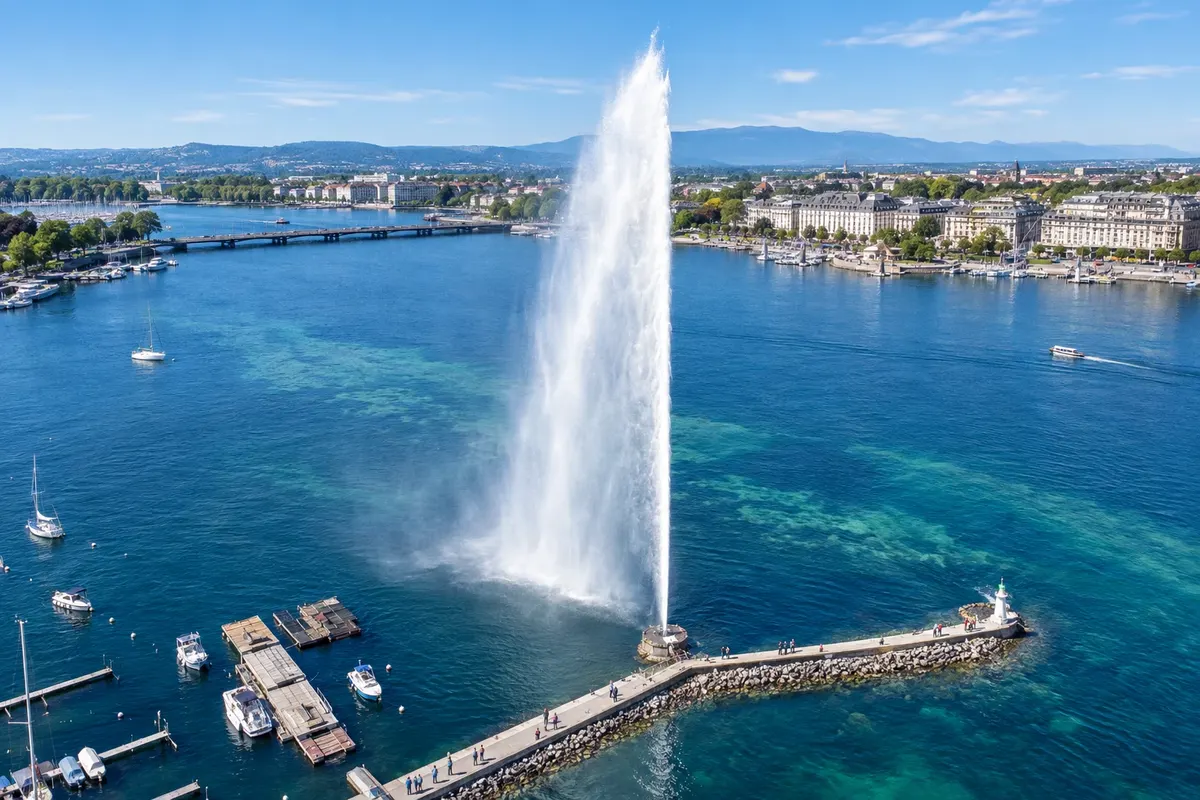
Na fotografiji: Jet d’Eau, Genebra

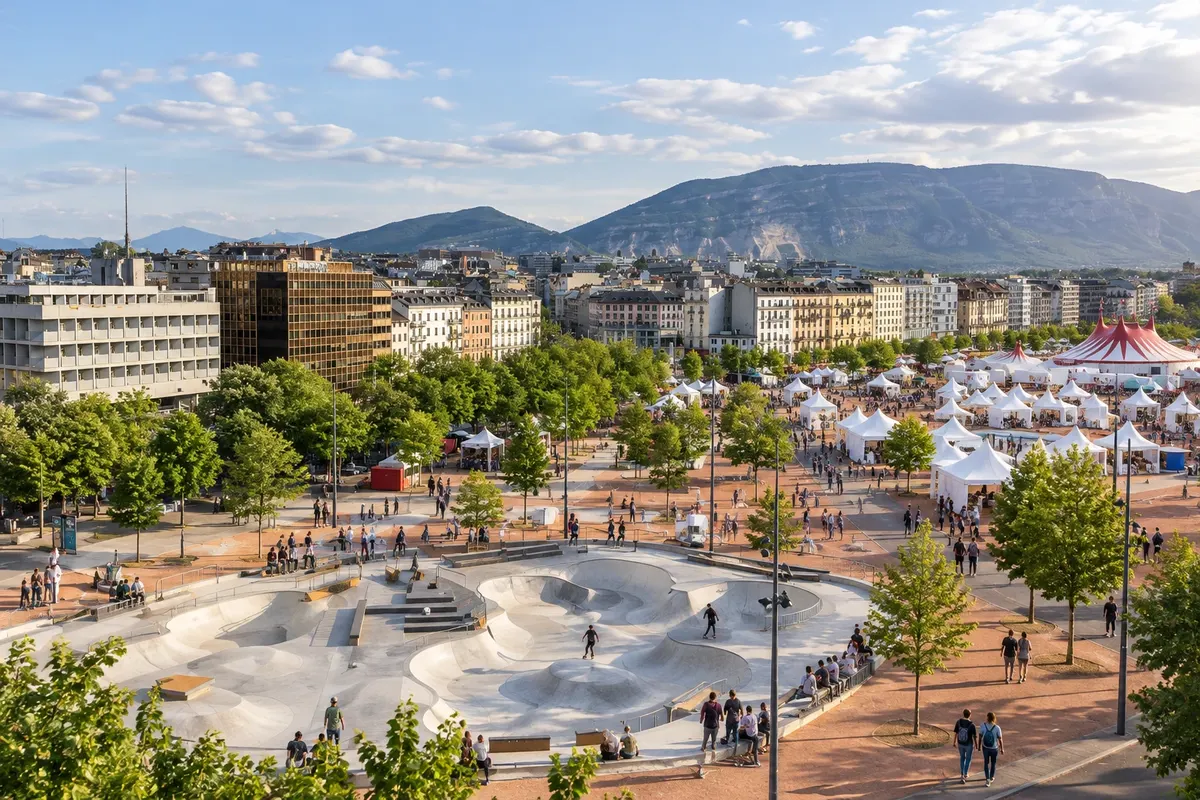
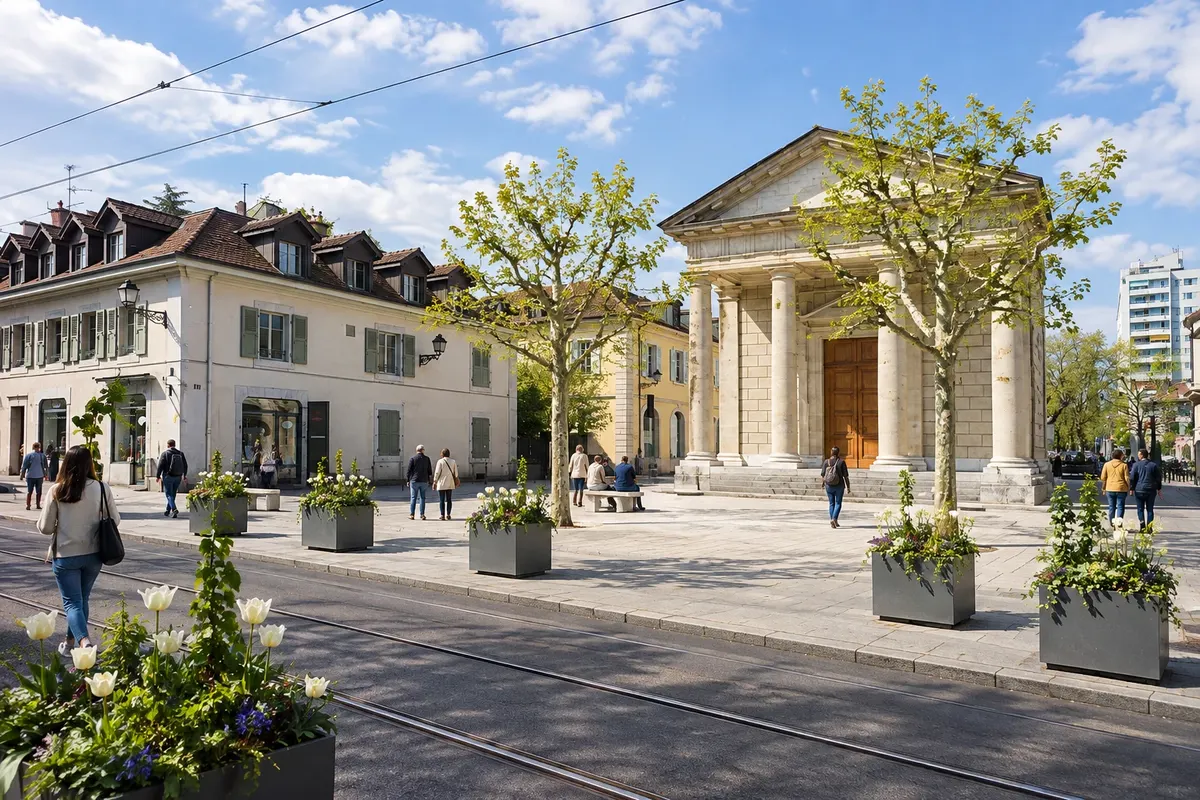
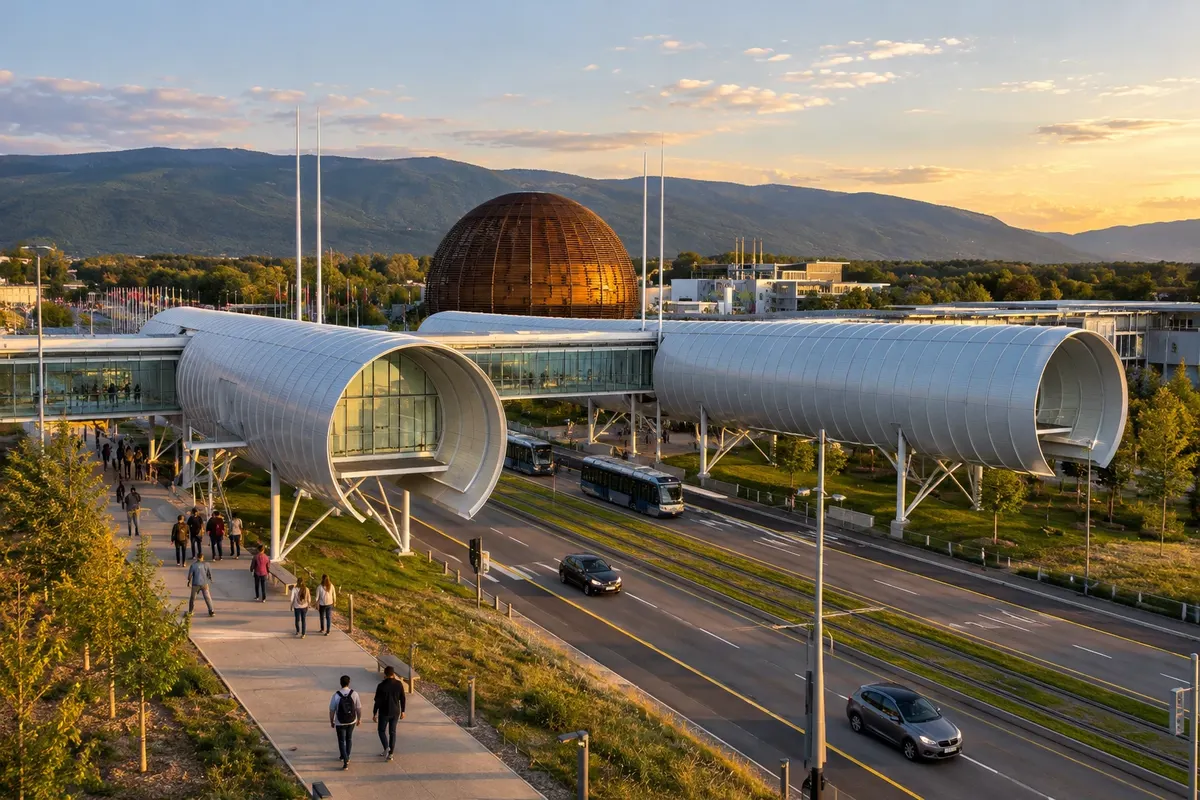
Illustrative images. The pictures in this guide are illustrations based on the real place, not photographs, and may differ from it.

Na voljo v trgovini Google Play Pošljite svoje fotografije

Spoznajte kraj

Pokrajina, ki jo doživite
v svojem ritmu.

Genebra lies at the extreme southwest of Switzerland, where the Rhône leaves Lake Léman. The canton is nearly surrounded by France, and from the quays you can see the Salève and, on clear days, the Mont Blanc massif. French is spoken; English is widely used because of the international organizations.

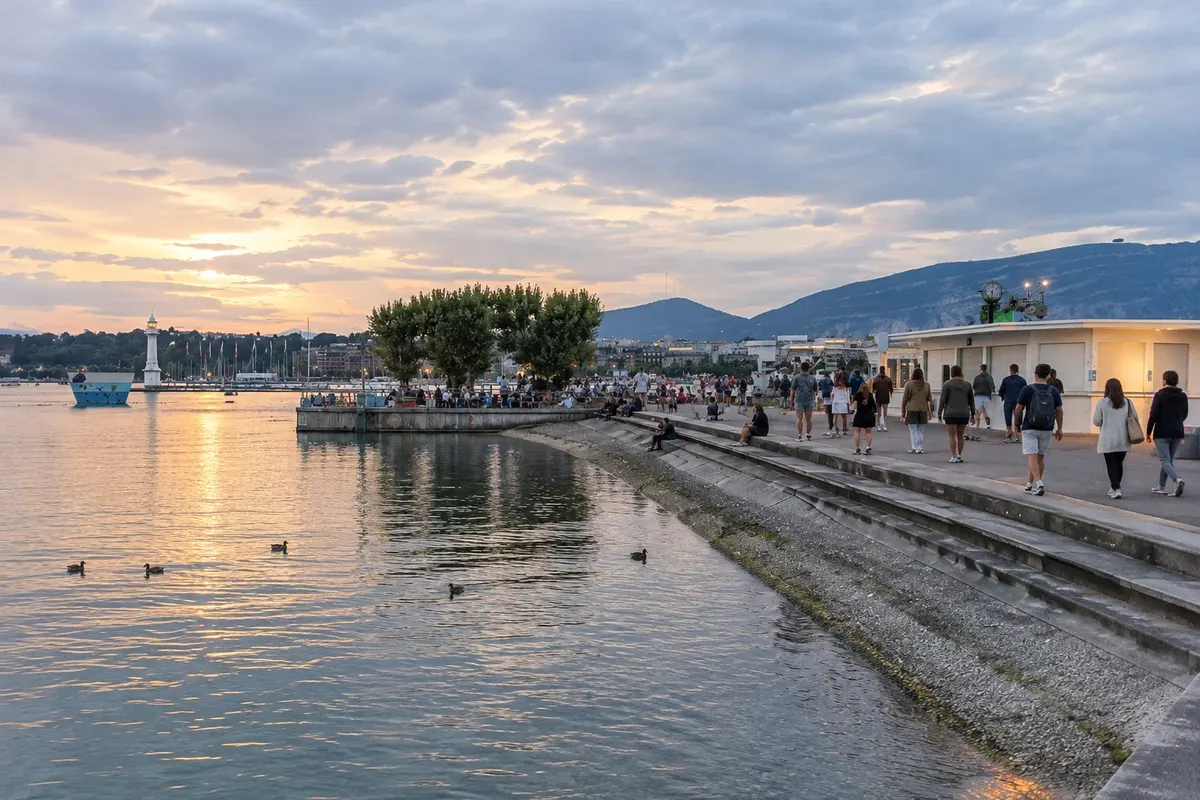
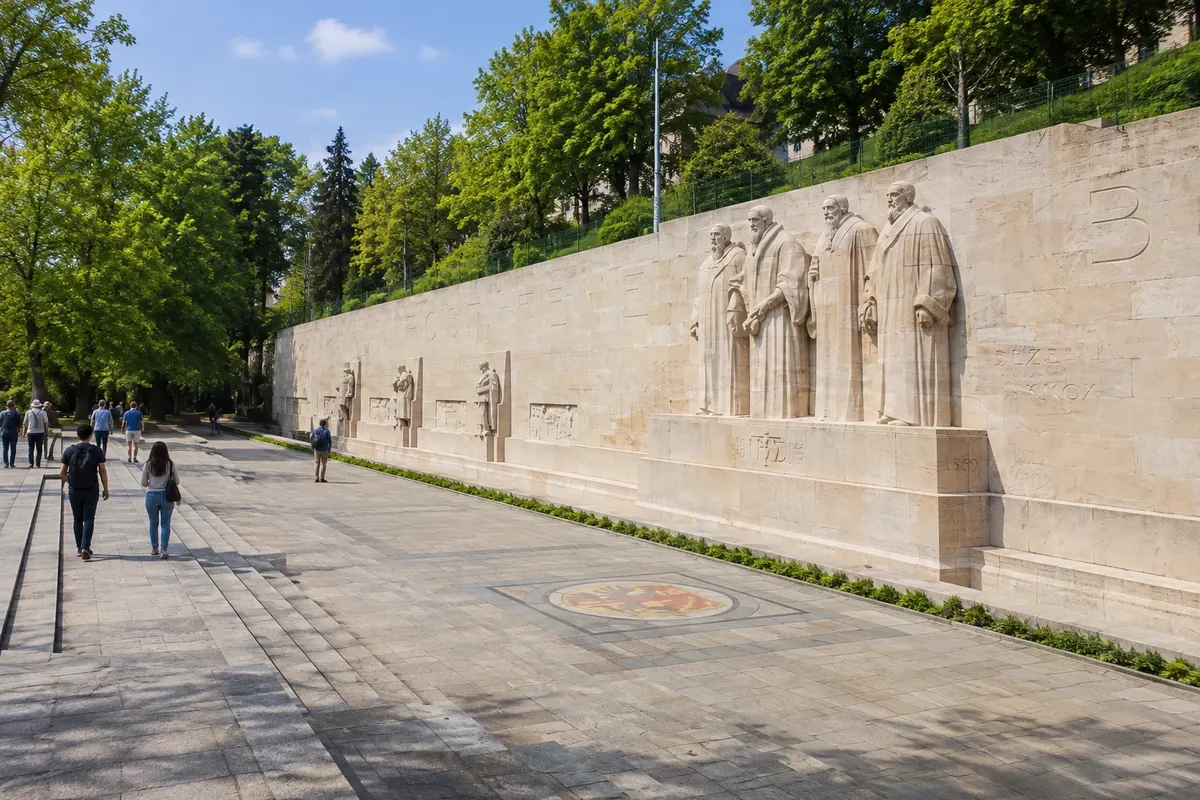
On top of the hill is the Vieille-Ville, with the Cathédrale Saint-Pierre, the Maison Tavel and the Place du Bourg-de-Four. In the 16th century John Calvin made the city a center of the Protestant Reformation, commemorated at the Mur des Réformateurs in the Parc des Bastions. Down by the lake are the Jardin Anglais with the flower clock, the Bains des Pâquis and the Jet d'Eau, the jet that became the city's symbol.

On the right bank, the international organizations district includes the Palais des Nations, the UN's European headquarters, the Broken Chair, the Musée international de la Croix-Rouge et du Croissant-Rouge and the Musée Ariana. Farther on are the Jardin botanique, the Parc La Grange with its rose garden, and in Meyrin the CERN – Science Gateway, the visitor center of the particle physics laboratory.

Watchmaking tradition appears at the Patek Philippe Museum, near the Plaine de Plainpalais, where a secondhand market runs twice a week, and in the collections of the Musée d'art et d'histoire. Across the Arve river, Carouge preserves the layout of a town built by the Kingdom of Sardinia in the 18th century.

The currency is the Swiss franc: Switzerland does not use the euro, although France is only a few kilometres away.

Delite: WhatsApp

Kje prenočiti

V vodniku še ni nastanitev – Geneva.

Kje jesti

V vodniku še ni restavracij – Geneva.

Poznate dobro možnost? Priporočite nam jo

Vaše potovanje

kako do tja · koliko dni · načrt poti · vprašanja

Delite svoja popotniška doživetja s fotografijami Pošljite fotografije vsakega kraja, ki ste ga obiskali. Največje število fotografij na kraj: 5.

Kako do tja:Geneva

✈ Genève Aéroport (GVA), kraj: Le Grand-Saconnex· 5 km do cilja (Geneva)

Geneva airport (GVA) has a train station, about 7 minutes from Genève Cornavin. Check before buying. By train, Genebra is about 1 h 50 from Bern and less than three hours from Zurich.

Doživite kraj

Kaj početi – Geneva

Jet d'Eau
Geneva · Geneva · Symbol of the city

Jet d'Eau

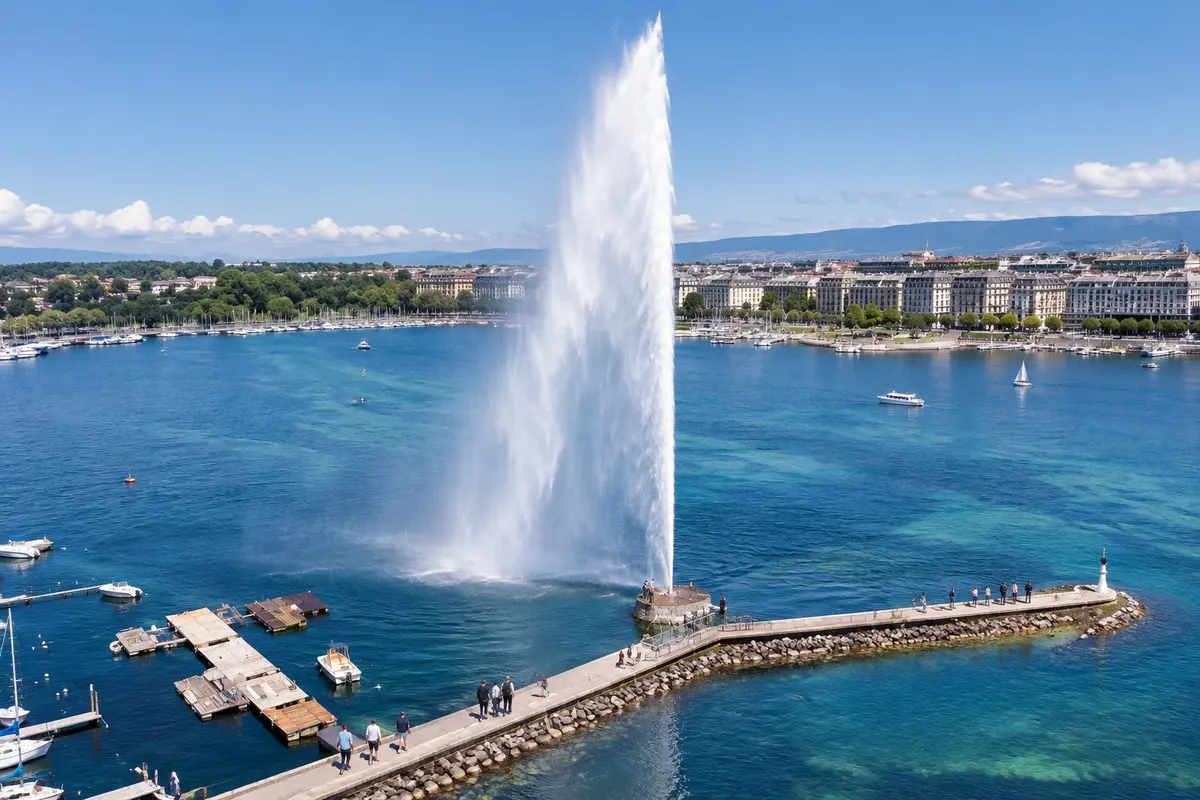
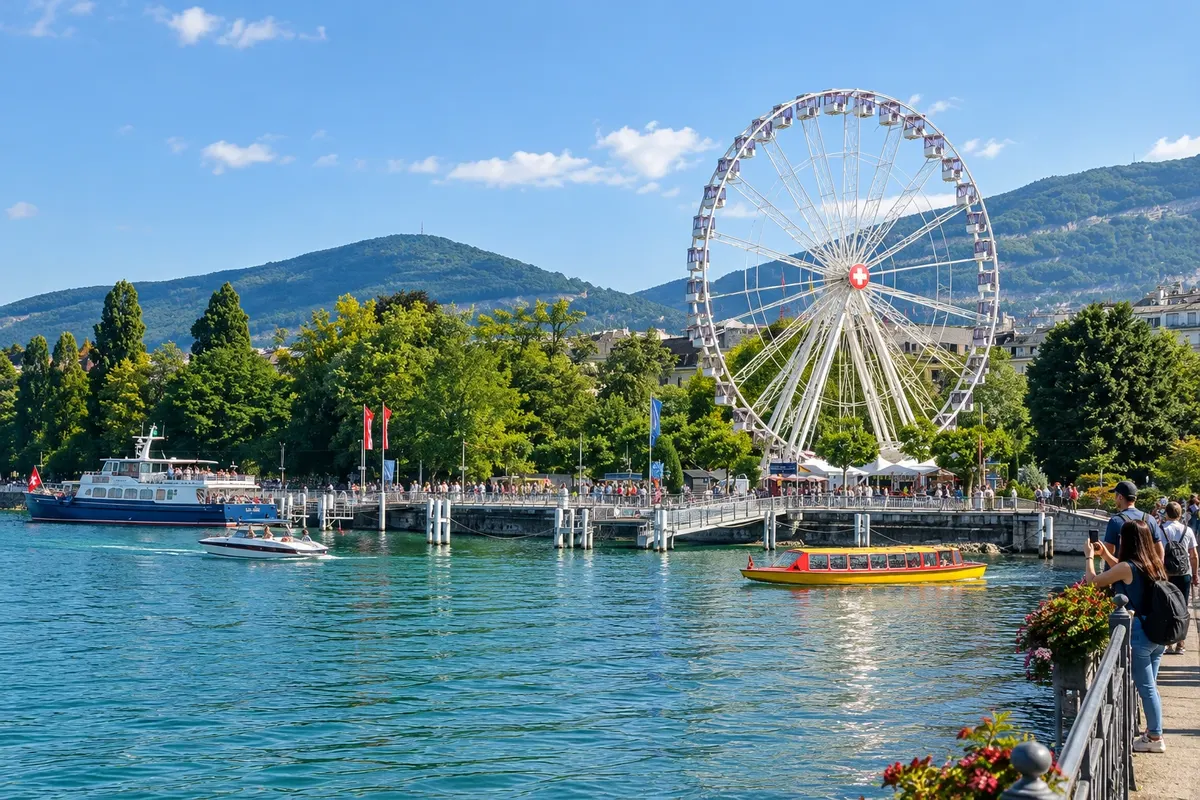
The water jet that rises about 140 meters above the lake, at the tip of a breakwater on the left bank. It's Genebra's postcard image and can be seen from almost the entire city.

Bains des Pâquis
Geneva · Geneva · Swimming in the lake

Bains des Pâquis

Public bathing facility on stilts in the lake, on the right bank, with a beach, lake pools, a sauna, hammam and a buvette. It operates year-round and is a meeting point for locals.

Jardin Anglais (English Garden)
Geneva · Geneva · Park and flower clock

Jardin Anglais (English Garden)

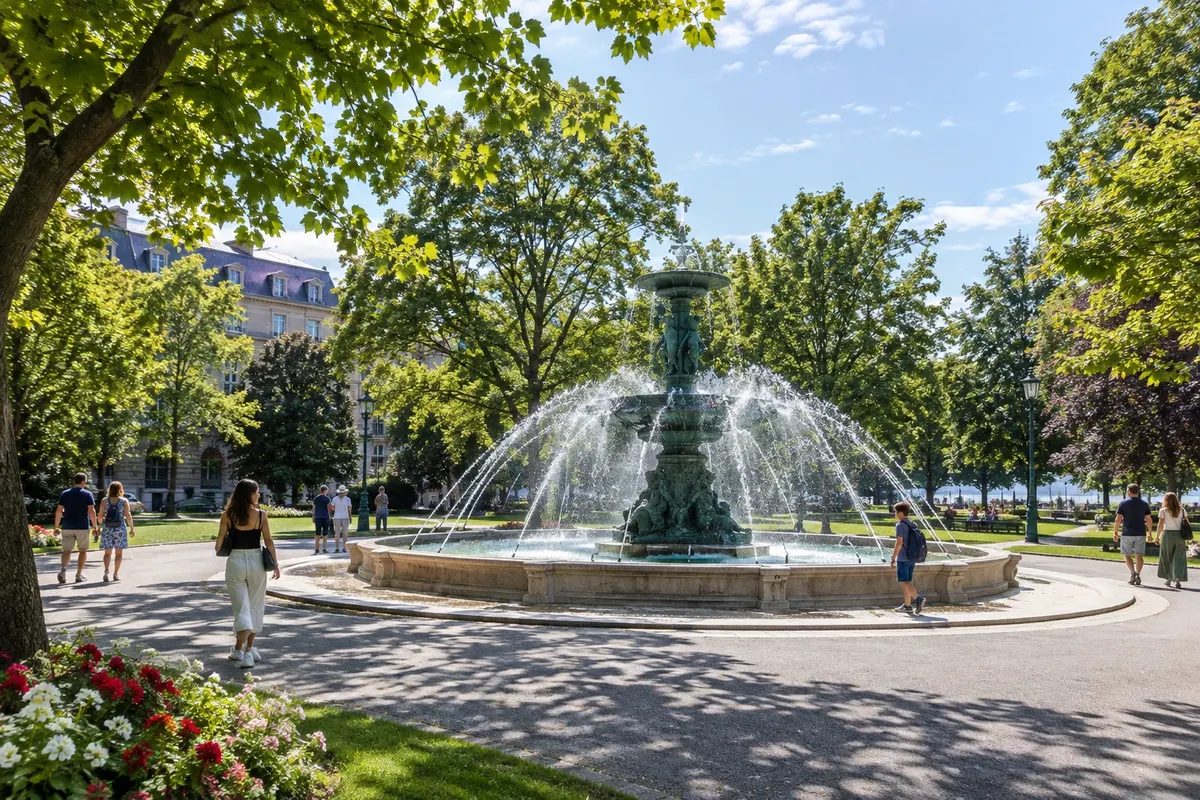
Park on the lakeside, next to the Pont du Mont-Blanc, with L'horloge fleurie, the flower clock created in 1955, a monumental fountain and the Monument national.

Lake Geneva
Geneva · Geneva · Boat tour

Lake Geneva

The lake, divided between Switzerland and France, is crossed in Geneva by the yellow Mouettes genevoises boats that shuttle across the bay, and by CGN vessels, some of them early 20th-century paddle steamers.

Geneva – prikaži dodatne kraje (14)
Place du Bourg-de-Four
Geneva · Geneva · Staro mestno jedro

Place du Bourg-de-Four

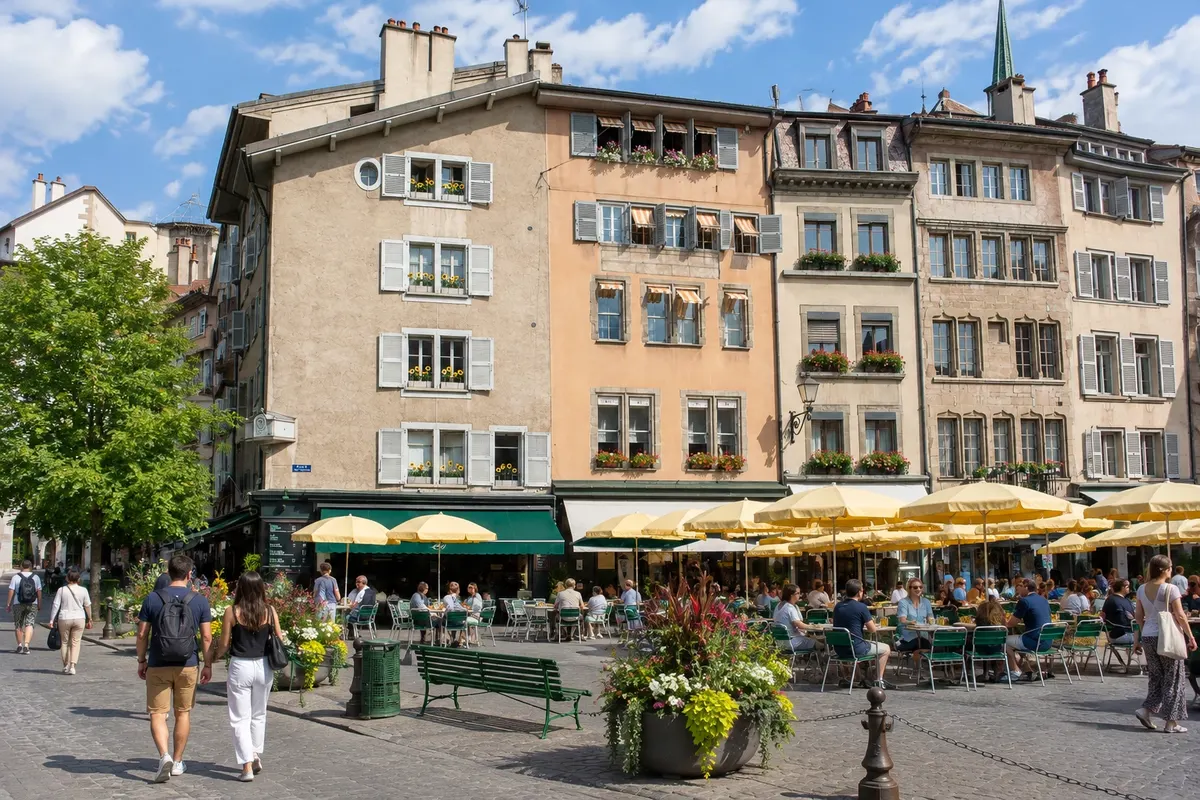
The square of the Vieille-Ville, with an 18th-century fountain, cafés with pavement tables and the Palais de Justice. From here the old town streets lead up to the Hôtel de Ville and the cathedral.

Cathédrale Saint-Pierre (St. Pierre Cathedral)
Geneva · Geneva · Cerkev

Cathédrale Saint-Pierre (St. Pierre Cathedral)

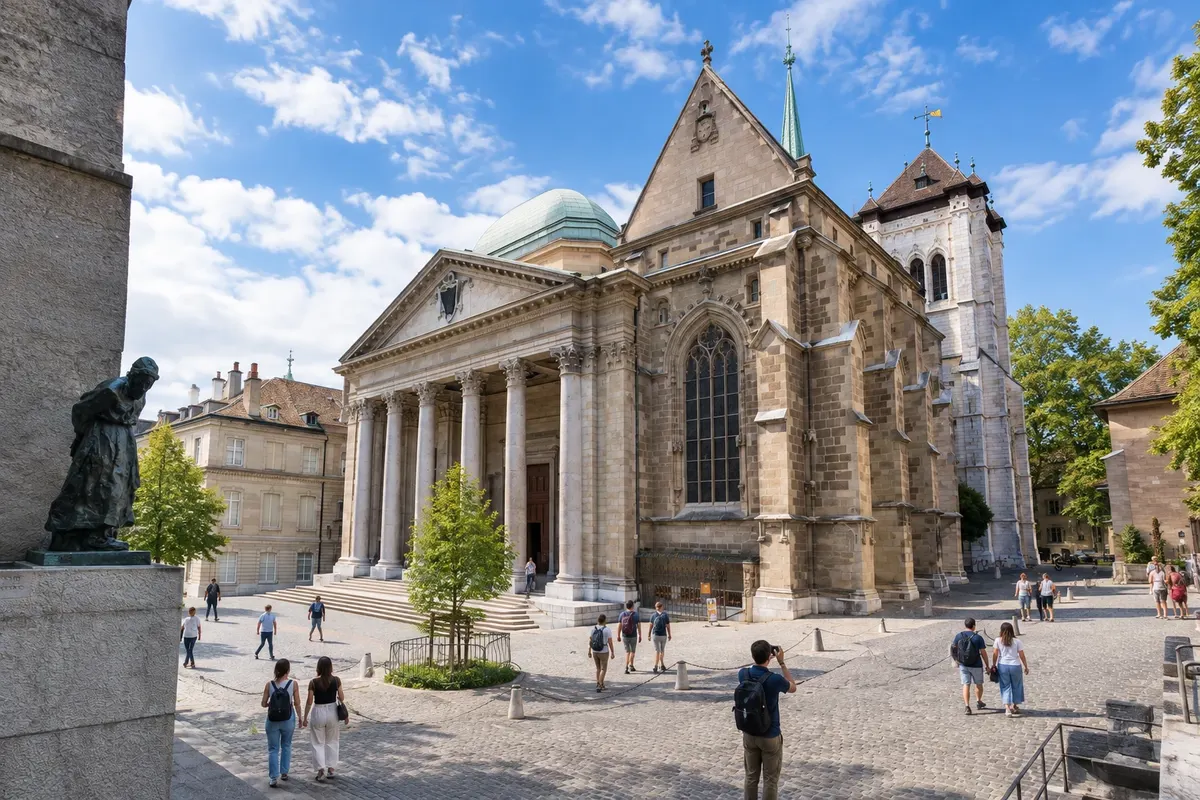
The cathedral atop the Vieille-Ville, begun around 1160, where Calvin preached. It has towers with views over the lake and, beneath it, an archaeological site with ruins of churches dating back to the 4th century.

Maison Tavel (Tavel House)
Geneva · Geneva · Muzej

Maison Tavel (Tavel House)

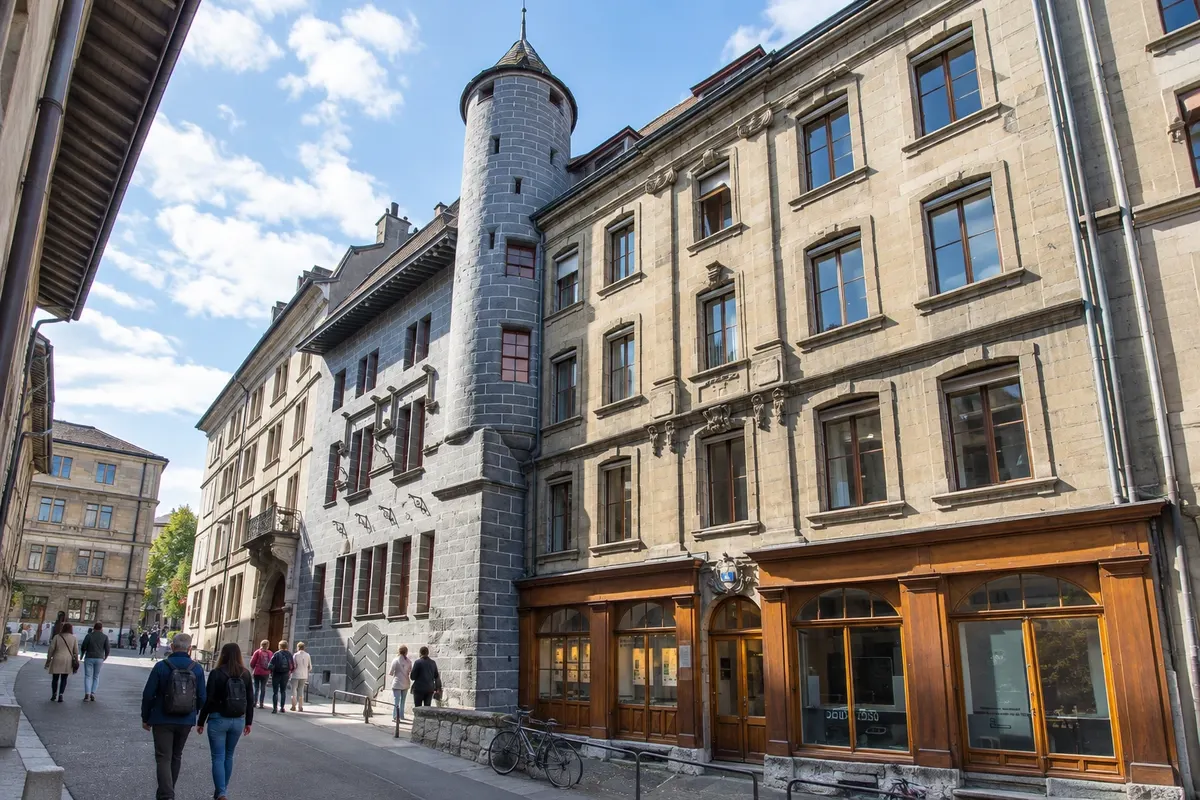
The oldest private house preserved in Genebra, rebuilt after the fire of 1334. Today it is a museum of urban life and houses the Relief Magnin, a model of the city as it was before the fortifications were taken down.

Reformation Wall (Mur des Réformateurs)
Geneva · Geneva · Monument

Reformation Wall (Mur des Réformateurs)

Approximately a 100-metre wall in the Parc des Bastions, with five-metre statues of Farel, Calvin, Bèze and Knox and the city's motto, Post Tenebras Lux. Inaugurated in 1917.

Palais des Nations
Geneva · Geneva · International organization

Palais des Nations

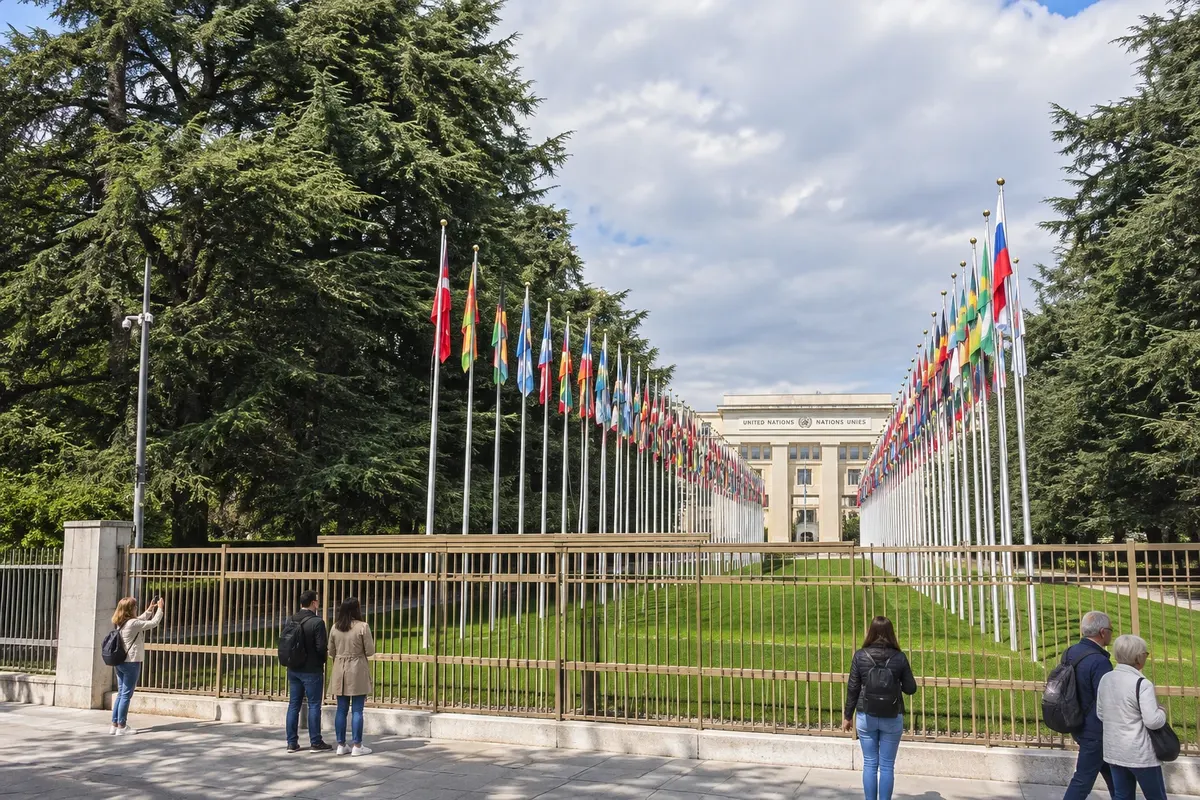
The UN headquarters in Europe, built between 1929 and 1938 for the League of Nations, in the Parc de l'Ariana. Guided tours are available by reservation and require a passport. Opposite, on the Place des Nations, is the Broken Chair.

International Red Cross and Red Crescent Museum
Geneva · Geneva · Muzej

International Red Cross and Red Crescent Museum

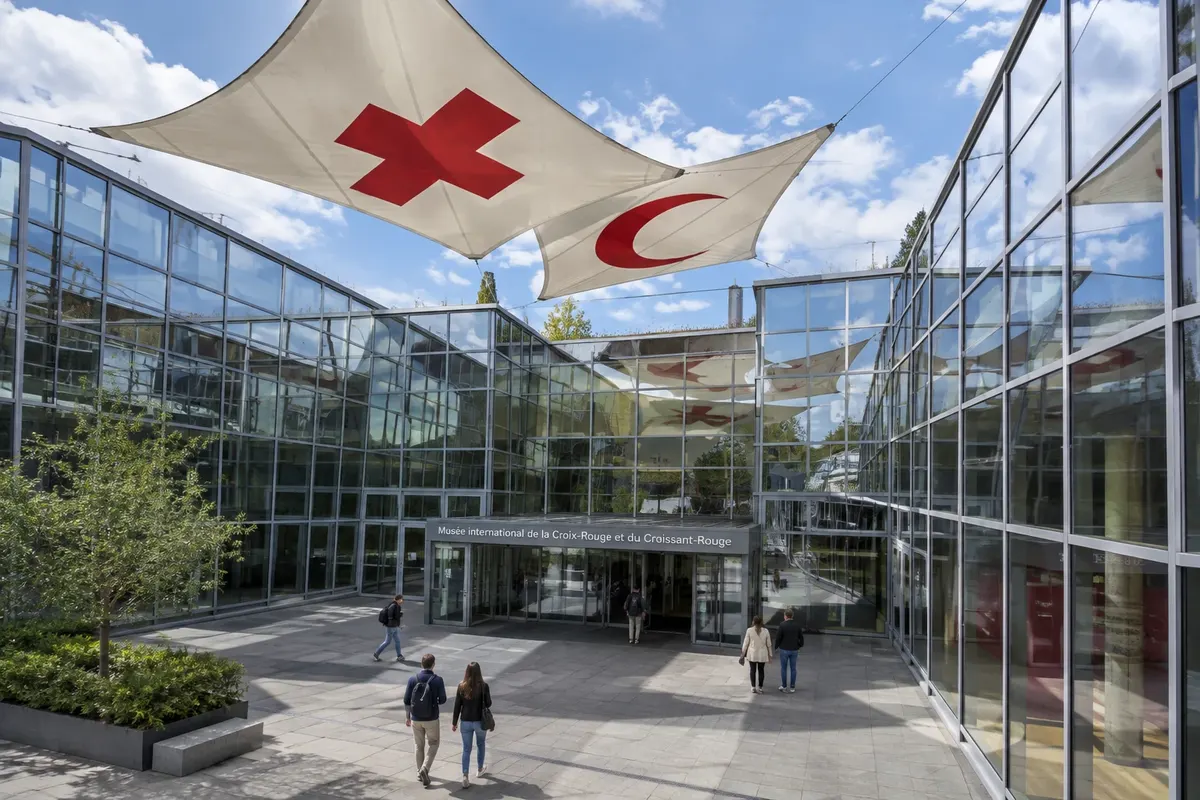
Museum of humanitarian action next to the headquarters of the International Committee of the Red Cross, with an interactive exhibition on the history of the movement founded in Geneva by Henry Dunant and on today's work.

Musée Ariana
Geneva · Geneva · Muzej

Musée Ariana

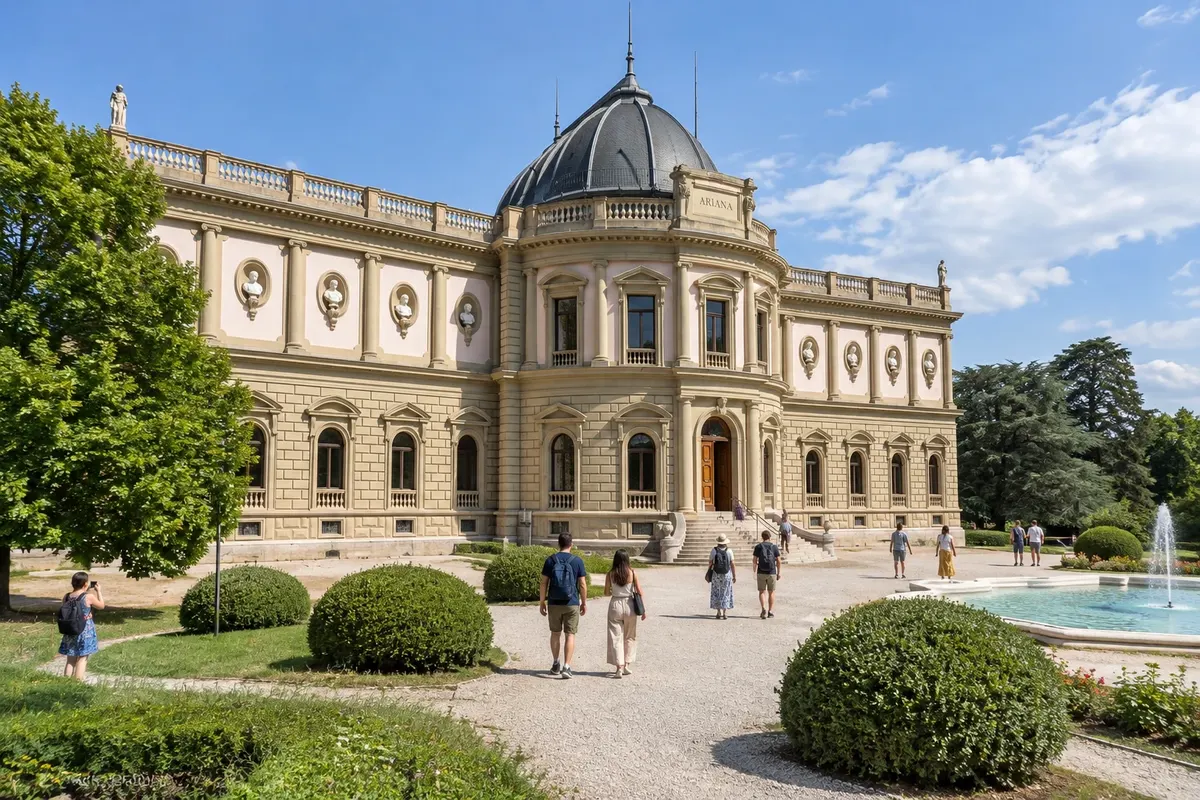
Swiss museum of ceramics and glass, housed in a neoclassical palace from 1877 to 1884 next to the UN, with about 20,000 pieces spanning twelve centuries of earthenware, porcelain, stoneware and glass.

Botanical Gardens (Conservatoire et Jardin botaniques)
Geneva · Geneva · Botanični vrt

Botanical Gardens (Conservatoire et Jardin botaniques)

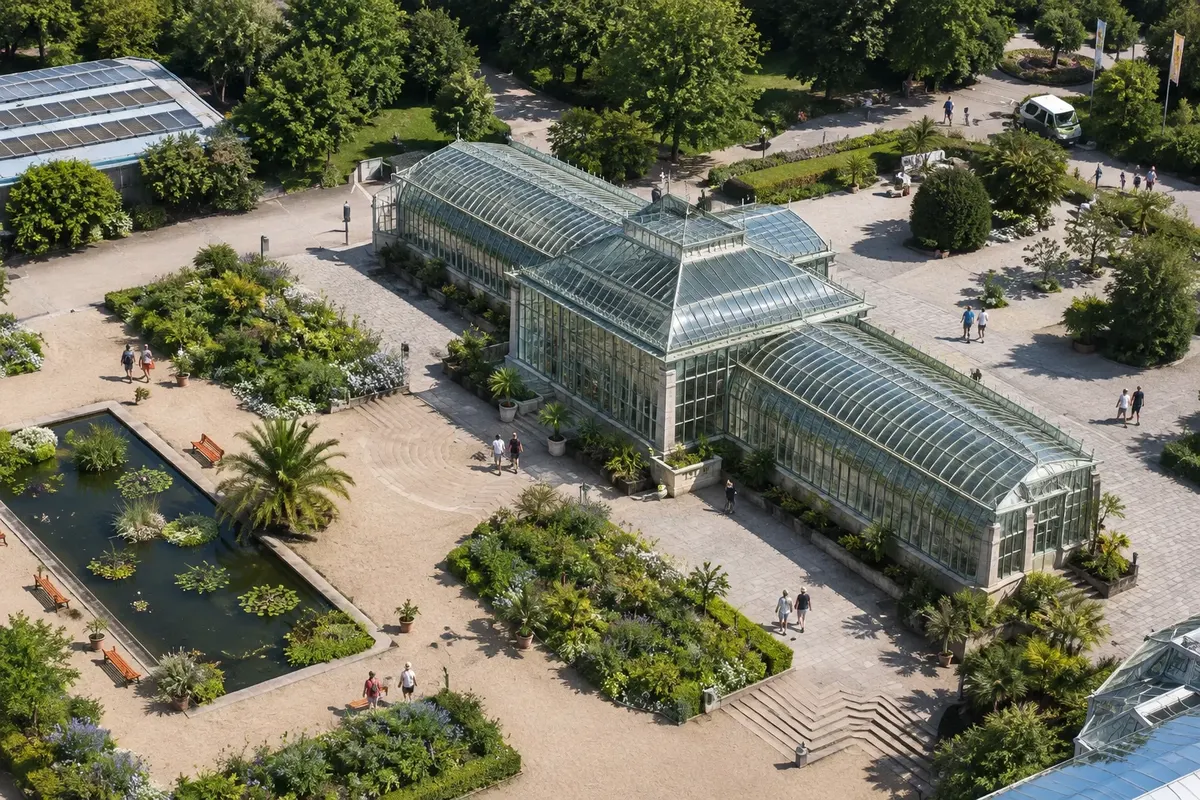
28-hectare botanical garden on the lakeshore, next to the UN, founded in 1817, with a tropical greenhouse, alpine rock gardens, an arboretum and a small animal park.

Parc La Grange (Roseraie du Parc La Grange)
Geneva · Geneva · Park and rose garden

Parc La Grange (Roseraie du Parc La Grange)

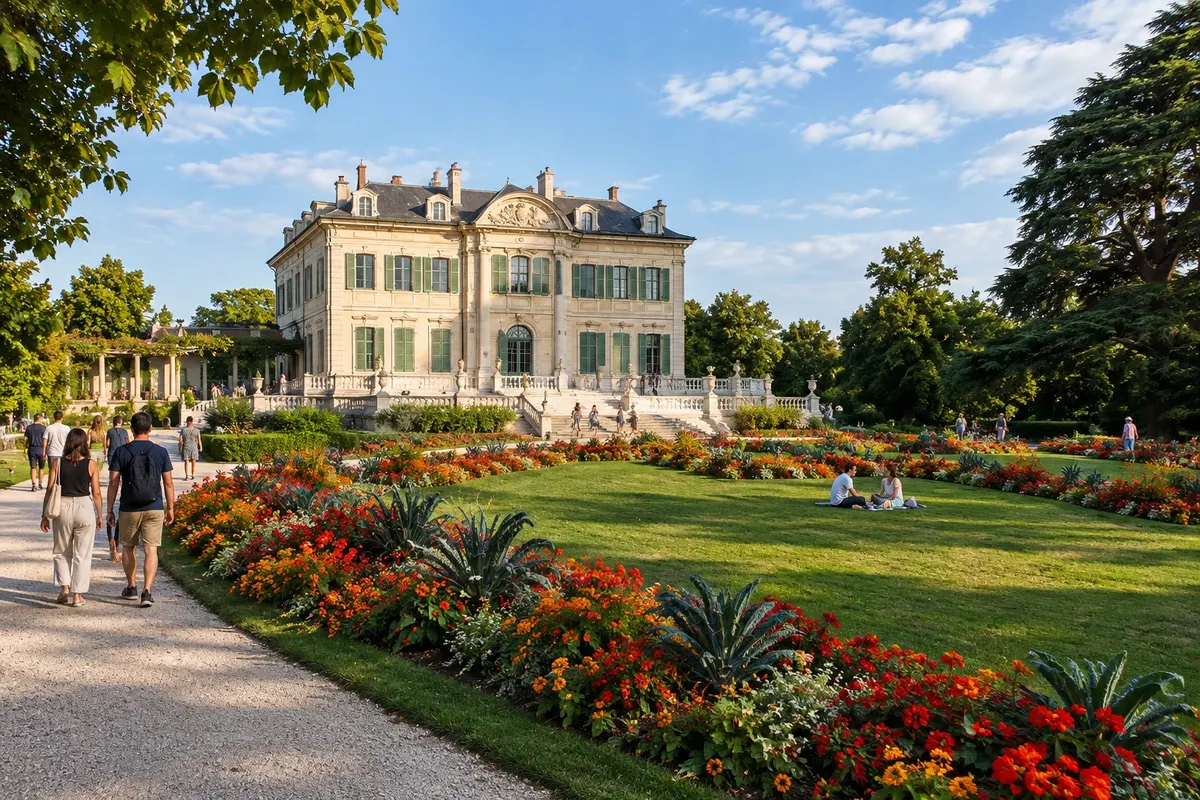
A 20-hectare park on the left bank of the lake, with the 18th-century Villa La Grange, lawns sloping down to the water and the rose garden created in 1945, with about 400 rose bushes.

Musée d'Art et d'Histoire (MAH)
Geneva · Geneva · Muzej

Musée d'Art et d'Histoire (MAH)

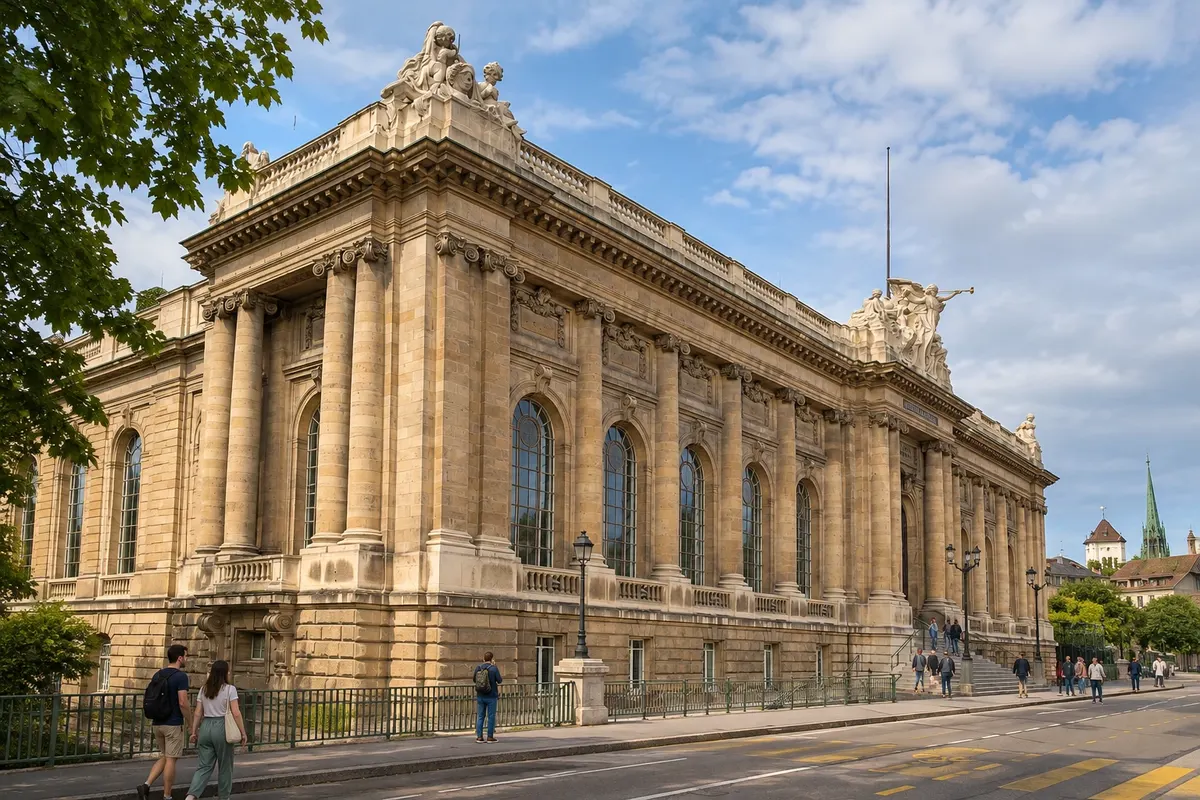
The MAH, housed in a 1910 building near the old town, brings together archaeology, applied arts, watchmaking and painting, including Konrad Witz's 1444 altarpiece that shows the lago de Genebra.

Patek Philippe Museum
Geneva · Geneva · Muzej

Patek Philippe Museum

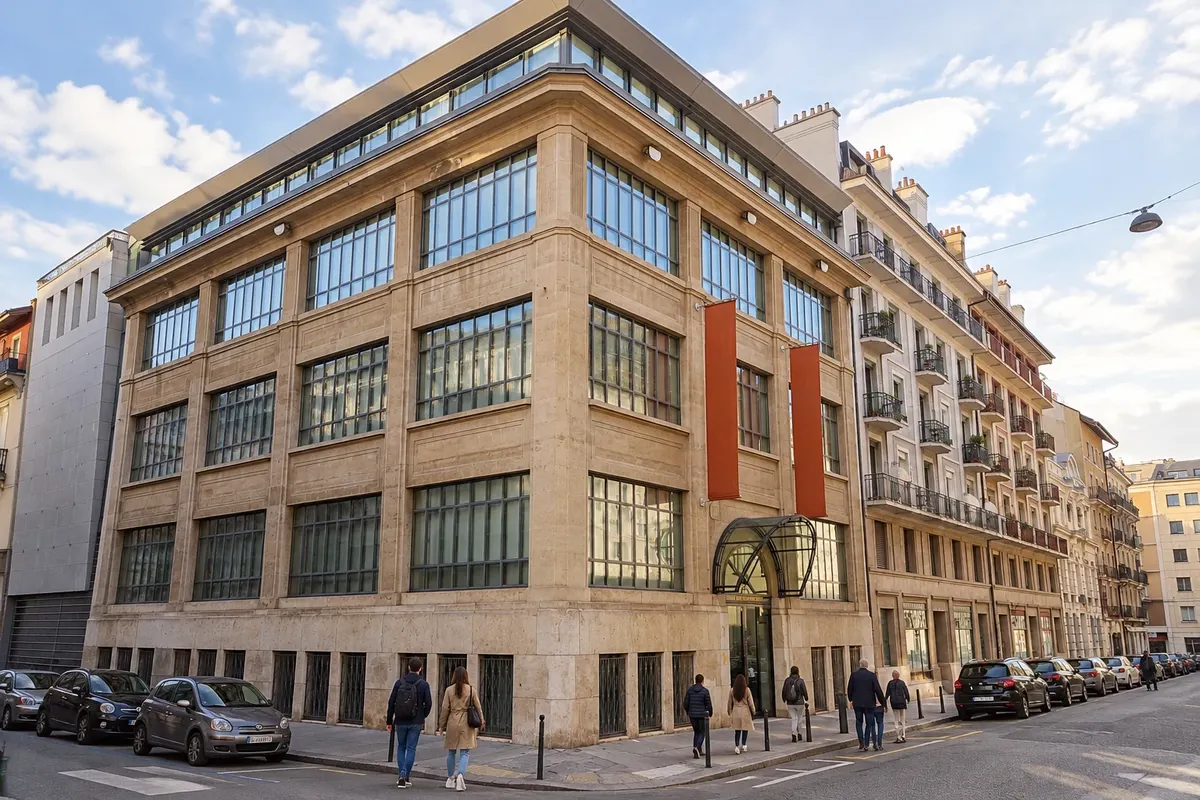
Watchmaking museum of the Patek Philippe manufacture, in the Plainpalais district, with about 2,500 watches, automata and enamels spanning five centuries, from the earliest portable pieces to the 20th century.

Plainpalais (Plainpalais Market)
Geneva · Geneva · Square and market

Plainpalais (Plainpalais Market)

Diamond-shaped esplanade in the Plainpalais district, with an antiques and second-hand market on Wednesdays and Saturdays, a fruit and vegetable market, and a skatepark.

Carouge (Vieux Carouge)
Geneva · Geneva · Historic town

Carouge (Vieux Carouge)

Neighboring town of Genebra, built by the Kingdom of Sardinia in the 18th century, with a grid layout, low houses with inner courtyards, tree-lined squares, ateliers, galleries and bistros.

CERN – Science Gateway
Geneva · Geneva · Science center

CERN – Science Gateway

CERN visitor center in Meyrin, designed by Renzo Piano, with interactive exhibitions about particles and the Universe, laboratories and guided tours of the laboratory's facilities.

Kaj izbrati pred odhodom

Izleti – Geneva

Izhodišče, trajanje, potek, vključene storitve in okvirna cena vsakega izleta.

Jet d'Eau and the shores of Lac Léman: Jardin Anglais, Horloge fleurie and Pâquis

Odhod: Pont du Mont-Blanc, in central Genève On foot along the quays of both banks, with a Mouettes boat crossing Približno 3 ure Dopoldne ali popoldne Lahka, ravna pot

The simplest walk in Genève (Geneva) is to stroll along the rade, the part of Lac Léman that reaches the city. Start at the Jardin Anglais on the left bank, where the Horloge fleurie is located, the flower clock created in 1955: it has over 3,000 plants, the display changes four times a year and the seconds hand measures 2.5 m. Continue along Quai Gustave-Ador to the pier where the Jet d'Eau rises, the fountain that reaches about 140 m in height, with roughly half a cubic metre of water per second emerging at around 200 km/h. You can walk along the pier to within a few metres of the base; in windy conditions anyone approaching will get wet. At night the jet is illuminated. Further along the same quay is Parc La Grange, the city’s largest park, with a rose garden of more than 400 rose bushes and 200 varieties. To return, cross the lake on a yellow Mouettes genevoises boat to the right bank and walk along the Quai du Mont-Blanc to the Pont du Mont-Blanc, with views of the jet and, on a clear day, the Mont Blanc massif in the distance.

Kraji na poti: Jet d'Eau, Jardin Anglais, Horloge fleurie, Pont du Mont-Blanc, Quai du Mont-Blanc, Quai Gustave-Ador, Parc La Grange, Lac Léman.

Vključuje: Self-guided walk. Access to the quays, the pier and the parks is free. The Mouettes boat crossing is paid separately, using Genève public transport ticket.

Nasvet: The Jet d'Eau depends on the weather: it is often turned off in strong wind or cold. Check beforehand if that is the reason for your visit. Bring a light jacket even in summer: the lake breeze cools the late afternoon.

Najboljši čas za obisk: From April to October, with long days and the rose garden at Parc La Grange in bloom from June to September; in winter the walk is short and cold.

Vieille Ville on foot: Cathédrale Saint-Pierre, Maison Tavel, Bourg-de-Four and Mur des Réformateurs

Odhod: Place du Molard or Rues Basses, central Geneva Walk through the old town, with a short climb about 3 to 4 hours Dopoldne ali popoldne easy (hills and 157 steps in the tower)

The Vieille Ville (old town) sits atop a hill on the left bank. Climb from the Rues Basses up to Cathédrale Saint-Pierre, whose construction began in 1160 and mixes Romanesque, Gothic and neoclassical styles. It was the center of the Protestant Reformation in Geneva, and in the 16th century the interior lost ornaments and paintings; the stained-glass windows remain. The north tower has 157 steps and a 360-degree view of the city and the lake; on a clear day Mont Blanc is visible. Beneath the cathedral is an archaeological site with ruins of earlier churches, the oldest from the late 4th century. Beside it, Maison Tavel, the oldest private house in Geneva, is a museum about the city: engravings, maps, furniture and the Relief Magnin, a model showing Geneva before the walls were taken down in 1850. Descend to Place du Bourg-de-Four, a café-filled square at the neighborhood’s heart, and finish at Parc des Bastions, where the Mur des Réformateurs, about 100 m long, leans against the 16th-century wall. The four central 5 m statues are Farel, Calvin, Béze and Knox, under the motto Post Tenebras Lux (after darkness, light). Art lovers can continue to the Musée d'art et d'histoire, a few minutes away.

Kraji na poti: Vieille Ville, Cathédrale Saint-Pierre, Maison Tavel, Place du Bourg-de-Four, Parc des Bastions, Mur des Réformateurs, Musée d'art et d'histoire.

Vključuje: Self-guided walk. Entry to the cathedral nave is free; climbing the towers and the archaeological site require tickets. At Maison Tavel visitors pay what they wish. There are guided walking tours of the old town; check the current rates.

Nasvet: Maison Tavel is closed on Mondays. The climb to the tower is by a narrow staircase. On some full-moon nights the towers open at night for the Nocturnes de Saint-Pierre; check the dates.

Najboljši čas za obisk: All year; the tower view is usually clearer on dry autumn and winter days.

Palais des Nations: guided tour of the UN headquarters in Geneva and the Broken Chair

Odhod: Portail de Pregny, Avenue de la Paix 14 Tram or bus to Nations and a guided walking tour about 2 hours, including the security line Dopoldne ali popoldne easy (about 2 km on foot)

The Palais des Nations was built for the League of Nations and is the UN headquarters in Genève. Visiting is always guided and lasts about one hour, in several languages (English, French, Spanish and others; Portuguese does not appear on the official list). The route goes through historic conference rooms, tells the story of the League of Nations and the UN, and exits to the Parc de l'Ariana, where the celestial sphere is located. The route changes depending on the day's meetings and renovation work on the building, and the group walks about 2 km. Visitor entry is at the Portail de Pregny, opposite the International Committee of the Red Cross building. Arrive 30 minutes early: security screening takes about 30 minutes. Before or after, stop at the Place des Nations to see the Broken Chair, a 12 m wooden chair with a broken leg, by Daniel Berset, installed in 1997 against landmines. In the same park is the Musée Ariana, dedicated to ceramics and glass, with over 27,000 pieces.

Kraji na poti: Palais des Nations, Place des Nations, Broken Chair, Parc de l'Ariana, Musée Ariana.

Vključuje: Guided visit with ticket, reserved online. The dates for each month are usually opened on the 20th of the previous month. The square and the Broken Chair are outdoors and free to access; the Musée Ariana has a separate admission.

Nasvet: Document: bring a valid passport, required of every visitor (a national ID from a Schengen country is also accepted). Each person receives a digital badge with a QR code by email. Large suitcases are not permitted; size up to 55 x 40 x 20 cm. There are no visits on UN holidays.

Najboljši čas za obisk: All year; book in advance from June to September.

Musée international de la Croix-Rouge et du Croissant-Rouge

Odhod: Avenue de la Paix 17, near Place des Nations Tram or bus to the Nations or Appia stop Približno 2 uri Dopoldne ali popoldne Lahko

Geneva is the city where the Red Cross was founded, and the Movement’s museum is in the international organizations district, a few minutes’ walk from the Palais des Nations. The permanent exhibition tells the history of the International Red Cross and Red Crescent Movement in three periods, shows today’s humanitarian work, the people who do it and future challenges. The exhibition is interactive and asks for visitor participation. There are also temporary exhibitions, such as one dedicated to objects used in humanitarian work: first aid kits, tents, prostheses, maps and improvised shelters. Some rooms of the exhibition may be under renovation during your visit; check before you go. It pairs well with a visit to the Palais des Nations on the same day: both are on Avenue de la Paix.

Kraji na poti: Musée international de la Croix-Rouge et du Croissant-Rouge, Avenue de la Paix, Place des Nations.

Vključuje: Entry with ticket; check the current pricing. Guided tours are available.

Nasvet: Some sections deal with war and human suffering; the museum flags sensitive content. With young children, assess beforehand. It usually closes on Mondays.

Najboljši čas za obisk: All year; a good option for a rainy day.

CERN Science Gateway: particle physics exhibitions in Meyrin

Odhod: Gare Cornavin, Genève Tram 18 to Meyrin, CERN stop (about 25 minutes) about 3 to 4 hours Dopoldne ali popoldne Lahko

CERN, the European Organization for Nuclear Research, runs the largest particle physics laboratory in the world on the Swiss–French border, in Meyrin on the outskirts of Genève. The Science Gateway is the visitor centre, with buildings designed by Renzo Piano’s office. There are three permanent interactive exhibitions about particles, the universe and the quantum world, which take between an hour and a half and three hours. The auditorium hosts science demonstrations presented by CERN staff, and the labs offer hands-on workshops of 45 to 90 minutes, such as the cloud chamber, in English or French. Guided tours, about an hour and a half, show the 1957 synchrocyclotron and the control room of an operating experiment, led by physicists, engineers and students. The exhibitions are suitable for children from around 8 years old.

Kraji na poti: CERN, Science Gateway, Meyrin.

Vključuje: Admission is free, but you must register online. Guided tours and workshops are also free and have limited spaces.

Nasvet: Closed on Mondays. Guided tours on weekdays usually have more availability. Book in advance, especially in summer; at the end of December and start of January guided tours are usually not offered.

Najboljši čas za obisk: All year; a good option for a rainy day.

Boat on Lake Léman: Mouettes in the harbour and CGN cruises to Nyon and Yvoire

Odhod: Jardin Anglais or Mont-Blanc pier, Genève Mouettes genevoises boat or CGN boat from 1 hour (harbour) to a full day (Yvoire or Lausanne) Dopoldne, popoldne ali ves dan Lahko

There are two ways to take a boat in Genève. The shorter option is the Mouettes genevoises, small yellow boats that cross the rade on four lines (M1 Pâquis–Molard, M2 Pâquis–Quai Gustave-Ador, M3 Pâquis–Genève-Plage and M4 Genève-Plage–De-Chateaubriand) and are part of the public transport system. The longer option is the CGN boats, the Lac Léman navigation company, which depart from the Jardin Anglais and Mont-Blanc. There are short cruises around the rade and lines to Coppet, Nyon, Yvoire and Lausanne. The fleet includes Belle Époque paddle steamers such as the Savoie (1914), the Simplon (1920) and the Helvétie (1926); not every departure uses one of these, and the timetable states which vessel operates each trip. Yvoire is on the French shore: a medieval village with walls, a castle and a 14th-century tower, and the Jardin des Cinq Sens, with about 1,300 medicinal and aromatic plants. Another way to get there is to take the train to Nyon and cross by boat. The Genève–Lausanne-Ouchy sector by regular boat takes about 3 hours and a half; many people go by boat and return by train.

Kraji na poti: Lac Léman, Rade de Genève, Mouettes genevoises, Nyon, Yvoire, Lausanne-Ouchy.

Vključuje: Boat ticket. The Mouettes accept Geneva public transport tickets; CGN has its own fares, and some tourist transport passes cover the boats. Meals on board are paid separately.

Nasvet: Yvoire and Évian are in France: carry your passport on the boat. From November to April CGN timetables are reduced and only motor boats run on the main lines.

Najboljši čas za obisk: From May to September, when all lines and the steamers usually operate; July and August have more departures and more people.

Prikaži dodatne izlete (8)

Bains des Pâquis: lake bathing, sauna and a buvette in the middle of the harbour

Odhod: Quai du Mont-Blanc 30, right bank On foot from Gare Cornavin or via the quays Približno 2 uri Dopoldne ali popoldne Lahko

The Bains des Pâquis are Geneva’s public bathing facility, built on a pier out in the lake. Baths have existed since 1872; the current concrete building dates from 1932. In the 1980s there was a plan to demolish and rebuild the site, and in 1988 locals voted to keep it as it was. The main attraction is swimming in the lake, with steps leading down to the water; you can swim around the complex. There is a buvette (snack bar) with a homemade daily special and fondue, very popular in winter, as well as a sauna, Turkish bath and hammam. The terrace faces the Jet d'Eau and, on clear days, Mont Blanc. The Bains are open year-round and host cultural activities, such as the Aubes musicales, dawn concerts in summer. The Pâquis neighbourhood just behind is the city’s most cosmopolitan area, with restaurants from many countries.

Kraji na poti: Bains des Pâquis, Quai du Mont-Blanc, Pâquis.

Vključuje: Admission and services (sauna, hammam, massages) have separate pricing depending on the season. Check the current price list.

Nasvet: The lake water is cold outside the height of summer. The site is not wheelchair accessible. Bring a towel and sandals.

Najboljši čas za obisk: Lake bathing from June to September; sauna and fondue from October to March.

Carouge: the Italian-planned town beside Genève

Odhod: Genève city centre (Place Bel-Air or Rive) Tram 12 from the centre Približno 3 ure Dopoldne ali popoldne Lahka, ravna pot

Carouge sits across the Arve River, attached to Genève, but with a different character. After the Treaty of Turin in 1754, the Kingdom of Sardinia designed it as a new town to rival Genève; it only became part of Genève and Switzerland in 1816. Hence the grid layout, regular blocks, low neoclassical houses, light-coloured facades, arcades and inner courtyards with gardens; only Rue Ancienne breaks the regularity. the historic centre has been protected since 1950. The walk has no fixed route: Place du Marché with its fountain and trees; streets of craft shops, studios, bookstores and galleries; and cafés and restaurants with sidewalk tables. On Wednesday and Saturday mornings the square hosts the market, with fruit, vegetables, cheeses, honey, bread and flowers. Carouge once had tanneries, weaving mills and earthenware factories; today it is a neighbourhood of small shops and a calm nightlife.

Kraji na poti: Carouge, Place du Marché, Rue Ancienne, Rue Saint-Joseph, Arve.

Vključuje: Self-guided walk. Walking the streets is free; the tram accepts the Genève public transport ticket.

Nasvet: Go on a Wednesday or Saturday morning, market day at Place du Marché, and have lunch there. Many small shops close on Sundays and some on Mondays.

Najboljši čas za obisk: All year; from May to September the tables are placed outdoors.

Art and watchmaking museums: Musée d'art et d'histoire and Patek Philippe Museum

Odhod: Vieille Ville and Plainpalais, central Geneva On foot or by tram between the two museums about 4 hours for both Dopoldne ali popoldne Lahko

Two museums sum up Geneva: art and watches. The Musée d'art et d'histoire, at the foot of the Vieille Ville, holds over half a million items across four floors, from archaeology (with pieces from Mesopotamia and Egypt, including a colossal statue of Ramesses II) to medieval armour, applied arts and painting, with works by Monet, Picasso, Rubens and Giacometti. The best-known piece is Konrad Witz’s 1444 altarpiece, featuring the Miraculous Draught. In the Plainpalais district, near the large Plaine de Plainpalais, the Patek Philippe Museum occupies an industrial building from 1919–1920. It houses about 2,500 items: watches, automata, precious objects and enamel portraits across four floors: on the ground floor, old workbenches and tools and a glazed restoration workshop; on one floor, the brand’s creations from 1839 to 2000; on another, the historical collection, from the 16th century to the mid-19th, with pocket watches, enamelled snuffboxes and automata with singing birds.

Kraji na poti: Musée d'art et d'histoire, Patek Philippe Museum, Plainpalais, Plaine de Plainpalais.

Vključuje: At the Musée d'art et d'histoire the permanent collection is free; temporary exhibitions require a ticket. The Patek Philippe Museum has an admission fee; check the current pricing.

Nasvet: Both are usually closed on Mondays; check the Patek Philippe Museum’s schedule before you go. Good option for a rainy day or winter.

Najboljši čas za obisk: Vse leto.

Round-trip to Lausanne and the terraced vineyards of Lavaux

Odhod: Gare Cornavin, Genève SBB train to Lausanne and regional train to Lavaux about 9 hours Ves dan moderate (11 km trail with climbs)

Lausanne is about 40 minutes by train from Genève, with trains every 15–20 minutes. The city rises from the lake on hills: the M2 metro links the lakeside at Ouchy to the upper town, where the old centre and the Gothic cathedral are, in just a few minutes. The Olympic Museum is also in Ouchy. After lunch, head to Lavaux, the terraced vineyards above Lac Léman between Lausanne and Vevey, a UNESCO World Heritage site since 2007, covering roughly 800 hectares. The waymarked Terrasses de Lavaux trail runs from Saint-Saphorin to Lutry: 11 km, about 3 hours 15 minutes, with 440 m of ascent and 420 m of descent, passing stone walls and winegrowers’ villages. The short version, from Cully to Saint-Saphorin, is about 5 km and takes 1½–2 hours. Regional trains stop at Lutry, Cully, Epesses, Rivaz and Saint-Saphorin, so you can join or leave the trail at several points. In the villages, cellars open for visits and tastings; the focus is on the history of the terraces and vineyard work.

Kraji na poti: Lausanne, Ouchy, Cathédrale de Lausanne, Lavaux, Saint-Saphorin, Cully, Lutry.

Vključuje: On your own: train and metro require separate tickets (tourist transport passes often cover them). There are also day tours leaving from Genève; check what each one includes. Visits to cellars and tastings are paid separately.

Nasvet: Wear sneakers or hiking boots: the trail has steep asphalt sections and stairs. Bring water and sunscreen; there is almost no shade. The Lavaux Panoramic, a tourist train, runs from Chexbres or Cully from May to October.

Najboljši čas za obisk: From March to November, trail season; September and October have the grape harvest and autumn colors.

Round-trip to Montreux and Château de Chillon

Odhod: Gare Cornavin, Genève Direct SBB train to Montreux (about 1 hour) about 8 hours Ves dan Lahko

Montreux sits at the eastern tip of Lac Léman, about 1 hour from Genève by direct train that runs via Lausanne and Vevey along the lake. On the lakeside, near the Casino, is the statue of Freddie Mercury: Queen recorded in Montreux from 1978. From the centre, walk to Château de Chillon along the flat lakeside promenade (about 3 km, roughly 40 minutes on foot) or take a bus in about 5 minutes. The medieval castle stands on a rock in the lake. Allow 1½–2 hours for the visit: halls with late medieval frescoes, the 13th‑century chapel of Saint George, the towers and the dungeons where François Bonivard, a Genève patriot, was imprisoned from 1532 to 1536, chained to a column. Lord Byron carved his name on that column in 1816; he later wrote the poem The Prisoner of Chillon. On the way back, stop in Vevey, 5 minutes by train from Montreux, with the Charlie Chaplin statue on the lakeside.

Kraji na poti: Montreux, Château de Chillon, Veytaux, Vevey, Lac Léman.

Vključuje: On your own: train and bus require separate tickets; the castle has an entrance fee, with an audio guide in several languages. There are also day tours leaving from Genève; check what each one includes.

Nasvet: The castle is open for most of the year; it closes only on January 1 and December 25. In summer you can take a stretch by CGN boat, which stops at Chillon, and return by train.

Najboljši čas za obisk: Year-round; from May to September the lakeside promenade and boats are active. The Montreux Jazz Festival usually fills the town in July.

Day trip to Gruyères: castle, cheese dairy and the medieval village

Odhod: Gare Cornavin, Genève SBB train with changes at Palézieux and Bulle (about 1.5 hours) about 9 hours Ves dan easy (short climb up to the village)

Gruyères is in the canton of Fribourg, in the French-speaking region. From Genève, the train goes to Palézieux (about 1 hour), changes to Bulle (20–25 minutes) and continues by regional train to Gruyères station (10 minutes); the total is around 1.5 to 1 hour 40. Near the station is La Maison du Gruyère, a demonstration cheese dairy where you can see Gruyère production and taste samples; allow about 45 minutes. The medieval village sits atop a hill, a short climb from the station: a single pedestrian street of old houses that ends at Château de Gruyères. The castle visit takes about 1 to 1.5 hours, with furnished rooms and views over the pastures and surrounding mountains. On the same street is Musée HR Giger, dedicated to the Swiss artist who created the look for the film Alien. If you have time you can take a connection to Broc, about 20 minutes away, for the multimedia visit to the Maison Cailler chocolate factory, around 40 minutes with a tasting at the end.

Kraji na poti: Gruyères, Château de Gruyères, La Maison du Gruyère, Musée HR Giger, Bulle, Broc, Maison Cailler.

Vključuje: On your own: trains paid separately (tourist transport passes often cover them). The castle, the cheese dairy, Musée HR Giger and Maison Cailler have separate tickets; combined tickets are available. Check the current schedule/table.

Nasvet: At Maison Cailler, book in summer. Go early: the village fills up by noon on summer weekends.

Najboljši čas za obisk: From May to October, with green pastures; in winter the village is quieter and there is often snow on the surrounding mountains.

Round-trip visit to Annecy, France: old town, canals and the lake

Odhod: Gare routière de Genève, Place Dorcière Bus (about 45 minutes) or a van tour about 8 hours Ves dan Lahko

Annecy is in France, about 45 km south of Genève; it is a different country but in the same Schengen area, and the border is often crossed without stopping. By bus, the trip takes about 45 minutes from the Place Dorcière coach station to Annecy's bus station next to the train station. The old town is medieval, with cobbled streets, colorful houses and canals, which is why it is called the Venice of the Alps. The most photographed spot is the Palais de l'Isle, built on a small rock islet in the middle of the canal, with parts dating from the 12th century. It was a prison (recorded as such since 1325) until 1864 and also served as a courthouse; today it houses an interpretation center for architecture and heritage, with the cells and the old tribunal rooms open to visitors. From the centre you can reach Lac d'Annecy in minutes, surrounded by mountains, with boat rides on the lake, beaches and bike paths along the shores.

Kraji na poti: Annecy, Lac d'Annecy, Vieille ville d'Annecy, Palais de l'Isle.

Vključuje: On your own: bus ticket paid separately. Tours leaving from Genève usually include transport and a guide in the old town; meals and the boat trip are often paid separately. Check what each option includes.

Nasvet: Bring your passport: Annecy is in France. The Palais de l'Isle is closed on Tuesdays.

Najboljši čas za obisk: From May to September, with boats and beaches; July and August are the busiest months.

Day trip to Chamonix and Aiguille du Midi (3,842 m), France, facing Mont Blanc

Odhod: Gare routière de Genève, Place Dorcière Bus tour (about 1 hour 30 minutes) and cable car around 8 to 10 hours Ves dan easy (3,842 m altitude and cold)

Chamonix-Mont-Blanc is in France, at the foot of Mont Blanc; it’s a different country, within the same Schengen area. By bus, the trip from Genève takes about 1.5 hours. The main attraction is the Aiguille du Midi cable car: it departs from central Chamonix at 1,035 m, stops at Plan de l'Aiguille and reaches 3,842 m. Up there are terraces with views of the French, Italian and Swiss Alps, the Pas dans le Vide (a glass box with a transparent floor over the precipice) and the Tube, a walkway around the peak above 3,700 m. From the top another cabin, the Panoramic Mont-Blanc, departs and is charged separately. If time allows, the Montenvers train climbs in about 20 minutes to 1,913 m, facing the Mer de Glace, the glacier that descends from the massif; the ice level has dropped considerably, and reaching the ice cave requires a cable car and hundreds of steps. In town, the center has pedestrian streets and mountain shops.

Kraji na poti: Chamonix-Mont-Blanc, Aiguille du Midi, Plan de l'Aiguille, Montenvers, Mer de Glace, Mont Blanc.

Vključuje: On guided excursions, generally: return transport and free time in Chamonix; the cable car and the Montenvers train may be included or paid separately. Check what each tour includes and the current timetable.

Nasvet: Bring your passport, a winter coat, hat and sunglasses even in summer: it is very cold up high. At 3,842 m the air is thin; if you feel unwell, inform the staff. Children under 3 years do not go up, and the visit is not recommended for those under 5. The cable car requires a reservation with a boarding time. There is no guarantee of clear skies at the top: check the forecast.

Najboljši čas za obisk: From June to September, with more departures; the cable car operates for much of the year and usually stops for maintenance during part of autumn; confirm.


Po dnevih

Geneva – načrt poti. Število dni: 2, 3in5

Predlogi za načrtovanje poti. Vrstni red dni prilagodite vremenu in razpoložljivosti izletov.

2 dni · Geneva in 2 days: lake, old town and the UN

ZaFor travelers arriving in Geneva with a European connection or making a short stopover before continuing through Switzerland. · Izhodišče:Geneva, near Gare Cornavin or the lakeside
  1. Dan 1 · Arrival and Jet d'Eau and the shores of Lac Léman

    From Brazil, the overnight flight arrives in the morning at Genève-Aéroport, with a connection in another European city; from the airport, the train takes about 6 minutes to Gare Cornavin. Drop your bags and walk to the Jet d'Eau and the shores of Lac Léman: Quai du Mont-Blanc, a mouettes boat crossing, the Jardin Anglais with the Horloge fleurie and the jetty of the fountain. In the afternoon, rest; at the end of the day, a lake swim or a fondue at the Bains des Pâquis. Sleep early to beat the jet lag.

  2. Dan 2 · Vieille Ville and Palais des Nations

    In the morning, walk the Vieille Ville: Cathédrale Saint‑Pierre with the climb to the tower, Maison Tavel, Place du Bourg‑de‑Four and the Mur des Réformateurs in Parc des Bastions. Have lunch in the old town. In the afternoon, take the tram to Place des Nations for the guided visit to the Palais des Nations (advance reservation required, with passport) and the Broken Chair. If the visit is in the morning, swap the order. In the evening, dine in Carouge; tram 12.

3 dni · Geneva in 3 days: city, science and a day trip
ZaFor those who want to see Geneva at a relaxed pace and take a day trip to the lake or the mountains. · Izhodišče:Geneva, near Gare Cornavin
  1. Dan 1 · Arrival via the airport and the lake shores

    Arrive in the morning at Genève-Aéroport (with a connection) and take the roughly 6-minute train to Cornavin. If you fly direct to Zürich, take the SBB train from Zürich Flughafen station to Genève in about 3 hours and arrive early afternoon. Do the Jet d'Eau walk and the shores of Lac Léman at a relaxed pace and finish the day at the Bains des Pâquis.

  2. Dan 2 · Vieille Ville, Palais des Nations and the Red Cross Museum

    Morning in the Vieille Ville on foot, with Cathédrale Saint‑Pierre, Maison Tavel, Place du Bourg‑de‑Four and the Mur des Réformateurs. In the afternoon, take the tram to Place des Nations: a guided visit to the Palais des Nations and, across Avenue de la Paix, the Musée international de la Croix‑Rouge et du Croissant‑Rouge. End the day with dinner in Carouge.

  3. Dan 3 · Day trip to Lausanne and Lavaux, or Chamonix

    Choose a full‑day excursion. For lake and vineyards: a train of about 40 minutes to Lausanne, morning between Ouchy and the cathedral, afternoon on the Lavaux terrace trail between Cully and Saint‑Saphorin. For mountains: an excursion to Chamonix and the Aiguille du Midi (3,842 m), in France, with passport and a winter coat. On rainy days, swap for the CERN Science Gateway and the Musée d'art et d'histoire.

5 dni · Geneva in 5 days: the city and the surroundings of Lac Léman and the Alps
ZaFor those who use Genève as the base of the trip and want to combine city, lake, vineyards, a castle and a mountain. · Izhodišče:Genève, near Gare Cornavin, from where trains and buses depart
  1. Dan 1 · Arrival and Jet d'Eau and the shores of Lac Léman

    Arrive in the morning at Genève-Aéroport with a connection in Europe, or to Zürich on a direct flight and an SBB train of about 3 hours to Genève. Easy afternoon: Jet d'Eau and the shores of Lac Léman, with a mouettes boat crossing, and end the day at the Bains des Pâquis.

  2. Dan 2 · Vieille Ville and art and watchmaking museums

    Morning in the Vieille Ville on foot: Cathédrale Saint‑Pierre, Maison Tavel, Place du Bourg‑de‑Four and the Mur des Réformateurs. Lunch in the old town. In the afternoon, Musée d'art et d'histoire and the Patek Philippe Museum in Plainpalais (both usually close on Mondays). Dinner in Carouge.

  3. Dan 3 · Palais des Nations, Red Cross and CERN

    Morning in the international district: guided visit to the Palais des Nations, the Broken Chair and the Musée international de la Croix‑Rouge et du Croissant‑Rouge. In the afternoon, tram 18 to Meyrin for the CERN Science Gateway, with prior registration (closed on Mondays). Return for a CGN boat ride on the rade late afternoon, in season.

  4. Dan 4 · Day trip to Lausanne and Lavaux, or Montreux and Chillon

    Train day along the Swiss side of the lake. Option one: Lausanne in the morning and the Lavaux terrace trail in the afternoon. Option two: about a 1-hour direct train to Montreux, lakeside walk to Château de Chillon and a stop in Vevey on the return. In summer, take a CGN boat for part of the trip and return by train.

  5. Dan 5 · Day trip to Chamonix, Annecy or Gruyères

    Last day outside the city. For high mountains: Chamonix and the Aiguille du Midi (3,842 m) in France. For a lake and a medieval center: Annecy, also in France, about 45 minutes by bus. For cheese, a castle and chocolate: Gruyères, by train through Switzerland. Bring your passport for the first two. Return early to pack: Genève-Aéroport is 6 minutes by train from Cornavin.

Najboljši čas za obisk

Kdaj se odpraviti:Geneva po mesecih

From May to September the days are long, boats run more frequently and the European summer, from June to August, allows swimming in the lake. In the European winter, from December to February, it is cold, the days are short and the bise, a northeasterly wind, can freeze the quays. In December there is the Escalade festival.

The seasons shown are the most usual ones; nature doesn't always follow the calendar.

januar Malo padavin

coldest month · snow in the nearby mountains

Winter. According to MeteoSwiss normals (1991–2020) at Genève-Cointrin, the average is 2 °C, with highs of 5 °C and lows of -1 °C, and about 73 mm of precipitation in the month. Short days, often overcast skies and the bise — a cold northerly wind. Snow in the city is rare; Chamonix and nearby ski areas typically have snow from December to March. Good month for museums, CERN and fondue at the Bains des Pâquis. CGN boats run reduced schedules.

februar Malo padavin

the driest month · ski holidays

Still winter. Average 3 °C, highs about 7 °C and lows about -1 °C, with around 56 mm of precipitation — the driest month of the year. European winter school holidays fill the ski resorts and Chamonix. The city is quieter. The lake and quays are cold and windy; choose indoor activities and the Jet d'Eau, when it is not shut down due to cold.

marec Malo padavin

konec zime · daljši dnevi

Transition. Average 7 °C, highs around 12 °C and lows around 2 °C, with about 62 mm of rain. Days grow longer and European daylight saving time starts at the end of the month. The Lavaux trail opens the season in March. There is often still snow in the mountains; cableways may close for maintenance between late winter and spring; check ahead.

april Malo padavin

spring · Easter

Spring. Average 11 °C, highs around 16 °C and lows around 5 °C, with about 67 mm of rain. Parks in bloom and busy quays on sunny afternoons. Easter brings holidays and crowds. CGN still runs reduced schedules, with motor boats only on main lines. Bring a coat: mornings are cold.

maj Zmerne padavine

steam boats · rose garden starts

Late spring. Average 15 °C, highs about 20 °C and lows about 9 °C, with around 79 mm of rain in showers. CGN expands routes and Belle Époque steamers return to service. The Lavaux Panoramic opens its season. Holidays such as Ascension and Pentecost fill the weekends.

junij Zmerne padavine

early summer · longer days

Summer. Average 18 °C, highs around 24 °C and lows around 13 °C, with about 83 mm of rain, usually in late-afternoon thunderstorms. Days are the longest of the year: it gets dark after 9 PM. The lake swimming season begins at the Bains des Pâquis. The Aiguille du Midi cable car often runs extended hours from June to September.

julij Zmerne padavine

hottest month · European holidays

High summer. Average 21 °C, highs around 27 °C and lows around 15 °C, with about 79 mm of rain. European school holidays: city, boats, Chamonix and Annecy are crowded; book guided tours and the cable car in advance. All CGN lines typically operate. The Montreux Jazz Festival usually fills Montreux in July. Lake water is good for swimming.

avgust Zmerne padavine

August 1 · lake swim

Summer. Average 20 °C, highs around 26 °C and lows around 14 °C, with about 81 mm of rain. On August 1, Swiss National Day, there is a public holiday and celebrations with fireworks. European holidays continue and activity is high. A good month for boat rides, lake swimming and mountain outings; bring a jacket for the top of the Aiguille du Midi at 3,842 m.

september Veliko padavin

grape harvest in Lavaux · fewer crowds

Early autumn. Average 16 °C, highs around 21 °C and lows around 11 °C, with about 91 mm of rain. Holidays end and crowds drop. Grape harvest begins in Lavaux. Boats and mountain trains often continue on summer schedules until the end of the month. The Jeûne genevois, a local holiday, usually falls on a Thursday in early month.

oktober Veliko padavin

wettest month · autumn colors

Autumn. Average 11 °C, highs around 16 °C and lows around 7 °C, with about 97 mm of rain — the wettest month of the year. Vineyards and parks turn yellow. European daylight saving time ends at the end of the month. CGN runs reduced schedules and mountain cableways may close for maintenance late in autumn; check ahead.

november Veliko padavin

fog over the lake · museums

Late autumn. Average 6 °C, highs about 9 °C and lows about 3 °C, with roughly 89 mm of rain. Short days and frequent fog over the lake. Good month for museums, CERN and the Palais des Nations with smaller queues. Boats on winter schedules. Snow usually returns to the mountains, but ski runs generally open only in December.

december Veliko padavin

Escalade · Christmas markets

Winter. Average 3 °C, highs around 6 °C and lows around 0 °C, with about 90 mm of precipitation. The Escalade, a festival commemorating the city's defense in 1602, typically fills the Vieille Ville on a December weekend with period processions and chocolate marmites. There are Christmas markets in the center. Year-end holidays fill the ski resorts.

Načrtujte pot

Kako do tja:Geneva

By train (SBB/CFF/FFS) from Zürich and other cities

Trains are the main means of transport in Switzerland. Genève’s main station is Gare Cornavin (gare = station). From Zürich HB, Zurich’s central station, the direct train takes about 2 hours 45 minutes to 3 hours, passing Bern, Fribourg and Lausanne; the line continues to Genève-Aéroport. From Lausanne it’s about 40 minutes, with several trains per hour, and from Montreux about 1 hour. The Léman Express, a regional train network between Genève and neighbouring France, links Cornavin with Annemasse, Évian-les-Bains, Annecy and Saint-Gervais-les-Bains-Le-Fayet. There are tourist transport passes that cover trains, buses and boats; compare before buying.

Z avtom

Genève is served by the A1 motorway, which comes from Lausanne along the lake’s north shore and continues to Bern and Zürich. A motorway vignette—sticker or electronic (e-vignette linked to the vehicle plate)—is mandatory to drive on Swiss motorways. A car is helpful for day trips to Annecy and Chamonix in France, and to Gruyères, but is not necessary in the city: public transport and walking cover the center and sights. If you rent a car at the airport you can exit on the Swiss or the French side; check which country the car is registered in and the rules for each side.

Getting around Geneva

Genève’s public transport network (tpg) includes trams, buses, regional trains and the yellow Mouettes genevoises boats, which cross the lake between quays and accept the same ticket. The center, the Vieille Ville, the quays and the Pâquis are walkable. For the international organizations district (Palais des Nations, Red Cross), take a tram or bus to Nations; for CERN, tram 18 to Meyrin, CERN, about 25 minutes from Cornavin; for Carouge, tram 12. Guests staying in the city often receive the Geneva Transport Card by email, which grants public transit in canton zone 10 (trams, buses, trains and Mouettes) during the stay; check the conditions. CGN boats serve the longer lake routes.

Bookings for visits and cable cars

Some visits require advance booking. The guided tour of the Palais des Nations is only by online reservation; the dates for each month are usually released on the 20th of the previous month, and each visitor receives a digital badge. Entry to the CERN Science Gateway is free but requires registration, and guided tours have limited capacity. In Chamonix, the Aiguille du Midi cable car requires booking with a boarding number; tickets are often released gradually, sometimes the day before. In summer, also book the Maison Cailler near Gruyères.

Pred odhodom

Praktične informacije

Z nekaj načrtovanja boste imeli več časa za uživanje na poti.

Kdaj se odpraviti

From May to September the days are long, boats run more frequently and the European summer, from June to August, allows swimming in the lake. In the European winter, from December to February, it is cold, the days are short and the bise, a northeasterly wind, can freeze the quays. In December there is the Escalade festival.

The seasons shown are the most usual ones; nature doesn't always follow the calendar.

Koliko dni ostati

Two days are enough for the old town, the lakeside, the Palais des Nations and one or two museums. With three days there is time for CERN, Carouge, a boat trip and the parks. Genebra also serves as a base for Lausanne and Montreux, less than an hour and a half by train.

V katerem mestu prenočiti

The area around Genève Cornavin and the Pâquis district on the right bank put the lake, the boats and the airport trains within walking distance; Pâquis has many restaurants of different cuisines. The Vieille-Ville and the shopping streets on the left bank are central and quieter at night. Carouge, a few minutes by tram, has a neighborhood feel with bistros and studios. If you want to stay near the UN you can look for the Nations district.

Spoštujte kraj

Odnesite svoje odpadke, upoštevajte oznake in podprite lokalne ponudnike. V naravi upoštevajte navodila za obiskovalce.

Odgovori na vaša vprašanja

Pogosta vprašanja – Geneva

How many days to stay in Genebra?

Two or three days. In two you can see the old town, the lake, the UN and a museum. The third day allows for CERN, Carouge and a relaxed boat trip.

What's the best time to visit Genebra?

From late spring to early autumn, from May to September, when the days are long and boats run more often. In the European winter the city is cold and grey, but it has the Escalade in December and is close to ski resorts.

Do you need a car in Genebra?

No. Trams, buses, regional trains and the yellow lake boats are integrated, and the centre is walkable. Hotels, hostels and campsites usually provide guests with a card that grants access to public transport during the stay.

What language is spoken in Genebra?

French. English is widely spoken in tourism, hotels and the international organizations. Greeting with bonjour when entering shops is the local custom.

Can you visit Lausanne and Montreux from Genebra?

Yes. SBB trains run along the lake shore to Lausanne in about 40 minutes and to Montreux in just over an hour. In the summer the CGN boats also do the route, more slowly.

Odkrijte druge destinacije Iskanje po zvezni državi in mestu

Več kot vodnik