Bern

Bern · Švica

Bern

The federal city of the Suíça, seat of the government and parliament, with a medieval centre of arcades, fountains and towers on a bend of the Aare river, listed by UNESCO.

German-speaking Switzerland

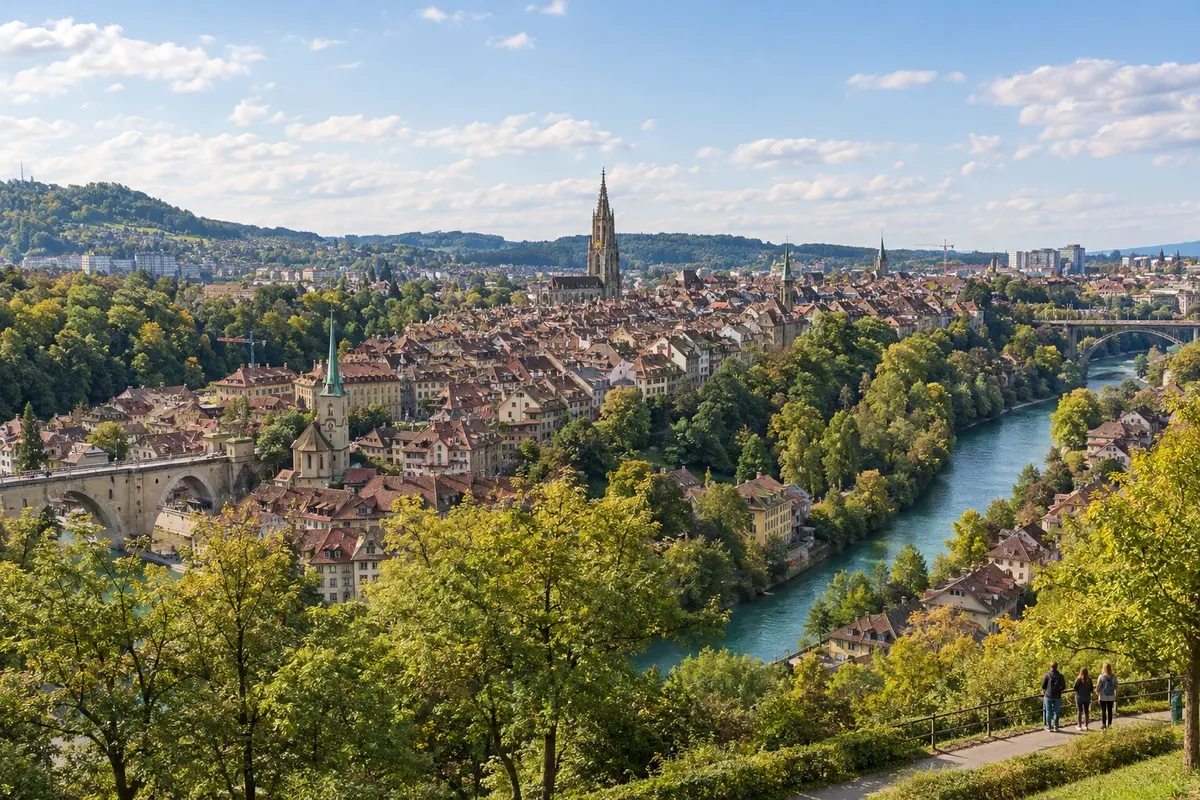
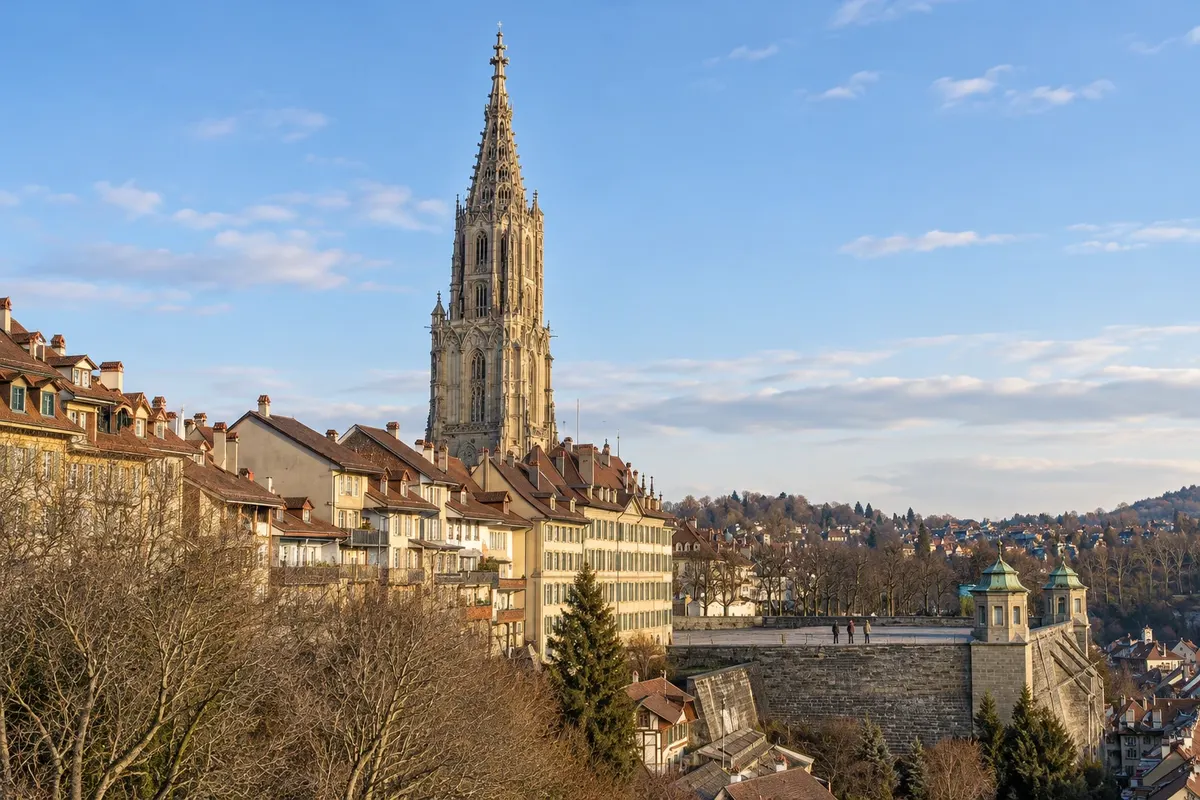
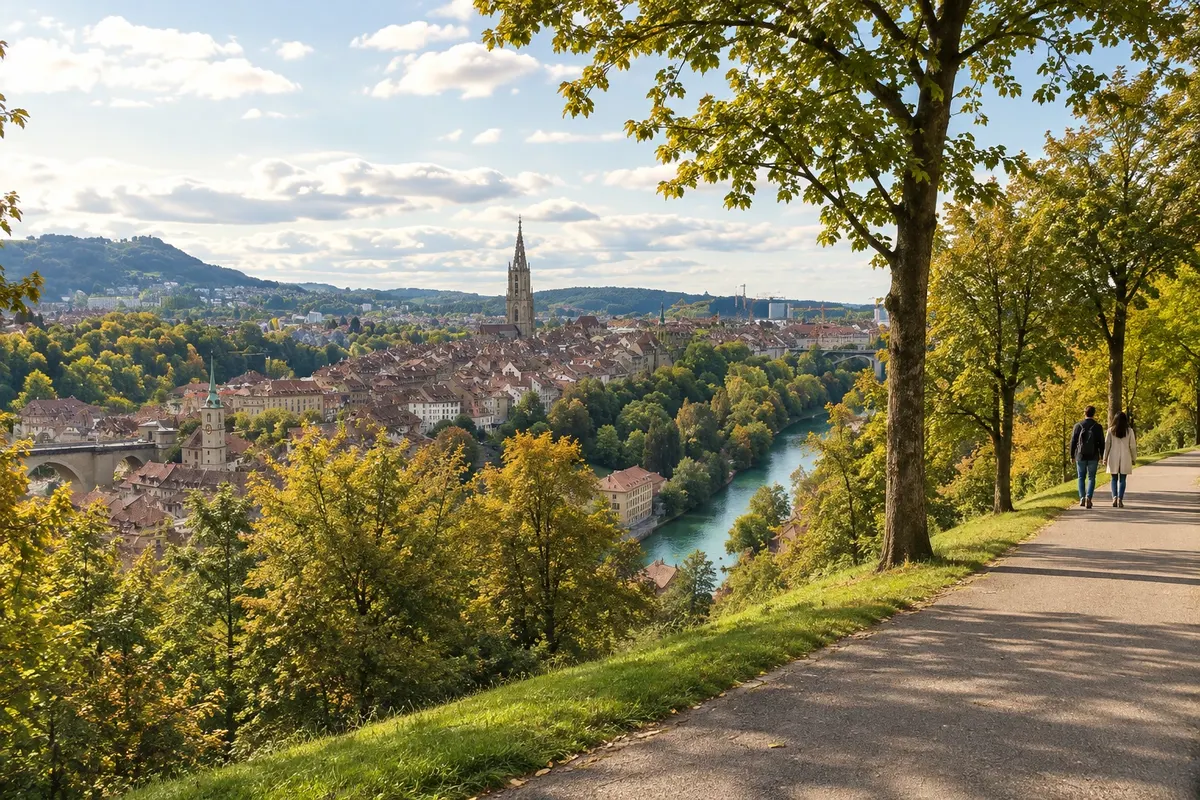
Na fotografiji: Historic centre of Berna seen from the Rosengarten

Illustrative images. The pictures in this guide are illustrations based on the real place, not photographs, and may differ from it.

Na voljo v trgovini Google Play Pošljite svoje fotografije

Spoznajte kraj

Pokrajina, ki jo doživite
v svojem ritmu.

Berna is in the centre-west of the Suíça, between Zurique and Genebra, and is the seat of the country's government and parliament. Officially, the Suíça has no capital: Berna is the federal city, chosen in 1848 to host the federal authorities. In practice, it functions as the capital, with the Palácio Federal perched on the hill above the river.

The city was founded in 1191 by Duke Bertoldo V of Zähringen, on a peninsula surrounded by the Aare river on three sides. After the fire of 1405, wooden houses were replaced by sandstone buildings. The historic centre, the Altstadt, has been a UNESCO World Heritage Site since 1983, with covered arcaded streets, Renaissance fountains with colourful figures, the Zytglogge clock tower and the Gothic cathedral, the Berner Münster.

Outside the medieval core, Berna has museums of art and history. The Zentrum Paul Klee, by Renzo Piano, houses works by the painter who grew up in the city, and Albert Einstein lived there when he formulated the special theory of relativity. The bear, the city's symbol, appears on the coat of arms, in the fountains and at the Bärenpark on the riverbank.

The language is German, and in the streets you hear the Bernese dialect, a form of Swiss German. English is widely spoken in tourism. The currency is the franco suíço. Berna is a railway hub: Zurique, Basileia, Lucerna and Interlaken are about an hour away by train, which makes the city a base for exploring the centre of the country.

Delite: WhatsApp

Kje prenočiti

V vodniku še ni nastanitev – Bern.

Kje jesti

V vodniku še ni restavracij – Bern.

Poznate dobro možnost? Priporočite nam jo

Vaše potovanje

kako do tja · koliko dni · načrt poti · vprašanja

Delite svoja popotniška doživetja s fotografijami Pošljite fotografije vsakega kraja, ki ste ga obiskali. Največje število fotografij na kraj: 5.

Kako do tja:Bern

✈ Aeroporto de Zurique (ZRH), kraj: Kloten· 125 km do cilja (Bern)

✈ Bern Airport (BRN), kraj: Belp· 10 km do cilja (Bern)

Confirm before booking. Berna has a small airport in Belp, with few flights.

Doživite kraj

Kaj početi – Bern

Old City of Bern
Bern · Bern · Staro mestno jedro

Old City of Bern

The historic center sits on a peninsula of the Aare, a UNESCO World Heritage site, with streets of sandstone houses, about 6 km of covered arcades, cellars with shops and bars, medieval towers and fountains with 16th-century figures.

Zytglogge
Bern · Bern · Monument

Zytglogge

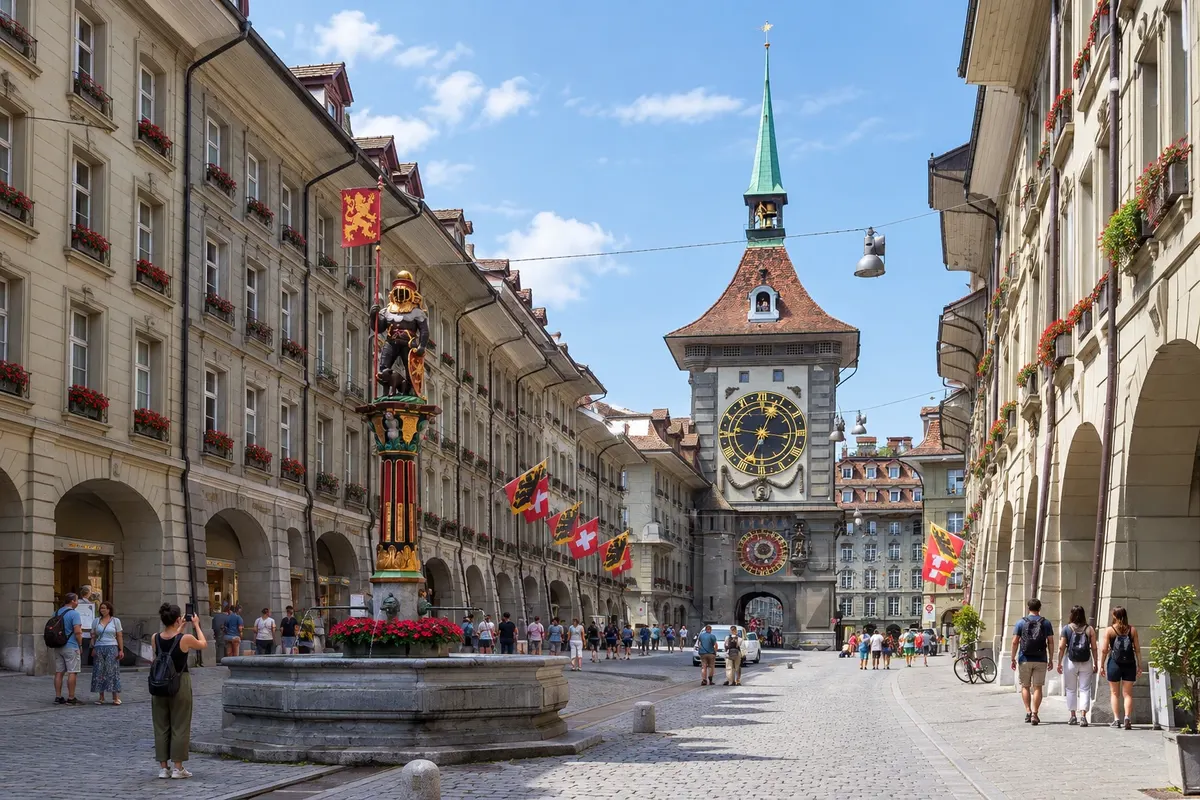
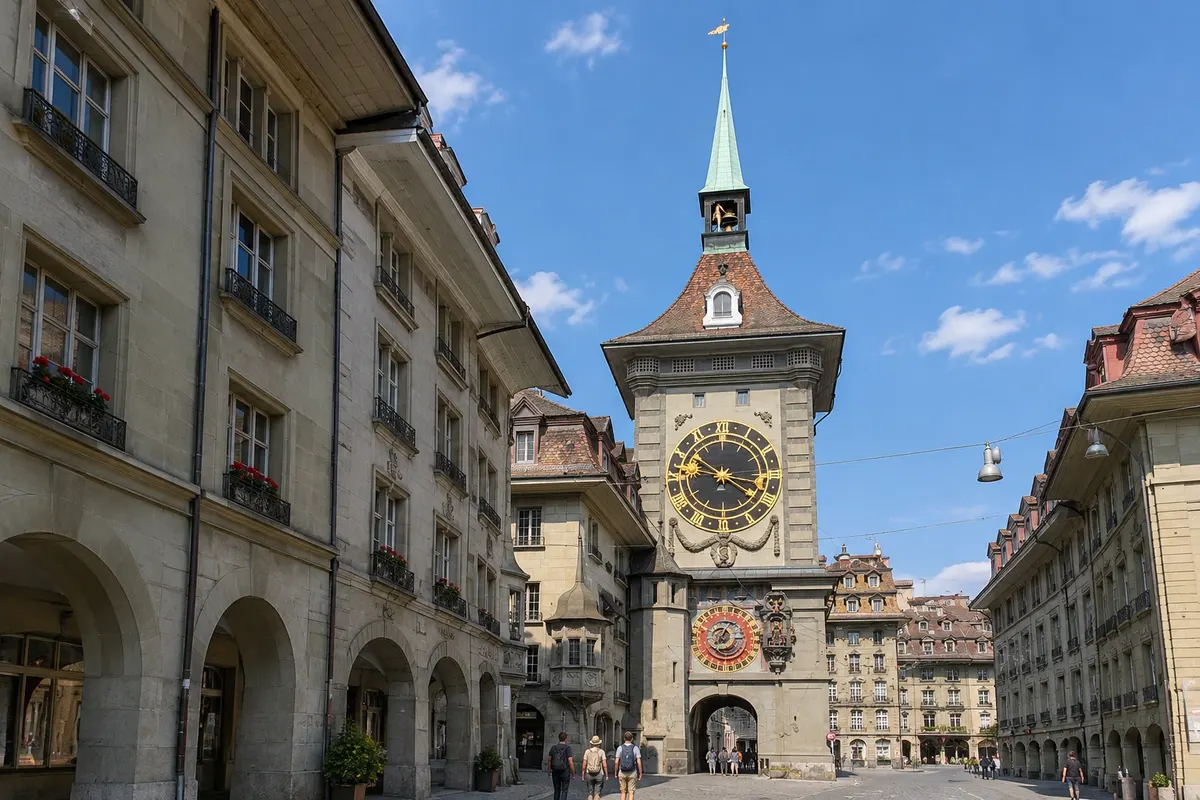
The clock tower in the middle of the Altstadt, a former city gate, featuring a 1530 astronomical clock and a carillon of figures that move every hour: a rooster, a jester, bears and Chronos.

Federal Palace (Bundeshaus)
Bern · Bern · Historic building

Federal Palace (Bundeshaus)

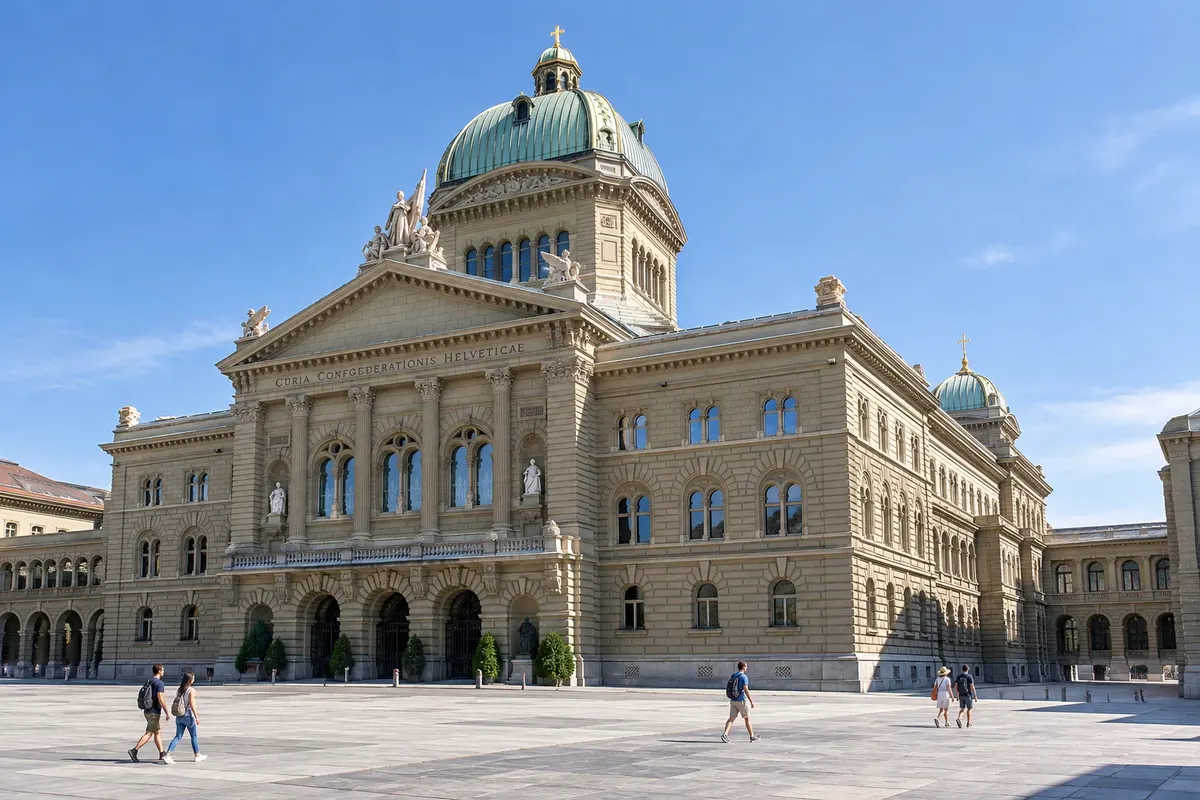
The Federal Palace, seat of the Swiss government and parliament, opened in 1902, with a green dome and a sandstone façade. In front is the Bundesplatz, with 26 water jets and a market on Tuesdays and Saturdays.

Berner Münster
Bern · Bern · Cerkev

Berner Münster

Bern's Gothic cathedral, begun in 1421, with the Last Judgment portal and a tower just over 100 m high. The climb leads to two galleries with views over the Altstadt, the Aare and, on clear days, the Alps.

Bern – prikaži dodatne kraje (11)
Einstein House
Bern · Bern · Muzej

Einstein House

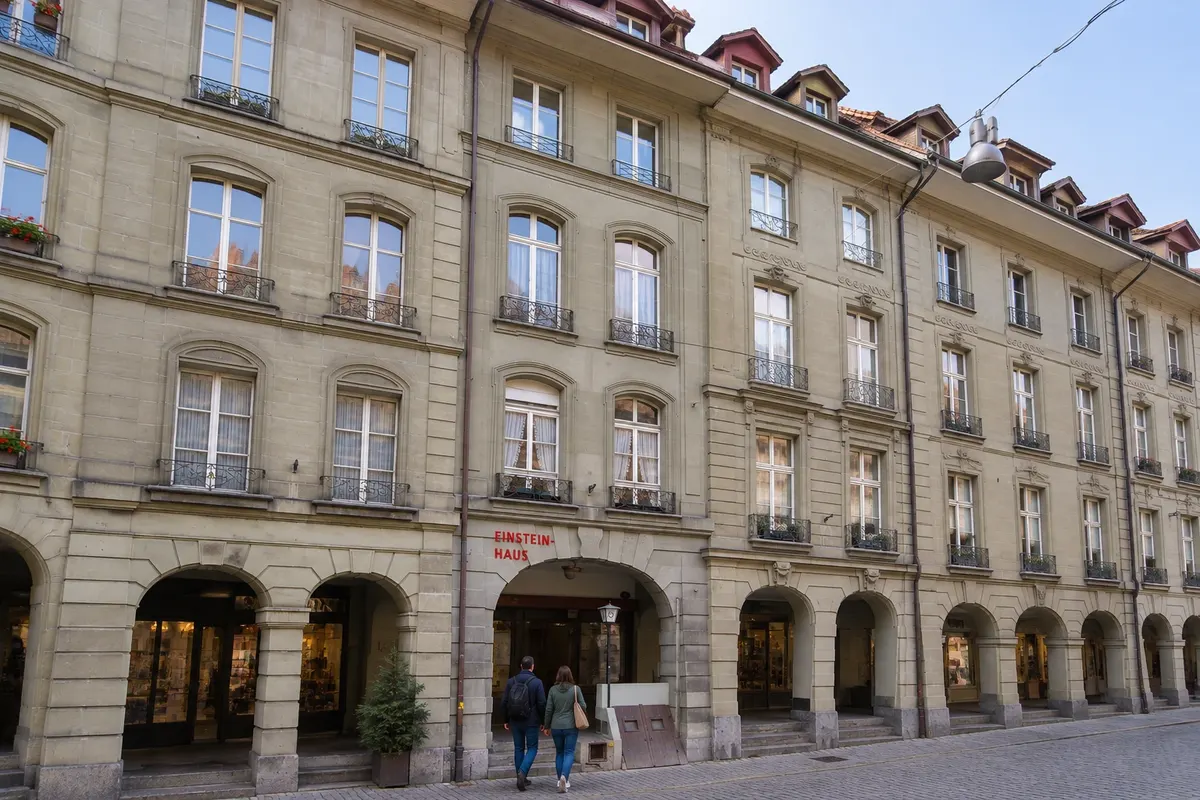
The apartment at Kramgasse 49 where Albert Einstein lived from 1903 to 1905, the years when he published the theory of special relativity. Furnished as it was then, it has an exhibition about the physicist's life on the upper floor.

Kindlifresserbrunnen (Child Eater Fountain)
Bern · Bern · Monument

Kindlifresserbrunnen (Child Eater Fountain)

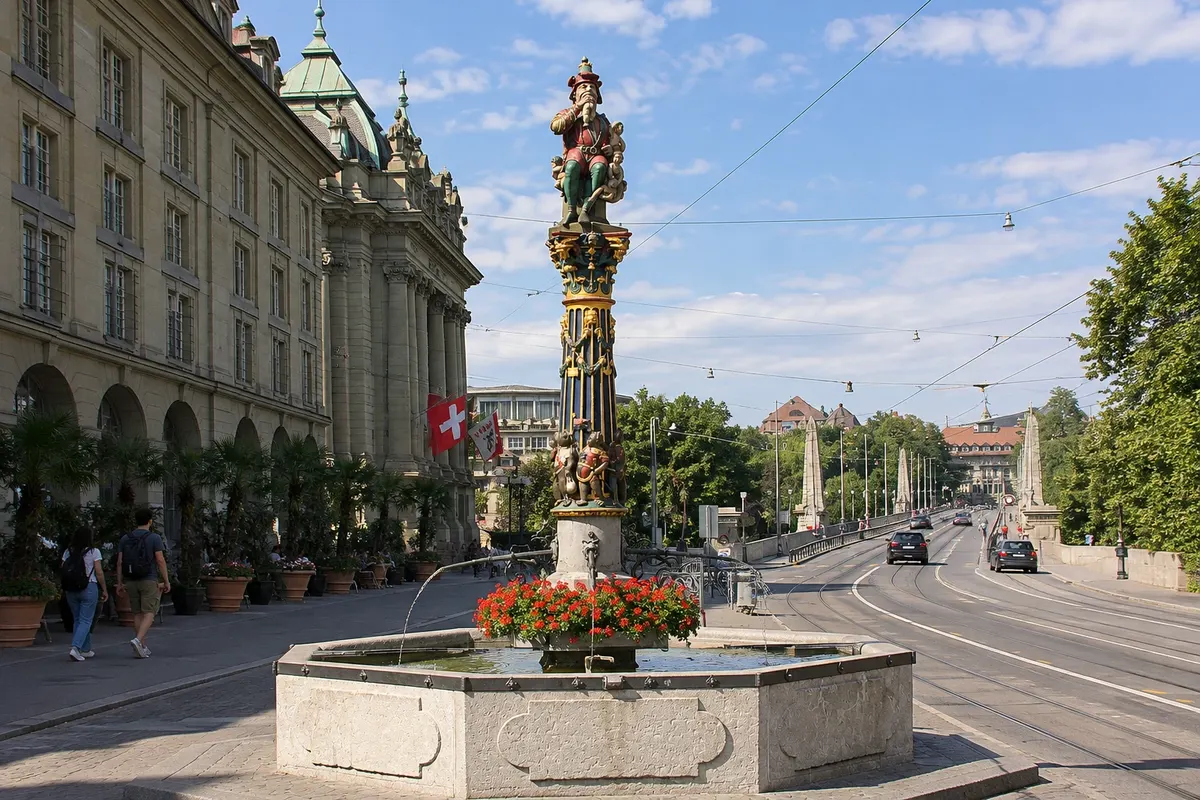
The Child‑Eater fountain, in Kornhausplatz, sculpted in 1545 and 1546. It is part of a group of eleven painted‑figure fountains from the 16th century scattered across the Altstadt.

Bärenpark (Bear Park)
Bern · Bern · Park

Bärenpark (Bear Park)

The bear park on the slope above the Aare, next to the Nydeggbrücke, opened in 2009 next to the old pit. The bears, a symbol of Bern, live in an area with trees, caves and a pond.

Rosengarten (Rose Garden)
Bern · Bern · Garden

Rosengarten (Rose Garden)

A garden on the top of the slope, above the Bärenpark, with about 250 types of roses, irises and rhododendrons, and a viewpoint over the Altstadt’s rooftops, the cathedral and the bends of the Aare.

Matte
Bern · Bern · Neighborhood

Matte

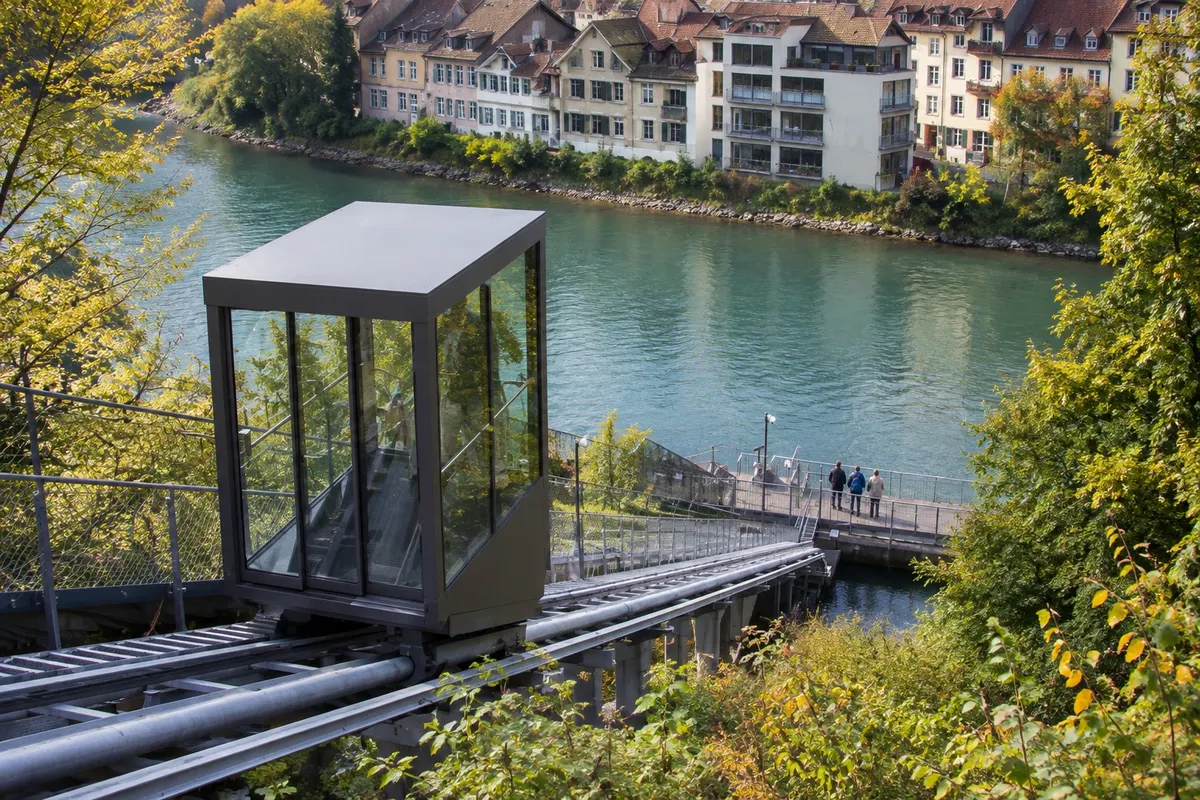
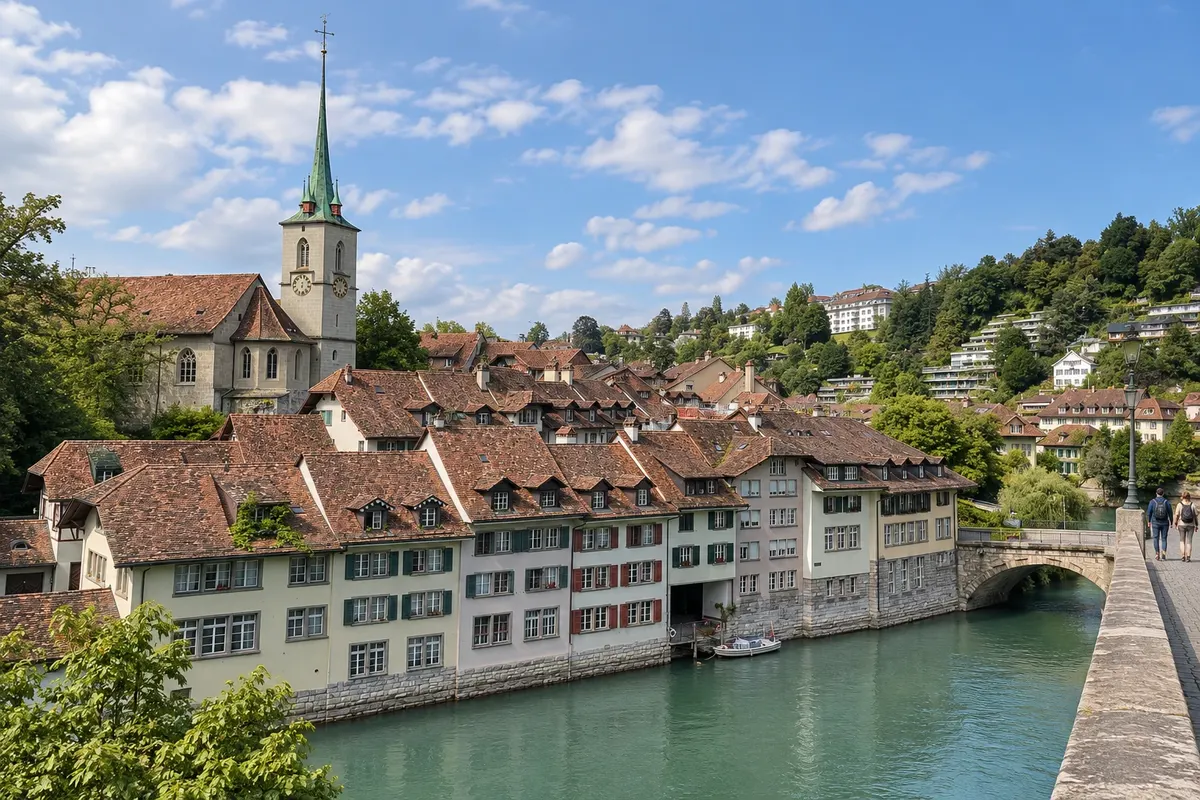
The old neighborhood of craftsmen and boatmen on the Aare’s bank, below the cathedral, with low houses, cafés and studios. The Mattelift, dating from 1897, links the Münsterplattform to the Badgasse.

Marzili (Marzili Bath)
Bern · Bern · Park

Marzili (Marzili Bath)

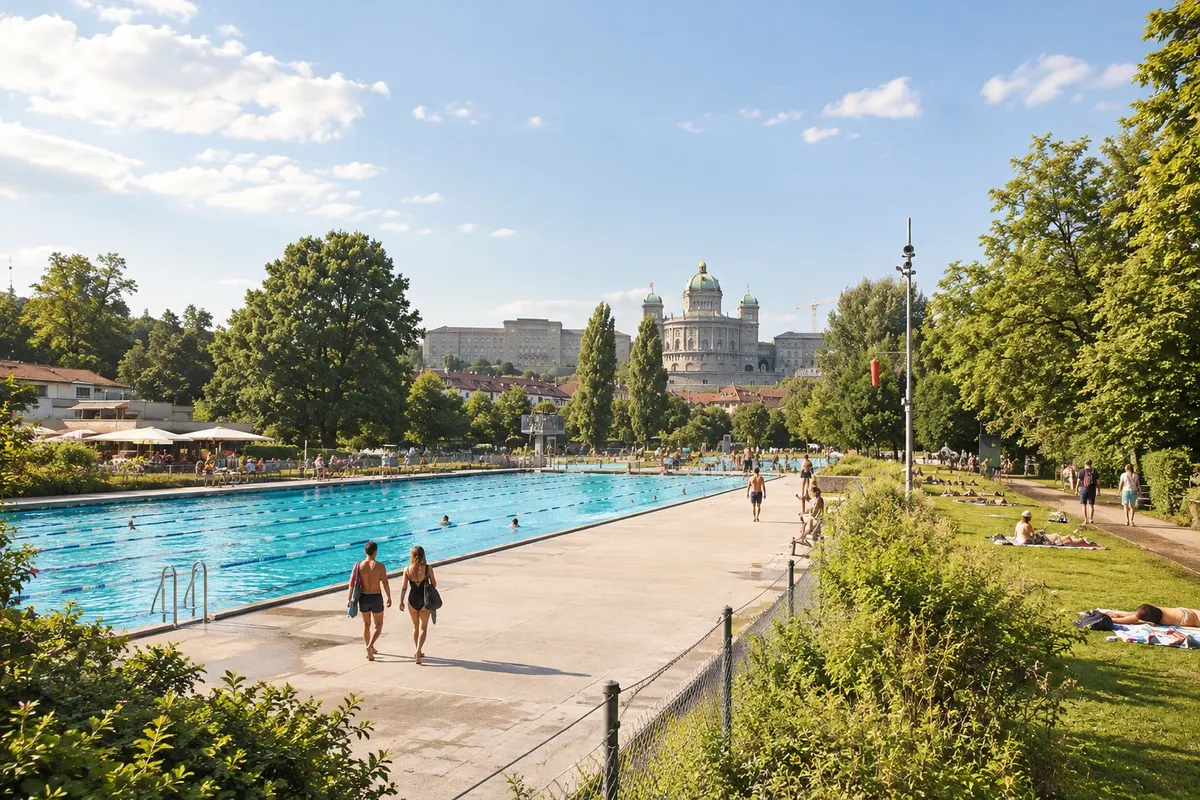
The public swimming facility on the Aare’s bank, just below the Federal Palace, with lawns and pools. In the European summer, locals who are strong swimmers go down the river with the current and exit at the Marzili.

Gurten
Bern · Bern · Razgledišče

Gurten

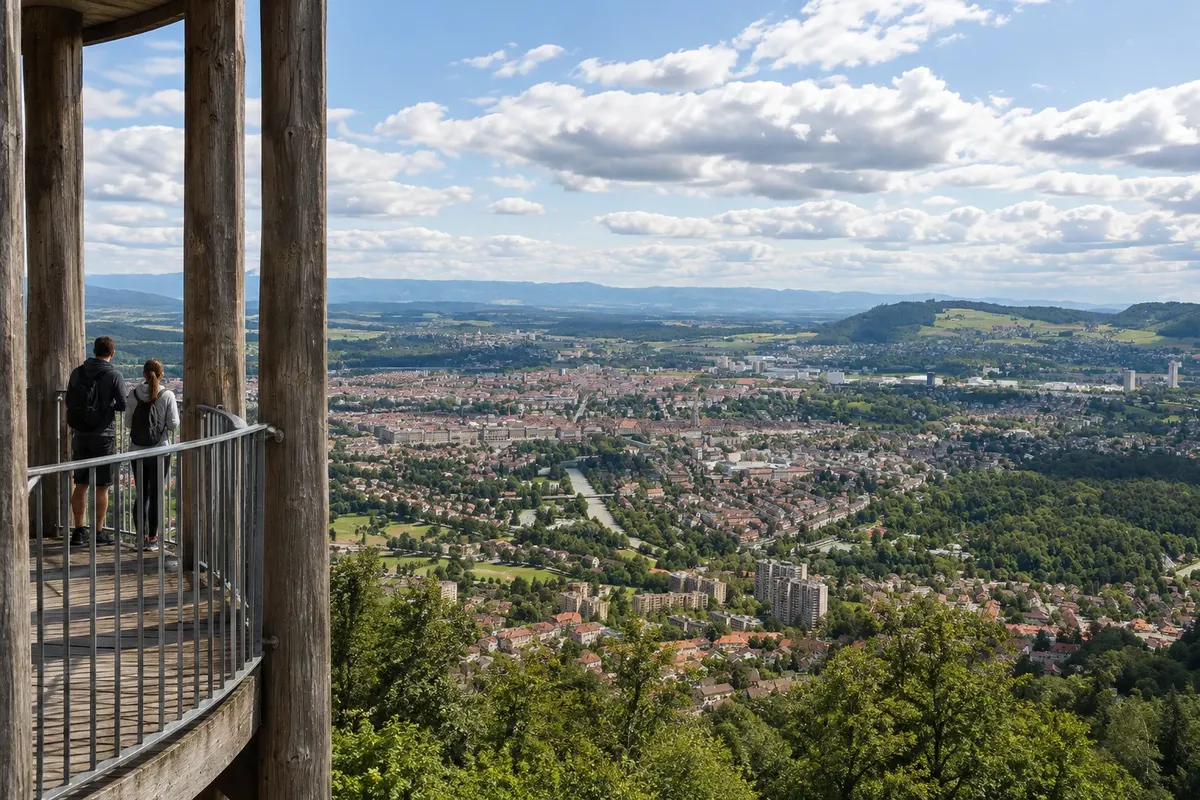
The hill of Berna, at 858 m, to the south of the city, with a funicular since 1899, a wooden observation tower, and a park with playgrounds and trails. On clear days the view reaches the Bernese Alps and the Jura.

Zentrum Paul Klee
Bern · Bern · Muzej

Zentrum Paul Klee

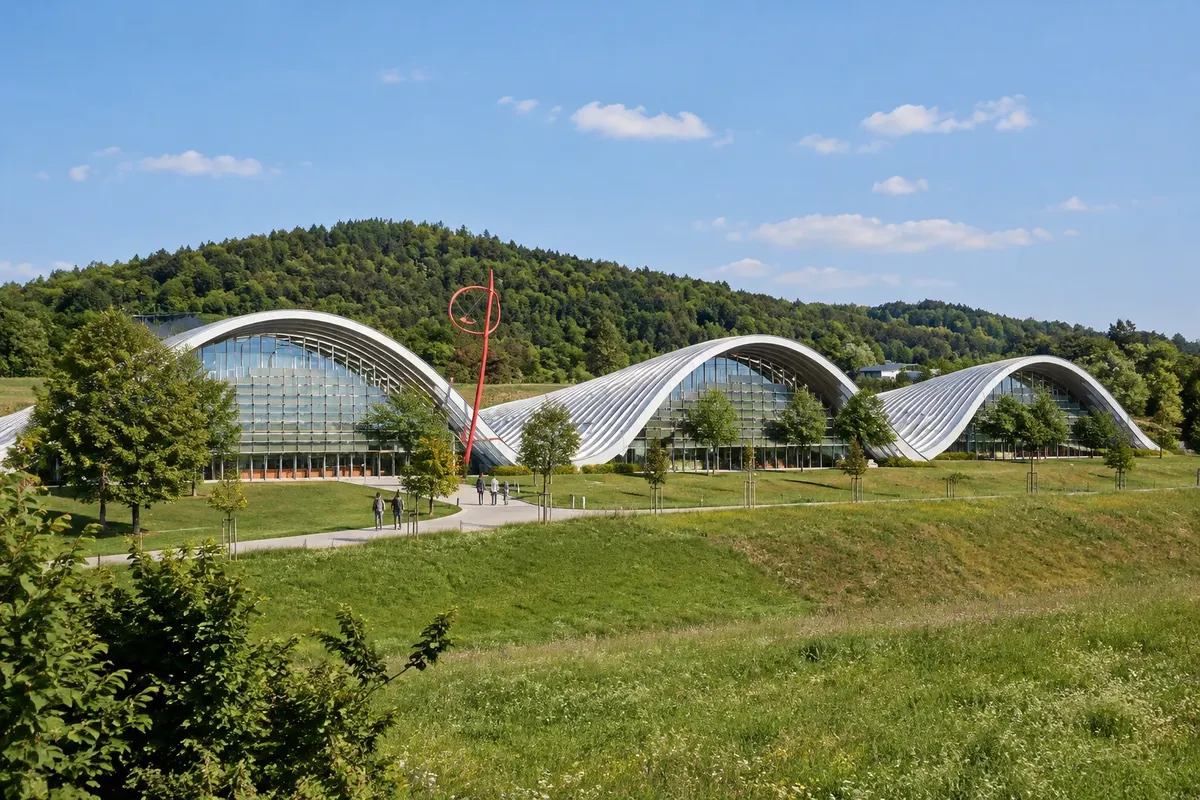
Museum dedicated to Paul Klee, opened in 2005 in a Renzo Piano building shaped like three waves of glass and steel, on the eastern outskirts of Berna. It houses around 4,000 works by the painter.

Kunstmuseum Bern (Bernese Art Museum)
Bern · Bern · Muzej

Kunstmuseum Bern (Bernese Art Museum)

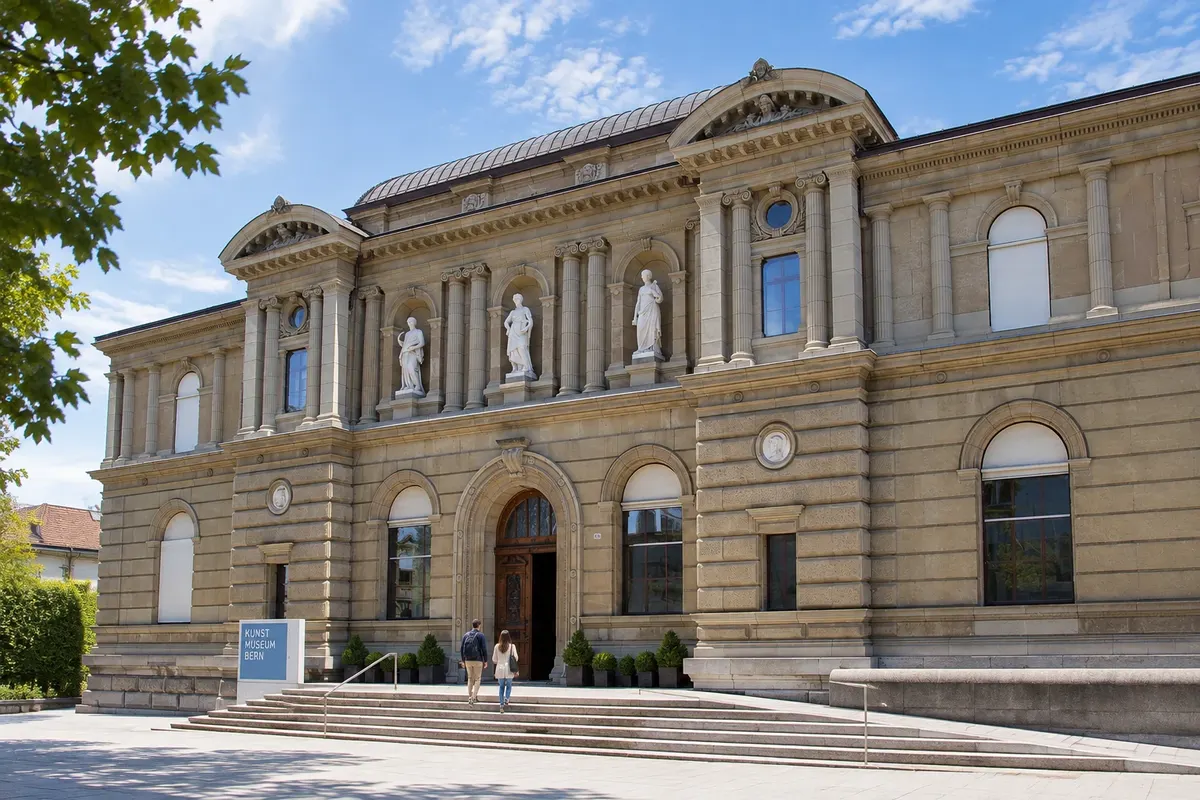
The art museum of Berna, near the station, with a collection that ranges from the Middle Ages to contemporary art: more than 3,000 paintings and sculptures, including works by Hodler, Klee, Picasso and Meret Oppenheim.

Bernisches Historisches Museum (Bern Historical Museum)
Bern · Bern · Muzej

Bernisches Historisches Museum (Bern Historical Museum)

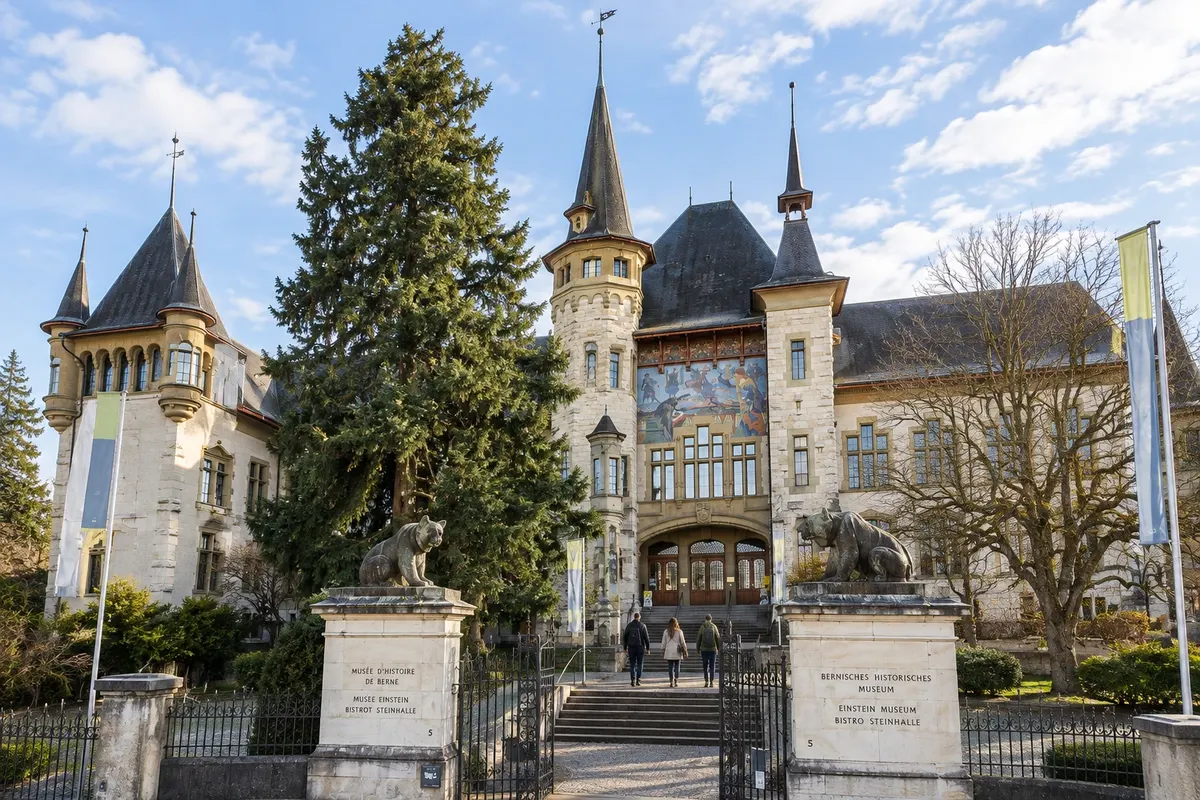
The Bern Historical Museum, in a 1894 building inspired by castles, with about 500,000 objects, from Burgundian tapestries to items from various continents, and the Einstein Museum.

Museum für Kommunikation (Museum of Communication)
Bern · Bern · Muzej

Museum für Kommunikation (Museum of Communication)

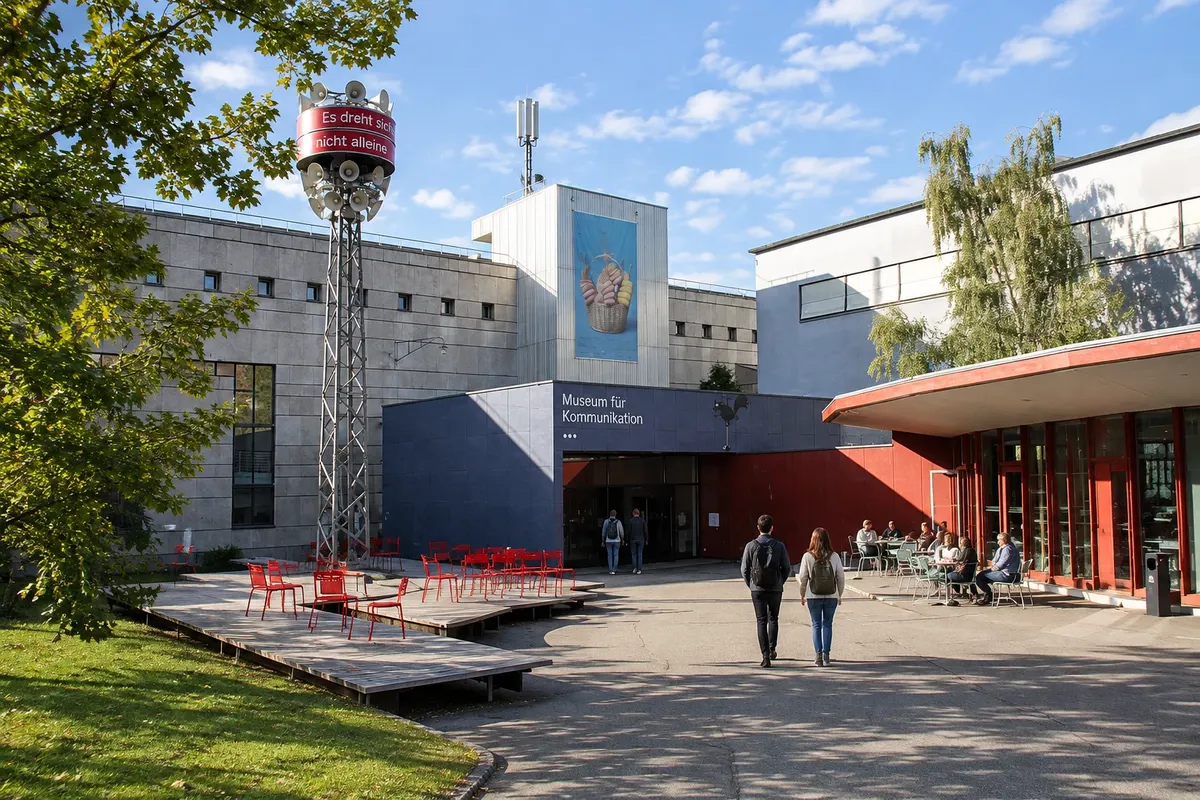
Interactive museum about human communication, from the postal service to the digital age, in the Kirchenfeld museum quarter. The permanent exhibition spans three floors and invites you to touch, test and play.

Kaj izbrati pred odhodom

Izleti – Bern

Izhodišče, trajanje, potek, vključene storitve in okvirna cena vsakega izleta.

Bern Altstadt on foot: arcades, fountains, Kramgasse, Gerechtigkeitsgasse and Nydeggbrücke

Odhod: Bern Bahnhof (Bern central station) On foot, on your own or with a guided tour Približno 3 ure Dopoldne ali popoldne easy (cobblestone streets, gentle downhill)

Bern (Berne) was founded in 1191 on a bend of the Aare river, and the Altstadt (old town) was added to the UNESCO World Heritage list in 1983. It comprises about 6 km of sandstone houses and Lauben, the covered arcades that run along the sidewalks and let you walk the entire center without getting wet. The natural route descends in a straight line from the station to the river. Start on Spitalgasse, with the Pfeiferbrunnen (piper fountain), and continue along Marktgasse. At Kornhausplatz you’ll find the Kindlifresserbrunnen, the 16th‑century ogre fountain that eats children. Shortly after comes the Zytglogge, the clock tower. On Kramgasse are the Zähringerbrunnen, with the bear, the city symbol, and the Simsonbrunnen, showing Samson defeating the lion. The street continues as Gerechtigkeitsgasse, with the Gerechtigkeitsbrunnen (Fountain of Justice), down to the Nydeggbrücke, the bridge over the Aare that leads to the Bärenpark. Bern has more than 100 historic fountains in the old town; 11 of them have figures, eight by the sculptor Hans Gieng, who worked in the city in the 1540s. Also notice the cellar doors opening onto the sidewalk: many shops, bars and small theatres operate in those cellars.

Kraji na poti: Altstadt von Bern, Spitalgasse, Pfeiferbrunnen, Marktgasse, Kornhausplatz, Kindlifresserbrunnen, Zytglogge, Kramgasse, Zähringerbrunnen, Simsonbrunnen, Gerechtigkeitsgasse, Gerechtigkeitsbrunnen, Nydeggbrücke.

Vključuje: Walking the Altstadt and seeing the fountains is free. Bern Welcome, the city’s tourist office, sells guided walking tours for an additional fee; check the current schedule.

Nasvet: The water from Bern’s fountains is drinkable: bring a bottle and refill it along the way. Walk down one sidewalk and return along the other, because the arcades on both sides have different shops. On rainy days, the route is mostly covered.

Najboljši čas za obisk: All year. During Advent, Christmas markets are held at Waisenhausplatz and Münsterplatz.

Zytglogge: the astronomical clock show and the guided tower visit

Odhod: Zytglogge, in the center of the Altstadt On foot; the climb to the tower is only possible with a guided tour about 1 hour (guided tour) Dopoldne ali popoldne moderate (130 steps, no elevator)

The Zytglogge is the medieval tower that marks the center of the Altstadt. It has existed since the 13th century and became a clock tower after a fire in 1405. The clock mechanism dates from 1530. On the Kramgasse side is the astronomical clock, with an astrolabe that shows the month, the moon phases, the zodiac signs, and sunrise and sunset. The show begins about 4 minutes before each hour: a gilded rooster crows, a jester rings the bells, bears parade, Cronus turns the hourglass, and above, the figure of Hans von Thann strikes the hour bell. To see inside, only with the Bern Welcome guided tour: the group climbs 130 steps to the mechanism room, which still drives the clock, and reaches a viewpoint over the Altstadt rooftops, with the Bernese Alps in the background when the weather is clear. Groups have a maximum of 19 people.

Kraji na poti: Zytglogge, Kramgasse, Marktgasse.

Vključuje: Watching the clock show from the street is free. The guided tower visit is paid separately and requires a reservation; check the current price list and the language for each time slot.

Nasvet: Arrive a few minutes before the hour and wait on the Kramgasse, facing the astronomical clock. The tower visit is not wheelchair accessible.

Najboljši čas za obisk: Year-round; public guided tours are scheduled on various dates throughout the year.

Bundeshaus: guided tour of the Federal Palace, Bundesplatz and Bundesterrasse

Odhod: Bundesplatz, in central Bern Guided tour with online reservation; on foot from the station about 1½ hours, including the square and the terrace Dopoldne ali popoldne Lahko

Bern is the Bundesstadt, the federal city of Switzerland, and the Bundeshaus (Federal Palace) is the seat of government and parliament. The building, designed by Hans Wilhelm Auer, opened in 1902. The guided tour lasts up to 60 minutes and passes through the dome foyer, the National Council and Council of States chambers, and the Wandelhalle, the hall where parliamentarians talk between votes; the guide explains how the Swiss political system works. Tours for solo visitors or small groups run Tuesday through Saturday in German and French, and on Saturdays also in Italian and English; check the language when booking. During parliamentary sessions, which last three weeks and typically occur in March, May or June, September and October, and November or December, guided tours do not run; during those periods you can watch debates from the public gallery with a reservation. In front is the Bundesplatz, with 26 water jets, one for each canton, that reach up to 7 meters. Behind the building, the Bundesterrasse overlooks the Aare and, in clear weather, the Alps.

Kraji na poti: Bundeshaus, Bundesplatz, Bundesterrasse.

Vključuje: The guided tour is free but requires online reservation. Visitors aged 16 or over must leave an official photo ID (for Brazilians, the passport) with security.

Nasvet: Arrive at the visitors’ entrance at least 20 minutes early, with your ticket on your phone and your passport. On Tuesday and Saturday mornings there is a market on Bundesplatz and the surrounding streets. From the terrace the Marzilibahn funicular descends to the Marzili quarter on the banks of the Aare.

Najboljši čas za obisk: Outside parliamentary sessions, from Tuesday to Saturday. The jets of water on the square are more popular in summer.

Berner Münster: the Gothic cathedral and the 100-meter tower climb

Odhod: Münsterplatz, in the Altstadt On foot; ascent to the tower by stairs around 1 hour and a half Dopoldne ali popoldne moderate to difficult (up to 344 steps)

The Berner Münster is Bern’s cathedral, a late Gothic three-aisled basilica. Construction began in 1421 and took centuries: the tower was only completed in 1893 and stands 100.6 meters tall. Before entering, pause at the main portal: the Last Judgment relief features more than 200 stone figures and was the only image in the church to survive the iconoclastic destructions of the Protestant Reformation. Inside, the nave is austere, as in Reformed churches. The tower climb is by stairs, with no elevator, and uses two separate staircases—one for ascending and one for descending. The first gallery, square, is at 46 meters after 254 steps; the second, octagonal, is at 64 meters after 344 steps. From the top you can see the entire Altstadt inside the curve of the Aare, the red roofs and, in clear weather, the Bernese Alps. Beside the cathedral, the Münsterplattform is a terrace with chestnut trees and benches overlooking the river and the Matte neighborhood.

Kraji na poti: Berner Münster, Münsterplatz, Münsterplattform.

Vključuje: Entry to the cathedral is free. The tower ascent requires a ticket, purchased at the cathedral information desk; check the current price list.

Nasvet: Go up on a clear day to see the Alps. If you don’t want to climb all 344 steps you can stop at the first gallery. Backpacks and suitcases can be left at the information desk.

Najboljši čas za obisk: Year-round; the tower is open every day, with shorter hours in winter.

Einsteinhaus: the apartment where Einstein lived in Bern

Odhod: Kramgasse 49, in the Altstadt Peš Približno 1 uro Dopoldne ali popoldne easy (spiral staircase)

Albert Einstein rented an apartment on the second floor of Kramgasse No. 49 from 1903 to 1905, the years he worked at the Bern patent office. It was in Bern that he wrote the 1905 papers, including the one on special relativity. The apartment has been restored with period furnishings and shows how Einstein, his wife Mileva, and their son Hans Albert lived. The spiral staircase is original, and the ascent has a ceiling painted with the Milky Way. On the third floor there is an exhibition about the life and work of the physicist and a video of about 20 minutes. The space is small and the visit is brief, so it pairs well with a walk through the Altstadt or the Einstein Museum at the Bernisches Historisches Museum, which tells the story in much greater detail.

Kraji na poti: Einsteinhaus, Kramgasse.

Vključuje: There is an admission fee, payable at the entrance; check the current rate. The house usually closes from mid-December to early February.

Nasvet: From the station, follow the arcades on the right side of the street toward the Zytglogge and continue along Kramgasse. The apartment is narrow; on busy days, expect to wait a few minutes on the stairwell.

Najboljši čas za obisk: From February to mid-December, when the house is open.

Bärenpark and Rosengarten: Bern’s bears and the Altstadt view

Odhod: Nydeggbrücke, at the end of the Altstadt On foot, or by bus from the central station Približno 2 uri Popoldne lahko (kratek, strm vzpon)

The bear is the symbol of Bern, and the city has kept bears near the center for centuries. The Bärenpark, opened in 2009, is an area of about 6,000 m² on the slope by the Aare, just after the Nydeggbrücke. From the old Bärengraben, the historic bear pit, the large pit remains connected to the park. Visitors walk the upper paths and view the bears from a distance; at some times they hide in the vegetation. From the park a steep trail climbs in 10 to 15 minutes to the Rosengarten, a public garden with about 220 varieties of roses and a view over the Altstadt: the roofs, the tower of the Berner Münster and the bend in the river. In spring, the cherry trees bloom above the old center. There is a restaurant in the garden and a kiosk in summer.

Kraji na poti: Bärenpark, Bärengraben, Nydeggbrücke, Rosengarten.

Vključuje: Entry to the Bärenpark and the Rosengarten is free.

Nasvet: Do the route in reverse if you prefer not to climb: take the bus to the Rosengarten and walk down to the Bärenpark. The trail becomes slippery when it rains. Late afternoon gives the most beautiful light over the Altstadt.

Najboljši čas za obisk: All year. The roses typically bloom from early summer (June) onward; the cherry trees in spring.

Prikaži dodatne izlete (13)

Münsterplattform, Mattelift and the Matte neighborhood, on the Aare riverside

Odhod: Münsterplattform, next to the Berner Münster On foot and by the Mattelift (public elevator) around 1 hour and a half Dopoldne ali popoldne Lahko

The Münsterplattform, called Pläfe by locals, is the former cathedral forecourt transformed into a terrace with chestnut trees and benches, high above the river. From the wall you can see the Aare, the weir and the roofs of the Matte neighborhood below. To go down, use the Mattelift, the public elevator that has operated since 1896 and takes about 30 seconds from the terrace to the Badgasse, already in the Matte. The Matte is Bern’s lower neighborhood between the slope and the river, with narrow, quiet streets, old houses and some restaurants. Walk along the riverbank downstream and you’ll reach the Nydeggbrücke and the Bärenpark; to return to the center, climb up the Nydeggstalden or take the Mattelift again.

Kraji na poti: Münsterplattform, Mattelift, Matte, Aare.

Vključuje: The terrace and the neighborhood are free. The Mattelift charges a small fare per trip; check the current tariff table.

Nasvet: Combine it with the tower of the Berner Münster and the Bärenpark: all three are on the same side of the Altstadt. In summer, the Aare bank at the Matte is a good place to watch swimmers going down the river.

Najboljši čas za obisk: All year; in summer the terrace gets crowded at late afternoon.

Bathing in the Aare and Marzili pools

Odhod: Marzili, below the Bundeshaus On foot from the station or via the Marzilibahn funicular Približno 3 ure Popoldne requires strong swimming ability (strong current)

In summer, swimming in the Aare is a habit of Bern residents. Marzili, a swimming-area on the riverbank just below the Bundeshaus, about a 10-minute walk from the station, has lawns for sunbathing, a 50-meter pool, a diving-pool with trampolines and a children’s pool, plus a women-only area. The local custom is this: walk upstream along the riverside trail to the Eichholz, enter the water and let the current carry you back to Marzili. The water is cold and the current can reach about 3 meters per second, so the city recommends river bathing only for good swimmers. Exit at the marked Marzili points, well before the Dalmazibrücke. If you don’t feel safe, stay in the pools, which are separated from the river. To return to the center, the Marzilibahn funicular climbs up to the level of the Bundeshaus.

Kraji na poti: Marzili, Aare, Eichholz, Dalmazilibahn.

Vključuje: Entry to the Marzili pools and bathing in the river are free. Changing cabins and lockers are charged separately.

Nasvet: Before entering the river, read the guidance from the city of Bern (Aare you safe campaign) and check the day’s current. Do not swim alone and do not enter after drinking. To prevent clothes and your phone from floating away, locals use a waterproof bag.

Najboljši čas za obisk: The pool season typically runs from late May to mid‑September, when the water rises above 15 °C.

Gurten: funicular to the 858-meter hill with views over Bern and the Alps

Odhod: Wabern, funicular station (Gurtenbahn) Tram 9 from the main station and Gurtenbahn funicular Približno 3 ure Popoldne Lahko

The Gurten is Bern’s hill, at 858 meters, south of the city. Tram 9 takes about 9 minutes from the main station to Wabern, where the Gurtenbahn funicular departs; it has operated since 1899 and climbs in a few minutes to Gurten Kulm. Up there is a 22-meter wooden tower with 121 steps, and the 360-degree view includes the city of Bern, the Jura range and, in clear weather, the Bernese Alps with the Eiger, the Mönch and the Jungfrau. The summit is a park: there is a play area with a little train, a 300-meter marble run, a 500-meter slide for children from age 3 accompanied by an adult, a small summer pond, barbecue facilities and restaurants. Walkers can descend on foot down the slope to Wabern.

Kraji na poti: Gurten, Gurtenbahn, Wabern, Gurten Kulm.

Vključuje: Climbing the viewing tower is free. The funicular has its own fare, paid separately; check the current price list.

Nasvet: Go up on a clear day in the late afternoon to see the Alps in the sunset light. In mid-July the Gurtenfestival, a music festival, takes place on the summit; on those days access arrangements change.

Najboljši čas za obisk: Year-round; on a clear day the view of the Alps is more open.

Zentrum Paul Klee: Renzo Piano’s museum housing Klee’s work

Odhod: Bern main station Bus 12 to the Zentrum Paul Klee stop (about 13 minutes) Približno 3 ure Dopoldne ali popoldne Lahko

Paul Klee grew up in Bern, and the Zentrum Paul Klee, opened in 2005 in the Schosshalde district, holds about 4,000 of his works: paintings, watercolors and drawings. Because the collection is large and works on paper are light-sensitive, between 120 and 150 are shown at a time in exhibitions that change throughout the year. The Renzo Piano building has three large waves of glass and steel that echo the surrounding hills. In addition to exhibition rooms, there is Creaviva, a studio where children from age 4 and adults make their own art, with workshops and an open studio several times a day. Outside, the Paths to Klee trails pass by the painter’s childhood home, the quarries that inspired him and his grave in the Schosshalde cemetery.

Kraji na poti: Zentrum Paul Klee, Schosshalde, Creaviva.

Vključuje: There is an entrance fee, paid at the entrance; check the current price list. Creaviva workshops have separate fees.

Nasvet: The museum is closed on Mondays and on December 24 and 25. Check in advance which exhibition is on display. The Bus 12 stop is on the same line that serves the Bärenpark.

Najboljši čas za obisk: All year; a good option for a rainy day.

Kunstmuseum Bern: from Fra Angelico to Hodler, Klee and Picasso

Odhod: Hodlerstrasse, a few minutes' walk from the central station Peš Približno 2 uri Dopoldne ali popoldne Lahko

The Kunstmuseum Bern is the capital’s fine arts museum, opened in 1879. The holdings include more than 3,000 paintings and sculptures and about 48,000 drawings, prints, photographs, videos and films. It ranges from late Medieval Italian art, with Duccio and Fra Angelico, to the Swiss Renaissance of Niklaus Manuel; it covers Swiss painters of the 19th and 20th centuries such as Albert Anker, Ferdinand Hodler and Cuno Amiet, and reaches modern art with Picasso, Kandinsky, Paul Klee and Meret Oppenheim. There are also works by Jackson Pollock, Franz Gertsch and Markus Raetz. The museum stages temporary exhibitions throughout the year, and parts of the permanent collection may be off display during those periods. If you like Klee, the full visit is at the Zentrum Paul Klee.

Kraji na poti: Kunstmuseum Bern, Hodlerstrasse.

Vključuje: There is an admission fee, paid at the entrance; temporary exhibitions may have a separate fee. Check the current price list.

Nasvet: The museum is closed on Mondays and stays open later one weekday. It is five minutes from the station: you can fit it into your arrival or departure day.

Najboljši čas za obisk: All year; a good option for a rainy day.

Bernisches Historisches Museum and Einstein Museum, at Helvetiaplatz

Odhod: Helvetiaplatz, on the far side of the Kirchenfeldbrücke On foot via the Kirchenfeldbrücke or by tram from the station Približno 3 ure Dopoldne ali popoldne Lahko

The Bernisches Historisches Museum occupies a 1894 building by architect André Lambert, inspired by 15th–16th century castles; above the entrance is the glass mosaic The Age of History, from 1900. The collection comprises about 500,000 items. Among the best known are the tapestries and other objects taken from the camp of Charles the Bold, Duke of Burgundy, after the Battle of Nancy in 1477, and the Muri group, six Gallo‑Roman bronze figurines. In the same building is the Einstein Museum, which presents Albert Einstein’s life and work with documents, objects and films, and explains his ideas for non‑specialists. Helvetiaplatz is in the museum quarter, next to the Museum für Kommunikation.

Kraji na poti: Bernisches Historisches Museum, Einstein Museum, Helvetiaplatz, Kirchenfeldbrücke.

Vključuje: There is an admission fee, paid at the entrance; the Einsteinhaus on Kramgasse charges separately. Check the current price list.

Nasvet: Allow time: many people visit only the Einstein Museum and need to return for the rest of the collection. From the Kirchenfeldbrücke, the bridge that links the Altstadt to Helvetiaplatz, you can see the Aare and the Bundeshaus.

Najboljši čas za obisk: All year; a good option for a rainy day.

Museum für Kommunikation: interactive communication museum

Odhod: Helvetiastrasse, in the museum quarter On foot via the Kirchenfeldbrücke or by tram from the station Približno 2 uri Dopoldne ali popoldne Lahko

The Museum für Kommunikation tells the story of communication, from fire signals to cell phones and electronic implants, in a permanent exhibition of about 2,000 m² across three floors. The idea is to let you touch everything: there are film karaoke stations, a firewall game and a data octopus, among others. Instead of guards, the museum has communicators—staff who talk with visitors about the topics in the rooms and lead public guided tours of 1 to 1.5 hours. The permanent exhibition takes 1 to 2 hours. It’s a museum that works well for families with children and for rainy days, and it’s a few steps from the Bernisches Historisches Museum.

Kraji na poti: Museum für Kommunikation, Helvetiastrasse, Helvetiaplatz.

Vključuje: There is an entrance fee, paid at the entrance; check the current price list. There are tours for children aged 4 to 8 years.

Nasvet: The museum is closed on Mondays, on August 1 and on December 25. Combine it with the Historisches Museum on the same day.

Najboljši čas za obisk: All year; a good option for a rainy day.

Round-trip excursion to Thun and Spiez, with a boat on the Thunersee

Odhod: Bern Bahnhof Train to Thun (about 20 minutes) and boat on the Thunersee about 8 hours Ves dan Lahko

Thun is located where the Aare leaves the Thunersee (Lake Thun), about a 20-minute train ride from Bern. Thun’s Altstadt features the Obere Hauptgasse, a street with raised sidewalks above the shops, several bridges over the river and, above them, Schloss Thun, a castle built between 1180 and 1190 by Duke Berthold V of Zähringen. The castle museum occupies five floors of the tower and covers roughly 4,000 years of regional history. Boats for the Thunersee depart from the quay near the station. The lake is 17.5 km long and has five historic castles along its shores; the boat stops at Hilterfingen, Oberhofen, Spiez and other villages up to Interlaken West. The full line, from Thun to Interlaken West, takes about 2 hours 10 minutes. A common option is to travel by boat to Spiez, with its castle and bayfront vineyards, and return to Bern by train in about 30 minutes.

Kraji na poti: Thun, Schloss Thun, Obere Hauptgasse, Thunersee, Oberhofen, Spiez.

Vključuje: The boat and the castle museum are paid separately; check the current price list. The Thunersee boats are included in tourist transport passes.

Nasvet: The Schloss Thun museum usually opens daily from February to October and only on Sundays for the rest of the year. In summer and between Christmas and New Year there may be steam trips on the Blümlisalp. Check the boat timetable, which is more spaced out outside summer.

Najboljši čas za obisk: From May to September, when boats run more frequently; boats operate year-round.

Round-trip to Interlaken: Höhematte and funicular up to Harder Kulm (1,322 m)

Odhod: Bern Bahnhof Train to Interlaken Ost (about 55 minutes) and Harderbahn funicular about 7 hours Ves dan easy (altitude 1,322 m)

Interlaken lies between two lakes, the Thunersee and the Brienzersee, and is the gateway to the Jungfrau region in the Berner Oberland. From Bern, the train takes about 55 minutes to Interlaken Ost. In the town center is the Höhematte, a large lawn from which you can see paragliders landing with the Jungfrau massif in the background. Near Interlaken Ost station departs the Harderbahn, the funicular that climbs 755 meters in under 10 minutes, with an average gradient of 64%, up to Harder Kulm at 1,322 meters. Up there, the Two Lakes Bridge, a glassed viewing platform, shows both lakes at once and, in clear weather, the Eiger, the Mönch and the Jungfrau. On the return you can take the boat from Interlaken West across the Thunersee to Spiez or Thun and continue by train to Bern. To reach the higher peaks such as Jungfraujoch, Schilthorn or Grindelwald, it’s worth staying overnight in the Interlaken area.

Kraji na poti: Interlaken, Höhematte, Harderbahn, Harder Kulm, Two Lakes Bridge.

Vključuje: The funicular is paid separately; check the current fare table. Tourist transport passes often give discounts on mountain funiculars.

Nasvet: Check the forecast and the summit webcams before you go up: with low clouds the view of the peaks disappears. Bring a warm layer, because it is colder at the top than in town.

Najboljši čas za obisk: The Harderbahn season runs from April to the end of November; it may stop running in bad weather.

Emmental: the demonstration Emmentaler dairy in Affoltern

Odhod: Bern Bahnhof Train to Hasle-Rüegsau and bus to Affoltern (about 55 minutes) Približno 5 ur Dopoldne ali popoldne Lahko

The Emmental, the valley of the Emme River east of Bern, is the land of Emmentaler cheese, the cheese with holes. It is a region of green hills, farms with large wooden roofs and small villages. The Emmentaler Schaukäserei in Affoltern im Emmental is a demonstration cheese dairy open year-round, on a 17,500 m² site with four historic dairies from different periods. The self-guided tour goes through nine rooms, with digital and traditional displays, explains how the cheese is made, takes about 25 minutes and ends in the maturation chamber, with a tasting of cheeses of different ages. On site there is also a restaurant with valley views, a cheese shop, a bakery, a play area and a small animal enclosure. Groups can make their own cheese by reservation.

Kraji na poti: Emmental, Affoltern im Emmental, Emmentaler Schaukäserei, Hasle-Rüegsau.

Vključuje: The tour and tasting are paid separately; check the current rates. Meals and purchases in the shop are extra.

Nasvet: On Sundays there is an alpine brunch at the restaurant. The bus to Affoltern departs from Hasle-Rüegsau station; check the return schedule, which is less frequent. If you travel by car you can follow the valley roads to Langnau.

Najboljši čas za obisk: All year; from May to October the valley is green and hikes are more pleasant.

Day trip to Gruyères: castle, La Maison du Gruyère cheese dairy and chocolate in Broc

Odhod: Bern Bahnhof Train to Bulle and regional train to Gruyères (about 1 hour 20 minutes) about 9 hours Ves dan easy (walk uphill to the village)

Gruyères is a medieval village in the canton of Fribourg (Fribourg), at 810 meters, on top of a hill, with a cobbled street closed to cars, a fountain and old houses. At the highest point stands the Château de Gruyères, a castle first mentioned in the 13th century that belonged to the counts of Gruyère and later to the governors of Fribourg; the canton bought it in 1938 and turned it into a museum, with the knights’ hall, towers, the garden and works by artists who lived there from the mid‑19th century on. At the foot of the hill, near the station, La Maison du Gruyère is a demonstration dairy for Gruyère AOP cheese: milk comes from 22 producers and production takes place in the morning; the visit ends with a tasting. The HR Giger Museum, by the Swiss artist who created the creature in the film Alien, is also in the village. On the return, stop in Broc at the Maison Cailler chocolate factory, with a guided visit through the process. The Moléson, the mountain visible from Gruyères, is another outing in the region.

Kraji na poti: Gruyères, Château de Gruyères, La Maison du Gruyère, Maison Cailler, Broc, Moléson.

Vključuje: The castle, the cheese dairy, the HR Giger Museum and the Maison Cailler have separate tickets; there is a regional pass that combines transport and the first three visits. Check the current schedule/prices.

Nasvet: Go early and start at La Maison du Gruyère to see the morning production; then walk up to the village. Broc‑Chocolaterie station is at the door of the Maison Cailler, and there is a direct train from there to Bern in about 1 hour 20 minutes.

Najboljši čas za obisk: All year; from May to October the pastures around turn green.

Round-trip to Murten/Morat: ramparts, arcades and Lake Murten

Odhod: Bern Bahnhof Direct train to Murten/Morat (about 35 minutes) Približno 5 ur Dopoldne ali popoldne easy (stairs on the ramparts)

Murten, called Morat in French, is a small walled town on the southern shore of the Murtensee (Lake Murten), about 35 minutes by train from Bern. It lies in the canton of Fribourg, which is predominantly French-speaking, but roughly three quarters of the residents speak German: the town is bilingual and uses both names. In 1476, Charles the Bold, Duke of Burgundy, besieged Murten for 13 days until the arrival of the Bernese army, which won the Battle of Morat on June 22; the town commemorates the date every year. The ramparts, with 12 towers, surround the upper old town and have a wall walk you can use to look over the roofs on one side and the lake and Mont Vully on the other. The main street has arcaded houses, shops and cafés. Boats leave from the lakeshore that, via the canal, reach Lake Neuchâtel.

Kraji na poti: Murten/Morat, Murtensee, Stadtmauer, Hauptgasse, Mont Vully.

Vključuje: Walking the ramparts and the old town is free. Lake boats are paid separately; check the current fare table.

Nasvet: Combine Murten with Fribourg on the same day: there is a direct train between them in about 30 minutes. In summer, the lakeshore has a bathing area.

Najboljši čas za obisk: From May to September, when the boats run more frequently.

Day trip to Fribourg/Freiburg: the bilingual town on the Sarine River

Odhod: Bern Bahnhof Direct train to Fribourg/Freiburg (about 22 minutes) Približno 5 ur Dopoldne ali popoldne moderate (hills and stairs)

Fribourg (Freiburg in German) lies on the border between French-speaking and German-speaking Switzerland, and the town’s signs use both languages. From Bern, the direct train takes about 22 minutes. The medieval center occupies the slopes of the Sarine River (Saane in German), with walls, gates and towers. The upper part, the Bourg, has the Cathédrale Saint-Nicolas, whose tower is climbed by 365 steps to a viewpoint over the town. From there you walk down to the lower districts, Auge and Neuveville, by the river, with old houses, fountains and bridges from different periods, including the Pont de Berne, a covered wooden bridge. The Pont de la Poya, a cable-stayed bridge, is the town’s newer bridge. To return to the upper part, take the 1899 funicular that links Neuveville to Saint‑Pierre in 121 meters and is operated by the upper neighborhood’s wastewater: it fills the descending car, which pulls the other up.

Kraji na poti: Fribourg/Freiburg, Cathédrale Saint-Nicolas, Funiculaire de Fribourg, Bourg, Auge, Neuveville, Pont de Berne, Pont de la Poya.

Vključuje: Walking around the city is free. The cathedral tower and the funicular have separate fees; check the current schedule/price list.

Nasvet: Wear comfortable shoes: the descent to the river is steep. Combine with Murten on the same day, or stop in Fribourg on the way to Gruyères, which is on the same train line.

Najboljši čas za obisk: All year; from April to October, walking through the lower neighborhoods is more pleasant.


Po dnevih

Bern – načrt poti. Število dni: 2, 3in5

Predlogi za načrtovanje poti. Vrstni red dni prilagodite vremenu in razpoložljivosti izletov.

2 dni · Bern in 2 days: Altstadt, Bundeshaus, Einstein and the bears

ZaFor those with limited time who want to see the capital before continuing to another Swiss city · Izhodišče:Bern, near the main station
  1. Dan 1 · Arrival from Brazil, Altstadt and Rosengarten

    For travelers arriving from Brazil: the overnight flight lands in the morning at Zürich (Zurich). From the airport station, Zürich Flughafen, there is a direct train to Bern in about 1 hour 15 minutes. Drop your bags and have lunch near the station. In the afternoon, walk the Altstadt of Bern from Spitalgasse to Nydeggbrücke, seeing the fountains and arcades and stopping at the Zytglogge a few minutes before the hour. Cross the bridge, pass the Bärenpark and walk up to the Rosengarten to watch the end of the day over the Altstadt. Eat an early dinner and rest from the journey.

  2. Dan 2 · Bundeshaus, Berner Münster, Einsteinhaus and Matte

    In the morning, take the guided tour of the Bundeshaus, reserved in advance (outside parliamentary sessions), and finish at the Bundesterrasse. Cross the Altstadt to the Berner Münster and climb the tower. On the cathedral side, descend from the Münsterplattform via the Mattelift and walk through the Matte. In the afternoon, visit the Einsteinhaus on the Kramgasse. In summer, replace part of the afternoon with a swim in the Aare and the Marzili pools; on a rainy day, choose the Zentrum Paul Klee or the Kunstmuseum Bern.

3 dni · Bern in 3 days: the capital, the museums and Lake Thun
ZaFor those who want to see the city at a relaxed pace and take a boat trip on an alpine lake · Izhodišče:Bern, near the main station
  1. Dan 1 · Arrival from Brazil and Altstadt

    The overnight flight from Brazil lands in Zurich in the morning. From Zürich Flughafen station, the direct train takes about 1 hour 15 minutes to Bern. After dropping your bags, explore Bern’s Altstadt on foot: the arcades, the fountains, the Zytglogge and the Kramgasse, with a stop at the Einsteinhaus. In the late afternoon, cross the Nydeggbrücke to the Bärenpark and climb to the Rosengarten to see the Altstadt from above.

  2. Dan 2 · Bundeshaus, Berner Münster and museums

    Start with the guided tour of the Bundeshaus, with reservation, and the Bundesterrasse. Continue to the Berner Münster and climb the tower. Descend via the Mattelift to the Matte and return along the Aare bank. In the afternoon, cross the Kirchenfeldbrücke to Helvetiaplatz and visit the Bernisches Historisches Museum and the Einstein Museum. In summer, the afternoon alternative is a swim in the Aare and the Marzili pools; those who prefer art can go to the Zentrum Paul Klee.

  3. Dan 3 · Thun, boat on the Thunersee and Spiez

    Catch an early train to Thun (about 20 minutes). Climb to Schloss Thun and walk along the Obere Hauptgasse and the bridges over the Aare. From the quay near the station, take the boat on the Thunersee to Spiez, passing Oberhofen. In Spiez, see the castle on the bay and return by train to Bern in about 30 minutes. If you have energy left, finish the day on the Gurten, using tram 9 and the funicular, to view the city and the Alps at sunset.

5 dni · Bern in 5 days: the capital and day-trip trains
ZaFor those who want to use Bern as a base to visit lakes, mountains, cheese and chocolate without changing hotels · Izhodišče:Bern, near the main station
  1. Dan 1 · Arrival from Brazil and Altstadt

    The overnight flight from Brazil lands in Zurich in the morning; from Zürich Flughafen station, the direct train reaches Bern in about 1 hour 15 minutes. In the afternoon, walk Bern’s Altstadt, from the arcades of the Spitalgasse to the Nydeggbrücke, finishing at the Bärenpark and the Rosengarten. Sleep early to recover from the time difference.

  2. Dan 2 · Bundeshaus, Zytglogge, Berner Münster and Einstein

    In the morning, guided tour of the Bundeshaus (with reservation) and the Bundesterrasse. Next, the guided tour of the Zytglogge, also with reservation, and the Einsteinhaus on the Kramgasse. In the afternoon, climb the Berner Münster tower, descend via the Mattelift and stroll through the Matte. In summer, swap the Matte for a swim in the Aare and the Marzili pools.

  3. Dan 3 · Museums and Gurten

    Morning at the Zentrum Paul Klee, reached by bus 12. In the afternoon, choose between the Kunstmuseum Bern, near the station, and the Bernisches Historisches Museum with the Einstein Museum at Helvetiaplatz. At the end of the day, take tram 9 and the funicular to the Gurten, at 858 meters, to see Bern and, with clear weather, the Alps.

  4. Dan 4 · Thun, Thunersee and Interlaken

    Train to Thun (about 20 minutes), visit Schloss Thun and take the boat on the Thunersee to Interlaken West (about 2 hours 10 minutes on the lake). In Interlaken, walk through the Höhematte and, from April to late November, take the funicular to Harder Kulm, at 1,322 meters, to see the two lakes and, with clear weather, the Eiger, the Mönch and the Jungfrau. Return by direct train from Interlaken Ost to Bern in about 55 minutes.

  5. Dan 5 · Fribourg and Gruyères

    Early train to Fribourg/Freiburg (about 22 minutes) and walk through the upper town, with the Cathédrale Saint-Nicolas, and the lower neighborhoods by the Sarine; return up by the funicular. Continue by train to Gruyères via Bulle. Visit La Maison du Gruyère, walk up the village and the Château de Gruyères and, on the return, stop at the Maison Cailler in Broc before the train back to Bern. Alternatives for this day: Murten/Morat, 35 minutes by train, or the Emmental cheese dairy in Affoltern.

Najboljši čas za obisk

Kdaj se odpraviti:Bern po mesecih

From May to September the days are long, the fountains and gardens bloom and, in the European summer (June to August), many people cool off in the Aare. In November the Zibelemärit, the onion market, takes place. In December there are Christmas markets; winter, from December to February, is cold and the days are short.

The seasons shown are the most usual ones; nature doesn't always follow the calendar.

januar Malo padavin

cold · Einsteinhaus closed

Winter. By MeteoSwiss normals (1991–2020) at the Bern/Zollikofen station, the average is 0 °C, with highs of 3 °C and lows of −3 °C, and about 60 mm of rain or snow in the month. Snow in the city usually appears for a few days without settling. Short days. Museums remain open; the Einsteinhaus commonly stays closed until early February. Visitor numbers drop after the Christmas return. A good month for museums and for the Altstadt with its covered arcades.

februar Malo padavin

cold · driest month

Winter. Average 1 °C, highs of 5 °C and lows of −3 °C, with about 56 mm of precipitation, the driest month of the year (MeteoSwiss normals 1991–2020, Bern/Zollikofen). It may still snow. The Einsteinhaus usually reopens at the start of the month. In the mountains of the Berner Oberland, slopes often have snow; in Bern the focus is the city and museums. There are winter school holidays in parts of Switzerland and Europe, bringing more people to ski resorts.

marec Malo padavin

end of winter · parliament session

Transition to spring. Average 5 °C, highs of 10 °C and lows of 0 °C, with about 65 mm of rain (MeteoSwiss 1991–2020, Bern/Zollikofen). Days lengthen quickly. Parliament usually holds its spring session in March, and during those weeks there are no guided tours of the Bundeshaus, only the public gallery. Boats on the Thunersee continue on the winter timetable, with less frequent departures. Easter can fall in March or April, bringing holidays and more visitors.

april Zmerne padavine

spring · cherry trees

Spring. Average 9 °C, highs of 15 °C and lows of 3 °C, with about 78 mm of rain (MeteoSwiss 1991–2020, Bern/Zollikofen). Cherry trees usually bloom above the Altstadt, near the Rosengarten. The Harderbahn in Interlaken typically opens in April. Some mountain cable cars stop for maintenance between the end of the ski season and the start of the summer season; check ahead. Easter brings holidays and more visitors.

maj Veliko padavin

green · Marzili opens

Warm, rainy spring. Average 13 °C, highs of 19 °C and lows of 8 °C, with about 112 mm of rain, one of the rainiest months (MeteoSwiss 1991–2020, Bern/Zollikofen). The Marzili pools usually open at the end of the month, when the Aare exceeds 15 °C. Lake boats switch to the summer timetable. Ascension and Pentecost holidays often fall in May or June. In some years, parliament’s summer session begins at the end of the month.

junij Veliko padavin

summer · roses

Early summer. Average 17 °C, highs of 23 °C and lows of 11 °C, with about 102 mm of rain, often in afternoon showers (MeteoSwiss 1991–2020, Bern/Zollikofen). Long days with late sunshine. The roses in the Rosengarten usually bloom. Swimming in the Aare starts to fill the Marzili. Parliament typically holds its summer session in June, with no guided tours of the Bundeshaus during those weeks. On June 22 Murten commemorates the Battle of Morat.

julij Veliko padavin

warm · Gurtenfestival

Summer, the warmest month. Average 19 °C, highs of 25 °C and lows of 13 °C, with about 108 mm of rain, usually in afternoon storms (MeteoSwiss 1991–2020, Bern/Zollikofen). It’s bathing season in the Aare and boat season on the Thunersee. The Gurtenfestival often takes place mid-month, on the Gurten. European school holidays begin: more tourists, busy trains at weekends and early bookings for mountain excursions.

avgust Veliko padavin

August 1 · bathing in the Aare

Summer. Average 18 °C, highs of 24 °C and lows of 13 °C, with about 112 mm of rain (MeteoSwiss 1991–2020, Bern/Zollikofen). On August 1, Swiss National Day, there are celebrations, speeches and fireworks; some museums close. The Marzili stays busy on hot days. European school holidays run until mid-month or the end of it: book panoramic trains and mountain trips in advance.

september Zmerne padavine

end of summer · parliamentary session

End of summer. Average 14 °C, highs of 19 °C and lows of 9 °C, with about 87 mm of rain (MeteoSwiss 1991–2020, Bern/Zollikofen). The Marzili pools usually close around mid-month. Activity falls after the holidays, and lake and mountain tours remain open. Parliament usually holds the autumn session from September to October, with no guided tours of the Bundeshaus during those weeks. Good month for day trips by train.

oktober Zmerne padavine

autumn · leaves

Autumn. Average 10 °C, highs of 14 °C and lows of 6 °C, with about 87 mm of rain and more foggy days in the valley (MeteoSwiss 1991–2020, Bern/Zollikofen). Trees change color in the Emmental and along the banks of the Aare. The museum at Schloss Thun usually stays open every day until the end of the month. Some mountain cable cars stop for maintenance at the end of the season; check ahead. European daylight saving time ends on the last Sunday.

november Malo padavin

Zibelemärit · fog

Late autumn. Average 4 °C, highs of 8 °C and lows of 1 °C, with about 77 mm of precipitation (MeteoSwiss 1991–2020, Bern/Zollikofen). Short, grey days with frequent fog. On the fourth Monday of the month the Zibelemärit, the onion market, takes over the Altstadt and usually starts in the early hours. The Harderbahn in Interlaken typically closes at the end of the month. In some years, the parliament’s winter session begins at the end of the month.

december Zmerne padavine

Christmas markets · cold

Winter. Average 1 °C, highs of 4 °C and lows of −2 °C, with about 79 mm of precipitation (MeteoSwiss 1991–2020, Bern/Zollikofen). It can snow in the city. During Advent, the Christmas markets operate daily at Waisenhausplatz and Münsterplatz. Parliament usually holds its winter session in December. The Einsteinhaus generally closes around mid-month, and many museums close on the 24th and 25th. Ski runs in the Berner Oberland typically open in December; between Christmas and New Year there is heavy activity.

Načrtujte pot

Kako do tja:Bern

By train (SBB/CFF/FFS) from Zurich and from Geneva

The train is the main way to arrive and get around. Bern Bahnhof, the central station, sits on the edge of the Altstadt. From Zürich HB, Zurich’s main station, there is a direct train to Bern in about 56 minutes, several times per hour. From Genève (Geneva), the direct train takes about 1 hour 50 minutes, via Lausanne; from Lausanne, about 1 hour 10 minutes. From Luzern (Lucerne) and from Basel (Basel), about 1 hour, without changes. For Interlaken Ost, the direct train departs Bern and takes about 55 minutes. There are tourist travel passes, such as the Swiss Travel Pass, that cover trains, buses and boats and give discounts on many mountain trains.

Panoramic trains from Bern

Bern is less than an hour from two starting points for panoramic trains. At Interlaken Ost the GoldenPass Express begins, running to Montreux on Lake Léman via Gstaad, Château-d'Oex and Montbovon in about 3 hours 15 minutes; it operates up to four times a day. Seat reservation is mandatory in Prestige class and highly recommended in first and second class, and is charged separately even for pass holders. From Interlaken you can also catch mountain trains and funiculars in the Jungfrau region. For mountain trains, season and maintenance vary: check before you go.

Z avtom

Bern lies on the A1, the motorway that links Zürich to Bern and continues to Lausanne and Genève. The A6 goes from Bern to Thun and the Berner Oberland, and the A12 connects Bern to Fribourg and Vevey on Lake Léman, passing near Gruyères. To use Swiss motorways you must have a vignette (there is an electronic version tied to the license plate). A car helps for excursions in the Emmental and the villages of Gruyères; for Thun, Interlaken, Murten and Fribourg, the train is more practical. Traffic in the Altstadt is restricted: leave the car in a covered parking facility near the center and walk.

Getting around Bern

The Altstadt is explored on foot: from the station to the Nydeggbrücke is about 1.5 km in a straight line, almost entirely under arcades. The city trams and buses depart from the front of the station: bus 12 crosses the Altstadt to the Bärenpark and the Zentrum Paul Klee; tram 9 goes to Wabern, where the Gurten funicular departs; several trams go to Helvetiaplatz in the museum quarter. Two shortcuts help with the slopes: the Marzilibahn funicular, between the Bundeshaus and the Marzili, and the Mattelift, an elevator between the Münsterplattform and the Matte. For day trips, use the regional train and the boats on the Thunersee. The Swiss Travel Pass covers the city’s public transport.

Reservations and fees

The guided tour of the Bundeshaus is free, but requires online reservation and a photo ID for those aged 16 or over; there is no tour during parliamentary sessions, when the public gallery is also reserved online. The guided tour of the Zytglogge tower is paid and requires reservation, with groups of up to 19 people. On the GoldenPass Express, seat reservation is charged separately. Swimming in the Aare and the Marzili pools do not require a ticket. Check the dates and the current price table before you go.

Pred odhodom

Praktične informacije

Z nekaj načrtovanja boste imeli več časa za uživanje na poti.

Kdaj se odpraviti

From May to September the days are long, the fountains and gardens bloom and, in the European summer (June to August), many people cool off in the Aare. In November the Zibelemärit, the onion market, takes place. In December there are Christmas markets; winter, from December to February, is cold and the days are short.

The seasons shown are the most usual ones; nature doesn't always follow the calendar.

Koliko dni ostati

Two days are enough for the historic centre, the Palácio Federal, the cathedral, the Bärenpark and one or two museums, such as the Zentrum Paul Klee. With three days there is time for the Gurten, the Matte neighbourhood and the Museu de História with the Einstein Museum. Berna also serves as a base for day trips by train to Interlaken, Lucerna and Friburgo.

V katerem mestu prenočiti

The Altstadt, between the station and the Bärenpark, leaves almost everything within walking distance: the cathedral, the Zytglogge, the Palácio Federal and restaurants under the arcades. The central station area is convenient for those making train day trips. The Kirchenfeld neighbourhood, on the other side of the bridge, is residential and close to the museums. The Matte, on the banks of the Aare, is quieter, with old houses and small cafés.

Spoštujte kraj

Odnesite svoje odpadke, upoštevajte oznake in podprite lokalne ponudnike. V naravi upoštevajte navodila za obiskovalce.

Odgovori na vaša vprašanja

Pogosta vprašanja – Bern

Is Berna the capital of the Suíça?

In practice, yes: it is the seat of the government, the parliament and much of the federal administration. Officially, however, the Suíça has no capital, and Berna is called the federal city (Bundesstadt), a title it received in 1848.

How many days to stay in Berna?

Two days cover the historic centre, the Palácio Federal, the cathedral and one museum. Three days allow you to include the Gurten, the Zentrum Paul Klee and the Museu de História at a relaxed pace.

Can you do Berna as a day trip from Zurique?

Yes. The direct train takes about an hour. In one day you can see the Altstadt, the Zytglogge, the cathedral, the Palácio Federal and the Bärenpark. For museums, it's worth staying overnight in the city.

Do you need a car in Berna?

No. The historic centre is walkable, and trams and buses connect the station to the museums and the Gurten. To travel beyond the city, SBB trains reach all regions of the country, with timetables integrated with boats, PostAuto buses and mountain trains. There are rail passes for tourists.

What is the best time to visit Berna?

From May to September, with long days and mild weather; in the European summer, from June to August, the river becomes a meeting point. The Zibelemärit, the onion fair, takes place on the fourth Monday of November. Winter, from December to February, is cold and it gets dark early, but there are Christmas markets.

Odkrijte druge destinacije Iskanje po zvezni državi in mestu

Več kot vodnik