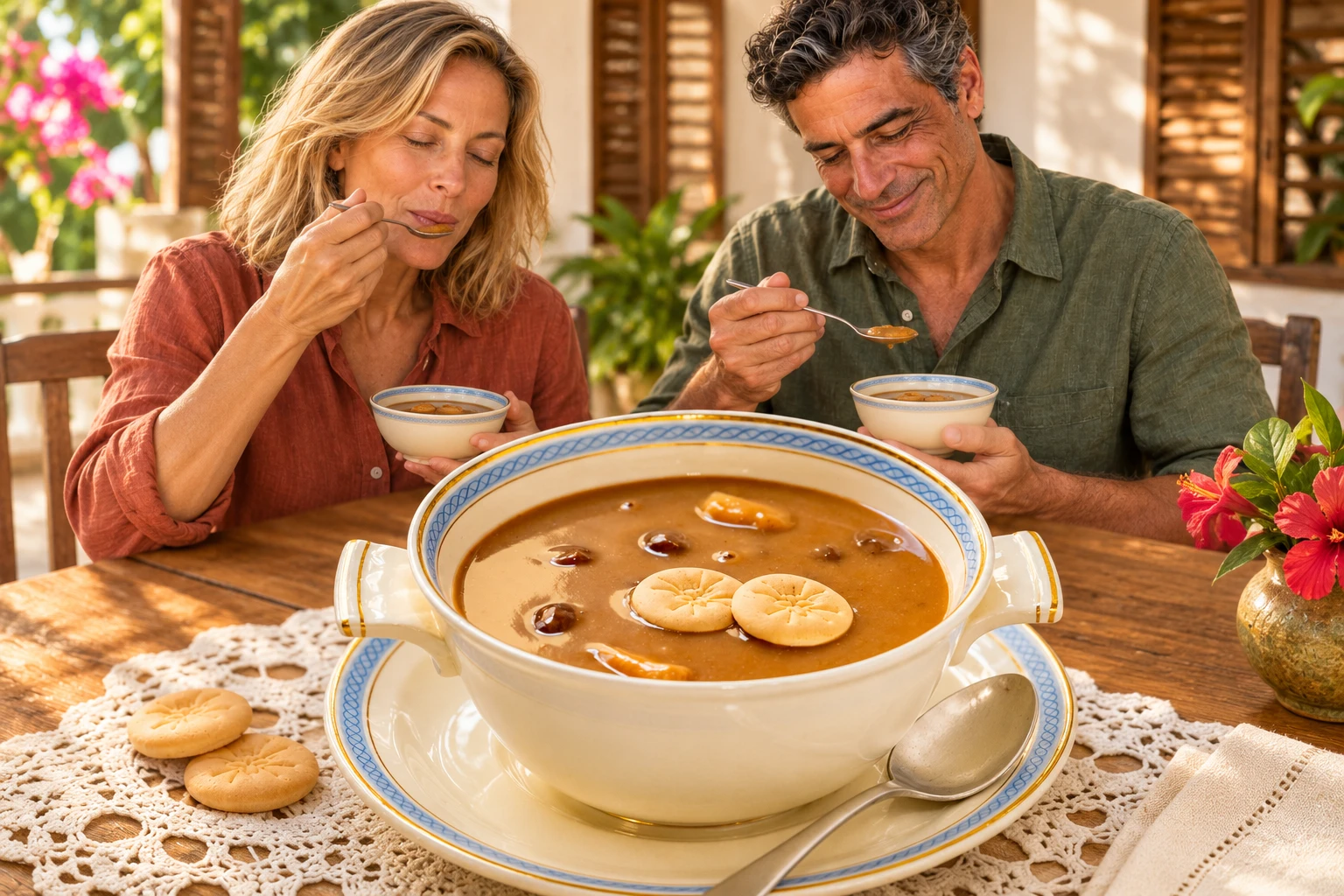
Habichuelas con dulce are the dessert that announces Lent in the Dominican Republic. From Ash Wednesday onward, pots appear in homes, and on Good Friday the dessert is served after a meatless lunch of fish or salted cod. It is customary to make large quantities and share them with neighbors and relatives.
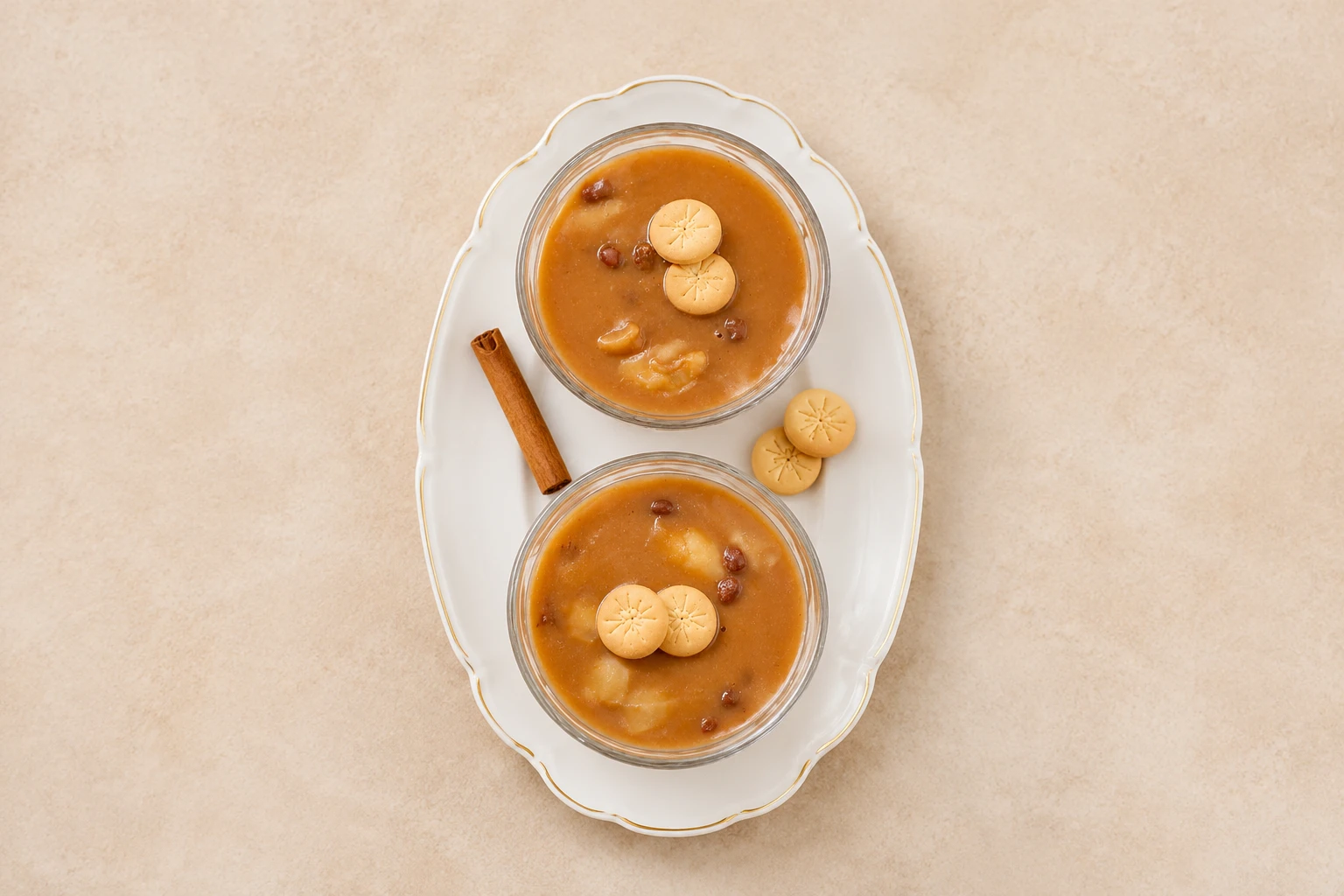
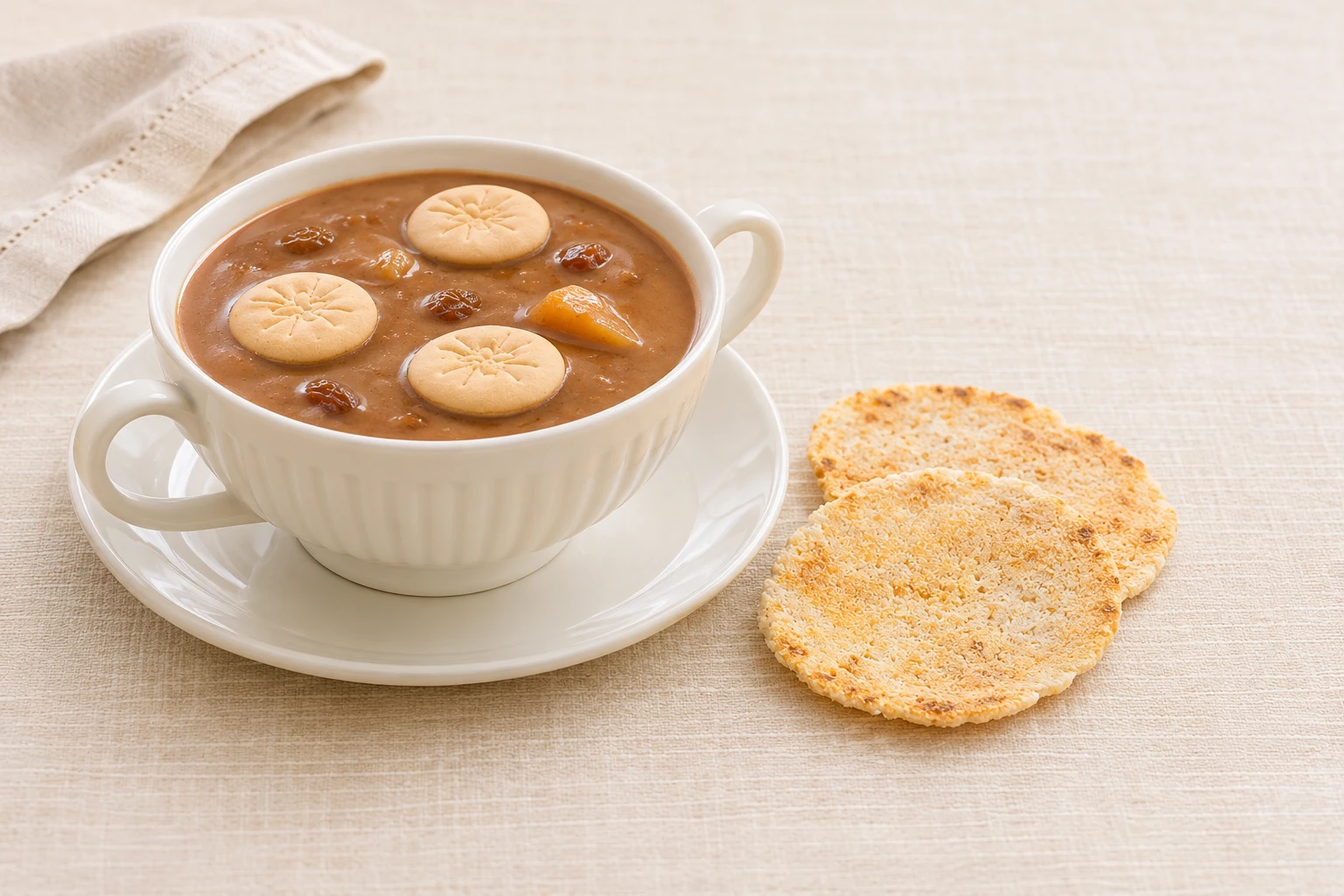
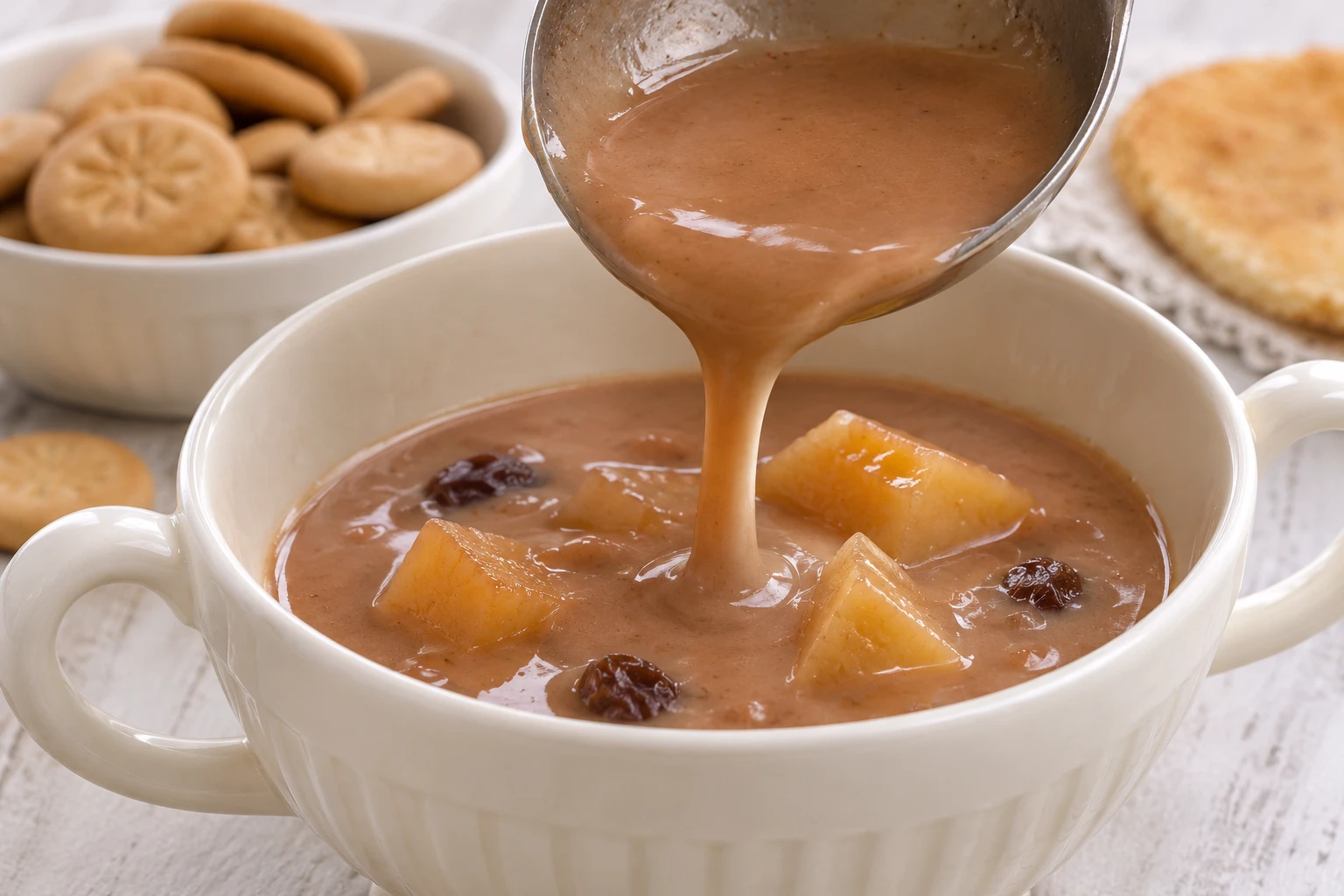
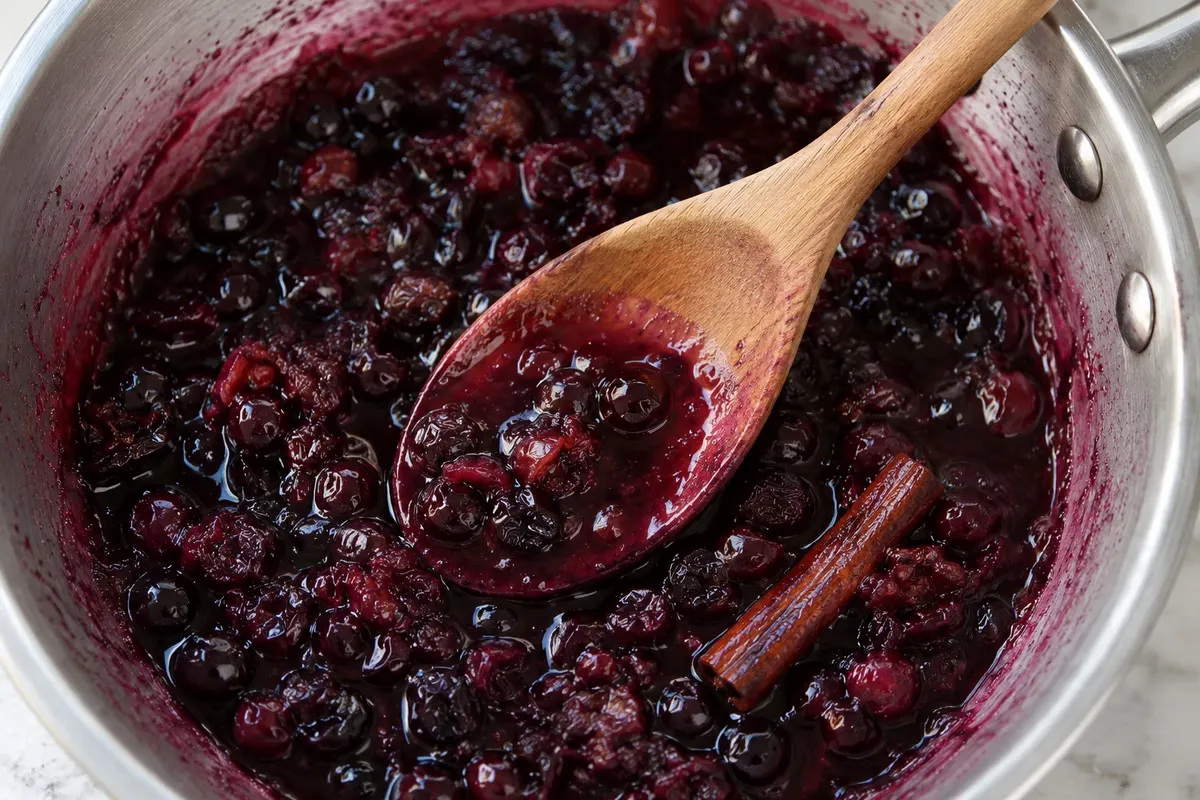
The preparation is laborious. The red beans are cooked until soft, mashed and strained, and the resulting purée is returned to the heat with coconut milk, evaporated milk, sugar, cinnamon, cloves, ginger, a pinch of salt, cubes of sweet potato and raisins. The result is a sweet, thick cream served hot or cold, with sweet cookies on top.
The origin is not settled. The most accepted account is that of historian José G. Guerrero, director of the Museo de Historia y Geografía: the French military officer Dorvo Soulastre, who arrived in Santo Domingo in 1798, recorded, days before Palm Sunday, small sugared beans served in the French style. Other accounts point to African, Canarian and wider Caribbean influences.
The dessert is a specialty of the Dominican Republic. There are regional variations: some families leave whole beans, others replace the cookies with toasted casabe, and in the south there are versions made with broad beans or pigeon peas (guandules).


 Brazilija
 Antarktika
 Argentina
 Bolivija
 Čile
 Kolumbija
 Ekvator
 Gvajana
 Francoska Gvajana
 Falklandski otoki (Malvini)
 Paragvaj
 Peru
 Surinam
 Urugvaj
 Venezuela
 Nemčija
 Avstrija
 Belgija
 Hrvaška
 Danska
 Slovaška
 Slovenija
 Španija
 Finska
 Francija
 Grčija
 Nizozemska
 Madžarska
 Irska
 Islandija
 Italija
 Luksemburg
 Norveška
 Poljska
 Portugalska
 Združeno kraljestvo
 Češka
 Švedska
 Švica
 Turčija
 Bermudi
 Kanada
 Združene države Amerike
 Grenlandija
 Mehika
 Sveta Peter in Mihael
 Japonska
 Južnoafriška republika
 Egipt
 Avstralija
 Fidži
 Nova Zelandija
 Papua Nova Gvineja