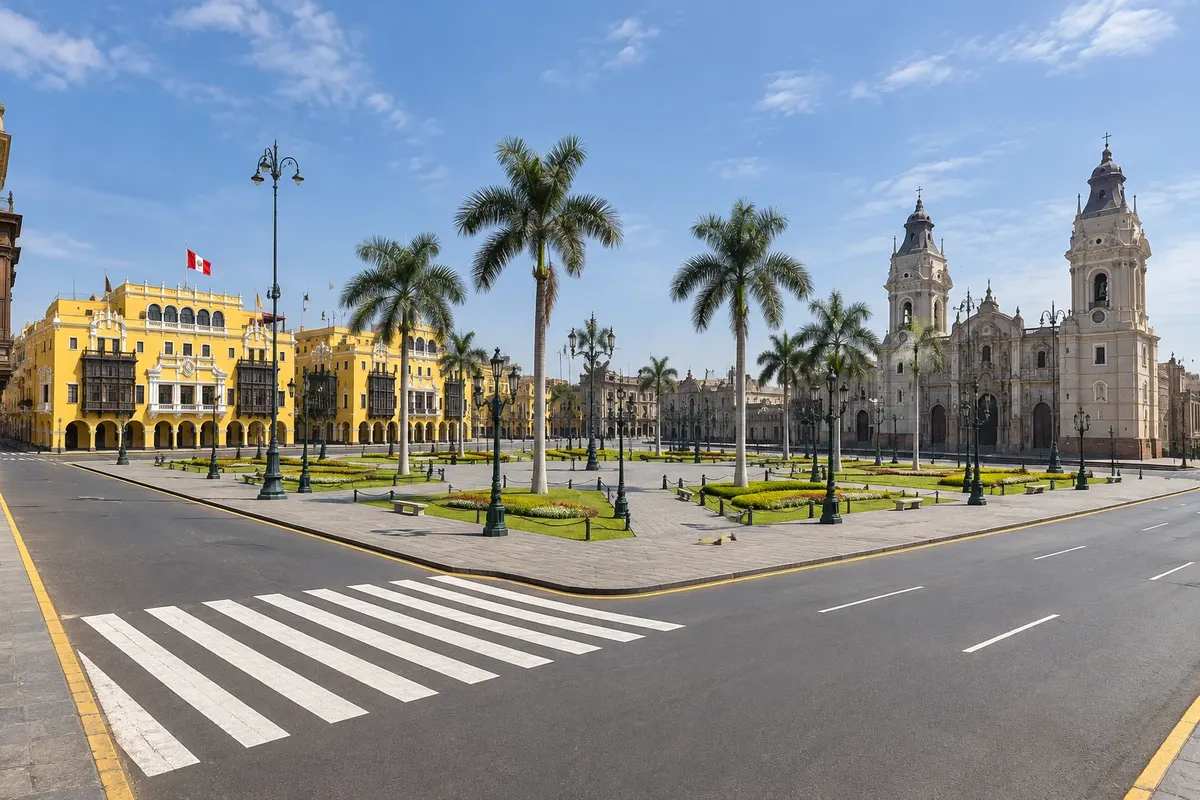
Plaza Mayor of Lima
The square where Pizarro founded Lima in 1535, with the Cathedral, the Government Palace, the Municipal Palace and the Archbishop's Palace with wooden balconies around, and the bronze fountain from 1651 in the center.
Antarktika
Lima Metropolitana · Peru
The capital of Peru on the Pacific coast: a colonial historic center, adobe pyramids amid the neighborhoods, the Malecón on the cliffs of Miraflores, and the cuisine that made ceviche famous worldwide.
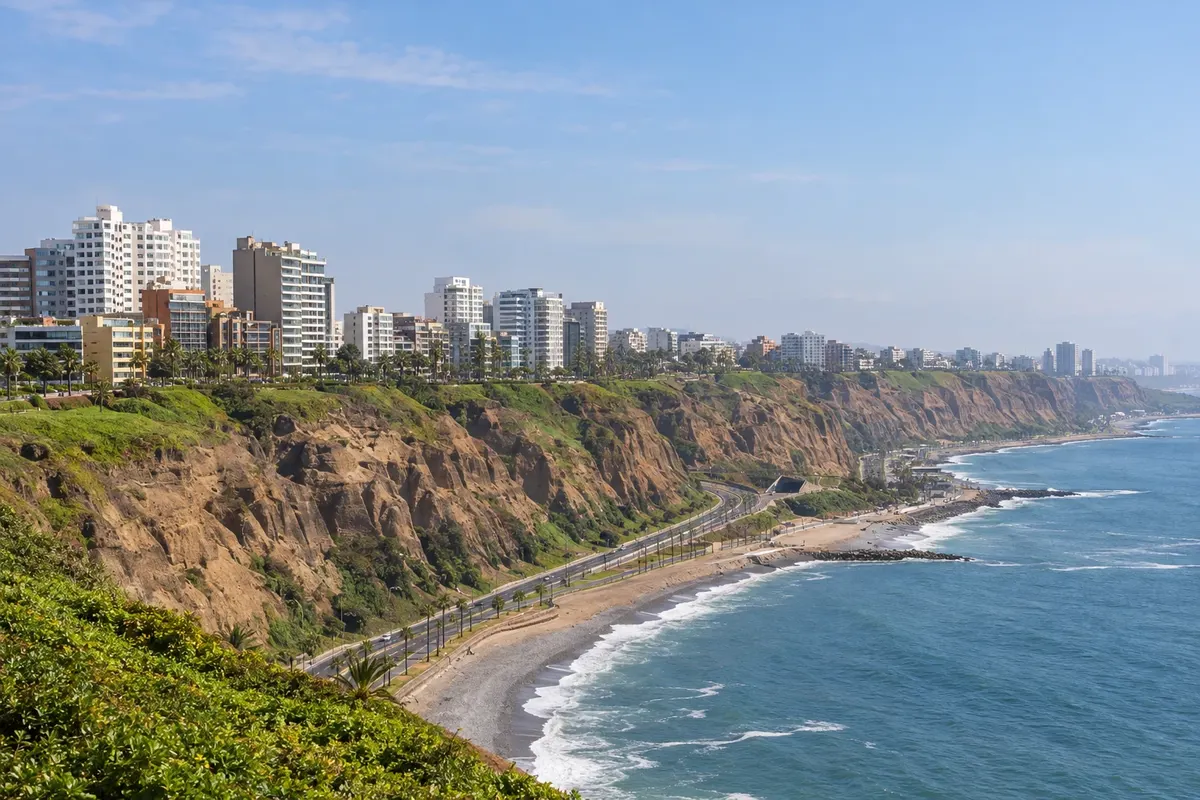
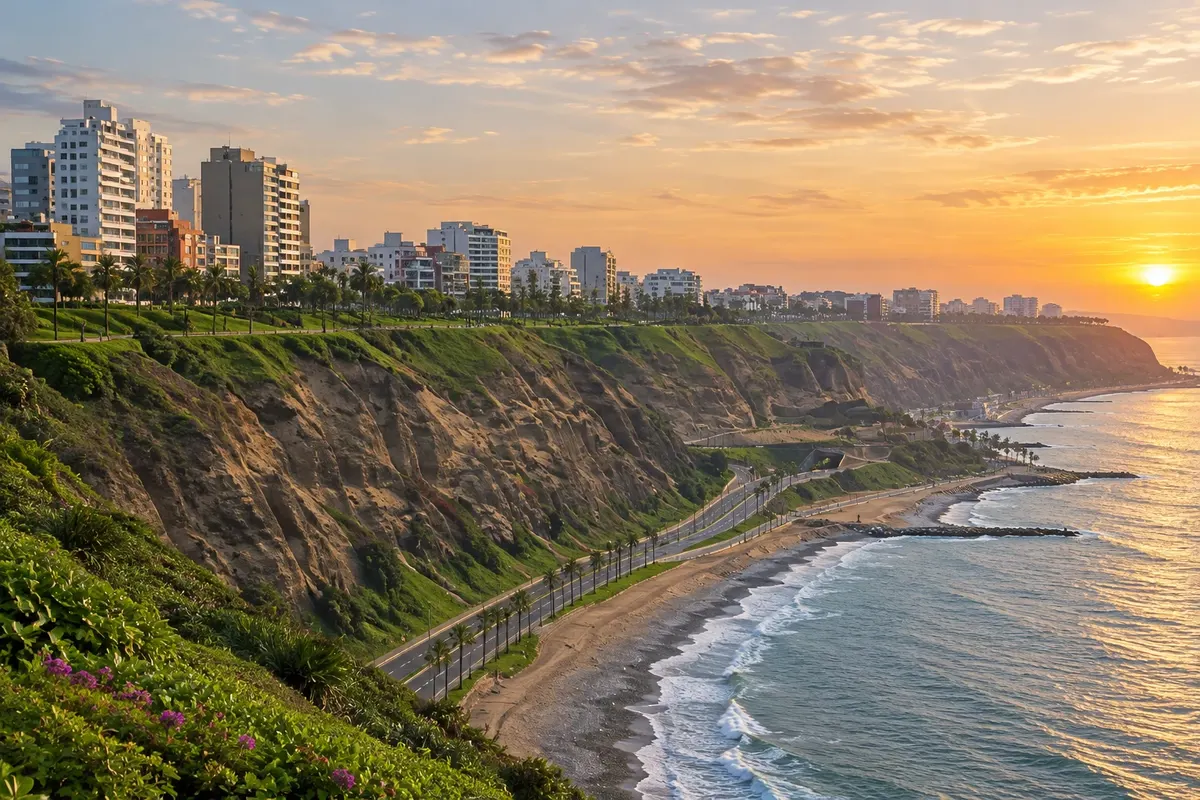
Na fotografiji: Cliffs of Miraflores and the Costa Verde, Lima.
Illustrative images. The pictures in this guide are illustrations based on the real place, not photographs, and may differ from it.
Spoznajte kraj
Lima sits on the central coast of Peru, on a stretch of desert cut by the Rímac River, with the Pacific Ocean on one side and the first foothills of the Andes on the other. Founded by the Spaniard Francisco Pizarro in 1535 as Ciudad de los Reyes, it was the capital of the Viceroyalty of Peru and the center of Spanish power in South America for almost three centuries. Today it holds about a third of the country's population and is the gateway for almost every trip to Peru.
The historic center, a UNESCO World Heritage Site since 1988, revolves around the Plaza Mayor, with the Cathedral, the Palacio de Gobierno and the Palacio Municipal, and spreads through streets of mansions with enclosed wooden balconies, the famous sacadas limeñas. A few blocks away are the Convento de San Francisco, with its catacombs and old library, and the church of Santo Domingo. Further south, the Parque de la Reserva houses the Circuito Mágico del Agua, and the Parque de la Exposición contains the Museo de Arte de Lima.
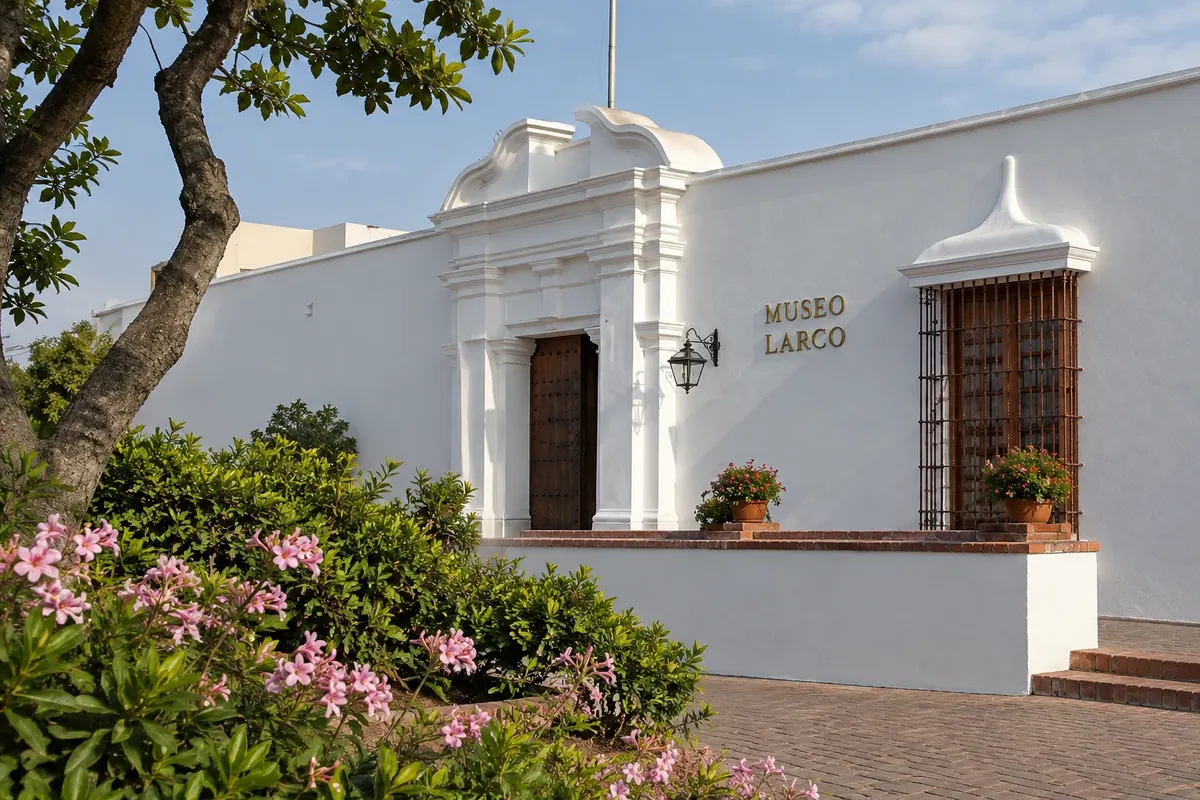
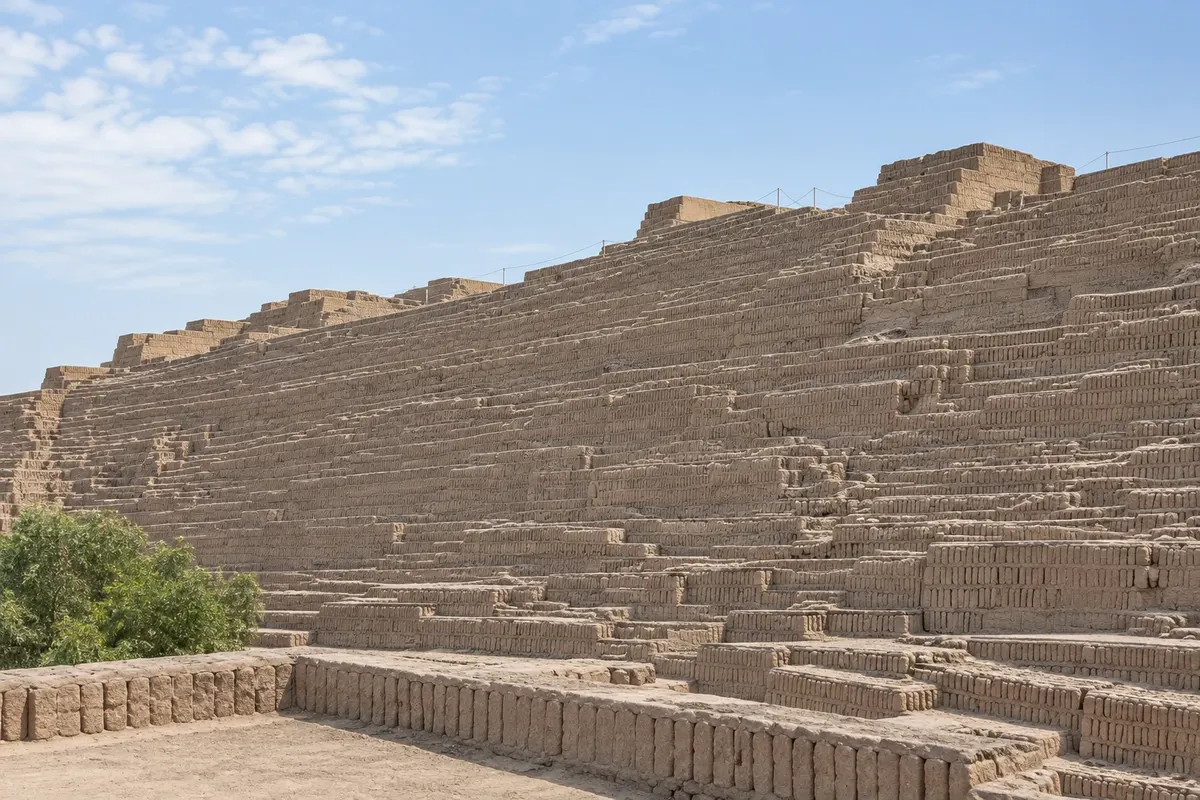
Pre‑Spanish Lima appears in the middle of the city: the Huaca Pucllana, an adobe pyramid from the Lima culture, occupies a full block of Miraflores, and the Museo Larco, in Pueblo Libre, displays millennia of pre-Columbian ceramics, gold and textiles. Thirty kilometers to the south, the sanctuary of Pachacamac was one of the largest pilgrimage centers on the coast for more than a thousand years.
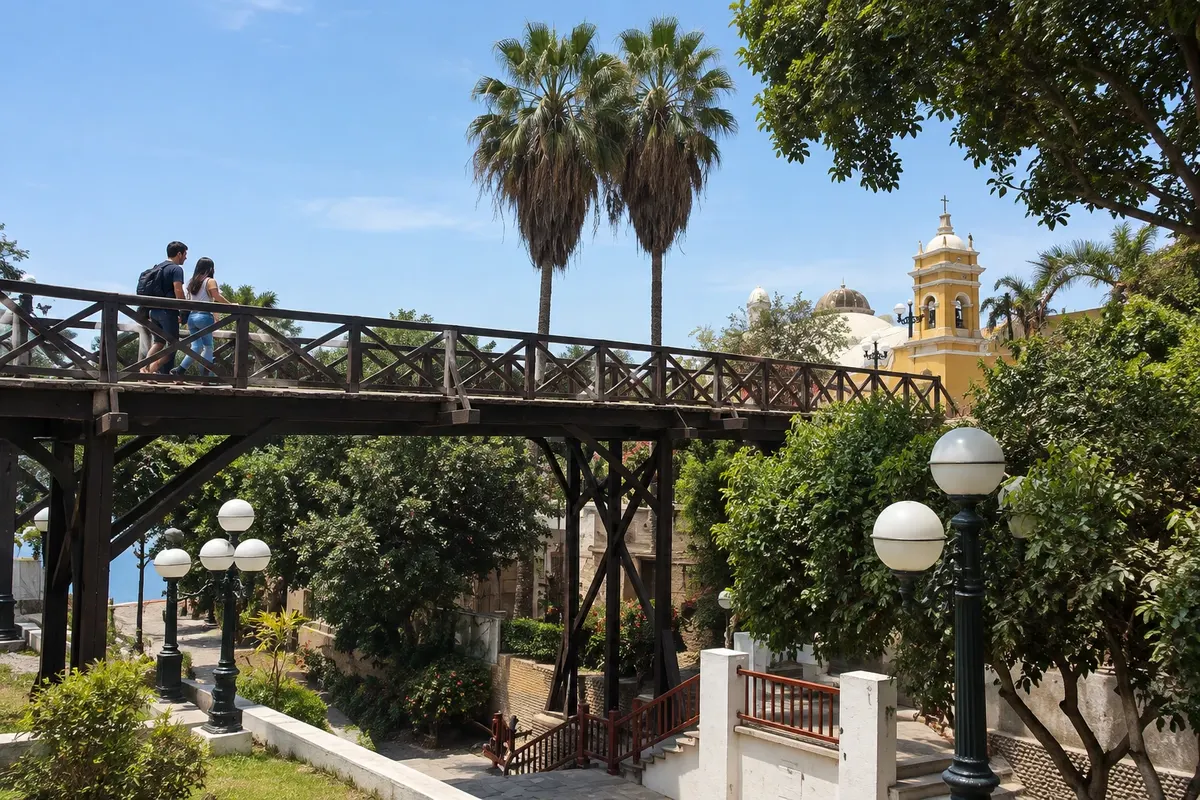
Miraflores and Barranco, on the cliffs, are the neighborhoods where most travelers stay: the Malecón has parks and a bike path over the sea, and Barranco mixes early‑20th‑century mansions, murals and galleries around the Puente de los Suspiros. Food is part of the trip: ceviche, tiradito, causa and the pisco sour are served throughout the city.

V vodniku še ni nastanitev – Lima.
kako do tja · koliko dni · načrt poti · vprašanja
✈ Aeropuerto Internacional Jorge Chávez (LIM), kraj: Callao· 17 km do cilja (Lima)
Confirm before purchasing. Aeropuerto Internacional Jorge Chávez is in Callao, about 17 km from the historic center and roughly 20 km from Miraflores; the trip is by taxi, transfer or bus and, with traffic, can take over an hour. Lima is also the departure point for flights to Cusco, Arequipa and Juliaca.
Doživite kraj
The square where Pizarro founded Lima in 1535, with the Cathedral, the Government Palace, the Municipal Palace and the Archbishop's Palace with wooden balconies around, and the bronze fountain from 1651 in the center.
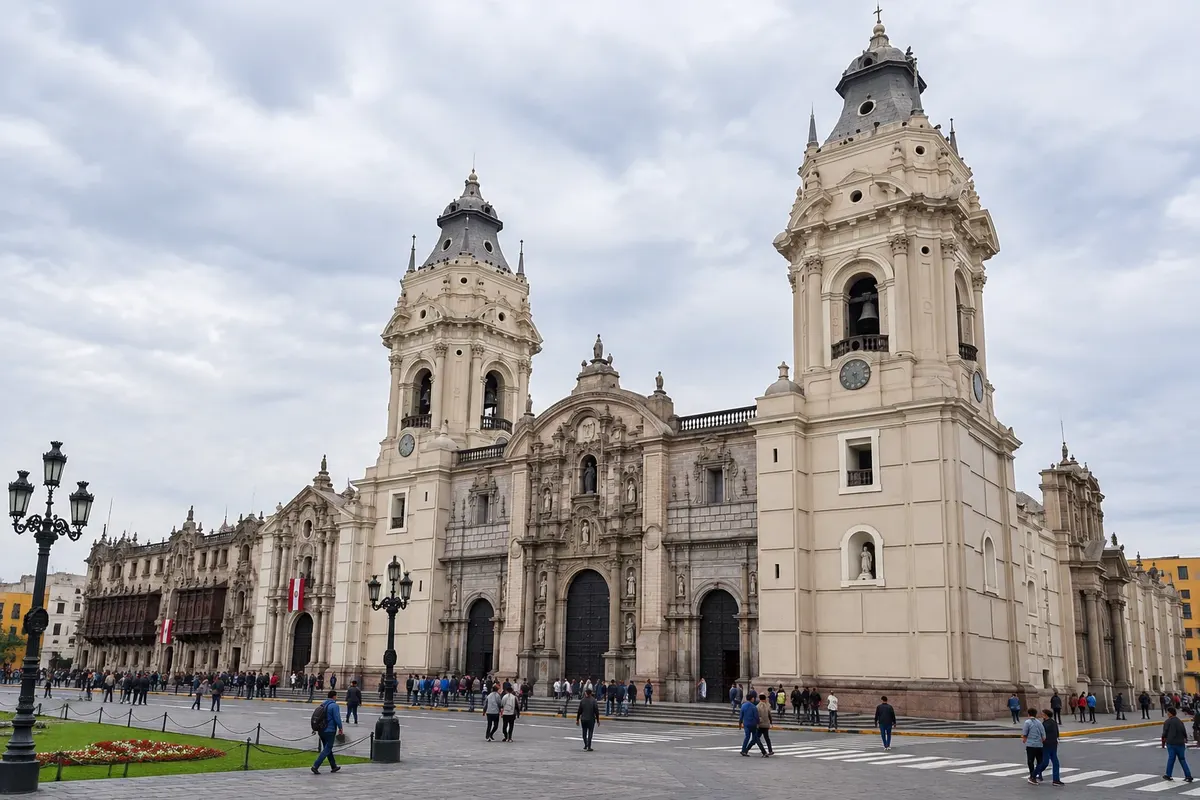
The cathedral of the Plaza Mayor, rebuilt several times after earthquakes, with the chapel of Francisco Pizarro’s tomb, the carved wooden choir stalls, and a museum of religious art.
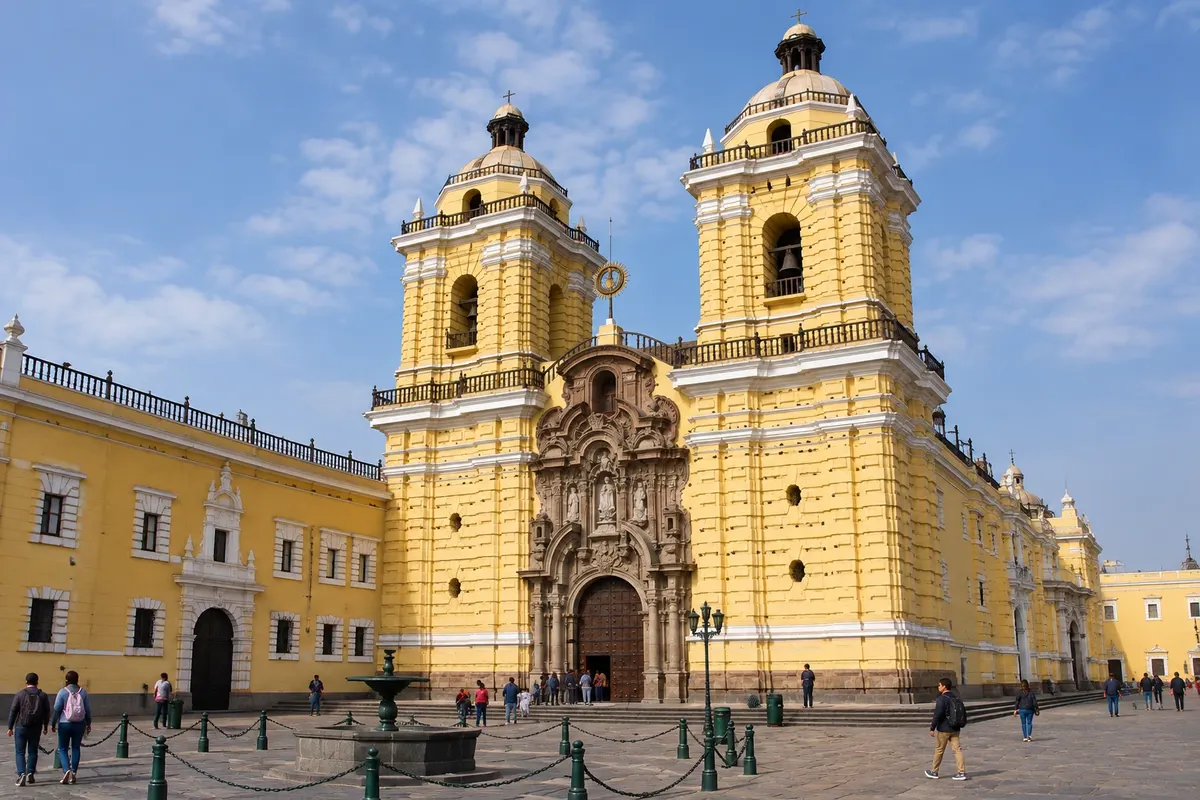
A 17th-century Franciscan complex two blocks from the Plaza Mayor, with the catacombs that served as the city's cemetery, an old library, and cloisters decorated with Seville tiles.
Museum of pre-Columbian art in an 18th-century mansion in Pueblo Libre, with Moche ceramics, gold and silver pieces, textiles and a conservation reserve open to visitors. It has gardens and a restaurant.
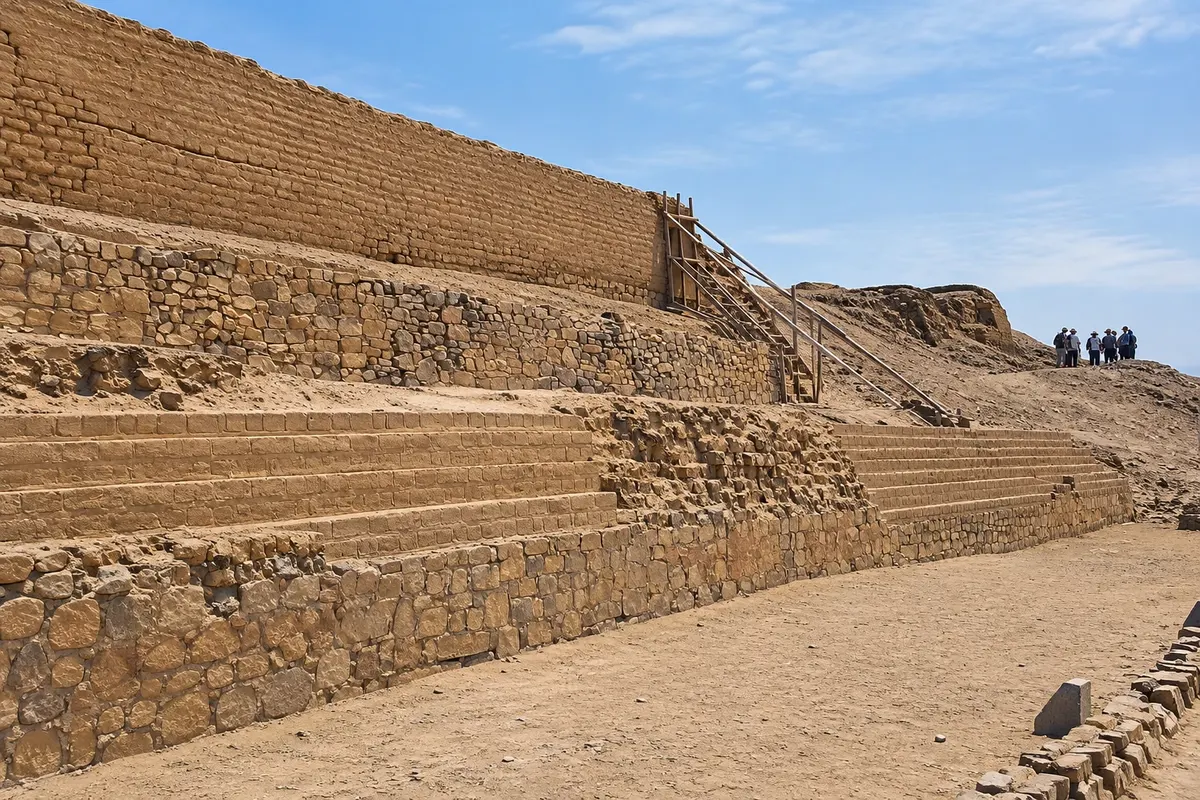
Adobe pyramid of the Lima culture, built between the 3rd and 7th centuries, in the middle of a block in Miraflores. The guided tour climbs the platforms and goes through a small site museum.
A walk along the parks atop the Miraflores cliffs, with a bike path, views of the Pacific and the Costa Verde, Parque del Amor with the sculpture El Beso, and the Larcomar shopping center carved into the cliff.
Wooden bridge from 1876 over the Bajada de Baños, in Barranco, the bohemian neighborhood of mansions, murals and galleries that descends from the cliff to the sea, south of Miraflores.
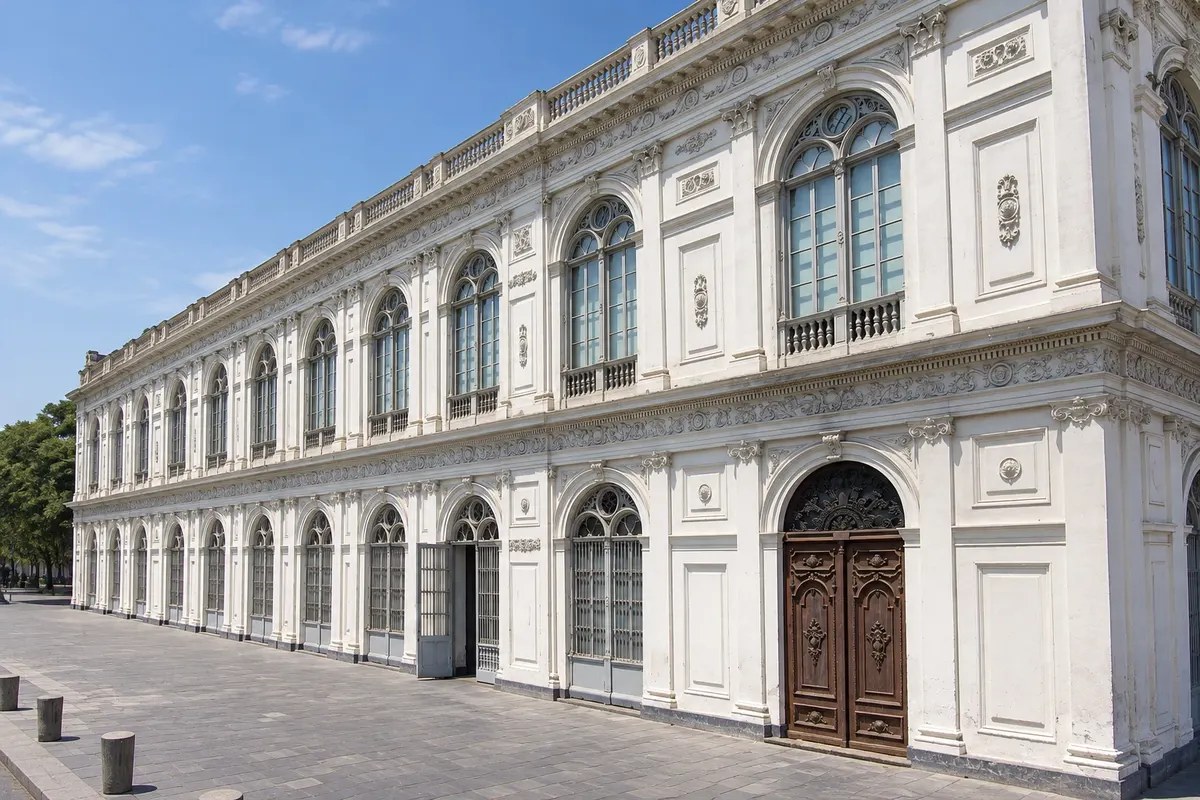
The MALI, in an 1872 palace in the Parque de la Exposición, brings together Peruvian art from three millennia: pre-Columbian textiles and ceramics, colonial painting of the Cusco school, and republican and contemporary art.
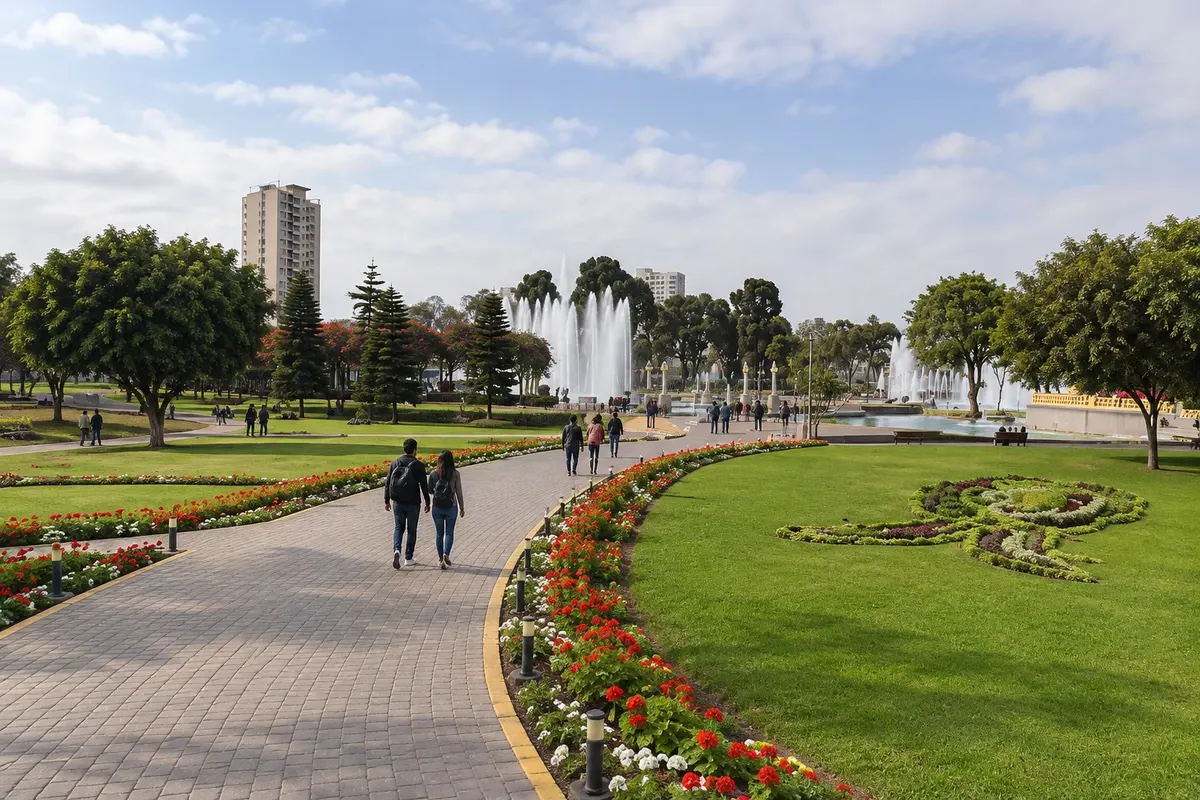
A set of illuminated fountains in the Parque de la Reserva, downtown Lima, with a water tunnel, interactive fountains and a nightly show of light, music and water projections.
A coastal pilgrimage center for more than a thousand years, 30 km south of Lima, with adobe pyramids, the Templo do Sol inca, the Acllahuasi and a site museum with the wooden idol of Pachacamac.
Pred odhodom
Lima – Lima Metropolitana Capital
Razdalje so približne. Pred potovanjem preverite lete in vozne rede avtobusov, vlakov ali ladij.
Confirm before buying. Aeropuerto Internacional Jorge Chávez is in Callao, about 17 km from the historic center and roughly 20 km from Miraflores. From the airport official taxis, transfers and buses depart for Miraflores; at peak times the trip can take over an hour. Buses to the south of the country (Paracas, Ica, Nazca, Arequipa) depart from the bus companies’ own terminals.
Two days for the essentials: one for the historic center and the Convento de San Francisco, another for the Museo Larco, the Huaca Pucllana and the late afternoon on the Malecón and in Barranco. With three days you can add Pachacamac, the MALI and the Circuito Mágico del Agua at night.
All year round. From December to April it's usually sunny and warm, with beaches crowded on weekends. From June to October the sky is generally gray, with fine drizzle (garúa) and high humidity, and evenings call for a light jacket. Heavy rain is rare at any time.
The seasons shown are the most usual ones; nature doesn't always follow the calendar.
No. Traffic is slow and parking is difficult. App-based taxis are the most used option between Miraflores, Barranco, San Isidro and the center. The Metropolitano, a bus on an exclusive corridor, connects Barranco and Miraflores to the historic center. For Pachacamac, a tour or a taxi that waits works better than driving.
Predlog poti
Pot povezuje znamenitosti na tej strani. Za oglede boste imeli dovolj časa.
Start at Plaza Mayor, with the Cathedral, the Government Palace and the Municipal Palace. Enter the Cathedral to see the chapel housing Pizarro's tomb and the choir stalls. Around noon there is often a changing of the guard in front of the palace; check the day.
Walk two blocks to the Convento de San Francisco for the guided tour of the catacombs, the library and the cloisters with Sevillian tiles. Afterwards, have ceviche for lunch — in Lima it's eaten at midday, not at night.
Head to Miraflores and walk along the Malecón to the Parque del Amor, with the sea and the Costa Verde below. On clear days the sun sets over the Pacific.
Finish in Barranco, at the Puente de los Suspiros and the streets of old houses around it, with bars and restaurants. Try the pisco sour, in moderation.
Dan 1
Plaza Mayor, Cathedral and the streets of wooden balconies up to the church of Santo Domingo.
Catacombs and library of the Convento de San Francisco, with lunch in the center.
Go to the Parque de la Reserva to see the lit fountains in the Circuito Mágico del Agua; check the days it's open.
Return to Miraflores and dine near Parque Kennedy.
Dan 2
Go to the Museo Larco in Pueblo Libre for the Moche ceramics, gold and textiles galleries. Allow two hours.
Guided visit to the adobe pyramid of Huaca Pucllana, in Miraflores, including the site's workshops and native animals.
Walk along the Malecón to the Parque del Amor for the late afternoon overlooking the sea.
Puente de los Suspiros, the viewpoint over the beach and dinner in the neighborhood.
Dan 1
Historic center in the morning, with the Cathedral and the palaces around the square.
Catacombs of San Francisco and the cloister of Santo Domingo, with lunch in the center.
Head to the Parque de la Exposición for the MALI's colonial and republican art galleries.
Cross over to the Parque de la Reserva for the illuminated fountains and the light-and-water show.
Dan 2
Gold, silver and pre-Columbian ceramics in the colonial mansion of Pueblo Libre.
The adobe pyramid of the Lima culture, in the middle of Miraflores.
Walk along the Malecón to the Parque del Amor.
Dinner in Miraflores, near Parque Kennedy.
Dan 3
Leave early for Pachacamac, 30 km to the south: the site museum, the Temple of the Sun and the view of the Lurín valley down to the sea.
Return to Lima to have lunch and rest in Miraflores.
Puente de los Suspiros, the murals and Barranco's viewpoint.
Dinner in Barranco, featuring Peruvian seafood cuisine.
Check before you go. Opening hours and days change, and places may close for renovations, holidays or events. This itinerary is a suggestion from Cidade Turismo, not a commitment: plan yours by checking directly with each place you intend to visit.
Pred odhodom
Miraflores is the most sought-after, for its location overlooking the Malecón and for its restaurants and services. Neighboring Barranco is more bohemian and has old houses and galleries. The historic center is close to the monuments but empties at night.
It's about 20 km. Without traffic the trip takes 40 minutes to an hour; in peak hours it can be longer. Use the official airport taxi, a pre-booked transfer or the bus that connects the airport to Miraflores.
Yes, along the Costa Verde, below the cliffs of Miraflores and Barranco, but the Pacific water there is cold year-round and the beaches are rocky. Lima residents go more in summer, from December to March, and many surf all year.
Fish ceviche with lime, red onion and chili, tiradito, causa limeña made with yellow potato, lomo saltado and anticuchos. Pisco sour is the city's signature drink. Ceviche is a lunchtime dish: many cevicherías close in the afternoon.
Almost never. The city sits in a coastal desert. From June to October the sky is usually overcast with fine drizzle, which locals call garúa. From December to April it's usually sunny.
Pred odhodom
Z nekaj načrtovanja boste imeli več časa za uživanje na poti.
Lima hardly gets rain. From December to April is summer: sun, warmth and crowded beaches. From June to October the sky is usually gray, with light drizzle and high humidity, and temperatures are mild; it’s not truly cold, but a light jacket helps at night.
The seasons shown are the most usual ones; nature doesn't always follow the calendar.
Two days are enough for the historic center, the Museo Larco, the Huaca Pucllana and an afternoon in Miraflores and Barranco. With three days there’s time for Pachacamac, the Circuito Mágico del Agua at night and other museums. Since almost every trip to Peru passes through Lima, many people split their time: one day on arrival and one or two at the end before the return flight.
Miraflores is the most popular base: it sits along the Malecón, has hotels of all kinds, restaurants and pharmacies nearby, and easy connections to the center and the airport. Neighboring Barranco is smaller and more bohemian, with mansions, bars and galleries. San Isidro is more residential and business‑oriented, with parks and the olive grove of El Olivar. The historic center has hotels in old mansions just steps from the Plaza Mayor, but it becomes quieter at night.
Odnesite svoje odpadke, upoštevajte oznake in podprite lokalne ponudnike. V naravi upoštevajte navodila za obiskovalce.
Odgovori na vaša vprašanja
Two to three days. Two cover the historic center, the Museo Larco, the Huaca Pucllana and Miraflores with Barranco. A third day allows for Pachacamac or more museums. Many people split that time between the beginning and the end of their trip through Peru.
From December to April, in summer, the sun usually appears almost every day. From June to October the sky is generally gray, with light drizzle, but there is no heavy rain and the city functions normally. Museums and the historic center can be visited year‑round.
No. Traffic is heavy and parking is difficult. Ride‑hail taxis, the Metropolitano (bus in an exclusive lane) and regular buses cover routes between Miraflores, Barranco and the center. For Pachacamac, a tour or a taxi is the most practical option.
Yes — it’s the most common route: flights to Cusco depart from Lima several times a day. One or two days in Lima at the start of the trip also help adjust to the time difference before heading to the high Andes.
Več kot vodnik