Mount Yoshino
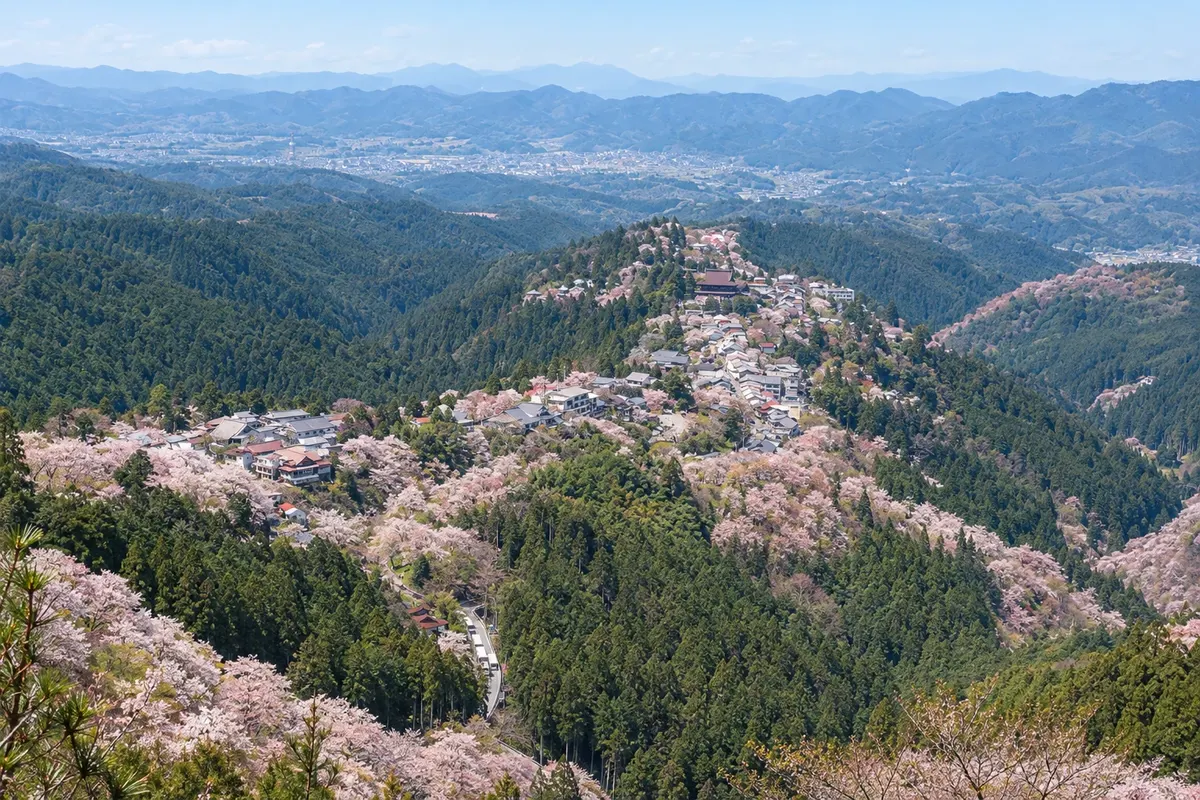
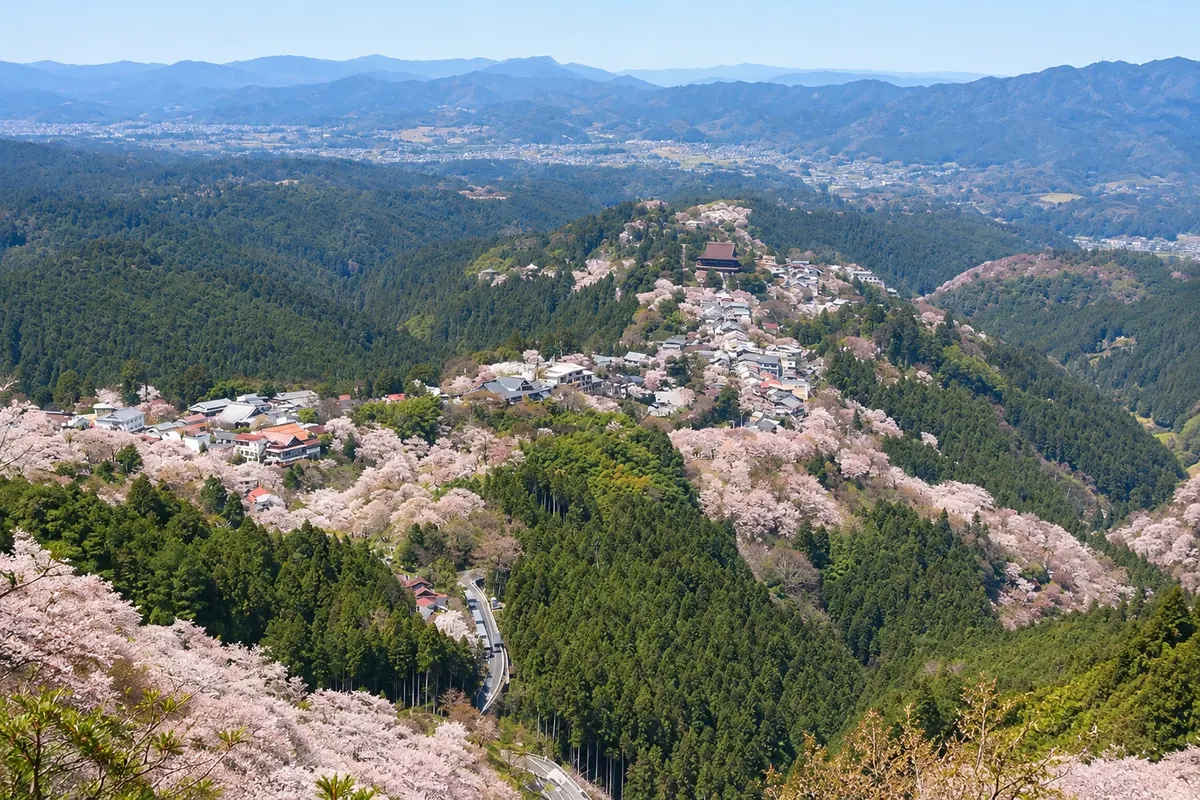
A mountain ridge in southern Nara with about 30,000 cherry trees in four zones at different elevations that usually bloom in sequence in April, plus viewpoints, shrines, and trails through cedar forest.
Antarktika
Nara · Japonska
The cherry-tree mountain in southern Nara, with thousands of trees on successive slopes and the temples and shrines of one of the sacred areas of the Kii Mountain Range, a UNESCO World Heritage Site.
Na fotografiji: Cherry trees and slopes of Mount Yoshino.
Illustrative images. The pictures in this guide are illustrations based on the real place, not photographs, and may differ from it.
Spoznajte kraj
Mount Yoshino sits in the southern part of Nara Prefecture, on a mountain ridge that stretches about 8 km above the Yoshino River. For more than a thousand years it has been a sacred place: here begins the Omine Okugake trail, part of the Shugendo pilgrimages, a religious practice of monks and laypeople who retreat into the mountains, combining Buddhism with devotion to local deities. The temples and shrines of Yoshino are part of the Sacred Sites and Pilgrimage Routes of the Kii Mountain Range, a UNESCO World Heritage Site.
Yoshino is known throughout Japan for its cherry trees. There are about 30,000 trees, mostly the wild yamazakura species, planted over centuries as offerings to the mountain’s deity. They are grouped into four areas, from lower to upper: Shimo, Naka, Kami and Oku Senbon, and flowering usually moves up the mountain over a few weeks in April.
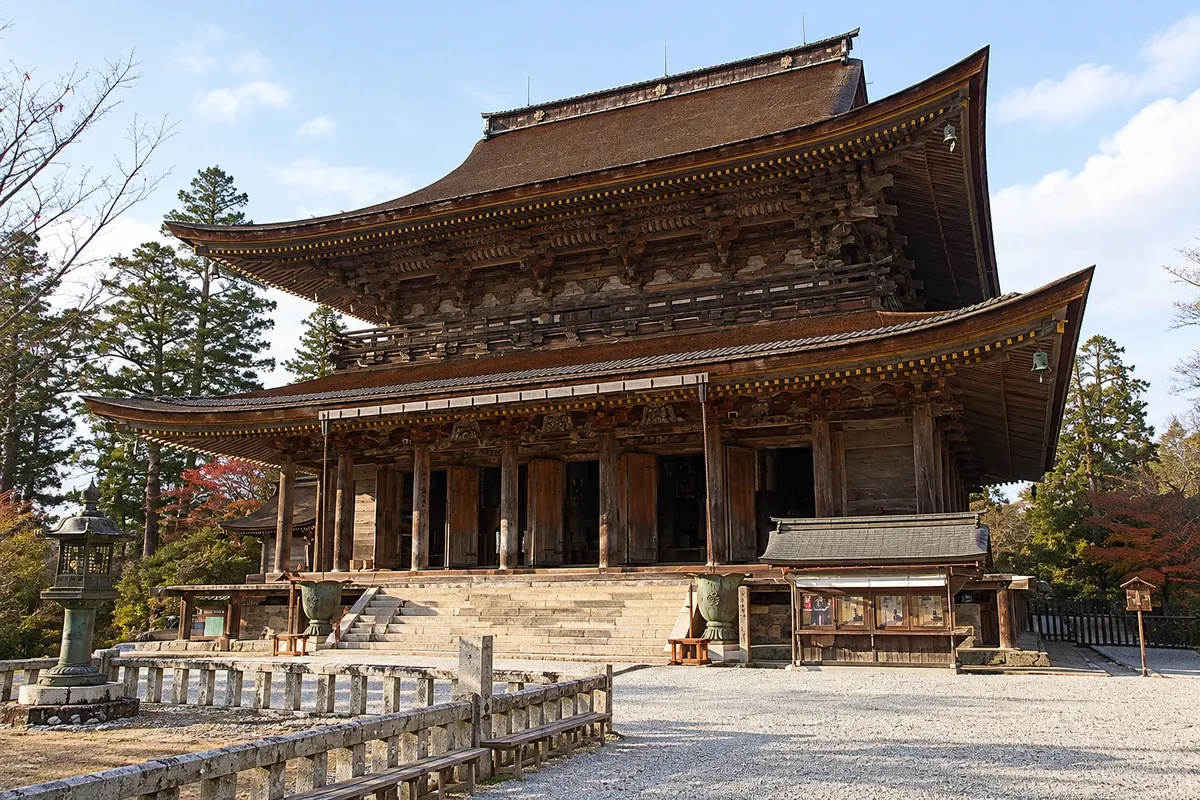
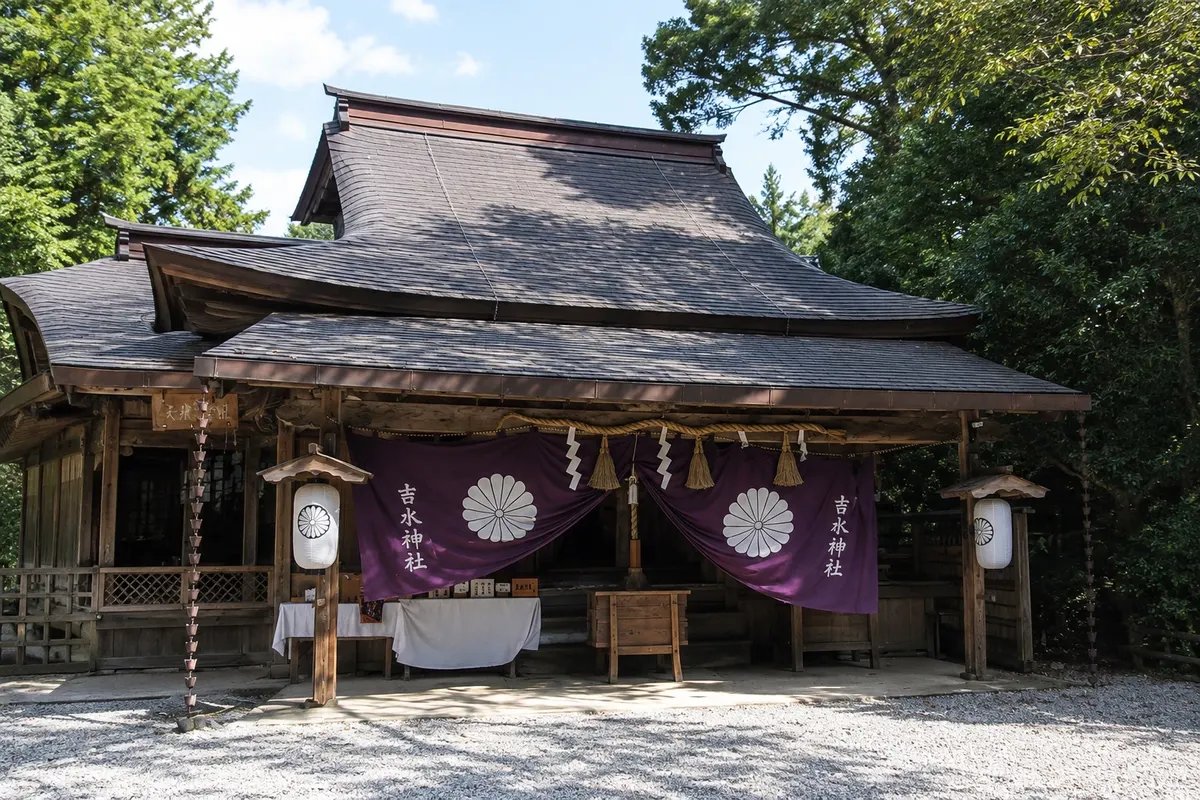
On the ridge, Yoshinoyama’s main street connects temples, shrines, teahouses and guesthouses. Kinpusen-ji, with the large wooden Zao-do hall, is the mountain’s religious center. Yoshimizu Shrine preserves memories of the warrior Minamoto no Yoshitsune, of Emperor Go-Daigo, who established his court there in the 14th century, and of Toyotomi Hideyoshi, who held a great cherry-viewing party in 1594. Higher up, Yoshino Mikumari Shrine and the hermitage of the poet Saigyo lie amid cedar forests.
Outside the blossom season, the mountain is peaceful, with red leaves in November and forest trails. Local cuisine includes kakinoha-zushi, sushi wrapped in persimmon leaf, and kuzu sweets made from the starch of a regional root.

V vodniku še ni nastanitev – Yoshino.
kako do tja · koliko dni · načrt poti · vprašanja
✈ Aeroporto Internacional de Kansai (KIX), kraj: Izumisano· 83 km do cilja (Yoshino)
Kintetsu trains connect Osaka Abenobashi to Yoshino Station in about 1 hour 15 minutes to 1 hour 20 minutes. From Kyoto and Nara, change trains at Kashiharajingu‑mae. From Yoshino Station you climb to the ridge by ropeway, bus or on foot in about 20 minutes.
Doživite kraj
A mountain ridge in southern Nara with about 30,000 cherry trees in four zones at different elevations that usually bloom in sequence in April, plus viewpoints, shrines, and trails through cedar forest.
The central Shugendo temple on Mount Yoshino, with the Zao-do hall, one of the largest wooden buildings in Japan, a national treasure that houses three large blue statues of Zao Gongen.
A shrine on Yoshinoyama, formerly a temple where the warrior Minamoto no Yoshitsune took refuge and where Emperor Go-Daigo set up his court in the 14th century, with an old reception hall and the classic thousand-trees viewpoint.
Pred odhodom
Yoshino – Nara približno 38 km stran (izhodišče: Nara)
Razdalje so približne. Pred potovanjem preverite lete in vozne rede avtobusov, vlakov ali ladij.
Yoshino Station, the terminus of the Kintetsu Yoshino Line, is about 1 hour 15 minutes from Osaka Abenobashi. From there, a ropeway, buses or a walk of about 20 minutes climb up to the village of Yoshinoyama. The city hall is in Kamiichi, about 4 km from the station.
One day for Shimo and Naka Senbon, with Kinpusen-ji and Yoshimizu Shrine. If you spend a night on the mountain, you can climb to Kami and Oku Senbon and see the village at night and early in the morning.
April, for the cherry blossoms, with more people and difficult reservations; November, for autumn leaves. Spring and autumn have mild weather. Winter is cold, and summer is humid, with the forest green and fewer visitors.
The seasons shown are the most usual ones; nature doesn't always follow the calendar.
No. The ropeway and buses link the station to the ridge, and buses go up to Kami Senbon. During cherry season, car access to the mountain is restricted.
Predlog poti
Pot povezuje znamenitosti na tej strani. Za oglede boste imeli dovolj časa.
Climb from Yoshino Station to the village of Yoshinoyama and visit Kinpusen-ji, with the Zao-do hall.
Visit Yoshimizu Shrine and see the thousand-tree view from the garden, and have kakinoha-zushi for lunch on the main street.
Walk along Naka Senbon Street to the viewpoints over the cherry-covered slopes.
Sleep in a ryokan or a temple in Yoshinoyama, or descend to catch the train back.
Dan 2
Take a bus or walk up to Kami Senbon, with the Hanayagura lookout and Yoshino Mikumari Shrine.
Continue to Oku Senbon and Saigyō’s hermitage, then walk down to the station.
Check before you go. Opening hours and days change, and places may close for renovations, holidays or events. This itinerary is a suggestion from Cidade Turismo, not a commitment: plan yours by checking directly with each place you intend to visit.
Pred odhodom
On the southern side of the town, accessible from Yoshino Station. The administrative center is in Kamiichi, about 4 km from the station.
By cable car, by bus or on foot, taking about 20 minutes. Check whether the cable car is operating that day.
Yes. Some temples on Yoshinoyama host overnight guests and offer vegetarian meals and morning ceremonies. Book in advance.
Kakinoha-zushi, mackerel or salmon sushi wrapped in persimmon leaf, and kuzu sweets and dumplings made from a local starch.
Pred odhodom
Z nekaj načrtovanja boste imeli več časa za uživanje na poti.
Cherry season generally runs from early to late April, with blooming moving from the lower areas to the upper ones; it is not guaranteed on fixed dates and varies each year. In November the leaves usually turn red. In winter the mountain is cold and quiet, with snow on some days.
The seasons shown are the most usual ones; nature doesn't always follow the calendar.
One day is enough for the lower and central parts of the mountain, including Kinpusen-ji and Yoshimizu Shrine. To reach Oku Senbon at a relaxed pace, or during cherry season, stay one night on Yoshinoyama.
On Yoshinoyama, along the ridge, ryokans and temples that accept guests line the main street; during cherry season, book well in advance. Off the mountain, Nara and Osaka are bases for a day trip.
Odnesite svoje odpadke, upoštevajte oznake in podprite lokalne ponudnike. V naravi upoštevajte navodila za obiskovalce.
Odgovori na vaša vprašanja
Generally in April, starting in the lower areas and moving up the mountain over a few weeks. Dates change every year; follow bloom forecasts.
Yes. From Osaka the train takes about 1 hour 15 minutes. During cherry season, leave early because lines for buses and the ropeway get long.
No. Train, ropeway and buses reach the ridge, and the rest is on foot. During cherry season vehicle access on the mountain is restricted.
A lot, always uphill. From the station to Kinpusen-ji is about 20 minutes; to Kami Senbon, another hour; to Oku Senbon, about another hour.
Yes. The temples and shrines of Yoshino and Omine are part of the Sacred Sites and Pilgrimage Routes of the Kii Mountain Range, inscribed by UNESCO in 2004.
Več kot vodnik