Hakuba Ski Jumping Stadium
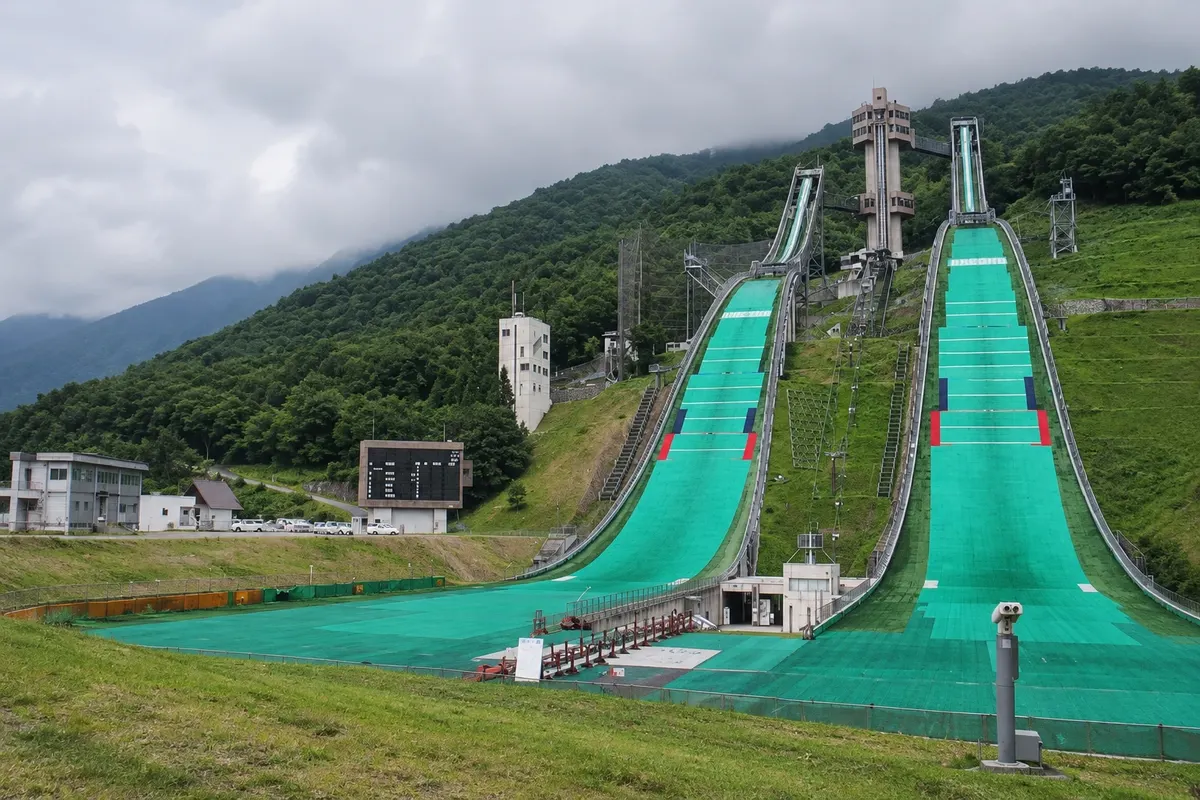
The ski jumping stadium from the 1998 Winter Olympic Games, with two jumps — normal and large — and a start tower you can visit by chairlift and elevator, with views over the valley.
Antarktika
Nagano · Japonska
The North Alps ski valley that hosted events at the 1998 Winter Olympics, with resorts at the foot of the Hakuba Sanzan mountains and, in summer, trails up to high-altitude lakes and marshes.
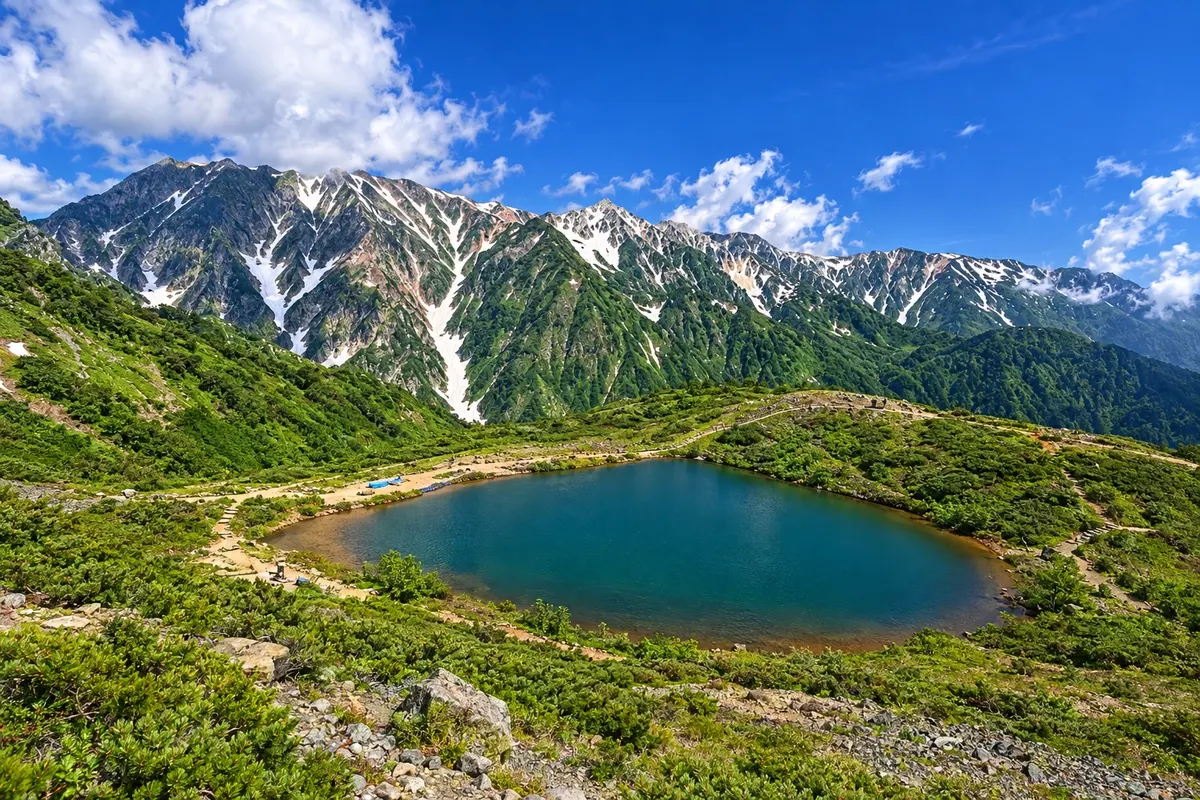
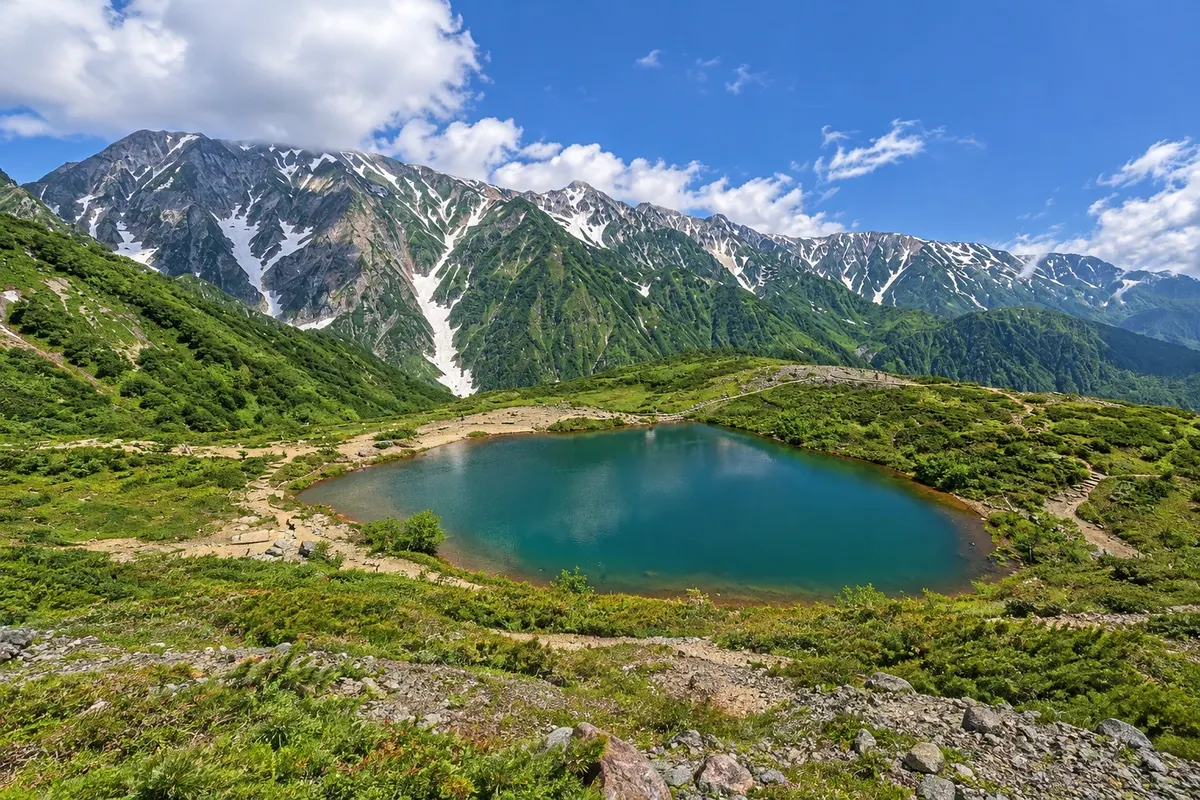
Na fotografiji: Lake Happo and the Northern Alps mountains.
Illustrative images. The pictures in this guide are illustrations based on the real place, not photographs, and may differ from it.
Spoznajte kraj
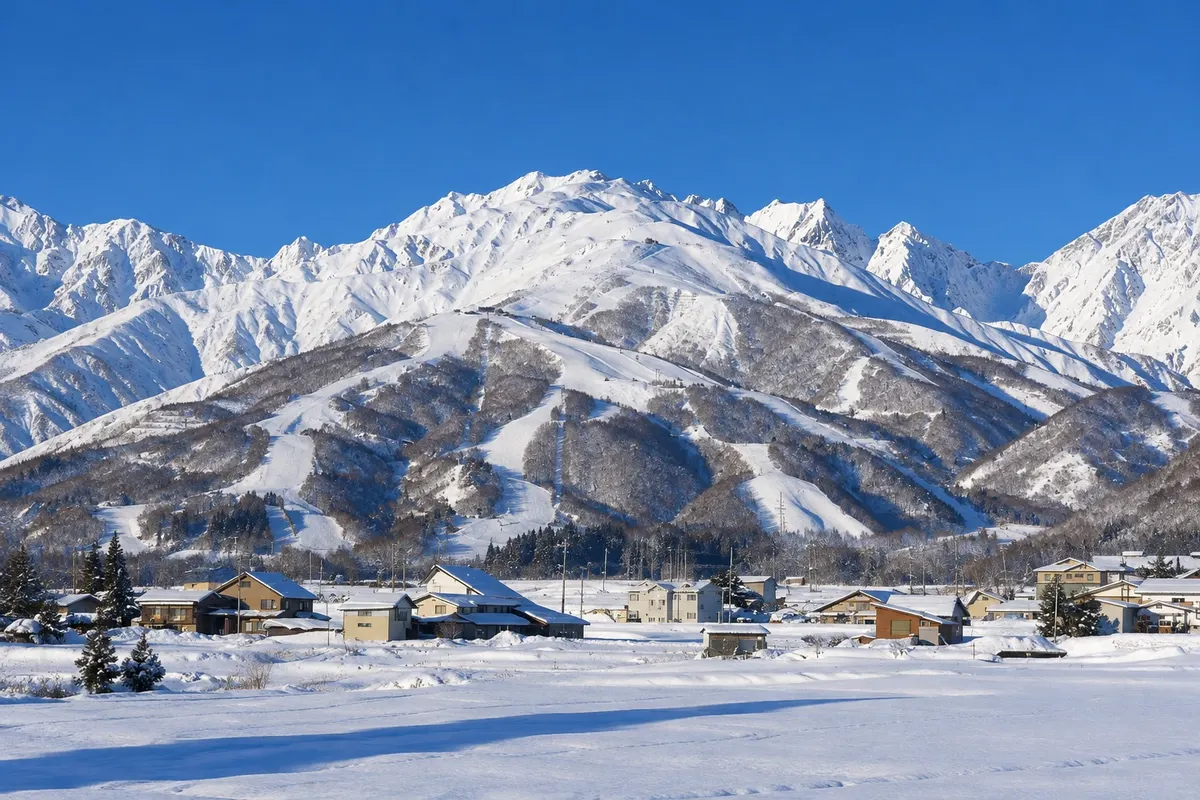
Hakuba is a village in the northwest of Nagano Prefecture, in a narrow valley at the foot of the Hida mountain range, the Northern Alps. To the west rise the three peaks of Hakuba Sanzan — Shirouma, Shakushi and Yari — nearly 3,000 meters high, which often keep snow until early summer. The village has relied on mountain tourism since the early 20th century, and its name comes from the Shirouma peak, written with the same characters.
In 1998, at the Nagano Winter Olympics, Hakuba hosted the alpine speed events, ski jumping and cross-country skiing. The ski-jump stadium still stands and includes a tower you can visit, and the Happo-one resort, where the downhill races took place, is the largest in the valley. The valley brings together around ten ski resorts, between Hakuba and the neighboring villages of Otari and Omachi, with a joint lift pass.
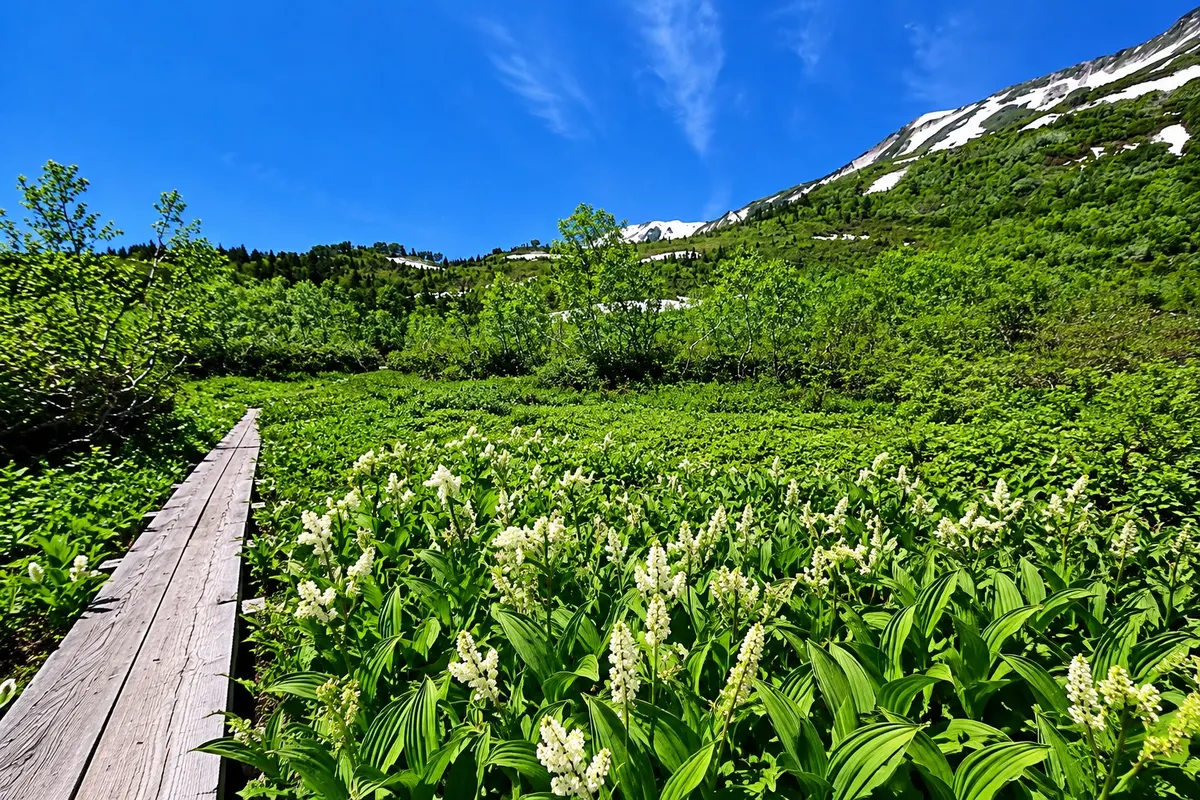
In winter, the season generally runs from December to March, with snowfall varying each year, and the valley attracts many foreign skiers. In summer and autumn, the lifts carry you to high-altitude trails: Lake Happo, above 2,000 meters, reflects the Hakuba Sanzan mountains, and Tsugaike Natural Park, a high-altitude marsh, has flowers and wooden boardwalks.
Hakuba is about an hour by bus from Nagano, where the shinkansen from Tokyo stops, and pairs well with Omachi, the eastern gateway to the Tateyama Kurobe Alpine Route, about 30 minutes to the south. There are hot springs in the village, such as those at Happo Onsen, and family-run inns alongside larger hotels.

V vodniku še ni nastanitev – Hakuba.
kako do tja · koliko dni · načrt poti · vprašanja
✈ Aeroporto de Matsumoto (MMJ), kraj: Matsumoto· 71 km do cilja (Hakuba)
The Hokuriku shinkansen connects Tokyo to Nagano in about 1h20; from there express buses reach Hakuba in about an hour. There are also direct buses from Tokyo and trains on the Oito Line from Matsumoto in about 1h40.
Doživite kraj
The ski jumping stadium from the 1998 Winter Olympic Games, with two jumps — normal and large — and a start tower you can visit by chairlift and elevator, with views over the valley.
The largest ski resort in the Hakuba valley, where the downhill events of the 1998 Games took place, on a ridge rising toward the Hakuba Sanzan mountains, with a gondola and chairlifts that run in summer for hikers.
A mountain lake above 2,000 meters on the Happo-one ridge, where the water reflects the Hakuba Sanzan peaks, reachable in summer and autumn by gondolas and a roughly one-hour trail.
A high-altitude bog at about 1,900 meters in the village of Otari, neighboring Hakuba, with wooden boardwalks through alpine flowers and ponds and views of Mount Shirouma; open from early summer to autumn.
Pred odhodom
Hakuba – Nagano približno 44 km stran (izhodišče: Nagano)
Razdalje so približne. Pred potovanjem preverite lete in vozne rede avtobusov, vlakov ali ladij.
Express buses link Nagano station (shinkansen) to Hakuba in about an hour. Hakuba Station is on the Oito Line, about 1h40 from Matsumoto and 30 minutes from Shinano-Omachi. There are direct buses from Tokyo. Matsumoto Airport is about 70 km away.
For skiing, four to seven days. In summer, one day for Lake Happo and another for Tsugaike Park. Half a day is enough for the ski-jump stadium and the village.
Skiing generally occupies December to March. From July to September there are trails and flowers. October usually brings autumn colors in the valley and the first snows on the peaks. In the shoulder seasons, some services close.
The seasons shown are the most usual ones; nature doesn't always follow the calendar.
No. In the ski season, buses connect the resorts and accommodation areas; in summer, local buses and taxis serve the lifts. A car helps to combine visits to Omachi and the Nishina lakes.
Predlog poti
Pot povezuje znamenitosti na tej strani. Za oglede boste imeli dovolj časa.
In summer, ride the gondola and chairlifts up the Happo-one slope and walk to Lake Happo, with the Hakuba Sanzan mountains reflected in its water.
Go down and visit the 1998 ski-jump stadium, climbing the start tower to see the ramp from above.
Take a hot-spring bath at one of the bathhouses in Happo Onsen and dine in the Happo or Echoland area.
Dan 1
Do the Lake Happo trail early, before clouds hide the peaks.
Visit the ski-jump stadium and stroll through the Happo village, with shops and cafés.
Dan 2
Ride the gondola and chairlift to Tsugaike and walk the boardwalks of the high-altitude marsh, with summer flowers and views of Mount Shirouma.
Check before you go. Opening hours and days change, and places may close for renovations, holidays or events. This itinerary is a suggestion from Cidade Turismo, not a commitment: plan yours by checking directly with each place you intend to visit.
Pred odhodom
The valley brings together about ten resorts, between Hakuba, Otari and Omachi, connected by buses and a joint lift pass. Major ones include Happo-one, Hakuba 47, Goryu and Tsugaike Kogen.
In the Happo area, at the foot of Happo-one, for more restaurants and services; in Echoland, for something intermediate; in Iwatake, Goryu or Tsugaike, for more tranquility.
Yes. Happo Onsen and other valley springs have baths and hotels that accept day visitors.
In winter: snowshoeing, hot springs and the ski jumping stadium. In summer: hikes to Lake Happo and Tsugaike Park, rafting and mountain biking.
Pred odhodom
Z nekaj načrtovanja boste imeli več časa za uživanje na poti.
From December to March for skiing, with snowfall that varies year to year. From July to September for mountain trails and alpine flowers, with lifts operating. Late September and October bring autumn foliage on the slopes. In April, May and November many hotels and lifts close.
The seasons shown are the most usual ones; nature doesn't always follow the calendar.
For skiing, four to seven days. In summer, two days allow time for Lake Happo and Tsugaike Park. Hakuba pairs well with the Alpine Route, starting from Omachi.
The Happo area, at the base of the Happo-one resort, concentrates hotels, inns, restaurants and the hot springs of Happo Onsen. Echoland, between the station and the slopes, has restaurants and smaller lodgings. Iwatake, Goryu and Tsugaike, around the other resorts, are quieter. In the peak ski season, book in advance.
Odnesite svoje odpadke, upoštevajte oznake in podprite lokalne ponudnike. V naravi upoštevajte navodila za obiskovalce.
Odgovori na vaša vprašanja
Most resorts operate from December to March, and the peak snow usually occurs in midwinter. Some open in late November or stay open into April, depending on the year. Confirm dates before booking.
Yes. At the 1998 Winter Games based in Nagano, Hakuba hosted alpine speed events, ski jumping and cross-country skiing. The ski-jump stadium is open to visitors.
Yes, if you like mountains: lifts take you to trails such as the one to Lake Happo and to Tsugaike Park, and there are rafting, mountain biking and hot springs.
In winter, no: during the season buses connect the resorts and accommodation areas, and there are taxis. In summer, buses are less frequent and a car helps to combine the valley with the lakes of Nishina and Omachi.
Take the shinkansen to Nagano (about 1h20) and then an express bus to Hakuba (about one hour). There are also direct buses from Tokyo and trains via Matsumoto.
Več kot vodnik