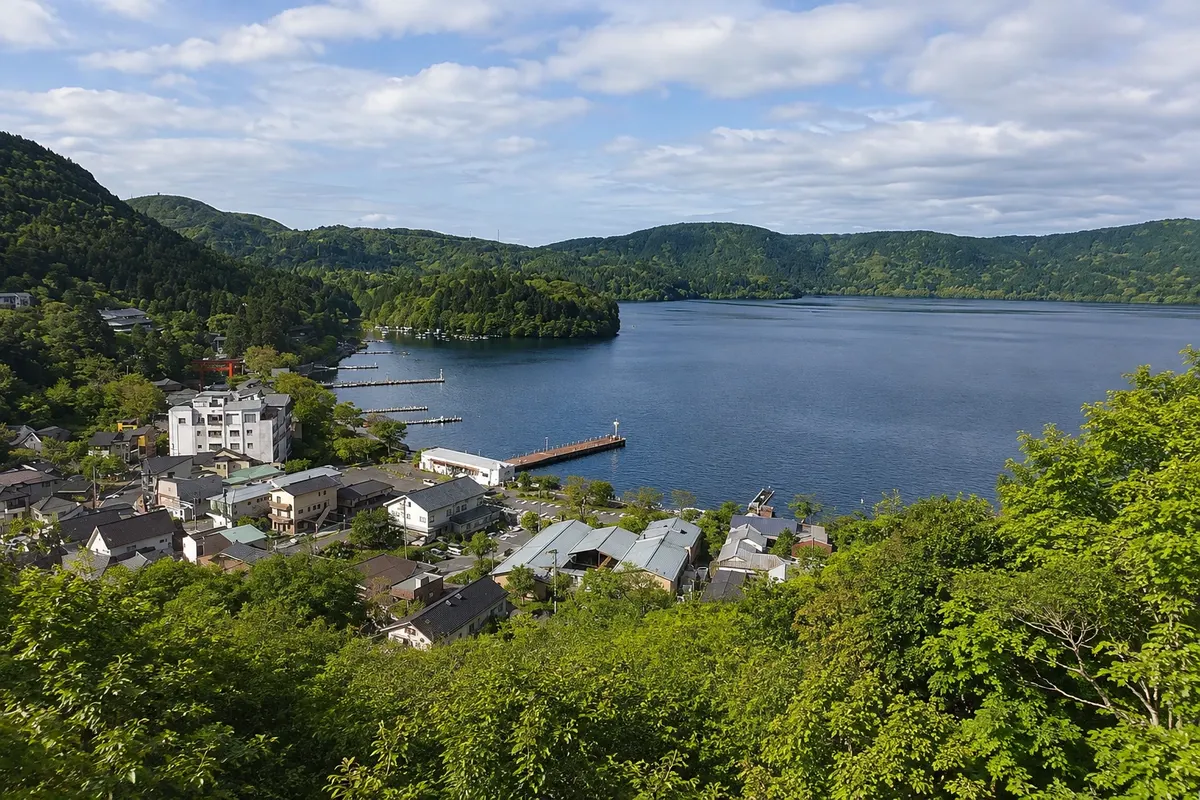
Lake Ashi
The caldera lake of Hakone, crossed by sightseeing boats between Togendai and Moto-Hakone, with the shrine torii standing in the water and, on clear days, Mount Fuji in the background.
Antarktika
Kanagawa · Japonska
The hot-spring resort in the Kanagawa mountains, with Lake Ashi and its boats, the volcanic valley of Owakudani, art museums in the forest and, on clear days, Mount Fuji on the horizon.
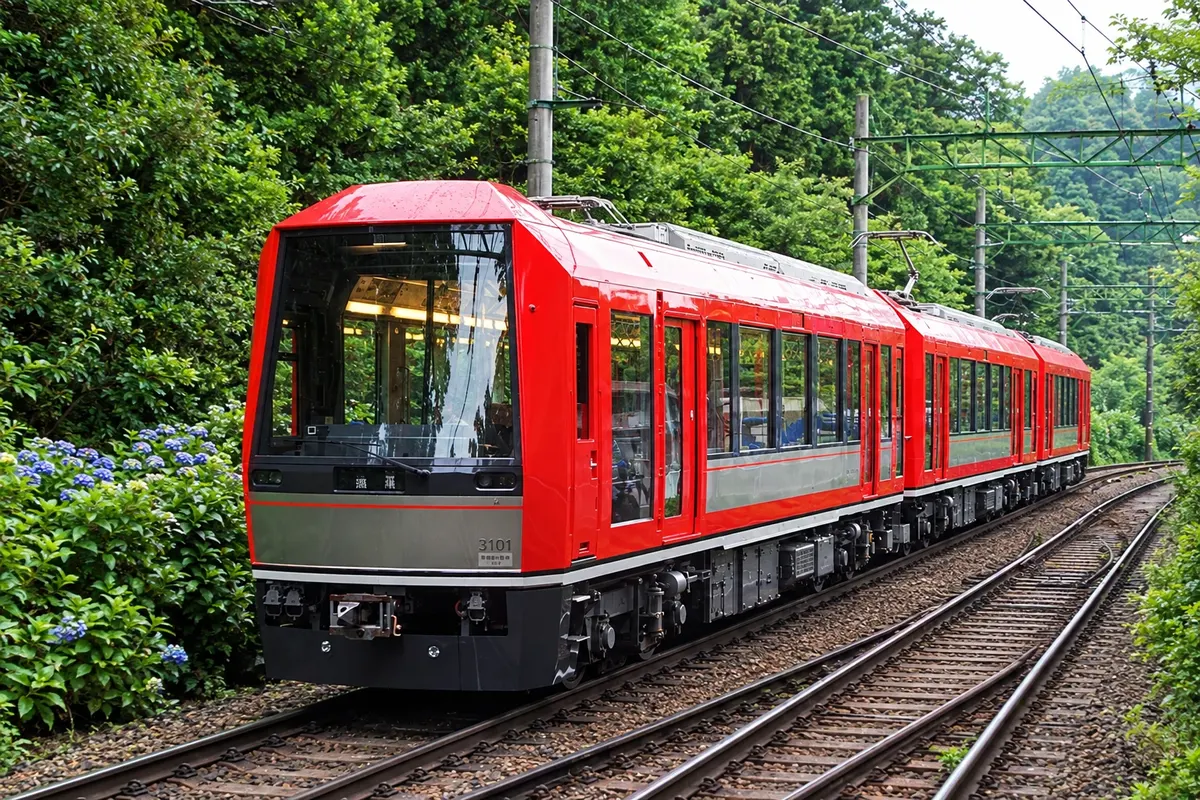
Na fotografiji: Hakone Tozan Line train.
Illustrative images. The pictures in this guide are illustrations based on the real place, not photographs, and may differ from it.
Spoznajte kraj
Hakone is a mountain town in western Kanagawa, inside Fuji-Hakone-Izu National Park, about 90 km from Tokyo. It sits in the large caldera of an ancient volcano, with Lake Ashi at the bottom and Mount Kami, still active, in the center. Since the Edo period the hot springs have drawn travelers, and Hakone remains one of the most popular onsen resorts for people coming from the capital.
The town spreads across valleys and slopes, with several neighborhoods. Hakone-Yumoto, at the entrance, is the oldest onsen village, with bathhouses and shopping streets by the station. Higher up are Miyanoshita, Gora and Sengokuhara, with hotels, museums and gardens; above them is the volcanic valley of Owakudani; and on the southern shore of Lake Ashi are Moto-Hakone and Hakone-machi, with the shrine and the old Tokaido checkpoint.
The classic route is a circuit using different transport modes: the mountain train that climbs in switchbacks from Hakone-Yumoto to Gora, the funicular to Sounzan, the ropeway over Owakudani to the lake, and the boats that cross Lake Ashi. Buses close the loop back to Yumoto.
Hakone has first-rate art museums, such as the Open-Air Museum, with sculptures in a park, and the Pola Museum of Art, set in a forest. On clear days, Mount Fuji appears behind the lake and the mountains, but the view depends on the weather. Owakudani’s volcanic activity is monitored, and access to the valley can be restricted according to alert levels.

V vodniku še ni nastanitev – Hakone.
kako do tja · koliko dni · načrt poti · vprašanja
✈ Aeroporto Internacional de Tóquio (Haneda) (HND), kraj: Ota· 80 km do cilja (Hakone)
From Shinjuku, Odakyu’s Romancecar limited express reaches Hakone-Yumoto in about 1 hour 30 minutes. On the Tokaido shinkansen, get off at Odawara, about 35 minutes from Tokyo, and continue by train or bus to Hakone-Yumoto. There are also highway buses from Shinjuku to Lake Ashi.
Doživite kraj
The caldera lake of Hakone, crossed by sightseeing boats between Togendai and Moto-Hakone, with the shrine torii standing in the water and, on clear days, Mount Fuji in the background.
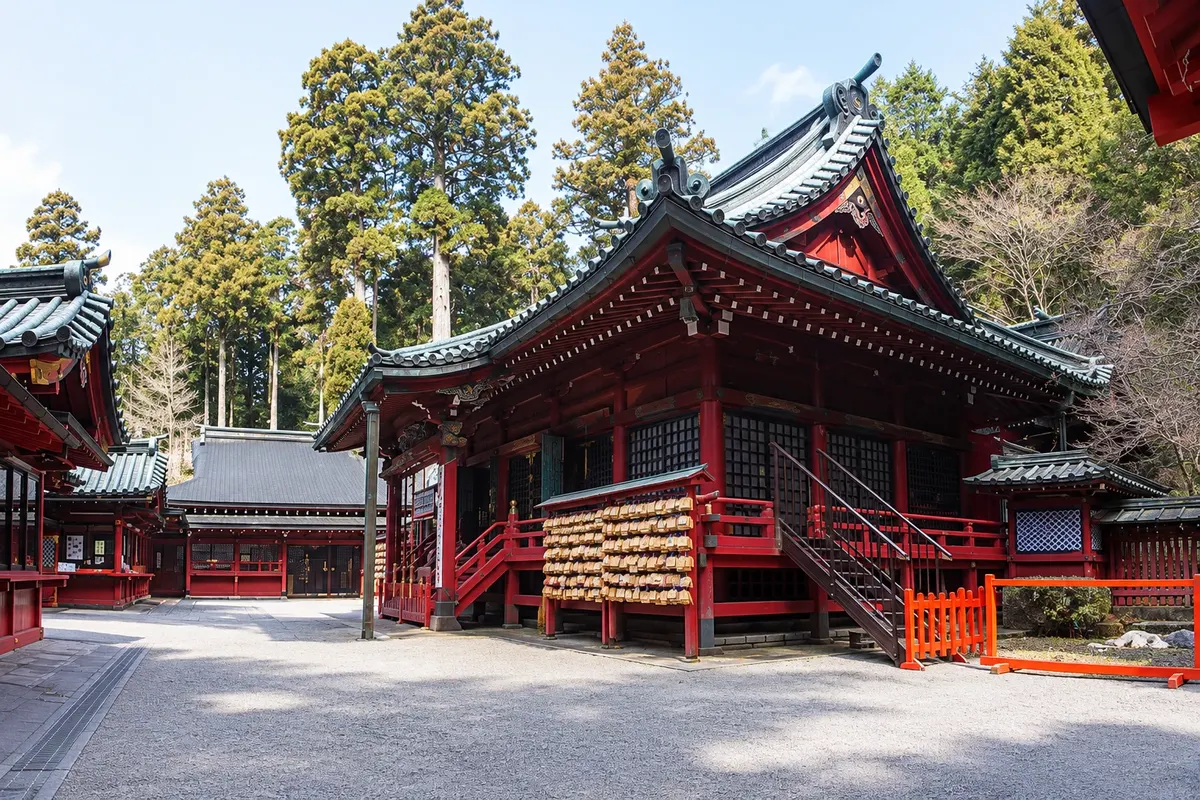
A Shinto shrine in a cedar forest on the shore of Lake Ashi, with the Peace Torii in the water, revered by samurai since the Middle Ages.
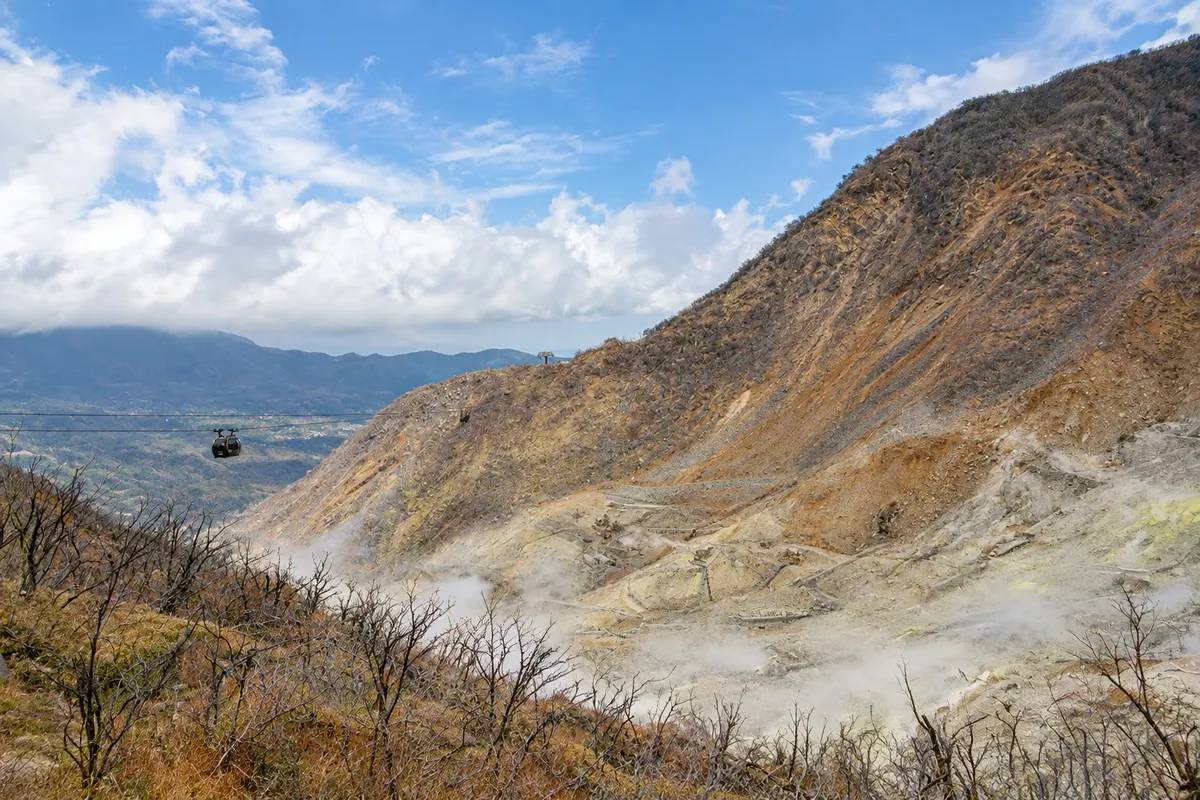
The volcanic valley of Hakone, with fumaroles, sulfur and the black eggs boiled in the hot spring waters, next to the ropeway station; access depends on the volcanic alert level.
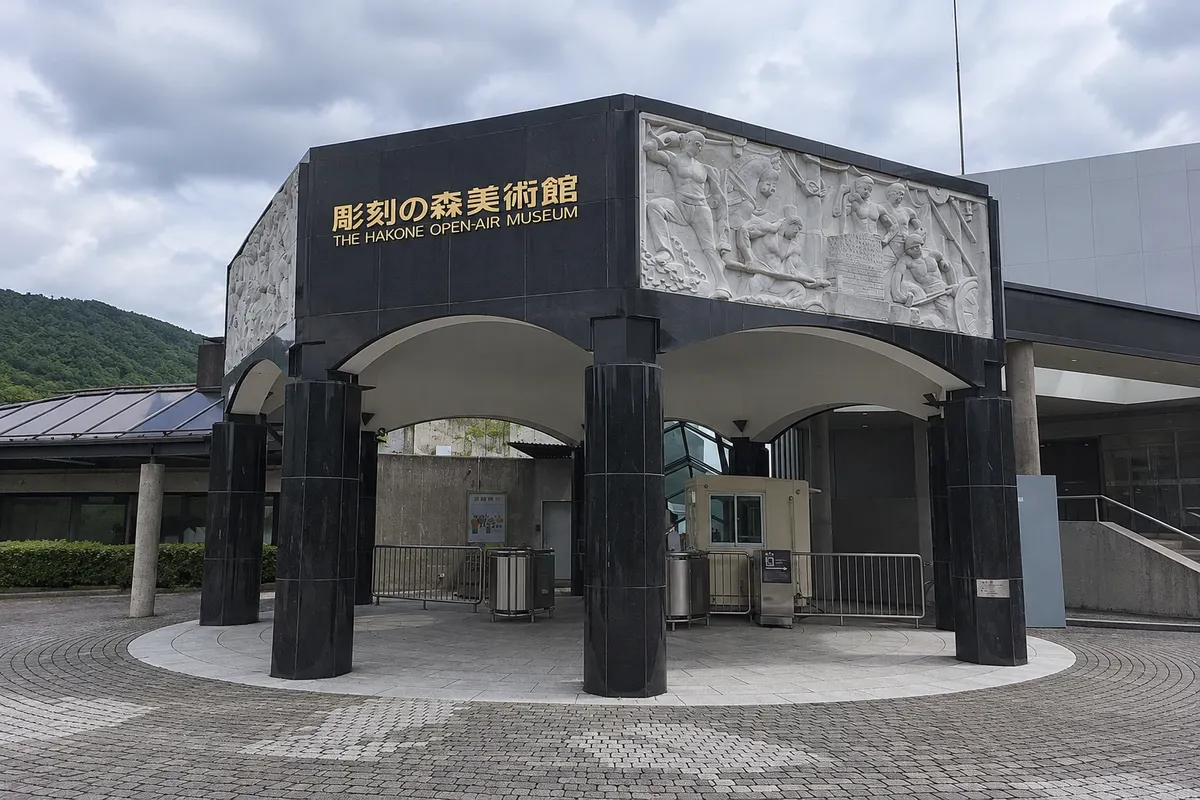
A sculpture museum in a hillside lawn park, with works by Rodin, Henry Moore, and Niki de Saint Phalle, a pavilion dedicated to Picasso, and a hot‑spring footbath.
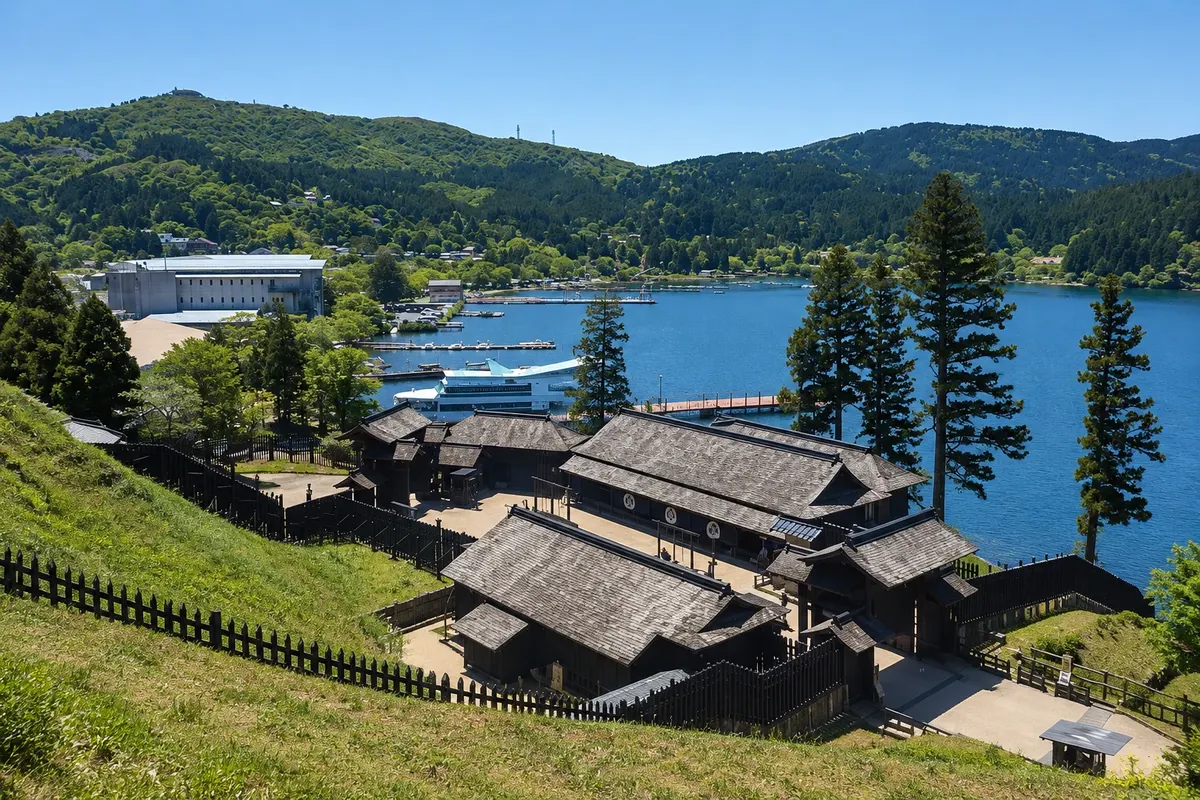
The reconstructed checkpoint of the old Tokaido road on the shore of Lake Ashi, with a museum, and the cedar avenue of the old route.
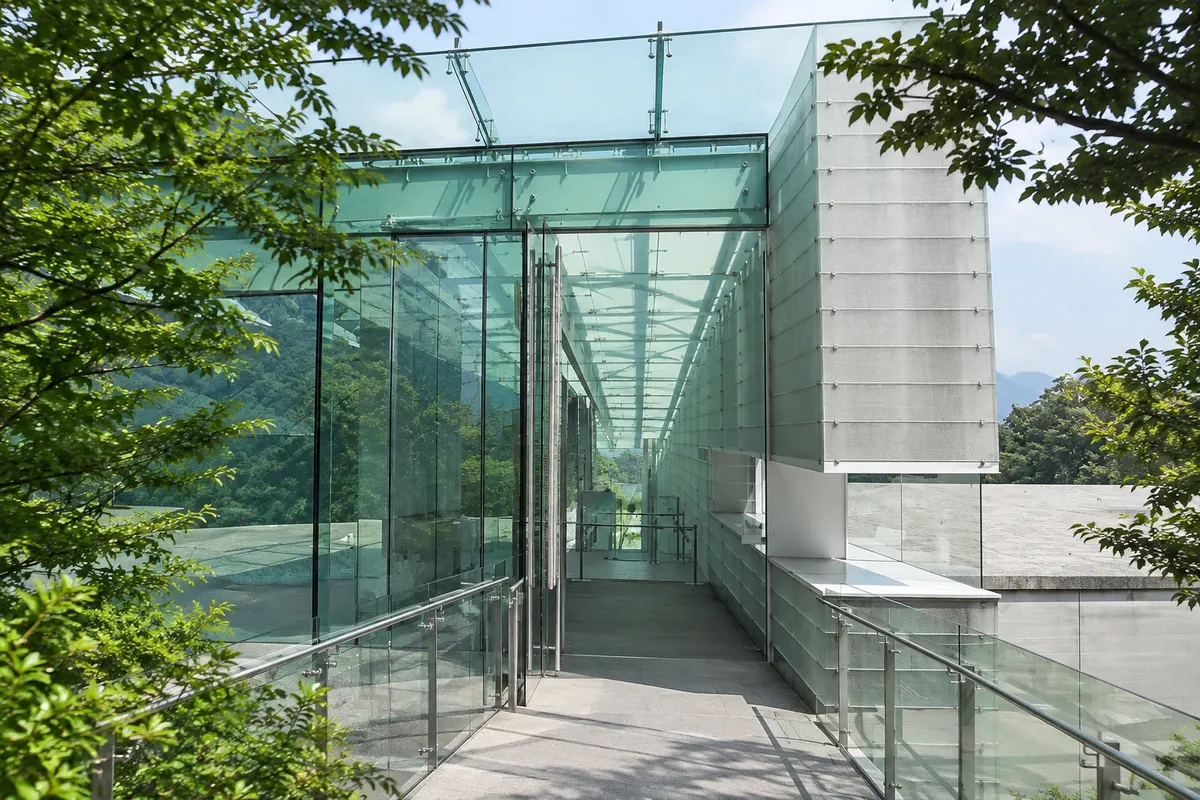
An art museum in the Sengokuhara forest, with Impressionist and modern paintings, Japanese art, glass, and a woodland trail.
Pred odhodom
Hakone – Kanagawa približno 80 km stran (izhodišče: Yokohama)
Razdalje so približne. Pred potovanjem preverite lete in vozne rede avtobusov, vlakov ali ladij.
The gateway is Hakone-Yumoto Station, the terminus of the Romancecar from Shinjuku and a 15-minute train ride from Odawara, where the shinkansen stops. From Hakone-Yumoto the mountain train climbs to Gora, and buses go to Lake Ashi.
One day for the train–funicular–ropeway–boat circuit. One night in a ryokan lets you enjoy the onsen and start early; two nights give time for the museums and the old road.
October and November, for autumn leaves, and winter, with higher chances to see Mount Fuji. Hydrangeas along the mountain railway bloom from mid-June to July. Weekends and Japanese public holidays get very crowded.
The seasons shown are the most usual ones; nature doesn't always follow the calendar.
No. The mountain train, funicular, ropeway, boats and buses connect the main points, and there are combined passes. Roads get congested on weekends.
Predlog poti
Pot povezuje znamenitosti na tej strani. Za oglede boste imeli dovolj časa.
Take the mountain train from Hakone-Yumoto up to Chokoku-no-Mori Station and visit the Open-Air Museum.
Continue by funicular and ropeway, stopping at Owakudani, to Togendai, cross the lake by boat and visit Hakone Shrine.
Return by bus to Hakone-Yumoto and finish at a thermal bathhouse.
Dan 1
Visit the Open-Air Museum and take a bus to the Pola Museum of Art.
Return to the ryokan and enjoy the onsen before dinner.
Dan 2
Take the funicular and the ropeway to Owakudani and descend to Togendai.
Cross the lake by boat to Hakone-machi, visit the checkpoint and walk the cedar avenue to Hakone Shrine.
Check before you go. Opening hours and days change, and places may close for renovations, holidays or events. This itinerary is a suggestion from Cidade Turismo, not a commitment: plan yours by checking directly with each place you intend to visit.
Pred odhodom
An itinerary that uses several transport modes: the mountain train from Hakone-Yumoto to Gora, the funicular to Sounzan, the ropeway over Owakudani to Togendai, a boat across Lake Ashi and a bus back to Yumoto.
Yes. Staying in a ryokan with hot springs and a traditional dinner is the reason for many trips, and it lets you do the circuit at a relaxed pace.
Yes. There are passes that combine the mountain train, the funicular, the ropeway, the boats and the buses, some including travel from Shinjuku. Check the options and validity before buying.
Visit the Pola Museum of Art, the Picasso Pavilion at the Open-Air Museum and other museums, and enjoy the hot springs.
On weekends, public holidays and during the autumn foliage season, yes — with lines at the ropeway and on the boats. On weekdays, there is less crowding.
Pred odhodom
Z nekaj načrtovanja boste imeli več časa za uživanje na poti.
Autumn, with red leaves generally from late October to November, and winter, with dry air and better chances to see Mount Fuji. Hydrangeas along the mountain railway usually bloom from mid-June to July. Summer is humid and cooler than Tokyo. Holidays and weekends get crowded.
The seasons shown are the most usual ones; nature doesn't always follow the calendar.
One day is enough for the train–funicular–ropeway–boat circuit with a stop at one museum. One night, in a ryokan with onsen, is the most common way to visit. With two nights, there’s time for the museums, the shrine, the old road and the hot springs.
Hakone-Yumoto is the most practical base, next to the station, with bathhouses and restaurants. Miyanoshita and Gora sit mid-circuit, close to the museums. Sengokuhara is quieter, with grass fields and isolated hotels. The Lake Ashi shore at Moto-Hakone has lake views and the shrine.
Odnesite svoje odpadke, upoštevajte oznake in podprite lokalne ponudnike. V naravi upoštevajte navodila za obiskovalce.
Odgovori na vaša vprašanja
One day for the classic circuit; one night in a ryokan with onsen is the most common. With two nights you can include the museums, the shrine and the old road without rushing.
By Romancecar from Odakyu, from Shinjuku to Hakone-Yumoto in about 1 hour 30 minutes, or by shinkansen to Odawara and from there by train or bus. There are also buses from Shinjuku to Lake Ashi.
On clear days, yes — from Lake Ashi, from Owakudani and from some viewpoints. Chances are higher in winter and early morning. With clouds, the mountain disappears.
No. The mountain train, funicular, ropeway, boats and buses connect the main spots. There are combination passes for these transports.
Many bathhouses and ryokan do not accept visible tattoos in common areas. Some accept small tattoos if covered with a sticker, and several accommodations have private baths. Check the policy of each place before you go.
Več kot vodnik