Tuscany

Tuscany · Italija

Tuscany

Pisa, Siena, San Gimignano and Lucca: medieval towers, whole stone squares and vineyard-covered hills a short train or bus ride from Florença.

Central

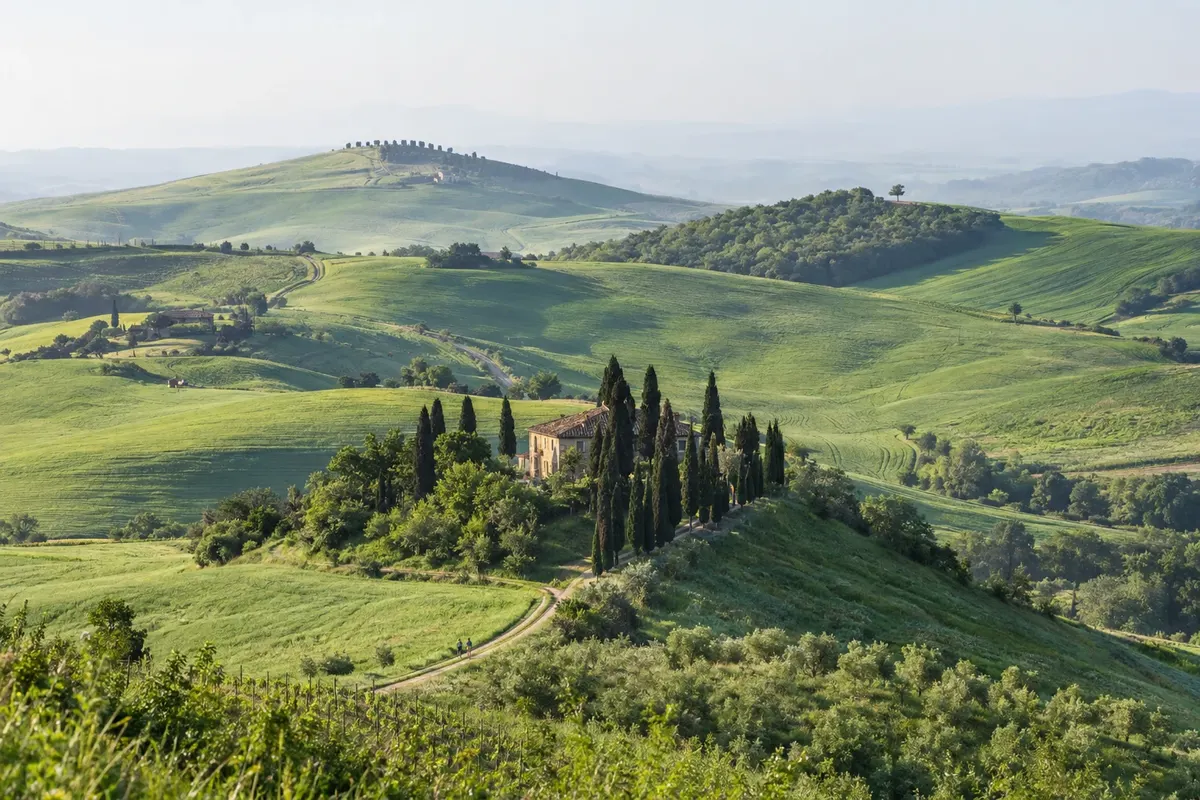
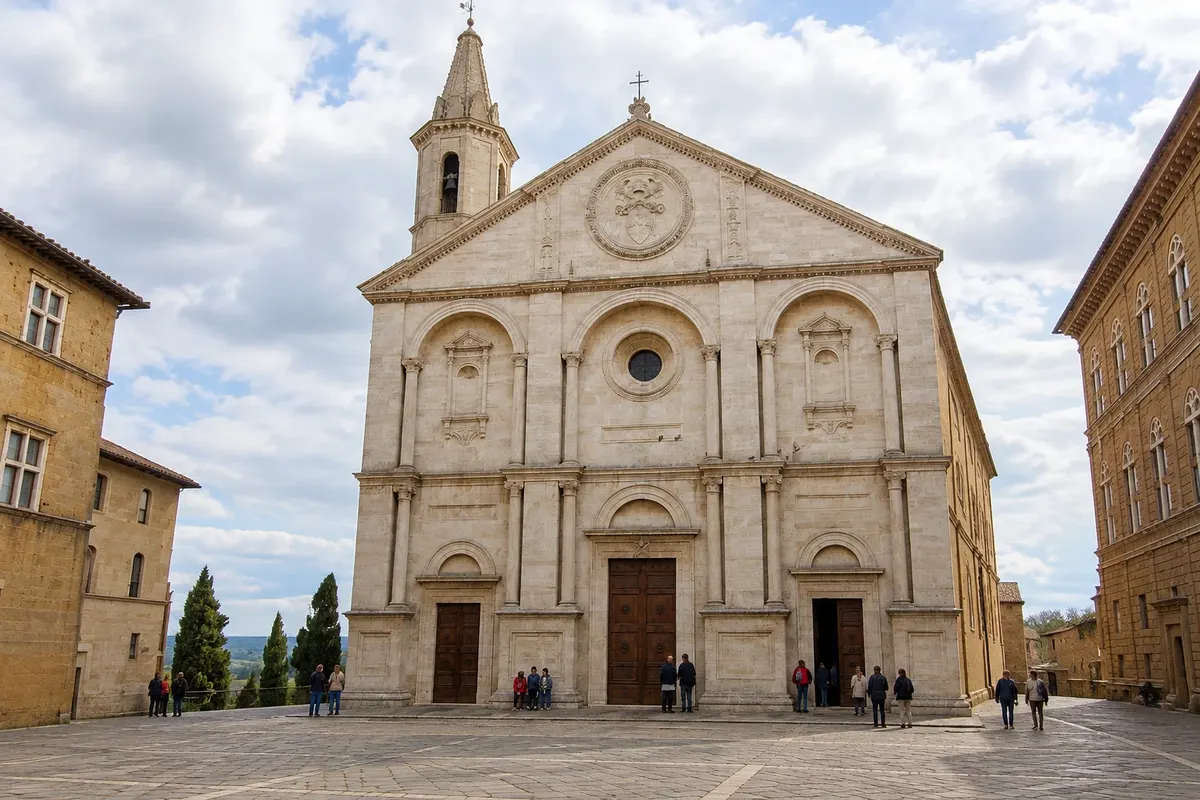
Na fotografiji: Val d’Orcia, Toscana

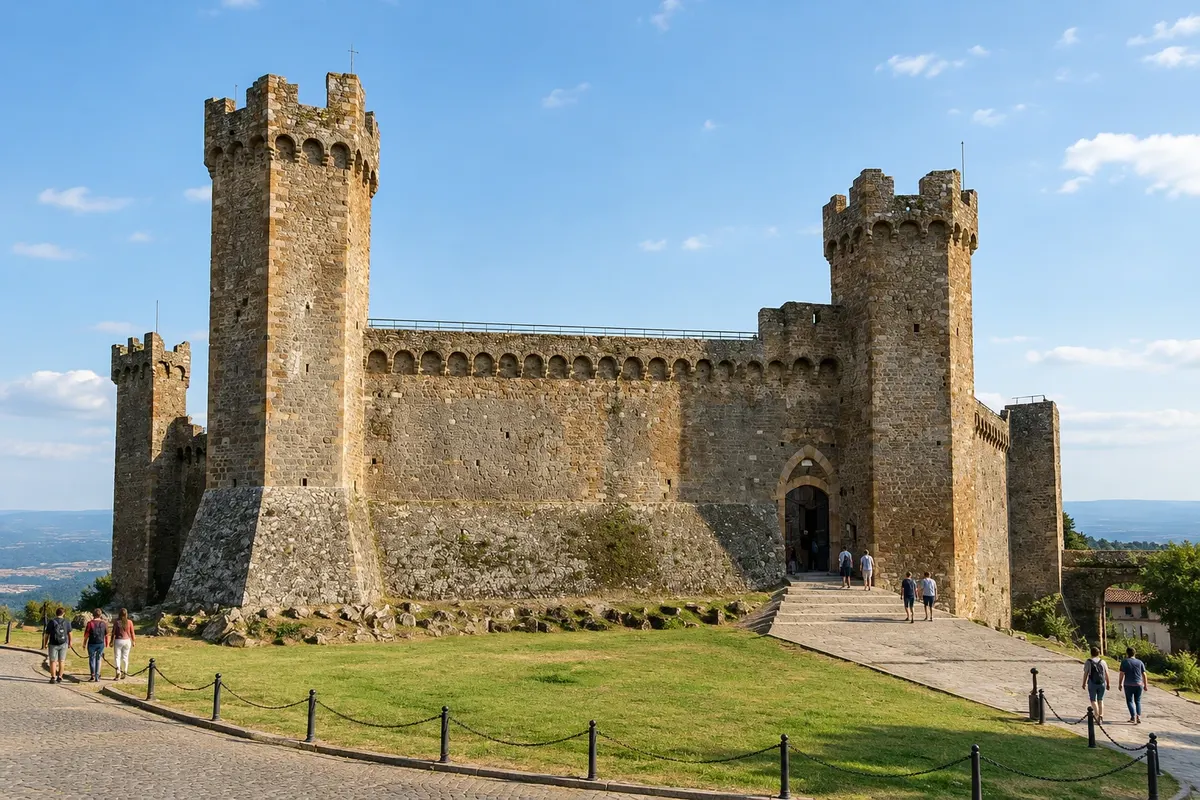
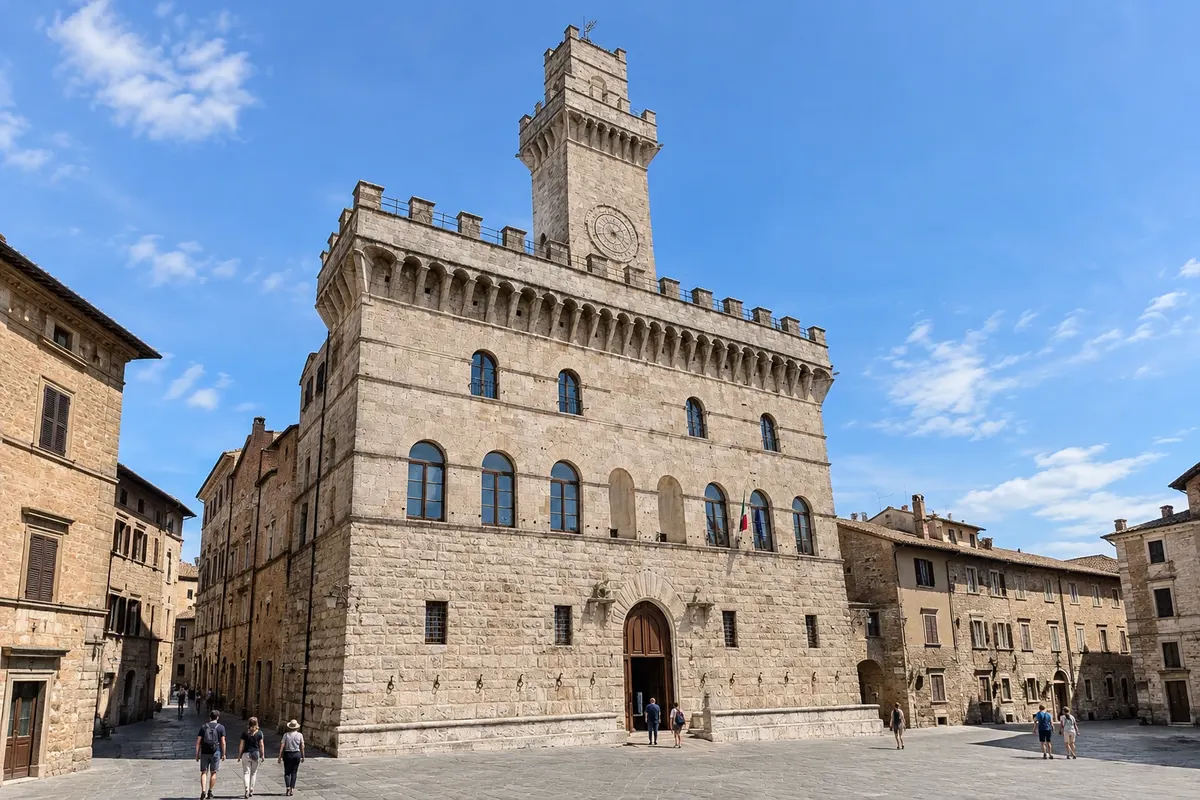
Illustrative images. The pictures in this guide are illustrations based on the real place, not photographs, and may differ from it.

Na voljo v trgovini Google Play Pošljite svoje fotografije

Spoznajte kraj

Pokrajina, ki jo doživite
v svojem ritmu.

Toscana, in central Italy, is the region whose capital is Florença. Around it lie smaller towns that keep the medieval layout almost intact: Pisa, Siena, San Gimignano and Lucca. All are a little over an hour from Florença and can be visited on day trips or by spending one or two nights in each.

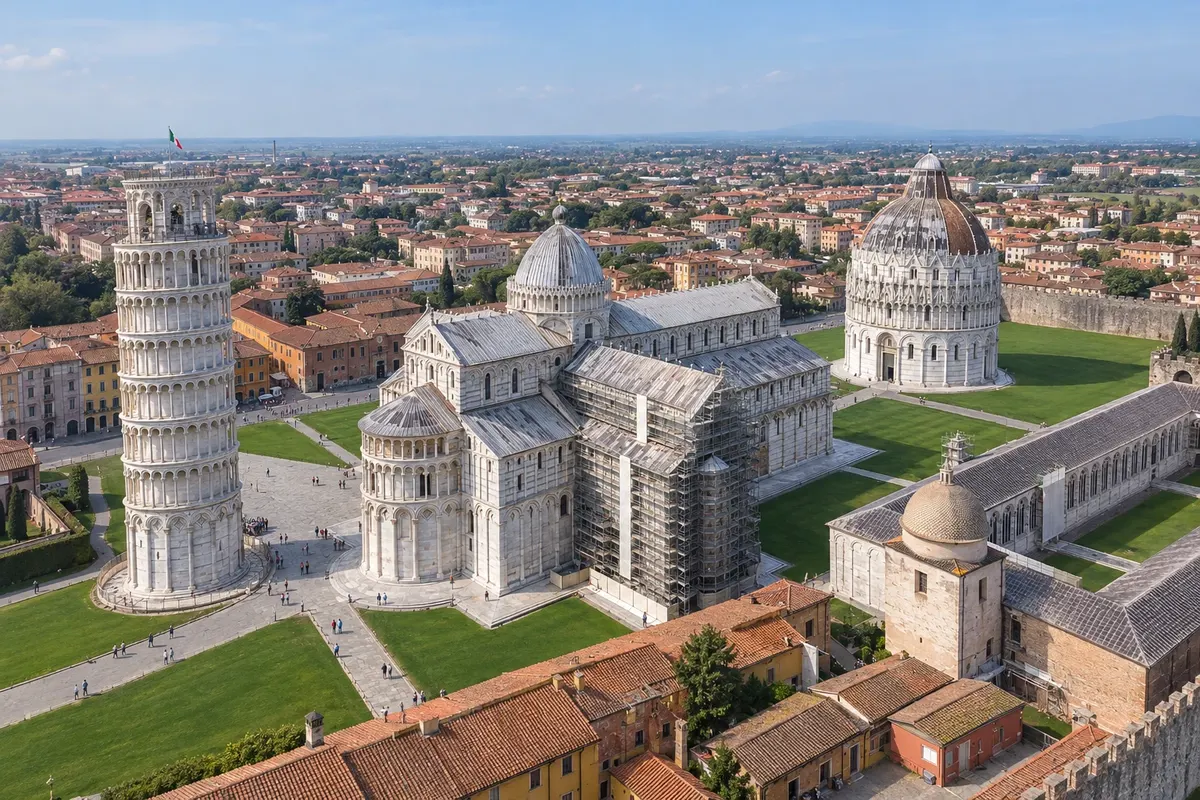
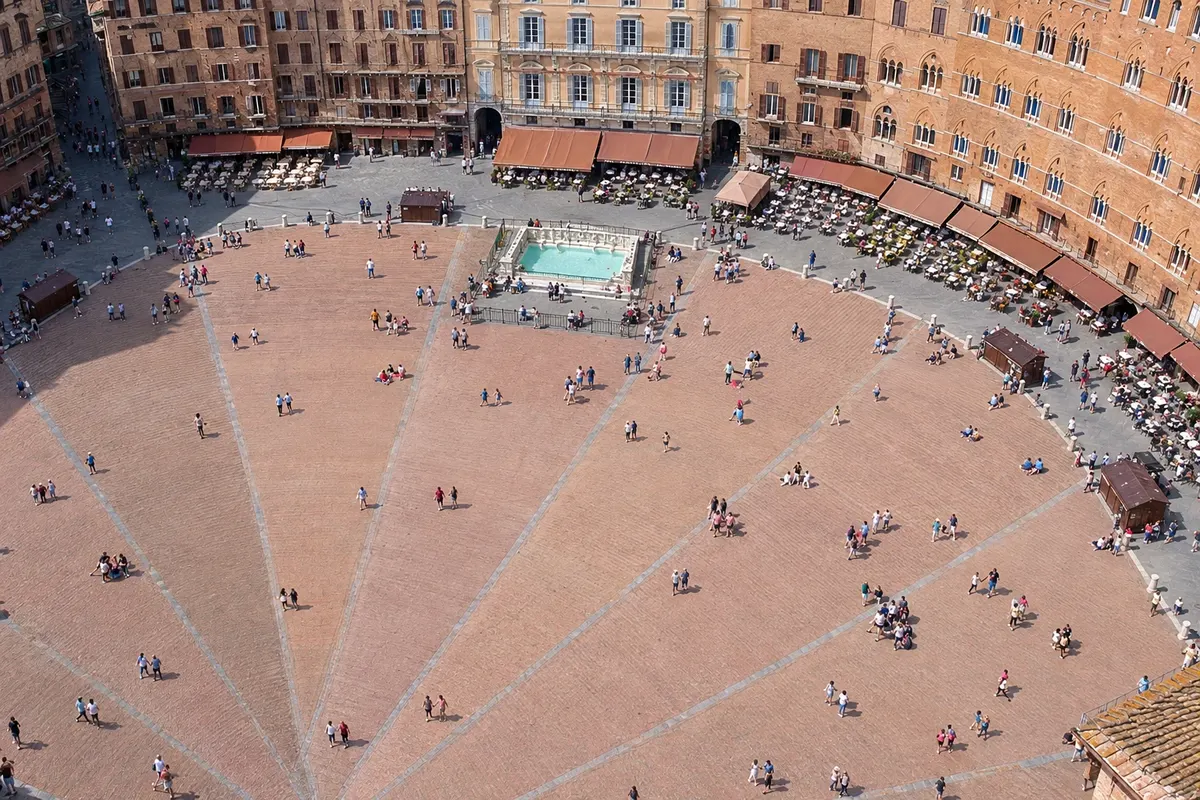
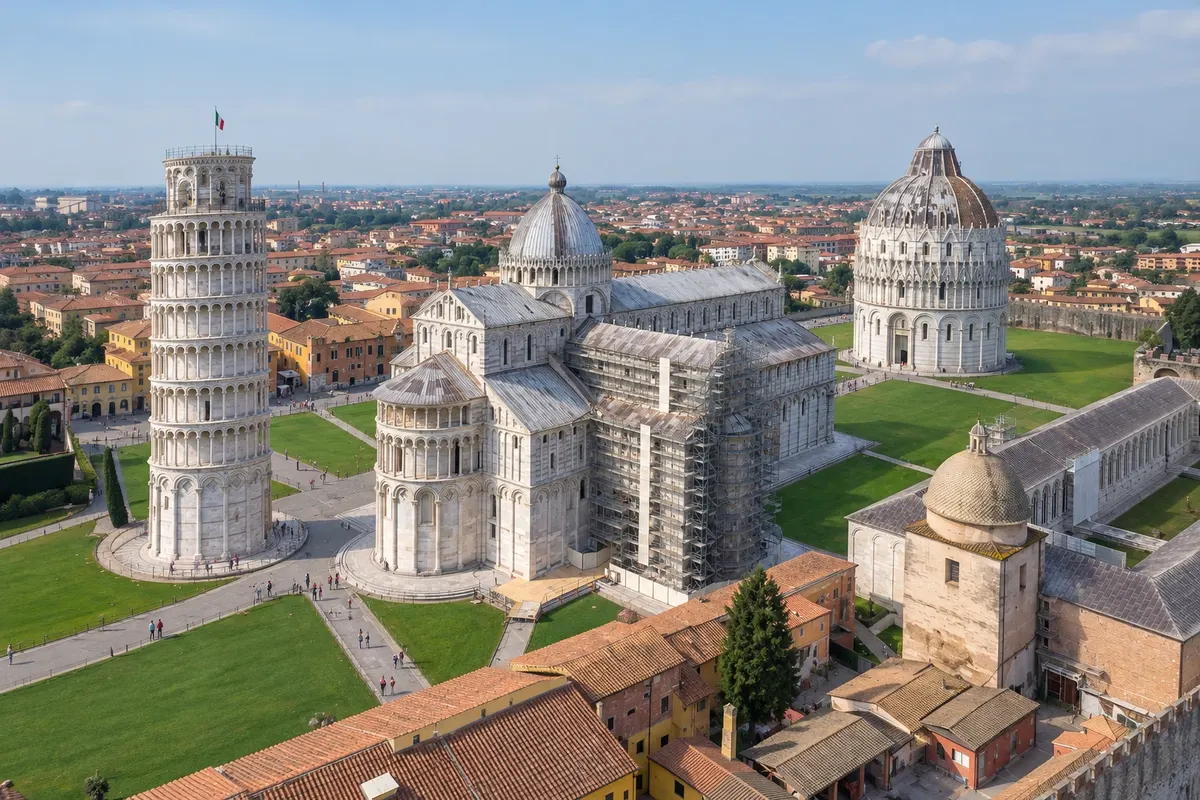
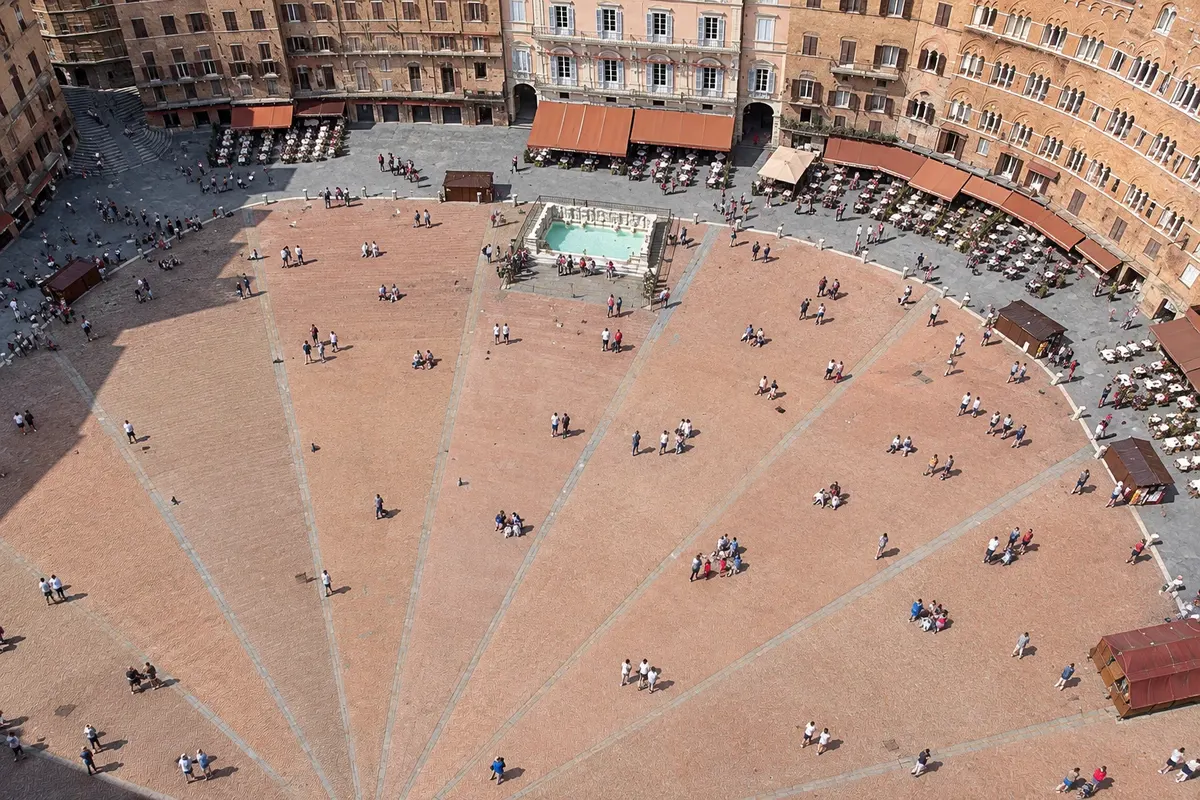
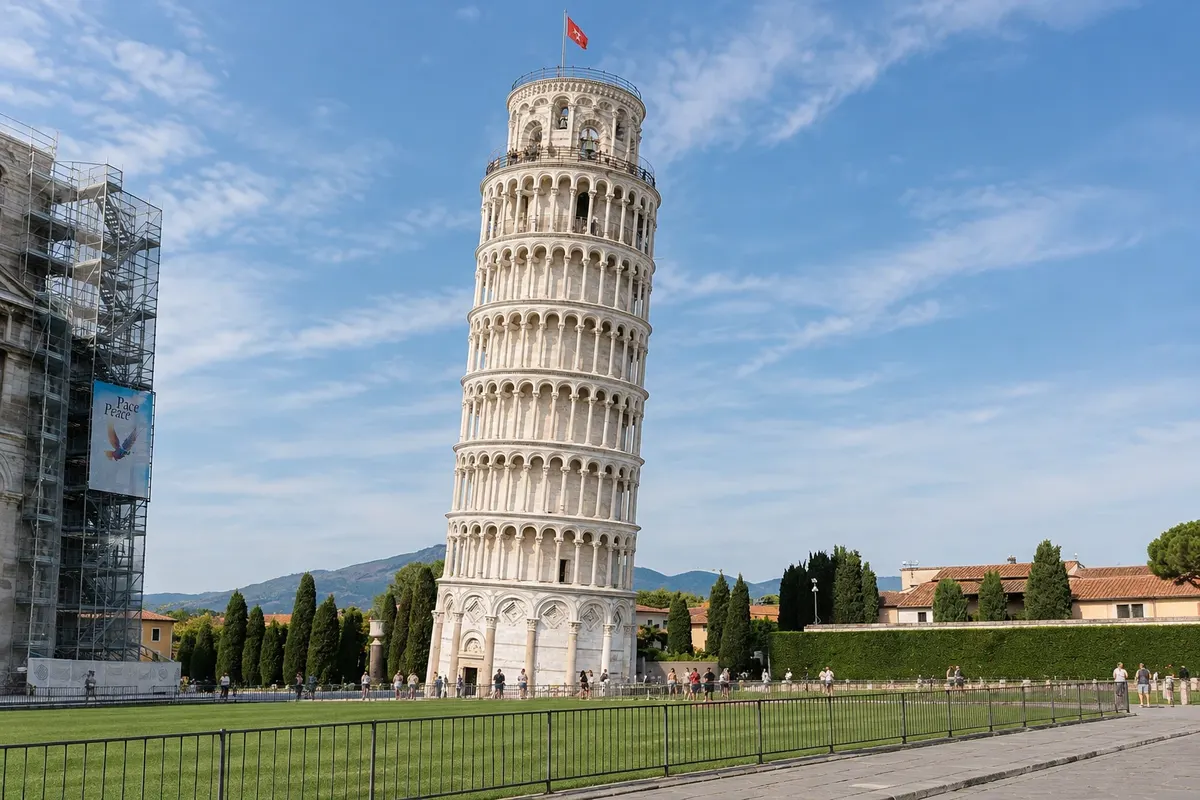
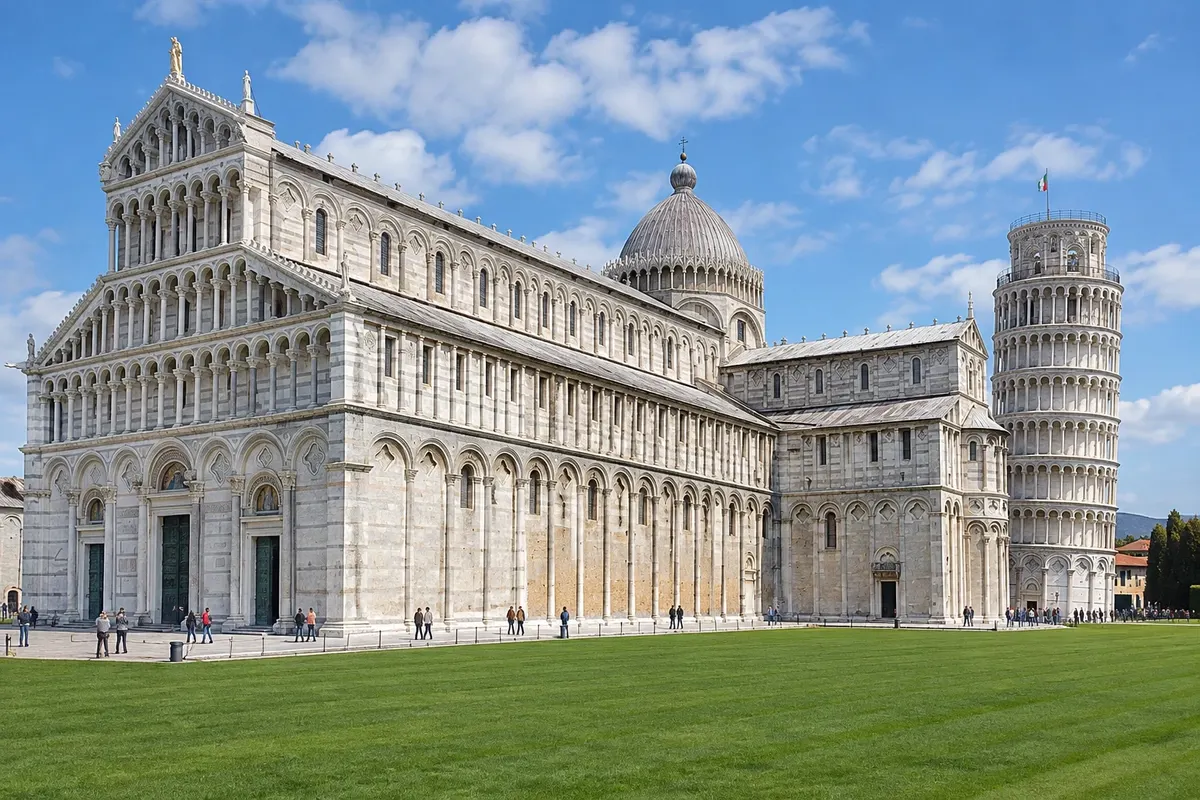
Pisa brings together on the Piazza dei Miracoli the leaning tower, the cathedral, the baptistery and the monumental cemetery, a complex that is a UNESCO World Heritage Site. Siena revolves around the Piazza del Campo, where the Palio takes place, the horse race between the city's neighborhoods, and has a cathedral of white-and-black striped marble.

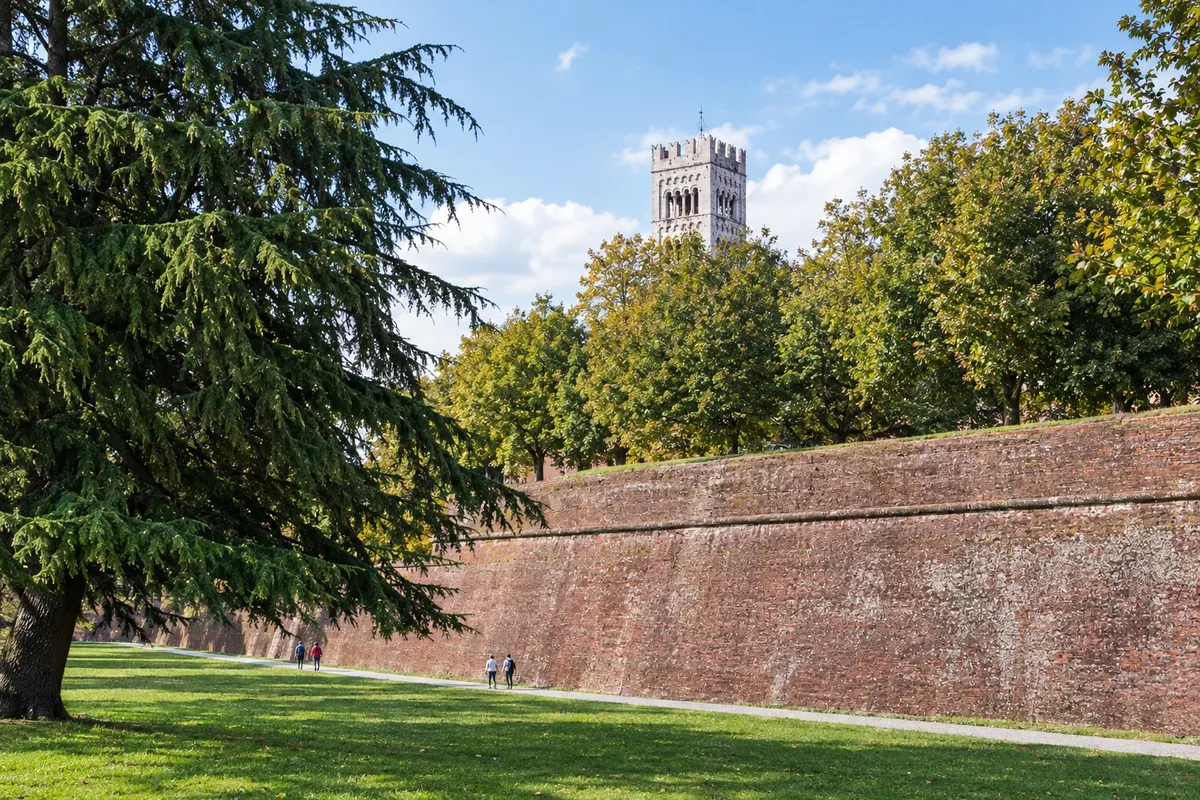
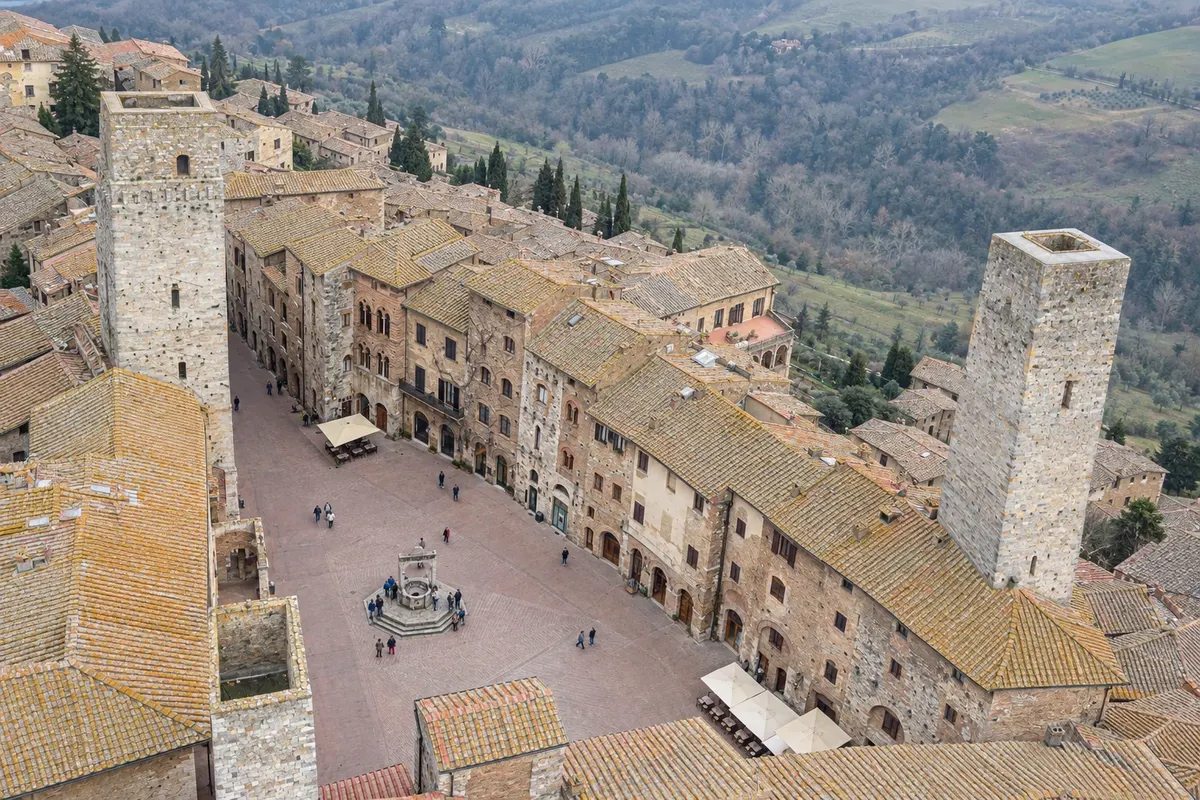
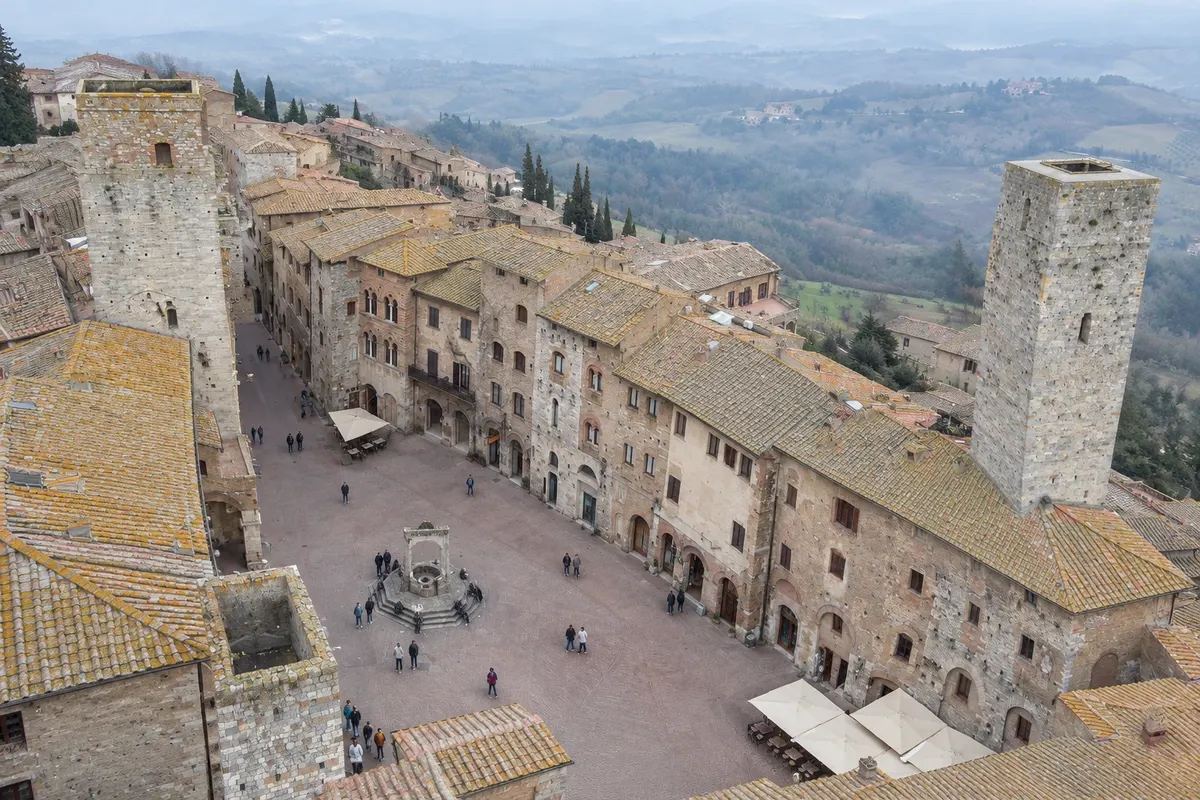
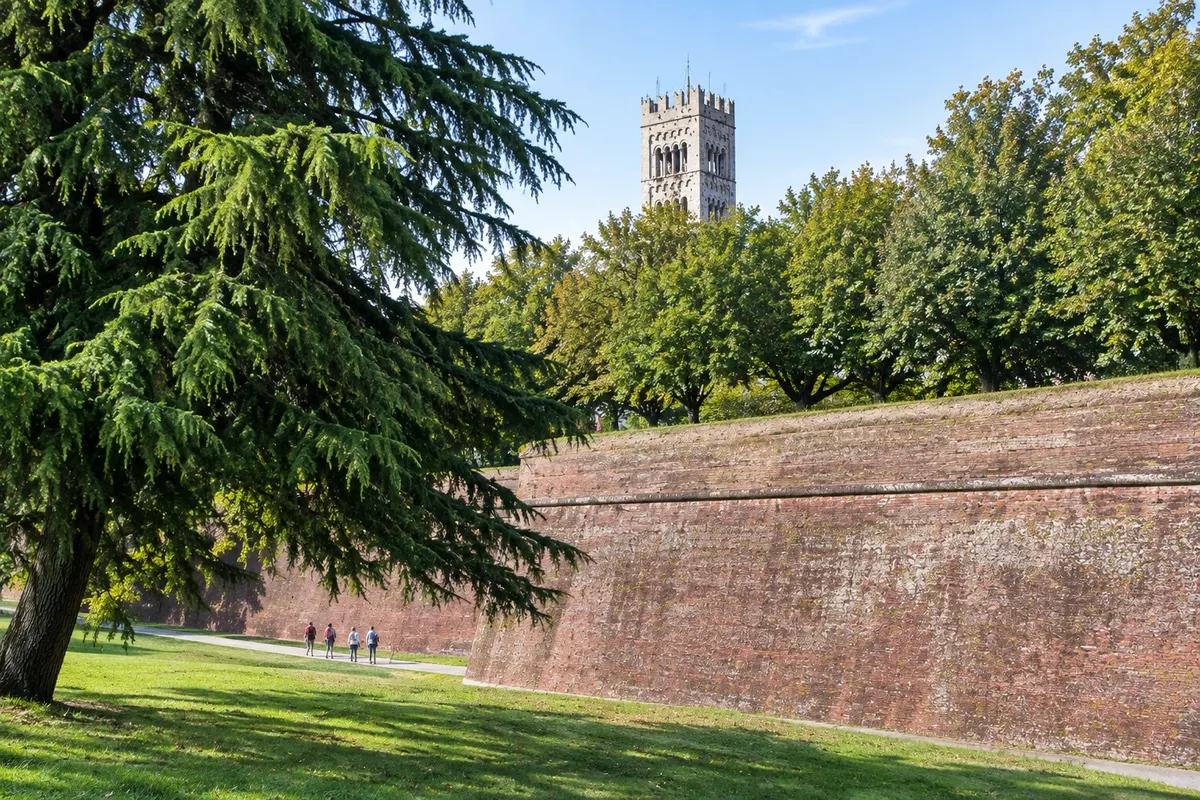
San Gimignano is the town of towers: of the dozens raised by wealthy families in the Middle Ages, about fourteen still stand on the hill. Lucca is entirely enclosed by wide Renaissance walls, which have become a tree-lined promenade for walking and cycling.

Between one town and another the hills appear with cypresses, olive trees and vineyards. South of Siena lie the Val d'Orcia, Pienza, Montalcino and Montepulciano, land of Brunello and Vino Nobile.

This destination brings together 4 cities: Pisa, Lucca, San Gimignano, Siena.

Delite: WhatsApp
Delite svoja popotniška doživetja s fotografijami Pošljite fotografije vsakega kraja, ki ste ga obiskali. Največje število fotografij na kraj: 5.

Ena destinacija, več poti

Mesta na tej poti

Začnite v enem mestu ali v načrt poti vključite več mest.

Tuscany – lega
PisaSienaSan GimignanoLucca

Obrisi: ISTAT, limites administrativos 2026, CC BY 4.0. Priredba: Cidade Turismo.

Kako do tja:Tuscany

✈ Aeroporto di Pisa Galileo Galilei (PSA)· 3 km do cilja (Pisa)

Check before buying. The most used entry point is Pisa airport; Florença's airport also receives flights from Europe. From Rome or Milan, take a high-speed train to Florença and from there regional trains to Pisa and Lucca or buses to Siena and San Gimignano.

Predlagana točka prihoda:Pisa

San Gimignano
Toscana · Tuscany

San Gimignano

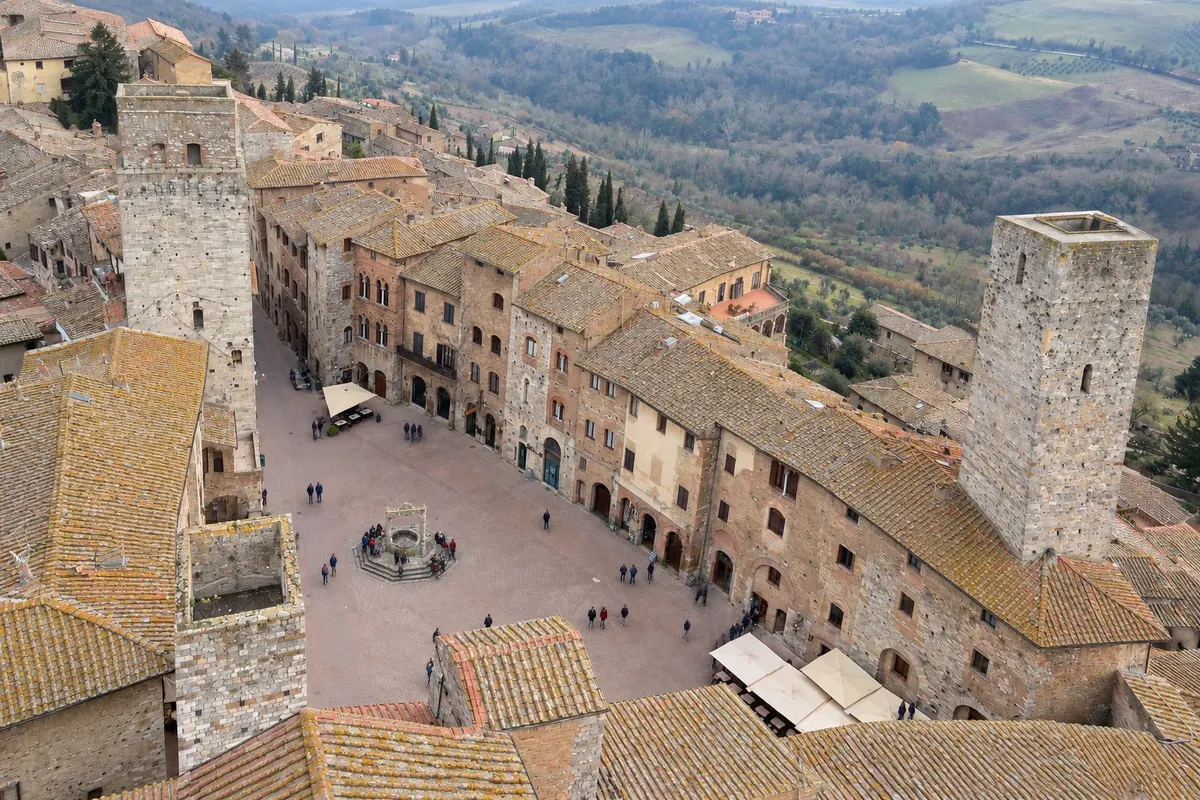
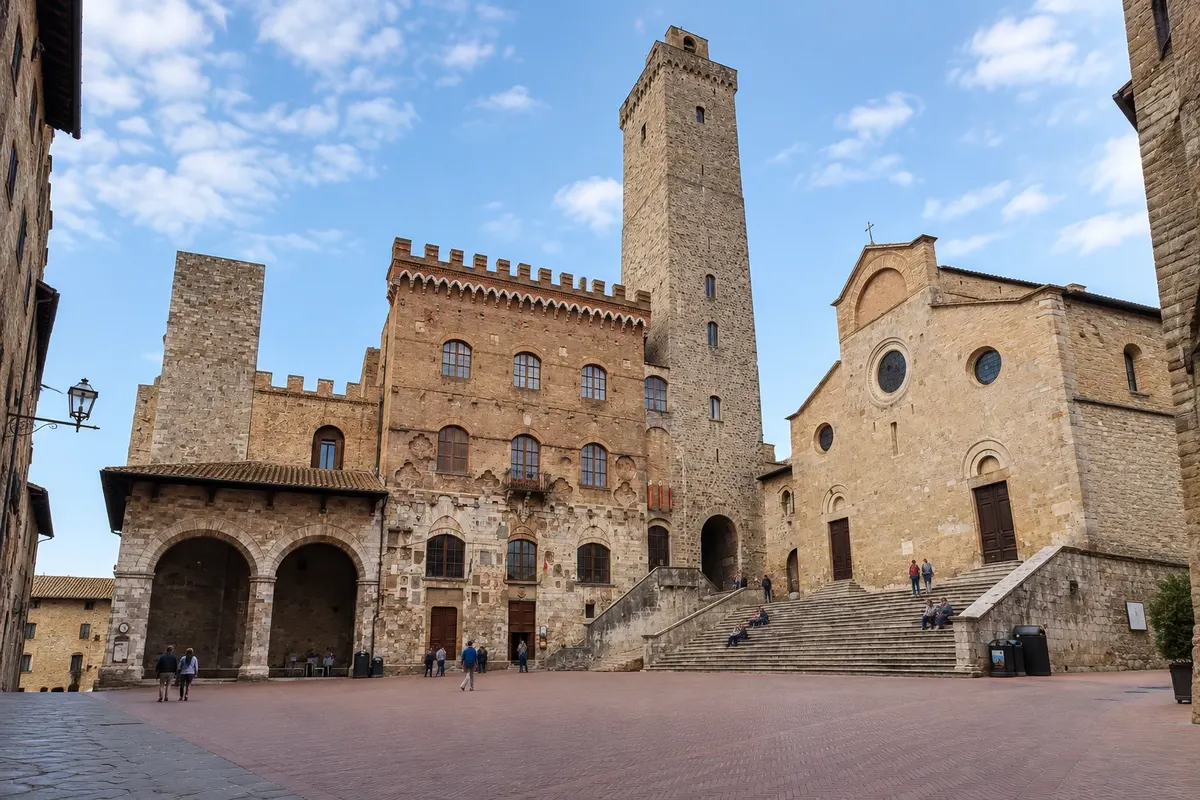
San Gimignano is a walled village atop a hill between Florence and Siena, known for the medieval towers that still mark the skyline: about fourteen remain standing. The historic centre is a UNESCO World Heritage site. The two neighbouring squares, the Piazza della Cisterna and the Piazza del Duomo, contain the Collegiata, covered in frescoes, and the Palazzo Comunale, from which you can climb the Torre Grossa. Around the village, vineyards produce Vernaccia di San Gimignano.

Doživite kraj

Kaj početi – Tuscany

Historic Centre of San Gimignano
San Gimignano · Tuscany · Zgodovinska mestna četrt

Historic Centre of San Gimignano

The medieval village within the walls, with stone streets, palaces and about fourteen towers. It has been a UNESCO World Heritage site since 1990.

Walls of Lucca
Lucca · Tuscany · Monument

Walls of Lucca

The Renaissance walls that encircle the entire centre, with about 4 km of tree-lined promenade on top, for walking or cycling.

Piazza dei Miracoli
Pisa · Tuscany · Trg

Piazza dei Miracoli

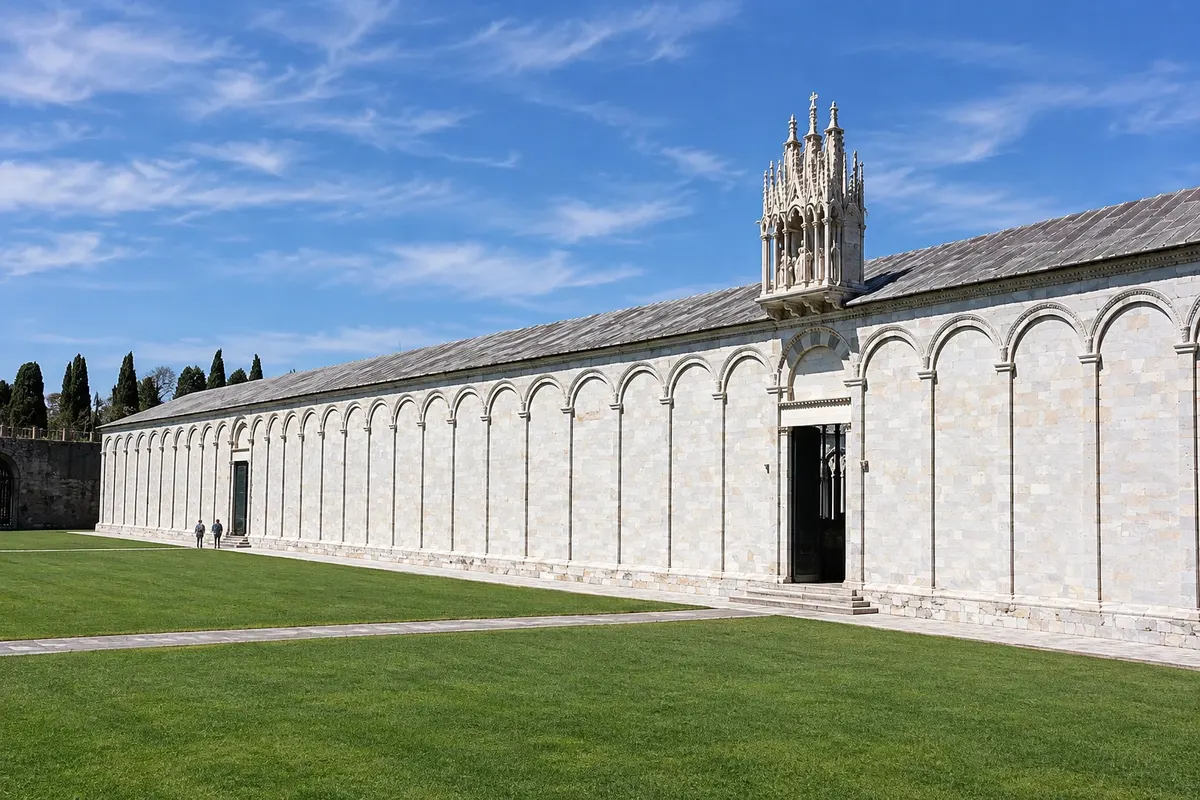
The lawn where the leaning tower, the cathedral, the baptistery and the Camposanto stand, a complex in white marble that is a UNESCO World Heritage Site.

Piazza del Campo
Siena · Tuscany · Trg

Piazza del Campo

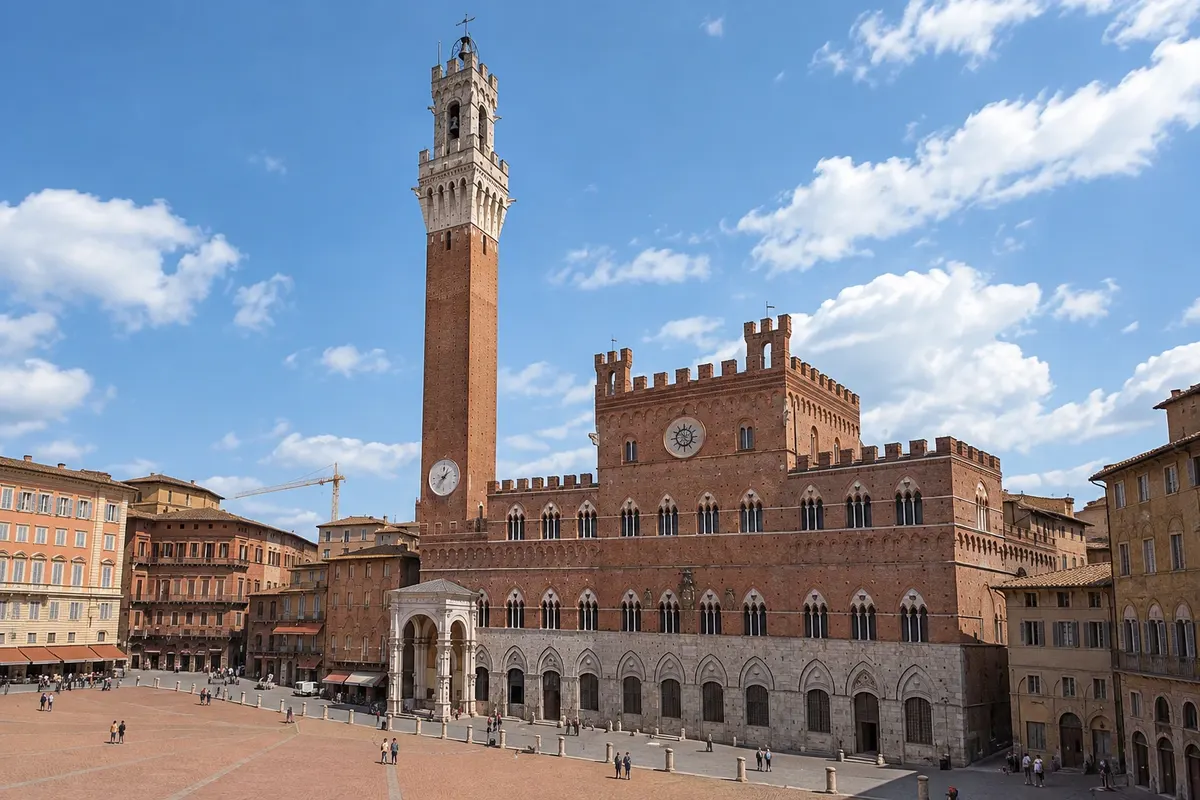
Siena's central square, shell-shaped and sloping, divided into nine segments, where the Palio is run on July 2 and August 16.

Tuscany – prikaži dodatne kraje (22)
Palazzo Pubblico
Siena · Tuscany · Palace

Palazzo Pubblico

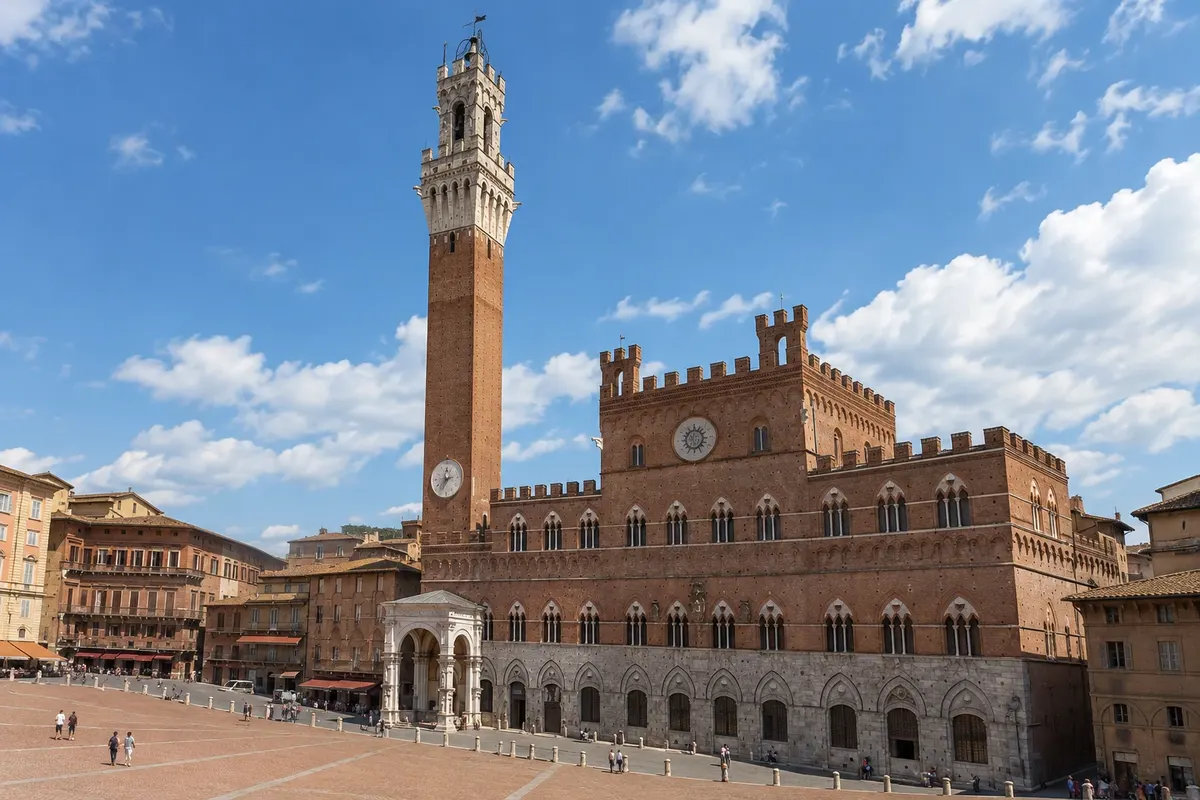
Siena's medieval town hall on Piazza del Campo, which houses the Museo Civico with Simone Martini's Maestà and the frescoes of the Good and Bad Government.

Piazza della Cisterna
San Gimignano · Tuscany · Trg

Piazza della Cisterna

The triangular square at the heart of San Gimignano, with a 13th-century stone well in the centre and medieval towers around it.

Guinigi Tower
Lucca · Tuscany · Monument

Guinigi Tower

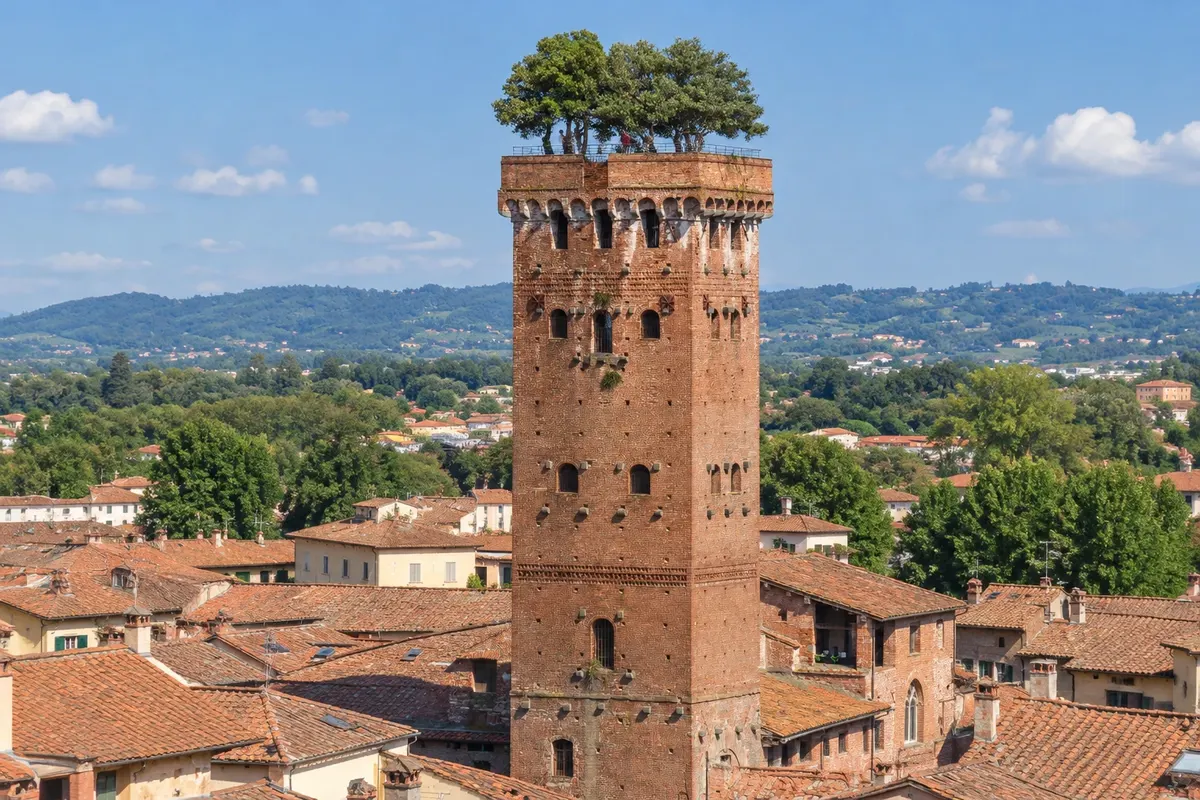
Medieval tower of about 44 metres belonging to the Guinigi family, with a small garden of centuries-old holm oaks planted on the top.

Leaning Tower of Pisa
Pisa · Tuscany · Monument

Leaning Tower of Pisa

The cathedral's leaning bell tower, begun in 1173. The climb has 251 steps and is done in timed groups.

Cathedral of Santa Maria Assunta
Pisa · Tuscany · Stolnica

Cathedral of Santa Maria Assunta

The cathedral of Pisa, begun in 1064, with a facade of marble arcades, a gilded ceiling and the pulpit sculpted by Giovanni Pisano.

Collegiata di Santa Maria Assunta
San Gimignano · Tuscany · Cerkev

Collegiata di Santa Maria Assunta

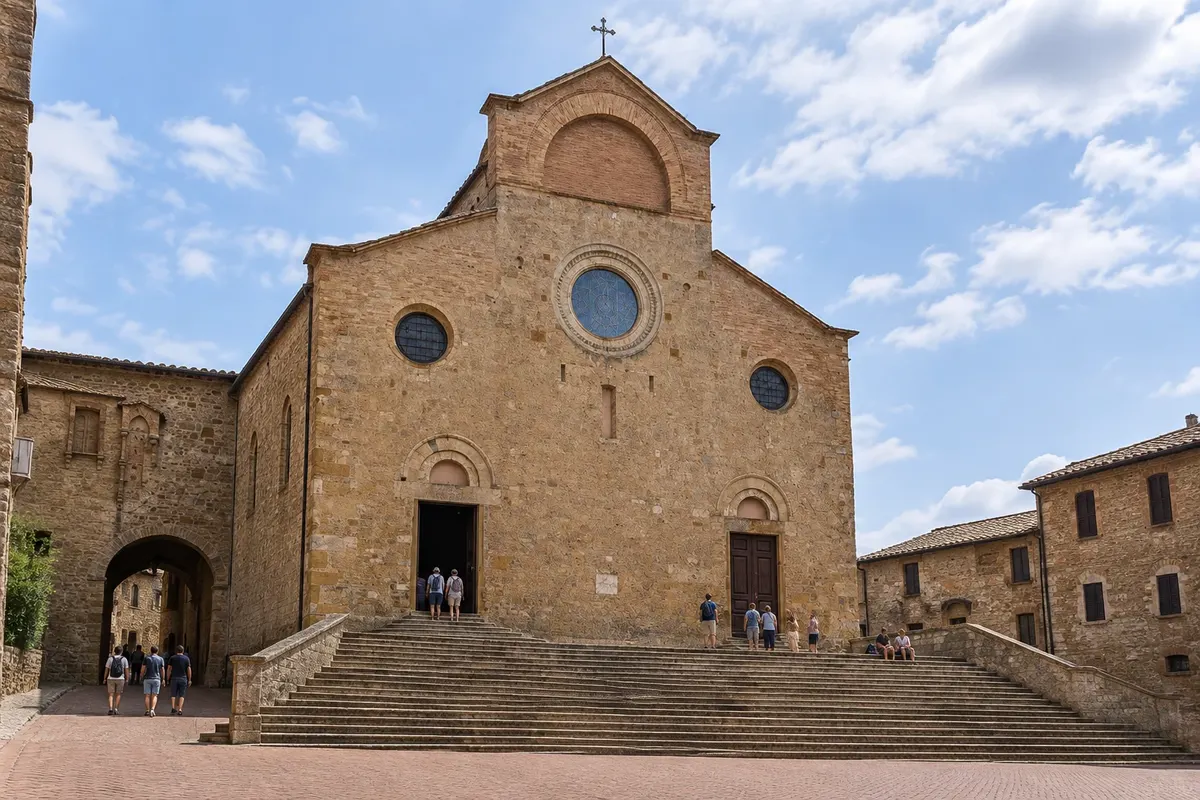
The main church of San Gimignano, with a simple façade and an interior entirely covered in 14th-century frescoes depicting scenes from the Old and New Testaments.

Piazza dell'Anfiteatro
Lucca · Tuscany · Trg

Piazza dell'Anfiteatro

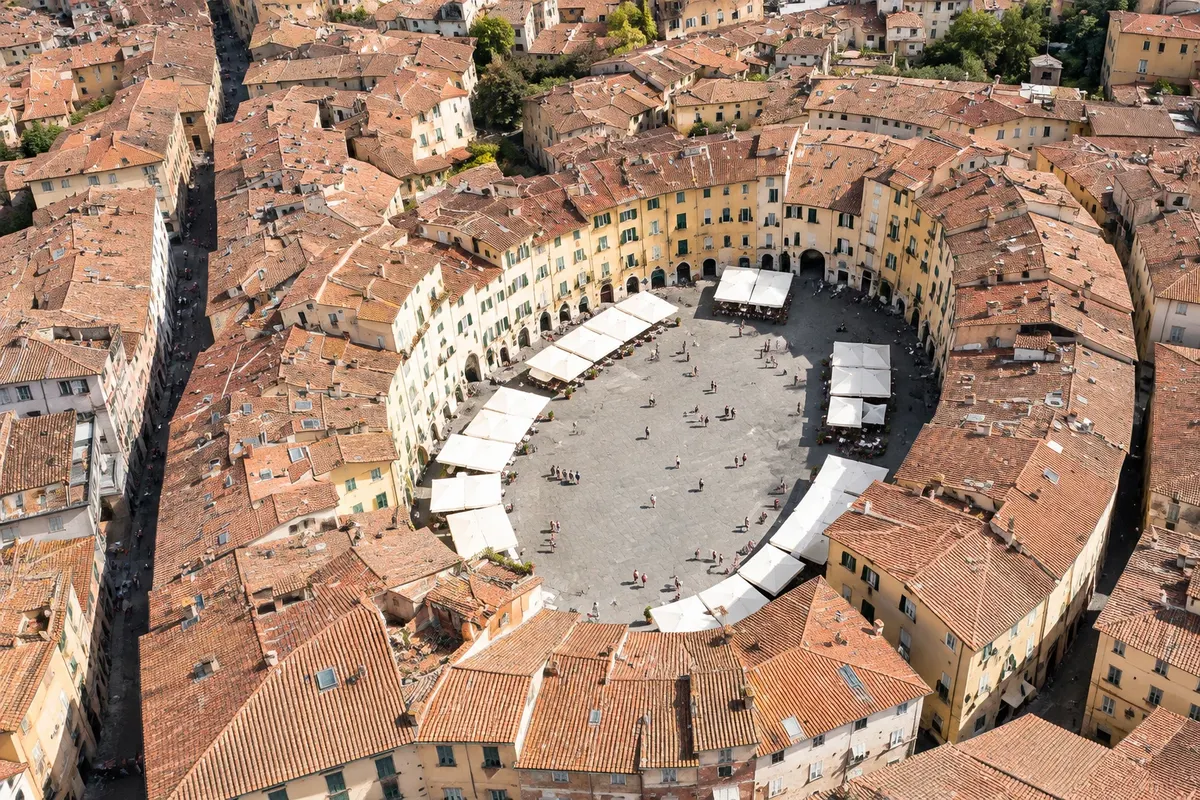
Oval plaza surrounded by houses, built over the ruins of a Roman amphitheatre, whose layout is still visible in the curve of the facades.

Torre del Mangia
Siena · Tuscany · Monument

Torre del Mangia

The brick tower of the Palazzo Pubblico, built between 1338 and 1348. There are about 400 steps to the top, with views over all of Siena and the surrounding hills.

Baptistery of San Giovanni
Pisa · Tuscany · Monument

Baptistery of San Giovanni

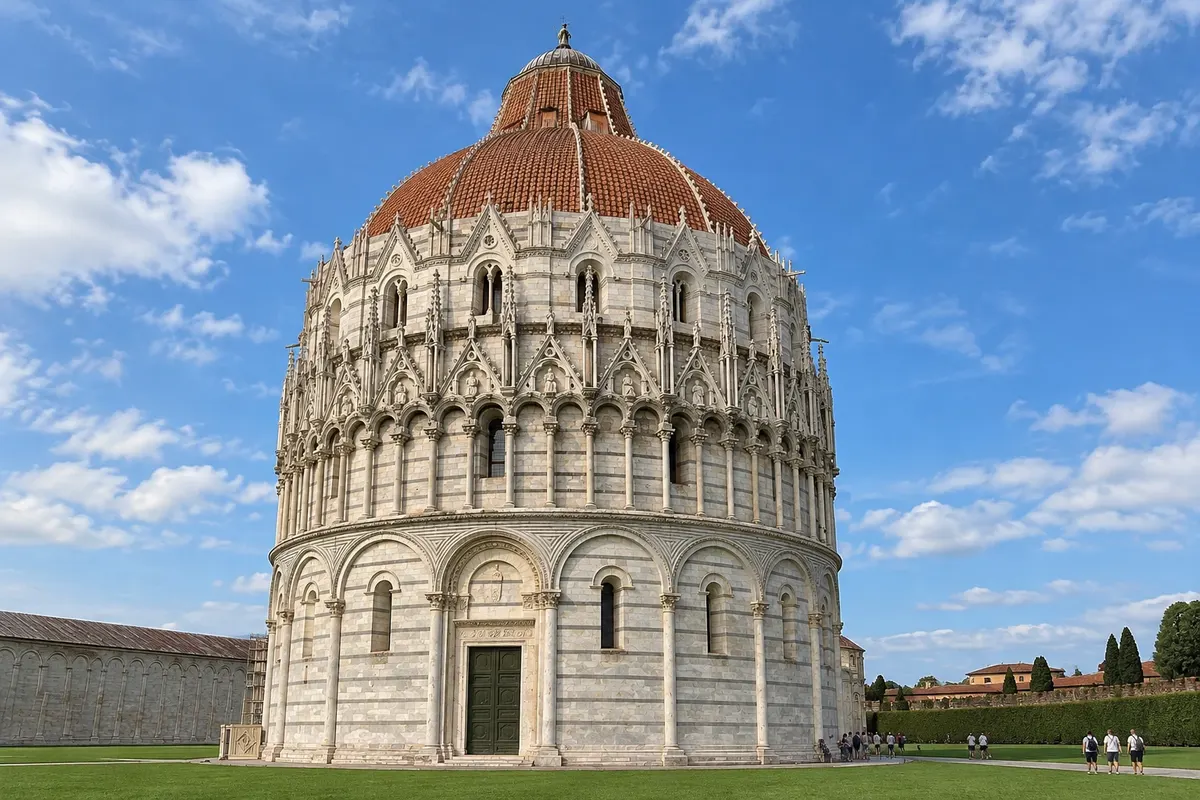
The largest baptistery in Italy, round, with the pulpit by Nicola Pisano and acoustics that guards often demonstrate by singing a few notes.

Cathedral of San Martino
Lucca · Tuscany · Stolnica

Cathedral of San Martino

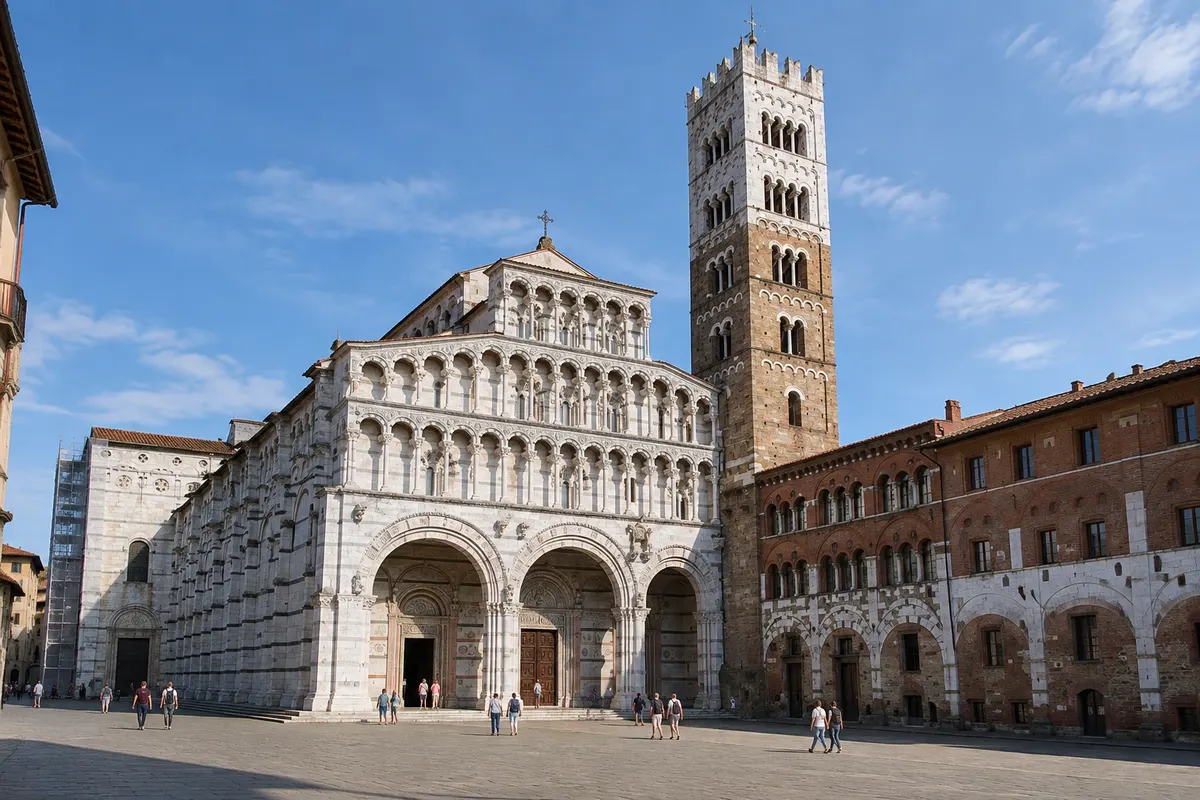
Lucca's cathedral, with a façade of superimposed arcades, the crucifix of the Volto Santo and the tomb of Ilaria del Carretto by Jacopo della Quercia.

Siena Cathedral
Siena · Tuscany · Stolnica

Siena Cathedral

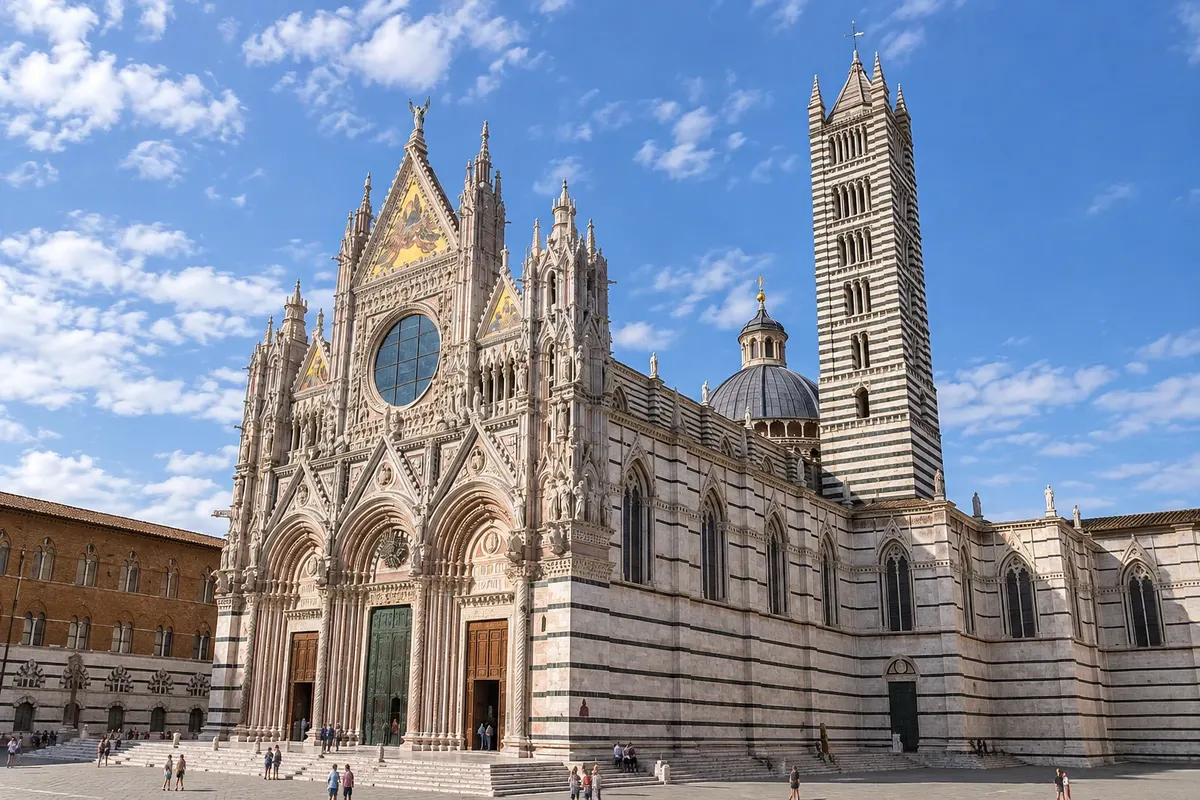
The cathedral of white-and-black striped marble, with a marble mosaic floor, Nicola Pisano's pulpit, the Libreria Piccolomini and the view from the Facciatone.

Palazzo Comunale and Torre Grossa
San Gimignano · Tuscany · Muzej

Palazzo Comunale and Torre Grossa

The medieval town hall of San Gimignano, home to the Musei Civici, with the Sala di Dante, the picture gallery and the ascent to the Torre Grossa, the tallest tower in the town.

Camposanto Monumentale
Pisa · Tuscany · Monument

Camposanto Monumentale

The former monumental cemetery, a marble cloister with Roman sarcophagi and medieval frescoes such as the Triumph of Death.

San Michele in Foro Church
Lucca · Tuscany · Cerkev

San Michele in Foro Church

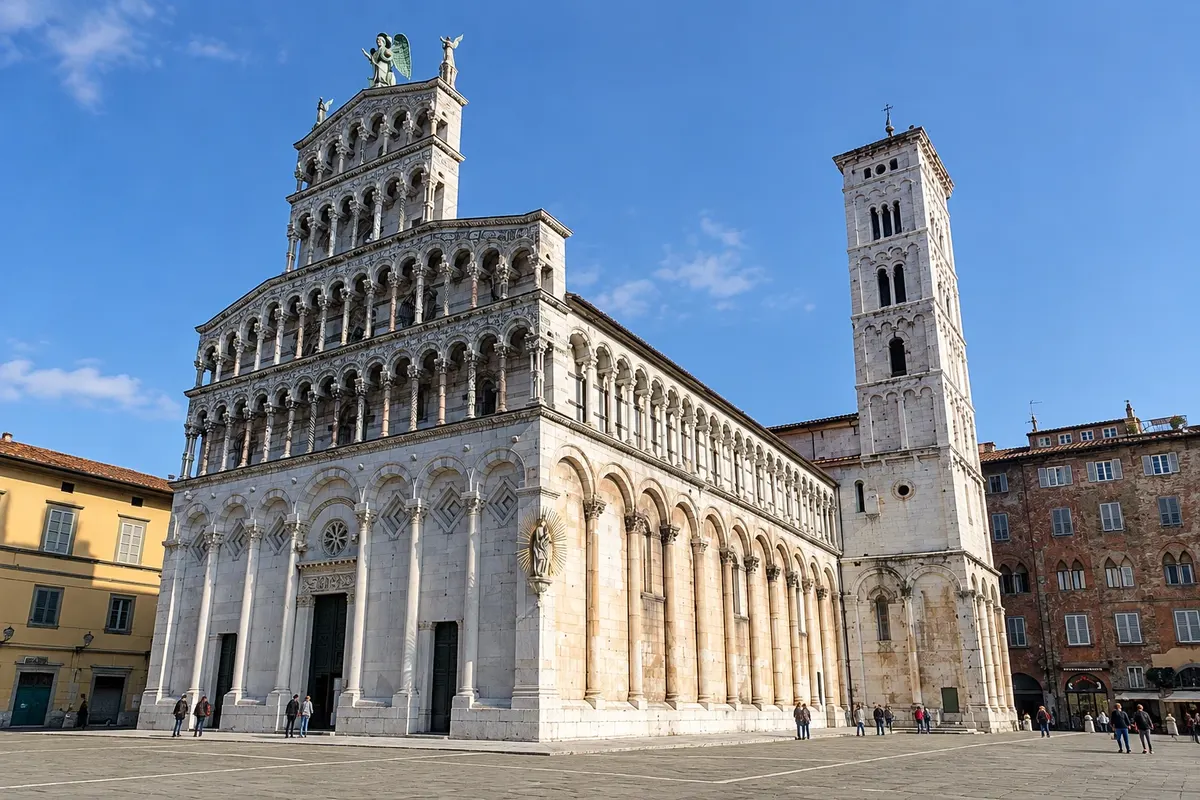
Romanesque church on the site of the ancient Roman forum, with a very tall façade of marble arcades and the statue of the archangel Michael on top.

Santa Maria della Scala
Siena · Tuscany · Muzej

Santa Maria della Scala

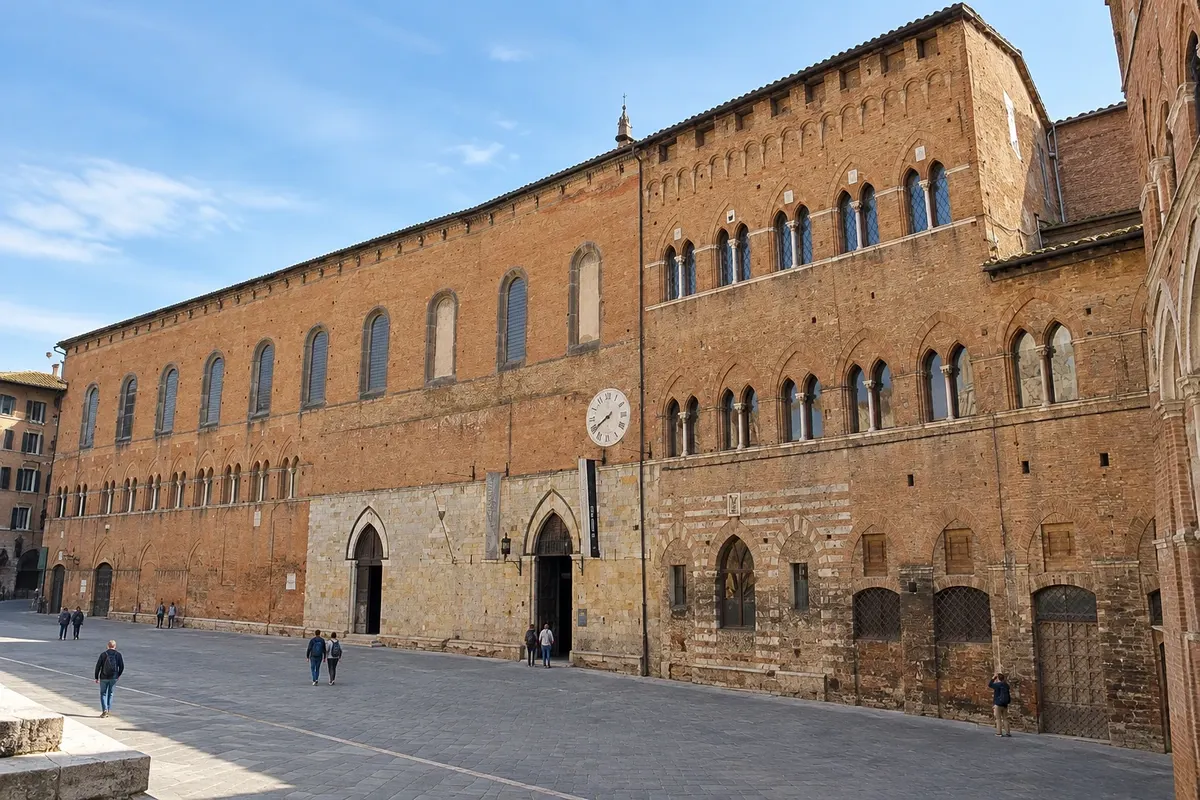
One of the oldest hospitals in Europe, opposite the Duomo, today a museum featuring the painted Pellegrinaio, the original Fonte Gaia and the archaeological museum.

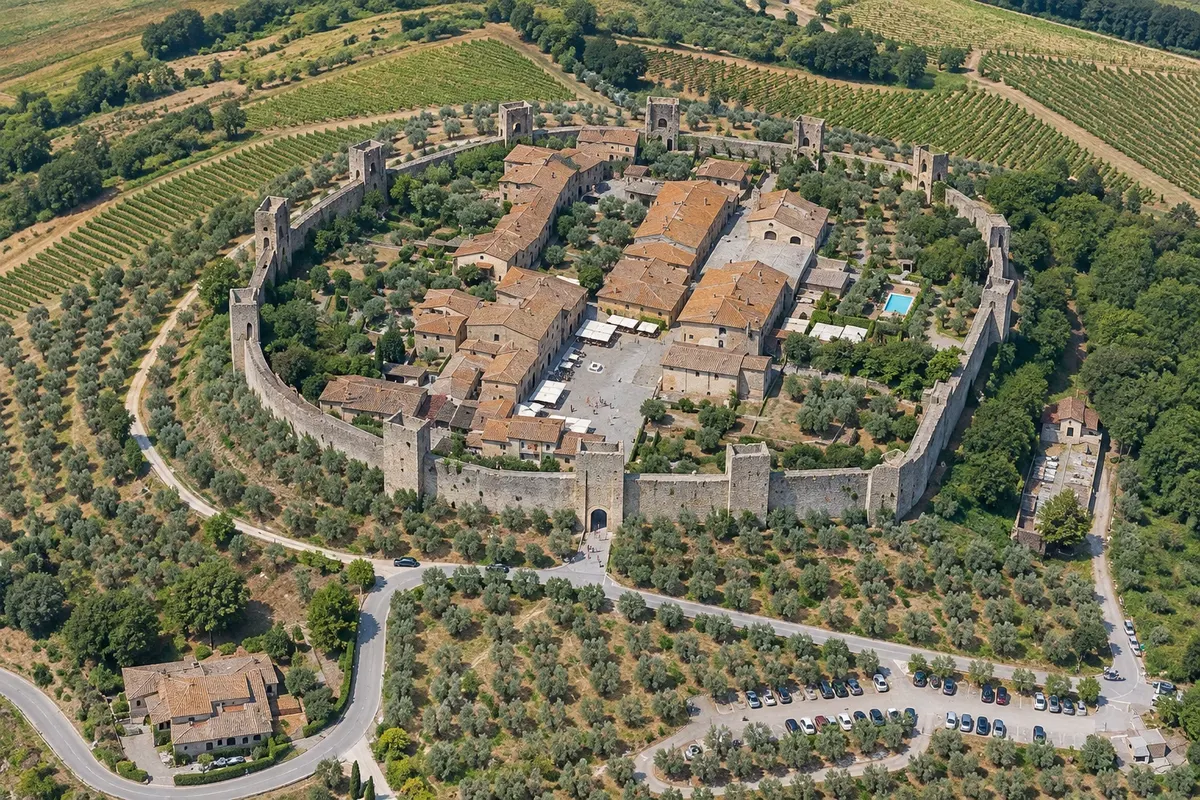
Monteriggioni
Siena · Tuscany · Grad

Monteriggioni

Walled village from the 13th century on a hill about 15 km from Siena, with 14 towers on the wall and a walk along the ramparts. Dante mentioned it in the Inferno.

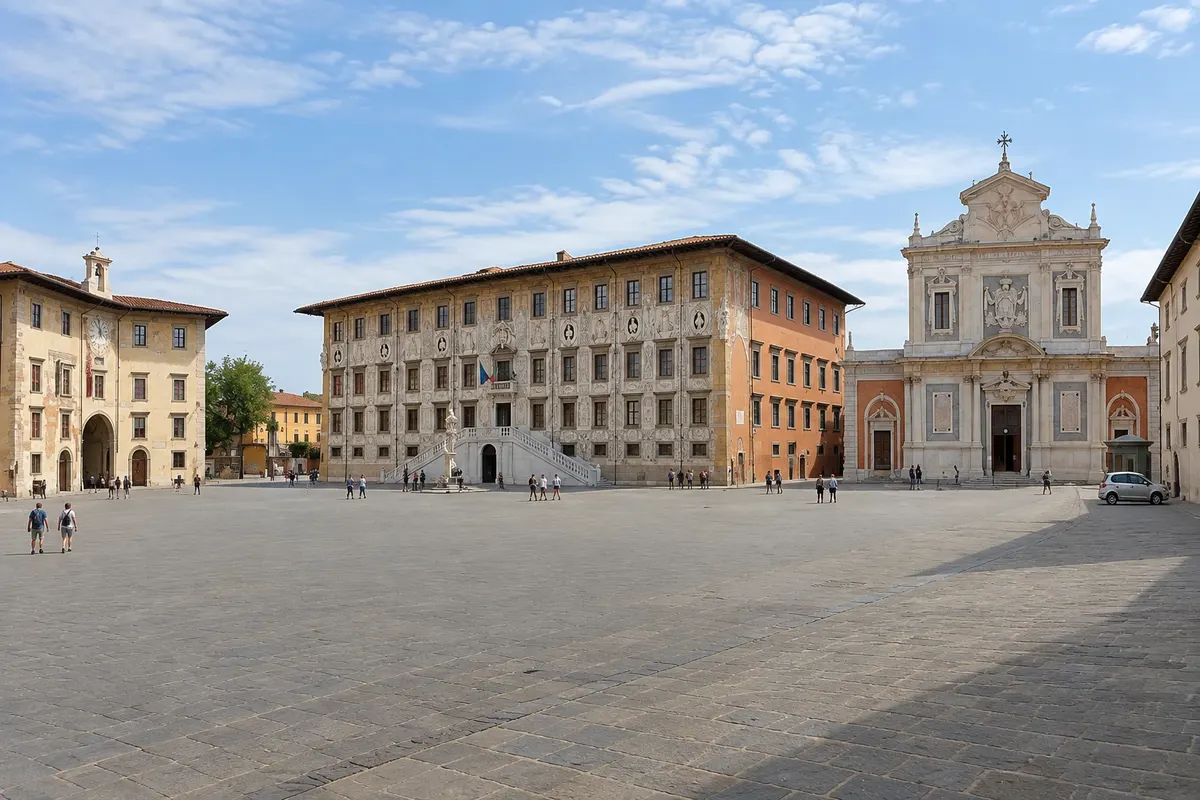
Piazza dei Cavalieri
Pisa · Tuscany · Trg

Piazza dei Cavalieri

The Renaissance square of the Order of the Knights of Santo Stefano, with the Palazzo della Carovana featuring a decorated façade, and home to the Scuola Normale Superiore.

Puccini Museum – Birthplace
Lucca · Tuscany · House-museum

Puccini Museum – Birthplace

The house where composer Giacomo Puccini was born in 1858, now a museum with the family's furniture, scores, costumes and the piano on which he composed Turandot.

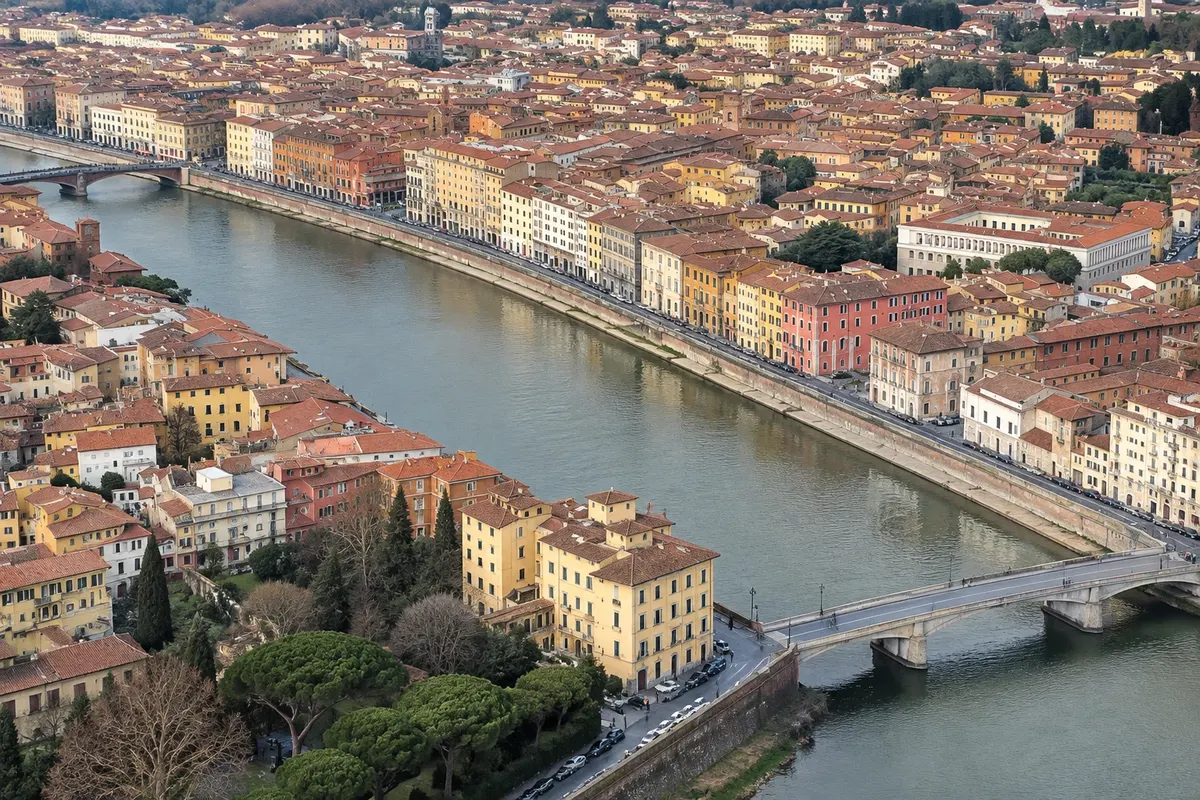
Lungarni of Pisa
Pisa · Tuscany · Street

Lungarni of Pisa

The avenues along the banks of the Arno River, with curved colorful palaces, the Ponte di Mezzo and the small Gothic church of Santa Maria della Spina.

Pienza
Siena · Tuscany · Village

Pienza

Small town in the Val d'Orcia redesigned in the 15th century by Pope Pio II as an ideal Renaissance town, with wide views over the hills and a tradition of pecorino cheese.

Montalcino
Siena · Tuscany · Village

Montalcino

Small walled town on a hill in the Val d'Orcia, with a 14th-century fortress, known worldwide for the Brunello di Montalcino wine.

Montepulciano
Siena · Tuscany · Village

Montepulciano

Renaissance town perched on a hill between the Val d'Orcia and the Val di Chiana, with the Piazza Grande, underground cellars and the Vino Nobile.

Kaj izbrati pred odhodom

Izleti – Tuscany

Izhodišče, trajanje, potek, vključene storitve in okvirna cena vsakega izleta.

Pisa: Piazza dei Miracoli, Tower, Duomo, Baptistery and Camposanto

Odhod: Pisa Centrale station (20 min on foot) or Pisa San Rossore (5 min) Walk with tower climb Približno 3 ure Dopoldne moderate (294 steps in the tower)

The Piazza dei Miracoli (Square of Miracles), a UNESCO site, brings together Pisa’s four white marble monuments on a walled lawn. The Torre di Pisa (Tower of Pisa), the bell tower begun in 1173, started leaning during construction because of soft ground and today is about 4 degrees tilted, after stabilization completed in 2001; you climb in 30-minute slots via 294 steps, with a view over the square. The Cattedrale di Santa Maria Assunta, dating from 1063, is the model of Pisan Romanesque, featuring the pulpit by Giovanni Pisano and the lamp that, legend says, inspired Galileo, who was born in the city. The Battistero di San Giovanni, the largest in Italy, has acoustics that guards demonstrate by singing, and the pulpit by Nicola Pisano from 1260. The Camposanto Monumentale, the cloistered cemetery with soil brought from Golgotha, houses frescoes of the Triumph of Death, restored after the 1944 fire.

Kraji na poti: Piazza dei Miracoli, Torre di Pisa, Cattedrale di Santa Maria Assunta, Battistero di San Giovanni, Camposanto Monumentale.

Vključuje: Tower with separate paid admission and timed entry (online reservation recommended; children under 8 do not ascend). Cathedral free entry with timed ticket collection; Baptistery, Camposanto and museums require separate payment, with combined tickets available.

Nasvet: Book the tower on the Opera della Primaziale Pisana website in advance, especially from April to October. Reach the square via Pisa San Rossore, the nearest station, or on foot from Pisa Centrale along Via Santa Maria. A mid-morning is enough for the square; the city has the Arno River and Piazza dei Cavalieri for the rest.

Najboljši čas za obisk: All year. On June 16 and 17, the Luminara and the Gioco del Ponte fill the city.

Pisa beyond the tower: Piazza dei Cavalieri and the Lungarni

Odhod: Piazza dei Miracoli Walk Približno 1 uro in 30 minut Popoldne Lahko

Leaving the tower square via Via Santa Maria, you reach Piazza dei Cavalieri, Pisa’s political center in the Middle Ages, redesigned by Vasari in 1562 for the Knights of Saint Stephen: the Palazzo della Carovana, with its sgraffito façade, houses the Scuola Normale Superiore, the elite university founded by Napoleon; the Palazzo dell'Orologio links the towers where Count Ugolino died of starvation, an episode told by Dante. Borgo Stretto, the arcaded street, descends to the Arno River. The Lungarni di Pisa, the riverbanks, feature palaces with yellow and ochre façades, the small Gothic church of Santa Maria della Spina (1230) at the water’s edge, the Palazzo Blu with exhibitions, and the Ponte di Mezzo, from which you can see the river bend. This is the Pisa of residents and students, away from the souvenir shops.

Kraji na poti: Piazza dei Cavalieri, Lungarni di Pisa.

Vključuje: Free walk, no charge. Palazzo Blu has paid admission for exhibitions.

Nasvet: Do this stretch in the late afternoon, after the tower square, and finish the day by the river; the Via San Martino, on the other side of the bridge, has local trattorias. In June, the banks host the Luminara with thousands of candles.

Najboljši čas za obisk: Vse leto.

Lucca: the walls circuit and the historic centre

Odhod: Lucca station (5 min from the walls) Walk or bike on the walls Približno 4 ure Ves dan easy (flat cycle path)

The Mura di Lucca (Lucca walls), built between 1504 and 1645 and never used in battle, encircle the town for 4.2 km with 11 bastions, and in the 19th century were turned into a tree-lined promenade along the top, with plane trees and a cycle path, from which you can see the roofs and towers; walking the circuit takes about an hour, by bike 20 minutes. Inside, the Piazza dell'Anfiteatro, the oval square built over the seating of the Roman amphitheater, with cafés in the arcades; the Cattedrale di San Martino, with its asymmetric façade, the Volto Santo (the wooden crucifix that legend says was carved by Nicodemus) and the tomb of Ilaria del Carretto by Jacopo della Quercia; the Chiesa di San Michele in Foro, with a marble-column façade that rises above the roof, and the Torre Guinigi, 45 m high, with holm oaks planted atop, offering views over the whole town. Lucca is Puccini’s hometown; he was born on Via di Poggio.

Kraji na poti: Mura di Lucca, Piazza dell'Anfiteatro, Cattedrale di San Martino, Chiesa di San Michele in Foro, Torre Guinigi.

Vključuje: Walls free of charge; bike rental paid separately. Torre Guinigi, cathedral (part) and museums have separate paid admissions.

Nasvet: Rent a bike near Porta Santa Maria and cycle the walls in the morning; descend to the Piazza dell'Anfiteatro for lunch. The Lucca Summer Festival, in June and July, sets up a stage in Piazza Napoleone, and Lucca Comics, at the end of October, fills the city for five days.

Najboljši čas za obisk: All year; April to October for cycling the walls.

Puccini Museum: the composer's birthplace in Lucca

Odhod: Piazza Cittadella, Lucca House-museum Približno 1 uro Dopoldne ali popoldne Lahko

The Puccini Museum - Casa natale occupies the apartment in Corte San Lorenzo where Giacomo Puccini was born in 1858, into a family of five generations of musicians for the Lucca cathedral. The rooms hold the Steinway piano on which he composed Turandot, autograph scores, letters, the Metropolitan’s Turandot costume, his coat and personal belongings, and his writing desk; the museum presents the composer’s life between Lucca, Milan and Torre del Lago, 25 km away, where he lived by Lake Massaciuccoli and where the open‑air Puccini Festival takes place every summer. In the square in front is a bronze statue of the seated composer, with a cigarette. The nearby church of San Paolino is where Puccini played the organ at age 14.

Kraji na poti: Puccini Museum - Casa natale.

Vključuje: Separate paid admission (ticket office on site or online). Audio guide included in some options.

Nasvet: Combine it with a walk through central Lucca; in July and August, opera fans can attend the Puccini Festival in Torre del Lago, reachable by bus or train to Viareggio. The museum closes on some days in winter: check ahead.

Najboljši čas za obisk: Vse leto.

San Gimignano: the medieval towers

Odhod: Siena or Florence (bus with change in Poggibonsi) or car Walk in a walled town Približno 3 ure Dopoldne ali pozno popoldne moderate (218 steps in Torre Grossa)

The Centro storico di San Gimignano, a UNESCO World Heritage site, preserves 14 of the 72 towers that 13th‑century families built to display power, giving the town the nickname “medieval Manhattan.” You enter through the Porta San Giovanni and climb up to the triangular Piazza della Cisterna, with the 1273 well at its center, and the Piazza del Duomo beside it. The Collegiata di Santa Maria Assunta, the main church, has walls entirely covered with 14th‑century frescoes: the Old and New Testament scenes in the naves, the Last Judgment by Taddeo di Bartolo and the chapel of Santa Fina by Ghirlandaio. The Palazzo Comunale and Torre Grossa, from 1311, at 54 m the tower that dominates the rest, contain the Sala di Dante, where the poet spoke in 1300, the art gallery and the climb to the top, with the other towers and the Vernaccia vineyards around. The town relies on day visitors: early morning and after 18:00, when buses leave, it shows a different face.

Kraji na poti: Centro storico di San Gimignano, Piazza della Cisterna, Collegiata di Santa Maria Assunta, Palazzo Comunale and Torre Grossa.

Vključuje: Self‑guided walk. Collegiata and Torre Grossa require separate paid tickets (there is a combined civic museums ticket).

Nasvet: Spend a night in San Gimignano or arrive before 10:00; at midday the main street gets crowded. The Rocca di Montestaffoli, up above, is the free viewpoint. The gelateria on Piazza della Cisterna has a line because it has won awards; there are others.

Najboljši čas za obisk: From April to October; winter is quiet and some shops close.

Siena: Piazza del Campo, Palazzo Pubblico and Torre del Mangia

Odhod: Piazza del Campo Walk with tower climb Približno 3 ure Dopoldne ali popoldne moderate (400 steps in the tower)

Piazza del Campo (Field Square) is the shell-shaped square, sloped and divided into nine brick segments in honor of the Government of the Nine, which ruled Siena from 1287 to 1355; twice a year, on July 2 and August 16, it hosts the Palio, the horse race between the contrade (districts) that lasts 90 seconds and drives the city year-round. At the lowest point, the Palazzo Pubblico, the Gothic town hall from 1297, houses the Museo Civico, with Simone Martini’s Maestà and Ambrogio Lorenzetti’s Allegories of Good and Bad Government from 1338, the first major civic-themed painting in Europe. The Torre del Mangia, from 1348, at 88 m, climbs by 400 steps to views of the entire square, the hills and the Duomo; the number of people at the top is limited. The Fonte Gaia, at the high end of the square, features copies of Jacopo della Quercia’s reliefs.

Kraji na poti: Piazza del Campo, Palazzo Pubblico, Torre del Mangia.

Vključuje: Square free of charge. Museo Civico and Torre del Mangia have separate paid admissions (combined ticket; the tower has timed entry and sells out on busy days).

Nasvet: Buy the tower ticket at the box office right when it opens, because time slots sell out. For the Palio, the stands are sold months in advance by the shops around the square; the center of the square is free, but people enter hours beforehand. In the weeks leading up to the Palio there are live rehearsals ('prove'), which are easier to watch.

Najboljši čas za obisk: All year. July 2 and August 16 (Palio) fill the city; in the days before there are rehearsals and the contrade dinners in the streets.


Prikaži dodatne izlete (4)

Duomo di Siena, Libreria Piccolomini and the Facciatone

Odhod: Piazza del Duomo, Siena Cathedral, museum and viewpoint Približno 2 uri in pol Dopoldne ali popoldne moderate (narrow staircase of the Facciatone)

The Duomo di Siena (Cathedral of Siena), in white and dark green striped marble, was completed in 1264 and was to be enlarged to become the largest temple in Italy in the 14th century, a project abandoned after the plague of 1348: the unfinished nave remained, the Duomo Nuovo, whose façade, the Facciatone, is now a viewpoint over the city. Inside: the floor of 56 inlaid marble panels, created by 40 artists over two centuries, fully uncovered only for a few months each year; the pulpit by Nicola Pisano, from 1268; the chapel with Donatello's Saint John the Baptist; the Cappella Chigi by Bernini; and the Libreria Piccolomini, with Pinturicchio's 1502 frescoes on the life of Pope Pius II, with colors intact. The Museo dell'Opera houses Duccio's Maestà from 1311 and provides access to the Facciatone; the Baptistery behind contains the font by Ghiberti and Donatello; the crypt has 13th-century frescoes.

Kraji na poti: Duomo di Siena.

Vključuje: Separate paid admission, with a combined ticket (Opa Si Pass: cathedral, Libreria, museum, Facciatone, baptistery and crypt), valid for three days; the Facciatone operates in limited-capacity time slots. During the period when the floor is uncovered (generally late August to October) the entrance may have a separate price.

Nasvet: Buy the Opa Si Pass on the Opera della Metropolitana website and reserve a timeslot for the Facciatone. To see the marble floor fully uncovered, plan your trip for September or October and check the dates on the website. The Porta del Cielo, a visit to the roofs, requires a separate ticket.

Najboljši čas za obisk: All year; the floor is usually uncovered from late August to October.

Santa Maria della Scala: the millenary hospital of Siena

Odhod: Piazza del Duomo, Siena (in front of the cathedral) Museum Približno 1 uro in 30 minut Popoldne Lahko

The Santa Maria della Scala, opposite the Duomo, was one of the first hospitals in Europe, founded around the year 1000 for pilgrims on the Via Francigena, and it operated as a hospital until the 1990s; today it is a complex of museums on multiple levels excavated into the hill. The Pellegrinaio, the former ward for patients, contains the 15th-century fresco cycle showing life in the hospital (doctors, wet nurses, patients); on the lower levels are the original reliefs from the Fonte Gaia by Jacopo della Quercia, the Archaeological Museum in the old storerooms, the oratory of Santa Caterina della Notte where the saint used to pray, and the Chapel of the Mantle. It’s a place without long lines that gives a better sense of medieval Siena than many palaces.

Kraji na poti: Santa Maria della Scala.

Vključuje: Separate paid admission (ticket office on site or online).

Nasvet: Go in the early afternoon, when tour groups leave the Duomo; the museum has benches and shade, good for the heat. Ask for the map: the levels are confusing.

Najboljši čas za obisk: Vse leto.

Monteriggioni: the walled castle and towers

Odhod: Siena (bus 130) or car via the SR2 Short round-trip excursion Približno 1 uro in 30 minut Popoldne Lahko

Monteriggioni, 15 km from Siena, is the most intact walled village in Tuscany: a 570 m ring of walls with 14 towers, built by Siena between 1213 and 1219 as a lookout against Florence, atop a hill. Dante compares the towers to giants in the Inferno of the Divine Comedy. Inside there is a square, the church of Santa Maria Assunta, a few houses and restaurants; the walk is along the top of the walls, in two sections open to visitors, with the hills and the Via Francigena below, and a small museum of medieval armor. The visit fits into an hour; on the second weekend of July the Festa Medievale fills the village with costumed performers. It’s a natural stop between Siena and San Gimignano.

Kraji na poti: Monteriggioni.

Vključuje: Village free to enter; access to the walls and museum requires a small ticket. Bus fare paid separately.

Nasvet: Without a car, the Autolinee Toscane bus 130 (Siena–Poggibonsi) stops on the road, a 10-minute walk from the gate. By car, there is parking below the village. Combine it with San Gimignano on the same day.

Najboljši čas za obisk: All year; from April to October the walls are open every day.

Val d'Orcia: Pienza, Montalcino and Montepulciano

Odhod: Siena (by car via SR2 and SP146) or bus 112 to Montalcino Day trip by car through the hills about 8 hours Ves dan easy (hills/steep streets in the towns)

Val d'Orcia, south of Siena, is the wheat‑covered rolling hills, rows of cypresses and white roads inscribed by UNESCO—the classic postcard landscape of Tuscany. Pienza was remade by Pope Pius II, who was born there, between 1459 and 1462 as the Renaissance “ideal town”: the square with the cathedral, Palazzo Piccolomini with its hanging garden and loggia over the valley, and streets named for Amor and Fortuna; it is also the town of pecorino cheese. Montalcino, the walled village with the 1361 fortress, is home to Brunello wine; the Abbazia di Sant'Antimo, 10 km away, is a Romanesque abbey in an olive‑filled valley where monks sing Gregorian chant. Montepulciano sits on a hillcrest and climbs along the Corso to the Piazza Grande, with the Palazzo Comunale (tower climb) and the cathedral; below is the temple of San Biagio by Sangallo. Wineries receive visitors by reservation; the tour is the focus, and the driver should not taste.

Kraji na poti: Pienza, Montalcino, Montepulciano.

Vključuje: Car or bus at extra cost. Palazzo Piccolomini, Montalcino fortress, Montepulciano tower and wineries have tickets or reservations payable separately.

Nasvet: By car, do Pienza in the morning, Montepulciano at lunchtime and Montalcino with the Abbazia di Sant'Antimo in the afternoon, via the SP146 and SR2; the cypress viewpoint is on the SP146 between San Quirico and Pienza. Without a car, bus 112 links Siena to Montalcino (about 1 h 10) and there are day tours departing from Siena.

Najboljši čas za obisk: From April to June the hills are green and dotted with poppies; July is golden wheat; in September and October it’s harvest time.

Po dnevih

Tuscany – načrt poti. Število dni: 3, 5in7

Predlogi za načrtovanje poti. Vrstni red dni prilagodite vremenu in razpoložljivosti izletov.

3 dni · Tuscany in 3 days: Pisa, Lucca and Siena

ZaFor those based in Florence who want the three most visited towns of the region, using train and bus connections. · Izhodišče:Florence or Siena, using regional trains and buses
  1. Dan 1 · Pisa and Lucca

    Train from Florence to Pisa (about 1 hour): Piazza dei Miracoli with the tower reserved; Piazza dei Cavalieri and the Lungarni. 30-minute train to Lucca: ride the city walls by bike, Piazza dell'Anfiteatro and Torre Guinigi; return to Florence (1 h 20) or overnight in Lucca.

  2. Dan 2 · Siena

    Bus 131 from Florence to Siena (1 h 15) or train from Lucca. Piazza del Campo, Torre del Mangia at the opening, Museo Civico; Duomo with the Libreria Piccolomini and the Facciatone in the afternoon; Santa Maria della Scala if time allows; overnight in Siena.

  3. Dan 3 · San Gimignano and Monteriggioni

    Bus from Siena to San Gimignano with a change in Poggibonsi (or by car): Collegiata, Torre Grossa and Piazza della Cisterna in the morning; Monteriggioni on the way back; return to Siena or Florence at the end of the day.

5 dni · Tuscany in 5 days: art towns and Val d'Orcia
ZaFor those who want to see the towns and spend one day in the hills, with a car only for the final part. · Izhodišče:2 nights in Lucca or Pisa, 3 nights in Siena
  1. Dan 1 · Pisa

    Arrival in Pisa by train (from Florence 1 hour; from Pisa airport, PisaMover). Piazza dei Miracoli with the tower reserved, Piazza dei Cavalieri and the Lungarni; overnight in Pisa or Lucca.

  2. Dan 2 · Lucca

    Full day in Lucca: cycle the city walls in the morning, San Martino Cathedral, San Michele in Foro, Torre Guinigi and the Puccini Museum; dinner at Piazza dell'Anfiteatro.

  3. Dan 3 · Siena

    Train or bus to Siena in the morning. Piazza del Campo, Palazzo Pubblico and Torre del Mangia; Duomo, Libreria Piccolomini and Facciatone in the afternoon; walk through the contrade at dusk.

  4. Dan 4 · San Gimignano and Monteriggioni

    Rental car in Siena or bus: San Gimignano early in the morning, Monteriggioni in the afternoon, returning via the walls; back to Siena for Santa Maria della Scala at the end of the day.

  5. Dan 5 · Val d'Orcia

    By car: Pienza, the cypress viewpoint, Montepulciano and Montalcino with the Abbazia di Sant'Antimo; return to Siena or continue to Rome via the A1 (Chiusi, 1 hour from Montepulciano, has trains to Rome).

7 dni · Tuscany in 7 days: from Pisa to Val d'Orcia at a relaxed pace
ZaFor those with a week and a car in the second half for the hills. · Izhodišče:Lucca (2 nights), Siena (3 nights), Val d'Orcia (2 nights, in Pienza or Montepulciano)
  1. Dan 1 · Pisa

    Arrival and day at Piazza dei Miracoli, with the tower reserved, the Baptistery and the Camposanto; late afternoon on the Lungarni; 30-minute train to Lucca to sleep.

  2. Dan 2 · Lucca

    Cycle the walls, cathedral, San Michele, Torre Guinigi, Puccini Museum; free afternoon wandering the streets of shops and antique dealers; evening at Piazza dell'Anfiteatro.

  3. Dan 3 · Siena

    Train from Lucca to Siena (about 2 h, with a change in Empoli) or bus in the morning. Afternoon at Piazza del Campo, with the climb up Torre del Mangia at the available slot and the Museo Civico, with the Allegories of Good and Bad Government; walk through the contrade streets at dusk and overnight in Siena.

  4. Dan 4 · Siena: Duomo and hospital

    Duomo, Libreria Piccolomini, Facciatone and Baptistery in the morning; Santa Maria della Scala in the afternoon; walk through Siena's contrade with the contrade museums, when open.

  5. Dan 5 · San Gimignano and Monteriggioni

    Pick up the car in Siena. San Gimignano very early, before the tour buses: Collegiata, Torre Grossa and the Rocca; lunch at Piazza della Cisterna. Monteriggioni in the afternoon, with a walk along the walls; night in Siena or already in Pienza, in the Val d'Orcia.

  6. Dan 6 · Val d'Orcia: Pienza and Montepulciano

    Pienza in the morning, with the Palazzo Piccolomini; cypress viewpoint on the SP146; Montepulciano in the afternoon, with the Piazza Grande and San Biagio; night in the Val d'Orcia.

  7. Dan 7 · Montalcino and Sant'Antimo

    Montalcino, the fortress and the Abbazia di Sant'Antimo in the morning; Bagno Vignoni, the thermal square, on the way; return the car in Siena, Chiusi or Florence and train to the next destination.

Najboljši čas za obisk

Kdaj se odpraviti:Tuscany po mesecih

April to June and September to October usually have mild temperatures and long days. From June to August it's very hot and the towns get crowded; Siena's Palio is on July 2 and August 16. From December to February is winter, colder and with less activity.

The seasons shown are the most usual ones; nature doesn't always follow the calendar.

januar Zmerne padavine

winter · empty towns

Winter. At the Pisa San Giusto and Firenze Peretola stations, normals 1991–2020: average 6.9 °C in Pisa and 6.6 °C in Florence (minimums near 2 °C) and about 60 to 68 mm of rain. Morning frost on the hills, occasional snow in Siena. Empty towns, towers with no lines; San Gimignano and Pienza with some shops closed. Heavy coat.

februar Zmerne padavine

winter · Viareggio Carnival

Winter. At the Pisa San Giusto and Firenze Peretola stations, normals 1991–2020: average 7.4 °C in Pisa and about 63 mm of rain. The Carnevale di Viareggio, on the coast near Lucca, parades floats on the Sundays in February and early March. Low activity in the towns.

marec Zmerne padavine

spring beginning · almond trees

Spring beginning. At the Pisa San Giusto and Firenze Peretola stations, normals 1991–2020: average 10.2 to 10.7 °C and about 60 mm of rain. Hills turning green, days lengthening.

april Zmerne padavine

spring · Easter and green hills

Spring. At the Pisa San Giusto and Firenze Peretola stations, normals 1991–2020: average 13 to 14 °C and about 65 mm of rain, falling in showers. It’s the start of the season: green hills with poppies in the Val d'Orcia, villas and gardens reopening. Easter and April 25 fill Siena and San Gimignano.

maj Zmerne padavine

spring · poppies in the Val d'Orcia

full spring. At the Pisa San Giusto and Firenze Peretola stations, normals 1991–2020: average 17 to 18 °C and about 62 mm of rain. Green wheat, poppies and the cypresses of the classic photos; long days for Lucca’s walls and towers. High activity on weekends.

junij Malo padavin

summer · Luminara and festivals

Summer. At the Pisa San Giusto and Firenze Peretola stations, normals 1991–2020: average 21 to 22.6 °C and about 41 to 45 mm of rain. Afternoon heat in the stone towns; the Val d'Orcia turns golden. On June 16, Pisa’s Luminara lights the banks of the Arno with candles; Lucca hosts the Summer Festival. Book towers and the Facciatone.

julij Malo padavin

summer · Palio di Siena

Summer. At the Pisa San Giusto and Firenze Peretola stations, normals 1991–2020: average 24 to 25.4 °C, with highs exceeding 32 °C inland, and about 25 to 32 mm of rain. On July 2, the Palio di Siena: the city fills up days in advance. Walk early, visit museums in the afternoon; in the hills, wheat is harvested.

avgust Malo padavin

summer · Palio and Ferragosto

Summer. At the Pisa San Giusto and Firenze Peretola stations, normals 1991–2020: average 24 to 25.4 °C and about 37 to 41 mm of rain, with storms at the end of the month. On August 16, the second Palio di Siena; on August 15, Ferragosto, with shops closed. It’s the busiest month in the villages and on Val d'Orcia roads; the pavement of Siena Cathedral often begins to be uncovered at month’s end.

september Zmerne padavine

end of summer · harvest and Duomo pavement

End of summer. At the Pisa San Giusto and Firenze Peretola stations, normals 1991–2020: average 20 to 21 °C and about 67 to 100 mm of rain, concentrated in storms. It’s harvest month in the Chianti, Montalcino and Montepulciano, and the marble pavement of Siena Cathedral is often uncovered. Warm days and cool nights; high activity.

oktober Veliko padavin

autumn · chestnuts and Lucca Comics

Autumn. At the Pisa San Giusto and Firenze Peretola stations, normals 1991–2020: average 16 °C and about 105 to 129 mm of rain, with days of heavy rain. Ploughed hills in brown tones, chestnuts and new olive oil at markets; the Lucca Comics & Games, at the end of the month, fills Lucca for five days.

november Veliko padavin

Jesen · najbolj namočen mesec

Late autumn. At the Pisa San Giusto and Firenze Peretola stations, normals 1991–2020: average 11 to 11.6 °C and about 115 to 131 mm of rain, the wettest month. Day 1 is a public holiday. Quiet towns, empty museums, white truffle fairs in San Miniato and San Giovanni d'Asso. Waterproof shoes for the cobbles.

december Veliko padavin

winter · Christmas in the villages

Winter. At the Pisa San Giusto and Firenze Peretola stations, normals 1991–2020: average 7 to 7.7 °C and about 81 to 88 mm of rain. Christmas markets in Montepulciano (in the fortress) and in the squares of Siena and Lucca, usually running from late November to early January; living nativity scenes in the villages. Between Christmas and New Year the towns fill up again.

Načrtujte pot

Kako do tja:Tuscany

By train: regional services between the towns

Trenitalia regional trains link the towns without reservation: Florence–Pisa about 1 hour; Pisa–Lucca 30 minutes; Florence–Lucca 1 h 20; Florence–Siena 1 h 30 (with a change at Empoli); Lucca–Siena about 2 h (via Empoli); Siena–Chiusi (for Rome and the Val d'Orcia) about 1 h 30. San Gimignano, Monteriggioni, Pienza and Montalcino do not have stations: reach them by bus (Autolinee Toscane) or by car. Siena station is outside the walls, with escalators up to the center. Validate regional tickets before boarding.

By bus: Siena, San Gimignano and Val d'Orcia

Autolinee Toscane is the regional company: the 131 express bus Florence–Siena (about 1 h 15, departs from Florence station and arrives at Piazza Gramsci, inside Siena); San Gimignano with a change at Poggibonsi, from Siena or Florence (about 1 h 30); Monteriggioni on the 130; Montalcino on the 112 (about 1 h 10 from Siena); Pienza and Montepulciano on the 112 with a connection, with few services per day; Volterra from Siena or Colle Val d'Elsa. Tickets at tabaccherie, in the app or on board with a surcharge. On Sundays service is much reduced: check the timetable for the day.

By car: roads, strade bianche and ZTL

The car is the way to reach the Val d'Orcia, the Chianti and the villages without stations. Main roads: A1 (Florence–Rome, with exits at Valdichiana for Montepulciano and Chiusi), the Firenze–Siena superhighway (toll-free, about 1 hour), the A11 Florence–Pisa–Lucca and the SR2 Cassia from Siena to the Val d'Orcia. All walled towns have ZTL (limited traffic zones) with cameras: entering without authorization incurs a fine, sent by the rental company; park in lots outside the walls (in Siena, Il Campo and Santa Caterina have escalators; in San Gimignano, P1 to P4). The 'strade bianche' of the Val d'Orcia are gravel and rental companies may restrict them; drive slowly.

Vstopnice in rezervacije

Leaning Tower of Pisa: timed reservation on the Opera della Primaziale Pisana website. Torre del Mangia: box office on the day—arrive at opening. Siena Cathedral (Duomo): Opa Si Pass on the Opera della Metropolitana website, with a slot for the Facciatone. Collegiata and Torre Grossa in San Gimignano, Villa Monastero and wineries: box office on site or reservation. Palio di Siena (July 2 and August 16): grandstand tickets sold by shops on the square months in advance; the square itself is free. Cities charge a tourist tax per night, paid at accommodation. Check the current table.

Pred odhodom

Praktične informacije

Z nekaj načrtovanja boste imeli več časa za uživanje na poti.

Kdaj se odpraviti

April to June and September to October usually have mild temperatures and long days. From June to August it's very hot and the towns get crowded; Siena's Palio is on July 2 and August 16. From December to February is winter, colder and with less activity.

The seasons shown are the most usual ones; nature doesn't always follow the calendar.

Koliko dni ostati

Using Florença as a base, allow one day for Pisa, one for Lucca and one for Siena, with San Gimignano on the way or as a separate day. Those who want to see the Val d'Orcia hills and Monteriggioni need one or two more days, preferably by car. Spending a night in Siena or San Gimignano lets you see the squares without the daytime tour groups.

V katerem mestu prenočiti

Florença is the most practical base, because of the number of trains and buses to the other towns. In Pisa, the area between Pisa Centrale station and the Arno river makes connections easy; near the Piazza dei Miracoli it is quieter at night. In Siena, the historic center within the walls makes everything walkable, but hilly. In Lucca, staying inside the walls lets you cycle early in the morning. For the hills, agriturismos (farm stays) around Siena and in the Val d'Orcia are the option for those traveling by car.

Spoštujte kraj

Odnesite svoje odpadke, upoštevajte oznake in podprite lokalne ponudnike. V naravi upoštevajte navodila za obiskovalce.

Odgovori na vaša vprašanja

Pogosta vprašanja – Tuscany

Can you visit Pisa, Siena, San Gimignano and Lucca on day trips from Florença?

Yes. Pisa and Lucca have frequent regional trains departing from the Firenze Santa Maria Novella station, with journeys of about 1 to 1.5 hours; it's even possible to combine both in the same day. Siena has direct buses and trains in just over an hour. San Gimignano has no station: you go by train or bus to Poggibonsi and from there by local bus. Doing Siena and San Gimignano on the same day is rushed without a car.

Do I need to rent a car in Toscana?

For the towns in this itinerary, no: train and bus suffice. A car helps for the hills, for the Val d'Orcia, Pienza, Montalcino, Montepulciano and Monteriggioni, where public transport is scarce. The historic centers of all these towns have ZTL, a limited-traffic zone closed to outside cars: leave the car in parking lots outside the walls, because cameras record the entry and the fine arrives later.

How many days should I reserve for Toscana besides Florença?

Three to five days. One day for Pisa, one for Lucca, one for Siena and half or a full day for San Gimignano. With one or two extra days and a car, you can tour the Val d'Orcia and the small wine towns south of Siena.

What's the best time to travel around Toscana?

Spring, from April to June, and early autumn, from September to October, usually have pleasant weather for walking the hills. September and October are also grape-harvest season in the hills. Summer, June to August, is hot and crowded, and winter, December to February, is cold with fewer tourists.

How do regional trains between the towns work?

Trenitalia regional trains have no reserved seats and cost the same at any time. The ticket can be digital, in the company's app or website, or paper, bought at the station machines; paper tickets must be validated in the platform machines before boarding. Check the station screen for which platform (binario) the train departs from.

Rotas entre países

Tuscany – na poti z imenom Via Francigena on foot: from Canterbury to Rome

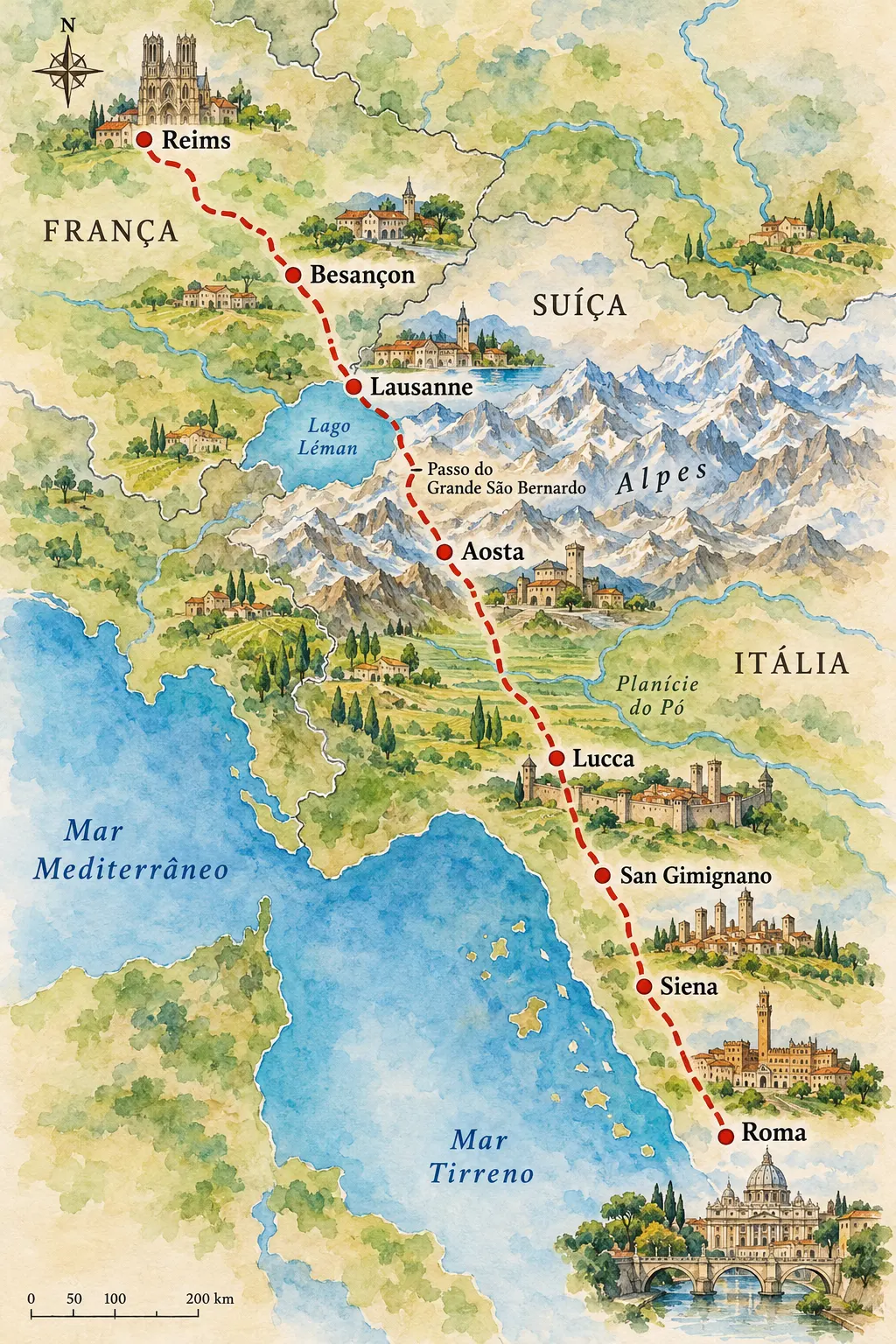
The ancient pilgrims’ route to Rome: from Canterbury Cathedral, through France and Switzerland, over the Alps via the Great St Bernard Pass and through Tuscany to St. Peter’s Square.

Zemljevid je ilustrativen in ni v merilu. Dotaknite se mesta, da odprete njegovo stran.
Via Francigena on foot: from Canterbury to Rome – ilustrirani zemljevid
Več o poti – Via Francigena on foot: from Canterbury to Rome
Odkrijte druge destinacije Iskanje po zvezni državi in mestu

Več kot vodnik