

Cerkev
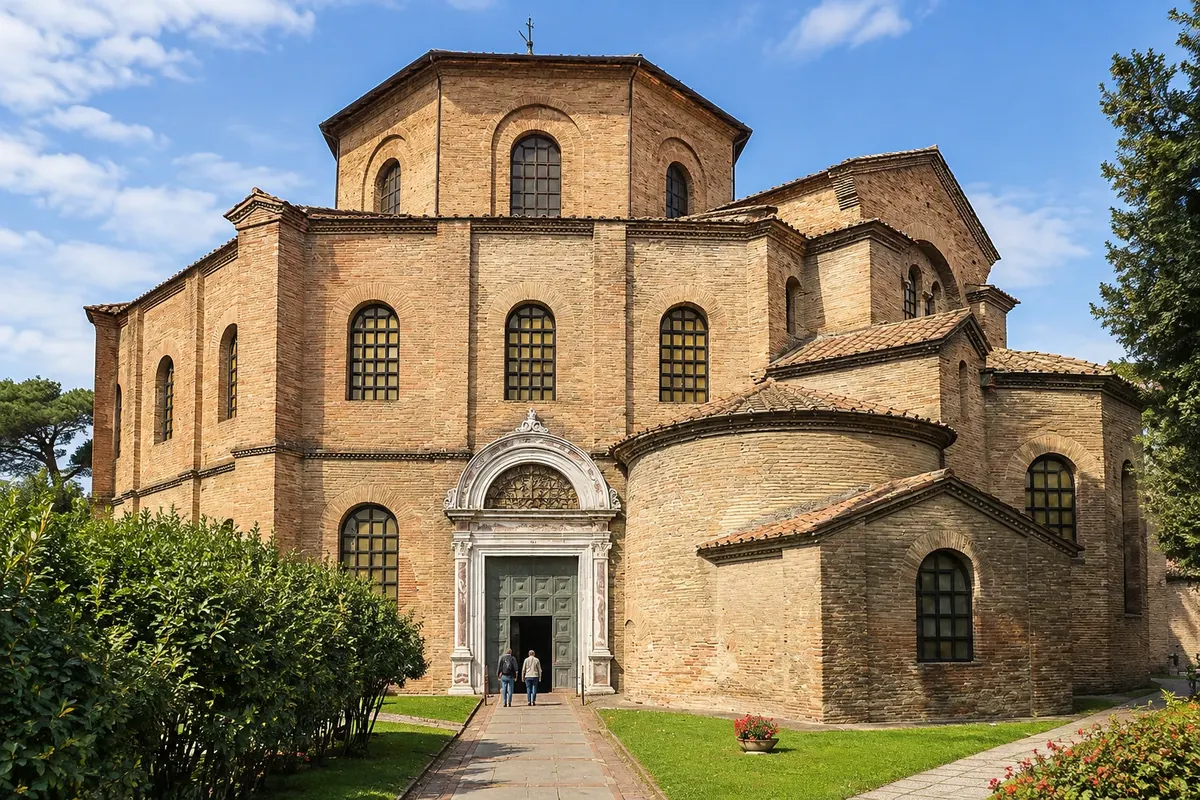
Basilica di San Vitale
Octagonal basilica consecrated in 547, covered in Byzantine mosaics. The panels of Emperor Justinian and Empress Theodora with their courts are among the most famous mosaics in the world.

 Išči
 Brazilija
 Antarktika
 Argentina
 Bolivija
 Čile
 Kolumbija
 Ekvator
 Gvajana
 Francoska Gvajana
 Falklandski otoki (Malvini)
 Paragvaj
 Peru
 Surinam
 Urugvaj
 Venezuela
 Nemčija
 Avstrija
 Belgija
 Hrvaška
 Danska
 Slovaška
 Slovenija
 Španija
 Finska
 Francija
 Grčija
 Nizozemska
 Madžarska
 Irska
 IslandijaItalija
 Luksemburg
 Norveška
 Poljska
 Portugalska
 Združeno kraljestvo
 Češka
 Švedska
 Švica
 Turčija
 Bermudi
 Kanada
 Združene države Amerike
 Grenlandija
 Mehika
 Sveta Peter in Mihael
 Dominikanska republika
 JaponskaTurčija
 Južnoafriška republika
 Egipt
 Avstralija
 Fidži
 Nova Zelandija
 Papua Nova Gvineja
Emília-Romanha · Italija
Destinacija: Bologna and Emilia-Romagna.
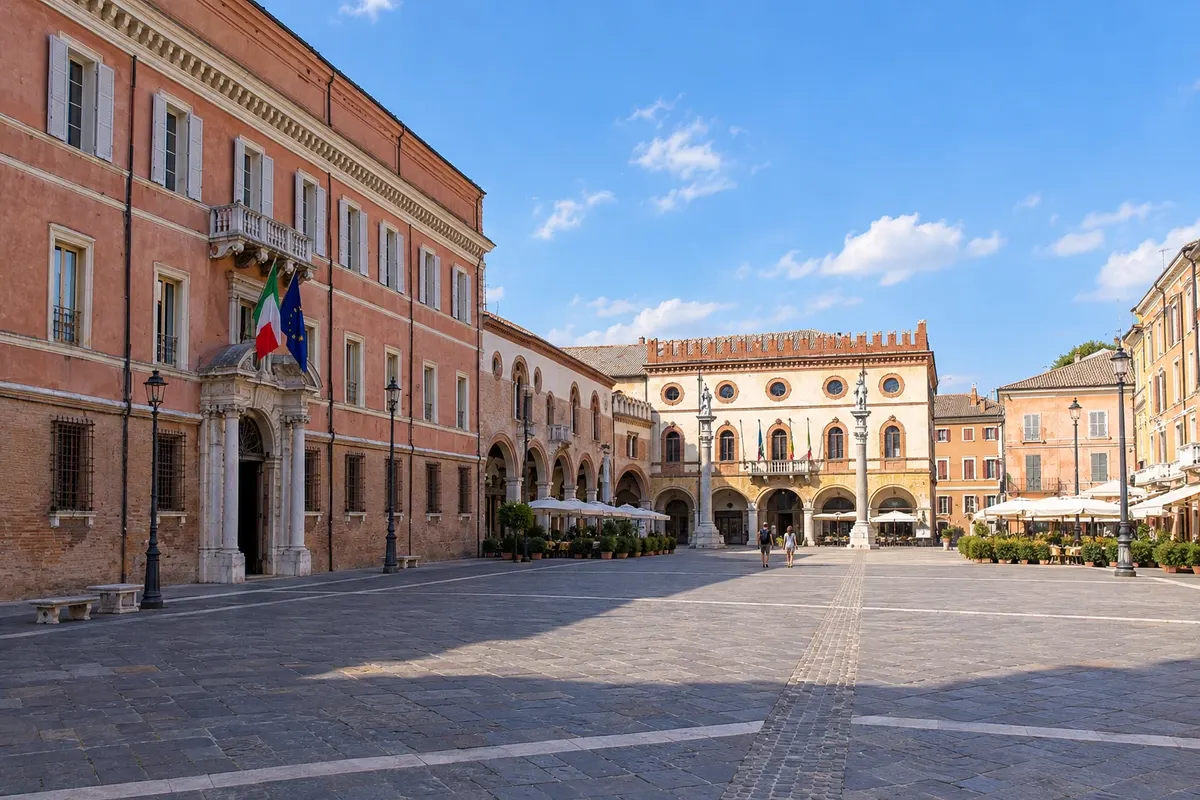
Na fotografiji: Piazza del Popolo, Ravena
Illustrative images. The pictures in this guide are illustrations based on the real place, not photographs, and may differ from it.
Mesto
Ravenna was the capital of the Western Roman Empire, the Ostrogothic kingdom and Byzantine Italy, and preserves eight monuments from the 5th and 6th centuries, a UNESCO World Heritage Site. In the center are the Basilica di San Vitale, the Mausoleo di Galla Placidia, the Basilica di Sant'Apollinare Nuovo, the Battistero Neoniano, the Battistero degli Ariani and the Museo Arcivescovile. A little farther out are the Mausoleo di Teodorico and the Basilica di Sant'Apollinare in Classe. Dante is buried in the Tomba di Dante.
V vodniku še ni nastanitev – Ravenna.
kako do tja · koliko dni · načrt poti · vprašanja
Doživite kraj
Octagonal basilica consecrated in 547, covered in Byzantine mosaics. The panels of Emperor Justinian and Empress Theodora with their courts are among the most famous mosaics in the world.
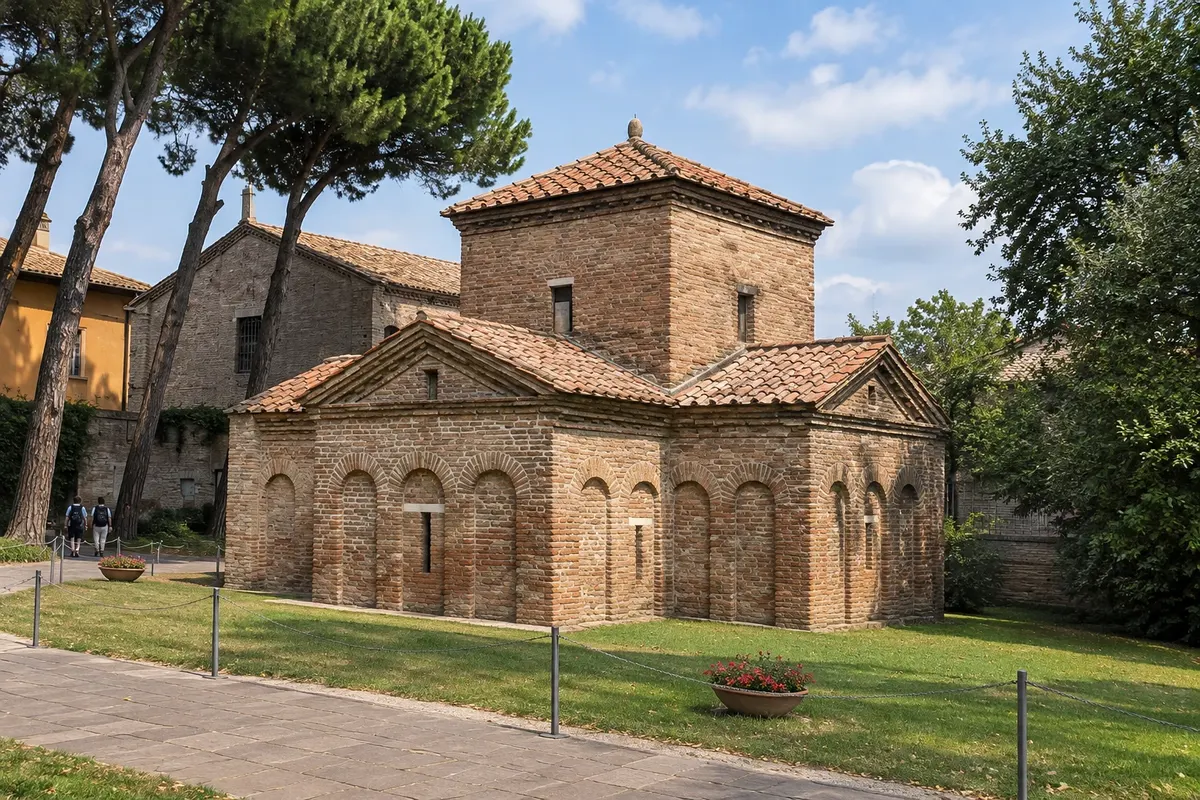
Small 5th-century cruciform building in the garden of San Vitale. The cobalt-blue dome with golden stars and the lunette of the Good Shepherd are among Ravenna's oldest mosaics.
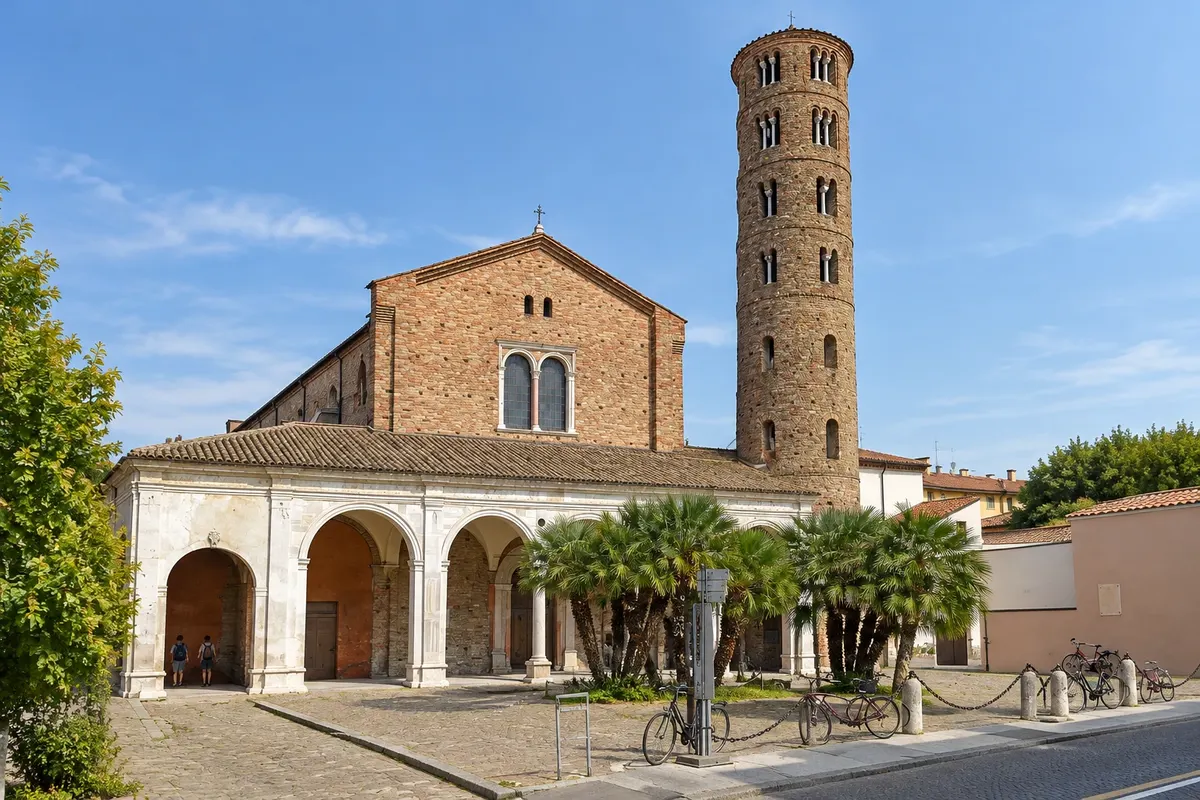
Basilica erected by Theodoric in the early 6th century. The nave walls display long processions of martyrs and virgins on a golden background, as well as Theodoric's palace and the port of Classe.
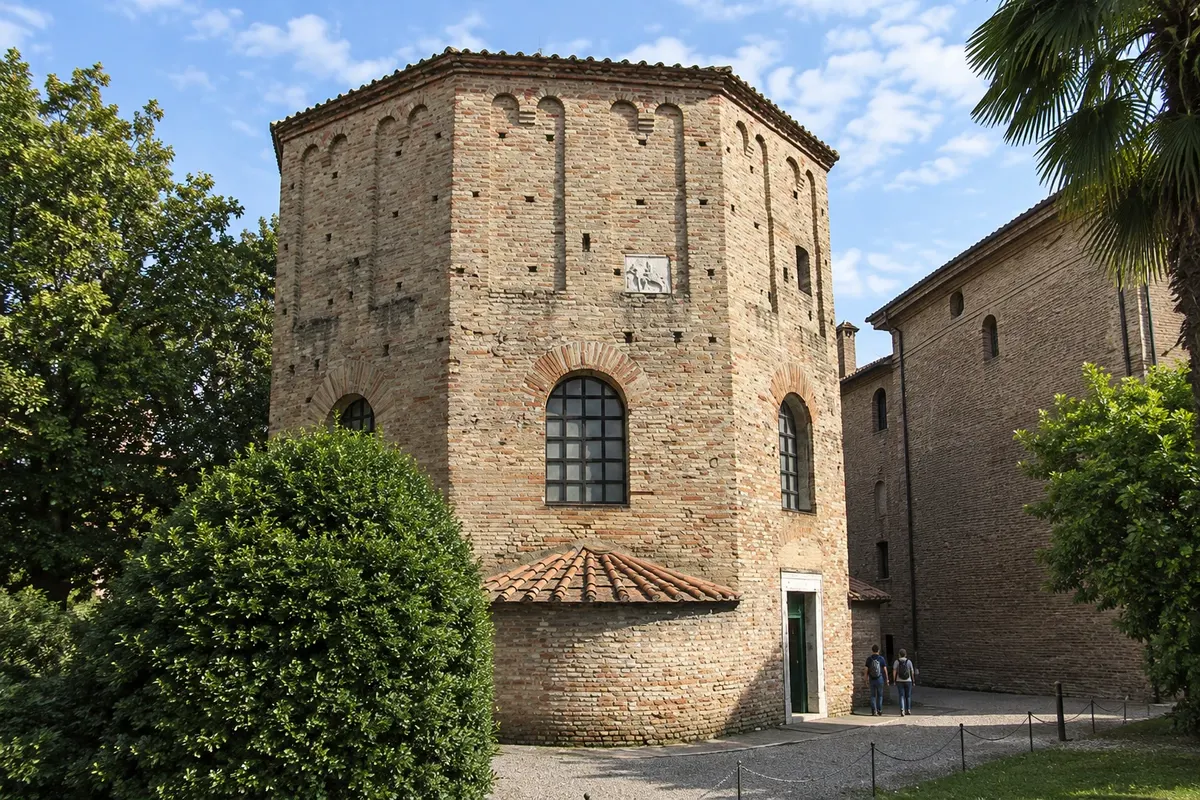
5th-century octagonal baptistery next to the cathedral, also called Battistero degli Ortodossi. In the dome, the baptism of Christ is surrounded by the procession of the twelve apostles.
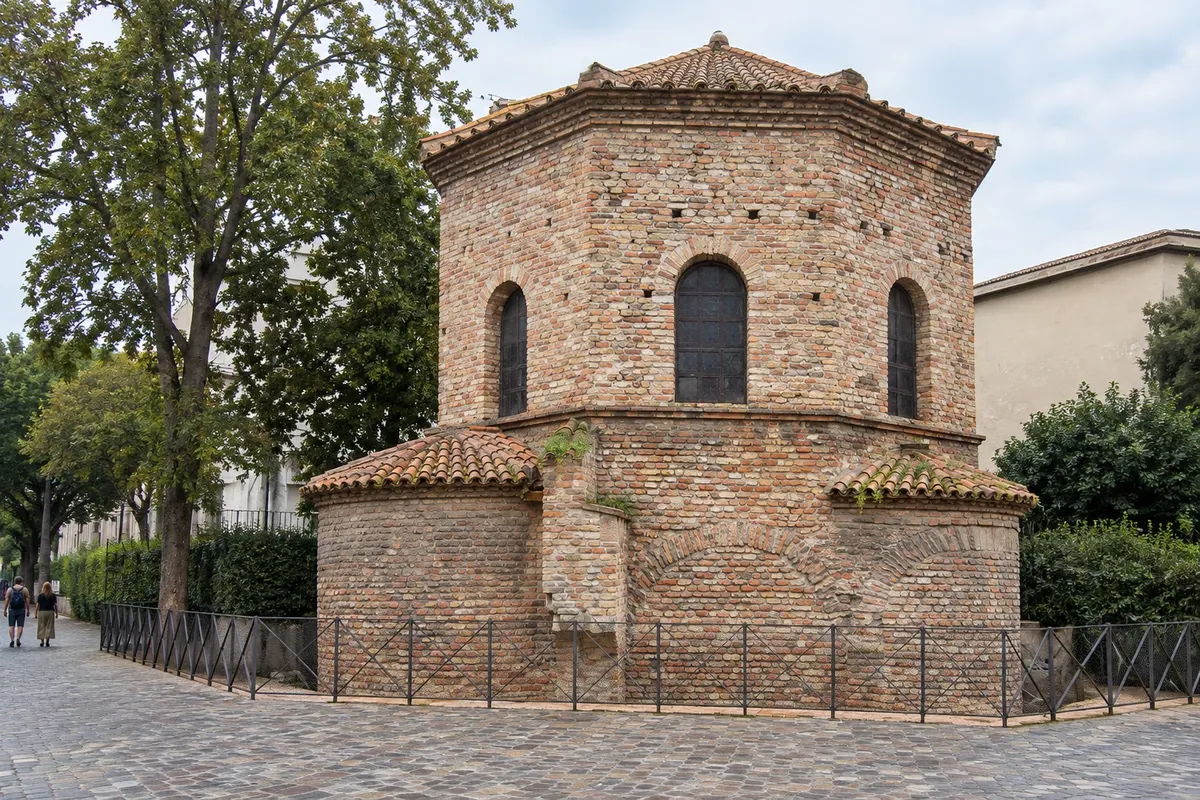
Small baptistery built in the time of Theodoric, between the late 5th and early 6th century. The dome shows the baptism of Christ and the twelve apostles on a golden background.
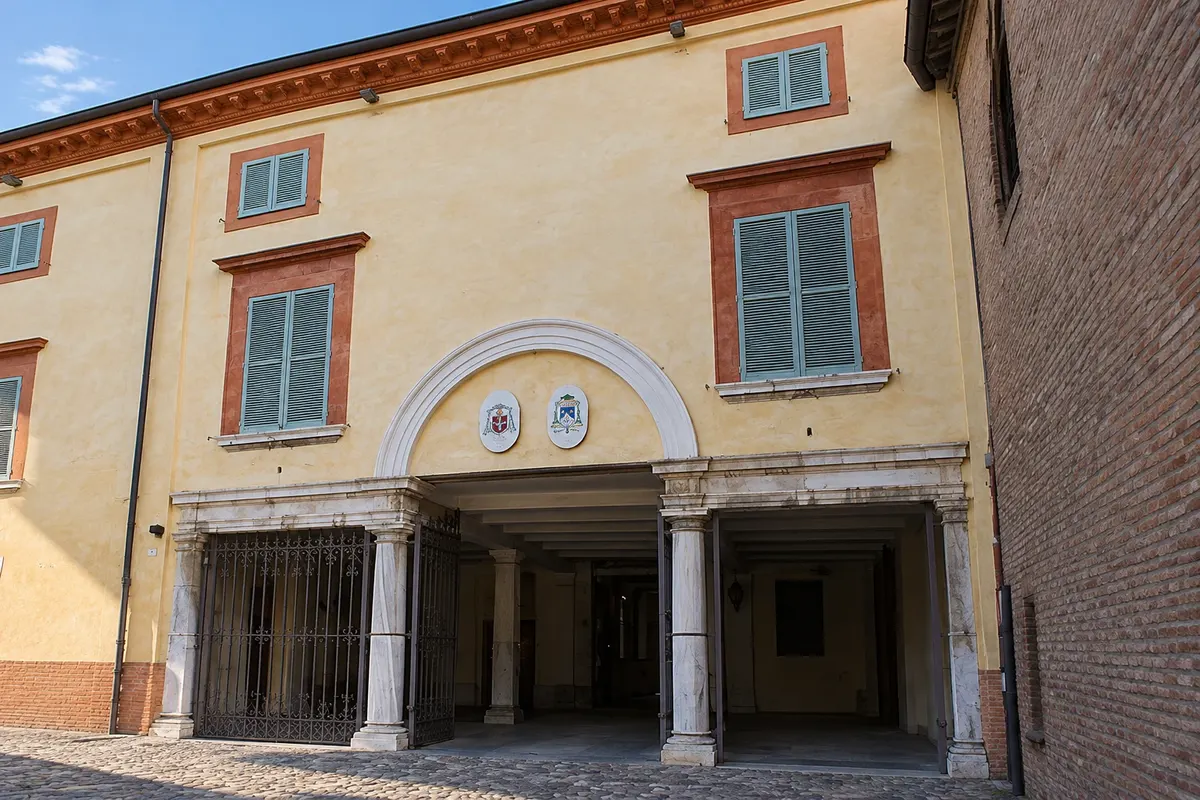
Archbishopric museum with the Cappella di Sant'Andrea, a mosaic chapel from the late 5th century, and the Cátedra de Maximiano, a 6th-century ivory episcopal throne.
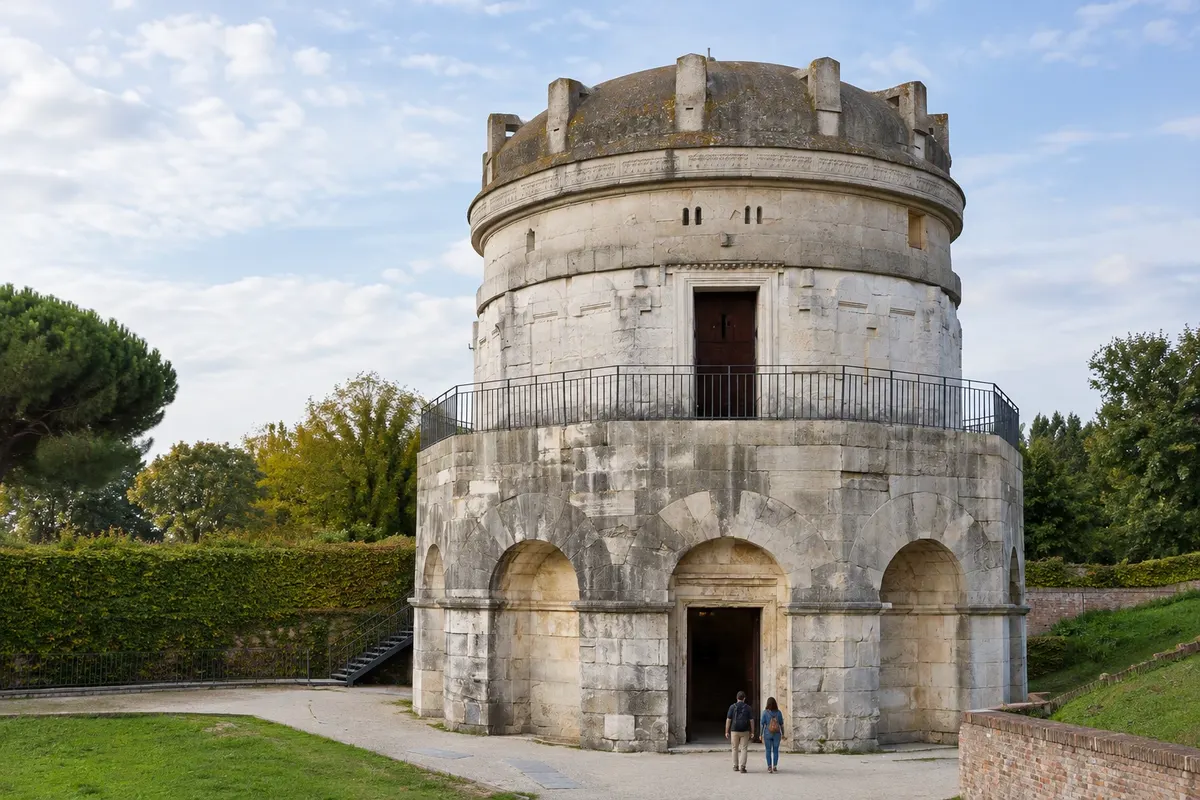
Stone tomb of the Ostrogoth king Teodorico, from the early 6th century. It is covered by a single block of stone nearly 11 meters in diameter and about 230 tonnes.
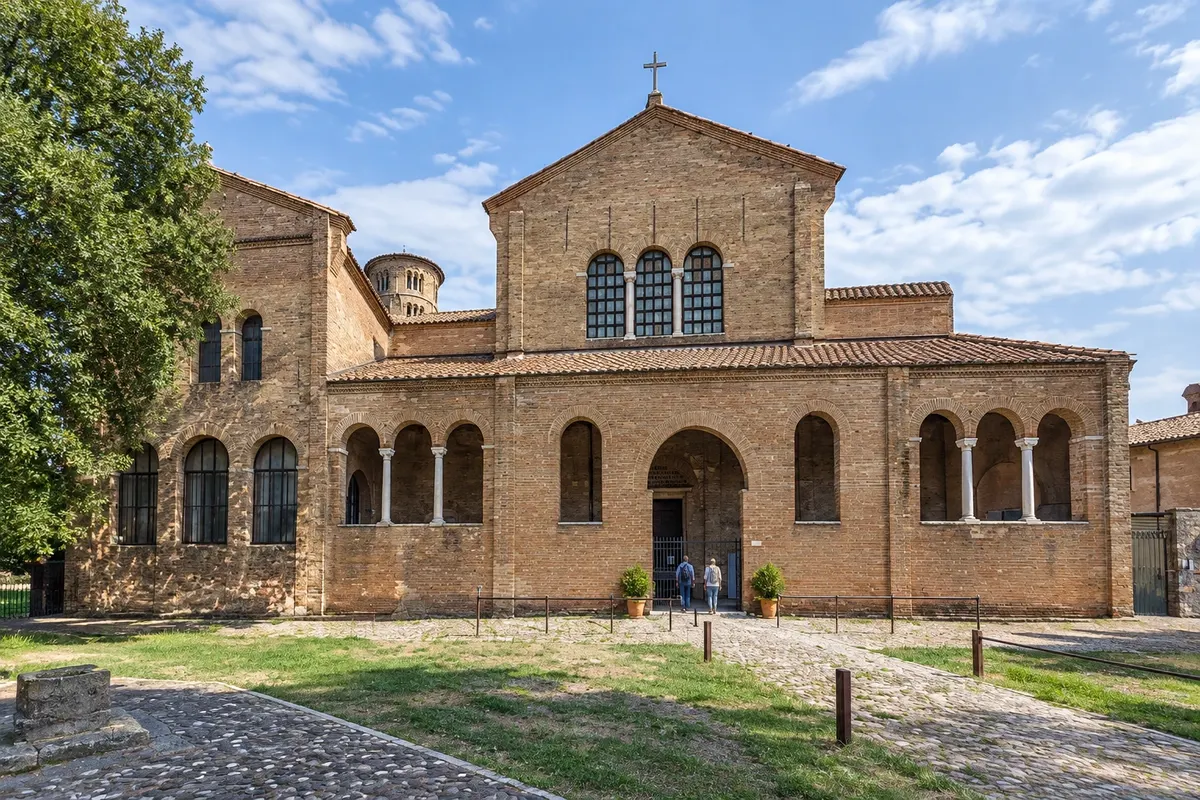
Basilica consecrated in 549 in the ancient Roman port of Classe, about 5 km from Ravena. The apse mosaic shows Santo Apolinario in a green field with sheep, beneath a large cross.
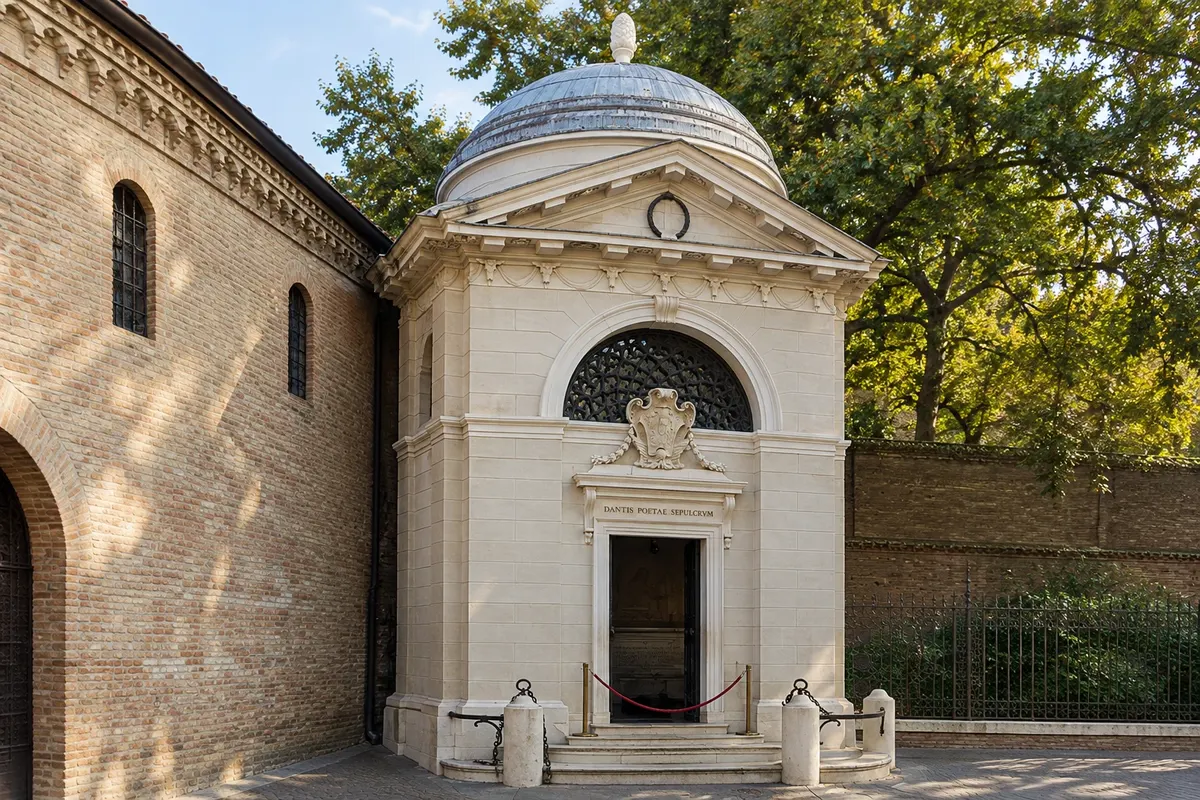
Neoclassical tomb of Dante Alighieri, who died in Ravena in 1321. A votive lamp fueled with oil from Tuscany, offered by Florence, remains lit inside.
Pred odhodom
Ravenna – Emilia-Romagna Destinacija Bologna and Emilia-Romagna približno 75 km stran (izhodišče: Bologna)
Razdalje so približne. Pred potovanjem preverite lete in vozne rede avtobusov, vlakov ali ladij.
Confirm before buying. From Bolonha, the regional train reaches Ravena station in about 1h10 to 1h20; there are direct trains throughout the day. The most used international airport is Bolonha.
One full day is enough for the central monuments: San Vitale, Galla Placidia, Sant'Apollinare Nuovo, the two baptistries, the Museo Arcivescovile and the Tomba di Dante. To include the Mausoleo di Teodorico and Sant'Apollinare in Classe, allow a day and a half to two days.
April, May, September and October usually have pleasant temperatures for walking and cycling. In summer the city gets hot and the nearby coastal beaches fill up. Winter is cold and humid, but the monuments are quieter. From March to early November the monuments generally have longer opening hours.
The seasons shown are the most usual ones; nature doesn't always follow the calendar.
No. The historic center is flat, has a ZTL (limited traffic zone closed to outside cars) and the main monuments are a few minutes' walk from each other. Many locals cycle. For Sant'Apollinare in Classe there is a regional train to Classe station and a city bus.
Predlog poti
Pot povezuje znamenitosti na tej strani. Za oglede boste imeli dovolj časa.
Start with the Basilica di San Vitale, with the panels of Justinian and Theodora. In the same garden, enter the Mausoleo di Galla Placidia at the reserved time and see the starry sky of the dome.
Have a piadina for lunch in the center. Then visit the Battistero Neoniano and the Museo Arcivescovile, with the Cappella di Sant'Andrea, both next to the cathedral. Continue to the Tomba di Dante, in the silence zone.
Walk along Via di Roma to the Basilica di Sant'Apollinare Nuovo and see the processions of virgins and martyrs on the walls. If you have time, stop by the Battistero degli Ariani, just a few blocks away.
Finish at the Piazza del Popolo, the main square, with cafés under the porticoes. For dinner, order cappelletti, a stuffed pasta typical of Romanha, and a regional Sangiovese wine.
Check before you go. Opening hours and days change, and places may close for renovations, holidays or events. This itinerary is a suggestion from Cidade Turismo, not a commitment: plan yours by checking directly with each place you intend to visit.
Pred odhodom
Yes. The regional train takes just over 1 hour and arrives at a station about a 10-minute walk from the monuments. One full day is enough to see the essentials of the center.
The combined ticket for the diocesan monuments requires a timed entry for the Mausoleo di Galla Placidia, the Battistero Neoniano and the Museo Arcivescovile. In high season, book in advance. Confirm the rules before you go.
No. San Vitale, Galla Placidia, Sant'Apollinare Nuovo, the Battistero Neoniano and the Museo Arcivescovile are included in a combined diocesan ticket. The Battistero degli Ariani, the Mausoleo di Teodorico and Sant'Apollinare in Classe are state museums with separate tickets.
In the 5th and 6th centuries the city was the seat of the Western Roman Empire, then the kingdom of the Ostrogoth Teodoric and the Byzantine administration in Italy. Rulers filled the churches with mosaics, which have survived to this day.
The coast is about 10 km from the center, with beaches such as Marina di Ravenna. The beach season usually runs from June to September.
Več kot vodnik


