Bologna and Emilia-Romagna

Emilia-Romagna · Italija

Bologna and Emilia-Romagna

Porticoes and medieval squares in Bolonha, the Romanesque Duomo of Módena, Correggio's dome in Parma and the Byzantine mosaics of Ravena, linked by short train journeys.

North

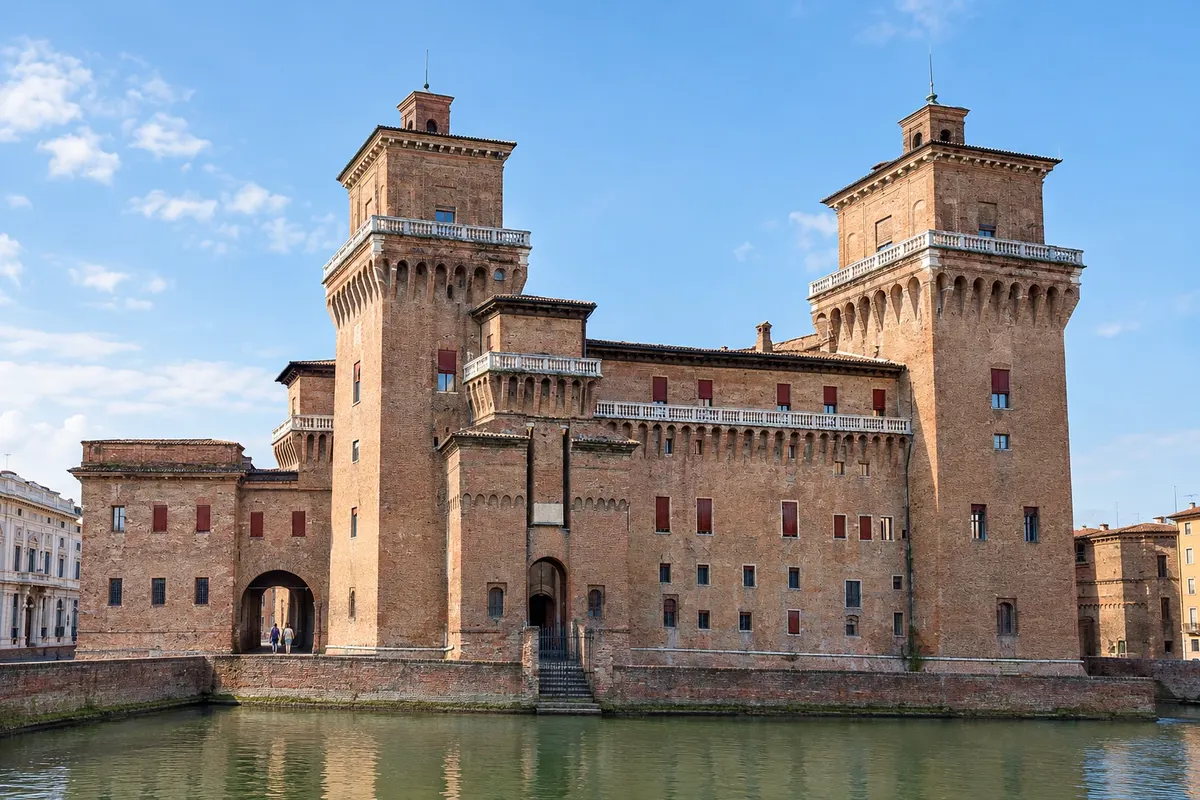
Na fotografiji: Castello Estense, Ferrara

Illustrative images. The pictures in this guide are illustrations based on the real place, not photographs, and may differ from it.

Na voljo v trgovini Google Play Pošljite svoje fotografije

Spoznajte kraj

Pokrajina, ki jo doživite
v svojem ritmu.

Emília-Romanha occupies the Po river plain, between the Apennines and the Adriatic Sea, in northern Italy. The ancient Via Emília, a Roman road that cuts the region in a straight line, still links the main cities: Parma, Módena and Bolonha lie along it, and Ravena is to the east, near the coast.

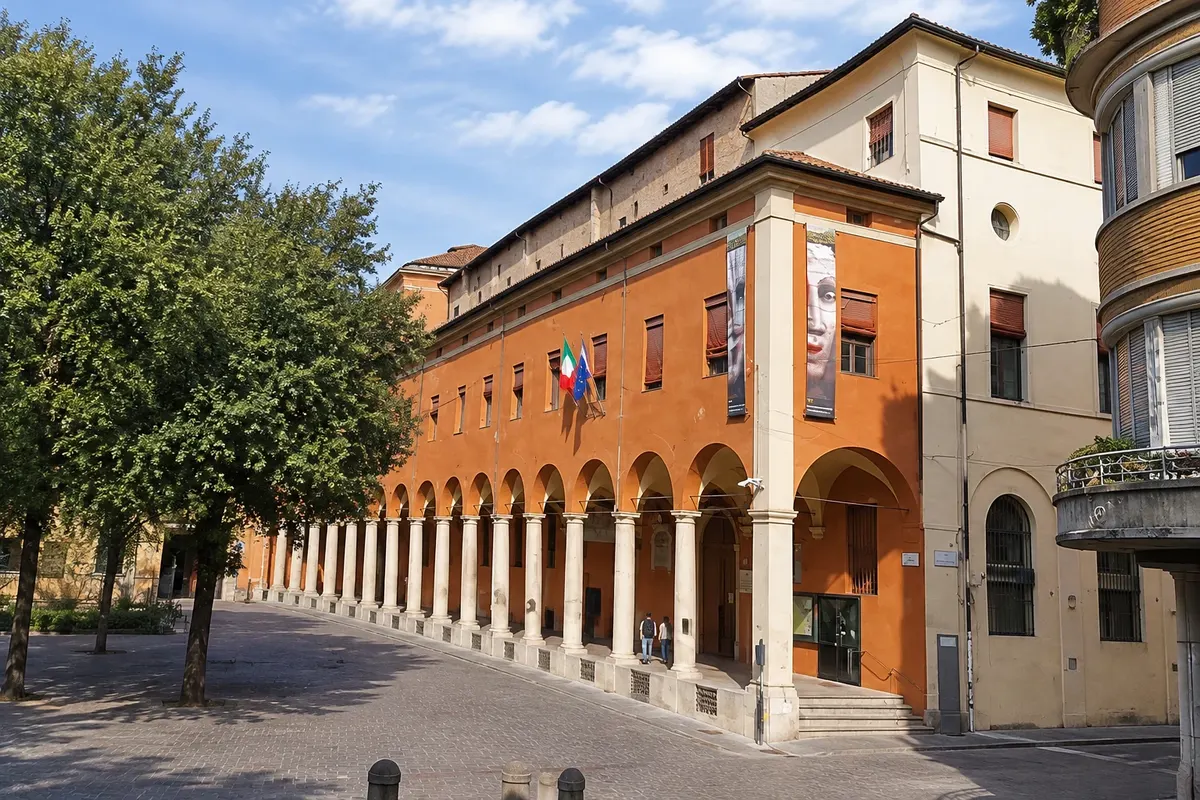
Bolonha (Bologna, in Italian) is the regional capital and the most practical starting point. It has the university considered the oldest in the West, dating to 1088 according to tradition, a red-brick historic center and kilometres of porticoes, the covered galleries that protect sidewalks from rain and sun. A portion of those porticoes is a UNESCO World Heritage site.

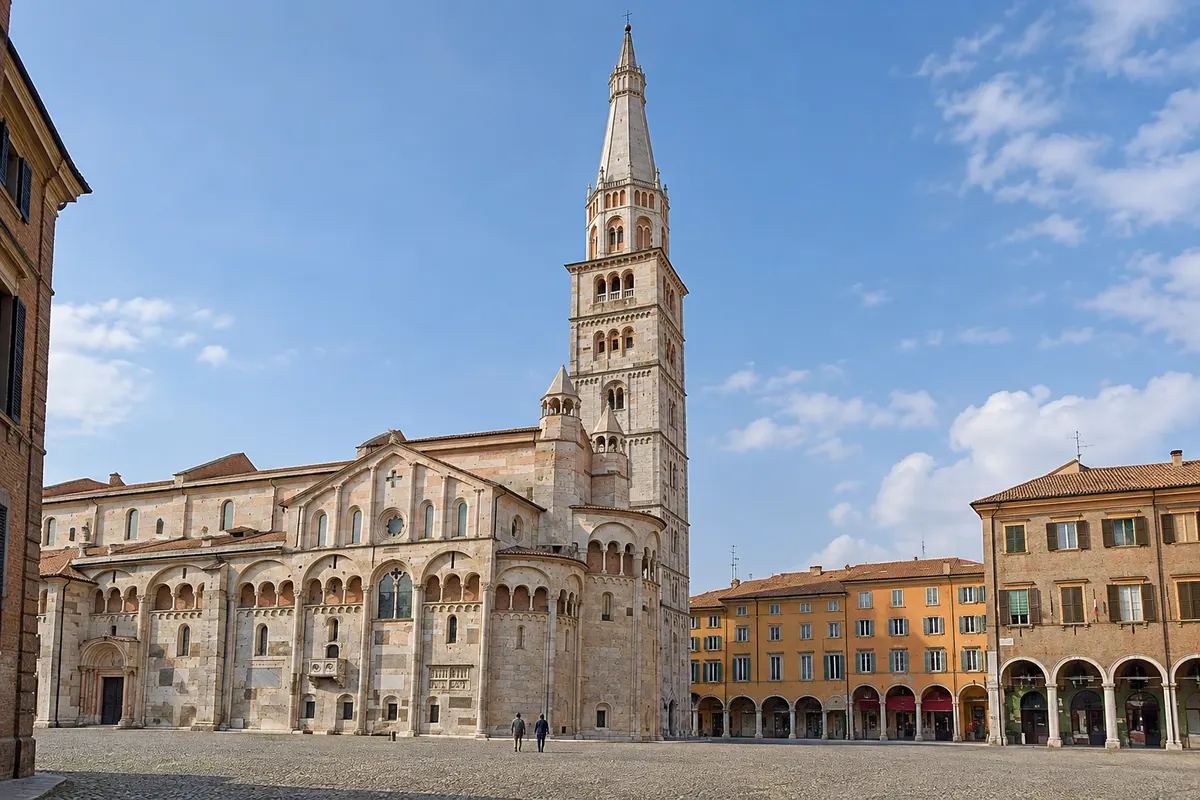
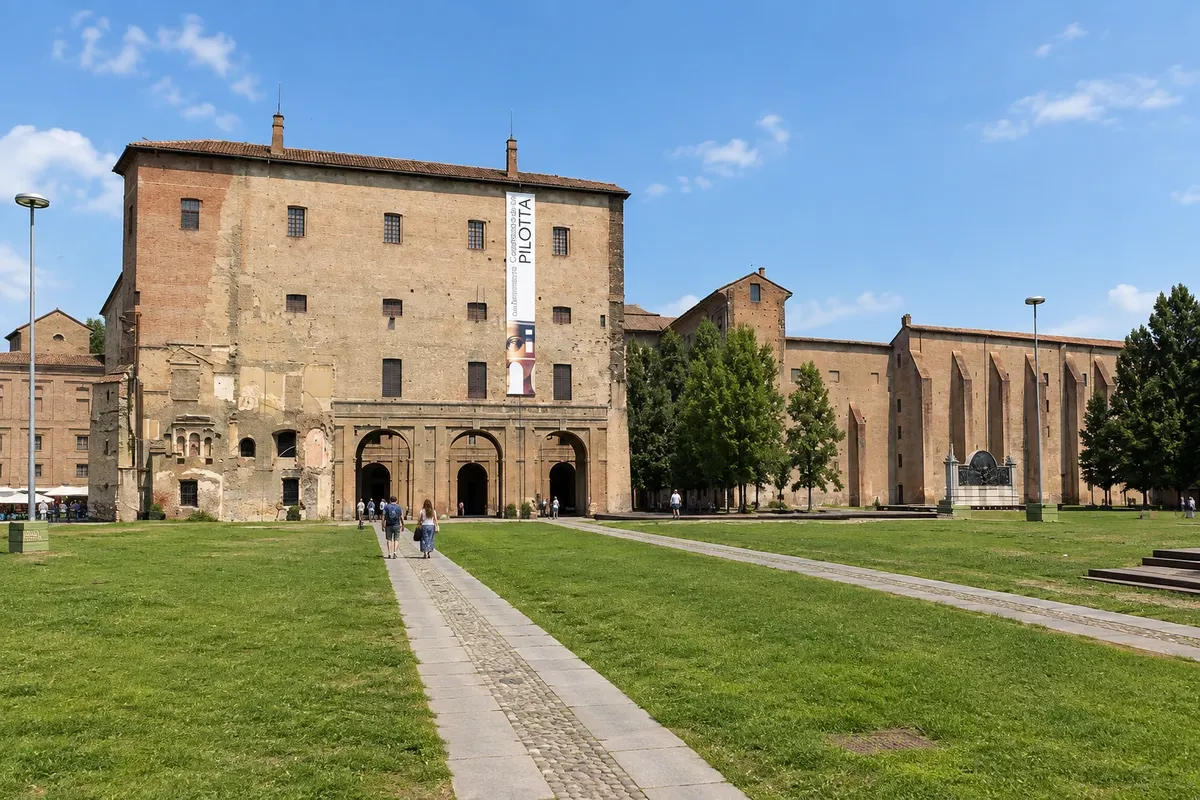
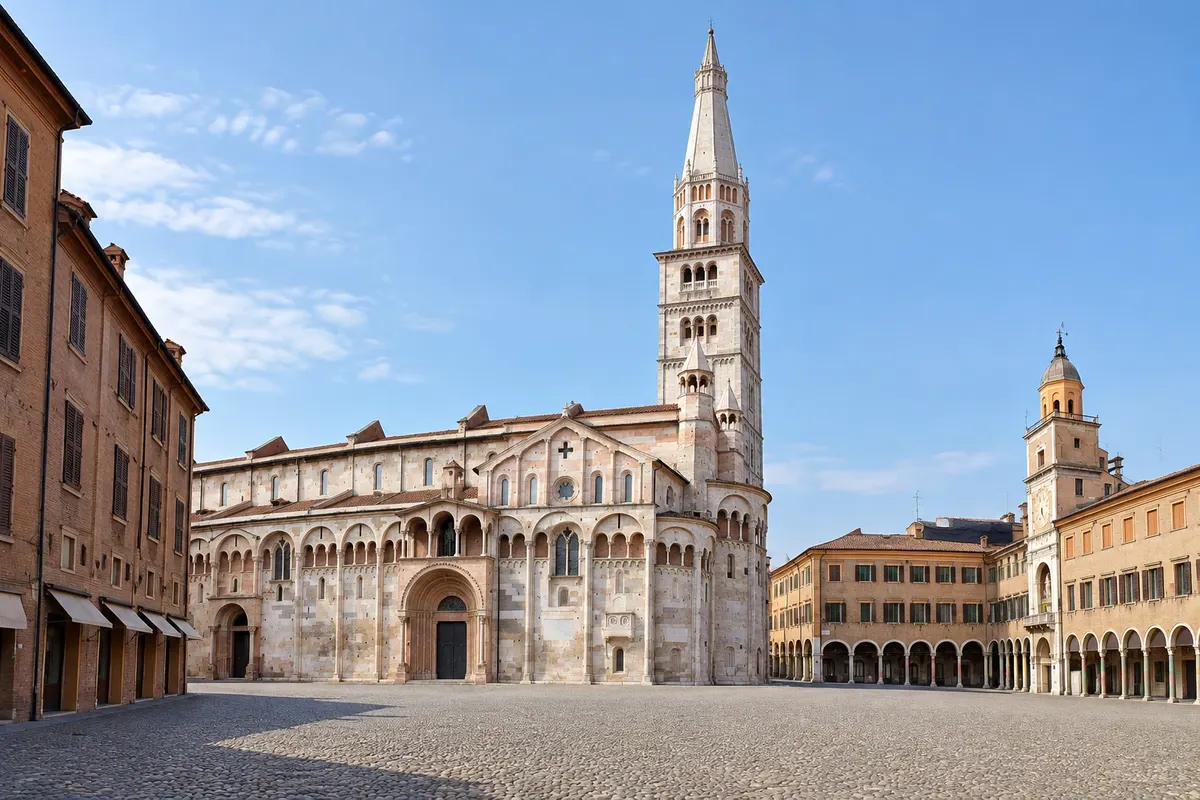
Módena preserves a Romanesque cathedral, the Ghirlandina tower and the Piazza Grande, a group also listed by UNESCO, as well as two museums dedicated to Ferrari, one in the city and another in Maranello. Parma has the dome painted by Correggio in the cathedral, the pink marble baptistery by Benedetto Antelami and the Teatro Farnese, all wood, inside the Palazzo della Pilotta.

Ravena was capital of the Western Roman Empire, of Theodoric's Ostrogothic kingdom and of Byzantine Italy. From that period remain eight fifth- and sixth-century monuments covered in mosaics, which together form a single UNESCO site. Dante Alighieri died in the city and is buried there.

Food is part of the local culture: mortadella and tortellini from Bolonha, aceto balsamico tradizionale from Módena, prosciutto di Parma and parmigiano reggiano, a cheese produced on the plain between Parma, Reggio Emilia, Módena and Bolonha.

This destination brings together 4 cities: Bologna, Modena, Parma, Ravenna.

Delite: WhatsApp
Delite svoja popotniška doživetja s fotografijami Pošljite fotografije vsakega kraja, ki ste ga obiskali. Največje število fotografij na kraj: 5.

Ena destinacija, več poti

Mesta na tej poti

Začnite v enem mestu ali v načrt poti vključite več mest.

Bologna and Emilia-Romagna – lega
BolonhaRavenaParmaMódena

Obrisi: ISTAT, limites administrativos 2026, CC BY 4.0. Priredba: Cidade Turismo.

Kako do tja:Bologna and Emilia-Romagna

✈ Aeroporto di Bologna Guglielmo Marconi (BLQ)· 8 km do cilja (Bologna)

Check before buying. Bolonha's airport receives European flights. From Milan, Florence, Rome or Venice the high-speed train reaches Bologna Centrale; from there, regional trains continue to Módena, Parma and Ravena.

Predlagana točka prihoda:Bologna

Bologna
Emília-Romanha · Bologna and Emilia-Romagna Capital Predlagana točka prihoda

Bologna

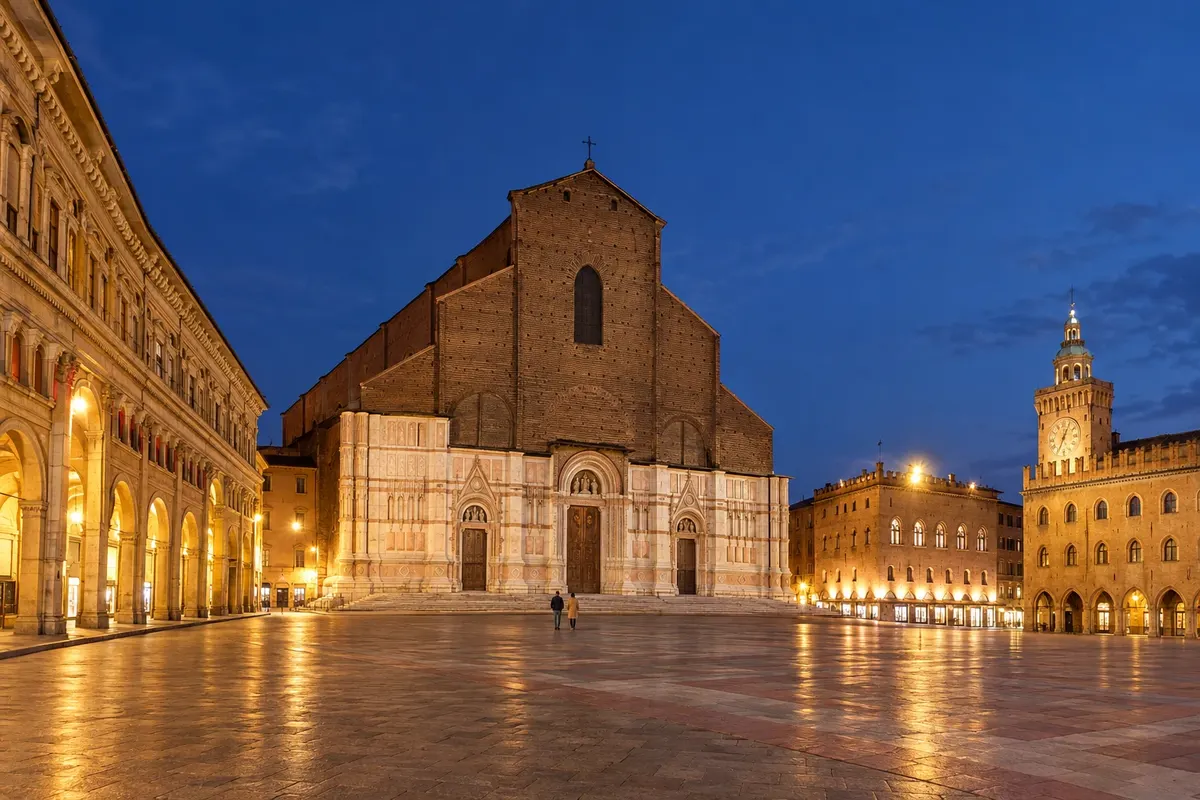
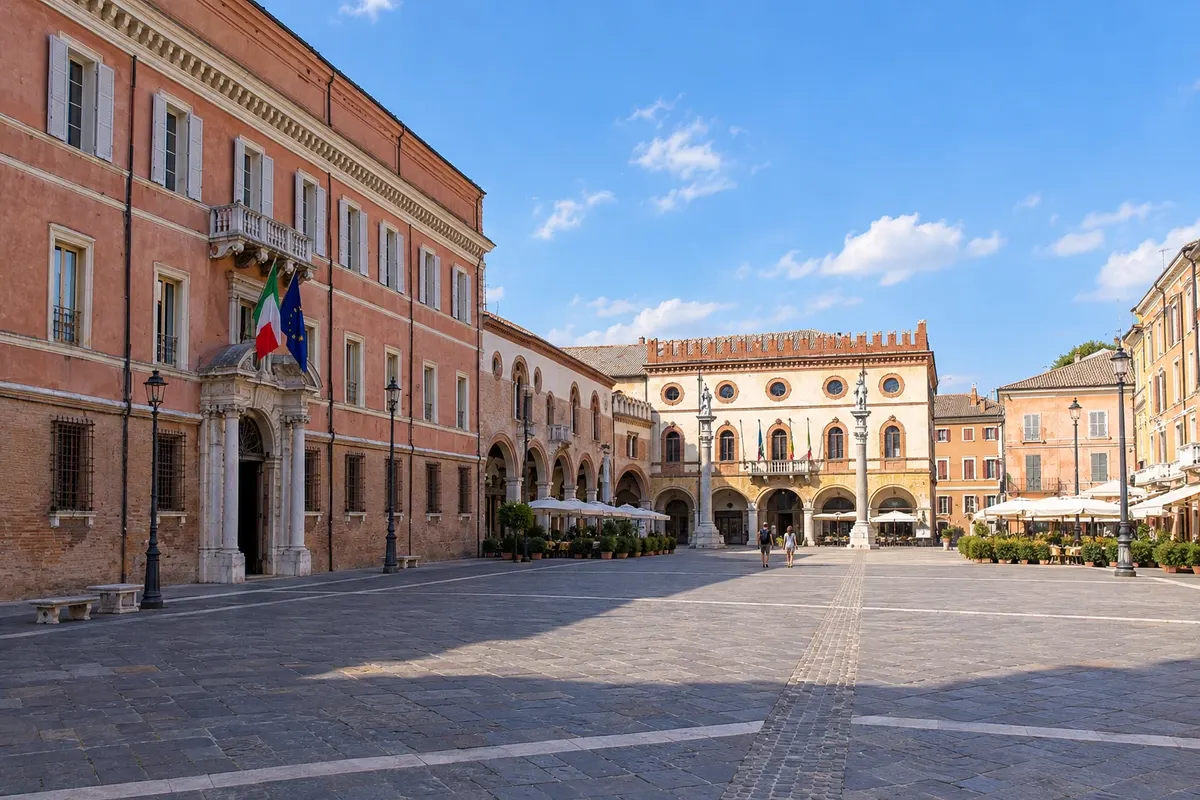
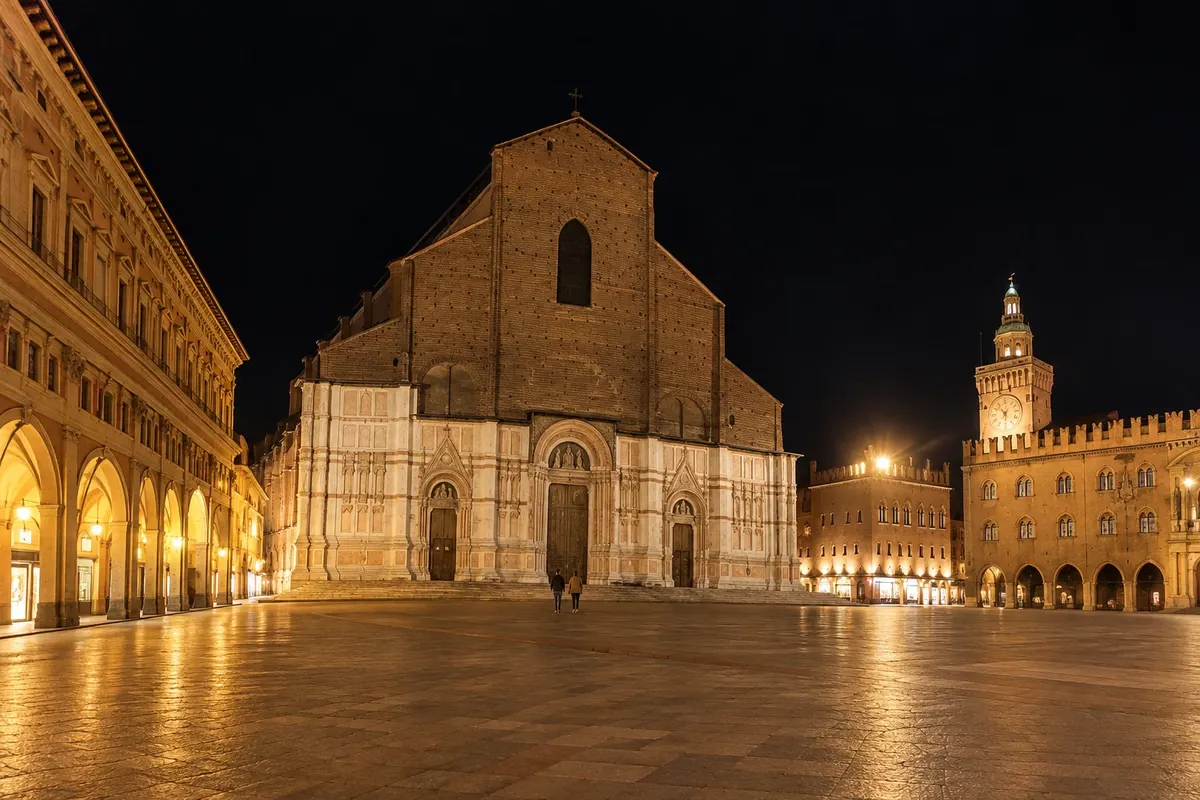
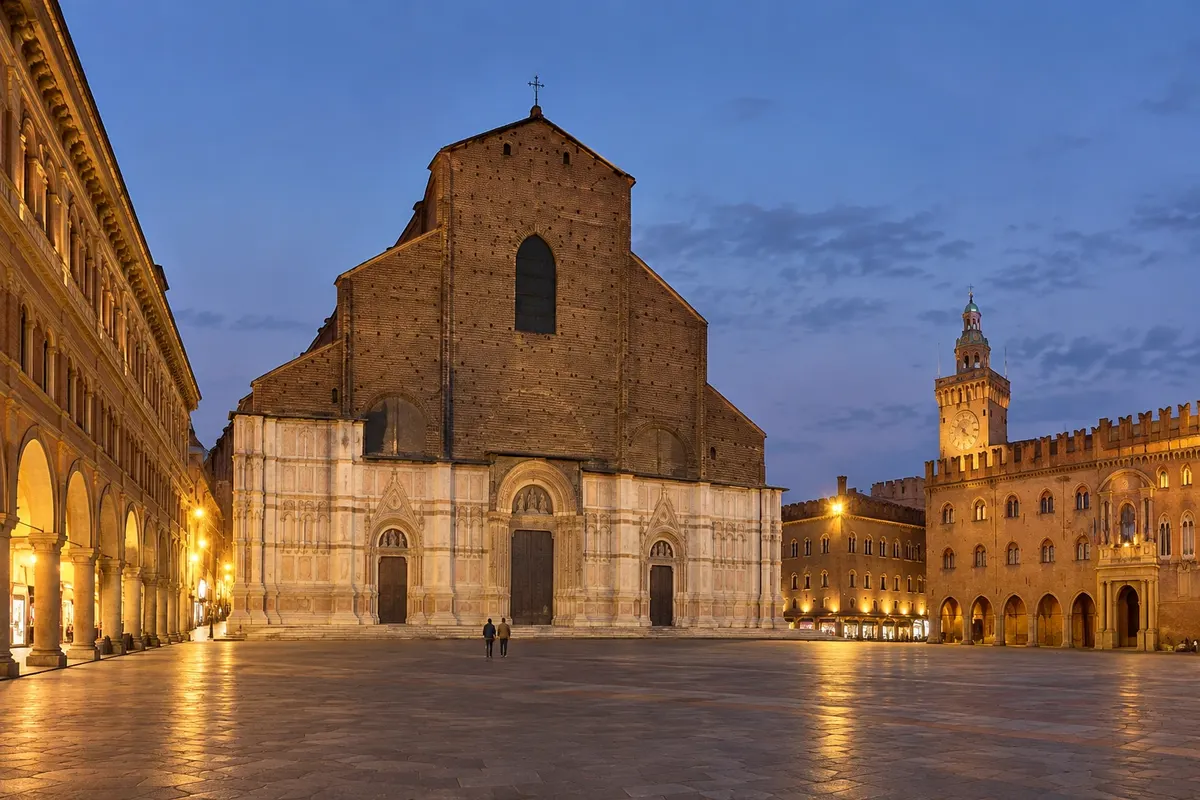
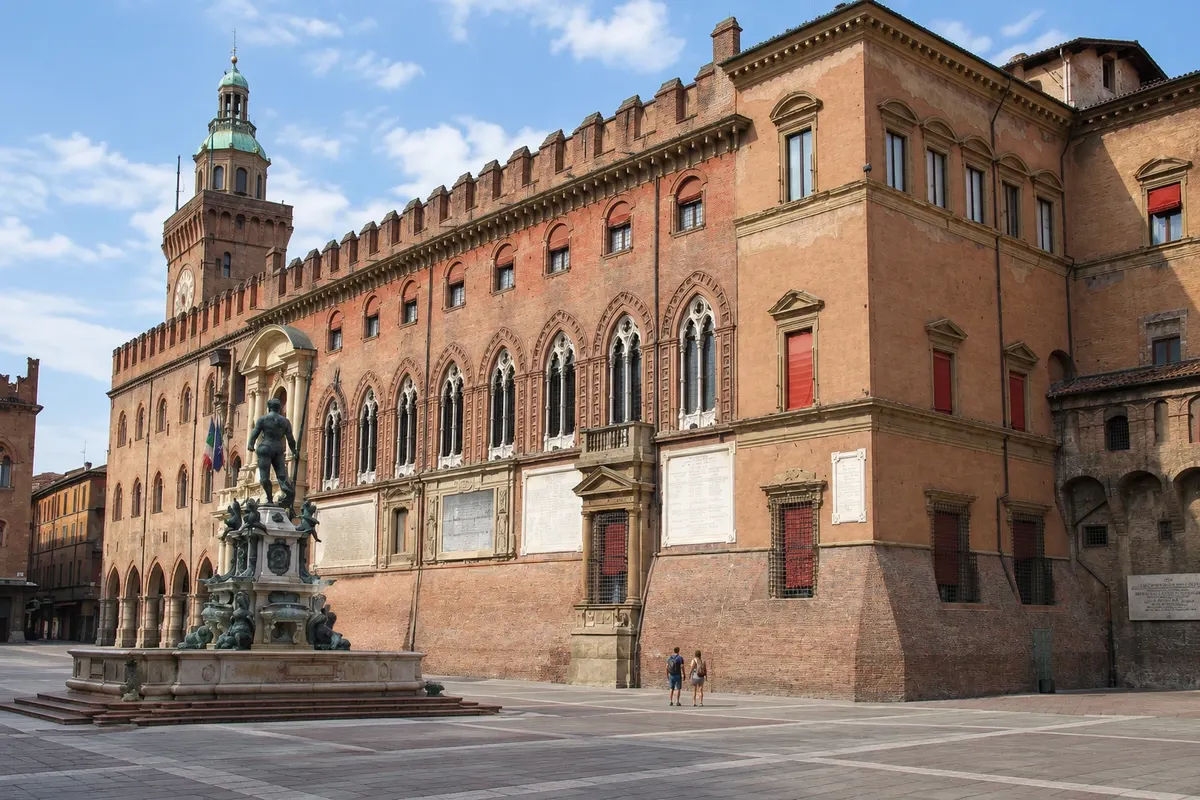
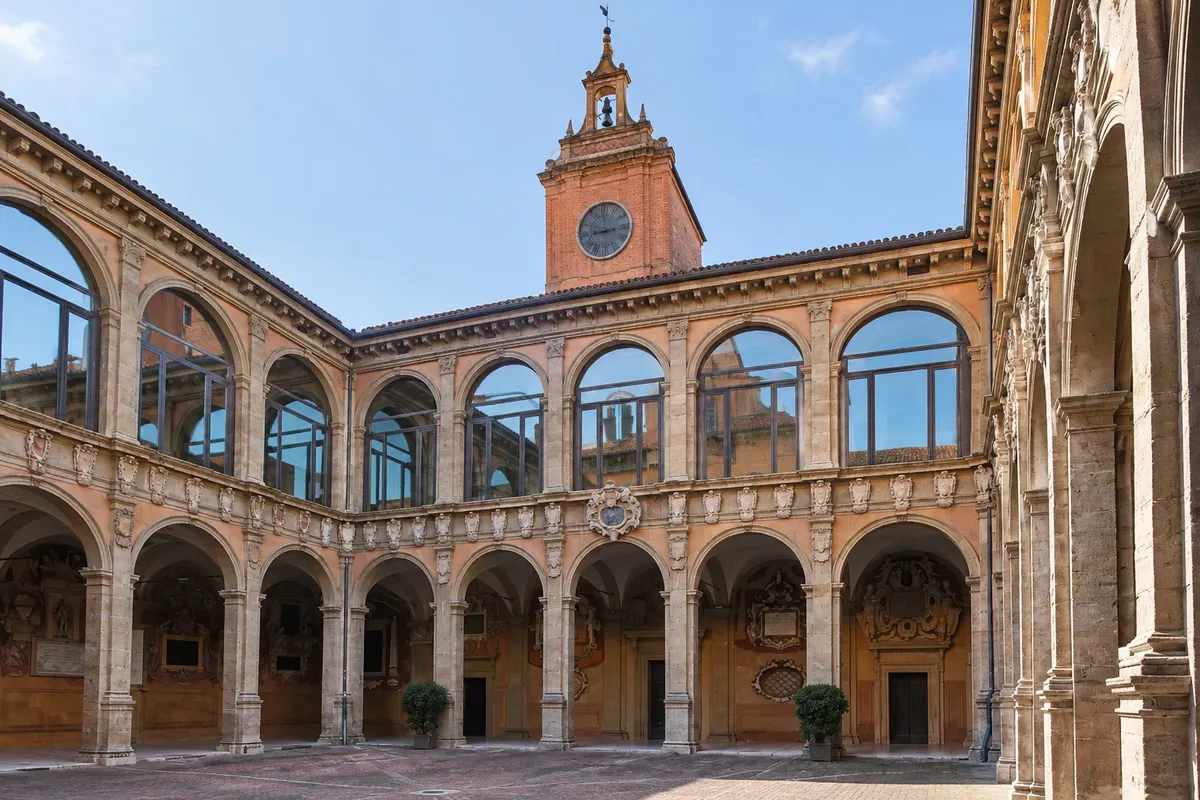
As the capital of Emília-Romanha, Bolonha has a red-brick historic centre cut through by porticoes. Around the Piazza Maggiore are the Basilica di San Petronio, the Palazzo d'Accursio and the Archiginnasio, the old university seat. A few minutes away are the Basilica di Santo Stefano, the Basilica di San Domenico and the Pinacoteca Nazionale. On the hill, the Santuario della Madonna di San Luca is reached via the city's longest portico.

Modena
Emília-Romanha · Bologna and Emilia-Romagna

Modena

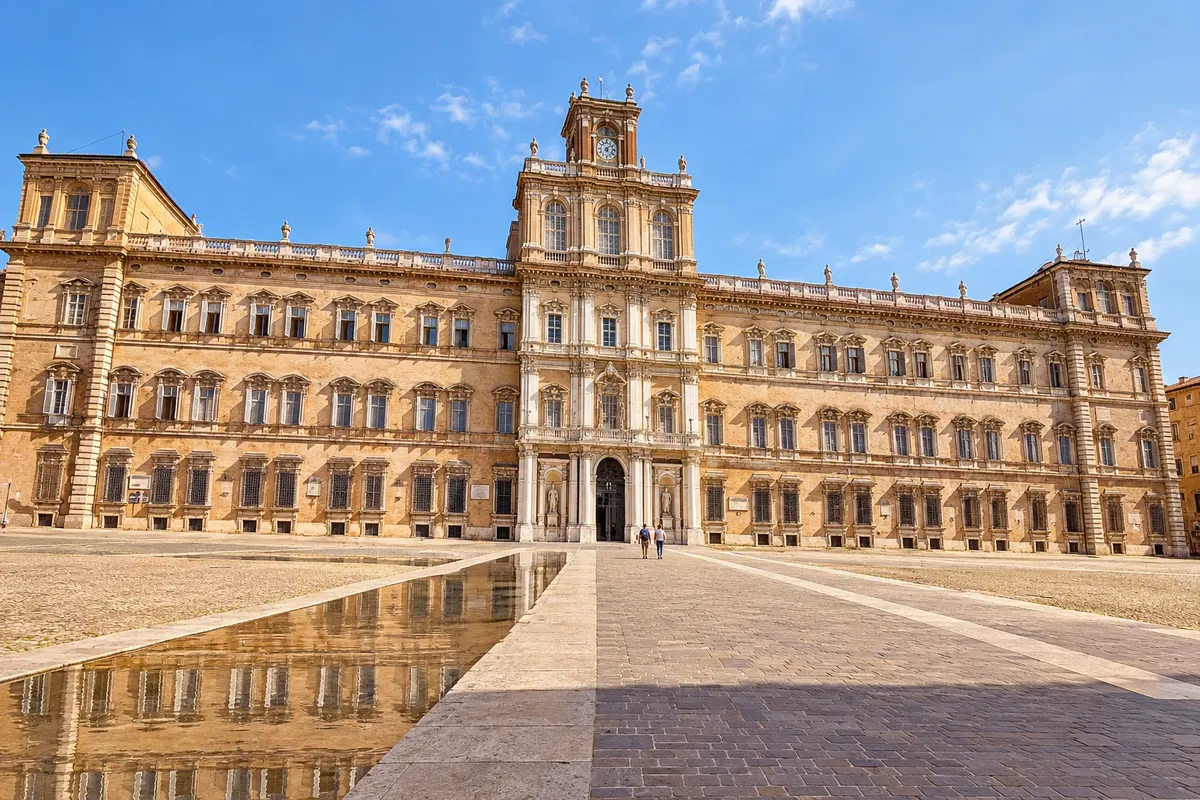
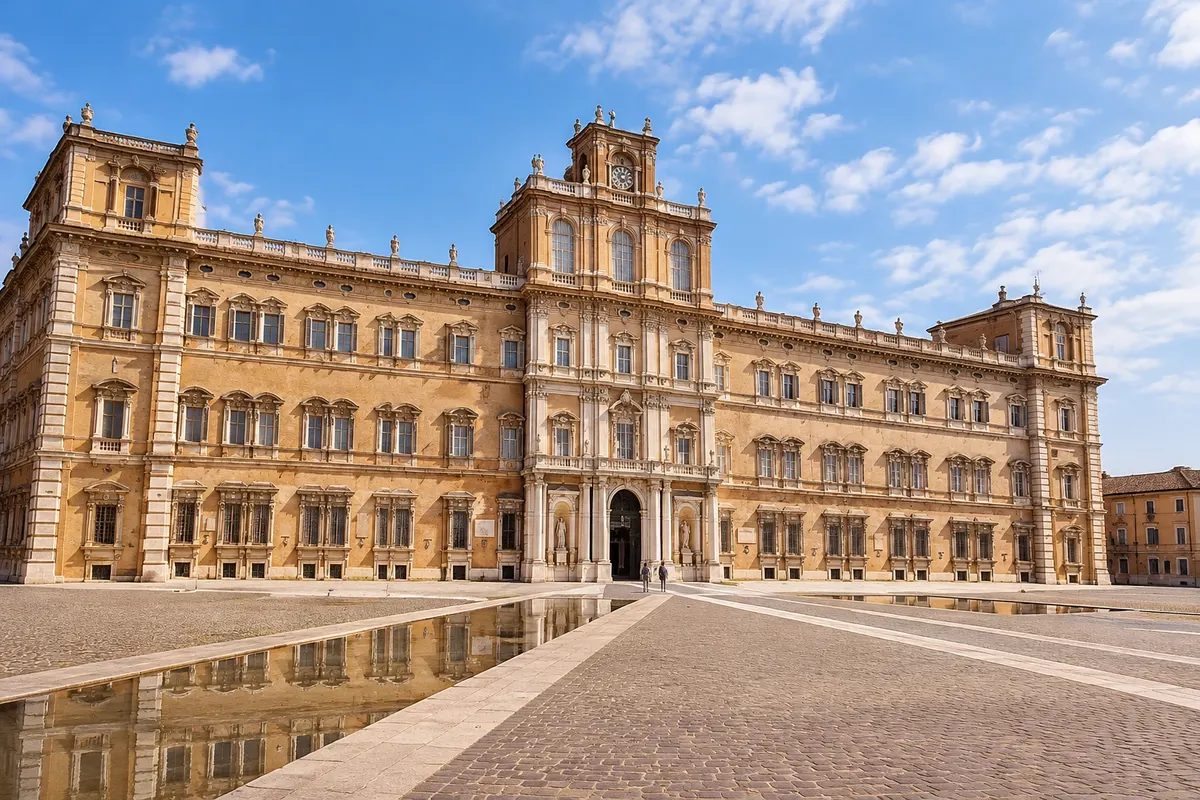
City of the dukes d'Este, Módena lies on the Via Emília, west of Bolonha. The Duomo di Modena, a masterpiece of Romanesque architecture, the Torre Ghirlandina and the Piazza Grande form a UNESCO World Heritage ensemble. Nearby are the Palazzo Ducale, the Mercato Albinelli and the Galleria Estense. The city is the home of aceto balsamico tradizionale and of Enzo Ferrari, remembered at the Museo Enzo Ferrari, and in Maranello is the Museo Ferrari.

Parma
Emília-Romanha · Bologna and Emilia-Romagna

Parma

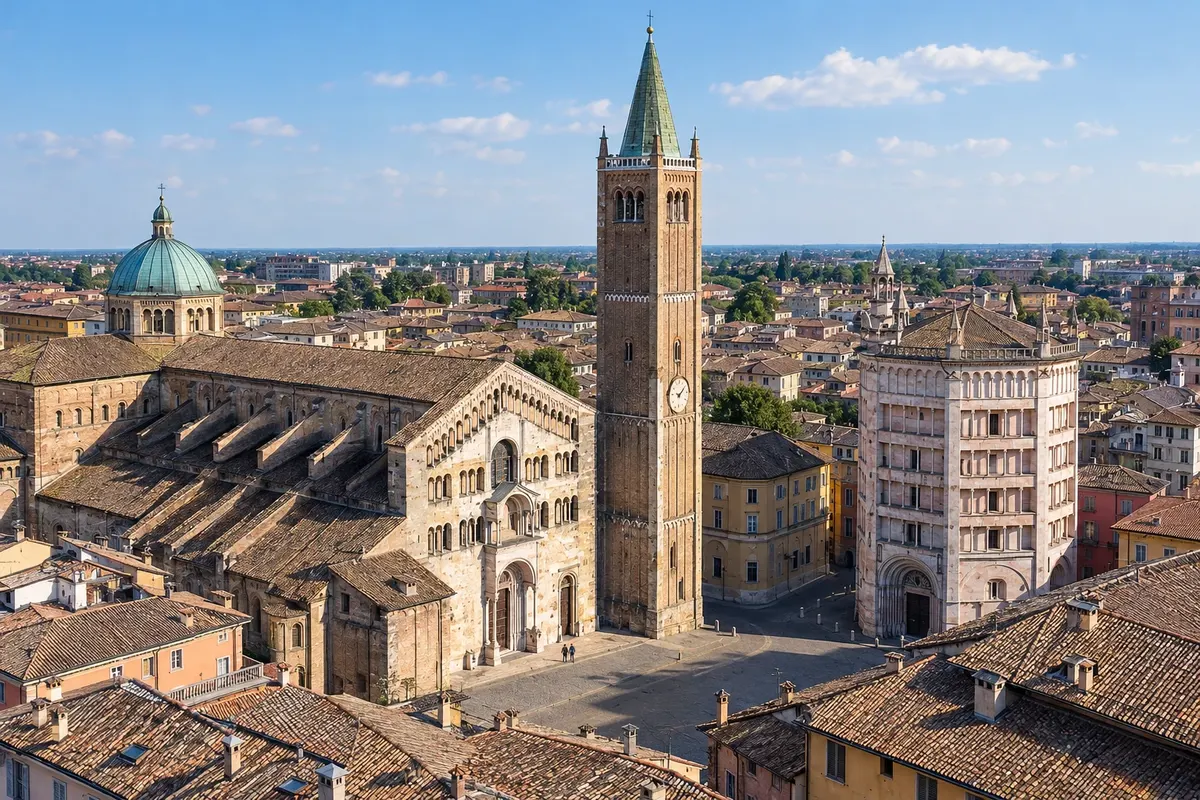
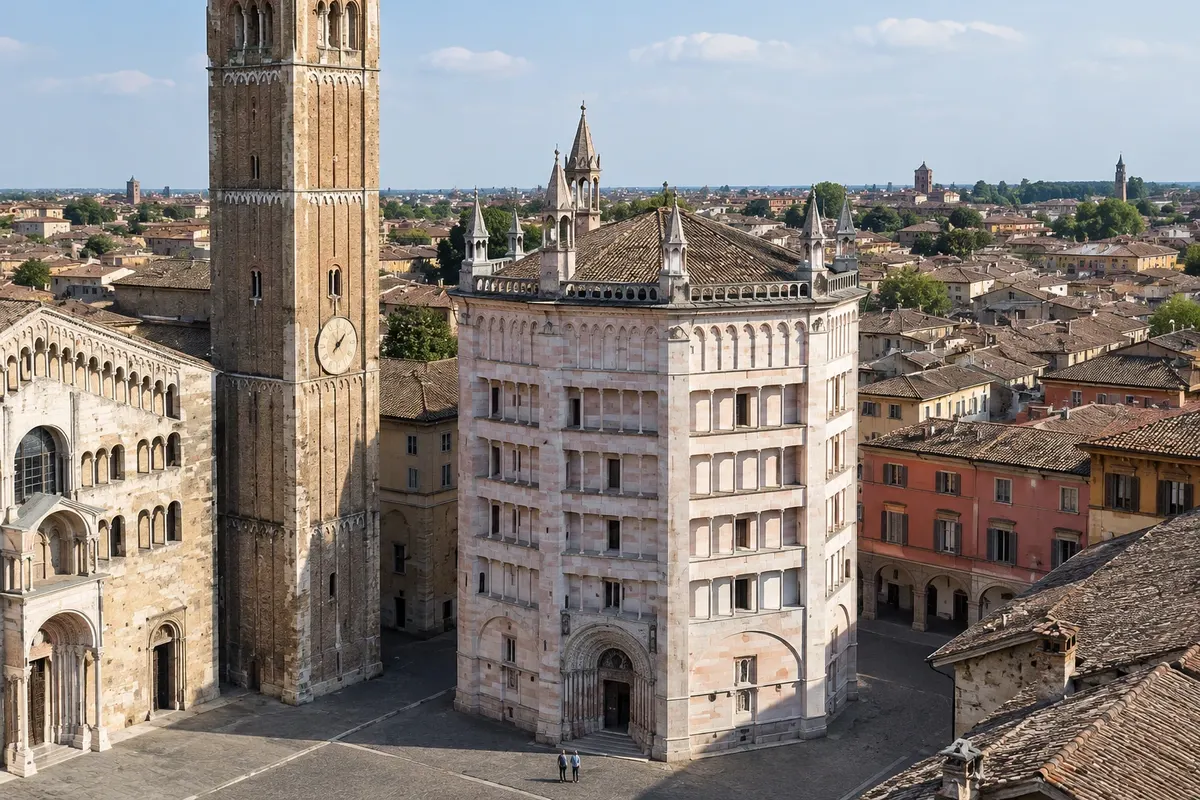
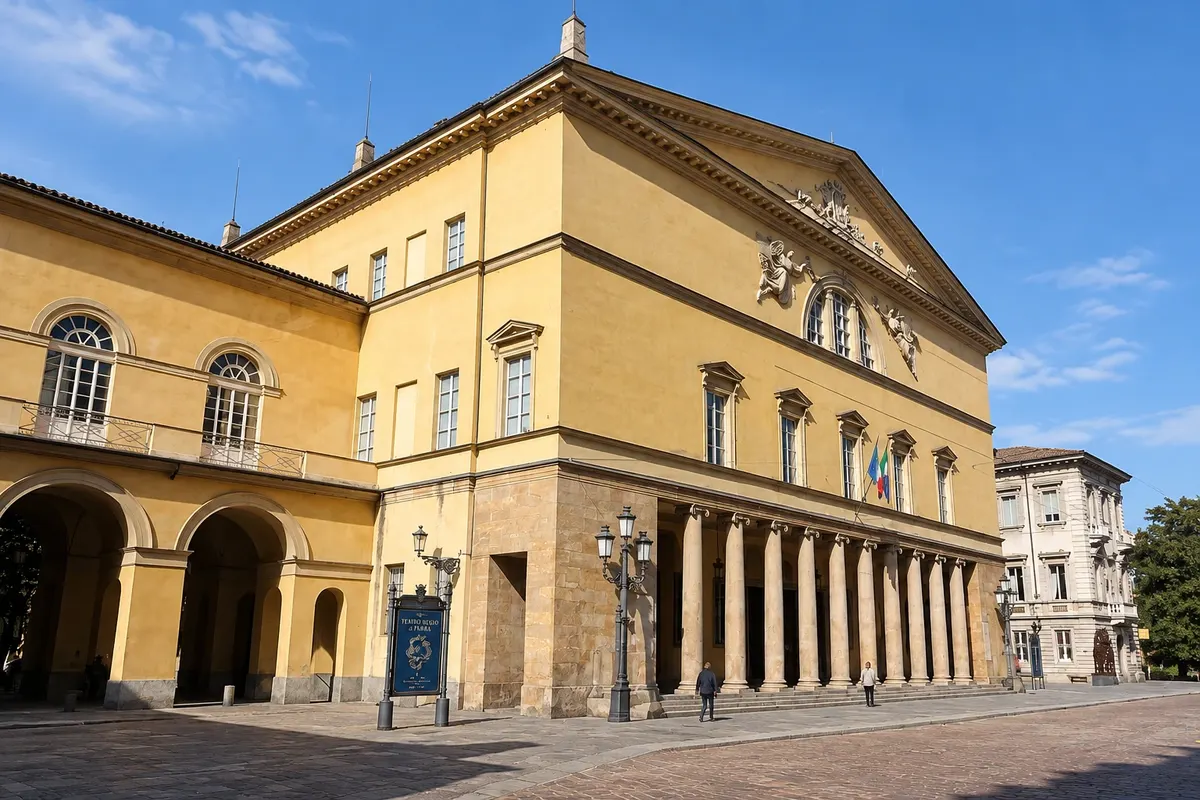
Former capital of the Duchy of the Farnese and later of Maria Luisa of Austria, Parma brings together art and food. On the Piazza Duomo are the cathedral, with the dome painted by Correggio, and the Battistero of pink marble by Benedetto Antelami. The Complesso della Pilotta houses the Galleria Nazionale and the wooden Teatro Farnese. The visit is completed by the Teatro Regio, the Basilica di Santa Maria della Steccata and the Parco Ducale. It is the land of prosciutto di Parma and parmigiano reggiano.

Ravenna
Emília-Romanha · Bologna and Emilia-Romagna

Ravenna

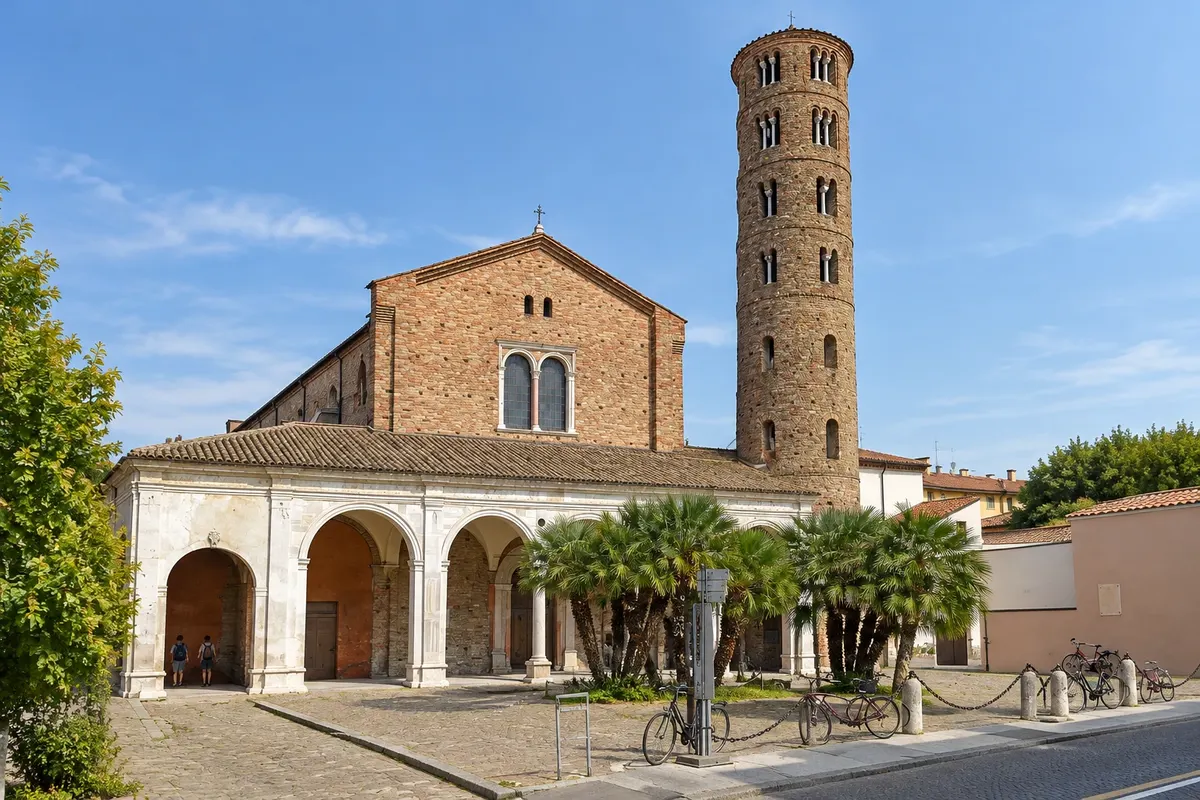
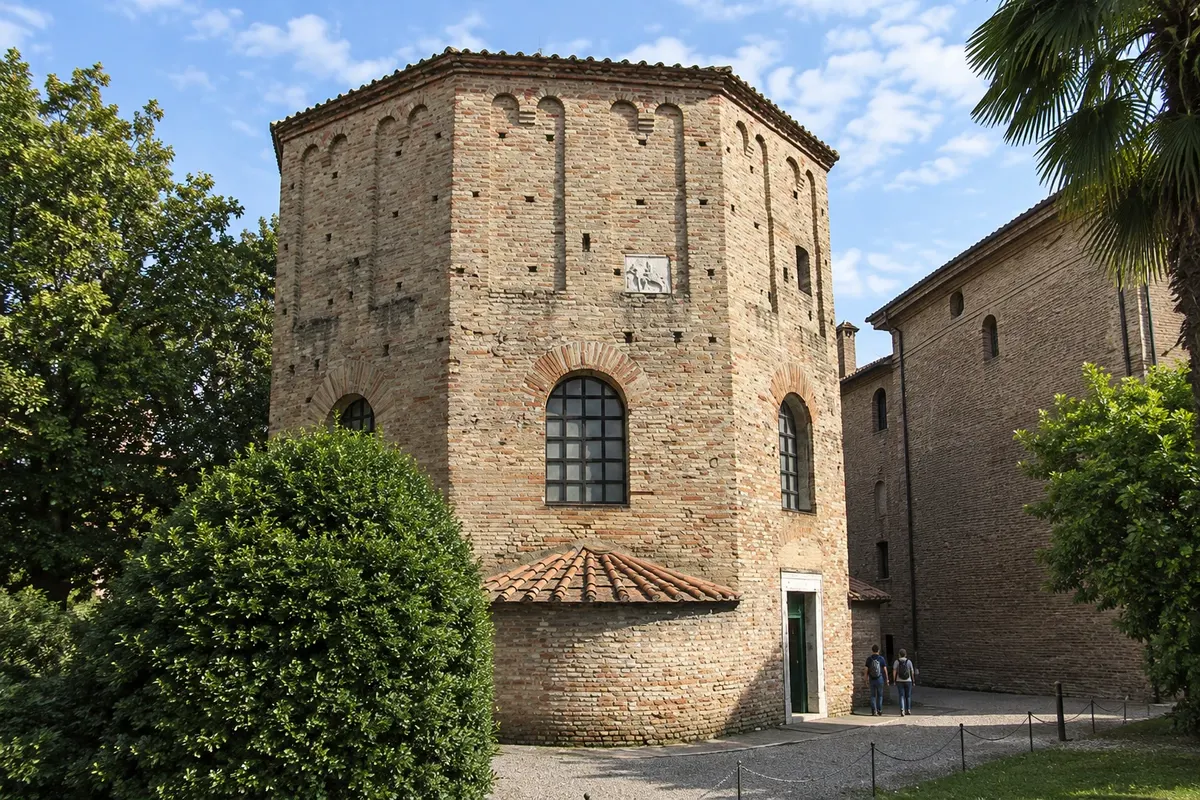
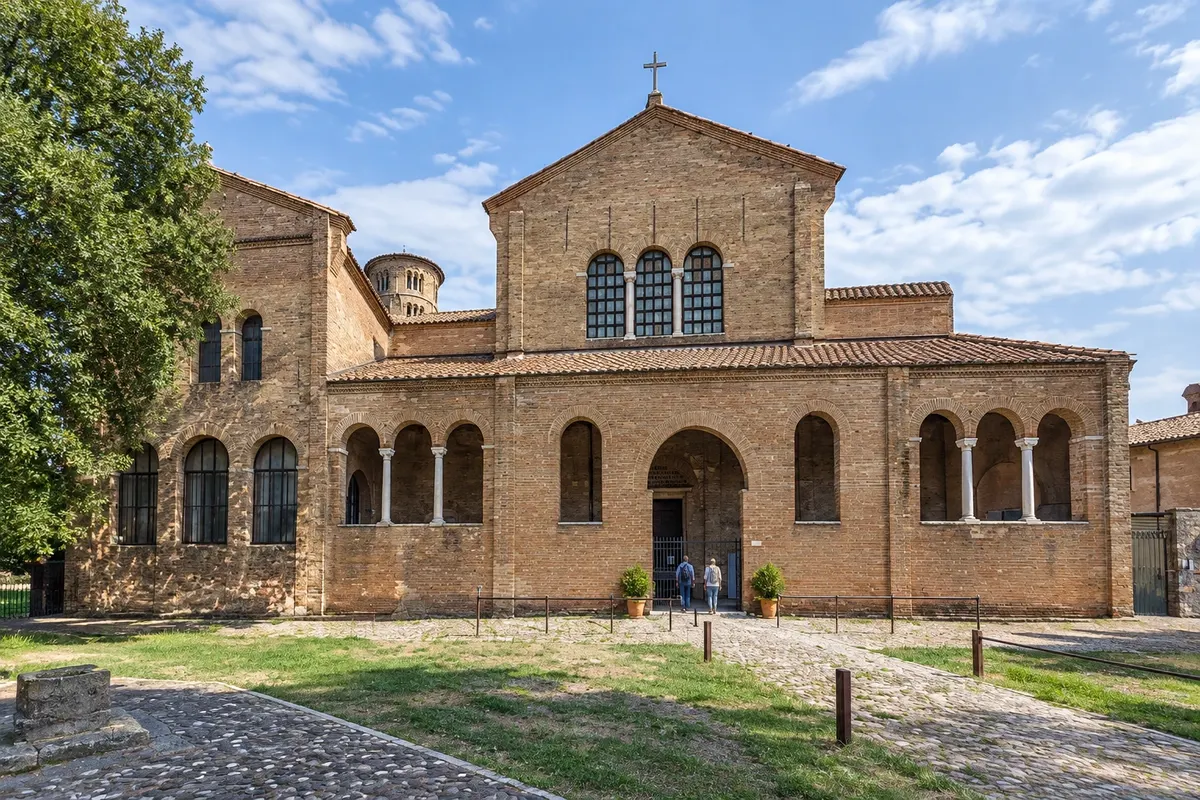
Ravenna was the capital of the Western Roman Empire, the Ostrogothic kingdom and Byzantine Italy, and preserves eight monuments from the 5th and 6th centuries, a UNESCO World Heritage Site. In the center are the Basilica di San Vitale, the Mausoleo di Galla Placidia, the Basilica di Sant'Apollinare Nuovo, the Battistero Neoniano, the Battistero degli Ariani and the Museo Arcivescovile. A little farther out are the Mausoleo di Teodorico and the Basilica di Sant'Apollinare in Classe. Dante is buried in the Tomba di Dante.

Doživite kraj

Kaj početi – Bologna and Emilia-Romagna

Basilica di San Vitale
Ravenna · Emilia-Romagna · Cerkev

Basilica di San Vitale

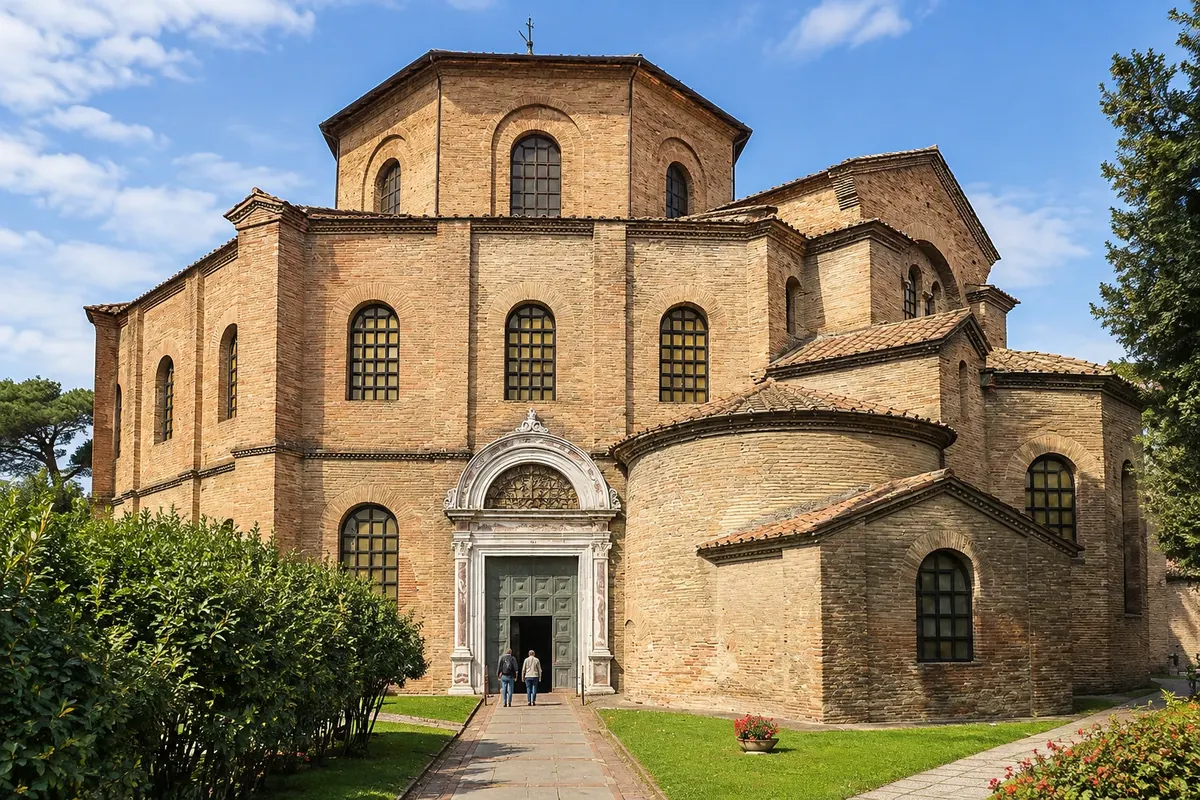
Octagonal basilica consecrated in 547, covered in Byzantine mosaics. The panels of Emperor Justinian and Empress Theodora with their courts are among the most famous mosaics in the world.

Cattedrale di Parma
Parma · Emilia-Romagna · Stolnica

Cattedrale di Parma

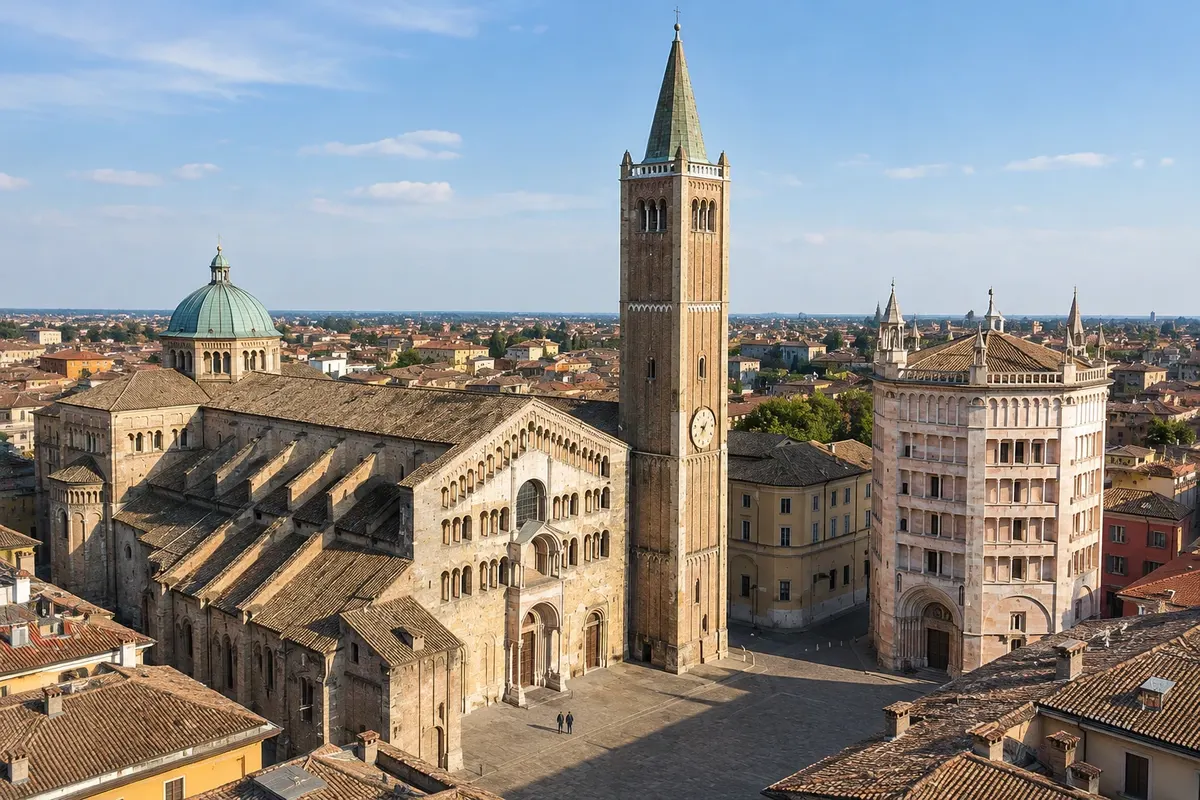
Romanesque cathedral consecrated in 1106. The dome is covered by the Assumption of the Virgin painted by Correggio, and the transept houses the Deposition sculpted by Benedetto Antelami in 1178.

Duomo di Modena
Modena · Emilia-Romagna · Stolnica

Duomo di Modena

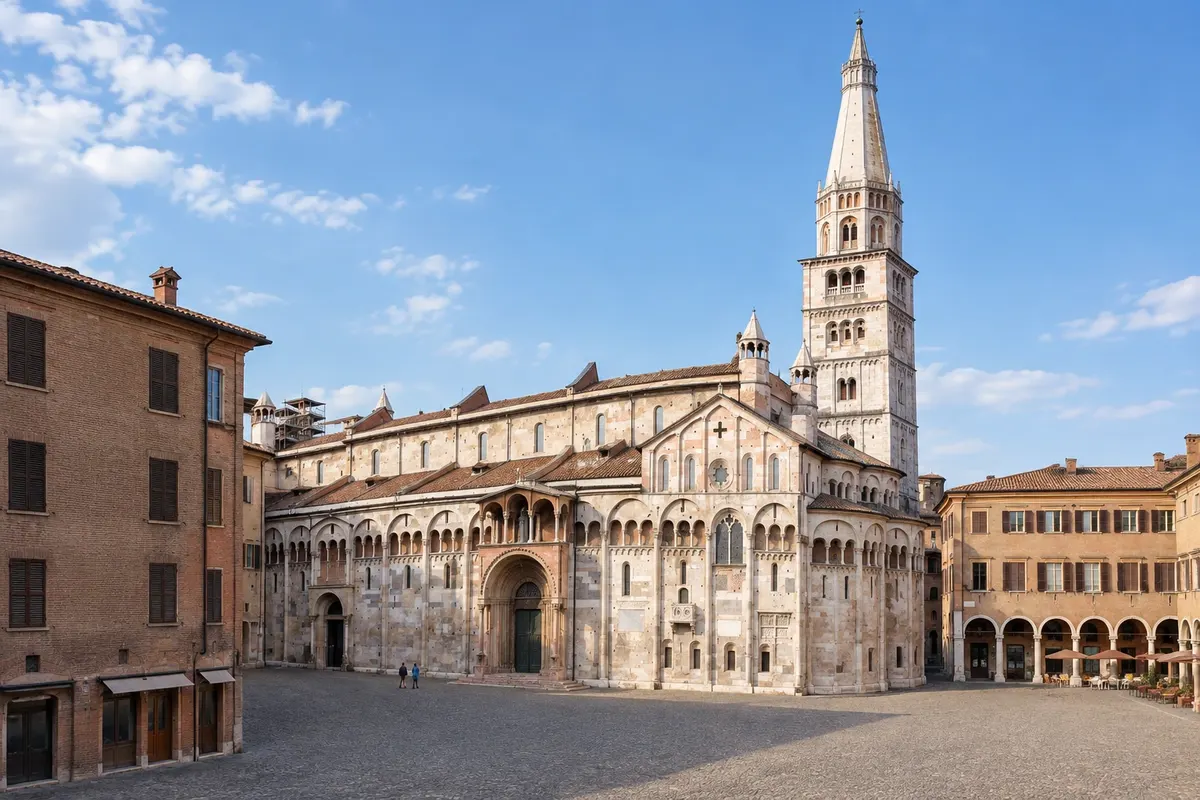
Romanesque cathedral begun in 1099 by the architect Lanfranco, with reliefs by the sculptor Wiligelmo on the façade. In the crypt are the relics of San Geminiano, the city's patron saint.

Piazza Maggiore
Bologna · Emilia-Romagna · Trg

Piazza Maggiore

The main square of Bolonha, surrounded by the Basilica di San Petronio, the Palazzo d'Accursio and the Palazzo del Podestà. Beside it is the Fontana del Nettuno by Giambologna.

Bologna and Emilia-Romagna – prikaži dodatne kraje (27)
Basilica di San Petronio
Bologna · Emilia-Romagna · Cerkev

Basilica di San Petronio

The largest church in Bologna, built of brick with an unfinished façade facing the Piazza Maggiore. Running across the floor is the meridian by Giovanni Domenico Cassini, from 1655.

Battistero di Parma
Parma · Emilia-Romagna · Monument

Battistero di Parma

Octagonal baptistery of pink Verona marble, begun in 1196 by Benedetto Antelami. Sculptures of the months and seasons and 13th-century frescoes cover the interior.

Mausoleum of Galla Placidia
Ravenna · Emilia-Romagna · Monument

Mausoleum of Galla Placidia

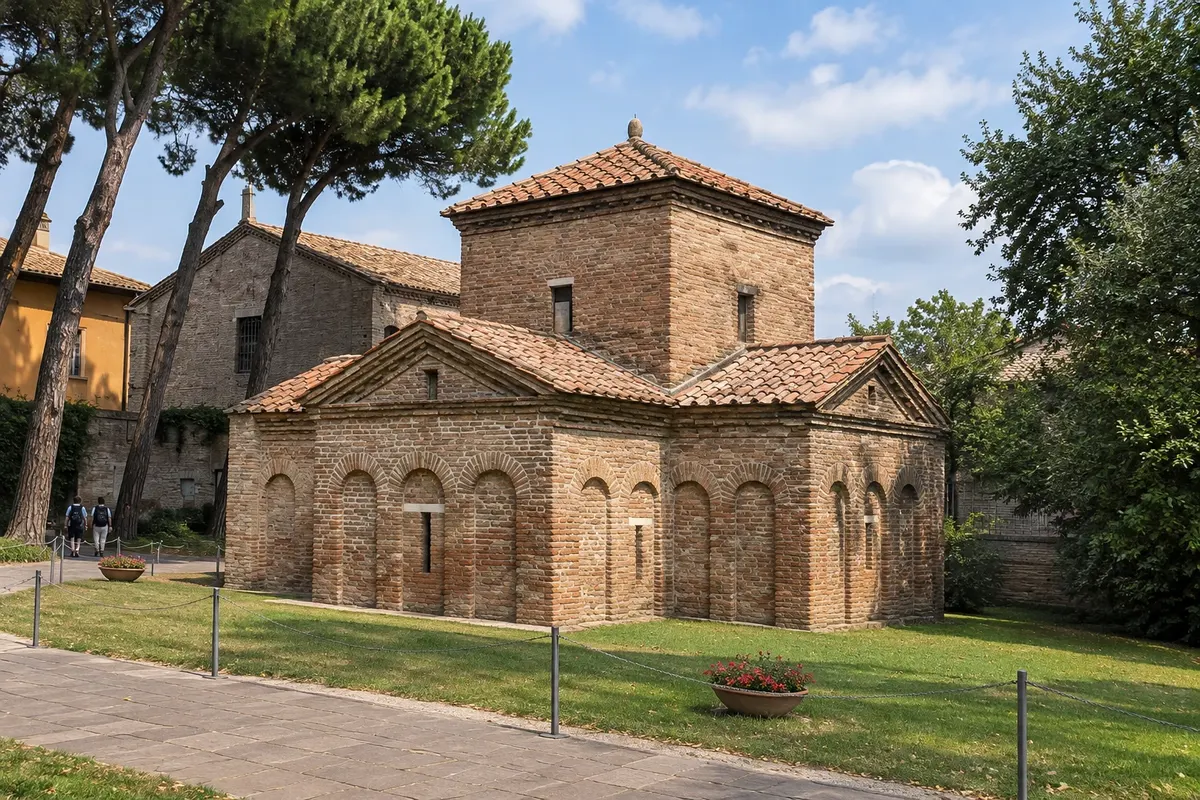
Small 5th-century cruciform building in the garden of San Vitale. The cobalt-blue dome with golden stars and the lunette of the Good Shepherd are among Ravenna's oldest mosaics.

Torre Ghirlandina
Modena · Emilia-Romagna · Monument

Torre Ghirlandina

The Duomo's bell tower, at 86 metres, a symbol of Módena. The visit, by scheduled time, climbs about 200 steps up to the Sala dei Torresani.

Basilica of Sant'Apollinare Nuovo
Ravenna · Emilia-Romagna · Cerkev

Basilica of Sant'Apollinare Nuovo

Basilica erected by Theodoric in the early 6th century. The nave walls display long processions of martyrs and virgins on a golden background, as well as Theodoric's palace and the port of Classe.

Complesso Monumentale della Pilotta
Parma · Emilia-Romagna · Muzej

Complesso Monumentale della Pilotta

Large palace of the Farnese that houses the Teatro Farnese, made of wood, the Galleria Nazionale with works by Correggio, Parmigianino and Leonardo, the Biblioteca Palatina and the Museo Bodoni.

Palazzo d'Accursio
Bologna · Emilia-Romagna · Palace

Palazzo d'Accursio

The seat of Bologna's town hall since the Middle Ages, on the Piazza Maggiore. It houses the Collezioni Comunali d'Arte and the Torre dell'Orologio, which can be climbed by reservation.

Piazza Grande
Modena · Emilia-Romagna · Trg

Piazza Grande

Módena's main square, between the Duomo and the Palazzo Comunale. It is part of the UNESCO World Heritage ensemble together with the cathedral and the Ghirlandina.

Archiginnasio di Bologna
Bologna · Emilia-Romagna · Palace

Archiginnasio di Bologna

16th-century palace that was the seat of the former university. It has thousands of students' coats of arms on the walls and the Teatro Anatomico, a wooden hall used for anatomy lessons.

Neonian Baptistery
Ravenna · Emilia-Romagna · Monument

Neonian Baptistery

5th-century octagonal baptistery next to the cathedral, also called Battistero degli Ortodossi. In the dome, the baptism of Christ is surrounded by the procession of the twelve apostles.

Palazzo Ducale di Modena
Modena · Emilia-Romagna · Palace

Palazzo Ducale di Modena

Baroque palace that was the residence of the dukes d'Este for more than two centuries. Today it houses the Accademia Militare and can only be visited on guided tours on Saturdays and Sundays.

Teatro Regio di Parma
Parma · Emilia-Romagna · Architecture

Teatro Regio di Parma

Opera house inaugurated in 1829 by Duchess Maria Luisa of Austria, linked to the tradition of Giuseppe Verdi. Guided tours of about 30 minutes to the auditorium and foyer are offered.

Basilica di Santa Maria della Steccata
Parma · Emilia-Romagna · Cerkev

Basilica di Santa Maria della Steccata

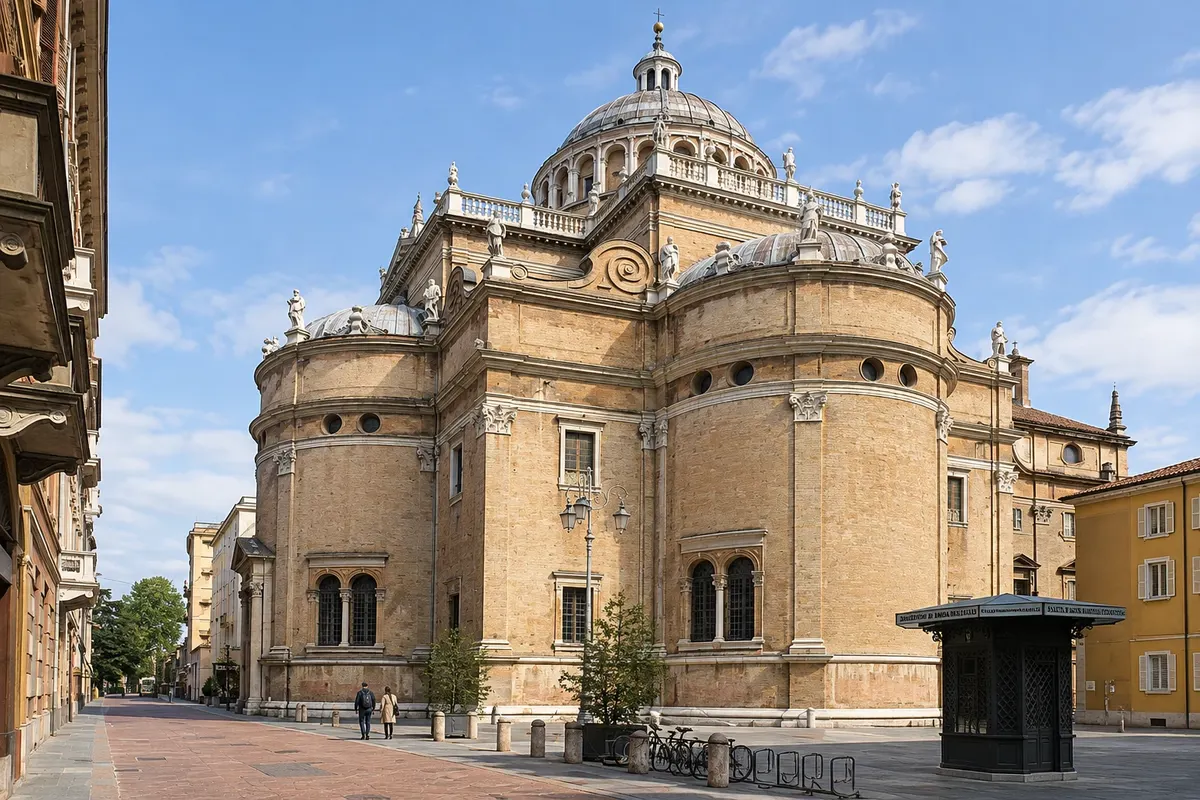
Renaissance church with a Greek cross plan, built between 1521 and 1539, with frescoes by Parmigianino on the arch of the presbytery and tombs of the Farnese and the Bourbon in the crypt.

Basilica di Santo Stefano
Bologna · Emilia-Romagna · Cerkev

Basilica di Santo Stefano

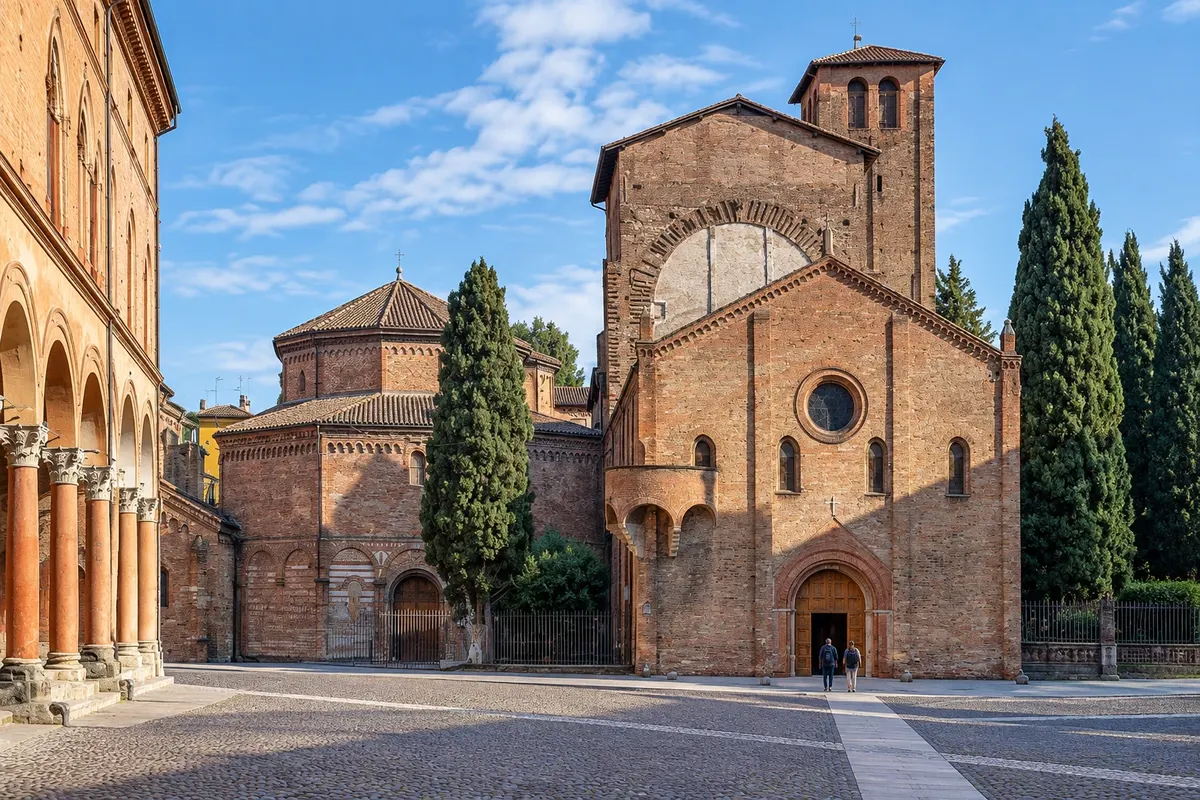
Group of churches, courtyards and cloister linked together, known as the Sette Chiese. It includes the church of the Santo Sepolcro, inspired by the one in Jerusalem, and the Cortile di Pilato.

Arian Baptistery
Ravenna · Emilia-Romagna · Monument

Arian Baptistery

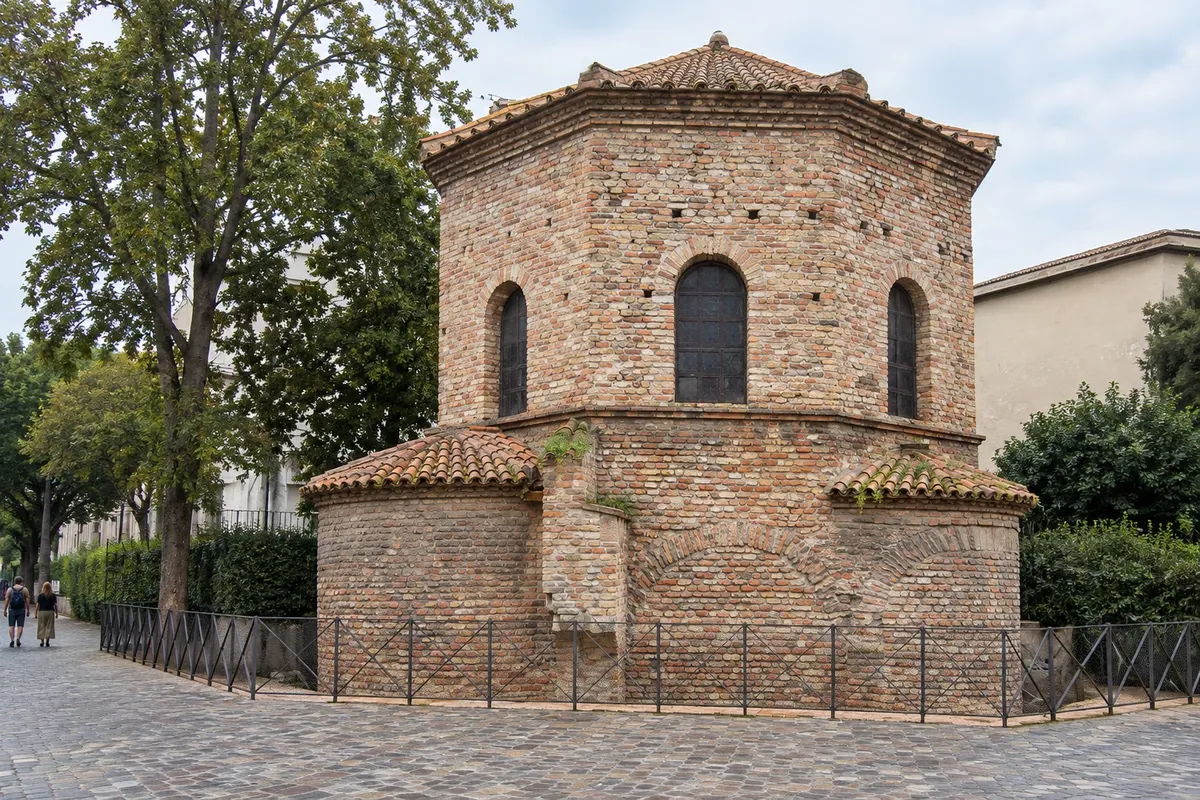
Small baptistery built in the time of Theodoric, between the late 5th and early 6th century. The dome shows the baptism of Christ and the twelve apostles on a golden background.

Galleria Estense
Modena · Emilia-Romagna · Muzej

Galleria Estense

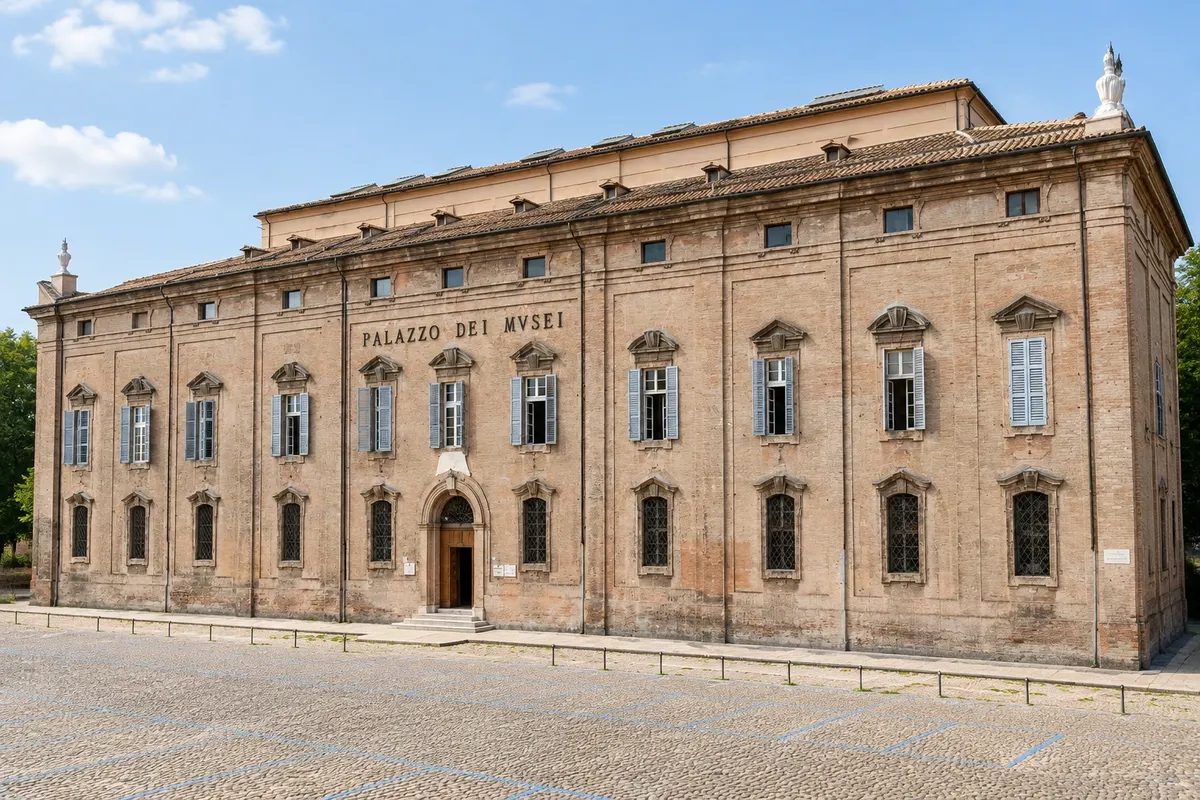
Art collection of the dukes d'Este in the Palazzo dei Musei, featuring the portrait of Francesco I d'Este by Velázquez, the bust of the same duke by Bernini, and the Tríptico de Módena by El Greco.

Basilica di San Domenico
Bologna · Emilia-Romagna · Cerkev

Basilica di San Domenico

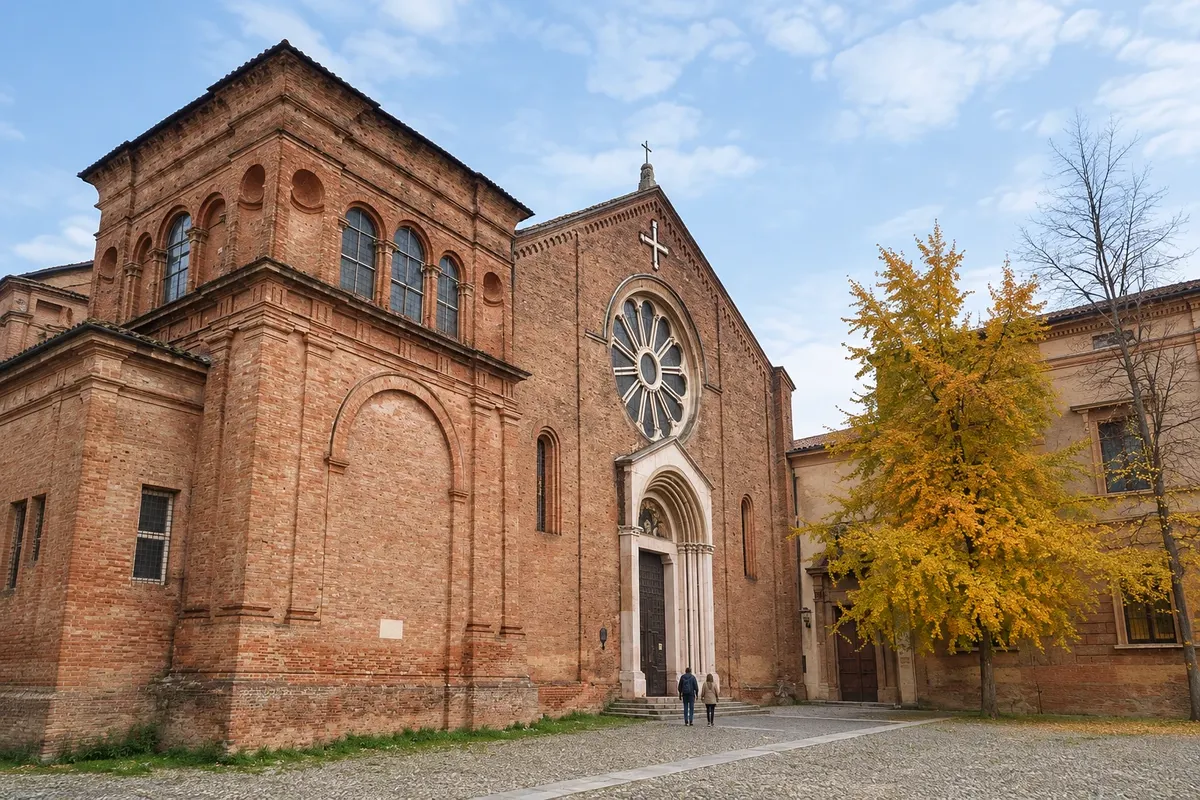
Church where São Domingos is buried, founder of the Dominican order. The Arca di San Domenico brings together works by Nicola Pisano, Niccolò dell'Arca and three statues by the young Michelangelo.

Mercato Albinelli
Modena · Emilia-Romagna · Tržnica

Mercato Albinelli

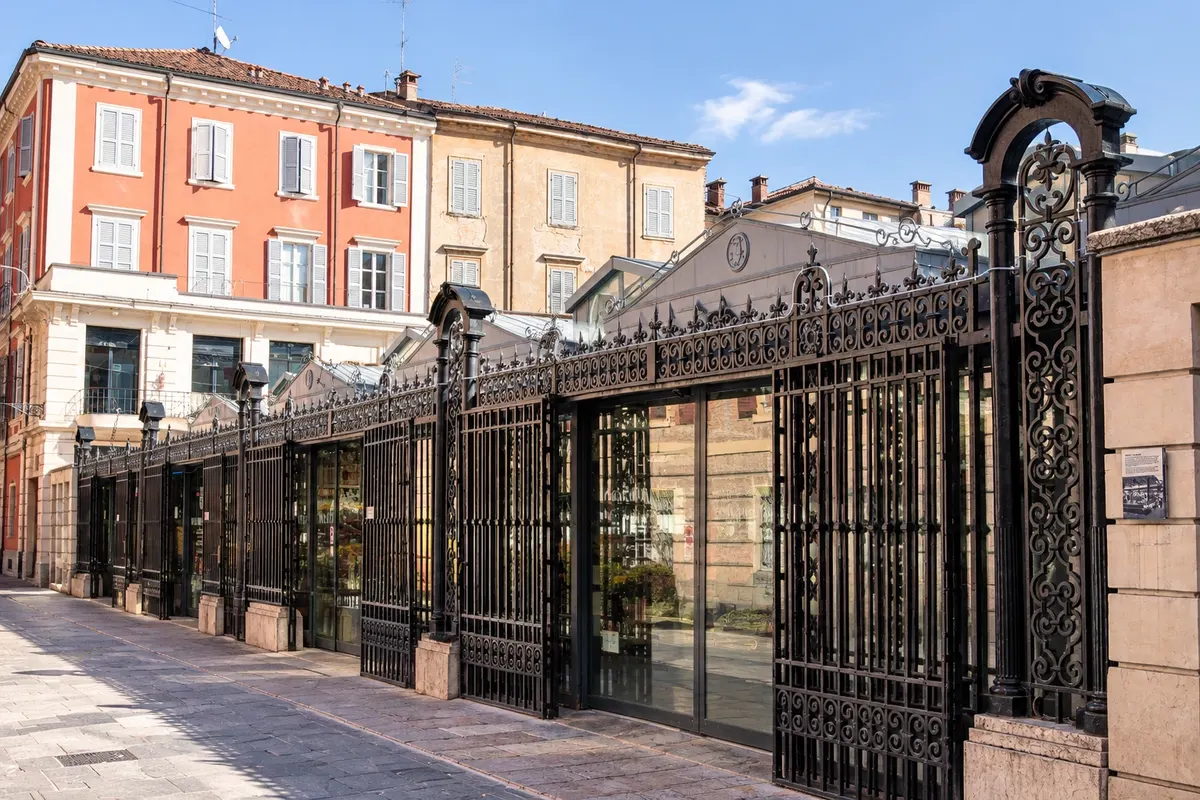
The covered market in Módena's center, with stalls selling fruit, cold cuts, cheeses, fresh pasta and aceto balsamico, under an iron-and-glass structure.

Archiepiscopal Museum and Chapel of St. Andrew
Ravenna · Emilia-Romagna · Muzej

Archiepiscopal Museum and Chapel of St. Andrew

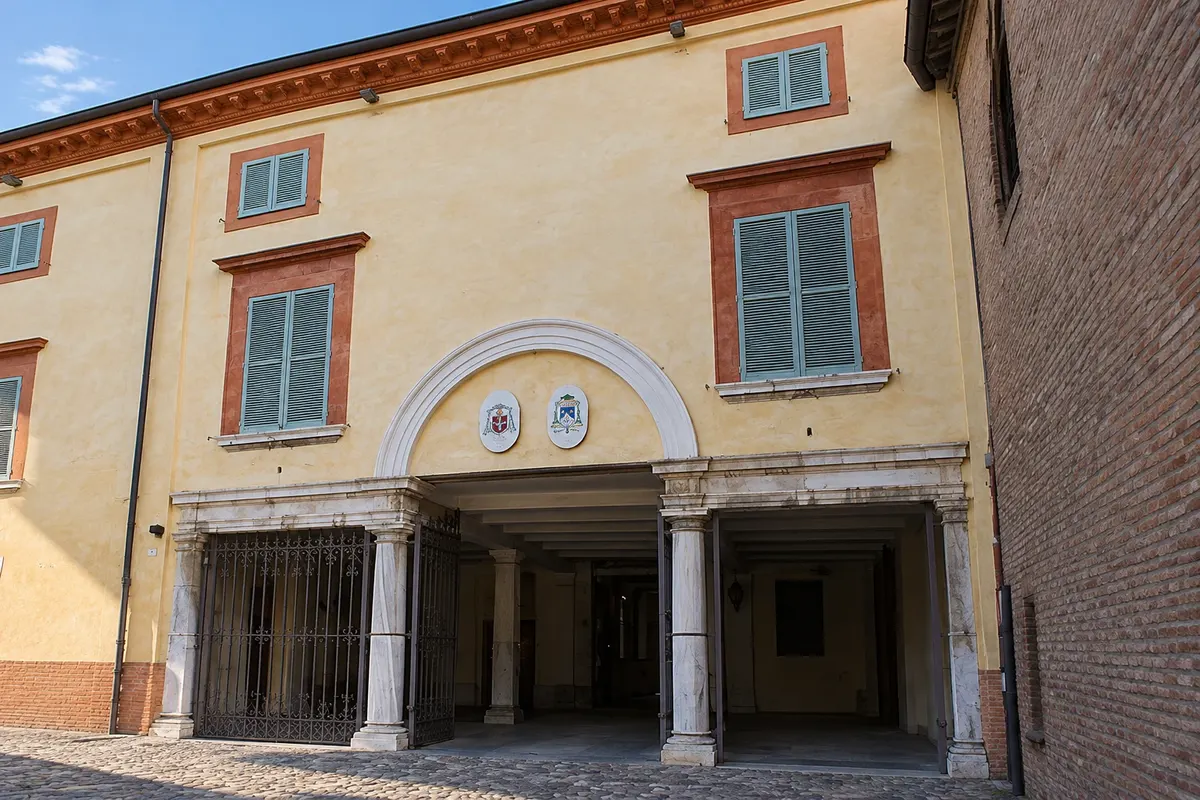
Archbishopric museum with the Cappella di Sant'Andrea, a mosaic chapel from the late 5th century, and the Cátedra de Maximiano, a 6th-century ivory episcopal throne.

Parco Ducale
Parma · Emilia-Romagna · Park

Parco Ducale

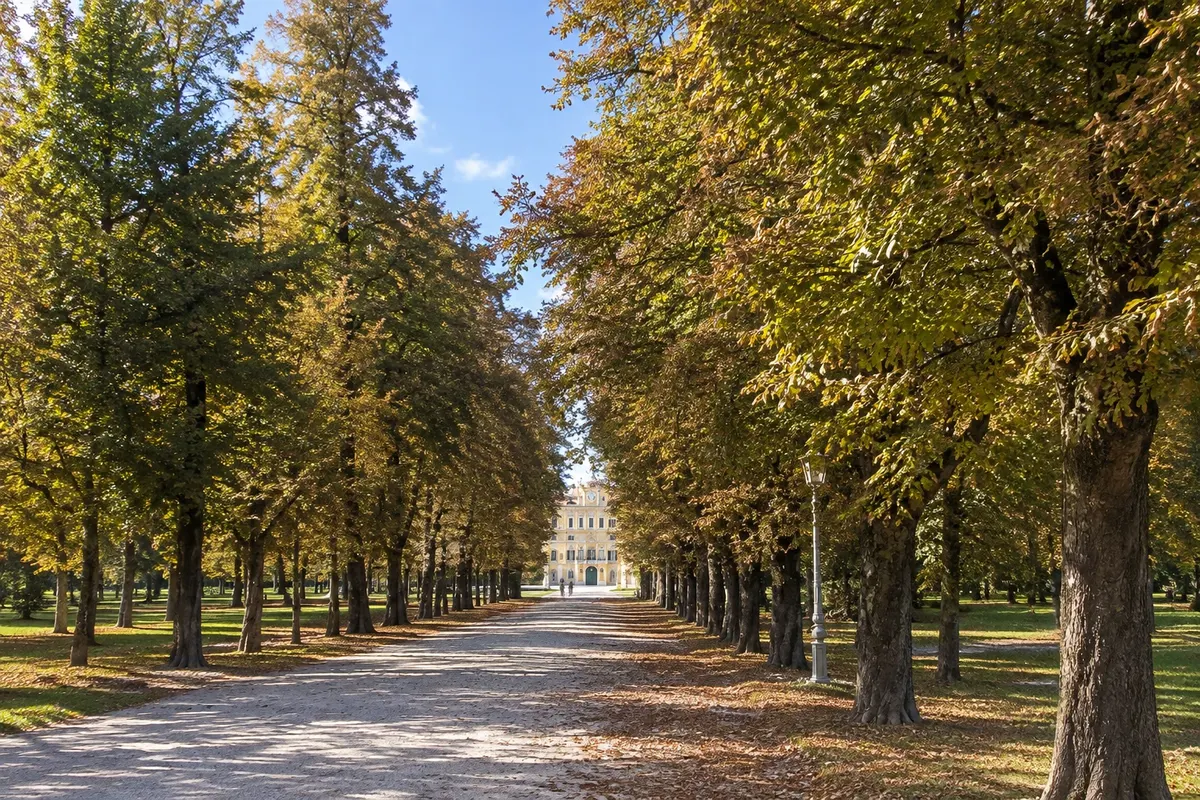
Historic park of about 20 hectares created by the Farnese in the 16th century, on the opposite side of the river Parma. It has tree‑lined avenues, a lake with an island and the Palazzo Ducale del Giardino.

Theodoric's Mausoleum
Ravenna · Emilia-Romagna · Monument

Theodoric's Mausoleum

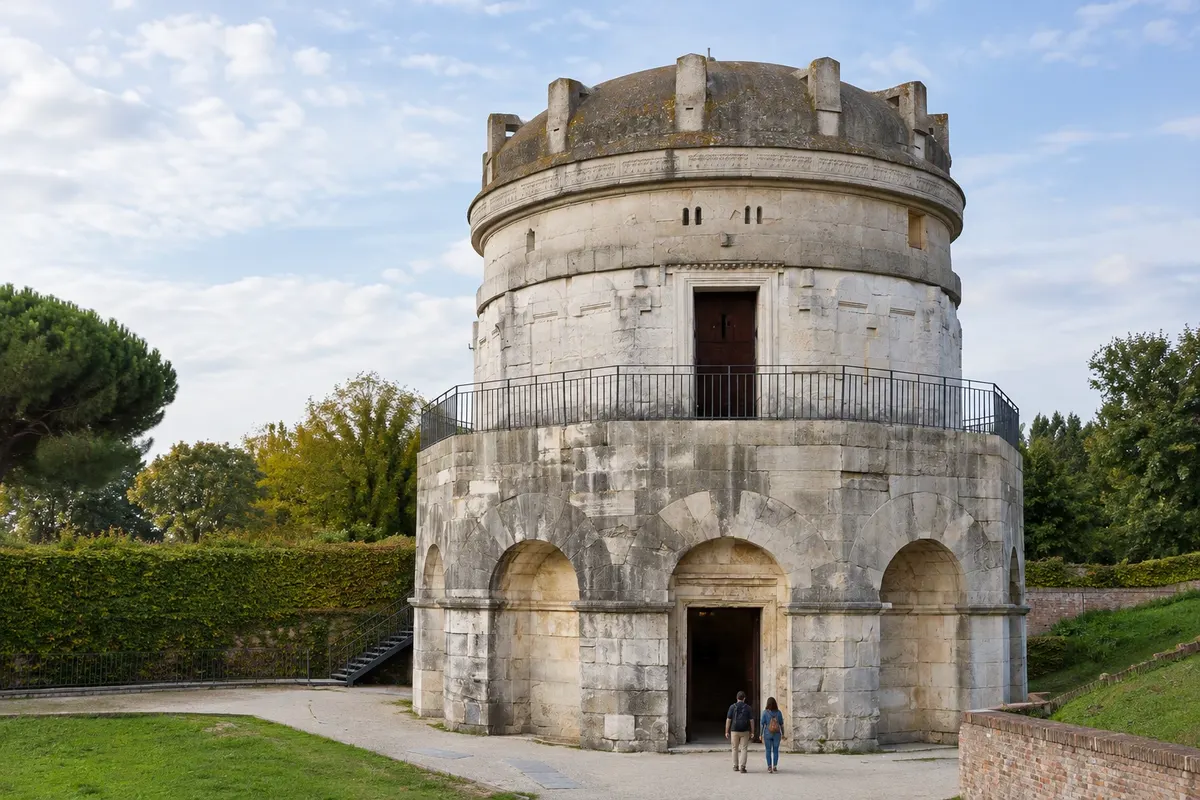
Stone tomb of the Ostrogoth king Teodorico, from the early 6th century. It is covered by a single block of stone nearly 11 meters in diameter and about 230 tonnes.

Museo Enzo Ferrari
Modena · Emilia-Romagna · Muzej

Museo Enzo Ferrari

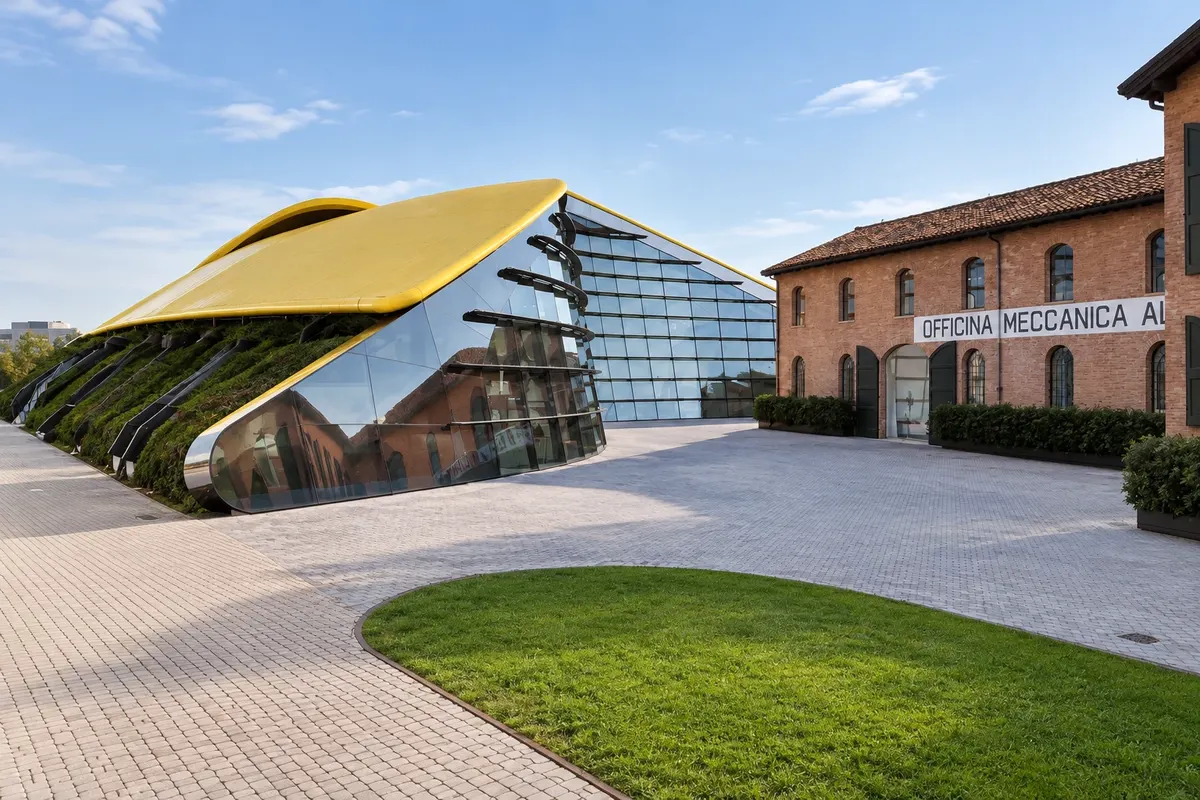
Museum in the house-workshop where Enzo Ferrari was born in 1898, next to a modern pavilion with a yellow hood-shaped roof. It displays cars and the history of Módena's motorsport.

Pinacoteca Nazionale di Bologna
Bologna · Emilia-Romagna · Muzej

Pinacoteca Nazionale di Bologna

The city's main painting museum, with Emilian painting from the 13th to the 18th century. Highlights: the Ecstasy of Saint Cecilia by Rafael, and works by the Carracci and Guido Reni.

Basilica of Sant'Apollinare in Classe
Ravenna · Emilia-Romagna · Cerkev

Basilica of Sant'Apollinare in Classe

Basilica consecrated in 549 in the ancient Roman port of Classe, about 5 km from Ravena. The apse mosaic shows Santo Apolinario in a green field with sheep, beneath a large cross.

Museo Ferrari
Modena · Emilia-Romagna · Muzej

Museo Ferrari

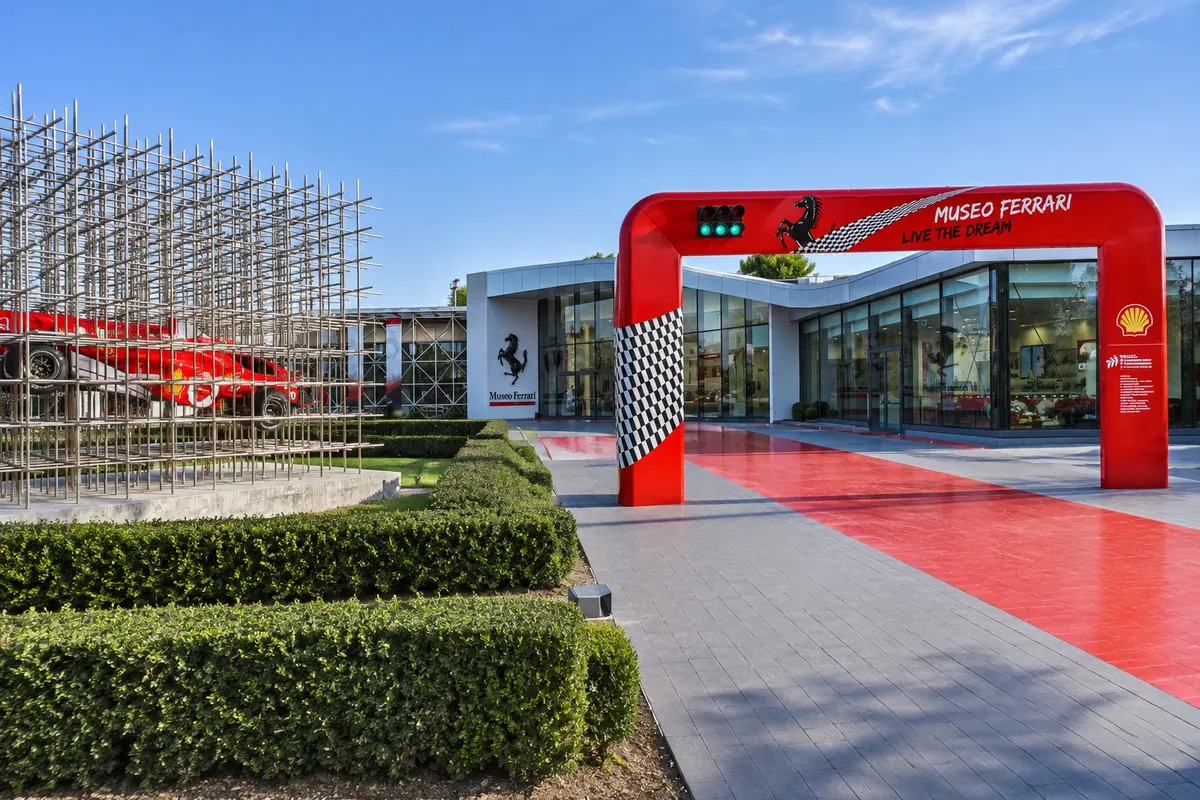
The Ferrari brand museum in Maranello, about 300 meters from the factory, with road cars, Formula 1 single-seaters and trophies.

Santuario della Madonna di San Luca
Bologna · Emilia-Romagna · Cerkev

Santuario della Madonna di San Luca

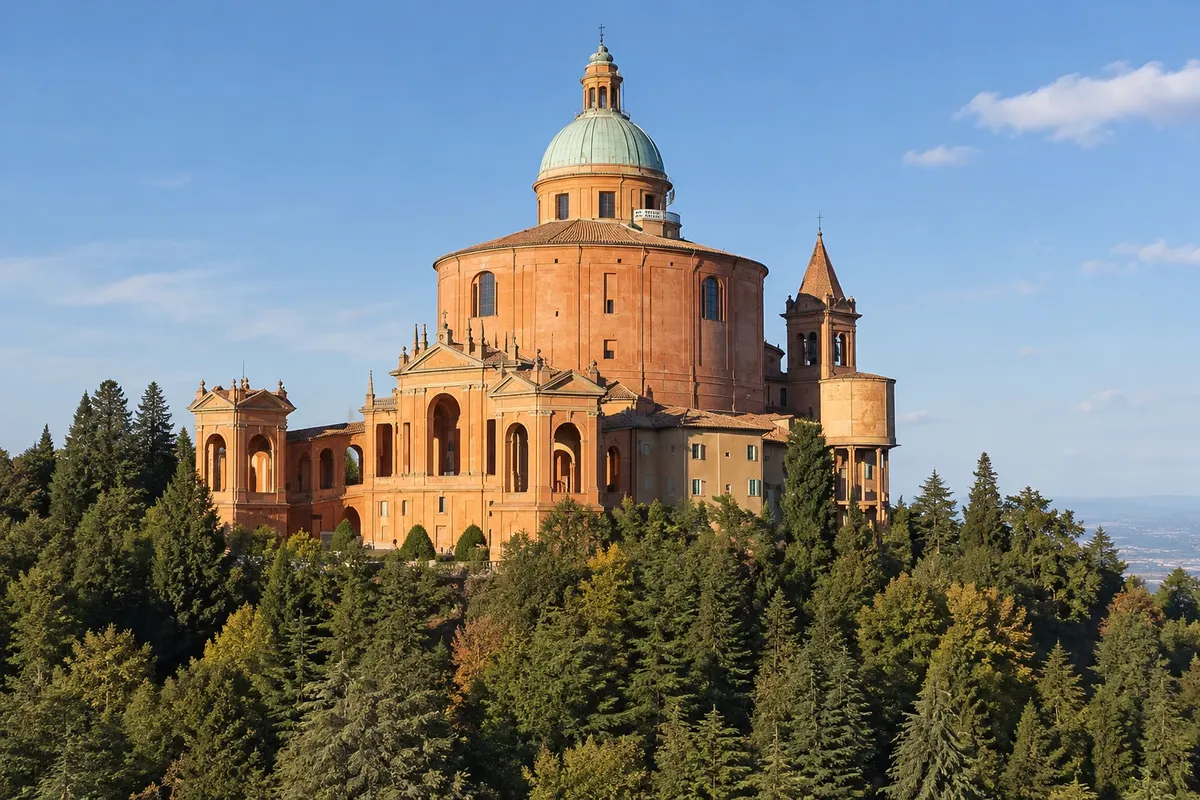
Baroque sanctuary atop the Colle della Guardia, connected to the city by a portico of 3,796 metres and roughly 660 arches—the longest in the world.

Dante's Tomb
Ravenna · Emilia-Romagna · Spominsko obeležje

Dante's Tomb

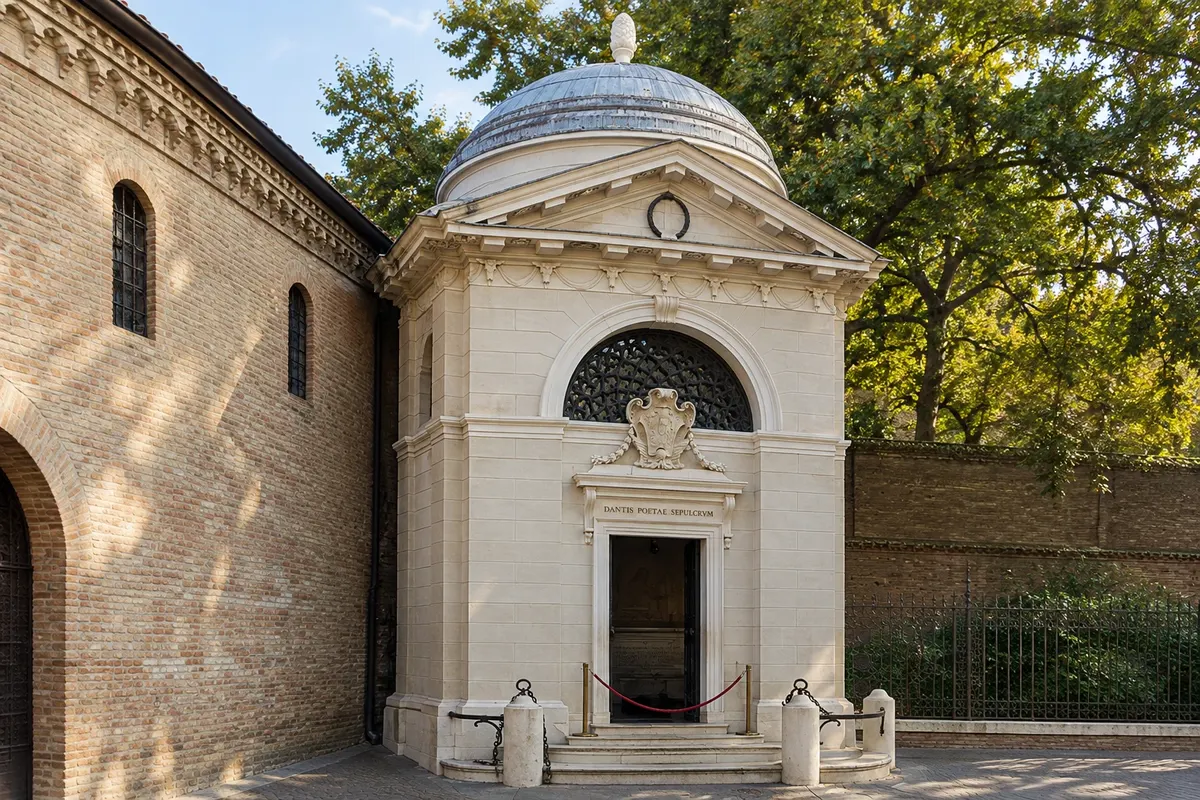
Neoclassical tomb of Dante Alighieri, who died in Ravena in 1321. A votive lamp fueled with oil from Tuscany, offered by Florence, remains lit inside.

Kaj izbrati pred odhodom

Izleti – Bologna and Emilia-Romagna

Izhodišče, trajanje, potek, vključene storitve in okvirna cena vsakega izleta.

Piazza Maggiore, San Petronio and the Palazzo d'Accursio

Odhod: Piazza Maggiore, Bologna (15 min on foot from the station) Peš po središču mesta Približno 2 uri in pol Dopoldne Lahko

Piazza Maggiore has been Bologna’s central square since the 13th century, featuring the Crescentone, the stone platform in the middle, and Giambologna’s Fountain of Neptune (1566) in the adjacent square. The Basilica di San Petronio, begun in 1390, was left with an unfinished façade (marble only to mid-height) yet remains one of Europe’s largest churches, with a 132 m nave: inside is the Cassini meridian (1655), the longest ever built, a 67 m bronze line on the floor where the sun marks noon through a hole in the roof, chapels with frescoes and the 1475 organ. The Palazzo d'Accursio, Bologna’s town hall since 1336, has frescoed rooms and an art collection; the Sala Borsa, the public library with a glass floor over Roman ruins, sits in the rear wing. The Torre dell'Orologio provides views over the square. Around it is the Quadrilatero, the market quarter with mortadella, tortellini and cheese shops.

Kraji na poti: Piazza Maggiore, Basilica di San Petronio, Palazzo d'Accursio.

Vključuje: Square and basilica free of charge (there is a fee for photography). Torre dell'Orologio and collections in the Palazzo d'Accursio have small admission fees; Sala Borsa is free.

Nasvet: See the meridian at solar noon (between 12:00 and 13:30, depending on the time of year) when the small dot of light appears on the floor. The Quadrilatero is lively in the morning and late afternoon; have lunch at the counters of the Mercato di Mezzo.

Najboljši čas za obisk: All year; in summer the square becomes an open-air cinema at night.

The Two Towers, the Archiginnasio and the Anatomical Theatre

Odhod: Piazza di Porta Ravegnana, Bologna Walk with historic library Približno 2 uri Popoldne Lahko

The Due Torri, Asinelli (97 m) and Garisenda (48 m, leaning), are what remain of about a hundred medieval towers of Bologna, and are the city's symbol; the leaning Garisenda is mentioned by Dante in the Inferno, and the Asinelli has 498 wooden steps to the top, with timed access in periods when climbing is allowed: check the city's website before relying on it. Five minutes away, the Archiginnasio di Bologna, dating from 1563, was the first single seat of the world’s oldest university, founded in 1088: the courtyard and stairways are covered with thousands of student coats of arms, and the Anatomical Theatre, from 1637, entirely wooden, with the statues of the 'flayed' supporting the canopy, was where anatomy lessons were held under the gaze of the Inquisition; the municipal library occupies the rest. The surrounding streets feature Bologna’s 40 km of porticos, listed by UNESCO.

Kraji na poti: Archiginnasio di Bologna, Piazza Maggiore.

Vključuje: Archiginnasio with a small entrance fee (Anatomical Theatre); closes on Sunday afternoons. Torre degli Asinelli with timed entry, during periods when climbing is allowed.

Nasvet: Check the status of the Torre degli Asinelli on the Bologna Welcome website; if it is closed, the alternative view is from the Torre dell'Orologio or San Michele in Bosco. Students avoid climbing the Asinelli before graduating: they say it brings bad luck.

Najboljši čas za obisk: Vse leto.

Santo Stefano, San Domenico and the Pinacoteca Nazionale

Odhod: Piazza Santo Stefano, Bologna Walk among churches and museum Približno 3 ure Dopoldne ali popoldne Lahko

The Basilica di Santo Stefano, the 'Seven Churches', is a complex of chapels, cloisters and courtyards fitted into each other since the 5th century, built to reproduce the holy places of Jerusalem: the Holy Sepulchre, with an octagonal plan, the church of Saints Vitale and Agricola, with sarcophagi, Pilate’s courtyard with the stone basin from the 8th century and the Romanesque cloister; the triangular square in front, lined with palaces, is one of the most beautiful in the city. The Basilica di San Domenico houses the tomb of Saint Dominic, the marble Ark worked on by Nicola Pisano, Niccolò dell'Arca and the young Michelangelo, who carved the angel and two saints in 1494, as well as the inlaid wooden choir. The Pinacoteca Nazionale di Bologna, in the university district, holds works by Giotto, Raphael (the Ecstasy of Saint Cecilia), the Carracci, Guido Reni and Bolognese painting from the 13th to the 18th century.

Kraji na poti: Basilica di Santo Stefano, Basilica di San Domenico, Pinacoteca Nazionale di Bologna.

Vključuje: Santo Stefano and San Domenico free of charge (donations welcome); Pinacoteca with paid admission separately, free on the first Sunday of the month.

Nasvet: Santo Stefano closes at midday; go in the morning. The Pinacoteca is on Via Belle Arti, in the university bar area: combine it with an aperitif on Via Zamboni.

Najboljši čas za obisk: Vse leto.

Sanctuary of San Luca via the world’s longest portico

Odhod: Arco del Meloncello or Porta Saragozza, Bologna Uphill walk under portico Približno 2 uri in pol Dopoldne ali pozno popoldne moderate (3.8 km and 200 m ascent)

The Santuario della Madonna di San Luca, the domed basilica atop the Colle della Guardia, 300 m high, houses a Byzantine icon of the Virgin that, tradition says, came from Constantinople in the 12th century; since 1433 it is carried down in procession to the city during the week of Ascension. The ascent is via the Portico di San Luca, a covered portico 3.8 km long with 666 arches, built between 1674 and 1793 with donations from the people of Bologna, and the longest in the world. It starts at Porta Saragozza, crosses the road at the Arco del Meloncello and rises by steps and ramps up to the church; Bolognese people use it as exercise in the morning and afternoon. From the top there are views of the city and the Apennines; the dome has a panoramic terrace. It is one of the porticoes listed by UNESCO in 2021.

Kraji na poti: Santuario della Madonna di San Luca, Piazza Maggiore.

Vključuje: Portico and sanctuary free of charge; dome terrace requires a small ticket. The San Luca Express tourist train from Piazza Maggiore is paid separately.

Nasvet: Walk up on foot from the Arco del Meloncello (bus 20 or 58) to shorten the route: it’s a 2 km climb under the arches. Bring water in summer; the portico shades you from the sun, but the ascent still warms you up. Return by the tourist train or bus 58.

Najboljši čas za obisk: All year; in the week of Ascension (May) the icon is in the city cathedral.

Bologna food: the Quadrilatero and the fresh‑pasta class

Odhod: Via Pescherie Vecchie, Bologna Food walk and class Približno 4 ure Dopoldne Lahko

Bologna is 'la grassa'—the fat one—and the Quadrilatero, the market streets behind Piazza Maggiore (Pescherie Vecchie, Drapperie, Clavature), shows why: the windows of Salumeria Simoni and Tamburini with mortadella, culatello and parmigiano; fresh‑pasta shops making tortellini in view; the Mercato di Mezzo, the covered market with counters to eat standing up; and aperitivo bars. Tortellino in broth, ragù (served here with tagliatelle, never spaghetti), green lasagna and mortadella make the list. Three‑hour fresh‑pasta classes with sfogline (the masters who roll out the dough) teach how to make tortellini and tagliatelle and end with lunch; there are dozens of schools in the center, by reservation. The Mercato delle Erbe, on Via Ugo Bassi, is the locals’ market.

Kraji na poti: Piazza Maggiore.

Vključuje: Self‑guided walk; food not included; pasta class paid separately, by reservation.

Nasvet: Book the class several days in advance; morning classes finish with lunch. In the Quadrilatero, order a tagliere (cold‑cuts board) with a glass of Pignoletto at a counter. FICO, the food park outside the city, is a different experience.

Najboljši čas za obisk: All year; from October to December is truffle and mushroom season.

Modena: Duomo, Ghirlandina, Mercato Albinelli and balsamic vinegar tradicional

Odhod: Modena (regional train from Bologna, 20–30 min) Round trip by train Približno 5 ur Ves dan easy (200 steps in the tower)

Modena, 30 minutes from Bologna, has a Romanesque ensemble listed by UNESCO: the Duomo di Modena (Cathedral), built between 1099 and 1184 by architect Lanfranco and sculptor Wiligelmo, with Genesis reliefs on the façade and, inside, the portico with Passion scenes; the Torre Ghirlandina, the 86 m bell tower from 1319, with a climb of 200 steps and views over the plain; and Piazza Grande, with the Ringadora stone from which proclamations were made. The Mercato Albinelli, the covered iron market of 1931, is the place for lunch with tortellini, gnocco fritto and tigelle. The Palazzo Ducale di Modena, of the Este family, houses the Military Academy, open for visits on set days; the Galleria Estense, in the Palazzo dei Musei, holds the bust of Francesco I by Bernini, works by Velázquez, Correggio and El Greco. Traditional balsamic vinegar, aged 12 or 25 years in barrels, is tasted at the acetarie with arranged visits; Modena is also Pavarotti’s city, with his house-museum on the outskirts.

Kraji na poti: Duomo di Modena, Torre Ghirlandina, Piazza Grande, Mercato Albinelli, Palazzo Ducale di Modena, Galleria Estense.

Vključuje: Train fare not included. Duomo free of charge; Ghirlandina requires a small ticket (combined ticket with the Duomo museums); Galleria Estense has an entrance fee; Palazzo Ducale has visits on set dates with paid entry. Acetaias: visit and tasting by reservation, usually free or for a small fee.

Nasvet: Go on a weekday morning: the market closes in the afternoon and on Sundays. The communal acetaia, at the town hall, offers visits on set days; private producers are in the surrounding countryside and reachable by car. Osteria Francescana, Italy’s most awarded restaurant, requires reservations months in advance.

Najboljši čas za obisk: Vse leto.

Prikaži dodatne izlete (4)

Museo Enzo Ferrari in Modena and Museo Ferrari in Maranello

Odhod: Modena (Museo Enzo Ferrari 10 min from the station; bus to Maranello) Two automobile museums Približno 5 ur Ves dan Lahko

The Museo Enzo Ferrari in Modena, next to the station, brings together the house and workshop where Enzo Ferrari was born in 1898 and the yellow aluminum pavilion shaped like a hood, designed by Jan Kaplický, with road and racing cars displayed in thematic exhibitions about the founder’s life, engines and drivers. The Museo Ferrari in Maranello, 18 km away next to the factory, is the Scuderia’s official museum: championship Formula 1 cars, the trophy room, simulators, limited series and exhibitions on historic models; the factory itself is not open for visits, but a panoramic bus passes along Via Enzo Ferrari and the Fiorano test track, from the outside. The Museo Lamborghini in Sant'Agata Bolognese and the Museo Ducati in Bologna complete the 'Motor Valley', with factory visits by reservation.

Kraji na poti: Museo Enzo Ferrari, Museo Ferrari.

Vključuje: Separate paid tickets at each museum (combined ticket for both, with the bus between them sold together). Simulators and the factory bus are extra.

Nasvet: Buy the combined ticket that includes the Modena–Maranello bus, which departs from the station and the Museo Enzo Ferrari; by car, Maranello is about 20 minutes away. To drive a Ferrari there are companies operating at the museum entrance.

Najboljši čas za obisk: Vse leto.

Parma: Cattedrale, Battistero, Pilotta and Teatro Regio

Odhod: Parma (regional train from Bologna, 50 min) Round trip by train Približno 6 ur Ves dan Lahko

Parma, Italian Capital of Culture in 2020 and 2021, is the city of ham, parmigiano, Verdi and Correggio. The Cattedrale di Parma, Romanesque, from 1106, features in its dome Correggio’s Assumption of the Virgin (1526–1530), a whirlwind of figures in perspective that anticipated the Baroque, and Antelami’s Deposition. The Battistero di Parma, from 1196, octagonal and built in Verona pink marble, is Antelami’s masterpiece, with the reliefs of the months and a painted interior. The Complesso Monumentale della Pilotta brings together the wooden Teatro Farnese (1618), the Galleria Nazionale (Correggio, Parmigianino, Leonardo) and the Biblioteca Palatina. The Teatro Regio di Parma, from 1829 and known as Verdi’s theatre, holds its festival in October and has one of the most demanding audiences in Italy. The Renaissance Basilica di Santa Maria della Steccata contains Parmigianino’s fresco of the Virgins. The Parco Ducale, on the other side of the river, is the palace park. Via Farini and Strada della Repubblica are the aperitivo streets.

Kraji na poti: Cattedrale di Parma, Battistero di Parma, Complesso Monumentale della Pilotta, Teatro Regio di Parma, Basilica di Santa Maria della Steccata, Parco Ducale.

Vključuje: Train requires an extra fare. Cathedral free of charge; Battistero requires an admission ticket (combined ticket available with the diocesan museum); Pilotta requires a separate admission; visit to the Teatro Regio is paid separately, at fixed times.

Nasvet: Buy the Pilotta ticket at the entrance to the Teatro Farnese and be sure to go up to the Correggio rooms. On Via Garibaldi’s shops you can find 24-month prosciutto di Parma; the parmigiano and ham factories in the surroundings accept visitors by reservation, by car.

Najboljši čas za obisk: All year; October hosts the Verdi Festival.

Ravenna: the mosaics of San Vitale, Galla Placidia and Sant'Apollinare Nuovo

Odhod: Ravenna (regional train from Bologna, 1 h 10) Return-day trip by train to the UNESCO monuments Približno 6 ur Ves dan easy (flat center, all on foot)

Ravenna (Ravena) was capital of the Western Roman Empire, of the Ostrogothic kingdom and of the Byzantine exarchate between the 5th and 8th centuries, and preserves eight UNESCO-listed monuments with the most important mosaics in Europe outside Constantinople. The Basilica di San Vitale, consecrated in 548, has the presbytery covered in green and gold mosaics with Justinian and Theodora and their courts; in the garden, the Mausoleo di Galla Placidia, from 430, small and dim, with a starry ceiling on a blue background and the Good Shepherd. The Basilica di Sant'Apollinare Nuovo, built by Theodoric, has processions of martyrs and virgins on a gold background along the nave walls and the king’s palace. The Battistero Neoniano, from the 5th century, has a dome depicting the baptism of Christ and the apostles; the Museo Arcivescovile and Cappella di Sant'Andrea hold the ivory cathedra of Maximian and the chapel with Christ the warrior. The Tomba di Dante, from 1780, houses the poet who died in exile in 1321, with the oil lamp offered by Florence every year. Everything is done on foot in a quiet center of porticos and bicycles.

Kraji na poti: Basilica di San Vitale, Mausoleo di Galla Placidia, Basilica di Sant'Apollinare Nuovo, Battistero Neoniano, Museo Arcivescovile and Cappella di Sant'Andrea, Tomba di Dante.

Vključuje: Train paid separately. Combined ticket for the five monuments of the Opera di Religione (San Vitale, Galla Placidia, Sant'Apollinare Nuovo, Battistero Neoniano and Museo Arcivescovile), paid separately, valid for seven days; Galla Placidia has timed entry in high season. Tomba di Dante free of charge.

Nasvet: Buy the combined ticket at the first ticket office and book the time slot for Galla Placidia; the mosaics require calm and, if possible, binoculars. It is a 10-minute walk from the station to the centre. On summer evenings, the mosaic festival lights up the monuments.

Najboljši čas za obisk: All year; from June to August the Ravenna Festival brings concerts.

Battistero degli Ariani, Mausoleum of Theodoric and Sant'Apollinare in Classe

Odhod: Ravenna (center and bus 4 to Classe) Walk and bus to monuments outside the centre Približno 3 ure Popoldne Lahko

The other three UNESCO monuments are a bit off the main circuit: the Battistero degli Ariani, from the 6th century, built by Theodoric’s Arian Goths, with a mosaic dome of the baptism of Christ, smaller and simpler than the Neon one, 5 minutes from Sant'Apollinare Nuovo; the Mausoleo di Teodorico, from 520, the tomb of the Ostrogothic king on the outskirts of the station, made of Istrian stone blocks with a single-block dome of 300 tons, set in a park; and the Basilica di Sant'Apollinare in Classe, 8 km away, where the Roman port of Classe stood, from 549, with the green-mosaic apse of paradise showing the saint among sheep, one of the most serene images of Christian art, and a cylindrical bell tower. Bus 4 runs from Ravenna station to Classe in 15 minutes; the Classe museum, housed in the former sugar refinery, tells the story of the port.

Kraji na poti: Battistero degli Ariani, Mausoleo di Teodorico, Basilica di Sant'Apollinare in Classe.

Vključuje: Battistero degli Ariani and Mausoleum of Theodoric with small state-run entrance fees (combined ticket); Sant'Apollinare in Classe with entrance fee; free on the first Sunday of the month. Bus paid separately.

Nasvet: Include the Battistero degli Ariani in the central circuit and save Classe and the Mausoleo for the afternoon, using bus 4. If you stay overnight in Ravenna you can go to the Marina di Ravenna beach, 12 km away.

Najboljši čas za obisk: Vse leto.

Po dnevih

Bologna and Emilia-Romagna – načrt poti. Število dni: 2, 4in6

Predlogi za načrtovanje poti. Vrstni red dni prilagodite vremenu in razpoložljivosti izletov.

2 dni · Bologna in 2 days: the city of porticoes and food

ZaFor anyone stopping in Bologna between Florence and Venice who wants the city and the food scene. · Izhodišče:Historic center, inside the city walls
  1. Dan 1 · Center and Quadrilatero

    Arrival (from Florence 35 minutes, from Milan 1 hour, from Venice 1 h 30 by high-speed train). Piazza Maggiore, San Petronio with the meridian, Palazzo d'Accursio and Sala Borsa; Quadrilatero and lunch at the Mercato di Mezzo; Archiginnasio and Due Torri in the afternoon; aperitivo on Via Zamboni.

  2. Dan 2 · Santo Stefano, San Luca and fresh pasta

    Fresh pasta class in the morning (or Santo Stefano and San Domenico); in the afternoon, climb to San Luca via the portico, with sunset from the terrace; dinner of tortellini in broth.

4 dni · Bologna, Modena and Ravenna in 4 days
ZaFor those who want to use Bologna as a base for two train day trips. · Izhodišče:Bologna, near the station or Piazza Maggiore
  1. Dan 1 · Bologna: center

    Arrival. Piazza Maggiore, San Petronio, Palazzo d'Accursio; Quadrilatero; Archiginnasio and Due Torri; university-area aperitivo.

  2. Dan 2 · Modena

    30-minute regional train to Modena: Duomo, Ghirlandina, Piazza Grande and Mercato Albinelli in the morning; Galleria Estense or Enzo Ferrari Museum in the afternoon (with Maranello if it’s a priority); return to Bologna.

  3. Dan 3 · Ravenna

    1 h 10 train to Ravenna: San Vitale, Galla Placidia, Sant'Apollinare Nuovo, Neoniano Baptistery, Archiepiscopal Museum and Dante's Tomb; Sant'Apollinare in Classe in the afternoon; return to Bologna.

  4. Dan 4 · Bologna: churches, Pinacoteca and San Luca

    Santo Stefano and San Domenico in the morning; Pinacoteca; climb to San Luca via the portico late in the afternoon; pasta class or farewell dinner.

6 dni · Emilia-Romagna in 6 days: Bologna, Modena, Parma and Ravenna
ZaThe whole region by train, with one night in Parma and one in Ravenna. · Izhodišče:Bologna (3 nights), Parma (1), Ravenna (2)
  1. Dan 1 · Bologna

    Arrival. Piazza Maggiore, San Petronio, Palazzo d'Accursio, Quadrilatero; Archiginnasio and Due Torri; aperitivo on Via Zamboni.

  2. Dan 2 · Bologna: food and San Luca

    Fresh pasta class in the morning, with lunch of freshly made tortellini; Santo Stefano and San Domenico in the early afternoon, with Michelangelo’s angel; climb to San Luca via the portico late in the afternoon, with sunset from the terrace and return by bus.

  3. Dan 3 · Modena and Maranello

    Train to Modena: Duomo, Ghirlandina, Albinelli; Enzo Ferrari Museum and bus to Maranello for the Ferrari Museum; return to Bologna or train to Parma (1 hour from Modena).

  4. Dan 4 · Parma

    Cathedral and Baptistery in the morning; Pilotta with the Teatro Farnese; Teatro Regio and Steccata; aperitivo on Via Farini; overnight in Parma.

  5. Dan 5 · Ravenna

    Train to Ravenna (about 2 h, with a change in Bologna). San Vitale, Galla Placidia, Sant'Apollinare Nuovo, Neoniano Baptistery and Archiepiscopal Museum; Dante’s Tomb; night in Ravenna.

  6. Dan 6 · Classe and return

    Arian Baptistery and Theodoric’s Mausoleum in the morning; Sant'Apollinare in Classe; train back to Bologna (1 h 10) for the next destination or the airport.

Najboljši čas za obisk

Kdaj se odpraviti:Bologna and Emilia-Romagna po mesecih

April, May, September and October usually have pleasant temperatures for walking. From June to August the plain is hot and humid. From December to February it is cold and foggy.

The seasons shown are the most usual ones; nature doesn't always follow the calendar.

januar Malo padavin

winter · plain fog

Winter. At Bologna Borgo Panigale station (airport), 1991–2020 normals: average 3.3 °C (night lows near zero) and about 34 mm of rain, the driest month. Dense fog on the Po plain, grey days, some snow. The porticoes shelter you from the weather: Bologna is a winter city. Low activity; truffles and broths in restaurants. Heavy coat.

februar Zmerne padavine

winter · Carnival and Arte Fiera

Winter. At Bologna Borgo Panigale station (airport), 1991–2020 normals: average 5.2 °C and about 56 mm of rain. Still cold, with clear days; Arte Fiera, at the end of January or start of February, fills hotels for a week; Carnival in Cento near Ferrara. Quiet museums.

marec Zmerne padavine

spring beginning · bright days

Early spring. At Bologna Borgo Panigale station (airport), 1991–2020 normals: average 9.6 °C and about 50 mm of rain. First outdoor tables in the squares, days lengthen; Cosmoprof (cosmetics fair) fills the city in March.

april Zmerne padavine

spring · Easter

Spring. At Bologna Borgo Panigale station (airport), 1991–2020 normals: average 13.4 °C and about 64 mm of rain, in showers. Ideal weather for the San Luca portico and day trips; Easter and April 25 fill Ravenna and Modena. Children’s book fair in April fills hotels for four days.

maj Zmerne padavine

spring · Ascension and San Luca

Late spring. At Bologna Borgo Panigale station (airport), 1991–2020 normals: average 18.2 °C and about 61 mm of rain. In the week of Ascension, the icon of San Luca is carried down to the cathedral in procession along the portico, with the city in the streets. Long days, evenings of outdoor aperitivo. High activity.

junij Zmerne padavine

summer · humid heat beginning

Summer. At the Bologna Borgo Panigale station (airport), normals 1991–2020: mean 22.7 °C (highs around 29 °C) and about 66 mm of rain, in storms. The plain starts to feel stifling; the open‑air cinema at Piazza Maggiore and the Ravenna Festival liven the evenings. Ravenna and Modena in the morning, museums in the afternoon.

julij Malo padavin

summer · intense heat

Summer. At the Bologna Borgo Panigale station (airport), normals 1991–2020: mean 25.2 °C, with highs over 33 °C and high humidity, and about 32 mm of rain. Bologna is one of Italy’s hottest cities in summer: arcades and museums by day, squares at night. Many locals head to the Rimini coast.

avgust Malo padavin

summer · Ferragosto and empty city

Summer. At the Bologna Borgo Panigale station (airport), normals 1991–2020: mean 25.1 °C and about 35 mm of rain, with strong storms at the end of the month. Around August 15, Bologna empties and many trattorias and shops close for two weeks; museums remain open. Modena and Parma are the same. If you come, confirm restaurants.

september Zmerne padavine

end of summer · grape harvest and festivals

End of summer. At the Bologna Borgo Panigale station (airport), normals 1991–2020: mean 20.2 °C and about 61 mm of rain. Cool nights, the city full of returning students, Lambrusco and Pignoletto harvest; ham festival in Langhirano (Parma). One of the best months.

oktober Zmerne padavine

autumn · truffle and Verdi Festival

Autumn. At Bologna Borgo Panigale station (airport), 1991–2020 normals: average 14.9 °C and about 75 mm of rain. White truffle season (Savigno fair), the Verdi Festival in Parma and the Bologna Film Festival; morning fog.

november Veliko padavin

autumn · wettest month and fog

Late autumn. At Bologna Borgo Panigale station (airport), 1991–2020 normals: average 9 °C and about 77 mm of rain, the wettest month. Nearly daily fog on the plain; Bologna’s porticoes show why they exist. Quiet towns, empty museums; broths and cotechino on the tables.

december Zmerne padavine

winter · Christmas under the porticoes

Winter. At Bologna Borgo Panigale station (airport), 1991–2020 normals: average 4.1 °C and about 57 mm of rain, sometimes snow. Santa Lucia Christmas market under the Portico dei Servi (usually from mid-November to Christmas), nativity scenes in churches, lights on Via Indipendenza. Between Christmas and New Year the city fills up; trattorie serve tortellini in broth.

Načrtujte pot

Kako do tja:Bologna and Emilia-Romagna

By train: Bologna is Italy’s rail hub

Bologna Centrale is the station where north‑south and east‑west high‑speed lines cross: Milano 1 hour, Firenze 35 minutes, Roma about 2 h, Venezia 1 h 30, Napoli about 3 h 10 (Frecciarossa and Italo; high‑speed trains use the underground station, a 10‑minute walk from the surface). Regional trains, no reservation, link Bologna to Modena (20–30 minutes), Parma (50 minutes–1 hour), Ravenna (1 h 10), Ferrara (30 minutes) and Rimini (1 hour). From the station to the center, 15 minutes on foot via Via Indipendenza.

By car: the Via Emilia and the factories

The region is easy to travel by train; a car only helps for parmigiano, ham and vinegar factories, the acetarias and Maranello. The A1 (Milan–Rome) and A14 (Bologna–Rimini–Bari) cross at Bologna; the Via Emilia (SS9), the Roman road from 187 BC, links Piacenza, Parma, Modena, Bologna and Rimini in a straight line. Modena is 40 km away, Parma 95 km, Ravenna 80 km. The historic centers of Bologna, Modena, Parma and Ravenna are ZTL (limited traffic zone) with cameras; Bologna also has T‑Days, with the center closed to cars on weekends. Park outside the walls.

How to get around Bologna

The center, within the walls, is walked under the porticoes: from the station to Piazza Maggiore is 15 minutes. TPER buses cover the rest; the urban ticket is valid for 75 minutes and can also be paid by contactless card. For San Luca: buses 20 or 58 to the Arco del Meloncello, or the San Luca Express little train from Piazza Maggiore. Bicycle is the locals’ mode; there are app‑based shared bikes. The Bologna Welcome Card includes museums and, in one version, transport.

Vstopnice in rezervacije

Ravenna mosaics: combined ticket from the Opera di Religione, with timed entry for Galla Placidia in high season. Torre degli Asinelli: timed entry when open. Ferrari museums: online, with combined ticket and bus. Pilotta, Galleria Estense, Pinacoteca: at the desk or online; no charge on the first Sunday of the month. Pasta‑making classes: reserve in advance with set days. Acetarias and parmigiano factories: reservation required. Bologna and the other cities charge a tourist tax per night, paid at your accommodation. Check the current table.

Pred odhodom

Praktične informacije

Z nekaj načrtovanja boste imeli več časa za uživanje na poti.

Kdaj se odpraviti

April, May, September and October usually have pleasant temperatures for walking. From June to August the plain is hot and humid. From December to February it is cold and foggy.

The seasons shown are the most usual ones; nature doesn't always follow the calendar.

Koliko dni ostati

With three days you can see Bolonha at a relaxed pace and make a day trip to Módena or Ravena. Four or five days allow you to visit the four cities, using Bolonha as a base and travelling by train. Those who also want to visit the Ferrari museums or dairies and aceto producers should add a day.

V katerem mestu prenočiti

In Bolonha, the historic centre between the Piazza Maggiore and the Via dell'Indipendenza puts almost everything within walking distance and is full of restaurants. The area near Bologna Centrale station is convenient for those making day trips by train. Visitors who prefer to stay outside the capital can find accommodation in the centres of Parma, Módena and Ravena, all easy to explore on foot. A tourist tax is charged at accommodation.

Spoštujte kraj

Odnesite svoje odpadke, upoštevajte oznake in podprite lokalne ponudnike. V naravi upoštevajte navodila za obiskovalce.

Odgovori na vaša vprašanja

Pogosta vprašanja – Bologna and Emilia-Romagna

How many days to allocate for the region?

To see Bolonha and two more cities, three to four days. For the four main cities — Bolonha, Módena, Parma and Ravena — plan on five days. Each of the three smaller cities merits a full day of visiting.

Do you need a car to explore Emília-Romanha?

Not for the cities. Bolonha, Módena, Parma and Ravena are linked by frequent regional trains, and the historic centres are walked on foot. Those centres have ZTL, a limited-traffic zone closed to unauthorized cars. A car only helps for visiting dairies and producers in the countryside; Maranello, where the Museo Ferrari is located, has buses from Módena.

Can you make day trips from Bolonha?

Yes. Módena is about a half hour by regional train, Ravena a little over 1 hour and Parma about 1 hour. Trains depart from Bologna Centrale station. Regional paper tickets must be validated in the machine before boarding. Florence is also nearby: the high-speed train takes less than 40 minutes.

What typical foods to try?

In Bolonha: tortellini in broth, tagliatelle al ragù and mortadella. In Módena: aceto balsamico tradizionale and the sparkling wine Lambrusco. In Parma: prosciutto di Parma and parmigiano reggiano. In Ravena and the Romagna: piadina, a flatbread served filled. Lunch is typically between 12:30 and 14:30, roughly, and dinner from about 19:30.

Odkrijte druge destinacije Iskanje po zvezni državi in mestu

Več kot vodnik