

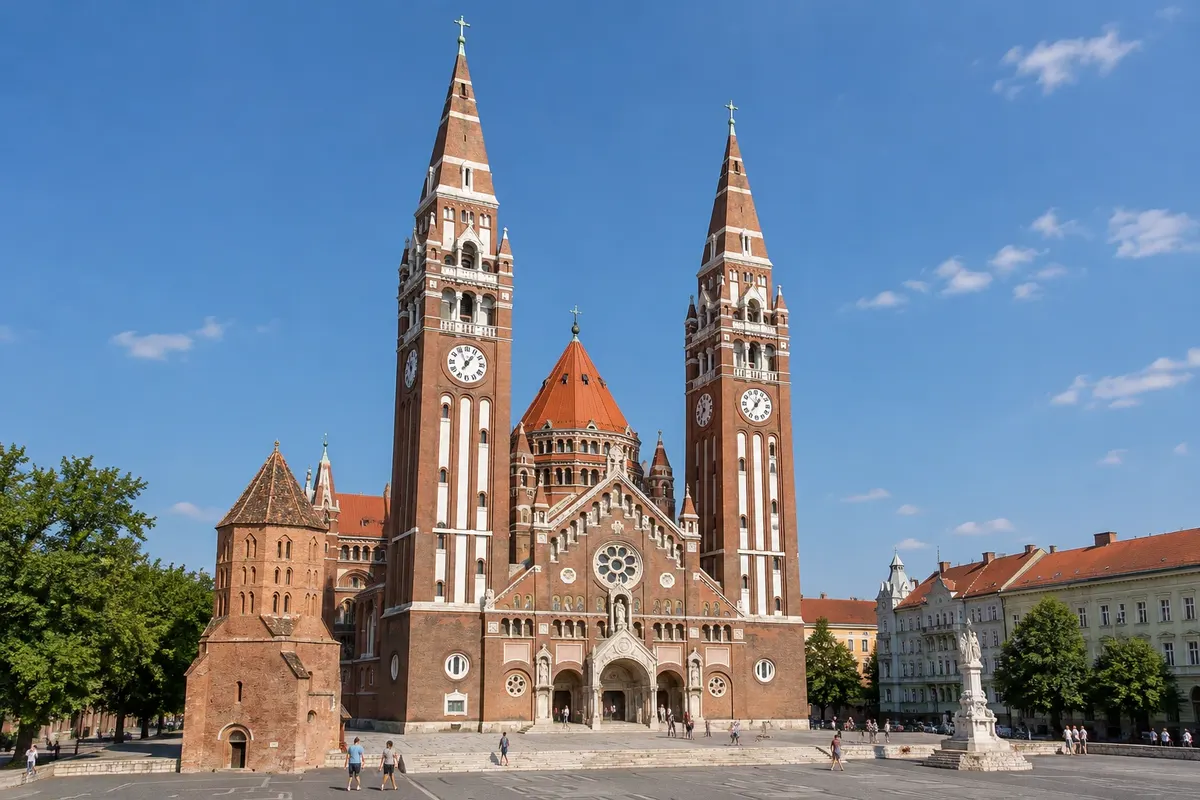
Szeged · Csongrád-Csanád · Stolnica
Szeged Cathedral (Szegedi Dóm)
Votive church with two towers on Dóm square, built after the great flood that transformed Szeged in the 19th century.

 Išči
 Brazilija
 Antarktika
 Argentina
 Bolivija
 Čile
 Kolumbija
 Ekvator
 Gvajana
 Francoska Gvajana
 Falklandski otoki (Malvini)
 Paragvaj
 Peru
 Surinam
 Urugvaj
 Venezuela
 Nemčija
 Avstrija
 Belgija
 Hrvaška
 Danska
 Slovaška
 Slovenija
 Španija
 Finska
 Francija
 Grčija
 NizozemskaMadžarska
 Irska
 Islandija
 Italija
 Luksemburg
 Norveška
 Poljska
 Portugalska
 Združeno kraljestvo
 Češka
 Švedska
 Švica
 Turčija
 Bermudi
 Kanada
 Združene države Amerike
 Grenlandija
 Mehika
 Sveta Peter in Mihael
 Dominikanska republika
 JaponskaTurčija
 Južnoafriška republika
 Egipt
 Avstralija
 Fidži
 Nova Zelandija
 Papua Nova Gvineja
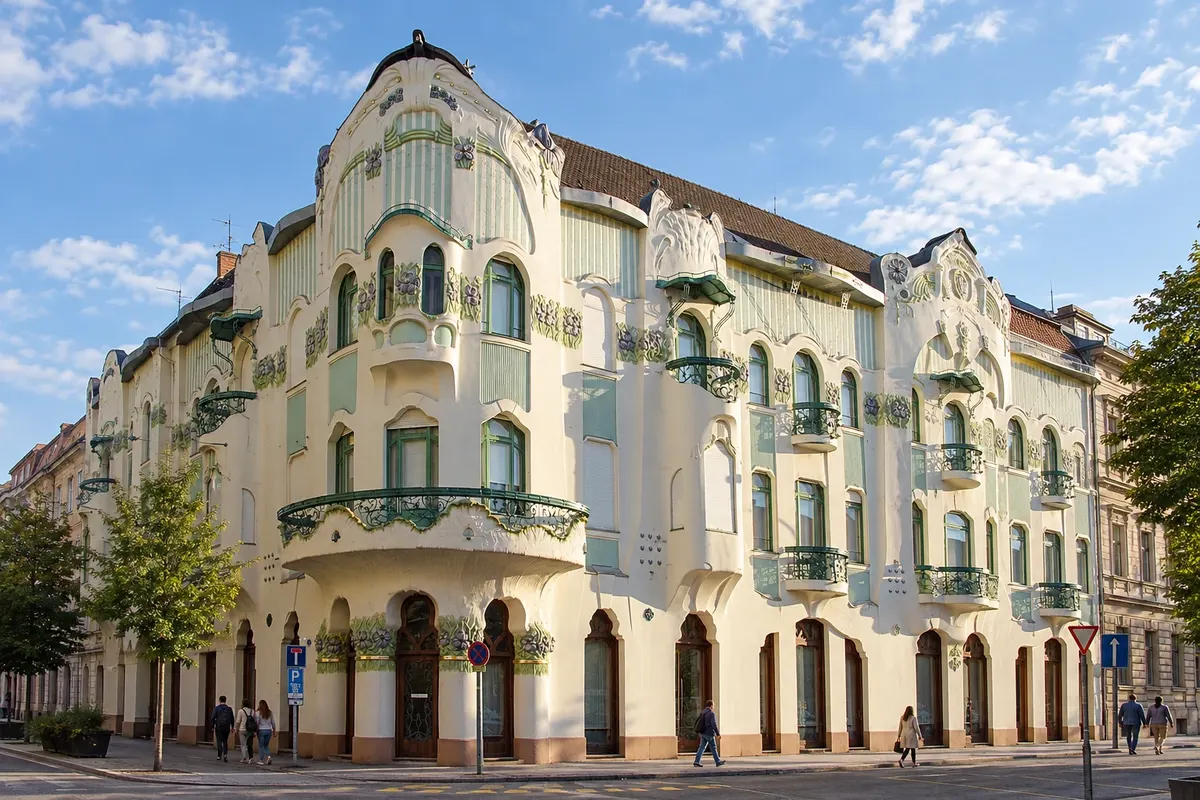
Csongrád-Csanád · Madžarska
Votive church, stained glass of the New Synagogue, Secession at the Reök and museum by the Tisza.
Na fotografiji: Reök-palota
Illustrative images. The pictures in this guide are illustrations based on the real place, not photographs, and may differ from it.
Spoznajte kraj
Szeged lies on the Great Plain in southern Hungary, beside the Tisza. The layout of the center is connected to the reconstruction after the 19th-century flood. The votive church and Dóm square form a reference point to begin the walk.
The New Synagogue adds stained glass and an ornate dome, while the Reök Palace presents Secession-style architecture. The Ferenc Móra Museum offers archaeology and regional culture displays in a building near the riverbank.
In summer, between June and August, days tend to be long and warm; winter from December to February is cold with short daylight. Trains serve Szeged from Budapest, and local public transport completes trips beyond the central core.
V vodniku še ni nastanitev – Szeged.
kako do tja · koliko dni · načrt poti · vprašanja
Confirm before purchasing. Trains and buses link Budapest to Szeged; local public transport completes access between the station and the center.
Doživite kraj
Votive church with two towers on Dóm square, built after the great flood that transformed Szeged in the 19th century.
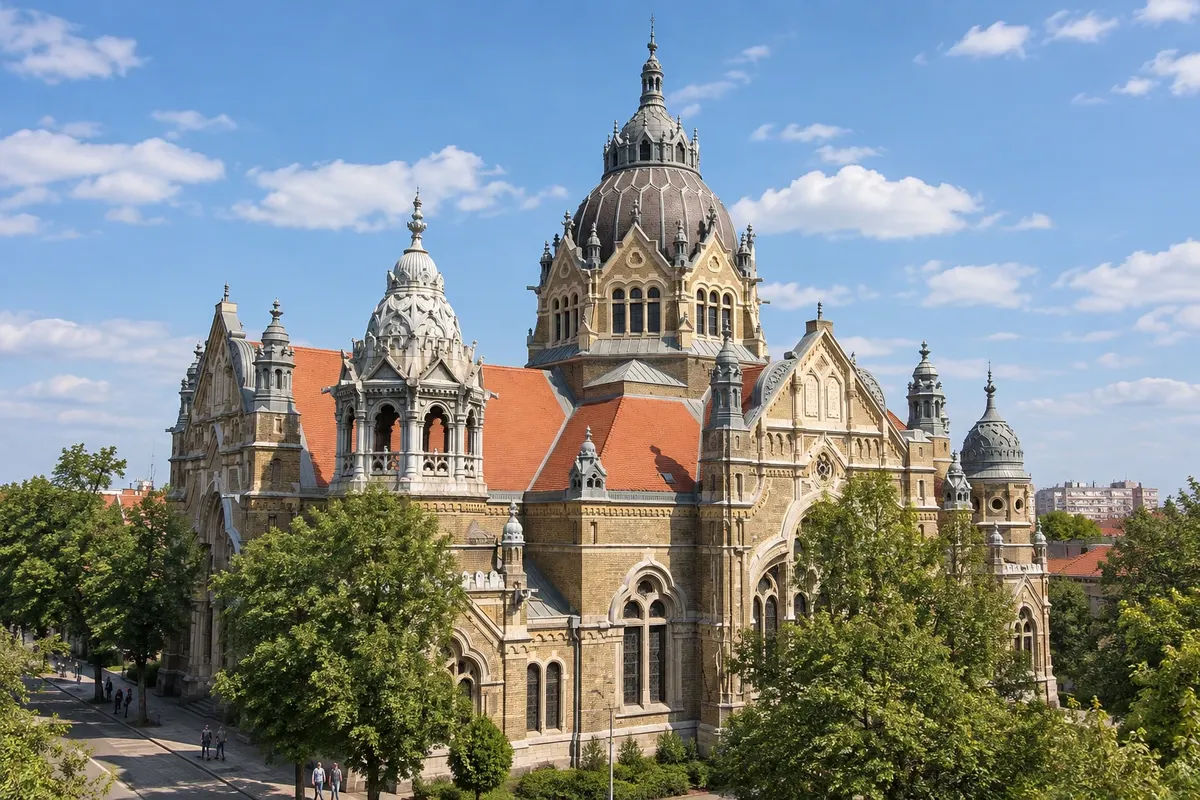
Synagogue with an ornate dome and stained glass, designed by Lipót Baumhorn in the early 20th century.
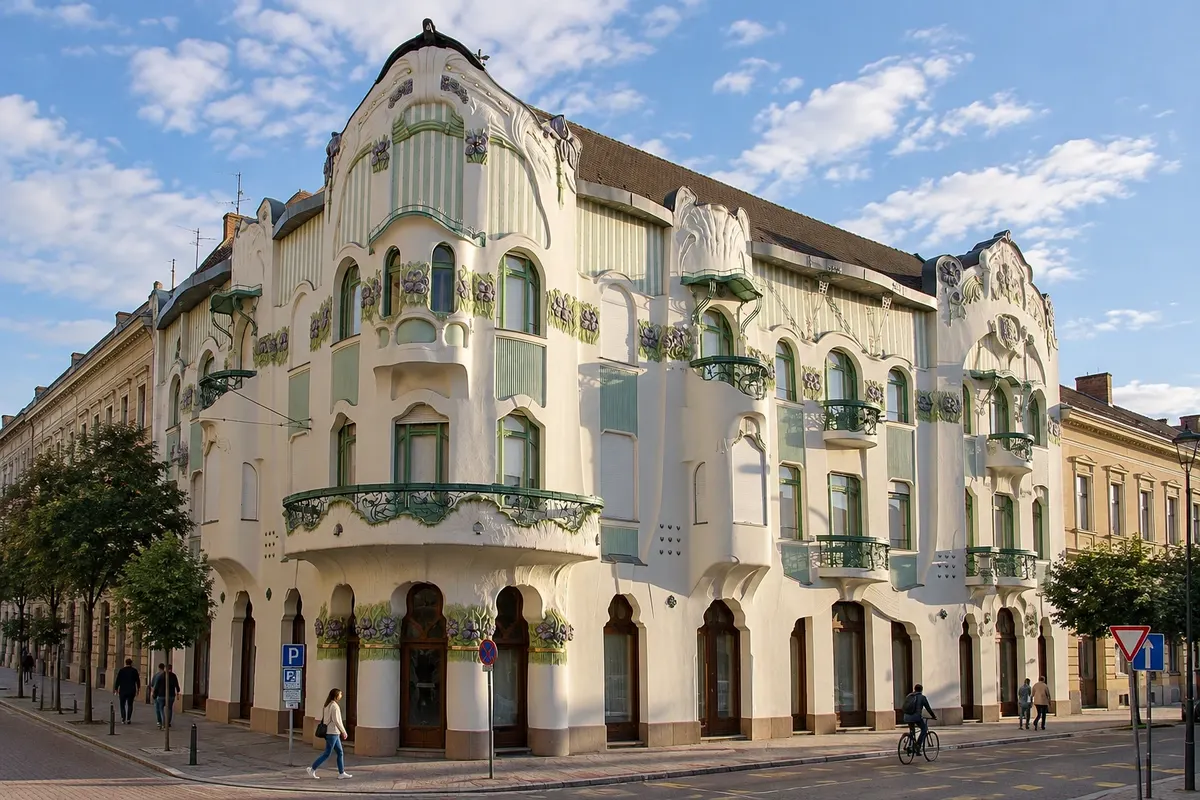
Secession-style Hungarian building with vegetal motifs on the façade, used as an exhibition space.
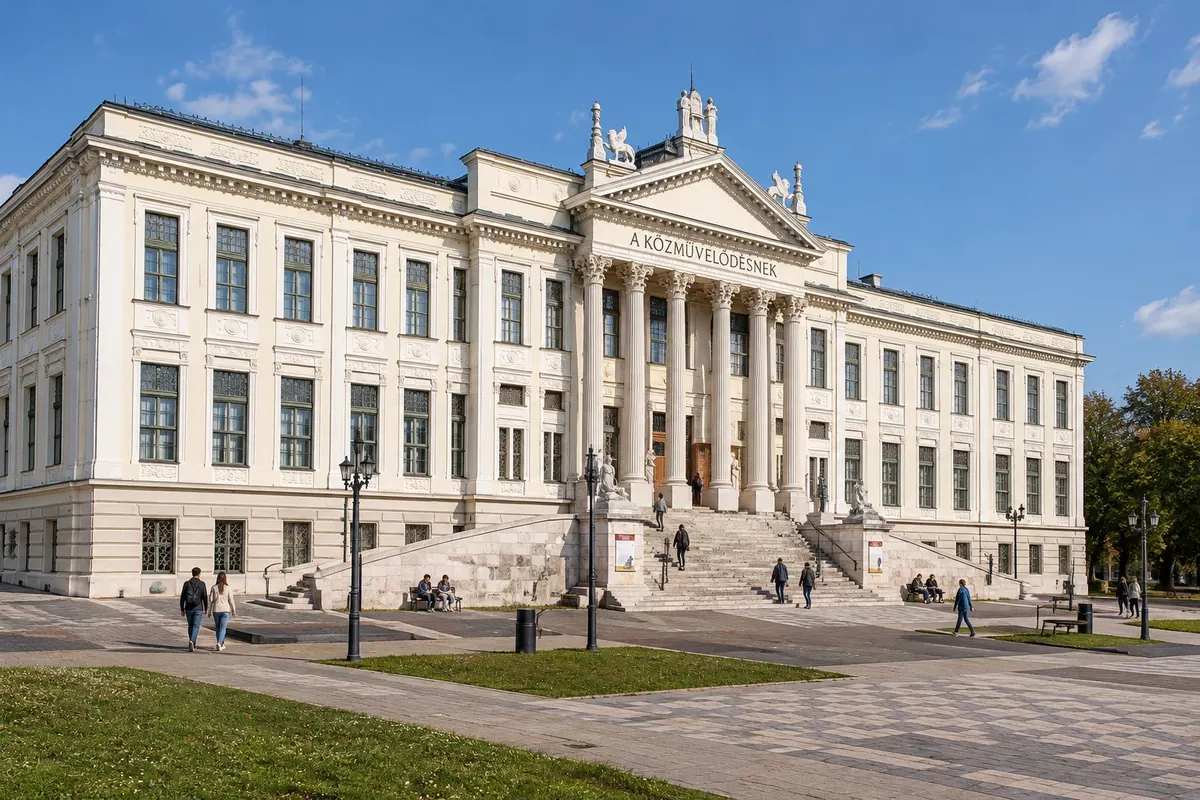
Museum by the Tisza, in a columned building, with collections of archaeology, regional history and exhibitions.
Pred odhodom
Szeged – Csongrád-Csanád Capital
Razdalje so približne. Pred potovanjem preverite lete in vozne rede avtobusov, vlakov ali ladij.
Confirm before booking. Trains and buses connect Budapest with Szeged. The railway station is south of the center, with local transport to reduce the walk.
Two days allow for the church, synagogue, architecture and museum without concentrating all indoor visits into the same period.
April to June and September to October are usually mild. June to August can bring heat and long days.
The seasons shown are the most usual ones; nature doesn't always follow the calendar.
A car is not necessary for central visits. Trams and buses help on the route from the station and for longer distances.
Predlog poti
Pot povezuje znamenitosti na tej strani. Za oglede boste imeli dovolj časa.
Discover the Szegedi Dóm and its surroundings, according to the available sectors.
Walk to the New Synagogue, respecting its visiting schedule.
Observe the palace and decide on the exhibition according to the schedule.
Return through the urban core for a meal; leave the Móra Museum for a longer period the next day.
Dan 1
Spend the morning at the votive church and the visitor center sections you have chosen.
Visit the New Synagogue according to the day available in the religious calendar.
Observe the palace's vegetal lines and decide whether to include the exhibition.
Dine in Szeged’s core, leaving the riverside and the museum for the other day.
Dan 2
Allow time for the exhibitions in the building by the Tisza.
Complete the period with a riverside walk, depending on the weather.
If you have not yet seen the Reök exhibition, return according to the schedule; otherwise, take a break in the center.
End the stay or arrange the next regional transport.
Check before you go. Opening hours and days change, and places may close for renovations, holidays or events. This itinerary is a suggestion from Cidade Turismo, not a commitment: plan yours by checking directly with each place you intend to visit.
Pred odhodom
Szeged is the county seat; the full county name should be preserved.
They are distinct buildings, in different parts of the center.
The façade is a short architectural stop; the exhibition can extend the visit.
The four main activities can be combined on foot and by public transport.
Pred odhodom
Z nekaj načrtovanja boste imeli več časa za uživanje na poti.
From April to June and September to October, temperatures usually make it pleasant to walk between Dóm square and the other central buildings. July and August can be hot. December to February generally requires warm clothing and more indoor programs.
The seasons shown are the most usual ones; nature doesn't always follow the calendar.
Two days make room for the four main activities and the riverside walk. With only one day, choose two indoor sites and leave the rest for exterior architectural observation.
The center between Dóm square and the pedestrian axes makes visits easy. Near the Tisza riverbank, a base combines the museum with walks. The station area shortens arrival but requires accounting for the route to the monuments.
Odnesite svoje odpadke, upoštevajte oznake in podprite lokalne ponudnike. V naravi upoštevajte navodila za obiskovalce.
Odgovori na vaša vprašanja
The votive church and Dóm square help to understand the reconstruction and the layout of the center.
The stained glass and the dome are a central part of the interest, depending on the access schedule.
Both approaches can be combined: the façade is a Secession landmark and the interior hosts exhibitions.
Two days allow you to schedule the indoor visits and the museum with more time than a long day trip.
No. The monuments, the museum and the riverside walks can be done by land.
Več kot vodnik


