

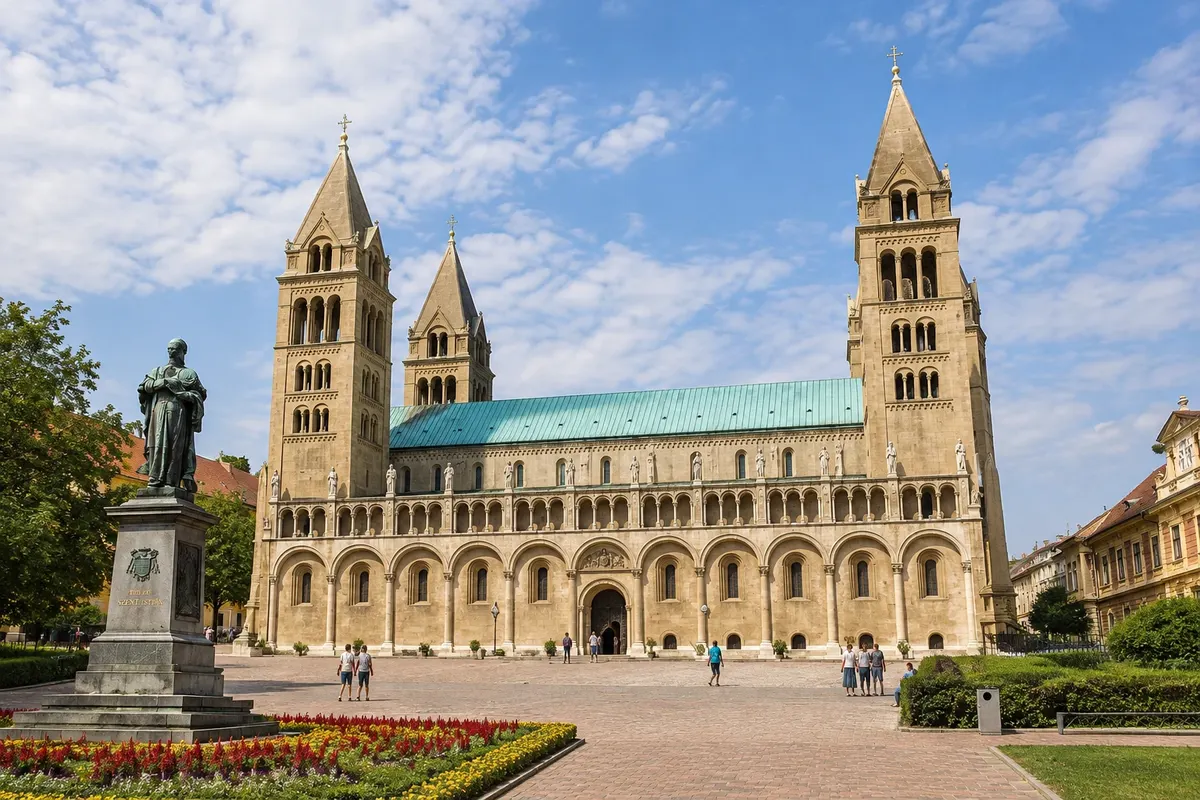
Pécs · Baranya · Stolnica
Pécs Cathedral (Szent Péter és Szent Pál Székesegyház)
Four-towered cathedral in Pécs’s historic core, with a Neo-Romanesque exterior and religious interiors.

 Išči
 Brazilija
 Antarktika
 Argentina
 Bolivija
 Čile
 Kolumbija
 Ekvator
 Gvajana
 Francoska Gvajana
 Falklandski otoki (Malvini)
 Paragvaj
 Peru
 Surinam
 Urugvaj
 Venezuela
 Nemčija
 Avstrija
 Belgija
 Hrvaška
 Danska
 Slovaška
 Slovenija
 Španija
 Finska
 Francija
 Grčija
 NizozemskaMadžarska
 Irska
 Islandija
 Italija
 Luksemburg
 Norveška
 Poljska
 Portugalska
 Združeno kraljestvo
 Češka
 Švedska
 Švica
 Turčija
 Bermudi
 Kanada
 Združene države Amerike
 Grenlandija
 Mehika
 Sveta Peter in Mihael
 Dominikanska republika
 JaponskaTurčija
 Južnoafriška republika
 Egipt
 Avstralija
 Fidži
 Nova Zelandija
 Papua Nova Gvineja
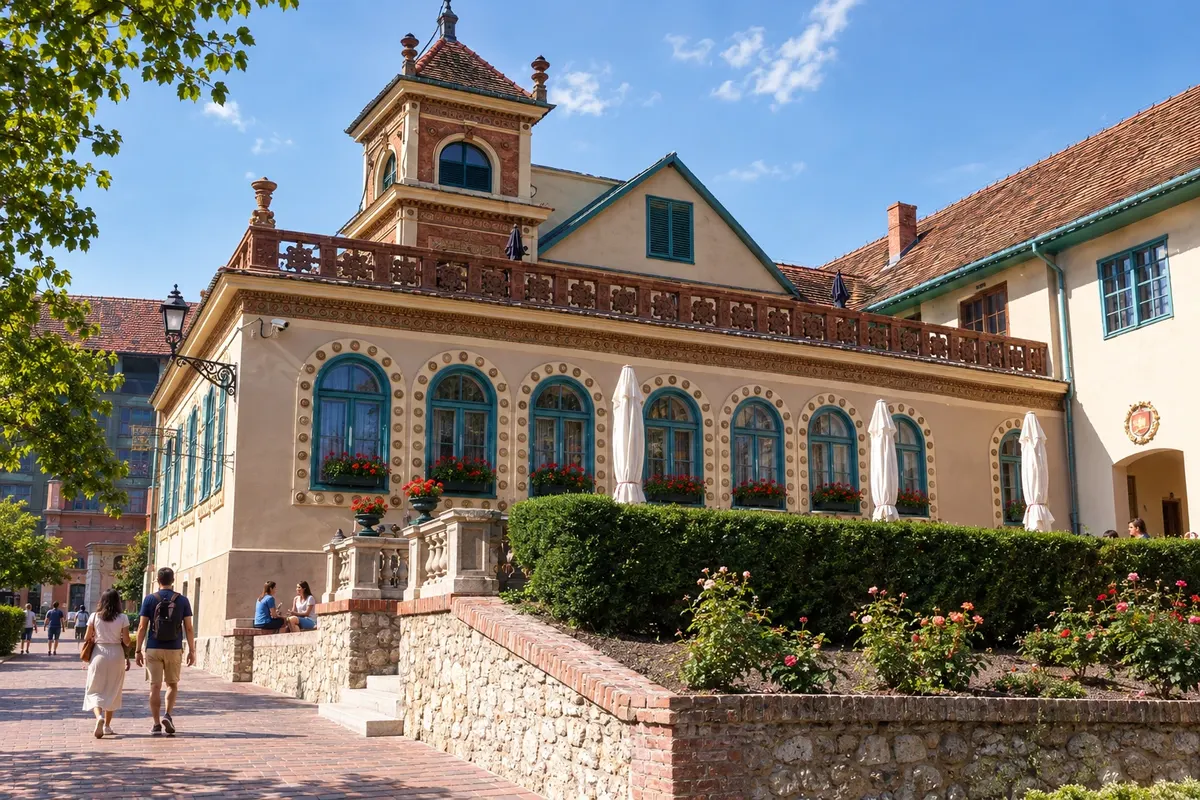
Baranya · Madžarska
Roman remains, four towers of the cathedral, an old mosque and the ceramics of the Zsolnay Quarter.
Na fotografiji: Zsolnay Kulturális Negyed
Illustrative images. The pictures in this guide are illustrations based on the real place, not photographs, and may differ from it.
Spoznajte kraj
Pécs lies in southern Hungary and lets you read the city in layers. The necropolis of ancient Sopianae points to the Roman period, while the cathedral and the old mosque on Széchenyi Square show religious and architectural transformations within close reach.
The Zsolnay Cultural Quarter adds another stage, linked to ceramic manufacture and industrial heritage. The exhibitions and historic buildings deserve their own time rather than a quick stop after the central monuments.
Summer (June–August) can be hot, and winter tends to be cold with short days. Trains and buses arrive from Budapest; within the city the route combines walking and urban transport to reach the more distant cultural core.
V vodniku še ni nastanitev – Pécs.
kako do tja · koliko dni · načrt poti · vprašanja
Confirm before booking. From Budapest, take a train or bus to Pécs and finish the trip to the center by urban transport or on foot.
Doživite kraj
Four-towered cathedral in Pécs’s historic core, with a Neo-Romanesque exterior and religious interiors.
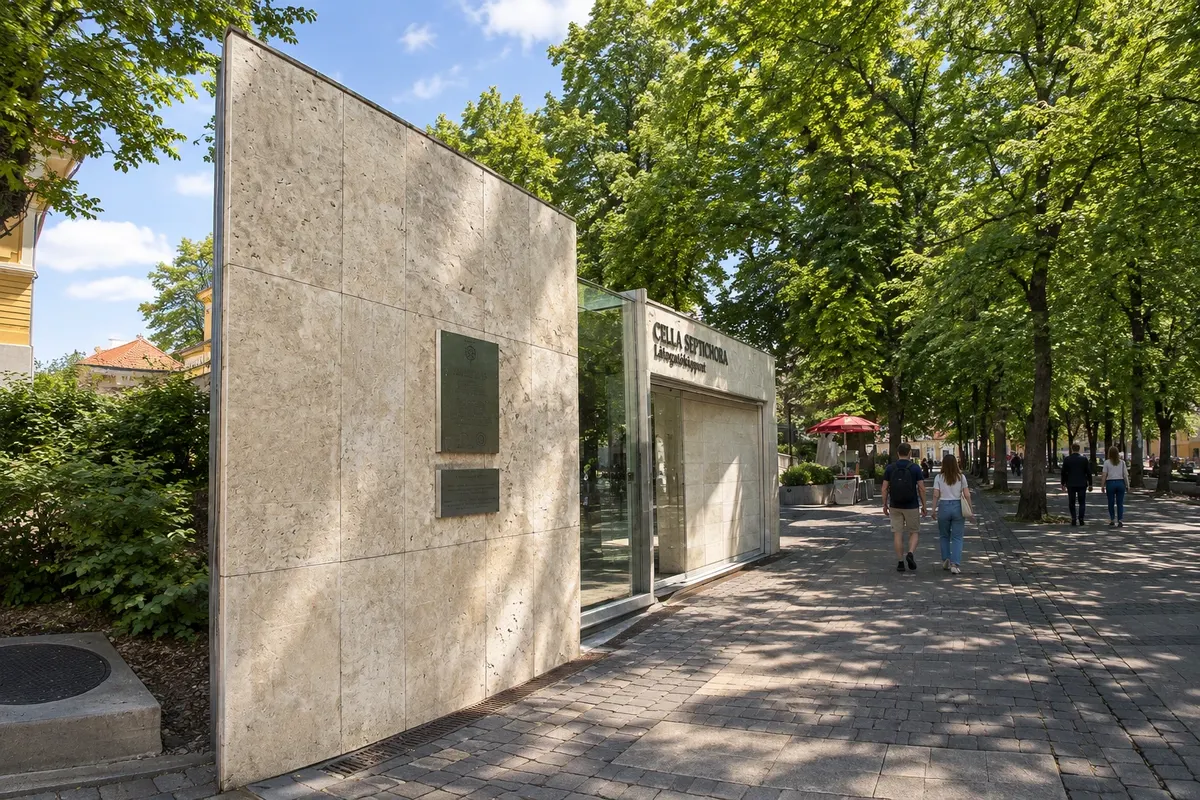
Visitor center of the Paleochristian necropolis of Sopianae, with Roman-period funerary structures beneath the center of Pécs.
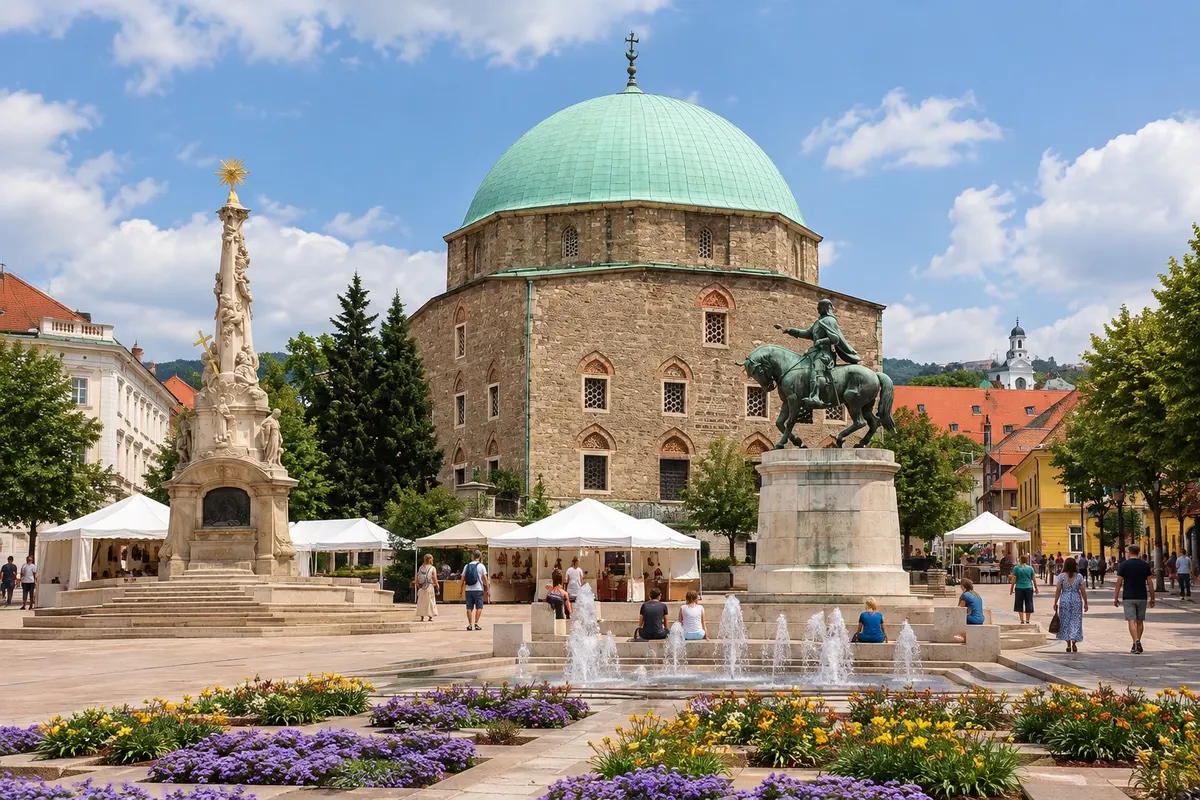
Former Ottoman mosque in Széchenyi Square, incorporated into a Catholic church and recognizable by its dome.
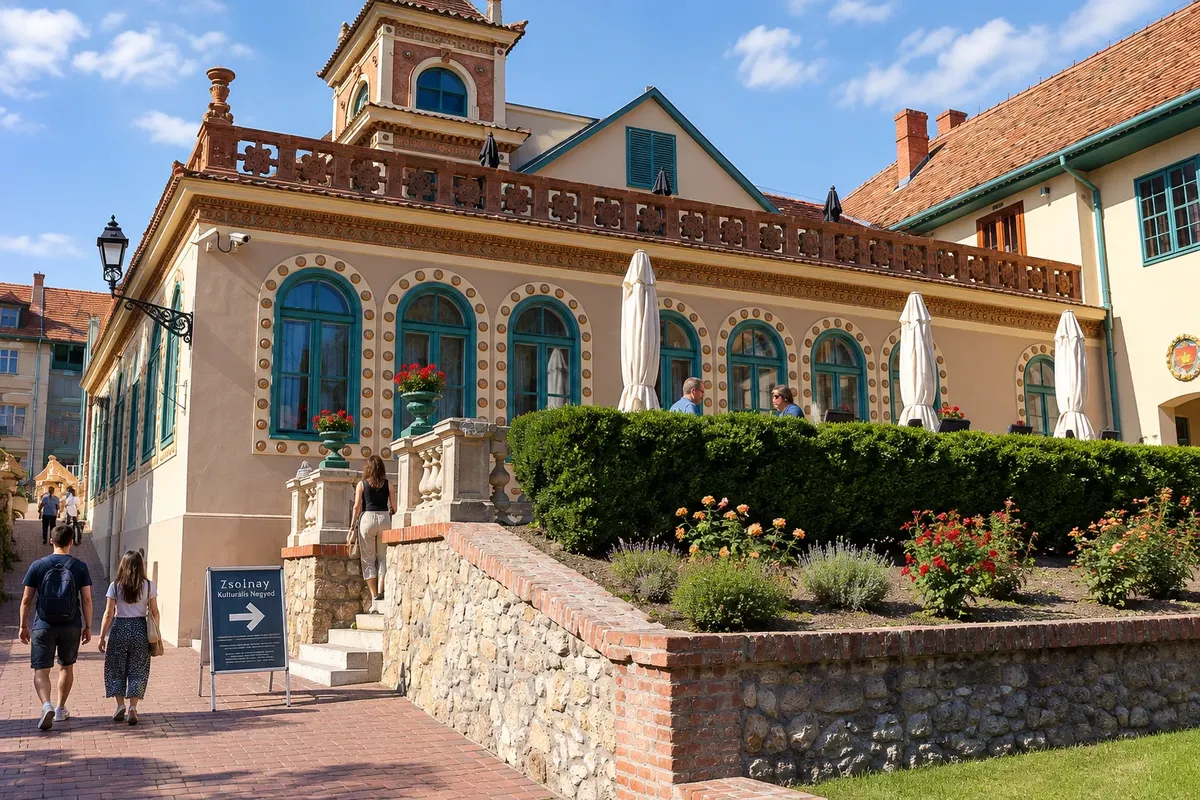
Former Zsolnay manufactory complex converted into a cultural quarter, with historic buildings, gardens, and ceramic collections.
Pred odhodom
Pécs – Baranya Capital
Razdalje so približne. Pred potovanjem preverite lete in vozne rede avtobusov, vlakov ali ladij.
Confirm before booking. Trains and buses link Budapest to Pécs. The station lies south of the center; urban buses or a walk complete the arrival to the historic core.
Two days: one for the central monuments and another for the Zsolnay cultural complex. A third day allows more time in exhibitions and breaks.
April–June and September–October usually have mild temperatures. Summer (June–August) can be hot; December–February is cold with less daylight. The seasons follow the northern hemisphere.
The seasons shown are the most usual ones; nature doesn't always follow the calendar.
Walk through the historic core. For the Zsolnay Quarter, urban buses shorten the trip; a car is not required for the four programs.
Predlog poti
Pot povezuje znamenitosti na tej strani. Za oglede boste imeli dovolj časa.
Begin at the Cella Septichora center and the sectors of the necropolis included in the visit.
See the cathedral and then head to the old mosque on Széchenyi Square.
Walk the central streets, observing buildings you've already visited from other perspectives.
Stay in the center for dinner and leave the Zsolnay Quarter for a longer period the next day.
Dan 1
Start with the Cella Septichora and the chambers included in the route.
Visit the nave and the accessible areas of the cathedral.
Head to the old mosque of Gázi Kászim and observe the adaptation of the religious building.
Stay in the historic core for dinner after the day of archaeology and churches.
Dan 2
Arrive at the former industrial complex and choose the ceramic collections.
Complete the selected exhibitions and the spaces presenting the history of the manufactory.
Save time for the exterior parts of the Cultural Quarter before returning to the center.
Dine near your base and check the next transfer.
Check before you go. Opening hours and days change, and places may close for renovations, holidays or events. This itinerary is a suggestion from Cidade Turismo, not a commitment: plan yours by checking directly with each place you intend to visit.
Pred odhodom
The inscription refers to the early-Christian necropolis of ancient Sopianae, in structures distinct from the cathedral.
Half a day allows selecting collections and walking the former industrial complex.
The historic building was adapted to Catholic use, retaining Ottoman references.
Transport and the variety of visits justify two nights or at least two days of itinerary.
Pred odhodom
Z nekaj načrtovanja boste imeli več časa za uživanje na poti.
April–June and September–October are usually mild for walking. July and August can be hot. In winter, December–February, indoor spaces help divide the short daylight hours.
The seasons shown are the most usual ones; nature doesn't always follow the calendar.
Two days cover the historic core and the Zsolnay Quarter. Three days allow more time for the collections and reduce consecutive indoor visits.
The area around Széchenyi Square makes monuments and meals convenient. Lodging between the historic core and the station shortens the rail arrival. Near the Zsolnay Quarter, expect an extra bus ride or walk to reach the cathedral-related programs.
Odnesite svoje odpadke, upoštevajte oznake in podprite lokalne ponudnike. V naravi upoštevajte navodila za obiskovalce.
Odgovori na vaša vprašanja
Start at the necropolis and cathedral area, then proceed to Széchenyi Square.
The route combines Roman archaeology, religious architecture and industrial heritage related to ceramics.
Urban buses serve the area, and walking can be chosen depending on the group's pace.
Two nights allow spreading visits over two days without relying on a long return to the capital at the end of the excursion.
They are different visits, with environments and access that should be checked separately.
Več kot vodnik


