

Maastricht · Limburg · Trg
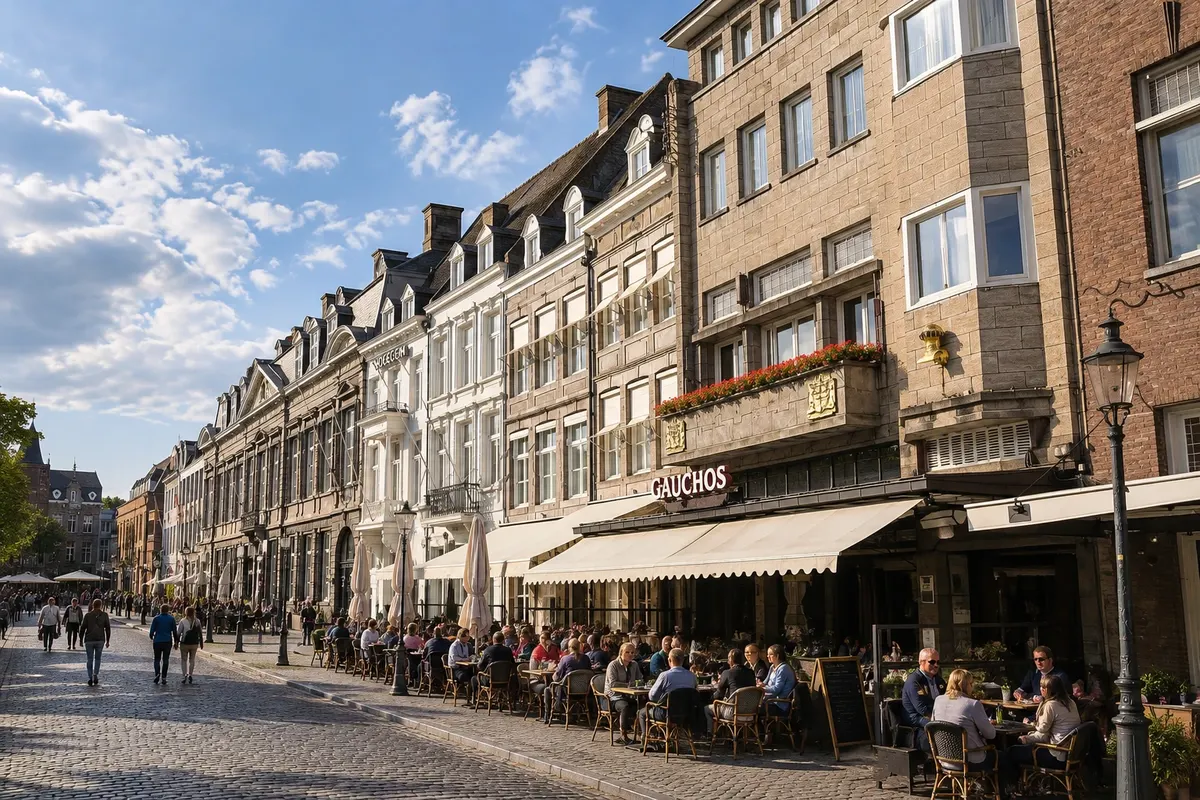
Vrijthof
The largest square in Maastricht's center, flanked by the Basiliek van Sint Servaas and the Sint-Janskerk, with outdoor seating and the stage for the city's festivities.

 Išči
 Brazilija
 Antarktika
 Argentina
 Bolivija
 Čile
 Kolumbija
 Ekvator
 Gvajana
 Francoska Gvajana
 Falklandski otoki (Malvini)
 Paragvaj
 Peru
 Surinam
 Urugvaj
 Venezuela
 Nemčija
 Avstrija
 Belgija
 Hrvaška
 Danska
 Slovaška
 Slovenija
 Španija
 Finska
 Francija
 GrčijaNizozemska
 Madžarska
 Irska
 Islandija
 Italija
 Luksemburg
 Norveška
 Poljska
 Portugalska
 Združeno kraljestvo
 Češka
 Švedska
 Švica
 Turčija
 Bermudi
 Kanada
 Združene države Amerike
 Grenlandija
 Mehika
 Sveta Peter in Mihael
 Dominikanska republika
 JaponskaTurčija
 Južnoafriška republika
 Egipt
 Avstralija
 Fidži
 Nova Zelandija
 Papua Nova Gvineja
Limburg · Nizozemska
The southernmost city of Holanda, on the border with Bélgica and Alemanha: Romanesque churches, medieval walls, caves on the hill and vineyards in Limburgo.
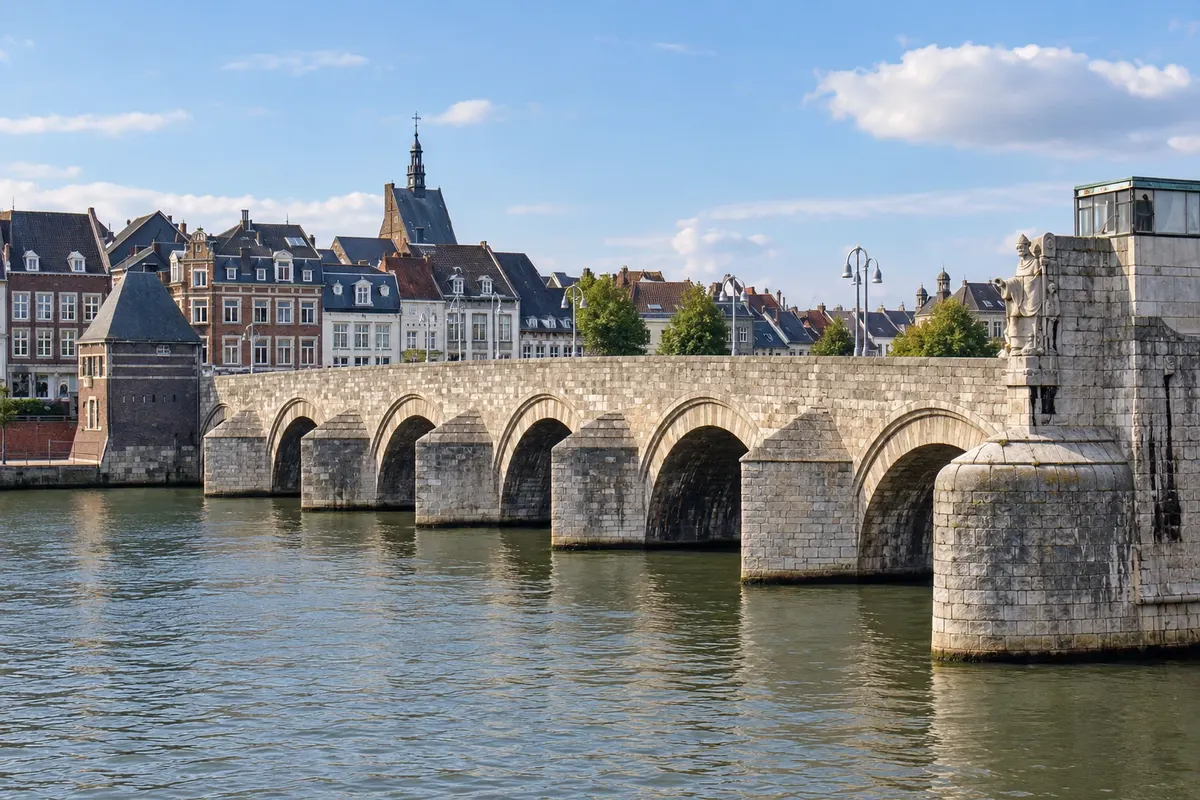
Na fotografiji: Sint Servaasbrug, Maastricht
Illustrative images. The pictures in this guide are illustrations based on the real place, not photographs, and may differ from it.
Spoznajte kraj
Maastricht is located at the extreme south of Holanda, squeezed between Bélgica and Alemanha, on the banks of the Maas. It is the capital of the province of Limburgo and one of the oldest cities in the country: it began where the Roman road between Colonia and Tongeren crossed the river. In 1992, the treaty signed in the city gave rise to the European Union in its current form and paved the way for the euro.
The center is best explored on foot. The Vrijthof, the main square, features the Basiliek van Sint Servaas, considered the oldest church still standing in Holanda, and the Sint-Janskerk, with its red tower. Nearby are the Onze Lieve Vrouwebasiliek, a bookstore housed in a 13th-century Gothic church, the Markt with the 17th-century town hall, and the stone Sint Servaasbrug bridge over the Maas.
South of the center, the Jekerkwartier preserves stretches of the walls and the Helpoort, the country’s oldest city gate. Just beyond, the Sint-Pietersberg hill hides kilometers of galleries cut into the limestone, visitable with a guide, and the Fort Sint Pieter, built in 1701. Under the city, the Kazematten are defensive tunnels from the 16th to the 19th centuries.
The surroundings differ from the rest of Holanda: there are hills, valleys and vineyards. Valkenburg aan de Geul, with a ruined castle and caves, is about 15 km away, and the point where Holanda, Bélgica and Alemanha meet, in Vaals, is about 30 km. Liège, in Bélgica, and Aachen, in Alemanha, are close enough for a day trip.
V vodniku še ni nastanitev – Maastricht.
kako do tja · koliko dni · načrt poti · vprašanja
✈ Amsterdam Airport Schiphol (AMS), kraj: Haarlemmermeer· 215 km do cilja (Maastricht)
✈ Eindhoven Airport (EIN), kraj: Eindhoven· 95 km do cilja (Maastricht)
Check before booking. From Schiphol airport, which has a train station inside the terminal, the trip to Maastricht takes about 2h30; from Amsterdã, also around 2h30. Eindhoven airport is about 95 km away. Maastricht station is about one kilometre from the Vrijthof.
Doživite kraj
The largest square in Maastricht's center, flanked by the Basiliek van Sint Servaas and the Sint-Janskerk, with outdoor seating and the stage for the city's festivities.
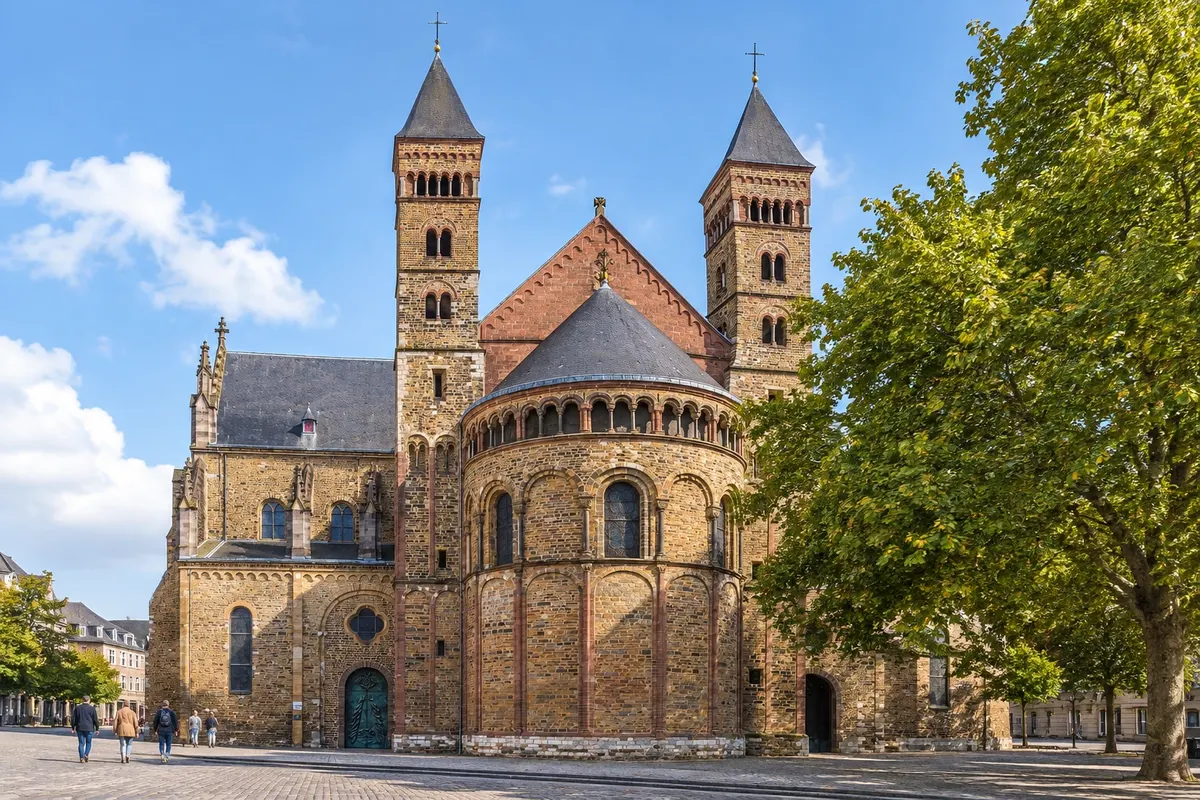
Romanesque basilica from the 11th and 12th centuries, built over the tomb of Saint Servatius and considered the oldest church still standing in the Netherlands. It houses a treasury with medieval reliquaries.
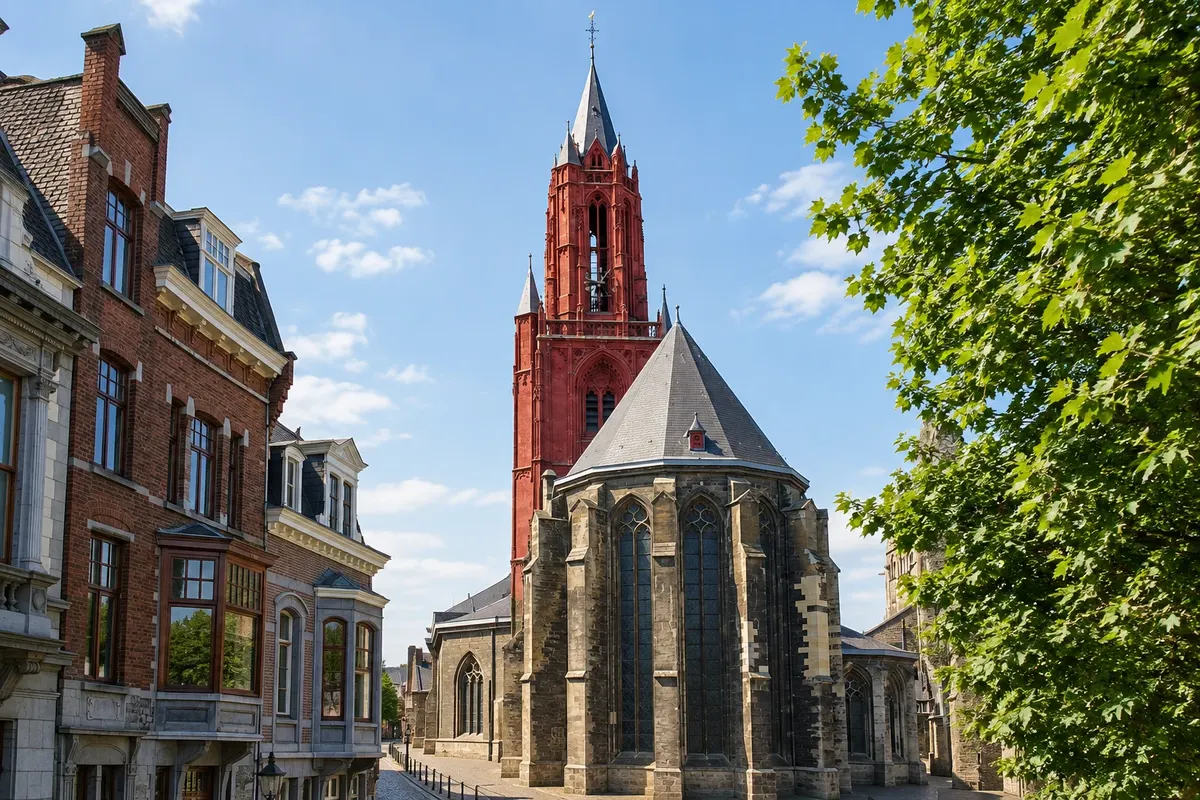
Protestant Gothic church next to the Basiliek van Sint Servaas, with a 79-metre red tower—the tallest in Maastricht—that can be climbed in season.
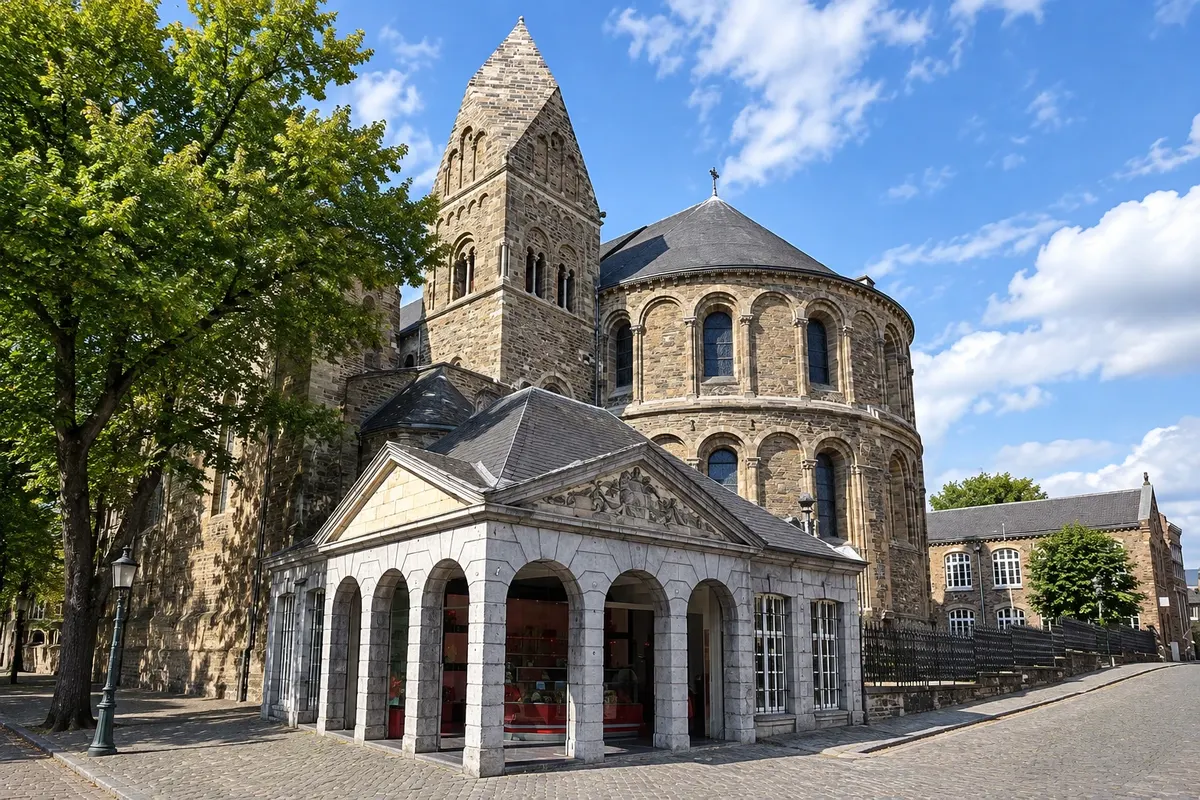
Romanesque basilica in the centre of Maastricht, known for its fortress-like west façade, carved capitals and the chapel of the Sterre der Zee, the Star of the Sea, an image much venerated in the city.
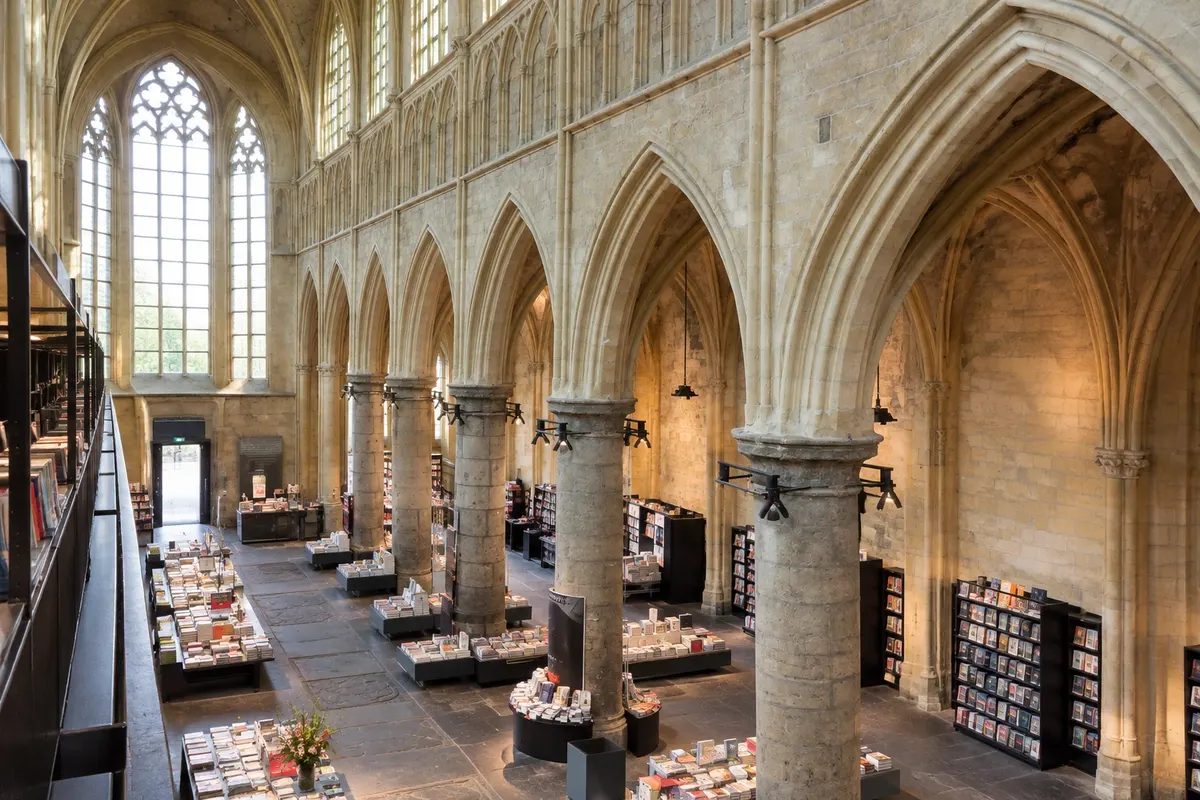
Bookshop housed in a 13th-century Gothic church that belonged to the Dominicans. Multi-level bookshelves occupy the nave and there is a café in the former choir.
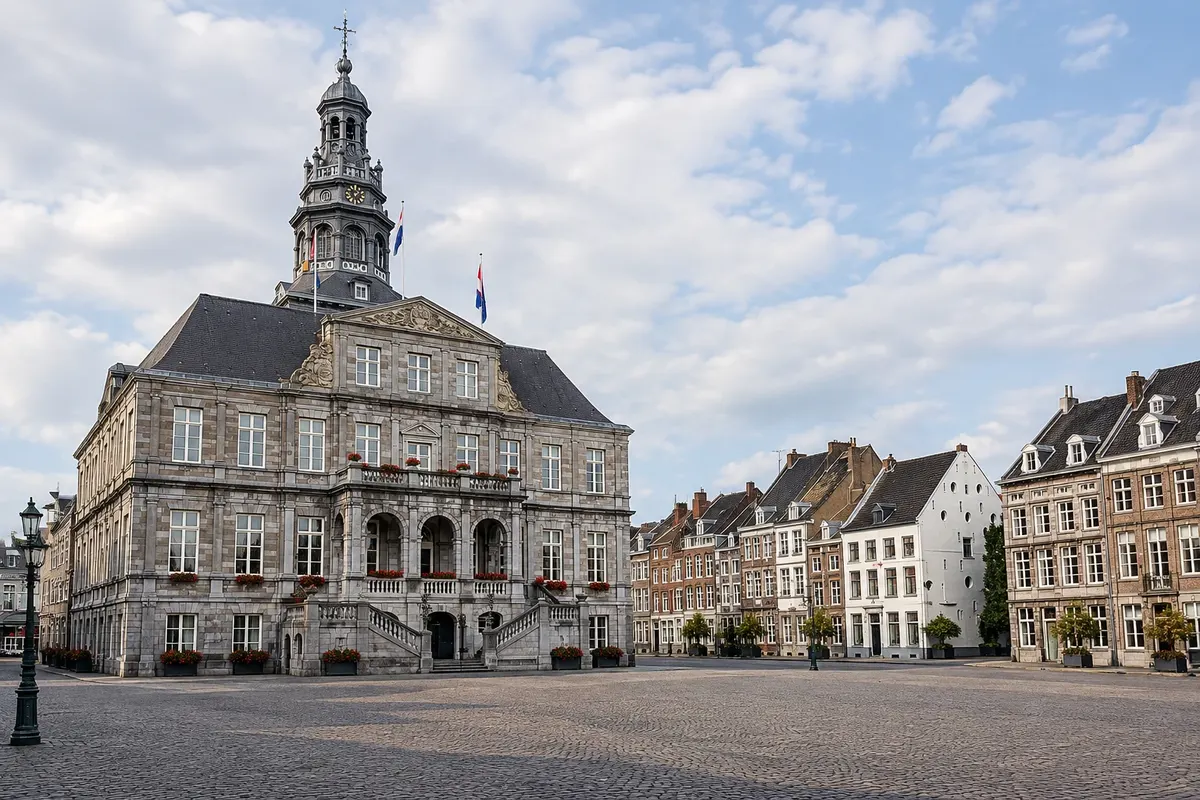
Maastricht's market square, where the Stadhuis is located — the 17th-century town hall designed by Pieter Post — surrounded by cafés and the site of an outdoor market.
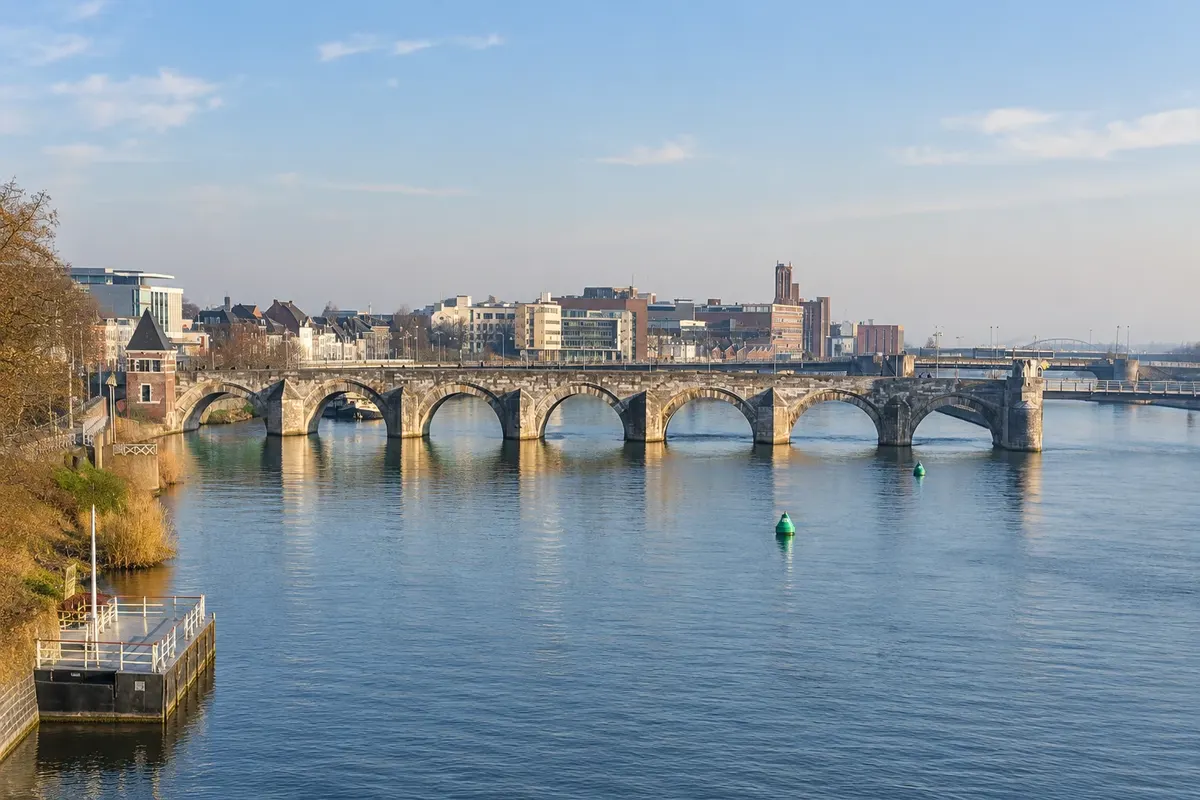
Stone arch bridge over the river Maas, built at the end of the 13th century and considered the oldest bridge in the Netherlands. It links the center to the Wyck neighborhood and the station.
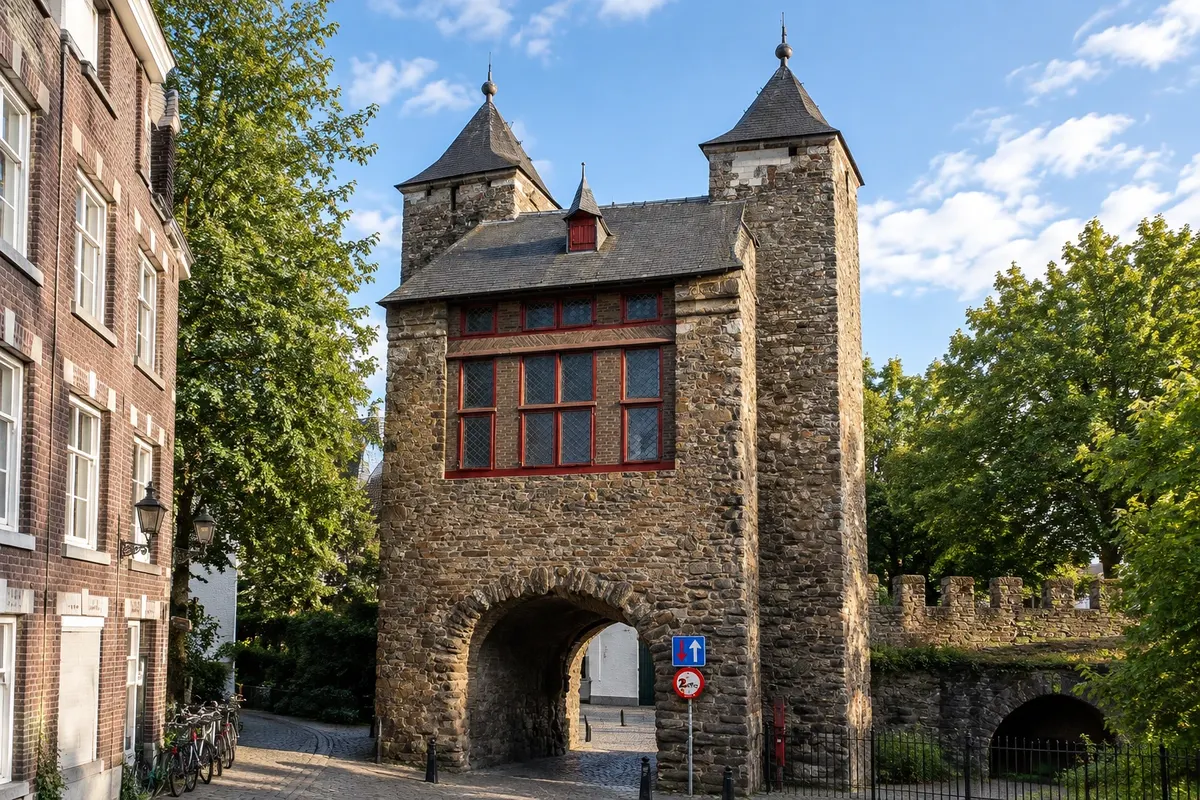
Gate of Maastricht's first wall, dating from around 1230 — the oldest city gate still standing in the Netherlands. It is located in the Jekerkwartier, next to stretches of the city wall.
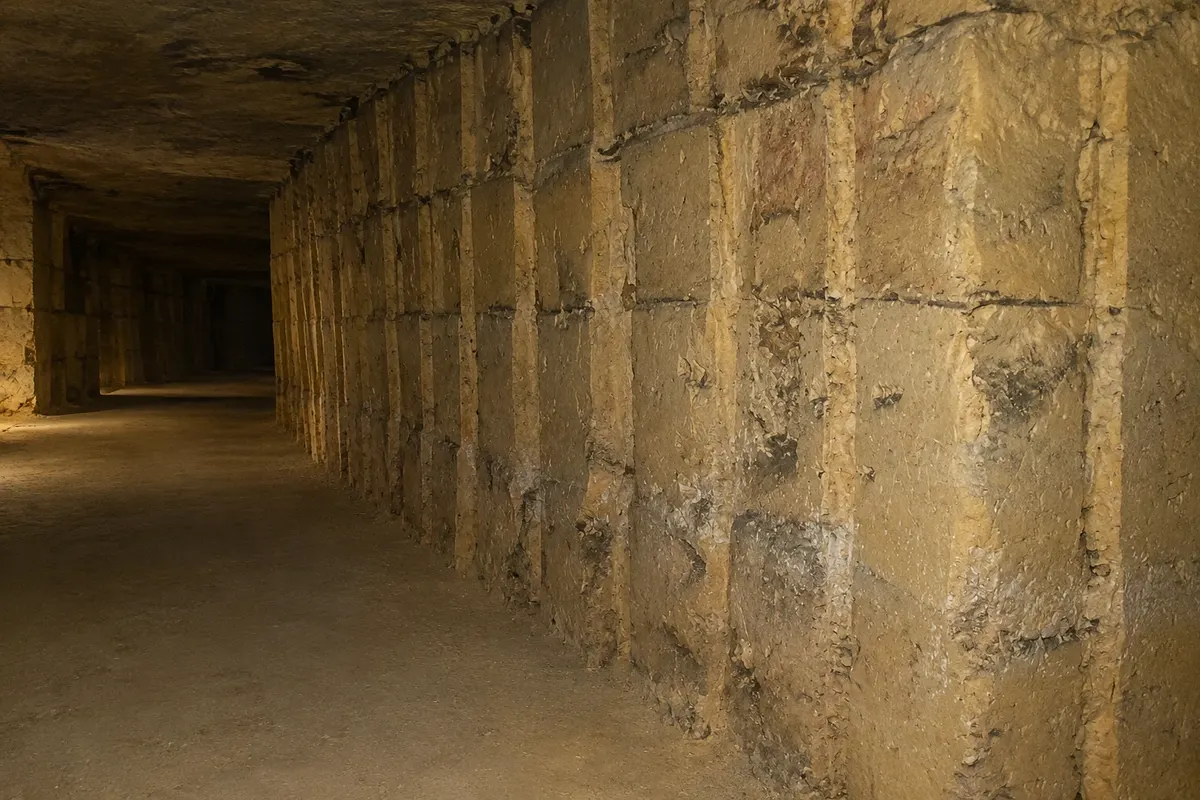
Galleries hand-dug over centuries into the limestone of the Sint-Pietersberg hill, with drawings and inscriptions on the walls. Visits are only with a guide, in the Grotten Noord and Zonneberg systems.
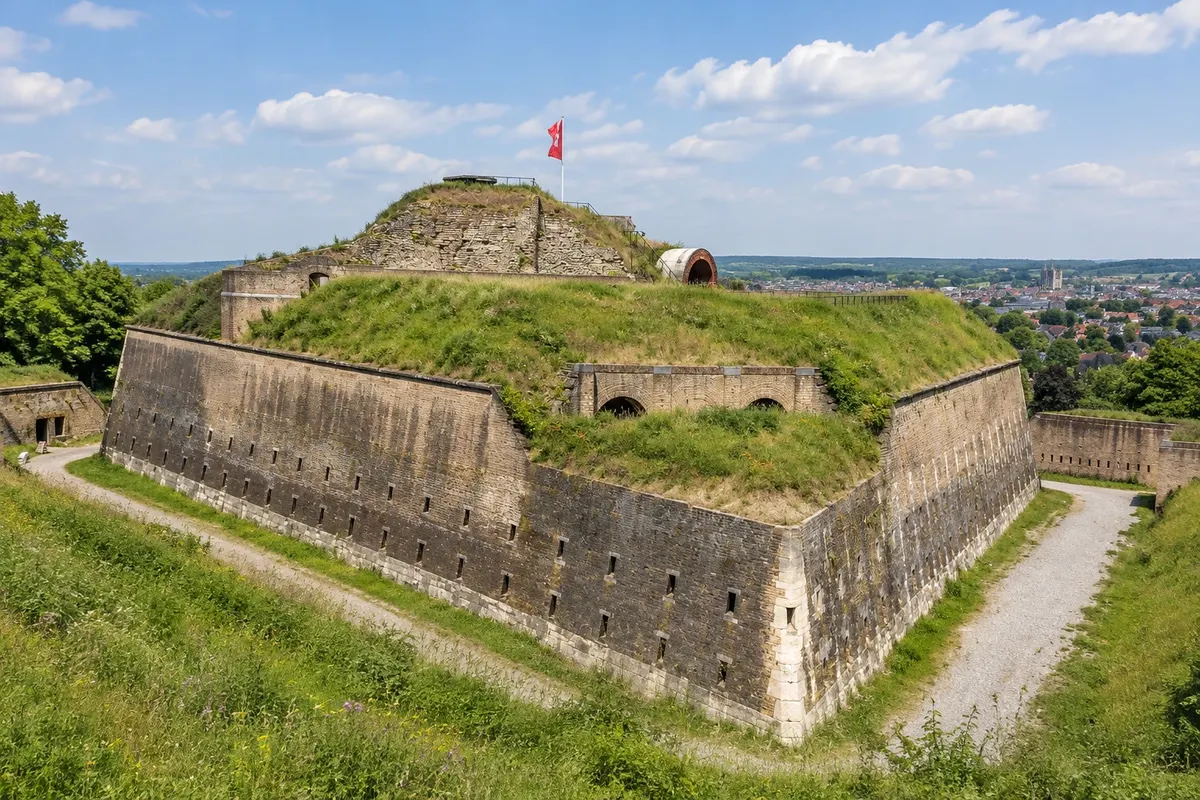
Five‑sided fort built in 1701–1702 into the slope of Sint-Pietersberg to protect the southern approaches to Maastricht, with internal galleries and views over the Maas valley.
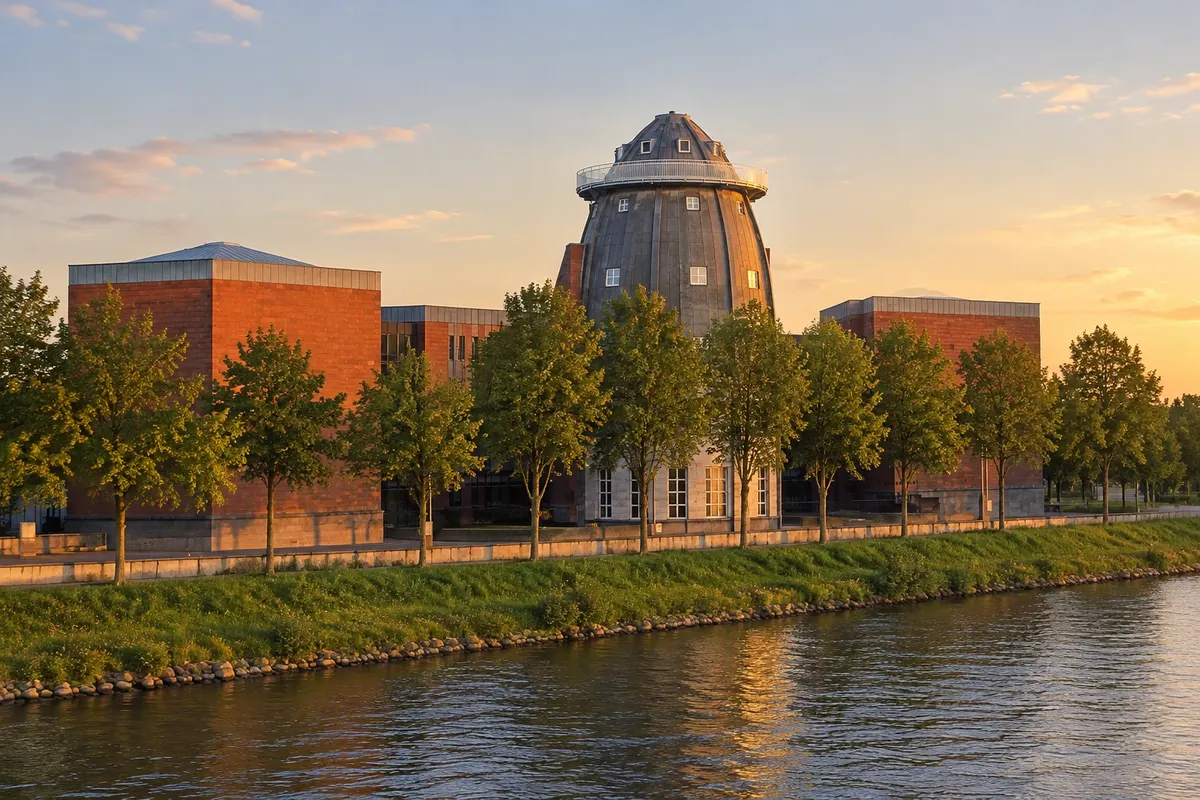
Art museum of Limburg, housed in a 1995 building by architect Aldo Rossi on the banks of the Maas, with exhibitions of contemporary art, medieval sculpture and paintings from the southern Netherlands.
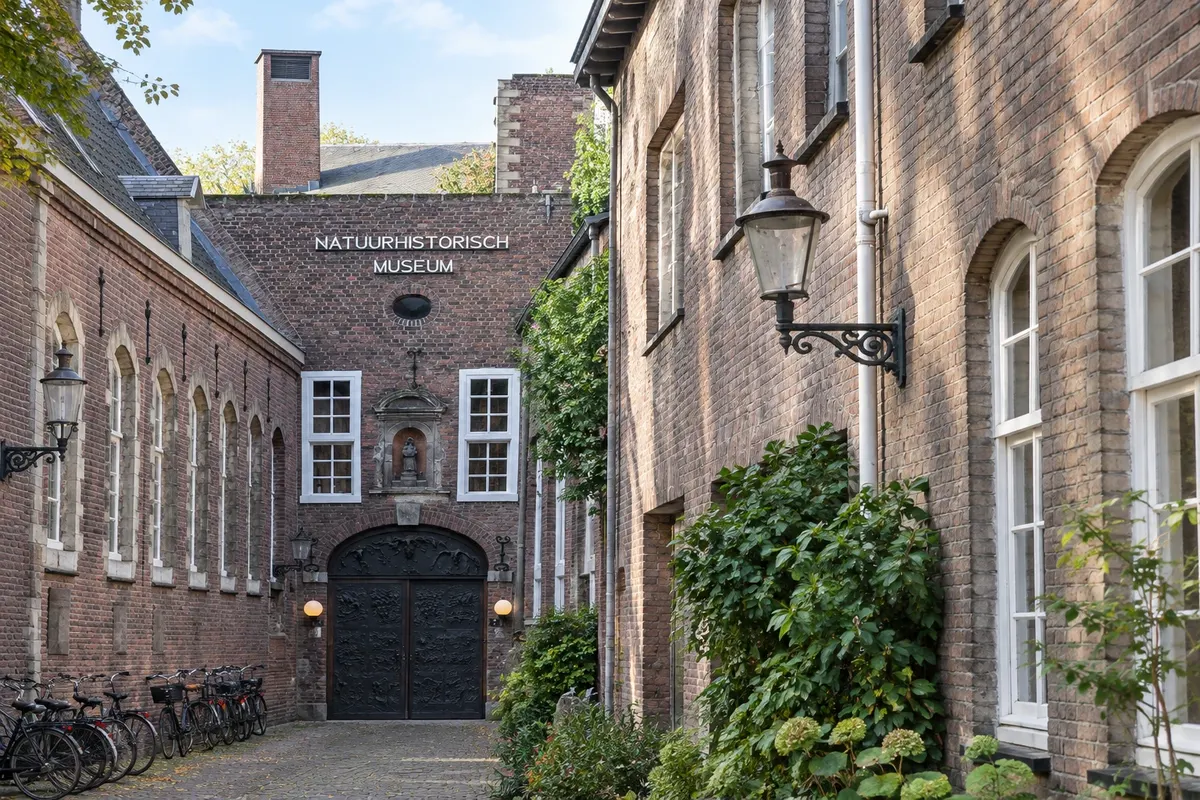
Natural history museum in a former convent in the Jekerkwartier, known for Cretaceous fossils found in the region, including mosasaurs, giant marine reptiles.
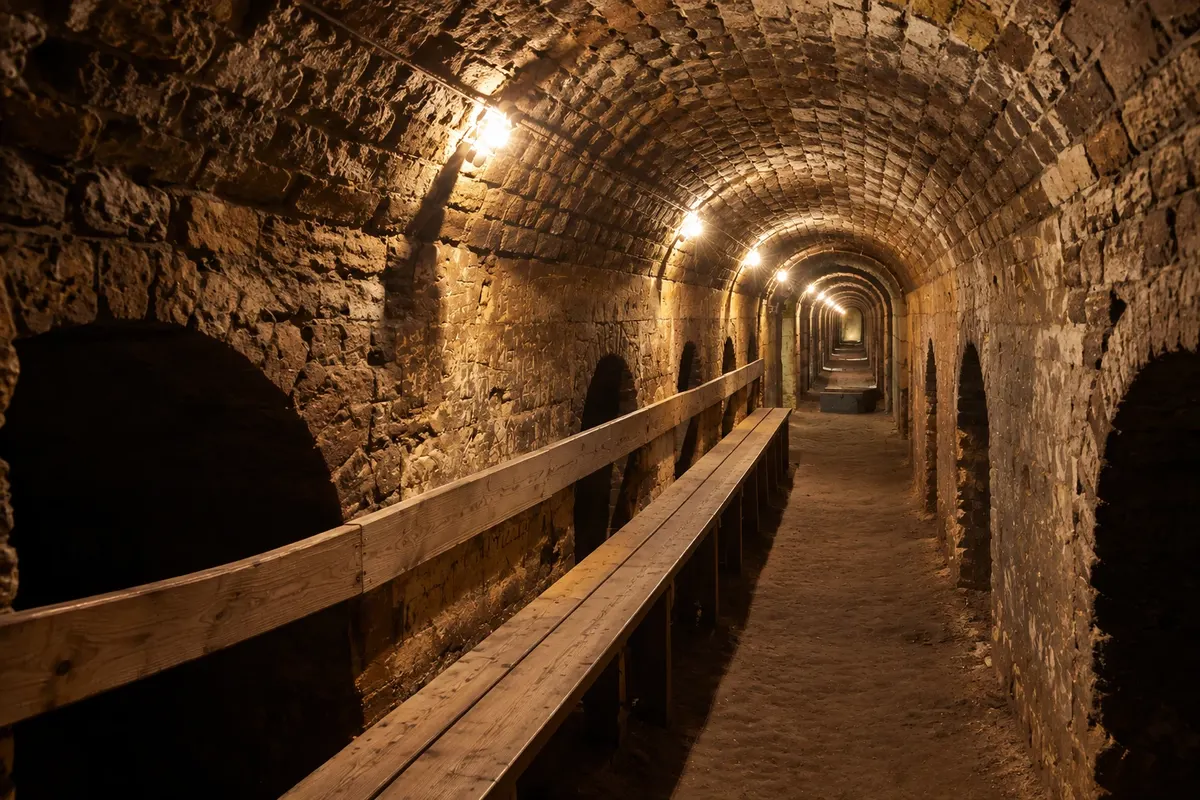
Network of defensive tunnels dug between 1575 and 1825 beneath Maastricht's western side, visited with a guide from Waldeckpark, where remains of the fortifications can be seen.
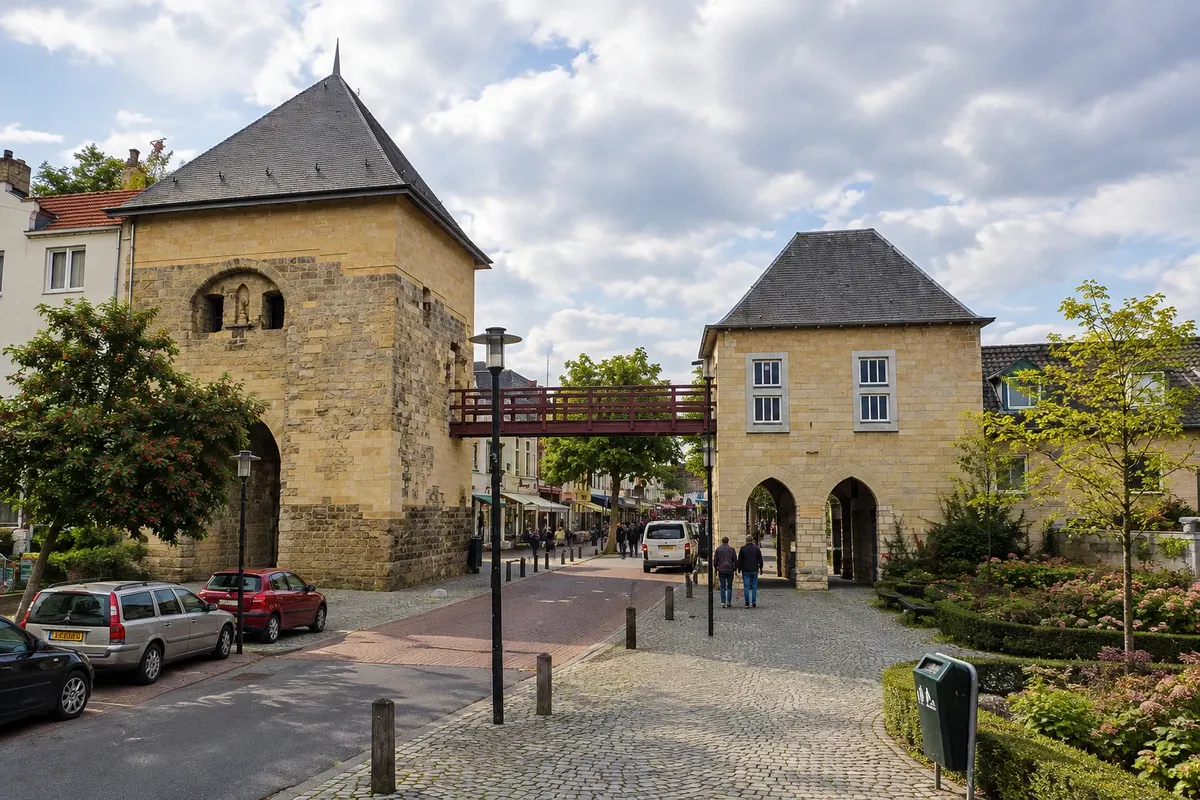
Small town about 15 km from Maastricht, with the ruins of the Netherlands' only hill castle, caves opened in the limestone, and Christmas markets inside the caves.
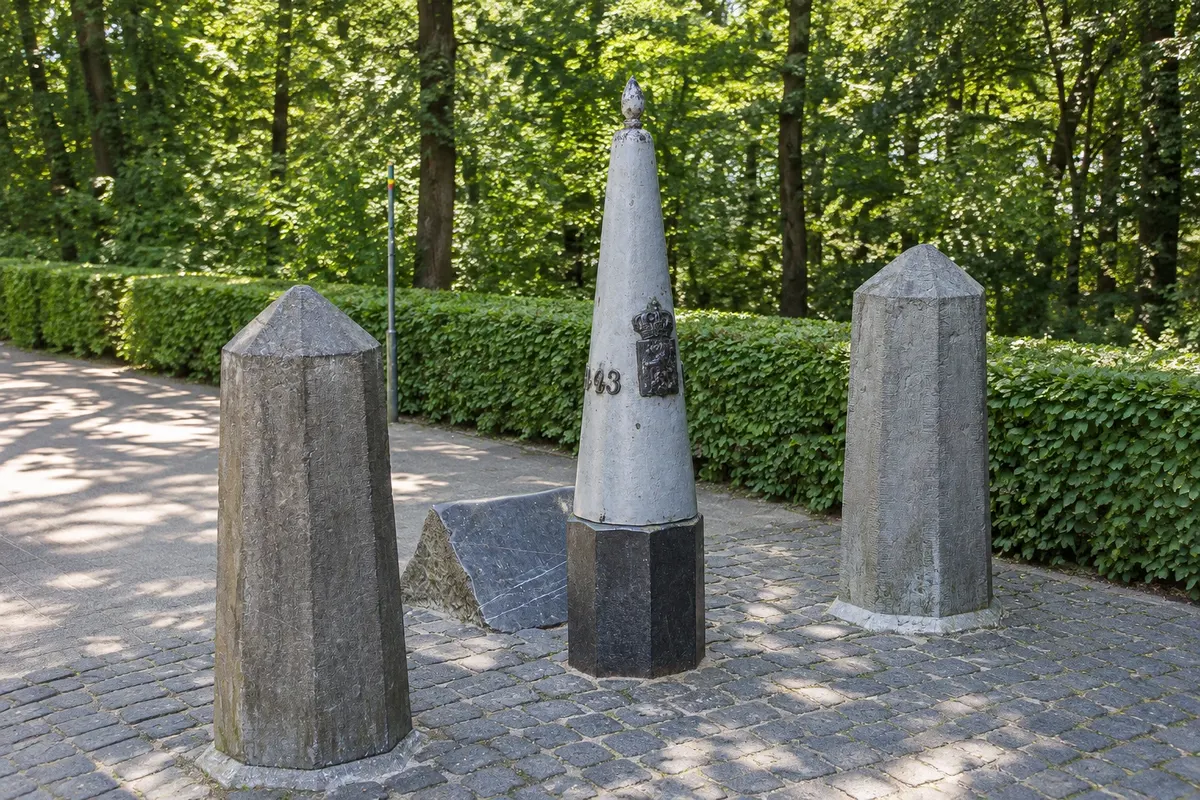
The point where the borders of the Netherlands, Belgium and Germany meet, atop the Vaalserberg, the highest point of continental Netherlands, with observation towers and a maze.
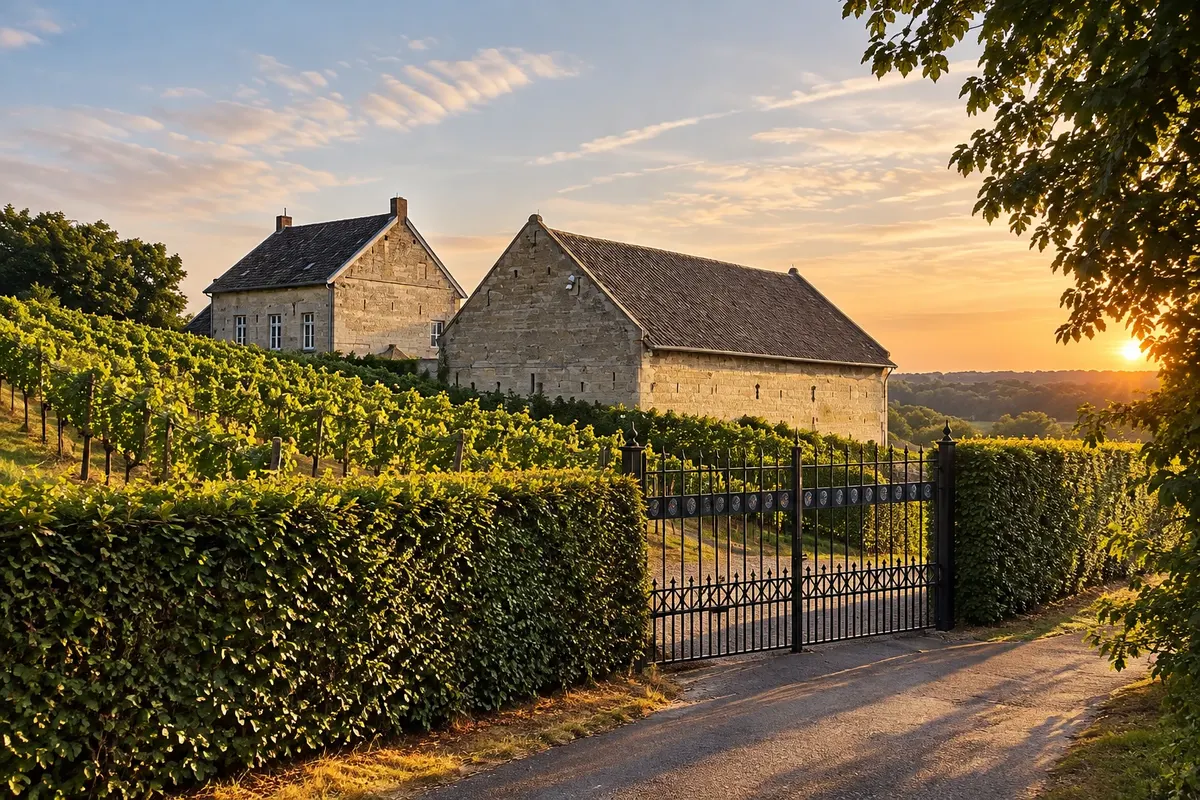
Winery on the slope of the Louwberg hill, south of Maastricht, near the Belgian border. It planted its first vines in 1970 and is considered the oldest active winery in the Netherlands.
Kaj izbrati pred odhodom
Izhodišče, trajanje, potek, vključene storitve in okvirna cena vsakega izleta.
The Vrijthof is Maastricht’s main square: a wide rectangle with terraces on one side and, opposite, two churches side by side, the Sint-Servaasbasiliek and the red-towered Sint-Janskerk. The basilica was built over the tomb of Saint Servatius, a 4th-century bishop, and for centuries received pilgrims. Inside, visitors pass through the Romanesque nave, the crypt and the cloister. The treasure (Schatkamer) is attached and has a separate paid entry: it houses the reliquary of Saint Servatius, the saint’s bust, other reliquaries, fragments of high-medieval textiles and liturgical pieces in precious metal. The treasure is open every day, with closures on some public holidays and during carnival. The square itself is the city’s meeting point: in July it usually hosts open-air concerts by André Rieu, a musician born in Maastricht, and in December it typically hosts a winter market with an ice rink.
Kraji na poti: Vrijthof, Sint-Servaasbasiliek, Schatkamer Sint Servaas, Sint-Janskerk.
Vključuje: Vrijthof square, the basilica interior, the treasure with reliquaries (separate paid entry) and the facade of Sint-Janskerk beside it.
Nasvet: Do the basilica and the treasury in the morning and leave the square terraces for late afternoon. In weeks with concerts in July, the square is taken over by the stage and seating.
Najboljši čas za obisk: All year. From April to October the terraces fill up; in December the square hosts a winter market.
Sint-Janskerk is the 13th-century Gothic church that shares the Vrijthof with the basilica. Since 1633 it has belonged to the city’s Protestant community. The tower, about 70 meters high, is painted red—a paint that protects the local limestone (marl). Because the church was built on a slope, you enter by going down a staircase. Inside, note the 1780 Binvignat organ, used for concerts. The climb up the tower is paid separately and is by a narrow staircase; from the top you can see the Vrijthof, the central rooftops, the Meuse, and the Heuvelland hills. The tower is usually open for climbs from spring to autumn on weekdays and Saturdays, and closes when the church is hired for events; check before you go.
Kraji na poti: Sint-Janskerk, Vrijthof.
Vključuje: Interior of the church, a 1780 organ and climb to the tower with views over the city (separate paid admission).
Nasvet: Climb at late afternoon, when the light hits the façades of the Vrijthof. Bring a light jacket: the tower staircase is ventilated.
Najboljši čas za obisk: From spring to autumn, when the tower is usually open for climbing.
The Onze-Lieve-Vrouwebasiliek is in the oldest part of Maastricht, within what used to be the late Roman castle. The oldest sections date from the 11th and 12th centuries, and the complex is considered one of the country’s benchmark Romanesque buildings. The westwerk, the massive entrance block with two towers, reuses large Roman stone blocks. Inside, the Sterre der Zee chapel (Star of the Sea) houses a 15th-century image of Mary, venerated for centuries; the chapel is often full of lit candles and is visited by locals every day. There is a treasury with reliquaries, silverware and old vestments, with a separate paid admission. The square in front, Onze-Lieve-Vrouweplein, is tree-lined and surrounded by terraces; beside it begins the Stokstraatkwartier, with some of the city’s oldest cobbled streets and designer shops. In the Op de Thermen square nearby, the outline of a Roman thermae is marked in the paving.
Kraji na poti: Onze-Lieve-Vrouwebasiliek, Onze-Lieve-Vrouweplein, Sterre der Zee chapel, Stokstraatkwartier.
Vključuje: Romanesque basilica, chapel of the Sterre der Zee, treasury (separate admission), a square with terraces and the Stokstraat quarter.
Nasvet: Enter the chapel of candles in silence: it is a place of prayer still in use. The square is a good spot for a mid-morning coffee before heading to the Jekerkwartier.
Najboljši čas za obisk: Year-round; the square’s terraces are livelier from May to September.
A short walk from the Vrijthof, the former 13th-century Dominican church was turned into a bookshop in 2006. After the friars left with the French occupation of 1794, the building served as cavalry stables, a depot, a concert hall, an automobile showroom and even a bicycle parking. The project by Merkx + Girod solved the lack of space with a multi-storey steel shelving unit, placed asymmetrically against one side of the nave; visitors climb the shelves and view the church from above, with its ceiling and wall paintings. At the far end, where the altar stood, there is a café with a large cross-shaped table. There is no entrance fee and it is frequently cited by the international press as an example of church reuse. It sells books in Dutch, English and other languages, as well as stationery and city souvenirs.
Kraji na poti: Boekhandel Dominicanen, Dominicanerkerk.
Vključuje: Visit to the church-bookshop, climb up the steel shelving, and coffee in the former choir.
Nasvet: Climb to the top floor of the shelving for the full view of the nave. Look for the cross-shaped table in the café and the medieval paintings on the choir wall.
Najboljši čas za obisk: Year-round; on rainy days it is a good shelter.
The Markt is the second large square in the centre, a few minutes from the Vrijthof. In its middle stands the Stadhuis, the 17th-century town hall, with a tower and carillon. On Wednesdays and Fridays the square usually hosts the street market with stalls selling fruit, cheeses, fish, flowers, fabrics and clothing; Friday’s market is the largest, with about 400 stalls, and draws people from Belgium and Germany. On Saturdays the Boschstraat, which runs off the square, often has an antiques and secondhand market. The surrounding streets house the city’s shops and the Mosae Forum, a modern shopping centre on the banks of the Meuse. On the corner of Kleine Staat is the Dinghuis, a 15th-century courthouse now used as the tourist information office, a good place to get maps and book guided tours. Try vlaai in the square, the fruit tart typical of Limburg, and zoervleis, the region’s sweet-and-sour meat stew.
Kraji na poti: Markt, Stadhuis van Maastricht, Dinghuis, Boschstraat, Mosae Forum.
Vključuje: Markt square, the Stadhuis façade, the street market on market days, Dinghuis and shopping streets.
Nasvet: If you can choose, arrive in Maastricht on a Friday morning: the large market is a good way to see the city day to day.
Najboljši čas za obisk: Wednesdays and Fridays in the morning, when the market usually operates; year-round.
The Jekerkwartier is the neighborhood south of the center, cut by the Jeker stream, which comes down from the Heuvelland and flows into the Meuse. It’s the quietest corner of the old town: narrow houses, watermills, university buildings and sections of wall. The Helpoort, from around 1229, is the oldest surviving city gate in the Netherlands: two round towers linked by a passage, with a wooden balcony on top. Inside is a small fortifications museum, open Wednesday to Sunday, that explains how the city was enclosed by three rings of walls and from where guided walks along the walls depart to the bastion De Vijf Koppen. From there the route continues through Stadspark, a park that mixes the Jeker, cannons and remains of the medieval wall, with the Pater Vincktoren and the Faliezusterspark. At the Tapijnkazerne, a former barracks, there are now gardens and university rooms. Near Onze-Lieve-Vrouweplein is the Bisschopsmolen, a watermill that houses a bakery with an open oven.
Kraji na poti: Jekerkwartier, Helpoort, Stadspark, Pater Vincktoren, De Vijf Koppen, Bisschopsmolen, Tapijnkazerne.
Vključuje: Jeker district, Helpoort and the fortifications museum (separate admission), city walls, Stadspark and watermills.
Nasvet: The walking route through the Jekerkwartier and Stokstraatkwartier from the tourist office is 3.8 km and about 45 minutes; use it as a guide and stop wherever you like.
Najboljši čas za obisk: From April to October, when the park is green; the Helpoort is open year-round from Wednesday to Sunday.
The Sint-Pietersberg, the hill south of the city, was quarried for centuries to extract blocks of mergel, the yellow limestone used in regional houses. The result is a maze that at one time had more than 20,000 galleries. The visit to the Grotten Noord is guided, in Dutch and English, lasts about 1 hour and 10 minutes and runs daily; the guide carries a flashlight and shows signatures and drawings left by the stone cutters centuries ago, and explains how locals hid there during the war. Inside it is truly dark and the temperature is 9 to 10 degrees year-round. On top of the hill is Fort Sint Pieter, an early-18th-century fort built to defend the city; the guided tour of about 1 hour goes by the well, the embrasures and the cannon gallery, and offers views over Maastricht and the Meuse valley. Both visits can be combined on the same ticket. There are also the Grotten Zonneberg on the other side of the hill, with visits on selected dates; and the Kazematten, underground defensive galleries near the Tongerseplein.
Kraji na poti: Grotten Noord, Fort Sint Pieter, Sint-Pietersberg, Grotten Zonneberg.
Vključuje: Guided visit to the Grotten Noord and Fort Sint Pieter (separate paid admission, reserve on the official website), view from the fort.
Nasvet: Bring a jacket even in summer and wear closed sneakers. Reserve your time slot in advance on the official website, especially on weekends; the ticket office is at Luikerweg 80.
Najboljši čas za obisk: All year: the temperature inside the cave does not change. On rainy days it is a safe option.
Besides the caves, Sint-Pietersberg is a nature reserve managed by Natuurmonumenten, with limestone pastures, Mergelland sheep and goats that keep the vegetation low. The highlight is the ENCI-groeve, the former cement quarry: an enormous hole with pale walls where mosasaur fossils have been found, the marine reptile named after the Meuse. There is a viewpoint open from sunrise to sunset and a 215-step staircase that descends from the north entrance on Luikerweg to the quarry floor; the deepest part is still closed to the public. On the south side, at Lage Kanaaldijk, is D'n Observant, an artificial hill made from quarry spoil, with a spiral path to the Ster van Maastricht viewpoint, which looks in five directions, including toward Belgium. The waymarked circular route is 10.8 km and passes Fort Sint Pieter, the pastures, the quarry and the Observant; there are shorter options. It’s a countryside outing 20 minutes from the city centre.
Kraji na poti: Sint-Pietersberg, ENCI-groeve, D'n Observant, Fort Sint Pieter, Lage Kanaaldijk.
Vključuje: Waymarked trails, quarry viewpoint, staircase to the ENCI-groeve and D'n Observant viewpoint.
Nasvet: Combine with a visit to the fort and the caves, which start from the same Luikerweg. After rain the limestone becomes slippery; wear sneakers with good soles.
Najboljši čas za obisk: From April to October; in May and June the limestone pastures are in bloom and full of butterflies.
The Sint Servaasbrug, dating from 1280, is the oldest stone bridge still in use in the Netherlands. It links the city center to Wyck, the neighborhood on the east bank of the Meuse, and today is for pedestrians and cyclists only: it’s the classic spot to photograph the river with the church towers behind. In Wyck, Rechtstraat is the main street, with houses from the 18th and 19th centuries, façade stones with old names, cafés, design shops and restaurants; Stationsstraat, with large townhouses from the late 19th century, leads to the train station. South of Wyck begins Céramique, a neighborhood built in the 1990s on the site of the former Société Céramique earthenware factory, which closed around 1980. Two factory halls remain, including the Bordenhal, now a theatre. Plein 1992 commemorates the Maastricht Treaty, signed there, which created the European Union and the single currency; Centre Céramique houses the city library and museum. A little further on, the Hoge Brug, a modern footbridge, returns you to the center, and at the end of Avenue Céramique the Bonnefanten’s zinc tower appears.
Kraji na poti: Sint Servaasbrug, Wyck, Rechtstraat, Stationsstraat, Céramique, Plein 1992, Centre Céramique, Hoge Brug.
Vključuje: Crossing the Sint Servaasbrug, streets of Wyck, Plein 1992, the buildings of Céramique and return via the Hoge Brug.
Nasvet: Do the circuit in the late afternoon and finish at one of the cafés on Rechtstraat. The Maaspromenade, on the city-side bank, has benches facing the bridge.
Najboljši čas za obisk: All year; from May to September the river is busier with boats.
The Bonnefanten is the art museum of Limburg, housed in a brick building with a rocket-shaped tower clad in zinc, designed by Italian architect Aldo Rossi and opened in 1995 on the banks of the Meuse. Inside, a long straight staircase rises along the building’s axis and distributes the floors. The ground floor features the old masters: medieval and Renaissance painting and sculpture from the southern Low Countries and Italy, as well as silverware and ceramics from Maastricht. The upper floors are devoted to modern and contemporary art, with temporary exhibitions that rotate several times a year, and there is a permanent room dedicated to Rossi himself. The museum runs a children’s program and an activities lab open every day. On exit, Charles Eyckpark opposite slopes down to the river and gives a good view of the tower’s dome reflected in the water. It’s the natural complement to a stroll through Wyck and Céramique.
Kraji na poti: Bonnefanten, Avenue Céramique, Charles Eyckpark.
Vključuje: Collection of old masters, contemporary art, temporary exhibitions and the Aldo Rossi building (separate paid admission).
Nasvet: Check the schedule on the official website before you go: some floors close for a few days during exhibition changes.
Najboljši čas za obisk: All year; a good option for a rainy day.
Rederij Stiphout boats depart from the quay on the Maaspromenade, on the city-center bank, just below the Sint Servaasbrug. The basic cruise lasts about 50 minutes: it goes downstream passing under the bridge, the Onze-Lieve-Vrouwebasiliek, the Bonnefanten and the provincial government building, continues to the Sint-Pietersberg and turns around near the Ternaaien lock, already at the Belgian border. There is onboard commentary and a bar. On some days in the season the company also runs a full-day trip to Liège (Luik in Dutch), in Belgium: about 3 hours downstream, passing through the Ternaaien lock with a 15-meter height difference, free time in the city and a return by boat in the late afternoon. There are also five-lock and panoramic routes. The season usually runs from spring to autumn, with more departures from May to September; timetables change by month and the wheelchair-accessible boat is not always operating. Check the schedule and book on the official website.
Kraji na poti: Maaspromenade, Maas, Sint Servaasbrug, Ternaaien lock, Liège.
Vključuje: Boat trip with commentary; full-day option to Liège on certain seasonal dates (separate paid ticket).
Nasvet: Boarding opens 20 minutes before departure. The Maaspromenade is closed to cars for much of the day; go on foot. For Liège, take your passport: it’s another country.
Najboljši čas za obisk: From May to September, when there are usually more departures per day.
Valkenburg aan de Geul is about a 12‑minute train ride from Maastricht, in the Geul river valley, and is the tourist town of the Heuvelland. On a hilltop are the 11th‑century castle ruins, destroyed in 1672 by order of William III: walls, towers and a valley panorama. The castle is open daily except Christmas and New Year’s Day. Below it lies the Fluweelengrot, a marl grotto visited with a guide: wall paintings, inscriptions, stone sculptures and a chapel from the French period of the 18th century; the grotto closes for a few weeks in November and December to set up the Christmas market, which usually runs from mid‑November until the end of December, there and in the Gemeentegrot. The town center has two medieval gates, the Grendelpoort and the Berkelpoort, pedestrian streets full of restaurants and, on Saturdays, many visitors from Belgium and Germany. The Cauberg is the 1.2 km climb starting from town, famous in cycling from the Amstel Gold Race; you can climb it on foot or by bicycle. On the top is Thermae 2000, a thermal baths complex. On the marked trails, walking among vineyards, orchards and woods is why many people spend the day here.
Kraji na poti: Valkenburg aan de Geul, Kasteelruïne Valkenburg, Fluweelengrot, Gemeentegrot, Cauberg, Thermae 2000, Grendelpoort.
Vključuje: Castle ruins and Fluweelengrot (separate paid admissions), medieval center, Cauberg climb and trails in the Geul valley.
Nasvet: Buy the combined castle-and-grotto ticket on the official website. Avoid Saturday if you want calm: it is the busiest day. From November to December, book in advance for the Christmas markets in the grottos.
Najboljši čas za obisk: From April to October for the trails; from mid‑November to the end of December for the Christmas markets in the grottos.
The south of Limburg is the only part of the Netherlands with real hills, and cycling is the local way to explore it. The region uses the knooppunten network: numbered signs at each junction, so you just note the sequence of points and follow them. The Mergellandroute, a signed route of about 155 km, can be done in sections: the west side passes through Valkenburg, the house carved into the rock at Geulhem, the carréboerderijen farms of Cadier en Keer, Mheer Castle, the Mesch observation tower with views as far as Liège, and Eijsden, the village where the Meuse enters the Netherlands, with a square and a statue of the cramignon, the traditional dance. There are steep climbs of 10–12% and descents where you need to hold the brake; if you don't cycle often you can choose an electric bike or stay on the flat sections along the Meuse, between Maastricht and Eijsden, about 10 km, on a paved bike path. In April and May the apple and cherry orchards are often in bloom. In the villages, bakeries sell vlaai and cafés serve regional beer.
Kraji na poti: Heuvelland, Mergellandroute, Eijsden, Mesch, Cadier en Keer, Mheer, Geulhem, Valkenburg aan de Geul.
Vključuje: Bike rental (separate fee), network of numbered junctions, sections of the Mergellandroute or the flat Maas cycle path to Eijsden.
Nasvet: The OV-fiets, NS’s rental bike, is hired at the station with a Dutch transport card; city shops rent electric and leisure bikes with a credit card. Take water: shade is limited on the plateaus.
Najboljši čas za obisk: April to October; April and May with orchards in bloom, September with vines heavy with grapes.
At the top of the Vaalserberg, at 322 meters, the highest point of the European part of the Netherlands, a ground marker signals where the borders of the Netherlands, Belgium and Germany meet. Visitors walk around the marker and cross the three countries in a few steps; until 1919 it was a four-border point with the tiny territory of Neutral Moresnet. On the Dutch side is the Wilhelminatoren, a 35-meter panoramic tower with an elevator, glass floor and restaurant; on the Belgian side, the 50-meter Boudewijntoren. Both have separate paid admission and their own seasons; check before you go. Next to them is the hedge maze, with water jets and a tower in the center, generally open from April to early November; there is a brasserie, a playground and a shop. From the foot of the hill in Vaals, the climb through the woods takes about 45 minutes on foot. The city of Aachen in Germany is 5 km away, which makes it possible to combine both visits in the same day.
Kraji na poti: Drielandenpunt, Vaalserberg, Vaals, Boudewijntoren, Wilhelminatoren, Drielandenpunt Maze.
Vključuje: Three-country marker, panoramic towers and maze (separate paid tickets, seasonal), walk in the Vaalserberg wood.
Nasvet: Bus 350 leaves Maastricht station and continues to Aachen; get off at Vaals and walk up, or use a local taxi on rainy days. Bring your passport: the Belgian tower and Aachen are already another country.
Najboljši čas za obisk: From April to October, when the maze and towers are usually open.
Liège, Luik in Dutch, is the largest city in Wallonia and lies downstream, already in Belgium. The direct train from Maastricht station takes about 33 minutes to Liège-Guillemins, the glass-and-white-steel station designed by Santiago Calatrava, which alone is worth the stop. From there the center is a 20-minute walk or a few minutes by bus. Place Saint-Lambert is the city’s heart, with the Palais des Princes-Évêques, the palace of the prince-bishops who ruled Liège for centuries. Nearby is the Montagne de Bueren, a 374-step staircase from 1881 that climbs straight between brick houses up to the old citadel, with views over the Meuse valley. On Sunday mornings La Batte usually takes place, a street market running for several kilometers along the river. The Grand Curtius houses the archaeology, weapons and decorative arts museums in a riverside palace. Try the café liégeois, Liège gaufres (waffles) and boulets à la liégeoise, meatballs in a sweet-and-sour sauce. It’s another country: bring your passport, and the language changes from Dutch to French.
Kraji na poti: Liège-Guillemins, Montagne de Bueren, Place Saint-Lambert, Palais des Princes-Évêques, La Batte, Grand Curtius.
Vključuje: Direct train, Calatrava station, historic center, the Montagne de Bueren staircase and the La Batte market on Sundays.
Nasvet: Go on a Sunday to catch the La Batte market and return in the mid-afternoon. There is also the option to go down by boat with Rederij Stiphout and return by train.
Najboljši čas za obisk: All year round; Sunday is market day.
Aachen is about 35 km from Maastricht, on the other side of the German border. The Arriva regional train departs Maastricht station hourly, passes Valkenburg and Heerlen and reaches Aachen Hauptbahnhof in about 1 hour; bus 350 goes via Vaals. The reason to go is the cathedral: Charlemagne built there, around the year 800, the Palatine Chapel, an octagon of marble and gilded mosaics that is the core of the building, and he was buried in it in 814. Thirty German kings were crowned there over 600 years. The Gothic choir, with tall stained-glass windows, and the emperor’s stone throne can only be seen with a guided tour, sold at the information point beside the cathedral. The cathedral treasury, containing Charlemagne’s golden bust and the Lothar Cross, is in an adjacent building with a separate ticket. The cathedral was the first German property inscribed by UNESCO. Around it, the Rathaus (town hall) stands on the site of the Carolingian palace, and thermal springs like the Elisenbrunnen recall that the city has been a spa since Roman times. Try the Printen, local spice biscuits. Bring your passport: it’s another country.
Kraji na poti: Aachener Dom, Domschatzkammer, Rathaus Aachen, Elisenbrunnen, Aachen Hauptbahnhof.
Vključuje: Regional train or bus, cathedral with the Palatine Chapel, treasury (separate ticket), Aachen historic centre.
Nasvet: Arrive before lunchtime for the guided visit to the choir and the throne; in the afternoon the cathedral usually has masses that close parts of the building. At Christmas there is a traditional market around the cathedral, which usually runs from late November until December 23.
Najboljši čas za obisk: All year; late November through December with the Christmas market.
Tongeren, 20 km west of Maastricht, is the oldest city in Belgium: it was the Roman Atuatuca Tungrorum, a provincial capital in the 1st century. In the center, the Grote Markt features the statue of Ambiorix, the Gallic leader who defeated one of Caesar’s legions, and the Onze-Lieve-Vrouwebasiliek, a Gothic church with a tall tower and a treasury of medieval sacred art. Sections of the 2nd‑century Roman wall remain around the center. The Gallo-Romeins Museum, modern and interactive, tells the story of life in the region from Neanderthal times to the early Middle Ages, with reconstructions of Roman‑era faces at the entrance; it is closed on Mondays. On Sunday mornings the town usually hosts a large antiques and flea market, with hundreds of stalls in the streets. The De Lijn bus, a Belgian company, links Maastricht to Tongeren via the Tongerseweg; check timing and the boarding point in the journey planner, because the line changes stop depending on the schedule. Bring your passport: it’s another country. You can combine this visit with Liège, which has a direct train to Tongeren.
Kraji na poti: Tongeren, Gallo-Romeins Museum, Onze-Lieve-Vrouwebasiliek van Tongeren, Roman wall of Tongeren, Statue of Ambiorix.
Vključuje: Roman and medieval center, Gallo-Romeins Museum (separate admission), basilica and, on Sundays, the antiques market.
Nasvet: Sunday is the day: an antiques market in the morning and the museum open in the afternoon when it stays open into the early evening. On Monday the museum is closed.
Najboljši čas za obisk: All year; on Sundays for the antiques market.
Po dnevih
Predlogi za načrtovanje poti. Vrstni red dni prilagodite vremenu in razpoložljivosti izletov.
In the morning, Vrijthof, Sint-Servaasbasiliek and the basilica treasure; then the Boekhandel Dominicanen next door and the Markt with the Stadhuis (on Wednesdays or Fridays the market). Lunch at Onze-Lieve-Vrouweplein and a visit to Onze-Lieve-Vrouwebasiliek. In the afternoon, Jekerkwartier, Helpoort and the ramparts in Stadspark and, by bus 12 or on foot, the guided visit to the Grotten Noord and Fort Sint Pieter, booked in advance. Return via the Sint Servaasbrug and end the day in Wyck, near the station.
Morning at Vrijthof with Sint-Servaasbasiliek and the treasure, the climb up Sint-Janskerk tower and Boekhandel Dominicanen. Markt and Stadhuis before lunch. In the afternoon, Onze-Lieve-Vrouwebasiliek, Stokstraatkwartier, Jekerkwartier with Helpoort and Stadspark. At late afternoon, a 50-minute boat cruise on the Meuse with Rederij Stiphout, depending on the season, and crossing the Sint Servaasbrug to dine in Wyck.
Option A: morning with the guided tour of the Grotten Noord and Fort Sint Pieter, followed by the walk along Sint-Pietersberg to the ENCI quarry and D'n Observant; in the afternoon, Bonnefanten and Céramique. Option B: a 12-minute train to Valkenburg aan de Geul, castle ruins, Fluweelengrot, medieval center and the Cauberg climb; return in the late afternoon to the Markt for last-minute shopping. If you leave by train the same day, store your bag in the station lockers.
Arriving from Schiphol in the morning, the Intercity drops you in Maastricht in the early afternoon. Leave your bag and start at the Vrijthof: Sint-Servaasbasiliek and its treasury, Boekhandel Dominicanen and the Markt. In the late afternoon, Onze-Lieve-Vrouweplein, Stokstraatkwartier and a first look at the Jekerkwartier. Have dinner downtown and sleep early to beat the jet lag.
Morning with the guided tour of the Grotten Noord and Fort Sint Pieter and the walk along Sint-Pietersberg to the ENCI quarry. Lunch downtown. In the afternoon, Helpoort and the ramparts in Stadspark, then Sint Servaasbrug, Wyck and Céramique with the Bonnefanten. Evening boat trip on the Meuse, depending on the season.
Pick a day trip. Heuvelland option: train to Valkenburg aan de Geul in the morning (castle, Fluweelengrot, Cauberg) and, in the afternoon, bus 350 to Vaals for the Drielandenpunt. Belgium option: a 33-minute train to Liège, Montagne de Bueren and, if it’s Sunday, the La Batte market. Germany option: a 1-hour train to Aachen for Charlemagne’s cathedral and its treasury. In any case, take your passport and return for one last dinner in Maastricht.
Najboljši čas za obisk
From May to September the days are long and the squares fill with outdoor tables; summer runs from June to August. Autumn and spring see fewer visitors, with moderate cold and frequent rain. From mid-November to the end of December Christmas markets usually operate, including in the Valkenburg caves. Carnival, in February or March, takes over the city streets.
The seasons shown are the most usual ones; nature doesn't always follow the calendar.
Deep winter · City without queues
January is winter in the Northern Hemisphere: highs around 6 °C and lows near 0 °C, with short days and mostly overcast skies. Snow is possible but usually doesn’t stick. The caves and museums remain open; the boat and the Drielandenpunt towers are on a winter break. It’s the quietest month of the year, good for seeing the churches and the Bonnefanten without queues.
Carnival · Dry cold
Still winter, with highs of around 7 °C and lows near 1 °C. In February or early March Maastricht usually celebrates its carnival (Vastelaovend), three days of parades and costumes that take over the center; the basilica’s treasury and some museums close on those days. Outside carnival, the city is calm and the downtown and cave tours operate normally.
TEFAF · Early spring
March marks the turn to spring: highs around 11 °C, lows of 3 °C, and already longer days. In mid-month TEFAF, the international art and antiques fair, usually takes place and fills the city and hotels for a week. At the end of the month the Sint-Janskerk tower often reopens for climbing.
Orchards in bloom · Driest month
April is the least rainy month of the year, with highs around 15 °C and lows of 5 °C. It is spring in the northern hemisphere: the orchards of the Heuvelland usually bloom, the Drielandenpunt maze and the boats start their season, and terraces return to the squares. On the 27th the country typically celebrates King’s Day with street festivities. A good month for cycling and walking.
Flowering pastures · Boat season
May has highs of about 19 °C and lows of 9 °C, with plenty of sunshine. The limestone pastures of Sint-Pietersberg bloom and are full of butterflies; it’s a good month for cycling in the Heuvelland. Boats on the Meuse already run more frequently and terraces are busy. Weekends with public holidays (Ascension and Pentecost) bring many Belgians and Germans.
Summer begins · Long days
June opens summer in the northern hemisphere: highs around 22 °C, lows of 12 °C, and daylight until about 10:00 p.m. Rain tends to fall in short showers. It’s a good month for Valkenburg, Drielandenpunt and outdoor activities, with seasons running and fewer people than in July.
Concerts at the Vrijthof · Holidays
July is the warmest month, with highs of about 24 °C and lows of 14 °C; 30 °C days can occur. There is more rain, typically summer downpours. The Vrijthof often hosts André Rieu’s concerts on several nights, and the city becomes very busy: book accommodation and the caves in advance. Dutch and German school holidays start and the Heuvelland gets busy.
Wettest month · Peak summer
August remains warm, with highs around 23 °C and lows of 13 °C, but it is the month with the highest rainfall volume, with late-afternoon storms. Still, there is plenty of sun between showers. It is high season in Valkenburg and surrounding villages; summer holidays give the town a festive atmosphere and boats on the Meuse run frequently.
Mild autumn · Heavy-loaded vineyards
September is the start of autumn in the northern hemisphere: highs around 20 °C, lows of 11 °C, with less rain than in summer and attractive light over the hills. The vineyards of the Heuvelland are heavy with fruit and cycling is rewarding. Activity declines after the first week as schools return, and terraces remain open.
Colorful leaves · End of season
October has highs of around 15 °C and lows of 7 °C, with the woods of Sint-Pietersberg and Heuvelland changing color. It’s the last month of the season for Sint-Janskerk tower and the Drielandenpunt maze, and boat services reduce departures. Bring a coat and a rain cover; the caves, at 10 °C, require the usual warm clothing.
Christmas markets in the caves · Short days
November is gray and wet, with highs around 10 °C and lows of 4 °C, and it gets dark before 5 p.m. Valkenburg’s Fluweelengrot closes for a few weeks to set up the Christmas market, which usually opens in the caves around mid-month and draws large crowds on weekends. On the 11th at 11:11 a.m., Maastricht’s carnival usually has its official opening. Museums and the bookstore are good shelters.
Magisch Maastricht · Winter
December is winter: highs around 6 °C, lows of 1 °C and the wettest month of the second half of the year, with occasional snow. The Vrijthof usually hosts the winter fair Magisch Maastricht, with a Ferris wheel, ice rink and stalls, from late November to early January; Valkenburg and Aachen have their Christmas markets. On December 25 and January 1 almost everything is closed; the basilica’s treasury is closed on Christmas Day.
Načrtujte pot
The NS runs the Intercity between Amsterdam Centraal and Maastricht twice an hour, stopping at Utrecht Centraal, 's-Hertogenbosch and Eindhoven Centraal; the trip from Amsterdam takes about 2 h 30 and from Utrecht about 2 h. From Schiphol Airport, the total journey is roughly 2 h 30, direct or with a change at Utrecht Centraal depending on the timetable. Trains arrive at Maastricht station in Wyck, a 10-minute walk from the center. You don’t need to reserve a seat: buy the ticket at the machines or pay contactless with a card (OVpay) when you tap in and out. Check schedules on the NS planner.
Maastricht is about half an hour from Belgium: the train from Liège-Guillemins, operated by Belgian NMBS in partnership with Arriva and NS, is direct and takes about 33 minutes, stopping at Visé, Eijsden and Maastricht Randwyck. Travelers from Brussels (Brussel-Zuid/Bruxelles-Midi) change trains at Liège-Guillemins; the total journey takes about 2 h. From Germany, Arriva regional trains link Aachen Hauptbahnhof to Maastricht hourly, in roughly 1 h, passing Heerlen and Valkenburg. From Paris or London, Eurostar arrives in Brussels and you continue via Liège. In all cases, international tickets can be purchased on the Belgian, Dutch or German rail websites.
From Amsterdam the A2 motorway goes straight to Maastricht: about 215 km via Utrecht, 's-Hertogenbosch and Eindhoven, roughly 2 h 30 without traffic. From Brussels about 120 km via the E40 and E313 or E25, through Liège. From Cologne about 110 km on the German A4 to Aachen and then on the Dutch A76/A2. Much of the historic center is closed to cars or has reduced speed limits, with paid parking in the Vrijthof, Mosae Forum and Sphinx garages and few street spaces; the most practical option is to leave the car in a garage or a P+R at the city entrance and walk. For the Heuvelland, Valkenburg and Drielandenpunt a car is helpful; for the city itself it is not necessary.
Maastricht’s center is walkable: it takes about 15 minutes from the station to the Vrijthof via the Sint Servaasbrug. Urban and regional buses are operated by Arriva and depart from the station; bus 12 climbs to Sint-Pietersberg and the caves, while 350 goes to Vaals and Aachen. Arriva regional trains link Maastricht with Valkenburg (about 12 minutes), Heerlen and Aachen; the train to Liège is operated by NMBS. Payment is by card tap (OVpay), touching the reader on entry and exit, or with the OV-chipkaart; paper tickets are not required on buses. Cycling is the local way to reach the Heuvelland: OV-fiets is rented at the station and city shops rent standard and electric bikes. To plan any route, use the 9292 planner, which covers trains, buses and interchanges.
Churches do not charge admission, but the treasures of Sint-Servaasbasiliek and Onze-Lieve-Vrouwebasiliek, the climb up Sint-Janskerk tower and the Helpoort museum have separate paid admission sold on site. Visits to Grotten Noord, Grotten Zonneberg, Fort Sint Pieter and the Kazematten are always guided and must be booked on the official Maastricht Underground website, with a scheduled time. The Bonnefanten, the castle ruins and Valkenburg’s Fluweelengrot, the towers and maze at Drielandenpunt and the boat on the Meuse are also paid; check the current price list on each site.
Pred odhodom
Z nekaj načrtovanja boste imeli več časa za uživanje na poti.
From May to September the days are long and the squares fill with outdoor tables; summer runs from June to August. Autumn and spring see fewer visitors, with moderate cold and frequent rain. From mid-November to the end of December Christmas markets usually operate, including in the Valkenburg caves. Carnival, in February or March, takes over the city streets.
The seasons shown are the most usual ones; nature doesn't always follow the calendar.
One day is enough for the center: Vrijthof, churches, the bookstore, Markt, the bridge and the walls. With two days you can add the Sint-Pietersberg caves, Fort Sint Pieter and a museum. With three or four days there’s time for Valkenburg, the three-border point in Vaals and a day trip to Liège or Aachen.
The historic centre, between the Vrijthof and the Markt, leaves almost everything within walking distance and has pedestrian streets with shops and restaurants. The Jekerkwartier, to the south, is quieter, with old streets beside the walls and the Jeker stream. On the other side of the river, Wyck is close to the station and a few minutes’ walk from the Sint Servaasbrug; next to it, the more modern Céramique neighbourhood sits beside the Bonnefanten.
Odnesite svoje odpadke, upoštevajte oznake in podprite lokalne ponudnike. V naravi upoštevajte navodila za obiskovalce.
Odgovori na vaša vprašanja
You can, but it’s tiring: it’s about 2h30 by train each way, which means five hours of the day on the train. It works for a rushed visit to the historic centre. Staying one night in the city is much more rewarding and allows you to include the Sint-Pietersberg caves or Valkenburg.
Two days cover the centre, the churches, the walls, a visit to the caves or the casemates and a museum. With three or four days you can add Valkenburg aan de Geul, the three-border point in Vaals and a trip to Liège in Bélgica or Aachen in Alemanha.
In the city, no: the centre is walkable and there are local buses. Valkenburg has a train station. A car is helpful for the three-border point in Vaals, for the vineyards and for the hills in the south of Limburgo, but there are also regional buses; check timetables.
From May to September the days are long and the squares come alive; in summer (June to August) there are concerts and events at the Vrijthof. From mid-November to late December Christmas markets usually run, in the city and in the Valkenburg caves. Bring a coat and an umbrella any month: the weather changes quickly.
Yes. Liège, in Bélgica, is about half an hour by train, and Aachen, in Alemanha, less than an hour by train or bus. They make good day trips for those staying three days or more. Check timetables and bring your passport.
Več kot vodnik


