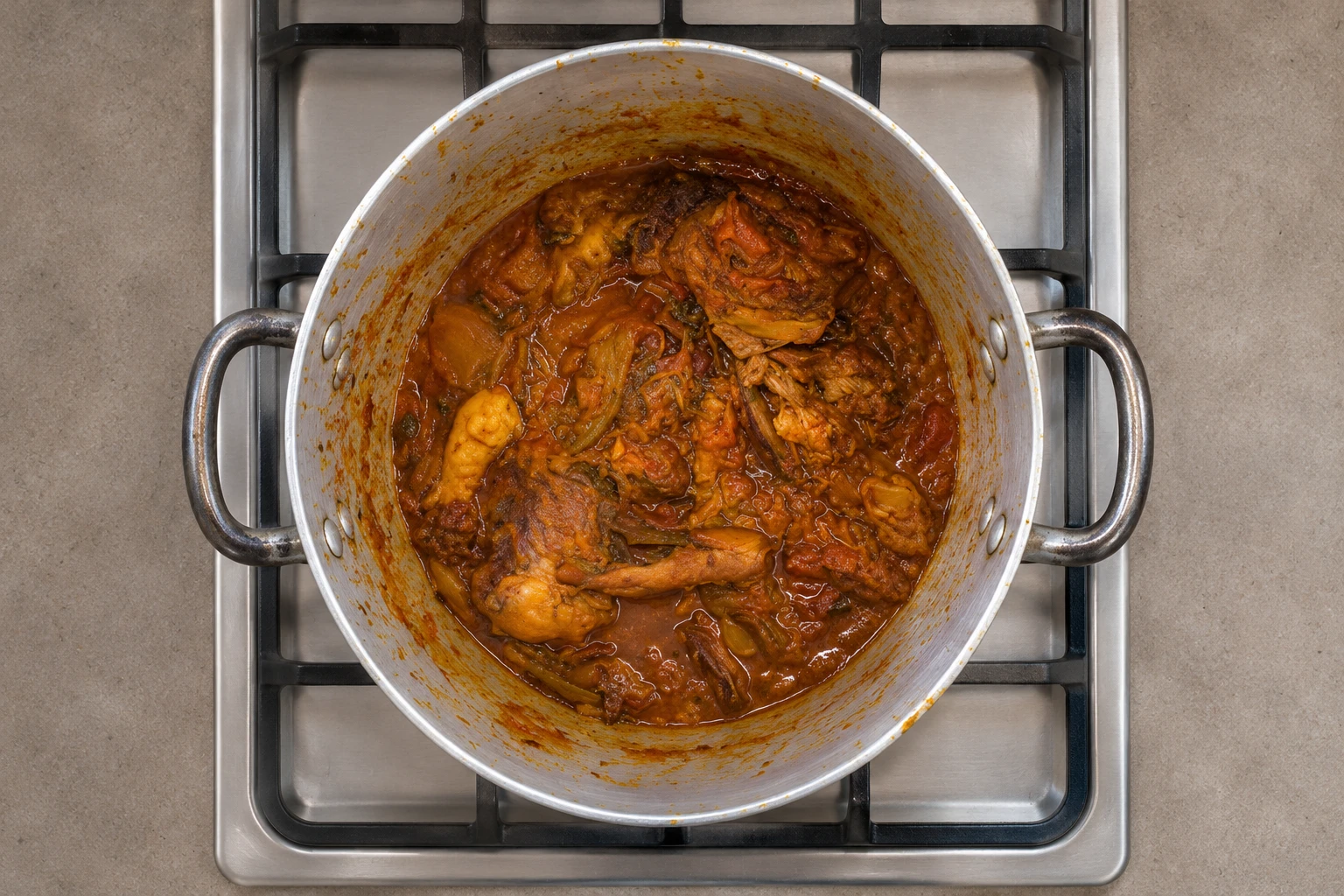
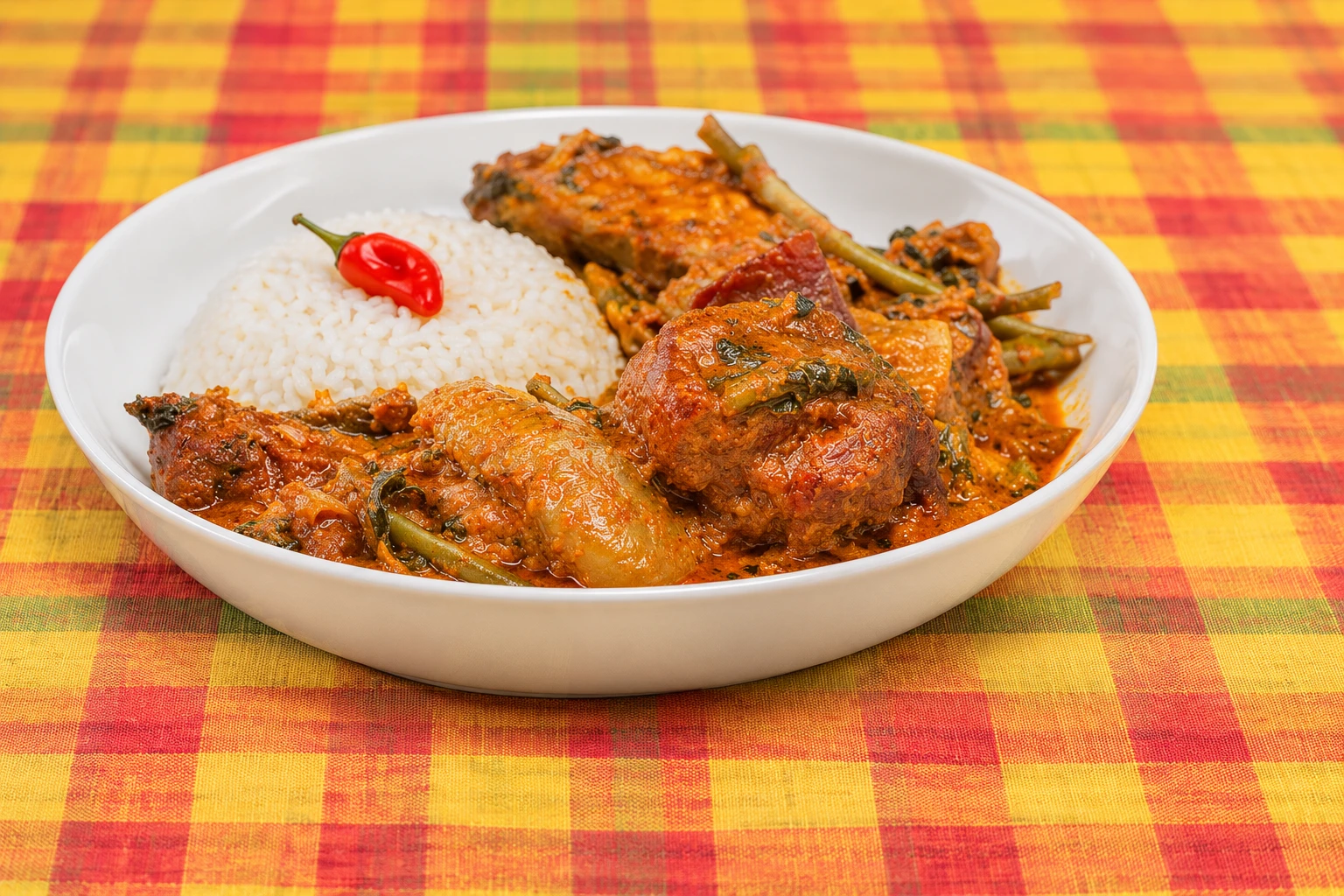
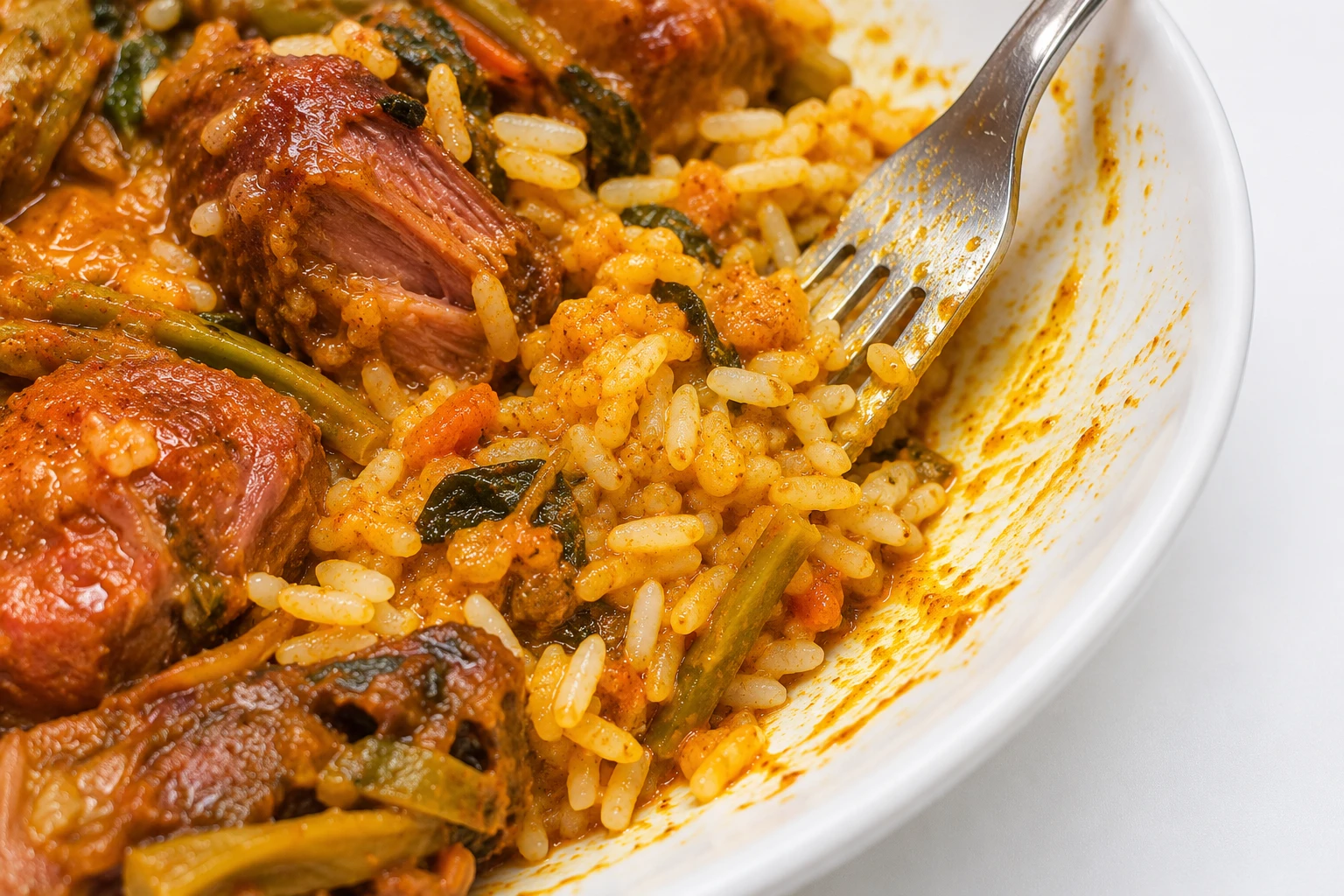
Bouillon d'awara is a thick, orange stew. The base is awara paste, made from the pulp of the fruit of a local palm (Astrocaryum vulgare), about the size of a plum. Smoked meats and fish (boucanés), salted meats such as pig tail and bacon, shrimp, crab and many vegetables cook in it for hours, including spinach, cabbage, cucumber, green beans and eggplant. Each family has its own combination.
Preparation takes days. Salted meats soak to remove excess salt, the paste is diluted and simmered with them, and the vegetables are added gradually. The bouillon then cooks for many hours over low heat until the flavors meld.
It is the Easter dish, and for many families also served at Pentecost. According to official French tourism sources, this 'national' dish is also a way to welcome visitors. A popular saying goes: “Si tu manges du bouillon d'awara, en Guyane tu reviendras” — whoever eats bouillon d'awara will return to Guiana.
The origin is told in more than one way. Lonely Planet mentions an African origin. In 2024, historian Emmanuel Garnier of the CNRS presented research in Cayenne conducted with the Confrérie gastronomique du bouillon d'awara. According to him, the use of awara in local cooking appears as early as the 17th century: indigenous peoples passed on knowledge of the fruit, and Africans brought by the slave trade and maroons adapted it to their traditions. The current form of the dish is thought to have been defined between the 1930s and 1950s. Garnier describes bouillon d'awara as a common heritage that no single community can claim on its own.


 Brazilija
 Antarktika
 Argentina
 Bolivija
 Čile
 Kolumbija
 Ekvator
 Gvajana
 Falklandski otoki (Malvini)
 Paragvaj
 Peru
 Surinam
 Urugvaj
 Venezuela
 Nemčija
 Avstrija
 Belgija
 Hrvaška
 Danska
 Slovaška
 Slovenija
 Španija
 Finska
 Francija
 Grčija
 Nizozemska
 Madžarska
 Irska
 Islandija
 Italija
 Luksemburg
 Norveška
 Poljska
 Portugalska
 Združeno kraljestvo
 Češka
 Švedska
 Švica
 Turčija
 Bermudi
 Kanada
 Združene države Amerike
 Grenlandija
 Mehika
 Sveta Peter in Mihael
 Dominikanska republika
 Japonska
 Južnoafriška republika
 Egipt
 Avstralija
 Fidži
 Nova Zelandija
 Papua Nova Gvineja