Palace of Knossos (Knossos)
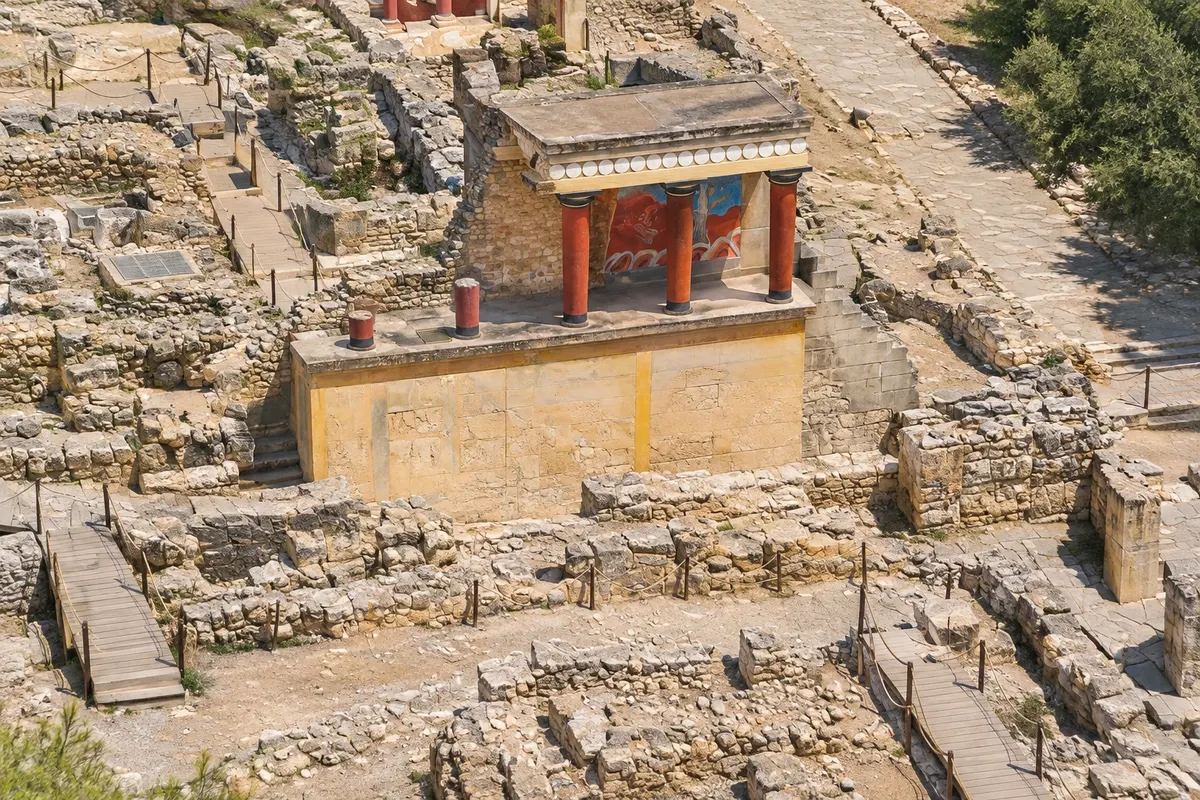
The largest palace of the Minoan civilization, 5 km from Heraclião, with a central courtyard, throne room, staircases and Arthur Evans's reconstructions from the early 20th century.
Antarktika
Creta · Grčija Capital
Destinacija: Crete.
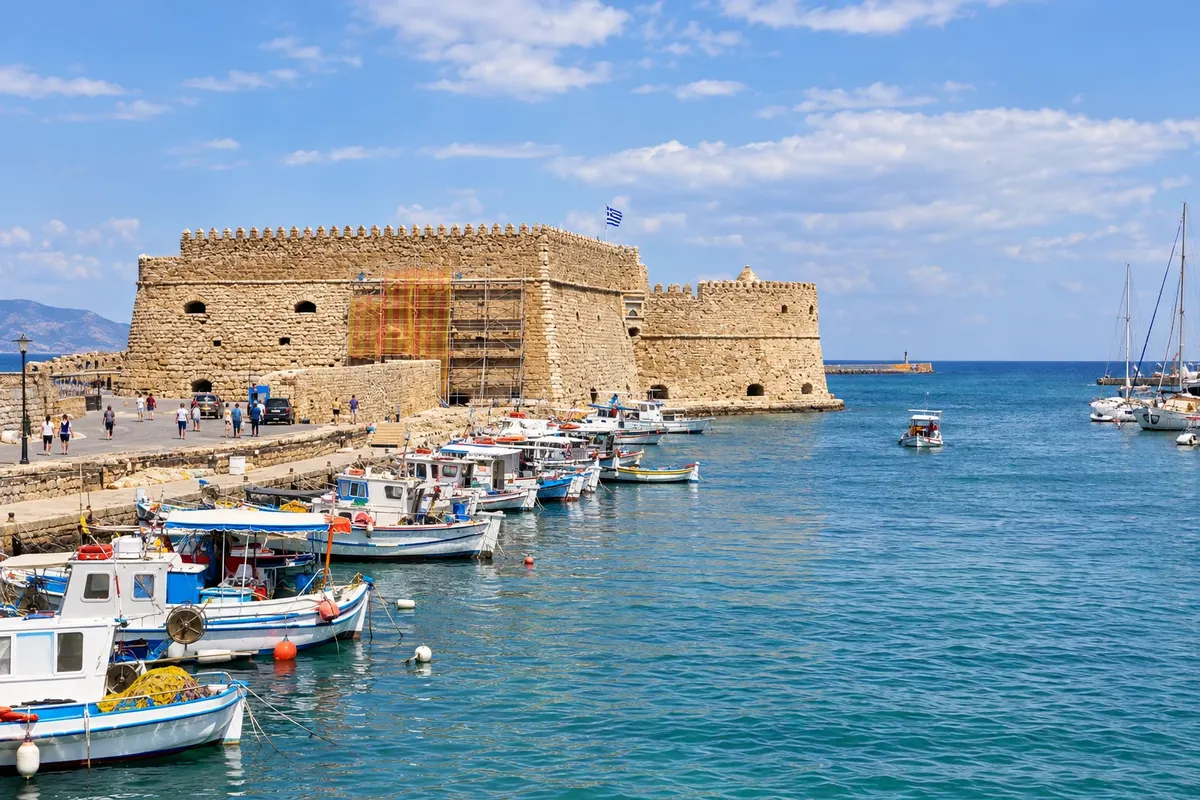
Na fotografiji: Fortaleza de Koules
Illustrative images. The pictures in this guide are illustrations based on the real place, not photographs, and may differ from it.
Mesto
Capital and largest city of Crete, Heraclião (Heraklion) is the gateway to the island, with the busiest airport and the ferry port of Pireu. The centre is surrounded by 16th-century Venetian walls, and the fortress of Koules guards the entrance to the old harbour. Five kilometres away is the Palácio de Cnossos, and in the centre the Museu Arqueológico houses what was found there. Between Praça dos Leões and the rua 1866 market, the city is noisy and lively, less tidy than Chania and Rethymno, but it is the place you depart from for the rest of the island.
V vodniku še ni nastanitev – Heraklion.
kako do tja · koliko dni · načrt poti · vprašanja
Doživite kraj
The largest palace of the Minoan civilization, 5 km from Heraclião, with a central courtyard, throne room, staircases and Arthur Evans's reconstructions from the early 20th century.
The main museum of the Minoan civilization, housing the frescoes from Cnossos, the Phaistos Disc, the snake-goddess figurines and the rhyton shaped like a bull's head.
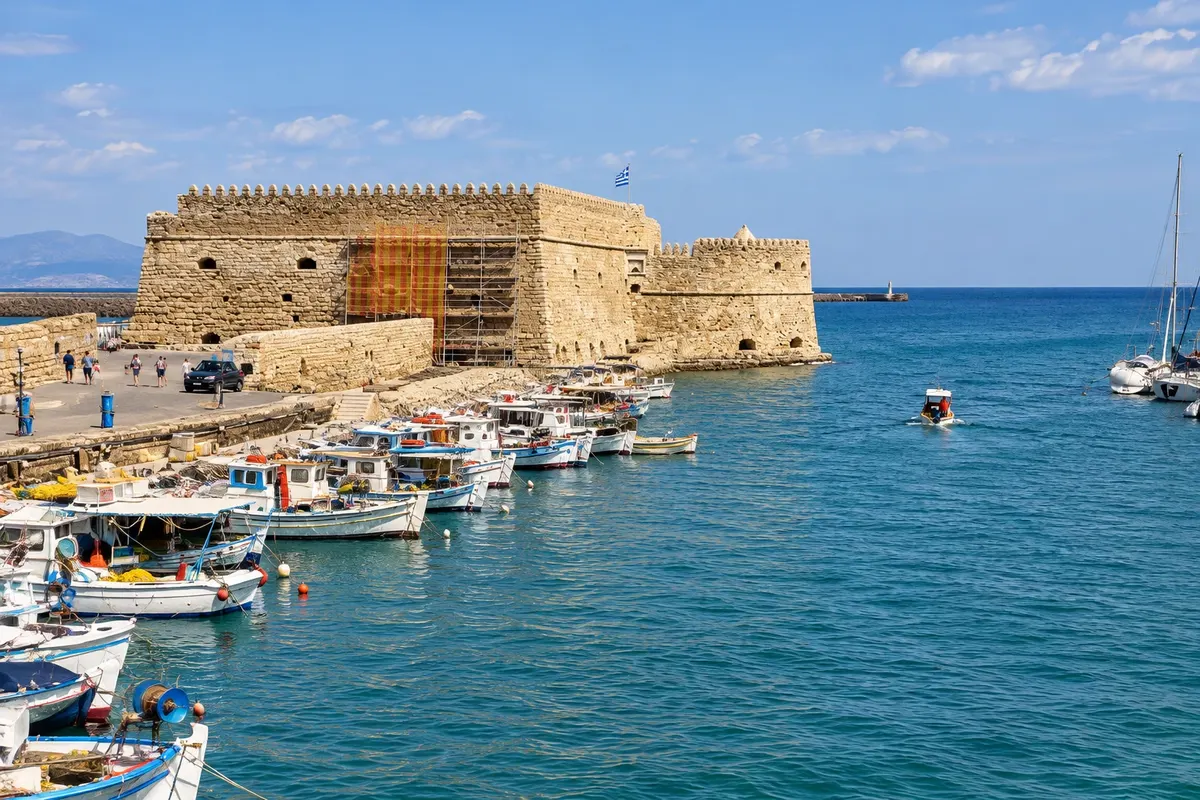
The Venetian fortress guarding the entrance to Heraclião’s old harbour, built between 1523 and 1540, with vaulted rooms and a terrace overlooking the city and the sea.
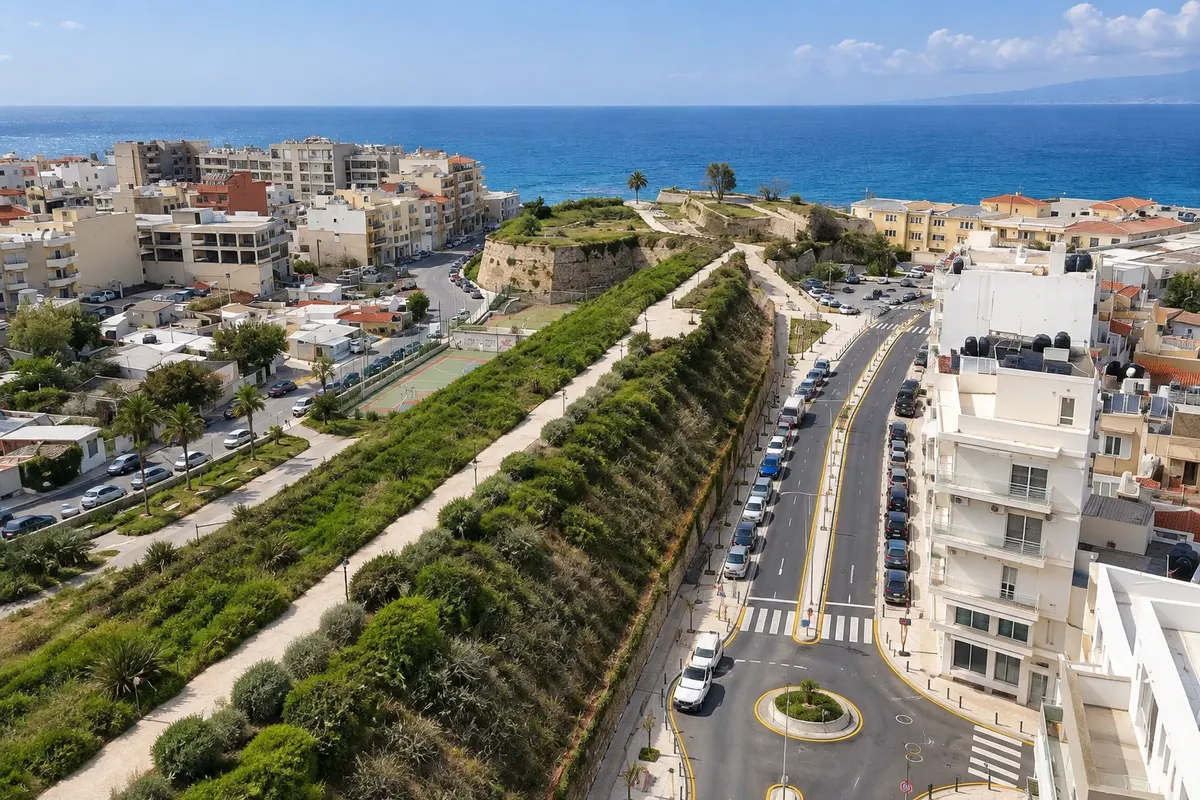
The 16th-century Venetian walls that encircle central Heraclião, over 4 km long with seven bastions. The tomb of the writer Nikos Kazantzakis is on the Martinengo bastion.
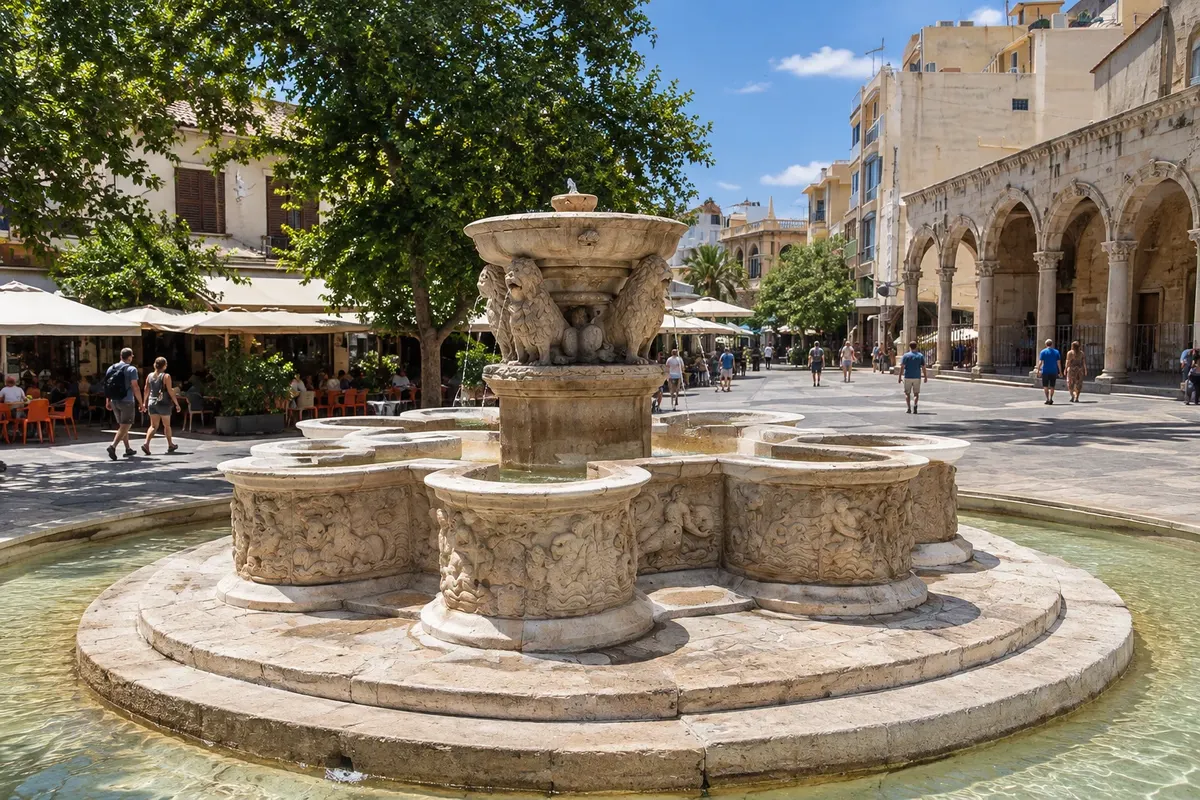
The centre of Heraclião: the praça da fonte veneziana dos quatro leões, from 1628, with the Loggia beside it and rua 1866, the market street, which descends to praça Kornarou.
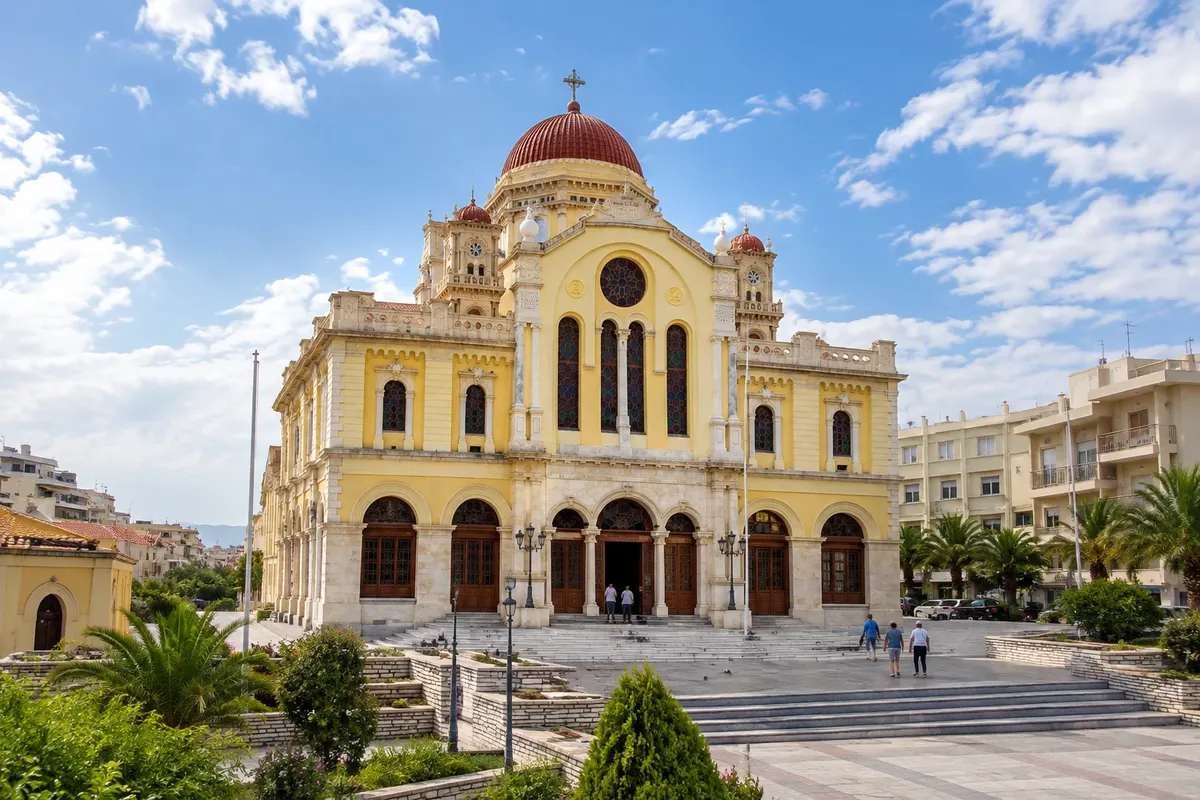
The cathedral of Heraclião, dedicated to São Menas, the city’s patron, built between 1862 and 1895 and one of the largest in Greece, next to the older church of Agios Minas from 1735.
Museum that tells the history of Crete from the Byzantine era to the 20th century, with the only paintings by El Greco on the island, the model of Venetian Cândia and the room of Nikos Kazantzakis.
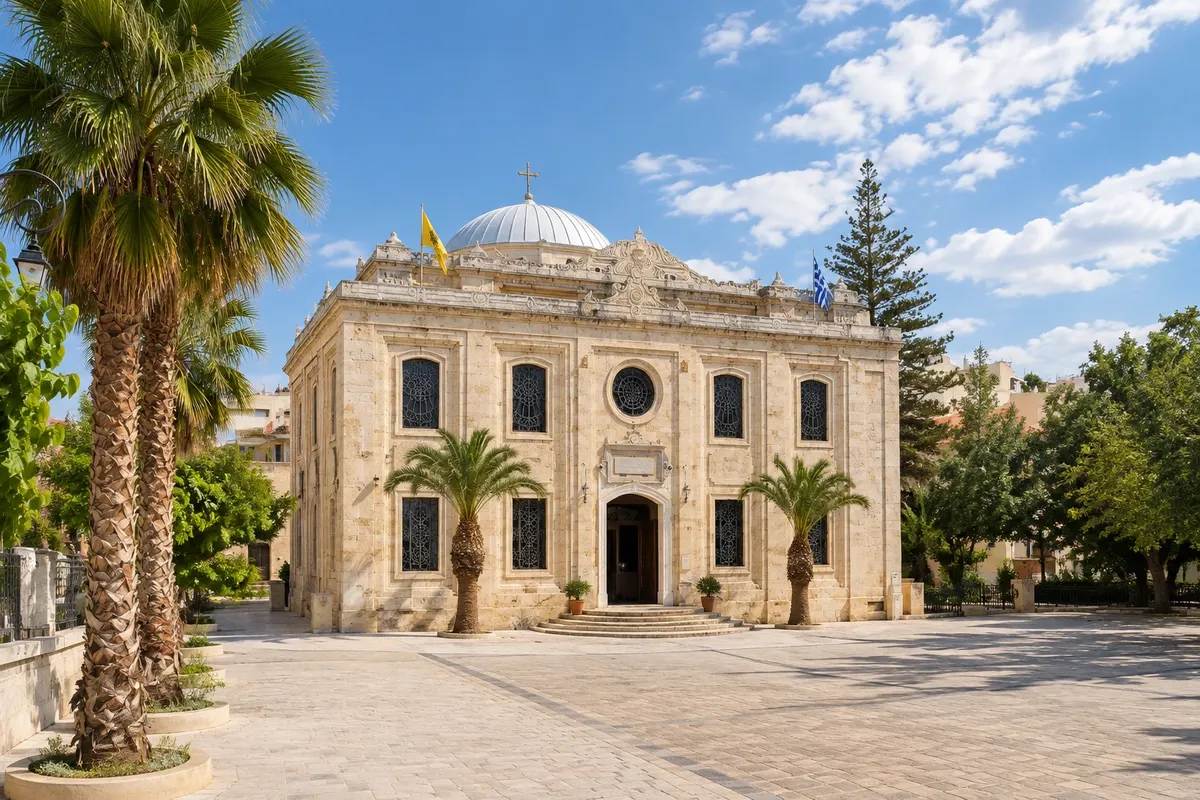
The church of São Tito, the first bishop of Crete, rebuilt in 1869 as a mosque and returned to Orthodox worship in 1925, where the saint’s skull is kept; next to it, the Loggia veneziana.
University of Crete museum about the nature of the eastern Mediterranean, in a former power company building on the seafront, with dioramas, a life‑size prehistoric elephant and an earthquake simulator.
Public aquarium in Gournes, about 15 km from Heracliion, with dozens of tanks dedicated to Mediterranean species, from sharks and rays to seahorses and jellyfish.

Pred odhodom
Heraklion – Crete Destinacija Crete Capital
Razdalje so približne. Pred potovanjem preverite lete in vozne rede avtobusov, vlakov ali ladij.
Confirm before you buy. From Athens, the flight to Heraclião airport takes about an hour; the airport is roughly 5 km from the centre, with city buses and taxis. The night ferry departs from Pireu and arrives at Heraclião's port in the morning; check the season. KTEL buses link Heraclião with Rethymno and Chania via the northern highway, and another line goes to Cnossos.
Two days: one for Cnossos in the morning and the Museu Arqueológico in the afternoon; another for the centre, the fortress of Koules, the walls and the Museu Histórico. With a third day you can add the aquarium of Gournes or a trip to the vineyards south of the city.
From April to October, with long days and dry weather; summer runs from June to September and July and August are the hottest months, when Cnossos should be visited right at opening. In spring, April and May, the fields around are green. In winter, December to February, it rains more and opening hours at sites are shorter.
The seasons shown are the most usual ones; nature doesn't always follow the calendar.
You don't need a car for the city, nor for Cnossos, which is served by a city bus. The historic centre is compact and largely pedestrian, and parking inside the walls is difficult. A car makes sense for getting out of the city: vineyards, southern beaches and the rest of the island.
Predlog poti
Pot povezuje znamenitosti na tej strani. Za oglede boste imeli dovolj časa.
Take the city bus or a taxi to Cnossos right at opening, before the heat and the tour groups. Walk through the central courtyard, the throne room and the staircases of the Minoan palace; the visit takes two to three hours.
Back in the centre, have lunch near Praça dos Leões and visit the Museu Arqueológico to see the frescoes from Cnossos, the Phaistos Disc and the figurines of the snake goddess. Allow at least two hours.
Walk through Praça dos Leões, with the Morosini fountain and the Loggia, and go down rua 1866 from the market to praça Kornarou. Pass by the church of Agios Titos on the way.
Walk down rua 25 de Agosto to the old harbour. The fortress of Koules is lit up at night, and the tavernas around the harbour serve fish and Cretan dishes.
Dan 1
Start at Cnossos at opening; the Minoan palace takes two to three hours, with little shade.
Return to the centre to visit the Museu Arqueológico, where the finds from Cnossos and the other Minoan palaces are kept.
Morosini fountain, the Loggia, Agios Titos and rua 1866 down to praça Kornarou.
Dinner in the tavernas near the old harbour, with the fortress illuminated.
Dan 2
Visit the Fortaleza de Koules inside and climb to the terrace for harbour views. Then walk along the waterfront to the Museu Histórico de Creta, with paintings by El Greco and the Kazantzakis room.
Have lunch in the centre and walk along the southern stretch of the Venetian walls to the Martinengo bastion, where the tomb of Nikos Kazantzakis is located, with views over the city and the mountains.
See the catedral de Agios Minas and the small old church beside it, and finish the walk at the Museu de História Natural on the waterfront if you have time.
The streets around praça Korai and rua Daidalou concentrate bars and restaurants.
Check before you go. Opening hours and days change, and places may close for renovations, holidays or events. This itinerary is a suggestion from Cidade Turismo, not a commitment: plan yours by checking directly with each place you intend to visit.
Pred odhodom
The airport is about 5 km from the centre. There is a city bus to the harbour area and taxis outside the terminal. The trip takes 15 to 25 minutes depending on traffic.
By city bus, which departs from the harbour area and praça da Liberdade and reaches the site's car park in about 20 to 30 minutes. A taxi is the faster alternative. Check the line and timetables before you go.
Yes, and it is the recommended order: the palace in the morning when it's cooler, and the museum in the afternoon to see the frescoes and original objects that came from there. There is a combined ticket for both at certain times; confirm at the ticket office.
It is a larger, more modern and noisier city, with less charm in the centre. Its best features are the museums, Cnossos, the fortress and the walls. Many people stay one or two nights and then continue to Chania or Rethymno.
KTEL buses take about an hour and a half to Rethymno and nearly three hours to Chania via the northern highway, with frequent daytime departures. Check timetables at the station.
Več kot vodnik