

Stolnica
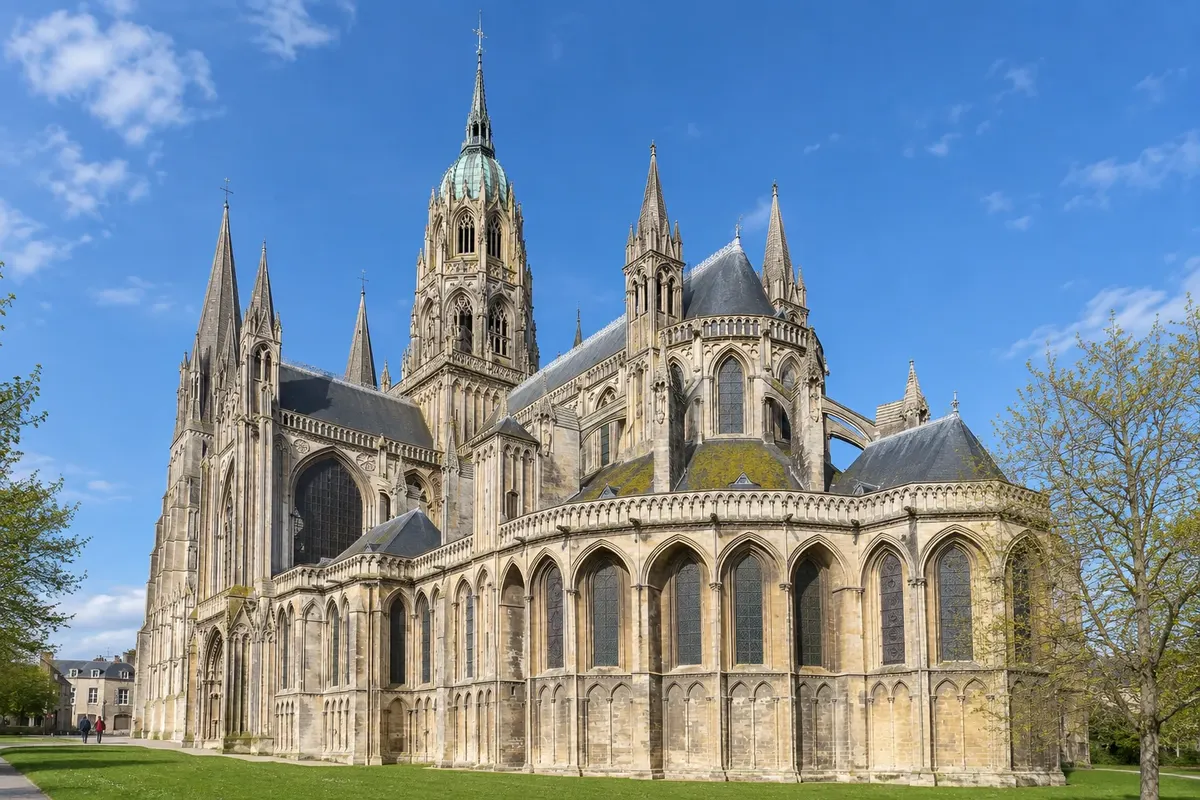
Bayeux Cathedral
Romanesque and Gothic cathedral consecrated in 1077 in the presence of William the Conqueror. For centuries it housed the Tapeçaria de Bayeux.

 Išči
 Brazilija
 Antarktika
 Argentina
 Bolivija
 Čile
 Kolumbija
 Ekvator
 Gvajana
 Francoska Gvajana
 Falklandski otoki (Malvini)
 Paragvaj
 Peru
 Surinam
 Urugvaj
 Venezuela
 Nemčija
 Avstrija
 Belgija
 Hrvaška
 Danska
 Slovaška
 Slovenija
 Španija
 FinskaFrancija
 Grčija
 Nizozemska
 Madžarska
 Irska
 Islandija
 Italija
 Luksemburg
 Norveška
 Poljska
 Portugalska
 Združeno kraljestvo
 Češka
 Švedska
 Švica
 Turčija
 Bermudi
 Kanada
 Združene države Amerike
 Grenlandija
 Mehika
 Sveta Peter in Mihael
 Dominikanska republika
 JaponskaTurčija
 Južnoafriška republika
 Egipt
 Avstralija
 Fidži
 Nova Zelandija
 Papua Nova Gvineja
Normandia · Francija
Destinacija: Normandy and Mont‑Saint‑Michel.
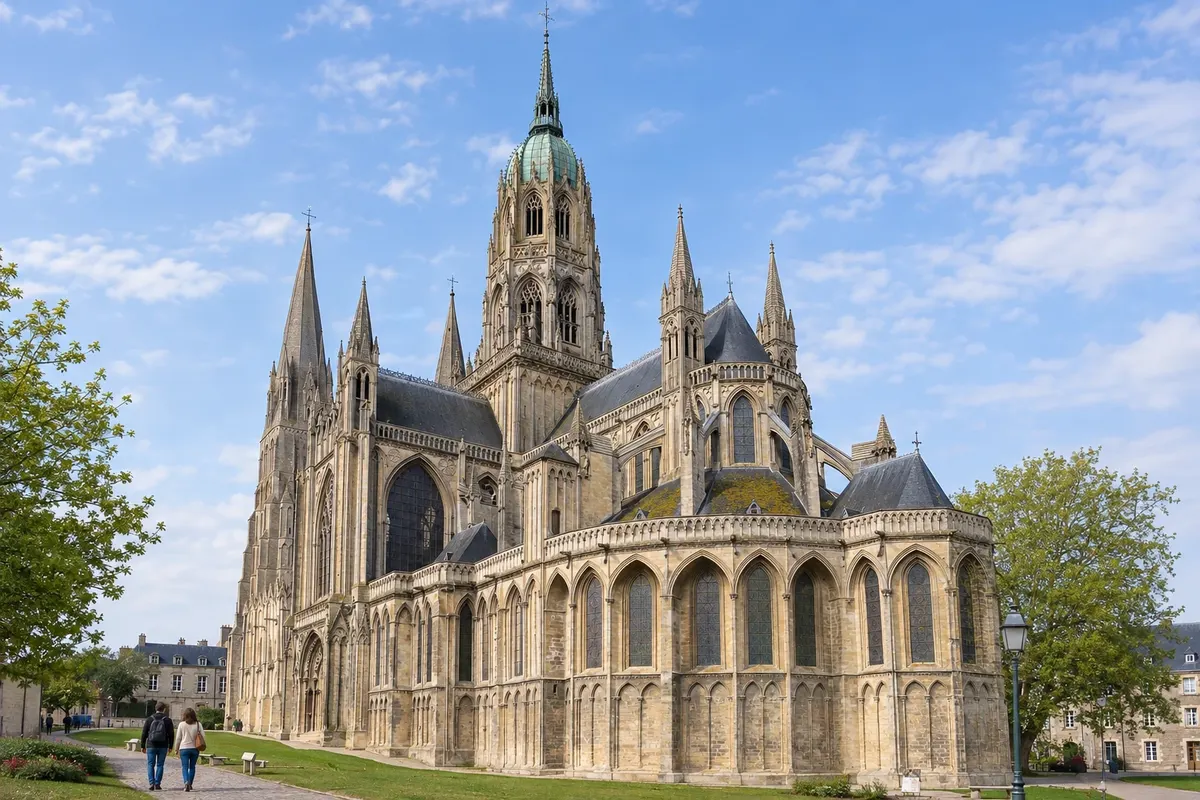
Na fotografiji: Cathédrale Notre-Dame de Bayeux
Illustrative images. The pictures in this guide are illustrations based on the real place, not photographs, and may differ from it.
Mesto
A medieval town that escaped the 1944 bombings, Bayeux has a Romanesque and Gothic cathedral and the Musée Mémorial de la Bataille de Normandie, and is the most practical base for the D-Day beaches: Omaha Beach, the American Cemetery at Colleville-sur-Mer, Pointe du Hoc, the Musée du Débarquement in Arromanches, the Centre Juno Beach and the Mémorial de Caen.
V vodniku še ni nastanitev – Bayeux.
kako do tja · koliko dni · načrt poti · vprašanja
Doživite kraj
Romanesque and Gothic cathedral consecrated in 1077 in the presence of William the Conqueror. For centuries it housed the Tapeçaria de Bayeux.
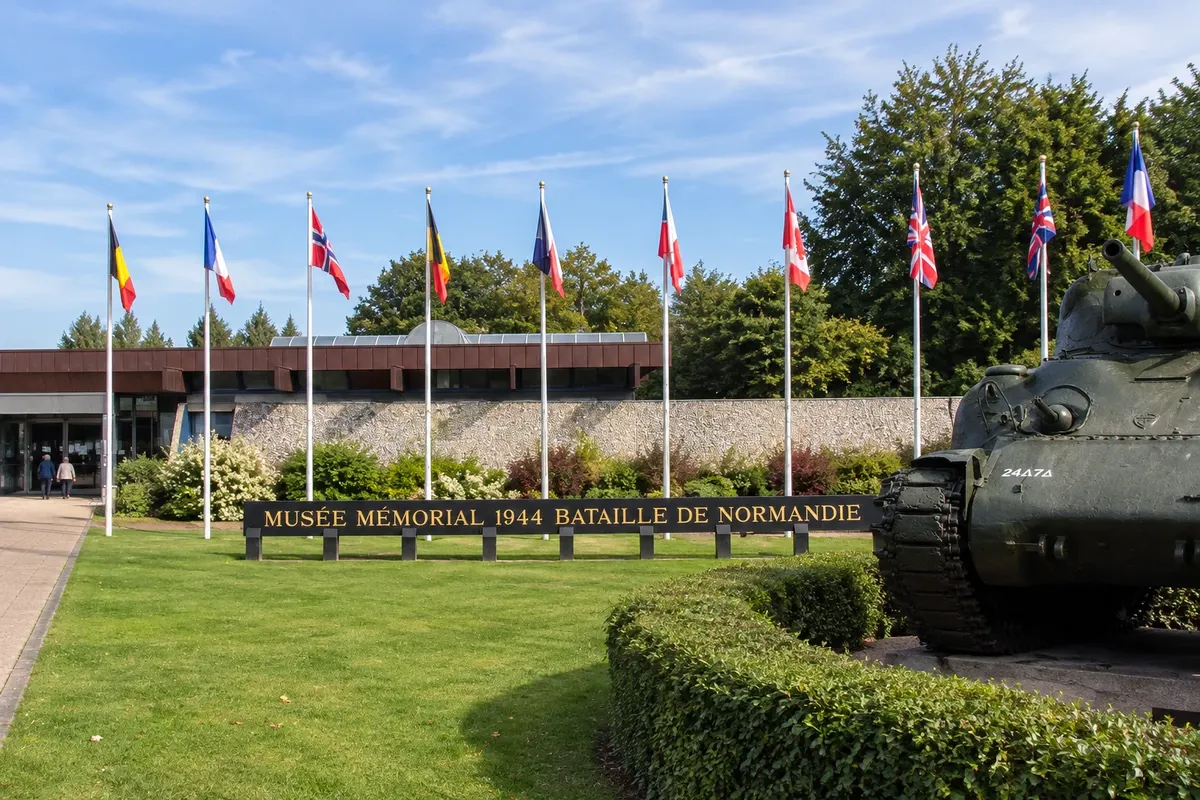
Bayeux's municipal museum about the Battle of Normandia, from June to August 1944, with vehicles, uniforms and an archival film. It is opposite the British military cemetery.
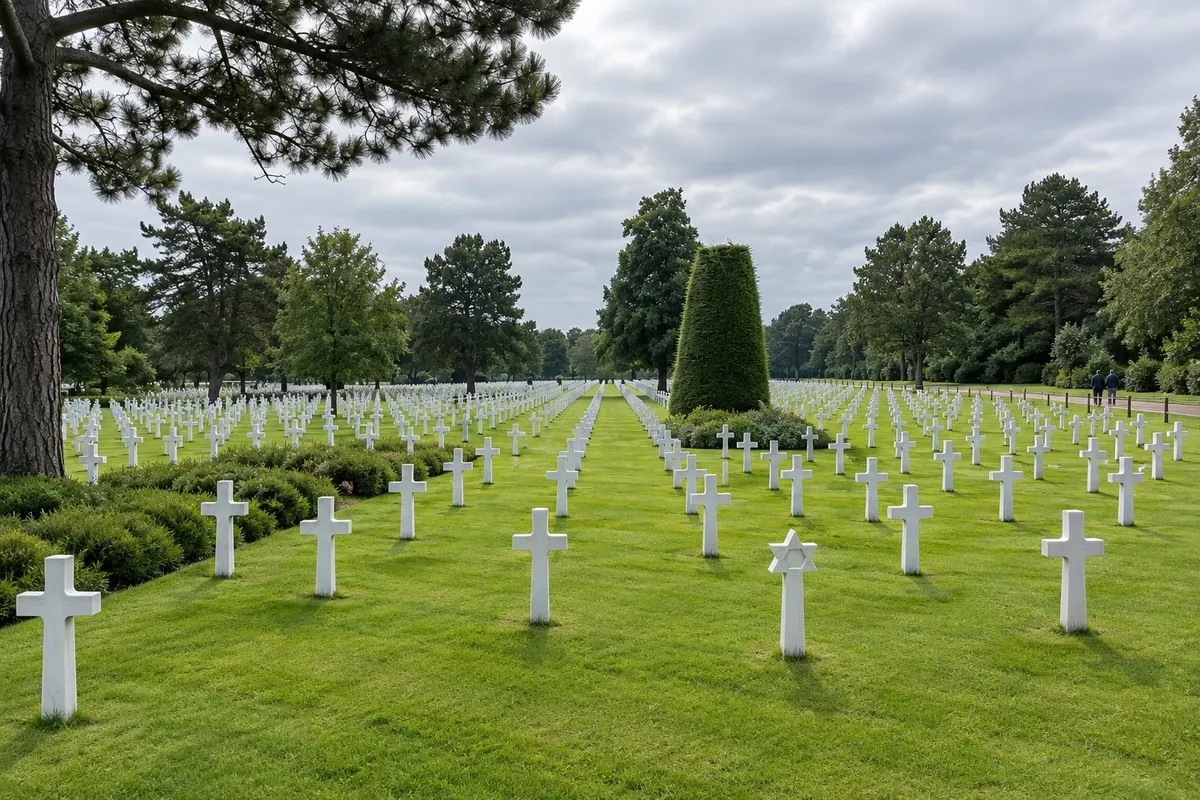
American military cemetery above Omaha Beach, in Colleville-sur-Mer, with about 9,400 graves of soldiers killed on D-Day and in subsequent operations. Entry is free.
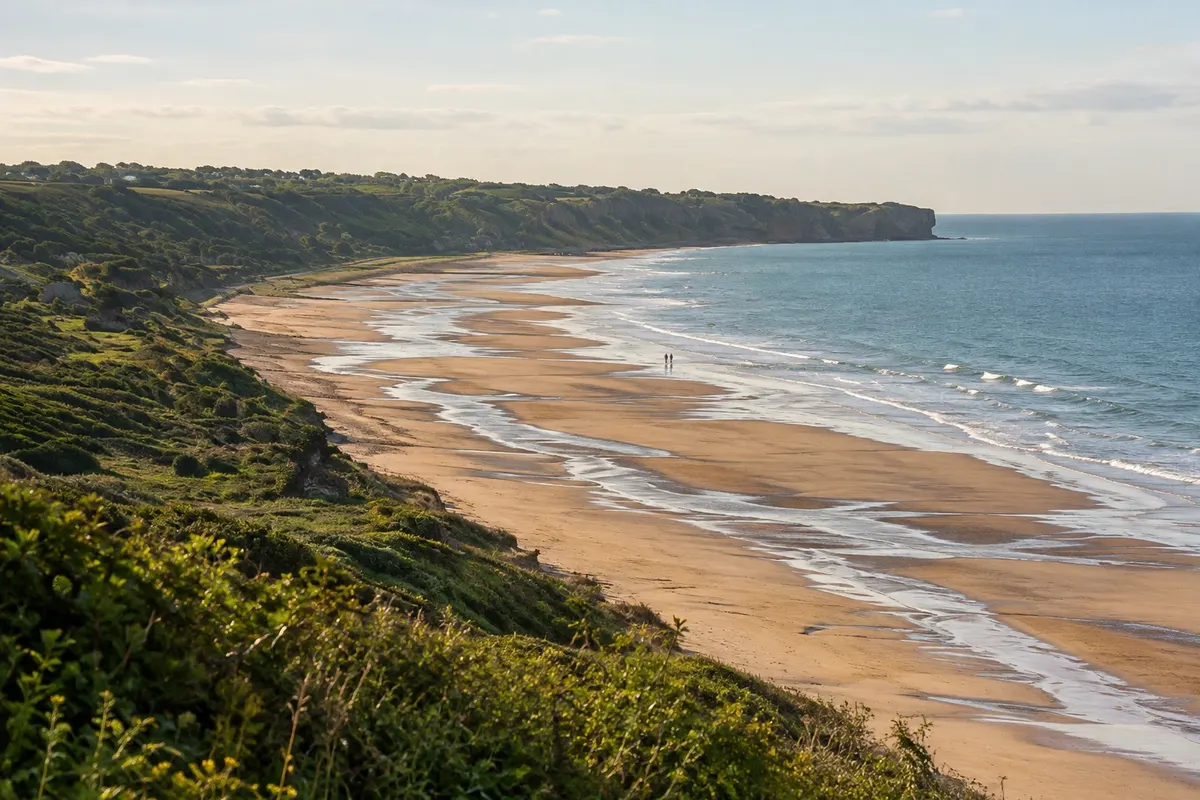
One of the five landing beaches of 6 June 1944, between Vierville-sur-Mer and Colleville-sur-Mer, where American troops suffered the heaviest losses on D-Day.
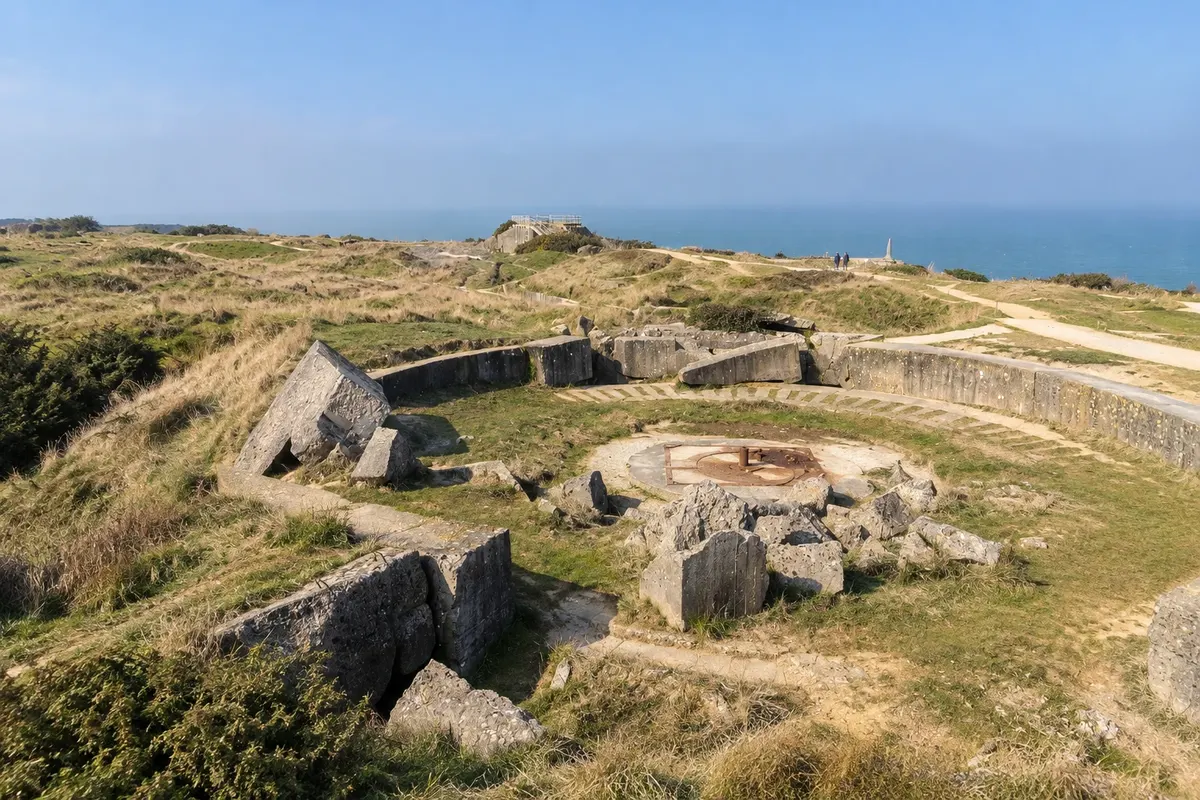
Cliff of about 30 meters scaled by American Rangers on D-Day to neutralize a German battery. The terrain still bears bomb craters and bunkers.
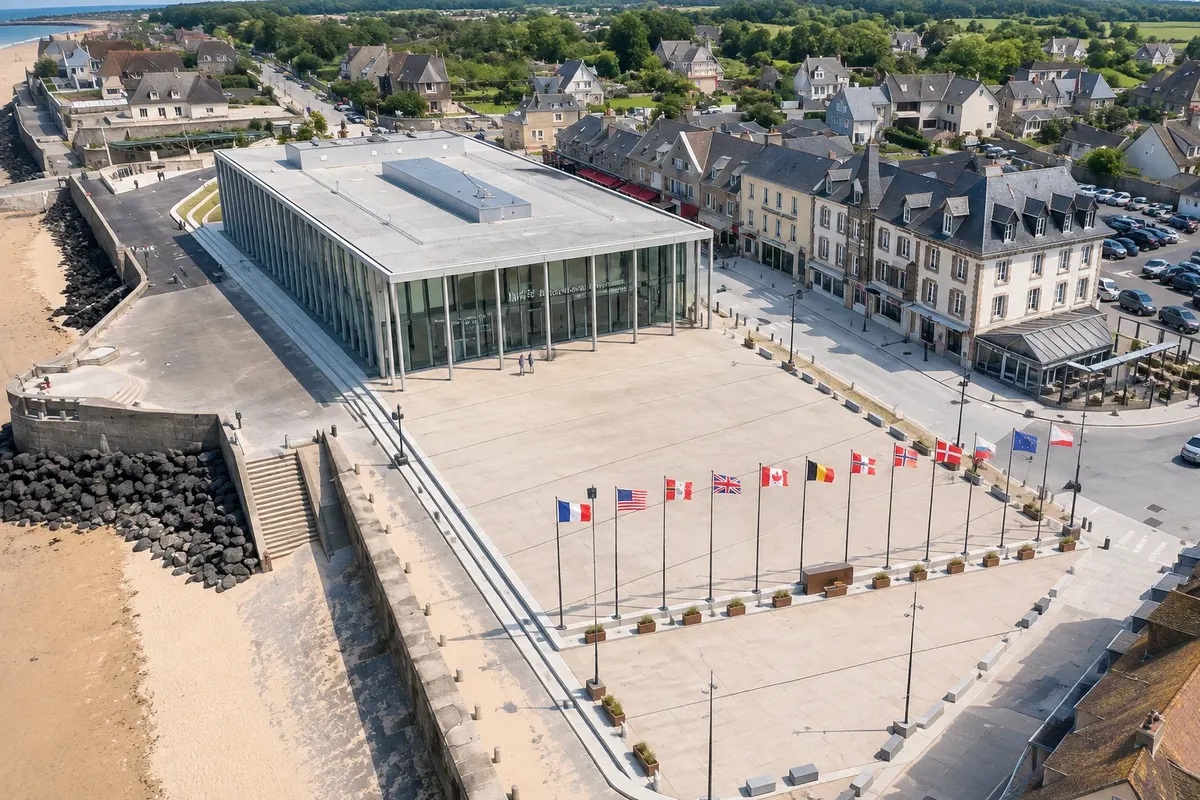
The first museum created about D-Day, in Arromanches-les-Bains, facing the remains of the Mulberry artificial harbor assembled by the Allies at sea in June 1944.
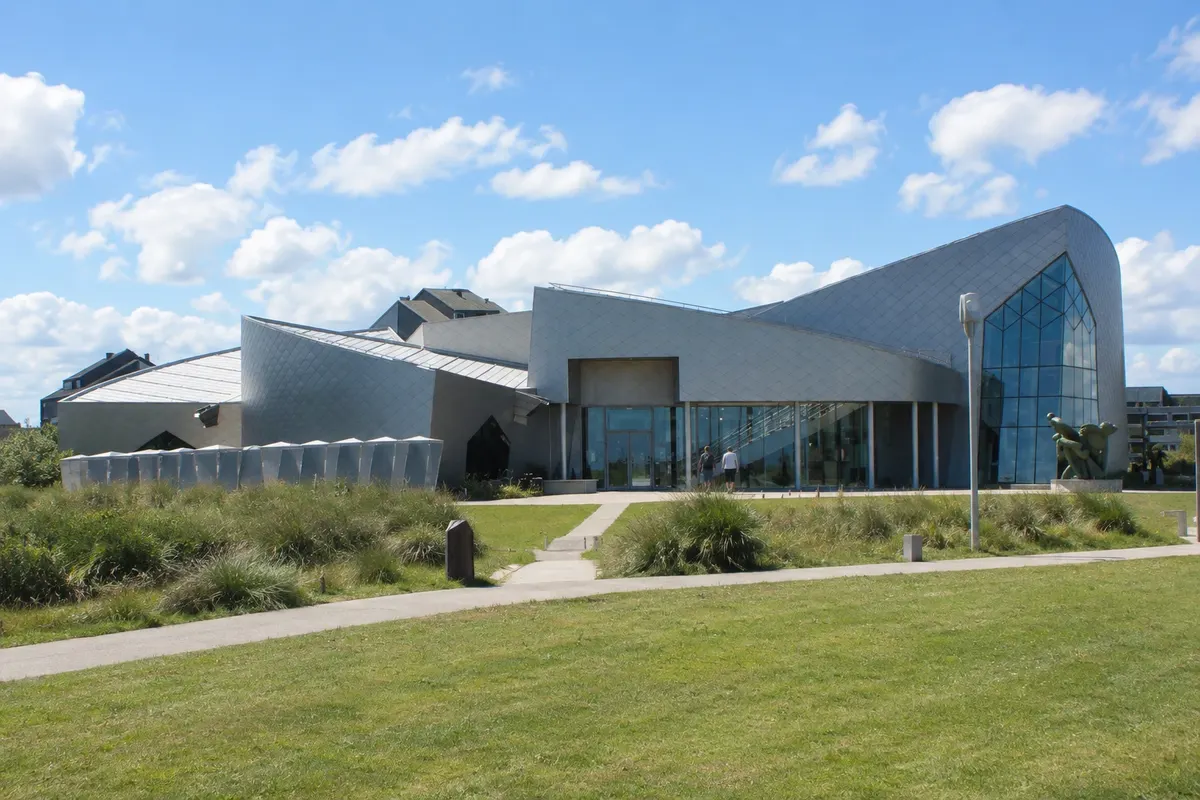
Museum in Courseulles-sur-Mer about the Canadians in World War II, on Juno Beach itself, where Canadian troops landed on 6 June 1944.
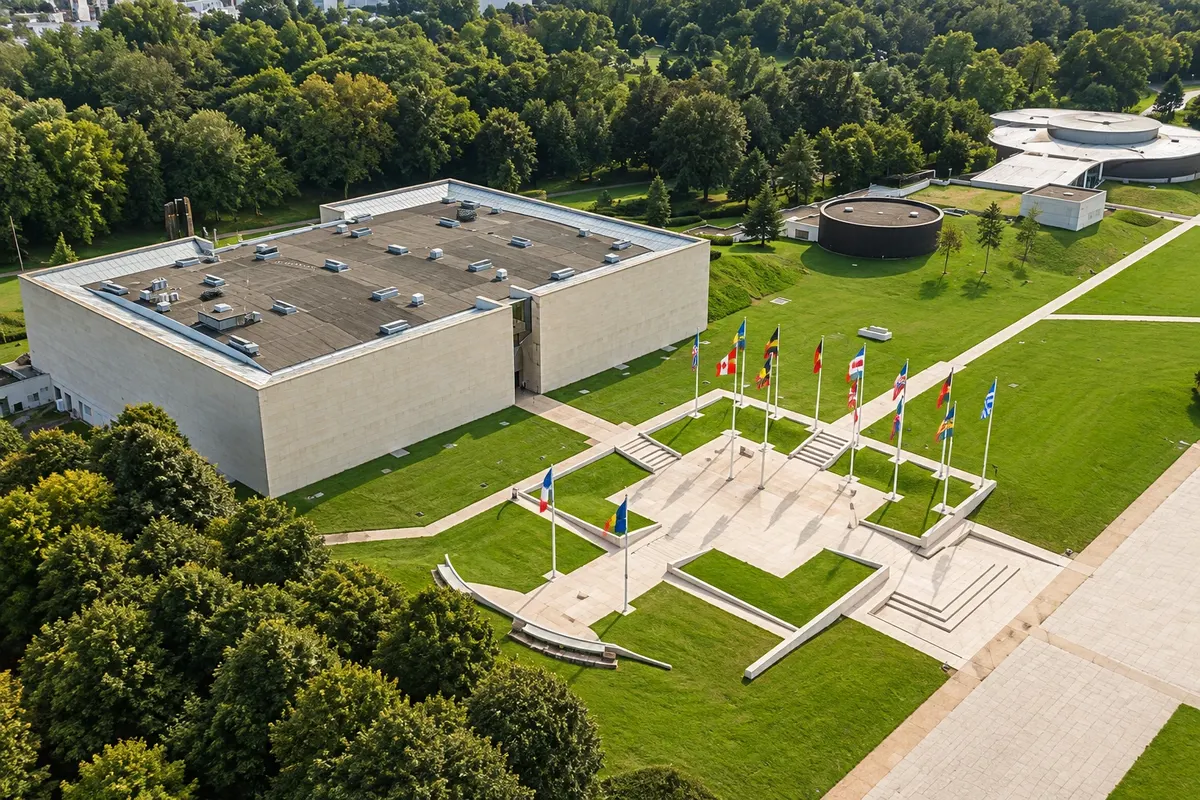
Large museum about 20th-century history, from the First World War to the fall of the Berlin Wall, with a whole section dedicated to D-Day and the Battle of Normandy.
Pred odhodom
Bayeux – Normandy Destinacija Normandy and Mont‑Saint‑Michel približno 160 km stran (izhodišče: Rouen)
Razdalje so približne. Pred potovanjem preverite lete in vozne rede avtobusov, vlakov ali ladij.
By train, from Paris-Saint-Lazare to Gare de Bayeux in about two hours, sometimes with a change at Caen. The station is roughly a 15-minute walk from the centre. By car, Bayeux is about 160 km from Rouen and 30 km from Caen.
Half a day is enough for the cathedral and the town centre. For the D-Day beaches, allow a full day for the American sector (Omaha, the cemetery, Pointe du Hoc) and another for Arromanches, Juno and the Mémorial de Caen.
From April to October, when museums have extended opening hours and the days are long. Around June 6 there are ceremonies for the anniversary of D-Day, with many visitors and accommodation in high demand. In the European winter some museums close or reduce their hours.
The seasons shown are the most usual ones; nature doesn't always follow the calendar.
For Bayeux town center, no. For the D-Day beaches, a car makes a big difference: the sites are spread over about 80 km of coast and the regional bus is infrequent. The alternative without a car is guided tours departing from Bayeux and Caen.
Predlog poti
Pot povezuje znamenitosti na tej strani. Za oglede boste imeli dovolj časa.
Start with the Cathedral of Notre-Dame de Bayeux and the Romanesque crypt. Walk along rue Saint-Martin and the banks of the river Aure.
Visit the Musée Mémorial de la Bataille de Normandie and cross the road to the British military cemetery.
Head to Arromanches-les-Bains, about 10 km away, and see from the viewpoint the remains of the Mulberry harbour in the sea.
Return to Bayeux for dinner. Order a dish with cream from Normandia and, to accompany it, cider or pommeau.
Dan 1
Visit the cathedral and the Musée Mémorial de la Bataille de Normandie to understand the sequence of the fighting.
After lunch, go to the Musée du Débarquement de Arromanches and continue to the Centre Juno Beach in Courseulles-sur-Mer.
Walk along the beach at Courseulles and see the bunkers of Parque Juno, if there is a guided tour.
Have dinner in the historic center, which is quiet at night.
Dan 2
Set out early for the Pointe du Hoc, about 30 km away, and walk among the craters and casemates.
Continue down to Vierville-sur-Mer and Saint-Laurent-sur-Mer to set foot on Omaha Beach and see the sculpture Les Braves.
Visit the Cemitério Americano de Colleville-sur-Mer and the visitor center. Stay for the flag ceremony, one hour before closing.
Return to Bayeux for dinner. Those with an extra day can reserve a morning for the Mémorial de Caen.
Check before you go. Opening hours and days change, and places may close for renovations, holidays or events. This itinerary is a suggestion from Cidade Turismo, not a commitment: plan yours by checking directly with each place you intend to visit.
Pred odhodom
The most practical way is a guided tour departing from Bayeux or Caen. There are regional buses along the coast, but with few schedules; check in advance.
Bayeux is smaller, has a medieval center and is closer to Omaha and Pointe du Hoc. Caen is larger, with more trains and accommodation, and is closer to Juno and Sword.
Two days allow you to see the American side (Omaha, cemetery, Pointe du Hoc) and the British and Canadian side (Arromanches, Juno, Mémorial de Caen).
It is June 6, 1944, when the Allies landed on five beaches in Normandia, beginning the liberation of Western Europe in World War II.
Več kot vodnik


