Normandy and Mont‑Saint‑Michel

Normandy · Francija

Normandy and Mont‑Saint‑Michel

Joan of Arc's Rouen, the port of Honfleur, the D-Day beaches near Bayeux and the abbey of Mont-Saint-Michel, ringed by the tides.

Paris and the North

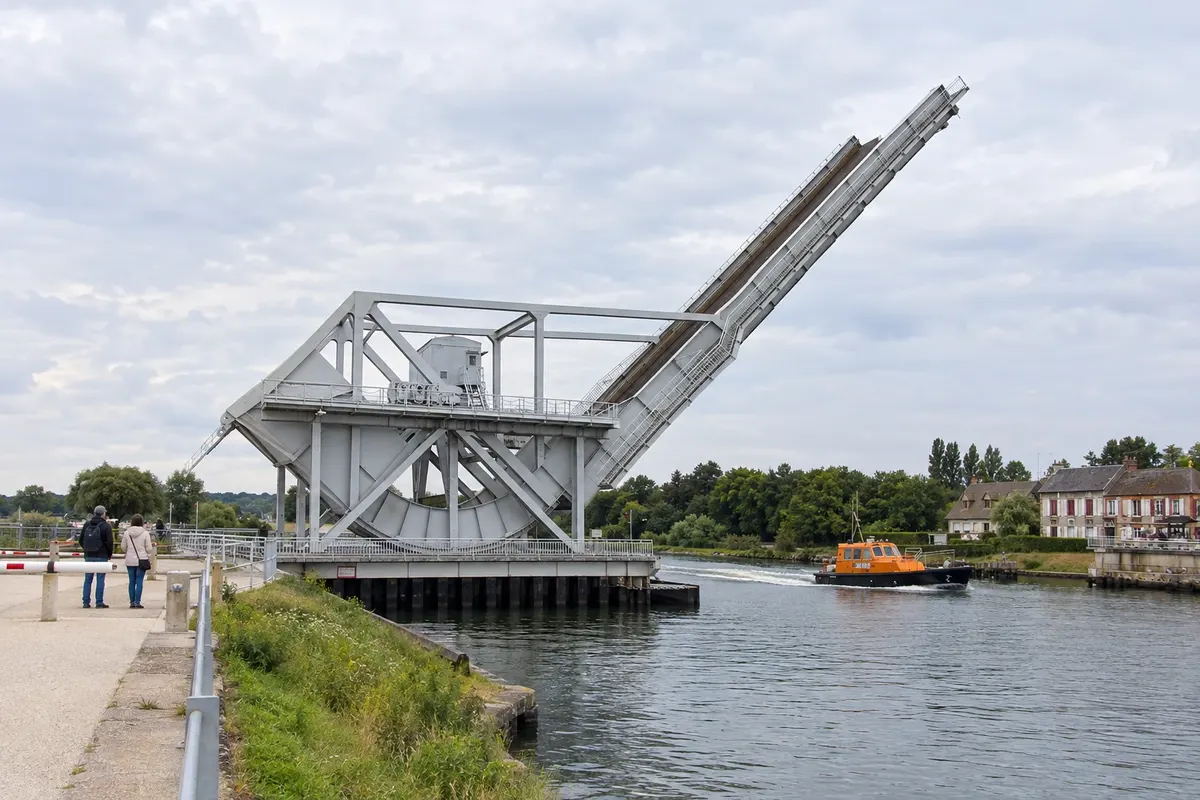
Na fotografiji: Pegasus Bridge · Bénouville

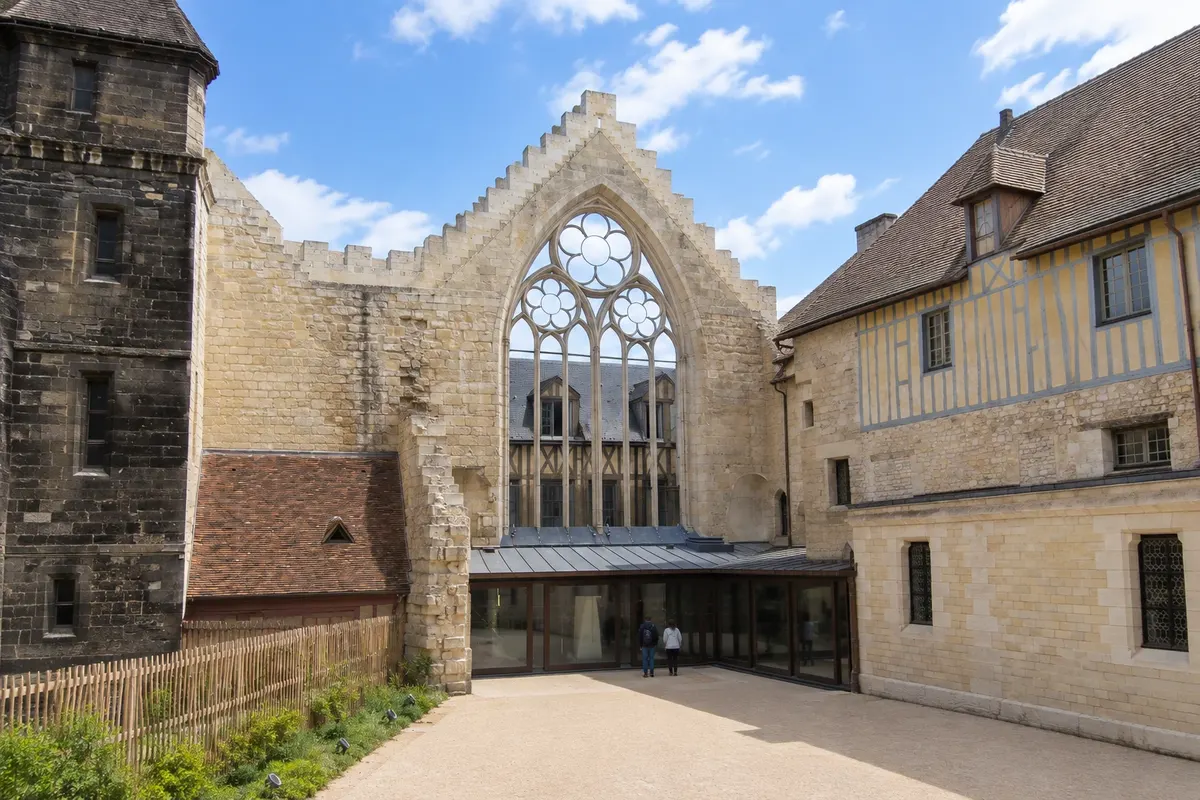
Illustrative images. The pictures in this guide are illustrations based on the real place, not photographs, and may differ from it.

Na voljo v trgovini Google Play Pošljite svoje fotografije

Spoznajte kraj

Pokrajina, ki jo doživite
v svojem ritmu.

Normandy is in northwest France, between Paris and the English Channel. It is a region of green pastures, apple orchards, half-timbered houses (exposed wood) and a coastline marked by history: this is where the Allies landed on June 6, 1944, D-Day, and where, on the border with Brittany, Mont-Saint-Michel rises.

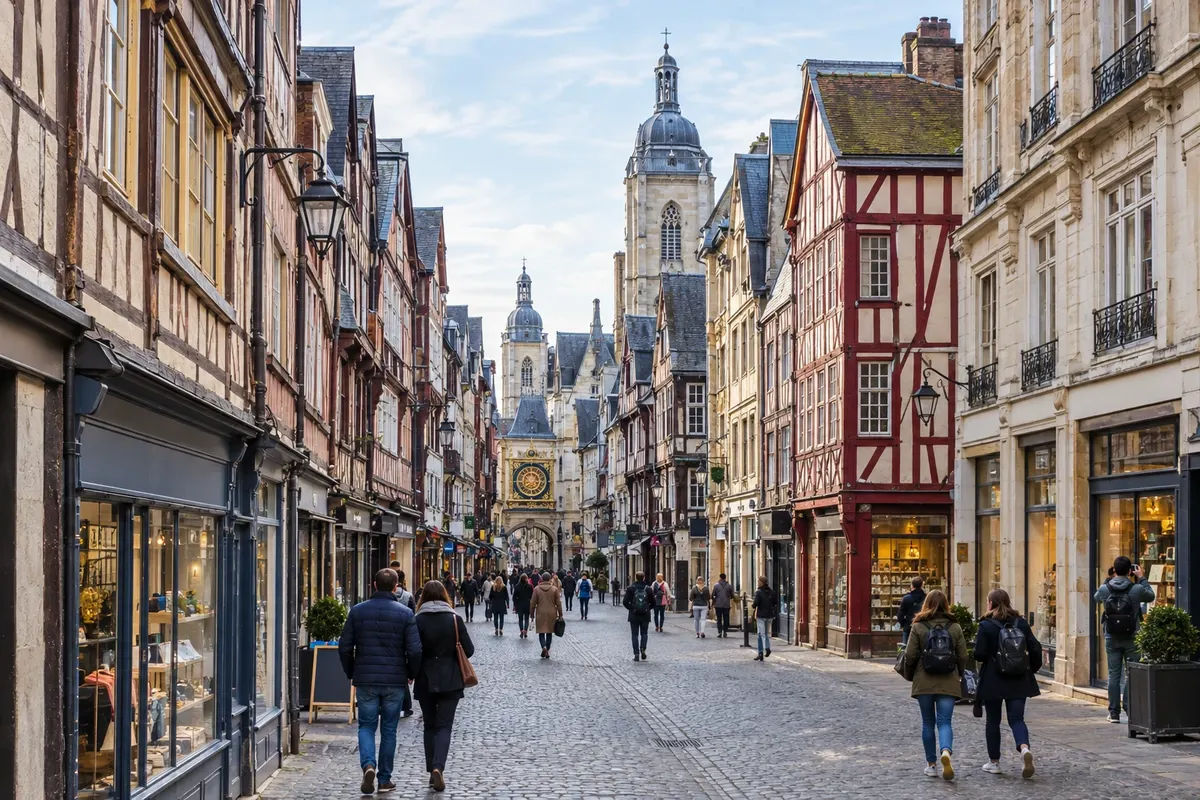
Rouen, the region's capital, preserves a Gothic cathedral painted several times by Monet, the Gros-Horloge astronomical clock and the square where Joan of Arc was burned in 1431. It is about an hour and a half by train from Paris-Saint-Lazare, which makes it a convenient gateway.

At the mouth of the Seine, Honfleur is a small fishing port that inspired Eugène Boudin and the Impressionists. Further west, Bayeux has a Romanesque and Gothic cathedral and serves as a base to visit the landing beaches, the American cemetery at Colleville-sur-Mer, Pointe du Hoc and the museums at Arromanches, Courseulles-sur-Mer and Caen. In July 2026, the D-Day beaches and Pointe du Hoc were added to the UNESCO World Heritage List.

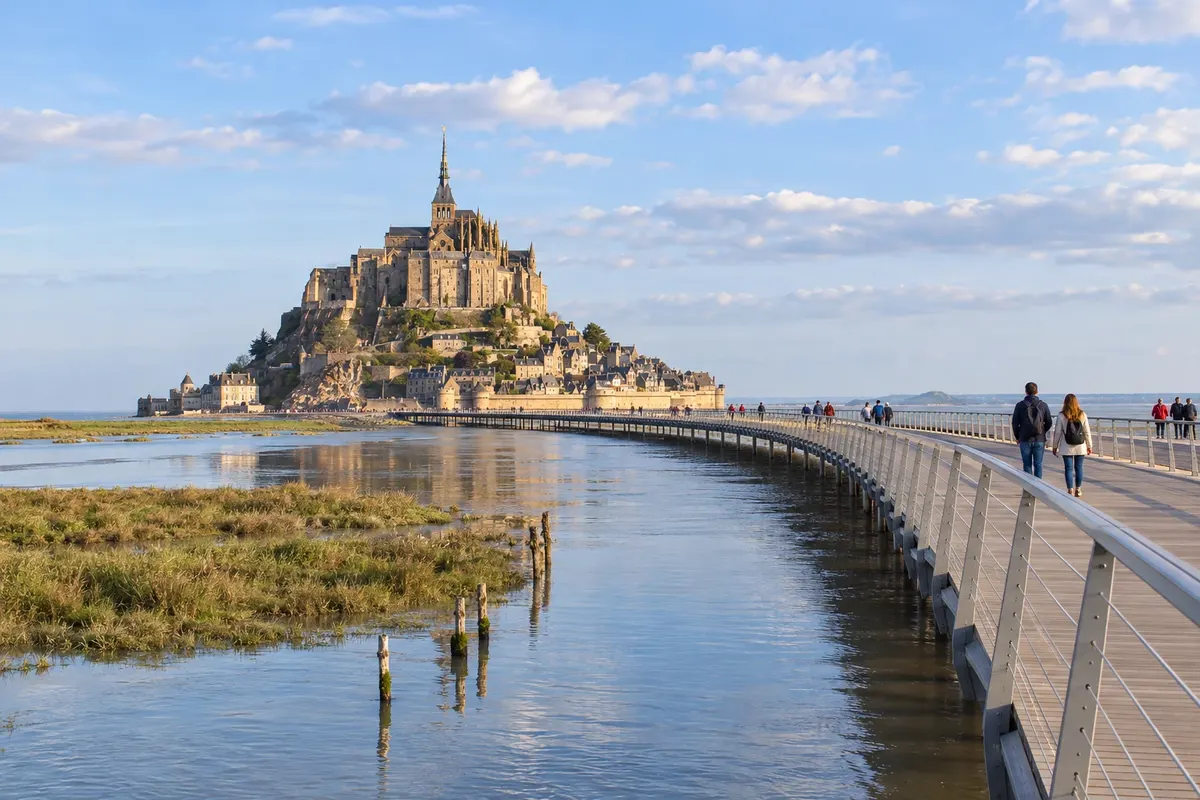
At the western tip, Mont-Saint-Michel is a granite islet crowned by a medieval abbey, in the middle of a bay with some of the largest tides on continental Europe.

This destination brings together 5 cities: Rouen, Bayeux, Honfleur, Mont-Saint-Michel, Caen.

Delite: WhatsApp
Delite svoja popotniška doživetja s fotografijami Pošljite fotografije vsakega kraja, ki ste ga obiskali. Največje število fotografij na kraj: 5.

Ena destinacija, več poti

Mesta na tej poti

Začnite v enem mestu ali v načrt poti vključite več mest.

Normandy and Mont‑Saint‑Michel – lega
RouenCaenMont-Saint-MichelHonfleurBayeux

Obrisi: © IGN, ADMIN EXPRESS, Licence Ouverte 2.0. Priredba: Cidade Turismo.

Kako do tja:Normandy and Mont‑Saint‑Michel

✈ Aéroport Paris-Charles-de-Gaulle (CDG), kraj: Roissy-en-France· 130 km do cilja (Rouen)

The most common route is to arrive at Paris-Charles de Gaulle Airport and continue by train. Trains from Paris-Saint-Lazare run to Rouen, Caen and Bayeux. For Mont-Saint-Michel, trains go from Paris-Montparnasse to Rennes, and from there a bus continues to the Mont.

Predlagana točka prihoda:Rouen

Doživite kraj

Kaj početi – Normandy and Mont‑Saint‑Michel

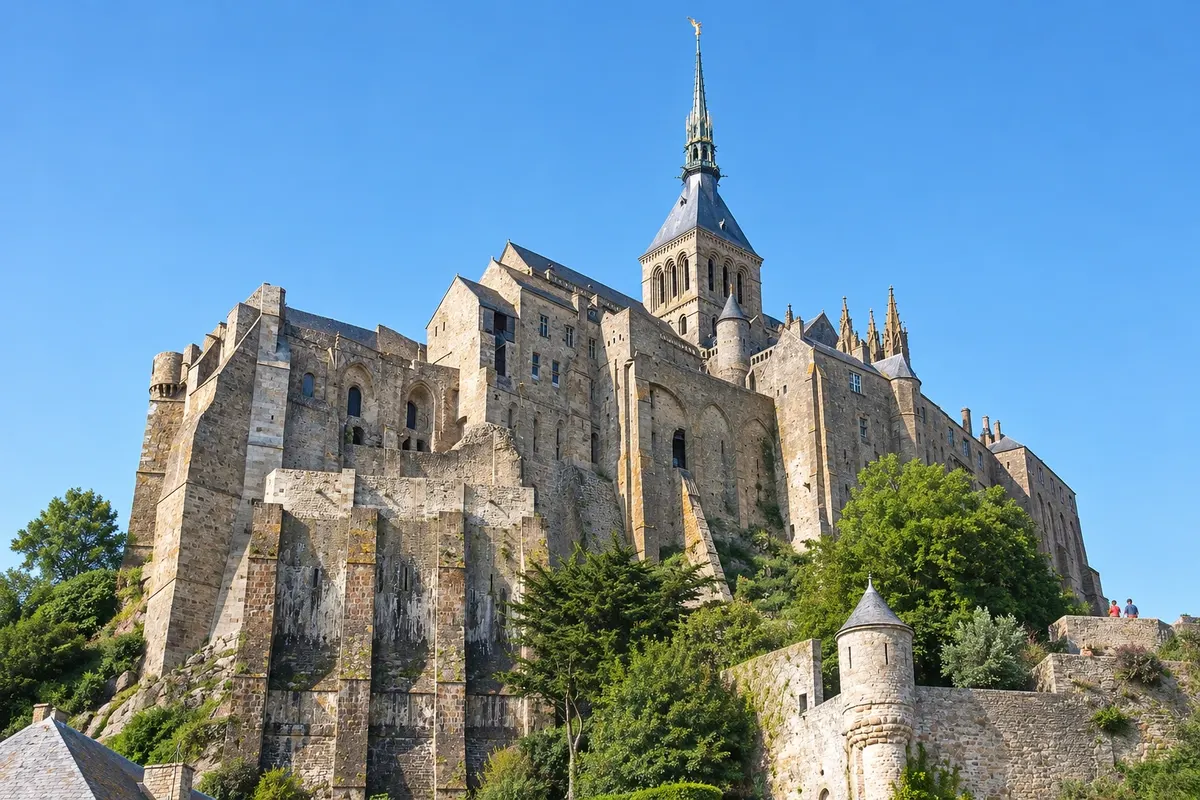
Mont-Saint-Michel Abbey
Mont-Saint-Michel · Normandy · Abbey

Mont-Saint-Michel Abbey

Medieval abbey atop the granite islet, with the church, the suspended cloister and the Merveille refectory. A UNESCO World Heritage Site since 1979.

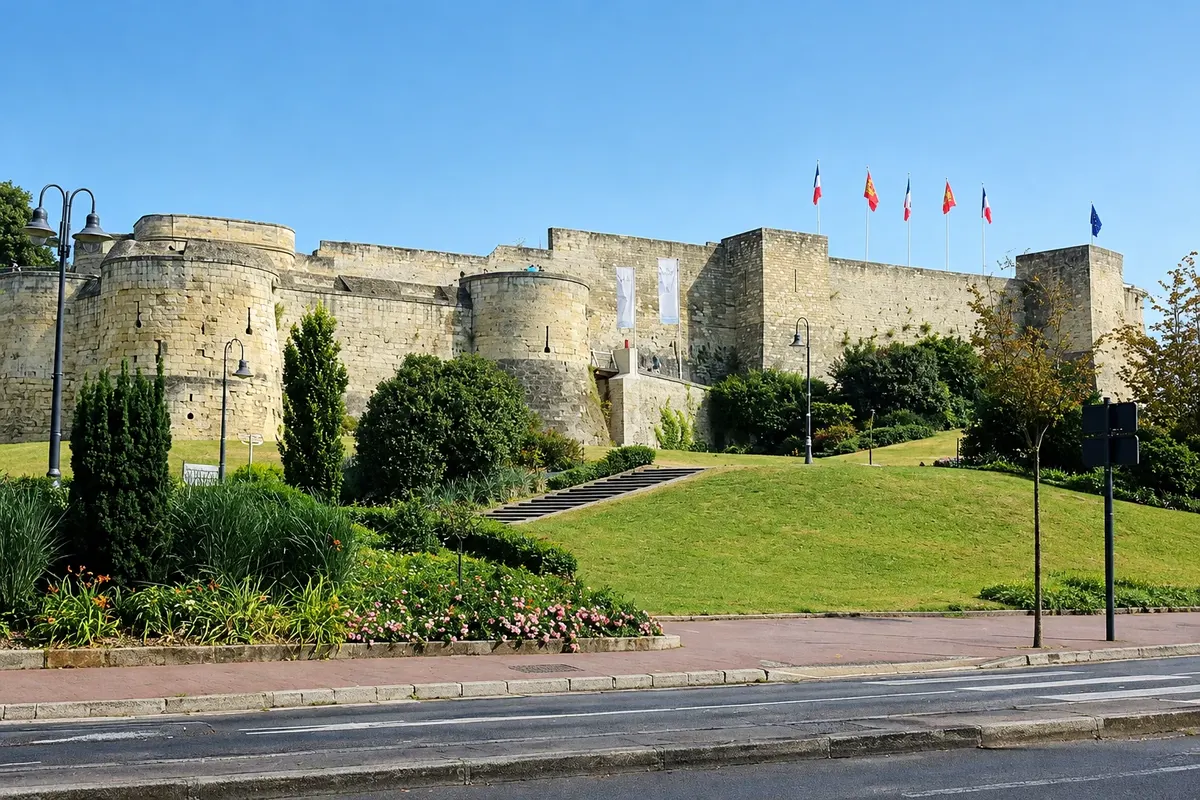
Caen Castle
Caen · Normandy · Grad

Caen Castle

Fortress founded by William the Conqueror around 1060, with more than five hectares enclosed by walls in the city center. Within the grounds are the Museum of Fine Arts and the Museum of Normandy.

Bayeux Cathedral
Bayeux · Normandy · Stolnica

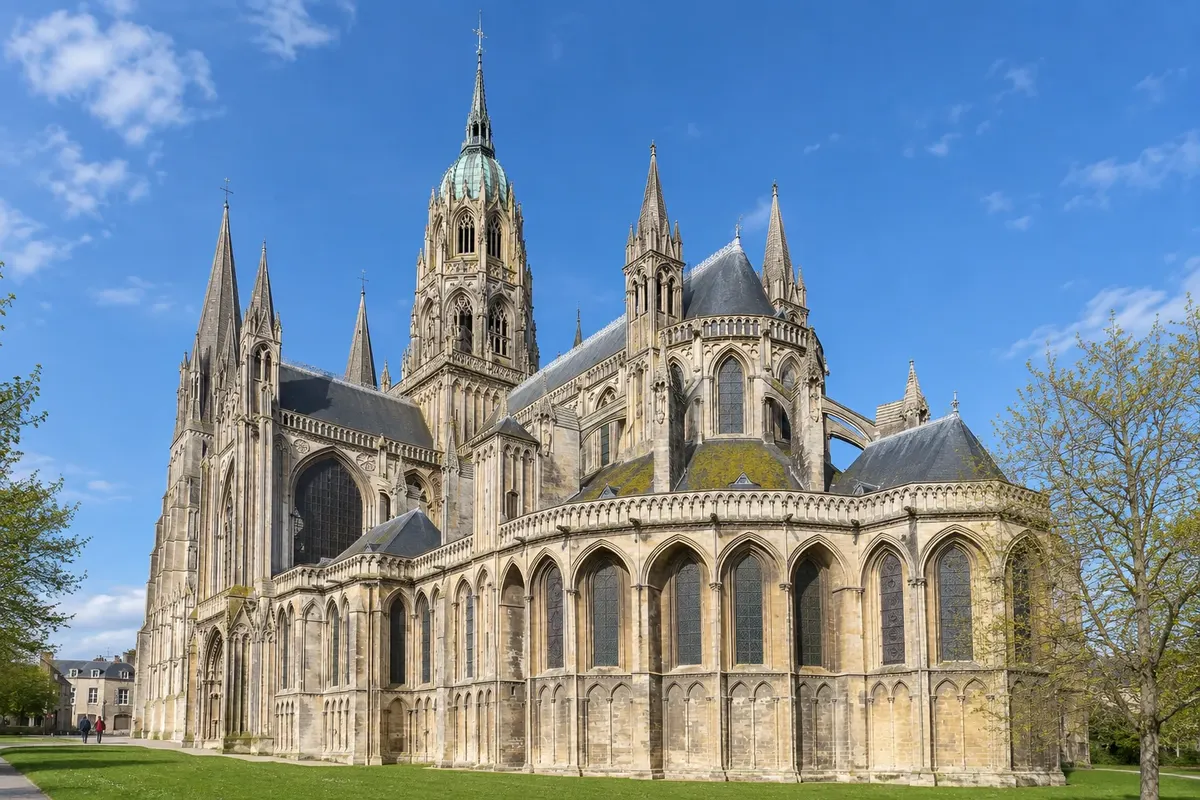
Bayeux Cathedral

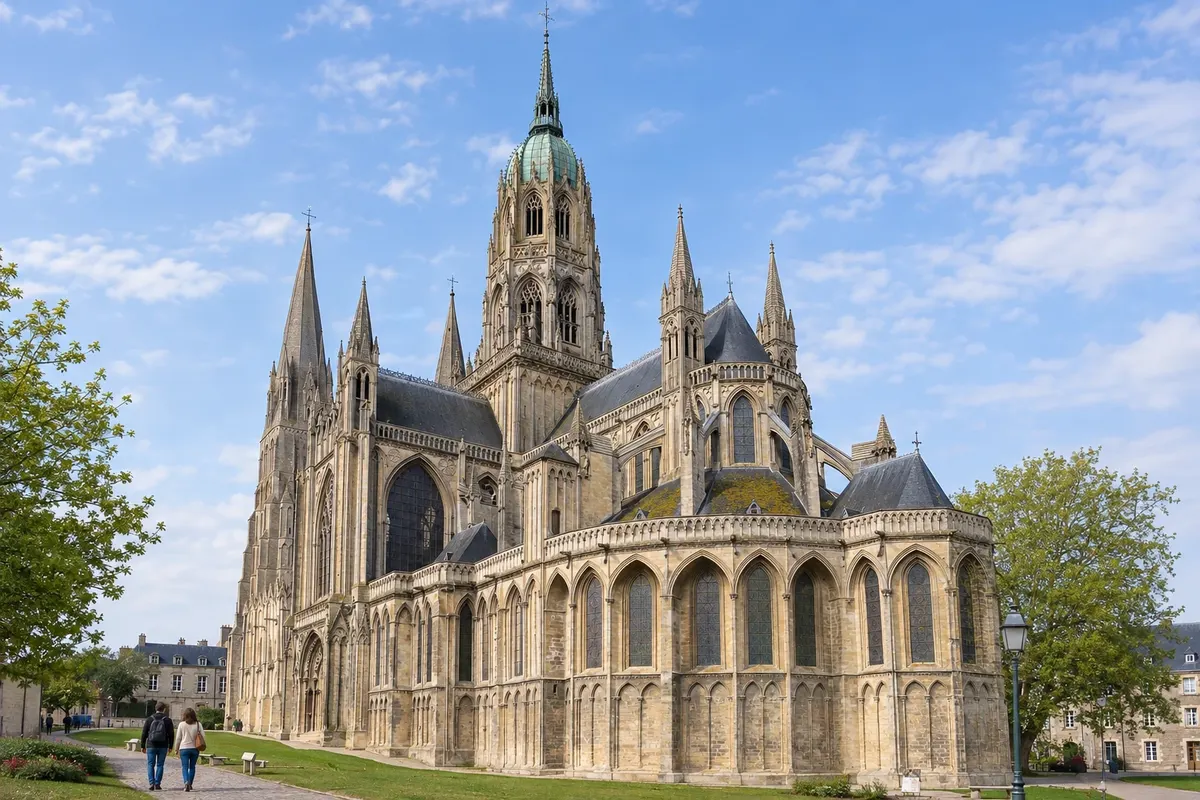
Romanesque and Gothic cathedral consecrated in 1077 in the presence of William the Conqueror. For centuries it housed the Tapeçaria de Bayeux.

Rouen Cathedral
Rouen · Normandy · Stolnica

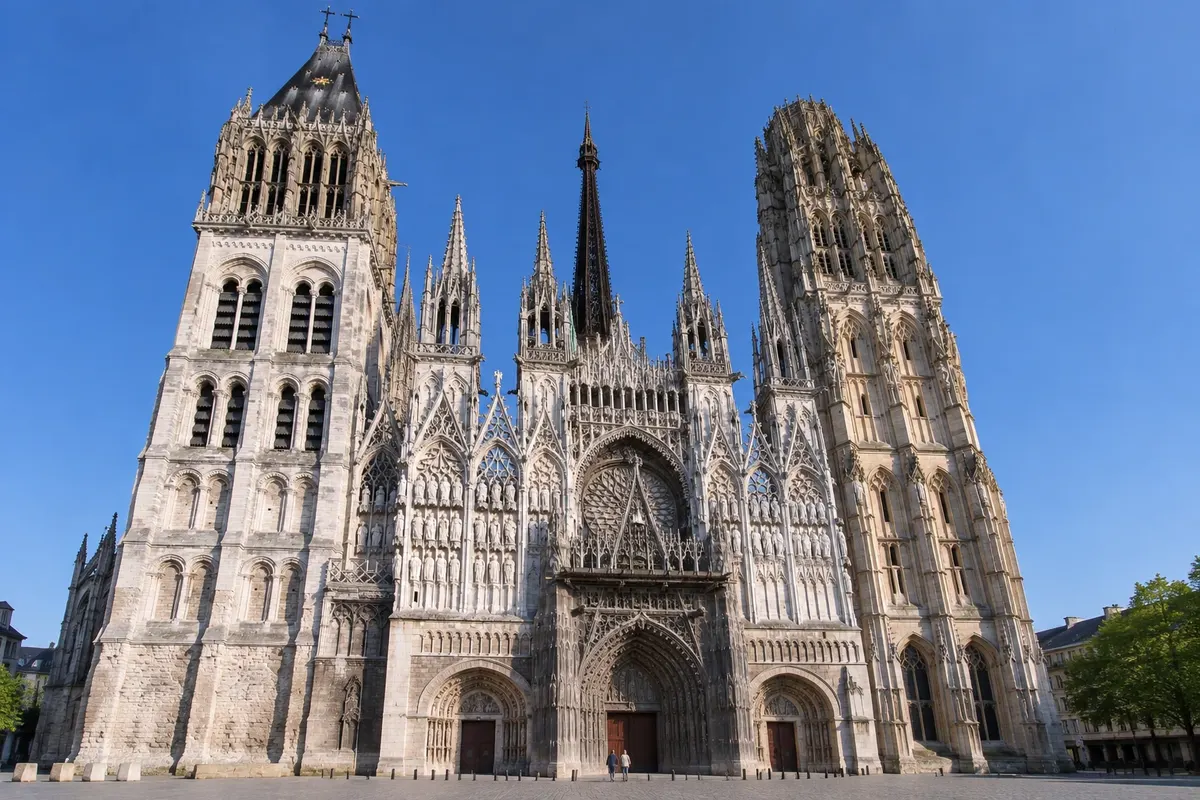
Rouen Cathedral

Gothic cathedral with a 151‑metre cast‑iron spire, the tallest in France. The façade was painted more than 30 times by Monet, at different times and in different lights.

Normandy and Mont‑Saint‑Michel – prikaži dodatne kraje (22)
Vieux Bassin (Honfleur)
Honfleur · Normandy · Harbor

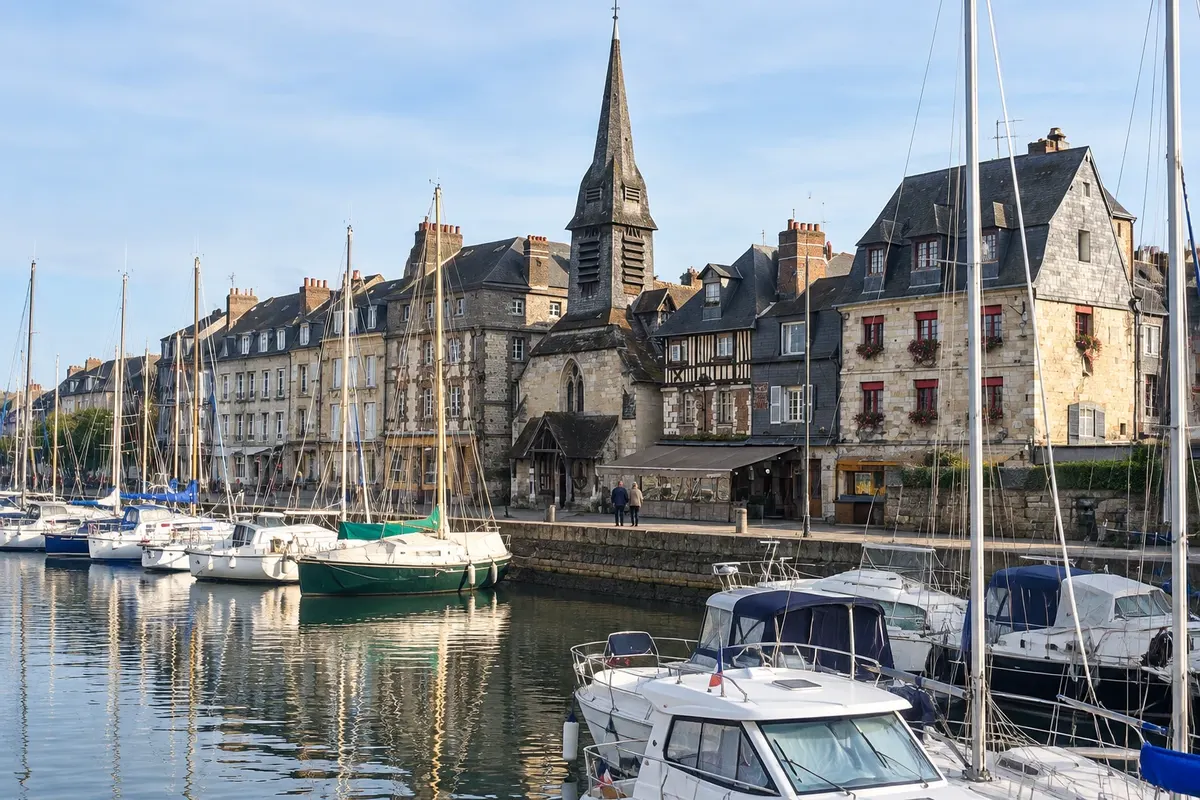
Vieux Bassin (Honfleur)

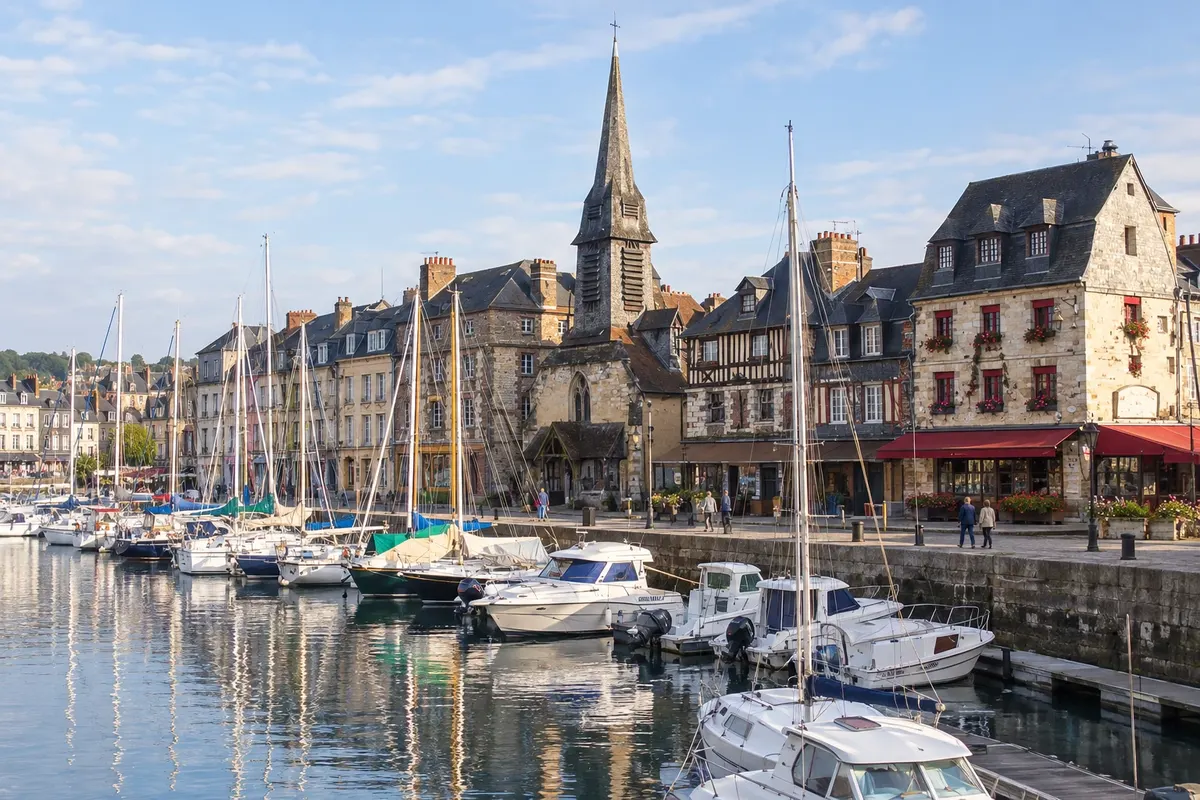
Old dock of Honfleur, dug out during the reign of Louis XIV, surrounded by tall, narrow slate- and wood-covered houses. It is the town's postcard image and the subject of many paintings.

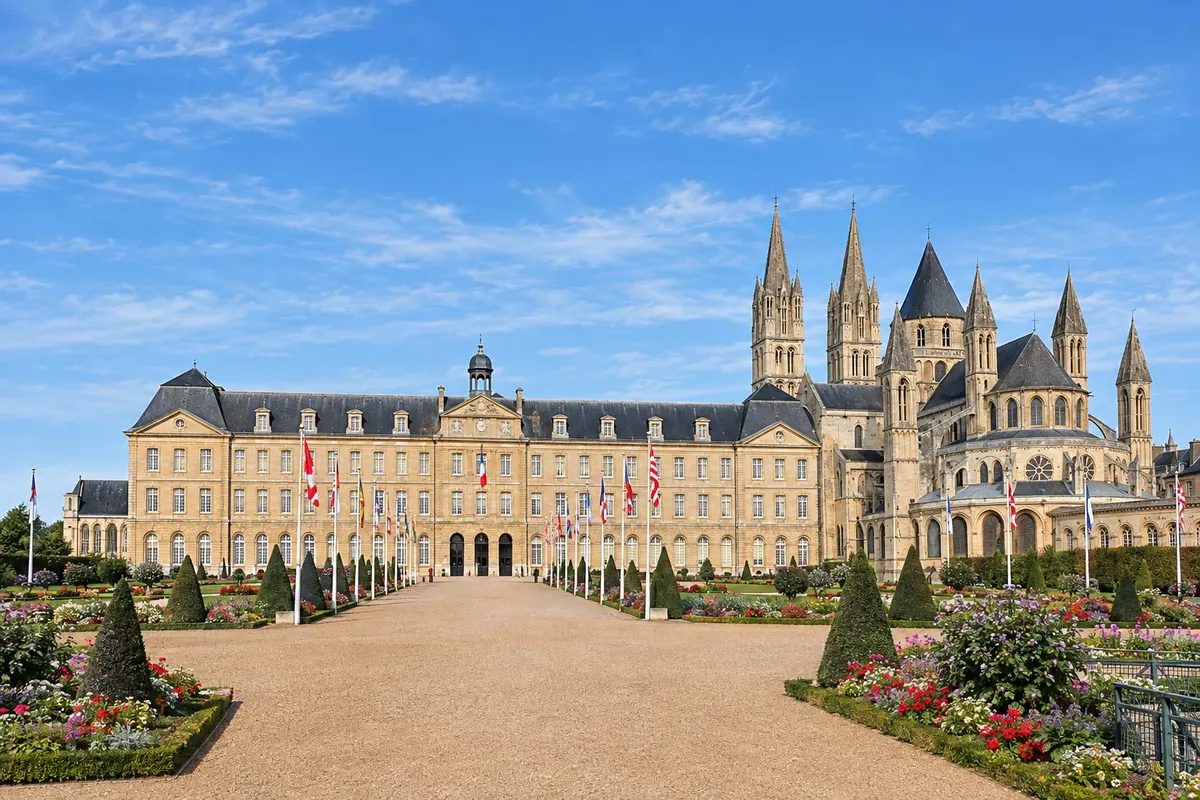
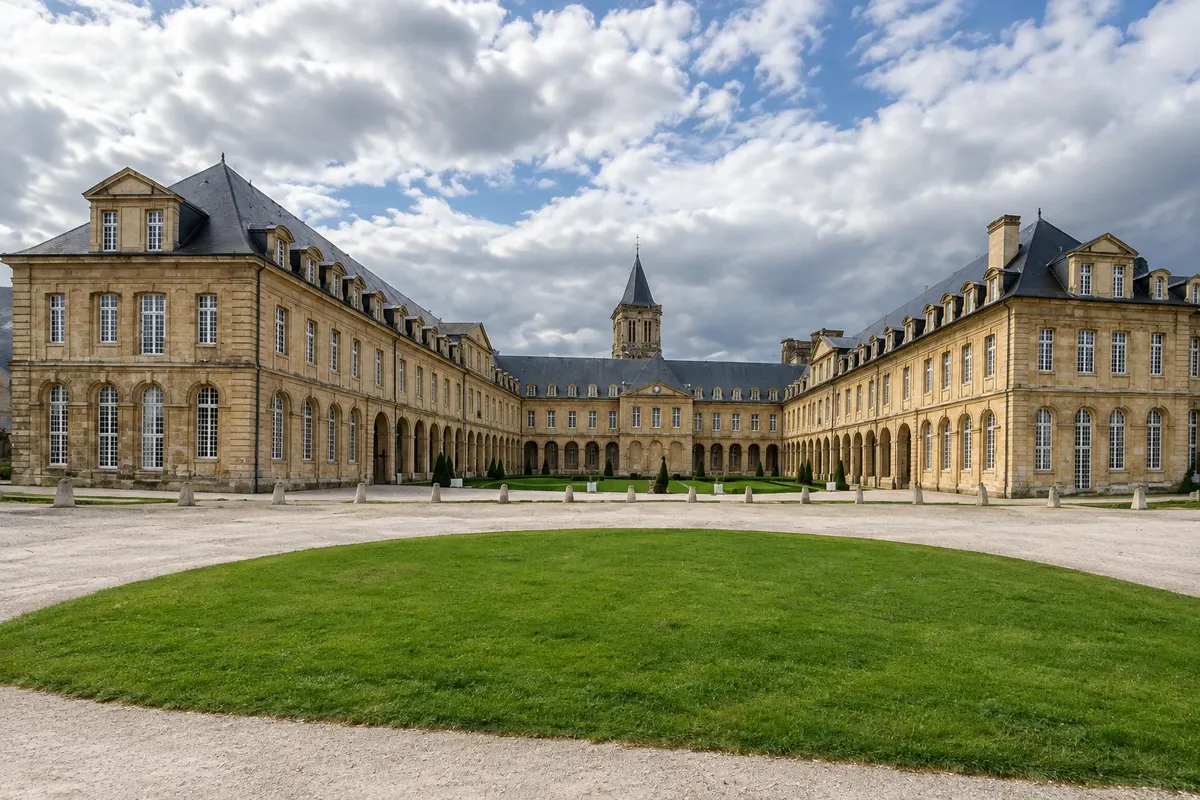
Abbaye aux Hommes (Abbey of Saint-Étienne of Caen)
Caen · Normandy · Abbey

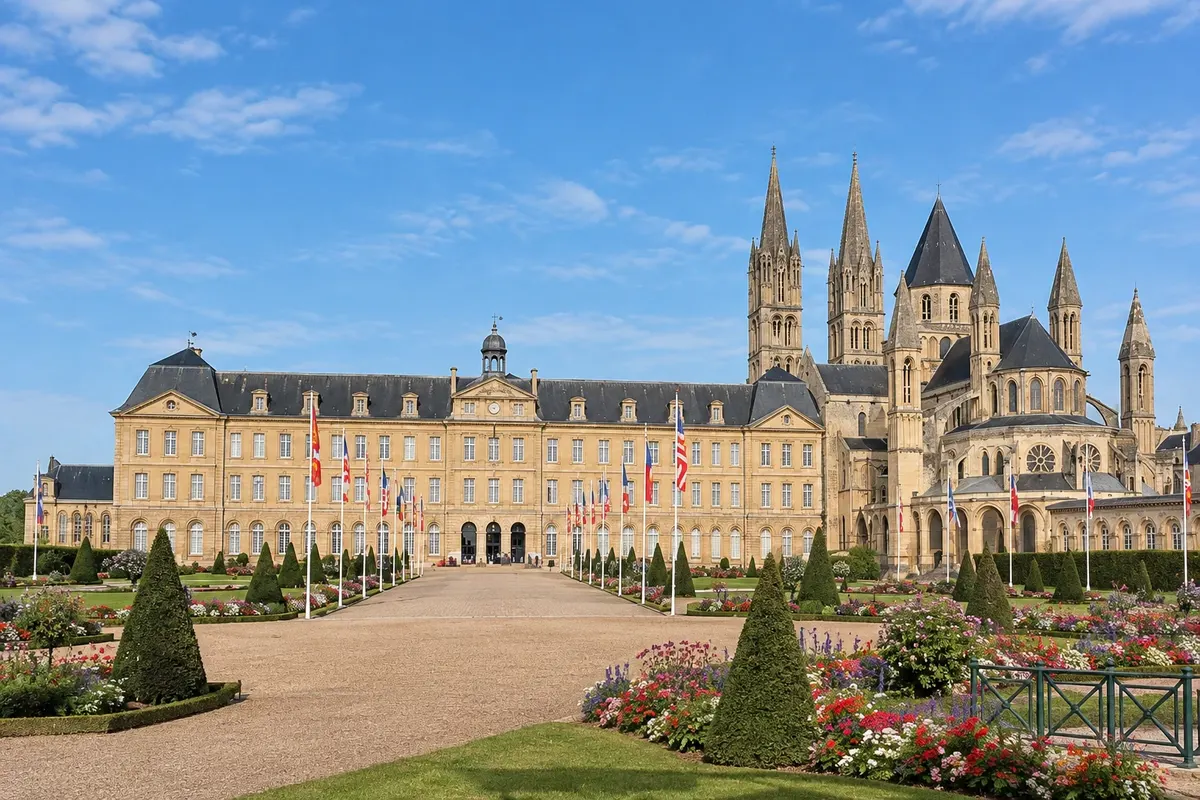
Abbaye aux Hommes (Abbey of Saint-Étienne of Caen)

Benedictine abbey founded by William the Conqueror in 1063, with the Church of Saint Stephen where the duke’s tomb is located. The monastery buildings, from the 18th century, now house Caen city hall.

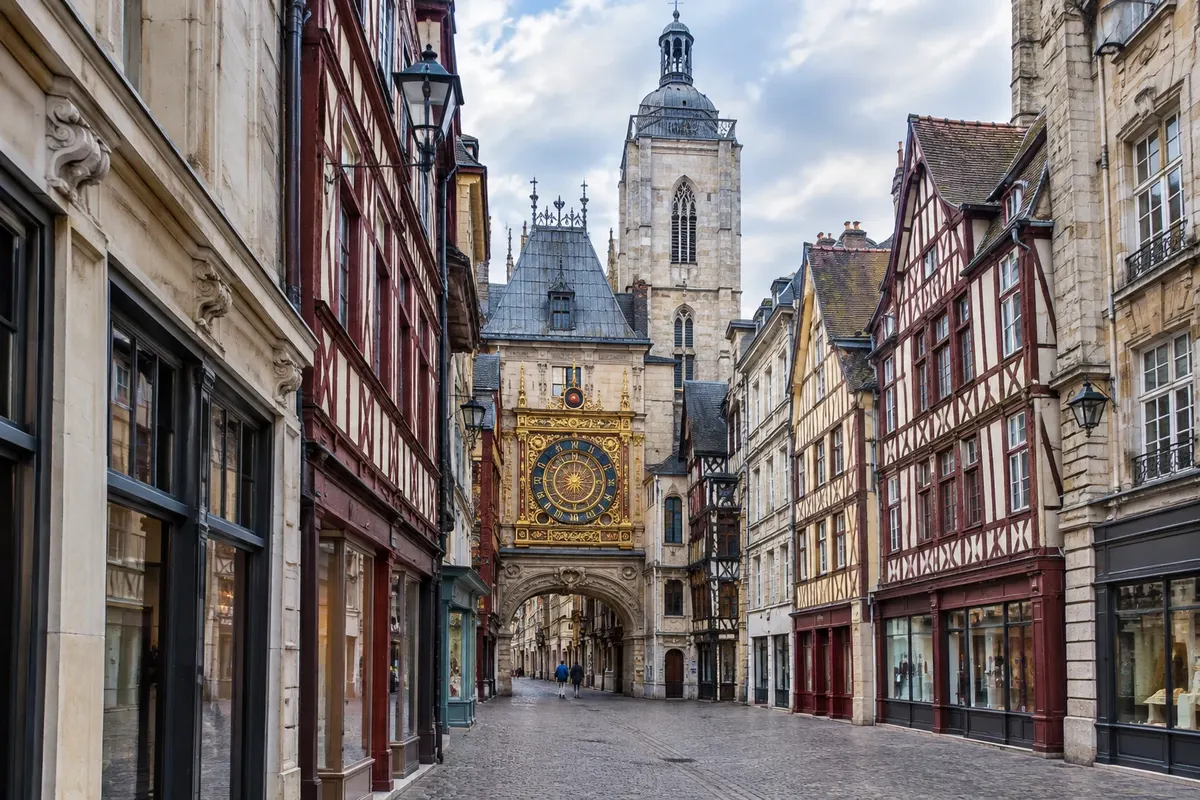
Gros-Horloge
Rouen · Normandy · Monument

Gros-Horloge

14th-century astronomical clock mounted on a Renaissance arch over the busiest pedestrian street in Rouen, next to a bell tower that can be visited.

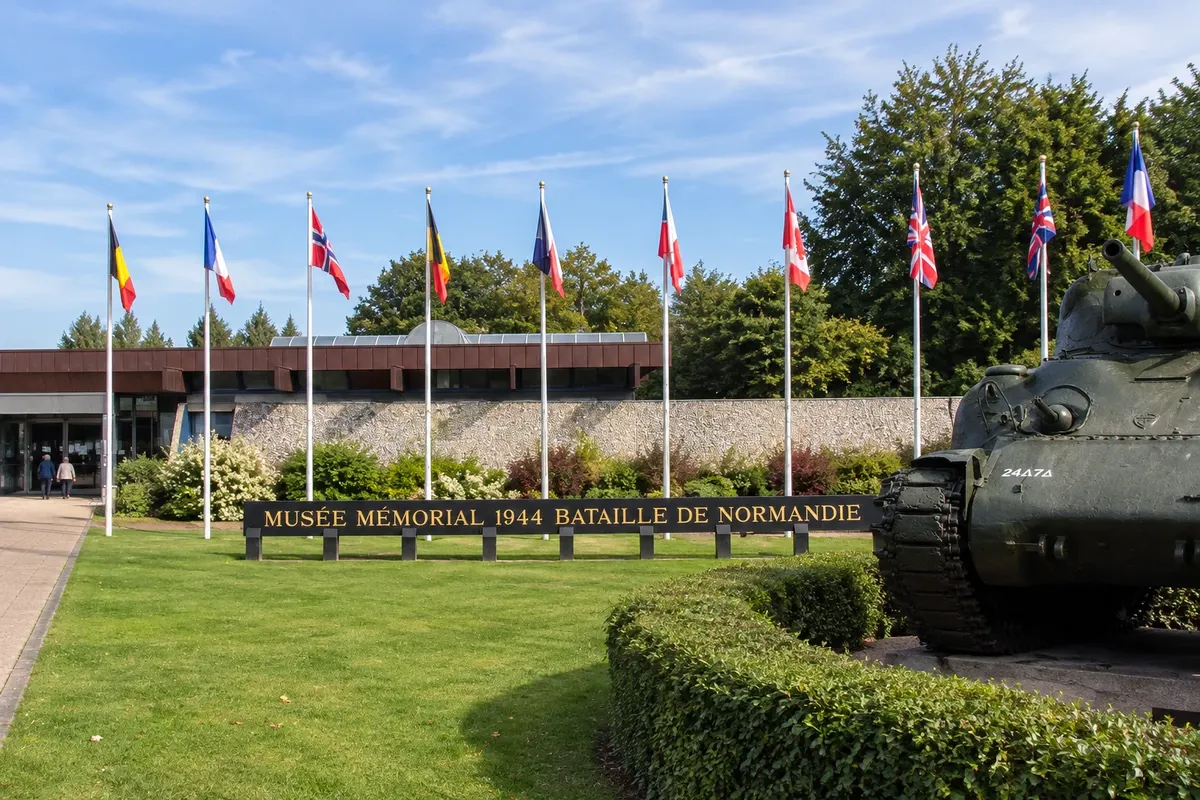
Musée Mémorial de la Bataille de Normandie
Bayeux · Normandy · Muzej

Musée Mémorial de la Bataille de Normandie

Bayeux's municipal museum about the Battle of Normandia, from June to August 1944, with vehicles, uniforms and an archival film. It is opposite the British military cemetery.

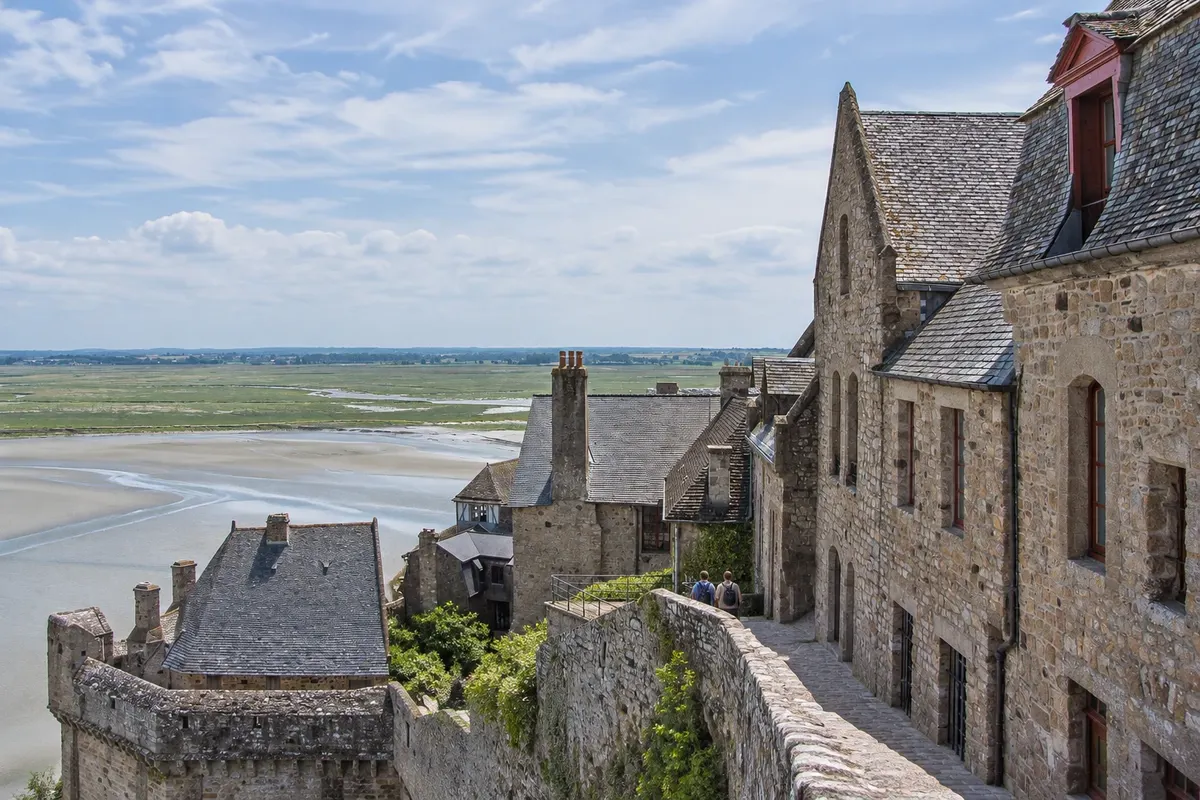
Mont-Saint-Michel Ramparts
Mont-Saint-Michel · Normandy · Obzidje

Mont-Saint-Michel Ramparts

Hundred Years' War ramparts that surround the Mont's village, with a walkway open to pedestrians and views over the bay. The Grande Rue, just below, climbs up to the abbey.

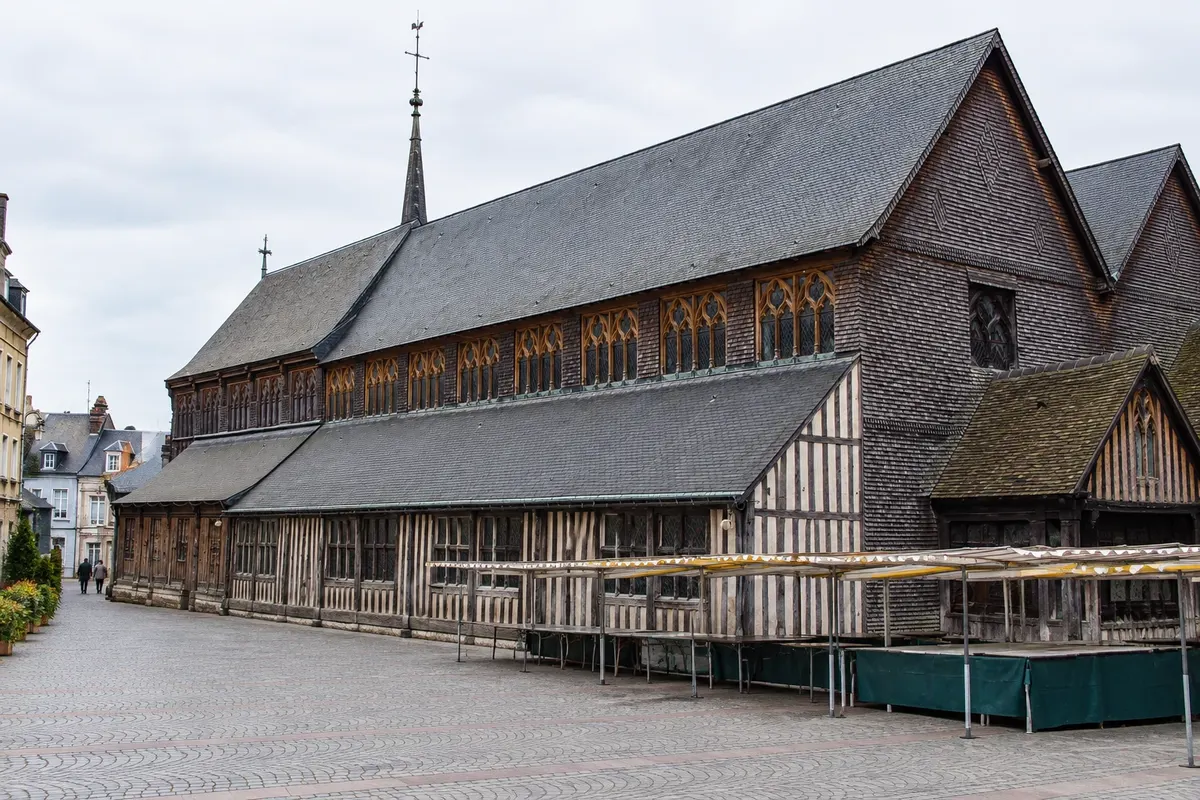
Église Sainte-Catherine (Honfleur)
Honfleur · Normandy · Cerkev

Église Sainte-Catherine (Honfleur)

Church built almost entirely of wood by Honfleur's ship carpenters, with two naves that resemble inverted ship hulls and a separate bell tower on the opposite side of the square.

Abbaye aux Dames (Abbey of the Holy Trinity of Caen)
Caen · Normandy · Abbey

Abbaye aux Dames (Abbey of the Holy Trinity of Caen)

Abbey founded by Queen Matilda, wife of William the Conqueror, in the 11th century, with the Romanesque Church of the Holy Trinity, where she is buried. The convent buildings house the Regional Council of Normandy.

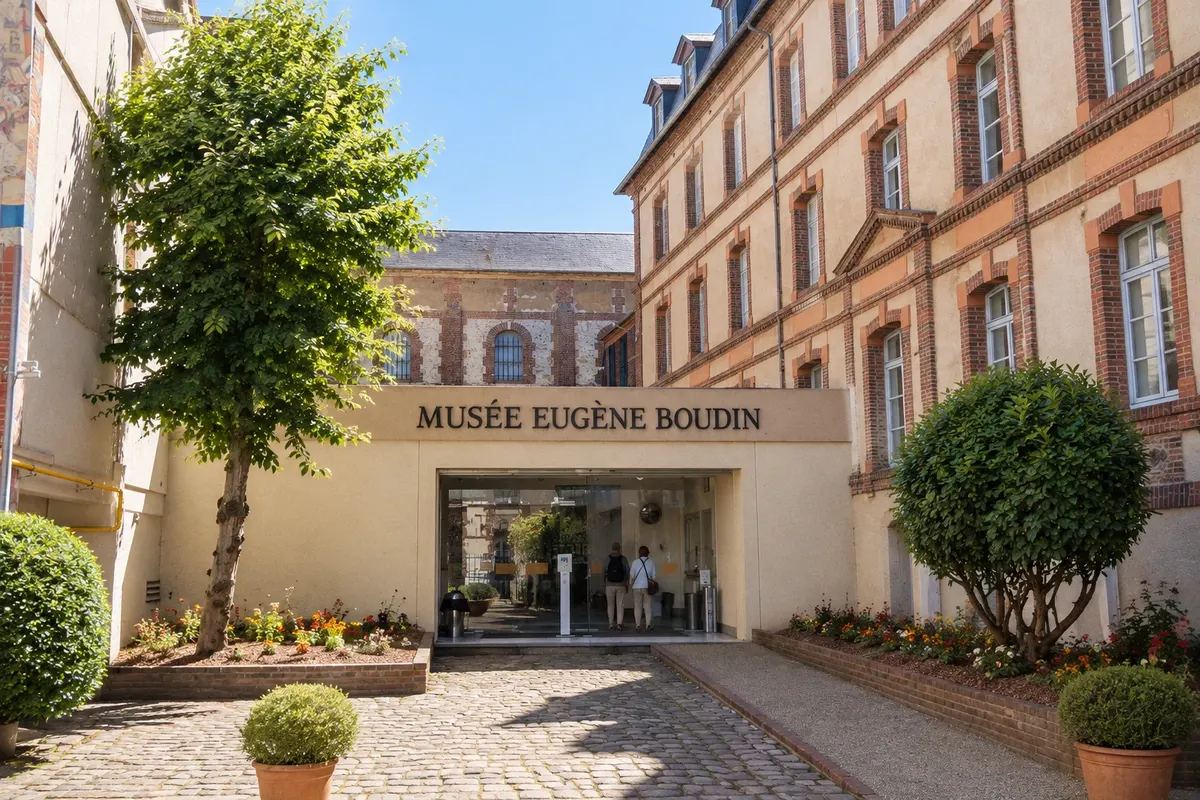
Musée Eugène-Boudin
Honfleur · Normandy · Muzej

Musée Eugène-Boudin

Art museum founded in 1868 by Eugène Boudin and Alexandre Dubourg, with paintings by artists who worked on the estuary of the Seine, from Boudin and Monet to Dufy.

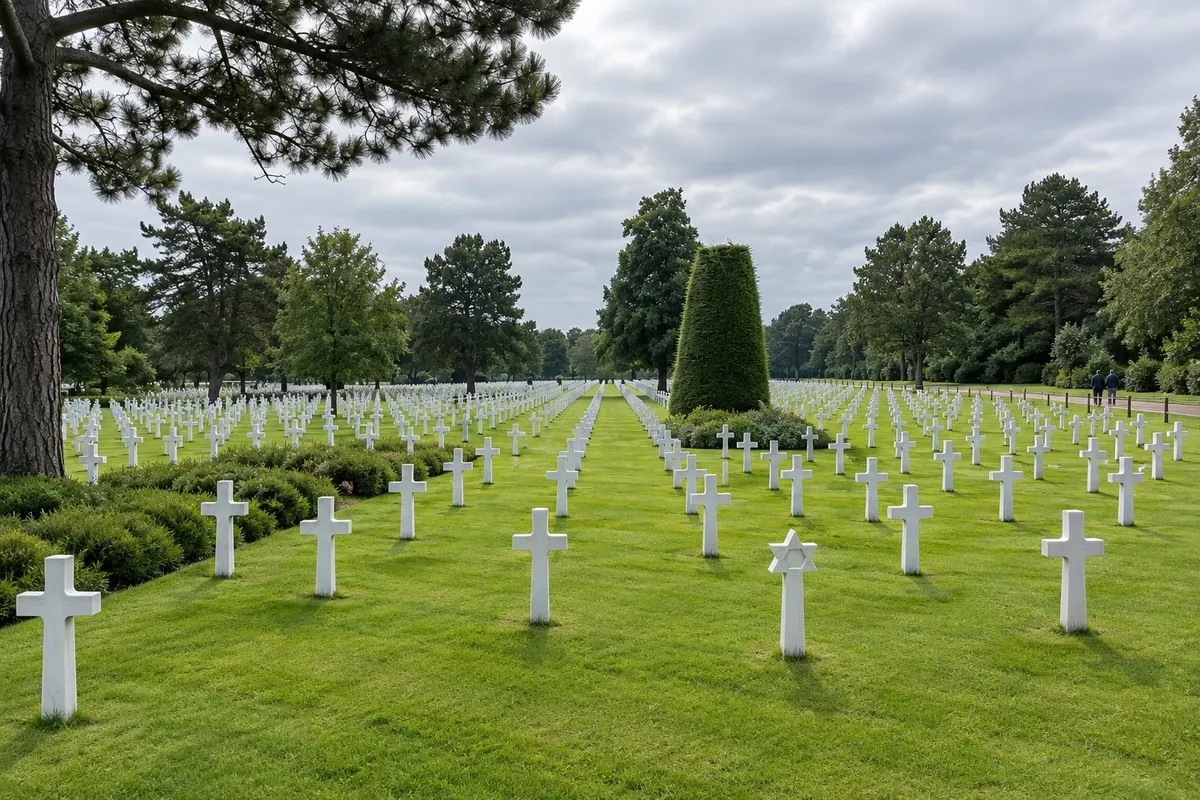
Normandy American Cemetery and Memorial
Bayeux · Normandy · Cemetery

Normandy American Cemetery and Memorial

American military cemetery above Omaha Beach, in Colleville-sur-Mer, with about 9,400 graves of soldiers killed on D-Day and in subsequent operations. Entry is free.

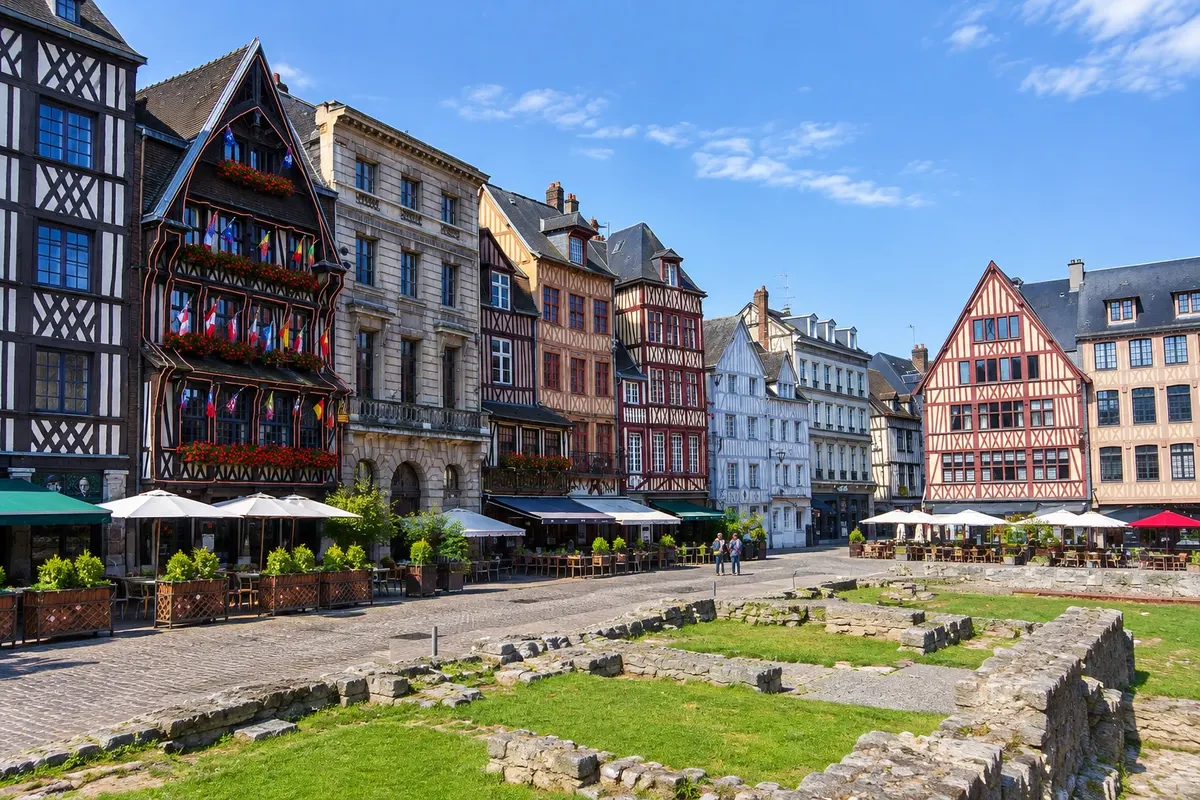
Place du Vieux-Marché
Rouen · Normandy · Trg

Place du Vieux-Marché

Square where Joan of Arc was burned in 1431. Today it contains the Igreja de Santa Joana d'Arc, from 1979, with 16th-century stained glass, a covered market and restaurants in half-timbered houses.

Historial Jeanne d'Arc
Rouen · Normandy · Muzej

Historial Jeanne d'Arc

Multimedia route about Joan of Arc in the former archbishops' palace next to the cathedral, where in 1456 the trial that rehabilitated the heroine was held.

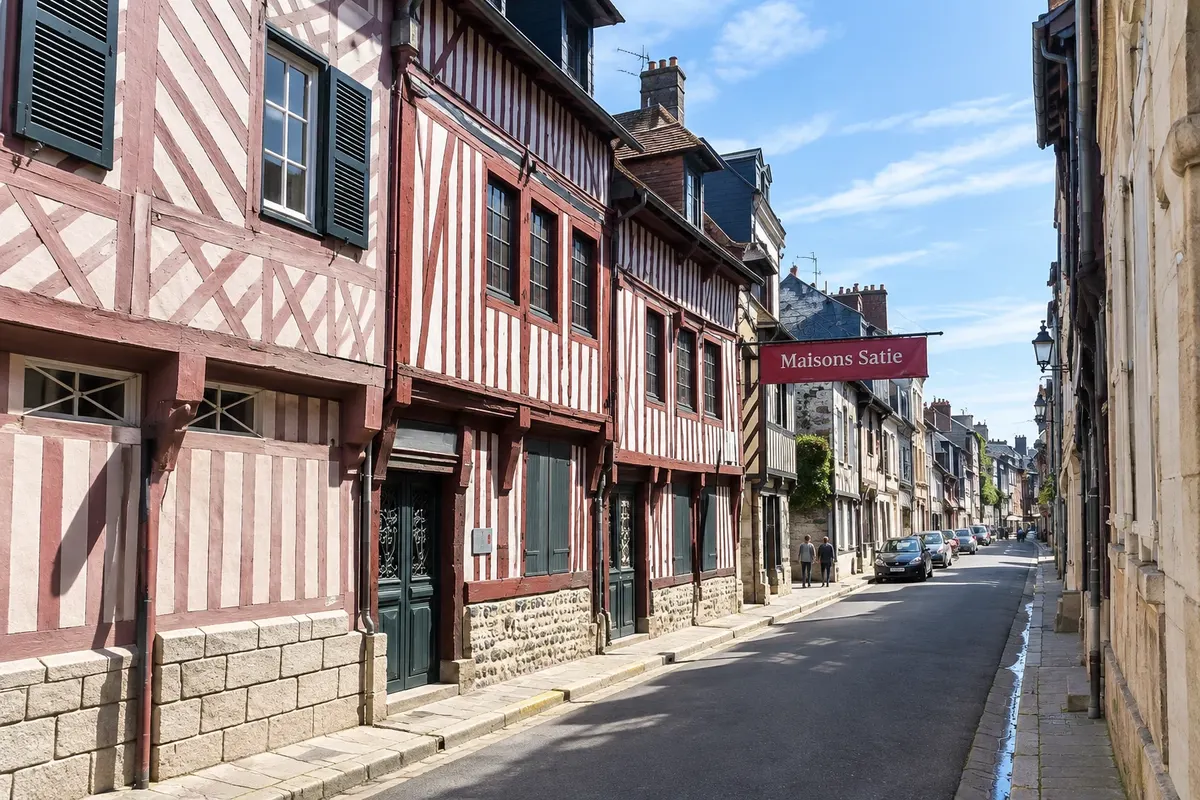
Maisons Satie
Honfleur · Normandy · Muzej

Maisons Satie

Houses where the composer Erik Satie was born in 1866, transformed into a route with music, scenography and humor, very much in the artist's style.

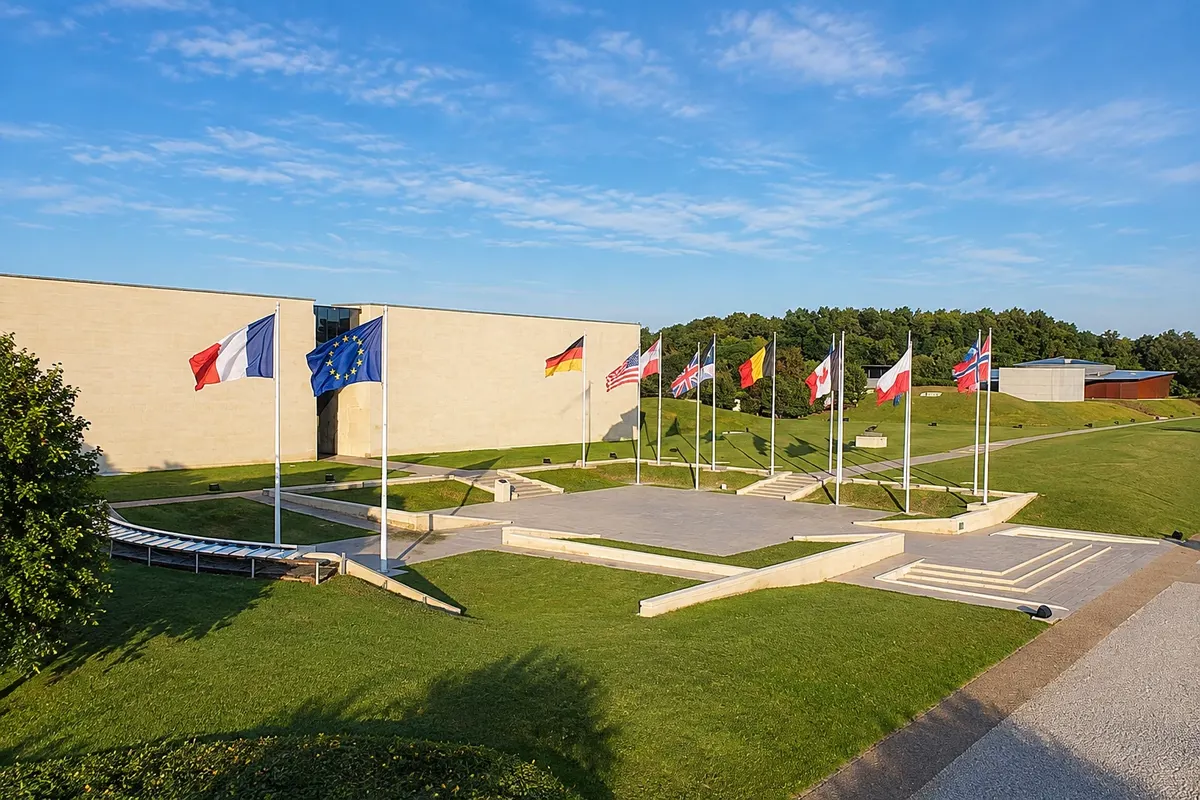
Mémorial de Caen (Caen Memorial)
Caen · Normandy · Muzej

Mémorial de Caen (Caen Memorial)

Museum devoted to 20th-century history, focusing on World War II, the Landing and the Battle of Normandy, and the Cold War. It opened in 1988 on a site connected to the fighting of 1944.

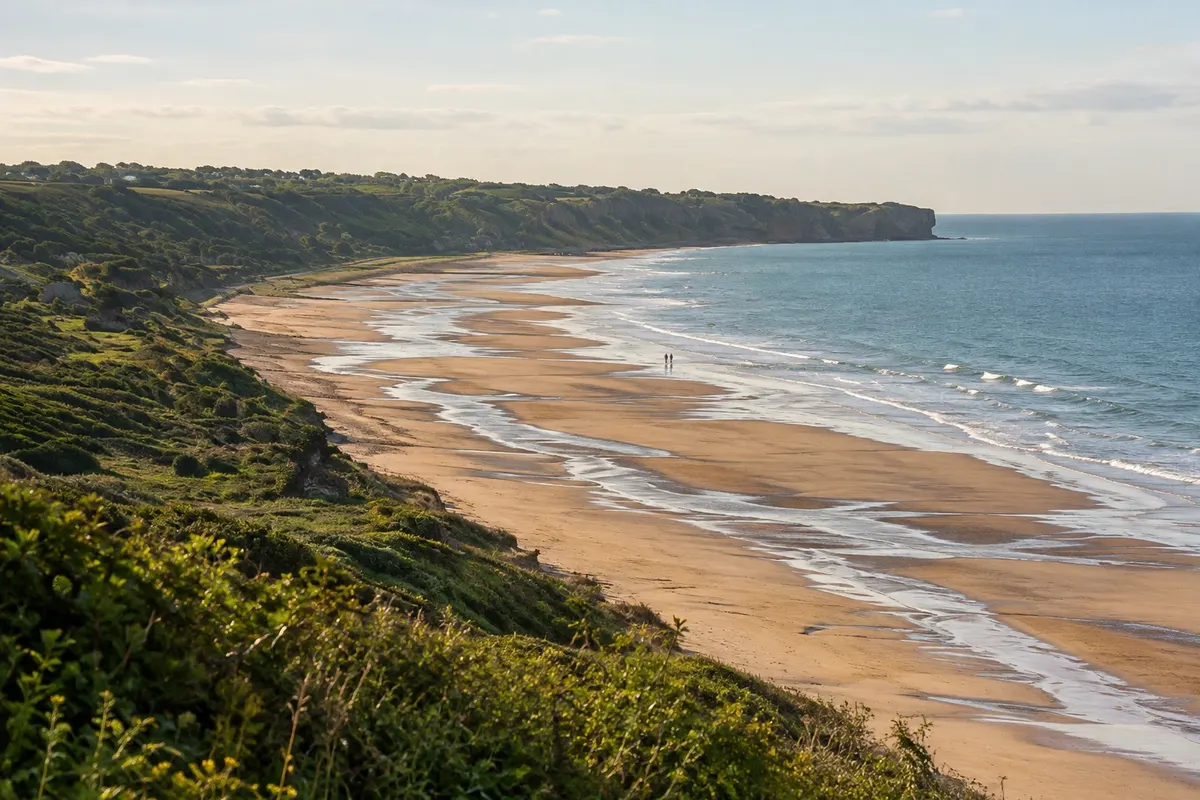
Omaha Beach
Bayeux · Normandy · Plaža

Omaha Beach

One of the five landing beaches of 6 June 1944, between Vierville-sur-Mer and Colleville-sur-Mer, where American troops suffered the heaviest losses on D-Day.

Étretat Cliffs
Honfleur · Normandy · Natural site

Étretat Cliffs

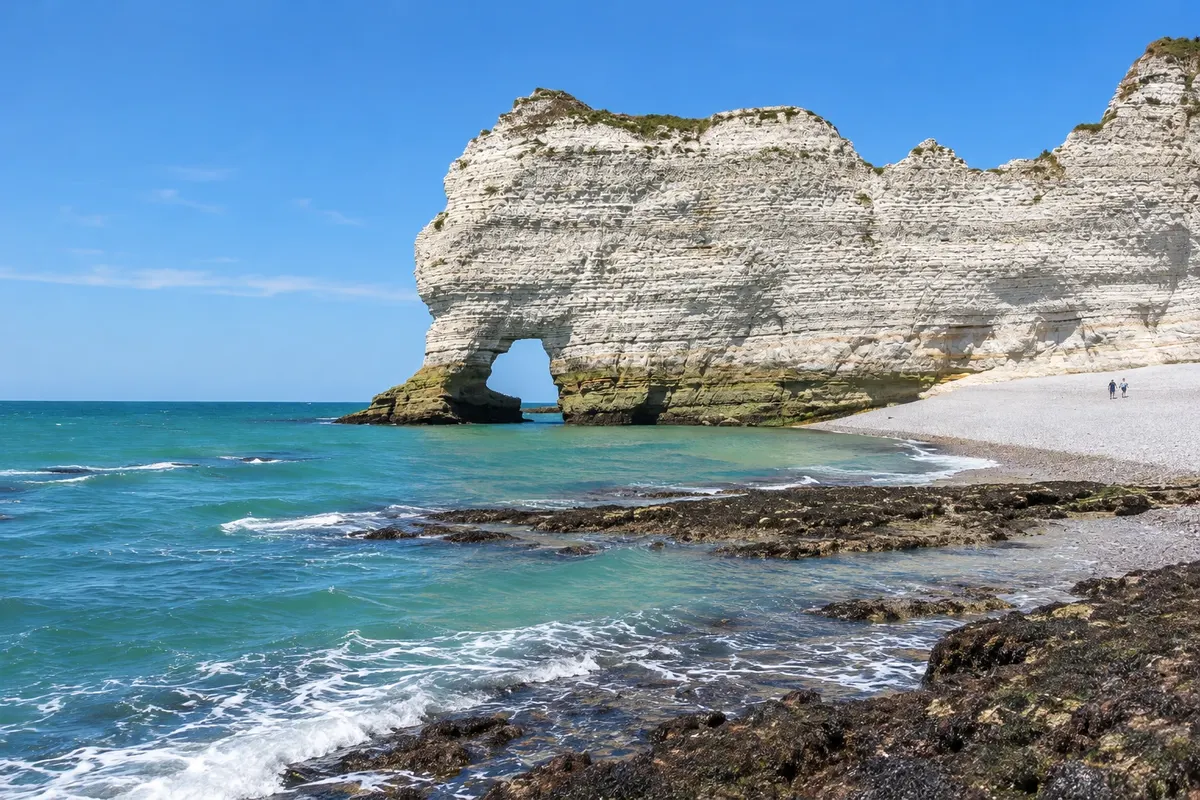
White limestone cliffs over 90 meters high, natural arches and the stone needle that appear in Monet's paintings and in the Arsène Lupin books.

Church of St. Peter of Caen
Caen · Normandy · Cerkev

Church of St. Peter of Caen

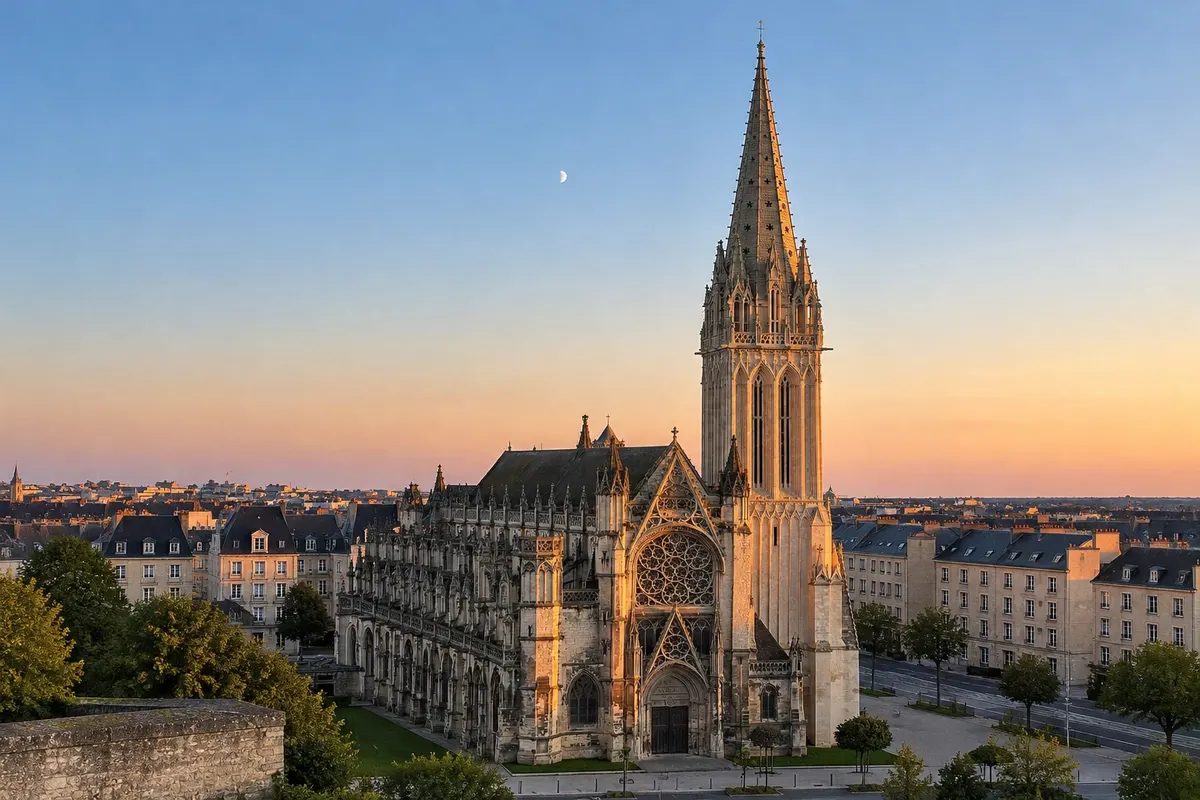
Gothic church at the foot of the castle, built from the 13th to the 16th century, with a Renaissance choir carved by Hector Sohier. The tower, toppled in 1944, was rebuilt after the war.

Musée des Beaux-Arts de Rouen
Rouen · Normandy · Muzej

Musée des Beaux-Arts de Rouen

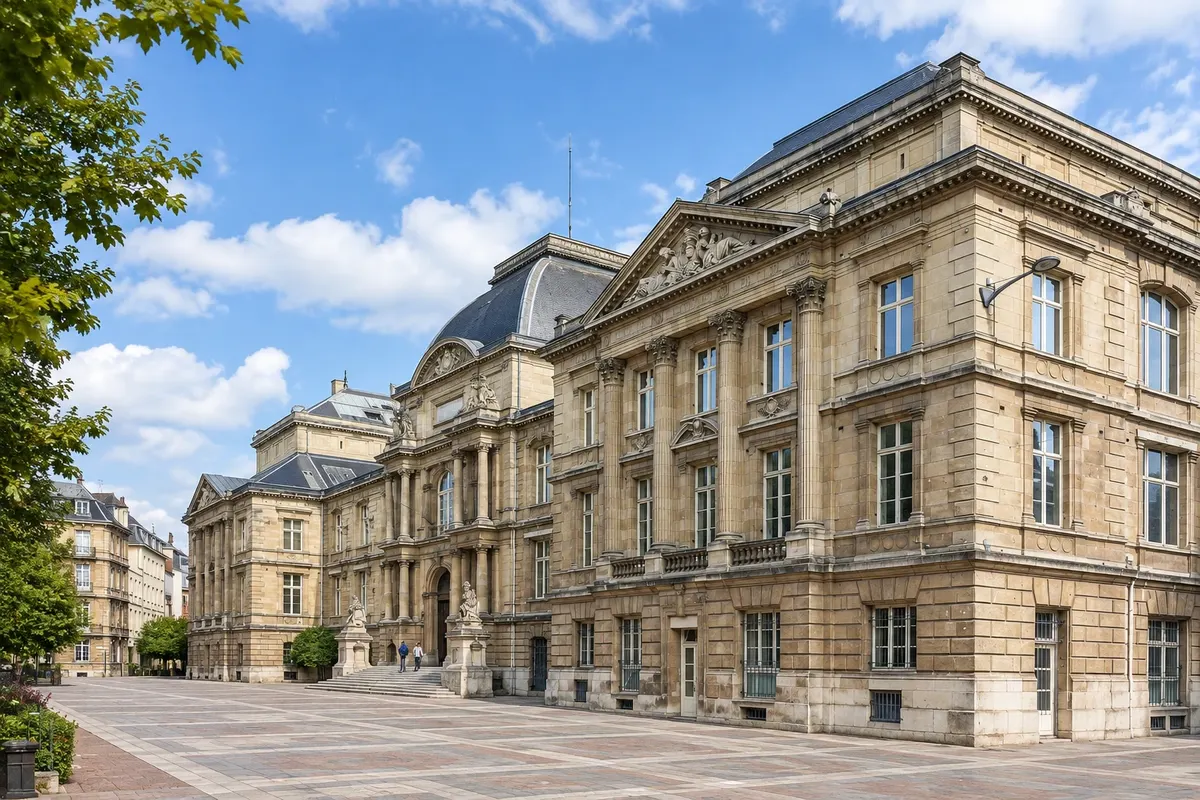
One of France's leading fine arts museums outside Paris, with Caravaggio, Delacroix, Géricault, Monet and Modigliani. Entry to the permanent collections is free.

Pointe du Hoc
Bayeux · Normandy · Historic site

Pointe du Hoc

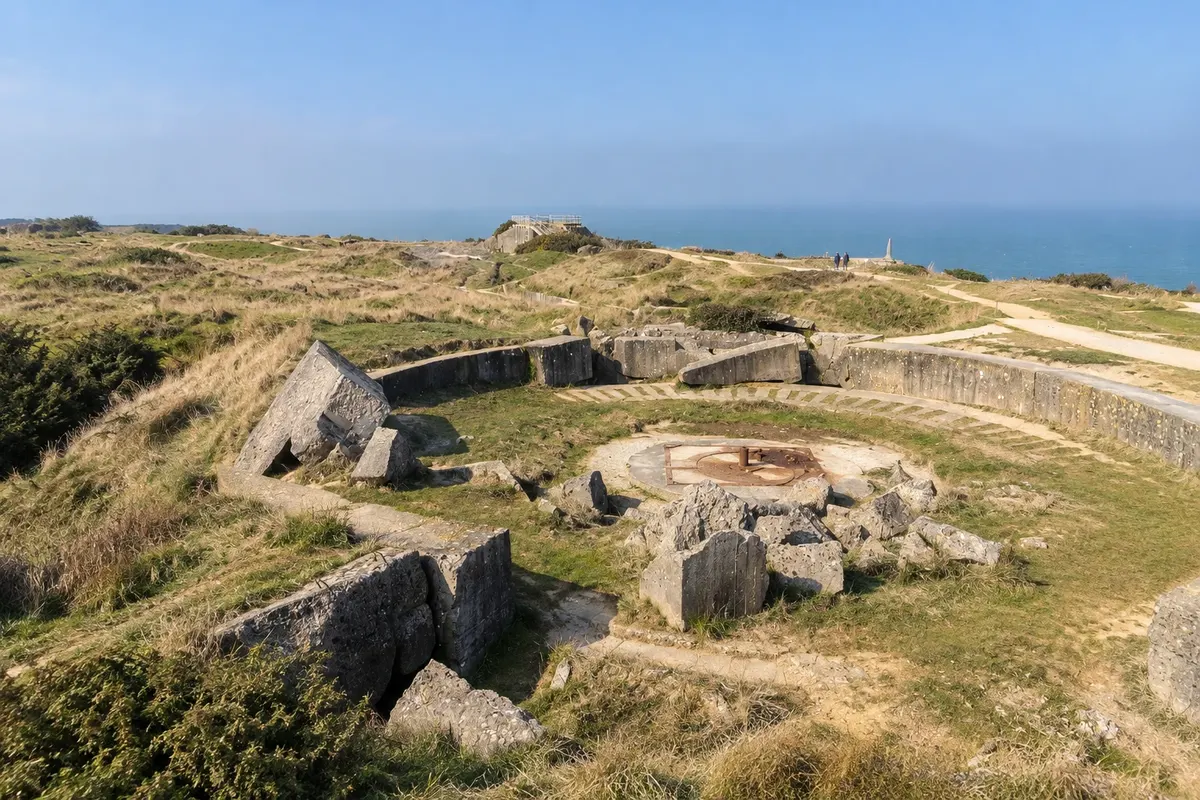
Cliff of about 30 meters scaled by American Rangers on D-Day to neutralize a German battery. The terrain still bears bomb craters and bunkers.

Aître Saint-Maclou
Rouen · Normandy · Historic site

Aître Saint-Maclou

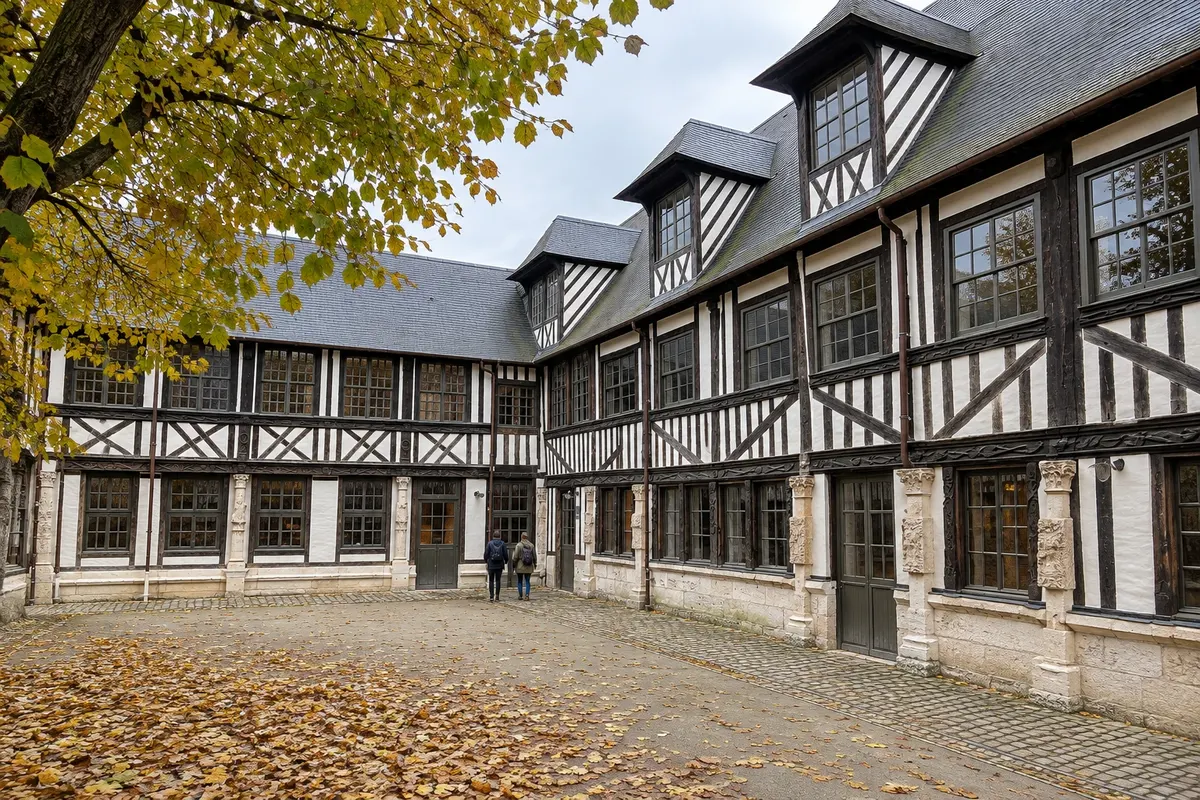
Former 16th-century cemetery and ossuary, with a courtyard surrounded by wooden galleries carved with scenes of the danse macabre. One of the rare ensembles of this type remaining in Europe.

Musée du Débarquement (Arromanches)
Bayeux · Normandy · Muzej

Musée du Débarquement (Arromanches)

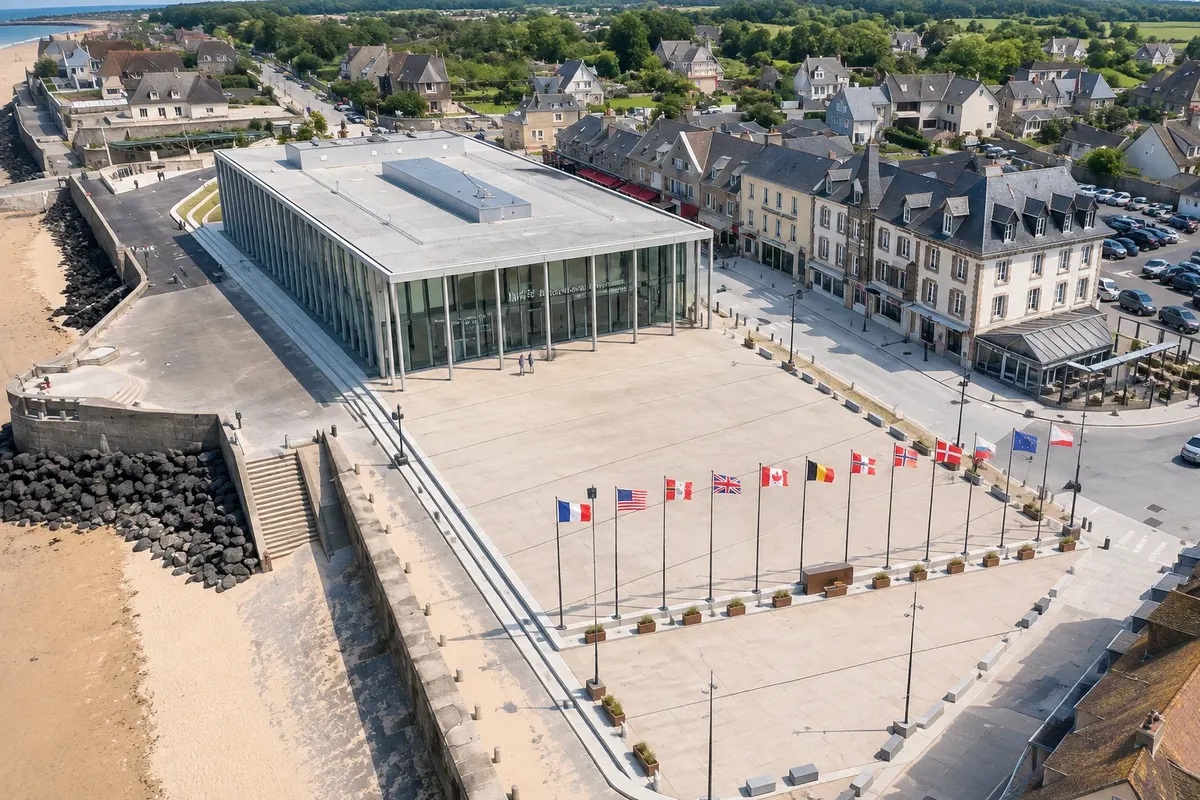
The first museum created about D-Day, in Arromanches-les-Bains, facing the remains of the Mulberry artificial harbor assembled by the Allies at sea in June 1944.

Juno Beach Centre
Bayeux · Normandy · Muzej

Juno Beach Centre

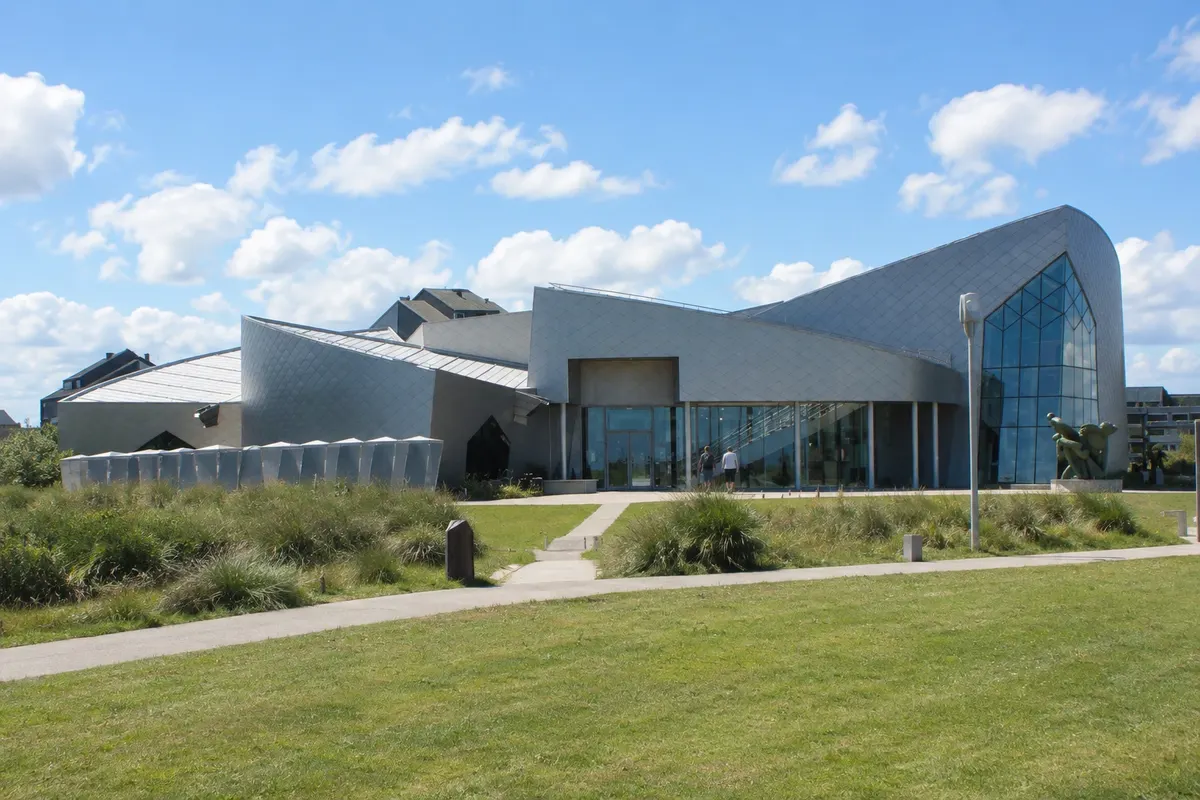
Museum in Courseulles-sur-Mer about the Canadians in World War II, on Juno Beach itself, where Canadian troops landed on 6 June 1944.

Mémorial de Caen
Bayeux · Normandy · Muzej

Mémorial de Caen

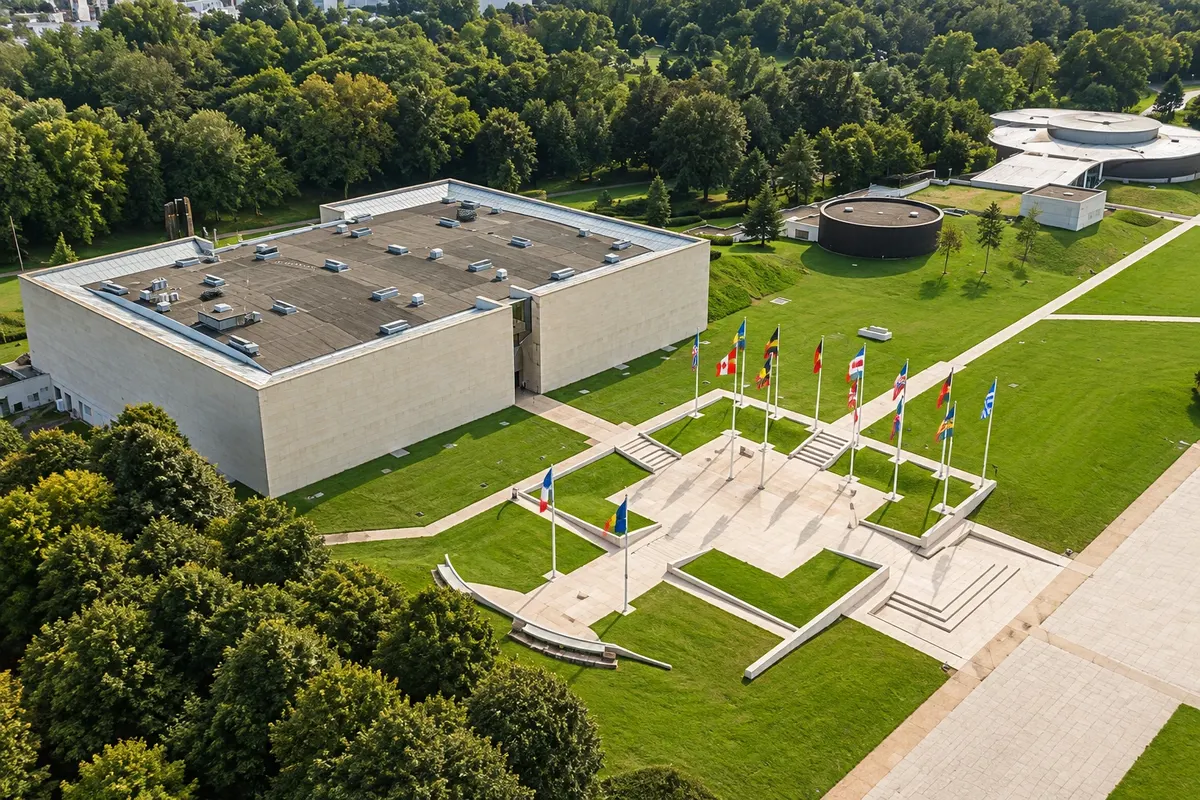
Large museum about 20th-century history, from the First World War to the fall of the Berlin Wall, with a whole section dedicated to D-Day and the Battle of Normandy.

Kaj izbrati pred odhodom

Izleti – Normandy and Mont‑Saint‑Michel

Izhodišče, trajanje, potek, vključene storitve in okvirna cena vsakega izleta.

Mont-Saint-Michel: abbey, Grande Rue and ramparts

Odhod: Parking and bus stop on the mainland Le Passeur shuttle bus or on foot via the footbridge about 4 to 5 hours Dopoldne ali popoldne moderate (many stairs and slopes)

Cars do not reach the Mont. Parking lots and the regional bus stop are on the mainland, about 2.5 km from the rock. From there the Le Passeur shuttle buses run, taking about 12 minutes to the base of the ramparts; if you prefer to walk, the causeway takes around 40 minutes. Entrance to the village is free. The village gate opens onto the Grande Rue, the narrow street that climbs the rock between old houses, shops and restaurants. It leads to the abbey stairways at the top. Visiting the Abbaye du Mont-Saint-Michel takes about 1½ to 2 hours: the abbey church, with a Romanesque nave and a flamboyant Gothic choir; the west terrace with views over the bay; and the Merveille, the Gothic complex with the cloister, the refectory, the guests’ hall and the knights’ hall, which served as a scriptorium. The route also descends via the crypt of the great pillars and the Saint-Aubert chapel. On the way back, it’s worth descending the Remparts du Mont-Saint-Michel, the path along the ramparts, which overlooks the bay and the tides, among the strongest in Europe.

Kraji na poti: Le Mont-Saint-Michel, Abbaye du Mont-Saint-Michel, Remparts du Mont-Saint-Michel, Grande Rue.

Vključuje: Entrance to the village and the Le Passeur shuttle bus are free. Parking on the mainland is charged separately. Visiting the abbey requires a ticket; under-18s enter free with proof. Check the current schedule.

Nasvet: Buy the abbey ticket online to avoid the queue. Arrive early in the morning or late in the afternoon: at midday the Grande Rue becomes crowded. Wear closed shoes, as there are hundreds of steps. Bring a coat: it is very windy on top of the rock at any time of year.

Najboljši čas za obisk: All year. From April to June and in September there are fewer people than in July and August; at spring tides, near the March and September equinoxes, the water can surround the rock.

Landing Beaches, American sector: Omaha Beach, American Cemetery and Pointe du Hoc

Odhod: Bayeux or Caen Van tour with guide or private car about 4 to 8 hours, depending on the tour half day or full day Lahko

This is the most visited excursion in Normandy. On June 6, 1944, Allied forces landed on five beaches along the coast, codenamed Utah and Omaha (American), Gold and Sword (British) and Juno (Canadian). The American sector is about a 25-minute drive from Bayeux. At Omaha Beach, where American troops faced the heaviest fighting that day, the wide beach is backed by hills, and a memorial on the sand commemorates the landing. Above, in Colleville-sur-Mer, is the Normandy American Cemetery and Memorial: 9,389 graves in rows of white crosses and Stars of David on the lawn, with a sea view, a memorial wall for the missing and a visitor center with an exhibition. A flag-lowering ceremony takes place one hour before closing. To the west, Pointe du Hoc is the cliff promontory of about 30 m that U.S. Rangers scaled to assault the German batteries. The ground still shows bomb craters and remains of casemates. Part of the area is closed due to landslides and erosion: always follow the marked paths.

Kraji na poti: Omaha Beach, Normandy American Cemetery and Memorial, Colleville-sur-Mer, Pointe du Hoc.

Vključuje: On tours, generally: round-trip transport from Bayeux or Caen and a guide, often in English or French. Meals and museum admissions are usually paid separately. Entry to the American cemetery and Pointe du Hoc is free. Check the current schedule/table.

Nasvet: These are sites of memory: speak quietly, do not climb on graves and avoid casual photos in the cemetery. Book the tour in advance from April to September. If you go by car you can plan the route in the order Pointe du Hoc, Omaha Beach and the cemetery, then continue to Arromanches the same day.

Najboljši čas za obisk: All year. In early June, around June 6, there are anniversary ceremonies of the Landing and it is busy; from November to March the days are short.

Arromanches and Gold Beach: the artificial harbor, the Musée du Débarquement and the Longues-sur-Mer battery

Odhod: Bayeux Own car or guided tour about 3 to 4 hours Dopoldne ali popoldne Lahko

Arromanches-les-Bains is about 10 km from Bayeux, on the beach nicknamed Gold Beach, where the British 50th Division landed. Offshore from the town are the remains of the artificial harbor called Port Winston, installed by the Allies after the landings and in operation from June 14, 1944: at low tide the concrete Phoenix caissons appear on the sand and in the sea. On the shoreline, the Musée du Débarquement, opened in 1954, was the first museum dedicated to the landings; it displays the phases of June 6 and the operation of the harbor, with models. On top of the cliff, the circular Arromanches 360 cinema projects archival footage across nine screens about the 100 days of the Battle of Normandy, and the adjacent viewpoint shows the layout of the harbor in the bay. A few kilometers to the west, the Batterie de Longues-sur-Mer preserves the fire command post and four casemates of the Atlantic Wall, each with a 150 mm gun, on the cliff above the English Channel.

Kraji na poti: Arromanches-les-Bains, Musée du Débarquement, Arromanches 360, Batterie de Longues-sur-Mer, Gold Beach.

Vključuje: The museum and the Arromanches 360 cinema require tickets. The exterior visit to the Longues-sur-Mer battery and the beach are free. On organized tours, transport and a guide are usually included; entrance fees vary. Check the current table.

Nasvet: Check the tide table: at low tide the remains of the harbor are more visible. Arromanches pairs well, on the same day, with the American sector (Omaha and Pointe du Hoc) or with the Centre Juno Beach.

Najboljši čas za obisk: All year; from April to September the days are long and allow for more stops.

Mémorial de Caen

Odhod: Caen city centre Local bus, taxi or car about 3 to 4 hours Dopoldne ali popoldne Lahko

The Mémorial de Caen is a museum dedicated to 20th-century history, focusing on the Second World War, the Landing and the Battle of Normandy. It lies on the northern edge of Caen, the city that was largely destroyed during the fighting in the summer of 1944. The route begins with the origins of the war, covers the occupation, the world war and the Landing, and reaches the Cold War, using documents, objects, photographs and films. There are also temporary exhibitions and memory gardens. It is a good visit to understand the context before going to the Landing beaches, especially on a rainy day. The Mémorial also sells guided beach tours departing from the museum, which can be combined with admission.

Kraji na poti: Mémorial de Caen, Caen.

Vključuje: There is an admission fee for the museum visit. Guided tours to the beaches departing from the Mémorial are sold separately. Check the current price list.

Nasvet: Allow half a day just for the museum. Exhibitions include texts in French and English; the audio guide is helpful. If you arrive by train to Caen you can leave this visit for your arrival day, before continuing on to Bayeux.

Najboljši čas za obisk: All year round; it is an option for rainy days, which are common from October to January.

Juno Beach Centre and the Canadians’ beach

Odhod: Bayeux or Caen Own car or guided tour about 2 to 3 hours Dopoldne ali popoldne Lahko

In Courseulles-sur-Mer, on the beach nicknamed Juno Beach, the Juno Beach Centre is the Canadian museum for the Landing beaches. It tells of Canada’s role in World War II, from the wartime effort to the June 6, 1944 landings and the liberation. The museum visit takes about 1½ hours. From April to October there are guided tours, in French and English, of the German casemates and the beach defenses in front of the museum. On the beach, a path with panels shows where the Canadian troops landed and how they joined the British forces that landed on Gold Beach.

Kraji na poti: Juno Beach Centre, Courseulles-sur-Mer, Juno Beach.

Vključuje: There is an admission fee for the museum and a combined ticket with the guided visit to the casemates. Check the current schedule/pricing table.

Nasvet: The museum is closed in January and on December 25. Combine the visit with Arromanches on the same day, or with the Mémorial de Caen.

Najboljši čas za obisk: From April to October, when the guided visit to the casemates is offered.

Bayeux on foot: cathedral, Aure River and old town

Odhod: Bayeux town center Peš about 2 to 3 hours Dopoldne ali popoldne Lahko

Bayeux was one of the first French towns liberated in June 1944 and escaped destruction; the old town is compact and can be explored on foot. The Cathédrale Notre-Dame de Bayeux was consecrated in 1077 in the presence of William the Conqueror. Inside it mixes Romanesque and Norman Gothic, and the 11th-century crypt preserves frescoes; the visit takes 30–45 minutes and admission is free. Outside, the walk continues along the banks of the Aure River, with the mill wheel and the cathedral in the background, and through lanes with half-timbered houses and 17th–18th century townhouses. The town is known for the Bayeux Tapestry, an embroidery almost 70 m long that tells the conquest of England in 1066; the tapestry museum is closed for a long renovation and expansion, and the piece is not on display during this period.

Kraji na poti: Bayeux, Cathédrale Notre-Dame de Bayeux, Aure River.

Vključuje: Entry to the cathedral is free. Guided tours of the town, when offered by the tourist office, are separately charged.

Nasvet: Bayeux is the most practical base for the Landing Beaches: many tours leave from the town centre. Reserve the late afternoon for a walk around the town after visiting the beaches.

Najboljši čas za obisk: Vse leto.

Prikaži dodatne izlete (8)

Musée Mémorial de la Bataille de Normandie and Bayeux War Cemetery

Odhod: Bayeux town center Peš Približno 2 uri Dopoldne ali popoldne Lahko

On the boulevard that encircles Bayeux’s center, the Musée Mémorial de la Bataille de Normandie tells the story of the military operations from the D-Day landings on June 6, 1944, to the end of the Battle of Normandy in late August of that year. The exhibition includes vehicles, uniforms, maps and films, with panels in French and English; allow at least 1½ hours. Across the boulevard, about a 2-minute walk away, is the Bayeux War Cemetery, maintained by the Commonwealth War Graves Commission, with 4,868 graves of Commonwealth and other nationalities’ soldiers. In front of the cemetery, a memorial commemorates the soldiers missing in the battle.

Kraji na poti: Musée Mémorial de la Bataille de Normandie, Bayeux War Cemetery.

Vključuje: The museum requires an admission fee. Entrance to the cemetery is free. Check the current schedule.

Nasvet: It’s a good option if you won’t rent a car: you can walk there from the center. Keep silence and show respect in the cemetery.

Najboljši čas za obisk: Vse leto.

Guided walking crossing of the Mont-Saint-Michel bay

Odhod: Genêts (Bec d'Andaine) or Vains (Saint-Léonard) Barefoot walk with certified guide about 6 hours, there and back Ves dan moderate (about 14 km on the sand)

The walking crossing of the bay is the traditional way to reach the Mont, following the route of former pilgrims. The most common departures are from Genêts beach at the Bec d'Andaine, or from Vains on the other side of the bay in Normandy. The round-trip route is about 14 km and is done barefoot, on sand and mud, with crossings of channels that can reach thigh height depending on the season and weather. The guide explains the tides, quicksand and the bay’s ecology. The walk takes about 3 hours, with a 45-minute to 1-hour stop on the Mont. Departure times change daily according to the tide tables, and the crossing can be cancelled if conditions do not allow it.

Kraji na poti: Baie du Mont-Saint-Michel, Genêts, Bec d'Andaine, Le Mont-Saint-Michel.

Vključuje: Generally: the guide fee. Transport to the starting point and admission to the abbey are paid separately. Check the current table.

Nasvet: Never cross the bay without a guide: the tide rises quickly and there are patches of quicksand. Bring a backpack with your shoes, warm clothing, a rain cape, towel, water and sunscreen. Many guides speak only French; confirm the language when you book and the meeting time the evening before.

Najboljši čas za obisk: The main season runs from April to October; in summer the water is usually less cold. Times always depend on the tides.

Rouen on foot: cathedral, rue du Gros-Horloge and Vieux-Marché

Odhod: Rouen city center Peš about 3 to 4 hours Dopoldne ali popoldne Lahko

Rouen's historic centre, the capital of Normandy, is explored on foot, almost entirely along pedestrian streets. The Cathédrale Notre-Dame de Rouen is Gothic, with a sculpted façade that Claude Monet painted about thirty times between 1892 and 1894; its cast-iron spire reaches 151 m, the tallest of the French cathedrals. From the cathedral square runs the rue du Gros-Horloge, about 300 m long, with half-timbered houses from the 15th and 16th centuries, their upper floors projecting over the shops. In the middle of the street, the Gros-Horloge is an astronomical clock in an arch over the road, with a mechanism from the late 14th century, a single hand and the lunar phases; via the adjoining tower, the beffroi, you can climb to a terrace with views over the roofs in about 45 minutes with an audio guide. The street ends at the Place du Vieux-Marché, where Joan of Arc was burned on May 30, 1431: a tall cross marks the likely site of the pyre, next to the Église Sainte-Jeanne-d'Arc, built in the 1970s, with 16th-century stained glass.

Kraji na poti: Rouen, Cathédrale Notre-Dame de Rouen, Gros-Horloge, Place du Vieux-Marché, Église Sainte-Jeanne-d'Arc.

Vključuje: Entrance to the cathedral and to the church of Sainte-Jeanne-d'Arc is free. The climb up the Gros-Horloge requires a ticket, with audio guide. Check the current schedule/pricing table.

Nasvet: Rouen is about 1 hour 15 minutes by train from Paris-Saint-Lazare, which makes a day trip feasible. From the Gros-Horloge to the Abbey of Saint-Ouen, no section is more than a 20-minute walk.

Najboljši čas za obisk: Year-round; on summer evenings the city often projects light shows on the cathedral façade.

Rouen museums: Historial Jeanne d'Arc, Musée des Beaux-Arts and Aître Saint-Maclou

Odhod: Rouen city center Peš Približno 4 ure Dopoldne ali popoldne Lahko

Three visits complete the walk through Rouen’s center. The Historial Jeanne d'Arc occupies the former archbishops’ palace next to the cathedral, and tells the trial and rehabilitation of Joan of Arc in an immersive route of about 1 hour 15 minutes, with projections and sets. The Musée des Beaux-Arts de Rouen brings together painting and sculpture from seven centuries; the Impressionist rooms include one of Monet’s canvases from his cathedral series. Allow about 1½ hours; admission to the permanent collections is free. About a 10-minute walk from the cathedral, the Aître Saint-Maclou is a 16th-century former cemetery used during the plague, with a courtyard surrounded by wooden galleries decorated with skulls and crossed bones; the place later became a school and has been reopened to the public.

Kraji na poti: Historial Jeanne d'Arc, Musée des Beaux-Arts de Rouen, Aître Saint-Maclou.

Vključuje: The Historial Jeanne d'Arc requires an entrance fee. At the Musée des Beaux-Arts, the permanent collection is free; temporary exhibitions are charged separately. Entrance to the courtyard of the Aître Saint-Maclou is free. Check the current schedule/pricing table.

Nasvet: Combine it with the walking tour of the centre on the same day, or split into two days if you plan to stay overnight in Rouen. On a rainy day, the two museums are a good option.

Najboljši čas za obisk: Vse leto.

Honfleur: Vieux Bassin, Sainte-Catherine Church and museums

Odhod: Honfleur town centre Peš about 3 to 4 hours Dopoldne ali popoldne Lahko

Honfleur is an old port on the estuary of the Seine, associated with Impressionist painting. The centre of the visit is the Vieux Bassin, the old dock surrounded by tall, narrow houses with slate and timber facades, with boats moored and cafés along the quays; at the dock entrance stands the Lieutenance, the former governor’s building. A short walk away, the Église Sainte-Catherine was built between 1460 and 1496 by the town’s shipwrights after the stone church was destroyed in the Hundred Years’ War: the ceiling resembles an inverted ship’s hull, and it is the largest wooden church in France. The bell tower, 26 m high, stands separate from the church to protect it from fires caused by lightning. The Musée Eugène-Boudin houses works by the painter born in Honfleur, who influenced Monet, and by other artists of the Normandy coast. The Maisons Satie, the birthplace of composer Erik Satie, offer a visit with headphones, music and staged settings.

Kraji na poti: Honfleur, Vieux Bassin, Église Sainte-Catherine, Musée Eugène-Boudin, Maisons Satie.

Vključuje: Entrance to the church Sainte-Catherine is free. The Musée Eugène-Boudin and the Maisons Satie charge admission. Check the current price list.

Nasvet: Honfleur does not have a train station: you reach it by regional bus from Le Havre, Caen or Trouville-Deauville, or by car. On summer weekends the town gets very busy; early morning is quieter.

Najboljši čas za obisk: From April to October; in winter the town is quieter and some activities operate reduced hours.

Étretat: Falaises d'Aval and d'Amont and the trail to the Manneporte

Odhod: Étretat town centre Walk along the cliff trails about 3 to 4 hours Dopoldne ali popoldne moderate (ascents and stairs)

Étretat is a pebble seaside town on the Côte d'Albâtre, between two white limestone cliffs. To the west, the Falaise d'Aval has the Porte d'Aval, a natural arch over 70 m above the sea, and in front of it the Aiguille, a 55 m stone needle. The trail climbs the cliff from the end of the beach and continues to the Manneporte, an arch about 90 m high, roughly 30 minutes on foot from the town centre: the round trip is about 3 km and takes 1½ to 2 hours. To the east, the Falaise d'Amont has at its top the Chapelle Notre-Dame de la Garde, with views over the town and the Porte d'Aval; the return along the Amont cliff is about 2 km, around 1 hour. If you want a longer walk you can follow the GR21 coastal trail to Yport or to the Antifer lighthouse.

Kraji na poti: Falaises d'Étretat, Falaise d'Aval, Porte d'Aval, Aiguille d'Étretat, Manneporte, Falaise d'Amont, Chapelle Notre-Dame de la Garde.

Vključuje: The trails and beach are free. Parking at the centre is paid separately.

Nasvet: Stay away from the cliff edge, which can collapse. Before walking along the beach to the foot of the cliffs, check the tide table: at high tide some sections become isolated. Wear sneakers with a good sole. Without a car, take the train from Paris-Saint-Lazare to Le Havre and continue by regional bus, about 1 hour.

Najboljši čas za obisk: From April to October; on weekends in July and August parking fills up early.

Cidre Route in the Pays d'Auge: Beuvron-en-Auge, Cambremer and producers

Odhod: Beuvron-en-Auge, Caen or Honfleur private car about 4 to 6 hours Ves dan Lahko

The Route du Cidre is a waymarked circuit of about 40 km in the Pays d'Auge, the apple-orchard region between Caen and Lisieux, with half-timbered houses and pastures. There is no fixed starting point; many begin in Beuvron-en-Auge, a village belonging to the Plus Beaux Villages de France association, with a central square surrounded by wooden houses. The other reference villages are Cambremer and Bonnebosq. Along the route, about twenty family producers open their farms for visits: they show the orchards, the presses and the stills, and explain how cider, pommeau and calvados, the region's apple eau-de-vie, are made. Many offer tastings and direct sales. Some are open year-round; others only in summer.

Kraji na poti: Pays d'Auge, Route du Cidre, Beuvron-en-Auge, Cambremer, Bonnebosq.

Vključuje: Many visits to producers are free; some guided visits are paid. Purchases are extra. Check with each producer.

Nasvet: Without a car the tour is difficult: there is no regular transport between the farms. If you drive, arrange who will not drink; visiting the orchards and presses is worth the trip. The Beuvron-en-Auge tourist office lists producers open that day.

Najboljši čas za obisk: From May to October; apple trees usually blossom in April and May, and the apple harvest runs from September to November.

Round-trip day tour from Paris to Mont-Saint-Michel

Odhod: Paris TGV to Rennes and bus, or coach excursion about 13 to 14 hours Ves dan easy (long day)

For those with only a few days staying in Paris, it’s possible to do a round trip in one day. On your own, the fastest route is the TGV from Paris-Montparnasse to Rennes, between 1 hour 25 minutes and 2 hours, and the Keolis Armor bus from Rennes coach station, next to the train station, to Le Mont, about 1 hour 15 minutes. The total journey can be around 3½ hours each way. From the bus terminal, the Le Passeur shuttle buses take you to the foot of the ramparts. Another option is a full-day coach tour sold by agencies in Paris, which usually includes transport, a guide and free time to climb the abbey and walk the village. The day is long, with about 7–8 hours on the road just for the excursion.

Kraji na poti: Paris-Montparnasse, Rennes, Le Mont-Saint-Michel, Abbaye du Mont-Saint-Michel.

Vključuje: On your own, train and bus tickets are purchased separately. On organized tours, generally: transport and guide; entry to the abbey may or may not be included. Check the current table.

Nasvet: Buy the TGV in advance: the cheapest tickets sell out first. Check the schedule of the last bus back to Rennes. If you can, spend a night in the region: the village is quieter late in the afternoon.

Najboljši čas za obisk: All year; from November to February the days are short and much of the trip is done in the dark.


Po dnevih

Normandy and Mont‑Saint‑Michel – načrt poti. Število dni: 3, 4in6

Predlogi za načrtovanje poti. Vrstni red dni prilagodite vremenu in razpoložljivosti izletov.

3 dni · Normandy in 3 days: Bayeux, the D-Day beaches and Mont-Saint-Michel

ZaFor those short on time who want to see the D-Day beaches and Mont-Saint-Michel, with a rental car from Caen · Izhodišče:Bayeux (2 nights)
  1. Dan 1 · Arrival in Paris, train to Caen and Bayeux

    The overnight flight from Brazil arrives in the morning at Charles de Gaulle airport. Go to Paris-Saint-Lazare and take the train to Caen, about 2 hours. In Caen, pick up the rental car. If you have the energy, visit the Mémorial de Caen in the afternoon to understand the D-Day context; if not, continue straight to Bayeux, about 30 km. At the end of the day, take the walking tour of Bayeux: cathedral, the Aure River and the old town.

  2. Dan 2 · D-Day beaches

    Full day on the beaches. In the morning, the American sector: Pointe du Hoc, Omaha Beach and the American Cemetery at Colleville-sur-Mer. In the afternoon, Arromanches and Gold Beach: remains of the artificial harbor, the Musée du Débarquement and the Arromanches 360 cinema, with a stop at the Longues-sur-Mer battery on the way. If you prefer not to drive, you can swap the car for a guided tour leaving from Bayeux.

  3. Dan 3 · Mont-Saint-Michel and return to Paris

    Leave early from Bayeux via the A84 to Mont-Saint-Michel. Leave the car in the mainland parking and take the Le Passeur shuttle bus. Visit the abbey with a ticket bought in advance, walk down the Grande Rue and return along the ramparts. In the afternoon, drive to Rennes, return the car and take the TGV to Paris-Montparnasse, between 1 hour 25 minutes and 2 hours. Confirm beforehand whether the rental company accepts return in another city.

4 dni · Normandy in 4 days: Rouen, Honfleur, D-Day beaches and Mont-Saint-Michel
ZaFor those who want the essentials of Normandy, from medieval towns to the beaches, taking the train at the start and a car from the second day onward · Izhodišče:Rouen (1 night) and Bayeux (2 nights)
  1. Dan 1 · Arrival and Rouen

    Arrival in the morning at Charles de Gaulle airport. Go to Paris-Saint-Lazare and take the train to Rouen, about 1 hour 15 minutes. In the afternoon, at a relaxed pace, explore Rouen on foot: cathedral, rue du Gros-Horloge and Place du Vieux-Marché, where Joan of Arc was burned in 1431.

  2. Dan 2 · Rouen, Honfleur and arrival in Bayeux

    In the morning, the Historial Jeanne d'Arc or the Musée des Beaux-Arts in Rouen. Pick up the rental car and follow the A13 to Honfleur. In the afternoon, the Vieux Bassin, the wooden church Sainte-Catherine and the Musée Eugène-Boudin. At the end of the day, continue to Bayeux via the A13 and N13.

  3. Dan 3 · D-Day beaches

    Full day on the coast. In the morning, Pointe du Hoc, Omaha Beach and the American Cemetery at Colleville-sur-Mer. In the afternoon, Arromanches and Gold Beach, with the artificial harbor and the Musée du Débarquement. Early in the evening, a stroll around Bayeux cathedral and the old town.

  4. Dan 4 · Mont-Saint-Michel and return to Paris

    Leave early for Mont-Saint-Michel via the A84. Visit the abbey, the Grande Rue and the ramparts. In the afternoon, continue to Rennes, return the car and take the TGV to Paris-Montparnasse. Check in advance the conditions for returning the car in a different city.

6 dni · Normandy in 6 days: Rouen, Étretat, Honfleur, Cider Route, beaches and Mont-Saint-Michel
ZaFor those who want to explore the region at a relaxed pace, including the cliffs of Étretat, the interior of the Pays d'Auge and more time on the D-Day beaches · Izhodišče:Rouen (1 night), Honfleur (1 night), Bayeux (3 nights) and near Mont-Saint-Michel or in Rennes (1 night, optional)
  1. Dan 1 · Arrival and Rouen

    Arrival in the morning at Charles de Gaulle airport and train from Paris-Saint-Lazare to Rouen, about 1 hour 15 minutes. In the afternoon, Rouen on foot: cathedral, Gros-Horloge and Vieux-Marché. If you have the energy, visit the Aître Saint-Maclou, 10 minutes from the cathedral.

  2. Dan 2 · Rouen and Étretat

    In the morning, the Historial Jeanne d'Arc or the Musée des Beaux-Arts in Rouen. Pick up the rental car and head to Étretat. In the afternoon, the cliffs: the trail along the Falaise d'Aval to the Manneporte and the climb to the Chapelle Notre-Dame de la Garde on the Falaise d'Amont. Check the tide table before descending to the beach. At night, continue to Honfleur via the Pont de Normandie.

  3. Dan 3 · Honfleur and the Cider Route

    Early in the morning, Honfleur: Vieux Bassin, Sainte-Catherine church and Musée Eugène-Boudin or Maisons Satie. After lunch, enter the Pays d'Auge via the Cider Route: Beuvron-en-Auge, Cambremer and a visit to a cider and calvados producer. At the end of the day, head to Bayeux.

  4. Dan 4 · D-Day Beaches, American sector and Gold Beach

    In the morning, Pointe du Hoc, Omaha Beach and the American Cemetery at Colleville-sur-Mer. In the afternoon, the Longues-sur-Mer battery and Arromanches, with the artificial harbor, the Musée du Débarquement and Arromanches 360.

  5. Dan 5 · Juno Beach, Mémorial de Caen and Bayeux

    In the morning, the Centre Juno Beach in Courseulles-sur-Mer, with guided visits to the casemates from April to October. In the afternoon, the Mémorial de Caen. At the end of the day, Bayeux on foot, the Musée Mémorial de la Bataille de Normandie and the British cemetery.

  6. Dan 6 · Mont-Saint-Michel and return to Paris

    Leave early for Mont-Saint-Michel via the A84. Visit the abbey, the Grande Rue and the ramparts. In the afternoon, continue to Rennes, return the car and take the TGV to Paris-Montparnasse. Those who want to do the guided bay crossing on foot need an extra day, staying near the Mont or in Rennes: the walk time depends on the tides and is only set the day before.

Najboljši čas za obisk

Kdaj se odpraviti:Normandy and Mont‑Saint‑Michel po mesecih

European summer (June to August) is the busiest season: long days, mild temperatures that usually stay below 25 °C, and all services operating. May, June and September tend to be less crowded. The climate is oceanic, with rain possible in any month; winter (December to February) is cold, damp and has short days.

The seasons shown are the most usual ones; nature doesn't always follow the calendar.

januar Zmerne padavine

cold, wet winter · short days

Coldest month: in Caen, average highs of 8 °C and lows of 3 °C. It rains many days and it is windy on the coast. Days are short, with little light for the D-Day beaches. The Centre Juno Beach closes in January, and some museums and producers reduce hours. Low crowds, even at Mont-Saint-Michel.

februar Malo padavin

winter · low crowds

Still winter: average highs of 9 °C and lows of 3 °C in Caen. Days begin to lengthen. Good month for Mont-Saint-Michel and Rouen without queues; on the coast, it is windy and cold, and the bay crossing on foot has few departures. France’s winter school holidays bring some activity.

marec Malo padavin

end of winter · large tides

Average highs of 12 °C and lows of 4 °C in Caen. Near the March equinox the strongest tides of the year often occur in the bay of Mont-Saint-Michel, when the water can surround the rock. European summer time begins at the end of the month, and the days become much longer.

april Malo padavin

spring · apple trees in bloom

Spring: average highs of 14 °C and lows of 6 °C. The apple trees of the Pays d'Auge typically bloom between April and May. The season for the bay crossing on foot and guided visits to the casemates at the Centre Juno Beach begins. Easter, in March or April, and the French school holidays increase visitor numbers.

maj Zmerne padavine

mild spring · holidays

Average highs of 17 °C and lows of 9 °C. Long days, good for combining beaches and cities. French holidays on May 1 and 8, Ascension Day and sometimes Pentecost fill Mont-Saint-Michel, Honfleur and Étretat on long weekends.

junij Zmerne padavine

D-Day anniversary · long days

Start of summer: average highs of 21 °C and lows of 11 °C. The days are the longest of the year, with light late into the evening. At the start of the month, the ceremonies for the June 6 anniversary bring visitors and veterans to the D-Day beaches; book accommodation and tours in advance.

julij Malo padavin

summer · high season

Summer: average highs of 23 °C and lows of 13 °C in Caen; the sea remains cold. School holidays in Europe: Mont-Saint-Michel, Étretat and Honfleur get busy, especially around midday. Arrive early and buy the abbey ticket beforehand. National holiday on July 14.

avgust Zmerne padavine

summer · very busy

Warmest month: average highs of 23 °C and lows of 13 °C. European holidays and the August 15 holiday keep visitor numbers high. Good weather for walks in Étretat and for the bay crossing, which usually has more departures. Book tours to the D-Day beaches in advance.

september Zmerne padavine

end of summer · large tides

Average highs of 20 °C and lows of 11 °C. Fewer people after the European holidays and still-long days. Near the September equinox the large tides return to the bay of Mont-Saint-Michel. Apple harvest begins in the Pays d'Auge.

oktober Veliko padavin

rainy autumn · apple harvest

Autumn: average highs of 16 °C and lows of 9 °C, and the month is already among the rainiest. Harvest season and apple and cider festivals in the Pays d'Auge. Daylight saving time ends at the end of the month, and the days shorten. End of the season for guided visits to the casemates at Juno Beach.

november Veliko padavin

wet autumn · low crowds

Average highs of 12 °C and lows of 6 °C, with frequent rain and wind on the coast. Short days: concentrate visits to the beaches in the morning and early afternoon. Low crowds and some attractions with reduced hours. Holidays on November 1 and 11; November 11 has ceremonies at war memorials.

december Veliko padavin

rainy winter · Christmas markets

Wettest month: average highs of 9 °C and lows of 3 °C in Caen. Very short days. Rouen and other towns set up Christmas markets and decorations. The abbey of Mont-Saint-Michel closes on December 25, and many attractions reduce hours between Christmas and New Year.

Načrtujte pot

Kako do tja:Normandy and Mont‑Saint‑Michel

By train from Paris: Rouen, Caen, Bayeux and the coast

The Nomad regional trains to Normandy depart from Paris-Saint-Lazare. Rouen is about 1 hr 15 min by direct train. Caen is about 2 hours. To Bayeux there are direct trains on the Cherbourg line, around 2 hr 15 min, or with a change at Caen adding about 30 min. To the coast, Trouville-Deauville is around 2 hr 10 min, and Le Havre about 2 hours; from Le Havre a regional bus takes you to Étretat. Between Rouen and Caen there are direct regional trains that call at Lisieux, in about 1 hr 40 min.

Mont-Saint-Michel by train and bus

Mont-Saint-Michel has no train station. The fastest route is the TGV from Paris-Montparnasse to Rennes, between 1 hour 25 minutes and 2 hours, and the Keolis Armor bus, which departs from the bus station next to Rennes station and reaches the Mont in about 1 hour 15 minutes; train and bus tickets are separate. Another option is the regional Nomad train from Paris-Montparnasse to Pontorson-Mont-Saint-Michel, the nearest station, followed by a bus to the Mont: the total journey takes 4 to 4½ hours, with a single ticket for train and bus. There are also trains to Villedieu-les-Poêles, with a bus to the Mont’s parking. The buses terminate on the mainland; from there, the Le Passeur shuttle buses take about 12 minutes to the foot of the ramparts.

Z avtom

The A13 motorway links Paris with Rouen and Caen; Honfleur is about 192 km from Paris, roughly 2 hours via the A13 and the exit for the Seine estuary. From Caen, the N13 continues to Bayeux, and the A84 goes down to Mont-Saint-Michel and Rennes. Étretat and Honfleur lie on opposite sides of the Seine estuary, connected by the Pont de Normandie. There are tolls on the motorways and on the Pont de Normandie. A car is helpful for the D-Day beaches, the Cider Route and Étretat, where public transport is limited. At Mont-Saint-Michel, cars stay in the paid parking on the mainland.

Getting around Normandy

Among the larger towns, the Nomad regional train is the most practical option: Rouen, Caen, Bayeux, Lisieux and Le Havre have stations. Honfleur has no station; Nomad regional buses connect the town to Caen and Deauville (line 122), to Lisieux and Le Havre (line 123), and there is line 111 between Le Havre, Deauville and Caen. Étretat is reached by regional bus from Le Havre station in about 1 hour, with fewer services off season. For the D-Day beaches, without a car, the option is a guided excursion departing from Bayeux or Caen, or the one leaving from the Mémorial de Caen. Rouen, Bayeux and Honfleur have compact centers, walkable on foot.

Tickets and admissions

Entrance to the village of Mont-Saint-Michel is free; the abbey requires a ticket, and buying online in advance avoids the queue. The Mont’s parking on the mainland is paid. Entrance to the American Cemetery at Colleville-sur-Mer, to Pointe du Hoc and to the British cemetery in Bayeux is free. D-Day museums, such as the Mémorial de Caen, the Musée du Débarquement in Arromanches and the Centre Juno Beach, have admission fees. Walking across the bay is only allowed with a guide, with advance booking.

Pred odhodom

Praktične informacije

Z nekaj načrtovanja boste imeli več časa za uživanje na poti.

Kdaj se odpraviti

European summer (June to August) is the busiest season: long days, mild temperatures that usually stay below 25 °C, and all services operating. May, June and September tend to be less crowded. The climate is oceanic, with rain possible in any month; winter (December to February) is cold, damp and has short days.

The seasons shown are the most usual ones; nature doesn't always follow the calendar.

Koliko dni ostati

Rouen requires one day; Honfleur, half a day to a day (including Étretat, a full day). For the D-Day beaches, allow two days based in Bayeux. Mont-Saint-Michel deserves one day, preferably with an overnight nearby to see it less crowded. To cover everything, plan five to seven days.

V katerem mestu prenočiti

In Rouen, the historic centre on the right bank of the Seine—between the cathedral, Place du Vieux-Marché and Rive-Droite station—makes most sights walkable. In Honfleur, stay around the Vieux Bassin. For the D-Day beaches, Bayeux is the most practical base, with a train station and buses to the coast; Caen is a larger alternative. For Mont-Saint-Michel there is accommodation inside the walls and, more numerous, in the village of La Caserne next to the shuttle point, or in Pontorson.

Spoštujte kraj

Odnesite svoje odpadke, upoštevajte oznake in podprite lokalne ponudnike. V naravi upoštevajte navodila za obiskovalce.

Odgovori na vaša vprašanja

Pogosta vprašanja – Normandy and Mont‑Saint‑Michel

What's the best way to get to Normandy from Paris?

By train. Trains from Paris-Saint-Lazare run to Rouen (about an hour and a half) and to Caen and Bayeux. For Mont-Saint-Michel the most common connection is the TGV from Paris-Montparnasse to Rennes, followed by a bus to the Mont. Check timetables and buy tickets in advance during high season.

Do I need a car to visit Normandy?

Not for the cities: Rouen, Bayeux and Mont-Saint-Michel are reachable by train and bus. A car is very helpful for the D-Day beaches, which are spread over some 80 km of coastline, and for combining Honfleur and Étretat in one day. If you don't want to drive, guided excursions depart from Bayeux or Caen.

Can this be done as a day trip from Paris?

Rouen works well as a day trip by train. Mont-Saint-Michel is also done in a day by many tours from Paris, but the journey is long—several hours each way; staying overnight in the region makes the visit more relaxed. The D-Day beaches are better visited with at least one night in Bayeux or Caen.

How many days should I allocate for Normandy and Mont-Saint-Michel?

With five days you can see Rouen, Honfleur, the D-Day beaches and Mont-Saint-Michel without rushing. With three, choose: Rouen and Mont-Saint-Michel, or Bayeux and the beaches. Those with only one day free in Paris usually pick Rouen.

What to eat and drink in Normandy?

The region is full of apple orchards and dairy farms. Typical products include cider (cidre), calvados (apple brandy), pommeau, butter, crème fraîche and cheeses such as camembert, livarot, pont-l'évêque and neufchâtel. On the coast you'll find seafood like mussels and oysters. Lunch is usually served between 12:00 and 14:00 and dinner from around 19:30.

Odkrijte druge destinacije Iskanje po zvezni državi in mestu

Več kot vodnik