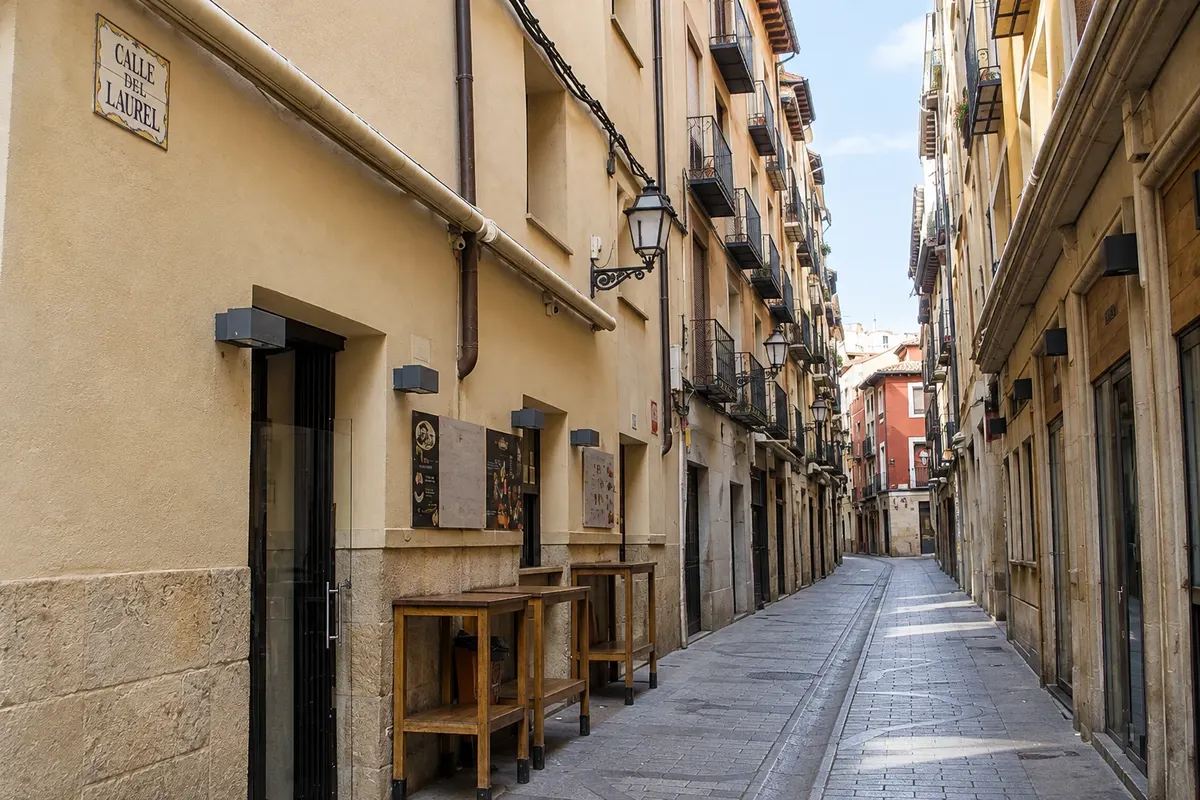
Street of bars
Calle del Laurel
The pincho-bar street of Logroño, in the old town, with dozens of counters in just over 200 meters, each with its own snack and Rioja wine.

 Išči
 Brazilija
 Antarktika
 Argentina
 Bolivija
 Čile
 Kolumbija
 Ekvator
 Gvajana
 Francoska Gvajana
 Falklandski otoki (Malvini)
 Paragvaj
 Peru
 Surinam
 Urugvaj
 Venezuela
 Nemčija
 Avstrija
 Belgija
 Hrvaška
 Danska
 Slovaška
 SlovenijaŠpanija
 Finska
 Francija
 Grčija
 Nizozemska
 Madžarska
 Irska
 Islandija
 Italija
 Luksemburg
 Norveška
 Poljska
 Portugalska
 Združeno kraljestvo
 Češka
 Švedska
 Švica
 Turčija
 Bermudi
 Kanada
 Združene države Amerike
 Grenlandija
 Mehika
 Sveta Peter in Mihael
 Dominikanska republika
 JaponskaTurčija
 Južnoafriška republika
 Egipt
 Avstralija
 Fidži
 Nova Zelandija
 Papua Nova Gvineja
La Rioja · Španija Capital
Destinacija: Navarre and La Rioja.
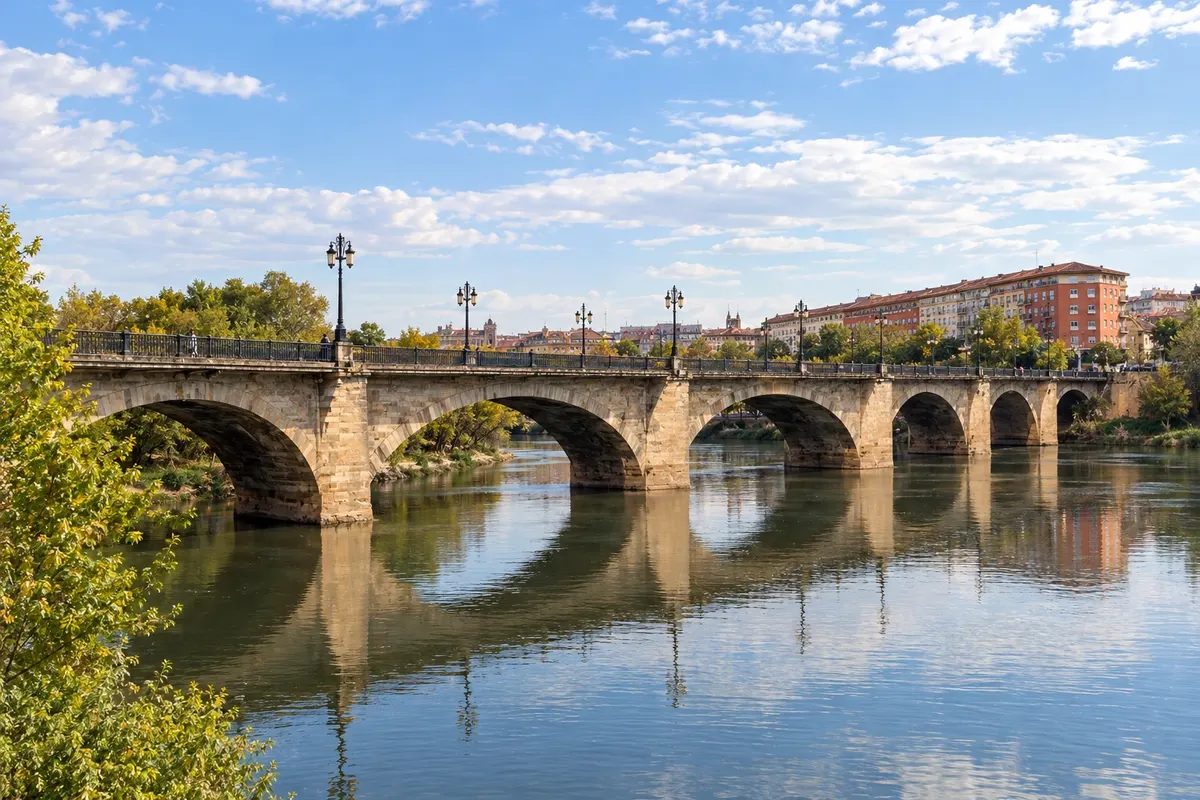
Na fotografiji: Stone Bridge over the Ebro River in Logroño.
Illustrative images. The pictures in this guide are illustrations based on the real place, not photographs, and may differ from it.
Mesto
Logroño is the capital of La Rioja, a wine region on the banks of the Ebro river. The Caminho Francês enters via the stone bridge and follows the Rúa Vieja, passing the churches of San Bartolomé and Santiago el Real, with the pilgrims' fountain. The co-cathedral of Santa María de la Redonda has twin baroque towers. At night, Laurel and San Juan streets gather dozens of pinchos bars. The city also has the Museo de La Rioja and riverside wineries. About 45 km away, the monasteries of San Millán are the birthplace of written Spanish. Spanish is spoken.
V vodniku še ni nastanitev – Logroño.
kako do tja · koliko dni · načrt poti · vprašanja
Doživite kraj
The pincho-bar street of Logroño, in the old town, with dozens of counters in just over 200 meters, each with its own snack and Rioja wine.
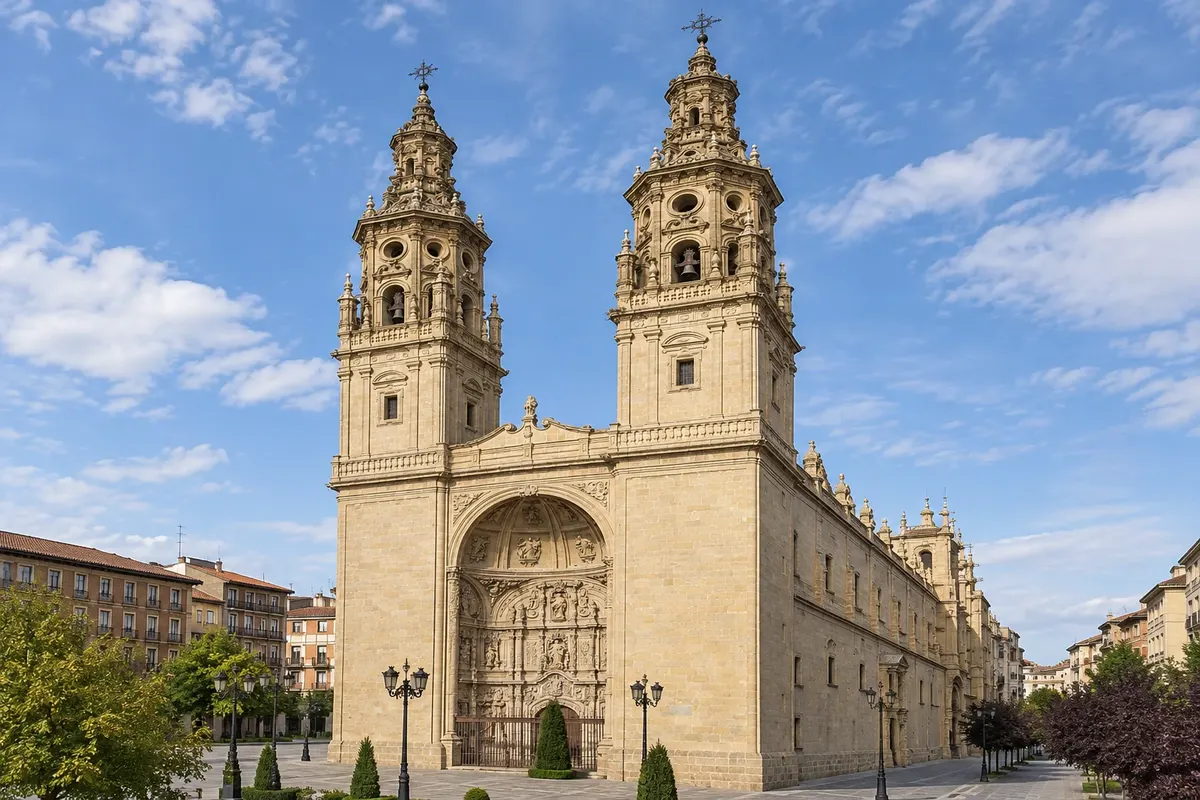
The co-cathedral of Logroño, with Baroque twin towers on the Plaza del Mercado, a Gothic nave with tall columns and a painting of the Crucifixion attributed to Michelangelo.
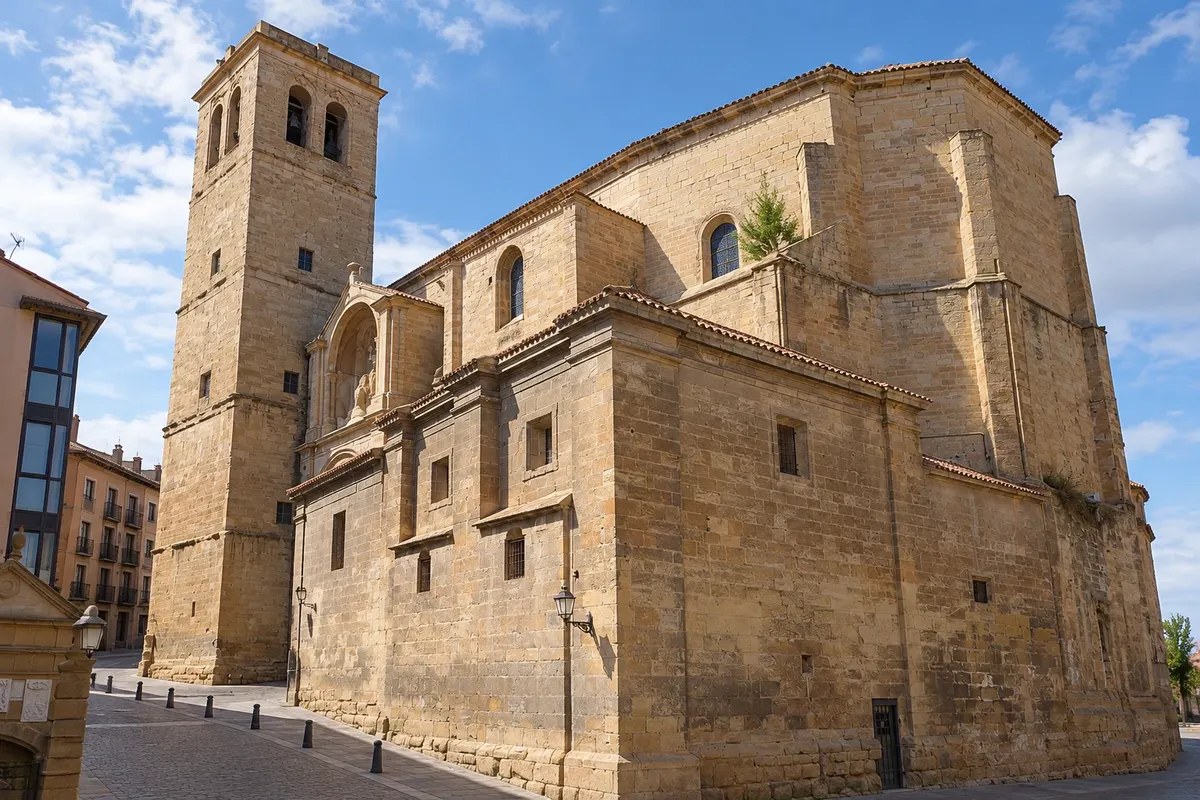
Church of the Camino on Rúa Vieja, built between 1513 and 1527, with the equestrian statue of São Tiago on the façade, the pilgrims' fountain and the juego da glória painted on the square.
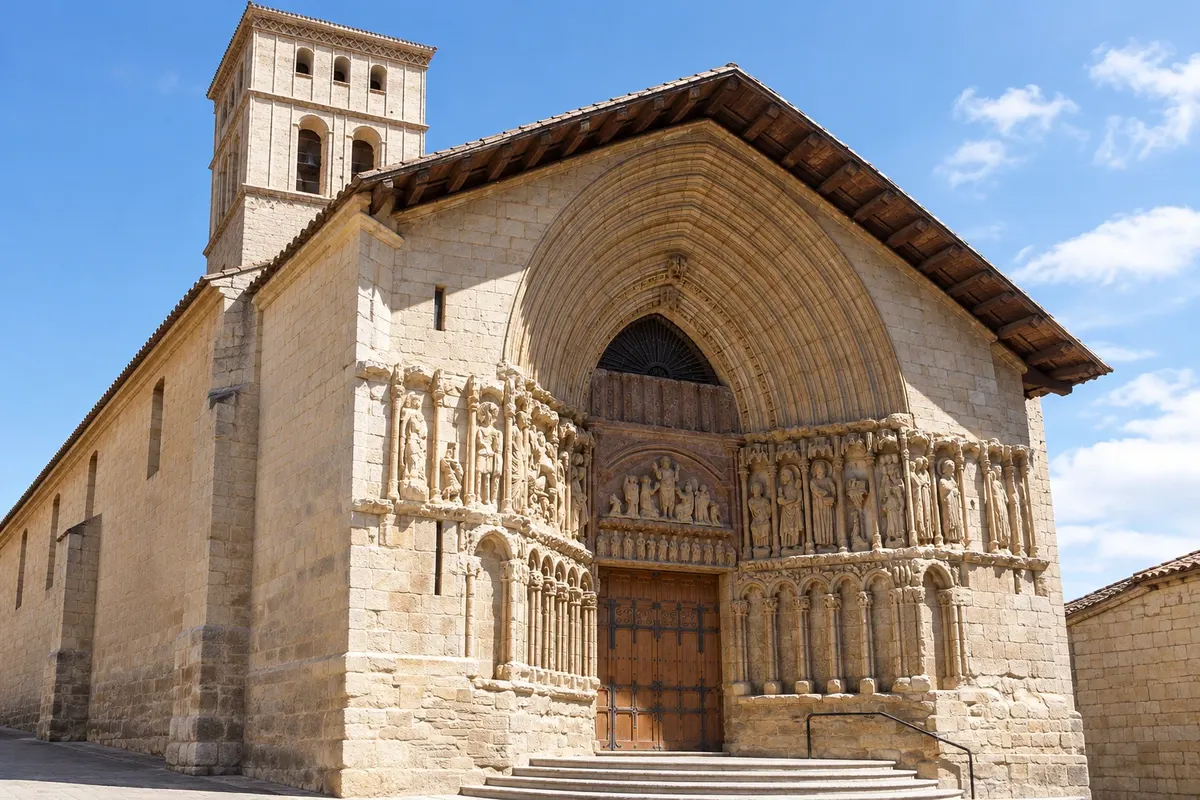
The oldest church in Logroño, from the 12th century, with a Romanesque apse and a 14th-century Gothic portal featuring scenes of the martyrdom of São Bartolomeu.
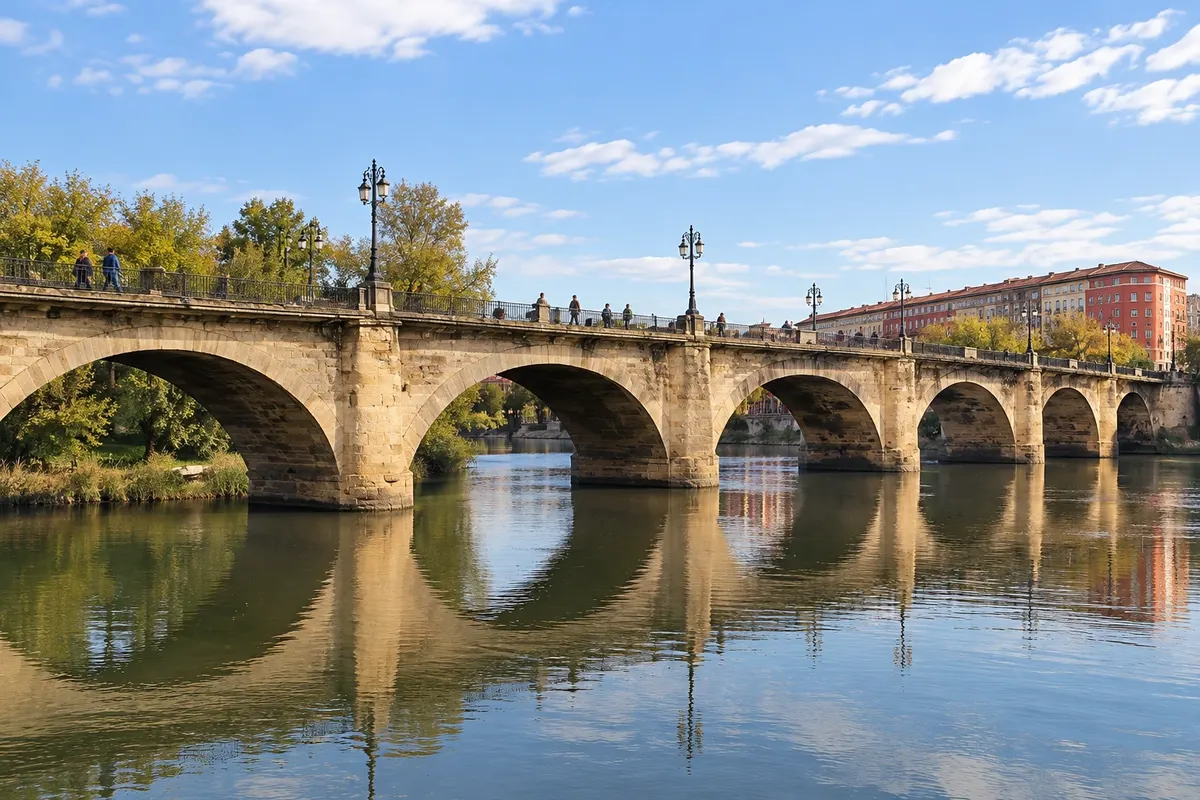
The ponte de pedra over the Ebro through which the Caminho de Santiago enters Logroño, rebuilt at the end of the 19th century in place of the medieval bridge, with views of the riverbank and the nearby Revellín wall.
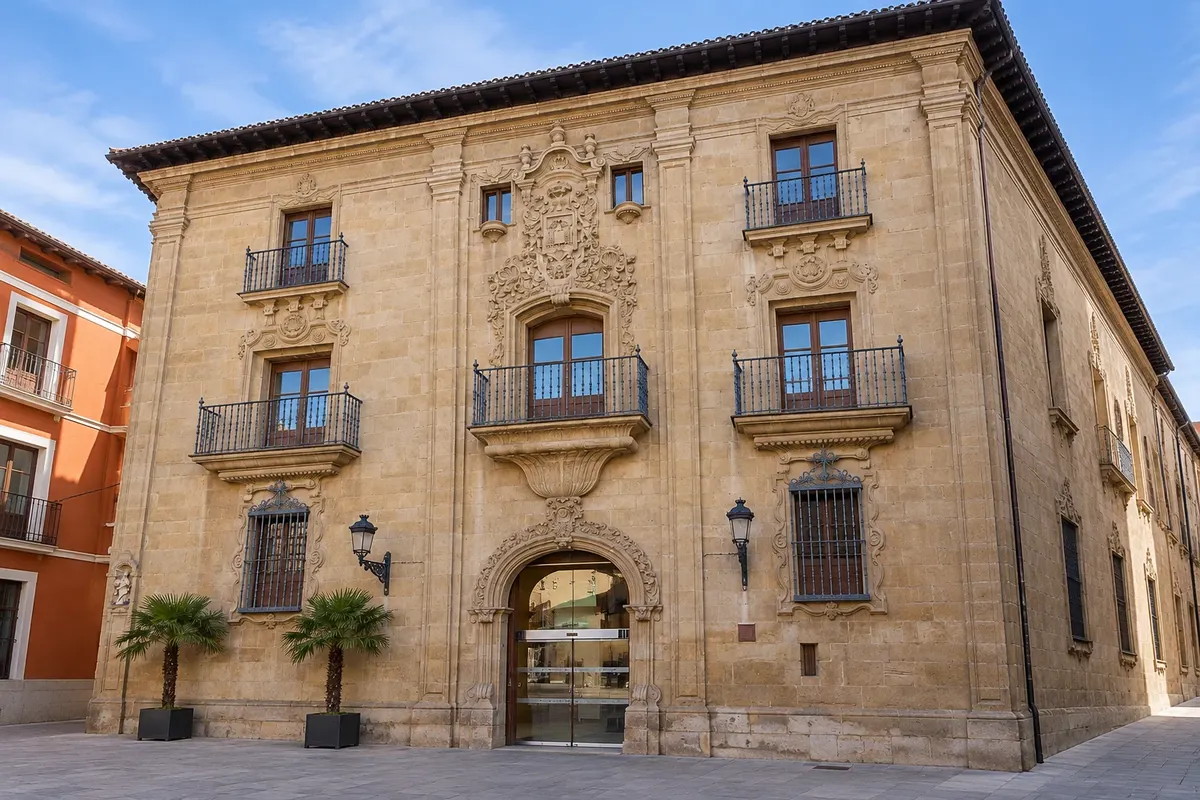
Museu de arte e história de La Rioja in the Palácio de Espartero, 18th century, with medieval sculptures and paintings, the San Millán panels and an ethnography section.
Winery founded in 1890 by a Frenchman on the banks of the Ebro, opposite the centre of Logroño, with old cellars and guided tours with tastings.
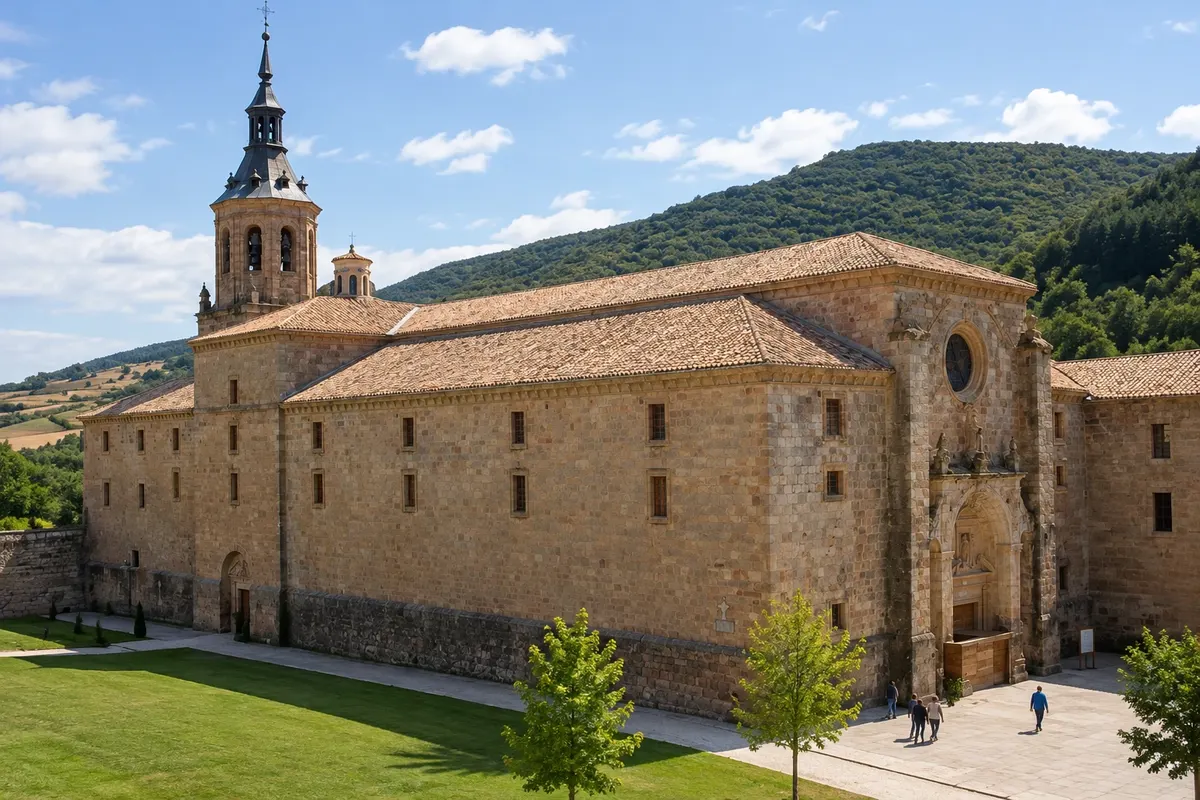
Two monasteries in San Millán de la Cogolla, 45 km from Logroño, a World Heritage Site: Suso, carved into the hillside, and Yuso, in the valley, where the Glosas Emilianenses were written, the earliest written records of Spanish.
Pred odhodom
Logroño – La Rioja Destinacija Navarre and La Rioja Capital
Razdalje so približne. Pred potovanjem preverite lete in vozne rede avtobusov, vlakov ali ladij.
Check before buying. International flights more often arrive to Bilbao, about 140 km away, and to Madri; Logroño-Agoncillo airport has few flights. The train station has connections to Madri, Barcelona, Bilbao and Saragoça, and the bus station has services to Pamplona, Burgos, Bilbao and the Rioja towns. By car, via the AP-68 and A-12 highways.
One day covers the old town, the co-cathedral, the churches on the Camino and a pinchos night on Calle Laurel. With two days, you can visit a winery and the monasteries of San Millán de la Cogolla. Those who want to experience the wine side of Rioja at a relaxed pace usually stay three days.
From May to October, with long days and good weather for wineries. September and October are harvest season, and the San Mateo festival, around September 21, celebrates the grape harvest in the city. Winter is cold and dry.
The seasons shown are the most usual ones; nature doesn't always follow the calendar.
Not for the city: the old town is compact and largely pedestrian. For the monasteries of San Millán and the wineries in the Rioja villages, a car helps; there are buses with limited schedules and agencies that run tours. If you plan to visit wineries, agree in advance on who will drive.
Predlog poti
Pot povezuje znamenitosti na tej strani. Za oglede boste imeli dovolj časa.
Start at the stone bridge over the Ebro, where the pilgrims arrive, and follow Rúa Vieja to the church of Santiago el Real, with the pilgrims' fountain and the game of la gloria painted on the square. Pass by the church of San Bartolomé and the Revellín wall.
Visit the co-cathedral of Santa María de la Redonda, with its twin towers and the painting of the Crucifixion attributed to Michelangelo, and then the Museu de La Rioja, in the Palacio de Espartero.
Walk along the Paseo del Espolón, the large central garden, with the equestrian statue of General Espartero.
Go through the bars on Laurel Street and San Juan Street. Each bar usually has its own pincho, and the custom is to order a pincho and a glass of Rioja wine at each one. The evening starts around 8:30 pm.
Dan 1
Stone bridge, Rúa Vieja, Santiago el Real and San Bartolomé.
Concatedral de la Redonda and Museu de La Rioja.
Walk through the garden of the Espolón.
Pinchos night.
Dan 2
Drive or take an organized tour to San Millán de la Cogolla, about 45 km away. Visit the monastery of Yuso and take a bus up to Suso, carved into the hillside.
On the way back, visit a winery. In Logroño, Franco-Españolas, on the other side of the Ebro, receives visitors by reservation.
Walk through the park by the Ebro and return to the center via the stone bridge.
Pincho bars on San Juan Street, less crowded than the Laurel.
Check before you go. Opening hours and days change, and places may close for renovations, holidays or events. This itinerary is a suggestion from Cidade Turismo, not a commitment: plan yours by checking directly with each place you intend to visit.
Pred odhodom
It's the street of pincho bars in Logroño's old town. In just over 200 meters and the surrounding streets there are dozens of bars, each with its own snack.
Yes. There are wineries in the city itself and in nearby towns like Haro, Laguardia and Briones. A car helps, and agencies run tours.
The San Mateo festivals, around September 21, celebrate the grape harvest, with the symbolic stomping of the first must.
By bus or car, in about 1 hour 15 minutes. It's about 90 km.
They are two monasteries, Suso and Yuso, in San Millán de la Cogolla, about 45 km from Logroño, a World Heritage Site. The Glosas Emilianenses were written there, considered the first written records of the Spanish language.
Rotas entre países
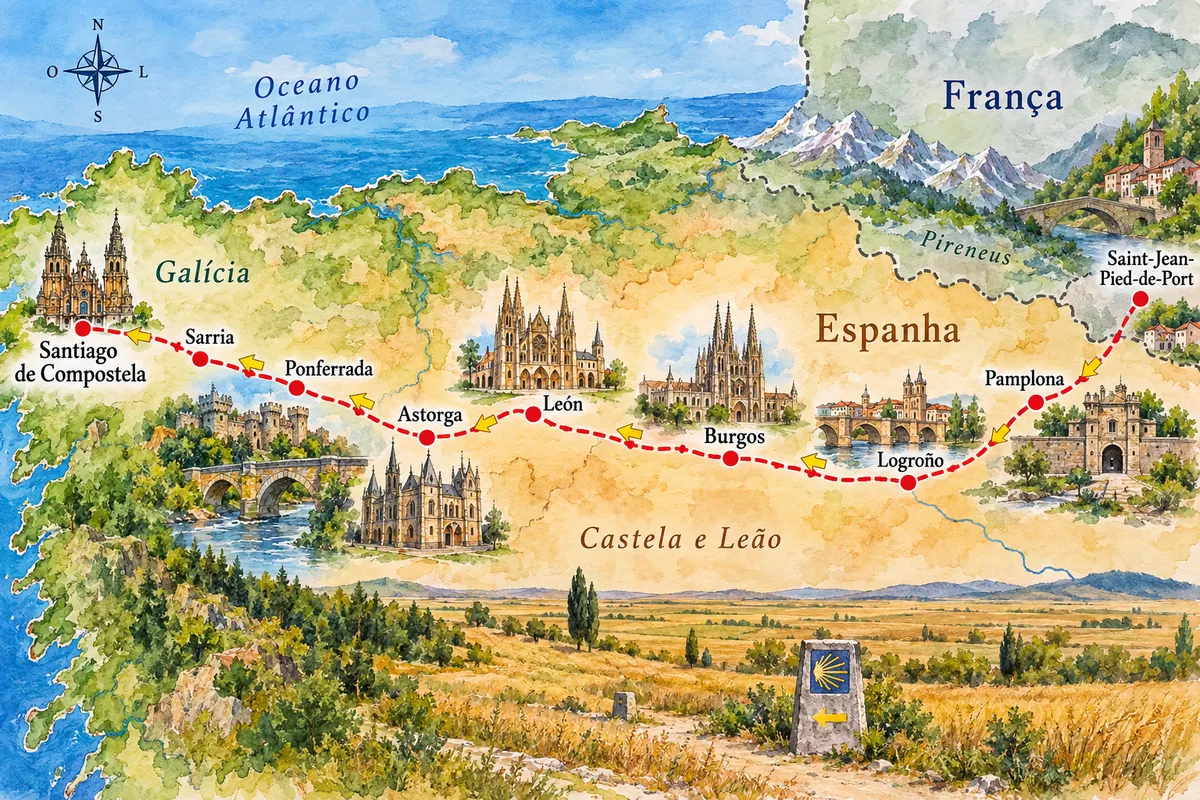
The most travelled pilgrimage route to Santiago de Compostela: from the French Pyrenees to Galicia, on foot, via Pamplona, Burgos and León, following the yellow arrows.
Več kot vodnik