Cerkev
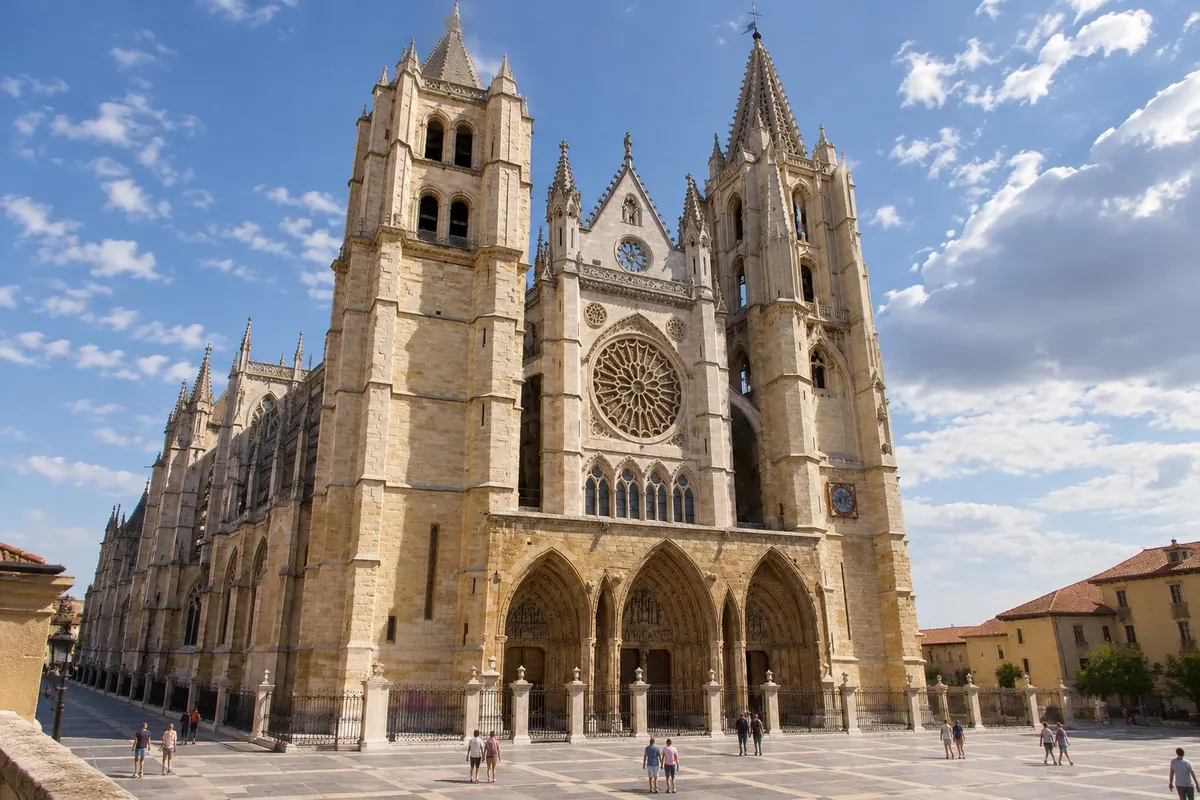
León Cathedral
13th-century Gothic cathedral, the Pulchra Leonina, known for the medieval stained-glass windows that replace almost all the walls and fill the nave with colour.

 Išči
 Brazilija
 Antarktika
 Argentina
 Bolivija
 Čile
 Kolumbija
 Ekvator
 Gvajana
 Francoska Gvajana
 Falklandski otoki (Malvini)
 Paragvaj
 Peru
 Surinam
 Urugvaj
 Venezuela
 Nemčija
 Avstrija
 Belgija
 Hrvaška
 Danska
 Slovaška
 SlovenijaŠpanija
 Finska
 Francija
 Grčija
 Nizozemska
 Madžarska
 Irska
 Islandija
 Italija
 Luksemburg
 Norveška
 Poljska
 Portugalska
 Združeno kraljestvo
 Češka
 Švedska
 Švica
 Turčija
 Bermudi
 Kanada
 Združene države Amerike
 Grenlandija
 Mehika
 Sveta Peter in Mihael
 Dominikanska republika
 JaponskaTurčija
 Južnoafriška republika
 Egipt
 Avstralija
 Fidži
 Nova Zelandija
 Papua Nova Gvineja
Castela e Leão · Španija
Destinacija: Burgos and León.
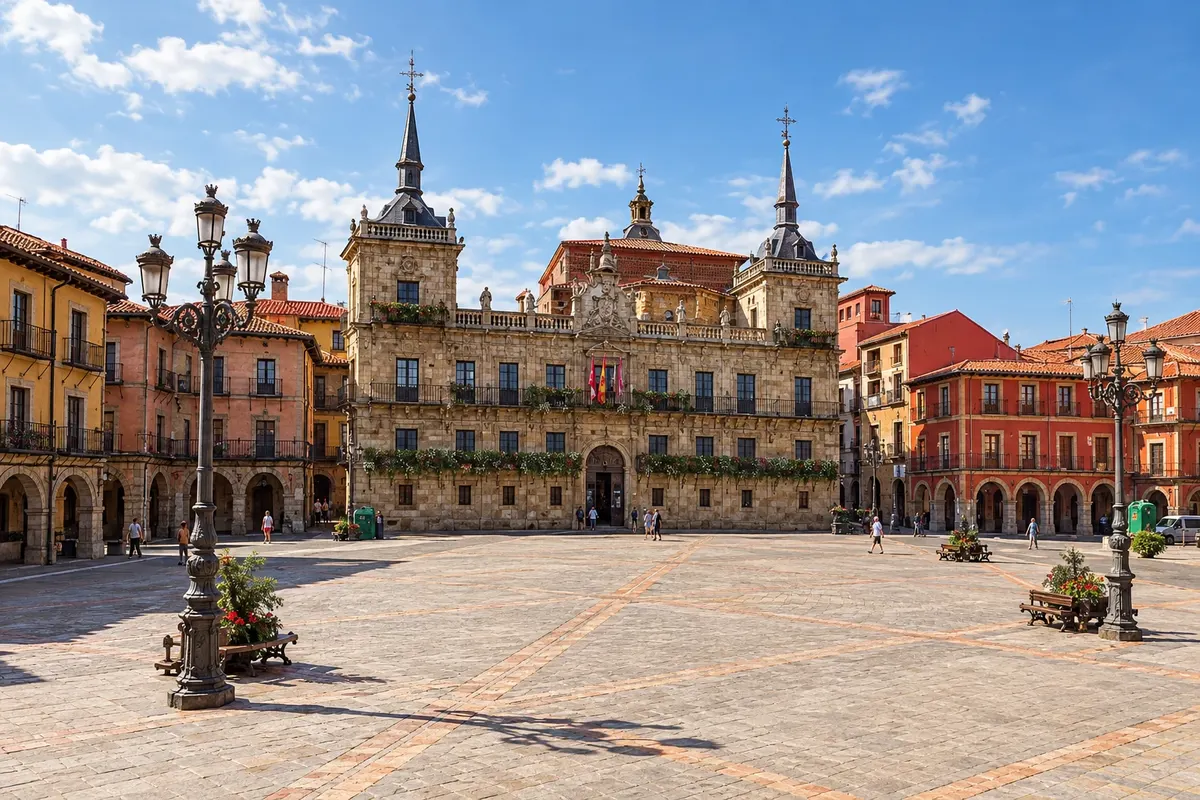
Na fotografiji: Plaza Mayor and the old Ayuntamiento, in León.
Illustrative images. The pictures in this guide are illustrations based on the real place, not photographs, and may differ from it.
Mesto
León is the capital of the province of the same name, in Castile and León, born from a Roman camp and the capital of the old Kingdom of León. It is one of the main stops on the Caminho Francês. The Gothic cathedral has one of the largest sets of medieval stained-glass windows in the world, and San Isidoro houses the Pantheon of the Kings, with Romanesque paintings. Gaudí left the Casa Botines, now a museum, and the Hostal de San Marcos has a plateresque façade. The MUSAC displays contemporary art. At night, the Barrio Húmedo around the Plaza Mayor fills with tapas bars. Spanish is spoken.
V vodniku še ni nastanitev – León.
kako do tja · koliko dni · načrt poti · vprašanja
Doživite kraj
13th-century Gothic cathedral, the Pulchra Leonina, known for the medieval stained-glass windows that replace almost all the walls and fill the nave with colour.
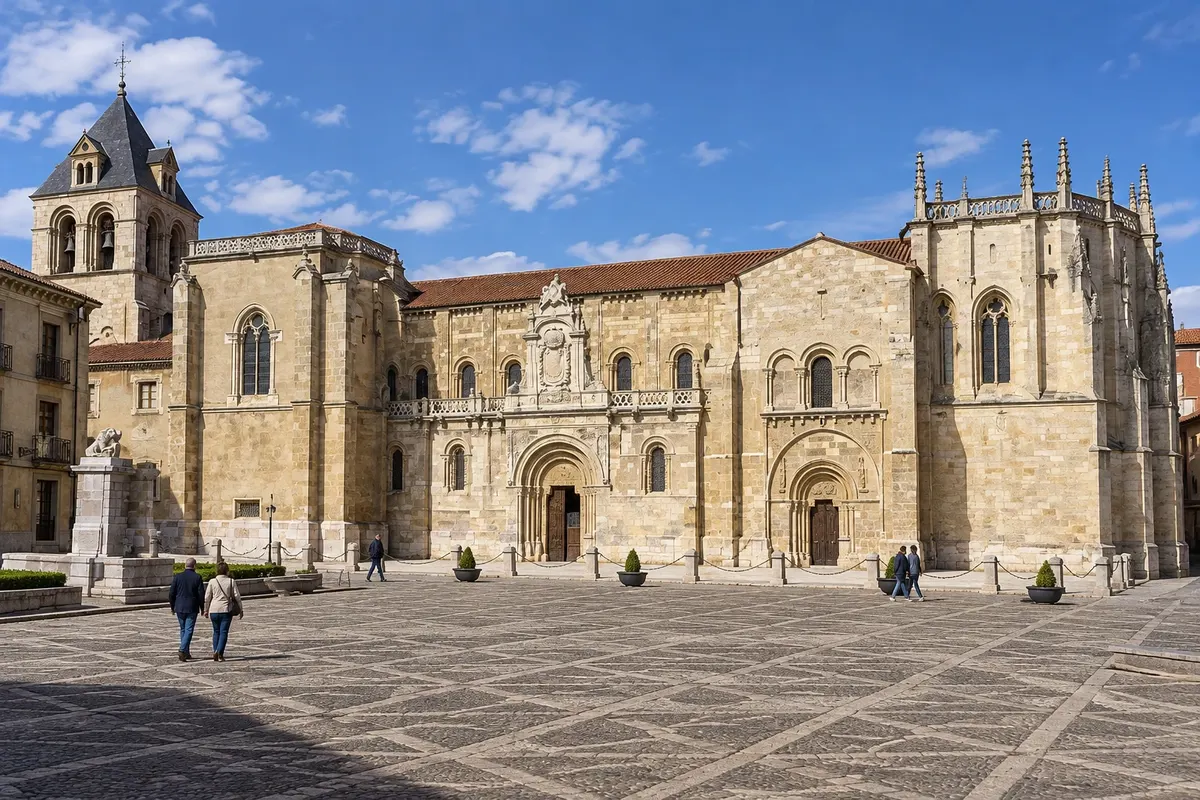
Romanesque complex from the 11th and 12th centuries with the Pantheon of the Kings of León, covered with 12th‑century mural paintings, and the museum housing the chalice of Doña Urraca.
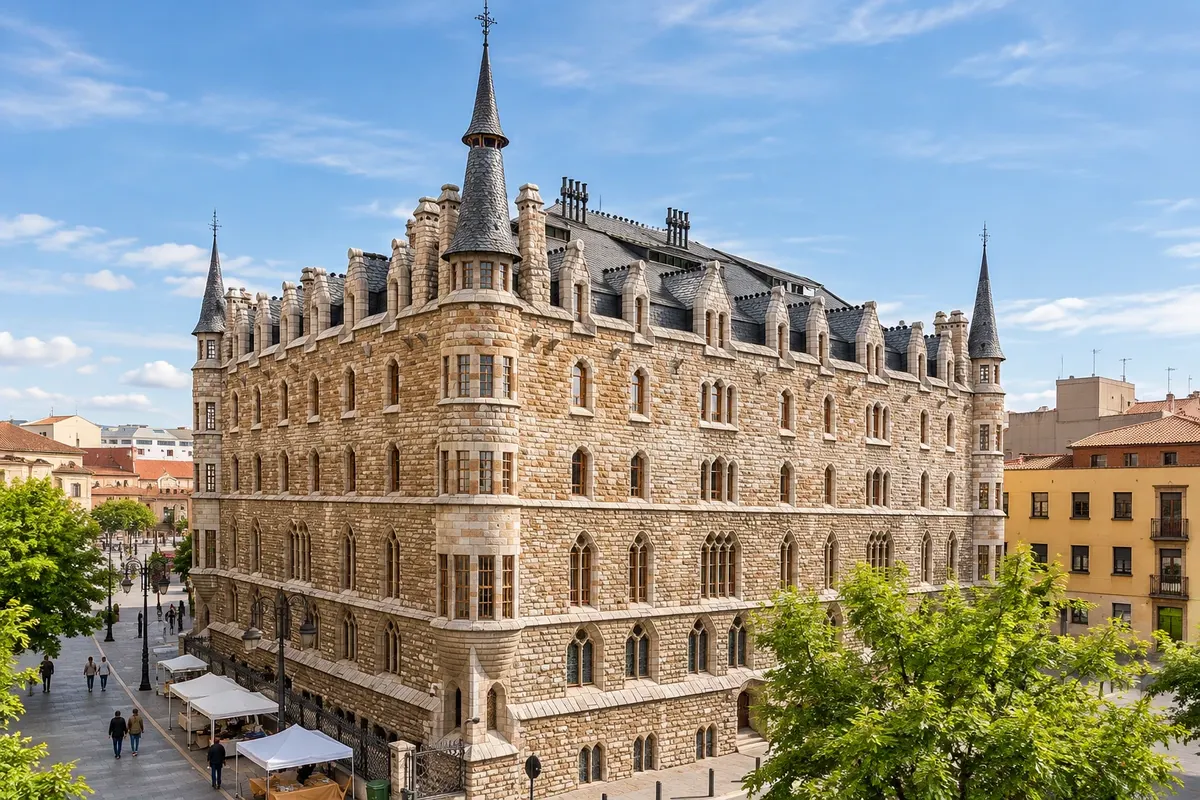
Building by Gaudí constructed between 1891 and 1892, with corner towers and a castle-like appearance, today a museum with the interiors and an art collection.
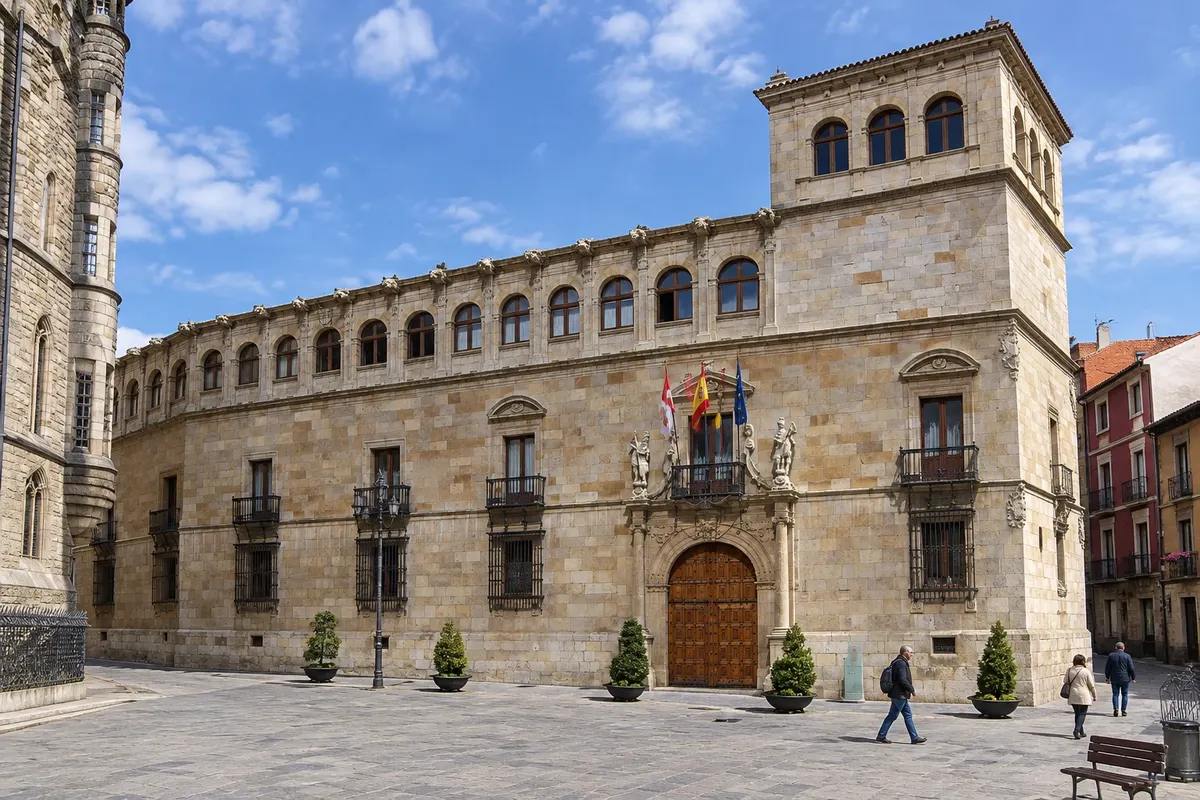
16th-century Renaissance palace, next to Casa Botines, with an arcaded courtyard, seat of the Diputación de León.
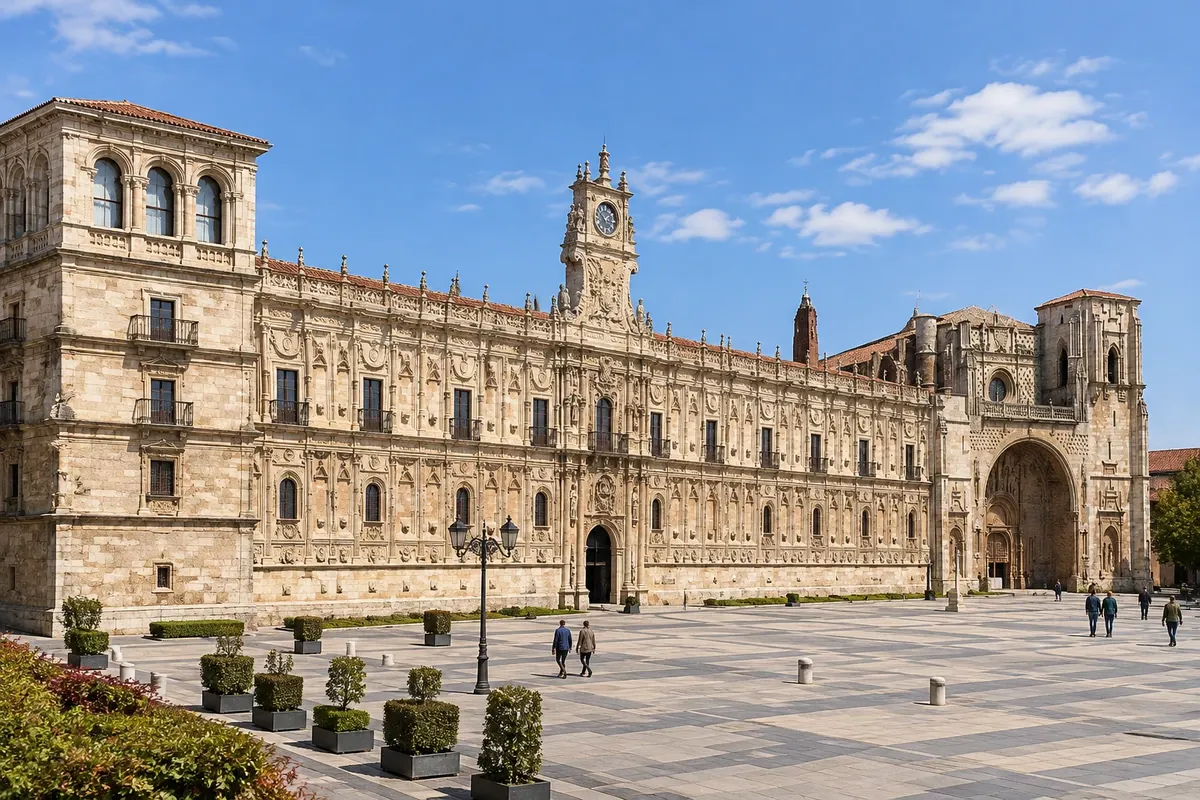
Former pilgrims' hospital and seat of the Ordem de Santiago on the banks of the Bernesga river, with a long 16th-century plateresque façade, today a parador, with the church open to visitors.
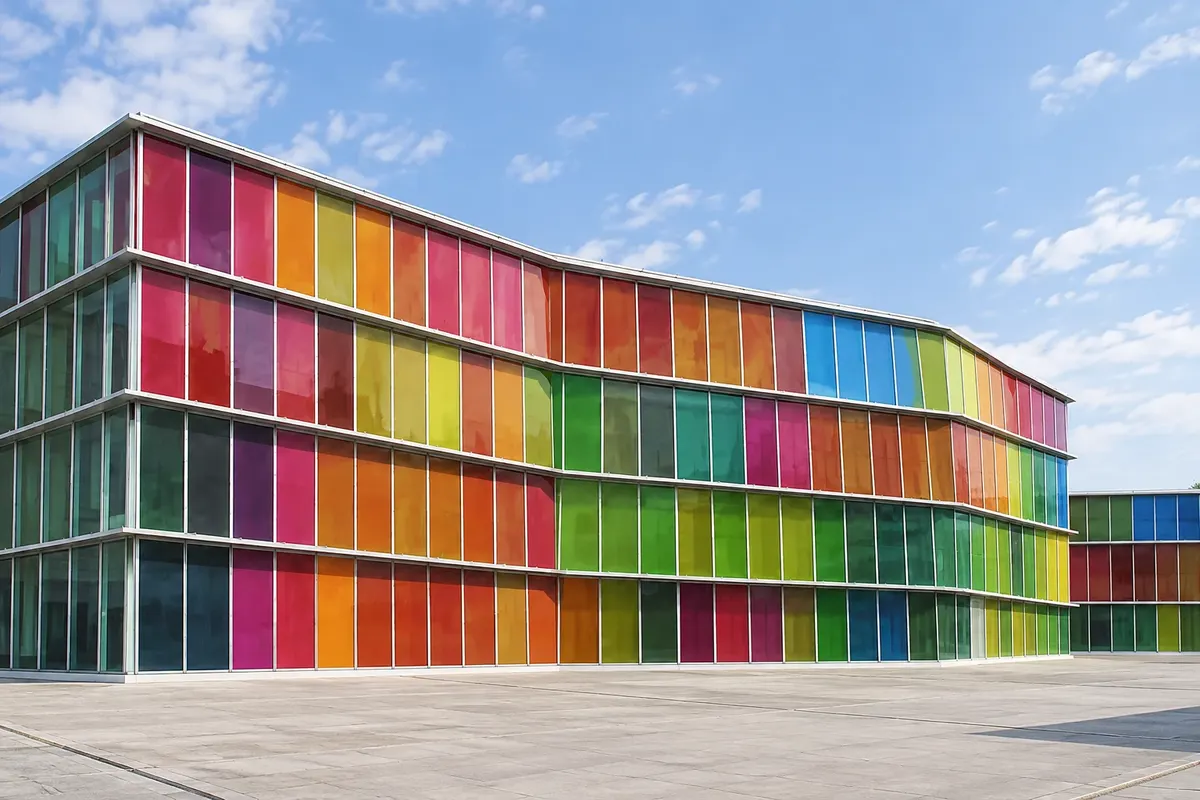
Museu de arte contemporânea de Castela e Leão, opened in 2005, in a building with a façade of colored glass inspired by the cathedral's stained glass.
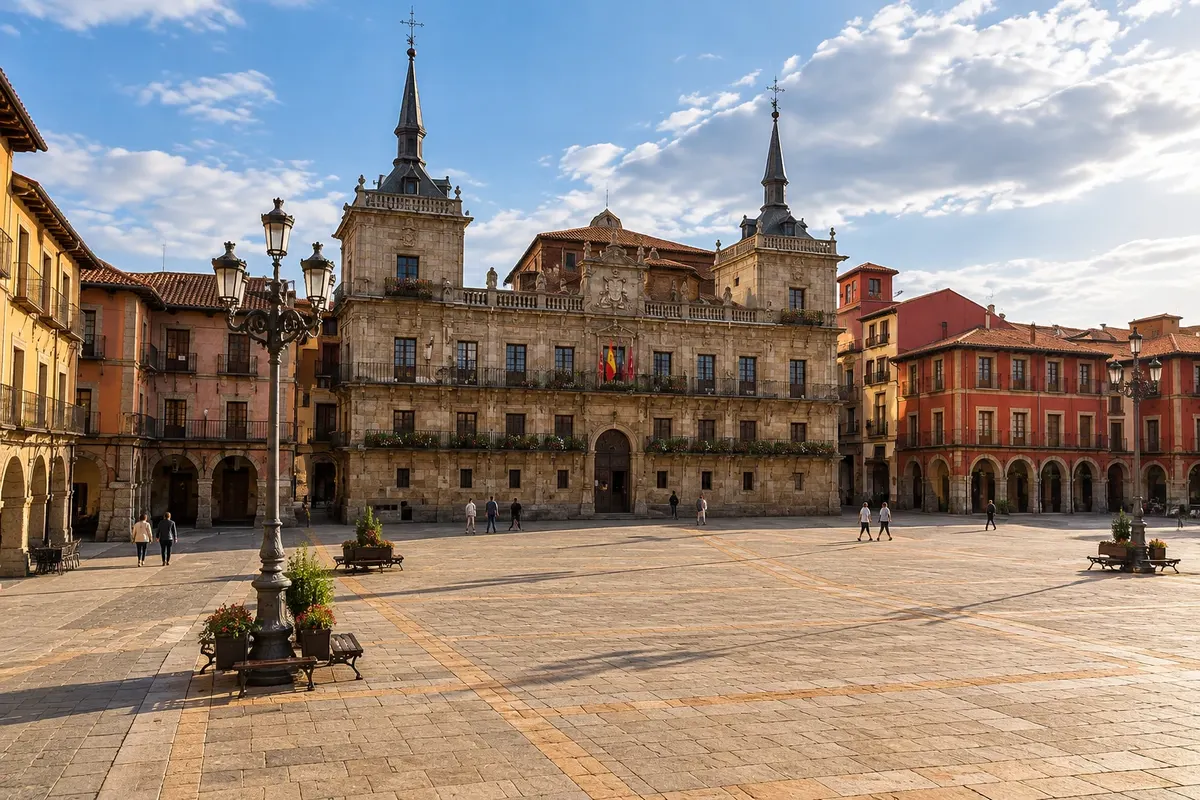
The 17th-century Baroque main square and the surrounding bar district, the Barrio Húmedo, the center of León’s tapas nights.
Pred odhodom
León – Castile and León Destinacija Burgos and León
Razdalje so približne. Pred potovanjem preverite lete in vozne rede avtobusov, vlakov ali ladij.
Check before buying. International flights arrive in Madri, and from there high-speed trains take you to León in about 2 hours. León airport, about 6 km away, has few flights. Trains also link the city to Galicia, the Asturias and Burgos. The bus station has services to Astorga, Ponferrada and other towns on the Caminho. By car, via the A-66 and A-231 motorways.
Two days allow time for the cathedral, San Isidoro, the Casa Botines, the Hostal de San Marcos and evenings in the Barrio Húmedo. With three days, you can do the MUSAC and a day trip to Astorga, about 50 km away.
From May to October, with long days and good weather for walking. At the end of June the festivals of San Juan and San Pedro liven up the city. Winter is cold, with frosts. León’s Holy Week has processions known throughout the country.
The seasons shown are the most usual ones; nature doesn't always follow the calendar.
No. The old centre is walkable, and San Marcos and the MUSAC are 15–20 minutes on foot. There are trains and buses to Astorga. A car only helps to explore the province’s interior, such as the mountains and valleys to the north.
Predlog poti
Pot povezuje znamenitosti na tej strani. Za oglede boste imeli dovolj časa.
Start with the cathedral in the morning, when the sun shines through the east windows and fills the nave with colour. See the cloister and the museum.
Follow the walls to the Real Colegiata de San Isidoro and visit the Pantheon of the Kings, with the Romanesque paintings on the vault, and the museum with the chalice of Doña Urraca.
Walk down to Plaza de San Marcelo to see the Casa Botines by Gaudí, with the bench where the architect's statue stands, and the Palacio de los Guzmanes next door.
Explore the bars of the Barrio Húmedo around the Plaza Mayor and Plaza de San Martín. In many of them the tapa often comes with the drink, and cecina, the cured meat of León, appears on almost every menu.
Dan 1
Cathedral, cloister and museum.
Pantheon of the Kings and the museum of San Isidoro.
Casa Botines and the Palacio de los Guzmanes.
Tapas bars around the Plaza Mayor.
Dan 2
Visit the Casa Botines museum, with the floors designed by Gaudí and the art collection.
Walk to the Hostal de San Marcos on the banks of the Bernesga and see the plateresque façade and the church. Continue to the MUSAC, a few minutes away, for contemporary art.
Return to the centre via the riverside walk along the Bernesga.
Dine in the Barrio Romántico around the Plaza del Grano, quieter than the Húmedo.
Check before you go. Opening hours and days change, and places may close for renovations, holidays or events. This itinerary is a suggestion from Cidade Turismo, not a commitment: plan yours by checking directly with each place you intend to visit.
Pred odhodom
The cathedral with its medieval stained-glass windows, the Pantheon of the Kings in San Isidoro, Gaudí's Casa Botines, the Hostal de San Marcos and the Barrio Húmedo.
By high-speed train in about 2 hours. By car, it's roughly 330 km.
In many bars in the Barrio Húmedo and the centre, yes: the tapa usually accompanies each drink ordered. It varies from bar to bar.
Two days allow you to see the main monuments at a relaxed pace and enjoy tapas nights. With an extra day, you can do a day trip to Astorga.
Yes. It is one of the major cities on the Caminho Francês, after the meseta, and many pilgrims spend a rest day there.
Rotas entre países
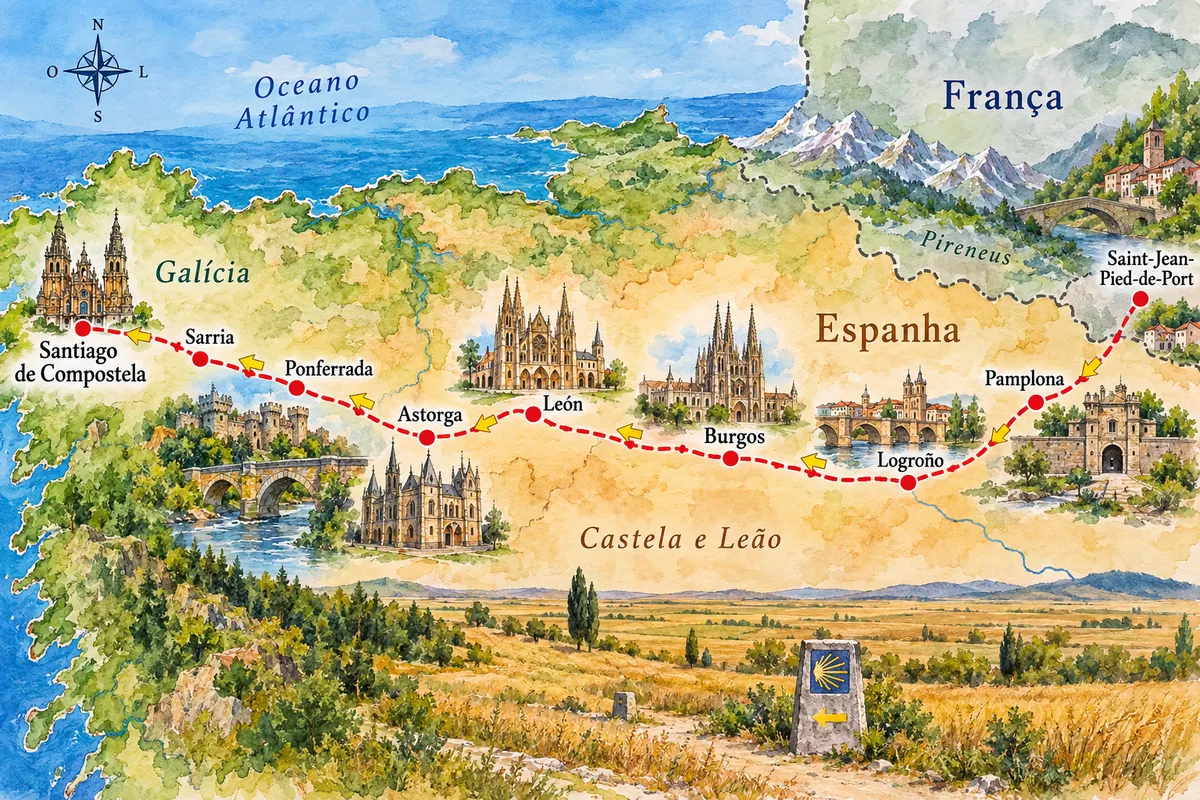
The most travelled pilgrimage route to Santiago de Compostela: from the French Pyrenees to Galicia, on foot, via Pamplona, Burgos and León, following the yellow arrows.
Več kot vodnik