Barcelona

Catalonia · Španija

Barcelona

Capital da Catalunha on the shore of the Mar Mediterrâneo, with Gaudí's works, the medieval Bairro Gótico and beaches within the city.

Mediterranean

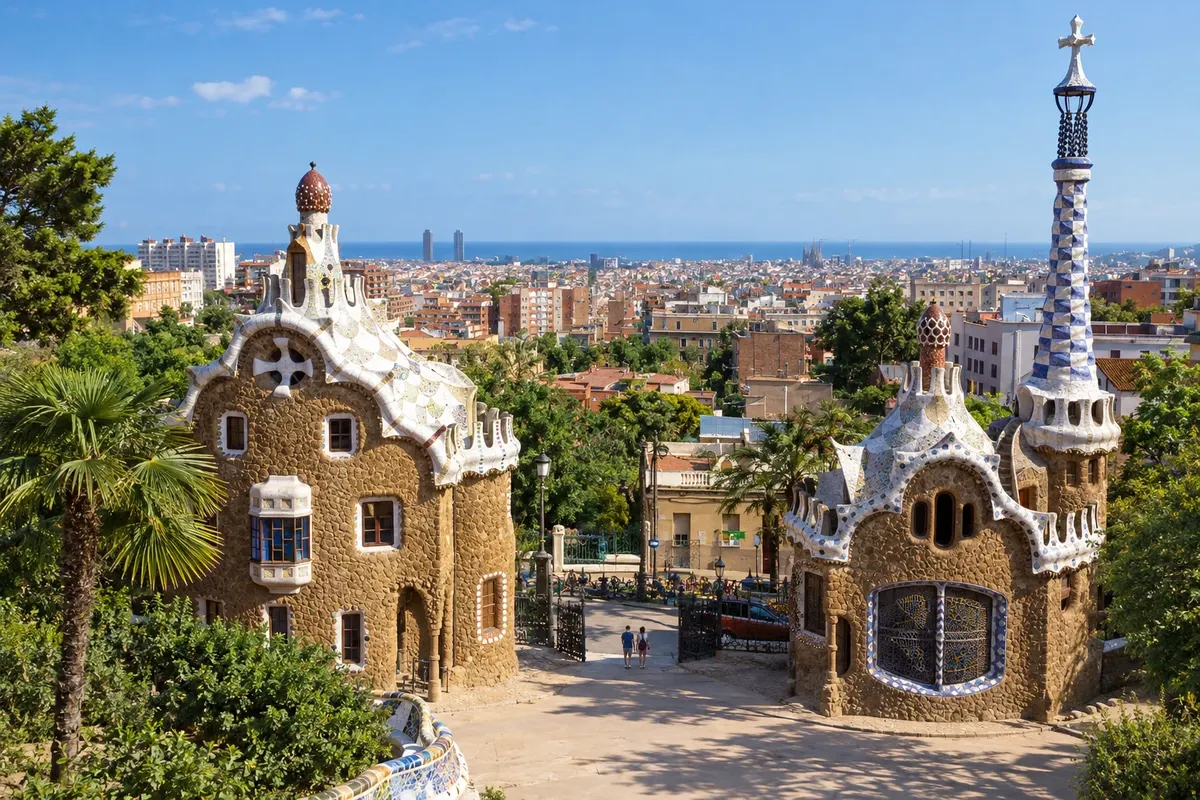
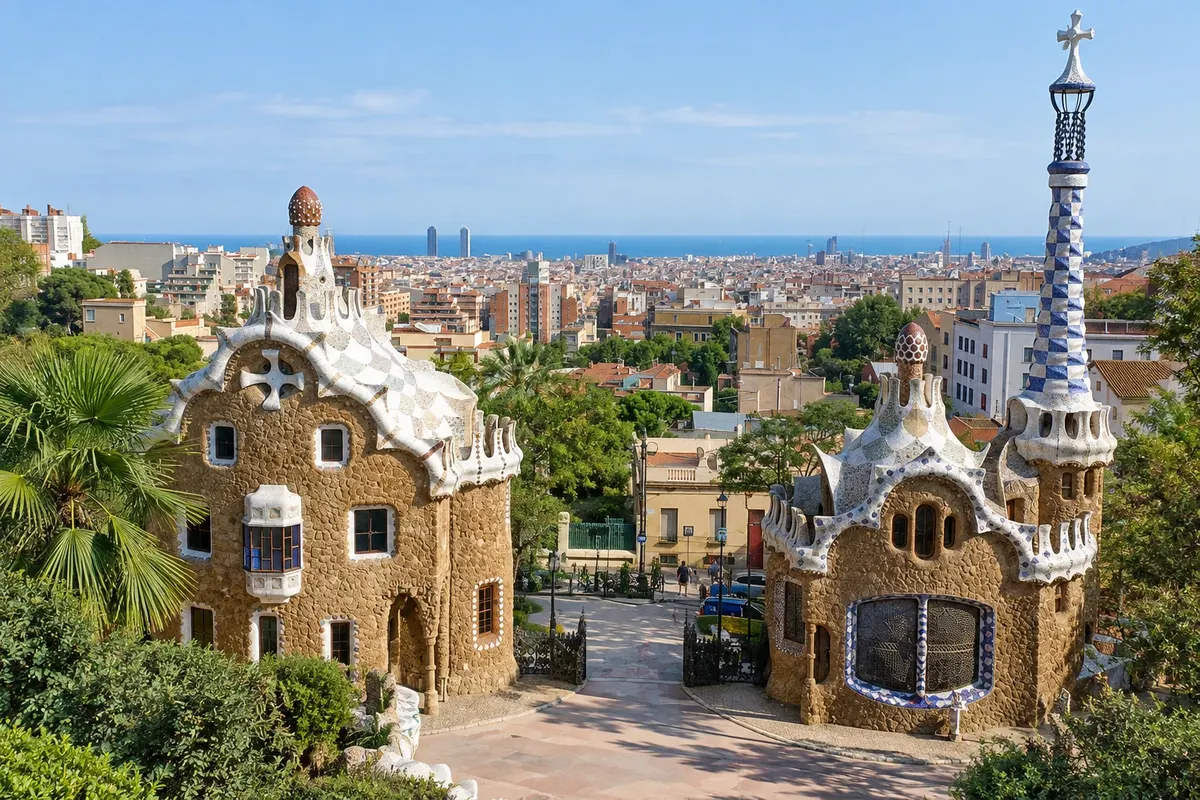
Na fotografiji: Park Güell in Barcelona

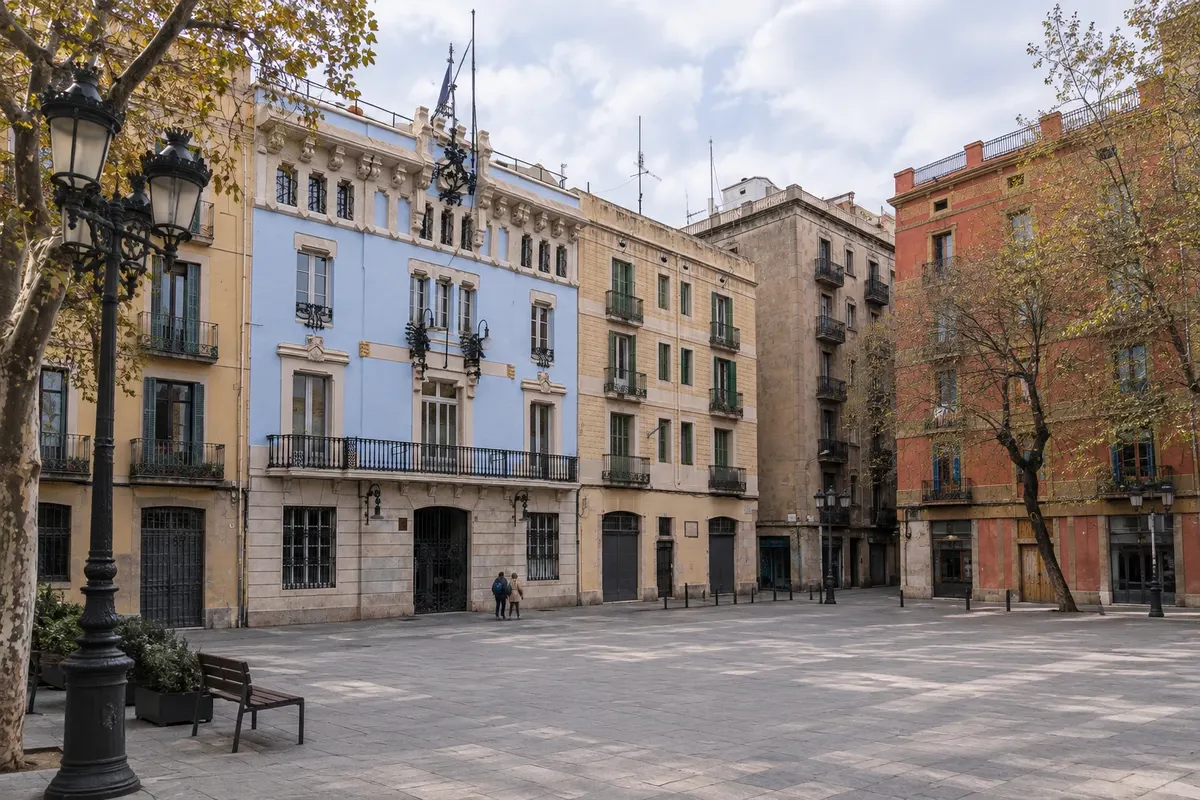
Illustrative images. The pictures in this guide are illustrations based on the real place, not photographs, and may differ from it.

Na voljo v trgovini Google Play Pošljite svoje fotografije

Spoznajte kraj

Pokrajina, ki jo doživite
v svojem ritmu.

Barcelona is the capital da Catalunha and the second largest city in Spain. It is in the northeast of the country, facing the Mar Mediterrâneo, between the rivers Llobregat and Besòs. The Romans called it Barcino, and stretches of the wall from that time still appear in the old centre.

The city has two official languages: Catalan and Spanish (Castilian). Signs, menus and street names often appear in Catalan, such as Plaça, Carrer and Passeig. Portuguese speakers understand much of both languages in writing.

The main attraction is Catalan modernism from the early 20th century. Antoni Gaudí left the Sagrada Família, Park Güell, Casa Batlló, Casa Milà and Palau Güell in the city. Lluís Domènech i Montaner was responsible for the Palau de la Música Catalana and the former Hospital de Sant Pau. Several of these works are UNESCO World Heritage sites.

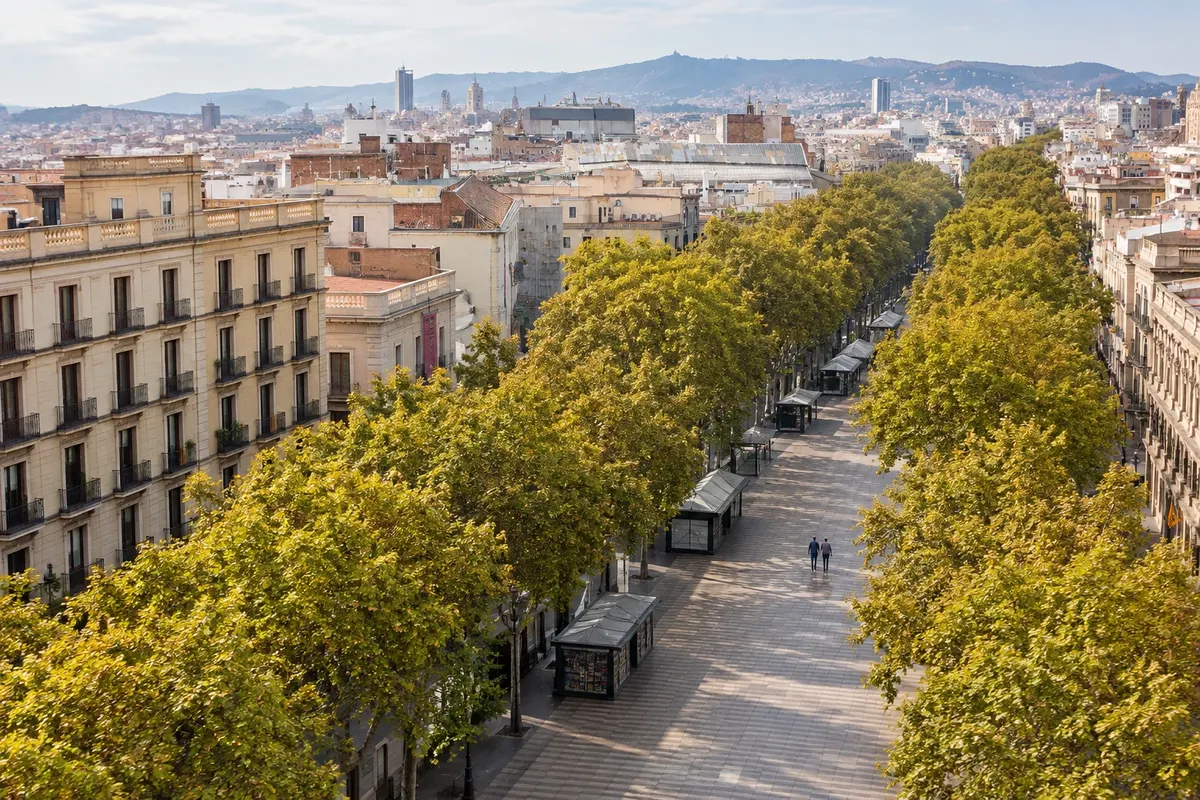
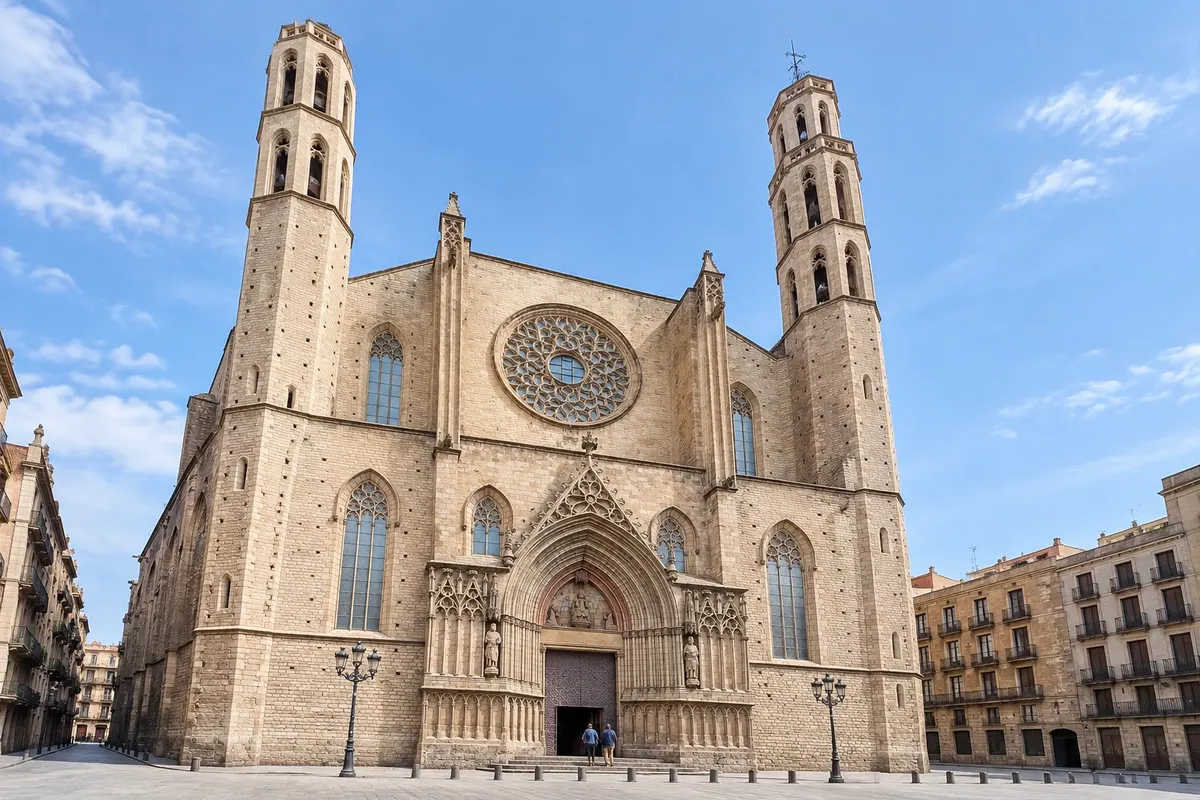
Beside the modernism is medieval Barcelona: the Barri Gòtic, the Catedral, the church of Santa Maria del Mar and the street Montcada, where the Museu Picasso is located. The Rambla links the Plaça de Catalunya to the port, passing the Boqueria market.

The city also has urban beaches in Barceloneta, the Montjuïc hill with museums and gardens, and the Tibidabo, from where you can see the whole city. The monastery of Montserrat, in the mountains to the northwest, is a very popular day trip.

Delite: WhatsApp

Kje prenočiti

V vodniku še ni nastanitev – Barcelona.

Kje jesti

V vodniku še ni restavracij – Barcelona.

Poznate dobro možnost? Priporočite nam jo

Vaše potovanje

kako do tja · koliko dni · načrt poti · vprašanja

Delite svoja popotniška doživetja s fotografijami Pošljite fotografije vsakega kraja, ki ste ga obiskali. Največje število fotografij na kraj: 5.

Kako do tja:Barcelona

✈ Aeroport Josep Tarradellas Barcelona-El Prat (BCN), kraj: El Prat de Llobregat· 15 km do cilja (Barcelona)

The Aeroporto Josep Tarradellas Barcelona-El Prat (BCN) is in El Prat de Llobregat, southwest of the centre. Confirm before purchasing. From Madri, the high-speed train takes about 2.5 to 3 hours to Barcelona-Sants station.

Praznovanja in dogodki

Praznovanja – vBarcelona

Datumi se vsako leto spreminjajo. Pred potovanjem preverite letošnji datum.

Koledar praznovanj – in Španija

Doživite kraj

Kaj početi – Barcelona

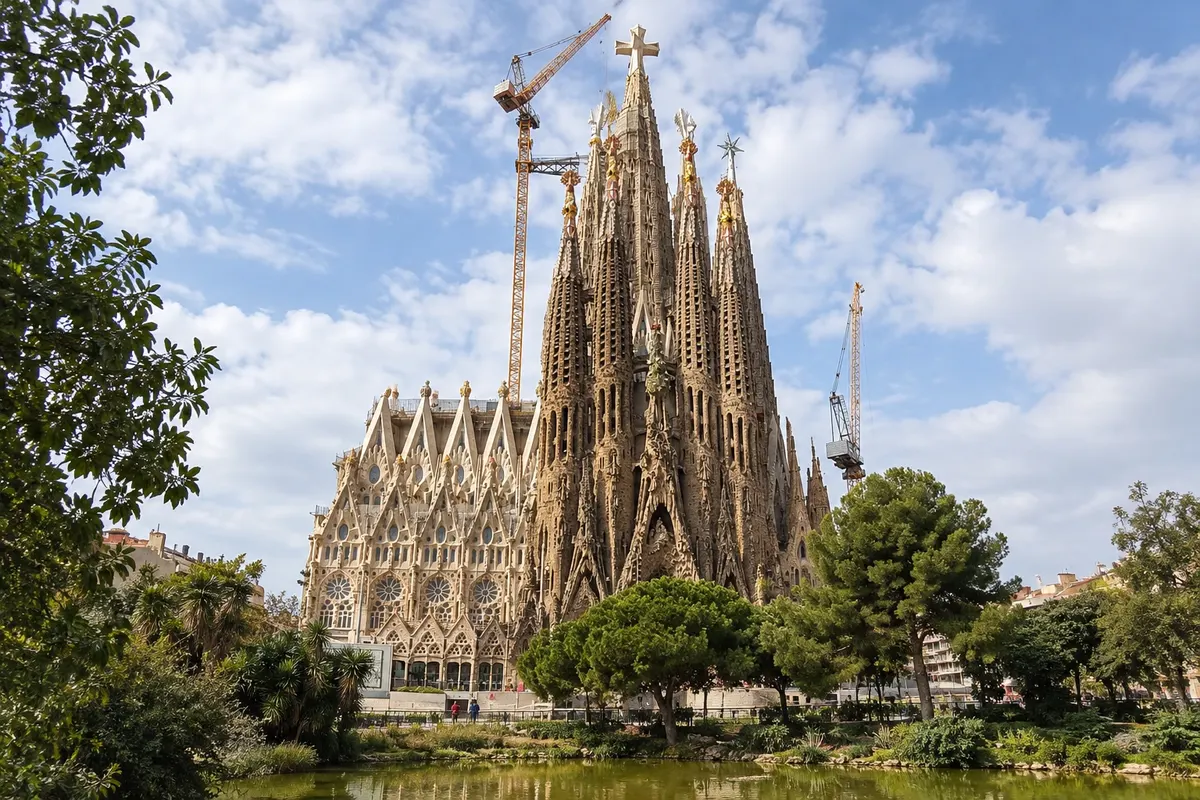
Sagrada Família Basilica
Barcelona · Catalonia · Cerkev

Sagrada Família Basilica

Antoni Gaudí's greatest work, under construction since 1882. It has façades full of sculptures, an interior shaped like a stone forest, and towers that can be visited.

Park Güell
Barcelona · Catalonia · Park

Park Güell

Park created by Gaudí on the heights of the Gràcia neighborhood, between 1900 and 1914, featuring the mosaic salamander, the columned hall, the undulating bench and city views.

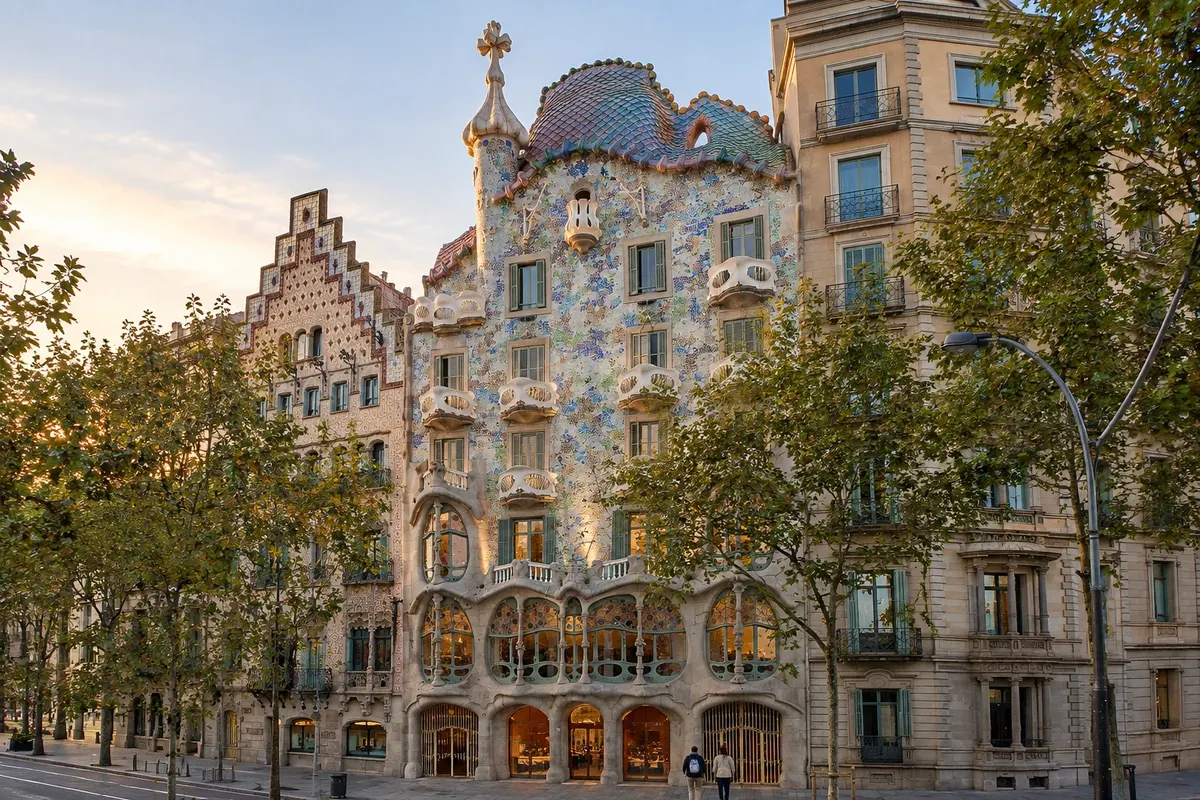
Casa Batlló
Barcelona · Catalonia · House-museum

Casa Batlló

Building on Passeig de Gràcia renovated by Gaudí between 1904 and 1906 for Josep Batlló, with a façade of bones and scales and an interior open to visitors up to the rooftop.

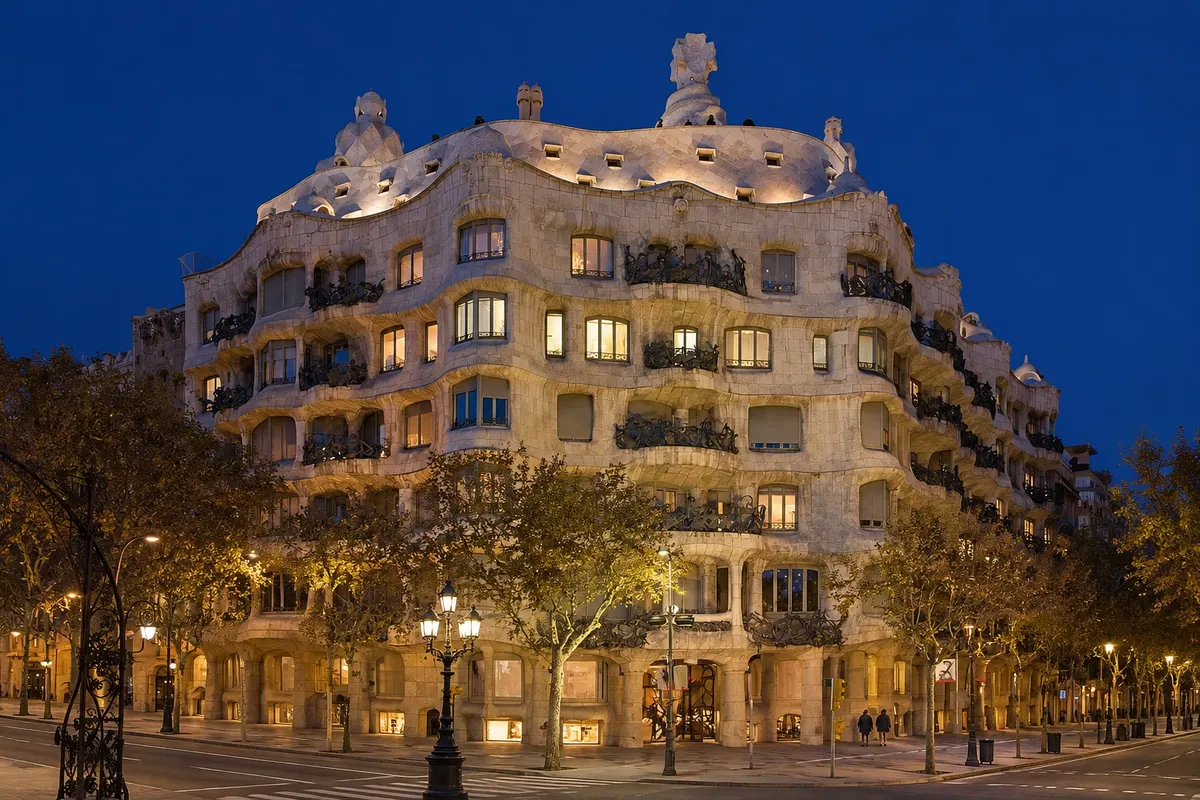
Casa Milà (La Pedrera)
Barcelona · Catalonia · House-museum

Casa Milà (La Pedrera)

Building by Gaudí constructed between 1906 and 1912 on Passeig de Gràcia, with an undulating stone façade and a rooftop terrace of sculptural chimneys.

Barcelona – prikaži dodatne kraje (25)
Gothic Quarter
Barcelona · Catalonia · Zgodovinska mestna četrt

Gothic Quarter

The oldest core of Barcelona, between the Rambla and the Via Laietana, with narrow streets, remains of the Roman wall, the Catedral and medieval squares.

Barcelona Cathedral (Cathedral of the Holy Cross and Saint Eulalia)
Barcelona · Catalonia · Stolnica

Barcelona Cathedral (Cathedral of the Holy Cross and Saint Eulalia)

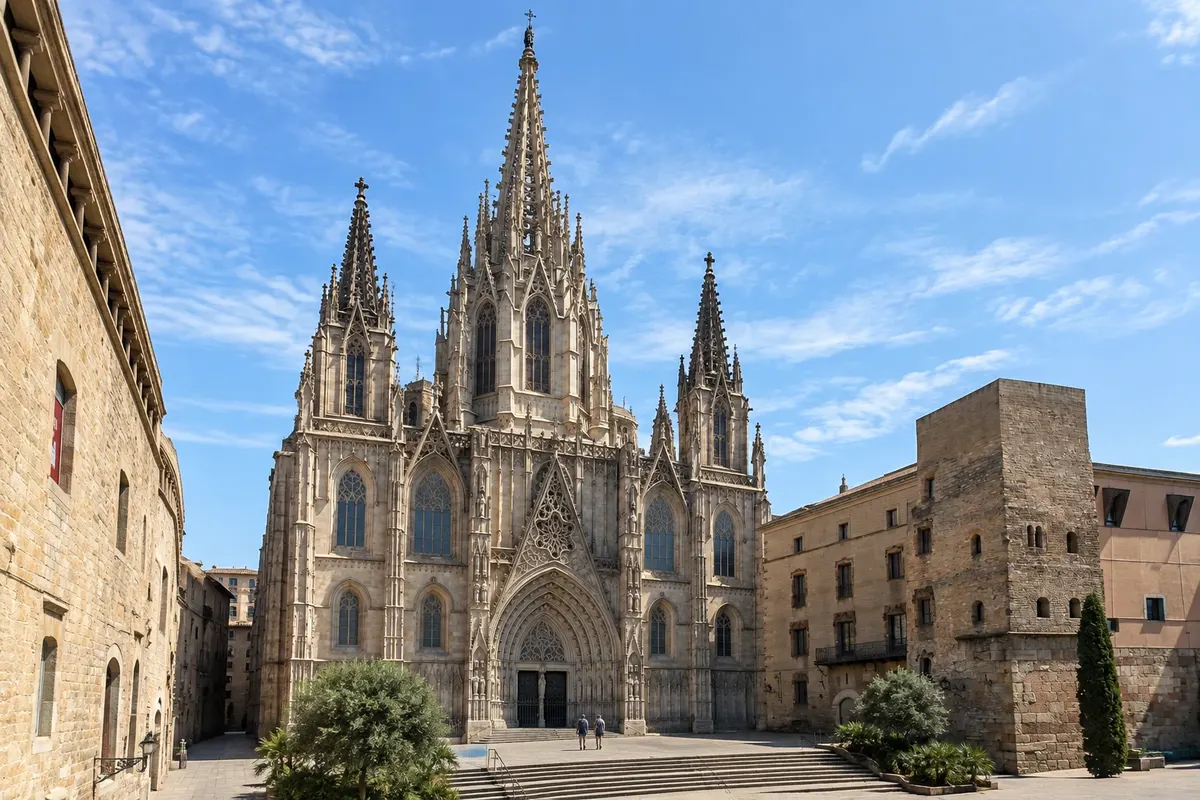
Gothic cathedral dedicated to Santa Cruz e Santa Eulália, with works from 1298 through the 15th century, a neo‑Gothic façade and a cloister with 13 geese.

La Rambla
Barcelona · Catalonia · Street

La Rambla

A pedestrian promenade of about 1.2 km that descends from the Plaça de Catalunya to the monument to Colombo by the port, passing the Boqueria and the Liceu theatre.

Mercat de Sant Josep de la Boqueria (La Boqueria)
Barcelona · Catalonia · Tržnica

Mercat de Sant Josep de la Boqueria (La Boqueria)

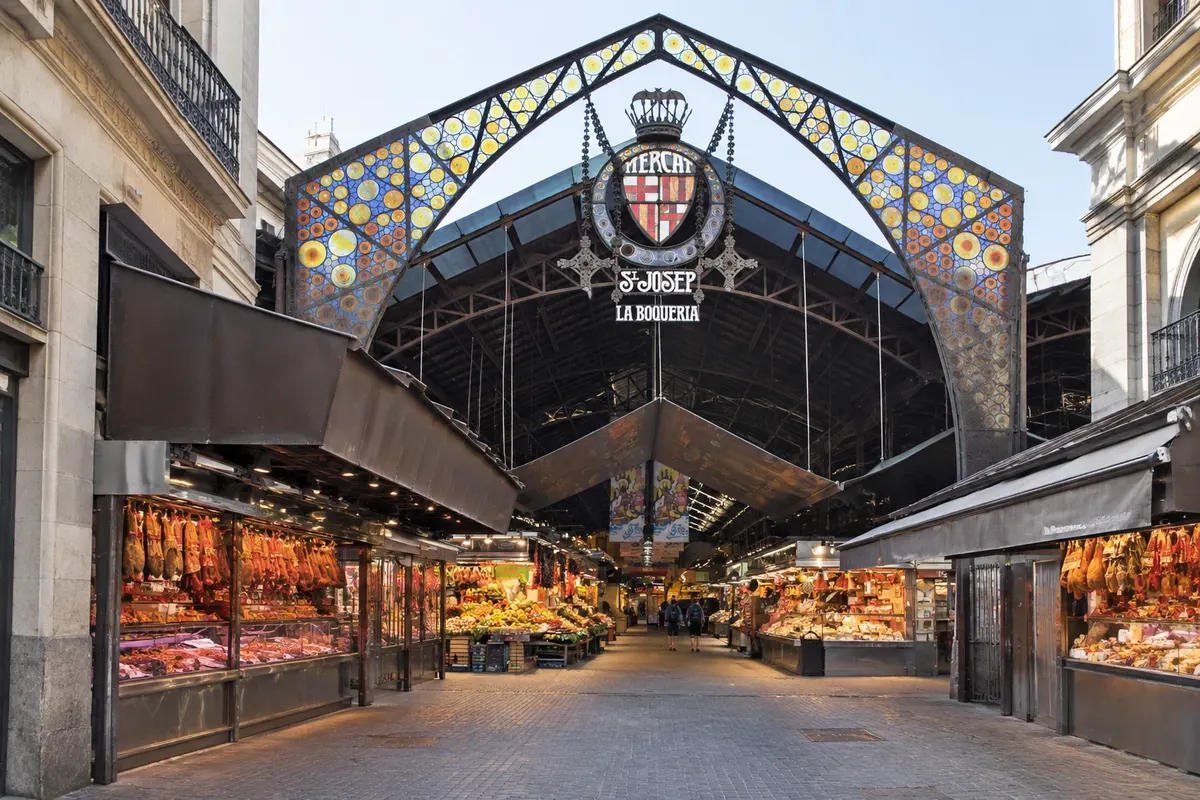
Barcelona's most famous market, on La Rambla, with over 300 stalls selling fruit, seafood, hams and counters where you can eat on the spot.

Basilica of Santa Maria del Mar
Barcelona · Catalonia · Cerkev

Basilica of Santa Maria del Mar

Gothic church built between 1329 and 1383 by the residents of the Ribera neighborhood, in El Born, featuring a wide nave and slender columns.

Picasso Museum
Barcelona · Catalonia · Muzej

Picasso Museum

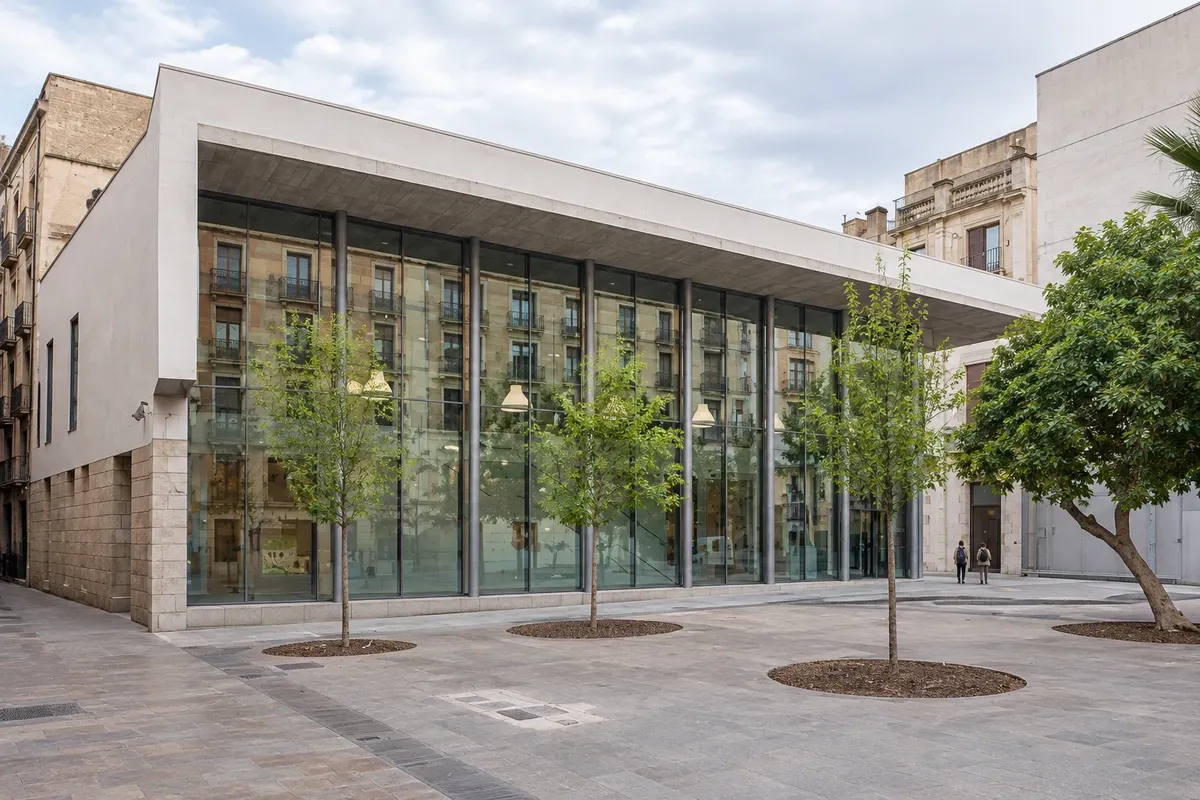
Museum opened in 1963 in five medieval palaces on rua Montcada, with over 3,500 works by Picasso, highlighting his early years and the Las Meninas series.

Palau de la Música Catalana (Palace of Catalan Music)
Barcelona · Catalonia · Concert hall

Palau de la Música Catalana (Palace of Catalan Music)

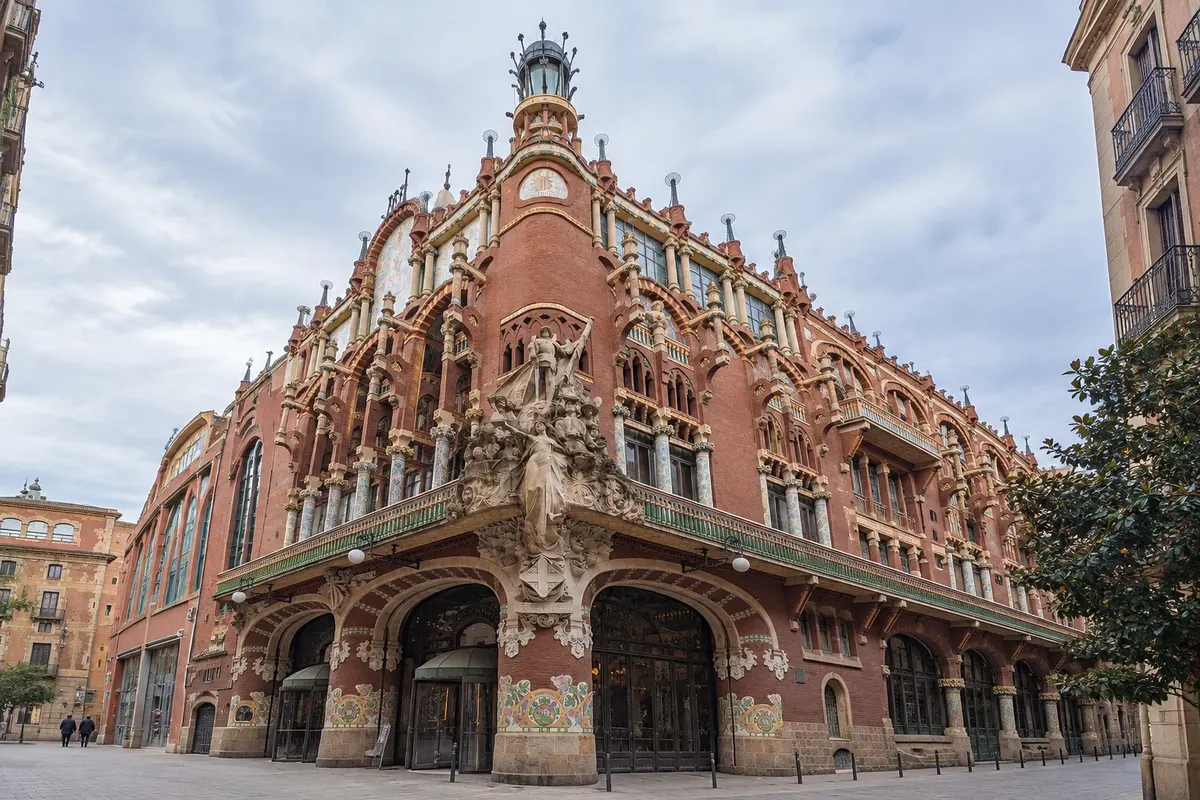
Modernist concert hall by Lluís Domènech i Montaner, inaugurated in 1908, featuring a stained-glass skylight and a stage decorated with sculptures.

Sant Pau Art Nouveau Site (Hospital de Sant Pau)
Barcelona · Catalonia · Modernist complex

Sant Pau Art Nouveau Site (Hospital de Sant Pau)

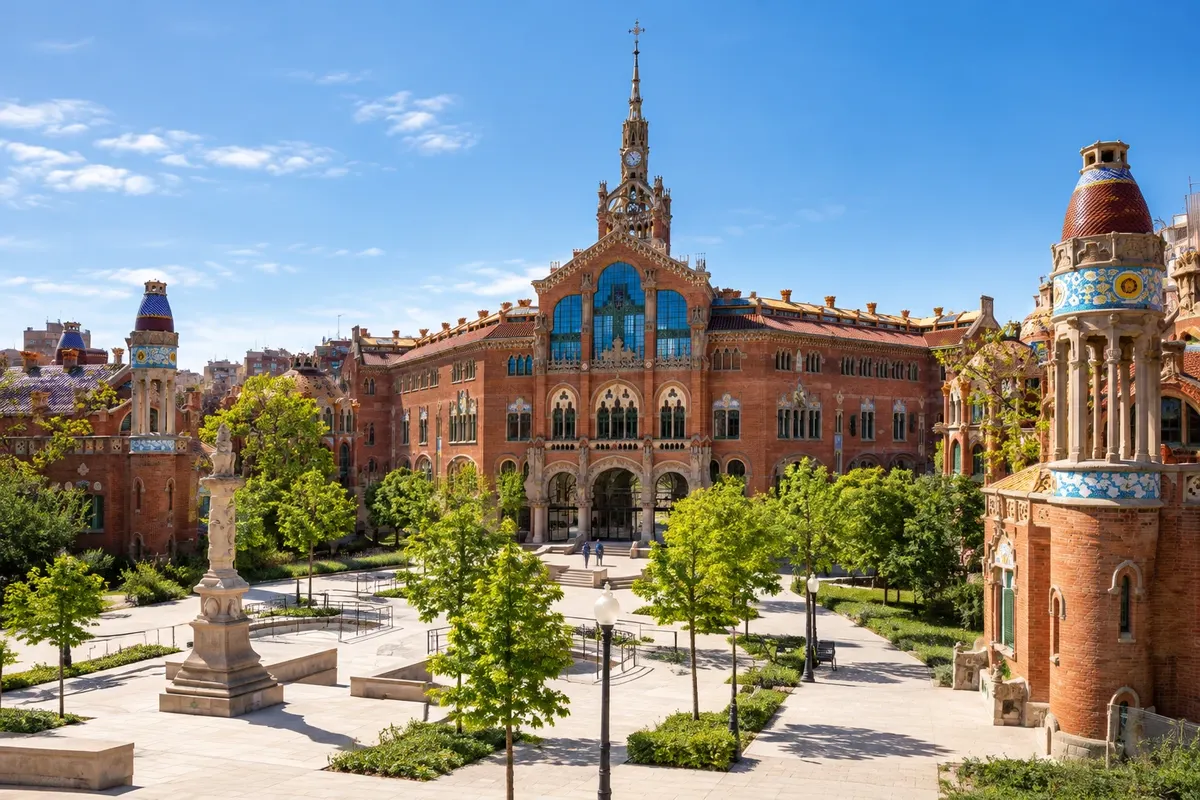
Former hospital by Lluís Domènech i Montaner, built between 1902 and 1930, with brick and ceramic pavilions linked by tunnels and gardens.

Palau Güell (Güell Palace)
Barcelona · Catalonia · Palace

Palau Güell (Güell Palace)

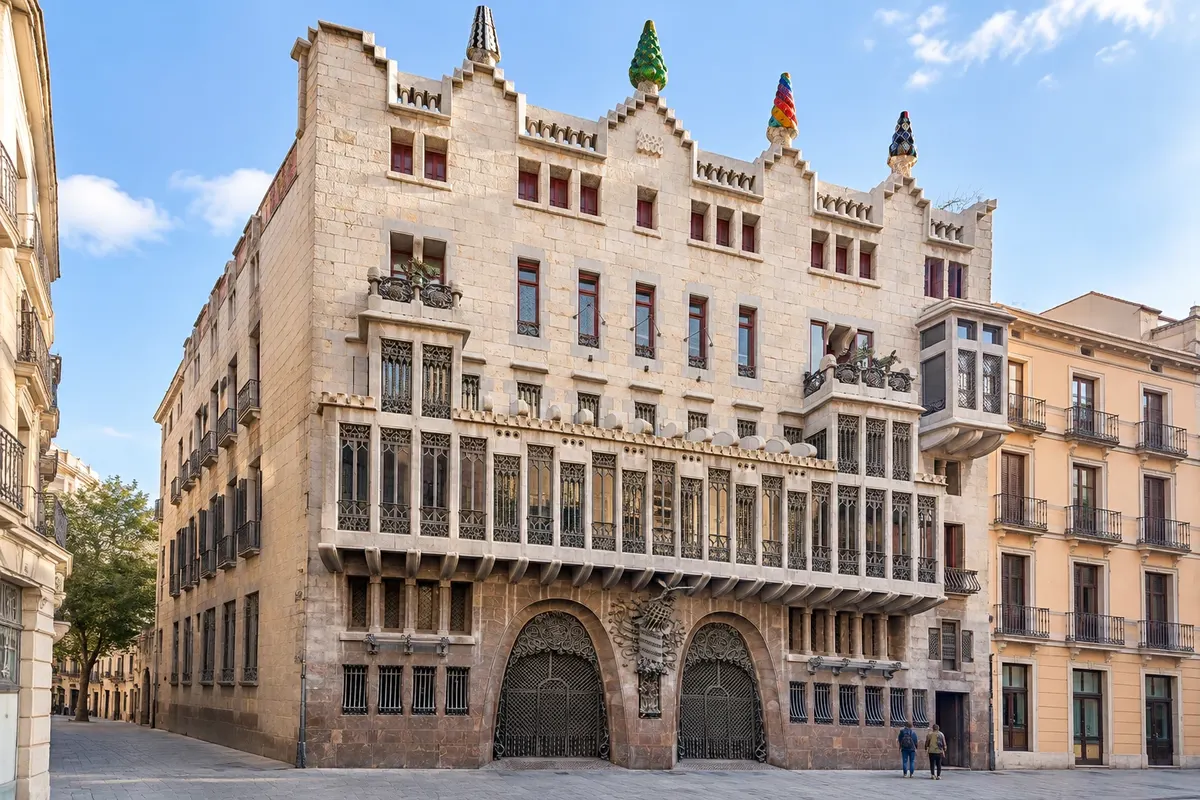
Mansion that Gaudí designed between 1886 and 1888 for Eusebi Güell, next to the Rambla, with a central hall under a dome and a terrace of colorful chimneys.

Montjuïc Castle
Barcelona · Catalonia · Grad

Montjuïc Castle

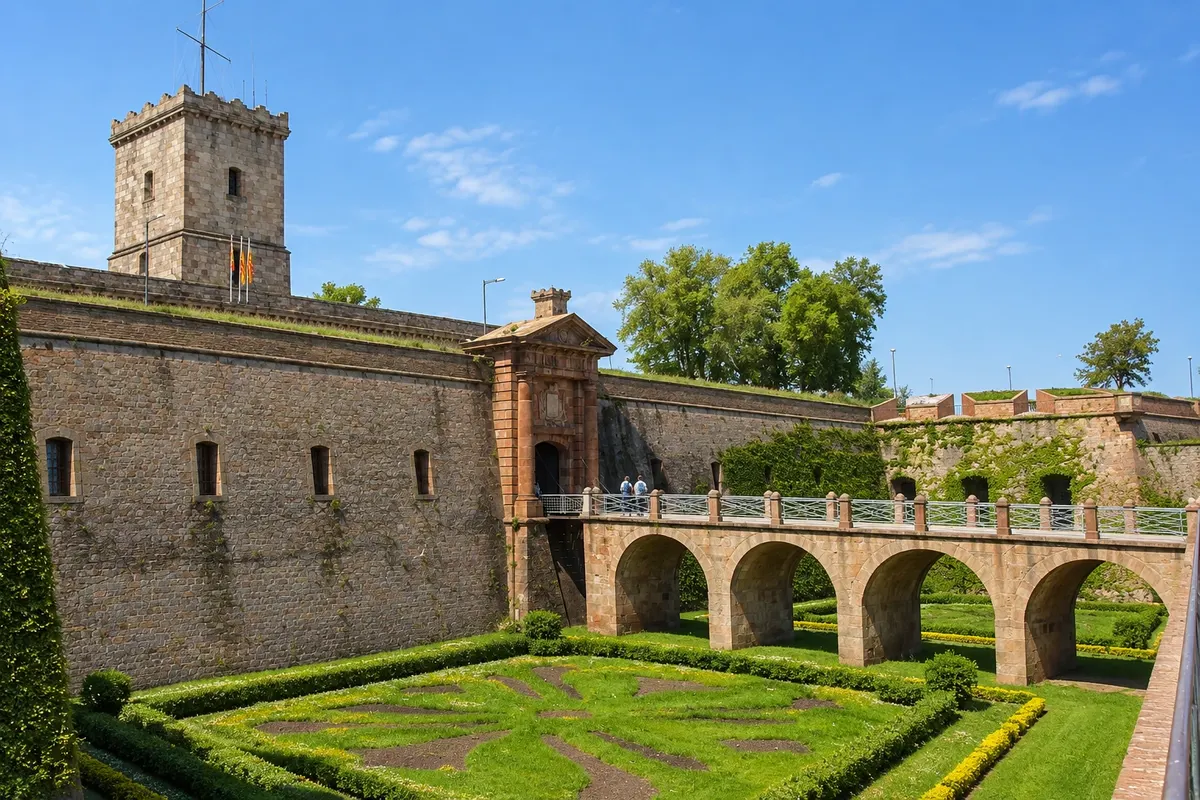
Star-shaped fortress atop the hill of Montjuïc, with a moat, four bastions and views over the port and the city. It began as a fort in 1640 and acquired its present form in the 18th century. It has belonged to the city council of Barcelona since 2007.

National Art Museum of Catalonia (MNAC)
Barcelona · Catalonia · Muzej

National Art Museum of Catalonia (MNAC)

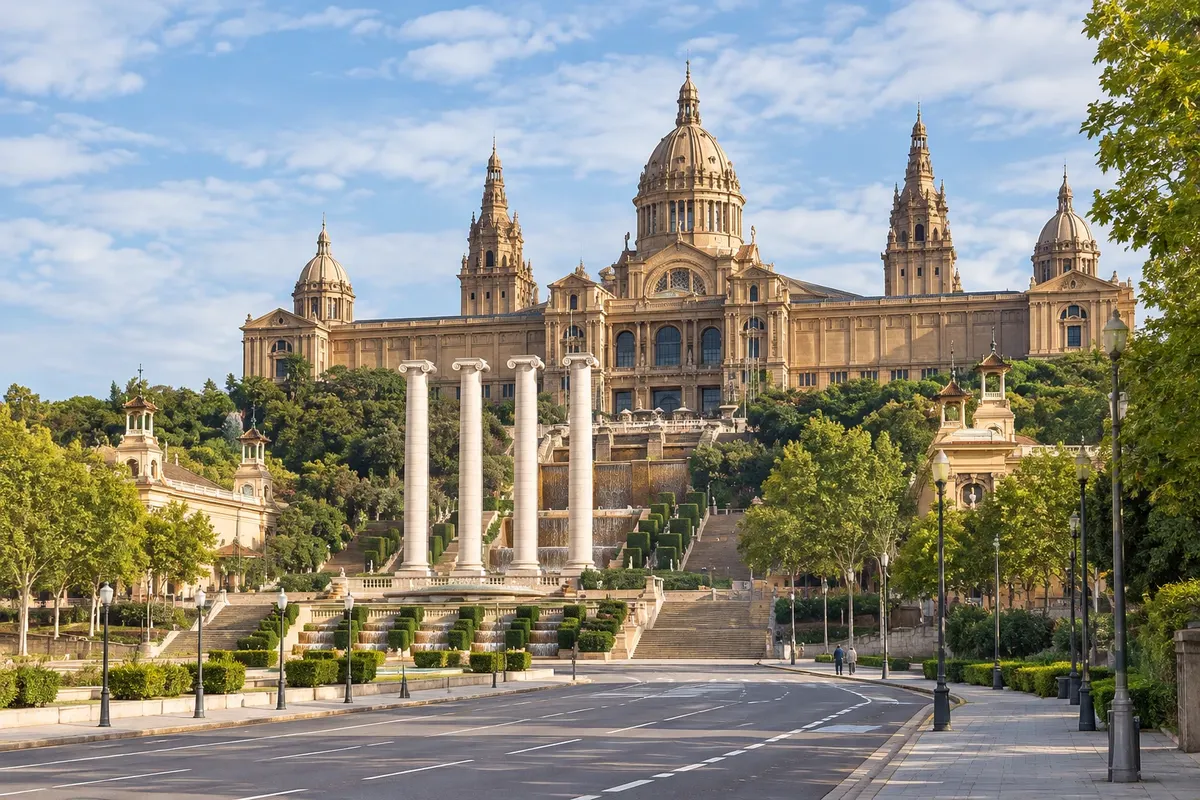
The Catalan art museum occupies the Palau Nacional, at the top of the avenue that rises from Plaça d'Espanya to Montjuïc. It has the largest collection of Romanesque mural painting in the world, as well as Gothic, Renaissance, Baroque and modern Catalan art.

Magic Fountain of Montjuïc
Barcelona · Catalonia · Fountain

Magic Fountain of Montjuïc

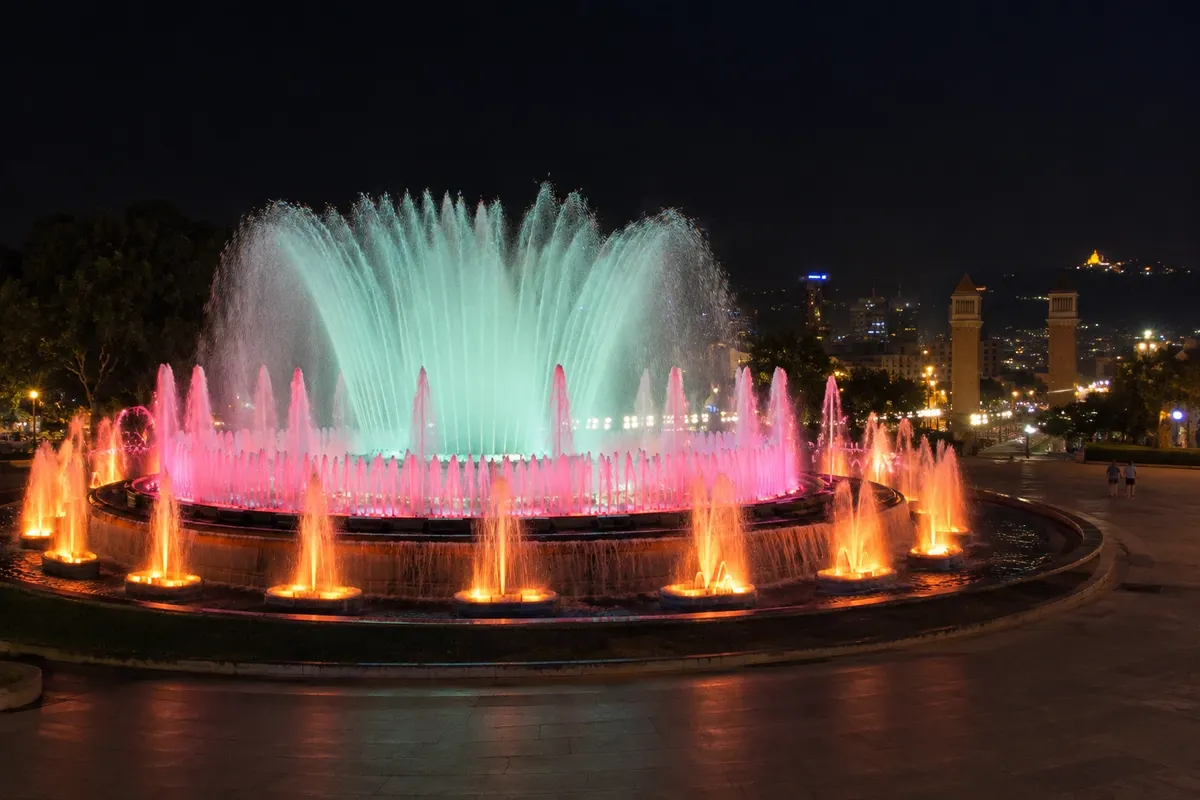
Illuminated fountain at the foot of the Palau Nacional, created by Carles Buïgas for the 1929 Exposition. On show nights, jets of water, light and music form choreographies. The schedule varies by season.

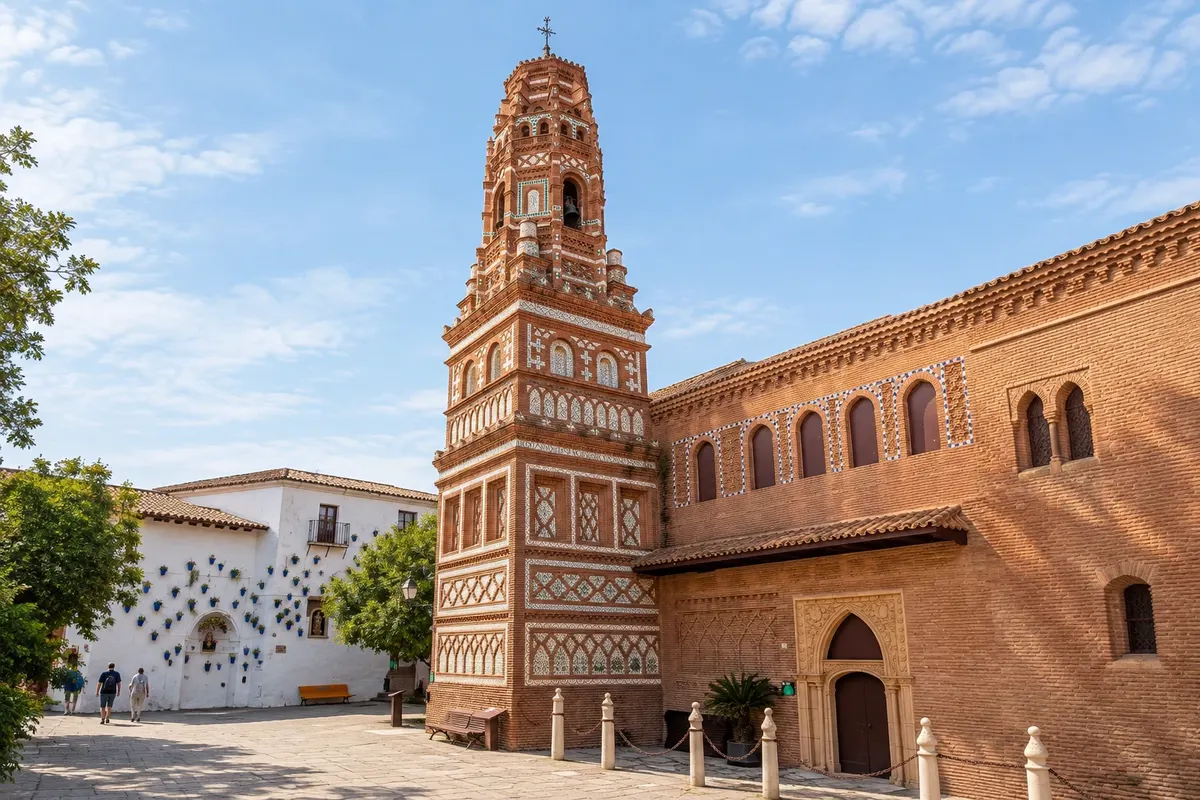
Poble Espanyol (Spanish Village)
Barcelona · Catalonia · Open-air museum

Poble Espanyol (Spanish Village)

Village built for the 1929 Exposition with 117 life-size replicas of houses, squares and churches from various regions of Spain. It houses artisan workshops, restaurants and a museum of contemporary art.

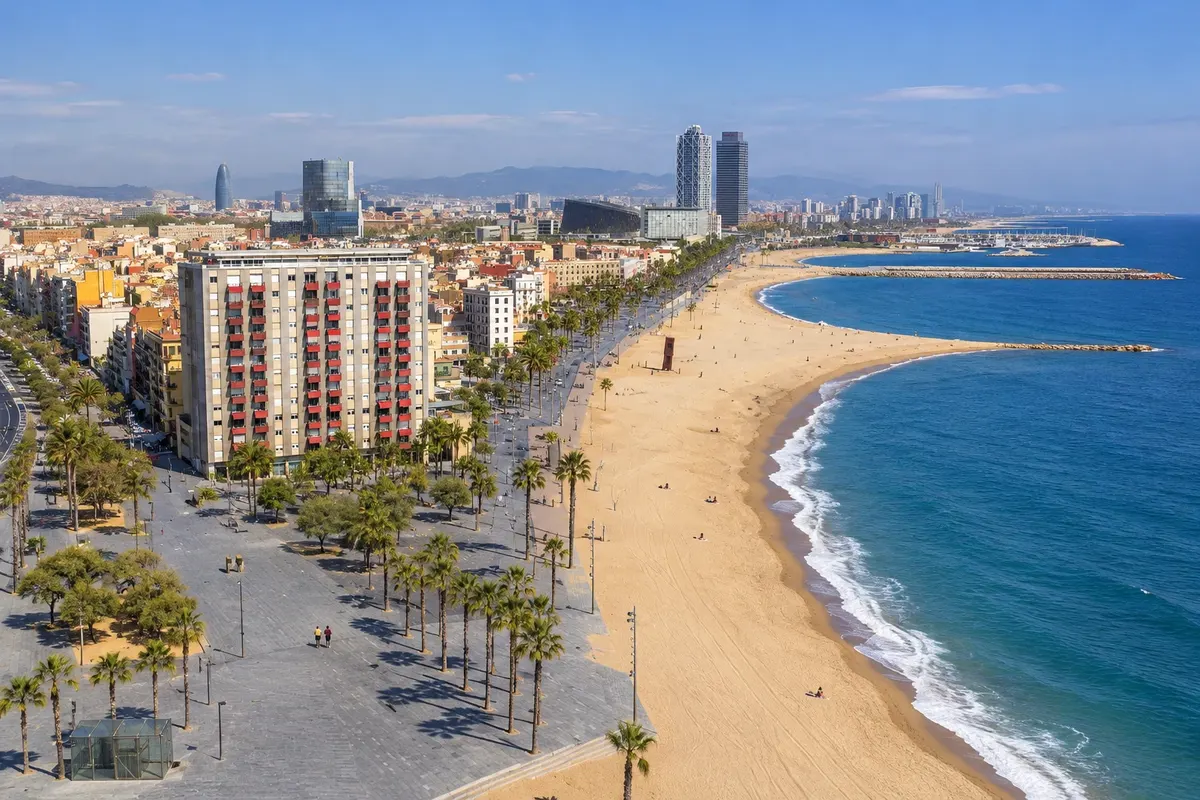
Barceloneta Beach
Barcelona · Catalonia · Plaža

Barceloneta Beach

The city's oldest and most traditional beach, next to the fishing neighbourhood of Barceloneta, laid out in the 18th century. The promenade is lined with seafood restaurants and links Port Vell to Port Olímpic.

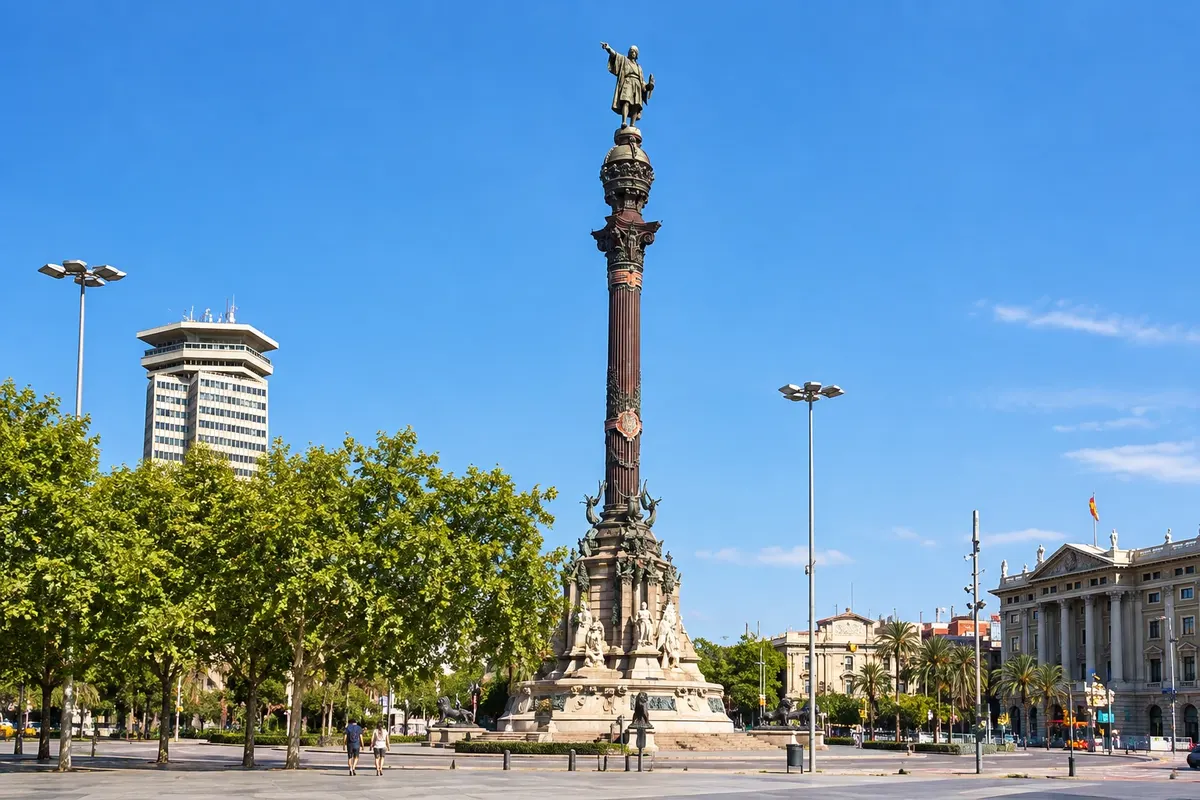
Columbus Monument (Mirador de Colón)
Barcelona · Catalonia · Razgledišče

Columbus Monument (Mirador de Colón)

A 60-metre column with a statue of Christopher Columbus at the end of the Rambla, erected for the 1888 Exposition. An internal elevator leads to a viewpoint over Port Vell, Montjuïc and the old town.

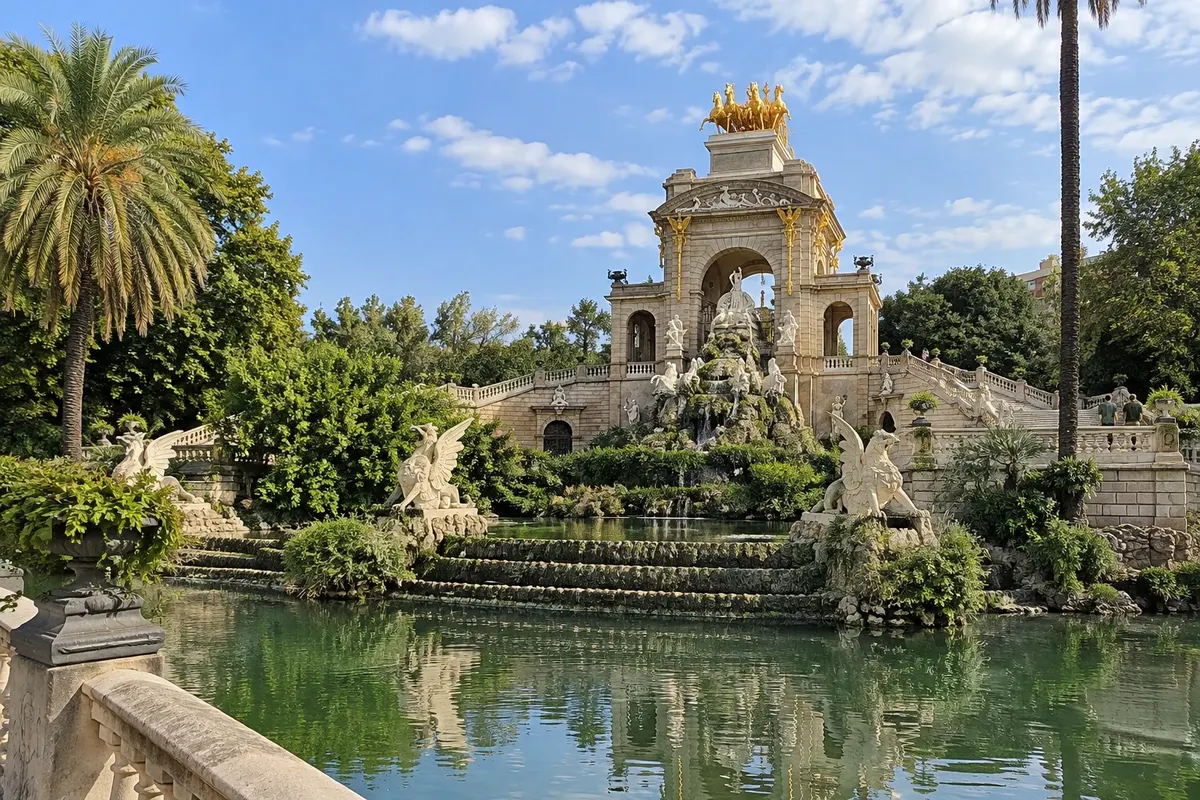
Ciutadella Park
Barcelona · Catalonia · Park

Ciutadella Park

Park created on the site of the former military citadel, venue of the 1888 Universal Exposition. It has a lake with rowboats, the monumental Cascada fountain, the Parliament of Catalonia and the zoo. The Arc de Triomf stands at the entrance.

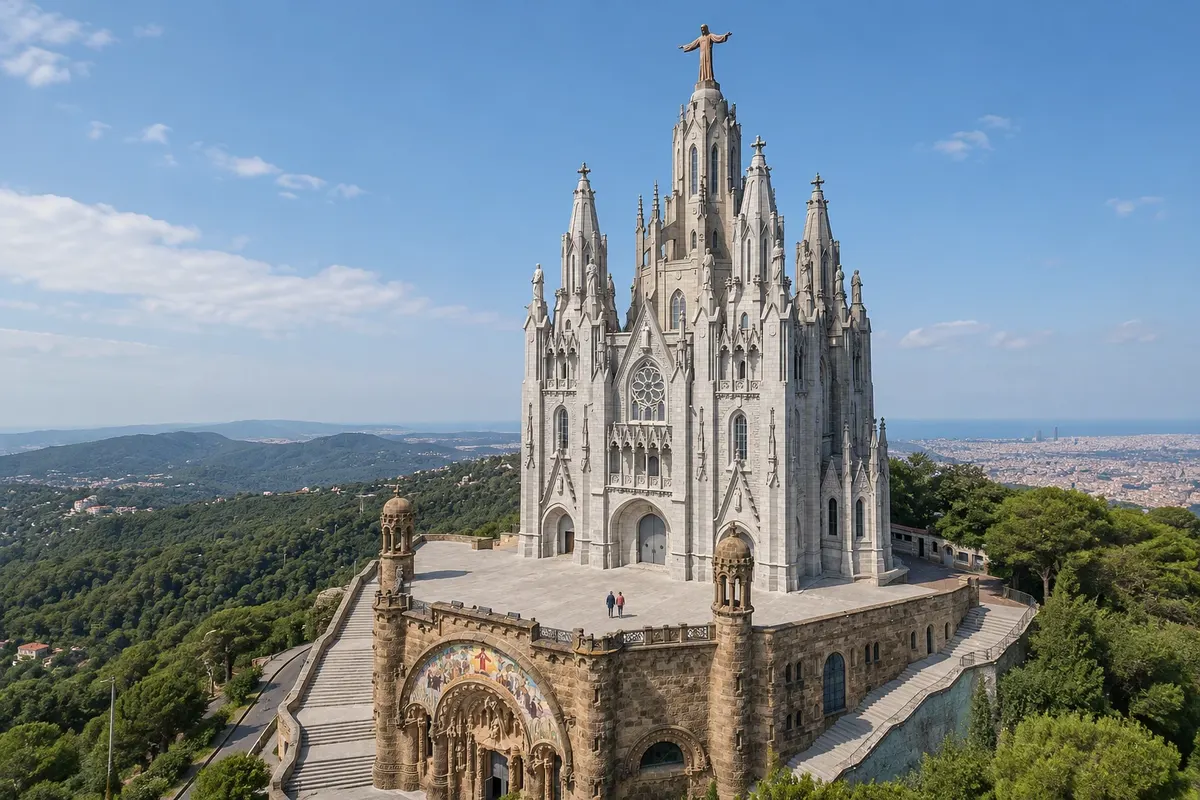
Tibidabo (Temple of the Sacred Heart)
Barcelona · Catalonia · Razgledišče

Tibidabo (Temple of the Sacred Heart)

A 512-metre hill, the highest point of the serra de Collserola, with the Sagrat Cor temple and an amusement park opened in 1905. From there you can see the whole city and the sea.

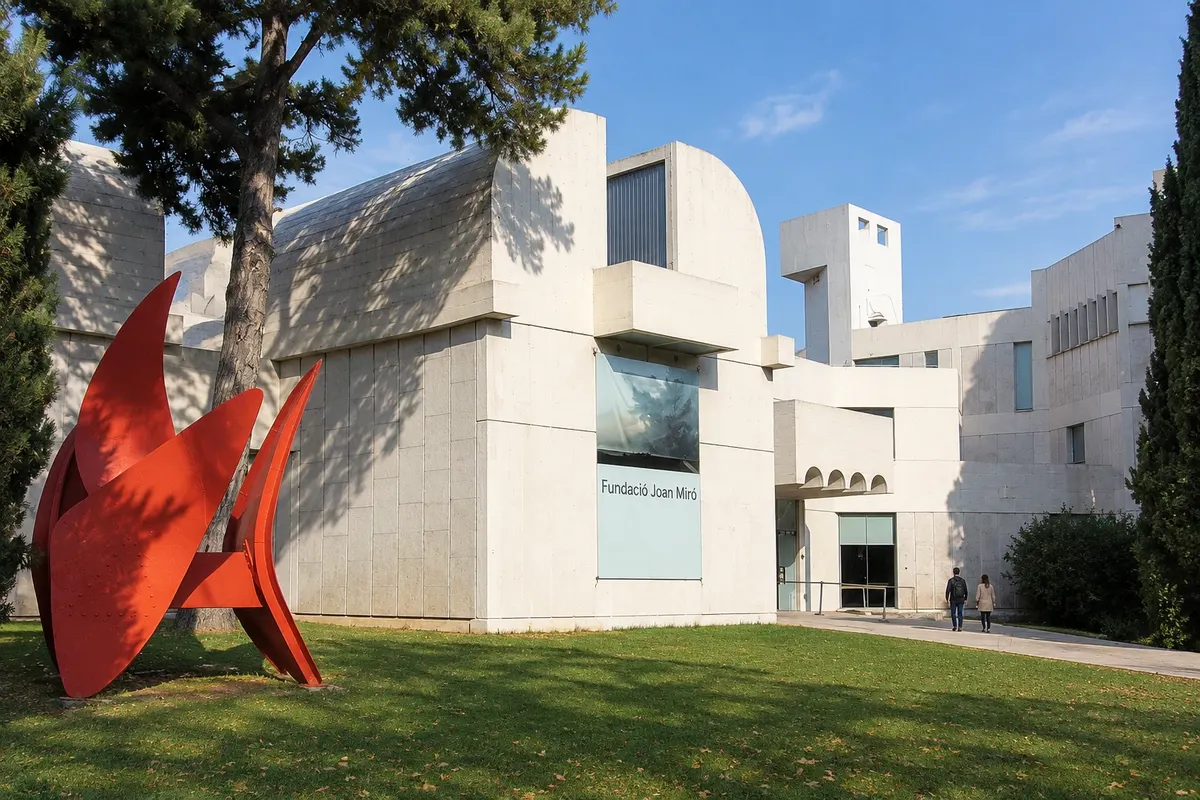
Fundació Joan Miró (Joan Miró Foundation)
Barcelona · Catalonia · Muzej

Fundació Joan Miró (Joan Miró Foundation)

Museum dedicated to Joan Miró in Montjuïc, created by the artist himself and opened in 1975, in a white building by Josep Lluís Sert with courtyards and terraces. It houses the Mercury Fountain by Alexander Calder.

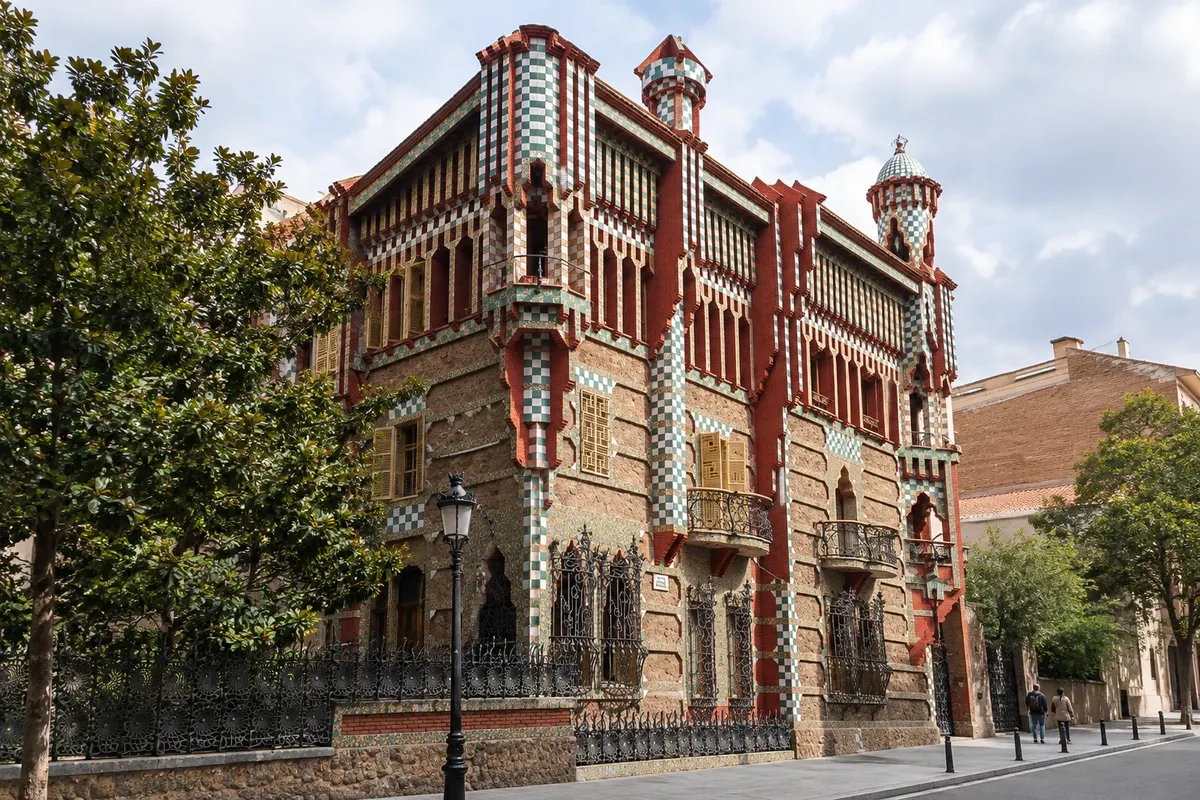
Casa Vicens
Barcelona · Catalonia · House-museum

Casa Vicens

The first house designed by Antoni Gaudí, built between 1883 and 1885 in Gràcia as a summer residence. Tile and brick façade with Eastern-inspired motifs. It is a UNESCO World Heritage Site.

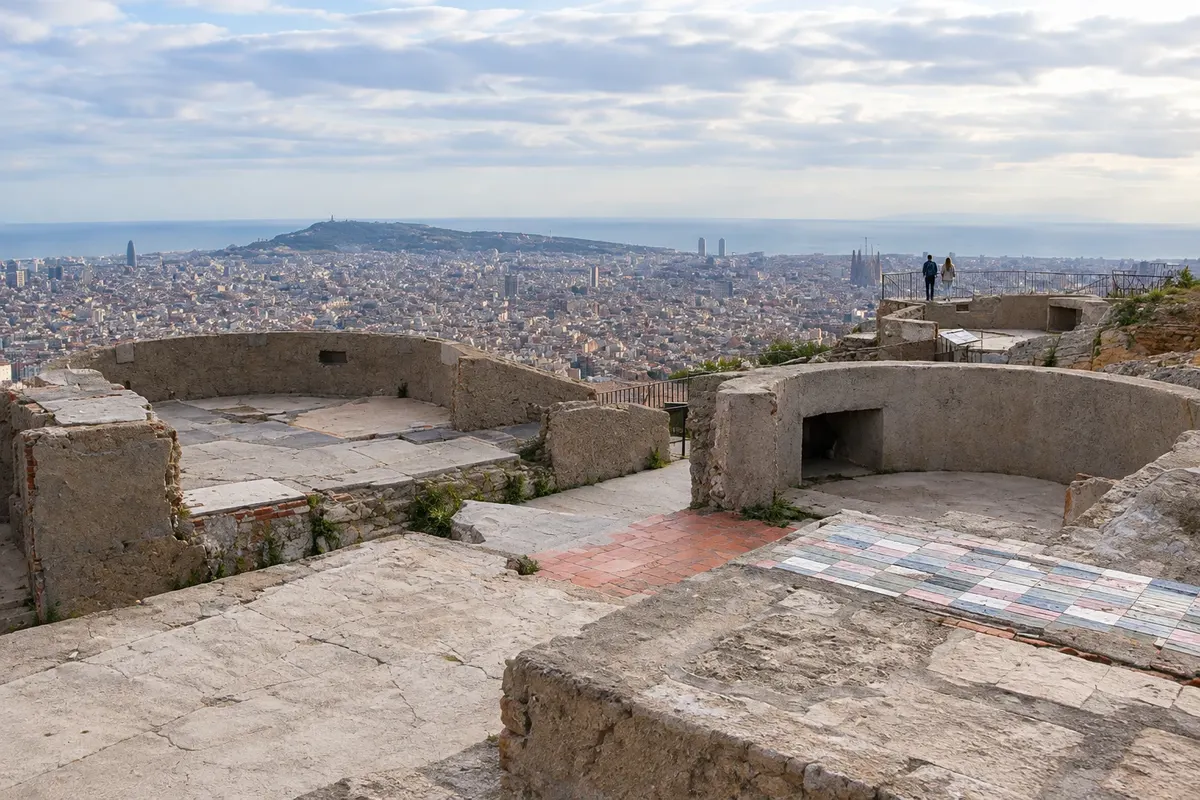
MUHBA Turó de la Rovira (Bunkers del Carmel)
Barcelona · Catalonia · Razgledišče

MUHBA Turó de la Rovira (Bunkers del Carmel)

Ruins of an anti-aircraft battery from the Civil War on top of the Turó de la Rovira, at 262 metres, known as the Bunkers del Carmel. The summit provides a 360-degree view of Barcelona.

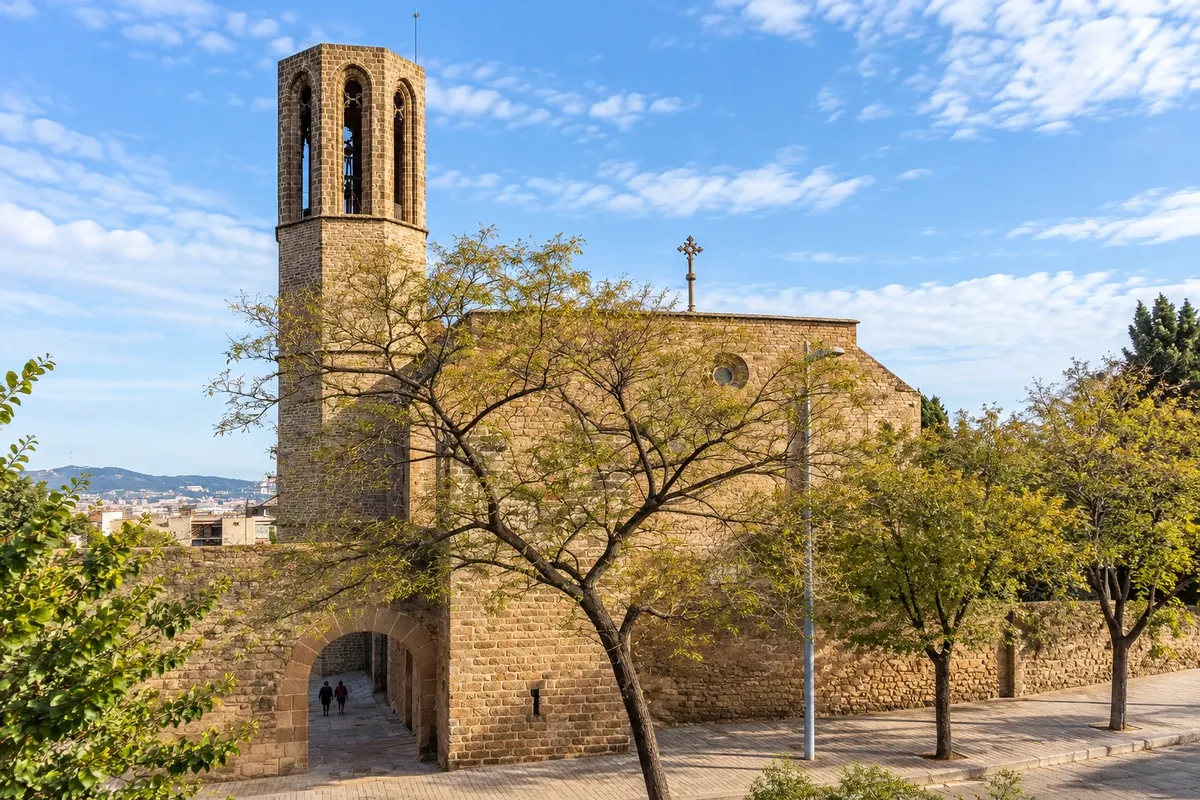
Royal Monastery of Santa Maria de Pedralbes (Monastery of Pedralbes)
Barcelona · Catalonia · Samostan

Royal Monastery of Santa Maria de Pedralbes (Monastery of Pedralbes)

Gothic monastery founded in 1326 by King Jaime II and Queen Elisenda de Montcada, featuring a three-storey cloister, the chapel of Sant Miquel painted by Ferrer Bassa, and the nuns’ kitchen.

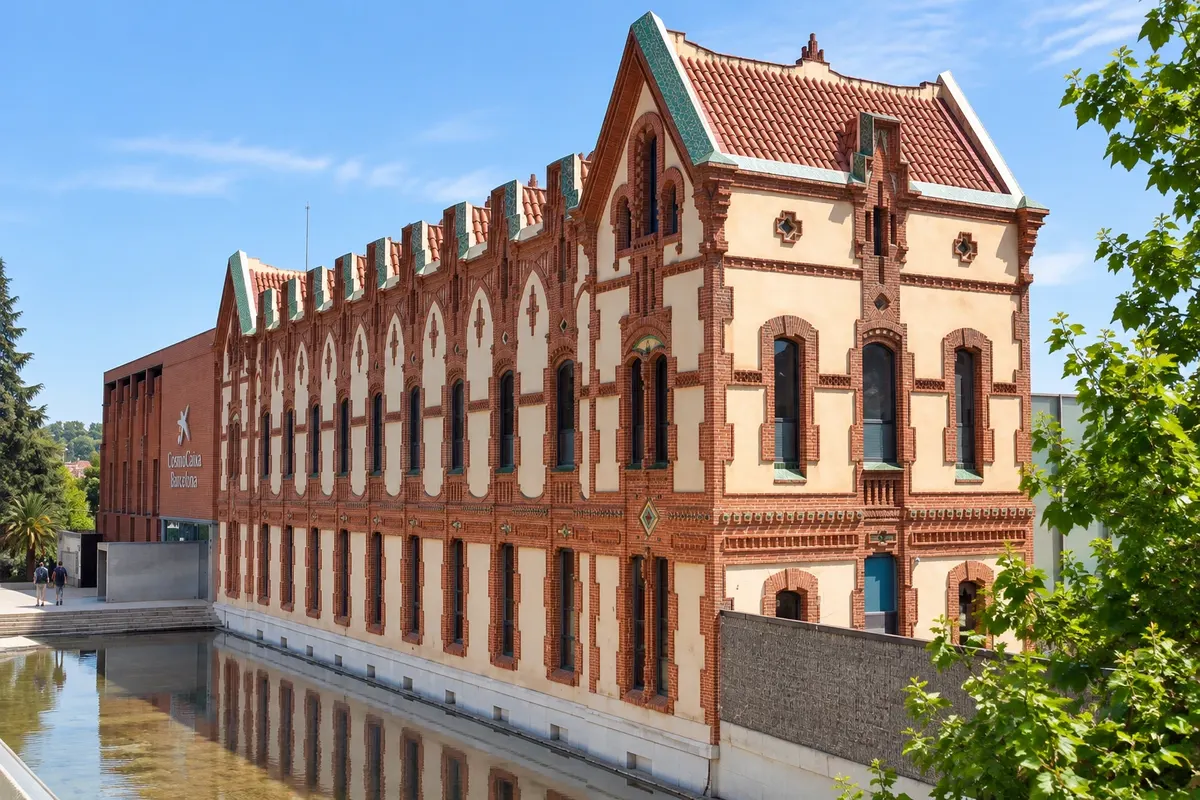
CosmoCaixa Barcelona (CosmoCaixa Science Museum)
Barcelona · Catalonia · Science museum

CosmoCaixa Barcelona (CosmoCaixa Science Museum)

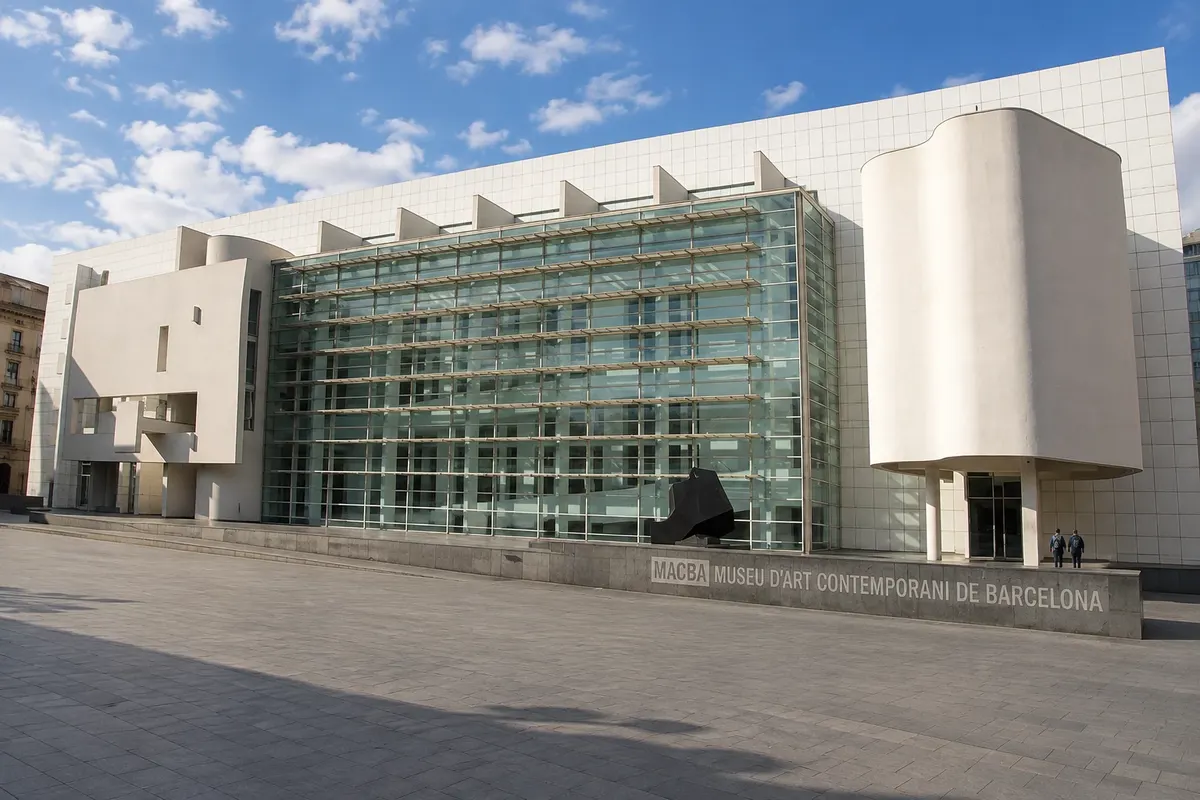
Barcelona Museum of Contemporary Art (MACBA)
Barcelona · Catalonia · Muzej

Barcelona Museum of Contemporary Art (MACBA)

Museum of contemporary art in the Raval, in a white building by Richard Meier opened in 1995, with a collection of about 5,000 works from the mid-20th century onwards, focusing on Catalan and Spanish art.

Gràcia
Barcelona · Catalonia · Neighborhood

Gràcia

Former independent village, annexed to Barcelona in 1897, with narrow streets, squares full of bars and neighbourhood life. It is home to the Casa Vicens and lies at the foot of Park Güell.

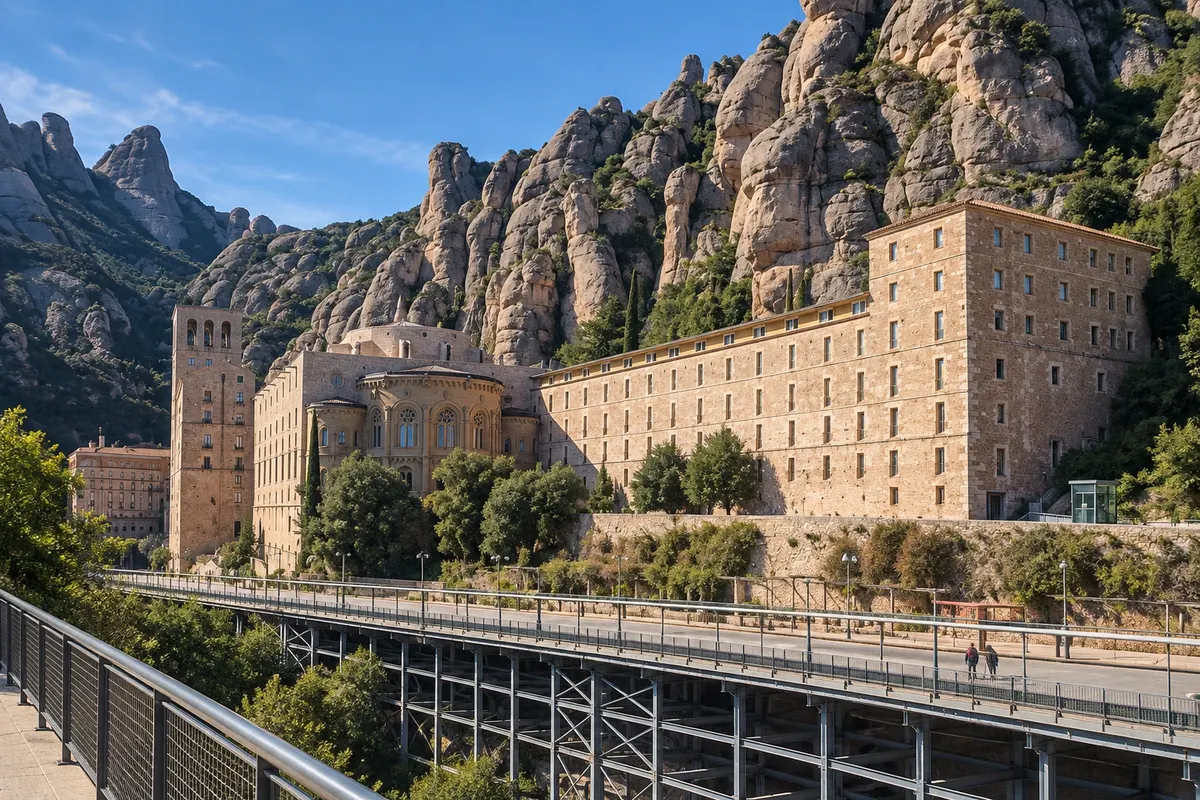
Montserrat Monastery (Santa Maria de Montserrat Abbey)
Barcelona · Catalonia · Samostan

Montserrat Monastery (Santa Maria de Montserrat Abbey)

Benedictine abbey set into the jagged rocks of Montserrat, about 50 km from Barcelona, founded in 1025. It houses the Virgem de Montserrat, the Moreneta, patron saint of Catalonia, and has one of the oldest boys' choirs in Europe.

Kaj izbrati pred odhodom

Izleti – Barcelona

Izhodišče, trajanje, potek, vključene storitve in okvirna cena vsakega izleta.

Sagrada Família

Odhod: Carrer de la Marina, entrance at the Nativity façade metro (Sagrada Família, lines 2 and 5) about 2 hours; with tower, 2 h 30 Dopoldne ali popoldne Lahko

The Sagrada Família is Antoni Gaudí’s basilica and Barcelona’s most sought-after visit. Gaudí took over the project in 1883 and worked on it until his death in 1926; construction continues, with the central part already covered and consecrated. Outside, the Nativity façade on the Carrer de la Marina side is the one Gaudí saw completed: full of stone figures, animals, and plants. The Passion façade on the opposite side is stark and angular, with sculptures by Josep Maria Subirachs. Inside, the columns branch out like tree limbs and the stained glass dyes the nave blue and green on one side and orange and red on the other; the effect changes with the time of day. the ticket that includes the tower covers an elevator ascent to one of the façade towers and a descent on foot via a spiral staircase. In the basement there is a museum with models, drawings, and the history of the construction. The audio guide via the app accompanies the basic visit.

Kraji na poti: Basilica of the Sagrada Família, Nativity Façade, Passion Façade, Towers.

Vključuje: Entrance to the basilica and museum, with audio guide via the app. Tower ascent and guided tour are separate.

Nasvet: Buy a timed ticket on the official site in advance. Enter at the scheduled time and allow time to see both façades from the square on Carrer de la Marina and from Plaça de la Sagrada Família. Afternoon light enters through the Passion façade and morning light through the Nativity façade; choose the time based on the effect you prefer.

Najboljši čas za obisk: All year. Weekday mornings usually have fewer people.

Park Güell

Odhod: Carrer d'Olot, main entrance, or Carretera del Carmel metro (Lesseps or Vallcarca, line 3) and walk uphill; bus 24 or H6 Približno 2 uri Dopoldne ali pozno popoldne moderate (hills and stairs)

Park Güell began as a housing development that Eusebi Güell commissioned from Gaudí on the heights of the Gràcia neighborhood, between 1900 and 1914; the project did not take off and the land became a public park. The monumental area, with timed, ticketed entry, contains what you see in the photos: the two entrance pavilions with trencadís roofs, the stairway with the ceramic salamander (the dragon), the Sala Hipòstila with 86 columns, and the Plaça de la Natura, the esplanade with the undulating bench of broken tiles that serves as a viewpoint over the city and the sea. The Casa del Guarda, in one of the pavilions, has an exhibition about the park’s history. The Casa Museu Gaudí, where the architect lived, has a separate ticket. Around the monumental area the park is open, with trails and stone viaducts. The ground is steep: there are stairs and ramps, and the accesses from the lower streets are steep.

Kraji na poti: Park Güell, Dragon Staircase, Sala Hipòstila, Plaça de la Natura, Casa del Guarda, Casa Museu Gaudí.

Vključuje: Entry to the monumental zone and to the Casa del Guarda. Casa Museu Gaudí is separate.

Nasvet: Tickets are sold online only, with a timed entry. From Lesseps metro the climb up Carrer de Larrard is steep; if you prefer to avoid it take bus 24 to the entrance on Carretera del Carmel.

Najboljši čas za obisk: All year. Early morning has good light and fewer people; in summer, avoid midday.

Casa Batlló

Odhod: Passeig de Gràcia, 43 on foot or metro (Passeig de Gràcia, lines 3 and 4) Približno 1 uro in 30 minut Dopoldne, popoldne ali zvečer Lahko

Casa Batlló is the house Gaudí remodeled for the Batlló family between 1904 and 1906, on Passeig de Gràcia. The façade is the avenue's postcard: mask-shaped balconies, columns that look like bones, and a ceramic-scaled roof that resembles a dragon's back. Inside, the visit goes through the noble floor, with the salon of curved windows facing the avenue; the inner courtyard clad in blue tiles that darken as they rise to distribute light; the attic of white arches; and the terrace with chimneys covered in trencadís. The visit uses a smart guide, a device with augmented reality that shows how the spaces used to be and what Gaudí intended with each detail. The block is called Illa de la Discòrdia because it brings together, side by side, houses by three Catalan modernist architects: Casa Amatller by Puig i Cadafalch and Casa Lleó Morera by Domènech i Montaner, in addition to the Batlló.

Kraji na poti: Casa Batlló, Passeig de Gràcia, Illa de la Discòrdia, Casa Amatller, Casa Lleó Morera.

Vključuje: Admission with a smart augmented-reality guide. Separate night tours and guided tours available.

Nasvet: Buy on the official website with a timed entry; the house is open every day of the year. Combine it with La Pedrera, a few blocks along the same avenue, to see both of Gaudí’s houses in one visit.

Najboljši čas za obisk: Open year-round. The façade has nice light at the end of the day.

La Pedrera (Casa Milà)

Odhod: Passeig de Gràcia, 92, corner with Carrer de Provença on foot or metro (Diagonal, lines 3 and 5) Približno 1 uro in 30 minut Dopoldne, popoldne ali zvečer Lahko

La Pedrera, the popular name for Casa Milà, was the last residential building Gaudí built, between 1906 and 1912. The façade is a wave of stone with no straight line, with twisted‑iron balconies; the nickname, pedrera, was given by the neighbors at the time. The visit starts at the two inner courtyards, goes up to the rooftop where the chimneys and ventilation outlets become sculptures that look like helmeted warriors, and descends to the attic of brick arches, the Espai Gaudí, with models and explanations of the architect's method. An entire floor, the Pis de la Pedrera, shows a bourgeois apartment from the early 20th century with period furniture and objects. There is also a night visit with projections on the rooftop, and a dawn visit. The building stands on Passeig de Gràcia, the avenue of shops and modernist buildings, about ten minutes on foot from Casa Batlló.

Kraji na poti: La Pedrera, Casa Milà, Rooftop of the chimneys, Espai Gaudí, Pis de la Pedrera.

Vključuje: Ticket with audio guide: courtyards, rooftop, Espai Gaudí and period apartment. Separate nighttime, dawn and guided visits available.

Nasvet: Buy on the official website with a timed entry. The rooftop has stairs and level changes; in rain or strong wind it may close. If you want photos without people, choose the first time slot in the morning.

Najboljši čas za obisk: Open year‑round. The rooftop is best on clear skies.

Barri Gòtic and Barcelona Cathedral

Odhod: Plaça Nova, in front of the Cathedral on foot or metro (Jaume I, line 4; Liceu, line 3) Približno 3 ure Dopoldne ali popoldne Lahko

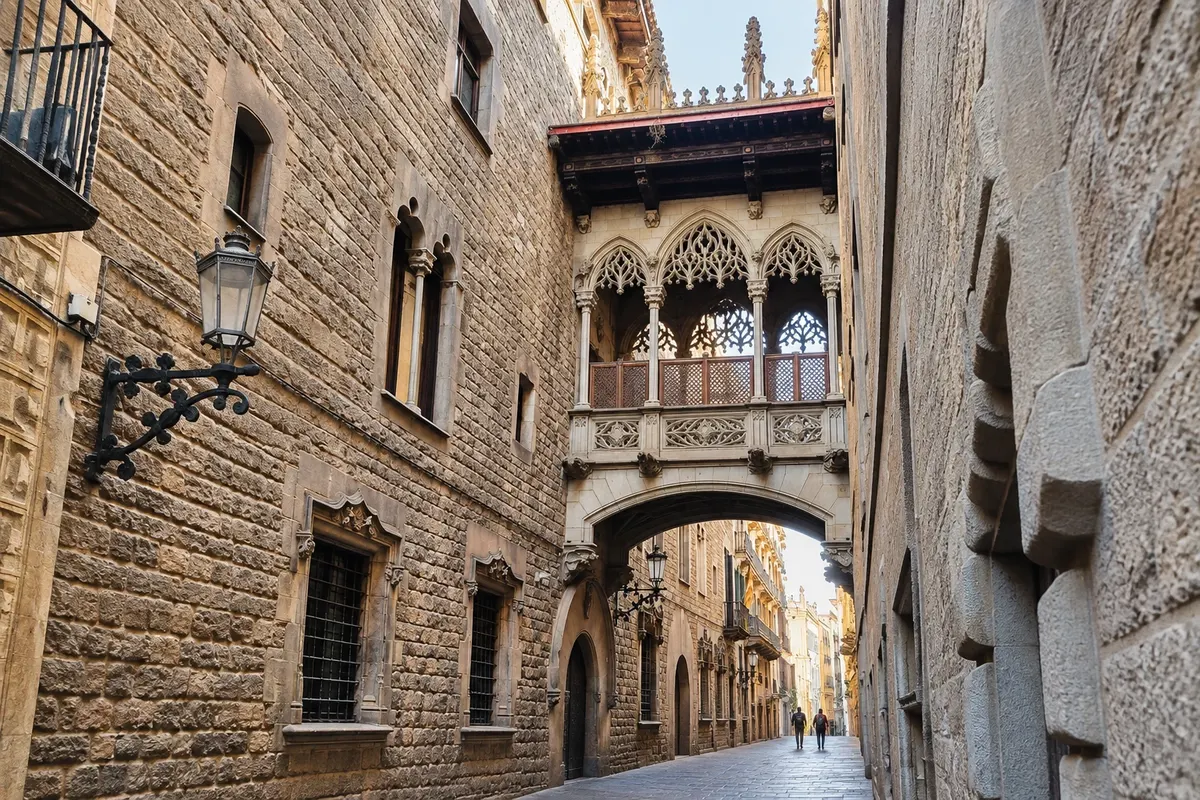
The Barri Gòtic is Barcelona’s old quarter, built over the Roman city of Barcino. The Cathedral of la Santa Creu i Santa Eulàlia, Gothic, has its main façade on Plaça Nova and a cloister with palm trees, a fountain and a pond where thirteen geese live, in memory of the patron saint. The cultural visit includes the choir, the crypt of Santa Eulàlia and the elevator up to the roof terrace, with views over the rooftops. Around it, narrow streets lead to Plaça del Rei, a medieval complex with the counts’-kings’ palace and the city history museum (MUHBA), which goes down to the Roman ruins below; to Plaça de Sant Jaume, where the Generalitat de Catalunya and the city hall face each other; and to the Pont del Bisbe, the lace-like stone walkway on Carrer del Bisbe. Near Liceu metro, Plaça Reial is an arcaded courtyard with palm trees and lampposts designed by Gaudí. Sections of Roman wall appear on Plaça Nova and on Via Laietana.

Kraji na poti: Cathedral of Barcelona, Plaça del Rei, Plaça de Sant Jaume, Pont del Bisbe, Plaça Reial, Carrer del Bisbe, MUHBA.

Vključuje: Walking tour. Cathedral with paid cultural visits (choir, terrace and cloister) and service times with entry only for prayers. MUHBA with separate admission.

Nasvet: Go early in the morning or late afternoon, when the streets are quieter. At the Cathedral there is a dress rule: shoulders and knees must be covered. On Sunday mornings it is common to see the sardana, the circle dance, in Plaça Nova or Plaça de Sant Jaume; the schedule changes, check on the spot.

Najboljši čas za obisk: All year. At the Festa de Santa Eulàlia in February and La Mercè in September, the squares host gegants and castellers.

Mercat de la Boqueria and Palau Güell

Odhod: Liceu metro, on the border between the Raval and the Gòtic on foot or metro (Liceu, line 3) Približno 2 uri in pol Dopoldne Lahko

The Mercat de Sant Josep, La Boqueria, is Barcelona’s central market, under an iron roof with a colored stained-glass arched entrance. The stalls at the front sell cut fruit, juices and sweets for tourists; those at the back sell fish, jamón, cheese, mushrooms and vegetables for people who live in the city. At the market counters breakfast and lunch are cooked on a griddle in front of seated customers. A few meters away, on Carrer Nou de la Rambla, Palau Güell was Gaudí’s first major work for Eusebi Güell, built between 1886 and 1890: a narrow, vertical urban palace with a central hall topped by a pierced dome, a coach house underground and a rooftop of twenty chimneys clad in ceramic and glass. The Gran Teatre del Liceu, the city’s opera house, is on the same block and offers guided tours of the auditorium, rebuilt after the 1994 fire. The ensemble sits on the edge of the Raval, a neighborhood of immigrants and long-standing commerce.

Kraji na poti: Mercat de la Boqueria, Palau Güell, Gran Teatre del Liceu, Raval.

Vključuje: Market free to enter. Palau Güell with ticket and audio guide. Liceu with paid visit.

Nasvet: La Boqueria is closed on Sundays and is best in the morning; after noon many fish stalls are already closed. At Palau Güell buy a timed ticket on the website and go up to the rooftop. For lunch, favor the counters at the back of the market, which have shorter lines.

Najboljši čas za obisk: All year round, except Sundays for the market.

Prikaži dodatne izlete (11)

El Born, Santa Maria del Mar and Museu Picasso

Odhod: Jaume I metro, Via Laietana on foot or by metro (Jaume I, line 4) Približno 3 ure Popoldne Lahko

El Born, part of the old La Ribera neighborhood, is a district of narrow streets, designer shops, and tapas bars between Via Laietana and Parc de la Ciutadella. The Museu Picasso occupies five medieval palaces along Carrer de Montcada and houses more than four thousand works, focusing on the artist’s formative years in Barcelona, the Blue Period, and the series of 58 paintings he made in 1957 based on Velázquez’s Las Meninas. It’s the museum to understand Picasso before cubism. Two blocks away is the Gothic Basilica of Santa Maria del Mar, built in just over half a century by the neighborhood’s residents: a wide nave, slim columns, and minimal decoration; the cultural visit includes climbing the towers and the terrace. Passeig del Born, the old tournament square, ends at El Born Centre de Cultura i Memòria, the iron market that preserves the 1714 city ruins on the floor, visible from walkways.

Kraji na poti: Museu Picasso, Basilica of Santa Maria del Mar, Carrer de Montcada, Passeig del Born, El Born Centre de Cultura i Memòria.

Vključuje: Walking tour. Museu Picasso requires a ticket and timed entry. Santa Maria del Mar may require entry for a service and a paid cultural visit to the tower/terrace.

Nasvet: The Museu Picasso is closed on Mondays; buy tickets online with a timed entry. On some days and times the museum has entries with special conditions and queues; check the website. Santa Maria del Mar is at its most beautiful during the morning service, with sunlight through the stained glass in the nave.

Najboljši čas za obisk: Open year-round. In summer, the museum in the afternoon is a refuge from the heat.

Montjuïc: MNAC and Font Màgica

Odhod: Plaça d'Espanya, foot of Avinguda de la Reina Maria Cristina metro (Espanya, lines 1 and 3) and escalators; buses 55 and 150 about 4 hours; with the fountain, until night late afternoon and early evening easy to moderate (stairs)

Montjuïc is the hill that closes Barcelona to the south, between the port and Plaça d'Espanya, and concentrates museums, gardens and the sites of the 1929 International Exposition and the 1992 Olympic Games. From Plaça d'Espanya, with its two Venetian towers, Avinguda de la Reina Maria Cristina rises between fountains to the Font Màgica and, via escalators, to the Palau Nacional, home of the MNAC. The museum holds the reference collection of Romanesque mural painting, removed from churches in the Pyrenees and reassembled in full-size apses, as well as Gothic, Renaissance, Baroque and modern Catalan art, including Gaudí, Casas and Rusiñol. The Palau terrace is a viewing point over the city. Beside it are the Pavelló Mies van der Rohe, a reconstruction of Germany’s 1929 pavilion, the CaixaForum in a modernist factory building, and the Poble Espanyol, the village with replicas of streets and squares from all over Spain. At night, the Font Màgica performs water, light and music shows on set days of the week, which change with the season.

Kraji na poti: Museu Nacional d'Art de Catalunya, Palau Nacional, Font Màgica de Montjuïc, Plaça d'Espanya, Poble Espanyol, Pavelló Mies van der Rohe, CaixaForum.

Vključuje: Walk and escalator ride. MNAC and Poble Espanyol require tickets. Pavelló Mies van der Rohe requires a ticket. Font Màgica is free.

Nasvet: The MNAC is closed on Mondays. The Font Màgica usually has evening performances Thursday to Saturday in the low season and more days in summer, and it pauses during maintenance weeks; check the municipal calendar before you go and arrive early to get a place on the steps. With little rain in the region, sessions may be suspended.

Najboljši čas za obisk: All year. In summer the fountain sessions are later and more frequent.

Montjuïc: Telefèric, Castell and Fundació Joan Miró

Odhod: Montjuïc Funicular station, next to Paral·lel metro metro (Paral·lel, lines 2 and 3), funicular and Telefèric de Montjuïc; bus 150 Približno 4 ure Dopoldne ali popoldne Lahko

The high side of Montjuïc is reached by the funicular that departs from inside Paral·lel metro station and arrives at Parc de Montjuïc in a few minutes. From there, the Telefèric de Montjuïc rises in glass cabins to the Castell de Montjuïc, a 17th-century fortress at the top, with an intermediate stop at the Mirador. The castle has ramparts, a parade ground and open views over the port, the city and the coast; the visit is free along the rampart paths. On the walk down, the Fundació Joan Miró, in Josep Lluís Sert’s white building, houses paintings, sculptures and tapestries donated by the artist himself, with a sculpture terrace. Lower down are the Anella Olímpica, with the Estadi Olímpic Lluís Companys and Calatrava’s tower, and the mountain gardens, such as the Mossèn Costa i Llobera cactus gardens overlooking the port. The walk pairs well with MNAC and the Font Màgica on the same day, descending the other side to Plaça d'Espanya.

Kraji na poti: Telefèric de Montjuïc, Castell de Montjuïc, Fundació Joan Miró, Funicular de Montjuïc, Jardins de Mossèn Costa i Llobera, Estadi Olímpic Lluís Companys, Anella Olímpica.

Vključuje: Funicular included in the metro ticket. Telefèric de Montjuïc requires its own ticket. Castell and Fundació Joan Miró require admission.

Nasvet: The funicular and the cable car usually stop for a few weeks in winter for annual maintenance; on those days bus 150 from Plaça d'Espanya goes up to the castle. The Fundació Joan Miró is closed on Mondays. In strong winds the cable car may stop.

Najboljši čas za obisk: All year. Clear-sky days for the view; in summer, early morning.

Barceloneta and beaches

Odhod: Barceloneta metro, Passeig de Joan de Borbó on foot, metro (Barceloneta, line 4) or bus V15 and D20 half day; full day in summer Dopoldne ali popoldne Lahko

Barceloneta is the old fishermen's neighborhood between the Port Vell and the sea, with narrow streets and low buildings, and gives its name to the city's most used beach. From the metro, Passeig de Joan de Borbó runs along the marina to the tip of Sant Sebastià beach, with the sail-shaped hotel at the end. Passeig Marítim continues along the sand to Port Olímpic, with Frank Gehry's golden fish sculpture and the two twin towers; north from there are the beaches of Nova Icària, Bogatell and Mar Bella, quieter, with a continuous promenade for walking or cycling. The beaches are urban, with coarse sand, showers, rented chairs and kiosks—the chiringuitos—during the season. The water is usually good for swimming from June to September. At Port Vell are the Maremagnum shopping and cinema center, the Aquàrium and the Museu d'Història de Catalunya, with a terrace-restaurant over the marina. In Barceloneta's streets the bars serve paella, fideuà and seafood.

Kraji na poti: Platja de la Barceloneta, Platja de Sant Sebastià, Port Vell, Passeig Marítim, Port Olímpic, Platja de la Nova Icària, Platja del Bogatell.

Vključuje: Free stroll. Aquàrium and Museu d'Història de Catalunya with admission. Chairs and umbrellas rented on the sand.

Nasvet: Take little to the beach and do not leave your belongings unattended on the sand. Lifeguard service and the chiringuitos operate in season, generally from Easter to September. For the view, go up to the terrace of the Museu d'Història de Catalunya.

Najboljši čas za obisk: Swimming from June to September. Outside summer, good for walking on the promenade.

Palau de la Música Catalana

Odhod: Carrer del Palau de la Música, 4, next to Via Laietana on foot or metro (Urquinaona, lines 1 and 4) about 1 hour; concert, about 2 hours Dopoldne, popoldne ali zvečer Lahko

The Palau de la Música Catalana is the concert hall that Lluís Domènech i Montaner built between 1905 and 1908 for the Orfeó Català, the city’s choral society, and it is a World Heritage Site. From the outside, the corner has a sculptural group on mosaic columns; inside, the Sala de Concerts is all glass, ceramic and iron, with an inverted stained-glass skylight in the ceiling, drop-shaped, which lights the hall solely with daylight. On the stage, the muses in relief and mosaic emerge from the wall, and the organ fills the back. The guided tour or audioguide visits the foyer, the Sala Lluís Millet, with its balcony of flowering columns, and the concert hall, with explanations of the acoustics and the history of the Orfeó. If you can, attend a concert: programming ranges from classical choral to flamenco and jazz, with evening sessions and, on some days, afternoon performances. It is the work that shows Catalan modernism apart from Gaudí.

Kraji na poti: Palau de la Música Catalana, Sala de Concerts, Stained-glass skylight, Sala Lluís Millet.

Vključuje: Guided visit or with audio guide, with admission. Concerts require a separate ticket.

Nasvet: Visits have fixed time slots throughout the day and tend to sell out in high season: buy on the website in advance. The hall shows the skylight in its full colour only with daylight; for the visit, prefer midday. For concerts, check the programme on the website.

Najboljši čas za obisk: Vse leto.

Hospital de Sant Pau (Recinte Modernista)

Odhod: Carrer de Sant Antoni Maria Claret, 167, main entrance metro (Sant Pau | Dos de Maig, line 5; Guinardó, line 4) Približno 1 uro in 30 minut Dopoldne ali popoldne Lahko

The Hospital de la Santa Creu i Sant Pau is the complex of pavilions that Domènech i Montaner designed from 1902 as a hospital‑garden: twelve pavilions of brick, ceramic and stained glass spread across a site of nine Eixample blocks, linked by underground galleries so patients would not have to cross the cold. The hospital operated there until 2009, moved to new buildings next door, and the old complex was restored and opened to visitors as the Recinte Modernista, a World Heritage site together with the Palau de la Música. The visit goes through the Pavelló de l'Administració, with its staircase and assembly hall of mosaics and stained glass, a reconstructed ward pavilion, the Sant Salvador pavilion, the gardens between the pavilions and the tunnels. The pedestrian Avinguda de Gaudí links the hospital entrance to the Sagrada Família in about ten minutes on foot, with the basilica at the end of the vista.

Kraji na poti: Recinte Modernista de Sant Pau, Pavelló de l'Administració, Pavelló de Sant Salvador, Underground galleries, Avinguda de Gaudí.

Vključuje: Self‑guided visit with audio guide or guided tour, with ticket.

Nasvet: Do Sant Pau during the same half-day as the Sagrada Família, walking along Avinguda de Gaudí. On some Sundays the site offers visits under special conditions; check the website. The visit lasts about an hour and a half.

Najboljši čas za obisk: Open year‑round. In spring the gardens between the pavilions are in bloom.

Parc de la Ciutadella and Arc de Triomf

Odhod: Arc de Triomf, Passeig de Lluís Companys on foot or metro (Arc de Triomf, line 1; Ciutadella | Vila Olímpica, line 4) Približno 2 uri Dopoldne ali popoldne Lahko

Parc de la Ciutadella is Barcelona’s central park, on the site of the fortress that Felipe V built after 1714 and which the city demolished in the 19th century. It served as the site of the 1888 Universal Exhibition, of which the Arc de Triomf, in red brick, at the start of Passeig de Lluís Companys remains, as well as the broad palm-lined avenue with lampposts that leads to the park gate, and the Castell dels Tres Dragons by Domènech i Montaner. Inside, the Cascada Monumental is a fountain-monument with stairways, grottos and the golden quadriga at the top, a work on which the young Gaudí worked as a student. There is a lake with rowboats, the Umbracle and the Hivernacle, iron greenhouses, the mammoth statue and the building of the Parlament de Catalunya, the former arsenal. The Zoo de Barcelona occupies a corner of the park, with its own entrance. The park is the place for picnics and rest between the Born and the Vila Olímpica; on weekends it fills with families, musicians and exercise groups.

Kraji na poti: Arc de Triomf, Passeig de Lluís Companys, Parc de la Ciutadella, Cascada Monumental, Parlament de Catalunya, Castell dels Tres Dragons, Umbracle, Hivernacle.

Vključuje: Park with free entry. Rowboats on the lake rented on site. Zoo requires a ticket.

Nasvet: Enter via Arc de Triomf and exit on the Born side, or vice versa, to connect with the Museu Picasso. In hot weather, the plane trees’ shade by the Cascada is the coolest spot.

Najboljši čas za obisk: All year. Spring and autumn for the walking visit.

Tibidabo

Odhod: Plaça de Catalunya or Avinguda Tibidabo station (FGC) park bus, or FGC line L7, bus and funicular about 4 hours; full day with the park Popoldne Lahko

Tibidabo is the highest point of the Serra de Collserola, at 512 meters, with all of Barcelona at your feet: from the sea to Montserrat on a clear day. At the top are the Temple Expiatori del Sagrat Cor, the pale-stone neo-Gothic church crowned by a bronze statue of Christ, with an elevator to the statue’s base, and the Parc d'Atraccions Tibidabo, an old amusement park featuring the red airplane that spins over the void since 1928, the carousel, the Museu d'Autòmats and modern rides. The approach is part of the experience: from Avinguda Tibidabo station on FGC line L7 you take a bus up to Plaça del Doctor Andreu, with its terrace restaurants, and from there the Cuca de Llum funicular covers the final section in four minutes. On days the park is open there is also a direct bus from Plaça de Catalunya. Beside it, Norman Foster’s Torre de Collserola has a viewpoint 560 meters above sea level.

Kraji na poti: Tibidabo, Temple Expiatori del Sagrat Cor, Parc d'Atraccions Tibidabo, Funicular Cuca de Llum, Torre de Collserola, Serra de Collserola.

Vključuje: Church free to enter, with a paid elevator to the viewpoint. Park requires ticket, which includes the funicular. Collserola Tower requires a ticket.

Nasvet: The park opens on specific days: generally weekends and holidays for most of the year and every day in summer; the funicular and the Plaça de Catalunya bus run only on those days. Check the calendar on the site before you go up. Outside park days, go by FGC and bus and visit only the church and the view.

Najboljši čas za obisk: Days with clear skies, preferably outside summer, when the view becomes hazy from the heat.

Day trip to Montserrat

Odhod: Barcelona-Plaça Espanya station (FGC) FGC R5 train and rack railway, or Aeri cable car; car via the A-2 full day; about 1 h 30 travel each way Ves dan moderate (mountain walks)

Montserrat is the serrated stone mountain about 60 km from Barcelona, with the Benedictine monastery set at 720 meters above sea level among its rock needles. The basilica houses the Moreneta, the image of the Virgin of Montserrat, patron saint of Catalonia; the queue to touch the orb she holds runs along a side corridor up to the chapel behind the altar. The Escolania, the boys’ choir, usually sings in the basilica at noon on school days; check the schedule. From the monastery, the Funicular de Sant Joan rises to the high ridge, where waymarked trails depart, such as Sant Jeroni, the 1,236-meter summit, and the Funicular de la Santa Cova descends to the cave where the image is said to have been found. There is a museum with paintings by Caravaggio, El Greco, Picasso and Dalí, and a producers’ market with cheese and honey in the square. The train ride is part of the experience: the R5 departs Plaça Espanya and, in about an hour, reaches the Aeri station, the cable car that climbs in five minutes, and Monistrol de Montserrat, from where the rack railway climbs in fifteen minutes.

Kraji na poti: Montserrat, Monestir de Santa Maria de Montserrat, La Moreneta, Escolania de Montserrat, Cremallera de Montserrat, Funicular de Sant Joan, Santa Cova, Sant Jeroni.

Vključuje: Train, rack railway or Aeri, funiculars and museum have separate tickets; combined tickets are sold at Plaça Espanya. Basilica has free entry.

Nasvet: Leave Plaça Espanya early to arrive before noon, see the Moreneta and the Escolania singing, and have lunch afterwards. Take a jacket even in summer: it is windy at the top and colder than in Barcelona. In rain or fog the trails and the views lose their point; postpone the visit for another day.

Najboljši čas za obisk: Spring and autumn. In winter there may be fog; in summer, set off very early.

Day trip to Sitges

Odhod: Barcelona Sants or Passeig de Gràcia station (Rodalies) Rodalies train line R2 Sud; car via the C-32 half day or full day; about 40 minutes by train Ves dan Lahko

Sitges is the beach town about 35 km south of Barcelona, on the other side of the Garraf massif, with an old town of white houses on a promontory and a palm-lined promenade along a string of beaches. The postcard view is the Església de Sant Bartomeu i Santa Tecla, perched on the rocky point with waves breaking below. Behind it, the Museu del Cau Ferrat preserves the house-studio of painter Santiago Rusiñol, who made Sitges a hub of Modernisme at the end of the 19th century, featuring wrought iron, glass and works by El Greco and Picasso; next door, the Palau Maricel brings together art and a terrace overlooking the sea. The Passeig Marítim continues for more than two kilometers to the calmer beaches on the west side. Sitges has its own scene of bars, shops and cafés and is known for its open-minded crowd and for Carnival in February or March, and for the fantastic film festival in October. The Rodalies train, which departs Sants and Passeig de Gràcia, takes around 40 minutes and skirts the Garraf on the final stretch.

Kraji na poti: Sitges, Passeig Marítim de Sitges, Església de Sant Bartomeu i Santa Tecla, Museu del Cau Ferrat, Palau Maricel, Platja de Sant Sebastià, Garraf.

Vključuje: Self-guided outing. Cau Ferrat and Maricel museums require admission.

Nasvet: Buy the Rodalies ticket at the station machine; no reservation needed. Go early on summer weekends, when the beach fills with people from Barcelona. Museums are closed on Mondays.

Najboljši čas za obisk: May to October for the beach; the old town is worthwhile year-round.

Round-trip excursion to Girona and Figueres

Odhod: Barcelona Sants station AVE or Avant train from Sants full day; about 40 minutes by train to Girona Ves dan easy to moderate (hills in Girona)

Girona and Figueres lie north of Barcelona on the high-speed line to France, and can be done as a day trip by train. Girona, about 40 minutes from Sants, has its medieval centre above the Onyar River, with the colourful houses hanging on the riverbank, the single‑nave Cathedral — the widest of Gothic churches — with a 90-step staircase in front, the Call, the old Jewish quarter of alleys and steps, the Banys Àrabs and the walk along the city walls, which gives an overview of the ensemble. Figueres, about an hour from Sants at Figueres Vilafant station, is Salvador Dalí’s town and home to the Teatre‑Museu Dalí, assembled by the artist himself in an old theatre, with the glass dome, the eggs on the roof and the crypt where he is buried. You can do both in one day, with Figueres in the morning and Girona in the afternoon, or choose one. Both towns are covered in detail in the Costa Brava and Girona guide on this site; here they are given as extensions for those based in Barcelona.

Kraji na poti: Girona, Cathedral of Girona, Call of Girona, Cases de l'Onyar, Muralla de Girona, Figueres, Teatre-Museu Dalí.

Vključuje: Trains with reserved seats. Cathedral of Girona, city walls and Teatre-Museu Dalí require admission.

Nasvet: Buy round-trip trains in advance on the Renfe website and reserve the Teatre-Museu Dalí for a specific entry time on the official site. In Figueres the high-speed station is outside the centre, about a 20-minute walk from the museum; regional trains arrive at Figueres station, which is closer.

Najboljši čas za obisk: All year round. In May Girona usually holds the flower festival Temps de Flors, with open courtyards.


Po dnevih

Barcelona – načrt poti. Število dni: 3, 5in7

Predlogi za načrtovanje poti. Vrstni red dni prilagodite vremenu in razpoložljivosti izletov.

3 dni · Barcelona in 3 days: Gaudí, old town and Montjuïc

ZaFirst trip, arriving in the morning on the flight from Brazil and with little time. · Izhodišče:Barcelona, Eixample or Gòtic
  1. Dan 1 · Arrival, Passeig de Gràcia and Barri Gòtic

    The overnight flight from Brazil arrives in the morning. From the airport take the Aerobús or Rodalies to the center. After dropping your bags, walk along the Passeig de Gràcia and visit Casa Batlló, which doesn’t require fresh legs. In the afternoon explore the Barri Gòtic and Barcelona Cathedral, with a stop at Plaça Reial. Have an early dinner of tapas to help adjust to the time difference.

  2. Dan 2 · Sagrada Família, Sant Pau and Park Güell

    Morning at the Sagrada Família, with tickets purchased in advance. Afterwards, walk along Avinguda de Gaudí to the Hospital de Sant Pau. Lunch in the neighborhood and, late in the afternoon, Park Güell, with the entry timed for the lowest light. Walk down through Gràcia, a neighborhood of small squares, for dinner.

  3. Dan 3 · El Born, Barceloneta and Montjuïc at night

    Morning in El Born, Santa Maria del Mar and the Picasso Museum. Lunch in Barceloneta and the beaches, with a walk on the promenade. In the afternoon, Montjuïc: cable car, Castell and Fundació Joan Miró and, descending the other side, Montjuïc: MNAC and Font Màgica, with the fountain show at night on days when it operates.

5 dni · Barcelona in 5 days with Montserrat
ZaFor those who want to see Gaudí at a relaxed pace, visit museums and spend a day on the mountain. · Izhodišče:Barcelona, Eixample or Gòtic
  1. Dan 1 · Prihod in sprehod po starem jedru

    Arrive in the morning on the flight from Brazil, transfer to the hotel and a light lunch. In the afternoon visit the Barri Gòtic and Barcelona Cathedral at a relaxed pace, and the Mercat de la Boqueria and Palau Güell if you still have energy. Early dinner.

  2. Dan 2 · Sagrada Família and Sant Pau

    Sagrada Família in the morning, with the tower for those who reserved it, and the museum in the basement. Walk along Avinguda de Gaudí to the Hospital de Sant Pau, with lunch on the way. Late afternoon on Passeig de Gràcia, with La Pedrera (Casa Milà) and the illuminated facade of Casa Batlló.

  3. Dan 3 · Park Güell and Casa Batlló

    Park Güell in the early hour of the morning, with the low light on the trencadís bench. Walk down through Gràcia and lunch in the neighborhood squares. In the afternoon, Casa Batlló and, for those who want modernism without Gaudí, a visit to the Palau de la Música Catalana at the end of the day or a concert in the evening.

  4. Dan 4 · Day trip to Montserrat

    Early FGC train from Plaça Espanya, rack railway or Aeri, basilica with the Moreneta and, at noon, the singing of the Escolania on days when it occurs. Sant Joan funicular and a short trail in the afternoon. Return to Barcelona in the late afternoon and a relaxed dinner.

  5. Dan 5 · Born, beach and Montjuïc

    Morning in El Born, Santa Maria del Mar and the Museu Picasso, passing by Parc de la Ciutadella and Arc de Triomf. Lunch and a walk in Barceloneta and the beaches. In the afternoon, Montjuïc: cable car, Castell and Fundació Joan Miró, ending at Montjuïc: MNAC and Font Màgica, with the nightly fountain session if it is an operating day.

7 dni · Barcelona in 7 days: city, mountain, beach and Dalí
ZaFor those who have a week and want to visit the surroundings without changing hotels. · Izhodišče:Barcelona, Eixample or Gòtic
  1. Dan 1 · Arrival, Passeig de Gràcia and Gòtic

    Arrival in the morning on the flight from Brazil. After the hotel, walk along Passeig de Gràcia and visit Casa Batlló. In the afternoon, Barri Gòtic and Barcelona Cathedral, finishing at Plaça Reial. Early dinner to beat the jet lag.

  2. Dan 2 · Sagrada Família, Sant Pau and La Pedrera

    Sagrada Família in the morning, with the tower for those who reserved it. Walk along Avinguda de Gaudí to the Hospital de Sant Pau and lunch in the neighborhood. Late afternoon at La Pedrera (Casa Milà), with the chimneys' rooftop in the low light.

  3. Dan 3 · Park Güell, Gràcia and Palau de la Música

    Park Güell in the early morning hour. Walk down through Gràcia, with lunch in the neighborhood. In the afternoon, visit the Palau de la Música Catalana and a stroll through Mercat de la Boqueria and Palau Güell, including the climb to the palace terrace. In the evening, concert at the Palau for those who have booked.

  4. Dan 4 · Day trip to Montserrat

    Early FGC train from Plaça Espanya, ascent by rack railway or Aeri, basilica with the Moreneta and the singing of the Escolania at noon on days when it takes place. Sant Joan funicular and a hike in the afternoon, with the museum visit before descending. Return in the late afternoon.

  5. Dan 5 · Born, Ciutadella and Barceloneta

    Morning in El Born, Santa Maria del Mar and the Picasso Museum. Parc de la Ciutadella and Arc de Triomf at lunchtime, with a picnic or a restaurant in El Born. Afternoon in Barceloneta and the beaches, with swimming in season and a walk to Port Olímpic.

  6. Dan 6 · Day trip to Girona and Figueres or to Sitges

    For art and the medieval city: day trip to Girona and Figueres, with the Teatre-Museu Dalí in the morning and Girona in the afternoon, by train from Sants. For beach and an easier day, day trip to Sitges on Rodalies, with the old town, the Cau Ferrat and the seafront promenade. Return to Barcelona at the end of the day.

  7. Dan 7 · All of Montjuïc and Tibidabo

    Morning on Montjuïc: cable car, Castell and Fundació Joan Miró, descending Montjuïc: MNAC and the Magic Fountain, with lunch at Poble Espanyol or Plaça d'Espanya. In the afternoon, Tibidabo, by FGC and funicular, for the late-afternoon view over the city. At night, the Magic Fountain show on days it runs, as a farewell.

Najboljši čas za obisk

Kdaj se odpraviti:Barcelona po mesecih

Spring (April to June) and autumn (September and October) usually have mild days. From December to February, highs hover around 14 °C and the days are short.

The seasons shown are the most usual ones; nature doesn't always follow the calendar.

januar Zmerne padavine

European winter · Three Kings on the 6th

In Barcelona the cold is moderated by the sea: highs around 14 °C and lows near 5 °C, with about 41 mm of rain in the month and short days that get dark before 6 p.m. It is the quietest month: Gaudí houses and museums can be visited without lines. The 6th, Three Kings, is a holiday, with a parade on the eve. Coat, scarf and gloves for Montserrat and Tibidabo, which are colder than the city.

februar Malo padavin

Santa Eulàlia festival · Sitges Carnival

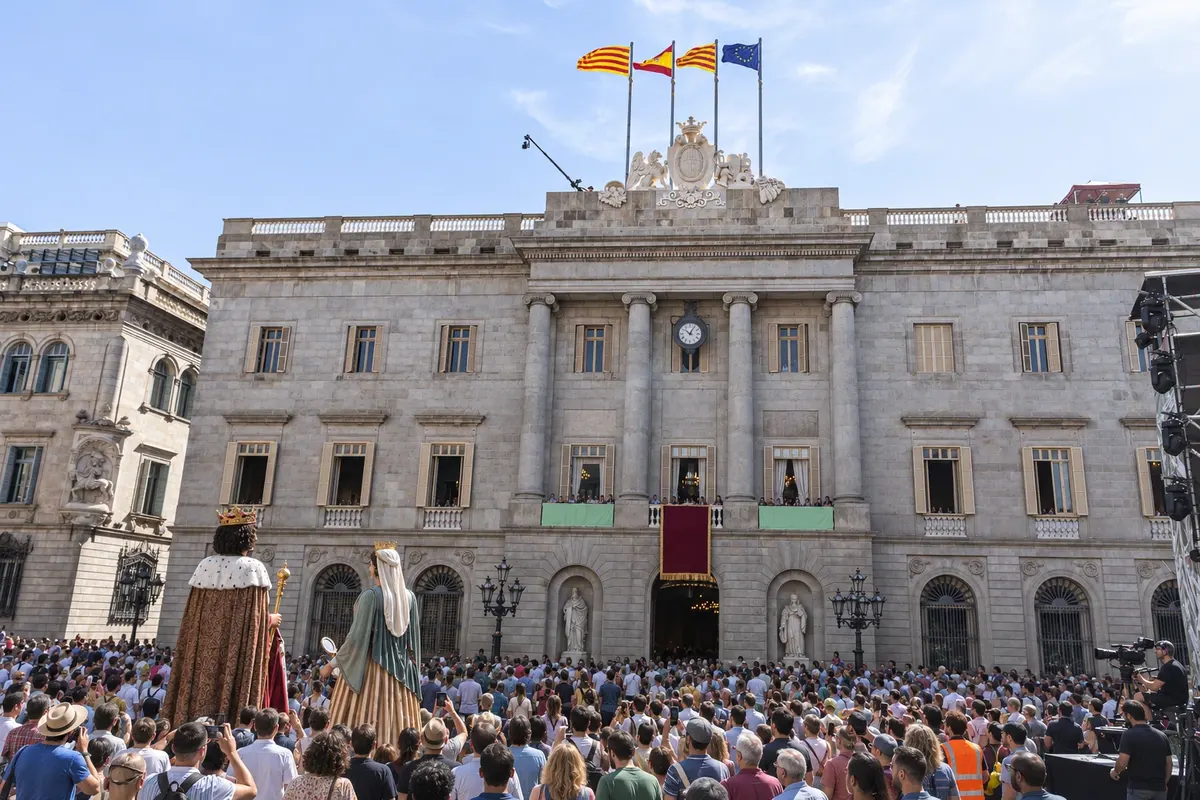
February remains cold, with highs near 14 °C and lows around 6 °C, and it is one of the driest months, with about 30 mm. At the beginning of the month the Santa Eulàlia festival brings giants, castellers and correfocs to the Barri Gòtic. Carnival, in February or March depending on the calendar, features the region's best-known parades in Sitges. The Montjuïc funicular and cable car often stop for several weeks for maintenance.

marec Zmerne padavine

Start of spring · Almond trees in Montserrat

March opens spring in the northern hemisphere: highs around 16 °C, lows near 8 °C and about 42 mm of rain. It is a good month for walking in the Gòtic, El Born and Montserrat, still without heat. Holy Week can fall in March or April and crowds attractions; buy Gaudí tickets in advance.

april Zmerne padavine

Sant Jordi on the 23rd · Full spring

April has highs around 19 °C and lows near 10 °C, with about 47 mm of rain occurring on a few days. It is one of the best months for walking: terraces are full, parks are in bloom and Park Güell has good light. On the 23rd, Sant Jordi, the city fills with book and rose stalls, especially on Passeig de Gràcia and Rambla de Catalunya; it’s a busy, festive street day. Easter Week, when it falls in April, brings holidays and more crowds. Bring a light jacket for the evening.

maj Zmerne padavine

Spring · Beach season begins

May is pleasant: highs around 22 °C, lows near 14 °C and about 42 mm of rain. The sea is still cool, but the Barceloneta promenade is already active, and day trips to Montserrat, Sitges and Girona pay off in long, clear days. In Girona, Temps de Flors typically opens decorated courtyards and monuments in mid-month. It is high season for Gaudí houses: scheduled times and tickets bought in advance.

junij Malo padavin
Start of summer · Sant Joan on the night of the 23rd

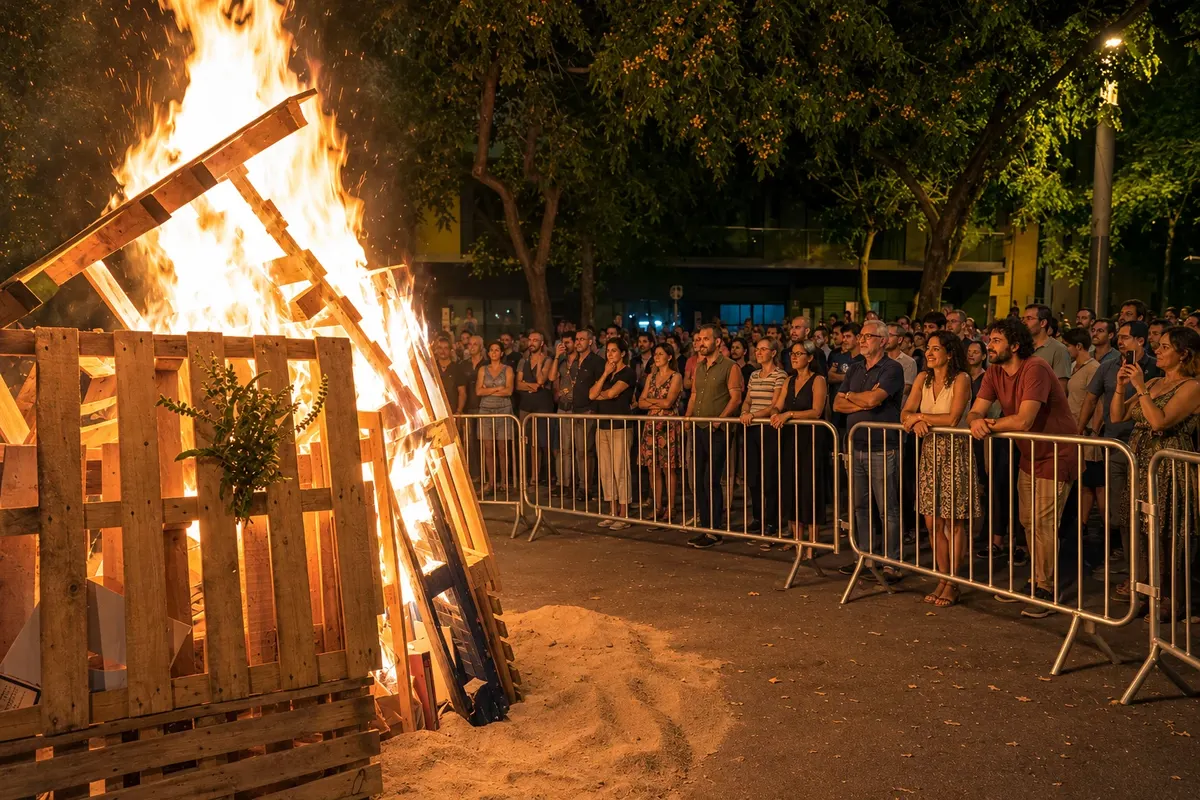
June is the start of the European summer, with highs around 26 °C, lows near 18 °C and little rain, about 26 mm. Sea water begins to be good for swimming and the beaches fill up. On the night of the 23rd to 24th, the revetlla de Sant Joan features bonfires, fireworks and celebrations on the beaches and in neighborhoods, and the 24th is a public holiday. These are the longest days of the year, with light until after 9 PM; the Font Màgica usually extends its shows. Bring a hat and water for Park Güell and Montjuïc.

julij Malo padavin

Summer · Humid heat

July is full summer, with highs around 28 °C and lows near 21 °C, little rain, about 27 mm, and high humidity from the sea. The beaches and promenades are busy all day, and Gaudí attractions have lines even with timed entry. Do outdoor activities early in the morning or late afternoon and leave museums, Casa Batlló and La Pedrera for midday. Montserrat and Tibidabo are cooler than the city. The Grec festival brings theater and music to Montjuïc stages.

avgust Zmerne padavine

Summer · Festa Major de Gràcia

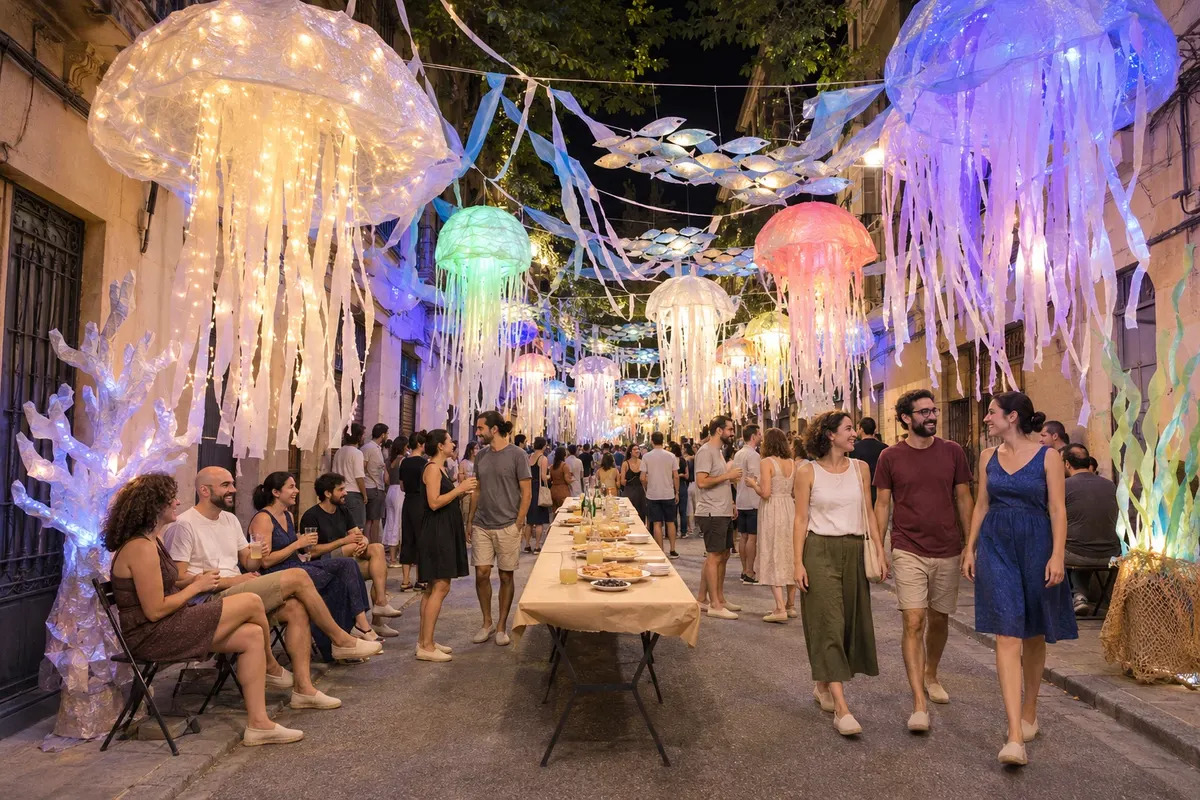
August is the hottest month, with highs around 29 °C and lows near 21 °C; late-afternoon showers raise rainfall to about 51 mm. Some neighborhood shops close for holidays, but tourist attractions remain open. In mid-month, the Festa Major de Gràcia decorates the neighborhood streets with neighbor-made displays, contests and evening music. Beach in the morning, museum in the afternoon and a stroll at night is the rhythm that works. Book in advance anything with timed entry.

september Veliko padavin

La Mercè · End of summer

September is still summer: highs around 26 °C and lows near 18 °C, with the sea at its warmest of the year. It is also the rainiest month, about 86 mm, usually in short, heavy storms. The 11th is La Diada, Catalonia’s holiday. Around the 24th, La Mercè, the city’s main festival, typically brings giants, castellers, correfocs and plaza concerts; the Font Màgica ends the festival with music and fireworks. After La Mercè the city quiets down and prices fall.

oktober Veliko padavin

Autumn · Sitges Film Festival

October has highs around 22 °C and lows near 14 °C and remains rainy, with about 82 mm in a few days of heavy rain. Between showers the weather is good for walking, and the beaches still get visitors on sunny days. In Sitges, the fantastic film festival usually takes place in the first half of the month. The 12th is a national holiday.

november Zmerne padavine

Autumn · Short days

November is cool, with highs around 18 °C and lows near 9 °C and about 46 mm of rain. Days shorten and it gets dark before 6 p.m., which concentrates outdoor activities between 10 a.m. and 5 p.m. It's a quiet month for museums, the Sagrada Família and Park Güell, without summer lines. The 1st is a holiday. Pack a coat and umbrella; for Montserrat and Tibidabo, winter clothing.

december Zmerne padavine

European winter · Fira de Santa Llúcia and Christmas

Highs around 14 °C and lows near 6 °C, with about 37 mm of rain and short days. The Fira de Santa Llúcia, in front of the Cathedral, sells nativity figures, the caganer and the tió de Nadal from late November, and the central streets are decorated with lights. The 26th, Sant Esteve, is a holiday in Catalonia, and at Christmas and New Year many attractions close or reduce hours. During the holidays the city fills with European visitors; book in advance.

Načrtujte pot

Kako do tja:Barcelona

From the airport to the center

Three public transport options. Aerobús: express bus departing from the door of T1 (line A1) and T2 (line A2), 24 hours a day, stopping at Plaça d'Espanya and Gran Via and terminating at Plaça de Catalunya, around 35 minutes; it has luggage space and tickets can be bought on board or online. Rodalies train: line R2 Nord departs from the T2 station (those arriving at T1 take the bus between terminals) and stops at Barcelona Sants and Passeig de Gràcia in about 20 to 30 minutes, with departures every half hour; the common one-zone ticket is valid for this stretch. Metro: line L9 Sud has stations at T1 and T2 and interchanges with lines 1, 3 and 5 at Torrassa, Collblanc and Zona Universitària, providing access to the center; airport stations require a specific ticket and the total journey exceeds 40 minutes. Taxi: metered fare with an airport supplement; check the rate table in the vehicle.

By train: Barcelona Sants

Barcelona Sants is the city’s long-distance station, west of the center, with metro (Sants Estació, lines 3 and 5) and Rodalies. The AVE from Madrid departs Madrid-Puerta de Atocha – Almudena Grandes or Madrid-Chamartín – Clara Campoamor and reaches Sants in about 2 h 30, with possible stops at Zaragoza, Lleida and Camp de Tarragona; there are many departures per day from Renfe and other operators. From Seville (Sevilla Santa Justa) the direct AVE takes from about 5 h 20. To the north, AVE and Avant reach Girona in about 40 minutes and Figueres Vilafant in around 1 hour, continuing to France. High-speed trains have reserved seats and luggage checks at entry; arrive early. Buy tickets via Renfe’s website. Some high-speed trains also stop at Passeig de Gràcia or El Clot-Aragó: check your ticket.

Rodalies and FGC for the surroundings

The Rodalies de Catalunya network, operated by Renfe, departs from Sants, Passeig de Gràcia, El Clot-Aragó and Estació de França and serves nearby day trips: the R2 Sud line goes to Sitges in about 40 minutes, and the R2 Nord to the airport; the R1 follows the northern coast to Mataró and Blanes, the gateway to the Costa Brava; the R11 reaches Girona in about 1 h 15 and Figueres in close to 2 hours, slower than the AVE. You don’t need to reserve: buy tickets at the station machine. The FGC, the Generalitat railway, departs from Plaça Espanya on the R5 line to Montserrat (Montserrat-Aeri and Monistrol de Montserrat stations, in around 1 hour) and from Plaça de Catalunya on lines L6 and L7 to the upper part of the city and Tibidabo. Check the line status on the day of travel.

Z avtom

Barcelona is served by the AP-7, the Mediterranean highway, which runs north to Girona (about 100 km), Figueres and France, and south to Tarragona and Valencia (about 350 km). Madrid is about 620 km via the A-2 and the AP-2, passing Zaragoza. Sitges is about 35 km on the C-32, with tunnels under the Garraf; Montserrat about 60 km via the A-2 and the monastery road. Inside the city a car is a hindrance: the old town is closed to traffic, parking is scarce and expensive, and there is a low-emission zone on weekdays that restricts older cars. Rent a car only for the day you head to the Costa Brava or inland, and return it when you come back. In Spain you drive on the right and AP highways have tolls on some sections.

How to get around Barcelona

The TMB metro has eight lines and covers almost all attractions: L2 and L5 for the Sagrada Família, L3 for Passeig de Gràcia, Liceu, Lesseps and Espanya, L4 for Jaume I and Barceloneta. TMB buses complement the network, with H and V lines in an orthogonal grid and line 24 serving Park Güell. The FGC, with integrated ticketing, serves the higher parts of the city. The common ticket is the T-casual, ten trips in one zone, valid on metro, bus, FGC and Rodalies within the city, but not in the airport metro stations; there are also 2- to 5-day cards with unlimited travel, including the airport. The old town, El Born, Barceloneta and Passeig de Gràcia are walkable; Bicing bike service is for residents only. The Bus Turístic, a double-decker, runs two circuits of attractions with one- or two-day tickets. Taxis are black and yellow and can be hailed on the street.

Pred odhodom

Praktične informacije

Z nekaj načrtovanja boste imeli več časa za uživanje na poti.

Kdaj se odpraviti

Spring (April to June) and autumn (September and October) usually have mild days. From December to February, highs hover around 14 °C and the days are short.

The seasons shown are the most usual ones; nature doesn't always follow the calendar.

Koliko dni ostati

Three days allow you to see Gaudí's main works, the Barri Gòtic, El Born and an afternoon in Montjuïc or Barceloneta. With four or five days you can visit museums at a relaxed pace, go to the Tibidabo and take a day trip to Montserrat. Two days are only enough for the essentials, with tickets bought in advance.

V katerem mestu prenočiti

The Eixample, around Passeig de Gràcia, has wide streets, Casa Batlló and Casa Milà, and metro access to the whole city. The Barri Gòtic and El Born put the visitor within walking distance of the medieval sites, but the streets are narrow and busy at night. Gràcia has a neighbourhood feel, with squares and bars, near Park Güell. Barceloneta is by the beach. Near Sants accommodation is practical for those arriving or leaving by train.

Spoštujte kraj

Odnesite svoje odpadke, upoštevajte oznake in podprite lokalne ponudnike. V naravi upoštevajte navodila za obiskovalce.

Odgovori na vaša vprašanja

Pogosta vprašanja – Barcelona

How many days to stay in Barcelona?

Three days is a good minimum for Gaudí, the old town and Montjuïc. Those who want the beach, the Tibidabo or the Montserrat monastery need four or five days. Time-slot tickets for Gaudí's works help plan the itinerary: buy them in advance and organize the days around them.

Do I need a car in Barcelona?

No. The metro, buses and commuter trains cover the city, and the old town is explored on foot. Parking in the centre is difficult. A car only makes sense to explore the Costa Brava or the interior of Catalunha.

What language is spoken in Barcelona?

Catalan and Spanish are official and everyone understands Spanish. Signs and menus often appear only in Catalan. In restaurants and tourist attractions English usually works.

Can you go from Madri to Barcelona by train?

Yes. High-speed trains connect Madrid-Puerta de Atocha station to Barcelona-Sants in about 2.5 to 3 hours, depending on the service. There are several departures per day. Buy in advance to have more schedule options.

Rotas entre países

Barcelona – na poti z imenom TGV Paris–Barcelona

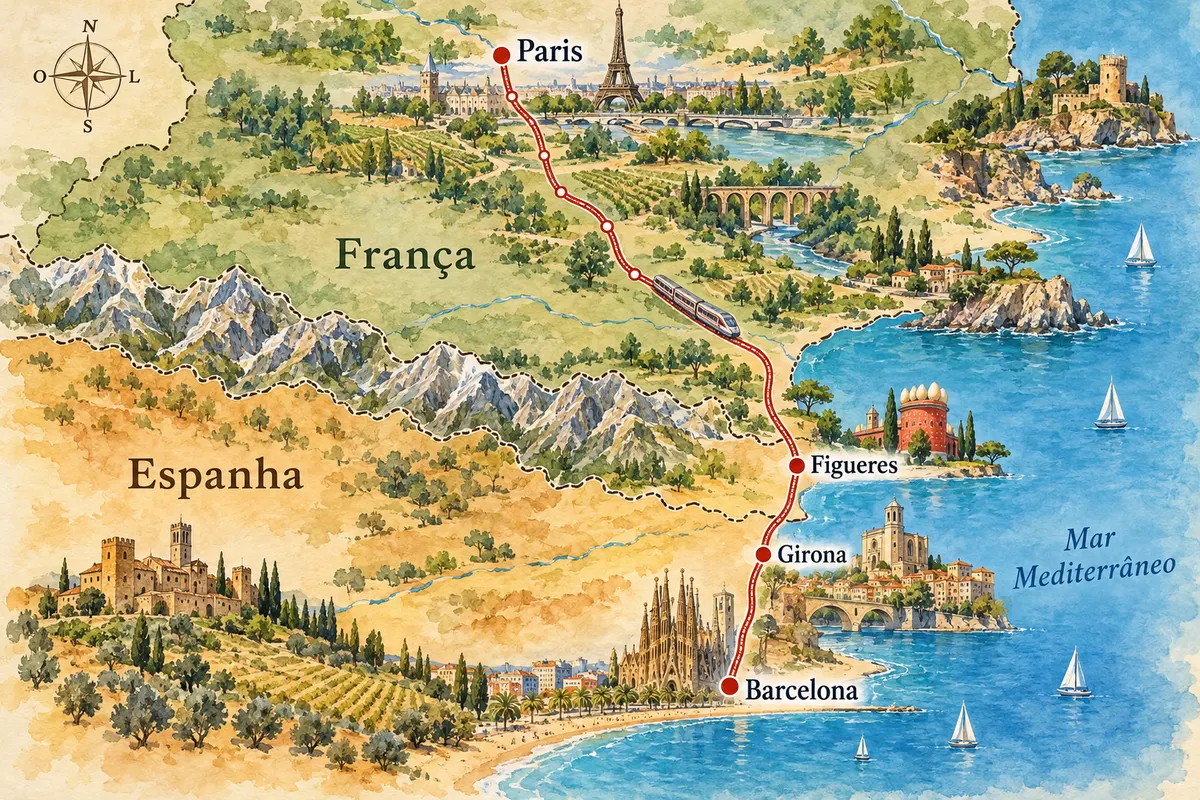
By train from Paris to Barcelona, crossing southern France and the Pyrenees, with stops in Figueres and Girona: from central station to central station in about six and a half hours.

Zemljevid je ilustrativen in ni v merilu. Dotaknite se mesta, da odprete njegovo stran.
TGV Paris–Barcelona – ilustrirani zemljevid
Več o poti – TGV Paris–Barcelona
Odkrijte druge destinacije Iskanje po zvezni državi in mestu

Več kot vodnik