

Sladica · Girona
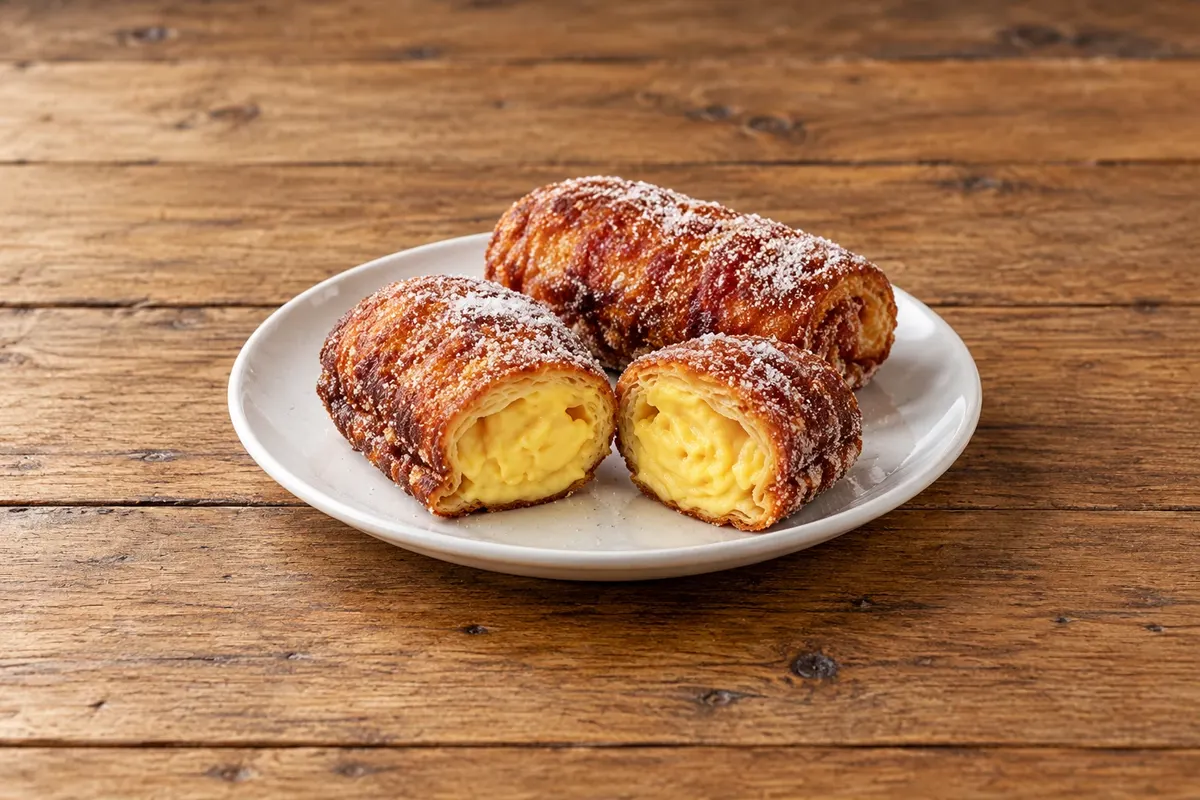
Xuixo
Sweet leavened and laminated dough, rolled with a cream filling, fried and coated in sugar. It is the typical sweet of Girona, linked to the historical Puig pastry shop in the early 20th century.

 Išči
 Brazilija
 Antarktika
 Argentina
 Bolivija
 Čile
 Kolumbija
 Ekvator
 Gvajana
 Francoska Gvajana
 Falklandski otoki (Malvini)
 Paragvaj
 Peru
 Surinam
 Urugvaj
 Venezuela
 Nemčija
 Avstrija
 Belgija
 Hrvaška
 Danska
 Slovaška
 SlovenijaŠpanija
 Finska
 Francija
 Grčija
 Nizozemska
 Madžarska
 Irska
 Islandija
 Italija
 Luksemburg
 Norveška
 Poljska
 Portugalska
 Združeno kraljestvo
 Češka
 Švedska
 Švica
 Turčija
 Bermudi
 Kanada
 Združene države Amerike
 Grenlandija
 Mehika
 Sveta Peter in Mihael
 Dominikanska republika
 JaponskaTurčija
 Južnoafriška republika
 Egipt
 Avstralija
 Fidži
 Nova Zelandija
 Papua Nova Gvineja
Catalunha · Španija
Destinacija: Costa Brava and Girona.
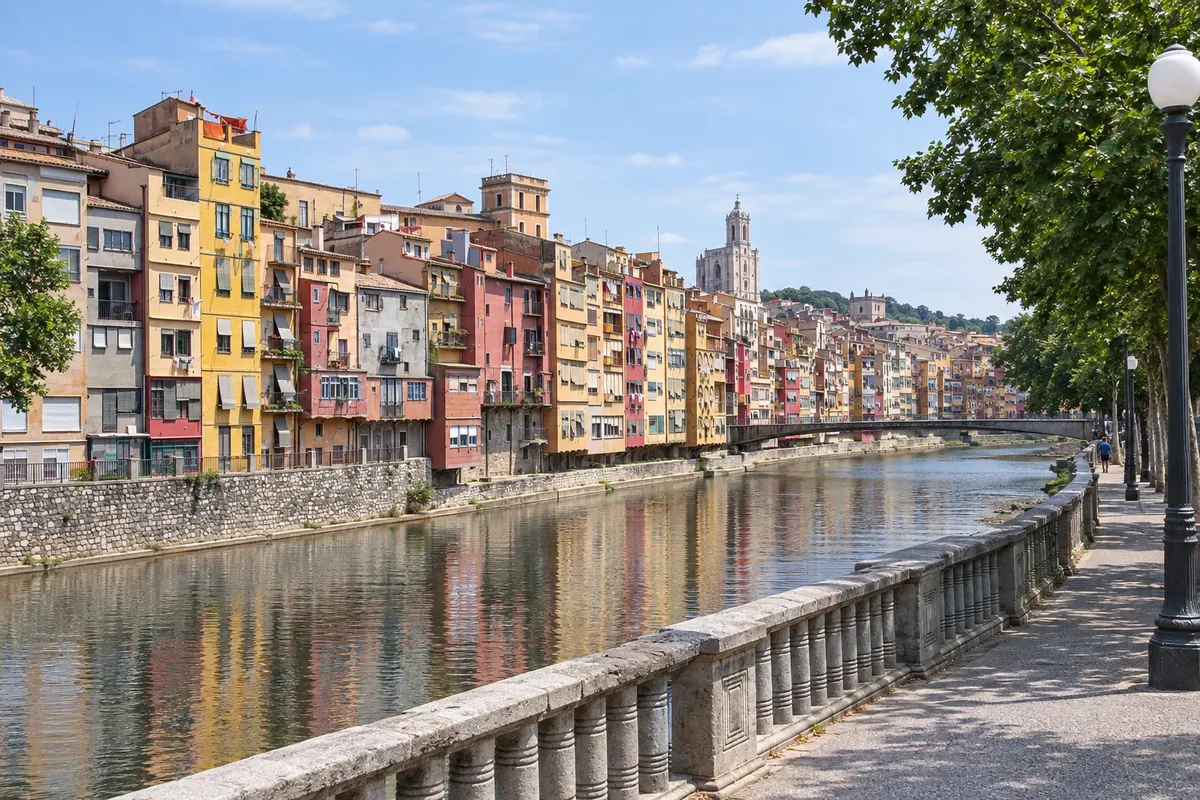
Na fotografiji: Houses on the Onyar river in Girona
Illustrative images. The pictures in this guide are illustrations based on the real place, not photographs, and may differ from it.
Mesto
Capital of the province of the same name, Girona sits at the meeting of the rivers Ter and Onyar, about 100 km north of Barcelona. The Barri Vell brings together the cathedral with the widest Gothic nave in the world, the Call Jewish quarter, the Banys Àrabs, the basilica of Sant Feliu and the monastery of Sant Pere de Galligants, all surrounded by the wall that can be walked along. On the riverbank, the colorful houses of the Onyar have become the city's postcard. Catalan and Spanish are spoken.
V vodniku še ni nastanitev – Girona.
kako do tja · koliko dni · načrt poti · vprašanja
Rotas entre países
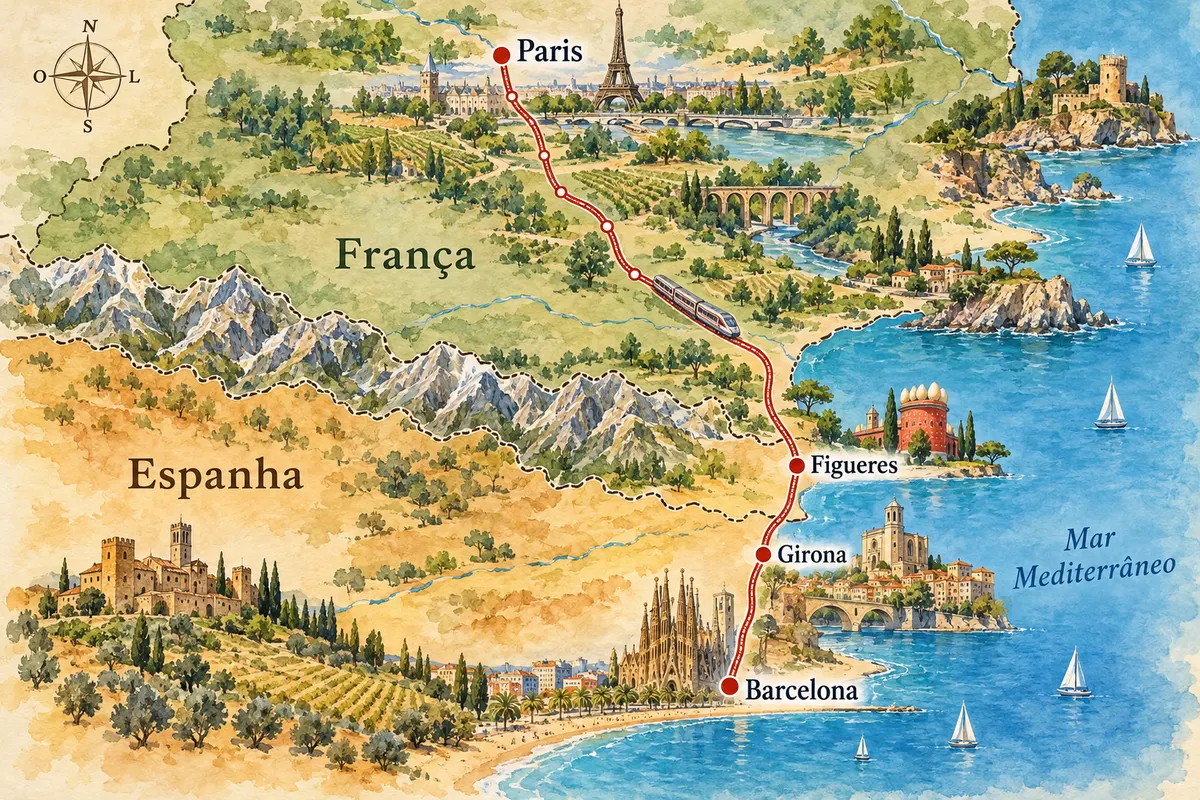
By train from Paris to Barcelona, crossing southern France and the Pyrenees, with stops in Figueres and Girona: from central station to central station in about six and a half hours.
Lokalni okusi – of Španija
Doživite kraj
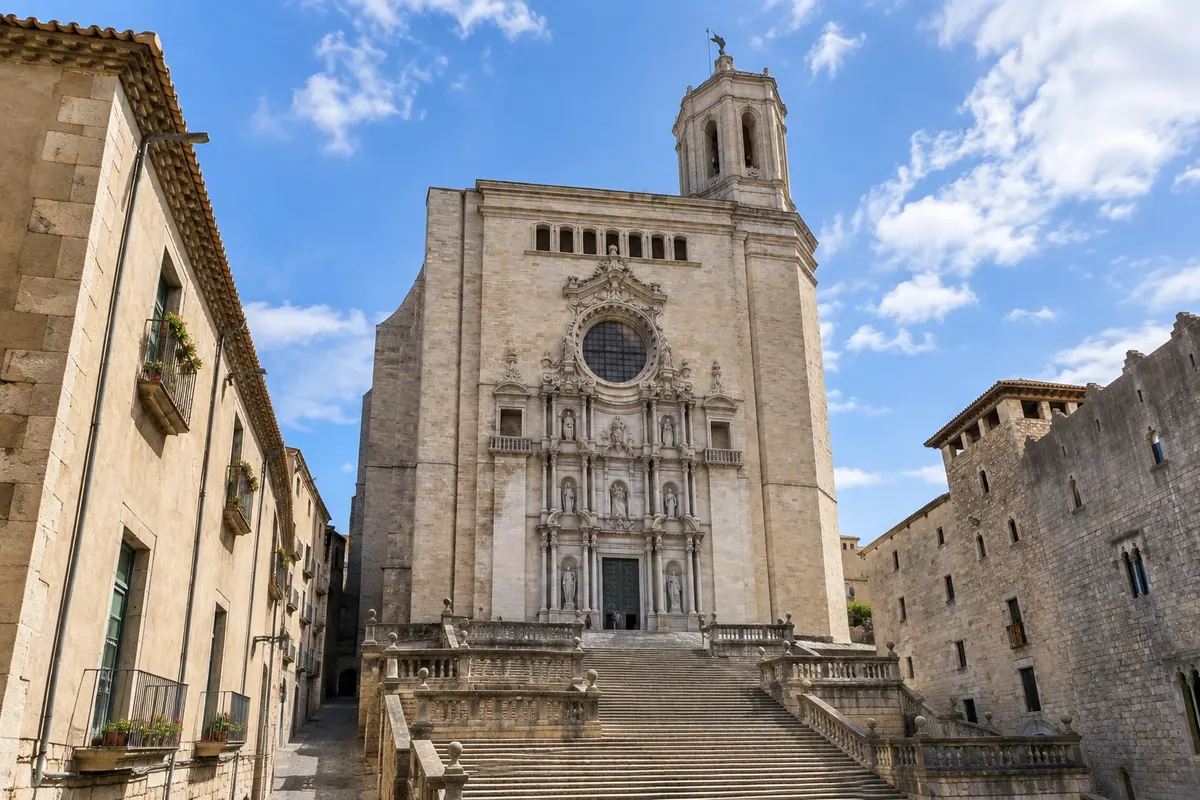
Catedral de Santa Maria, at the top of the Barri Vell, with a baroque staircase of 90 steps and the widest Gothic nave in the world, at 22.98 metres. It houses a 12th-century Romanesque cloister and the tower of Carlos Magno.
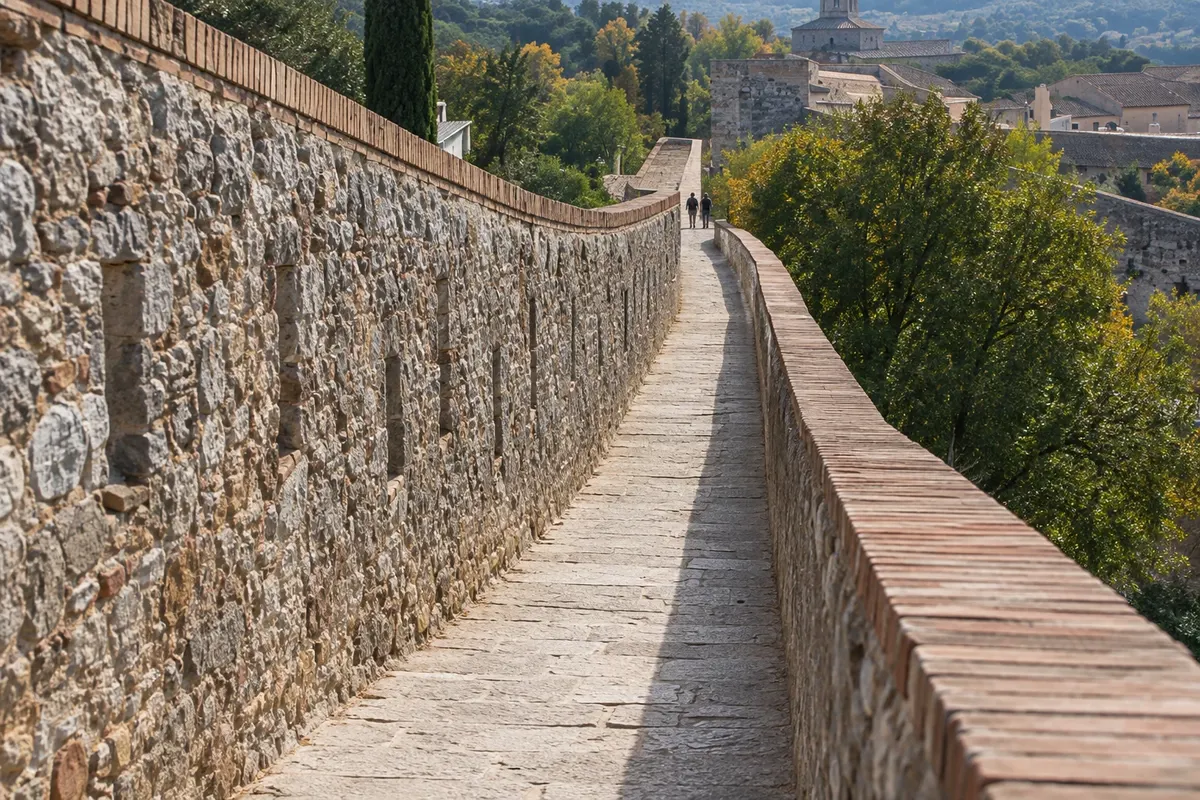
Walk along the wall that skirts the east and south of the Barri Vell, with open towers that serve as viewpoints for the cathedral, the old town roofs, and the surrounding hills.
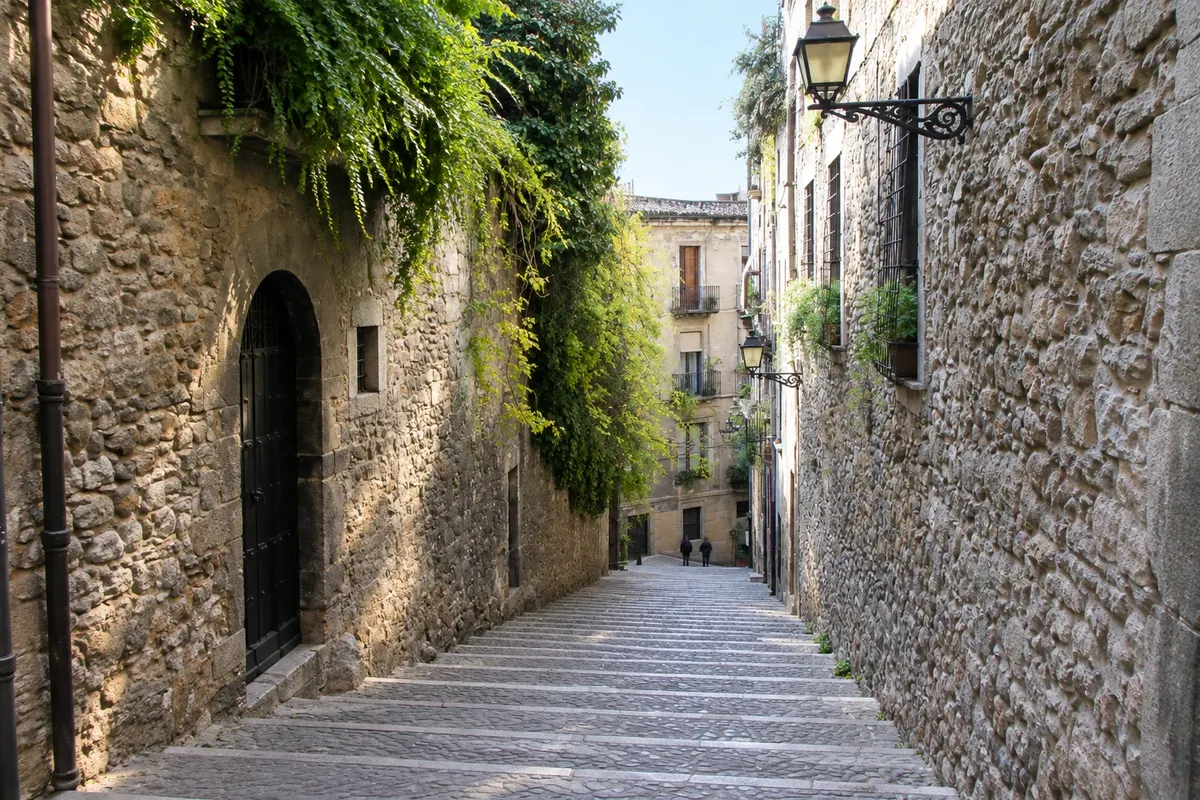
Former Jewish quarter of Girona, around the Carrer de la Força, one of the best preserved in Europe. The Centre Bonastruc ça Porta houses the Museu d'Història dels Jueus, which covers the history of Jewish communities in Catalonia.
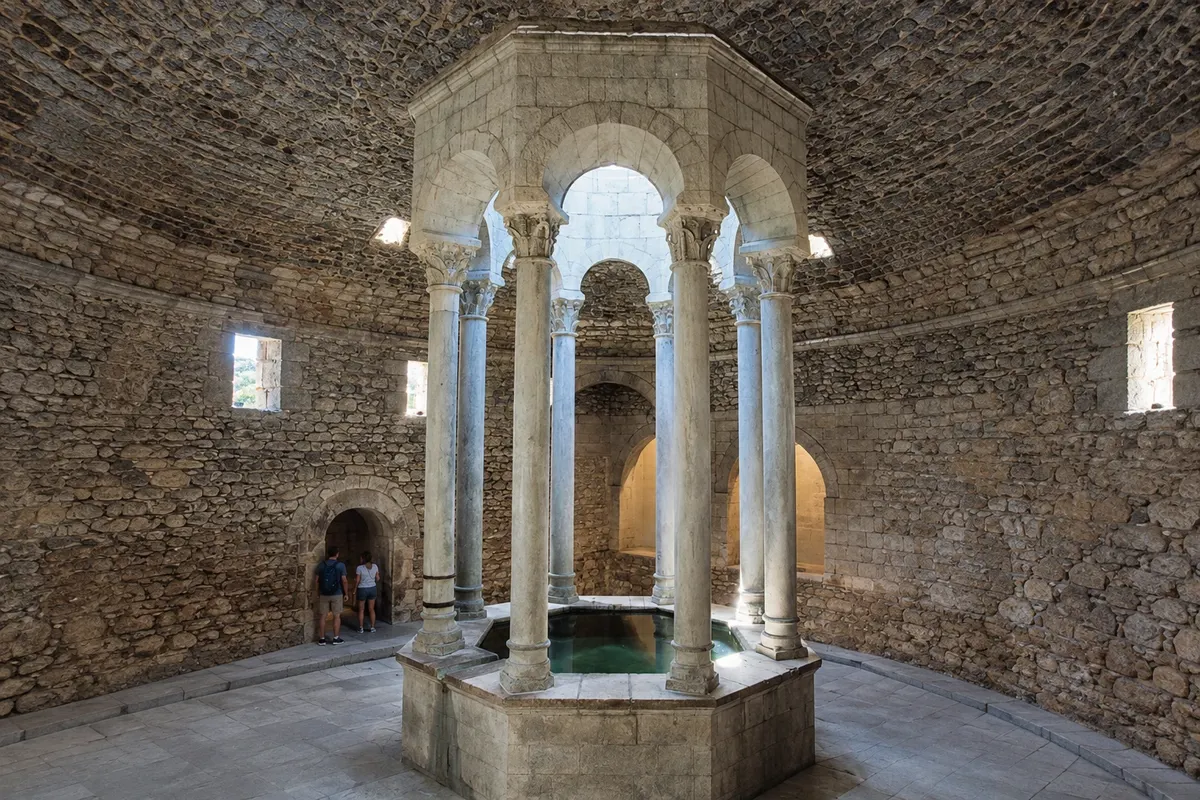
Medieval public baths from the late 12th century, Romanesque in style but inspired by North African baths. The highlight is the cold room, with an octagonal basin surrounded by eight columns and a lantern in the ceiling.
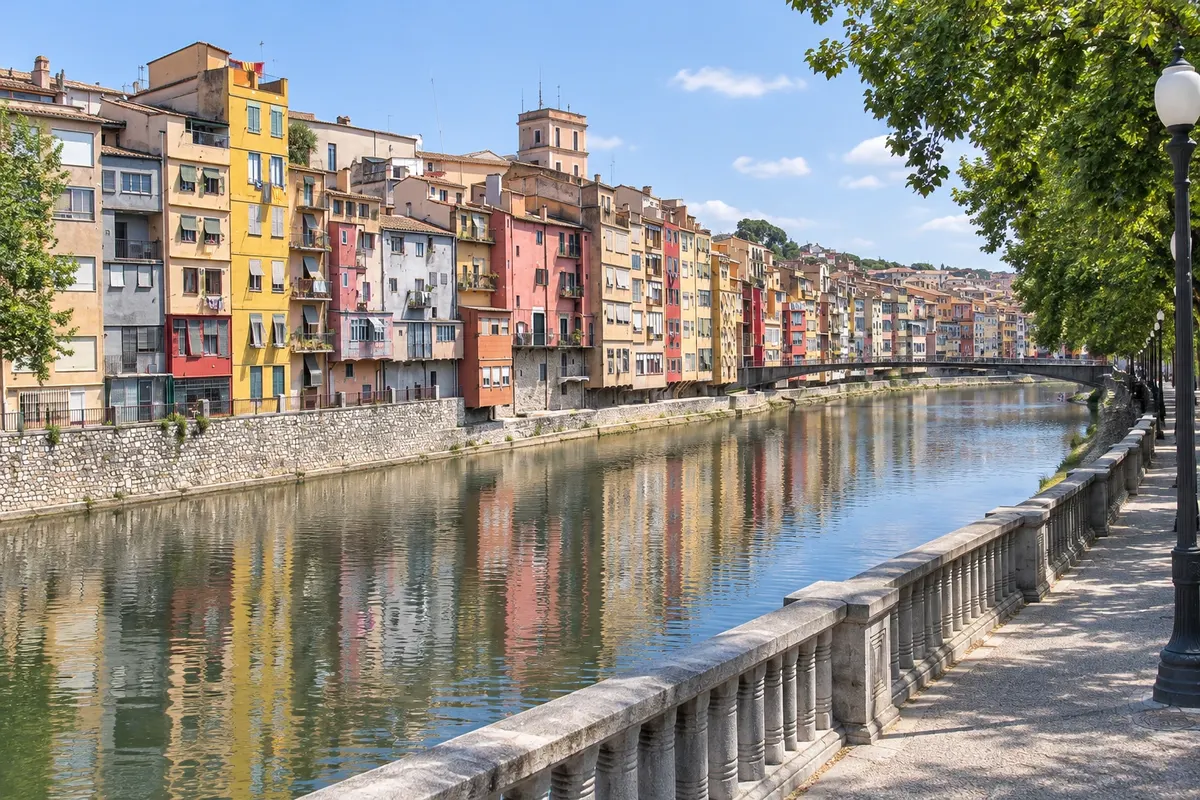
A row of colourful houses overlooking the Onyar river, the best-known image of Girona. The best view is from the bridges, especially the Pont de les Peixateries Velles, the iron bridge made by Gustave Eiffel's company in 1877.
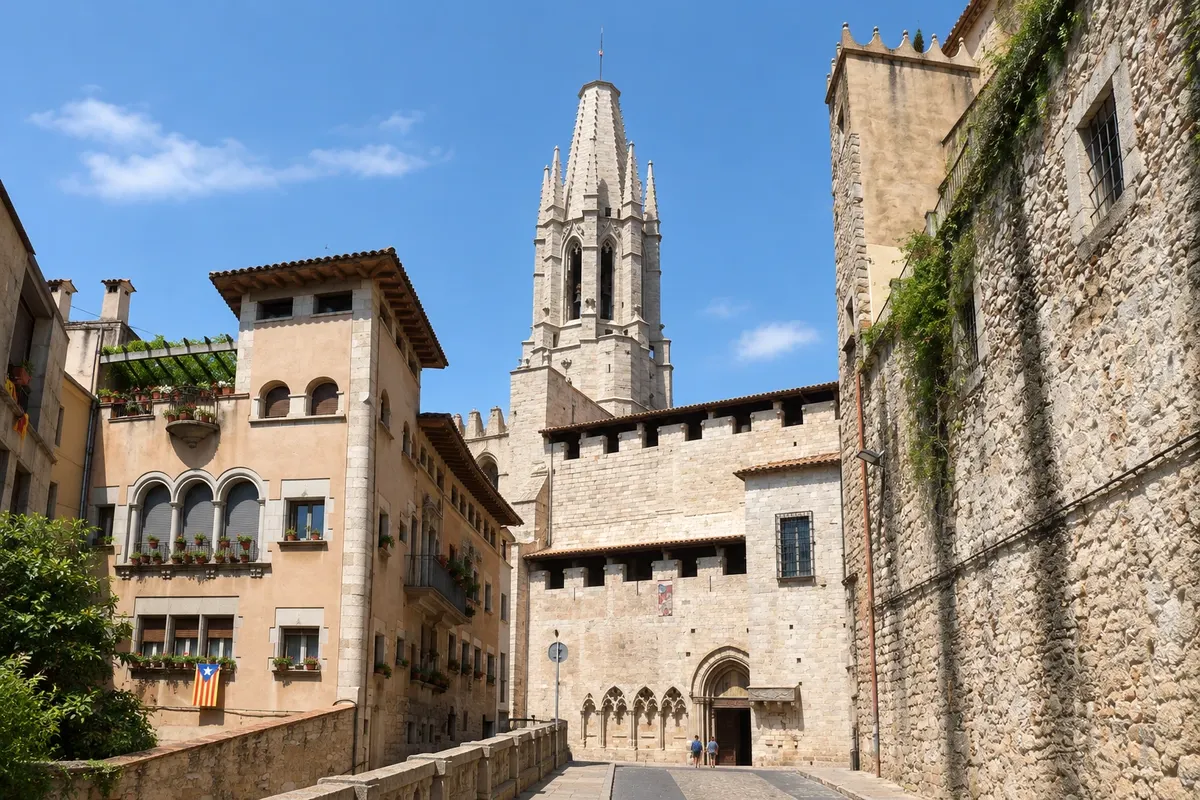
Church documented since 882, the main temple of Girona before the cathedral. It has a pointed Gothic tower that shapes the city's skyline, eight Roman and paleochristian sarcophagi, and the Gothic tomb of Sant Narcís.
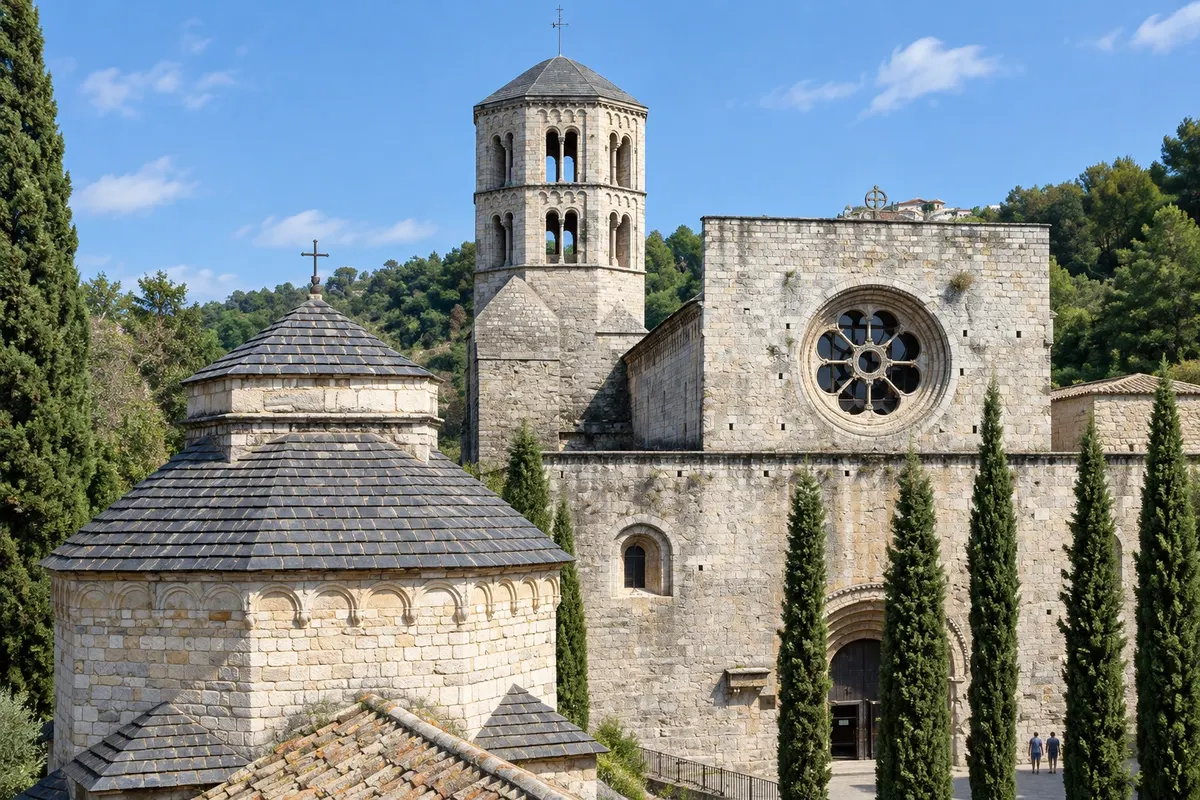
Former Benedictine abbey with a Romanesque church and cloister from the 12th century, beside the Galligants stream. Since 1857 it has housed the Museu d'Arqueologia de Catalunya in Girona, with pieces ranging from prehistory to the Middle Ages.
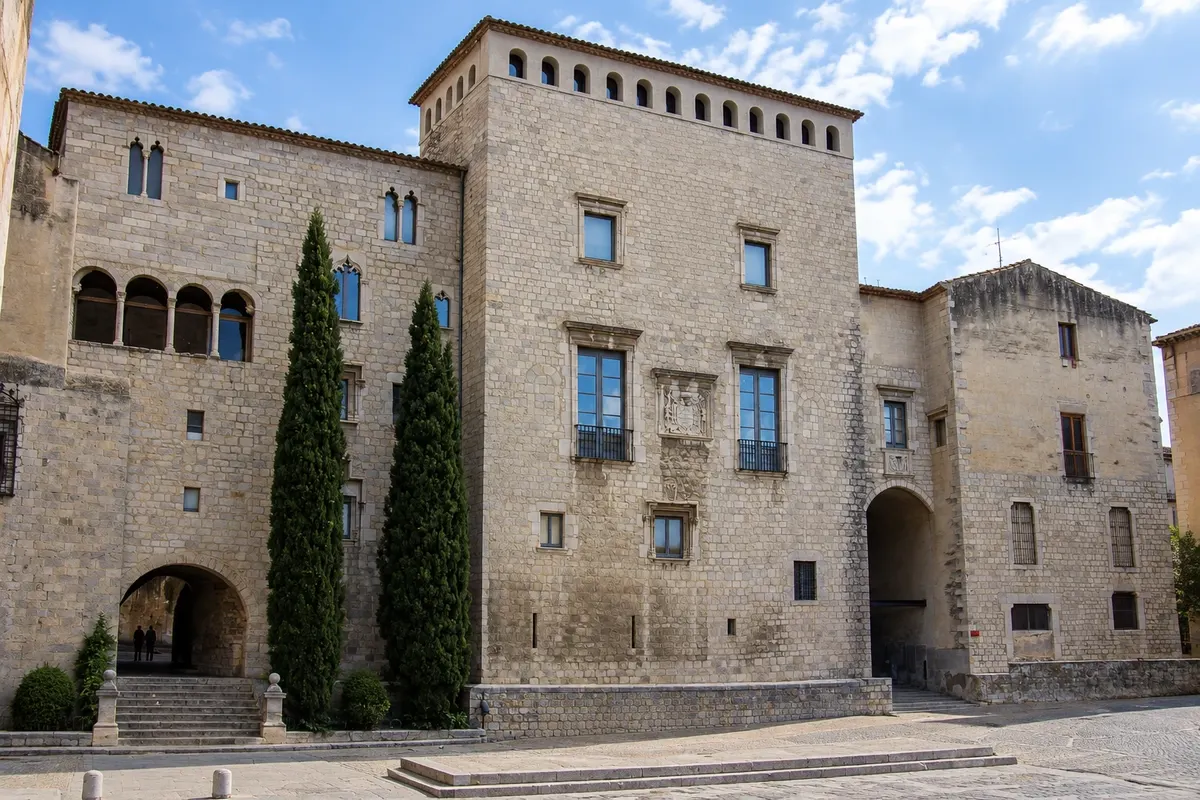
Museum in the old episcopal palace, attached to the cathedral, with art from the region from the Romanesque to the early 20th century. Highlights: the portable altar of Sant Pere de Rodes, from the 10th century, and the altarpiece of Sant Pere de Púbol, from the 15th century.
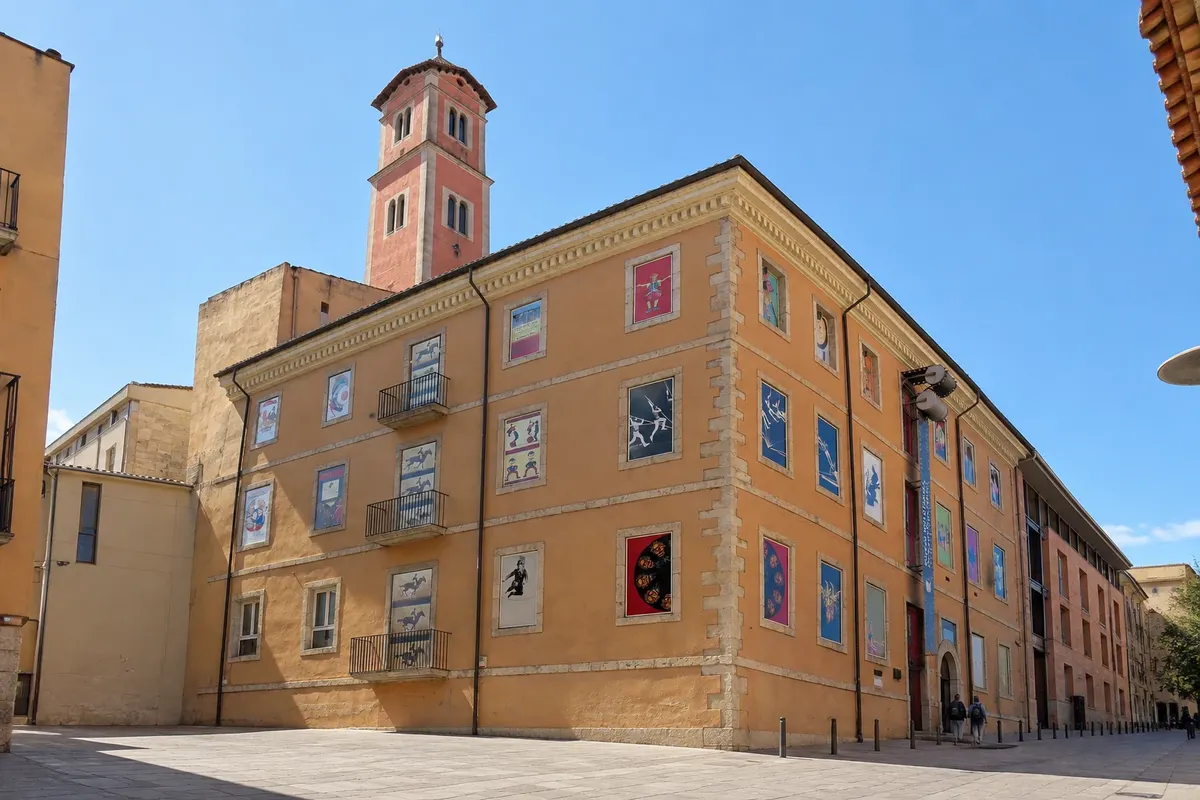
Museum opened in 1998 with the collection of Tomàs Mallol: optical devices, cameras and projectors that tell 400 years of moving images, from shadow theatre to the arrival of television.
Pred odhodom
Girona – Catalonia Destinacija Costa Brava and Girona približno 103 km stran (izhodišče: Barcelona)
Razdalje so približne. Pred potovanjem preverite lete in vozne rede avtobusov, vlakov ali ladij.
Check before you buy. From Barcelona, the high-speed train typically takes about 40 minutes to Girona station; regional trains take more than an hour. Girona-Costa Brava Airport (GRO) is 10 km to the south, with buses to the station. From the station to the Barri Vell it's about a 15-minute walk.
One full day covers the cathedral, the wall, the Call and the Onyar bridges. With two days you can take your time in the museums, such as the Art museum, the Archaeology museum in Sant Pere de Galligants and the Cinema museum. Girona also serves as a base for visiting Figueres and Púbol Castle.
Spring (April to June) and early autumn (September and October) usually have the most pleasant weather. In July and August the average high exceeds 30 °C. In winter, from December to February, mornings are often cold with frost, and the days are short.
The seasons shown are the most usual ones; nature doesn't always follow the calendar.
No. The Barri Vell is meant to be explored on foot, with narrow streets, slopes and staircases. Trains connect Girona with Barcelona and Figueres. A car is only useful for going to Púbol, Portlligat or the beaches of the Costa Brava.
Predlog poti
Pot povezuje znamenitosti na tej strani. Za oglede boste imeli dovolj časa.
Start by climbing the staircase of the Catedral de Girona and see the single nave and the Romanesque cloister. Walk down to the Banys Àrabs, just a few minutes away, and explore the rooms of the medieval bath.
After lunch, enter the Call via Carrer de la Força and visit the Museu d'Història dels Jueus. Then stop by the Basílica de Sant Feliu, with its pointed tower and the Roman sarcophagi.
Go up to the Passeig de la Muralla and walk along the wall, entering the towers to see the roofs of the Barri Vell and the surrounding mountains.
Go down to the river and cross the Pont de les Peixateries Velles to see the Onyar's colorful houses lit up. Dine in the Barri Vell or in the Mercadal, keeping in mind that kitchens usually open after 9 pm.
Dan 1
Visit the Catedral de Girona and, beside it, the Museu d'Art in the former episcopal palace, which houses the altar of Sant Pere de Rodes and Gothic altarpieces.
Visit the Banys Àrabs and follow the same street to the Monestir de Sant Pere de Galligants, where the Museu d'Arqueologia occupies the Romanesque church and cloister.
Enter the Passeig de la Muralla from the northern section, near Sant Pere de Galligants, and walk the route down to the south of the Barri Vell.
End the day on the banks of the Onyar, looking at the Cases de l'Onyar from the bridges, and have dinner around the Mercadal.
Dan 2
Spend the morning in the Call: walk along Carrer de la Força and the side alleys and visit the Museu d'Història dels Jueus at the Centre Bonastruc ça Porta.
Visit the Basílica de Sant Feliu and cross the river to the Museu del Cinema in the Mercadal, with four centuries of moving-image devices.
Return to the Onyar bridges to photograph the facades in the low light and walk along the bank to the Pont de les Peixateries Velles.
Choose a restaurant on the streets of the Barri Vell to try Catalan cuisine. Those continuing on to Figueres can catch the train the next morning.
Check before you go. Opening hours and days change, and places may close for renovations, holidays or events. This itinerary is a suggestion from Cidade Turismo, not a commitment: plan yours by checking directly with each place you intend to visit.
Pred odhodom
Yes. The high-speed train usually takes about 40 minutes between Barcelona and Girona, and from the station the historic center is within walking distance. In one day you can fit the cathedral, the wall, the Call and the Onyar bridges. To visit the museums at a relaxed pace, it's best to spend a night.
The Barri Vell is on a slope: there are hills, cobbled streets and staircases, such as the cathedral's 90-step stair. The Passeig de la Muralla has steps and narrow stretches. The Mercadal neighborhood, on the other side of the river, is flat.
Catalan and Spanish are spoken. Girona is a city where Catalan is very present on the streets, signs and menus. In Spanish the city is also called Gerona, but the official name and the one on signs is Girona.
The Museu d'Història dels Jueus, in the Call, tells the history of the Jewish communities of Catalonia. The Museu d'Art, next to the cathedral, gathers art from the Romanesque to the early 20th century. The Museu d'Arqueologia occupies the Monestir de Sant Pere de Galligants, and the Museu del Cinema displays the Tomàs Mallol collection. Many museums close one day a week: check before you go.
Yes, if you're traveling by car: the beaches of the Baix Empordà and Púbol Castle are less than an hour away. By train, Figueres is just a few minutes. For coastal towns like Tossa de Mar, public transport from Girona requires transfers.
Več kot vodnik


