Historic Center of Cuenca
The colonial and republican center of Cuenca, a UNESCO World Heritage Site, with straight streets, mansions with balconies, Parque Calderón, the flower market, and churches on every block.
Antarktika
Azuay · Ekvator
The colonial city in southern Ecuador, a UNESCO World Heritage site: the blue domes of the Catedral, the Río Tomebamba, the toquilla straw hat, the lagoons of Cajas and the Ingapirca ruins.
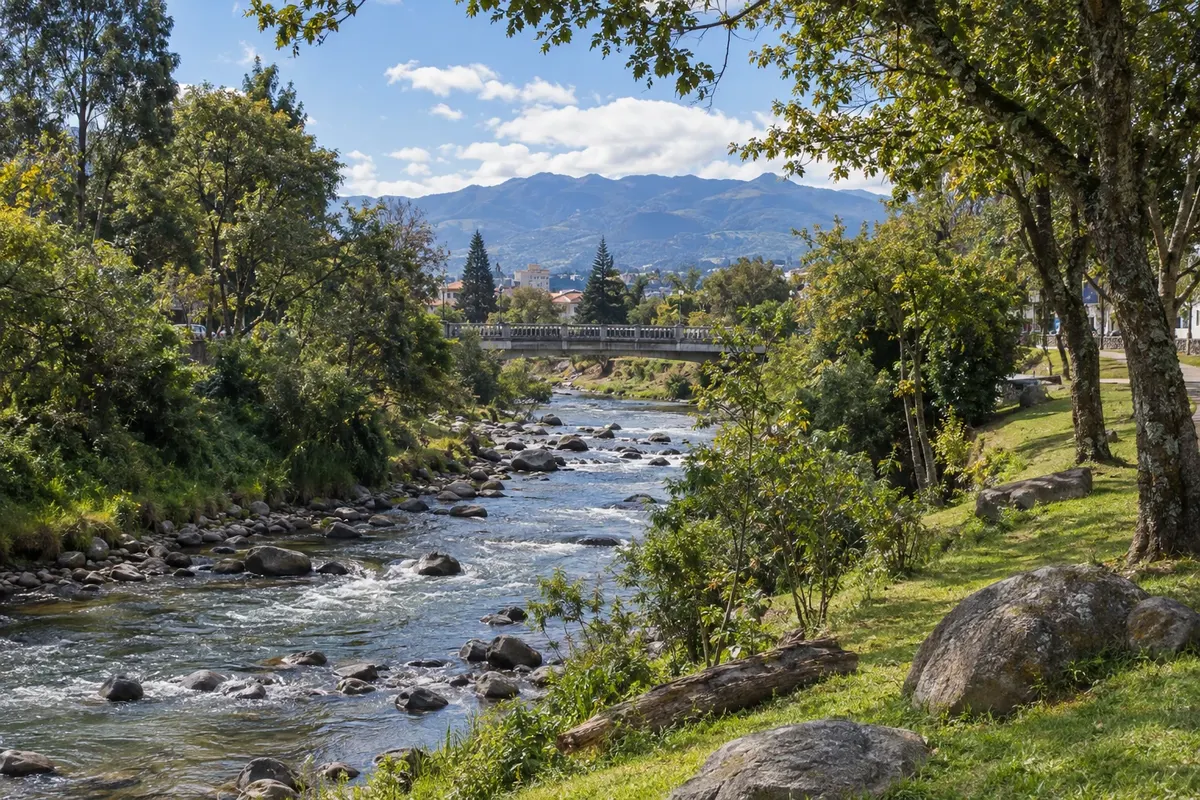
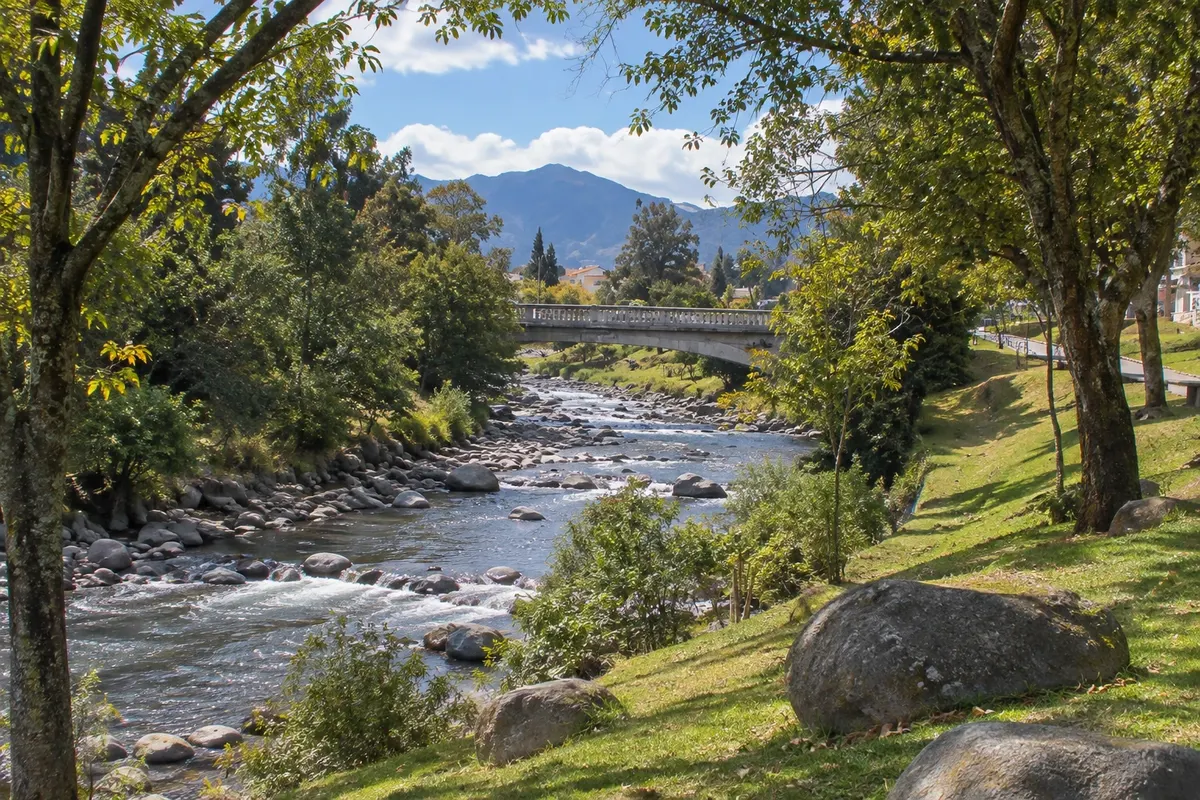
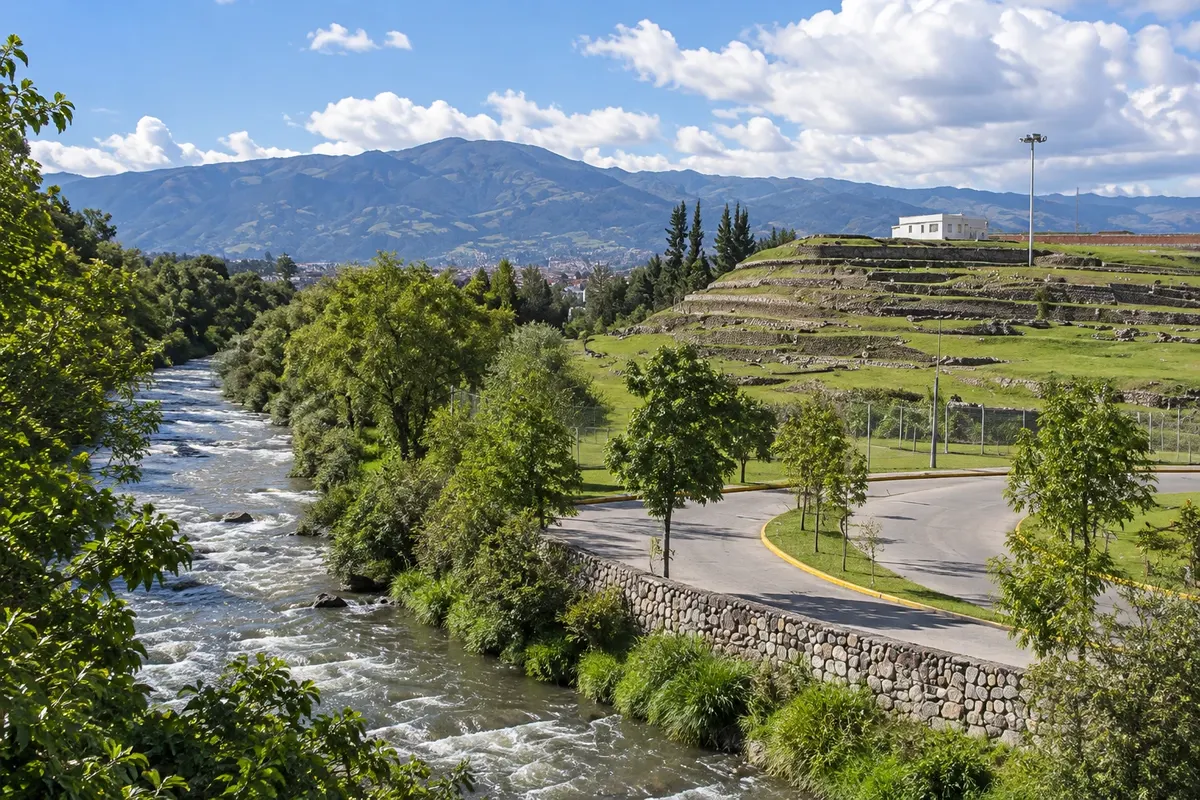
Na fotografiji: Río Tomebamba
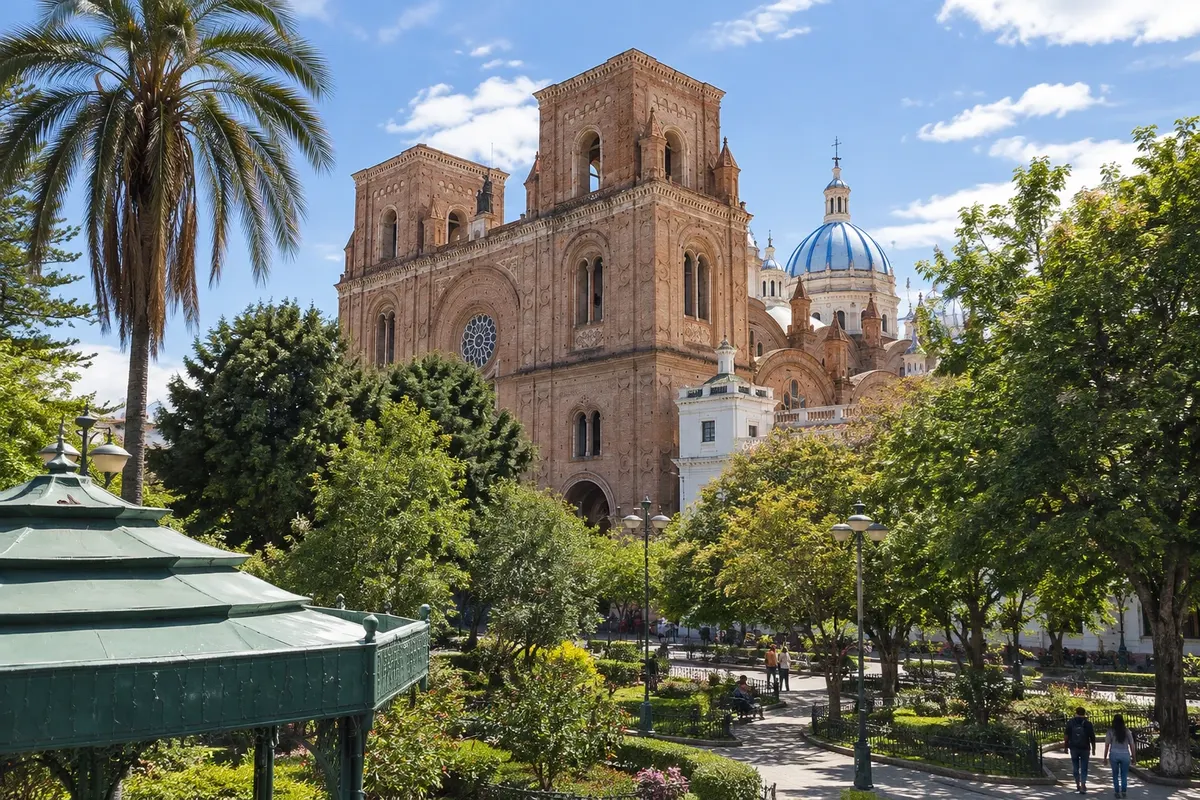
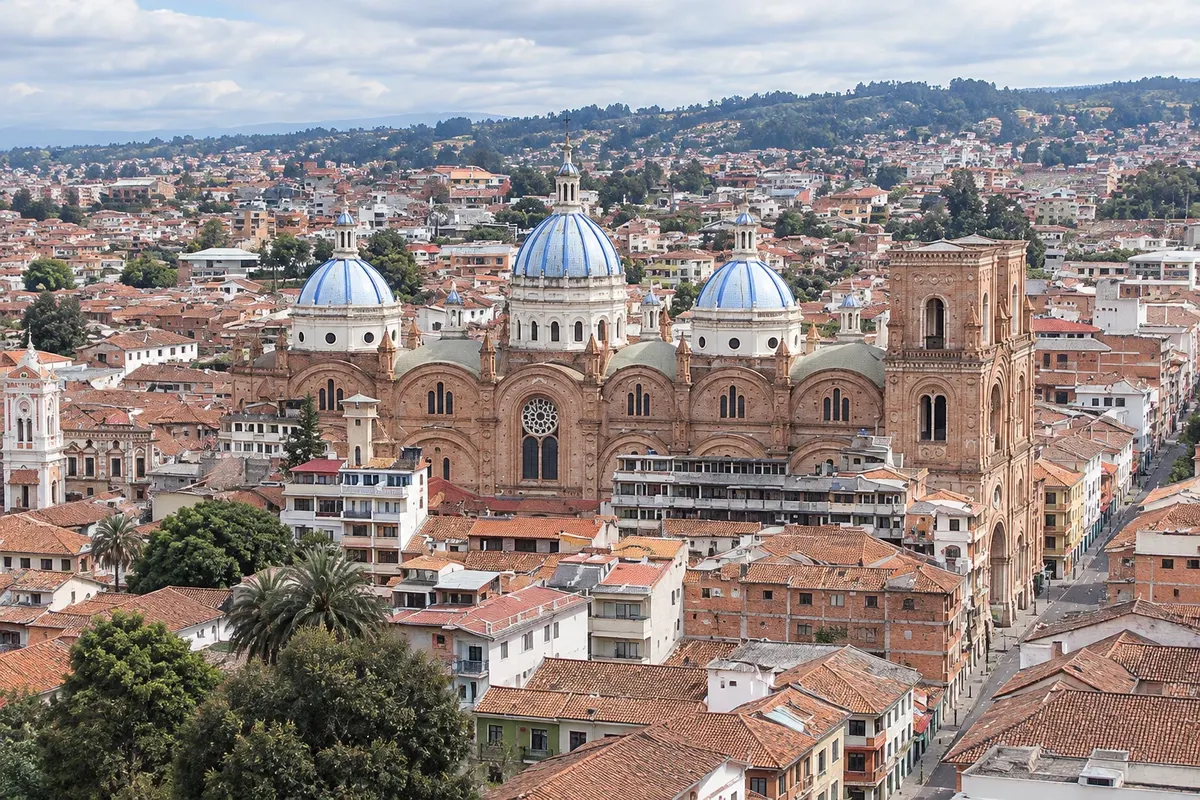
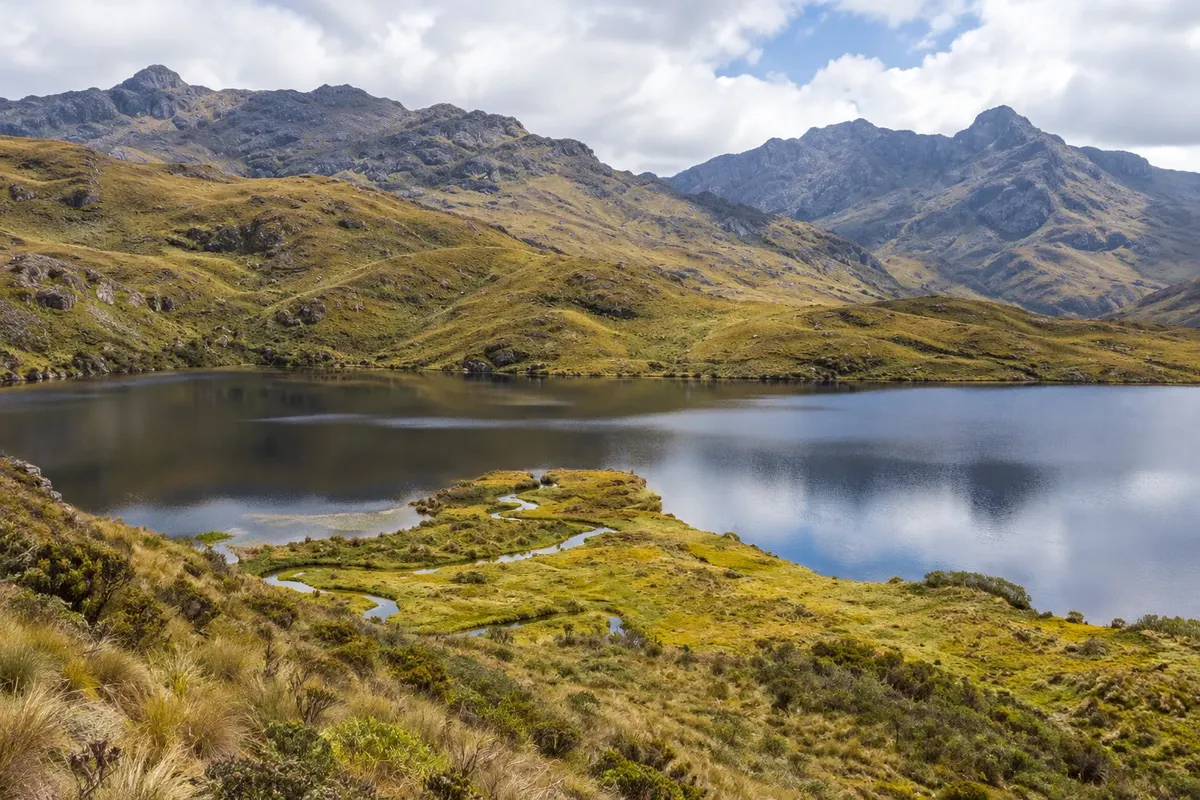
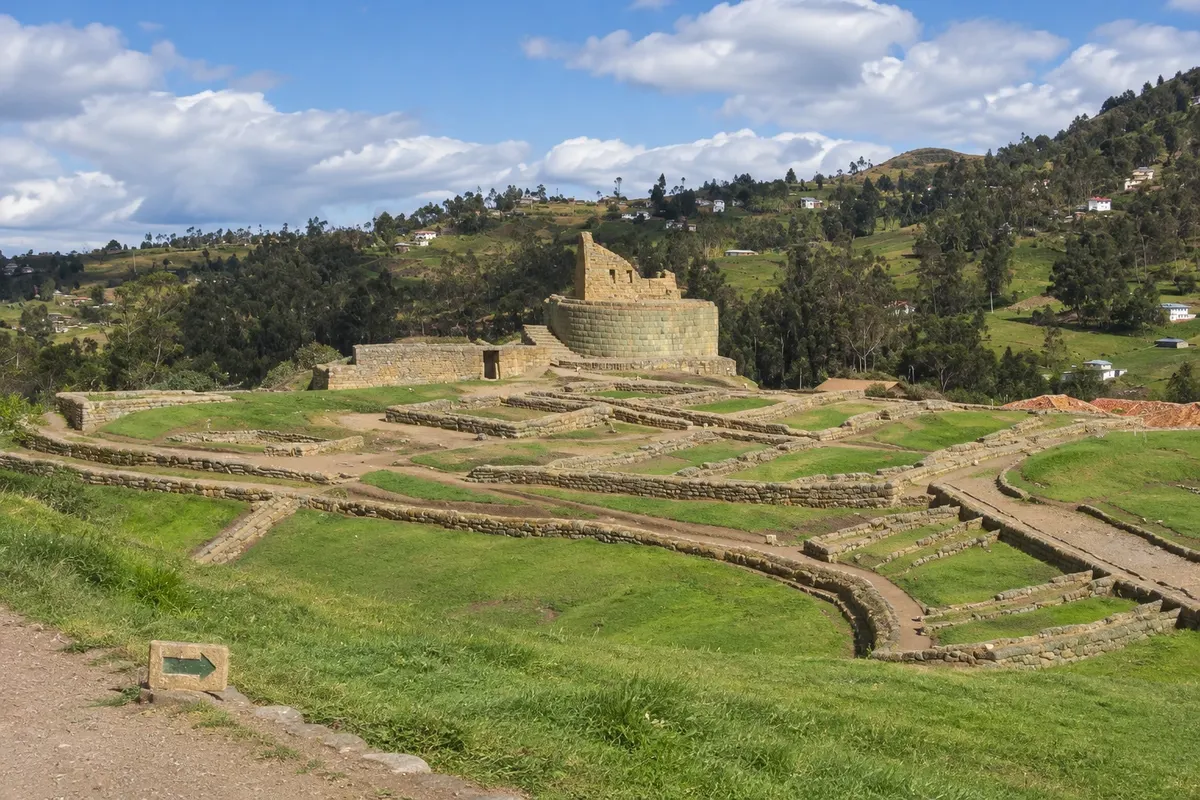
Illustrative images. The pictures in this guide are illustrations based on the real place, not photographs, and may differ from it.
Spoznajte kraj
Cuenca sits in a valley of the southern Andes of Ecuador, at about 2,550 meters, cut by four rivers, the main one being the Tomebamba. It was founded by the Spanish in 1557, near the ruins of Tomebamba, an important Inca city that in turn occupied a Cañari center. The full name, Santa Ana de los Cuatro Ríos de Cuenca, recalls the rivers. The historic center has been a UNESCO World Heritage Site since 1999.
The center has straight streets of colonial and republican houses with iron and wooden balconies, inner courtyards and churches. In the middle is Parque Calderón, between the Catedral Velha and the Catedral de la Inmaculada Concepción, with domes covered in blue and white tiles. Next to it, the flower market colors the Plaza del Carmen. On the bank of the Tomebamba, the Barranco groups houses hanging over the river, with a riverside promenade.
Cuenca is the city of toquilla straw hats, the Panama hat, whose weaving is Intangible Cultural Heritage of UNESCO; workshops and museums show the process. The Museo Pumapungo preserves the ruins of the Inca city and collections about the peoples of Ecuador. About 30 km away, Parque Nacional Cajas is a páramo of hundreds of lagoons, and about 70 km away are the ruins of Ingapirca, the country's main Inca site.
The climate is mild, with sun and rain often on the same day and cold nights. Many travelers feel the altitude in the first days: take it easy.

V vodniku še ni nastanitev – Cuenca.
kako do tja · koliko dni · načrt poti · vprašanja
✈ Aeropuerto Mariscal Lamar (CUE)· 2 km do cilja (Cuenca)
Confirm before buying. Cuenca's airport, Mariscal Lamar, is close to the center and receives flights from Quito and Guayaquil. By road, Guayaquil is about 190 km away, passing through Cajas, and Quito about 450 km. The Terminal Terrestre is next to the airport.
Doživite kraj
The colonial and republican center of Cuenca, a UNESCO World Heritage Site, with straight streets, mansions with balconies, Parque Calderón, the flower market, and churches on every block.
Cuenca's new cathedral, built of brick and marble, with three domes covered in blue and white tiles that are the city's symbol. From the terrace you can see the entire center.
The river that cuts through Cuenca and the Barranco cliff, with houses hanging over the bank, Calle Larga up above, the promenade at the water's edge and the Puente Roto.
National museum on the banks of the Tomebamba, with the ruins of the Inca city of Tomebamba, a garden of Andean plants, birds and rooms of ethnography about the peoples of Ecuador.
Páramo about 30 km from Cuenca, between 3,100 and 4,450 meters, with hundreds of glacial lakes, paper-tree forests and trails starting from Laguna Toreadora.
The main Inca site in Ecuador, about 70 km from Cuenca, featuring the elliptical Temple of the Sun built of fitted stones atop a center of the Cañari people.
Pred odhodom
Cuenca – Azuay Capital
Razdalje so približne. Pred potovanjem preverite lete in vozne rede avtobusov, vlakov ali ladij.
Confirm before buying. Aeropuerto Mariscal Lamar is about 2 km from the center, with domestic flights from Quito and Guayaquil. Buses link the Terminal Terrestre, next to the airport, to Guayaquil in about four hours and to other cities. Within Cuenca, the tranvía and taxis cover local trips.
Two days for the center, the cathedrals, the Tomebamba, the Pumapungo and the hat workshops; three or four including Cajas and Ingapirca.
Mild days around 18 °C and cold nights, with frequent afternoon rain. From June to September it usually rains less in the city. On arrival, many travelers feel the altitude: reserve the first day for a relaxed pace.
The seasons shown are the most usual ones; nature doesn't always follow the calendar.
No. The center is walkable, and the tranvía and taxis cover the rest. For Cajas, buses head toward Guayaquil; for Ingapirca, there are direct buses or excursions.
Predlog poti
Pot povezuje znamenitosti na tej strani. Za oglede boste imeli dovolj časa.
Start at Parque Calderón, visit the Catedral Velha and the Catedral Nova, go up to the terrace and visit the flower market.
Have lunch at the mercado 10 de Agosto and visit a toquilla straw hat workshop.
Descend to the Tomebamba via the Barranco and walk along the bank to the Museo Pumapungo.
Have dinner on Calle Larga, by the river.
Dan 1
Parque Calderón, cathedrals, the flower market and the Mosteiro de la Concepción.
Museo Pumapungo and the archaeological park of the Inca ruins.
Bank of the Tomebamba and the Puente Roto.
Dinner on Calle Larga.
Dan 2
Bus or excursion to the Laguna Toreadora and a hike around the lagoon.
Return to Cuenca and visit a hat workshop or the mercado 10 de Agosto.
Take a taxi up to Mirador de Turi to see the city from above.
Dinner in the historic center.
Check before you go. Opening hours and days change, and places may close for renovations, holidays or events. This itinerary is a suggestion from Cidade Turismo, not a commitment: plan yours by checking directly with each place you intend to visit.
Pred odhodom
Hornado, mote pillo, boiled corn with egg, roasted cuy, tamales and pan de Todos Santos; and Andean fruit juices.
The modern tram that runs across the city, passing through the historic center and near the airport.
At Mirador de Turi, to the south, and on the terrace of the Catedral Nova.
In the historic center or on Calle Larga, for walking around; in El Ejido, for more modern hotels.
Pred odhodom
Z nekaj načrtovanja boste imeli več časa za uživanje na poti.
Temperatures change little: mild days around 18 °C and cold nights. From June to September it usually rains less, but it is windier in Cajas; from October to May rains are more frequent, generally in the afternoon. In November the city celebrates Cuenca's independence, and at Christmas there is the Pase del Niño Viajero parade.
The seasons shown are the most usual ones; nature doesn't always follow the calendar.
Two days are enough for the historic center, the cathedrals, the Tomebamba, the Museo Pumapungo and the hat workshops. With three or four days you can include Parque Nacional Cajas and Ingapirca on separate day trips.
The historic center has hotels in colonial mansions, within walking distance of the cathedrals and the river. Calle Larga and the Barranco, above the Tomebamba, concentrate bars, restaurants and guesthouses. On the other side of the river, neighborhoods like El Ejido have more modern hotels, a few minutes by taxi.
Odnesite svoje odpadke, upoštevajte oznake in podprite lokalne ponudnike. V naravi upoštevajte navodila za obiskovalce.
Odgovori na vaša vprašanja
Two days for the city; three or four including Parque Nacional Cajas and Ingapirca.
By bus or car, about four hours on the road that crosses Parque Nacional Cajas, or by plane on a short flight.
No. The center can be explored on foot, and the tranvía and taxis cover the city. For Cajas and Ingapirca, take a bus, an excursion or hire a driver.
The toquilla straw hat is woven in Ecuador, especially in Cuenca and on the coast. The name "Panama" comes from the time when it was exported via Panama.
About 2,550 meters; Cajas exceeds 4,000. It's common to feel the altitude in the first days: ascend slowly.
Več kot vodnik