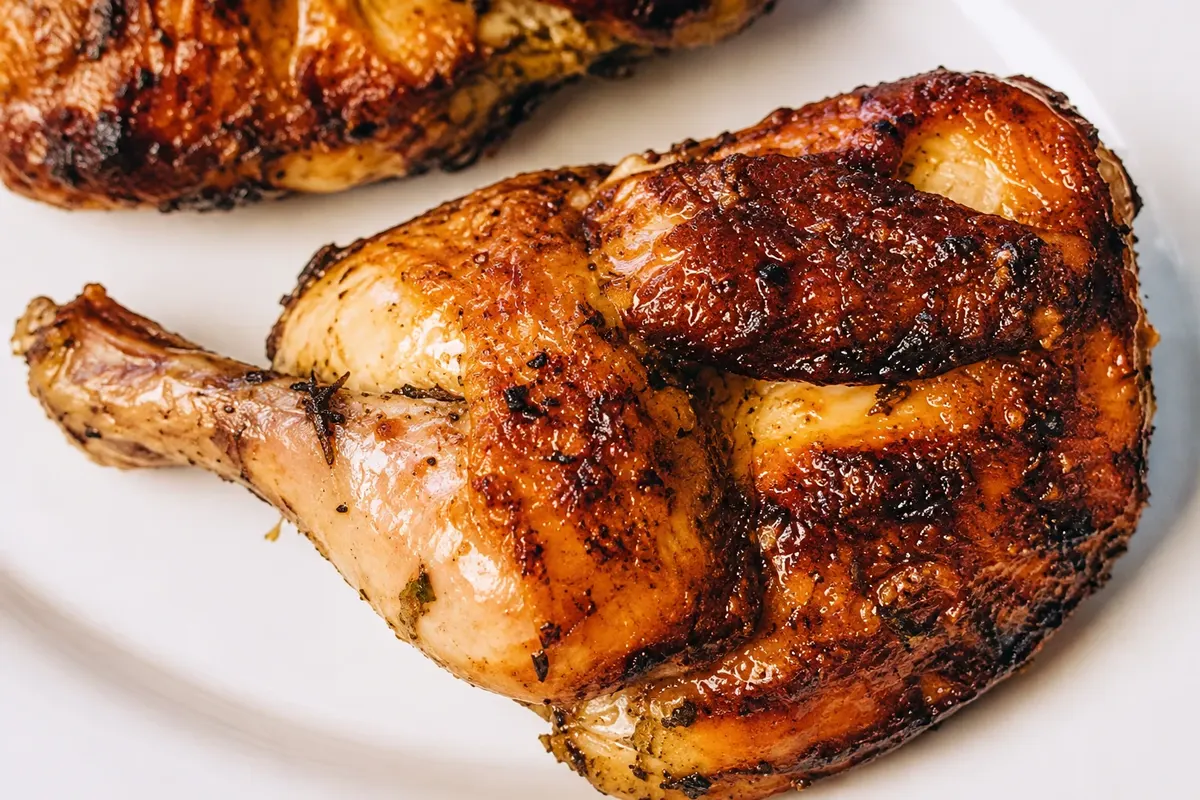
Galeto al primo canto
Young chicken marinated with wine and sage and roasted over coals, served in sequence with agnolini soup, polenta and radicci. A tradition of the galeterias of Caxias do Sul in the Serra Gaúcha, related to Italian immigration.
Antarktika
Rio Grande do Sul · Brazilija
Destinacija: Serra Gaúcha.
Illustrative images. The pictures in this guide are illustrations based on the real place, not photographs, and may differ from it.
Mesto
Caxias do Sul combines city life and heritage tied to immigration in Serra Gaúcha. You can see monuments and cultural spaces, and explore rural routes around the city.
Caxias do Sul is the largest city in the Serra Gaúcha and the second largest in Rio Grande do Sul. It sits at about 817 meters above sea level and roughly 127 km from Porto Alegre. It is a large city of industry and a university, not a mountain village: visitors expecting Gramado’s scenery will find avenues, buildings and traffic. What it offers travelers is different: the history of Italian immigration told where it happened, churches with art, family cantinas in the countryside and the galeto table.
The region was called Campo dos Bugres when the first Italian settlers arrived in 1875. Two years later the place became Colônia Caxias; it became a municipality in 1890 and a city in 1910, the year the train arrived. This history appears in three sites: the National Monument to the Immigrant, with the bronze group by Antônio Caringi beside BR-116; the Ambiência Casa de Pedra Museum, a colonists’ house from the late 19th century; and the 1885 Replica of Caxias do Sul, a set of wooden houses inside the Festa da Uva park.
The center is walkable. Praça Dante Alighieri, the city’s oldest square, faces the Santa Teresa Cathedral, and the Municipal Museum occupies a manor house from 1884 a few blocks away. In the São Pelegrino neighborhood, next to the center, is the visit that most surprises: the São Pelegrino Church, with walls and ceiling covered by Aldo Locatelli’s paintings, bronze doors with immigration scenes and a replica of Michelangelo’s Pietà.
Outside the urban area, the municipality organizes visits into routes. The Estrada do Imigrante passes stone and wooden houses, vineyards and the Gruta da Terceira Légua. Vale Trentino, in the Forqueta region, gathers vineyards and family cantinas of Italian origin. The Caminhos da Colônia head toward Flores da Cunha, among cantinas and colonial cuisine restaurants. Ana Rech, a neighborhood by BR-116, is known for pine trees and the Christmas nativity displays. Criúva, the most distant district at 56 km from the center, is the countryside side with canyon and waterfall.
The climate is mountainous. In summer days are warm and nights cool, with showers; from June to August it’s cold, with frost on some days and nights that can near 0 °C. Snow is rare. Mist is common in the morning and usually clears during the day. It rains year-round, with no dry season.
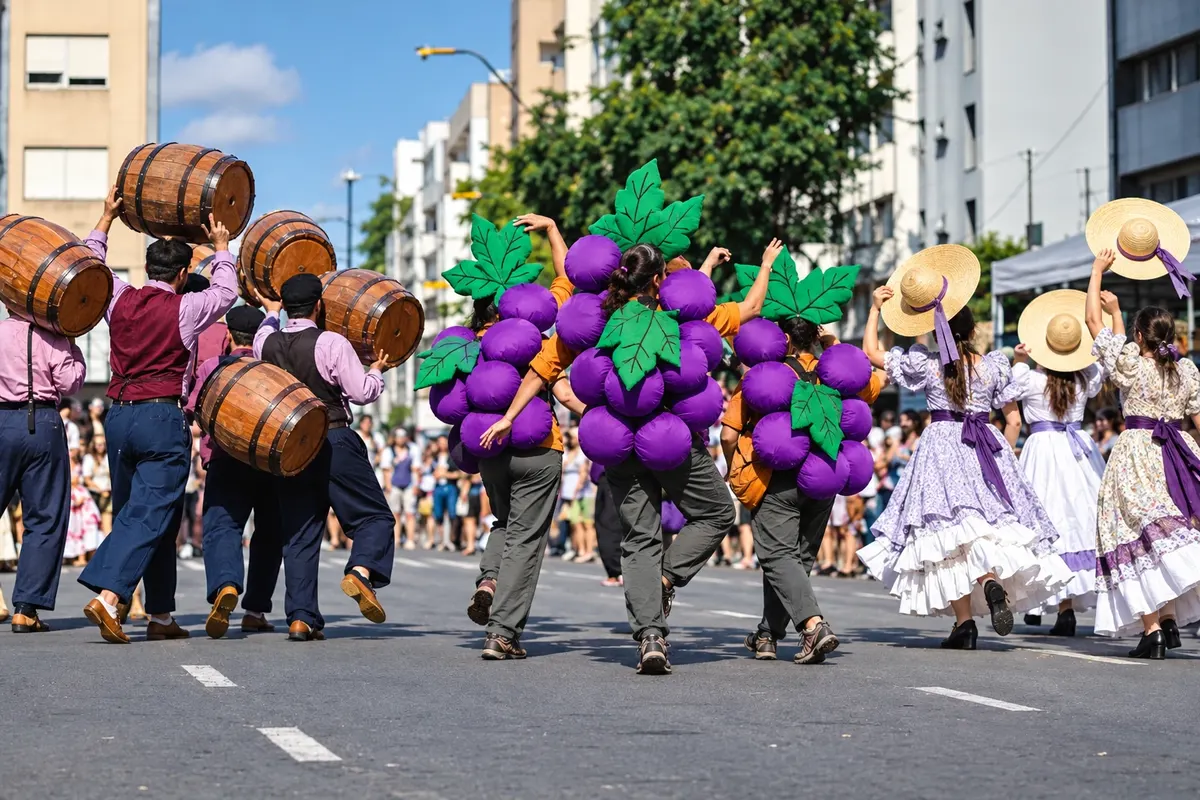
The big festival is Festa Nacional da Uva, held every two years in even-numbered years between February and March, at harvest time. Outside it, the calendar features the Book Fair in October and the Mississippi Delta Blues Festival in November.
At the table, the city’s dish is galeto al primo canto, young chicken grilled over coals and served in sequence with agnolini soup, pasta, polenta and radicci in galeterias.
Two days cover the center, the museums and one rural route. With three days you can add another interior route or a day in Criúva. Caxias also serves as a base for those arriving at the city airport: Bento Gonçalves is about 40 km away and Gramado about 70 km.
Caxias do Sul – število nastanitev: 58.
Caxias do Sul – število lokalov: 64.
Caxias do Sul – nazivi in posebnosti
Lokalni okusi – of Brazilija
Praznovanja in dogodki
Datumi se vsako leto spreminjajo. Pred potovanjem preverite letošnji datum.
Doživite kraj
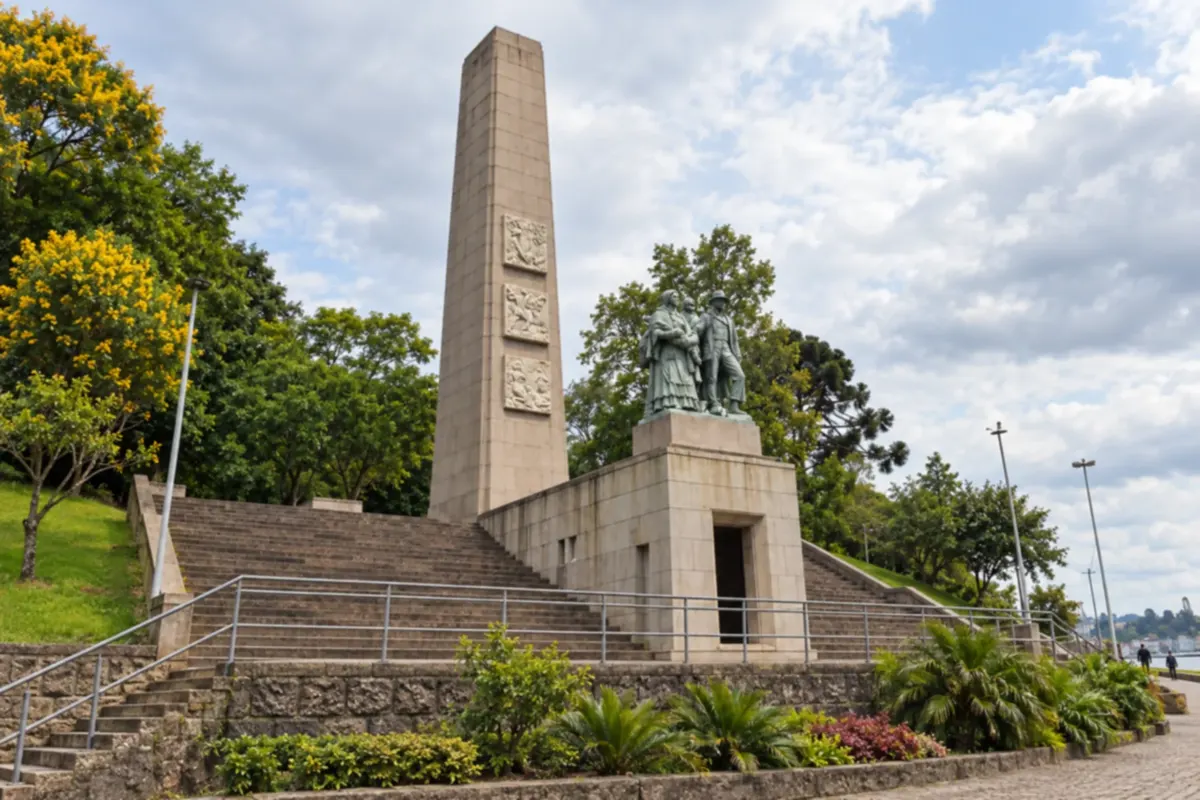
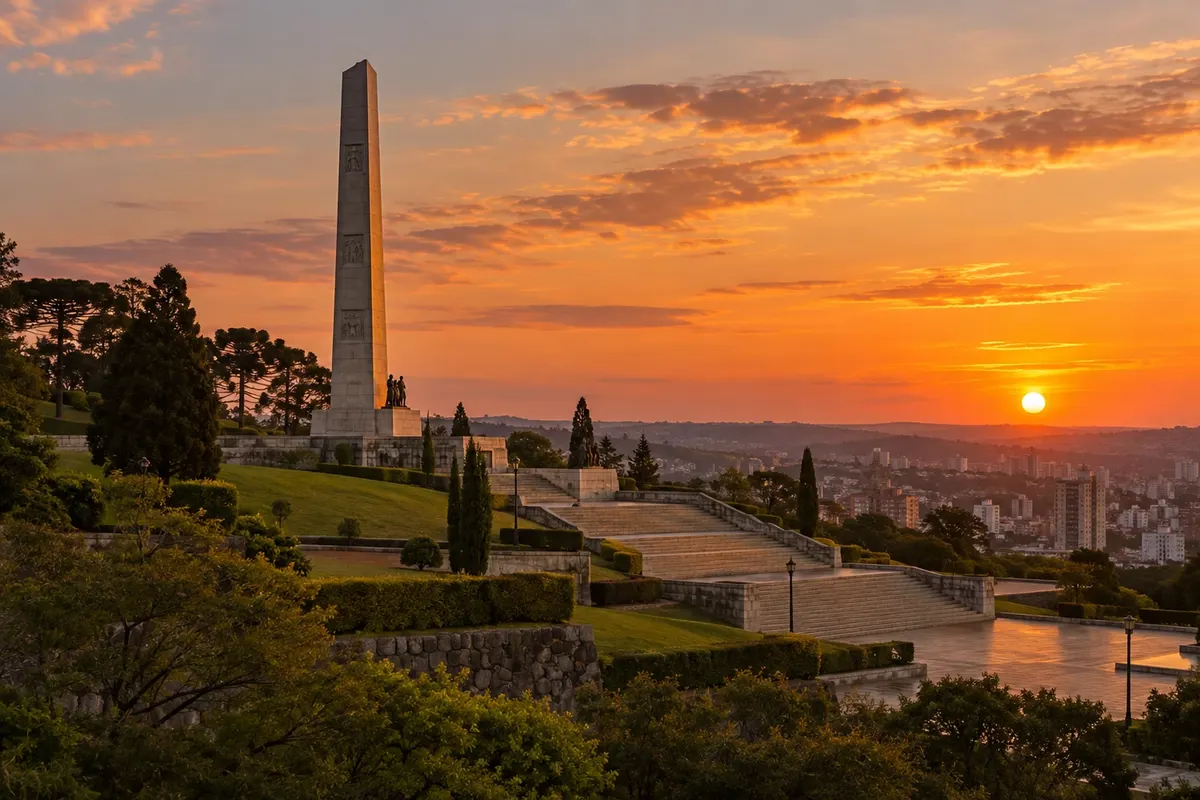
Inaugurated in 1954 by Getúlio Vargas at the entrance to the city, next to BR-116, it features a bronze group by Antônio Caringi depicting a farming couple with a child. The crypt beneath the sculptures now houses the Museu do Imigrante.
Raziščite Monumento Nacional ao Imigrante
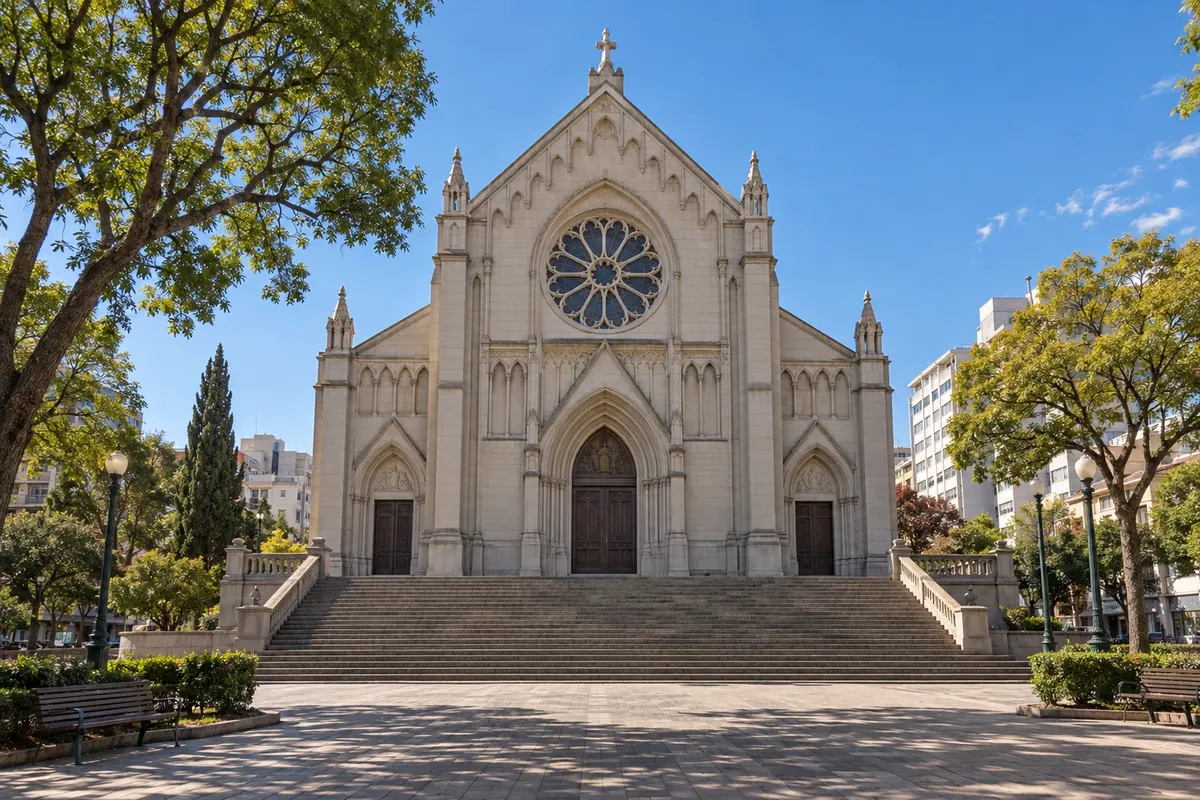
Its cornerstone was laid in 1895 and it opened in 1899. It stands on Praça Dante Alighieri and follows a simplified Neo-Gothic style inspired by the Basilica of Saint Anthony in Bologna. The interior has three naves, a Neo-Gothic high altar and stained glass from Germany.
Raziščite Catedral Santa Teresa
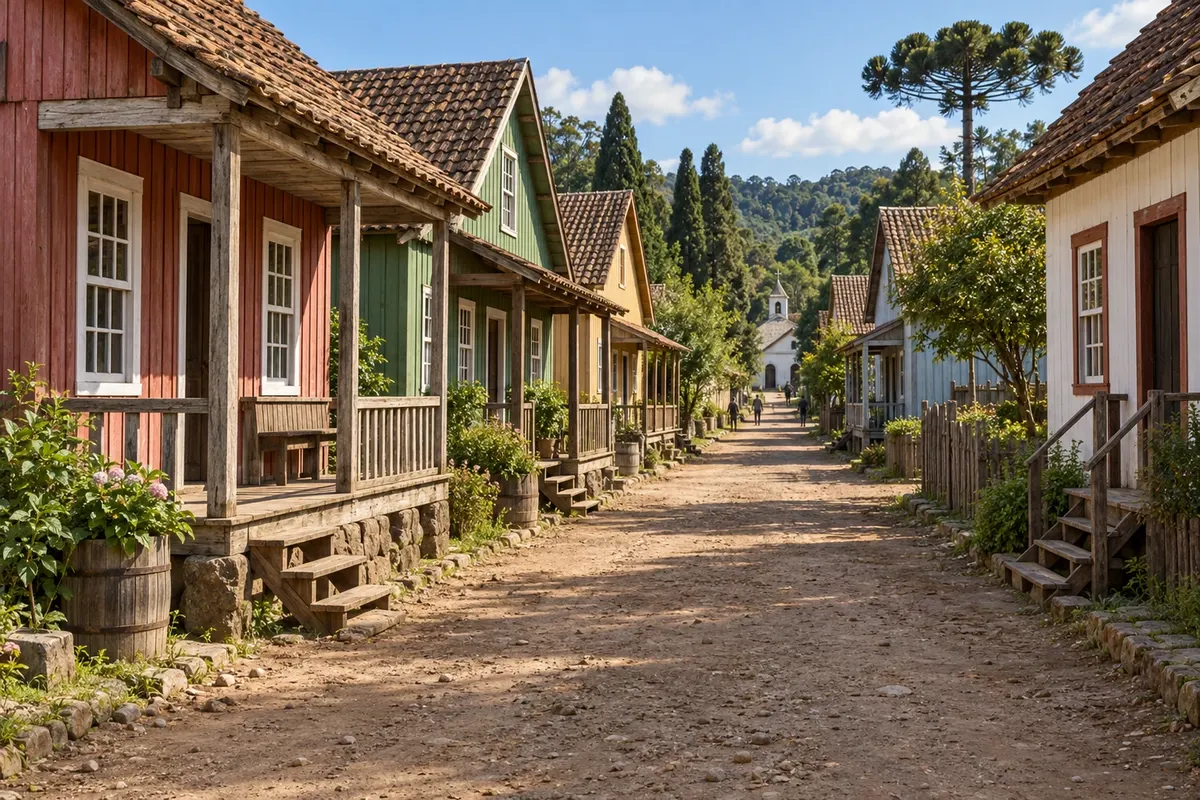
Opened in 1978 at the Parque da Festa da Uva, the group of 22 buildings reproduces the village as it was in 1885, following the building techniques of the time. The buildings, almost all wooden, now house shops and spaces open to visitors.
Raziščite Réplica de Caxias do Sul de 1885
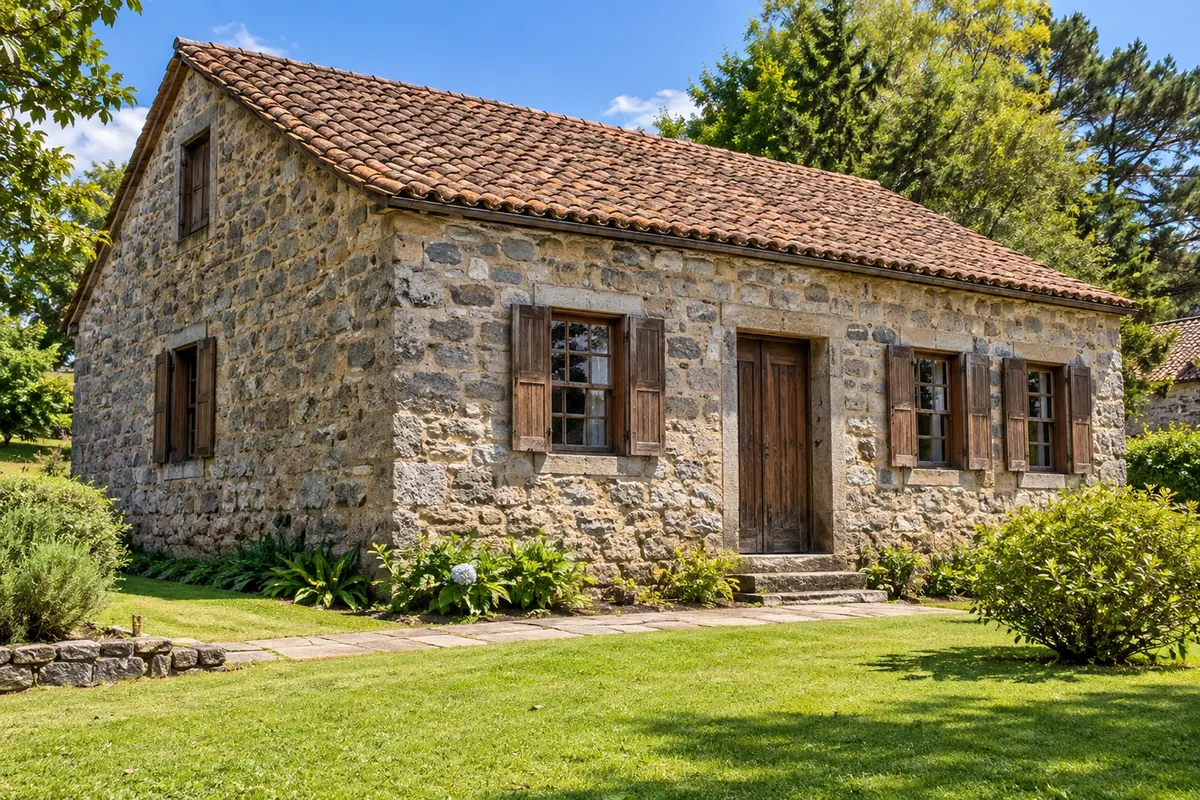
Built in the late 19th century by Giuseppe Lucchese and his sons, with stones set in clay, the house became a museum in 1975. The collection, donated by the community, shows utensils, furniture, clothing and tools from the lives of Italian immigrants.
Raziščite Museu Ambiência Casa de Pedra
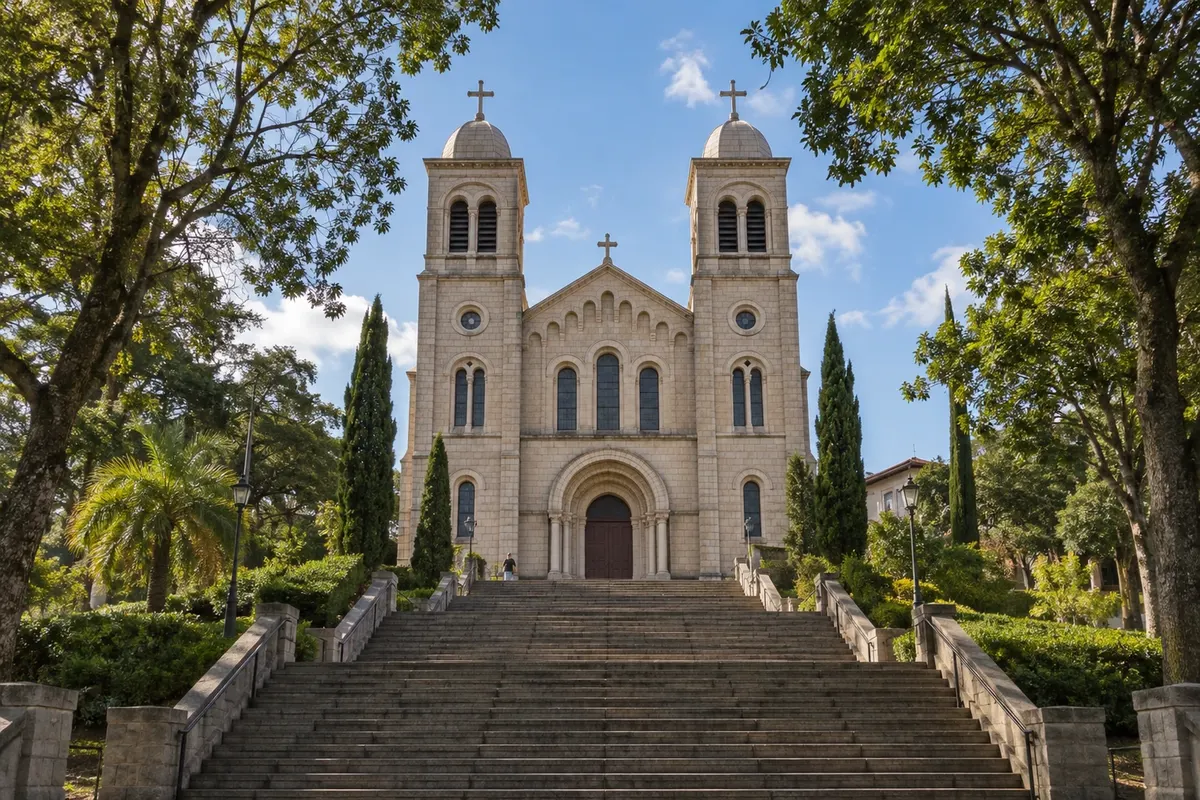
Opened in 1917 on the hilltop of Ana Rech, it replaced an 1881 wooden chapel and has two towers and a wide staircase leading up to it. Residents helped build it by passing the materials hand to hand up the hill.
Raziščite Igreja Nossa Senhora do Caravaggio de Ana Rech
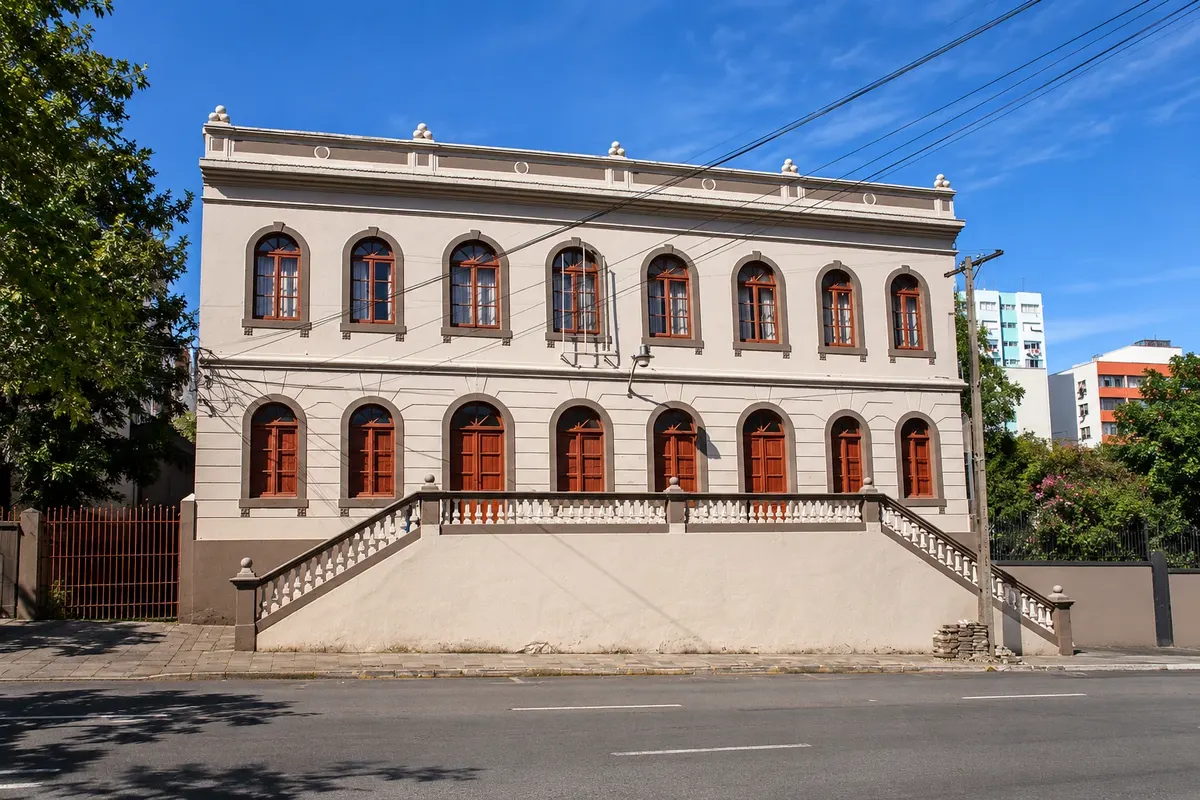
Caxias do Sul History Museum in a manor house built in 1884 on Rua Visconde de Pelotas, a few blocks from Praça Dante Alighieri. The collection of more than 12,000 items ranges from Indigenous occupation to Italian immigration and the city’s growth.
Raziščite Municipal Museum of Caxias do Sul
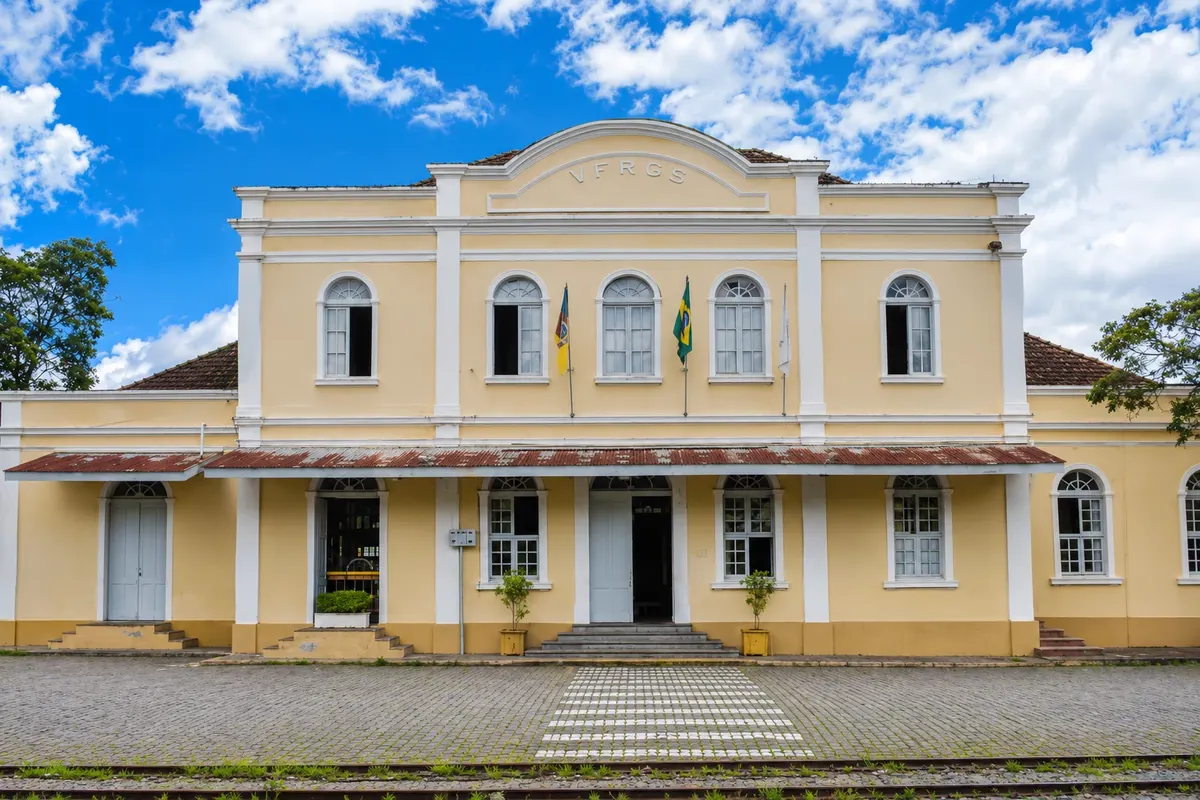
Old railway station opened in 1910, in the São Pelegrino neighborhood, at the core of Largo da Estação. The railway complex, protected as state heritage, was turned into a social square with decks, an amphitheater and a walking track.
Raziščite Caxias do Sul Railway Station
Kaj izbrati pred odhodom
Izhodišče, trajanje, potek, vključene storitve in okvirna cena vsakega izleta.
The walk begins at Praça Dante Alighieri, the city’s oldest public square, with a fountain and a bust of the Italian poet for whom it is named. Facing it is the Cathedral of Saint Teresa, the diocese seat, in use since 1899. The façade is a simple neo-Gothic; inside there are three naves, the main altar, and stained-glass windows. A few blocks away, the Municipal Museum occupies a house from 1884. The collection exceeds 12,000 items and tells the story of the city’s formation, from the arrival of settlers to industry. The visit is quick and helps to understand what you will see later on the streets and in the interior. From the center you continue to the neighboring São Pelegrino district, where the Church of São Pelegrino is located. From the outside it is a building of modern lines with a tall central tower; inside, the side walls and ceiling are covered by murals and canvases by Aldo Locatelli, a painter born in Bergamo who settled in Rio Grande do Sul. The Way of the Cross painted by him is the best known part. The bronze doors, by sculptor Augusto Murer, show scenes of immigration, and the church houses a replica of Michelangelo’s Pietà, a gift from Pope Paul VI in 1975, on the centenary of Italian immigration to the state. Devotion to Saint Pelegrino arrived with the settlers themselves: in 1879 a family brought the saint’s image from Italy and built a wayside shrine for it, later a wooden chapel. The present temple opened in 1953. It is an active church: during masses people do not circulate to view the paintings.
Kraji na poti: Dante Alighieri Square, Santa Teresa Cathedral, Caxias do Sul Municipal Museum, Saint Pelegrino Church.
Vključuje: There is no admission fee for the cathedral, the Church of São Pelegrino, or the Municipal Museum. The visit is self-guided; local agencies sell guided city tours with transport, paid separately.
Nasvet: The Municipal Museum is closed on Mondays and may also close on Sundays: plan the center visit for a day between Tuesday and Saturday. At São Pelegrino, avoid mass times and allow time to look at the ceiling calmly. Check the opening days of each place in advance.
Najboljši čas za obisk: All year. On rainy days this is the least affected walk because almost everything is covered. The Book Fair takes place in October.
These are two short visits that tell the same story from different perspectives: the official tribute and the real house. The National Monument to the Immigrant stands at one of the city’s entrances, beside BR-116, in the Petrópolis neighborhood. The bronze group, by Gaucho sculptor Antônio Caringi, is 4.5 meters tall and depicts a farming couple with a child in their arms. It was unveiled in 1954 during the Festa da Uva, with President Getúlio Vargas in attendance, and is one of Caxias do Sul’s official symbols. In the crypt beneath the sculptures is the Immigrant Museum, with exhibitions about the settlers’ arrival and the city’s growth. The Casa de Pedra Ambiance Museum, in the Santa Catarina neighborhood, is the counterpart. The two-story house was built at the end of the 19th century with basalt stones set in clay and pine openings. It served as a home and also as a warehouse, blacksmith shop and barn. It became a museum in 1975, on the centenary of immigration, and is said to be the only building of its type still standing in the urban area. Inside, the rooms are set up as they were: the kitchen with utensils, the upstairs bedroom, work tools, clothing and furniture donated by local families. The two sites are in different neighborhoods and are not connected on foot. By car the order doesn’t matter; if you rely on a taxi or app ride you can ask the driver to wait, because the visits are brief.
Kraji na poti: National Monument to the Immigrant, Immigrant Museum, Casa de Pedra Ambiance Museum.
Vključuje: There is no admission fee at the Immigrant Museum or Casa de Pedra. At Casa de Pedra the visit is usually accompanied by a staff member. Transportation is the visitor’s responsibility.
Nasvet: The municipal museums are closed on Mondays, and the monument’s museum may not open on weekends: confirm the days before you go. The sculptures outside can be seen at any time. Combine this visit with the Festa da Uva park on the same outing.
Najboljši čas za obisk: All year. On misty mornings, common in winter, wait for the weather to clear to see and photograph the monument.
The Mário Bernardino Ramos Events Park is known in the city as the Grape Festival Pavilions. The festival has taken place there since 1975, but the park can be visited during the rest of the year, when it is almost empty and functions as a leisure area with paths, trails and a bike lane on a site of about 360,000 m². The main attraction is the 1885 Replica of Caxias do Sul. The complex reproduces the village as it was ten years after the first settlers arrived: a street of wooden houses, the church and the bandstand, built with the techniques of the time. Some houses house craft shops and exhibition spaces, which open on some days of the week. During the Grape Festival and on some event nights, the replica serves as the setting for the Sound and Light show, which narrates Italian immigration with text by writer José Clemente Pozenato. At the park’s highest point is the Jesus Third Millennium Monument, a 21-meter bust erected on top of a sacred art museum building. Next to it is a lookout offering views over much of the city in a 180-degree arc. On market, concert or rodeo days, access routes change and there may be entrance and parking charges; during the Grape Festival, the entire park operates with ticketing.
Kraji na poti: Mário Bernardino Ramos Events Park, 1885 Replica of Caxias do Sul, Jesus Third Millennium Monument.
Vključuje: Outside event days there is no charge to enter the park, the exterior of the replica, or the lookout. During the Grape Festival and other events, entrance and parking are charged separately; check the current price list.
Nasvet: Go on a clear-sky day because of the lookout, and check beforehand if there is an event scheduled: the park may be closed for setup. The replica’s shops usually open from the weekend onward, in the afternoon.
Najboljši čas za obisk: All year round. In even-numbered years, between February and March, the park hosts the National Grape Festival and the visit is different, with pavilions, shows and grapes.
Estrada do Imigrante is the closest rural route to town: the countryside section starts about 10 km from the center. The name comes from the path Italian settlers took when climbing the hill. The road is paved and crosses the locality of Terceira Légua, passing vineyards, small properties and chapels. A gateway marks the start of the route. In the village of São Pedro da Terceira Légua you’ll find the church of São Pedro e São Paulo and century-old stone and wood houses; one of them, Casa Zinani, a wooden house, functions as a museum. The Casas Bonnet are the oldest point: two stone-and-clay buildings raised in 1877 and 1879 by Henry Bonnet to house incoming foreigners. The route also passes a stone church from 1892, Sacro Cuore di Gesù e Maria, and family wineries that welcome visitors for tours and tastings, usually by appointment. On a branch of the road is the Gruta Nossa Senhora de Lourdes, commonly called Gruta da Terceira Légua, about 12 km from the city’s southern access. A staircase of 150 steps descends to a large basalt shelter beneath a cliff, where there is a chapel with benches, opened in 1949. Mass is held one Sunday per month. A little further on, a short forest trail leads to a waterfall. The surrounding cliffs have dozens of equipped climbing routes. At harvest time, between February and March, some properties organize wagon rides through the vineyards, with grapes picked right from the vine.
Kraji na poti: Estrada do Imigrante, São Pedro da Terceira Légua, Casas Bonnet, Gruta Nossa Senhora de Lourdes (Gruta da Terceira Légua).
Vključuje: No entrance fee is charged for the grotto or the churches. Visits, tastings and meals at wineries and houses on the route are paid separately and many require reservations; check each venue’s current price list.
Nasvet: Wear closed shoes: the trail to the waterfall has loose rocks and becomes slippery after rain. The climb back up is the same 150 steps. In several stretches there is no cellphone signal; download the map beforehand.
Najboljši čas za obisk: Late January to March, when the vineyards are heavy with fruit and harvest time. In autumn the vine leaves change color. After rain the waterfall usually has more water.
Vale Trentino lies in the Forqueta area, between Caxias do Sul and the neighboring Farroupilha. The name refers to Trentino, a region in northern Italy from which many settlers in the highlands came. The landscape consists of slopes covered with vineyards, with chapels and settler houses scattered between properties. The route brings together cantinas and wineries run by families of Italian origin. These are small- to medium-sized establishments where the host is often the producer. A typical visit shows the tanks and the cellar and ends with a tasting of wines, sparkling wines and grape juice; some serve lunch or cold-cut boards, and there are places for coffee and cakes. The valley is also home to the Primo Slomp Municipal Museum of Grape and Wine, which tells the story of grape cultivation in the region and immigrants’ customs, with 19th-century machines and utensils. The profile differs from the Vale dos Vinhedos in Bento Gonçalves: less big-enterprise structure, more rustic cantina and conversation on the porch. For those staying in Caxias, it’s the closest way to see vineyards and taste wine without a long drive. There is no public transport that tours the properties. If you plan to taste wine, go with an agency or arrange a driver: Brazil’s traffic laws do not tolerate alcohol at the wheel.
Kraji na poti: Vale Trentino, Forqueta, Primo Slomp Municipal Museum of Grape and Wine.
Vključuje: The route is self-guided. Guided tours, tastings and meals are paid separately at each winery, almost always by reservation; check the current price list. Agencies in Caxias sell the tour with transportation and two wineries.
Nasvet: Choose two or three wineries and book in advance, especially on weekends and during the grape harvest. Confirm the museum’s opening days. On weekdays several cantinas serve only by appointment.
Najboljši čas za obisk: From late January to March, during the harvest. In April and May the vineyards show yellow and red tones. In winter the vines are leafless, but the cantinas are normally open.
Ana Rech is a neighborhood on the outskirts of Caxias do Sul, beside BR-116, with the feel of its own little village. It is named after an Italian immigrant who settled there. The streets are lined with century-old pine trees, and the place presents itself as “a charming village.” At the neighborhood center are the Church of Our Lady of Caravaggio and the square. The Monument Epopeia Imigrante features panels that tell the settlers’ journey and settlement. Craft shops sell wickerwork. In December, Ana Rech stages the Christmas Charm, with a village of nativity scenes spread through the streets, music, dance and theater performances, and Santa Claus’s arrival. From there you join the Caminhos da Colônia, a rural route that connects the interior of Caxias do Sul to neighboring Flores da Cunha. It’s about 35 km of valley roads, with old cellars—some open since before 1900—colonial-style restaurants and homes selling traditional products. Several cellars show their production and offer tastings; during the harvest in February, some let visitors pick grapes. Lunch is usually the day’s main stop, with abundant colonial food served in courses or buffet style. Without a car you can reach Ana Rech by city bus from downtown, but the cantinas along the Caminhos da Colônia are far apart and require a car or an agency tour.
Kraji na poti: Ana Rech, Church of Our Lady of Caravaggio (Ana Rech), Monument Epopeia Imigrante, Caminhos da Colônia.
Vključuje: There is no fee to visit the church, the monument, and the nativity village. Tastings, visits to cellars and meals are paid separately; check the current rates and reserve lunch.
Nasvet: Reserve the restaurant in advance on weekends. In December, go to Ana Rech in the late afternoon to see the nativity scenes with the lights on. If you plan to taste wine, arrange who will drive.
Najboljši čas za obisk: February and March, at harvest time, and December, for the Ana Rech Christmas Charm. In winter, the colonial lunch pairs well with the cold.

Criúva is the district farthest from Caxias do Sul, 56 km from the city center, and the landscape changes: the Italian colony’s vineyards give way to fields, farms, canyons and waterfalls. Palanquinhos Canyon is the district’s best-known sight. The Korff Bridge, over a century old, crosses the Rio das Antas. Mulada Waterfall has about a 70-meter drop and is on private land with a snack bar, bathing area, trails and camping; it is generally open on weekends and holidays. The traditional Bertussi Farm completes the list of most-cited points. The district has other falls, such as the Sepultura Cascade, 90 meters high, reached by a 1.3 km trail with a steep descent, on a property that operates as a park on some weekends. Distances between points are large and some accesses are on dirt roads. Almost all attractions are on private land, with their own opening days and entrance fees. For this reason, a day in Criúva requires planning: choose two or three places, confirm they will be open on the date and leave the city early. Agencies in Caxias organize guided walks across the fields, with local food. This is not an outing to improvise on a rainy day: dirt roads become slippery and fog can close off the canyon view.
Kraji na poti: Criúva, Palanquinhos Canyon, Korff Bridge, Mulada Waterfall.
Vključuje: Attractions on private property charge separate admission; camping and meals are also extra. Check each place’s current price list. Agency tours usually include transport, a guide and, in some cases, lunch.
Nasvet: Leave with a full tank and the map downloaded: there are long stretches with no cell signal and no gas station. Bring water, snacks, hiking shoes and swimwear in summer. Confirm by phone or social network if the place is open that day.
Najboljši čas za obisk: April and May, months with less rain, make dirt roads easier and improve the canyon view. In summer it’s possible to swim in waterfalls.
Po dnevih
Predlogi za načrtovanje poti. Vrstni red dni prilagodite vremenu in razpoložljivosti izletov.
Start at Praça Dante Alighieri and Catedral Santa Teresa, which face each other. If the Municipal Museum is open, go in: the visit is short and gives context for the rest of the day. Proceed to Igreja de São Pelegrino in the neighboring district. Reserve at least an hour for Aldo Locatelli’s paintings, the bronze doors and the Pietà, outside mass times. Have lunch at a galeteria: the galeto al primo canto, served with agnolini soup, pasta, polenta and radicci, is the city’s signature meal and comes in courses, so there’s no rush. In the afternoon, by car, taxi or app, visit the National Monument to the Immigrant, with its museum in the crypt, and the Ambiência Casa de Pedra Museum. Both visits are brief. Finish at the Festa da Uva park: walk through the 1885 Replica of Caxias do Sul and climb to the Jesus Terceiro Milênio Monument viewpoint to see the city from above at late afternoon. On Mondays museums are closed: in that case, replace indoor visits with one of the urban parks, like Parque dos Macaquinhos, while keeping the churches and the viewpoint.
Take the urban part at a relaxed pace. In the morning, Praça Dante Alighieri, Catedral Santa Teresa and the Municipal Museum, all on foot. Before lunch, Igreja de São Pelegrino. After lunch at a galeteria, visit the Monumento Nacional ao Imigrante and the Museu Ambiência Casa de Pedra. In the late afternoon, go to Parque da Festa da Uva, with the 1885 Replica and the viewpoint. At night, the bars and restaurants concentrate their activity downtown and in the São Pelegrino neighborhood.
Drive out in the morning toward Estrada do Imigrante. Stop at the portal, the village of São Pedro da Terceira Légua and the Casas Bonnet, the stone buildings from 1877 and 1879. Follow the branch road to Gruta da Terceira Légua. Descend the 150 steps to the chapel inside the rock shelter and, if the ground is dry, walk to the waterfall. Have lunch at one of the route’s houses or at a cantina, with a reservation. In the afternoon, visit a family winery with a tasting. If there’s time and energy left, return to town via Vale Trentino, in Forqueta, to see the vineyards from another angle and visit the Museu da Uva e do Vinho. Those who don’t drive can hire the agency tour, which picks up at the hotel.
Center in the morning: Praça Dante Alighieri, Santa Teresa Cathedral, the Municipal Museum and São Pelegrino Church. In the afternoon, the National Monument to the Immigrant, Ambiência Casa de Pedra Museum and the Festa da Uva park, with the 1885 Replica and the Jesus Third Millennium viewpoint. Dinner at a galeteria.
A day in the nearby countryside. In the morning, Estrada do Imigrante: São Pedro da Terceira Légua, Casas Bonnet and Gruta da Terceira Légua. After lunch, head to Vale Trentino, in Forqueta: one or two cantinas with tastings and the Primo Slomp Municipal Museum of Grape and Wine. Reserve visits in advance.
If the weather is good, leave early for Criúva, 56 km from downtown. Choose two or three spots among Cânion Palanquinhos, Korff Bridge and Mulada Waterfall, and check the day before whether they are open. Bring a packed snack and return before dark. If it rains or there is fog, swap Criúva for Ana Rech and the Caminhos da Colônia: the church, the Monumento Epopeia Imigrante and the wicker crafts in the neighborhood, then the cantinas and a colonial lunch on the way to Flores da Cunha. Those continuing their trip can go from Caxias directly to Bento Gonçalves, about 40 km away, or to Gramado, about 70 km away.
Najboljši čas za obisk
The seasons shown are the most usual ones; nature doesn't always follow the calendar.
Start of the grape harvest · Summer
On average, about 18 °C at dawn and 27 °C in the afternoon, with days that can exceed that and rain showers late in the afternoon. The grape harvest starts inland, and from the second half of the month the vineyards along Estrada do Imigrante and Vale Trentino are laden. Do the rural tours in the morning.
National Grape Festival in even years · Harvest · Carnival
On average, about 18 °C at night and 26 °C in the afternoon, with frequent short showers. It’s harvest time: some estates take visitors by wagon to the vineyards. In even-numbered years, the National Grape Festival begins in the second half of the month, with pavilions, shows and parade floats downtown; during that period, book accommodation in advance. In odd-numbered years the program is smaller.
End of the Grape Festival in even years · End of the harvest
On average, about 17 °C at dawn and 25 °C in the afternoon; nights cool down. In festival years, the National Grape Festival continues into the first week of the month. The harvest ends throughout the month. Visitor numbers drop and temperatures are good for the Gruta da Terceira Légua and the Criúva trails. In some years Easter falls in this month.
Autumn in the vineyards · Easter
On average, from 14 °C at dawn to 23 °C in the afternoon, in one of the least rainy months. Vine leaves turn yellow and red in Vale Trentino and the Caminhos da Colônia. Clear days favor the viewpoint at the Festa da Uva park and Cânion Palanquinhos. At night people already wear jackets. Outside the Easter holiday, it’s a calm month.
Cold coming · Clear days
On average, from 11 °C at night to 19 °C in the afternoon, with little rain. Mornings can be foggy, which usually clears by midday. It’s a good time for rural routes and for Criúva, with dry roads. The cold starts the season for soups and long colonial lunches.
Start of winter · Frosts
On average, from 10 °C at dawn to 18 °C in the afternoon, with cold mornings and frost on some days. It rains less than the yearly average. The churches and downtown museums are good choices for overcast days; save the viewpoints for clear skies. In the taverns it’s the season for young wine and lit fireplaces. Bring a coat, gloves and a beanie for the evenings.
Coldest month · School holidays
This is the coldest month of the year, with temperatures typically ranging from 9 °C to 18 °C and early mornings that can approach 0 °C. Snow is exceptional: don’t count on it. Brazilian school holidays fill the Serra Gaúcha, especially Gramado, Canela and Bento Gonçalves. In Caxias, the cold pairs well with the galeterias and lunches at the cantinas, which should be booked on weekends.
Cold · Light crowds
On average, 10 °C at dawn to 20 °C in the afternoon, with below‑average rainfall. The cold continues, with frost on some mornings, and the vines remain bare. Visitor numbers are low. A good month for the center, the museums and cantina routes, without queues or waits.
Farroupilha Week · Spring
On average, from 11 °C at dawn to 21 °C in the afternoon. Rain increases again, and afternoons grow longer. In September Rio Grande do Sul celebrates Semana Farroupilha, with music and gaucho traditions, and Caxias has its own program. In Criúva, the fields turn green again.
Book Fair · Rainy spring
On average, about 13 °C at dawn to 22 °C in the afternoon. This tends to be the rainiest month of the year: carry a rain poncho and closed shoes and favor covered activities. The Caxias do Sul Book Fair runs for roughly two weeks, with author talks and performances. Criúva’s dirt roads demand caution after heavy rain.
Mississippi Delta Blues Festival · Mild days
On average, about 14 °C at night and 24 °C in the afternoon, with less rain than in October. The Mississippi Delta Blues Festival, one of the largest blues festivals in Latin America, takes place in November over three nights with multiple stages; dates change each year. The vineyards are green and the long days favor the Estrada do Imigrante and the Caminhos da Colônia.
Christmas charm in Ana Rech · Summer
On average, from 17 °C at dawn to 26 °C in the afternoon, with rain showers at the end of the day. Ana Rech hosts the Christmas Charm event, with a nativity village, performances and Santa’s arrival. Between Christmas and New Year’s, museums, cantinas and restaurants have special hours: check before you go.
Načrtujte pot
Caxias do Sul has its own airport, Hugo Cantergiani Regional Airport (CXJ), about a 15-minute drive from downtown. It is the second-busiest airport in Rio Grande do Sul, but service is limited: regular connections are with airports in the state of São Paulo, and routes and airlines change by season. Travelers coming from other regions of Brazil or from another country will make a connection.
The alternative is Salgado Filho International Airport (POA), in Porto Alegre, about 127 km away, with many more domestic flights and some international connections. From there you continue by land—bus, rental car, transfer, or ride-hailing app—in about two hours.
From Caxias airport to the hotel, use a taxi or ride-hailing app. If you plan to rent a car, book in advance.
Scheduled buses connect Porto Alegre Bus Station to Caxias do Sul bus terminal several times a day, from early morning to night. The direct trip takes on average 2h20 and can exceed 2h40 at times with more stops or with traffic leaving the capital.
Some departures pick up passengers at Salgado Filho Airport, but not all do: if you arrive by plane check that option when buying the ticket or else go to the capital’s bus station.
You can buy tickets online or at the bus station ticket counters. On weekends and holidays there are fewer departures. Check the current timetable.
Caxias do Sul bus terminal is close to the center and also receives lines from almost all of Rio Grande do Sul and from states in the South, Southeast and Central-West of Brazil. From there to downtown hotels the taxi or rideshare trip is short.
From Porto Alegre to Caxias do Sul it’s about 127 km, around two hours. There are two paved routes.
The most used one leaves BR-116 near São Leopoldo and Novo Hamburgo and continues on RS-240 and RS-122, through São Vendelino and Farroupilha. The carriageway is dual up to São Vendelino; then comes the mountain ascent, with about 21 km of single carriageway to Farroupilha.
The other follows BR-116 all the way, via Nova Petrópolis. It is a bit shorter but has more than 80 km of winding single-carriageway mountain roads. On the plus side, it passes through Nova Petrópolis and reaches Caxias from the south, near Galópolis and the Estrada do Imigrante.
Check tolls along the route before you leave. Fog is frequent at the top of the mountains, especially in the early morning and at night from May to September: drive slowly with low beams on.
Other distances: Bento Gonçalves is about 40 km via Farroupilha; Gramado about 70 km via BR-116 to Nova Petrópolis and then RS-235.
Caxias do Sul is the main bus hub of the mountains, and many people pass through it en route to another town.
To Bento Gonçalves, the regular bus takes 1h20 to 1h40, with a stop in Farroupilha. It departs from the bus station and does not go to Caxias airport: passengers arriving by plane take a taxi or app ride to the station.
There are only a few scheduled buses per day to Gramado and Canela; check the timetable before relying on them. By car, it’s about 70 km to Gramado.
Local agencies and operators sell airport transfers from Caxias to hotels in Gramado and Canela, and day trips from Caxias, such as the Maria Fumaça train leaving from Bento Gonçalves.
If you plan to visit several towns in the mountains, renting a car from Caxias or Porto Alegre saves time.
The center is walkable: Praça Dante Alighieri, Catedral Santa Teresa and the Municipal Museum are close to each other, and Igreja de São Pelegrino is in the neighboring district.
The rest requires transport. The National Monument to the Immigrant, Casa de Pedra and the park where the Festa da Uva is held are in different neighborhoods, beyond walking distance. Taxis and ride‑hailing apps work well across the urban area, and the city has an urban bus network that also reaches Ana Rech.
For rural itineraries a car is almost mandatory. Estrada do Imigrante begins about 10 km from the center, Vale Trentino is in Forqueta and Criúva is 56 km away. There is no bus that serves wineries and properties, and in remote places it’s hard to get a ride‑hailing car for the return. If you don’t drive, or plan to taste wine, local agencies offer tours with hotel pickup.
In the countryside some roads are unpaved and there are stretches without cell signal: download the map before you go out.
Odgovori na vaša vprašanja
Every two years, currently in even-numbered years, between February and March. In years without the festival, the city usually has smaller events during the harvest season.
No. The Monumento ao Imigrante and the Casa de Pedra are closed on Mondays. Plan your itinerary for Tuesday to Sunday.
It is if you fly into the city's airport. Bento Gonçalves is about 40 km away, and Gramado about 65 km.
It's a neighborhood of Caxias do Sul, on BR-116, on the way to Gramado. City buses and minibuses run there from the center.
One day covers the downtown area, the Church of São Pelegrino, the National Immigrant Monument and the park where the Grape Festival is held. With two days, you can add a rural route, like the Estrada do Imigrante with the Gruta da Terceira Légua. Three days allow you to include the Vale Trentino and a day in Criúva or on the Caminhos da Colônia. In years when the Grape Festival takes place, it’s worth reserving an extra day just for the festival.
In the city center, no: visits are on foot, and taxi or rideshare apps will get you to the Immigrant Monument, Casa de Pedra and the Grape Festival park. For rural routes, yes. The Estrada do Imigrante, Vale Trentino, Caminhos da Colônia and Criúva have no public transport between properties. Without a car, the option is to book an agency tour with hotel pickup.
To see grapes on the vine and the harvest, late January to March; in even-numbered years the National Grape Festival is held between February and March. April and May have less rain, vineyards showing autumn colors and clear days. From June to August it’s cold — wine, soup and colonial lunches are typical then. October is often the rainiest month. The city receives visitors year-round and is rarely crowded except during the festival.
Downtown attractions are indoors: the Cathedral Santa Teresa, the Church of São Pelegrino with Aldo Locatelli’s paintings, and the Municipal Museum. The Immigrant Museum, in the monument’s crypt, and Casa de Pedra are also indoors. In the cantinas of Vale Trentino and the Caminhos da Colônia, tours and tastings take place inside. Leave the Gruta da Terceira Légua, the viewpoint and Criúva for a dry day.
Yes. Hugo Cantergiani Regional Airport (CXJ) is inside the city, about a 15-minute drive from downtown, and receives regular flights from the state of São Paulo. Service is limited and routes change. For that reason many travelers prefer Salgado Filho Airport in Porto Alegre, about 127 km away, and travel up the mountains by bus or car.
Buses depart Porto Alegre Bus Station several times a day and take on average 2h20 to reach Caxias do Sul bus station, which is close to downtown. Some schedules pick up passengers at Salgado Filho Airport; check when booking. Tickets can be bought online or at the counter, and there are fewer departures on weekends and holidays.
It’s a rural route in Caxias do Sul that follows the path used by Italian settlers when they arrived in the region. The road is paved, starts about 10 km from downtown and passes vineyards, the village of São Pedro da Terceira Légua, century‑old stone and wooden houses such as the Casas Bonnet (1877 and 1879), and family cantinas. On a side road is the Gruta da Terceira Légua, with a chapel inside a stone shelter, at the end of a staircase of 150 steps.
At the Church of São Pelegrino, in the neighborhood of the same name, next to downtown. The painter’s murals and canvases cover the side walls and the ceiling, and the Stations of the Cross is the best-known set. The church is open every day and does not charge admission, but you cannot walk around during Masses. The Municipal Museum also preserves works related to the artist.
Yes. The municipality has family cantinas and small wineries on three routes: Vale Trentino, in Forqueta; Estrada do Imigrante, in Terceira Légua; and the Caminhos da Colônia toward Flores da Cunha. These are smaller, more rustic houses than those in Vale dos Vinhedos in Bento Gonçalves. Most receive visitors by appointment and charge separately for tastings: book in advance and arrange who will be driving.
Yes. Parque de Eventos Mário Bernardino Ramos remains open the rest of the year as a leisure area. Outside event days there is no charge to walk through the Replica of Caxias do Sul from 1885 or to climb the viewpoint at the Jesus Third Millennium Monument. When there is a fair, concert or rodeo, access rules change and there may be an admission fee: check before you go.
It’s the dish most associated with Caxias do Sul: young chicken, seasoned with wine and sage and grilled over coals. In galeterias it arrives in sequence, accompanied by agnolini soup, pasta, polenta and radicci salad; wine sagu is the usual dessert. The tradition comes from Italian immigrants and has been linked to the Grape Festival since its earliest editions.
Very rarely. The city has recorded snowfall with accumulation in a few winters, but the usual conditions from June to August are cold with frost, fog and nights near 0 °C. Travelers in winter should prepare for cold weather and not count on snow.
A replica of Caxias do Sul from 1885 and the lawns of the Grape Festival park give kids room to run. Parque dos Macaquinhos and Parque Cinquentenário, in the urban area, have playgrounds and picnic areas. The University of Caxias do Sul operates an aquarium, a natural sciences museum and a small zoo, each with its own opening days. During the harvest, between February and March, the wagon ride through the vineyards usually delights children.
Več kot vodnik