Park
Barreiro Complex
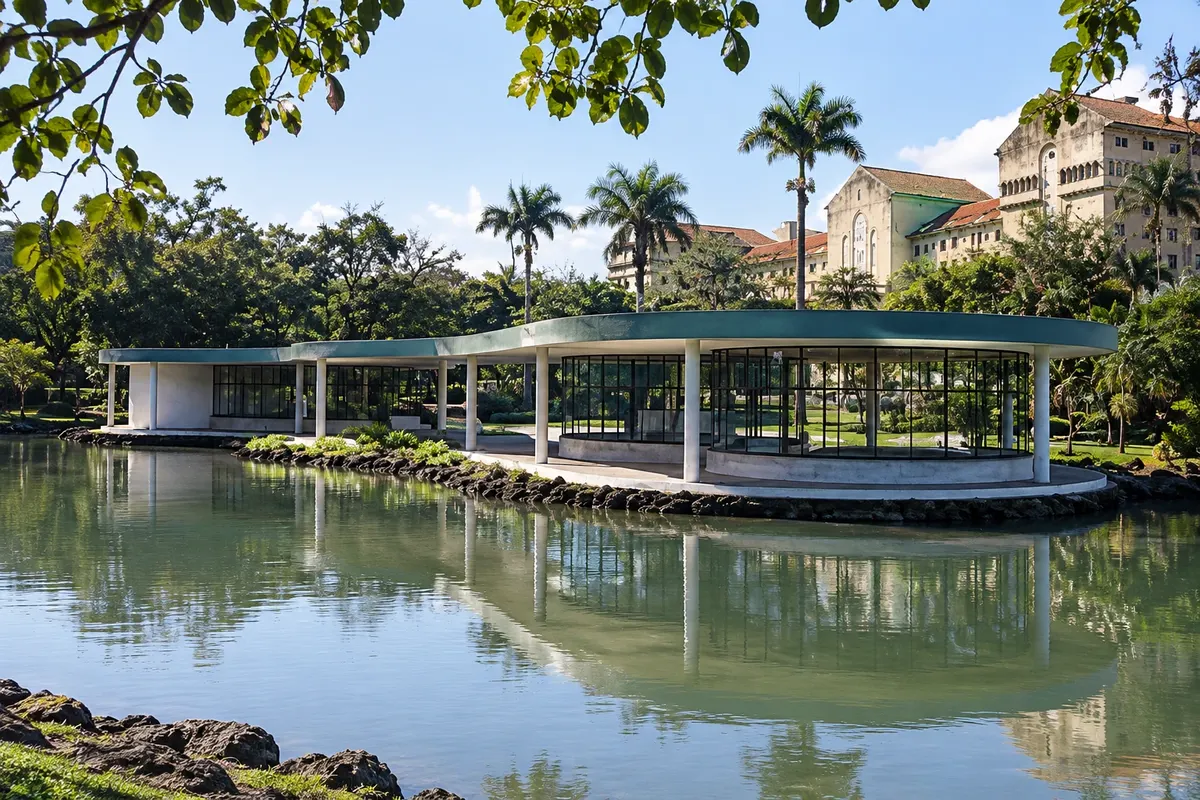
Hydromineral spa about 5 km from Araxá town center, state‑listed, with a lake, woodlands, gardens by Burle Marx, Fonte Andrade Júnior (sulfurous water) and Fonte Dona Beja (radioactive water).

 Išči
Brazilija
 Antarktika
 Argentina
 Bolivija
 Čile
 Kolumbija
 Ekvator
 Gvajana
 Francoska Gvajana
 Falklandski otoki (Malvini)
 Paragvaj
 Peru
 Surinam
 Urugvaj
 Venezuela
 Nemčija
 Avstrija
 Belgija
 Hrvaška
 Danska
 Slovaška
 Slovenija
 Španija
 Finska
 Francija
 Grčija
 Nizozemska
 Madžarska
 Irska
 Islandija
 Italija
 Luksemburg
 Norveška
 Poljska
 Portugalska
 Združeno kraljestvo
 Češka
 Švedska
 Švica
 Turčija
 Bermudi
 Kanada
 Združene države Amerike
 Grenlandija
 Mehika
 Sveta Peter in Mihael
 Dominikanska republika
 JaponskaTurčija
 Južnoafriška republika
 Egipt
 Avstralija
 Fidži
 Nova Zelandija
 Papua Nova Gvineja
Minas Gerais · Brazilija
Destinacija: Nascentes das Gerais e Canastra.
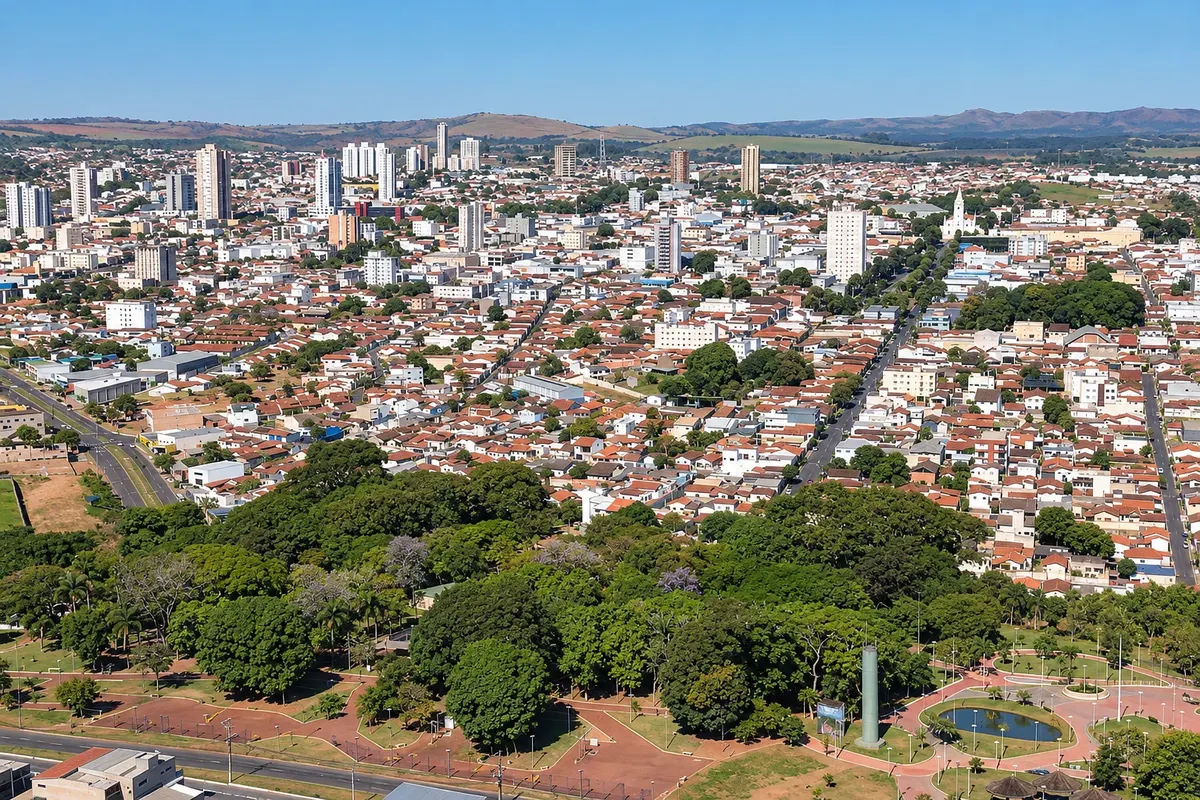
Na fotografiji: View of Araxá town center
Illustrative images. The pictures in this guide are illustrations based on the real place, not photographs, and may differ from it.
Mesto
Araxá, in the Alto Paranaíba, is a hydrothermal spa town known for the sulfurous and radioactive waters of the Complexo do Barreiro, about 5 km from the center, where the Fonte Dona Beja, Fonte Andrade Júnior, the lake and the 1940s thermal complex with gardens by Burle Marx are located. The town preserves the memory of Dona Beja, a 19th‑century figure, and is land of Minas cheeses and sweets.
Araxá is in western Minas Gerais, in the Alto Paranaíba, about 365 km from Belo Horizonte, in a hilly area nearly 1,000 meters above sea level. It is a medium-sized city with over 100,000 inhabitants, whose economy is based on niobium and phosphate mining and, for more than a century, on the mineral waters that spring at the Barreiro.
The parish of São Domingos do Araxá dates from 1791. In the 19th century Ana Jacinta de São José, known as Dona Beja, lived there; her life became a novel, a TV soap opera and gave the name to a spring, a museum and many other places in the city. Legend says she bathed in the waters of the Barreiro. At the end of that century the springs began to attract the sick and the curious; the first hotels appeared and, in 1944, the complex that changed the scale of the place was built: the Grande Hotel and the Termas, designed by Luiz Signorelli, with a park and gardens by Roberto Burle Marx around an artificial lake.
For the visitor, Araxá has two parts. The Barreiro, about 5 km from the center, is the spa area: the lake, the gardens, the Fonte Dona Beja with its radioactive water, the Fonte Andrade Júnior with sulfurous water, the thermal baths with their treatments, the ruins of the old Hotel Rádio and the Mata da Cascatinha trail. The whole complex is state-protected. The town center is the city proper, with the São Domingos main church, Praça Coronel Adolpho, which houses the Dona Beja Historical Museum and the old town hall building, the Calmon Barreto Museum and the old railway station, headquarters of the cultural foundation and of a Minas Gerais weaving workshop. Outside the urban area, the Serra da Bocaina offers a waterfall, viewpoints and a hang-gliding ramp, and nearby farms produce cheese, coffee and cachaça.
The climate is highland. From May to August it hardly rains; daytime temperatures are around 25 °C and nights are cool, about 14 °C: this is the most sought-after time for the thermal baths and for hiking. From November to March it rains a lot, with heavy showers, and highs are near 28 °C. April, September and October are transition months.
Araxá is also known for its food: the region’s artisanal Minas cheese, fruit preserves and candied fruits, and local baked goods. On a first visit, don’t miss a walk around the Barreiro lake with its two springs, the inside of the thermal baths, the Dona Beja Museum and a late afternoon at the Parque do Cristo viewpoint. The city is often combined with the Serra da Canastra to the south, but it has enough sights for a two- or three-day stay on its own.
Araxá – število nastanitev: 75.
Araxá – število lokalov: 12.
Araxá – nazivi in posebnosti
Doživite kraj
Hydromineral spa about 5 km from Araxá town center, state‑listed, with a lake, woodlands, gardens by Burle Marx, Fonte Andrade Júnior (sulfurous water) and Fonte Dona Beja (radioactive water).
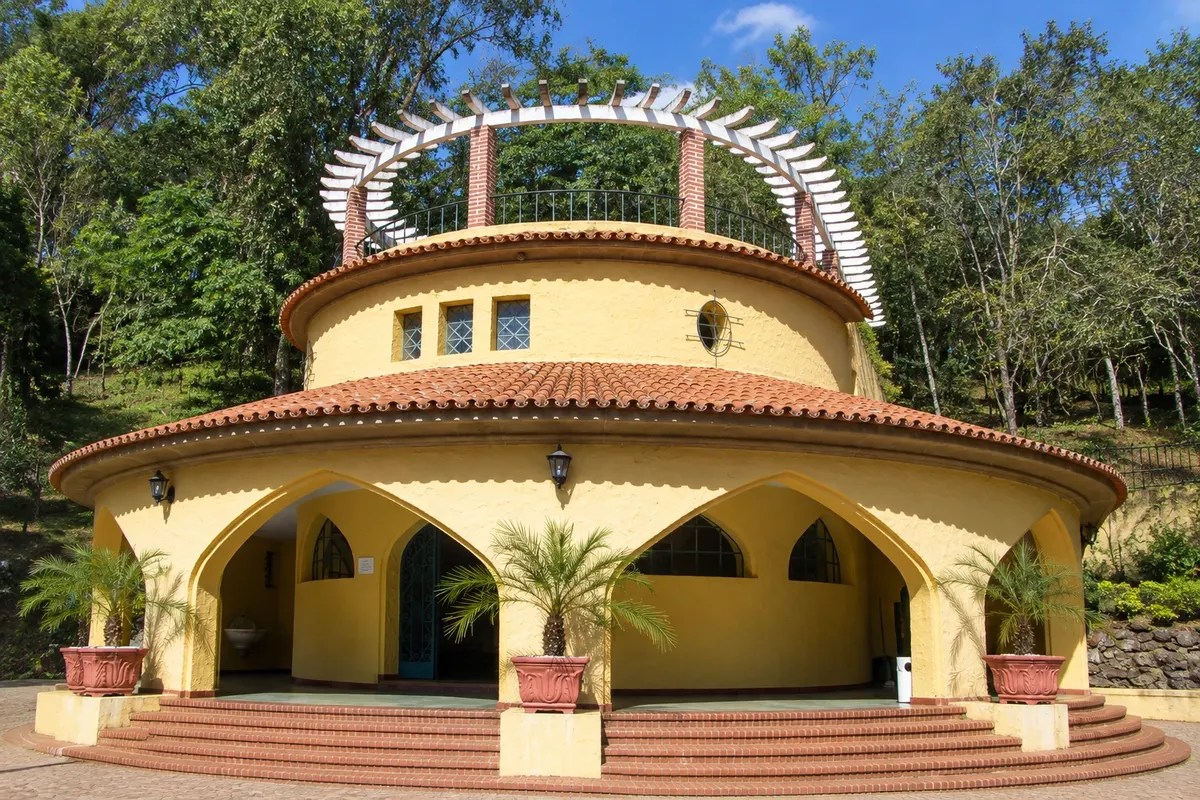
Radioactive water spring of the Barreiro, in a stylized grotto with white and blue tiles depicting Dona Beja’s legendary baths and, in front, a cascade of shower heads. From the top of the stairs you can see the lake.
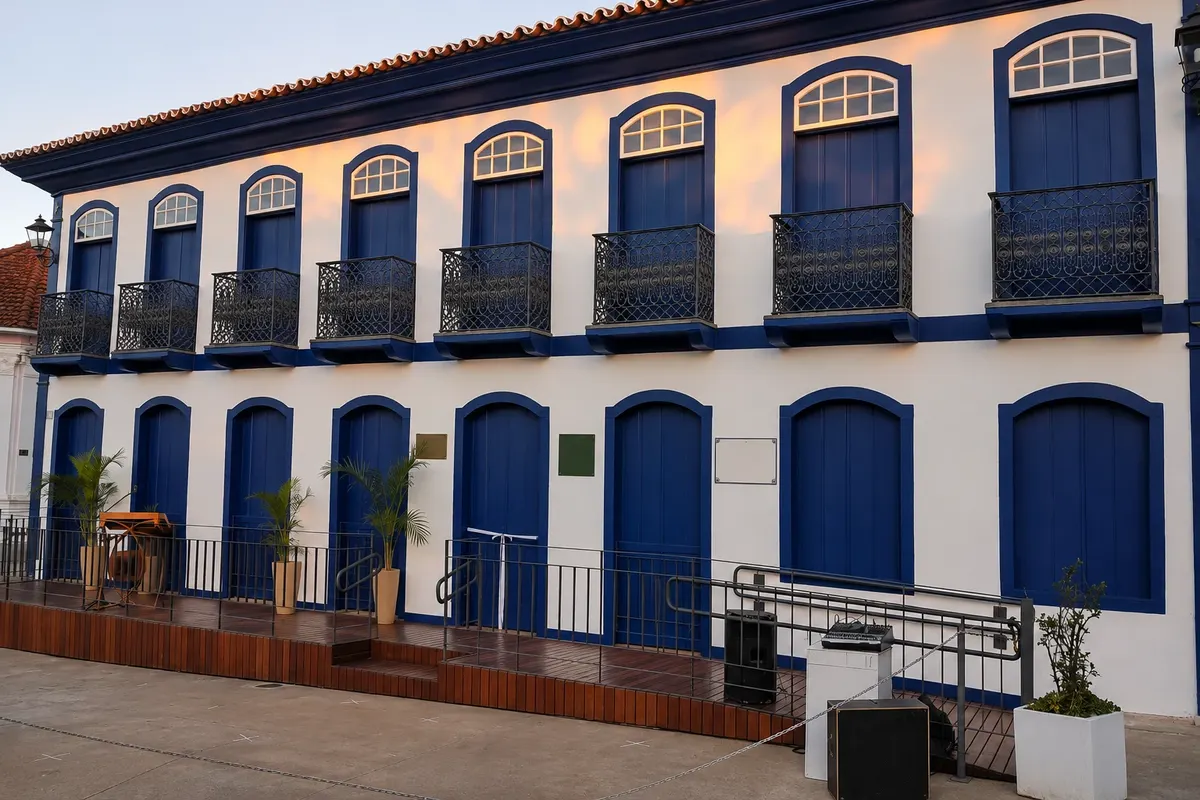
Municipal museum in a 19th-century mansion in downtown Araxá that honors Dona Beja, the city’s most legendary figure. It houses furniture, household objects, sacred art, paintings, documents and archaeological pieces from the region.
Raziščite Dona Beja Historical Museum (Araxá)
Kaj izbrati pred odhodom
Izhodišče, trajanje, potek, vključene storitve in okvirna cena vsakega izleta.
Barreiro sits at the center of a large volcanic crater, the same formation that gave Araxá its mineral waters and ores. The name comes from the clay that the springs produced, where cattle went to lick the salt. What you visit is a park around an artificial lake, with the Grande Hotel and the Thermal Baths on one side and the springs on the other, all laid out in the 1940s. The gardens were designed by Roberto Burle Marx. The walk around the lake is flat. The Dona Beja Spring is in a stylized grotto, lined with white and blue tiles depicting scenes of the character’s legendary baths; the water, radioactive, wells up among volcanic rocks. The project is by engineer-architect Raphael Hardy Filho. Go up to the terrace: it’s the park’s lookout, facing the lake. Opposite there is a cascade of showers. The Andrade Júnior Spring is a pavilion with modern lines, by the architect Francisco Bologna, named after the engineer who studied the mineral value of the water. Sulfurous, alkaline and bicarbonate water gushes there, with a strong taste. The pavilion houses replicas of giant sloth and mastodon fossils, prehistoric animals whose bones appeared in excavations for the hotel’s construction. Along the way you’ll see the façade of the Grande Hotel, in mission style, and the small Church of Nossa Senhora das Graças. Near the hotel entrance there are often horse-drawn carriages for park rides, bicycle and pedal boat rentals on the lake, and a fair with handicrafts, mud soaps and regional sweets.
Kraji na poti: Barreiro complex, Barreiro Lake, Burle Marx gardens, Dona Beja Spring, Andrade Júnior Spring, Grande Hotel de Araxá, Church of Nossa Senhora das Graças.
Vključuje: Self-guided walk through the park and visit to the two springs. Cart, bicycle, pedal boat rentals and use of showers are paid separately; check on site.
Nasvet: Bring a bottle if you want to taste the water and go early or late afternoon, when the sun is lower. Check on site whether rental services are operating that day.
Najboljši čas za obisk: From May to September, in the dry season. From November to March, prefer mornings, before the afternoon storms.
The Grande Hotel was opened in 1944 by President Getúlio Vargas and Governor Benedito Valadares to make Araxá a nationally renowned spa resort. The project was designed by architect Luiz Signorelli: 33,000 m² in the Mission style with neoclassical influence, reinforced concrete structure and pavilions arranged along extensive corridors. The building is protected as a historic site by the state and municipality and has hosted almost every President of the Republic since then. The Termas (thermal baths) are connected to the hotel by a suspended gallery, decorated with frescoes of landscapes and tourist sites of Minas Gerais and lit by small openings in the ceiling. The heart of the spa is the central rotunda. In the dome, the stained glass tells the story of Araxá; on the walls, Rocha Ferreira’s painting narrates the history of bathing through the ages; on the black-and-white marble floor, a large eight-point mandala marks the center. The spa uses the two waters of Barreiro, the radioactive and the sulfurous. There is an emanation pool, sauna, Scottish shower and a list of immersion baths, including the mud bath, the house’s best-known treatment, as well as massages and beauty treatments. The hotel also maintains a self-guided route with texts and audios spread through the halls that recount the stories of illustrious guests. The complex is managed by the hotel. Conditions for non-guests, opening days and individually sold services change throughout the year: check with the termas before you go.
Kraji na poti: Termas de Araxá, Grande Hotel de Araxá, Rotunda das Termas, Galeria suspensa.
Vključuje: Baths, massages and treatments are paid per service; check the current price list at the thermal baths. The façade and gardens can be seen from the park at no charge.
Nasvet: Reserve swims in advance on weekends, in July and on holidays. Bring swimwear and ask at booking what else is needed.
Najboljši čas za obisk: All year. From May to August, with cold nights, the hot baths are more popular.
Two short walks complete a visit to Barreiro and show the town's less polished side. Mata da Cascatinha is about 1,800 meters from the park. It is a preserved forest area on the hills around the crater, created to protect the vegetation that remained near the mines. A trail crosses stretches of forest, passes a small lake and reaches the little waterfall—Cascatinha—a modest drop where, according to local tradition, Dona Beja used to bathe. Along the way there is a lookout with views of the Grande Hotel and the lake. The ruins of the Rádio Hotel are in the vicinity of the Grande Hotel. Rádio was one of the first hotels in Barreiro, from the early 20th century, and took its name from the radioactivity of the waters, then a scientific novelty. It hosted people such as Santos Dumont. It was later abandoned, and the forest reclaimed the walls. The town tells ghost stories about the place. Around it there are walking and cycling trails. Both points can be visited in the same morning, on foot from the lake. The trail is unpaved.
Kraji na poti: Mata da Cascatinha, Cascatinha, Mata da Cascatinha Lookout, Ruins of the Rádio Hotel.
Vključuje: Self-guided visit. Check at the park whether the trail is open that day and whether there is an entrance fee.
Nasvet: Wear sneakers and insect repellent. After heavy rain the trail becomes slippery: leave it for another day. At the ruins, the visit is from outside.
Najboljši čas za obisk: From April to September, with stable weather. In summer the forest is greener, but it rains almost every day.
Coronel Adolpho Square is the old main square, the spot where Araxá began. Two 19th-century manor houses, now museums, stand there. The Dona Beja Araxá Historical Museum occupies a colonial townhouse from the first half of the 19th century. It was turned into a museum in 1965 by journalist Assis Chateaubriand, owner of a large newspaper network, as the first of a series of regional museums. No object that belonged to Dona Beja reached the museum; therefore it tells the history of Araxá, and the character appears within that story. The upper floor has Beja’s Room, a period setting, and the archaeology area; the ground floor houses furniture, paintings, sacred images and documents. The townhouse has an elevator and ramps. Ana Jacinta de São José, Dona Beja, lived in Araxá in the first half of the 19th century and spent her last years in Estrela do Sul, also in Minas. Pretty and independent, she received the most influential men of the region at home, which was enough to fuel two centuries of stories. On the same square, the Nagib Feres Palace, a colonial manor that once housed the Municipal Chamber, houses the Museum of Legislative Memory, with furniture, photos and documents covering almost two centuries of the city’s political life. Also in downtown, at São Domingos Square, is the Mother Church of São Domingos, the patron saint. It was completed in 1948, after more than three decades of construction, and blends Roman lines with Gothic elements. Inside, it features paintings by Alberto Paulovich, murals and stained glass.
Kraji na poti: Dona Beja Araxá Historical Museum, Nagib Feres Palace, Museum of Legislative Memory, Coronel Adolpho Square, Mother Church of São Domingos.
Vključuje: Self-guided visit. Ask at the museum entrance whether there is an admission fee that day.
Nasvet: The municipal museums open in the afternoon Monday to Friday, with shorter hours on Saturdays and only in the morning on Sundays and holidays. Check before you go. At the Matriz, avoid mass times.
Najboljši čas za obisk: Year-round. It’s the program for rainy afternoons, from November to March.
Calmon Barreto (1909–1994) is Araxá’s best-known visual artist: sculptor, draftsman, engraver, painter and also a short-story writer. The museum that bears his name houses about 300 pieces, including sculptures, bas-reliefs, drawings, coins, engravings and paintings. At the same address, an old family residence on Vereador João Sena Avenue houses the Araxá Memorial. It’s a people’s museum: objects, photographs and biographies of the residents who gave their names to the city’s streets, squares and neighborhoods. From there, walk to Arthur Bernardes Square. The neoclassical building was built as the Oeste de Minas Railway station and opened in 1926; politicians, artists and athletes passed through its platform. Listed by the municipality, it is the headquarters of the Calmon Barreto Cultural Foundation, which manages the museums, the music school and the public archive, and hosts fairs and festivals. Inside the old station is the Hermantina Drummond Weaving Atelier. The Minas handloom is a technique from the region’s early settlement, and the foundation trained craftswomen to keep it alive. Visitors can see the looms and buy the pieces at the studio shop.
Kraji na poti: Calmon Barreto Museum, Araxá Memorial, Calmon Barreto Cultural Foundation, Old Railway Station, Hermantina Drummond Weaving Atelier, Arthur Bernardes Square.
Vključuje: Self-guided visit. The loom pieces are sold in the studio shop.
Nasvet: The weaving studio operates on weekdays in the afternoon. The Calmon Barreto Museum and the Memorial follow municipal museum hours, with reduced opening on weekends.
Najboljši čas za obisk: All year round.
Parque do Cristo is the residents’ lookout. It sits on one of the town’s higher points, next to the Araxá Ecological Park, with the Christ statue, and from there you can see much of the urban area spread across the hills. It’s a simple public neighborhood space, with a walking path of about 1,000 meters, a playground and lighting for the evening. Activity starts when the heat eases: people walking, children on the playground, groups waiting for the sunset. Araxá’s indigenous name is often translated as the high place from which the sun is first seen, and this is a good spot to understand the terrain that explains that name. The routes created by the town’s rural tour operators finish the day here after visits to Barreiro and the Center, timed for sunset. There is nothing to pay and not much to do besides look: allow an hour.
Kraji na poti: Parque do Cristo, Mirante do Cristo.
Vključuje: There is no entrance fee.
Nasvet: Arrive about 40 minutes before sunset and bring a jacket from May to August, when it cools quickly.
Najboljši čas za obisk: From May to September, when the sky tends to clear in the late afternoon.
Serra da Bocaina is about 30 km from town and is the highest point in the municipality, a little above 1,350 meters. It’s where locals go for waterfalls, climbing and wind. Cachoeira da Argenita is the best known: a drop of about 50 meters, with a pool for swimming at the base. The region’s rural tourism routes visit the waterfall base and continue to other points on the ridge, ending with coffee and Minas Gerais treats on a farm. At the top is Morro da Ventania, called Horizonte Perdido. From there you can see the plateau for a long distance, and it’s where Araxá’s free-flight ramp is located, at about 1,350 meters altitude. The town hosts national paragliding competitions, and on good days it’s common to see sails in the air. The ridge’s rock formations also attract climbers, and the area hosts mountain running races. Access is via dirt roads. Check in town about road conditions and visiting fees, and prefer to go with someone who knows the way. Serra da Canastra, with the national park, lies farther south and is a different trip: mentioned here only for reference.
Kraji na poti: Serra da Bocaina, Cachoeira da Argenita, Morro da Ventania, Horizonte Perdido.
Vključuje: Self-guided or with a hired guide. Access fees on private properties, guide and meals are paid separately.
Nasvet: Bring water, snacks, sunscreen and a warm layer: it’s very windy up high. Do not enter the pool after heavy rain or if the water is muddy.
Najboljši čas za obisk: April to September for the road and viewpoint; the waterfall usually has more water from December to March, when roads worsen.
Araxá gives its name to one of the traditional regions of artisanal Minas cheese, the raw-milk cheese whose production method is recognized as Brazil’s cultural heritage. The city takes the subject seriously: every year it hosts an internationally noted artisanal cheese fair and another fair dedicated to sweets. To see it up close, go to the farms. Rural tourism agents in the city have put together a route that links three stops. At a coffee farm, visitors follow the process from planting to roasting, with harvest between June and August, and finish at the cup. At a cheesemaking farm, they meet the herd, see milking and production, and taste the cheeses, some of them award-winning. The last stop is a cachaça distillery. Other routes include farms with century-old main houses, a trail through forest and an afternoon coffee with traditional baked goods. These visits do not operate like open shops: they are working properties that receive visitors by appointment and in small groups. Offerings change with the season and the producers’ availability. Ask the Municipal Tourism Office or a local agent who is receiving visitors. Those who don’t have time to go to the countryside can find cheeses, preserved sweets and crystallized fruit sweets, cachaças and mud soaps in downtown shops and at the Barreiro market.
Kraji na poti: Araxá countryside, Coffee farms, Artisanal cheesemaking farms, Distillery.
Vključuje: Visits and tastings are paid directly to the producers or to the organizing agent; transportation is the visitor’s responsibility, unless otherwise arranged.
Nasvet: Book a few days in advance. To take cheese on a long trip, ask for vacuum packing and use an insulated bag.
Najboljši čas za obisk: From June to August, during the coffee harvest and the dry season. The cheese fair takes place in June and the sweets fair in July.
Po dnevih
Predlogi za načrtovanje poti. Vrstni red dni prilagodite vremenu in razpoložljivosti izletov.
Go straight to Barreiro, about 5 km from downtown. Walk around the lake, enter the Fonte Dona Beja cave and climb to the terrace, which serves as a viewpoint. Continue to Fonte Andrade Júnior to see the pavilion and the fossil replicas. If the thermal baths are open to visitors that day, go inside to see the rotunda with its stained glass and the mandala on the floor. Check the craft and sweets fair before you leave. Have lunch and head down to downtown. At Praça Coronel Adolpho, visit the Museu Histórico de Araxá Dona Beja and, if time allows, the mansion of the old City Council. Walk to the Igreja Matriz de São Domingos. End the day at Parque do Cristo to see the town from above at sunset. On a Sunday, reverse the order: the museums only open in the morning.
Start early through Mata da Cascatinha while it’s cool: the trail leads to a small waterfall and a viewpoint over the lake. On the way back, pass the ruins of Hotel Rádio. Afterward, walk around the lake, visiting the Fonte Dona Beja and Andrade Júnior. Taste both waters and compare: the sulfurous one has a strong taste. Reserve the afternoon for the Termas. See the fresco gallery and the rotunda and, if you wish, take one of the baths, booked in advance. At the end of the day, enjoy a carriage ride or a pedal boat, or just sit on a bench by the lake.
City day. In the morning, if it’s Saturday or Sunday, start with the museums, which open early and close in the early afternoon; on a weekday, leave them for the afternoon and use the morning for Igreja Matriz de São Domingos and buying cheese and sweets at the downtown shops. Visit Museu Histórico de Araxá Dona Beja and Palácio Nagib Feres at Praça Coronel Adolpho, then go to Museu Calmon Barreto and Memorial de Araxá. On a weekday, finish at the old railway station to see the Minas Gerais loom in operation. At sunset, climb up to Parque do Cristo.
First full day at Barreiro. In the morning, circle the lake with its two springs and the Burle Marx gardens. After lunch, the Termas: the suspended gallery, the rotunda and a reserved bath. Guests at the Grande Hotel can do the self-guided tour through the halls. Finish with the craft and sweets fair and, if light allows, the ruins of Hotel Rádio.
Use the morning for Mata da Cascatinha if you didn’t do it the day before, or for Igreja Matriz de São Domingos and downtown shopping. In the afternoon, visit the museums: Dona Beja and Memória Legislativa at Praça Coronel Adolpho, and Calmon Barreto with Memorial de Araxá. On a weekday, include the loom studio at the old station. End the afternoon at Parque do Cristo.
Choose according to taste and the season. In the dry season, from April to September, go to Serra da Bocaina, about 30 km away: the base of Argenita Waterfall in the morning and Horizonte Perdido on Morro da Ventania in the afternoon, preferably with a local guide. The alternative is the farm route, with scheduled visits to a coffee farm, a cheese factory and a distillery. From June to August this coincides with the coffee harvest. If you’re continuing to Serra da Canastra, you can leave Araxá the next morning; check the route and road conditions beforehand.
Najboljši čas za obisk
The seasons shown are the most usual ones; nature doesn't always follow the calendar.
Wettest month · Summer holidays
This is the wettest month, with about 290 mm in heavy downpours, lows near 19 °C and highs near 28 °C. Barreiro Park becomes very green, but Bocaina’s trails and dirt roads are affected. Do the lake and springs in the morning and leave the thermal baths and museums for the afternoon. With summer holidays, visitor numbers at Barreiro increase.
Araxá Carnival, in February or March · Festival das Estações
It remains rainy, with about 230 mm, lows near 19 °C and highs near 29 °C. The street Carnival, in February or March depending on the year, fills the town for a few days, and the official calendar usually includes an edition of the Festival das Estações around that time. Outside the holiday, it’s a quiet month for the baths.
End of summer · Rain tapering off
It still rains a lot, around 205 mm, with lows near 19 °C and highs near 28 °C; by the end of the month the showers begin to become less frequent. Argenita Waterfall is usually with plenty of water, but check the road before you go. On rainy afternoons, the downtown museums and the thermal baths make for a good plan.
Araxá Rodeio Show · Start of the dry season
Rain falls to about 80 mm, with lows near 18 °C and highs near 28 °C. Dry days return and the park is still green: it’s one of the most pleasant months for walking in Barreiro. The official calendar lists the Araxá Rodeio Show and a craft beer festival. Holy Week and the April 21 holiday increase demand.
Fliaraxá, literary festival · International Mountain Bike Cup · Feast of Mártir Filomena
The dry season begins, with about 50 mm of rain, lows near 15 °C and highs near 26 °C. It’s the month busiest with events: at the start, the Feast of Mártir Filomena gathers Folias de Reis; later come Fliaraxá, a free-entry literary festival, and the International Mountain Bike Cup. Book accommodation in advance.
ExpoQueijo, artisanal cheese fair · Classic Car Meeting
Dry month and chilly mornings and nights: about 17 mm of rain, lows near 14 °C and highs around 25 °C. The sky clears and the thermal baths are more popular. The town usually hosts the Antique Car Meeting and, at the end of the month, ExpoQueijo, with artisanal cheese producers from various regions. Bring a jacket.
Fenadoces · Araxá Cachaça Festival · July school holidays
The driest month and one of the coldest, with less than 10 mm of rain, lows near 14 °C and highs around 25 °C. With school holidays, Barreiro has its busiest winter. The official calendar includes Fenadoces, the sweets fair, and a cachaça festival. It’s a good time for Serra da Bocaina and the farms, during the coffee harvest.
Dry weather · Moto Fest
Still no rain, with about 12 mm, lows near 15 °C and warmer afternoons close to 28 °C. The air becomes dry and the cerrado vegetation yellows; in the park, the gardens remain tended. After the holidays, visitor numbers drop and it’s easier to find space at the baths. At the end of the month the town hosts a motorcycle gathering.
Return of rains · Heat intensifies
Afternoons warm up again, near 29 °C, with lows around 17 °C, and the first showers total about 60 mm. There are still many clear days for Barreiro, Cascatinha and Bocaina. The September 7 holiday increases demand; for the rest of the month, the town is calm.
Brazilian Paragliding Championship · October 12 holiday
A hot month, with highs near 29 °C and lows near 18 °C, and showers totaling about 120 mm. The official calendar usually schedules the Brazilian Paragliding Championship around the October 12 holiday. Do outdoor activities in the morning.
Rainy season · Barreiro Challenge Marathon
The rainy season sets in, with about 210 mm, lows near 18 °C and highs near 28 °C. Trails become damp and dirt roads require care. At month’s end, the Barreiro Challenge Marathon brings runners to the park. Hotels fill up on November holidays; outside those dates there is little activity.
City anniversary on December 19 · Christmas and New Year’s Eve
It rains almost as much as in January, about 285 mm, with lows around 19 °C and highs near 28 °C. The 19th is Araxá’s anniversary. The spa town has Christmas and New Year’s programming, and accommodations for New Year’s Eve usually sell out early. Museums and the thermal baths change their hours on the eves: confirm before you go.
Načrtujte pot
Araxá has its own airport, Romeu Zema (AAX), about 5 km from the Center. Regular flights are few and change frequently: the connection is usually with Belo Horizonte, via Confins airport, on specific days. Confirm with the airline whether the route is operating before planning your trip around it.
In practice, most travelers coming from afar use Uberlândia (UDI), about 160 km and 2 hours’ drive, or Uberaba (UBA), about 110 km and 1.5 hours. Both receive flights from São Paulo, and Uberlândia also from Rio de Janeiro; from there you continue by rental car, transfer or bus.
Belo Horizonte, 365 km away, is another gateway, with the largest number of flights, including international; the final stretch takes about 5 hours by road.
The main connection is with Belo Horizonte, a trip of about 6 hours via BR-262. There are also buses from Uberaba and, depending on the company, from cities such as Goiânia and Brasília.
Companies, schedules and boarding points change; besides bus-station lines, there are charter services sold online that stop at their own points on BR-262. Check where the bus arrives before buying.
From the bus station, take a taxi or a rideshare to your accommodation. If you stay in Barreiro count on the roughly 5 km stretch from the center.
The BR-262, which connects Belo Horizonte to the Triângulo Mineiro, is the road to Araxá. From Belo Horizonte it is 365 km, about 5 hours: take BR-262 westbound, with much of the route dual carriageway, and the final stretch follows BR-146 and MG-428.
From São Paulo it is 560 to 575 km, about 6½ hours. The simplest route follows the Bandeirantes and Anhanguera highways to Uberaba and then BR-262; an alternative is Fernão Dias with BR-354. From Rio de Janeiro it is 760 to 780 km, about 11 hours, via BR-040 and BR-262. From Uberaba it is 110 km and from Uberlândia, 160 km.
The city is well signposted, and access to Barreiro is paved. For Serra da Bocaina and the farms there are unpaved sections, which worsen from November to March.
Araxá has two visit areas about 5 km apart: the Center, which hosts the museums, the Matriz and shops, and Barreiro, with the park, springs, termas and the Grande Hotel. You travel between them by car, taxi or ride-hailing app; ask your accommodation about the city bus.
Inside Barreiro everything is within walking distance, on flat ground, and there are rental carriages and bicycles. In the Center, museums and churches are close to one another. Parque do Cristo, on a higher part, requires a taxi or car.
For Serra da Bocaina, about 30 km away, and for the farms, you need a car or a guide with a vehicle. If you plan to continue to Serra da Canastra, to the south, rent a car in Uberaba, Uberlândia or Belo Horizonte.
Odgovori na vaša vprašanja
In the Complexo do Barreiro, the hydrothermal spa about 5 km south of the town center. There are Fonte Andrade Júnior, with sulfurous water, and Fonte Dona Beja, with radioactive water.
Yes. The Barreiro thermal baths offer baths with mineral water and mud, as well as treatments. Access rules and fees are set by the thermal complex administration and may change; check before you go.
Ana Jacinta de São José, known as Dona Beja, arrived in Araxá in 1805 and became one of the best‑known figures in Minas history in the 19th century. Her life, surrounded by legends, inspired books and soap operas, and her name is on the Barreiro’s most famous spring.
Araxá lies in the Alto Paranaíba, north of the Serra da Canastra, and pairs well with a trip to the national park. Roads to São Roque de Minas and Vargem Bonita pass through regional towns; check the route before you depart.
Two days for the Barreiro and the town center. With three days you can include museums and cheese farms.
No. The park, the lake, the gardens and the Dona Beja and Andrade Júnior springs are visited by people staying anywhere in town. The spa facilities and the indoor spaces of the Grande Hotel are managed by the hotel, which sets the conditions for non-guests; these change throughout the year, so check before you go.
At the two springs in the Barreiro visitors often taste the water. The water from the Dona Beja Spring, which is radioactive, has almost no taste. The Andrade Júnior Spring is sulfurous and has a strong smell and taste of sulfur. Taste only a small amount; if you have any health condition, ask your doctor first.
It’s the best-known treatment at the Termas: an immersion bath made with the dark, volcanic-origin mud from the Barreiro. It’s one item among a list of baths, massages and beauty treatments at the spa. People go for relaxation; the spa team gives the indications for each bath. Book in advance and check the current price list.
It was the Minas Gerais architect Luiz Signorelli, who coordinated the design of the hotel and the spa in the Mission style. The park and gardens were designed by landscape architect Roberto Burle Marx, and the Andrade Júnior Fountain was by architect Francisco Bologna. The complex opened in 1944 with President Getúlio Vargas in attendance and is a listed heritage site of the state of Minas Gerais.
The name is of indigenous origin and is usually translated as “high place from which the sun is first seen.” The town really is high up, at almost 1,000 meters of altitude.
From May to September, the dry season: it hardly rains, daytime temperatures are around 25 °C and nights are cold, which suits the hot baths and the walks. This is also when the main events take place, such as the literary festival, the cheese fair and the sweets fair. From November to March there is a lot of rain in heavy showers; travel is still possible, with outdoor activities best in the morning.
The official calendar usually includes Carnival in February or March, a large rodeo in April, Fliaraxá (a literary festival) and the International Mountain Bike Cup in May, ExpoQueijo in June, Fenadoces and a cachaça festival in July, and the Brazilian Paragliding Championship in October. At the beginning of May there is the feast of the Martyr Philomena with Folias de Reis, and on December 19 the city celebrates its anniversary. Dates change every year: check before you travel.
Artisanal Minas cheese from the region, preserved sweets and crystallized fruit sweets, cachaça and local baked goods. From the Barreiro come soaps and cosmetics made with the mud. In handicrafts, the highlight is the Minas handloom, with handwoven pieces sold at the studio in the old railway station in the center.
Yes, with reduced hours. The municipal museums, including Dona Beja and Calmon Barreto, usually open in the afternoons Monday to Friday, mornings to early afternoon on Saturdays, and only mornings on Sundays and holidays. The weaving studio operates only on weekdays. Confirm before you go, because hours change.
There is Romeu Zema Airport, about 5 km from the center, but the number of flights is small and changes a lot; connections are usually with Belo Horizonte on specific days. For that reason many travelers use the airports in Uberlândia, about 160 km away, or Uberaba, about 110 km away, and travel by road. Confirm the route with the airline before booking.
The Termas, with the rotunda, stained-glass windows and baths, are the most complete indoor option. In the city center, the Dona Beja Historical Museum, the Legislative Memory Museum, the Calmon Barreto Museum with the Araxá Memorial, and the weaving studio can fill an afternoon. The São Domingos Mother Church is worth a visit for its paintings. In summer the rain usually falls later in the day: walk along the Barreiro in the morning.
Yes. The closest is Cascatinha, a small fall at the end of the Mata da Cascatinha trail, about 1,800 meters from Barreiro park. The largest is Cachoeira da Argenita, in the Serra da Bocaina, about 30 km from the city, with a drop of around 50 meters and a swimming pool; access is via dirt road, preferably with a guide. The well-known waterfalls of Serra da Canastra are in other municipalities, farther south.
Več kot vodnik